
Attic bedrooms pull off that cozy magic best when you embrace their sloped ceilings instead of pretending they’re standard rooms.
I’ve fitted out a couple over the years, and they only settle right if the layout lets you move without bumping your head every turn.
Those angled walls hit you first, framing the space like a secret hideout that draws you deeper in.
Playing with low furniture and layered textures turns tight spots into lived-in retreats that feel generous somehow.
A handful of these tweaks are the kind I’d borrow for real life, since they prove attics can outshine any flat-ceilinged guest room.
Exposed Wooden Beams in Attic Bedrooms

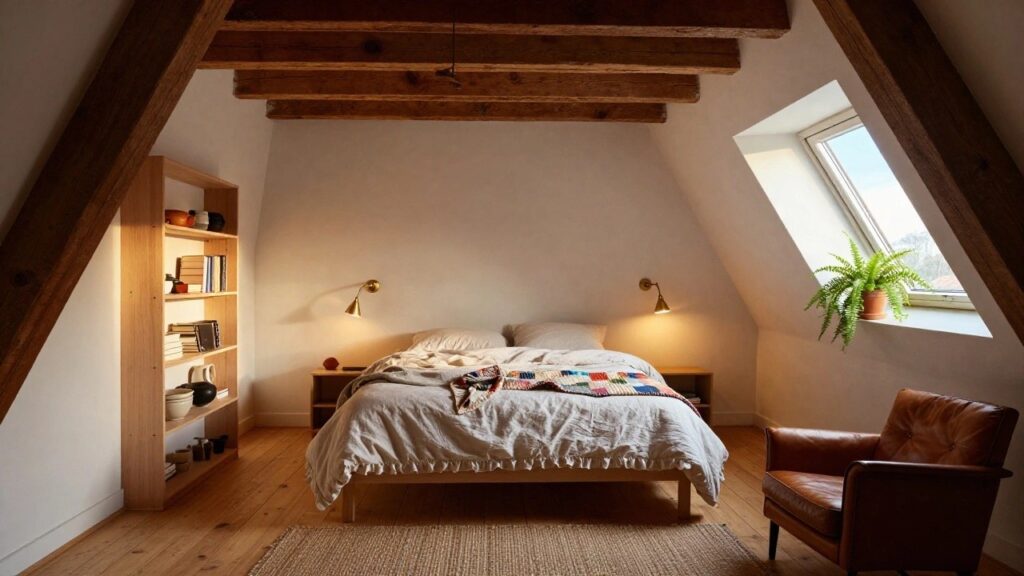
Exposed wooden beams like these really show off what makes an attic special. They follow the slope of the ceiling and bring out a warm, cabin-like feel in the room. Paired with simple bookshelves and a bit of greenery, the space turns into a quiet spot that’s full of character without trying too hard.
These work best in older homes where the beams are already there, or if you’re renovating to uncover them. Keep the rest of the room light with white walls and soft bedding so the wood stands out. Just make sure there’s enough headroom near the bed… and good light from a skylight helps a lot.
Attic Built-In Bed and Desk
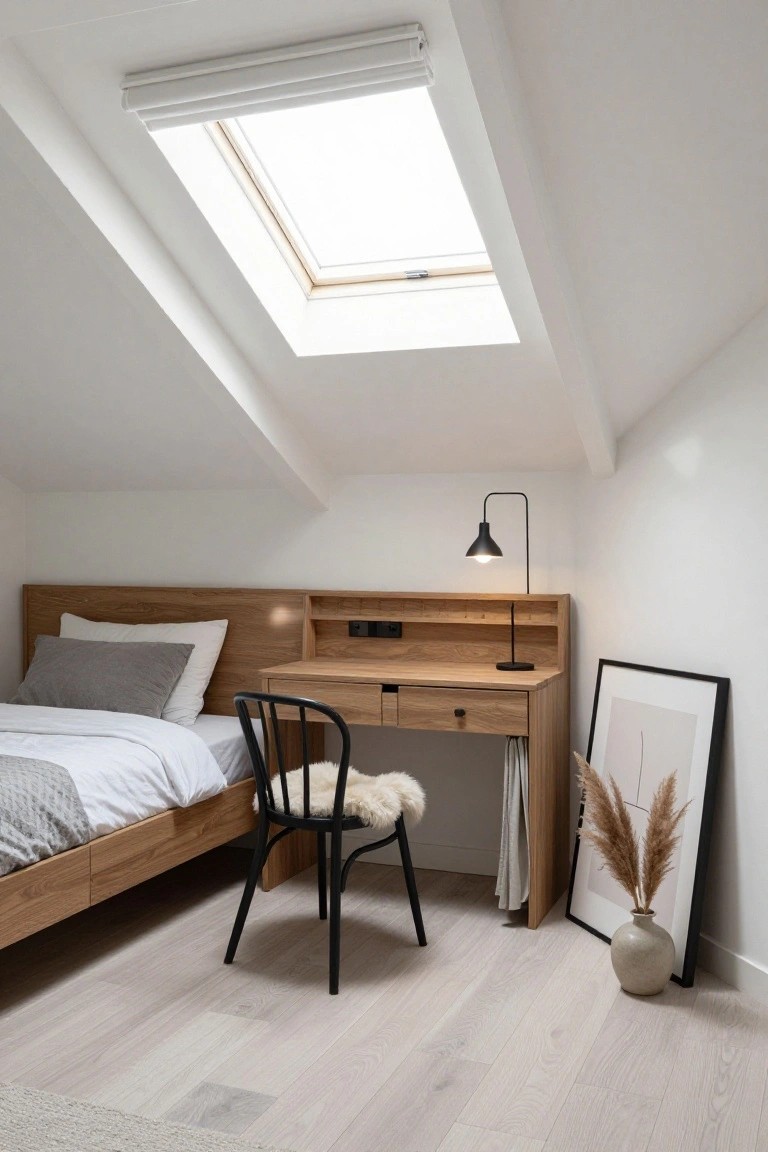
Attics can feel tight with those sloped ceilings cutting into usable space. One good fix is building the bed headboard right into a desk and shelf unit. Like here with the oak wood fitting snug under the slope. It turns dead space into something practical for work or reading.
This works best in smaller rooms or guest spots where you want function without bulk. Go for light-toned wood to brighten things up. Pair it with a simple chair and keep the floor clear. Just measure your slope first to avoid headaches.
Layered Textiles Cozy Up Attic Bedrooms
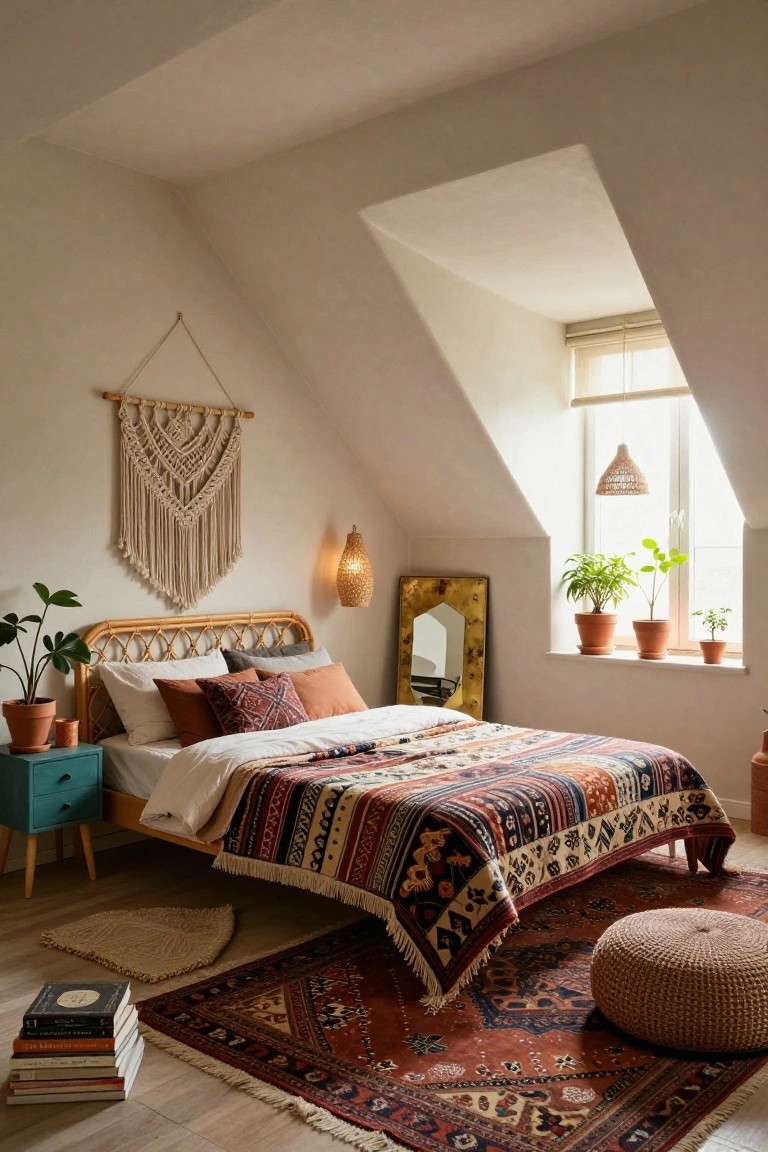
Attics can feel a bit stark with their sloped walls and limited light. But layering textiles like a colorful kilim bedspread over white linens, plus a big fringed rug underneath, turns that plain space into something warm and inviting. The macrame wall hanging adds another soft texture that hangs nicely against the angles without taking up floor room.
This works best in smaller attics where you need that extra layer of comfort. Start with natural materials like rattan for the bed frame, then build up patterns in rusts and creams. It suits older homes with character already… just keep the walls light so the fabrics pop.
Brick Fireplace Brings Attic Warmth
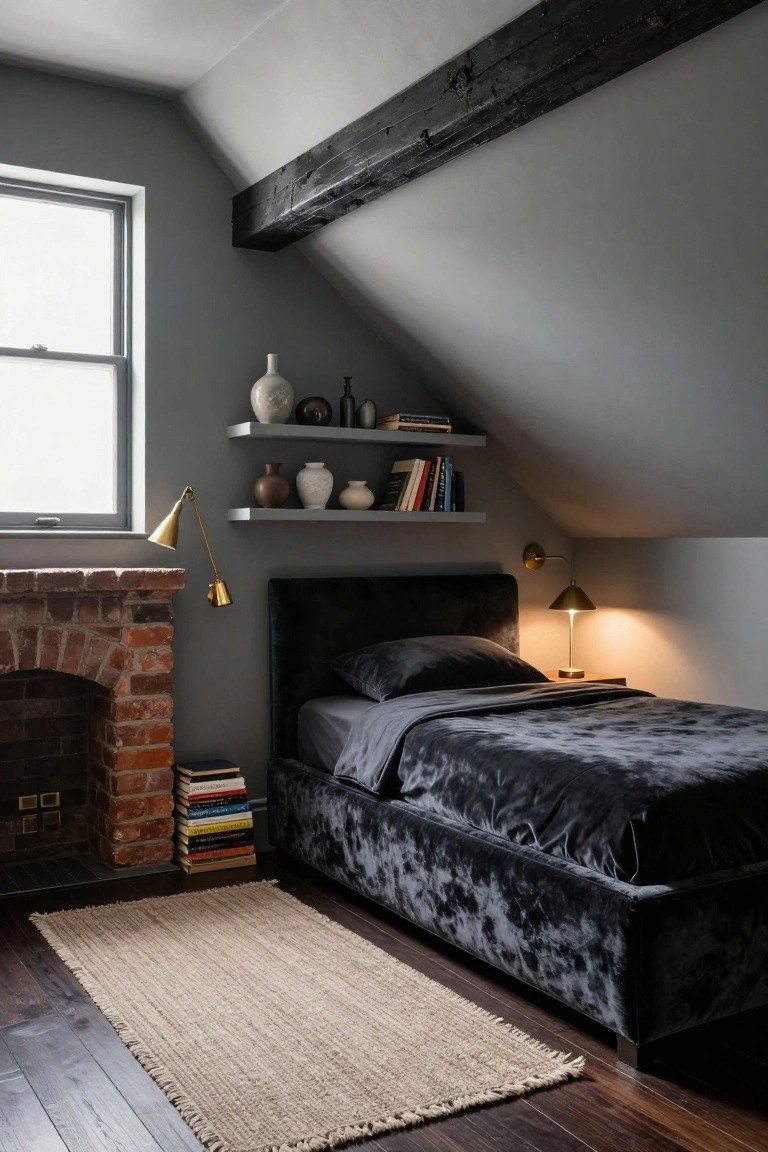
A brick fireplace tucked into the corner works wonders in an attic bedroom. It pulls in that old-house feel with its rough texture against smooth gray walls and dark velvet bedding. The low flames or even just the look make the sloped space feel snug and lived-in, especially with beams overhead.
Look for spots near existing chimneys in older attics. Build it small to fit tight angles, maybe with a simple wood mantel for books. This setup suits homes with some history, but check local codes if you want real fire. It beats a plain wall every time.
Mint Shiplap Walls for Coastal Attic Charm
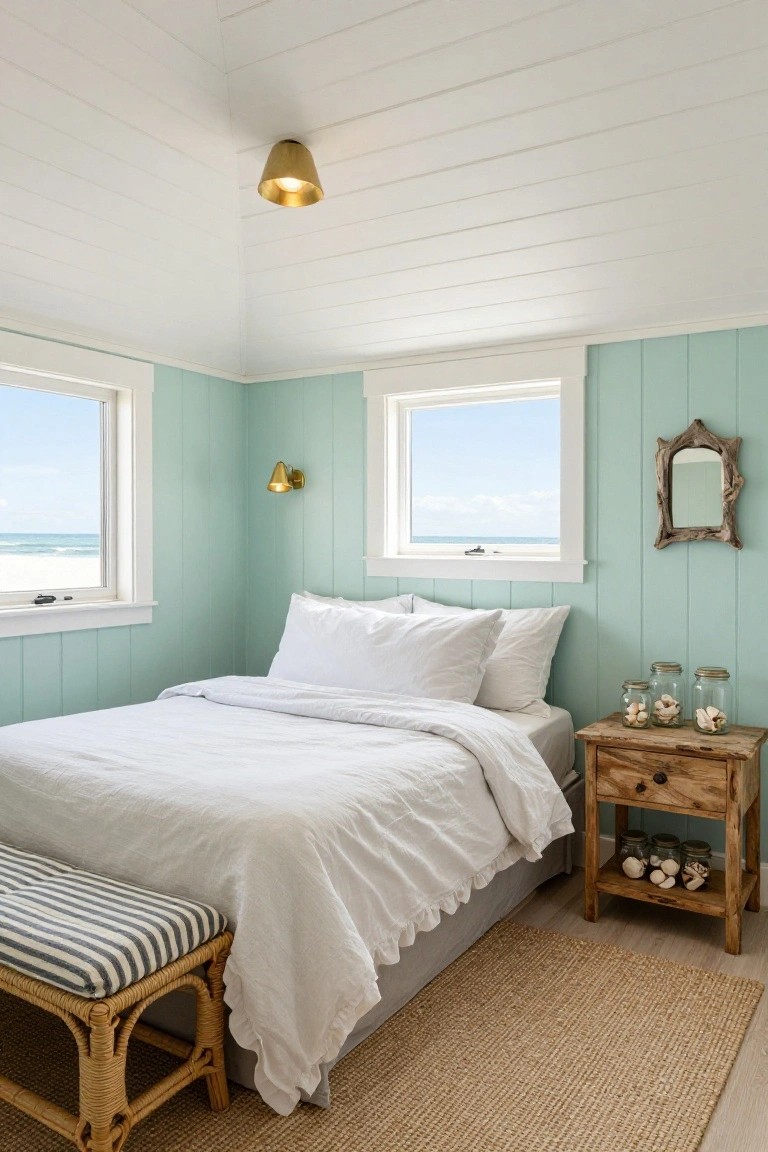
Shiplap walls painted in a soft mint green turn this attic bedroom into a cozy spot that feels like a beach cottage. The pale color picks up the ocean view through the big windows and keeps things light in a small sloped space. White bedding and simple wood furniture let the walls do the main work without cluttering up the room.
You can pull this off in any attic by choosing a watery blue-green shade that bounces light around. It suits older homes or vacation spots near water best. Just make sure your ceiling stays white to avoid feeling closed in.
Cozy Bed Under Sloped Attic Ceiling
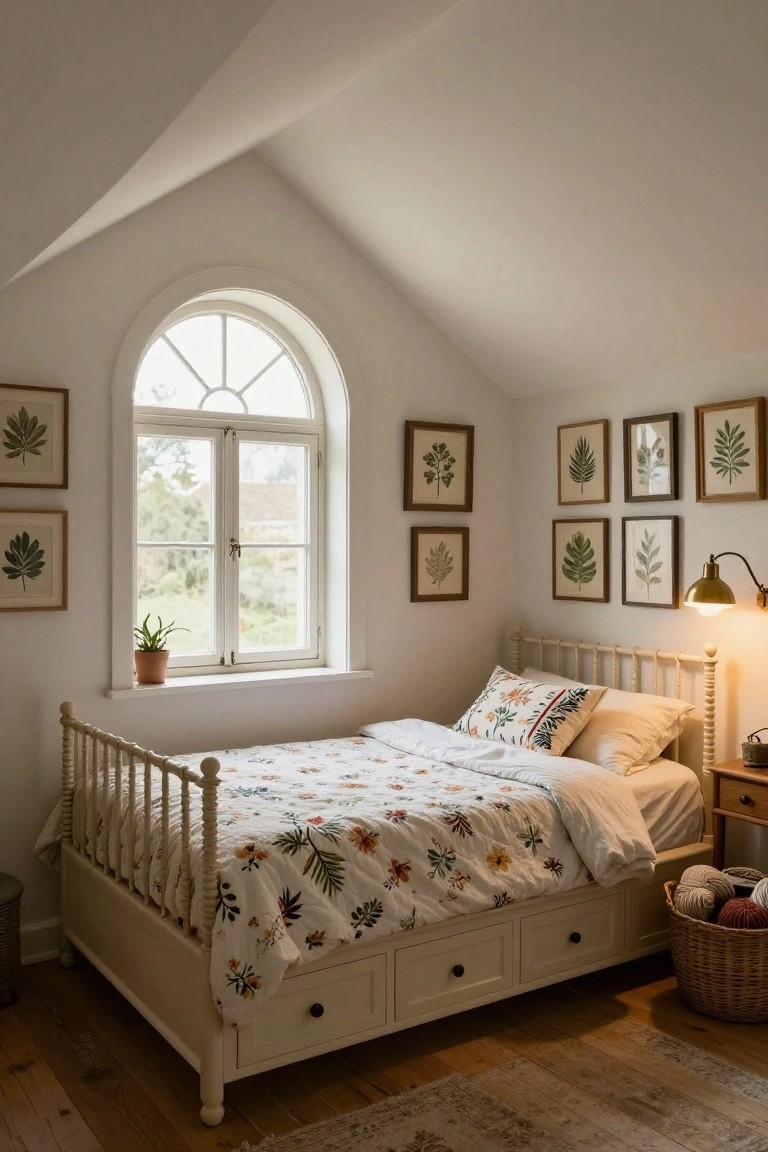
Tucking a low bed right under the attic’s sloped ceiling turns tight space into a real nook. Here, a simple white spindle bed with drawers fits perfectly against the wall. The floral bedding and nearby botanical prints keep things light and tied to nature. It makes the room feel intimate without being stuffy.
This setup shines in small attics where headroom is short. Push the bed into the slope for max floor space. Add underbed storage like these drawers for linens or clothes. It works well for a kid’s room or guest area. Measure twice though. Low ceilings can limit pillow propping.
Low Platform Bed in Sloped Attic Rooms
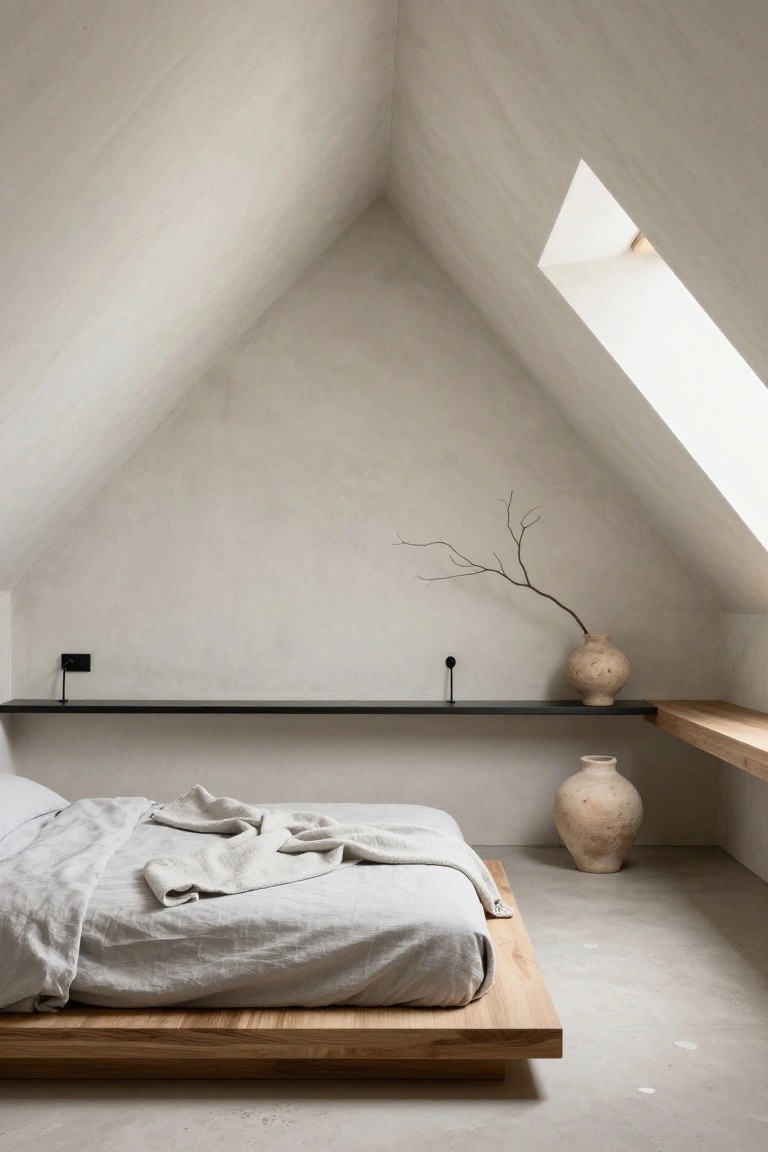
Attics often have those sharp sloped ceilings that can make a space feel tight. A low platform bed changes that. It hugs the floor so the ceiling line stays visible and the room breathes. In this setup, the oak wood frame with rumpled linens sits perfectly under the peak, while pale plaster walls keep things light.
Put one in any attic bedroom, especially smaller ones with low eaves. Center it for balance, then add simple wood shelves nearby for a vase or two. It suits minimalist styles best, but watch the floor, concrete like here works if you want that grounded feel.
Exposed Beams Highlight Attic Character
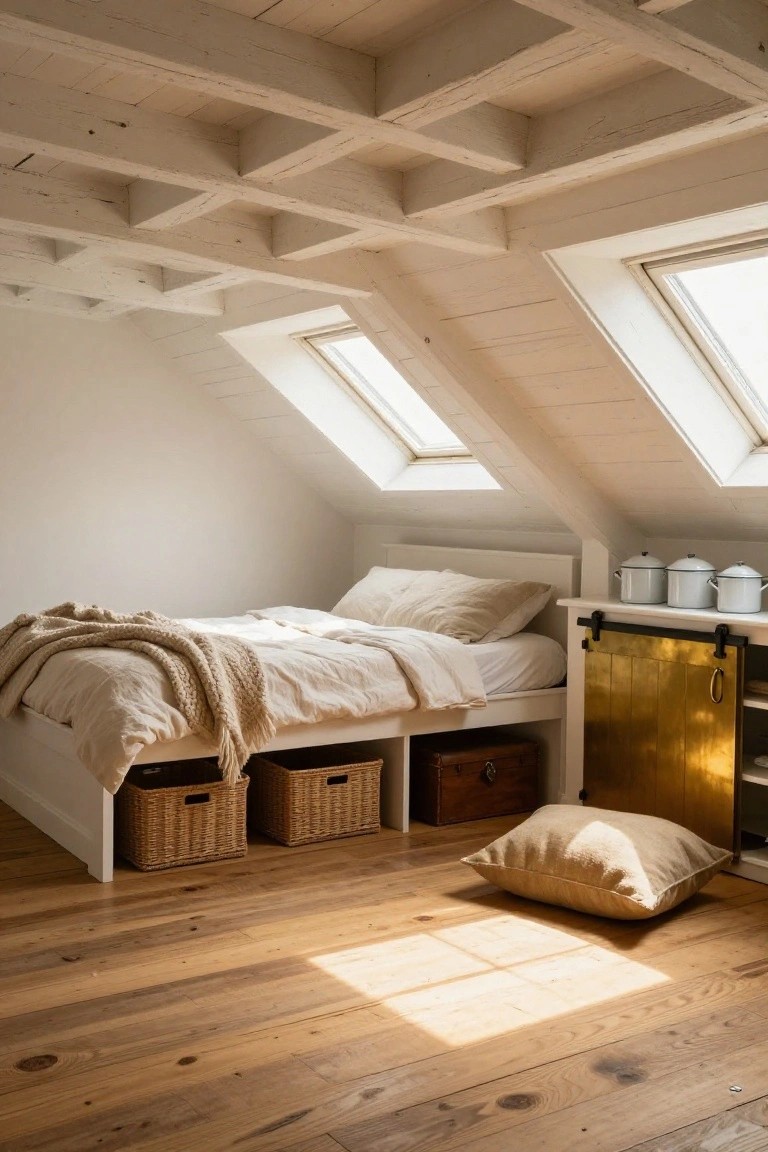
Attic bedrooms often have those sloped ceilings and wooden beams that give away their history. Here, the beams are whitewashed to blend right in with the white walls, keeping the room bright while adding real texture. Skylights help too, pulling in sunlight that bounces off the pale wood and makes everything feel airy.
You can pull this off in any older home with exposed rafters. Just clean them up and add a light stain or paint to match your style. It suits compact spaces best, especially if you pair it with simple wood floors. Watch the height though. Low spots need careful furniture placement.
Open Shelves Stacked with Blankets
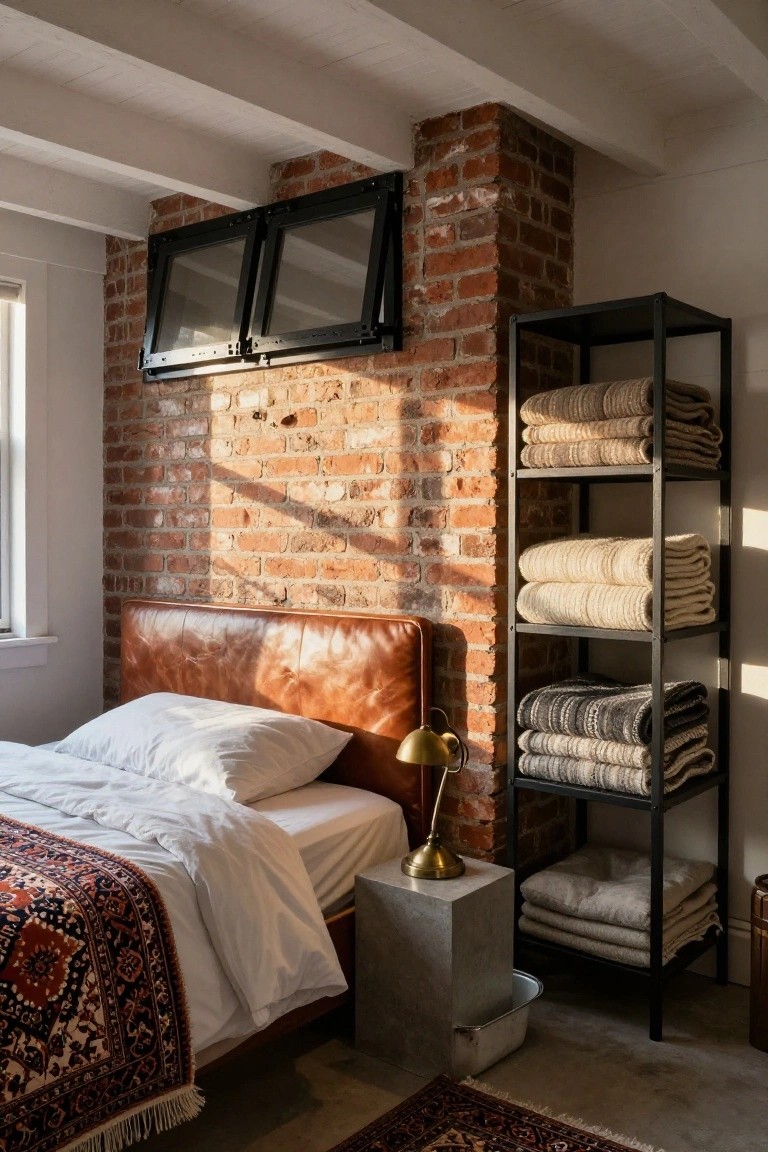
A black metal shelving unit pushed against the brick wall holds neatly folded blankets and throws. This simple storage pulls in texture from the rough bricks while keeping extra bedding handy. It makes the attic feel snug without taking up floor space.
Put one like this by the bed in any low-ceiling room. It fits tucked corners best. Fold everything flat and tight… or it starts looking sloppy. Works in older homes with that raw edge.
Exposed Beams Add Attic Character
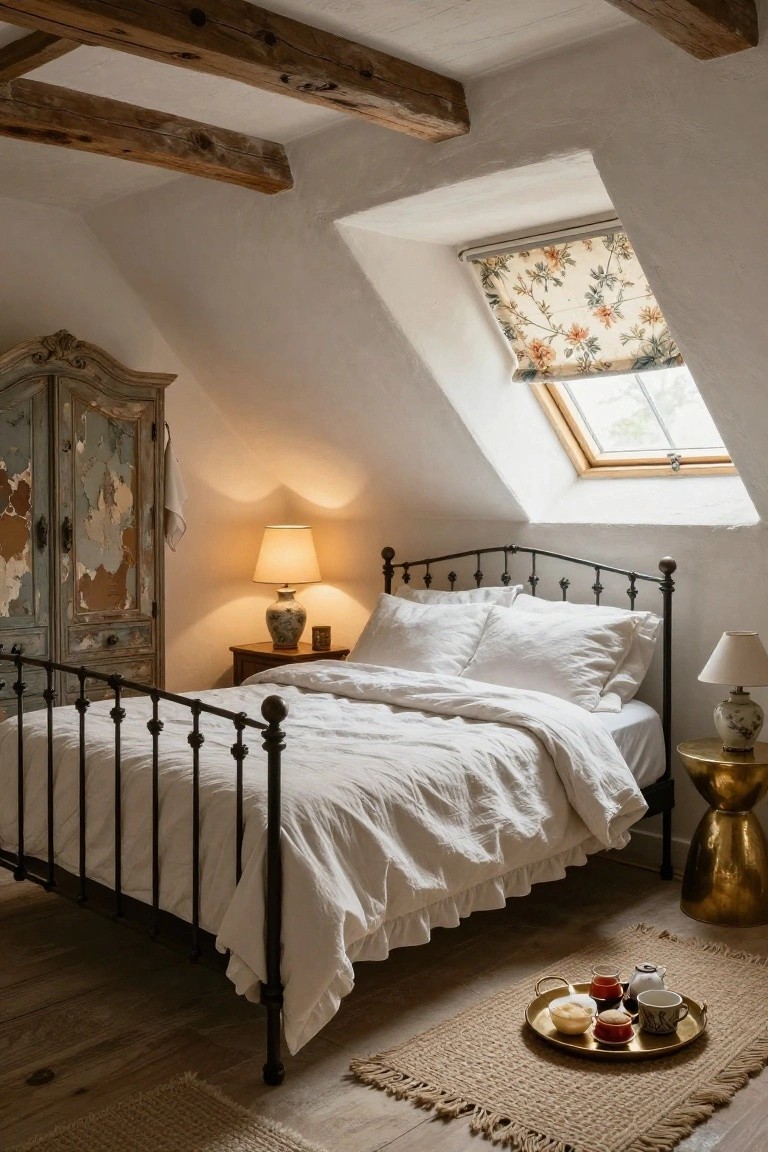
Those old wooden beams running across the ceiling catch your eye right away in an attic bedroom like this. They bring out the room’s natural history and make everything feel snug without much effort. Paired with white walls, they keep the space light even under the slope.
Leave the beams as they are if you have them, and go for pale walls or plaster to make them pop. This works best in older homes or cottages where you want that lived-in feel. Add an iron bed and simple linens nearby… it all comes together easy.
Shoji Screens for Attic Bedroom Storage
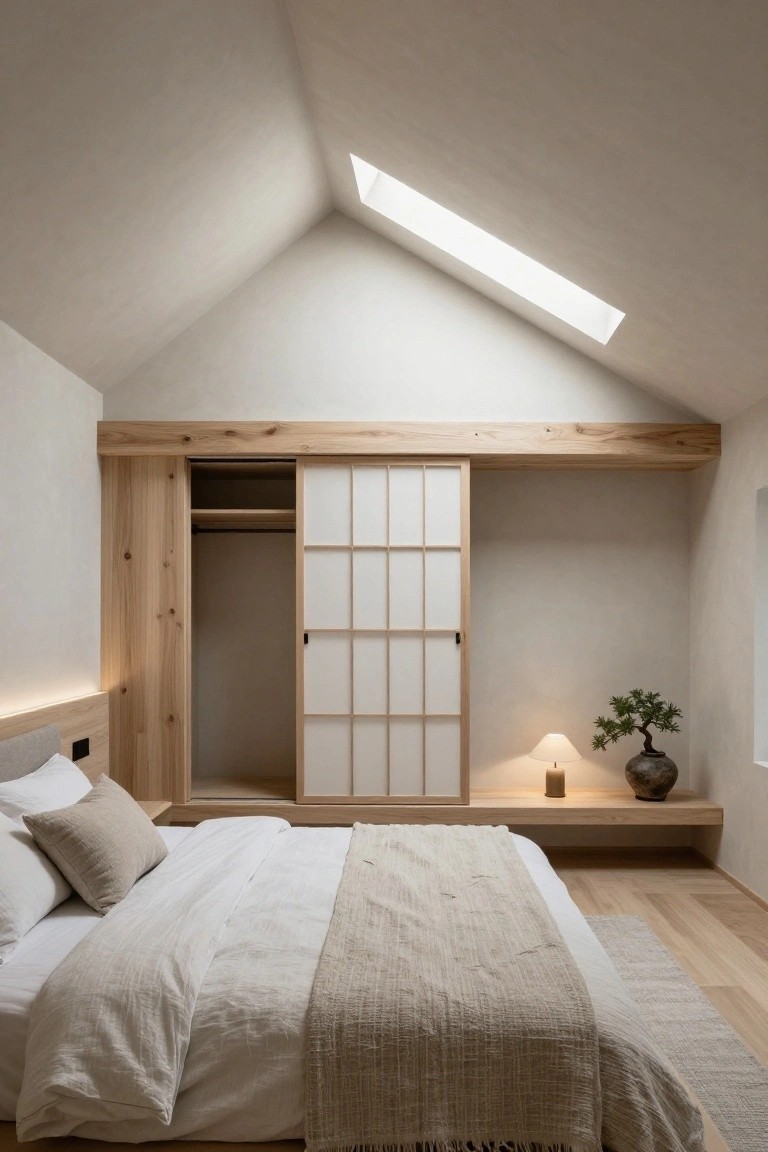
Attic bedrooms can feel cramped with their sloped ceilings. But a built-in wardrobe like this one uses sliding shoji doors set into a simple wood frame. The white paper panels let light filter through. It hides clutter without closing off the room.
This setup works well in tight attic spots where standard closets won’t fit. It adds a quiet Japanese feel to cozy spaces. Try it in older homes or rentals. Just pick sturdy tracks so the doors glide easy.
Attic Bedroom with Tufted Velvet Bed
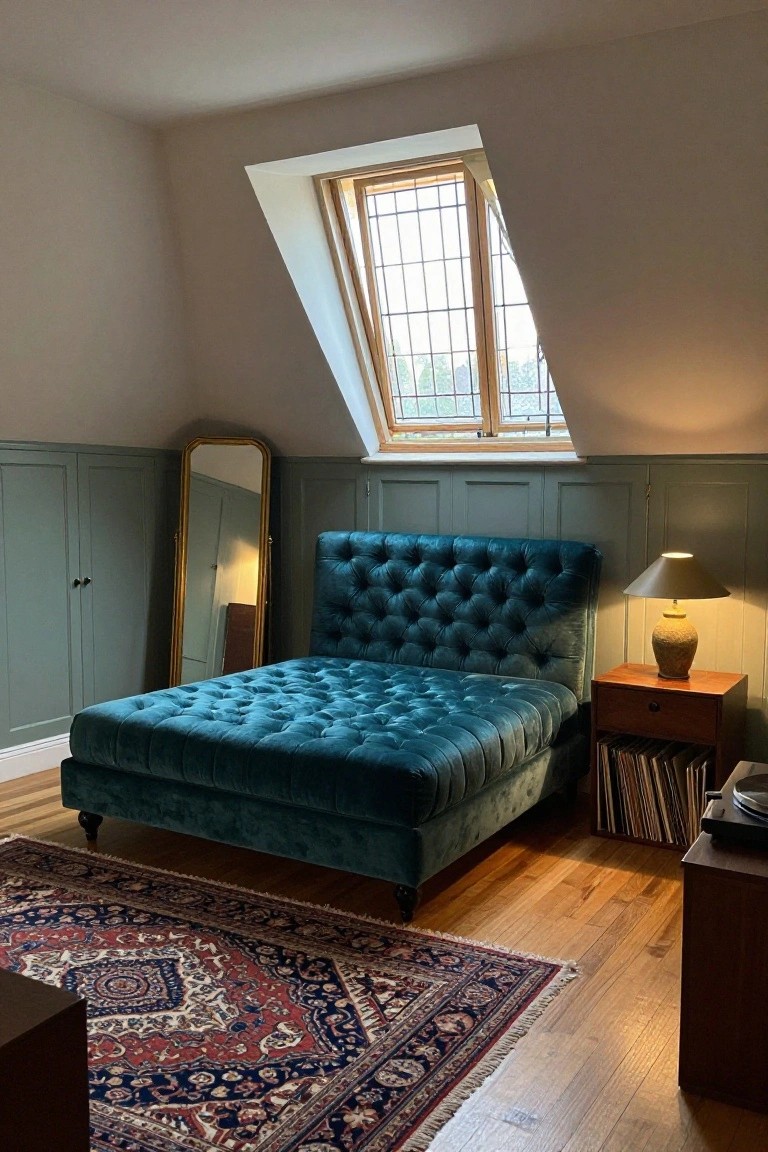
A tufted bed in deep emerald velvet turns a simple attic room into something special. Those button details and low profile fit right under the sloped ceiling, making the space feel snug and put-together. The rich color pops against pale walls and wood floors without overwhelming things.
This setup suits older homes with character already, like exposed beams or dormer windows. Pick a fabric that’s soft but durable, and size the bed to leave room for a side table or rug. Just keep other furniture simple so the bed stays the focus.
Wood Paneling in Attic Bedrooms
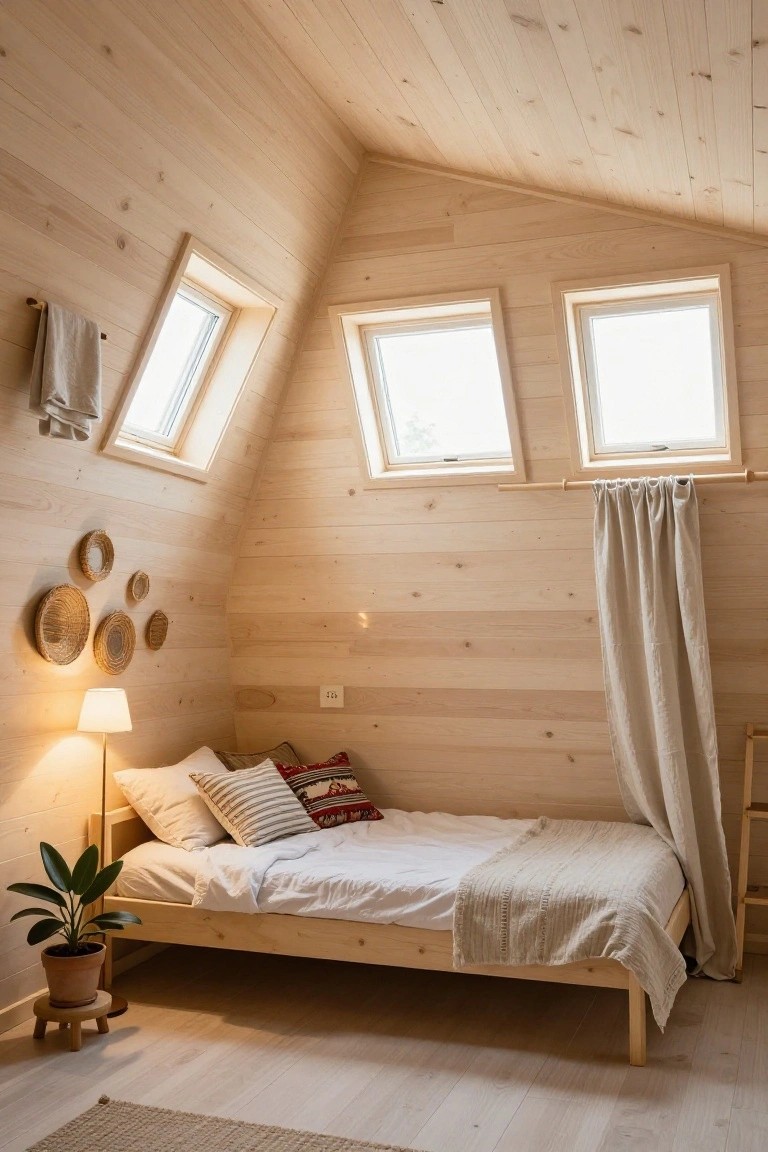
Wood paneling covers the walls and sloped ceiling here, turning a tight attic space into something snug and cabin-like. The light pine color keeps it from feeling dark. Skylights let in just enough natural light to warm up the wood tones.
This approach fits older homes or getaways best, where you want simple rustic style. Pick untreated or lightly finished pine boards for easy install. Seal them well against attic dampness, and pair with plain furniture to let the wood stand out.
Built-In Bunk Beds for Attic Rooms
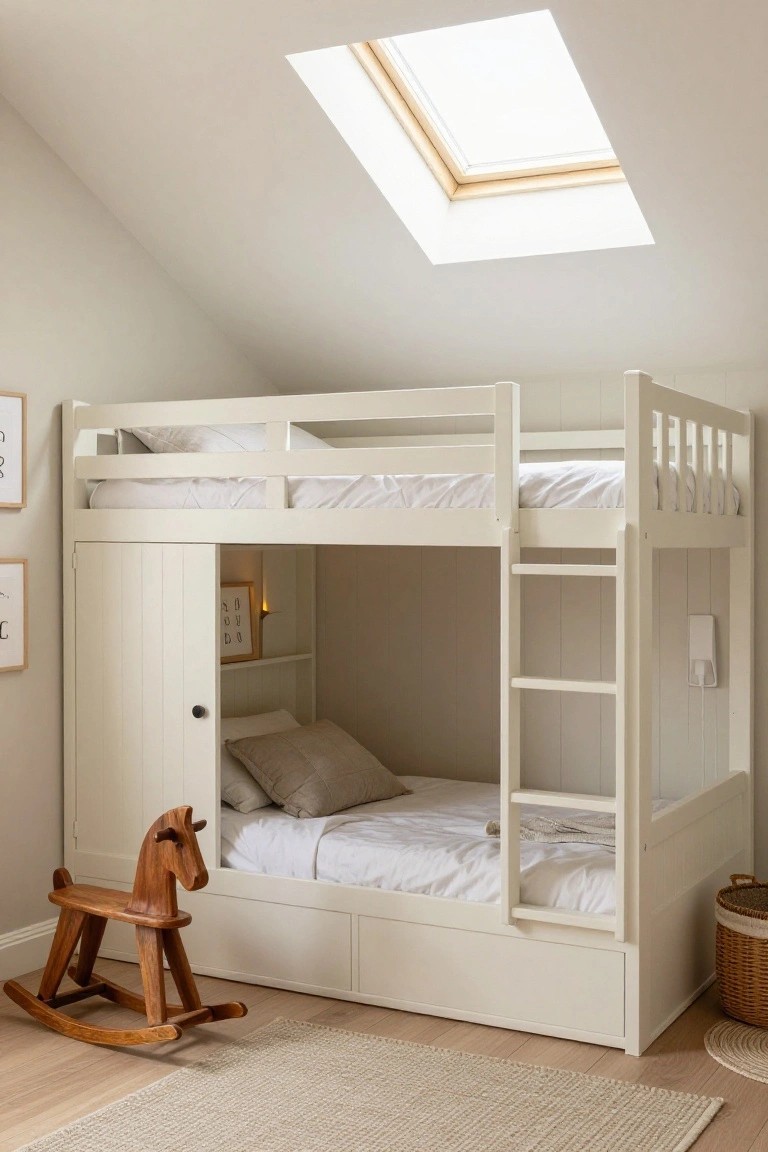
Attic bedrooms often have sloped ceilings and odd angles. A built-in bunk bed unit like this one fits right in. It has a wardrobe door on one side and drawers under the lower bed. White wood keeps things bright against the light walls. That setup turns tight space into a real sleeping area without feeling cramped.
These work best in kids’ rooms where you need room for play too. Notice the rocking horse nearby. Put one under a skylight for extra cheer. They suit older homes with low eaves. Just make sure the ladder is sturdy.
Sloped Wall Built-Ins for Attic Bedrooms
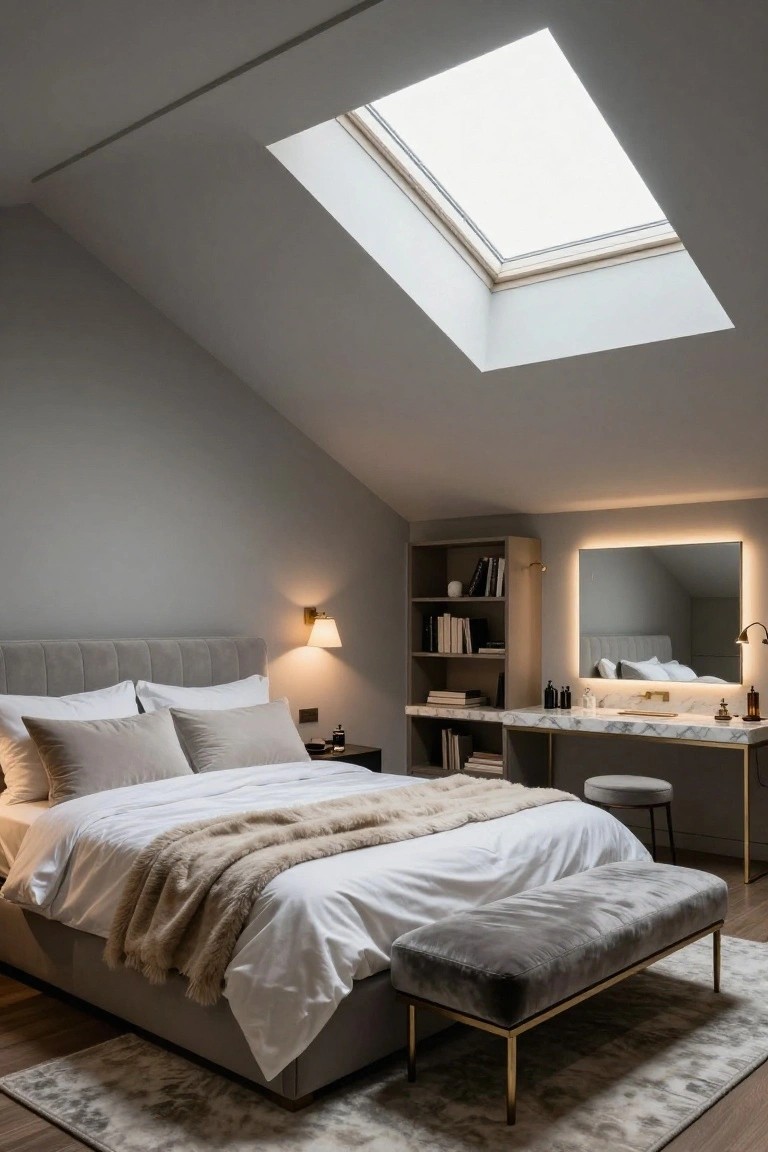
Attic rooms often have those awkward sloped walls that cut into usable space. This setup turns them into a plus with built-in shelves and a vanity that hug the angle perfectly. Wood shelves stocked with books sit right above a marble-topped desk area, making the spot feel custom and lived-in without crowding the bed below.
You can pull this off in any attic bedroom by matching the built-ins to the wall color or nearby wood floors. It suits cozy, character-filled spaces where you want storage and a quiet morning routine close to hand. Just measure twice before building to fit the slope snugly… no head bumps allowed.
Low Bed Frame Under the Slope
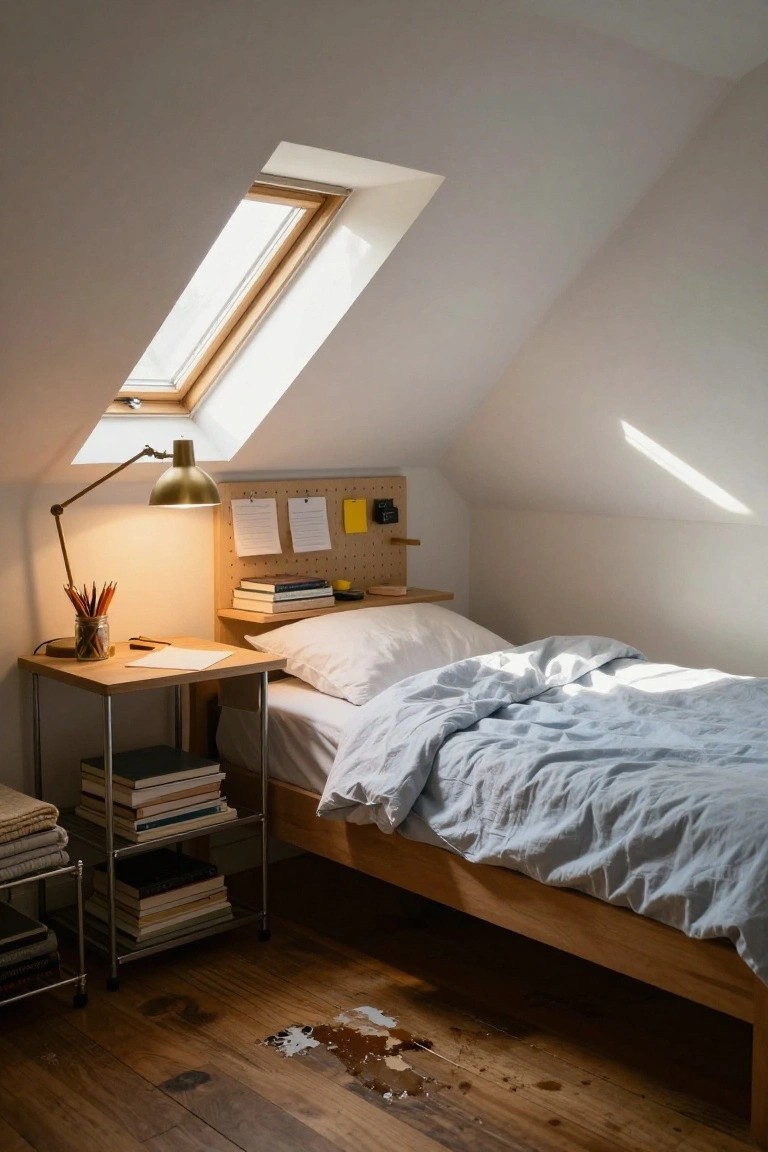
Attic rooms come with sloped ceilings that limit headroom near the edges. A low wooden bed frame tucked right under that slope solves it nicely. It hugs the wall here, leaving space above, and a simple desk fits alongside without crowding things. The setup feels snug yet open, thanks to light from the skylight.
This works great in smaller attics turned into bedrooms. Pair the bed with light linens and wooden tones to echo the floors. Measure your slope first to get the height right. It suits guest rooms or kid spaces best, keeps the character without feeling tight.
Plant Shelves and Wicker Daybed
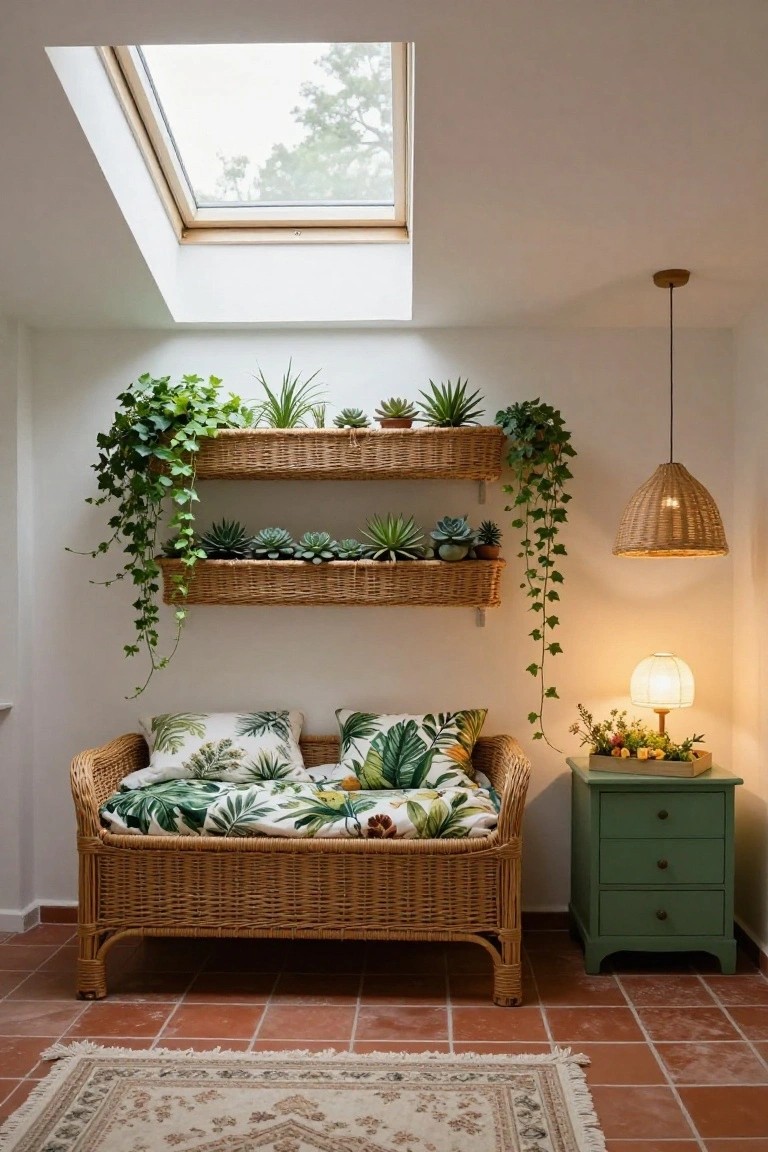
Tucking a wicker daybed into an attic corner and lining the walls with matching wicker shelves full of plants turns a plain space into something special. The greenery spills over, mixing with the natural weave of the furniture for a lived-in feel that fits right into an attic’s quirky shape. That skylight up top lets light filter through the leaves too. It just makes the spot feel fresh and restful.
This works best in smaller attic bedrooms with good natural light, where you need seating or even a spare bed that doesn’t crowd the room. Load the shelves with easy succulents and trailing ivy, throw tropical cushions on the daybed, and add a little side table nearby. Skip it if your attic stays too dark, since the plants need sun to thrive.
Rustic Attic Bedroom with Wood Stove
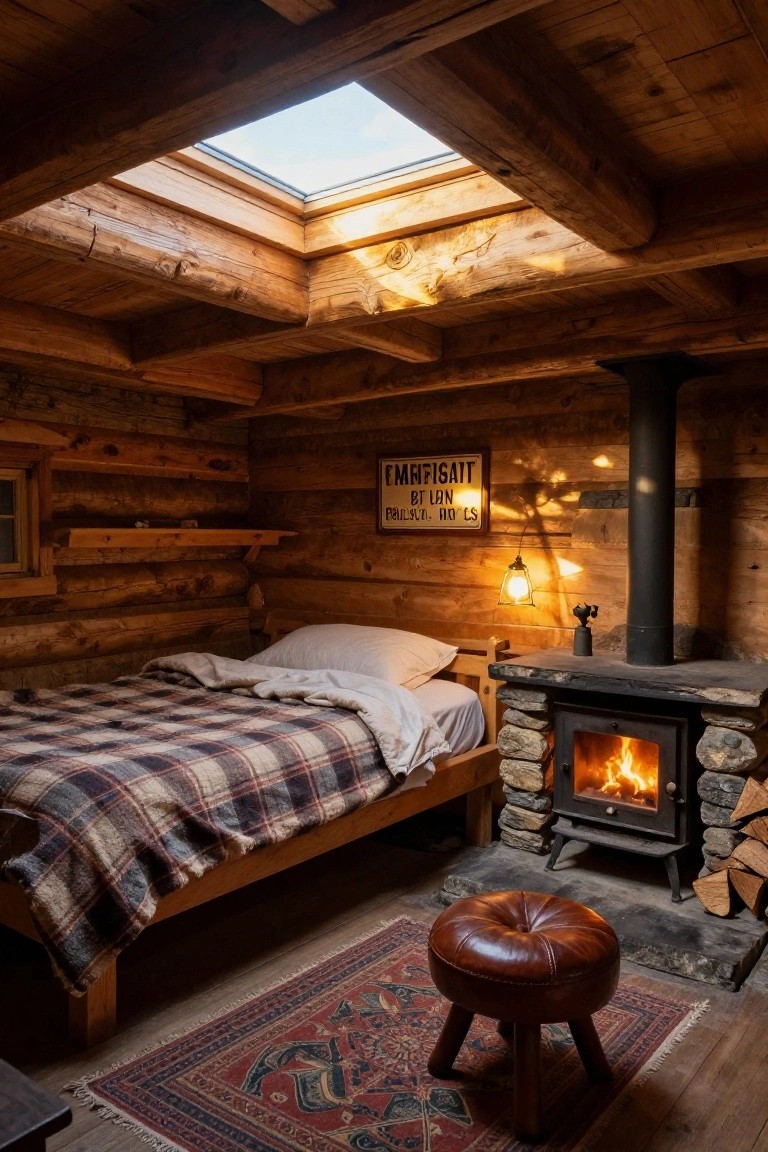
A wood-burning stove tucked into a corner makes any attic bedroom feel like a real retreat. The stone surround and glowing fire pull your eye right away, and that warmth spreads through the whole space on chilly nights. In a room full of wood beams and rough walls, it fits right in without taking over.
You can pull this off in older cabins or homes with sloped ceilings, as long as you check for good venting and clearances. Place the bed nearby so the heat works for you, and keep the floor simple with a rug. It suits spots that stay cool, but skip it if your attic gets too hot in summer.
Personalize Your Attic with a Family Photo Wall
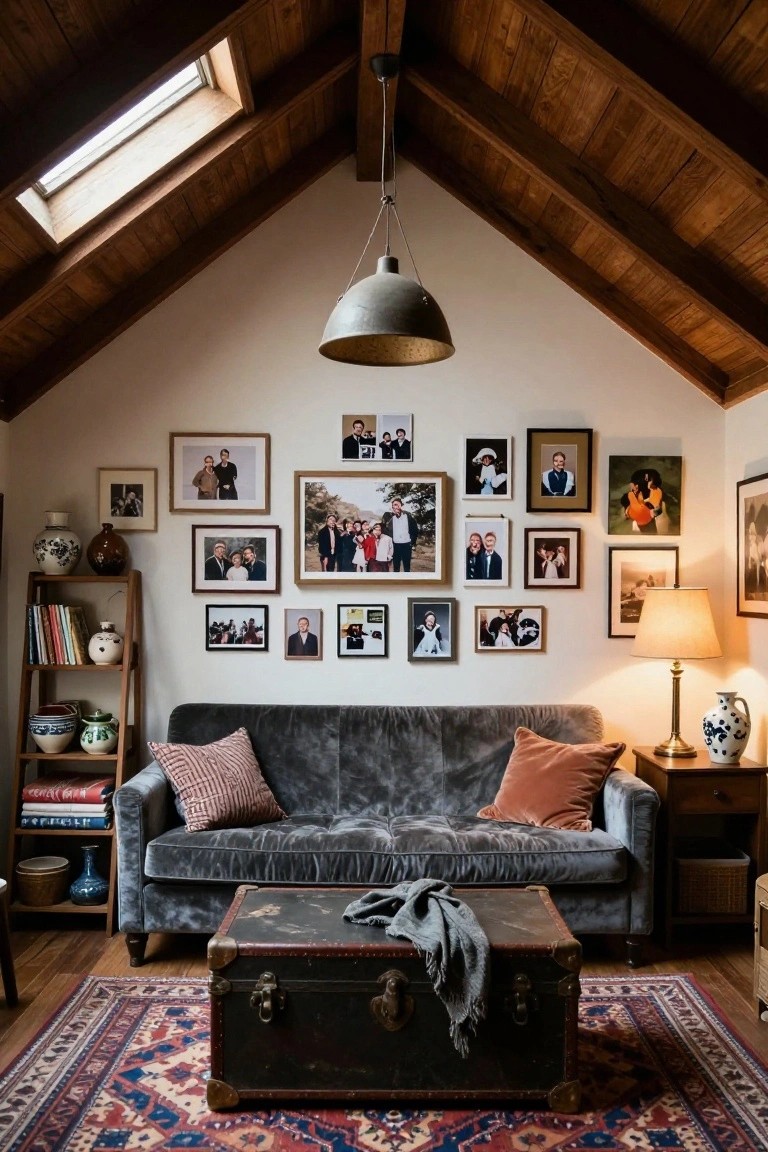
One simple way to give an attic that lived-in feel is covering a plain wall with family photos. Here, a big mix of frames in different sizes and shapes fills the white wall from top to bottom. It turns empty space into something full of stories and warmth. No need for fancy art. Just real life moments make the room cozy right away.
Hang one like this above a sofa or bed in your attic bedroom. It works best on a bigger wall where the ceiling slopes away. Mix black and white shots with color ones for interest. Keep frames simple so the photos stand out. Watch the lighting though. A nearby lamp helps show off details without glare from the skylight.
Cozy Corner Bench Seating
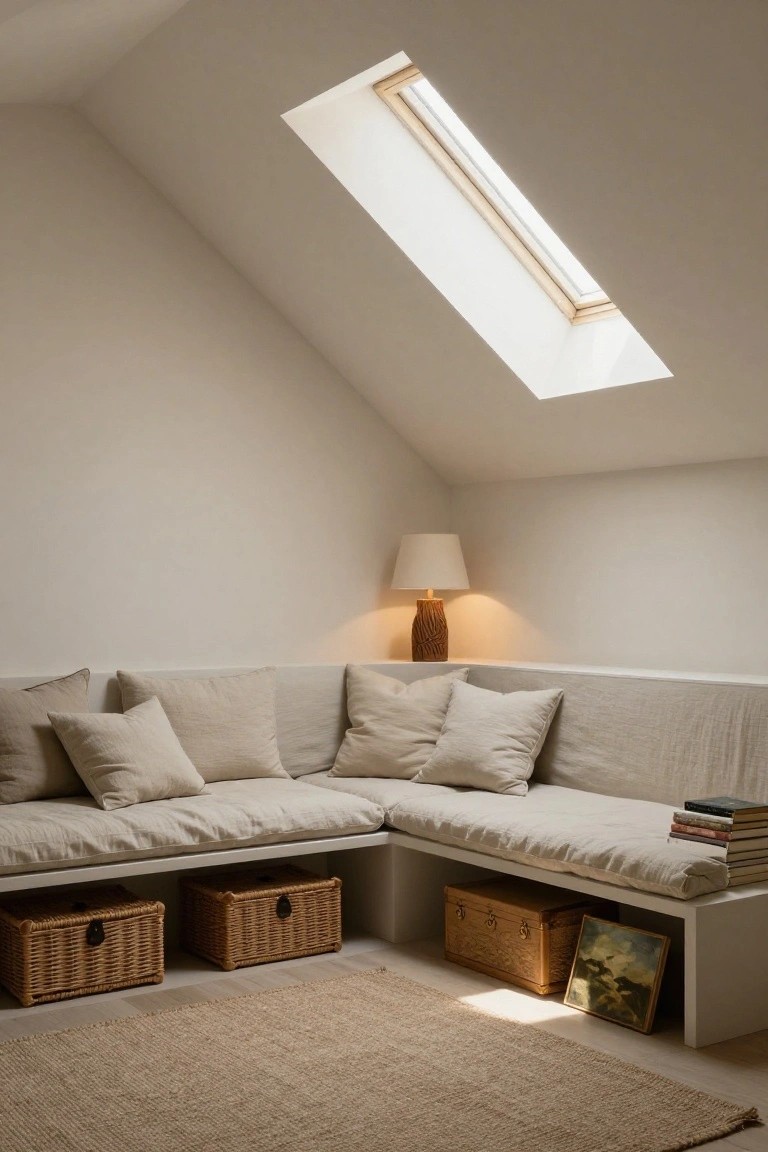
Attics often have those tricky sloped corners that go to waste. A built-in bench there turns them into a real sitting spot, like this one tucked under the ceiling with soft linen cushions and pillows. It feels snug without taking up floor space, and the open shelves below hold baskets for blankets or books.
Fit one into your attic bedroom where the walls meet the slope. Go for white wood to keep it light, and add a lamp nearby for evenings. This setup suits smaller rooms best, making them more livable. Watch the height though, so your head doesn’t bump the ceiling.
Blue Lockers for Attic Storage
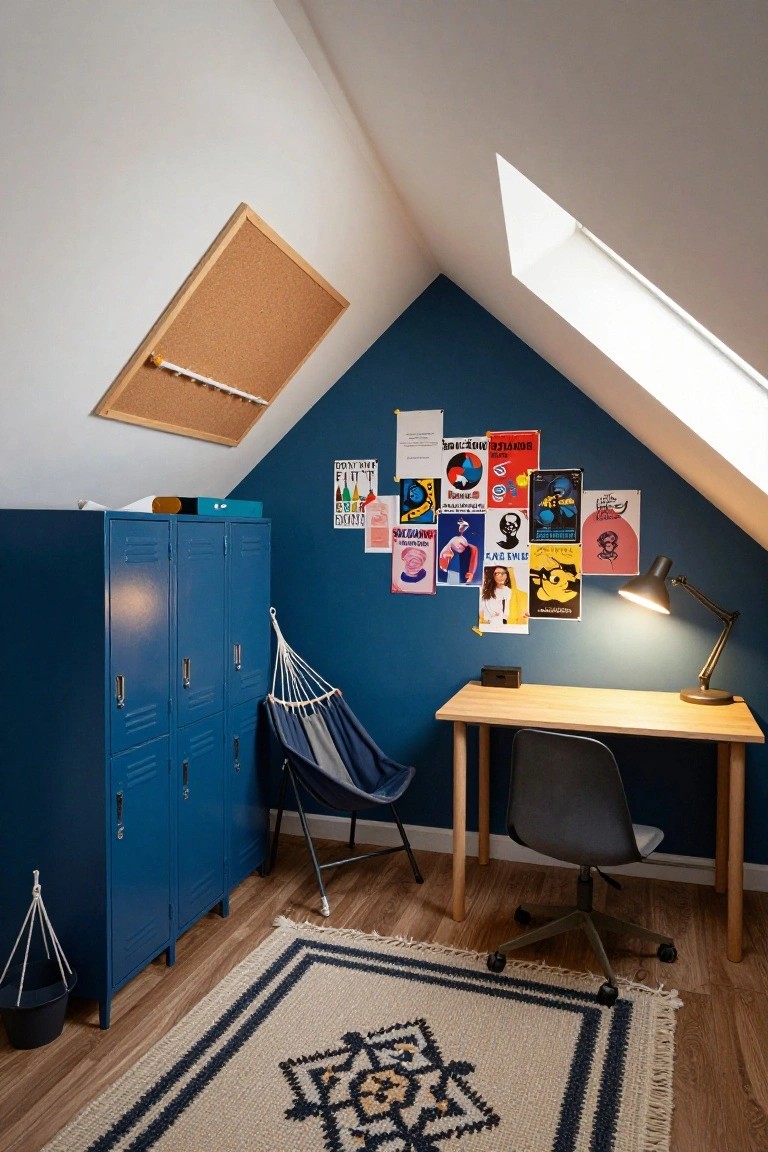
Tall blue metal lockers like these hug the sloped wall in a small attic bedroom. They hold books, clothes, and supplies without crowding the floor. The retro look gives the room personality right away, especially next to a simple desk setup.
These work best in tight attic spaces where you need vertical storage. Pick lockers in a bold color to match navy or deep walls. They’re practical for kids’ rooms or a quiet work corner… just make sure the doors don’t swing into low ceilings.
Frequently Asked Questions
Q: How do I handle those tricky sloped ceilings without bumping my head every morning?
A: Push your bed snug against the lowest slope so you have full headroom over the middle of the room. Add low-profile nightstands or floor cushions nearby. This setup makes the space feel taller right where you spend most time.
Q: What’s a simple way to squeeze in more storage up there?
A: Build shallow shelves or drawers into the eaves—they fit perfectly where standing room ends. Label bins for quick grabs. You free up the floor for that plush rug.
Q: How can I brighten a dim attic bedroom?
A: Layer soft lamps on surfaces with warm bulbs to mimic sunset glow. Sheer curtains let in sky light without glare. Skip big fixtures; they overwhelm tight spots.
Q: Will an attic bedroom stay warm in winter?
A: Layer wool blankets and flannel sheets on the bed for instant coziness. Hang heavy drapes over small windows to trap heat. And add a compact electric blanket for chilly feet.
