


I have walked into plenty of rooms that felt stiff because nothing was arranged to encourage staying awhile.
A simple swap in furniture placement often changes how the whole space works without buying anything new.
It is easy to overlook how much warmth comes from layering a few soft pieces over what is already there.
Those adjustments add up.
I keep a note of any approach that feels realistic for my own home when winter sets in.
Make A Plain Room Feel Finished
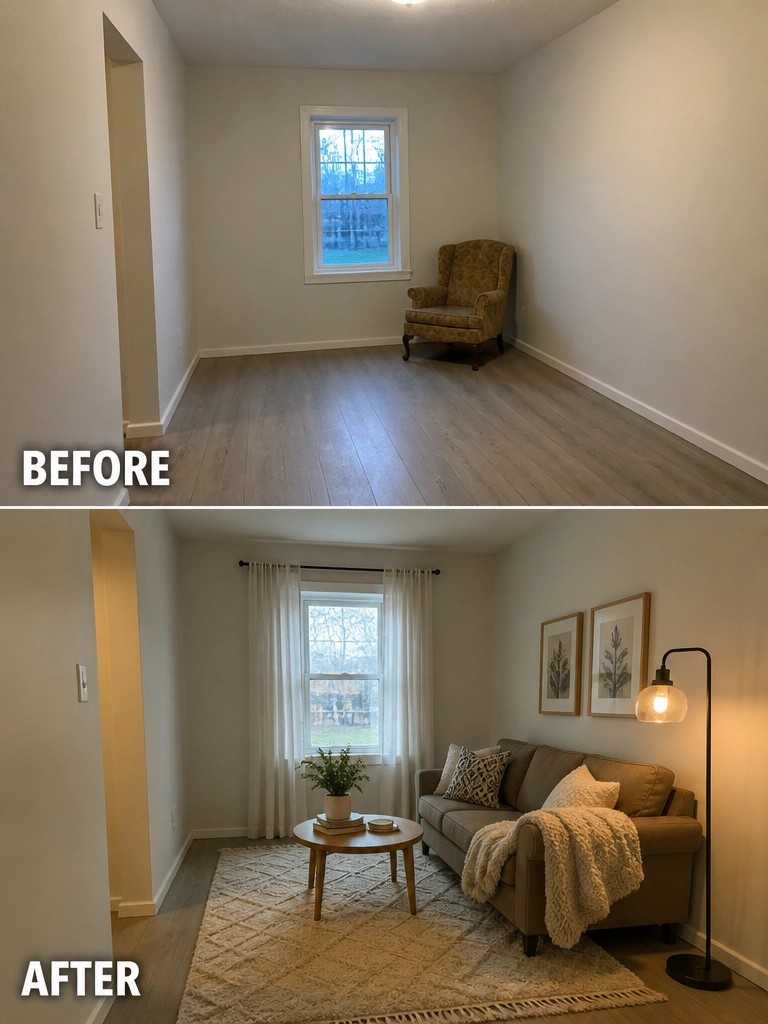
An empty room with plain walls and bare floors often feels cold and unfinished no matter how clean it is. In this case, adding curtains, a large rug, and a few pieces of seating turned the space into a usable living area without any major construction. The rug defines the seating zone while the curtains soften the window and add height.
This approach works well in new builds or rooms that lack any architectural detail. Start with the largest items like a rug and window treatments, then layer in seating and simple lighting. Keep the scale modest so the room does not feel crowded, and stick to a limited color palette so the additions feel calm rather than busy.
Add Soft Layers To Warm Up A Bare Bedroom

A bedroom that holds only a bare mattress often feels cold and unfinished. Adding a rug, curtains, and layered bedding changes the feel right away by bringing in softness and some warmth underfoot and around the windows.
This idea works best in simple rooms that already have the basics but lack comfort. Keep the layers light and neutral so the space still feels calm rather than crowded.
Turn An Empty Corner Into A Cozy Seating Area

The before photo shows a bare wall and open floor that did not invite anyone to sit down. Adding a chair with a throw, a floor lamp, and a low shelf with a few books and plants gave the space a clear purpose without crowding it.
This approach works best in rooms that already have the basics like a TV area but still feel half empty. Pick one comfortable chair, place a rug under it, and add a lamp so the spot can be used at night. Keep the scale modest so the furniture fits the room instead of overwhelming it.
Give A Bare Hallway A Clear Purpose

A long empty hallway often ends up as dead space that no one uses. Adding a low bench, a simple runner, and a couple of hooks gives it a job to do without crowding the narrow floor.
This approach works best in smaller homes where every stretch of floor needs to earn its keep. Stick with slim pieces that sit close to the wall and leave plenty of room to walk through.
Turn A Bare Room Into A Cozy Dining Spot

An empty room often stays that way because it has no clear purpose. Placing a round table with chairs in the center gives the space a reason to exist, while the rug underneath and the hanging light above make the whole area feel warmer and more finished.
This approach works especially well in smaller homes where every room needs to pull its weight. Keep the table size realistic for the space, add one soft layer like a rug, and use a single light source to draw people in. The result feels lived in without needing a full renovation.
Lighten A Basic Bathroom With A New Vanity And Fixtures

A dark vanity and basic overhead light can make even a clean bathroom feel heavy and dated. Switching to a lighter cabinet color and adding a fixture with warmer bulbs instantly opens up the space and makes it feel more finished.
This idea works especially well in smaller bathrooms where you want to keep things bright without major construction. Keep the rest of the updates simple so the new vanity and lighting stay the main focus.
Turn An Empty Room Into A Cozy Living Space

A bare room with concrete floors and plain walls often feels cold and unused. Adding a large sectional, an area rug, and string lights along the walls gave the space a clear purpose and made it feel much warmer.
This idea works well in basements or spare rooms that start out empty. Focus first on the seating and rug to define the area, then add simple lighting and a few wall pieces so the room feels finished without overcrowding it.
Make A Plain Office Feel Finished
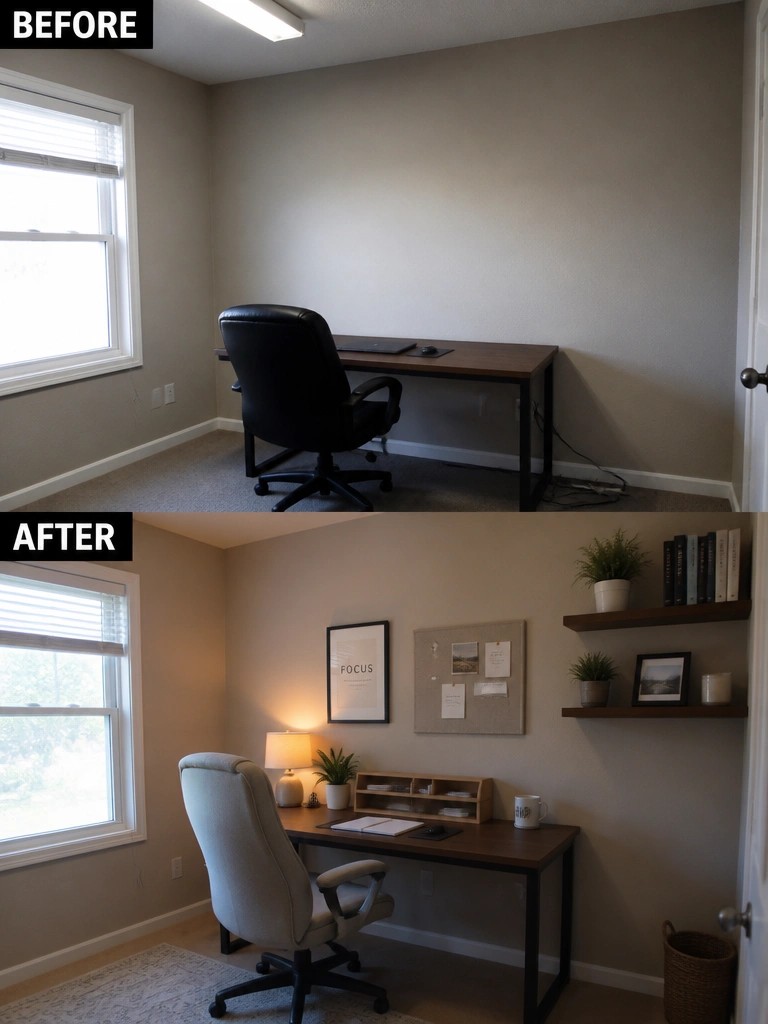
A bare office often feels cold because it lacks layers. Adding a rug under the desk, a lamp for warm light, and a few pieces of wall art and shelving turns the same desk and chair into a space that actually feels comfortable to sit in for hours.
This idea works in any small room that already has the main furniture but still feels empty. Focus first on lighting and one soft surface like a rug, then add a couple of personal items on the walls or shelves. Keep the additions modest so the room stays calm instead of crowded.
Make A Bare Bedroom Feel Finished

One of the easiest ways to finish an empty bedroom is to add a rug first and then layer in a few lights. The before photo shows a cold room with just a mattress and some boxes. After the changes, a large rug defines the bed area and two lamps create a softer evening light that makes the space feel much more settled.
This idea works well in rentals or small rooms where you cannot paint or make big changes. Start with one rug that is big enough to sit under the front of the bed and nightstands. Then add a floor lamp in one corner and a smaller lamp on a side table so the room has light at different heights instead of relying on a single ceiling fixture.
Make The Fireplace Wall The Main Feature

A plain fireplace wall often leaves a living room feeling unfinished even when the rest of the space is furnished. Painting the wall a darker shade and adding a simple wood mantel above the firebox gives the room a clear focal point without major construction.
This approach works best in rooms where the fireplace already sits in the center of the main wall. Use a color that contrasts with the surrounding walls and keep any decor on the mantel minimal so the change stays balanced. It suits homes with basic builder-grade fireplaces that need more presence.
Add Trim To Finish A Plain Hallway

A narrow hallway often feels unfinished when the walls are completely bare. Adding simple trim along the lower half of the walls gives the space clear structure and makes it feel more intentional. The before photo shows flat walls with nothing to break them up, while the after shows how that one change plus a runner and small table makes the hallway feel complete.
This approach works especially well in older homes or any tight passage that lacks character. Focus on the trim first, then add just enough furniture and a rug to give the floor purpose. Keep the palette light so the hallway does not close in.
Add Built-In Shelves To Organize A Small Closet

A cluttered closet with no real system quickly becomes a place where things get tossed and forgotten. Adding simple built-in shelves, a bench, and under-shelf lighting creates clear zones for hanging clothes and folded items, so the space stays usable instead of overwhelming.
This approach works best in small or awkwardly shaped rooms where standard rods and wire shelves fall short. Measure the walls first, then install basic wood shelving before adding any extras. Keep the layout open enough to move around and choose warm lighting that highlights what you actually wear.
Make A Basic Shower Feel Finished And Bright
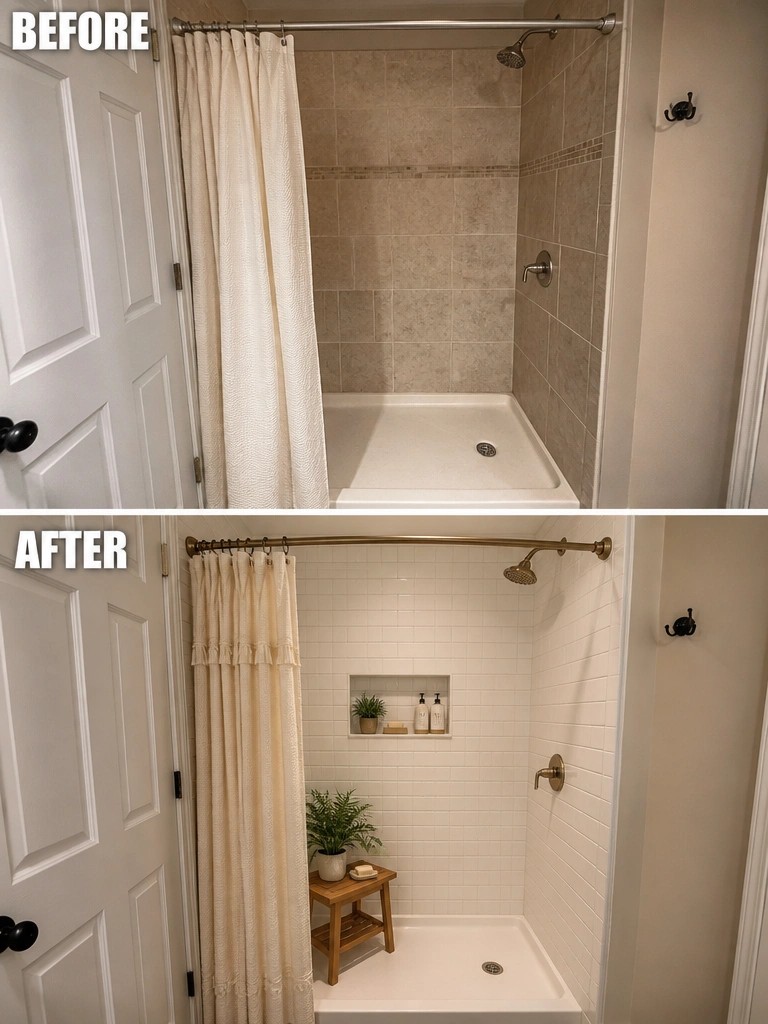
A plain shower with beige tile and a simple curtain often feels cold and unfinished. Switching to white subway tile and adding a recessed niche gives the space a much cleaner look while creating a spot for shampoo bottles and a small plant. The brass fixtures and small stool add just enough warmth without crowding the area.
This approach works well in small bathrooms where you want to keep things simple but still make the shower the main feature. Start with the tile and niche before adding accessories so the space stays practical and easy to clean. It suits homes that need a quick refresh rather than a full gut job.
Make A Bare Bedroom Feel Finished

A mostly empty bedroom with just a bed and toys on the floor can feel cold and unfinished. Adding a rug helped define the space and gave the bed a clear spot to sit in, while a low storage unit and a pair of lamps made the room feel much more usable right away.
This idea works well in any small bedroom that needs warmth without a lot of clutter. Start with the floor and a few pieces that serve a purpose, then add simple wall art once the basics are in place. It keeps the room practical while still feeling like a real living space.
Add Furniture And A Rug To Finish An Empty Room

An empty room often feels cold because there is nothing to break up the space or give it a purpose. In this case the simple addition of a daybed, a large rug, and a small lamp made the room feel like it could actually be used. The rug pulls everything together and stops the floor from looking so bare.
This approach works well in spare rooms or guest spaces where you want function without a lot of clutter. Start with the largest piece, like a bed or sofa, then add the rug to define the area. Keep the rest minimal so the room still feels open.
Turn A Bare Corner Into A Simple Dining Nook

An empty spot beside the kitchen often stays unused because it has no clear purpose. Placing a small round table with two chairs on a round rug and hanging one pendant light above it gives the corner a job. The change turns leftover floor space into a place for meals without crowding the room.
This works best in small kitchens or open layouts where you need another seating spot but do not want a large table. Keep the scale modest so there is still room to walk around, and choose a rug that fits the table and chairs without overlapping other floor areas.
Add A Console Table To Warm Up A Bare Staircase

A blank wall along the stairs often feels cold and unfinished. Placing a narrow console table at the base gives the space a clear purpose, while a small cluster of framed art above it draws the eye and adds personality. The runner on the steps helps tie everything together and makes the stairs feel more intentional.
This approach works well in narrow hallways or stair landings where bigger furniture would get in the way. Start with one table that fits the width of the wall, then build the art grouping slowly so it does not feel crowded. A single lamp on the table adds enough light to make the area feel used rather than just passed through.
Organize A Laundry Room With Better Storage

A laundry room often ends up as the most neglected space in the house. The before version had open shelves and a messy floor that made the area feel hard to use. Adding labeled baskets, a simple hanging rod, and a small countertop gave everything a place and made the room easier to keep in order.
This idea works best in small utility spaces where items tend to pile up. Start by clearing the floor, then use open shelves with matching bins so you can see what you have. A rod for hanging clothes adds function without taking much room.
Add Built-In Shelves To A Plain Recess

An empty recess next to a fireplace or TV often feels like wasted space. Adding a set of simple white shelves gives the area a clear purpose and creates room for books, plants, and a few small pieces without crowding the floor.
This idea works best in living rooms or family rooms where you want extra storage but do not want to add freestanding cabinets. Keep the shelves fairly open and choose items that fit the depth so the space stays practical and easy to keep tidy.
Add A Framed Mirror And Towels To Warm Up A Bare Bathroom

A plain bathroom often feels cold because everything stays strictly functional. In this case the update centered on swapping the basic mirror for one with a wood frame and hanging a patterned towel on the rack. Those two changes alone made the space feel more finished without any major construction.
This idea works well in small bathrooms where you want warmth but cannot add much furniture. Start with the mirror since it covers a large area, then layer in one or two textiles and a small plant. Keep the rest of the surfaces clear so the room still feels open.
Make A Plain Living Room Feel Finished

An empty room with just a few pieces left over often feels cold and unfinished. Adding a large rug to anchor the seating area and arranging chairs and a sofa around the fireplace turns the space into something usable right away. The change comes mostly from defining the floor and creating a clear place to sit.
This idea works best in rooms that have good bones but lack warmth. Choose a rug big enough to fit under the front legs of the main furniture, then keep the layout simple so traffic can still move through. It suits older homes or any space that feels too open after the big pieces are removed.
Create A Window Seat In A Bare Nook

A plain window area with nothing but a small rug underneath often feels like wasted space. Adding a simple bench seat with a cushion and a few pillows turns the spot into a place where someone can actually sit and read or look outside. The change makes the whole corner feel finished without needing a lot of extra furniture.
This idea works best in narrow rooms or alcoves where a full sofa would not fit. Keep the bench the same width as the window so the proportions stay balanced, and use the space below or beside it for a basket or low shelf if you need storage. It suits older homes with deep window sills and gives a small room a purpose without crowding it.
Turn An Empty Room Into A Cozy Seating Spot

An empty room often feels cold because nothing gives it a clear purpose. Adding a rug first helps define the space, then two simple chairs and a small table turn the area into a place where people actually want to sit. The plant softens one corner and the artwork keeps the wall from feeling blank.
This works best in smaller homes or apartments where you do not need a full living room setup. Keep the furniture scale modest so the room still feels open, and choose a rug large enough that the front legs of the chairs sit on it.
Make A Bare Bedroom Feel Finished With Simple Layers

A bedroom that only has the bed and nightstands can still feel unfinished. Adding a headboard, a pair of lamps, a rug, and a bench at the foot of the bed gave this room a clear center and made it feel much warmer without adding a lot of clutter.
This idea works best in rooms that already have the main pieces but lack warmth. Place matching lamps on either side of the bed first, then add a rug that reaches under the nightstands and a simple bench or ottoman to balance the space. Keep the layers soft and neutral so the room stays calm rather than busy.
Frequently Asked Questions
Q: How do I pick a rug that actually makes a bare floor feel warmer without taking over the room?
A: Choose a rug just big enough to fit under your main seating area so your feet land on it. Go for something with a bit of pile or texture in a soft neutral shade. This single change pulls the space together fast.
Q: What if I rent and cannot paint or hang much on the walls?
A: Layer tall plants and floor lamps in the corners to break up empty wall space. Add a big piece of fabric or a woven throw over the back of a chair for instant softness. These moves stay removable yet shift the mood right away.
Q: My bedroom still feels cold even after adding blankets. What else works?
A: Swap in warmer bedding like flannel sheets and an extra quilt at the foot of the bed. Keep the colors in the same family so nothing clashes. One or two pillows in a deeper tone finish the look without crowding the bed.
