

Many rooms end up feeling unfinished because the furniture never quite fits the way the space is used day to day.
I have noticed that shifting a desk or bed even a few feet often opens up possibilities that new pillows alone cannot create.
Some updates simply make a room feel less ignored.
Trying a few of these changes in my own spare room showed me how small adjustments add up without requiring a big budget.
The ideas here focus on practical steps that turn empty corners into spots that actually get used.
Add An Accent Wall To Define A Bedroom
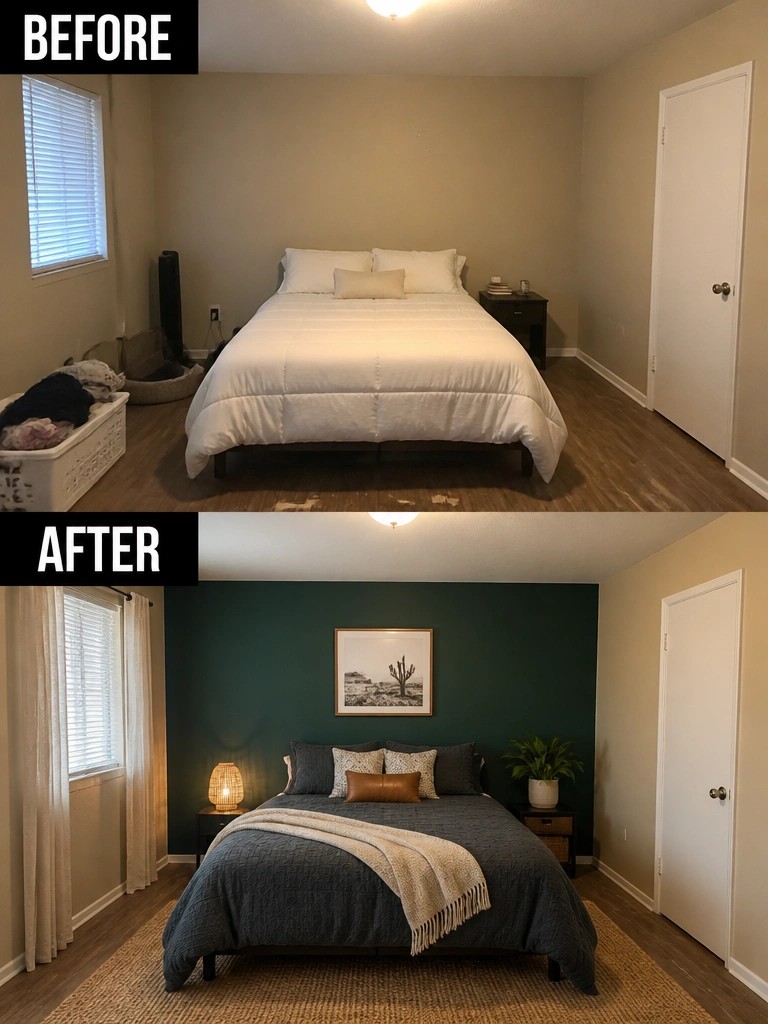
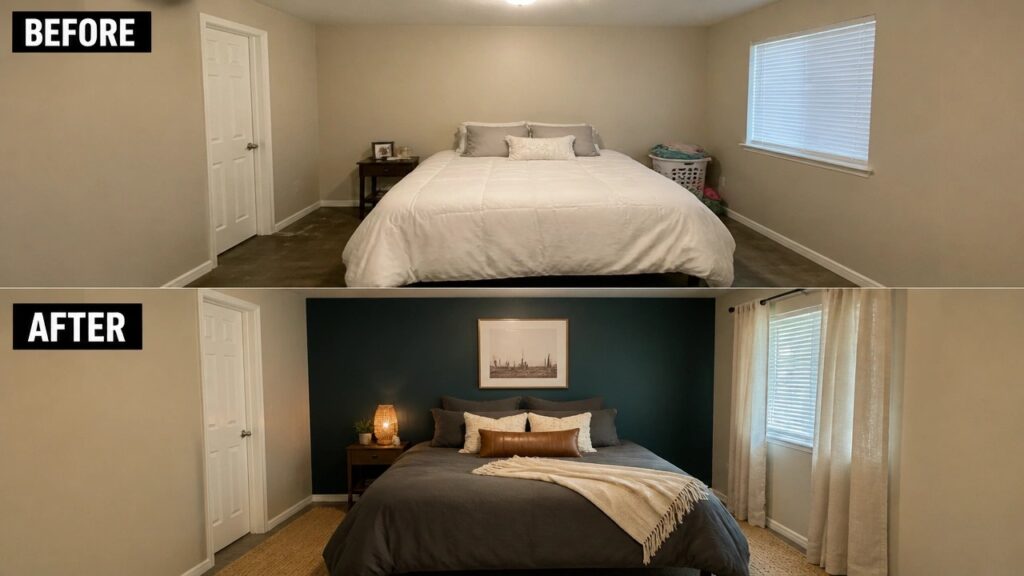
Painting the wall behind the bed a deep green color turns a plain bedroom into something that feels more finished. The change gives the space a clear focal point without needing a lot of new furniture or accessories.
This works best in rooms that already have decent layout but still feel flat. Pick one wall, use a color with some depth, and keep everything else simple so the painted area does the main job.
Clear Clutter To Refresh A Home Office
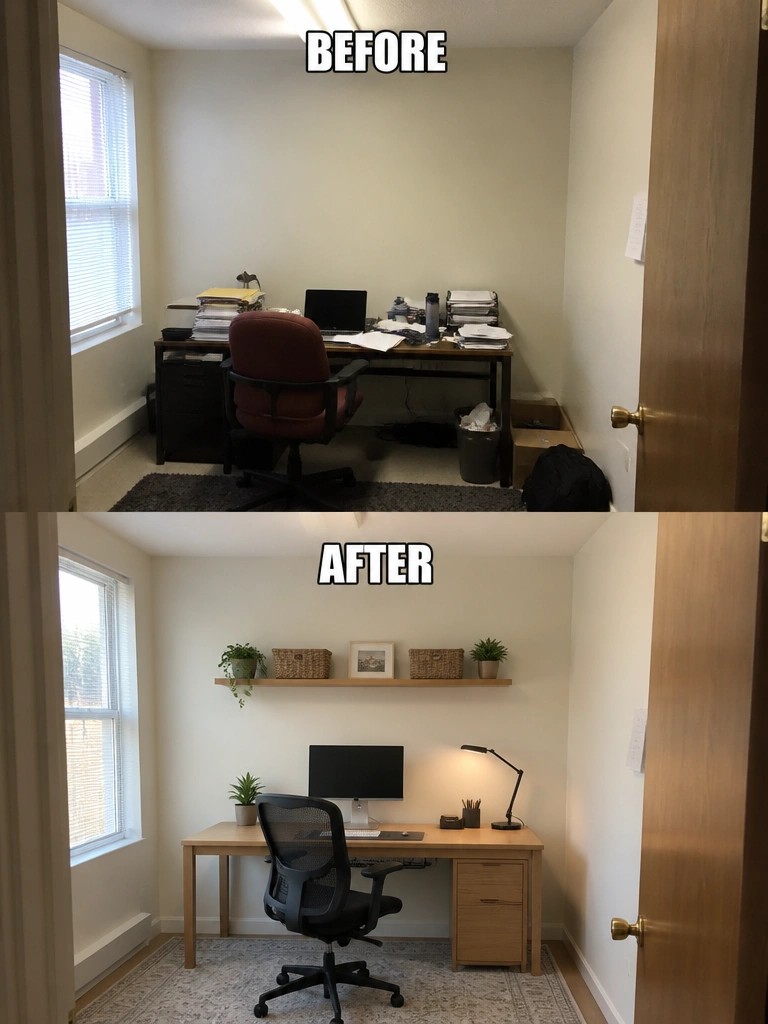
A cluttered desk makes any room feel smaller and harder to use. In this case, stacks of paper, extra boxes, and random items were removed, and the old dark desk was swapped for a lighter one with simple storage. The result is a space that feels open and ready for work instead of overwhelming.
This approach works well in spare rooms or small offices where paper and supplies tend to pile up. Start by clearing everything off the surface, then keep only what you use daily. A single shelf above the desk can hold a few baskets or plants without adding more mess.
Turn An Empty Room Into A Simple Bedroom
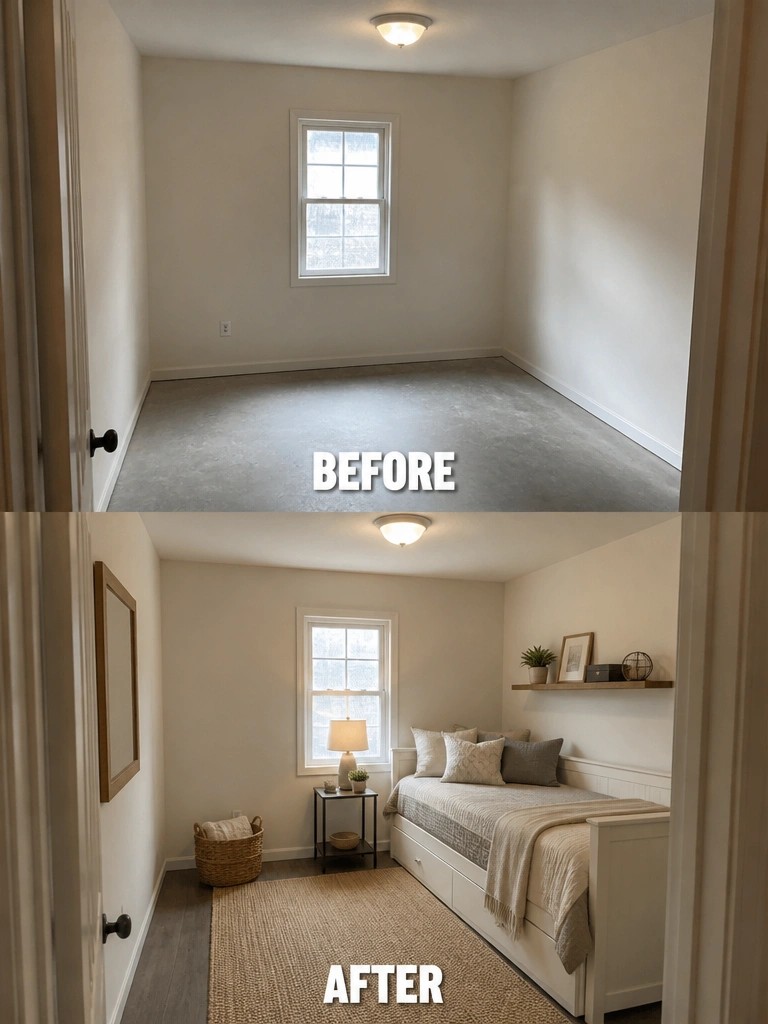
An empty room with bare walls and a concrete floor can feel hard to picture as anything useful. Placing a bed along one wall and adding a rug underneath gives the space an immediate purpose. A small side table with a lamp then makes the area feel ready for everyday use.
This idea works best in spare rooms or guest bedrooms where you want something functional without filling every corner. Start with the bed and rug to define the main area, then add just enough lighting and storage to keep the room practical. Avoid crowding the floor so there is still room to move around.
Add Wall Shelves To Organize A Bedroom
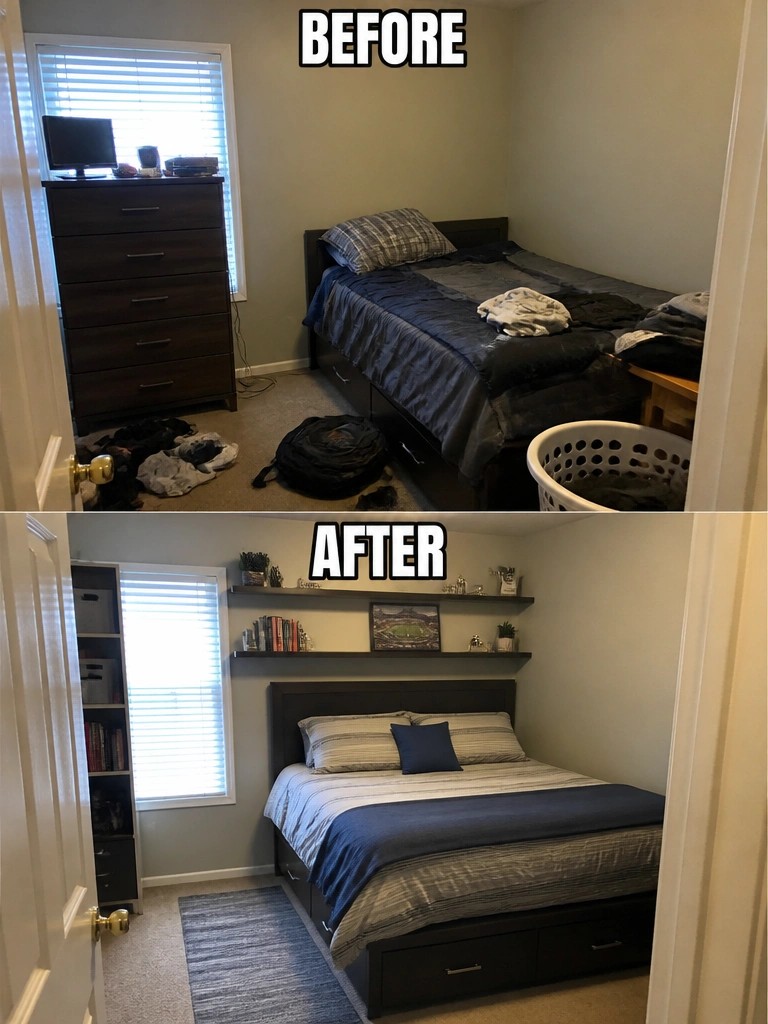
A cluttered bedroom often feels smaller and harder to keep clean when everything ends up on the floor. In this case, adding a simple set of floating shelves above the bed gave the room a clear place for books and small items while freeing up the rest of the space.
This approach works best in smaller bedrooms where built-in storage is limited. Clear the floor first, then install shelves at a height that keeps daily items within reach without crowding the wall.
Lighten A Dark Bedroom With Paint And Lighter Textiles
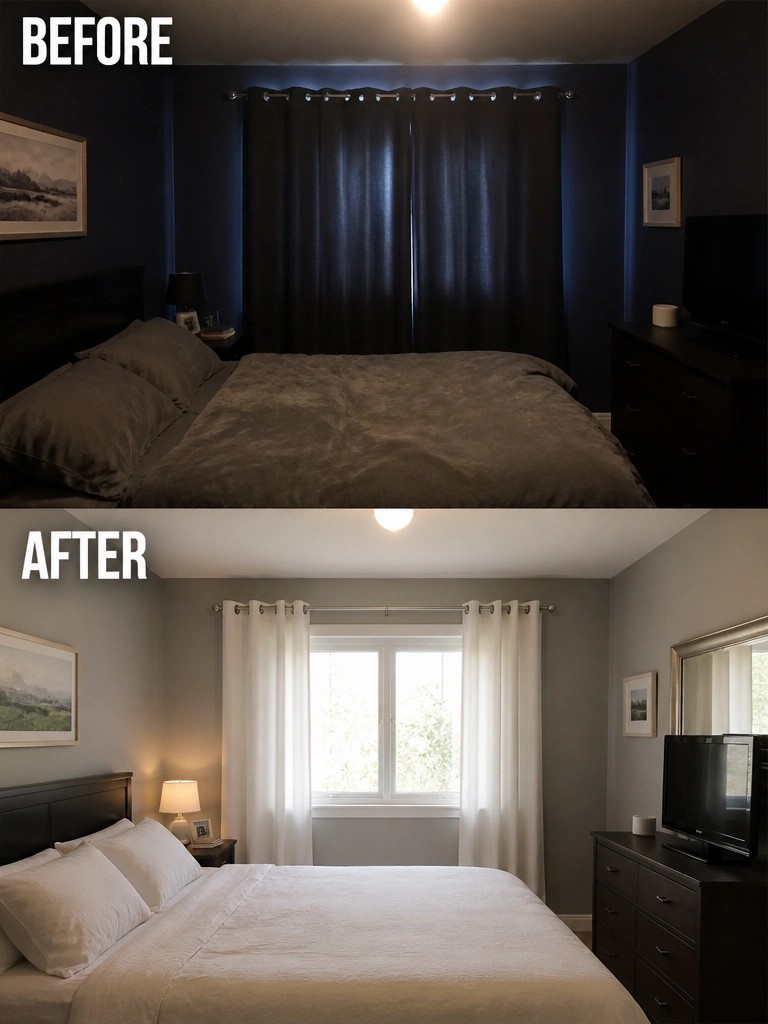
A dark bedroom often feels smaller than it really is. Here the navy walls and thick curtains blocked most of the light, leaving the space heavy and closed in. A lighter wall color and simple white curtains changed the feel completely by letting daylight reach farther into the room.
This idea suits bedrooms that already have a window but lack brightness. Paint the walls first, then replace dark bedding and heavy drapes with lighter options. The change stays practical because it works with whatever furniture is already there.
Add Wallpaper And A Shelf To Finish A Plain Workspace
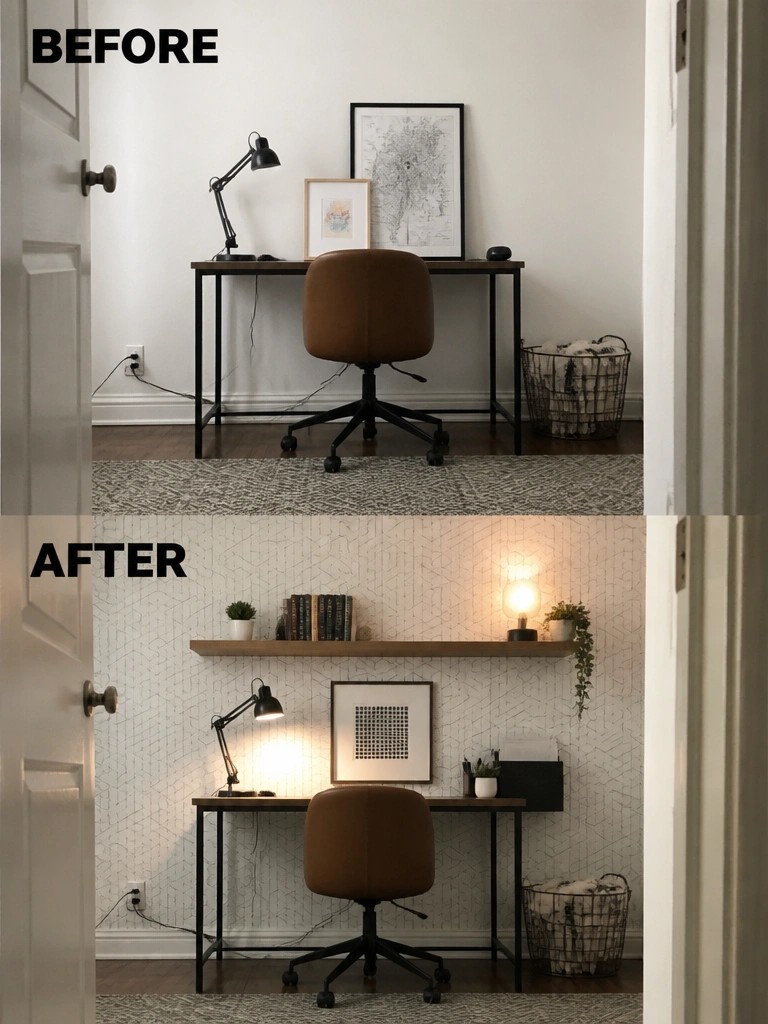
A plain wall behind a desk often leaves the space feeling unfinished, even when the furniture is already in place. Adding a patterned wallpaper and a floating shelf above the desk gave this workspace more structure and made the area feel more intentional.
This idea works best in home offices or spare rooms where you want a clear work zone without major construction. Focus on the wall treatment first, then keep the shelf simple with a few books and small plants so the space stays practical rather than cluttered.
Turn An Empty Spare Room Into A Workspace
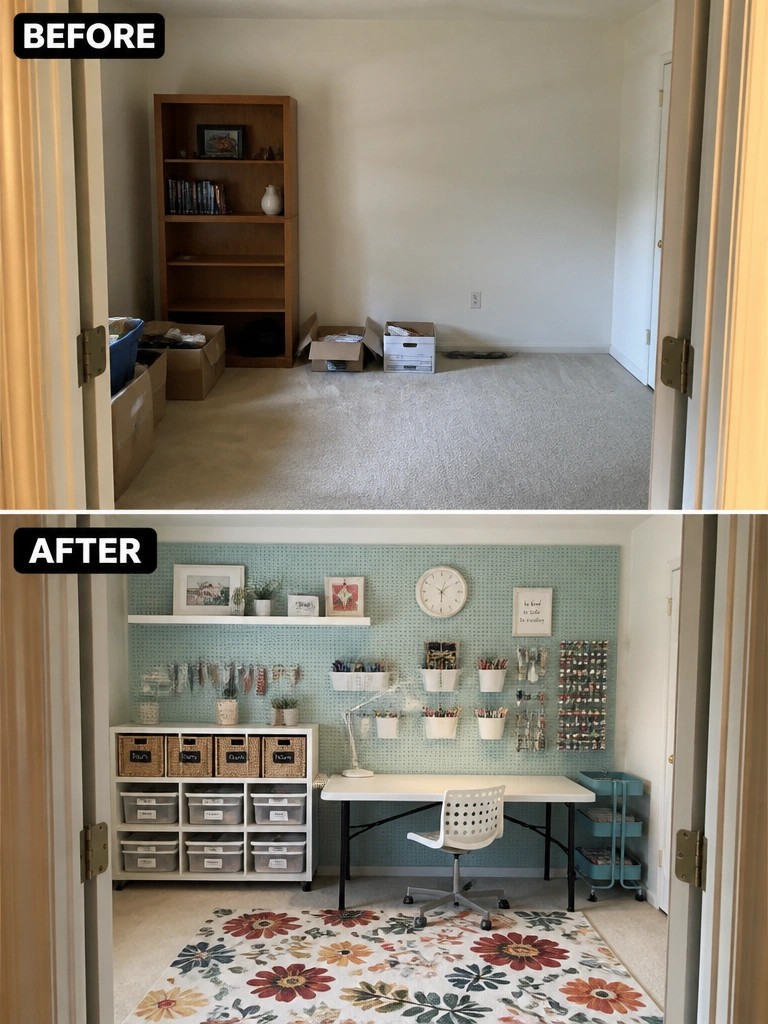
The room was mostly bare with only a bookshelf and a few boxes on the floor. Adding a pegboard for supplies along with bins and a simple desk gave the space a clear purpose and made it easy to keep everything in order.
This idea works best in spare rooms that do not have a set use yet. Focus on wall storage and a few bins first so the room stays practical instead of filling up with loose items over time.
Use A Gallery Wall To Refresh A Bedroom
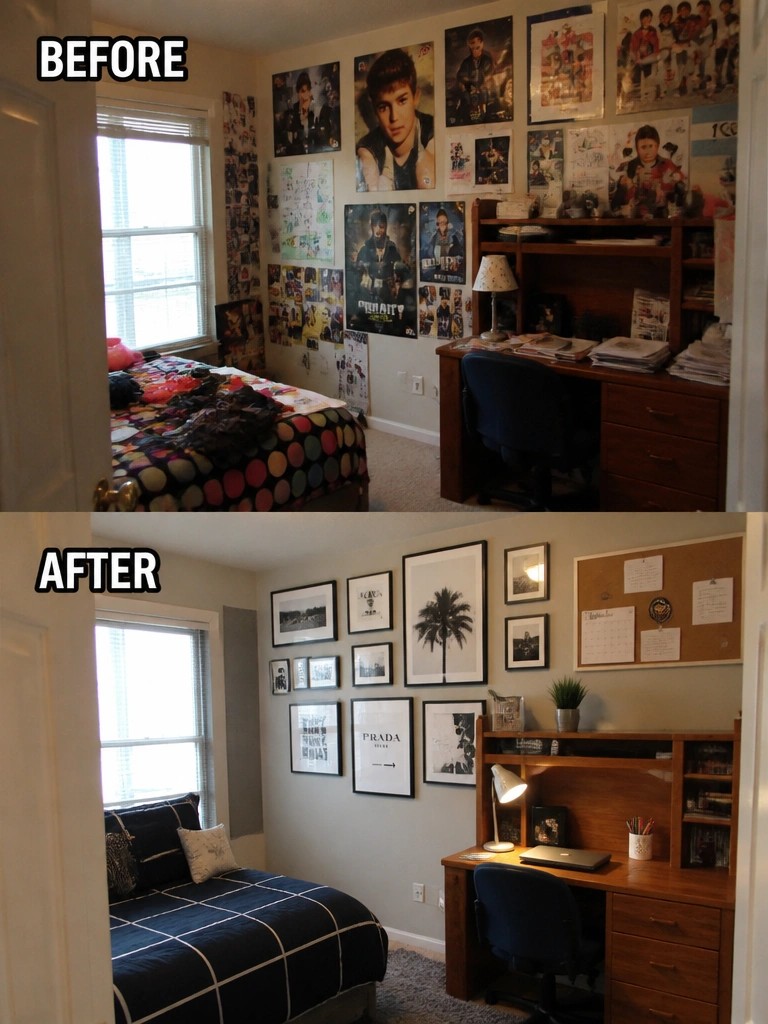
A bedroom covered in posters can start to feel overwhelming once the initial fun wears off. In this case the walls went from being packed with dozens of small images to a simple arrangement of larger framed pieces. That single change made the whole room feel calmer and more put together without needing new furniture or paint.
This approach works well in any bedroom that has outgrown its original look. Start by clearing everything off the walls, then pick a handful of frames in similar sizes or colors. Keep the rest of the room simple so the gallery stays the main focus. It is an easy update that can grow with the space instead of needing to be redone every few years.
Turn An Empty Room Into A Functional Bedroom
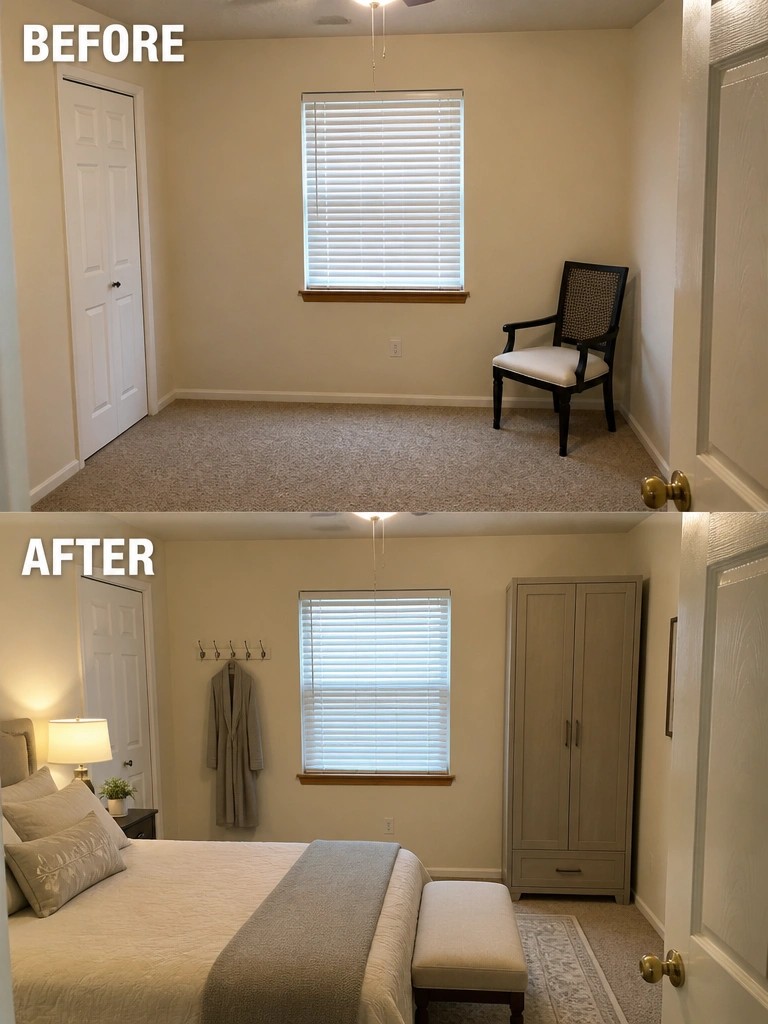
An empty room often stays unused until you decide what it needs to do. Adding a bed, a wardrobe for storage, and a bench at the foot of the bed gave this space a clear purpose and made it feel finished.
This idea works best in spare rooms or guest bedrooms where storage and a place to sleep matter more than extra decor. Keep the furniture scale simple so the room still feels open, and add one rug and a lamp to tie the layout together.
Organize Office Shelves With Simple Storage Bins
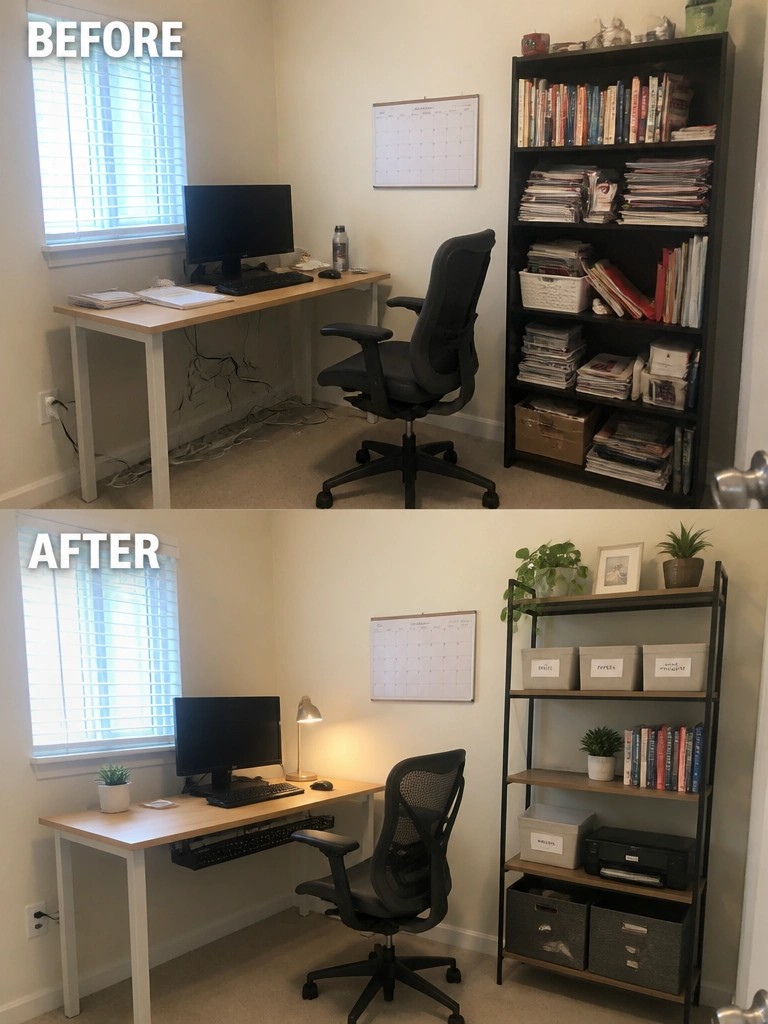
A crowded bookshelf can make any workspace feel smaller and harder to use. Replacing it with open shelving and a few matching bins lets you store what you need while keeping the surface clear and the room easier to move around in.
This idea suits small offices or spare rooms where every piece of furniture needs to stay useful. Start by sorting papers and supplies into a handful of bins, then leave a little empty space on the shelves for a lamp or plant so the area does not feel packed.
Update The Flooring To Refresh A Bedroom
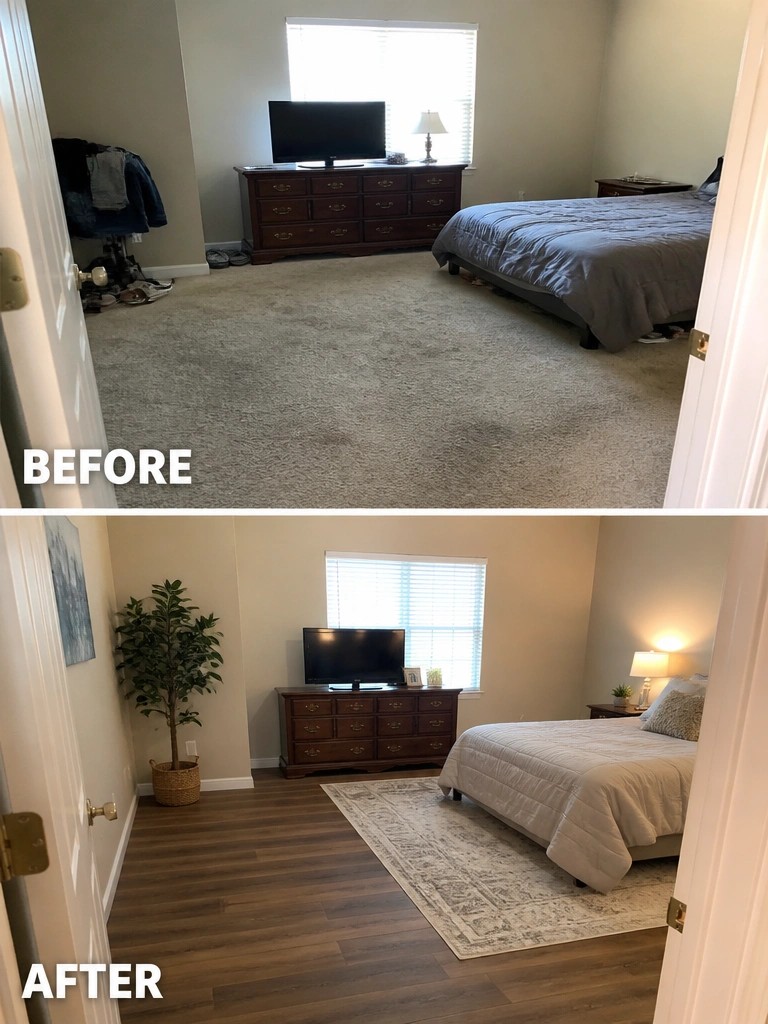
Switching from old carpet to hardwood floors instantly changes how a bedroom feels. In this case the room went from looking dated and a little tired to much cleaner and brighter once the carpet was replaced and a large rug was added under the bed.
This approach works well in any bedroom where the carpet is worn or the space feels flat. Keep the rug large enough to sit under the front legs of the bed and nightstands so the area feels grounded. It is usually easier to start with the floor update before adding plants, lamps, or other accessories.
Add Wall Paneling To A Plain Bedroom Wall
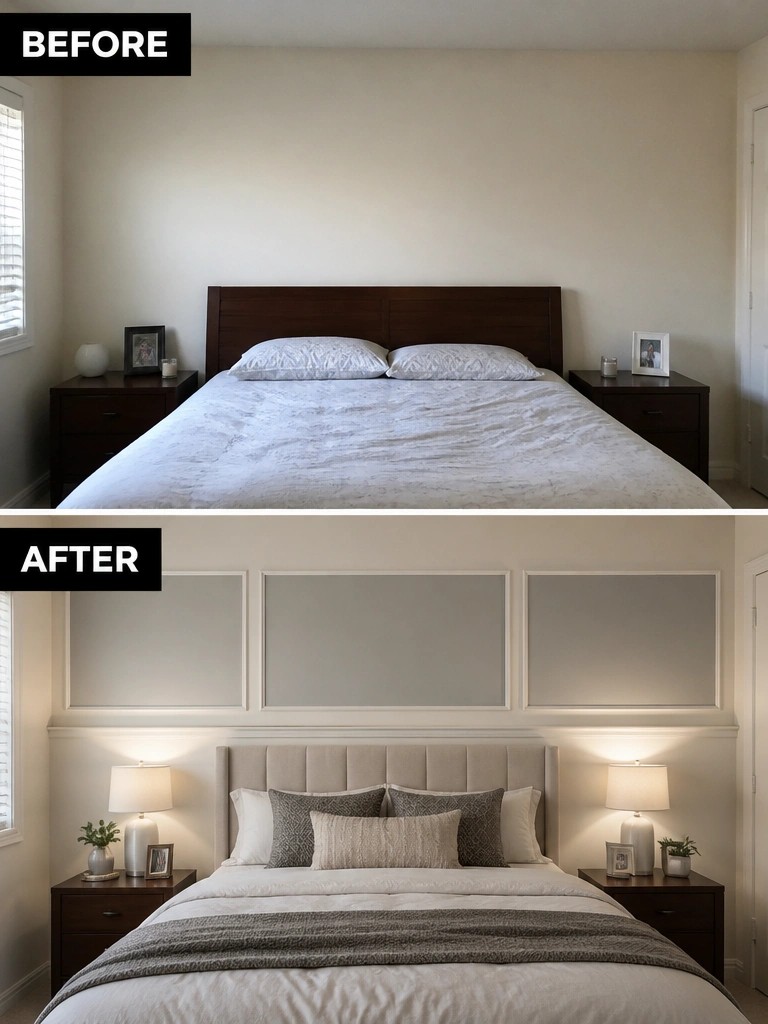
A bedroom with bare walls can feel unfinished even when the furniture is already in place. Adding trim and simple paneling above the bed gives the wall structure and turns it into a clear focal point without crowding the room.
This approach works best in spaces that already have decent furniture but lack any architectural detail. Measure the wall first, keep the panels evenly spaced, and paint them the same color as the wall or a soft contrast so the effect stays subtle rather than busy.
Use A Murphy Bed To Make A Spare Room Work Harder
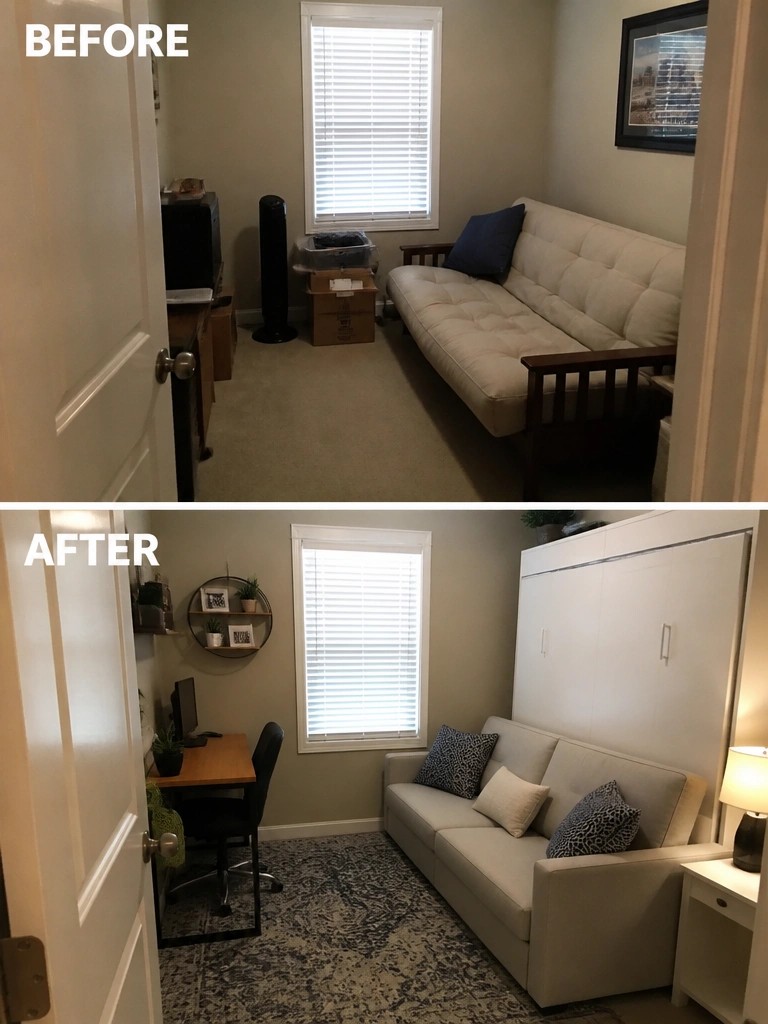
A cluttered spare room with boxes and random furniture rarely gets used well. Adding a Murphy bed cabinet along one wall and setting up a simple desk on the other side turns the space into something practical. The room now has a clear workspace during the day and a place for guests to sleep when needed, without the floor feeling crowded.
This approach works best in smaller homes or apartments where one room has to serve more than one purpose. Keep the desk and seating scale modest so there is still room to move around, and choose a cabinet style that blends with the walls. The key is deciding on the main uses first, then placing the bed and desk to support them rather than filling the room with extra pieces.
Turn An Unused Window Corner Into A Window Seat
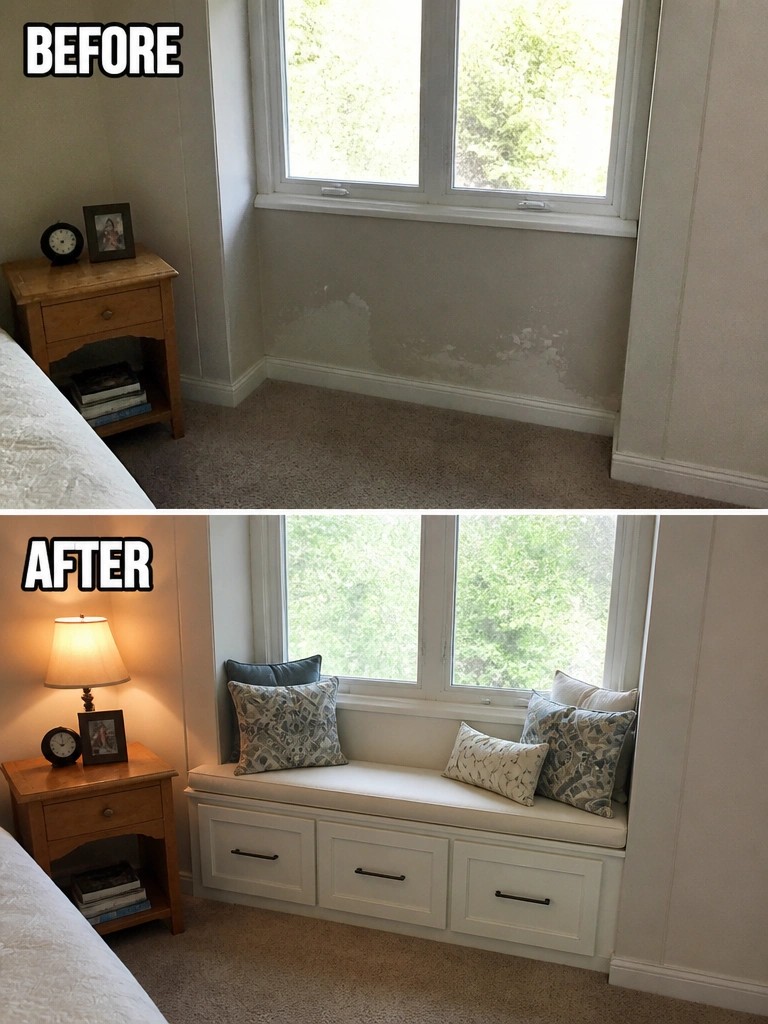
A simple way to improve an awkward bedroom corner is to add a window seat with built-in storage. The space went from an empty area with a damaged wall to a useful bench that holds pillows and keeps extra items tucked away.
This idea works best in rooms that already have a nightstand nearby, since the seat adds seating without needing much extra floor space. Measure the window height first so the bench fits comfortably and leaves room to open the drawers.
Add Layered Lighting To A Plain Office
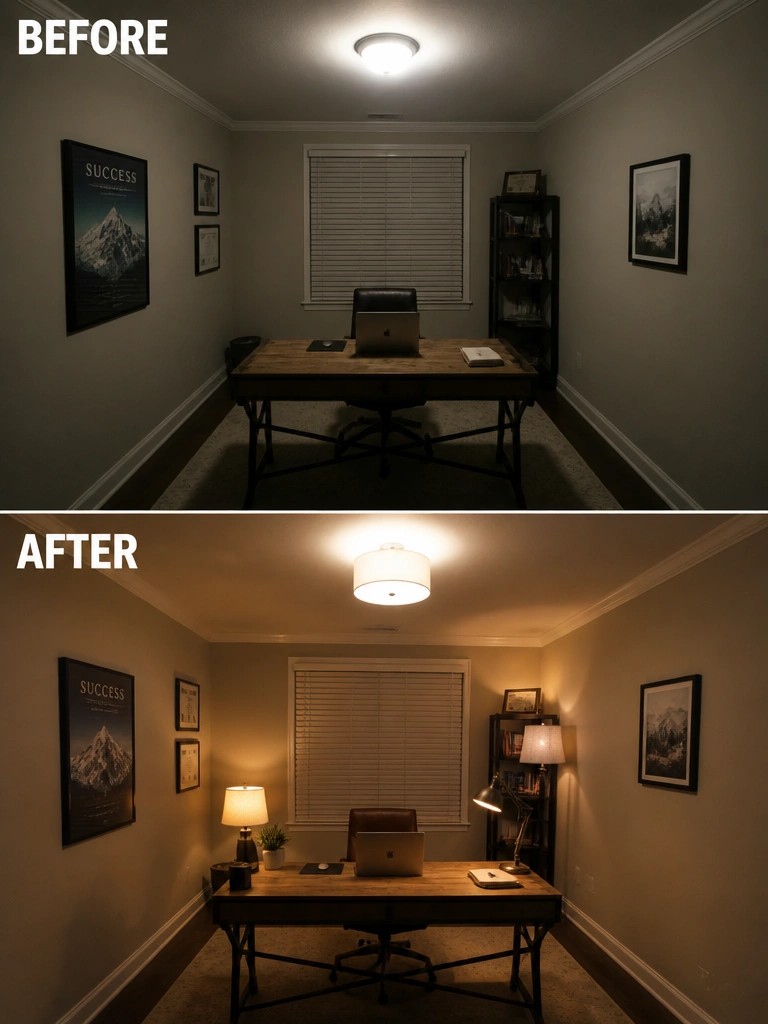
The office felt flat and a little cold under the single ceiling light. Adding a couple of table lamps and a desk lamp softened the light and made the room much easier to work in for longer periods.
This idea works well in any small home office or spare room that gets used in the evening. Start with one or two lamps on side surfaces, keep the overhead light on a dimmer if possible, and adjust until the workspace feels balanced without being too bright or too dim.
Reduce Heavy Furniture To Open Up A Bedroom
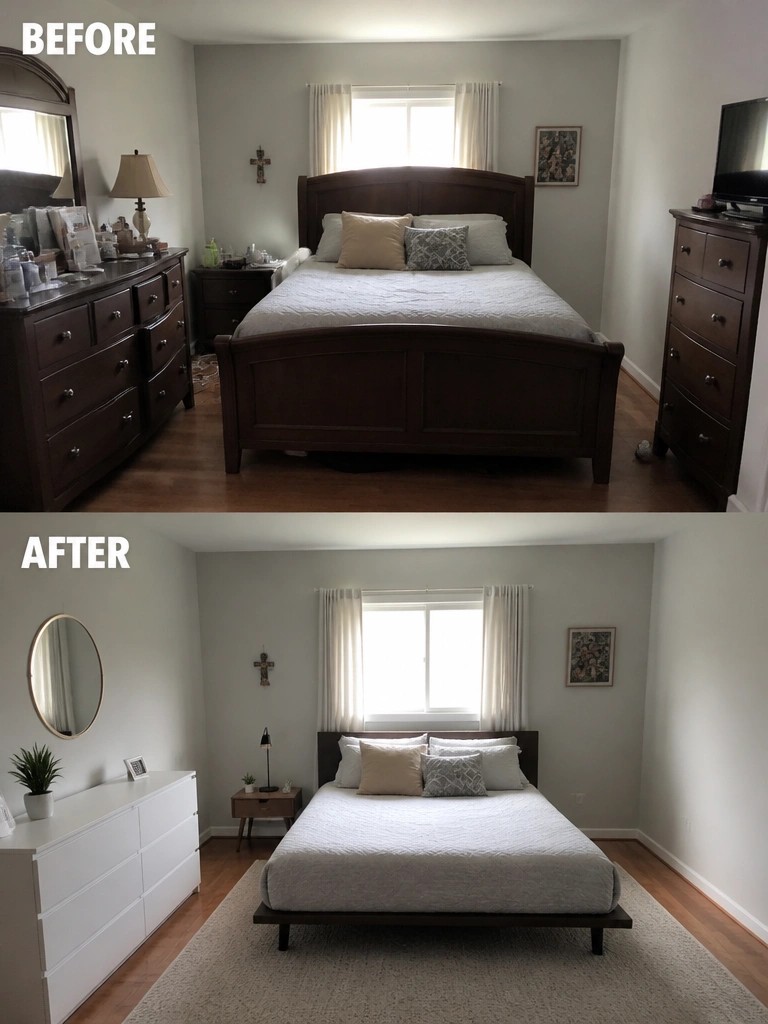
The before photo shows how two large dark dressers made the room feel tight and heavy. Switching to one smaller dresser and a simple nightstand let the bed sit more naturally in the space and gave the room better flow.
This idea works well in bedrooms where storage pieces start to crowd the walking paths. Measure the room first and keep only what you actually use every day. A rug under the bed helps tie the remaining pieces together without adding more bulk.
Fill A Plain Room With Plants And Simple Furniture
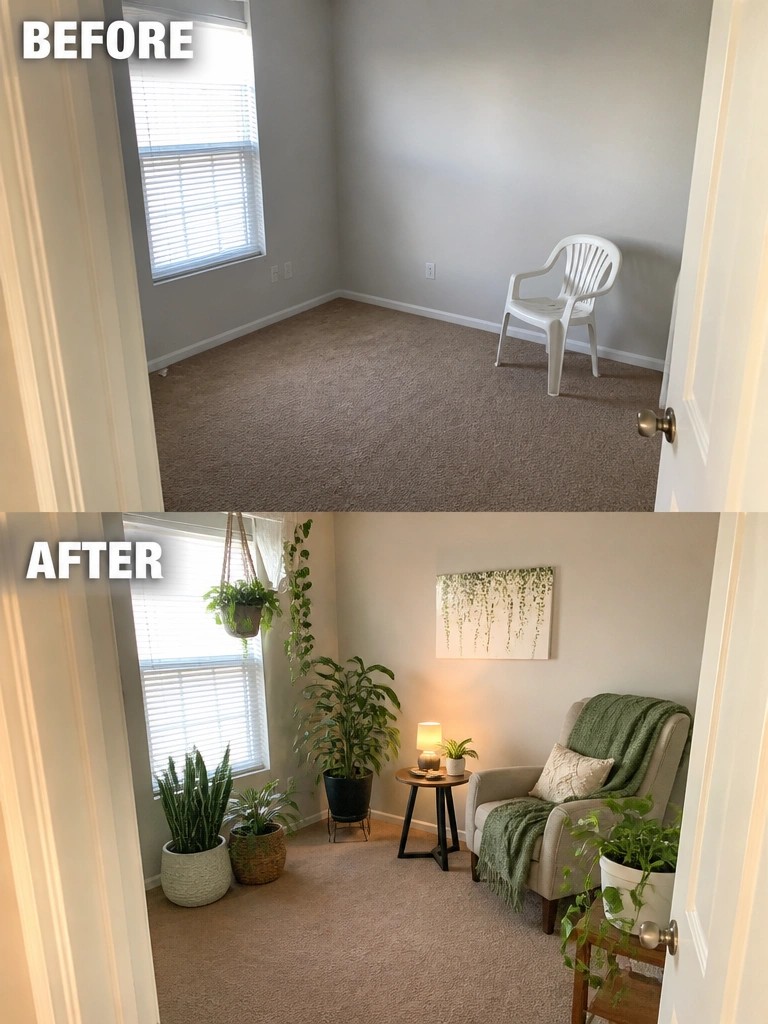
An empty room with just a single plastic chair can feel cold and unfinished. Adding several houseplants in different sizes and heights, along with a comfortable chair, a small table, and a couple of lamps, instantly makes the space feel lived in and welcoming.
This idea works especially well in spare rooms, offices, or guest spaces that need purpose without a lot of new furniture. Start with a few larger plants near the window and add smaller ones around the seating area. Keep the rest of the room simple so the greenery does the main work.
Turn A Cluttered Bedroom Corner Into A Seating Spot
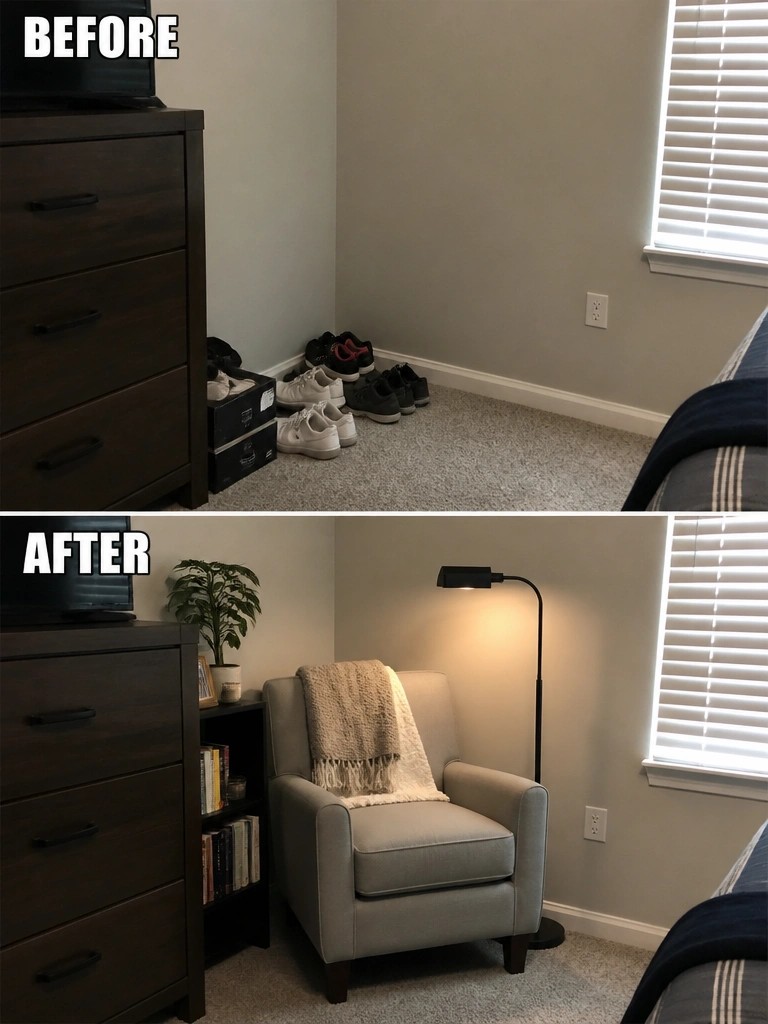
A corner that once held nothing but scattered shoes and boxes now holds a chair and a small lamp. Clearing the floor and adding one comfortable seat gave the space a purpose instead of leaving it as leftover storage.
This idea works well in bedrooms that have an awkward empty spot near a window or dresser. Start by removing anything that does not belong there, then bring in a chair that fits the room scale and add one light source so the seat actually gets used at night.
Warm Up A Basic Office With Paint And A Rug
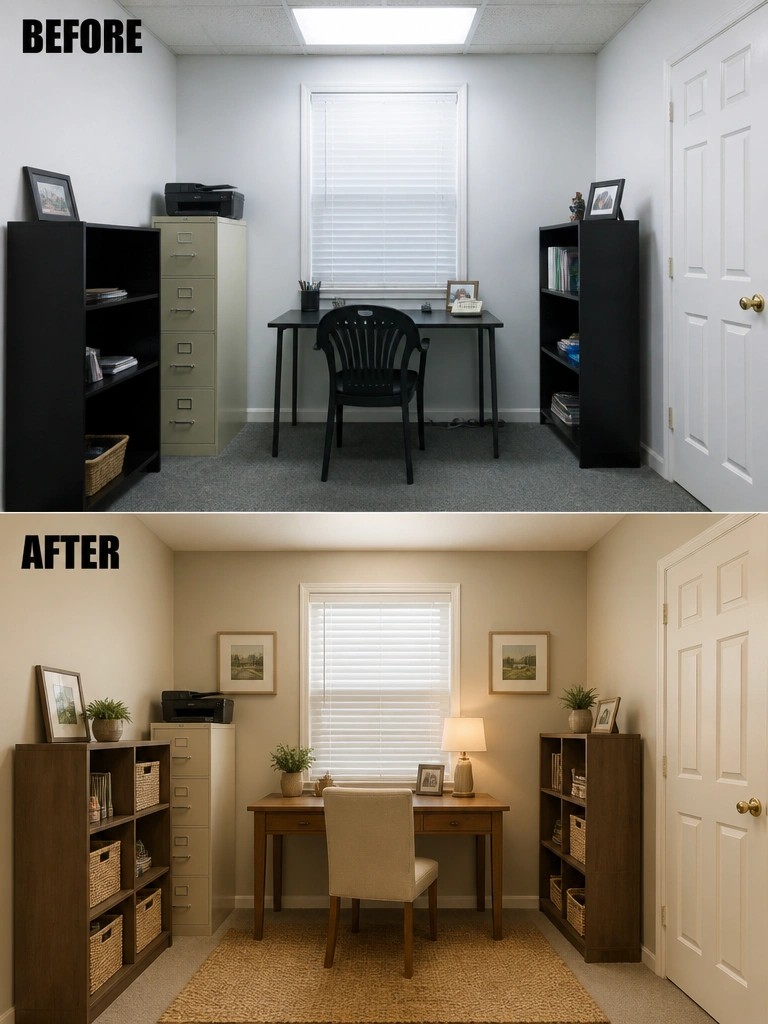
A plain office often feels unfinished when the walls are cool and the furniture sits directly on carpet. Painting the walls a warmer tone and placing a rug under the desk instantly pulls everything together and makes the room feel more intentional.
This approach works well in small home offices or spare rooms where you want to keep the layout simple. Choose a rug large enough to fit the desk and chair, and match the new furniture tones to the wall color so the space feels calm rather than busy.
Make A Plain Bedroom Feel Finished
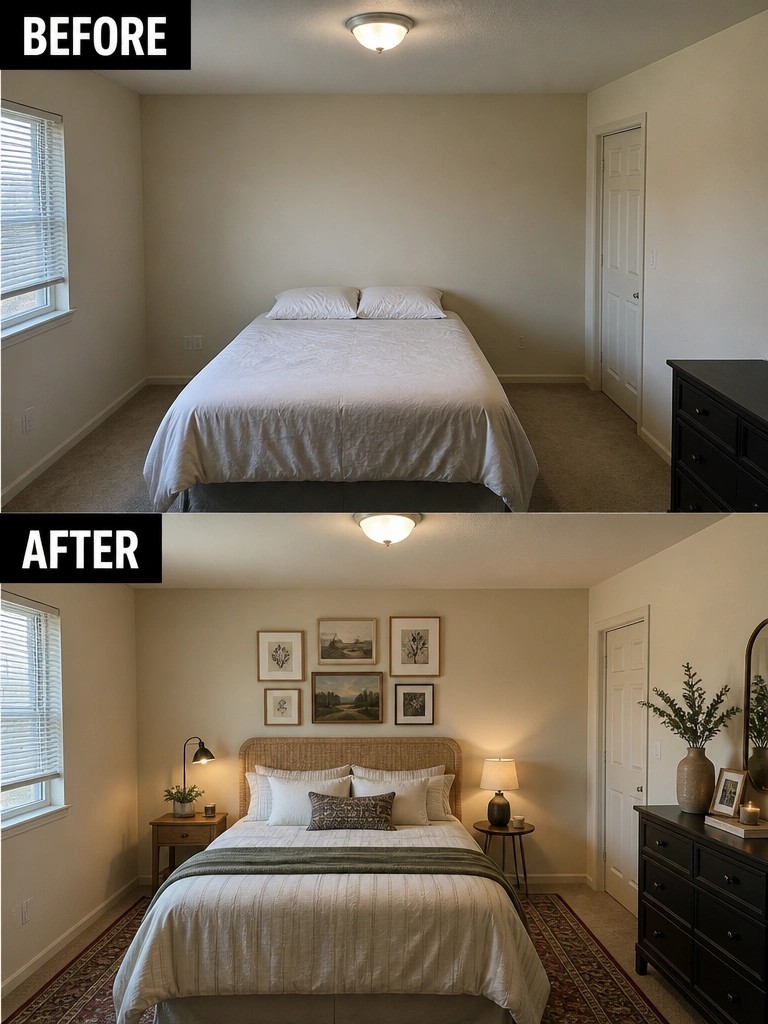
A bedroom that only has a bed often feels like it is missing something. In this case, adding a gallery wall above the headboard and placing matching lamps on either side of the bed gave the room a clear center and made it feel like a finished space instead of a temporary one.
This idea works in any bedroom that still feels bare after the main furniture is in place. Pick one wall for simple art, add a rug to anchor the bed, and keep the lamps at a useful height so the room feels balanced at night without extra effort.
Frequently Asked Questions
Q: How can I keep costs down when trying these ideas?
A: Shop secondhand stores for furniture pieces that fit your style. Repurpose items you already own like old curtains as room dividers. Stick to paint and simple accessories for the biggest impact.
Q: My landlord won’t allow painting. What works instead?
A: Layer textiles like rugs and throws to add color and warmth. Use removable wallpaper or decals for patterns on the walls. Move furniture around to create better flow in the room.
Q: Which ideas help most with turning a spare room into an office?
A: Add a dedicated desk area with good lighting from a nearby window. Use shelves to organize papers and supplies without clutter. Include a comfortable chair that fits the space you have.
Q: Should I tackle the whole room in one weekend?
A: Start with smaller swaps like new bedding or desk organizers. Build from there as you find pieces you like.
