

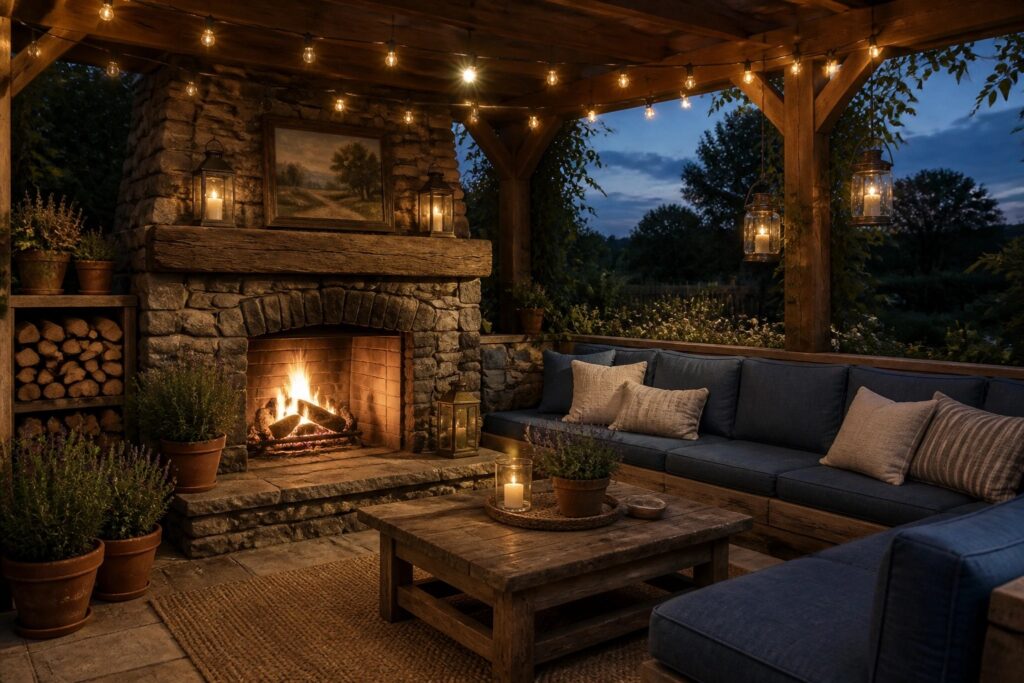
Patios can feel like an afterthought in many homes until you add a fireplace that actually encourages people to linger after dark.
I have found that the best setups balance the heat source with enough room for chairs and tables so the space stays practical for real gatherings.
Layout counts here.
Over time I have learned to look for ideas that keep the fire visible from multiple angles without blocking paths or making the area too hot in one spot.
A few of these approaches seem worth trying out in my own yard to see how they handle evening use.
A Fireplace In A Covered Patio
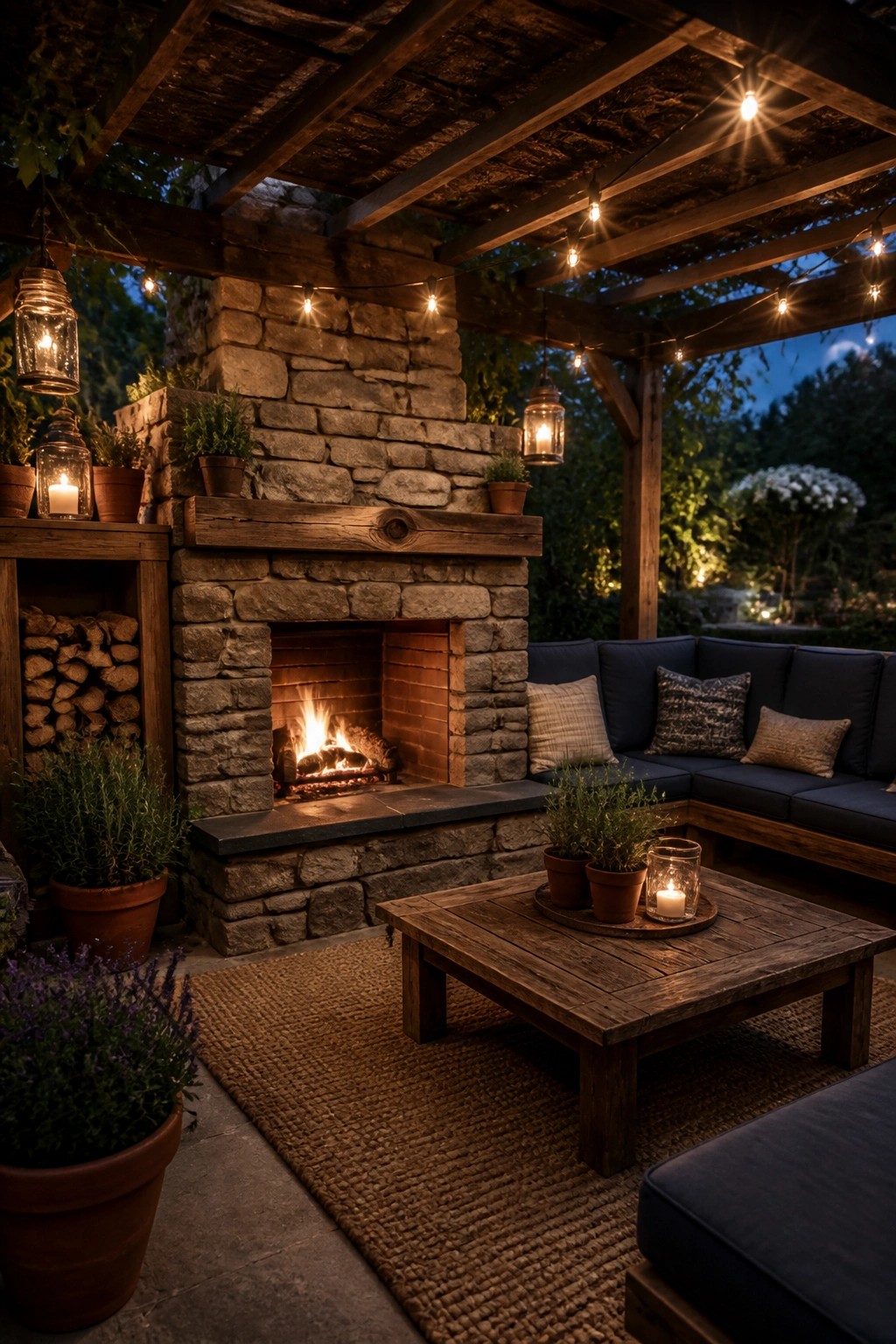
A fireplace under a roofed structure makes it easier to stay outside once the sun goes down. The cover protects the seating from dew or light rain while the fire gives off steady warmth and a bit of light.
This works well on patios that already have a solid overhead frame. It suits homes in cooler climates where evenings cool off fast and you want a simple spot for a few people to gather without moving inside.
Fireplace Built Into The Patio Wall
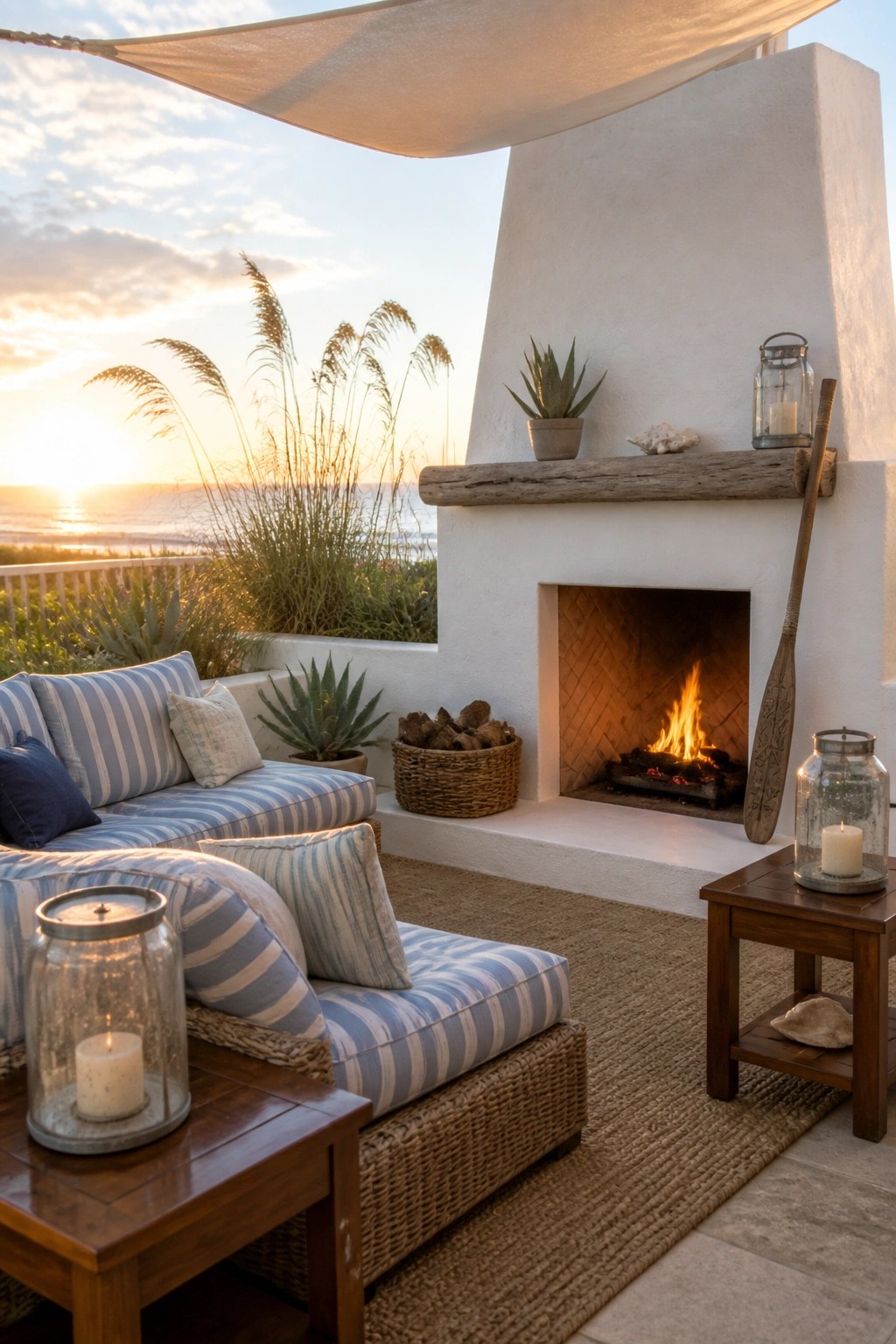
A fireplace that sits right in the patio structure gives the whole space a steady center. People end up gathering around it naturally once the sun drops, and it keeps the area usable on cooler nights without any extra setup.
This works best on patios that already have some kind of low wall or built edge. Keep the seating close but not cramped, and choose a simple surround so the fireplace feels like part of the patio rather than something added later.
Built-In Fireplaces Along Patio Walls
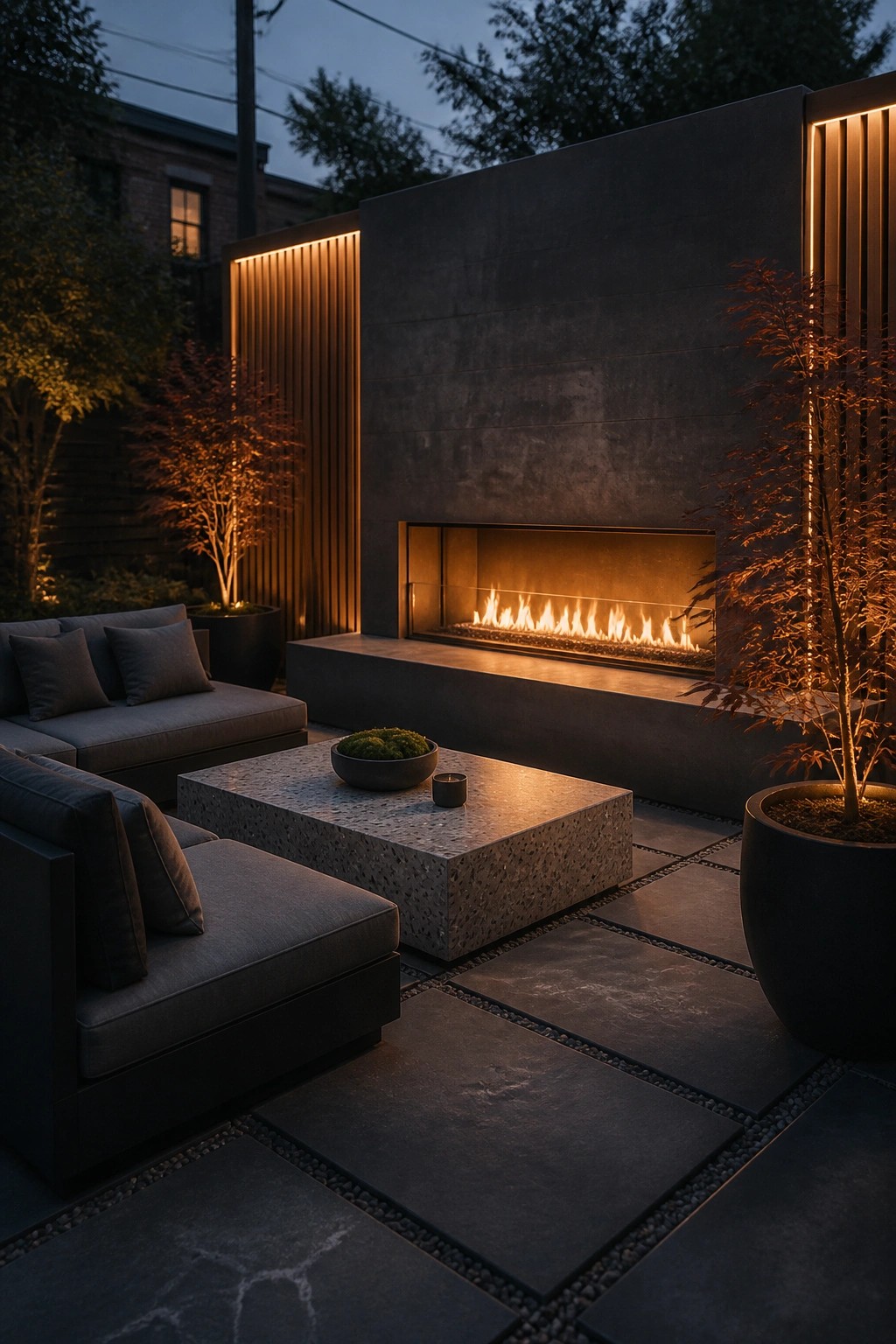
A linear fireplace set right into a concrete wall gives the patio a clear center without taking up extra floor space. It keeps the seating area feeling open while still providing real warmth on cooler evenings. The clean lines of the firebox also help the wall itself look more intentional instead of just a boundary.
This setup works best on patios that already have some solid structure behind them, like a garden wall or the side of the house. Keep the seating low and close so people can gather around the fire without blocking the view. Just make sure the wall material can handle the heat and that the firebox sits at a comfortable viewing height.
Built-In Seating Around The Fireplace
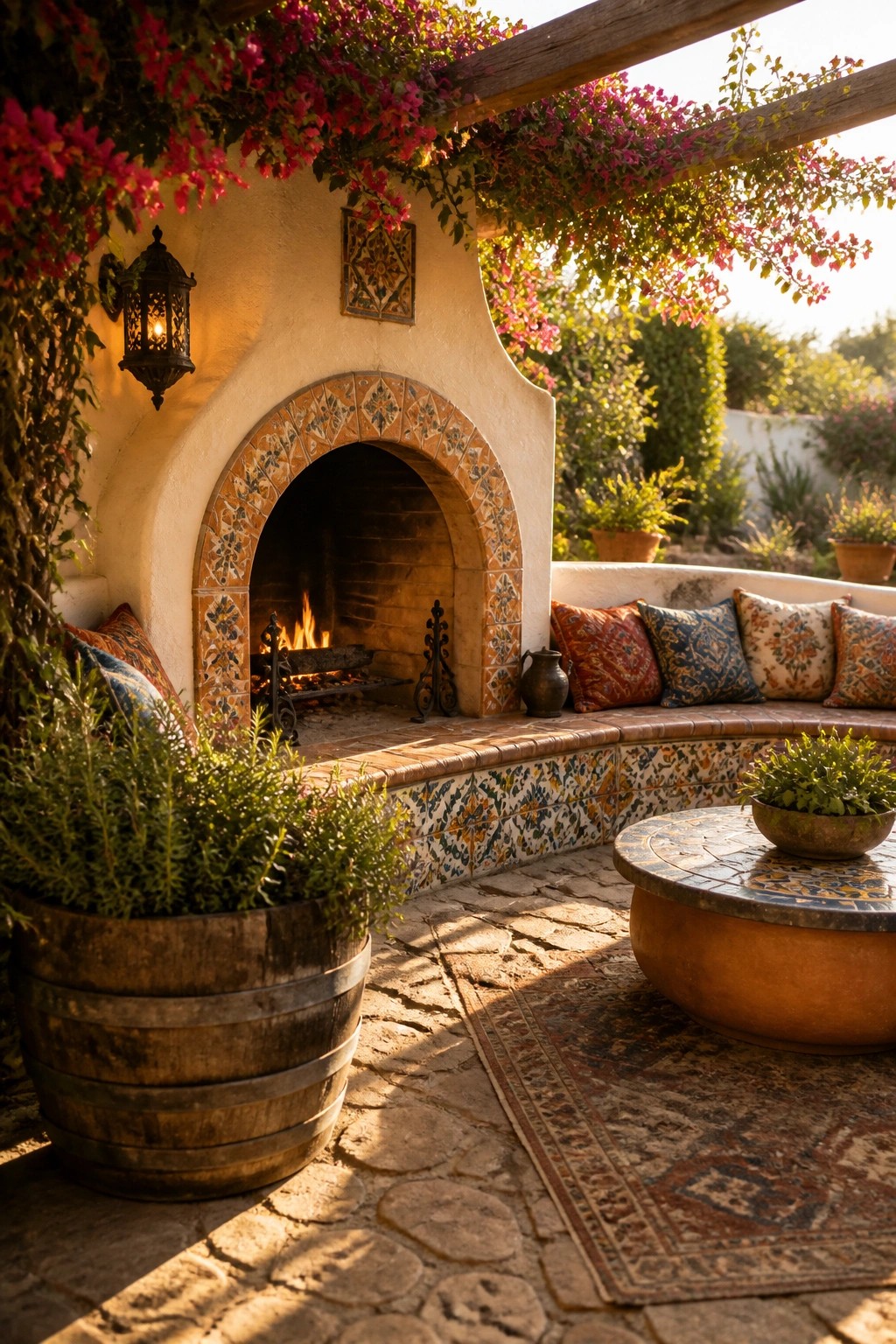
A curved bench built right into the patio makes the fireplace the natural spot to gather. It gives you room for several people without needing extra chairs scattered around.
This setup works best on mid-sized patios where you want the fire to feel central. Use weatherproof cushions and keep the bench height low so it stays comfortable for long evenings.
Anchor the Patio With Fireplace and Low Seating
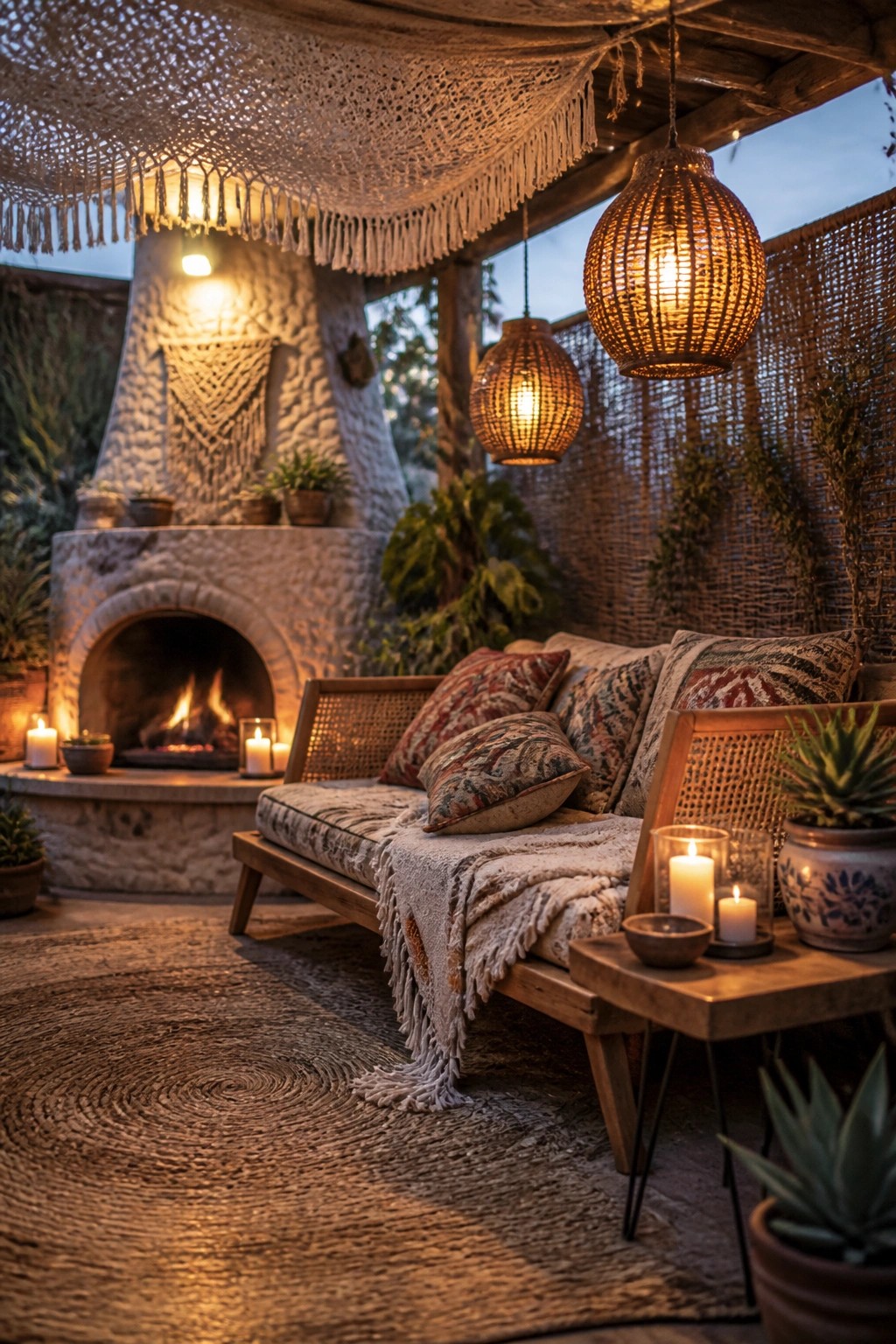
A fireplace works best when the seating sits right beside it instead of across the space. This layout keeps people close to the warmth and makes the whole area feel like one relaxed zone rather than separate pieces.
Set a low bench or daybed along the side of the firebox and add a few pillows and a light throw. It suits most patios that already have a solid surface and some overhead cover, and it keeps the setup simple to use on weeknights without much rearranging.
Built-In Fireplaces For Outdoor Patios
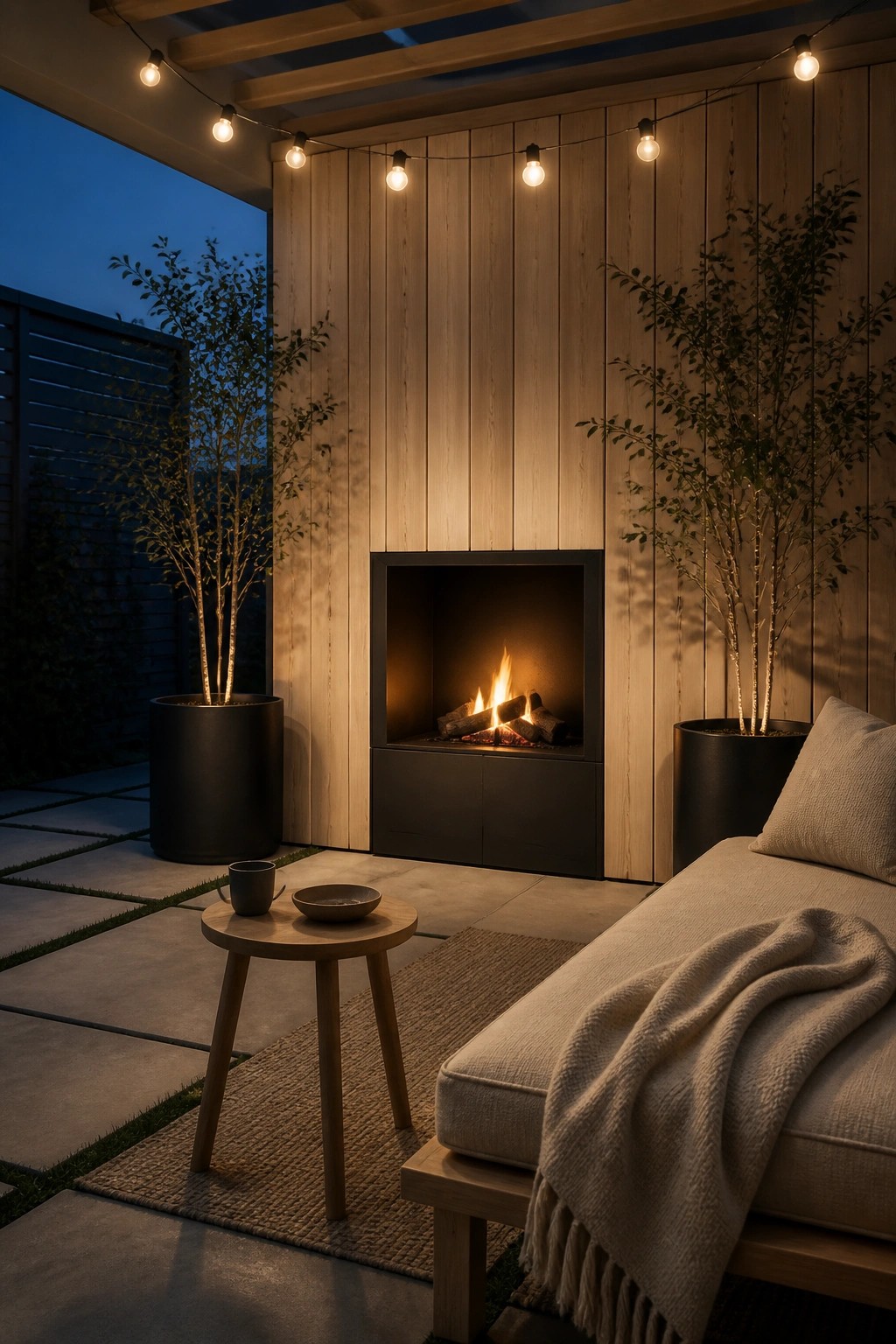
A fireplace set into the back wall turns the patio into a place you can actually use once the sun goes down. It gives the space a clear center without needing a big freestanding unit that takes over the floor.
This works best on patios that already have a solid wall or fence line behind them. Keep the rest of the area fairly open so the fire stays easy to gather around and does not feel crowded.
Anchor a Patio With a Fireplace
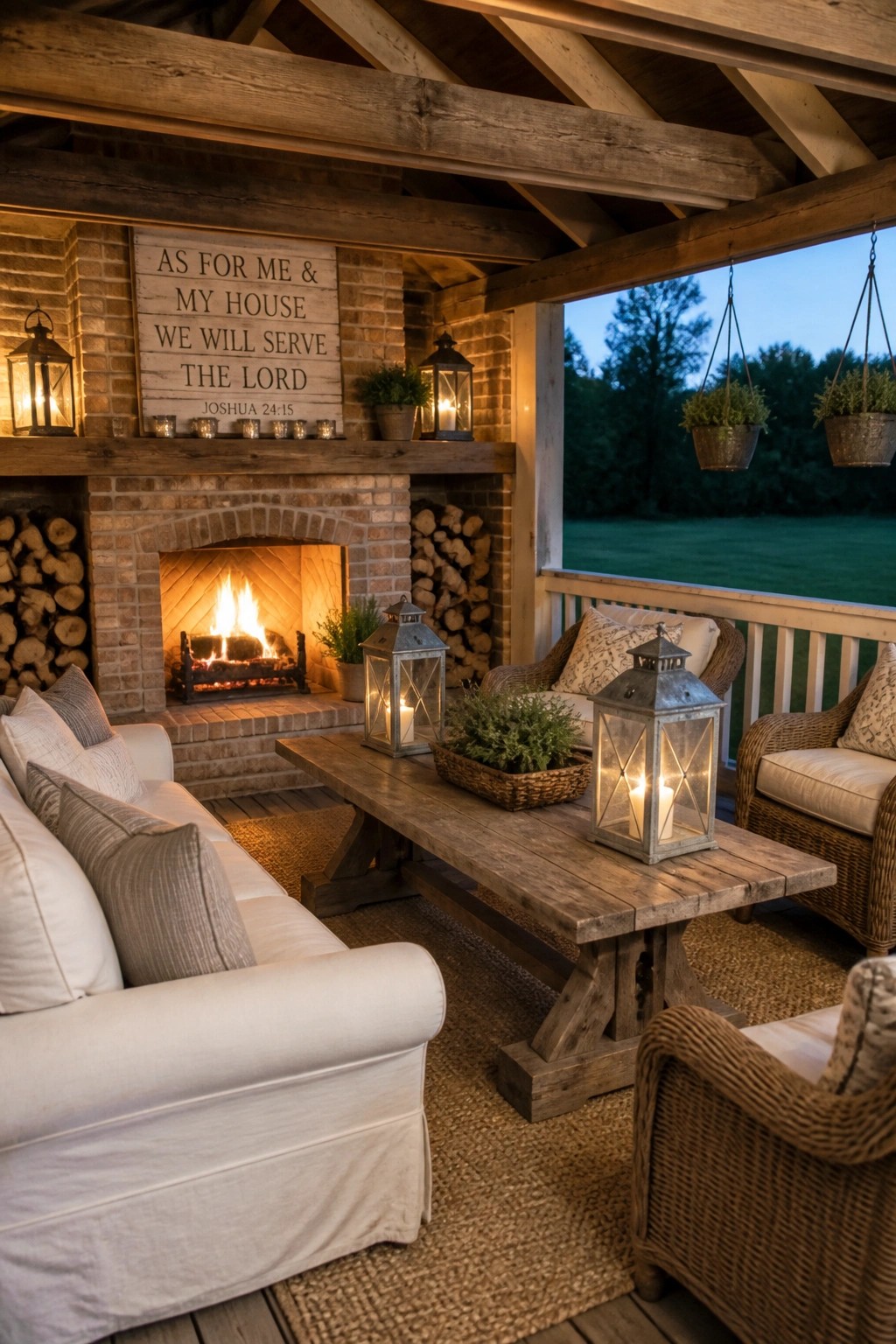
A fireplace gives an outdoor space a clear reason to stay outside once the sun goes down. It creates a natural spot for people to gather without needing much else to make the area feel complete.
This works best on a covered porch or deck where the structure can handle the heat and smoke. Keep the seating and table close but not right on top of the fire so the space stays easy to move around in.
Built-In Fireplaces Along The Patio Wall
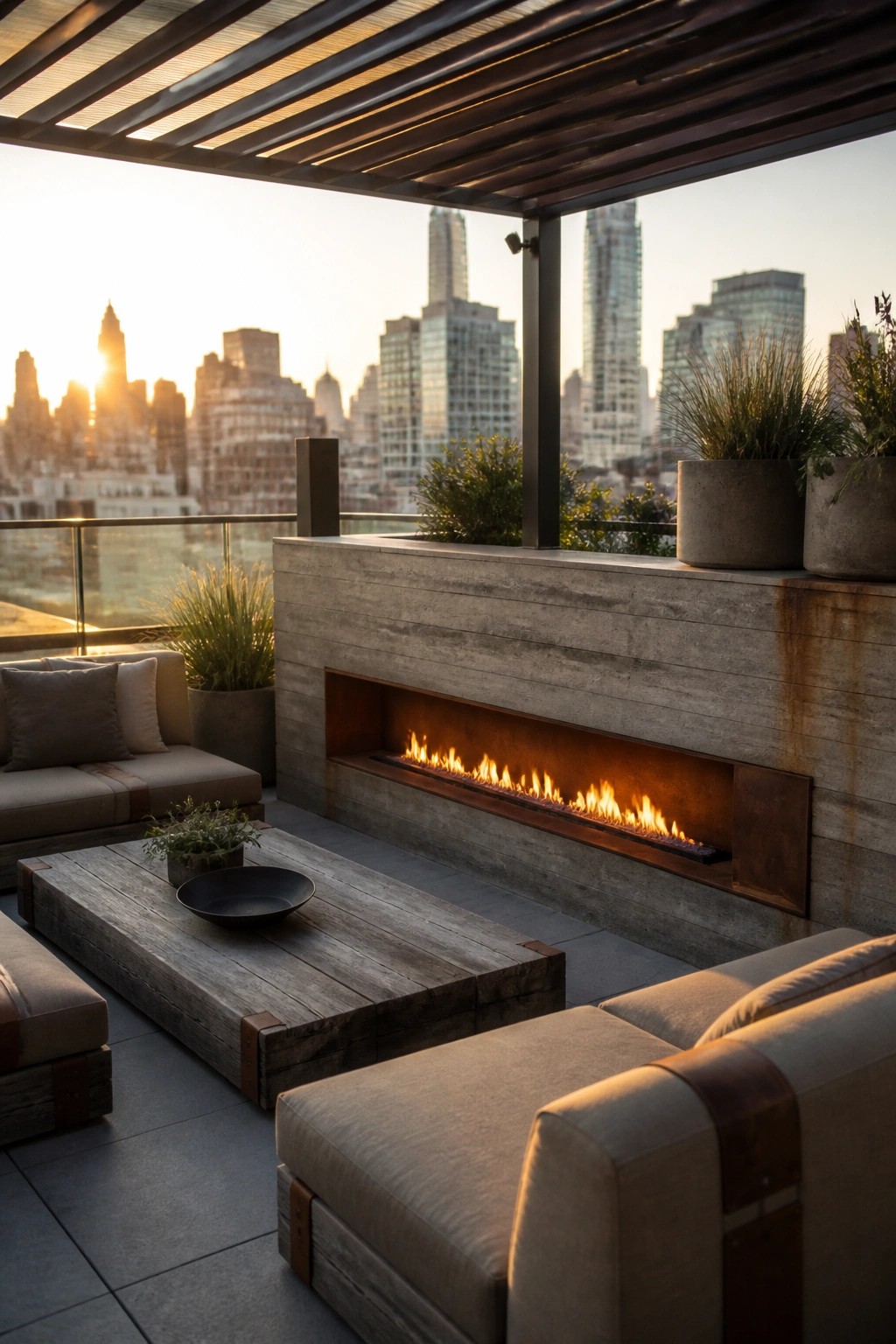
A long built-in fireplace set into a low concrete wall keeps the fire visible from every seat without taking up floor space. It turns the edge of the patio into the natural gathering spot and works especially well on rooftops or terraces where the view stays open behind it.
This layout suits homes that already have a solid wall or railing to work with. Keep the wall height close to seat level so the flames stay in sight, and choose a simple linear burner that does not need much maintenance.
Include a Fireplace in Your Outdoor Seating Area
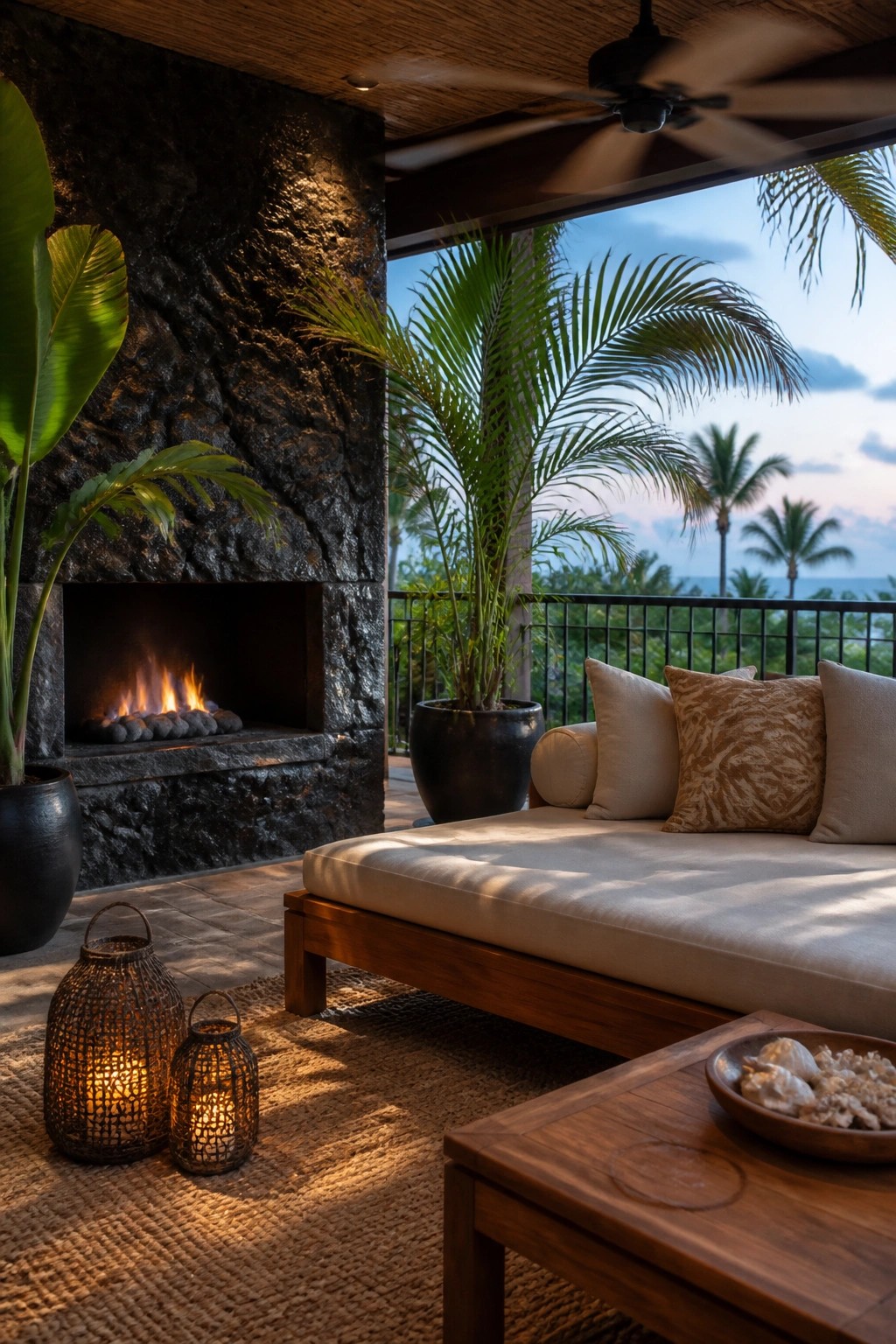
A fireplace built into the patio gives you a steady source of warmth that keeps the space usable after dark. It turns a regular seating spot into one people actually want to linger in without heading back inside right away.
Place a low daybed or bench close to the fire so the heat reaches the seating without taking over the whole layout. This setup works best on patios that already have some overhead cover and a solid floor surface that can handle the heat and occasional sparks.
Built-In Seating Around The Fireplace
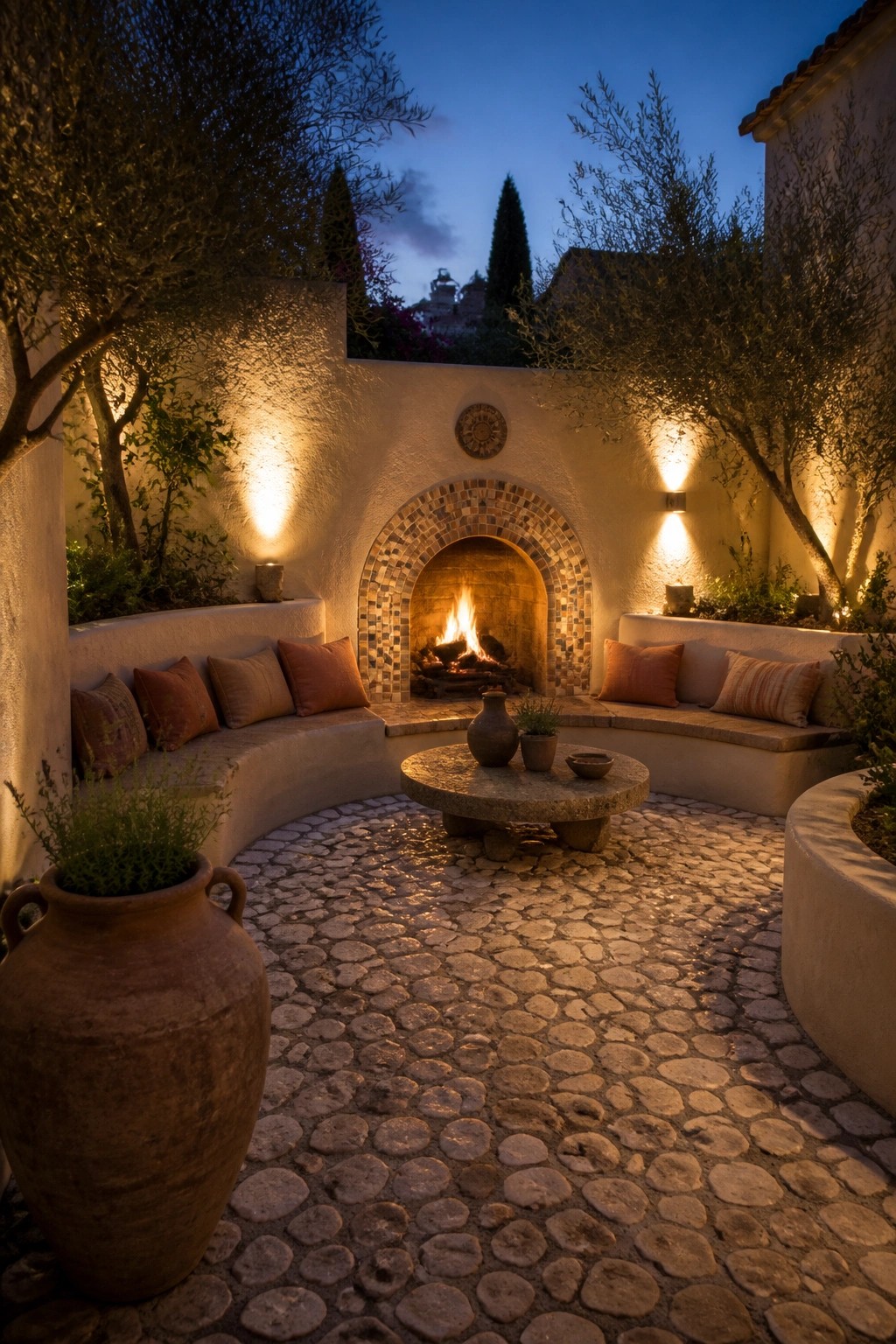
A curved bench that follows the shape of the fireplace turns the whole area into one connected spot for sitting. It keeps people close to the fire without crowding the space or requiring lots of separate chairs.
This layout works best on smaller patios or in a tucked corner of the yard. It stays practical because the seating is fixed and the cushions can be swapped out easily when the weather changes.
Built In Bench Seating By The Fireplace
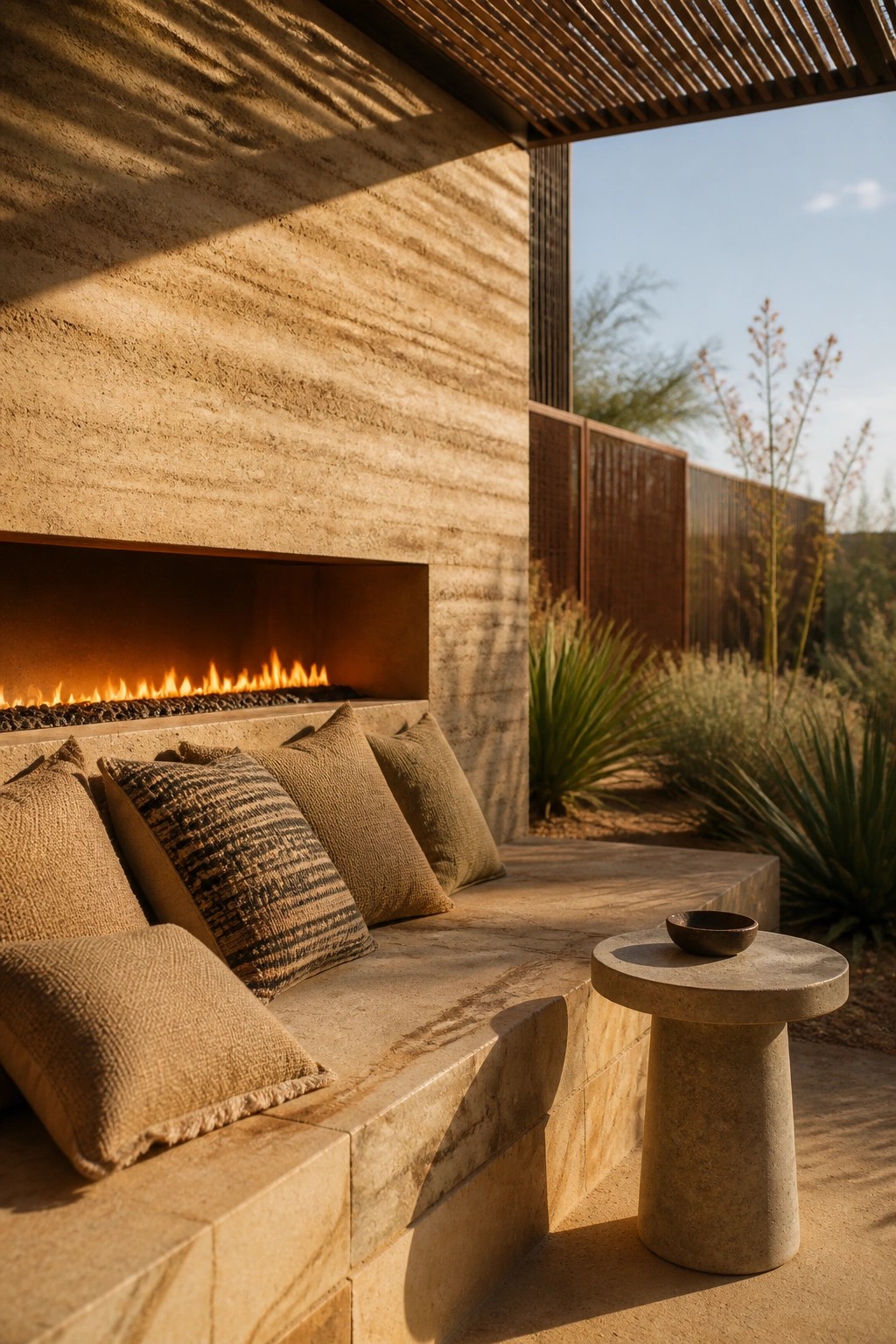
A long stone bench that runs right along the base of the fireplace gives you a permanent spot to sit without dragging chairs in and out. It keeps the area simple and makes the fire the clear focus of the patio.
This works best on a covered outdoor space where the bench can stay in place year round. Use the same stone or concrete as the fireplace surround so the whole thing reads as one piece, and stick with weatherproof cushions that can handle a little sun and dust.
Fireplace And Benches For Evening Patios
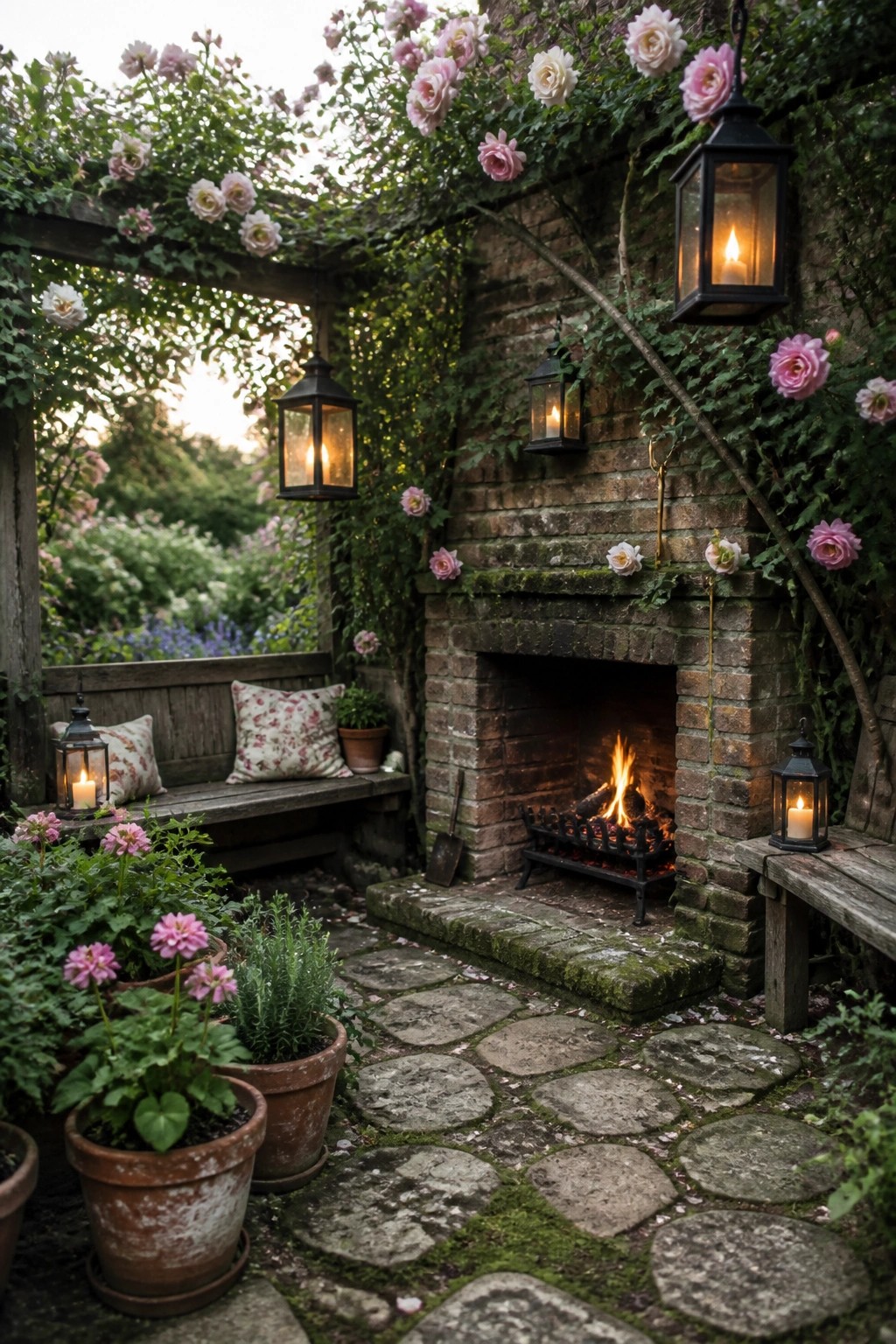
A fireplace built right into the patio gives people a clear reason to stay outside after dark. It pulls seating together without needing a lot of extra pieces or fancy planning.
Set a bench on each side and add a couple of lanterns so the light stays soft once the fire is going. This works best in smaller yards or garden corners where you want a simple spot to sit and talk without turning the whole space into a big project.
Anchor Your Patio Around a Fireplace
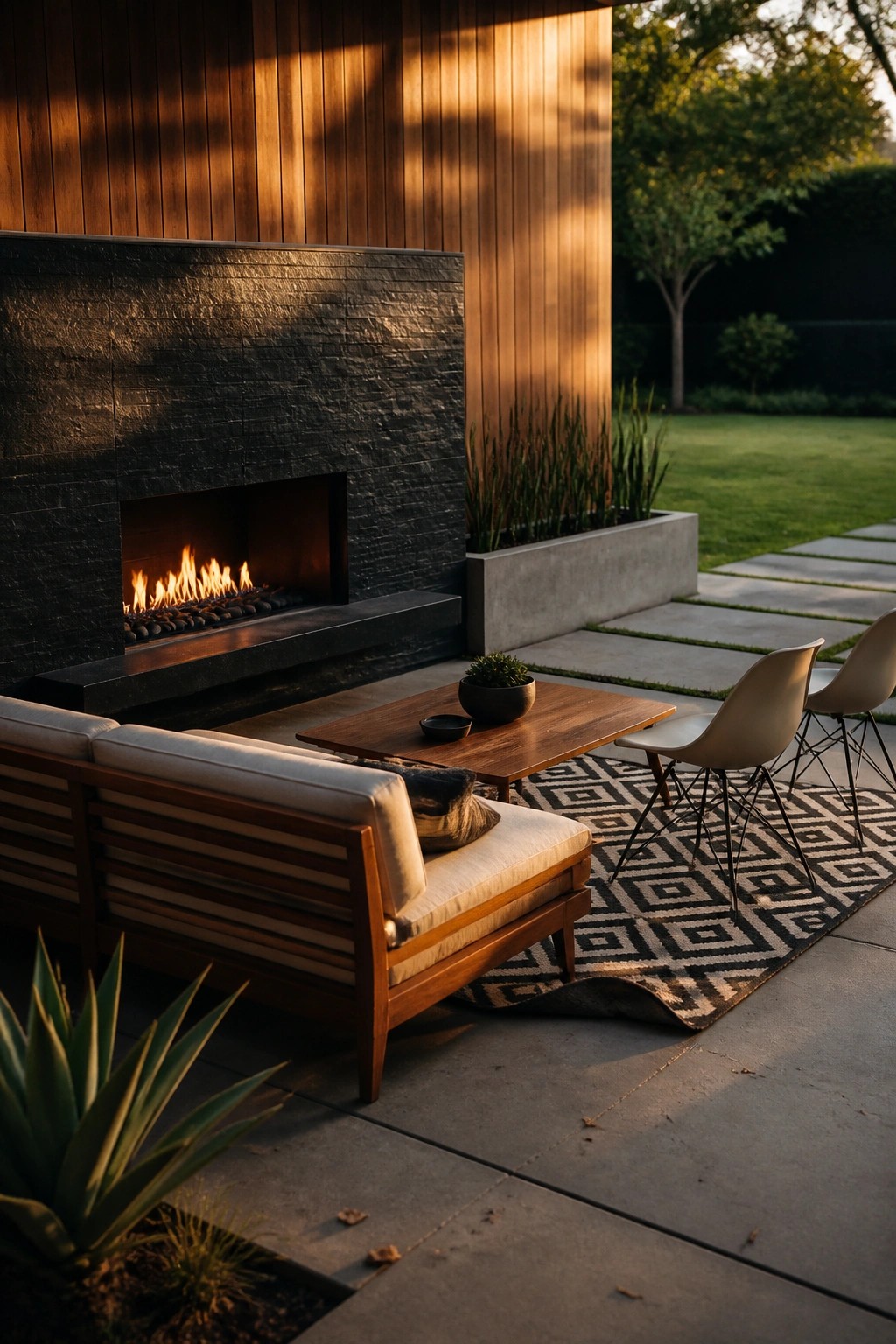
Many patios feel scattered until the fireplace goes in first. Once that large dark stone wall is set, the sofa, table, and chairs arrange themselves around it naturally. The fire becomes the reason the space gets used after dark.
This works best on patios that already have decent size and a solid wall to build against. Keep the main seating close enough for warmth but leave a clear path so people can move around the fire without stepping over each other.
Built-In Fireplaces For Patio Entertaining
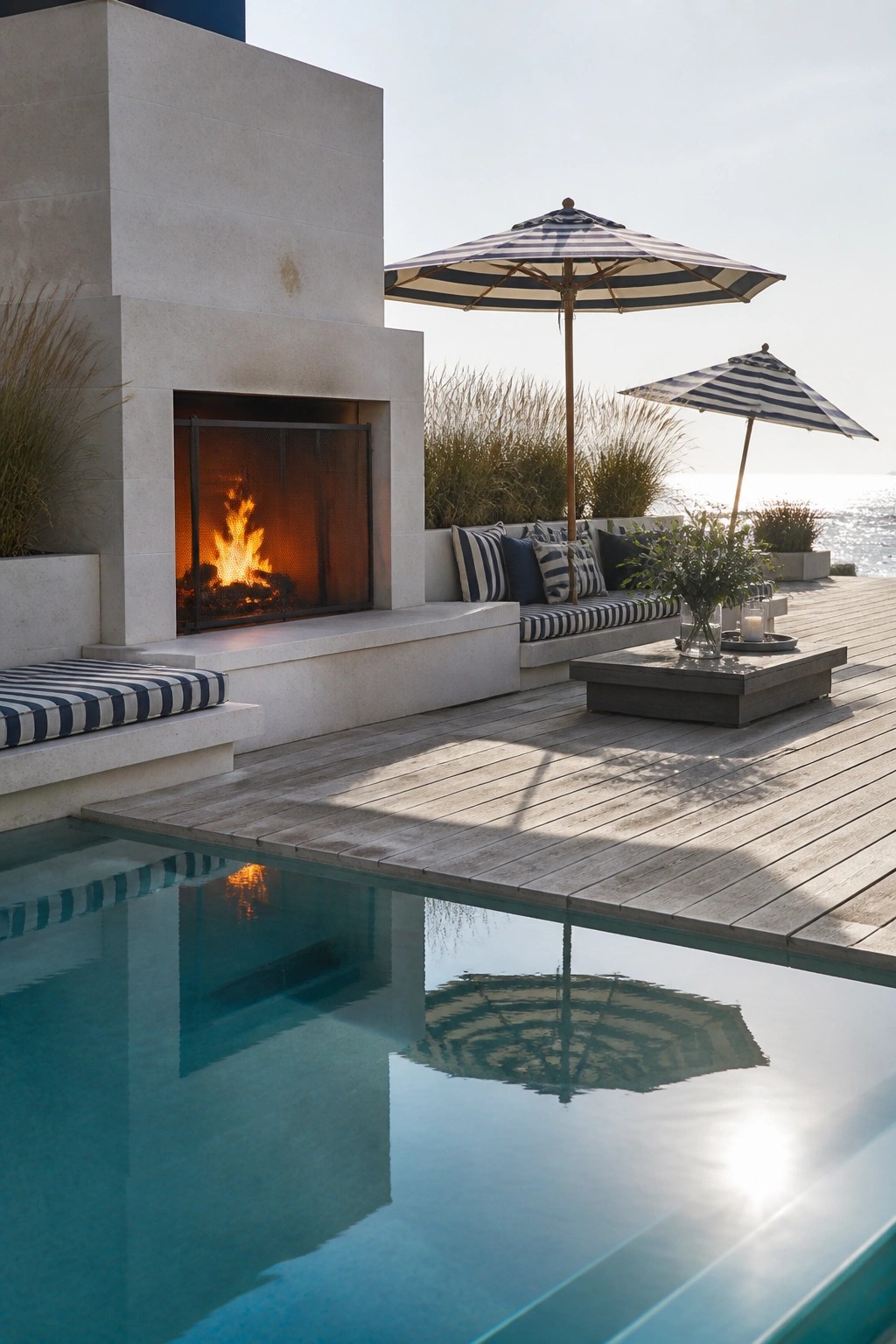
A fireplace set into a low wall right next to the seating makes the whole patio feel ready for cooler evenings. It gives off steady heat without taking up floor space, and the structure itself acts as a natural backrest for the benches. People end up staying outside longer because the warmth is right there instead of coming from a separate fire pit that blocks the view.
This setup works best on decks or terraces that already have some kind of built edge or wall. It suits homes near water or open yards where you want the seating to face both the fire and the view. Just make sure the chimney clears the roofline and the seating stays a safe distance from the opening.
Add A Bench Along The Fireplace Wall
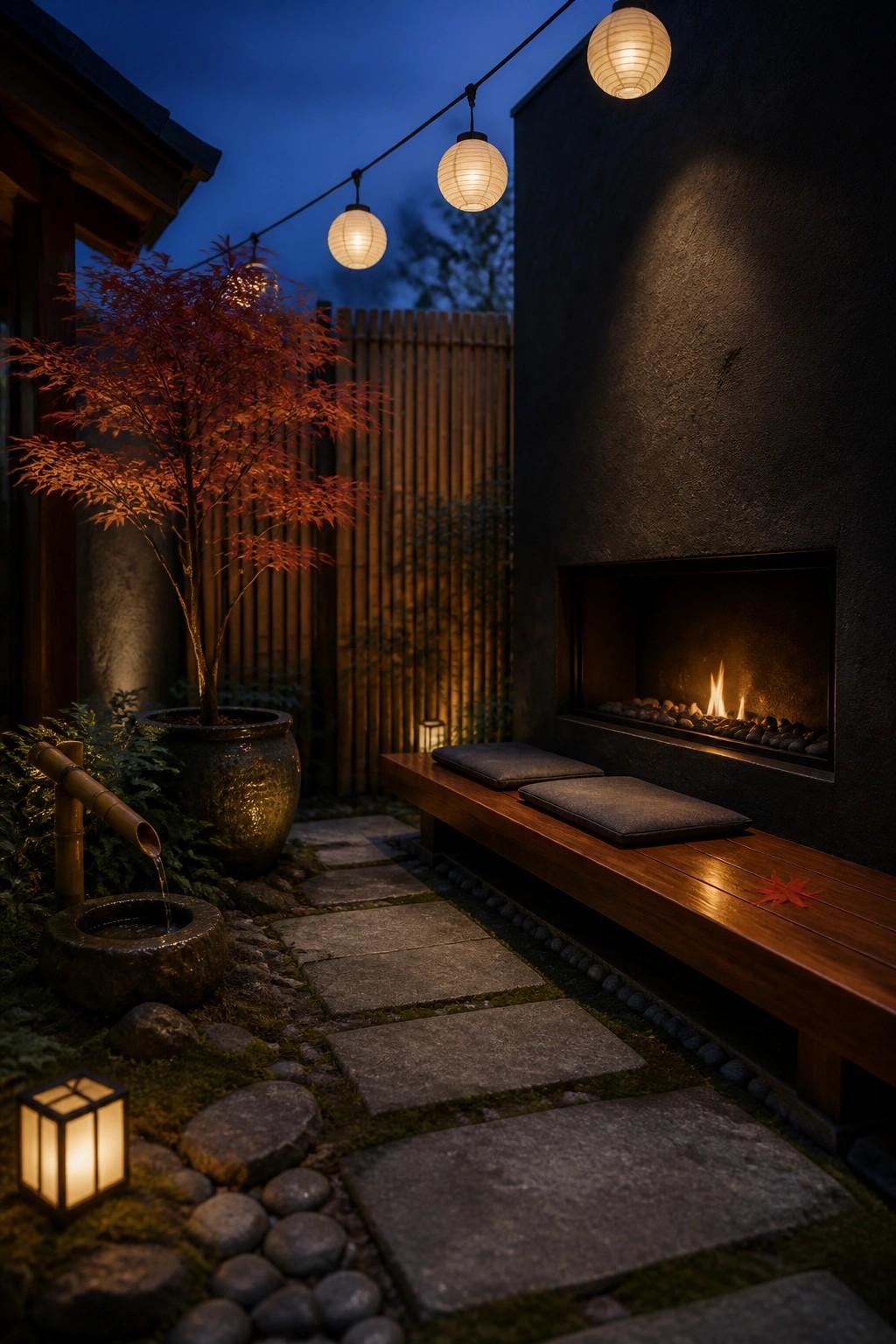
Placing a long bench directly in front of an outdoor fireplace gives the space a clear spot to gather without crowding the area with separate chairs. The bench keeps seating low and simple so the fire stays the main draw.
This layout suits smaller patios or narrow side yards where every foot of space counts. Keep the bench made of wood or a similar warm material and leave enough room for feet near the flames.
Anchor Your Patio With a Brick Fireplace
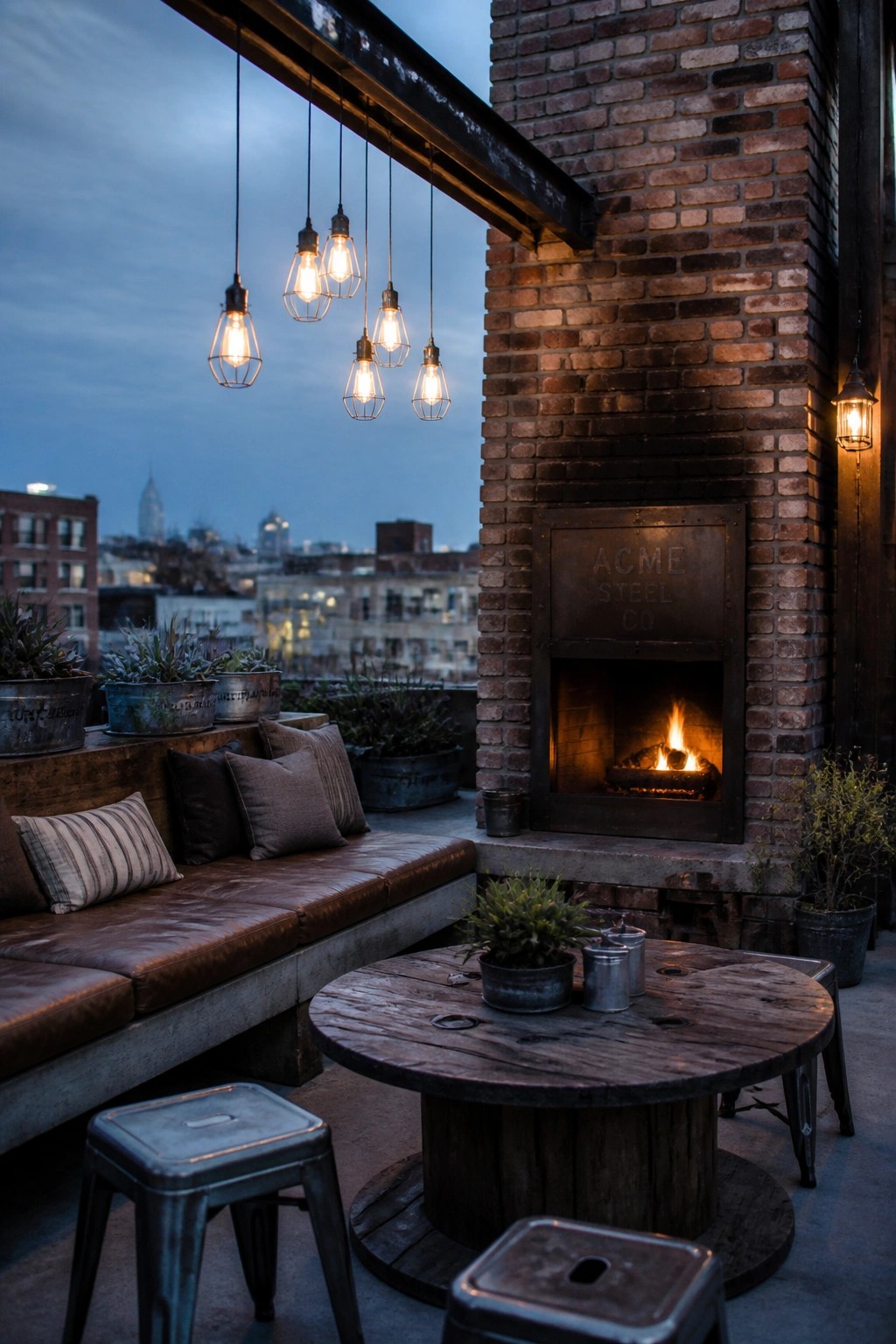
A fireplace set into a brick wall gives the patio a clear spot to gather once the evening cools off. It works because the structure already feels permanent, so the seating can stay relaxed without looking temporary.
Keep the rest of the area simple with a low bench or couch and a few stools. This setup works best on a rooftop or side patio where you want steady heat without adding a separate fire pit.
Arrange Two Sofas to Face Each Other
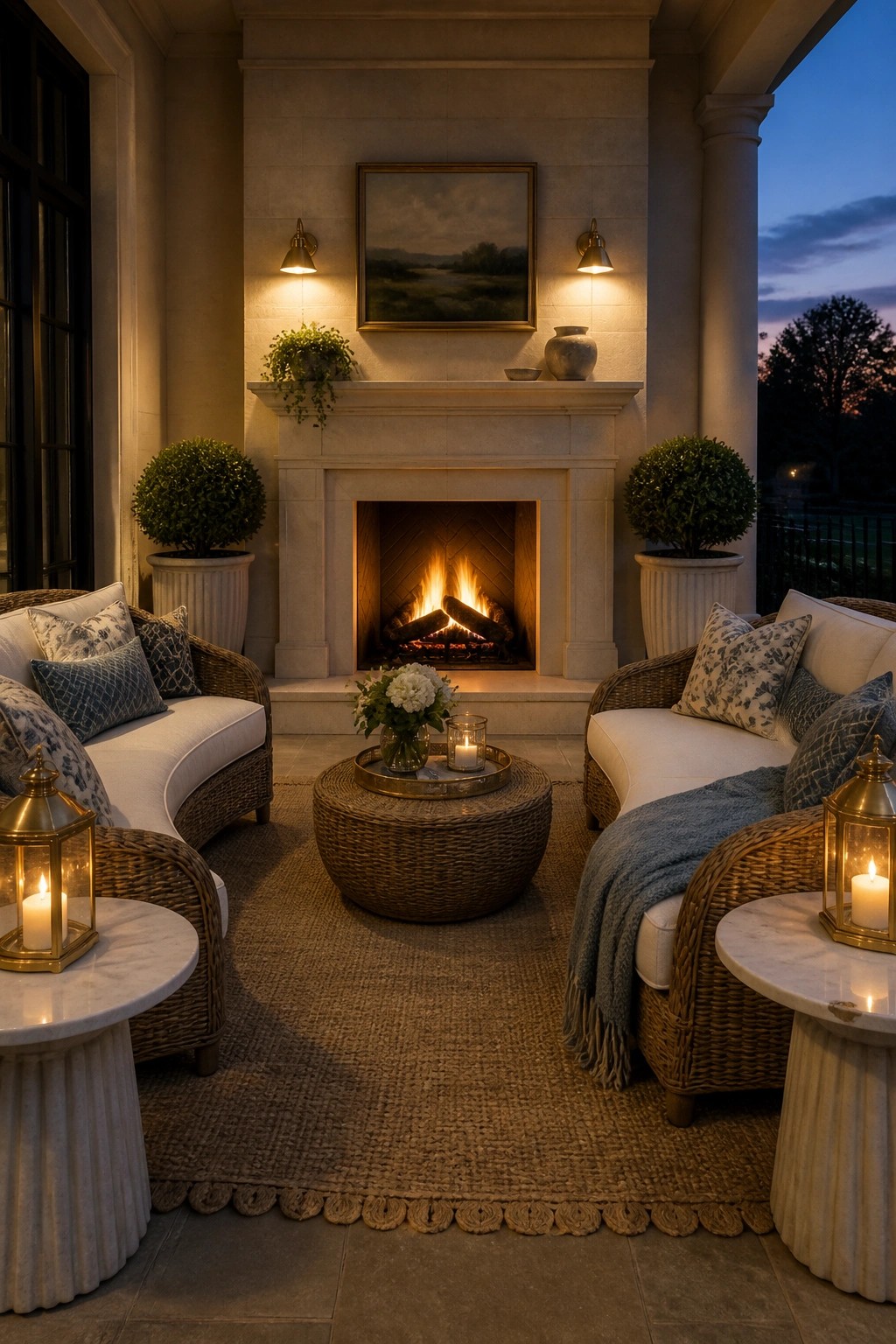
Placing two curved sofas across from each other makes the fireplace the natural center of the space. The layout keeps people close enough to talk without anyone having to twist around or shout over the fire.
This works well on a covered patio that already has decent depth. Keep the middle table low and simple, and leave enough room on the sides so the seating feels open rather than crowded. It suits homes where evening entertaining happens often and the goal is easy conversation more than a big crowd.
Keep The Fireplace Close To Your Outdoor Table
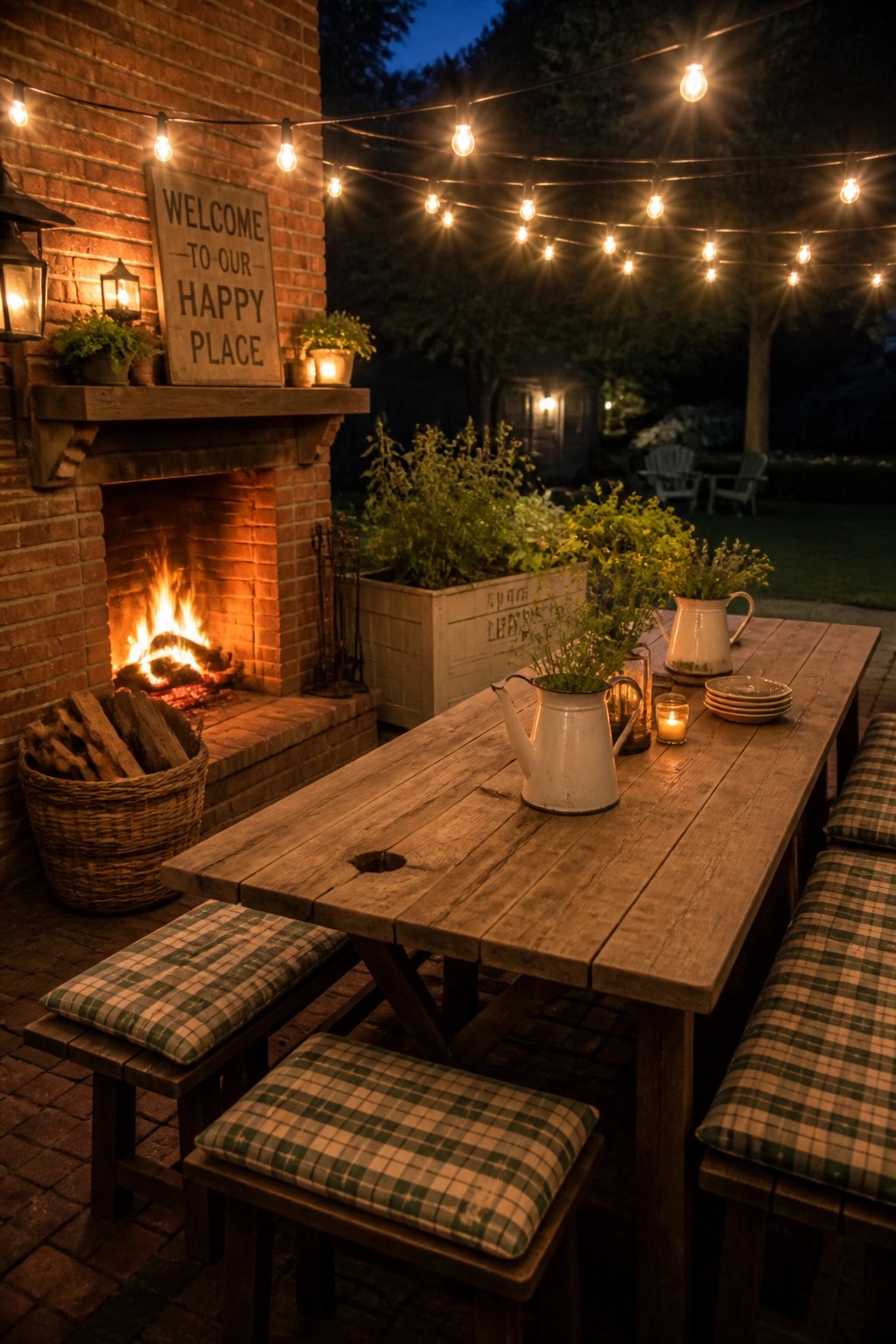
Many people find that placing the fire right next to the dining table makes the whole patio more usable after dark. The heat stays near the seating, and the space feels ready for longer evenings without extra heaters or blankets.
This setup works best on a simple brick or paver patio where you can build a straightforward fireplace. Leave enough room around the table so people can move easily, and keep the firebox at a safe distance from the wood seating.
Built-In Fireplaces For Small Patios
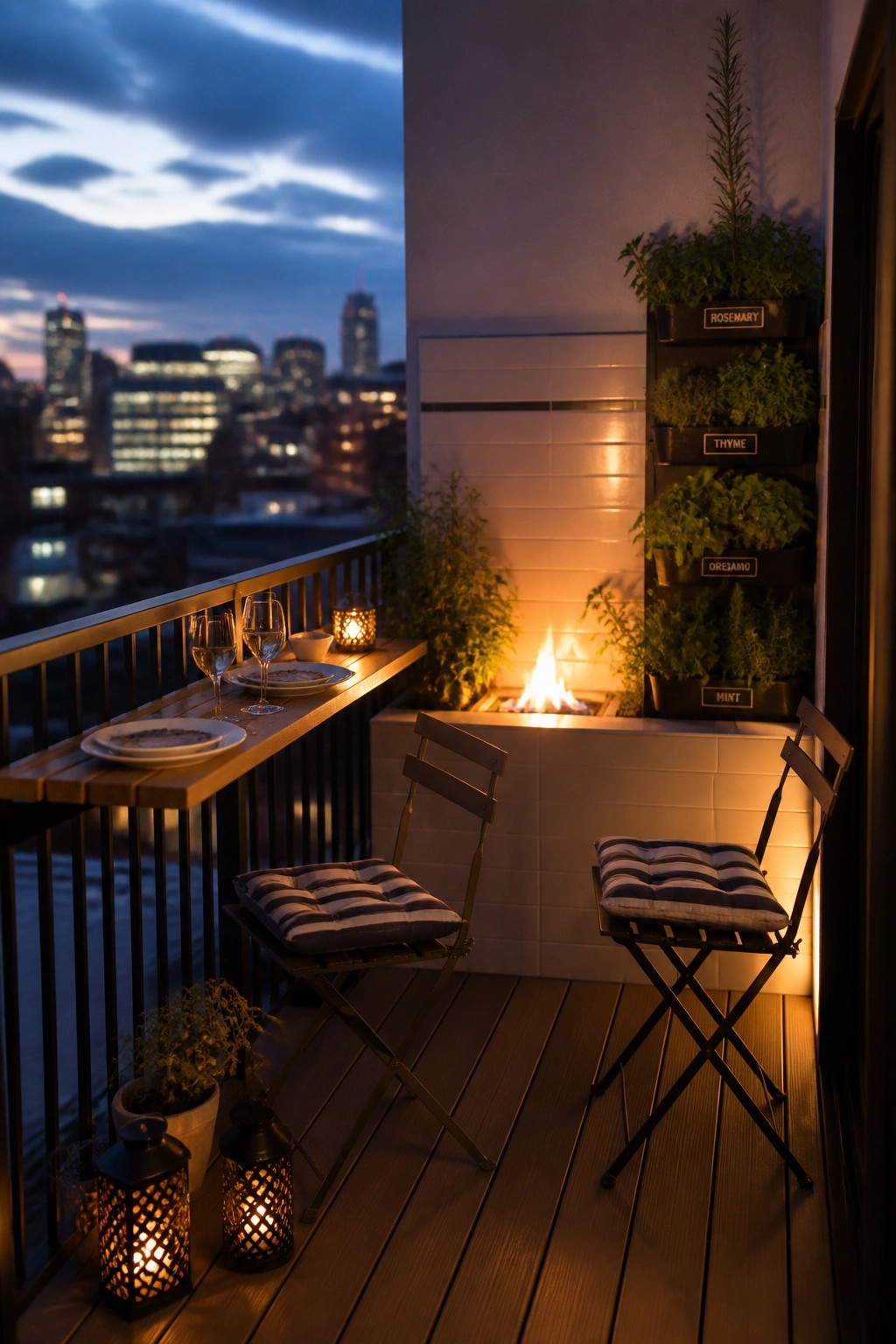
A built-in fireplace can turn a narrow balcony into a usable spot once the temperature drops. It creates a focal point without taking up floor space, and the warmth makes it easier to linger outside with a few guests.
This approach suits urban balconies and small decks best, especially where you already have a solid wall to work with. Keep the seating light so the area does not feel crowded, and make sure the fireplace surround matches the existing railing and flooring materials.
A Central Patio Fireplace
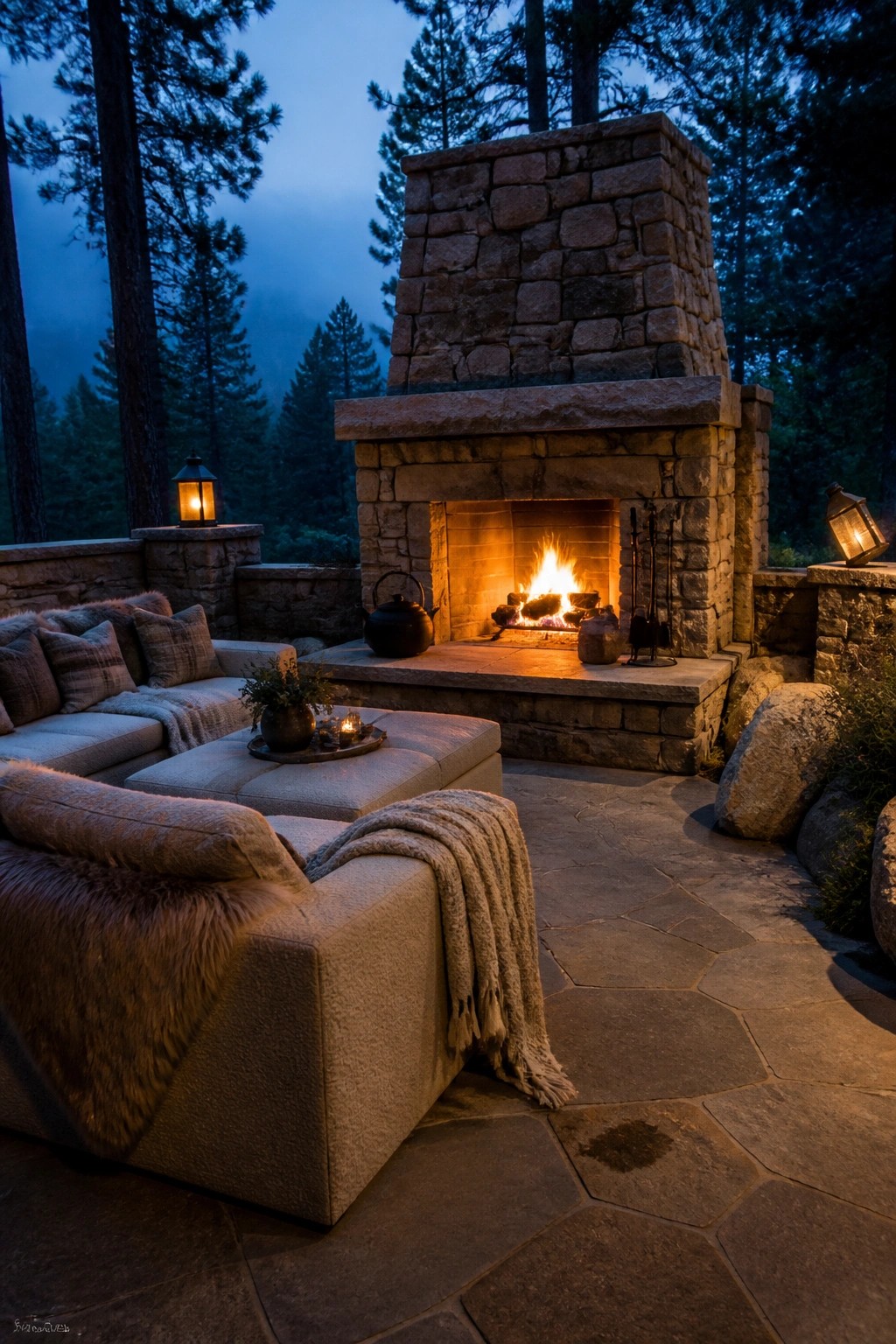
A large fireplace placed right in the seating area turns a patio into a spot people actually use after dark. The fire gives off steady warmth and light, so guests stay comfortable without needing extra layers or moving inside early.
This works best on patios that already have decent space for a few chairs or sofas facing the fire. Stone holds up well outside and needs little upkeep. Just keep the seating close enough to feel the heat but leave room for people to walk around the sides.
Frequently Asked Questions
Q: What kind of wood works best for these patio fires without too much smoke? A: Dry hardwood like oak or maple burns clean and hot. Stack it in a covered spot near the fireplace so it stays dry. Light it with some kindling and you can relax for hours.
Q: How can I make sure guests stay warm on cooler nights? A: Position the fireplace so heat reaches the seating area. Add some throws or blankets nearby for extra comfort. Everyone gathers closer once the flames get going.
Q: Do I need to worry about sparks flying onto the patio? A: Choose a fireplace with a spark screen if yours sits on wood or composite decking. Keep the area clear of rugs and cushions within a few feet.
Q: What’s the easiest way to clean up after an evening outside? A: Let the ashes cool overnight and scoop them into a metal bucket the next day. A quick hose down of the surrounding area handles any stray bits.
