

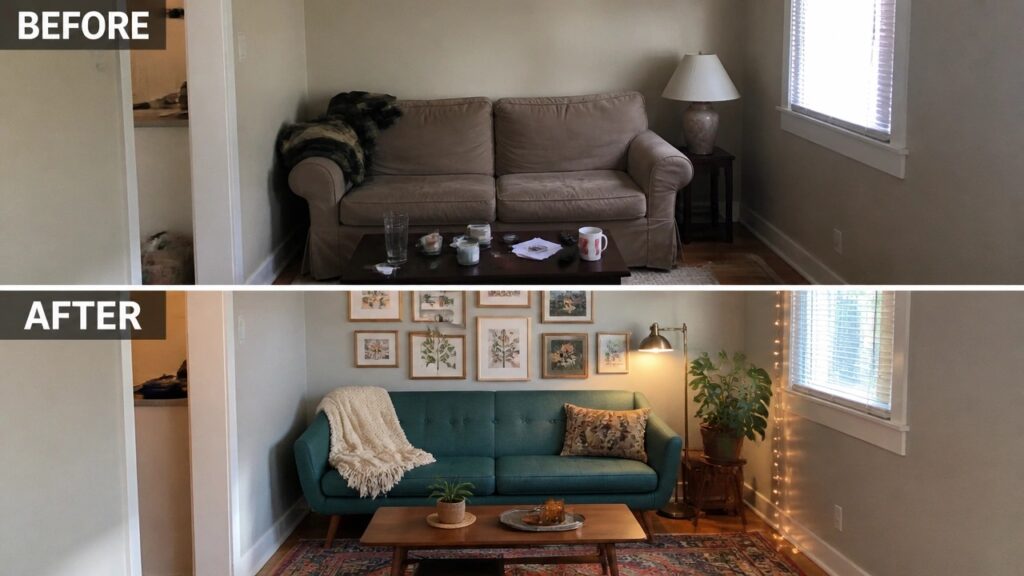
Rooms can feel empty or off balance when the main pieces do not line up with how the space is actually used each day.
Thrifted finds often help fill those gaps because they bring in shapes and textures that match what is already there.
Layout matters more than most people expect.
I usually start by moving things around before I add anything new.
These examples remind me that useful changes come from noticing what feels wrong first rather than chasing a finished look right away.
Make A Plain Living Room Feel Finished
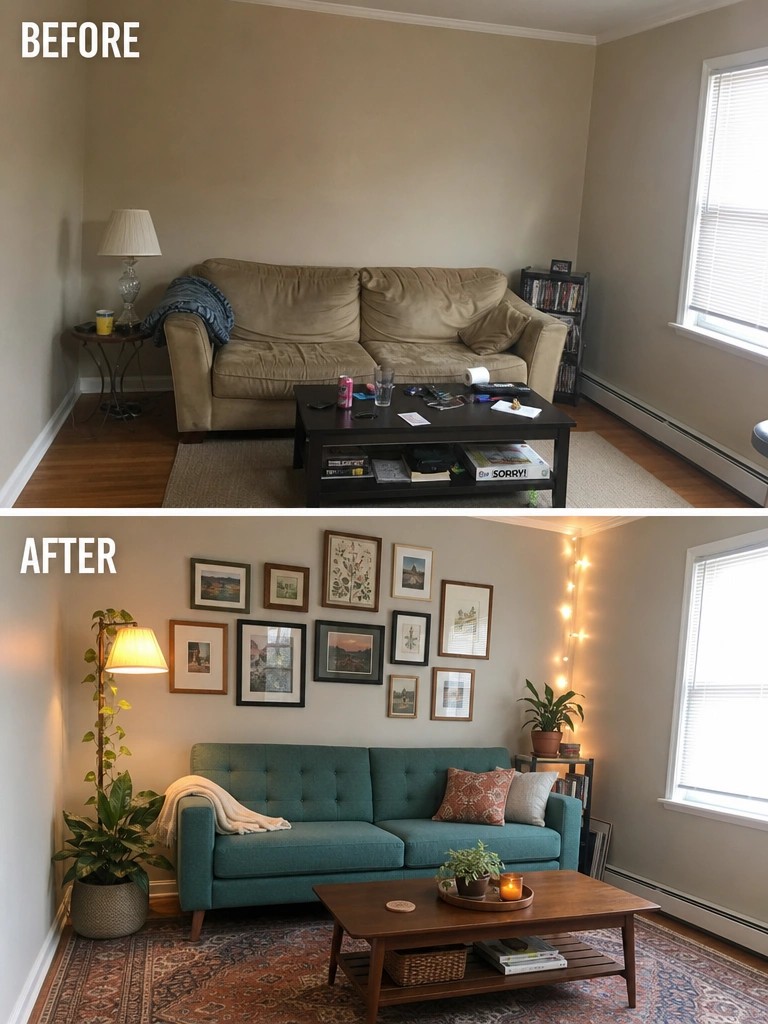
A basic living room often feels flat because it lacks layers. Here the change came from adding a gallery wall, some taller plants, and simple lighting around the seating area, which pulled the space together without replacing the main furniture.
This idea works in most average sized rooms that already have the basics in place. Collect frames over time for the wall, use one or two tall plants to fill empty corners, and add a floor lamp or string lights near the seating so the room feels used in the evening.
Make A Plain Bedroom Feel Finished
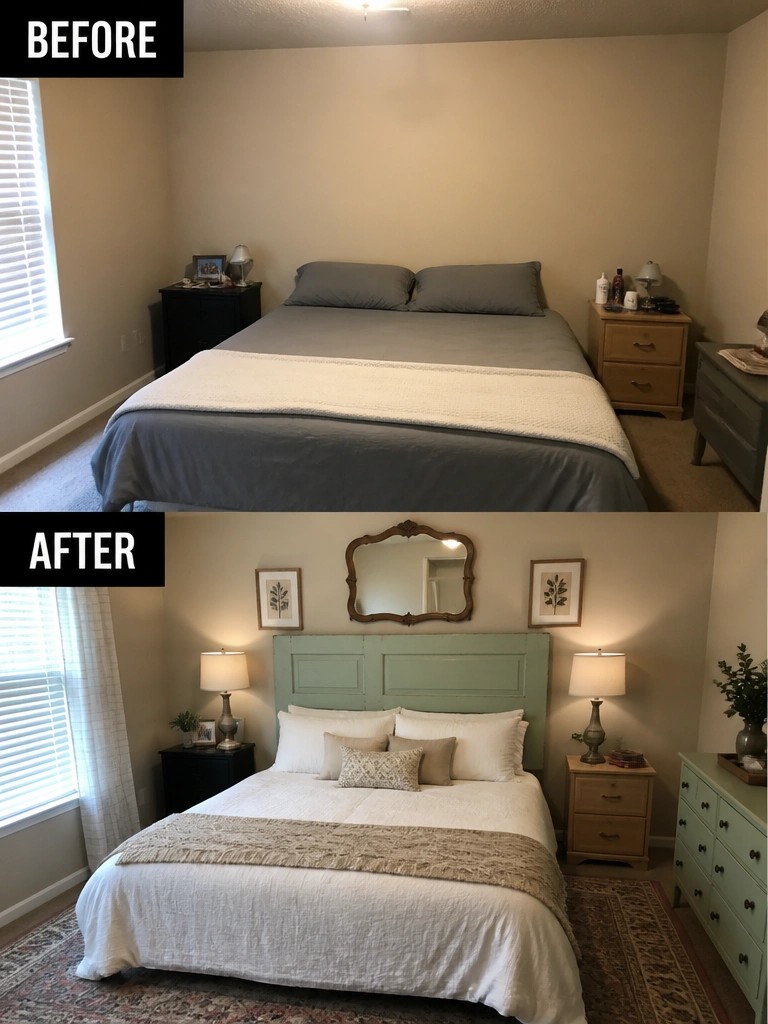
The bedroom looked flat and unfinished with just a bed and mismatched nightstands against bare walls. Adding a simple painted headboard gave the bed a clear center point, while matching lamps on either side and a couple of framed pieces above it brought balance and warmth.
This approach works best in rooms that already have the basics but feel incomplete. Paint an old door or buy an inexpensive headboard first, then add lamps for better lighting and one or two small art pieces to fill the wall. It suits small bedrooms or guest rooms where you want a cozy result without major changes.
Add Open Shelving To A Small Pantry

A small pantry can quickly turn into a stack of mismatched containers with no clear system. Switching to open white shelves made the same narrow space feel much more usable. Everything sits at eye level now, and the lower section has room for a simple crate and basket without blocking the floor.
This idea works best in tight closets or corners where doors would only get in the way. Start by measuring the walls so the shelves leave walking space, then use matching jars or bins to keep things from looking scattered. Adding a small light under the top shelf helps more than most people expect.
Update A Bathroom With A New Mirror And Sconces
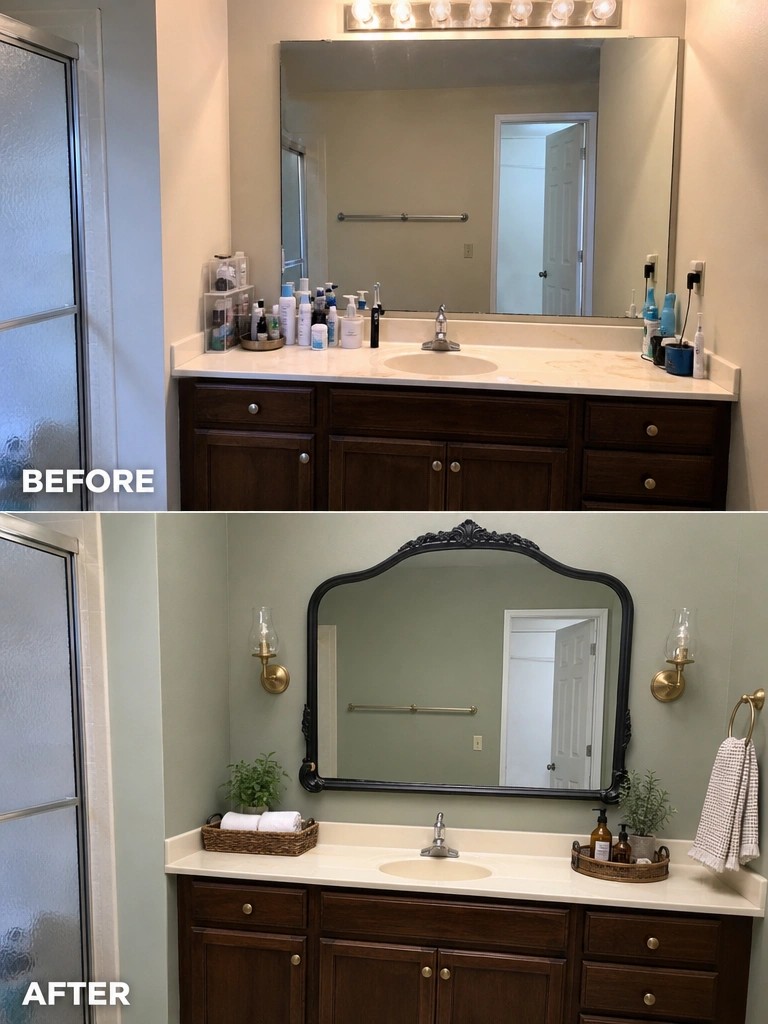
A plain mirror and cluttered counter can make a bathroom feel unfinished even when the cabinets and sink are fine. Swapping the large basic mirror for a more decorative one and adding a pair of wall sconces immediately gave the vanity a clearer focal point and reduced the sense of mess.
This approach works best in bathrooms where you want to avoid a full remodel. Keep the counter clear except for a couple of baskets or trays, and choose lighting that sits at eye level so the space feels balanced rather than top-heavy.
Use Mixed Thrifted Chairs To Warm Up A Simple Dining Room

A plain dining room often feels unfinished when the furniture looks temporary and the walls stay bare. In this case the space went from a basic table with plastic chairs to a collected setup where the chairs vary in style and color but still work together. Adding a simple wall shelf with a few plates and small pieces of art helped tie everything in without much cost.
This approach works well in older homes where the dining area is just a pass-through space. Start by hunting for secondhand chairs that can be painted to match or left as they are for contrast. Keep the table simple and let the mix of seats plus one or two wall details do the rest.
Add A Storage Bench To Organize A Busy Entryway

A cluttered entry usually happens when there is no real system for shoes, coats, and bags. Replacing an overloaded shoe rack with a low bench that includes storage baskets underneath gave everything a clear place and kept the floor clear.
This approach suits small entries or hallways where space is tight. Pick a bench that doubles as seating, then sort items into a few simple baskets so daily things stay reachable without creating piles.
Paint The Walls To Make A Plain Office Feel Finished

A basic workspace with just a desk and chair often feels unfinished because the walls and floor have no warmth or definition. Painting the walls a deeper color and adding a rug immediately pulls the room together and makes it feel more intentional.
This idea works best in small home offices or spare rooms where you want a simple change that still has impact. Pick a color that suits the amount of natural light you have, then keep the rest of the updates modest so the space stays practical for daily use.
Add Storage To Organize A Laundry Room
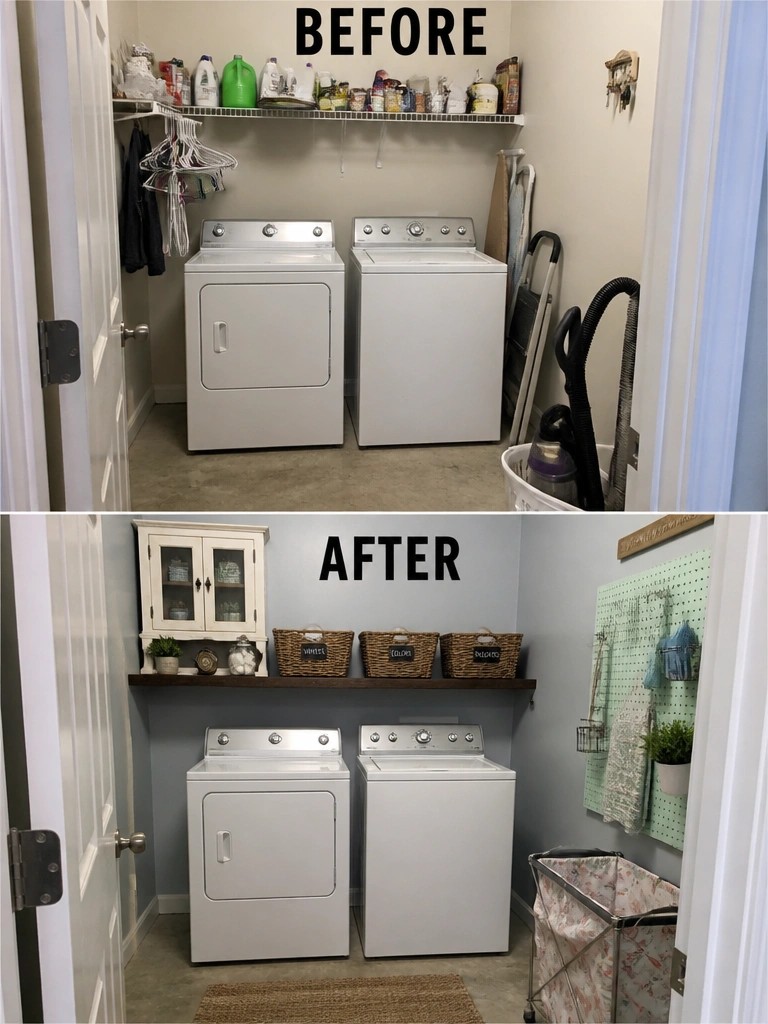
A laundry room can quickly turn into a dumping ground when there is no clear place for supplies and tools. Adding wall storage like baskets and a pegboard gives everything a spot without taking up floor space around the machines.
This idea works best in small utility rooms where you need quick access but want to avoid visual clutter. Start with a simple shelf or hooks above the washer and dryer, then choose bins that fit the items you reach for every week.
Make A Cold Basement Room Feel Finished
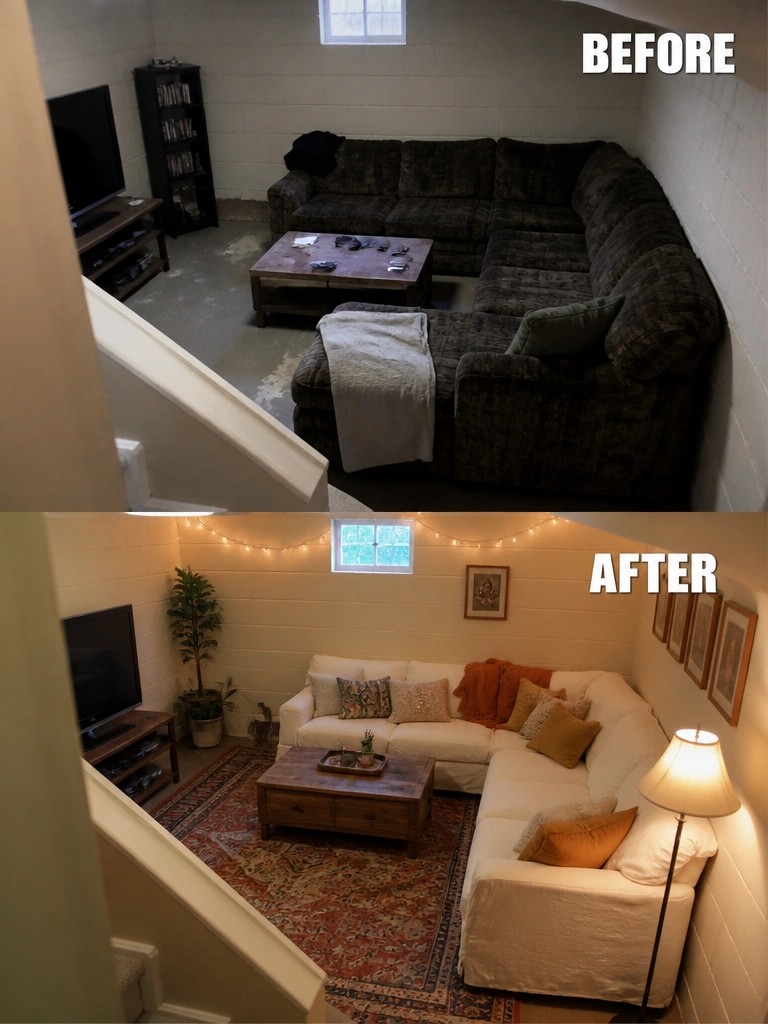
Many basements start out as bare concrete floors and block walls that feel too cold for everyday use. This room changed once the walls were painted, a large rug was added, and the dark sectional was swapped for lighter seating that let the space breathe.
The same idea works in any below-grade room where you want to hide the concrete and create a place people actually sit. Start with the rug to define the seating area, then add a floor lamp and a few string lights so the room feels usable after dark. Keep the furniture scale modest so the space does not feel crowded.
Organize A Cluttered Closet With Added Storage

A closet packed with clothes on the floor and random boxes quickly becomes hard to use. In this case the main change came from adding a small dresser in the center and a row of labeled baskets along the top shelf, which freed up the hanging space on both sides and gave everything a clear spot.
This approach works in any small or shared closet where floor clutter takes over. Thrift a dresser that fits the depth, paint it if needed, and sort the rest into a few simple baskets so daily items stay easy to find without installing new rods or shelves.
Make A Plain Living Room Feel Finished
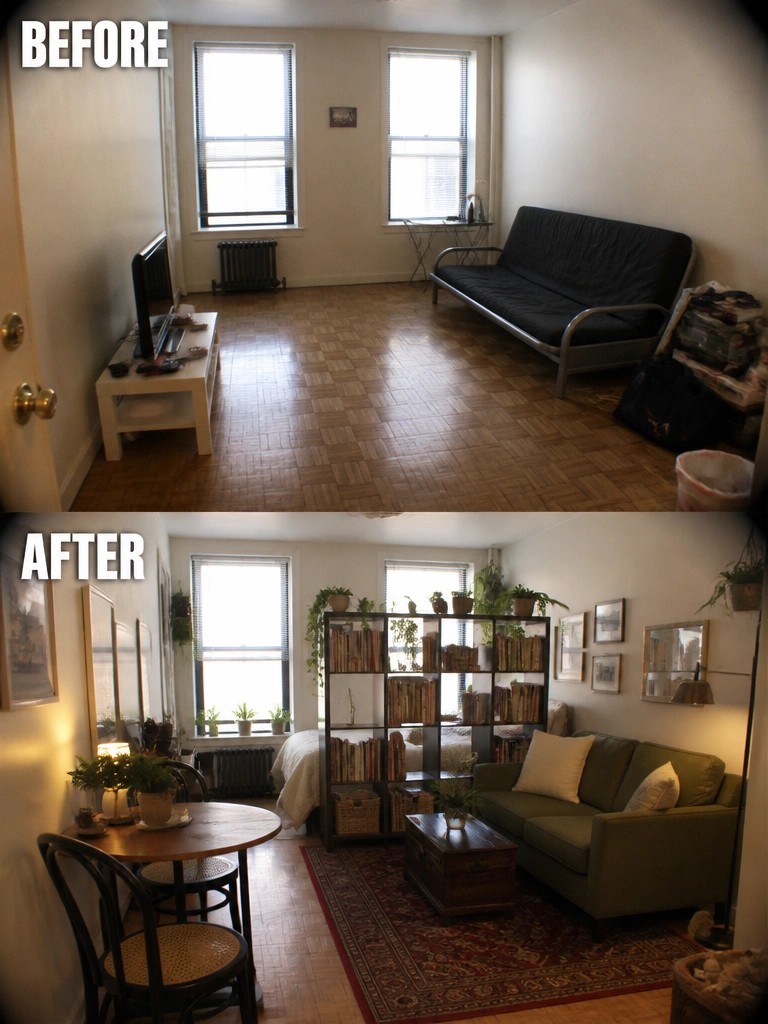
A room with just a futon and a TV often feels unfinished no matter how clean the floors are. The main change here came from adding one large open bookshelf that created storage, display space, and a natural divider between the seating area and the rest of the room. The rug underneath the seating then pulled everything together so the space finally read as a living room instead of an empty box.
This approach works well in small apartments where you need one piece to do several jobs at once. Start with the bookshelf or a similar large item, place a rug to mark the main seating zone, and add a few plants so the room does not feel bare. Keep the rest of the furniture simple so the space stays easy to move through.
Make The Fireplace Wall The Main Feature
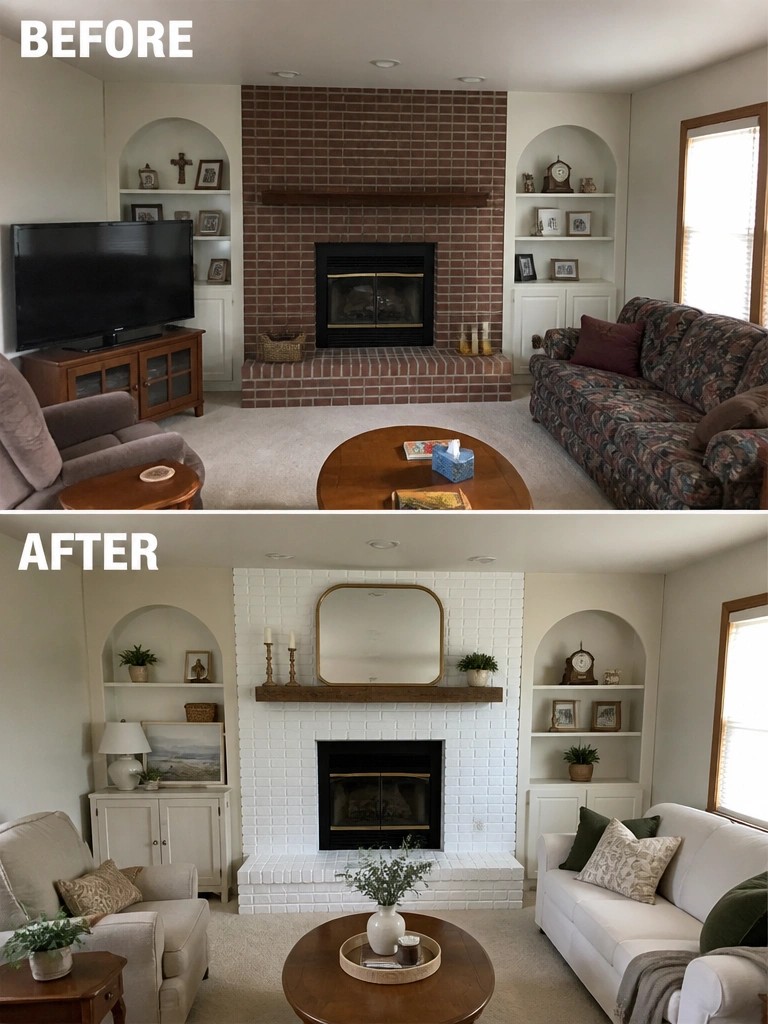
A fireplace wall that feels dated can drag down the whole room. Switching the surround from dark brick to clean white tile brightens the space and turns the fireplace into the clear focal point without any major construction.
This idea works best in living rooms where the fireplace sits in the center of a long wall. Keep the rest of the room simple so the updated wall stands out, and add just one larger piece above the mantel to finish the look.
Paint A Dated Vanity To Refresh The Bathroom
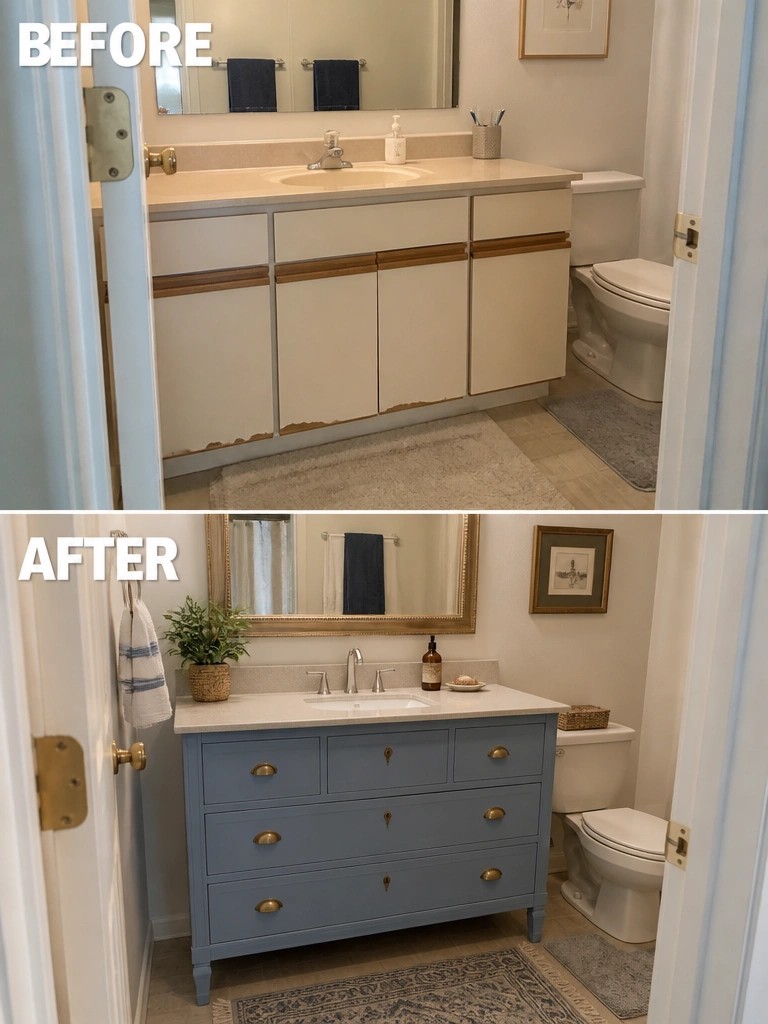
Many bathrooms have vanities that still work fine but look worn after years of use. The original cabinet showed damage along the base and had a plain finish that made the room feel older than it needed to. A coat of paint in a soft blue and new hardware changed the look completely while keeping the same layout and sink.
This idea works well in smaller bathrooms where the vanity takes up most of the visual space. Use a paint made for damp areas and sand the surface first so the color lasts. New knobs and pulls finish the update and help the piece feel more intentional.
Make A Plain Room Feel Finished
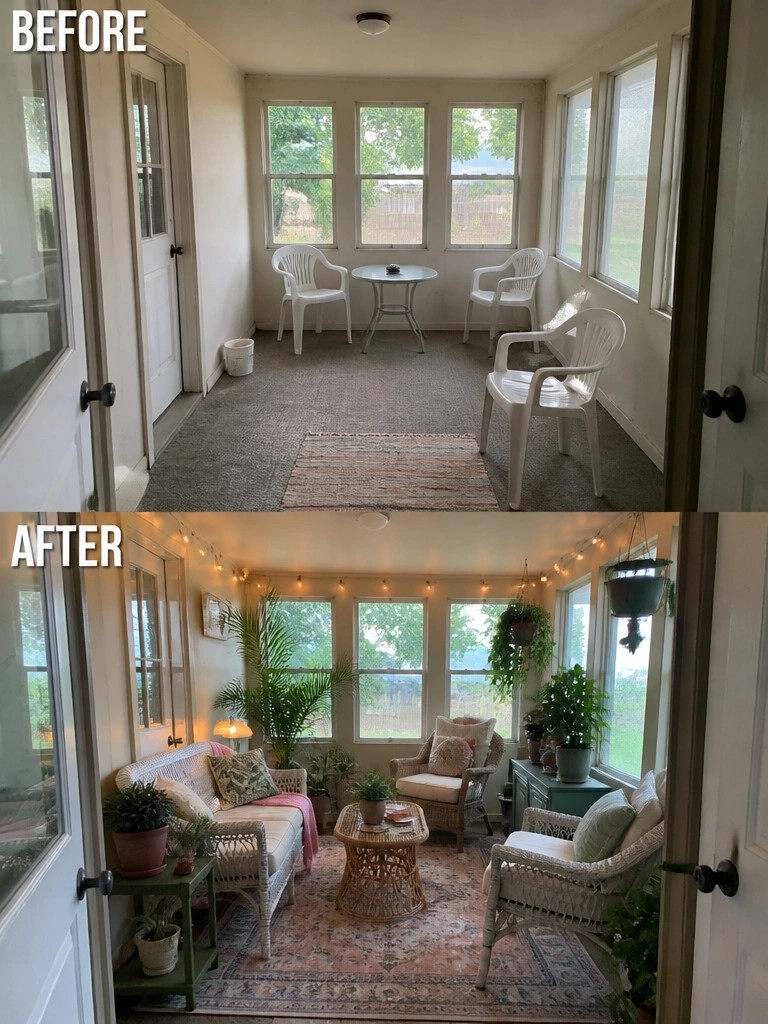
The before photo shows a mostly empty space with just a few plastic chairs and a small table. Adding a big rug, real seating, string lights, and lots of plants gave the room a clear purpose and made it feel like somewhere you would actually want to spend time.
This idea works best in rooms that already have good light but lack warmth. Start with one large rug to anchor the seating area, then bring in comfortable chairs or a small sofa. A few tall plants and some simple string lights add life without needing a big budget.
Make A Plain Hallway Feel Finished
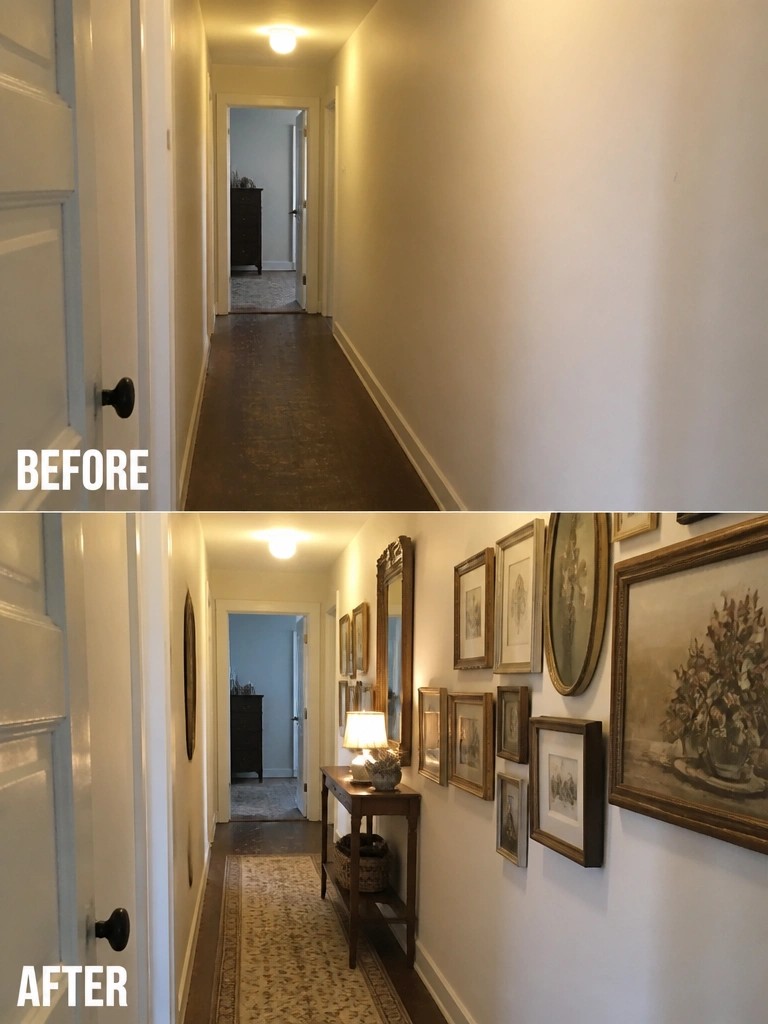
A long empty hallway often feels like wasted space. Adding a narrow console table, a few lamps, and a collection of framed art on one wall gives the area a clear purpose without crowding the walkway. The rug helps too by breaking up the dark floor and making the space feel warmer and more intentional.
This approach works well in older homes where hallways tend to be narrow and plain. Thrifted frames in similar tones keep the look cohesive without much cost, and the console provides a spot for keys or mail. Just be sure to leave enough room on either side so the hallway stays easy to walk through.
Turn An Empty Room Into A Cozy Seating Area

An empty room with only a window seat often feels like unused space. Adding one comfortable chair, a small rug, and a lamp gives it a clear purpose and makes the area feel finished. The before photo shows how bare the room looked with just the bench and dark floor. The after shows how those few pieces turn it into a place someone would actually use.
This approach works best in small homes or rooms with awkward shapes where a full set of furniture would feel too big. Start with seating and a rug to define the zone, then add one or two more pieces like a shelf or lamp. Keep the scale simple so the room stays open and easy to move around in.
Style Built-In Shelves With Books And Plants

Built-in shelves often look unfinished when they are left mostly empty or filled with random items. Adding rows of books, a few potted plants, and some small framed pieces gives the shelves purpose and makes the whole wall feel more complete.
This approach works best in living rooms or hallways where the shelves are already in place. Start by grouping books together for height and weight, then tuck in one or two plants and a simple accessory on each shelf so the arrangement stays balanced without crowding the space.
Turn A Cluttered Closet Into Practical Storage
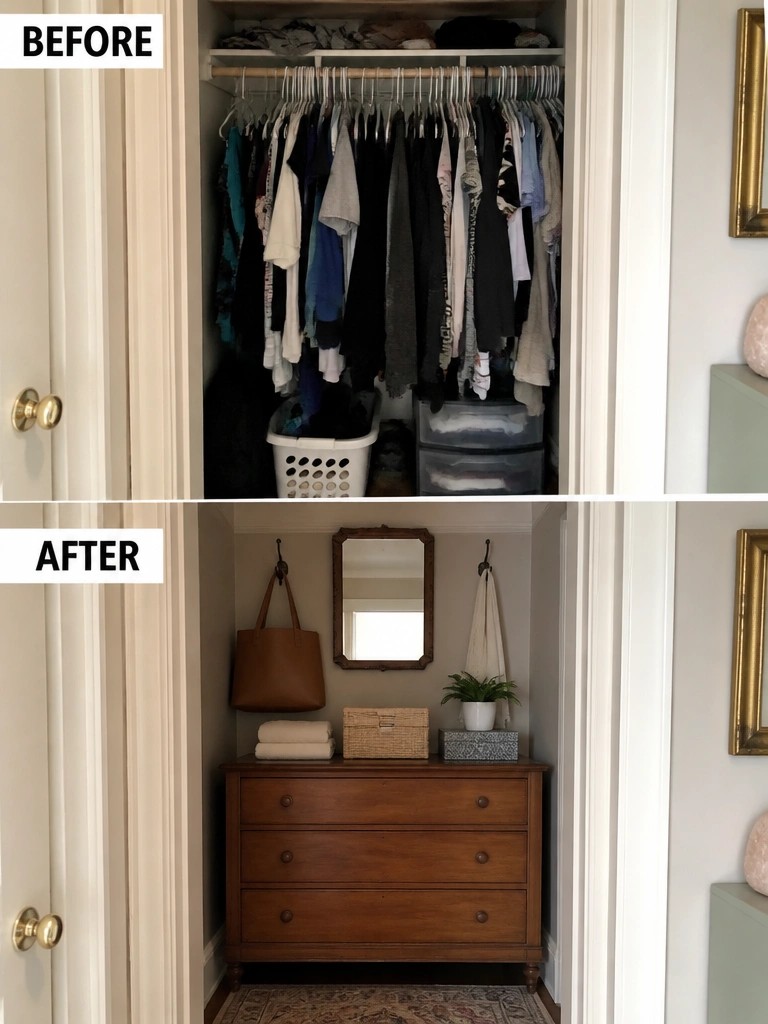
A closet packed with hanging clothes and loose bins often ends up wasting space and looking messy. Adding a solid dresser gives the area real function, turning it into a spot for folded items and a few simple accessories on top. The change keeps the room feeling open while making everything easier to reach.
This approach works well in bedrooms or hallways where extra storage is needed but square footage is tight. Keep the dresser a bit smaller than the closet width so there is still room to move, and stick to just a few items on the surface so the space stays useful rather than crowded.
Make A Plain Hallway Feel Finished
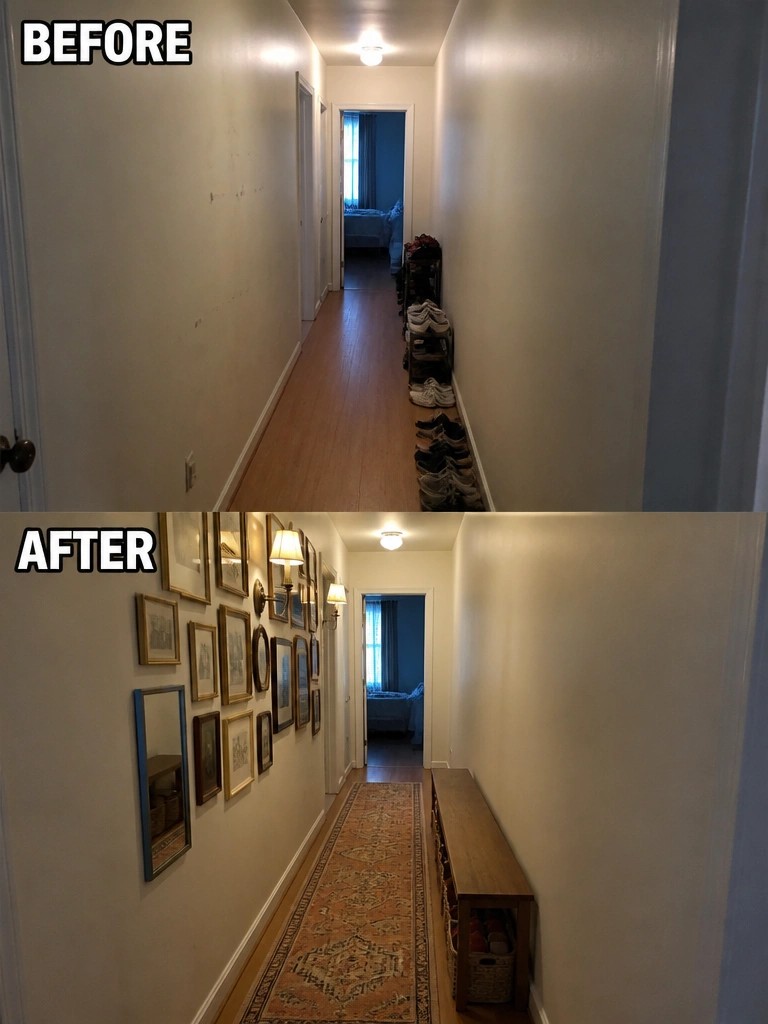
A long bare hallway often ends up as just a walkway with shoes piled along the wall. Adding a runner rug gives the space an immediate sense of purpose and direction. Pairing it with a simple bench for storage and a gallery wall on one side turns the area into something that feels intentional instead of leftover.
This idea works best in older homes or narrow layouts where hallways connect several rooms. Start with the rug to set the width and length, then add one or two practical pieces like a bench that can hide clutter. Keep the wall display balanced so the space still feels open and easy to walk through.
Add A Floating Shelf Above The TV

Many TV areas end up looking unfinished because the stand sits low and leaves a big blank wall above. Swapping to a console with drawers and adding one long shelf overhead made the whole wall feel more balanced and put together.
A floating shelf works best when you keep the items on it simple and low in number. It adds display space without taking up floor room and helps hide the fact that a TV needs to sit at a certain height. This idea fits small or medium living rooms where you want storage but do not want to build full cabinets.
Make A Plain Nursery Feel Finished
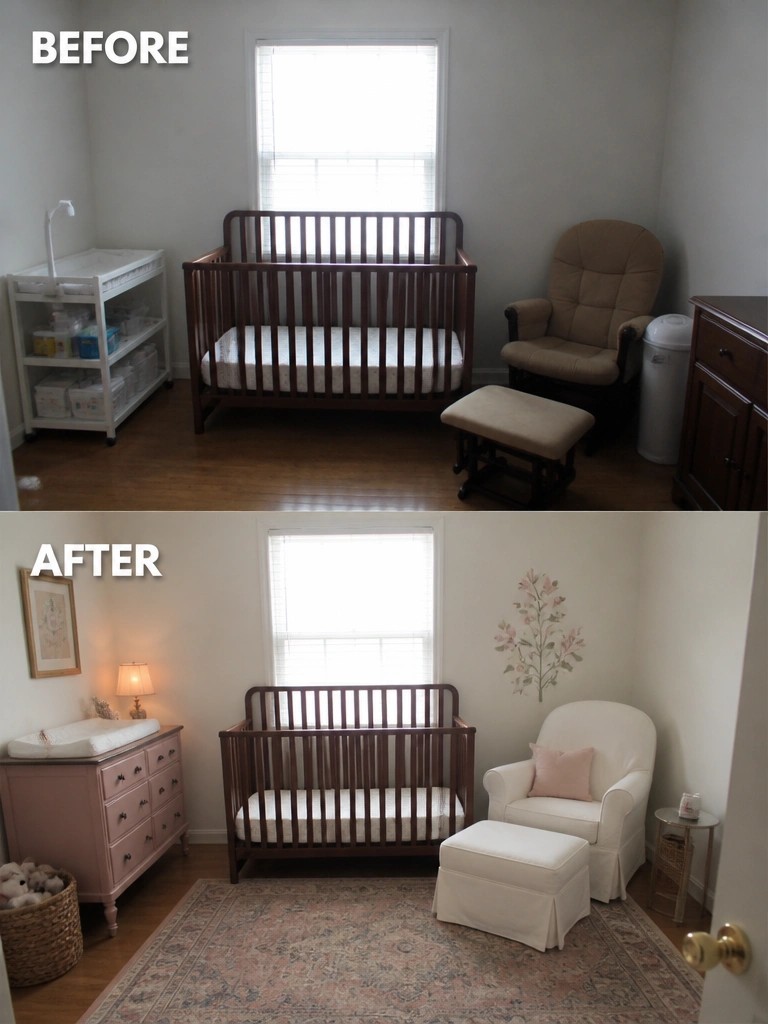
A nursery often starts out looking scattered when the furniture does not quite match and the floor feels bare. Adding a large rug under the main pieces pulls everything together and makes the room feel much more complete without any major construction.
This approach works well in small bedrooms where you want one clear zone for the crib and chair. Keep the rug large enough to sit under the front legs of the furniture so the layout stays grounded, then add just a few matching accents like a lamp or wall art.
Turn A Cluttered Closet Into A Practical Entry Nook
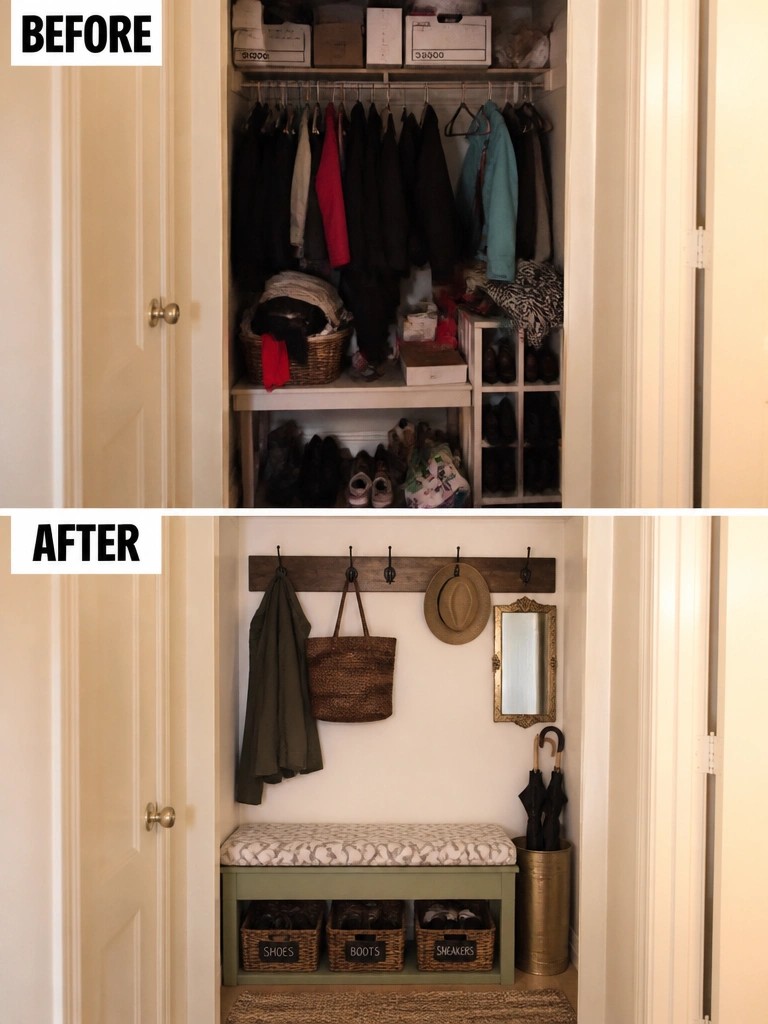
A closet near the door can quickly fill up with coats, shoes, and whatever else gets tossed inside. Clearing the space and adding hooks along the wall plus a bench with baskets underneath gives everything a set spot and keeps the floor clear.
This idea works best in smaller homes or apartments where there is no separate mudroom. Keep the bench shallow so the door still opens fully, and use baskets that fit the width of the space so the area stays usable without feeling crowded.
Create A Functional Vanity In A Small Bedroom Corner
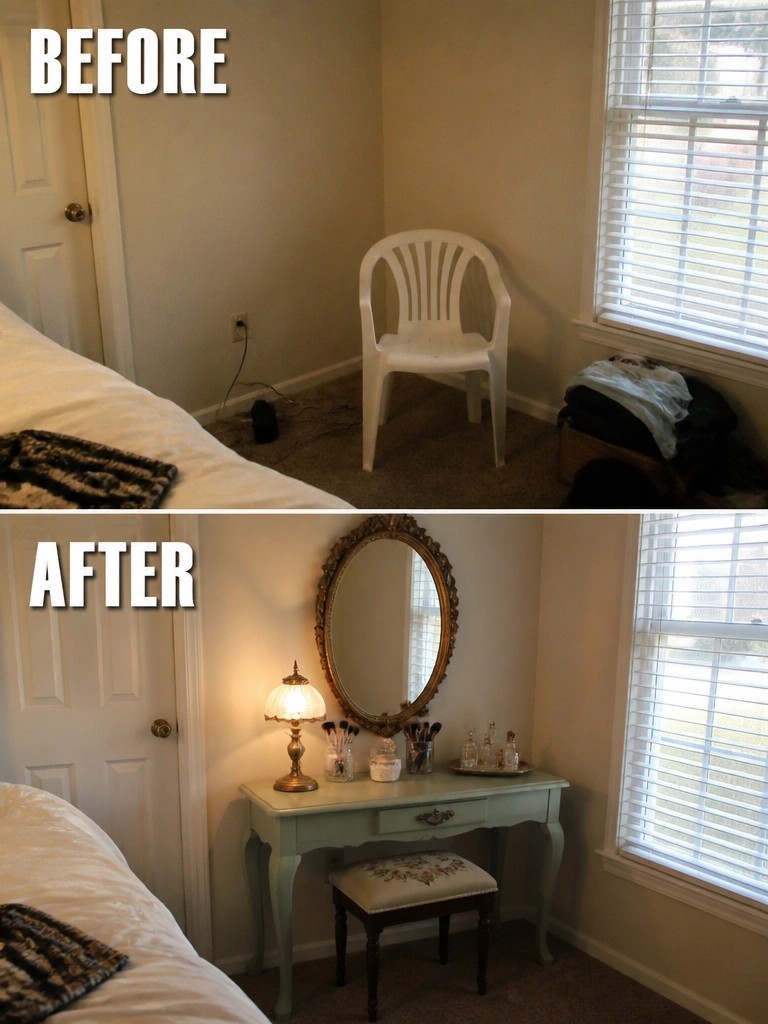
An empty bedroom corner often ends up with a random chair or pile of clutter. Swapping that for a small desk, mirror, and stool turns the space into a dedicated spot for getting ready without needing a large room or built-in closet.
This approach works best in bedrooms where floor space is limited but a simple surface and mirror would be useful. Thrift a desk in the right scale, add one or two lamps for lighting, and keep accessories minimal so the area stays practical instead of crowded.
Frequently Asked Questions
Q: Where do I even begin if my local thrift store feels picked over most days?
A: Try going first thing in the morning when they restock shelves. Focus on one category like lamps or wall art each trip instead of wandering aimlessly. You will spot more usable pieces when you know exactly what gap you need to fill at home.
Q: How do I avoid spending too much even when something looks promising?
A: Decide your top dollar amount for each type of item ahead of time and stick to it. Skip anything that needs major repairs since those costs add up fast. Shopping with a friend helps too because they can talk you out of impulse buys.
Q: What if a thrifted piece looks nothing like my other finds once I get it home?
A: Move it around the room and try pairing it with different items you already own. A quick wipe or new hardware often shifts how it feels without extra purchases. If it still clashes just set it aside for another project later.
