
I’ve stood in rooms where empty walls and bare floors left everything feeling scattered even with furniture already in place.
A few well chosen additions can tie the space together and make it feel more usable day to day.
I usually start by testing simple layers like rugs or wall pieces that add structure without filling every inch.
Those choices often turn an awkward area into one that actually supports how we live in it.
Small updates like these tend to stick because they solve the emptiness without requiring a full overhaul.
Make A Plain Room Feel Finished
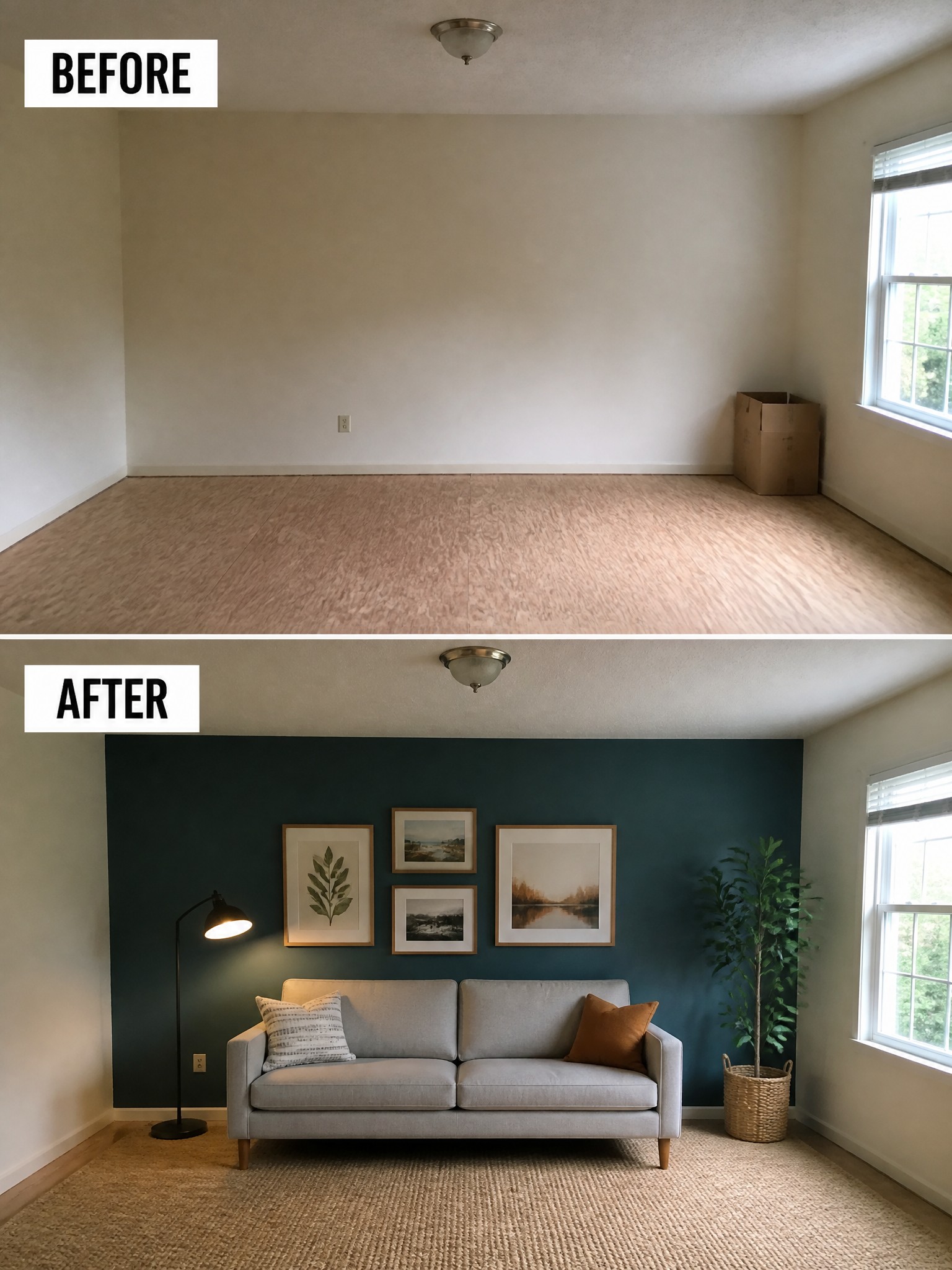
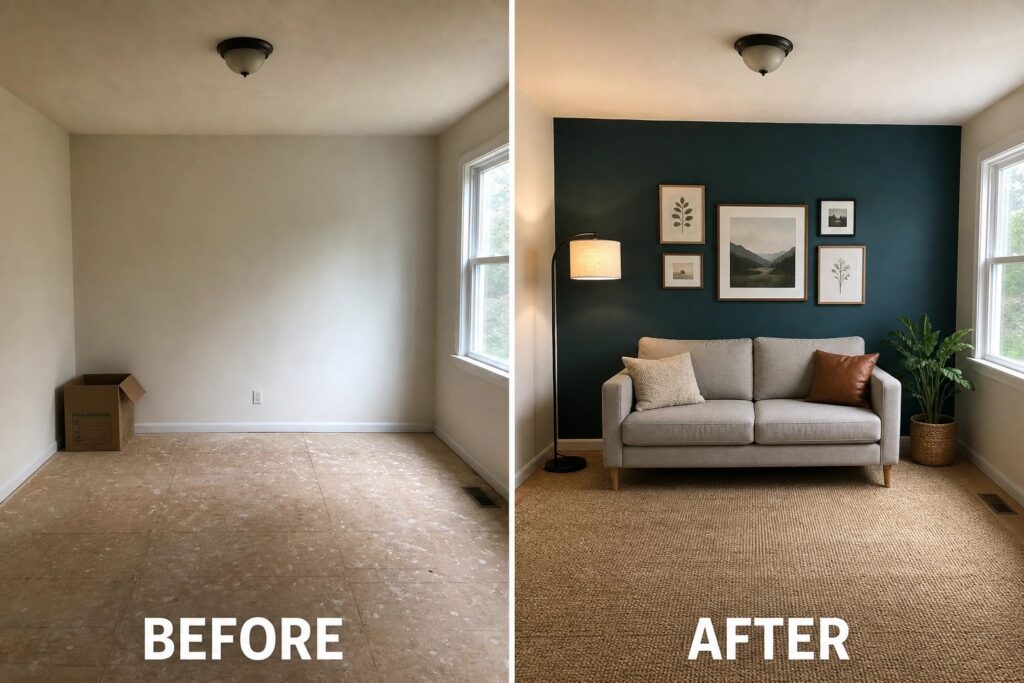
An empty room with plain walls and nothing on the floor can feel cold and unfinished. Painting one wall a deep color gives the space an instant anchor, and adding a sofa, rug, and a couple of simple pieces makes the room actually usable.
This approach works well in any spare room that needs purpose without a big budget. Start with the accent wall, then bring in seating and a rug to define the area. Keep the rest light so the room does not feel crowded.
Use An Accent Wall To Anchor A Bedroom
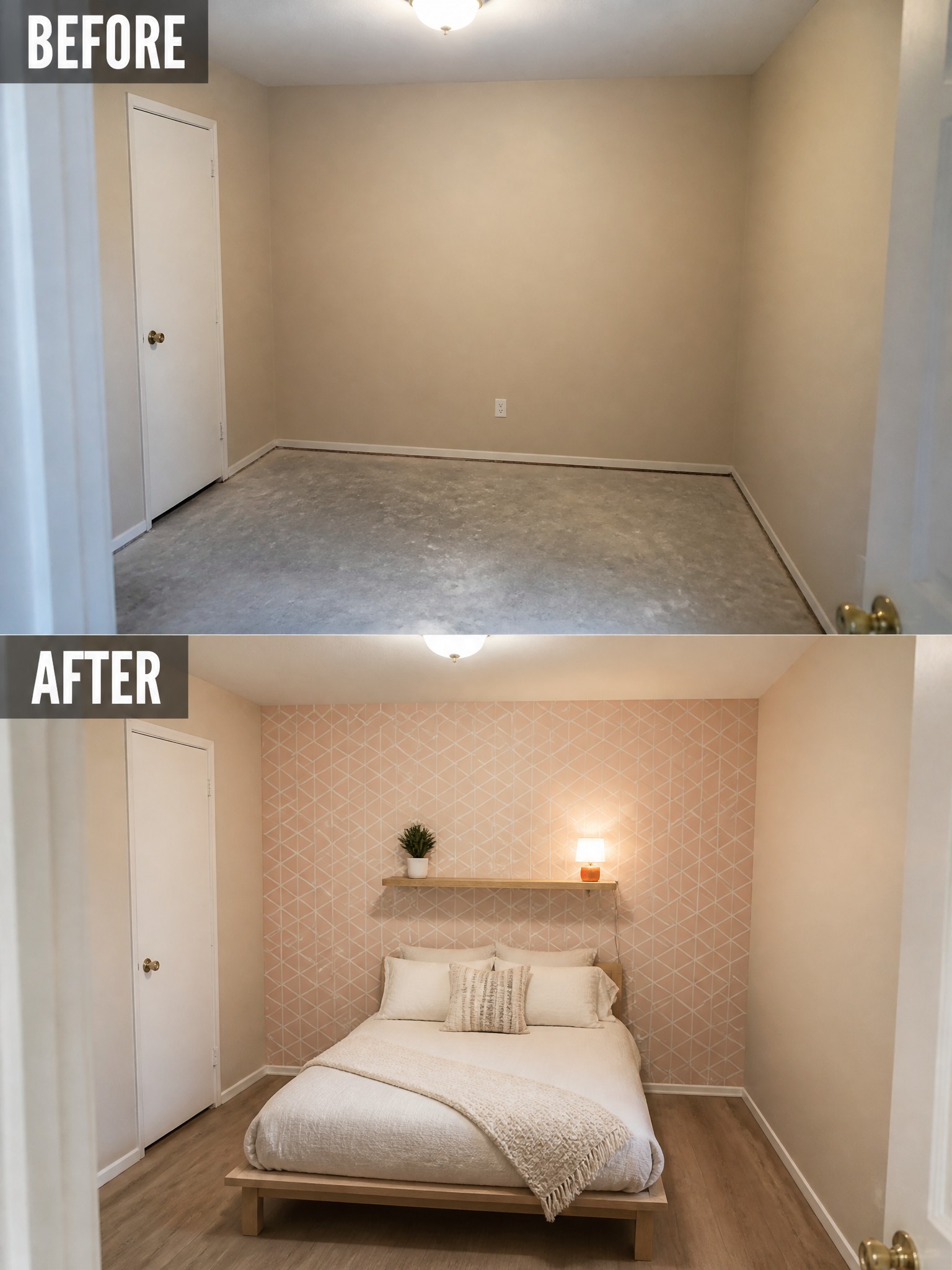
An empty bedroom often feels unfinished no matter how clean it is. Adding one patterned accent wall behind the bed gives the room a clear center point and makes the space feel more complete without needing a lot of furniture.
This idea works especially well in small or rental rooms where you cannot change much. Keep the other walls light, add a simple bed, and use a narrow shelf with a couple of lights to keep the look balanced and easy to maintain.
Turn A Bare Room Into A Simple Workspace
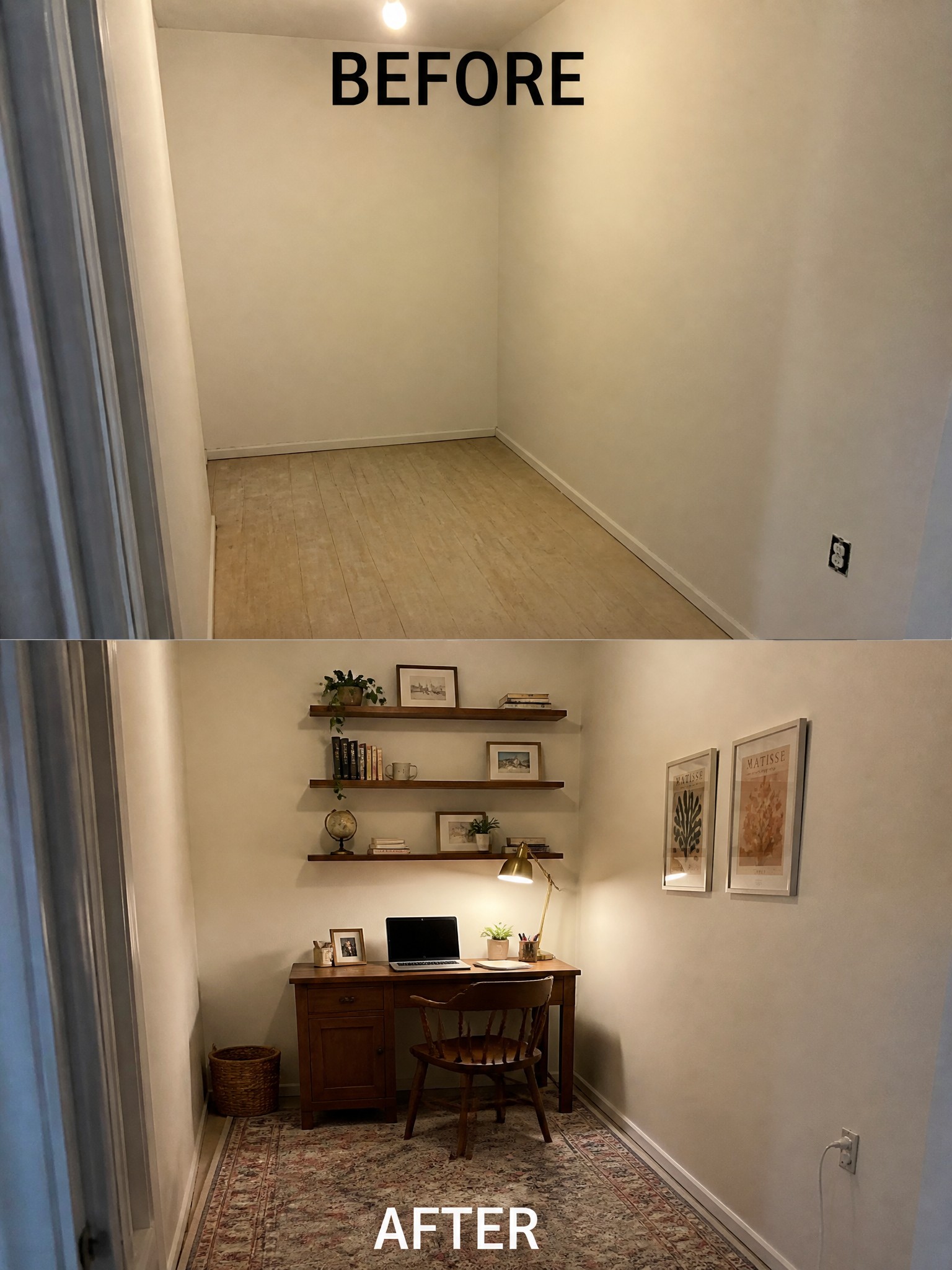
An empty room often sits unused because it lacks any sense of purpose. Placing a desk against the wall with floating shelves above it turns the space into a practical workspace. The rug underneath helps define the area and makes the whole setup feel more complete.
This approach suits small homes or extra rooms that need to serve more than one role. Start with a desk that fits the scale of the room and add shelves for books and small items. Keep the rest of the space open so the workspace stays easy to use.
Add A Runner Rug To A Bare Hallway Floor
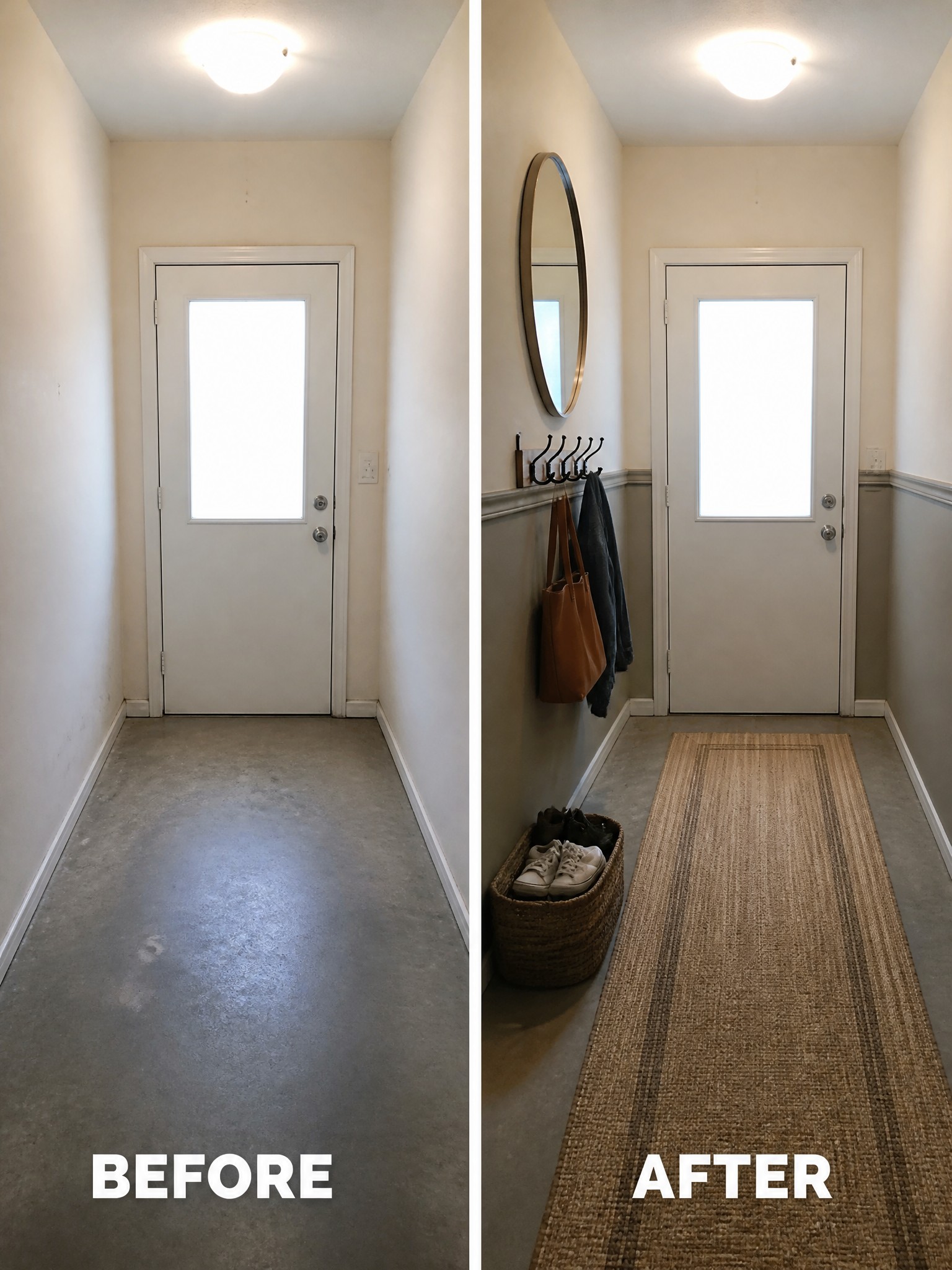
A hallway with nothing but bare concrete feels unfinished and a little cold. Laying a long runner down the center changes the feel right away by adding texture underfoot and breaking up the flat gray surface.
This works especially well in narrow indoor passages that get daily use. Pick a rug wide enough to matter but narrow enough to leave clear walking space on the sides, and keep any wall additions simple so the hallway stays easy to move through.
Add Wainscoting And Flooring To Finish A Bare Room
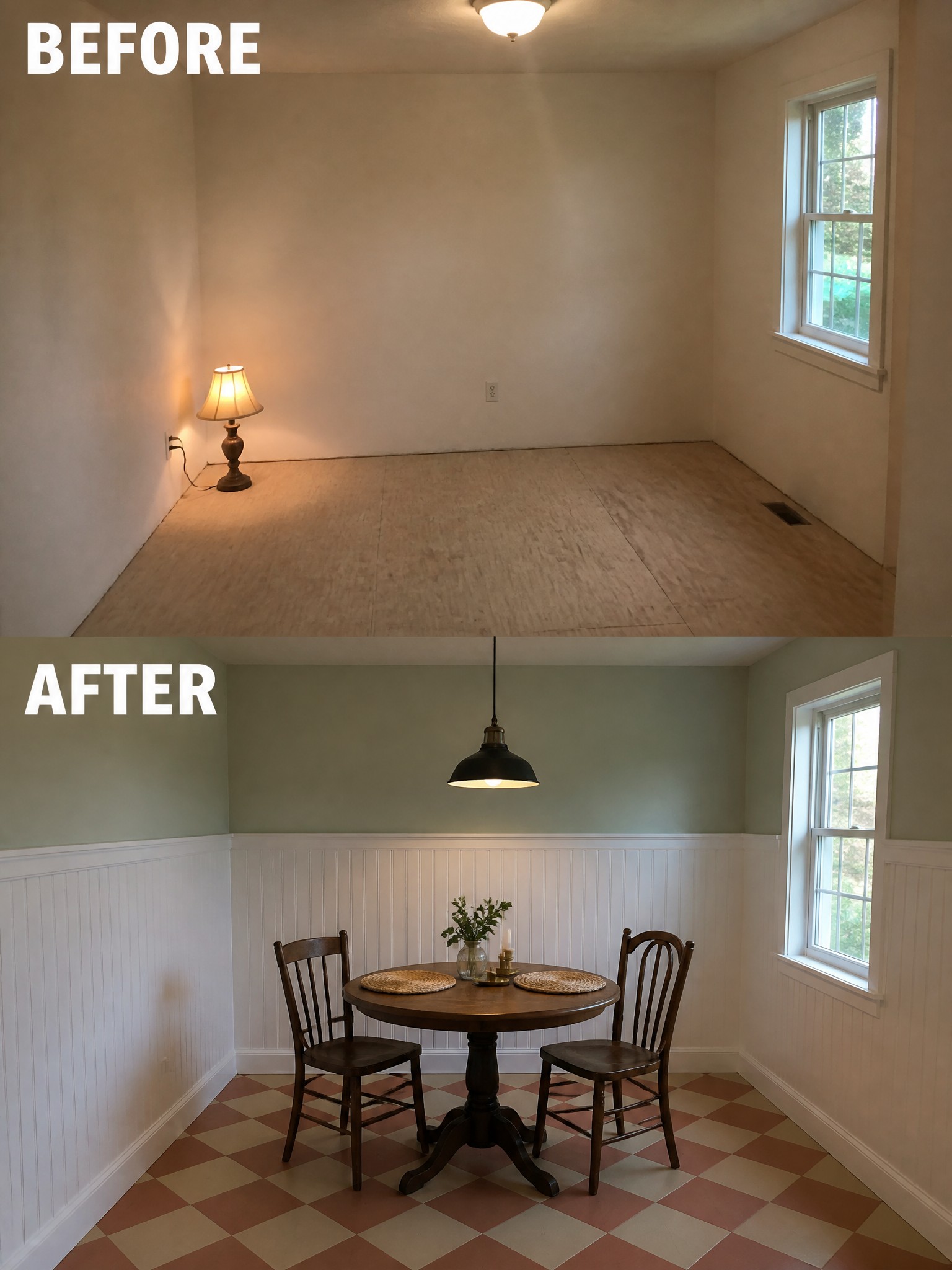
An empty room with plain walls and a bare plywood floor can feel cold and unfinished. Adding wainscoting along the lower half of the walls, painting the upper section a soft color, and laying a checkered floor instantly gives the space structure and purpose. The simple dining setup then fits naturally into the room instead of floating in an open void.
This approach works well in small homes or older houses where rooms lack character. Focus on the lower walls and floor first before bringing in furniture. It keeps costs down while making the space feel complete and ready for daily use.
Use Wall Decals And A Foam Mat To Finish An Empty Room
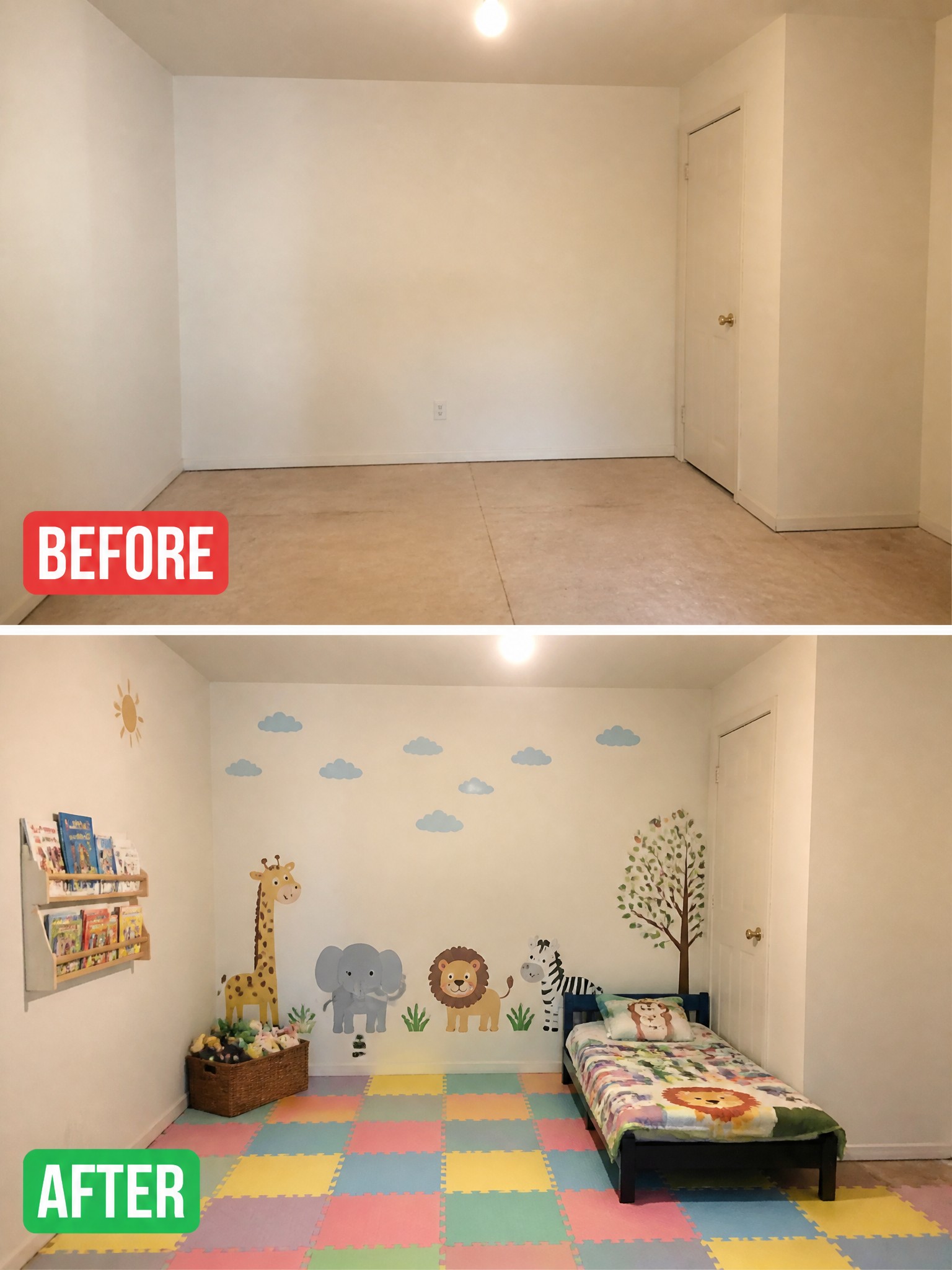
An empty room with plain walls and a bare floor can feel cold and unfinished. Adding animal wall decals across one wall and laying down a colorful interlocking foam mat instantly gives the space purpose and makes it feel ready for use.
This approach works well in small bedrooms or playrooms where you want to keep costs low. Start with the decals and mat as your base, then add just a few pieces of furniture like a low bed or a wall shelf so the room stays open and easy to move around in.
Make A Plain Room Feel Finished
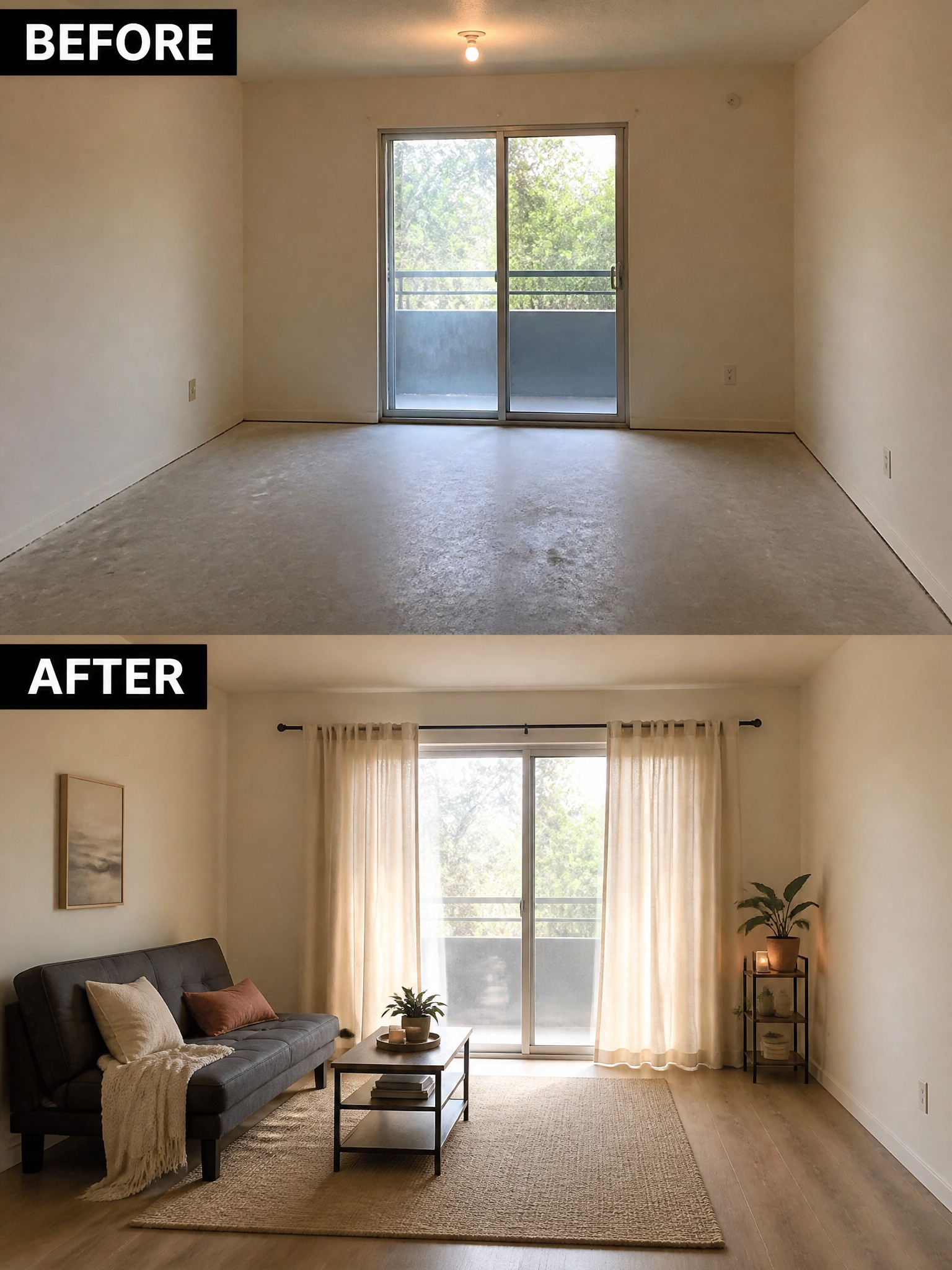
An empty room with bare floors often feels cold and unfinished no matter how clean the walls are. Adding a rug to define the seating area, plus curtains to soften the windows, makes the space feel much more complete without any construction.
This approach works especially well in rentals or new builds where you want quick results on a budget. Keep the furniture scale modest so the room stays open, and focus on one main seating zone rather than trying to fill every corner.
Finish A Bare Basement With Flooring And Simple Furniture
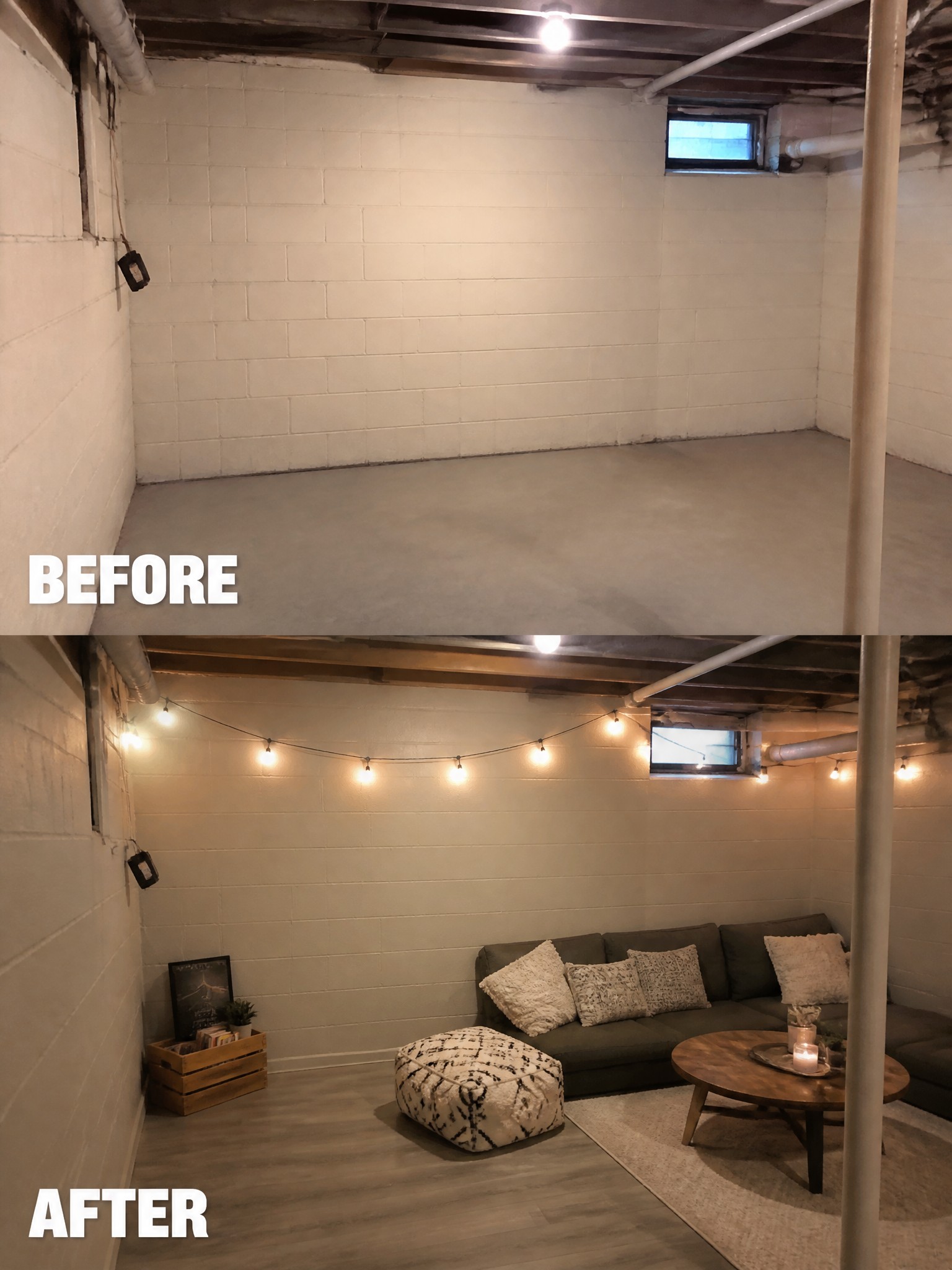
An unfinished basement often stays empty because the concrete floor and plain walls feel too cold to use. Adding vinyl flooring over the concrete, a sectional with pillows, a rug, and a few string lights makes the space feel like an actual room instead of leftover storage.
This approach works well in any below-grade space where you want seating without a full renovation. Start with the floor to cover the concrete, then bring in one main seating piece and a rug to define the area. Keep the rest light so the room does not feel crowded.
Add Wall Hooks To Give An Entryway A Clear Purpose
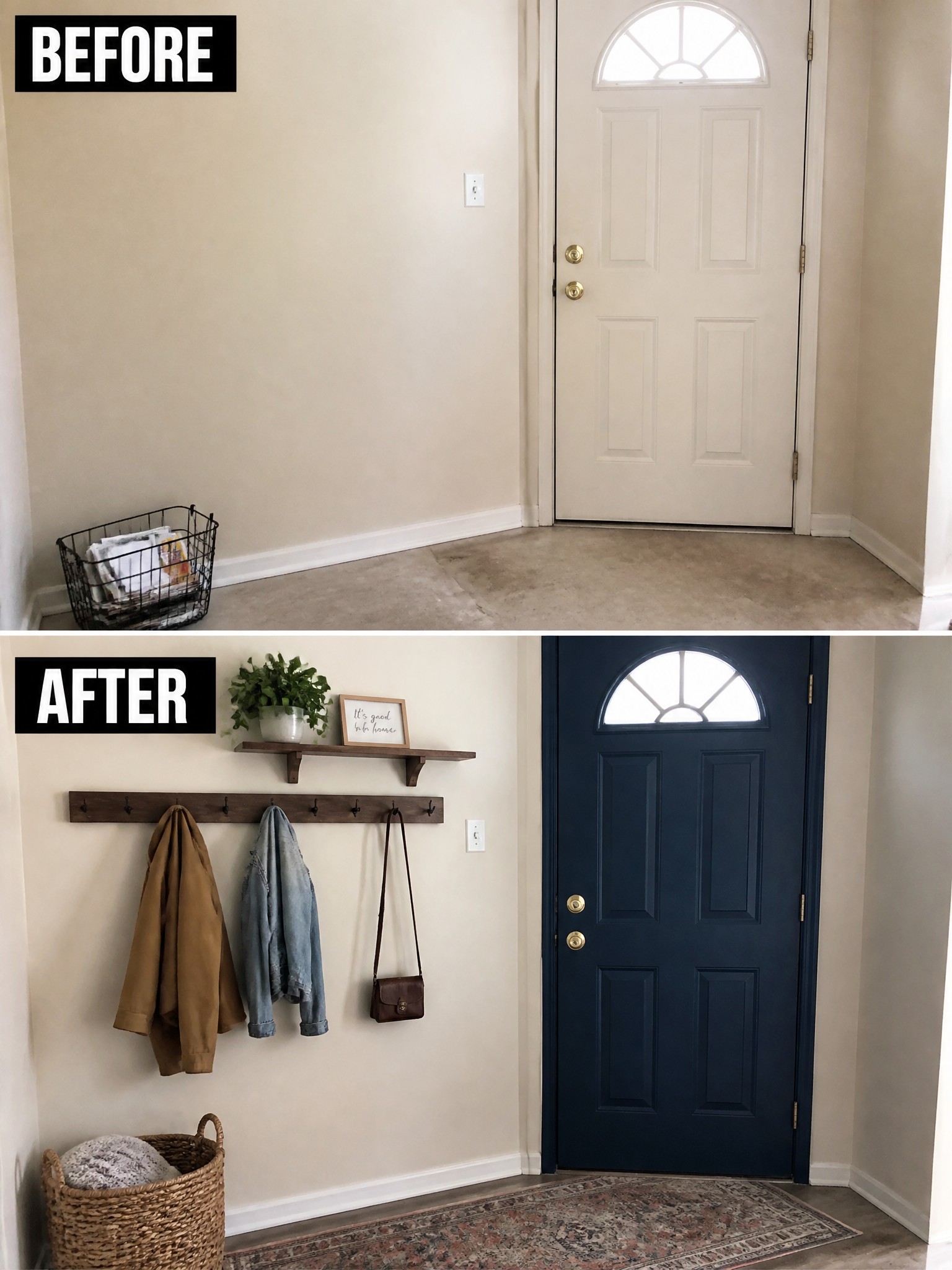
A bare entryway often stays empty because there is no obvious place to put things. Adding a simple row of hooks on the wall next to the door creates a spot for coats, bags, and jackets right where people need it. A narrow shelf above the hooks adds room for a plant or a small tray without using floor space.
This works best in small entries or hallways that need storage but cannot fit a full bench or cabinet. Keep the hooks at a comfortable height and leave enough walking room in front. A rug on the floor helps define the area and makes the space feel more finished.
Make A Plain Room Feel Finished With Floating Shelves
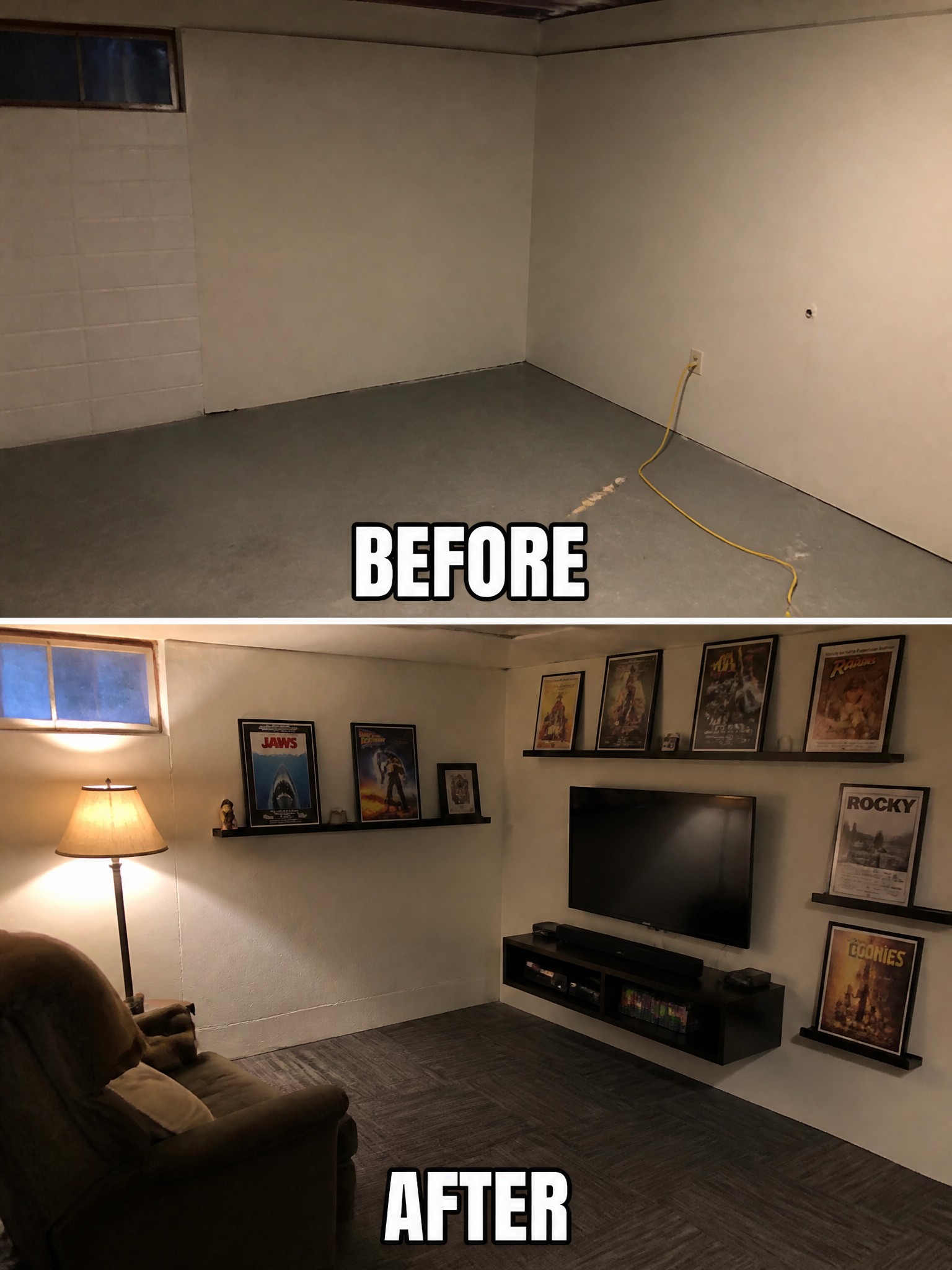
A bare room with concrete floors and empty walls can feel cold and unfinished. Adding a few floating shelves and filling them with framed prints gives the walls purpose and makes the space feel lived in. The new flooring also helps tie everything together without needing major construction.
This approach works well in basements or spare rooms where you want a simple theme. Pick one subject for the prints, such as movies or travel, and keep the shelves at eye level so the arrangement stays balanced. Start with the shelves and flooring first, then add seating and lighting once the main surfaces are covered.
Create A Chalkboard Wall For Everyday Notes
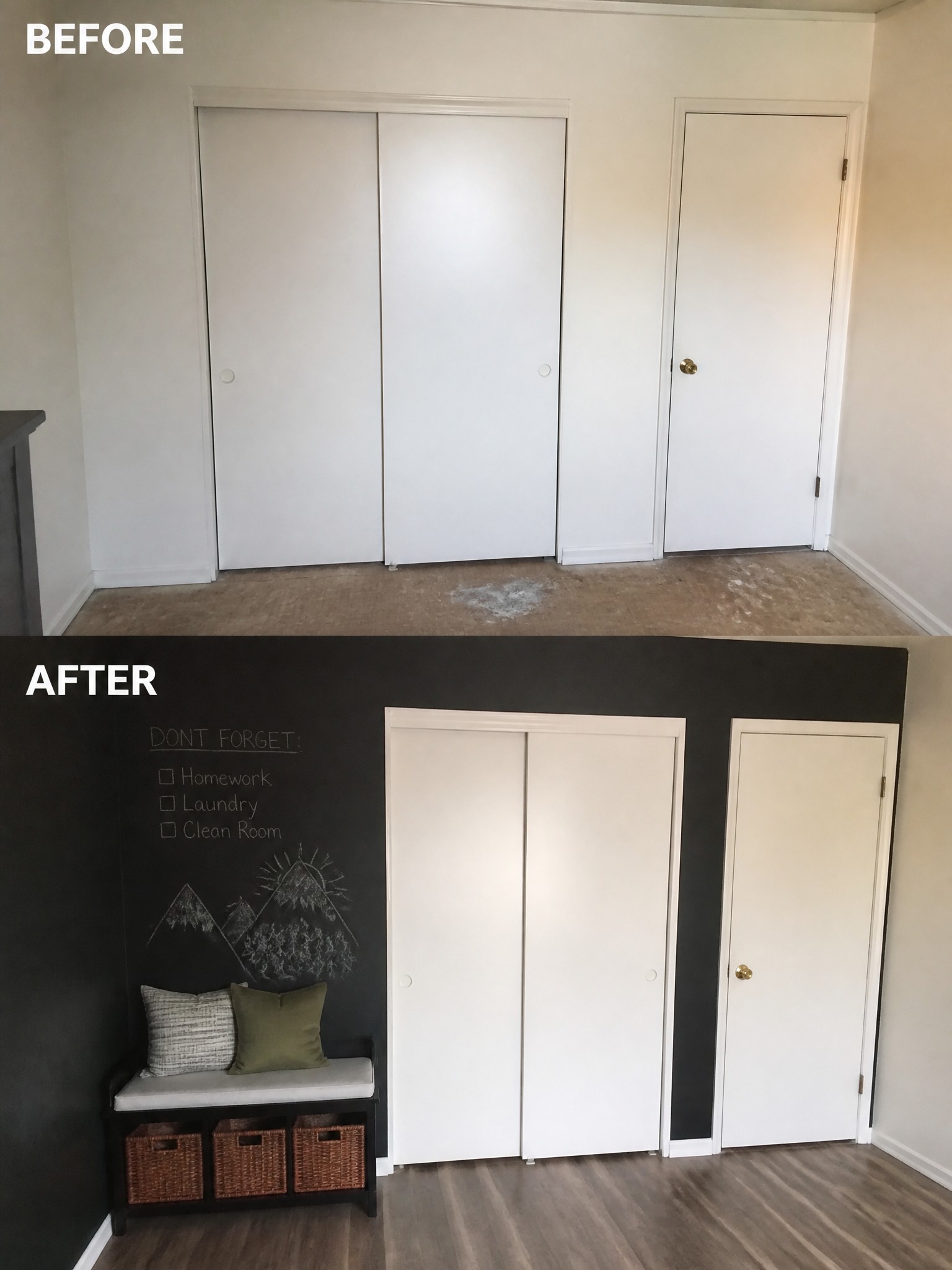
Painting one wall with chalkboard paint gives a plain room a clear purpose without much cost. In this case the change turned an empty stretch of wall into a spot for reminders and drawings while the bench underneath added seating and hidden storage for baskets. The dark surface also makes the white doors stand out more and keeps the space from feeling completely bare.
This idea works well in a hallway, mudroom, or kids bedroom where lists and quick notes are useful. Start with a clean wall, use proper chalkboard paint, and keep the bench simple so the area stays practical rather than crowded.
Add A Backsplash And New Flooring To Refresh A Kitchen
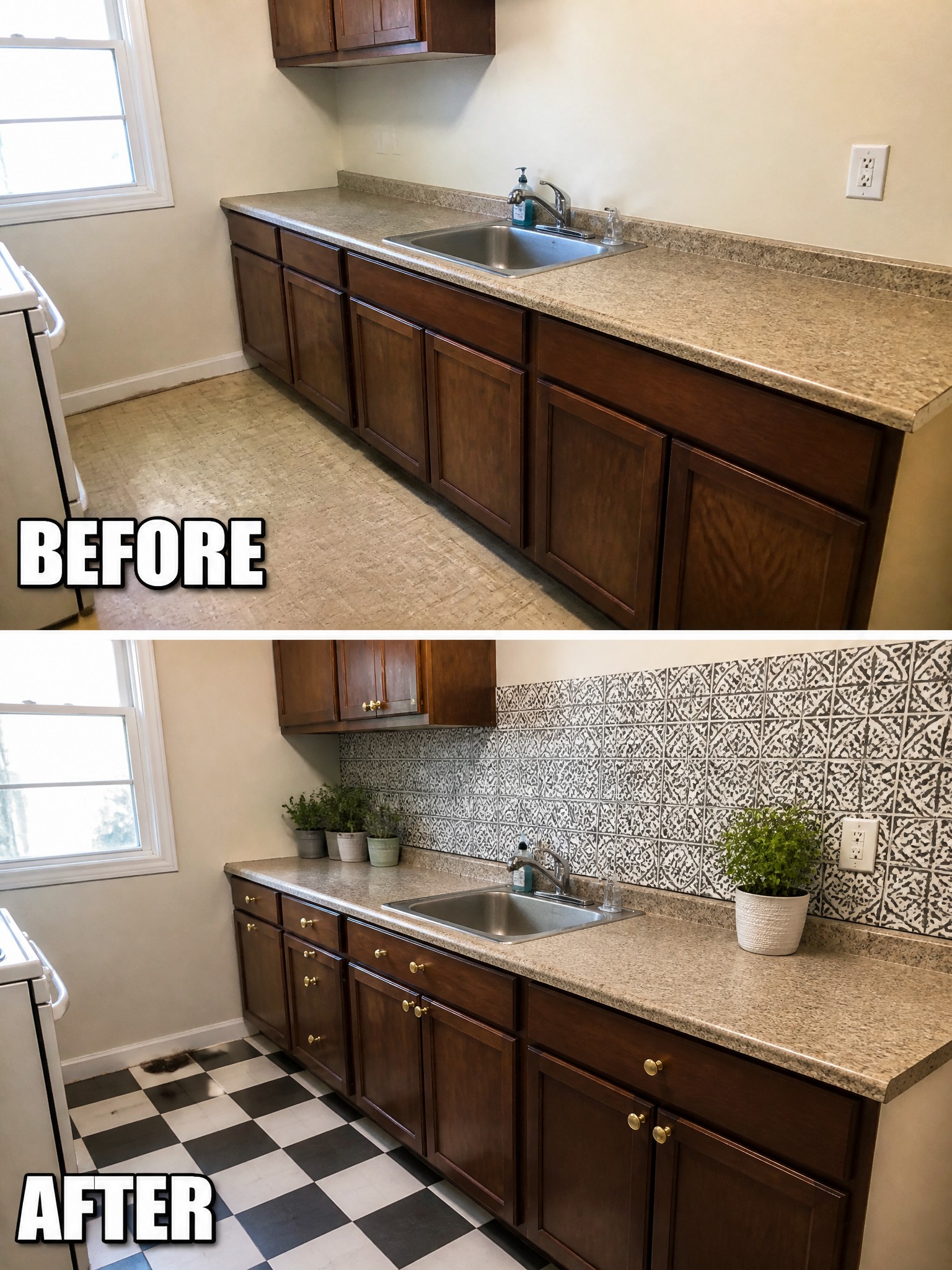
An old kitchen with plain walls and worn flooring can feel dated fast. Adding a patterned tile backsplash and swapping the floor for something simple like black and white tile gives the space a clear update without touching the cabinets or counters.
This approach works well in rentals or on a tight budget because the changes stay on the surfaces. Focus on one bold pattern for the backsplash and keep the floor clean so the room does not feel crowded. Start with the floor if it needs the most repair, then add the backsplash to tie the wall and counter together.
Turn A Blank Hallway Wall Into A Painted Focal Point
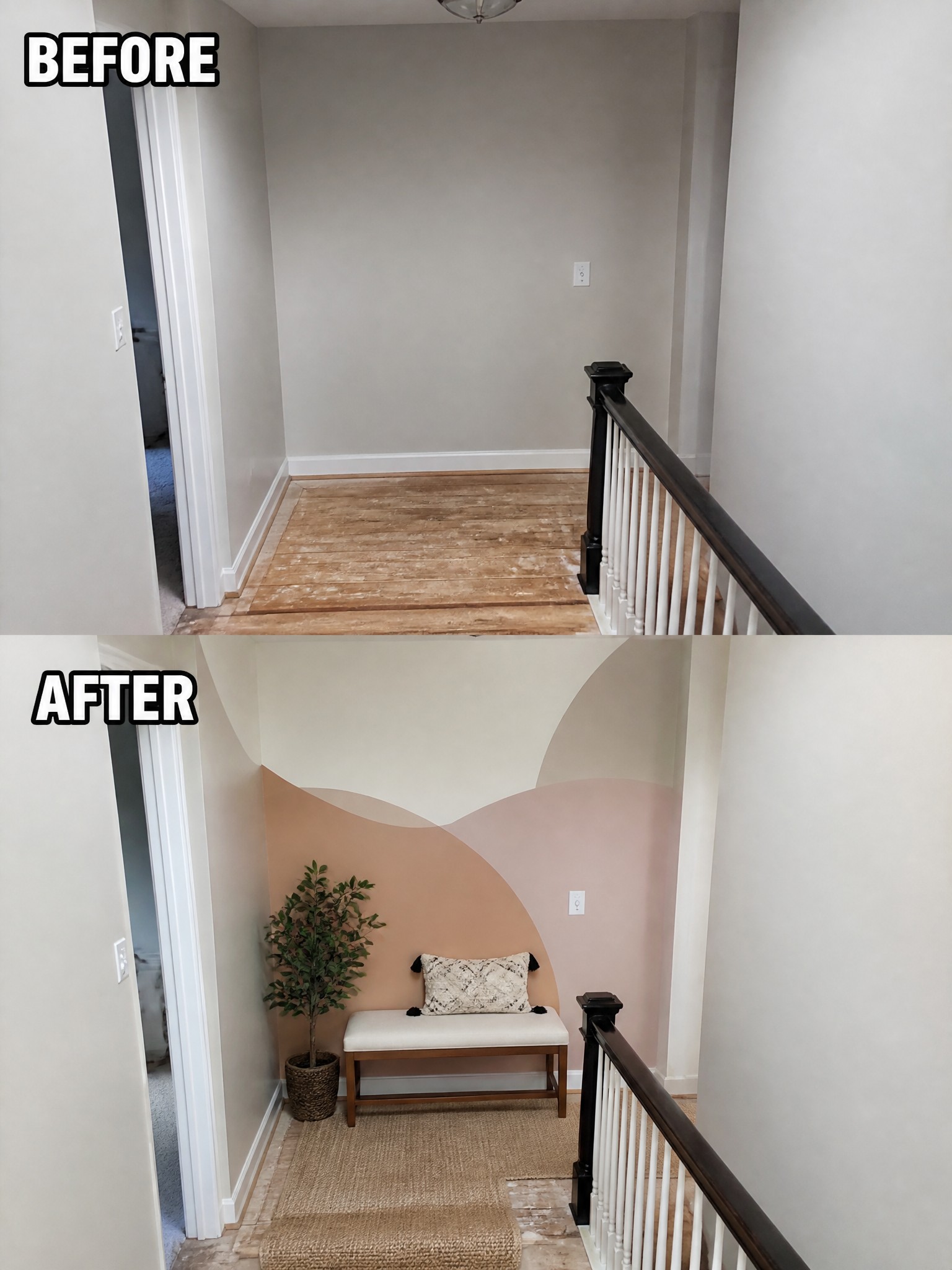
A plain hallway with bare subfloor can feel like wasted space. Painting soft curved shapes across the wall adds interest without any construction, then a simple bench and rug turn the spot into a small seating area that actually gets used.
This approach works well in transitional spots like landings or narrow hallways where full furniture would get in the way. Start with paint because it is cheap and reversible, keep the shapes loose so they feel relaxed, and add just one or two pieces so the area stays open and easy to walk through.
Make The Fireplace Wall The Main Feature
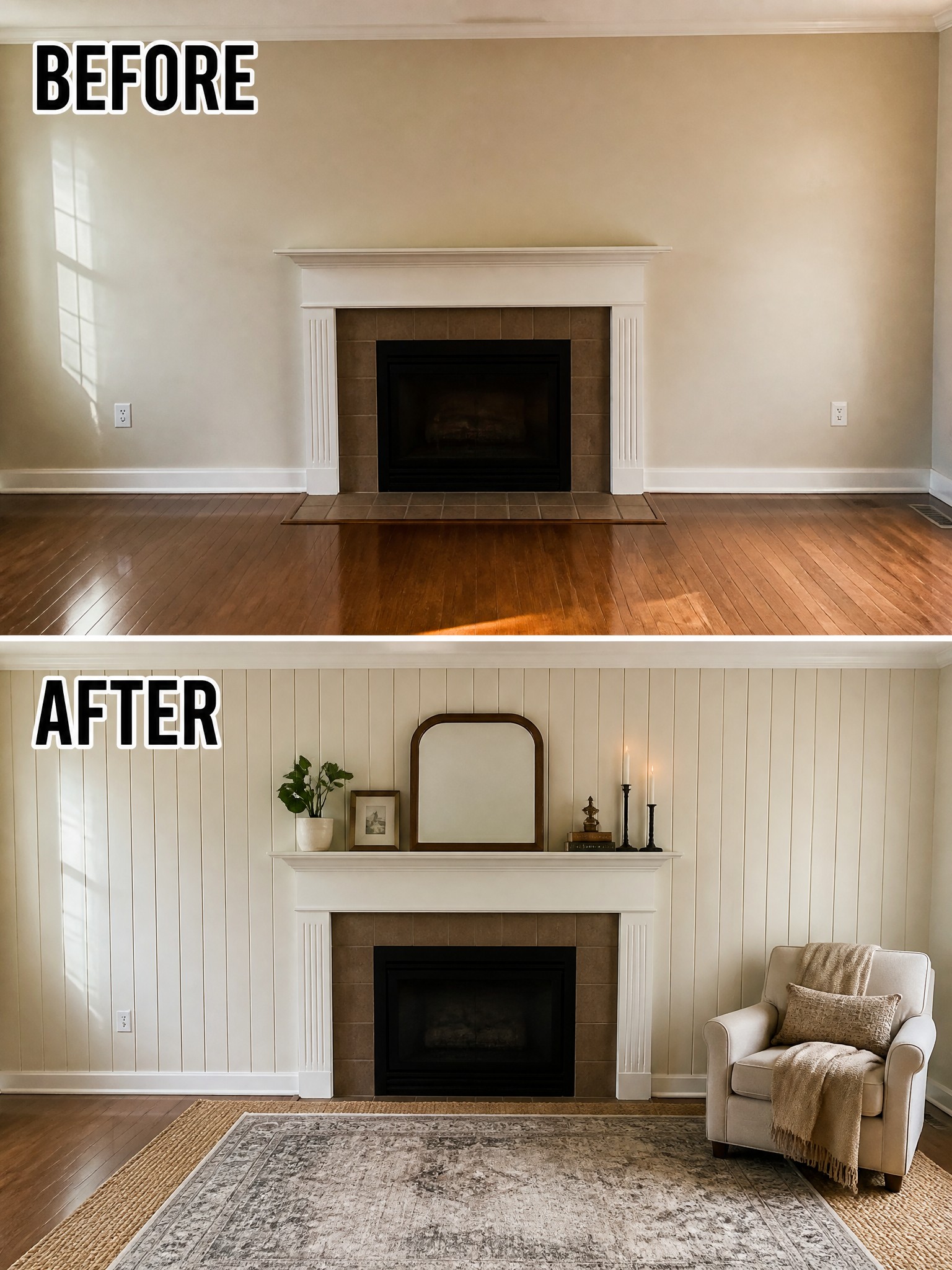
A plain fireplace often disappears against bare walls and empty floors. Adding vertical paneling creates instant structure and turns the mantel into the obvious center of the room. A rug placed in front helps define the seating area without much extra furniture.
This works best in living rooms that already have a fireplace but feel unfinished. Keep the paneling simple and let one or two items on the mantel do the rest. The rest of the room can stay light so the wall carries the look.
Turn An Empty Room Into A Home Office
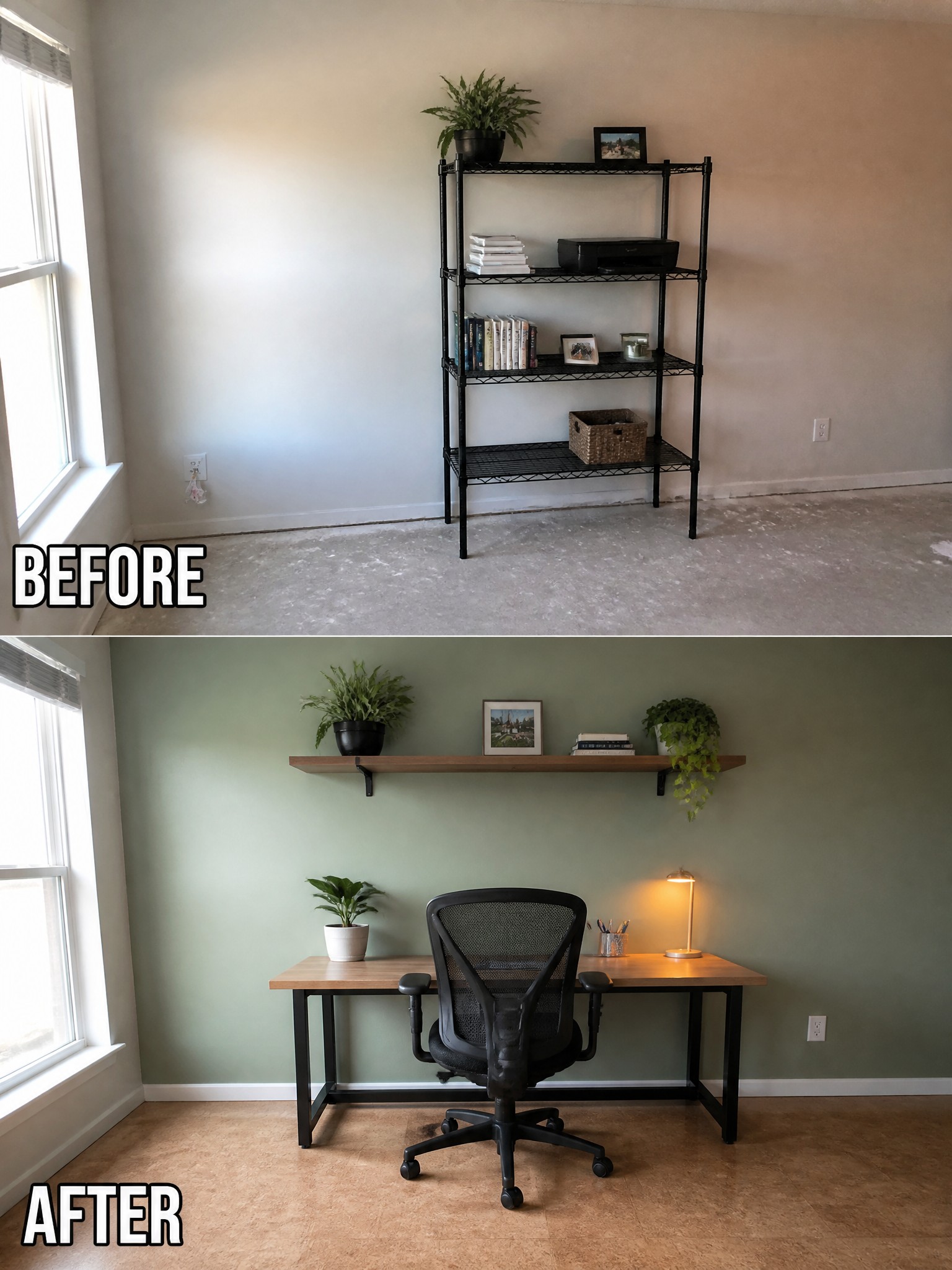
Painting the walls and replacing a tall wire shelf with a simple desk and floating shelf can turn a bare room into a usable workspace. The concrete floor stays as is, but the green paint and basic furniture make the space feel finished instead of temporary.
This approach works best in spare rooms or basement areas that need a clear purpose. Keep the layout minimal so there is still room to move around, and choose a desk size that fits the scale of the room without overcrowding it.
Add Wall Trim To Give A Plain Room Structure
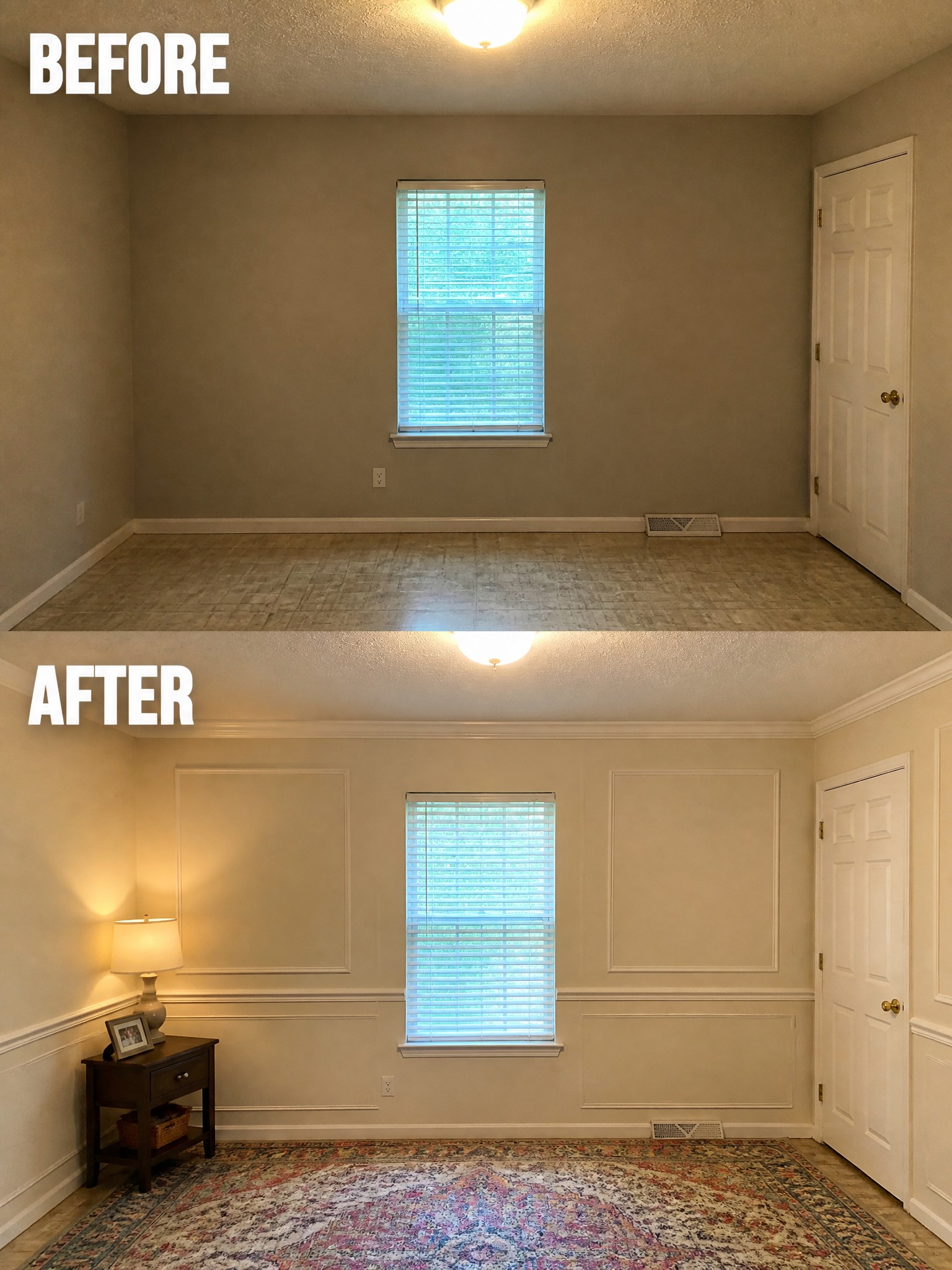
A room with flat walls and nothing on them often feels unfinished no matter how clean it is. Adding basic panel molding and a chair rail breaks up the large blank areas and gives the walls some shape without needing new furniture or major changes. The floor also looks more settled once a rug is added.
This idea works especially well in older homes or any space with tall empty walls. Keep the trim simple and paint it the same color as the walls if you want a quiet look, or go slightly darker for more definition. Start with the lower half of the wall if you are unsure about the full height.
Use A Pegboard Wall To Organize A Laundry Room
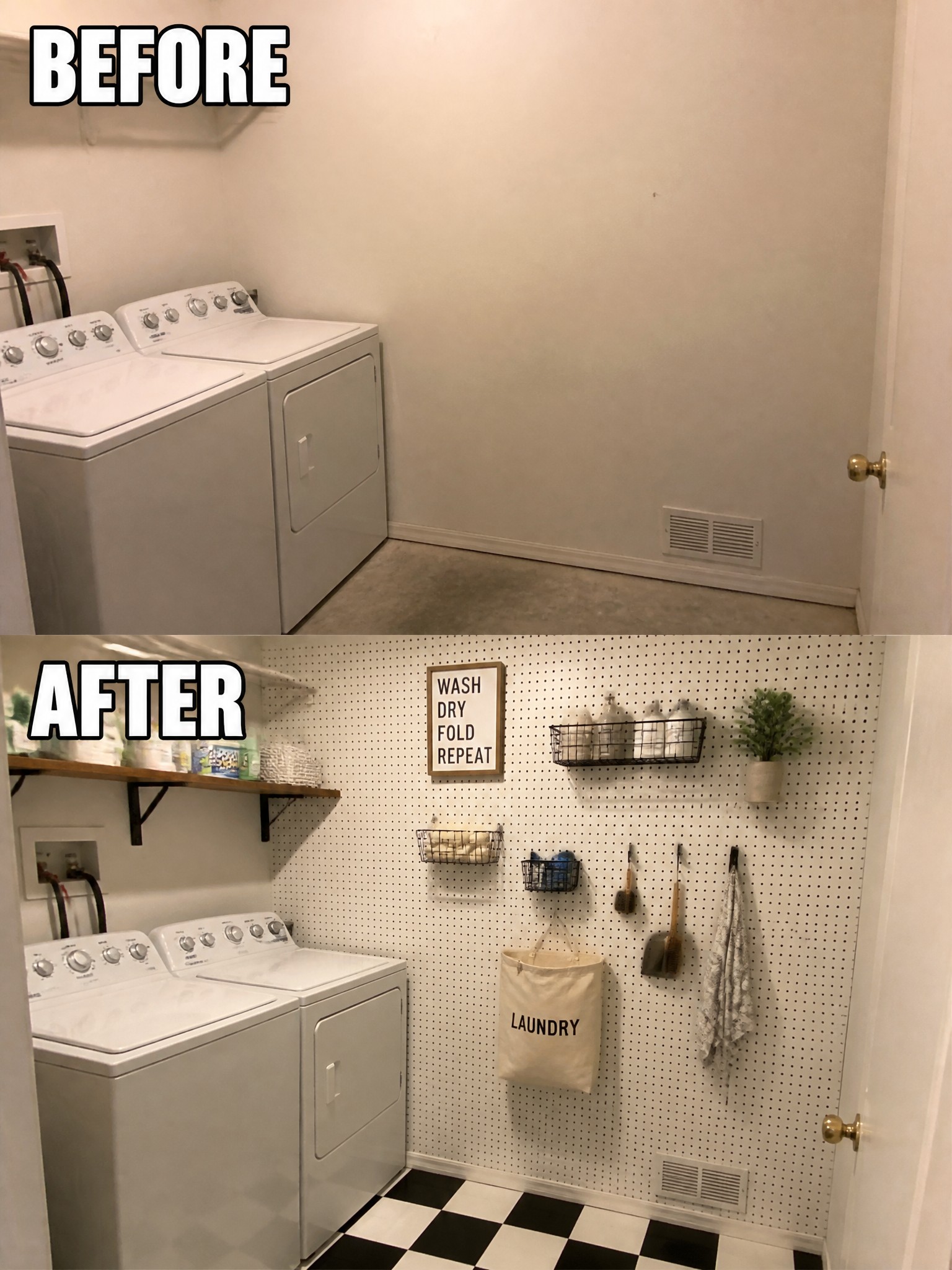
A plain laundry room often ends up with machines against one wall and nothing else to work with. Adding a pegboard gives you a simple way to turn empty wall space into useful storage without building cabinets or spending much. The floor rug helps too by making the room feel more finished and easier to stand on for long tasks.
This idea works well in any small utility space where you need quick access to supplies. Start with a pegboard sized to your wall, then add hooks and baskets for items you use often. Keep the rest of the room simple so the storage wall stays the main feature.
Turn A Bare Room Into A Nursery With Wall Decals
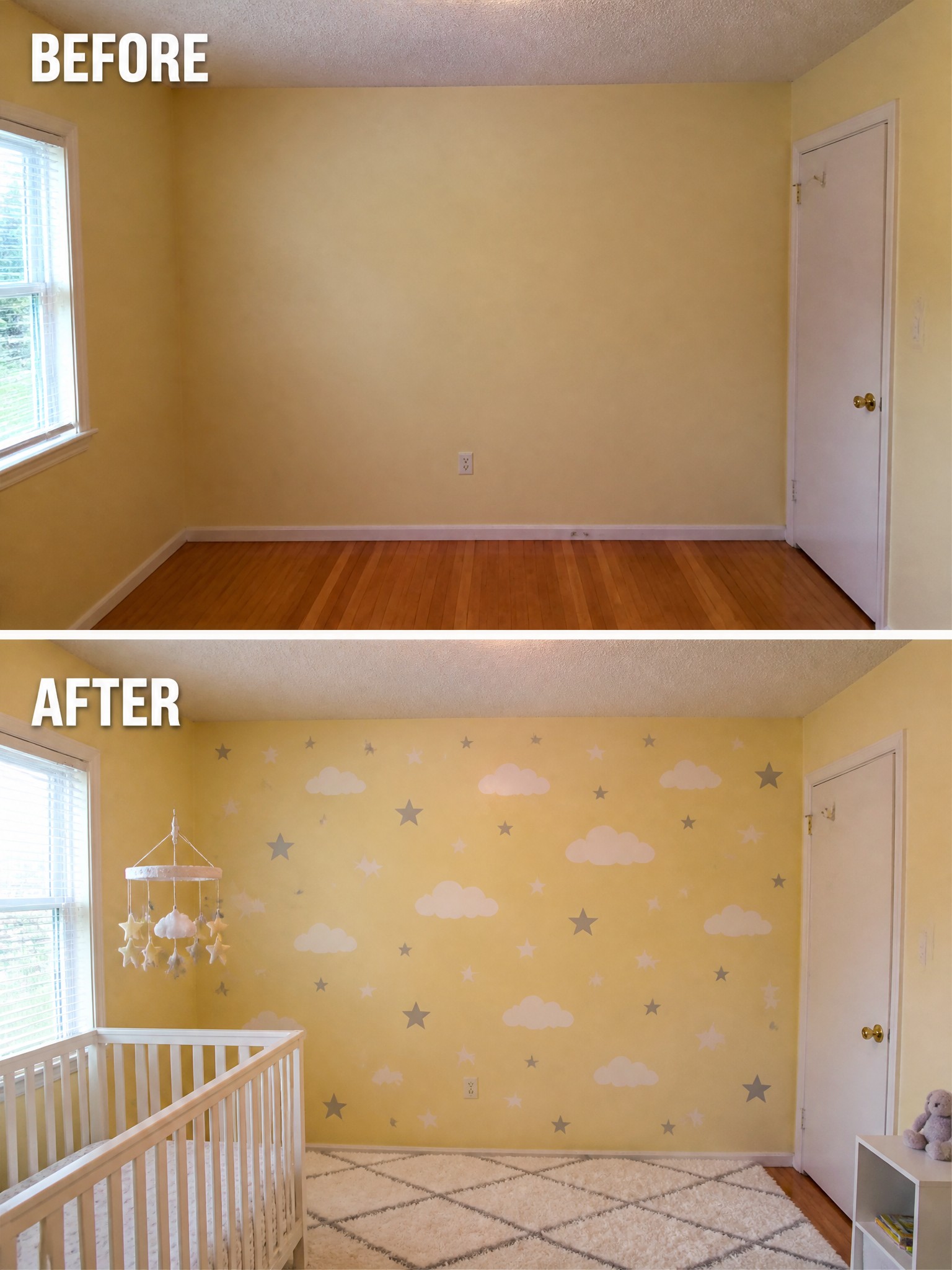
A plain yellow room with nothing but wood floors can feel cold and unfinished. Adding simple star and cloud decals across one wall gives it instant character while keeping the space light and calm. The crib and rug then anchor the room so it actually functions as a nursery instead of just looking decorated.
This approach works well in small bedrooms or guest rooms you want to convert quickly. Start with the decals since they are low cost and removable, then add the main pieces of furniture. Keep the rest of the walls plain so the pattern does not overwhelm the space.
Paint An Arched Accent To Define The Bed Area
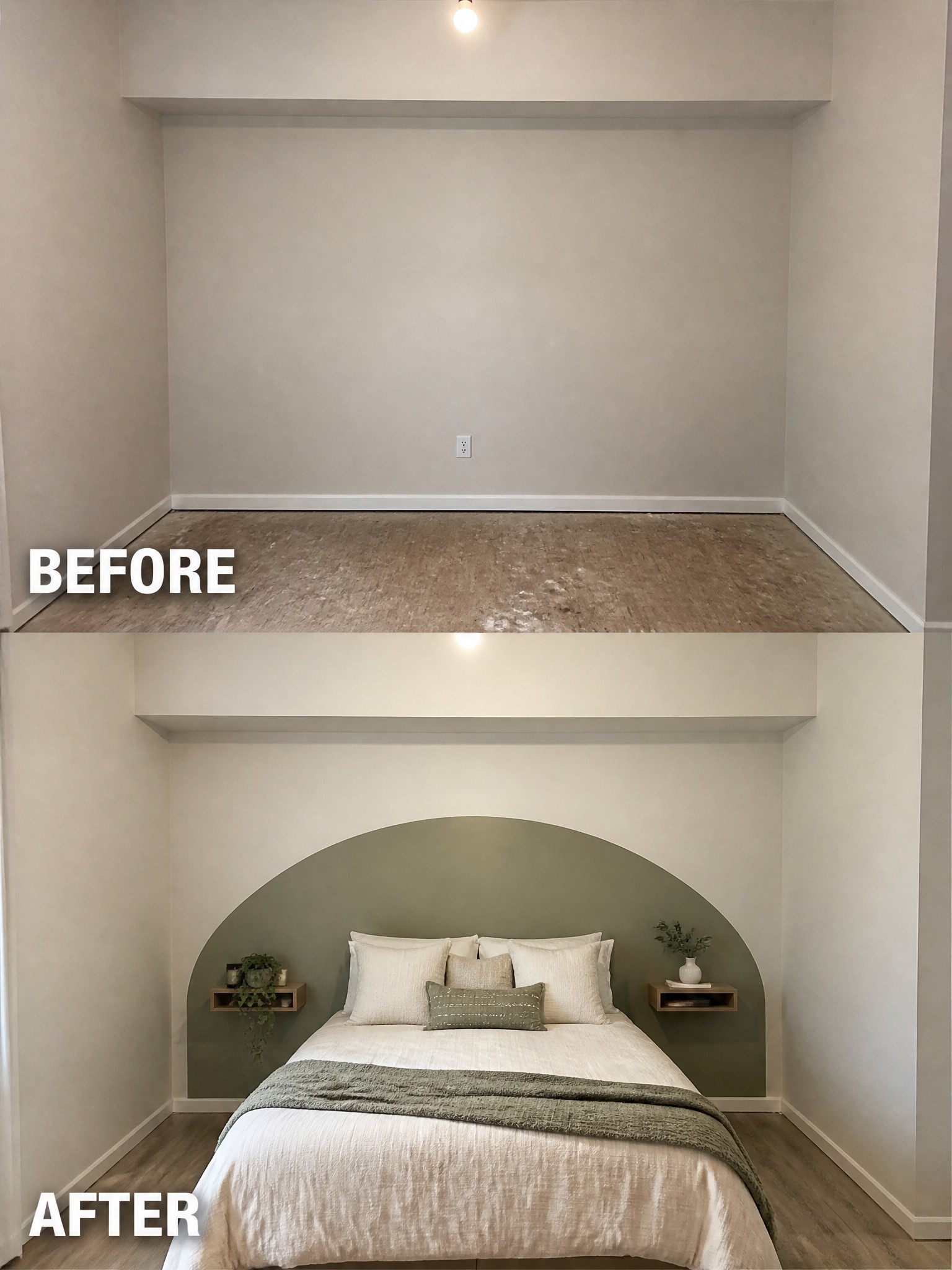
A plain recessed wall can feel unfinished when you try to place a bed against it. Painting a simple arch shape in a soft color gives the bed a clear frame and makes the whole space feel more intentional. The change turns an empty corner into the main feature without needing new furniture or built-ins.
This idea works well in small bedrooms or alcoves where you want to add interest without crowding the room. Keep the arch wide enough to fit the bed and nightstands, then add a pair of floating shelves for balance. The painted shape does most of the work, so you can keep the rest of the room simple.
Add A Colorful Floor Covering To Make An Empty Room Usable
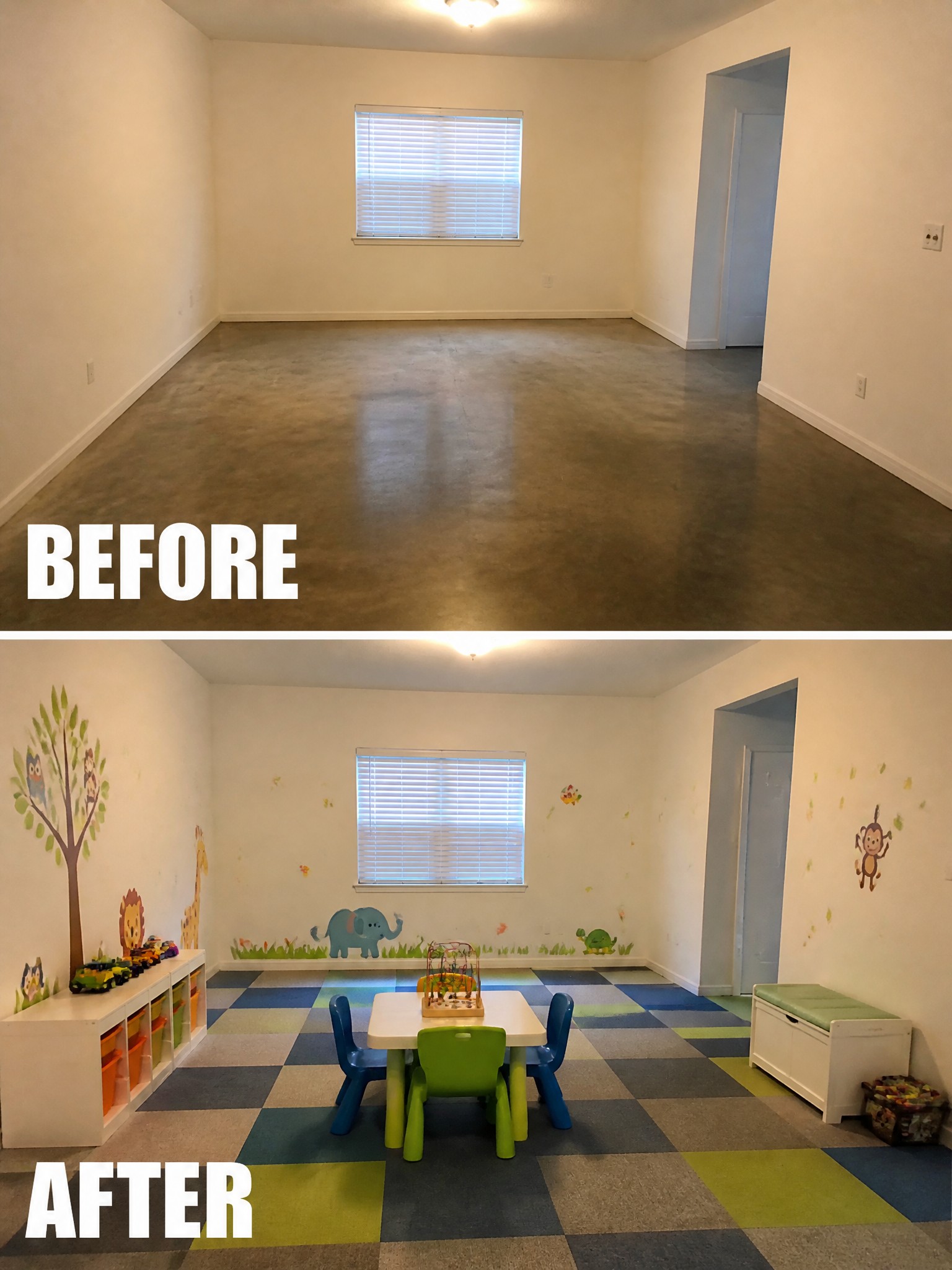
A bare concrete floor leaves a room feeling cold and unfinished, no matter how clean the walls are. Switching to a bright checkered carpet gave this space clear play zones and made it feel ready for kids without needing major construction.
This approach works best in spare rooms, basements, or any area that needs to serve a specific purpose quickly. Start with the floor to anchor the space, then layer in wall decals and basic furniture so the room feels intentional instead of leftover.
Add Shelves And A Rug To Finish An Empty Bedroom
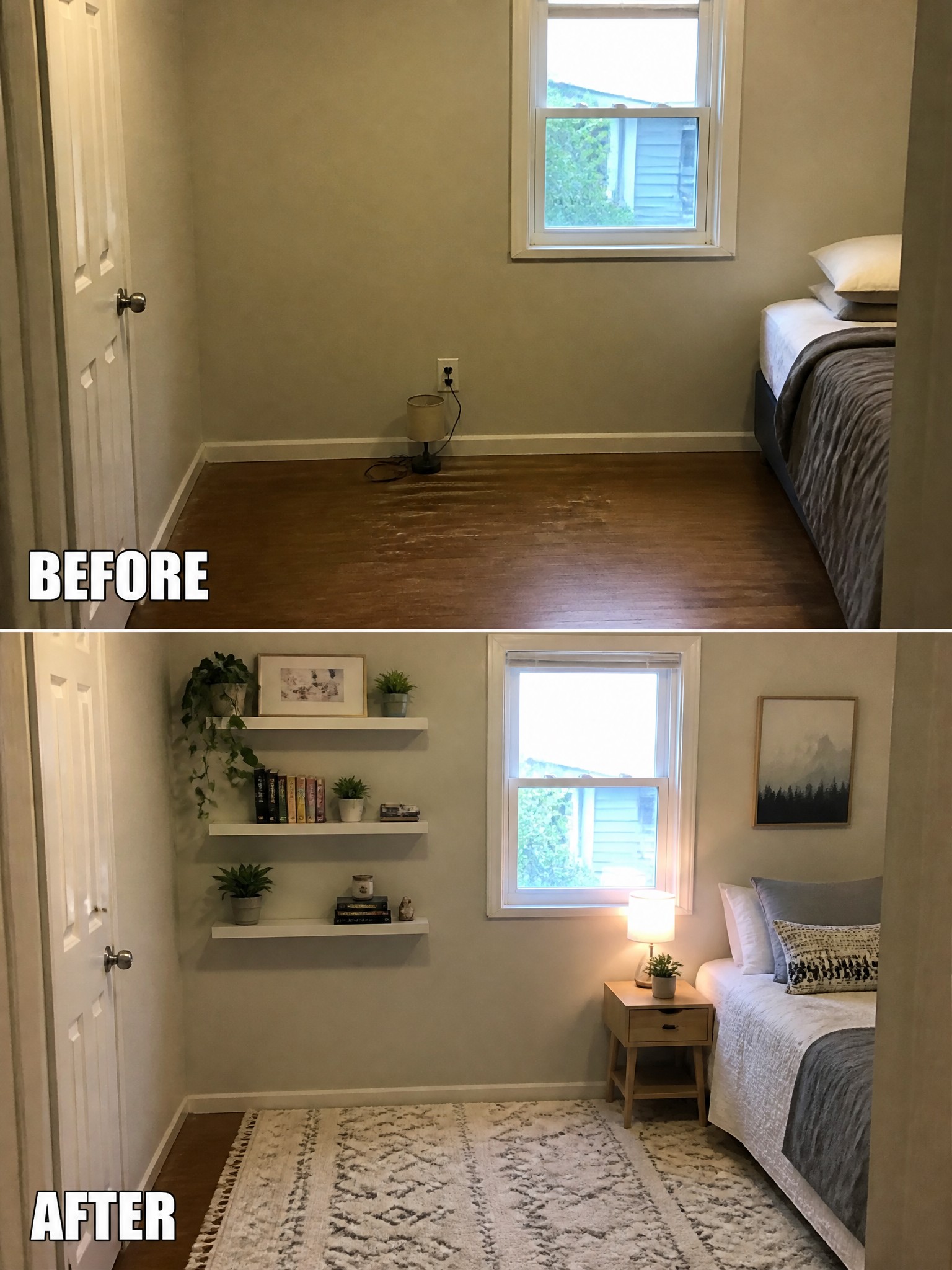
A bedroom with only a bed and bare walls often feels incomplete. Adding a few floating shelves and a large rug changes the feel right away. The shelves give the wall purpose and hold books and plants, while the rug defines the floor and makes the space feel warmer and more settled.
This idea suits small bedrooms or guest rooms where floor space is limited. Start with a rug that covers enough area to anchor the bed, then hang two or three simple shelves on the longest wall. Keep what goes on the shelves light so the room stays open and easy to use.
Paint A Door With Chalkboard Paint
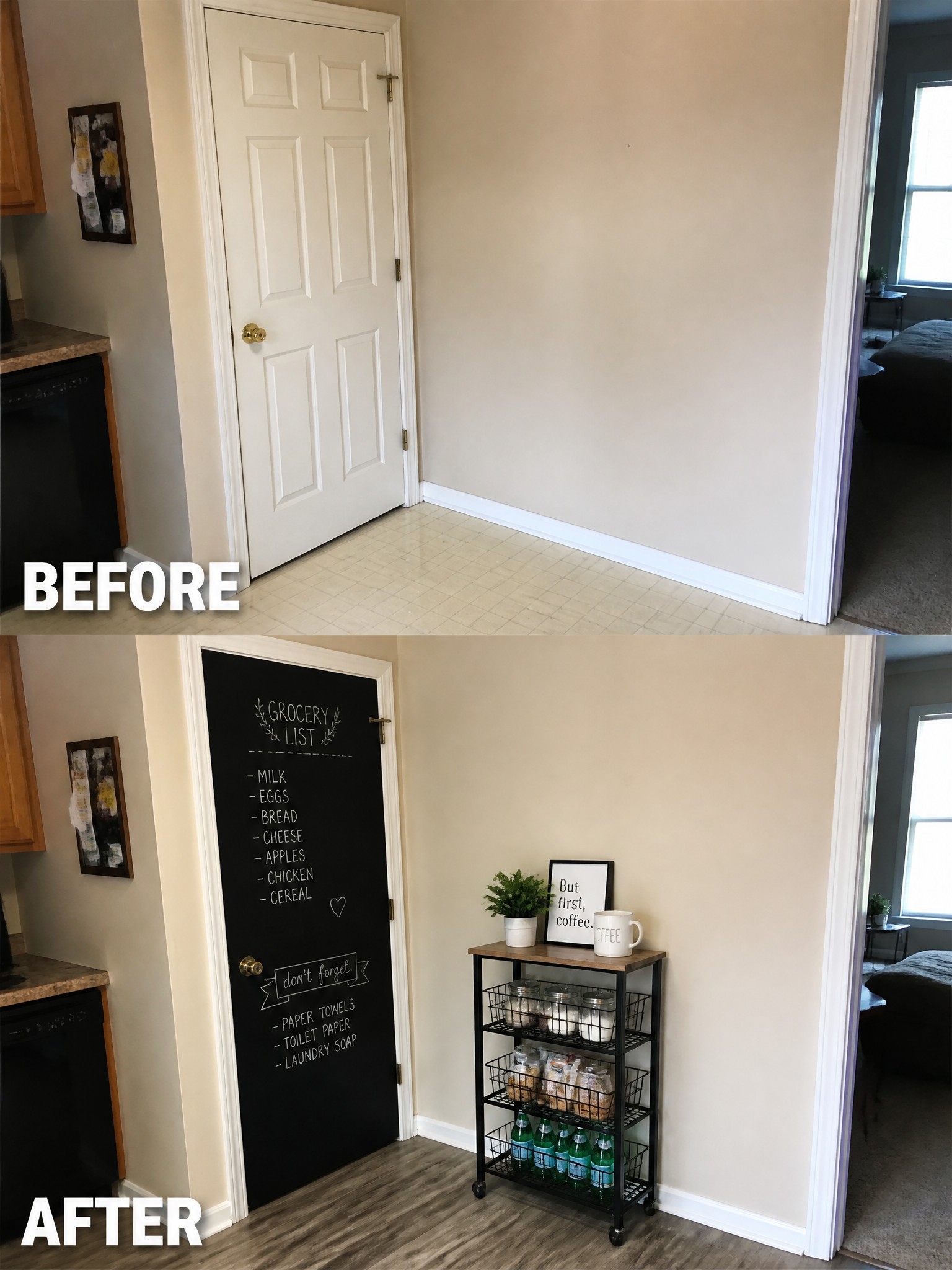
A plain white door next to an empty wall can feel like wasted space in a busy home. Painting the door with chalkboard paint turns it into a spot for grocery lists and reminders while a rolling cart nearby adds storage without taking up floor space.
This works well in kitchens, laundry rooms, or hallways where you need quick notes. Keep the rest of the wall simple so the door stays the main feature, and choose a cart with open baskets if you want easy access to everyday items.
Make A Bare Room Feel Finished
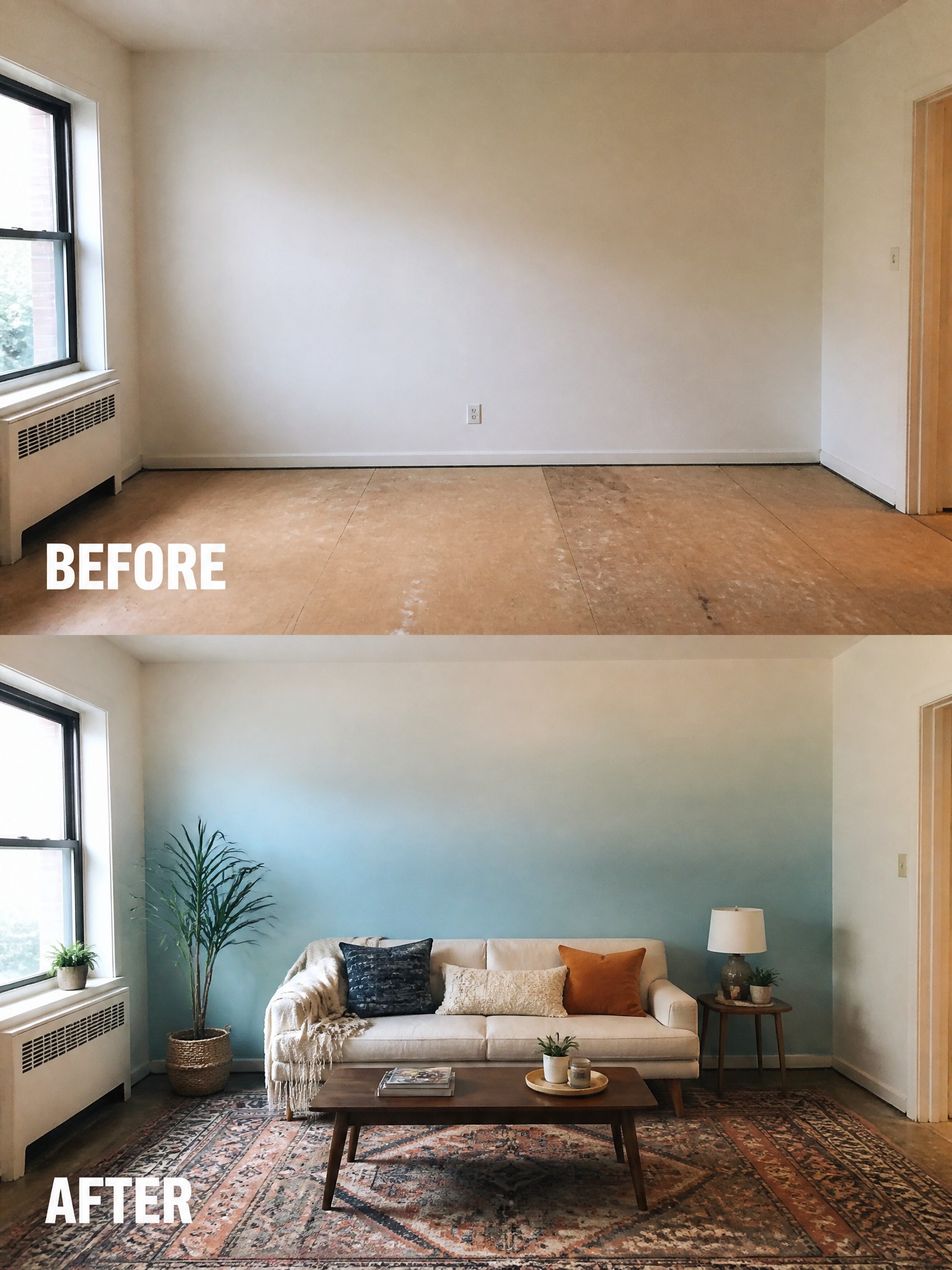
An empty room with bare floors and plain walls often feels unfinished no matter how clean it is. Placing a large rug first helps define the space, then adding a sofa, coffee table, and a few plants gives the room a clear purpose and makes it comfortable to use.
This idea works best in small apartments or starter homes where the floors are simple and the walls are blank. Keep the furniture scale modest so the room does not feel crowded, and let the rug do most of the work anchoring the seating area.
Turn An Empty Wall Niche Into A Reading Nook
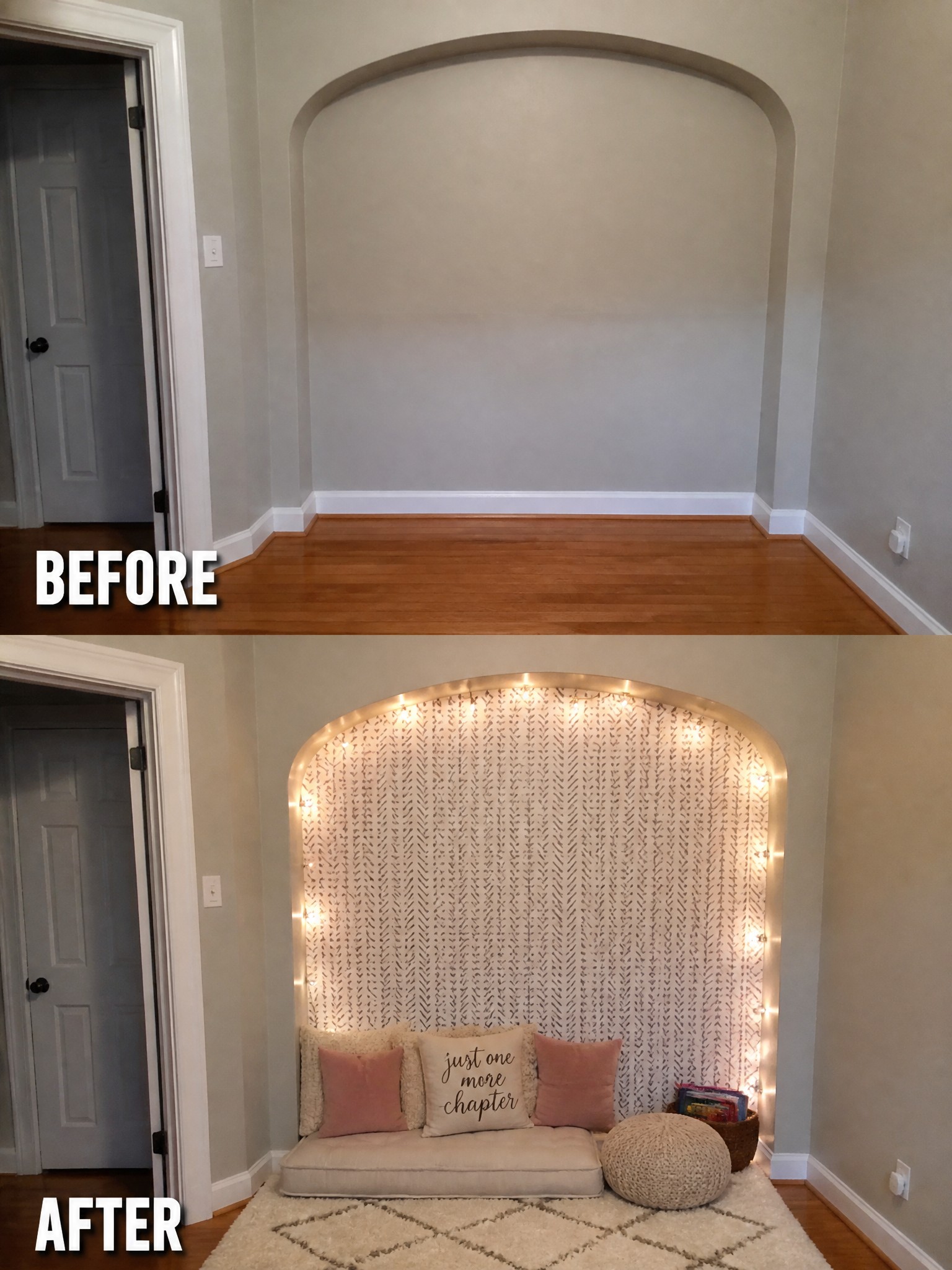
An empty arched niche often sits unused because it feels too awkward to furnish on its own. Adding wallpaper to the back wall and string lights around the arch gives the space a clear purpose and turns it into a small seating area without needing much furniture.
This works best in bedrooms or living rooms where you already have the floor space in front of the niche. Keep the seating low and simple so the area stays open and does not crowd the room.
Frequently Asked Questions
Q: I’m renting so I can’t paint or nail anything. What works for blank walls then?
A: Lean a big mirror or framed print against the wall to fill the space fast. Peel and stick decals or washi tape patterns add interest without leaving marks when you move out.
Q: My tile floor always feels cold underfoot. How can I fix that without a huge rug budget?
A: Roll out a flat weave runner or mat in the main walking area first. Layer a smaller washable rug on top in a spot where you stand a lot to trap warmth and soften the chill.
Q: How do I pick just one idea when every wall and floor spot looks empty?
A: Stand in the doorway and tackle the area that catches your eye first each morning. One solid change there makes the rest of the room feel less bare right away.
