

Many guest rooms and bonus spaces end up feeling like storage areas because the layout never quite works for actual use.
I have noticed that fixing the flow of furniture first often makes the rest of the updates fall into place without much effort.
Small changes add up.
Once the main pieces sit where they belong the room starts to serve a real purpose instead of sitting half finished for years.
I would try adjusting the lighting before anything else since it usually reveals which corners still need attention.
Make A Plain Bedroom Feel Finished

A bare bedroom with just a bed often feels cold and unfinished. Adding a rug to define the space, a small nightstand with a lamp, and a few layers of bedding turns the room into something much more welcoming without needing a big budget or major changes.
This approach works well in guest rooms or bonus spaces that get used only now and then. Start with the floor and lighting first, then add bedding and one or two wall pieces. Keep the scale modest so the room still feels open rather than crowded.
Turn A Cluttered Bonus Room Into A Guest Bedroom

A bonus room that has turned into storage often feels like wasted space. Clearing out the boxes and adding a Murphy bed lets the room serve as a bedroom when needed and still leaves floor space free the rest of the time. The shift from piles of stuff to a simple bed, a couple of shelves, and basic lighting shows how one main piece of furniture can change how the room functions.
This approach works well in homes that have a spare room used mainly for overflow. Keep the bed and wall color light so the space does not feel smaller when the bed is down. Add just enough storage on the wall to hold sheets and a few guest items without crowding the room.
Add Wallpaper To One Wall For A Quick Update

A plain bedroom often feels unfinished when the walls stay bare and the bed sits against nothing but empty space. Adding wallpaper to just the wall behind the bed brings in pattern and warmth right where it matters most, turning the whole room into something that feels more put together.
This approach works especially well in guest rooms or bonus spaces that need personality without a full overhaul. Keep the other walls light, match the scale of any new bedding or headboard to the wallpaper, and stop once the focal wall is done so the room stays calm rather than busy.
Refresh A Bedroom With Lighter Curtains And Lamps

Many bedrooms start out feeling closed in because of heavy curtains and dark bedding. Replacing those with lighter curtains and a pale bedspread lets more daylight in and makes the whole room feel more open right away.
This idea works especially well in guest rooms or bonus spaces that need to feel calm and usable. Add a lamp or two near the bed or on side tables so the room has usable light in the evening without depending only on the overhead fixture.
Add Floating Shelves Above A Chair To Finish The Corner

A plain chair in the corner often feels unfinished on its own. Adding two simple floating shelves above it gives the spot a clear purpose, creates room for books and plants, and makes the whole area look more put together without taking up floor space.
This works well in guest rooms or bonus spaces where you want a quiet reading spot but do not have room for a full bookcase. Keep the shelves fairly shallow so they do not feel heavy, and repeat a few colors from the chair and bedding to tie everything together.
Add Layered Lighting To Warm Up A Plain Room

A single overhead light often leaves a room feeling flat and unfinished. In this case the space went from having just the ceiling fixture to gaining string lights along the walls, a pair of sconces, and a floor lamp. Those additions created softer pools of light that make the room feel much more comfortable at night.
This approach works well in guest rooms or bonus spaces that already have basic furniture but lack warmth. Start by placing one taller lamp near seating and add a string of lights or wall sconces if the room still feels dim. Keep the rest of the updates simple so the lighting stays the main change.
Add A Headboard And Layered Bedding To Finish A Basic Bed
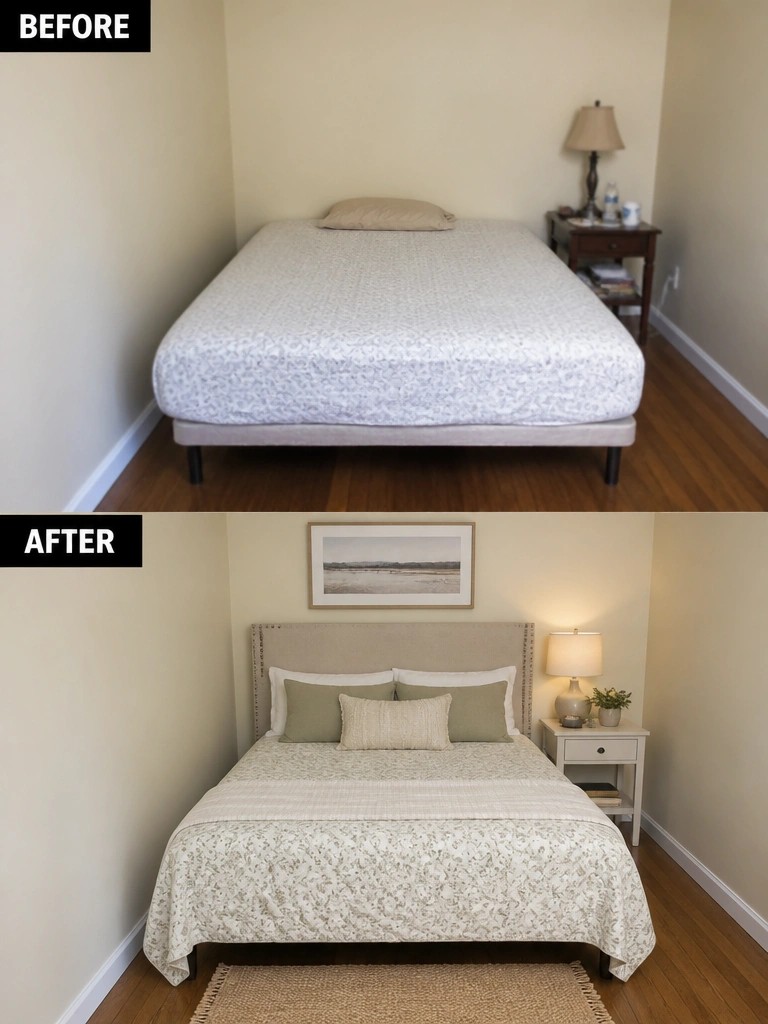
A plain mattress sitting low on a frame can leave a guest room feeling unfinished. Adding a simple headboard gives the bed a clear shape, and bringing in a few pillows plus a lightweight cover pulls everything together without much cost. The rug under the bed also helps the space feel grounded instead of empty.
This approach works well in small guest rooms or bonus rooms where the bed is the main piece of furniture. Start with a headboard that fits the scale of the room, then add two or three pillow sizes in neutral tones. Keep the nightstand simple so the bed stays the focus.
Turn A Cluttered Bonus Room Into A Guest Room

Bonus rooms often fill up with whatever does not fit elsewhere. Clearing out the random bins, old desk, and loose storage opened up the floor and let the space serve one simple job instead of trying to do everything at once.
A sofa bed and a wall-mounted desk keep the room flexible. The bed gives guests a place to sleep without taking over the whole floor during the day, and the desk stays out of the way until it is needed. This approach works well in any spare room that sits empty most of the time.
Add A Large Rug To Finish Off A Simple Bedroom

A bedroom with just a bed and nightstand often feels unfinished, especially when the wood floor is left completely bare. Adding one large rug under the bed changes that right away by creating a clear sleeping zone and softening the whole space.
This idea works well in guest rooms where you do not want to add much furniture. Pick a rug that is big enough to sit under the bed and both nightstands, then layer in a few pillows or a plant if you want more warmth. Keep the rest of the room light so the rug stays the main anchor.
Add A Pegboard To Give A Plain Wall Purpose

A plain bedroom wall can feel unfinished even when the furniture is in place. Adding a pegboard gives that empty space a clear job. It holds small plants, a lamp, and a few baskets while keeping everything off the floor and easy to reach. The change turns a basic guest room into something that feels more put together without a big budget.
This idea works well in bonus rooms or guest bedrooms that need both storage and a bit of personality. Keep the pegboard simple with just a few hooks and small shelves so it does not crowd the space. It is especially useful when you want to add lighting and greenery without drilling into every wall.
Make A Plain Guest Room Feel Finished

A bedroom that only has a bed and bare walls can feel cold and temporary. Painting the walls a soft color, adding a woven bed frame with striped bedding, and hanging simple art above the bed gave this room a much calmer and more complete look.
This kind of update works well in guest rooms or bonus spaces that need to feel welcoming without a big budget. Choose one wall color first, then layer in bedding and one or two accessories that share the same tones. Keep the rest of the furniture light so the room does not feel crowded.
Swap Carpet For Hardwood To Update A Guest Room

Many guest rooms and bonus rooms end up with carpet that starts to look worn and dull over time. Replacing it with wood flooring gives the space a cleaner, brighter feel and makes the room seem more finished without needing a full renovation.
A large rug can then pull the seating area together so the layout feels more purposeful. This approach works especially well in rooms that get used for different things, since the hard floor is easy to clean and the rug helps separate zones without adding clutter.
Add Wainscoting To Make A Plain Bedroom Feel Finished

A plain bedroom often feels unfinished when the walls are bare and everything blends into one flat color. Adding wainscoting along the lower half of the wall creates a simple break that adds texture without much cost. The new bedding and lamp help tie the space together so it feels more put together than before.
This works well in guest rooms or bonus rooms where you want a calm look without a full renovation. Keep the top half of the wall the same color and focus on one or two new patterns in the bedding. The change stays affordable and still leaves room for other updates later if needed.
Use String Lights To Warm Up A Small Room

A cluttered, basic sleeping space often feels cold and temporary. In this case, clearing out the mess and adding a string of lights along the sloped ceiling made the room feel much more finished. Simple bedding with a few extra pillows helped too, turning the same narrow area into something you would actually want to use for guests.
This approach works well in bonus rooms, attic nooks, or any small guest space that lacks natural character. Start with good lighting first, then add a rug and decent bedding. Keep extra furniture to a minimum so the room still feels open enough to move around in.
Declutter Surfaces Before Adding Any Decor

The bedroom felt crowded because of the laundry basket on the bed and the many small items covering the dresser. Once those were cleared and the bed was dressed in plain layers, the room immediately looked larger and calmer.
This idea works especially well in guest rooms or bonus spaces that tend to collect extra things. Keep only a few items on the dresser and use one or two larger pieces instead of many small ones. A simple bedding change and a quick surface clean often make the biggest difference.
Turn A Plain Room Into A Simple Media Space

An empty bonus room can sit unused for years because it lacks any real purpose. Adding a large screen as the main focal point and hanging dark curtains to block outside light gives the space a clear job without any major construction.
This works best in guest rooms or bonus areas that do not need to stay bright during the day. Keep the seating low and add a couple of lamps so the room feels ready for use at night while still leaving floor space open.
Paint An Interior Door A Bold Color

A plain door often blends into the background and leaves a hallway looking unfinished. Changing it to a deeper shade creates a clear focal point and makes the whole area feel more intentional.
This idea works especially well in guest rooms or bonus spaces where you want a quick update without major construction. Pick a color that stands out from the walls, use a quality primer, and consider updating the hardware at the same time so everything feels cohesive.
Turn A Bare Corner Into Organized Storage

A small empty corner often ends up as a spot for boxes or random clutter. Adding a simple console table with open shelves gives the space a clear purpose and keeps everyday items like towels and toiletries within easy reach.
This works best in guest rooms or bonus spaces that need light storage without crowding the floor. Pick a narrow piece that fits the wall, use baskets to hide smaller things, and leave a little breathing room on the top so the area stays neat.
Add Bunk Beds To Make A Bonus Room Useful

An empty room with nothing but walls and a window can feel like wasted space. Adding a simple bunk bed turns it into a place where guests or kids can actually sleep. The before photo shows a bare floor and blank walls, while the after shows how the bed fills the room without making it feel crowded.
This idea works well in small guest rooms or bonus spaces where a full bed setup would take up too much room. Keep the bed frame light in color and add just a few pillows and throws so the room stays open and easy to use.
Make A Plain Room Feel Finished

A basic room with just a sofa and carpet often feels incomplete. Adding a rug to anchor the seating area, a coffee table, and a floor lamp gives the space structure and makes it feel much more comfortable to use.
This idea works especially well in guest rooms or bonus spaces where the goal is everyday comfort rather than a big renovation. Start with the rug to define the zone, then add one or two light sources and some soft pillows so the room feels ready for people to actually spend time there.
Add An Accent Wall To Finish A Plain Bedroom

A basic bedroom often feels unfinished when the wall behind the bed is just flat and bare. Adding a simple wood accent wall gives the space a clear focal point and adds warmth without needing new furniture or a big budget.
This idea works especially well in guest rooms or bonus spaces where you want the room to feel put together but still calm. Keep the rest of the walls light, use one or two layers of bedding and pillows, and add a small lamp so the accent wall becomes the main feature without crowding the room.
Turn An Empty Room Into A Simple Seating Area

An empty sunroom or bonus room often stays unused when it has no real purpose. Adding one main seating piece like a bench and laying down a rug gives the space a clear spot to sit, which makes the whole room feel finished.
This idea works best in guest rooms or indoor spaces that need light use without a lot of furniture. Keep the bench and rug in proportion to the room size, add a couple of plants, and leave enough floor space to walk through.
Frequently Asked Questions
Q: My guest room has old carpet that I can’t replace right now. What can I do instead?
A: Cover most of it with a large area rug in a light color. Add some wall hangings to draw the eye up and away from the floor. This shifts the focus without major construction.
Q: How can I make bonus room storage look less cluttered?
A: Group items in matching baskets and place them on shelves. It hides the mess while keeping things handy.
Q: What if I want to try a few ideas but worry about making mistakes?
A: Test small changes first like moving furniture around. You can always adjust as you go without spending anything upfront.
Q: Are there updates that work for both guest rooms and bonus spaces?
A: Things like better lighting and cozy textiles improve any room. They make the space feel cared for whether people stay over or just hang out.
