


Rooms often feel unfinished when the furniture placement ignores how people actually walk through and sit down during ordinary days.
I usually start by moving the largest pieces first because that single step reveals whether the space needs more light or just better balance.
Once the main flow works the smaller details like lamps and textiles fall into place without much fuss.
Simple layout fixes like these rarely require new purchases.
They do however change how welcoming the room feels when you come back to it at the end of the day.
Make A Plain Living Room Feel Finished

A living room often feels scattered when the main seating area has no clear boundary. Adding a large rug under the coffee table and seating helped tie the furniture together and gave the space a calmer, more settled look without major changes to the walls or layout.
This approach works best in rooms that already have decent furniture but lack one strong base layer. Start with the rug size so it fits under the front legs of the sofa and chairs, then add one or two lamps and a piece of art to keep the focus on everyday comfort rather than constant tidying.
Make A Plain Living Room Feel Finished

A cluttered layout and heavy furniture can make even a decent sized room feel cramped and restless. In this case the change came from swapping the bulky dark sofa and scattered pieces for a lighter sectional, adding one large rug to anchor the seating area, and bringing in a simple floor lamp for softer evening light. Those few moves turned the space into something that feels open and easy to be in.
This idea works well in apartments or older homes where the rooms are rectangular and lack built in character. Start by clearing the floor completely, then place the largest piece of furniture against the longest wall and let the rug set the boundary for the rest of the seating. Keep extra tables and decor to a minimum so the room stays calm rather than busy.
Simplify Busy Patterns For A Calmer Bedroom

A bedroom filled with dark wallpaper and heavy floral bedding can feel overwhelming instead of restful. Switching to light paint on the walls and solid neutral bedding removes the visual noise and lets the room feel much quieter.
This approach works well in older homes where dark patterns were once popular. Start by painting the walls a soft neutral shade, then replace patterned bedding with simple solids in white or beige. Keep any extra pieces minimal so the space stays easy to maintain.
Simplify A Nursery To Make It Calmer

A busy nursery with overflowing toys and bright colors can feel overwhelming for both parent and child. The change here came from clearing most of the clutter, switching to a white crib, and keeping only a few neutral pieces like woven baskets and a simple tree decal on the wall. The result is a much quieter space that feels easier to be in every day.
This idea works well in any small room where storage tends to spill out. Start by removing extra toys and colorful wall items, then choose one main storage solution that stays closed. Keep the furniture light in color so the room does not feel crowded.
Lighten Dark Cabinets To Calm The Kitchen

Dark wood cabinets can make a kitchen feel closed in even when the room itself is not small. Switching them to a light neutral color opens the space and reduces visual weight right away.
The same change works best when paired with simple under-cabinet lighting. It adds a soft glow at the counter level without adding clutter or new furniture.
Clear Surfaces To Make A Kitchen Feel Calmer

A kitchen can start to feel heavy when every surface holds something. Removing the papers, magnets, and extra appliances from the fridge and counters lets the room breathe and makes daily tasks simpler.
Focus first on what stays visible every day. Keep only the items you use often, then match the cabinet color and appliance finish so the space feels like one steady background rather than a collection of separate things.
Update An Old Bathroom With Simple Neutral Tile

Many bathrooms feel busy because of patterned tile that dates quickly. Replacing it with a calm neutral surface and adding a clear glass enclosure removes the visual noise and makes the whole room feel larger and quieter.
This approach works especially well in small bathrooms where every surface shows. Keep the new tile light and matte, use minimal hardware, and limit extra objects on the ledge so the space stays easy to maintain.
Refresh A Bathroom With Better Lighting And A Round Mirror

Many small bathrooms feel flat because they rely on one overhead light and a basic mirror. Switching to a pair of wall sconces and a round mirror softens the space and makes it feel calmer without changing the layout or spending a lot.
This approach works well in guest baths or powder rooms where you want a simple update. Keep the fixtures modest in size so they do not crowd the wall, and choose a mirror that fits the width of the vanity. The result is a bathroom that feels finished and easier to use every day.
Lighten A Heavy Dining Room

Many dining rooms end up feeling closed in because of large, dark wood sets that take over the space. Replacing that heavy furniture with a lighter round table and simpler chairs opens up the room right away and makes it feel easier to use every day.
This approach works well in homes that want a calmer feel without a full renovation. Keep the table size realistic for the room and mix in just a few chairs so there is still space to move around the table.
Create A Functional Entry With A Bench And Hooks
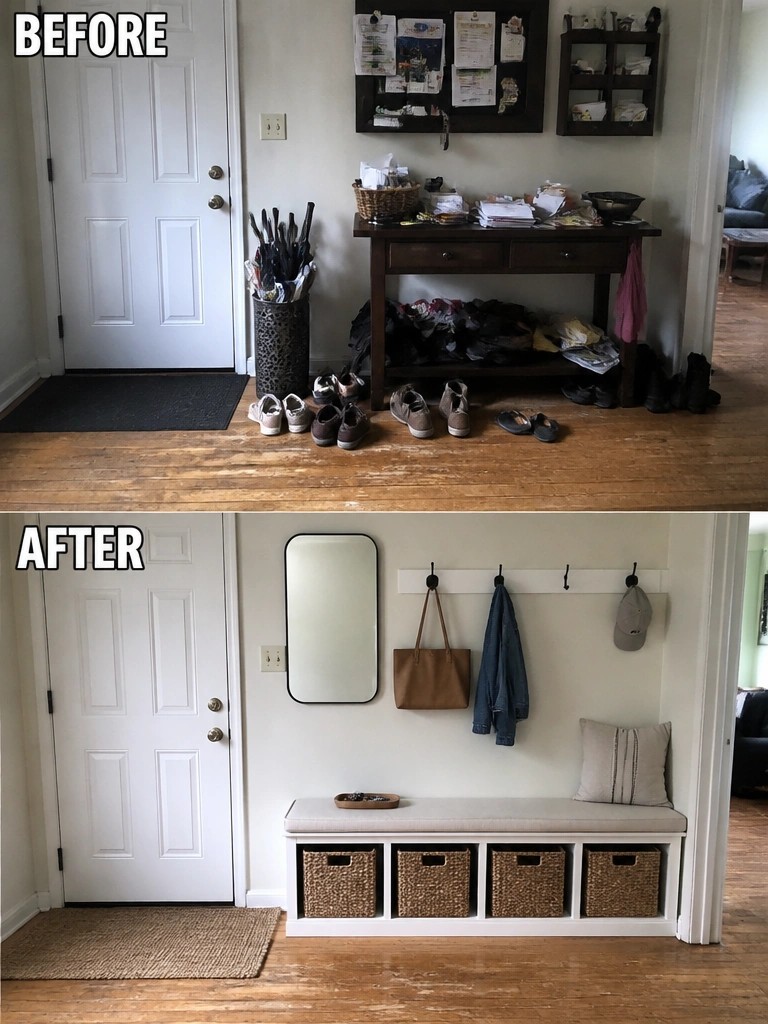
A cluttered entry makes the whole house feel messy the moment you walk in. The simple fix shown here is adding one bench with storage underneath and a row of hooks above it. That one change moves shoes and bags off the floor and gives everything a set place.
This idea works best in smaller homes where the entry doubles as a daily drop zone. Keep the bench shallow so it does not block the walkway, and use baskets that are easy to pull out. Start with the bench and hooks before adding anything else on the walls.
Clear Clutter To Make A Workspace Calmer

The desk started out covered in papers, extra supplies, and random items that made the whole area feel busy. In the after photo the surface is mostly empty, the wall has a calmer color, and only a few useful things remain on display.
This kind of change works best in small rooms where you spend time focusing. Remove what you do not use every day first, then keep the rest simple so the space stays easy to maintain.
Organize A Laundry Room With Simple Storage Solutions

A laundry room can quickly turn into a dumping ground for supplies and piles of clothes. Adding labeled baskets on open shelves and a pegboard for tools helped turn the mess into a space that feels easier to keep under control.
This idea works best in small utility rooms where everything has to stay accessible. Sort items by how often they are used, then choose storage that matches the available wall space so the room stays practical without feeling overcrowded.
Anchor An Open Space With One Large Rug

A large rug can turn a bare concrete floor into a proper living area. The before photo shows furniture scattered across an open expanse, while the after pulls everything together on one big patterned rug that defines the seating zone and adds immediate warmth.
This idea works best in basements or any room with a hard, cold floor. Choose a rug large enough for the front legs of the main seating to sit on it, then keep the rest of the space simple so the rug stays the clear focal point.
Organize A Cluttered Closet With Labeled Bins

A closet that holds too much in one space often ends up feeling chaotic. The before photo shows clothes packed tightly on the rod and random items scattered on the floor. After grouping similar pieces together and moving them into open bins on the top shelf, the same closet suddenly feels much easier to use.
This idea works best in small or shared closets where floor space is limited. Sort items by type first, then add simple labels so everyone knows where things belong. A strip of lighting under the shelf makes a big difference too, since it helps you see colors and details without extra effort.
Make The Fireplace Wall The Main Feature
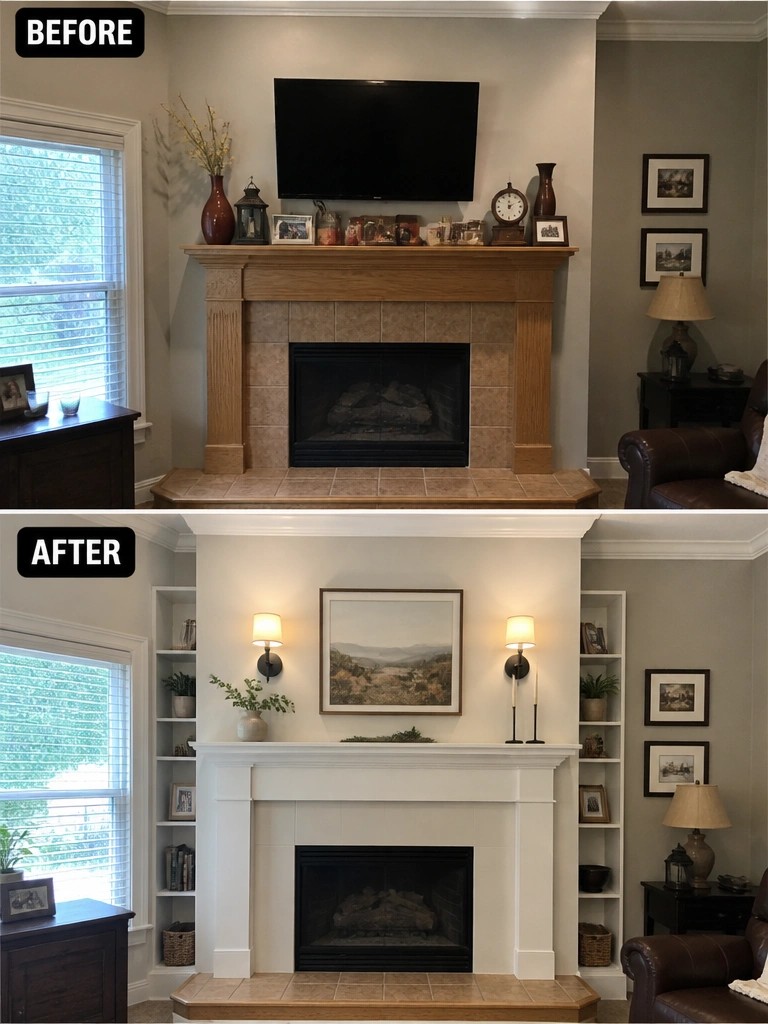
Many fireplaces get treated as extra shelf space, which pulls attention away from the actual hearth. Removing the television above the mantel and clearing off the crowded surface lets the fireplace become the clear focal point instead.
Built-in shelves on both sides add balance and useful storage while keeping the look simple. This works best in living rooms where the fireplace sits in a central spot. Keep the styling light so the wall does not feel overloaded.
Clear Clutter Before Styling A Window Seat
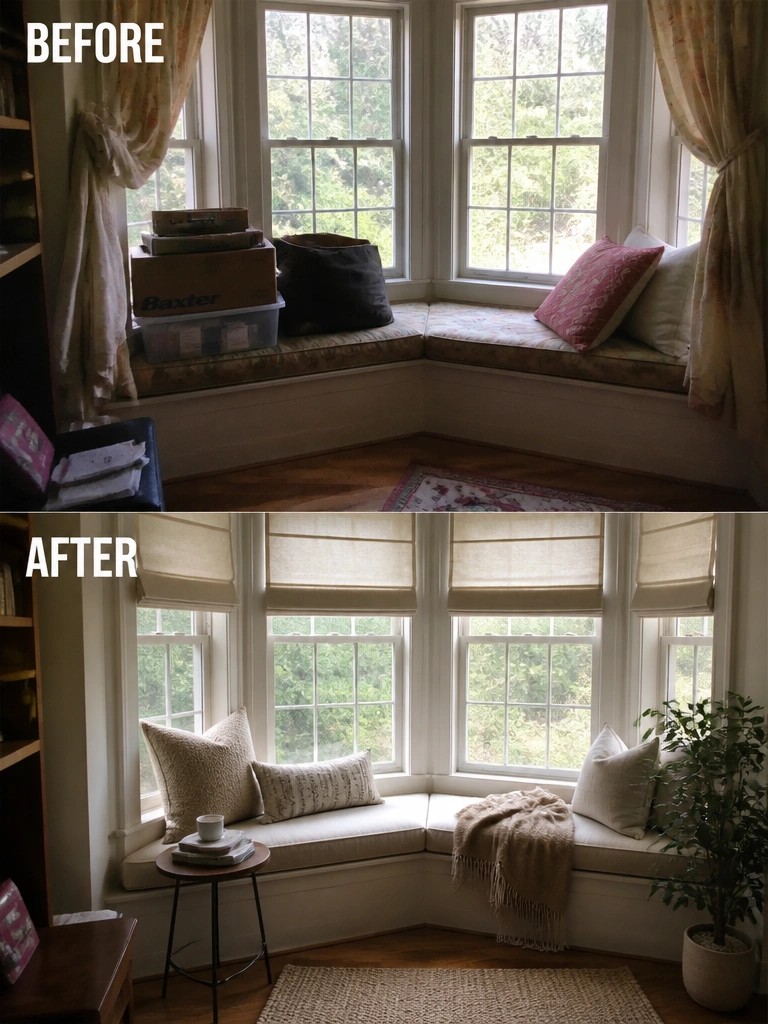
The main change here is removing the boxes, bags, and scattered items that filled the window seat. With the space emptied, a few cushions, a throw, and one small table turn the same corner into a place where someone can actually sit and relax.
This approach works in almost any home with a built-in window seat. Start by taking everything out, then add only what fits the scale of the space so the seat stays open and calm instead of crowded.
Give A Hallway A Clear Purpose

A long empty hallway often ends up as a drop zone for shoes and whatever else gets left behind. In this case the before photo shows exactly that problem, while the after shows how a slim console table on one side and a small bench on the other give the space a reason to exist. The shoes disappear into the table and the walls gain a few framed pieces, so the hallway stops feeling like leftover space.
This approach works well in narrow or long corridors where big furniture would get in the way. Keep the pieces low and slim so people can still walk through easily, and stick to one or two simple finishes rather than trying to decorate every inch. The same idea can help entry halls or upstairs landings that never quite feel finished.
Use Low Shelves To Keep A Playroom Calm

A cluttered playroom quickly starts to feel overwhelming for both kids and parents. The main change here was swapping scattered toys and random bins for a row of low open shelves that keep everything visible but contained. Adding a small table with chairs on a rug also gave the space one clear activity zone instead of toys spread across the whole floor.
This approach works well in any small room where kids spend daily time. Start by clearing most of the floor, then choose storage that stays low enough for children to reach on their own. Keep the number of items on display limited so the room stays easy to reset at the end of the day.
Clear The Clutter First
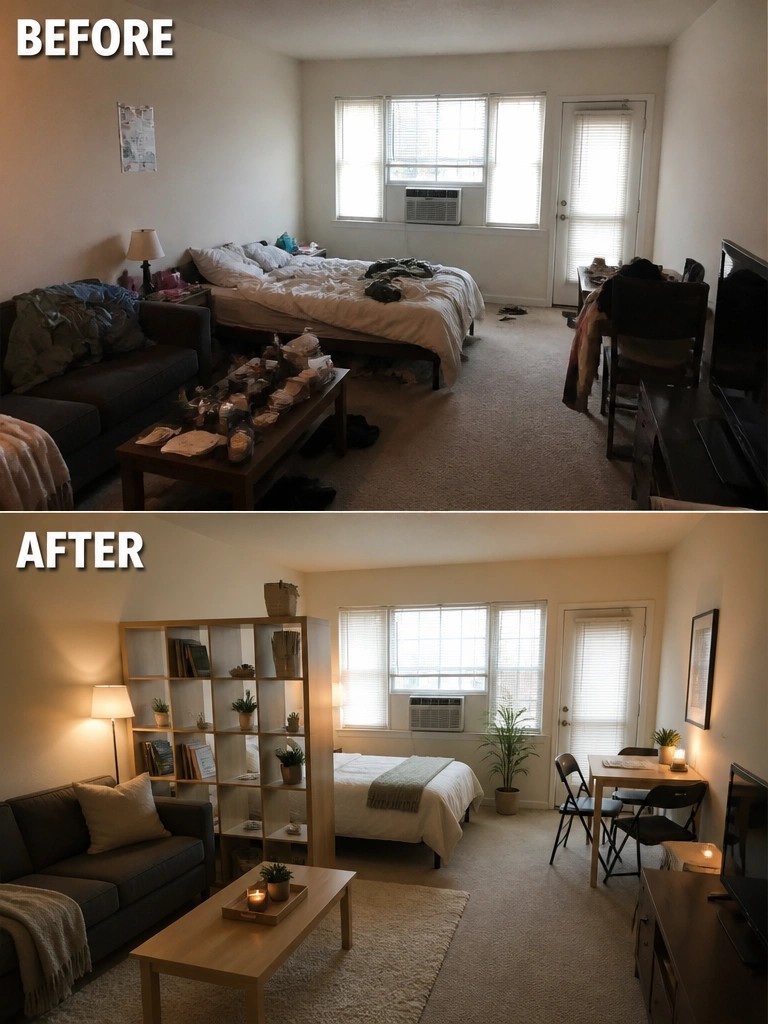
A room often feels overwhelming simply because there is too much stuff in it. In this case the before photo shows a space buried under piles on the coffee table, clothes on the couch, and an unmade bed. Once everything was cleared out and only the essential furniture stayed, the room immediately felt larger and quieter.
The same approach works in most small or multi-use rooms. Start by removing everything that does not have a clear purpose, then put back only the pieces you actually use. A single storage unit and a rug are often enough after that step. Keep the surfaces mostly empty so the calm feeling lasts.
Add Layered Lighting To Make A Bedroom Feel Calmer

A single overhead light often leaves a bedroom feeling flat and a bit harsh at night. Switching to several softer sources like bedside lamps and a ceiling fixture spreads light more evenly and makes the space feel much more restful.
This approach works well in any simple bedroom where you want a calmer evening routine. Start with two or three lamps at different heights and keep the overhead light on a dimmer so you can adjust as needed.
Clear The Counter For A Calmer Bathroom

Bathroom counters often fill up with bottles and daily items until the space starts to feel crowded. Removing most of the products and closing the cabinet doors created a much simpler and quieter look while still keeping the sink area usable.
This idea works best in smaller bathrooms where surface space is limited. Keep only the items used every day on the counter and store everything else out of sight. A single tray or small plant is usually enough to keep the area from feeling completely bare.
Paint Busy Walls To Calm A Room

Covering the heavy floral wallpaper with a soft neutral paint changed the whole feel of this room. The pattern had been pulling attention in every direction, and once it was gone the sofa and simple accessories could settle into a much quieter arrangement.
This idea works especially well in older homes where busy wallpaper still covers the main walls. Keep the new color light but warm, then limit extra patterns on pillows and rugs so the calmer look holds up over time.
Frequently Asked Questions
Q: Where should I start if the whole room feels overwhelming right now?
A: Pick one surface like a table or shelf and clear it completely. Add just one thing back that you actually use and enjoy looking at. That single step often makes the rest feel easier to tackle.
Q: What if I cannot paint or make big changes because I rent?
A: Swap your current bulbs for warmer ones and layer in a few textured throws or pillows you already own. Move furniture away from the walls to create better flow. These tweaks shift the mood without touching the structure.
Q: How do I stop the calm from fading after a week or two?
A: Set a quick evening habit of returning stray items to their spots before bed. This keeps surfaces clear and the space feeling open without any extra planning.
Q: Do I need new stuff to make these ideas work?
A: Try rearranging what you have first. A chair moved near the window or books stacked differently can open up the room in minutes.
