
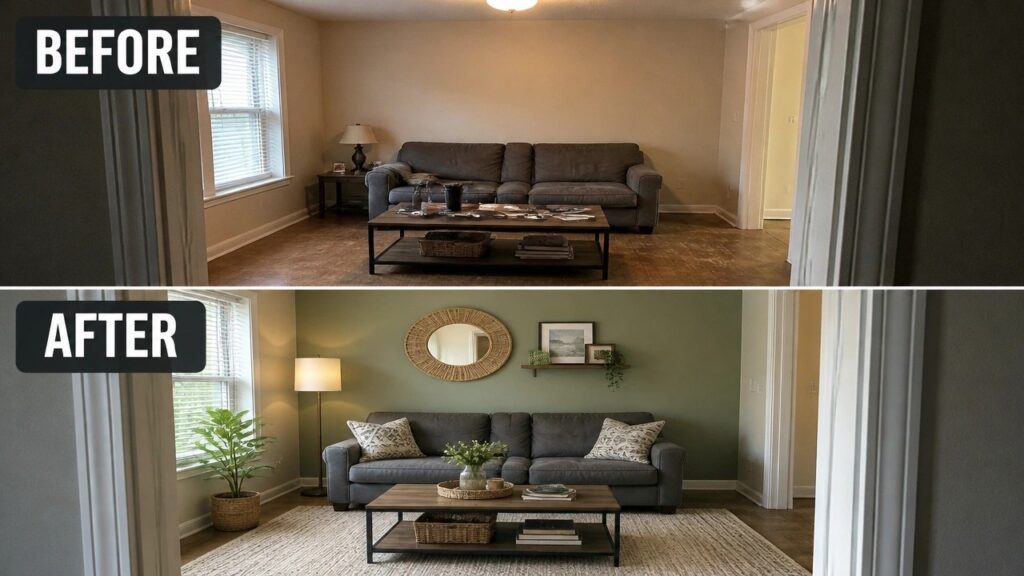
I often find that rooms which still function okay can start to look worn simply because the arrangement no longer matches daily life.
A few budget updates focused on lighting and storage tend to bring things back into balance.
It feels good when those small fixes turn a tired corner into something that actually gets used again.
In my experience the changes that stick are the ones that solve a real problem rather than just adding decoration.
Worth trying a couple this weekend.
Make A Plain Living Room Feel Finished
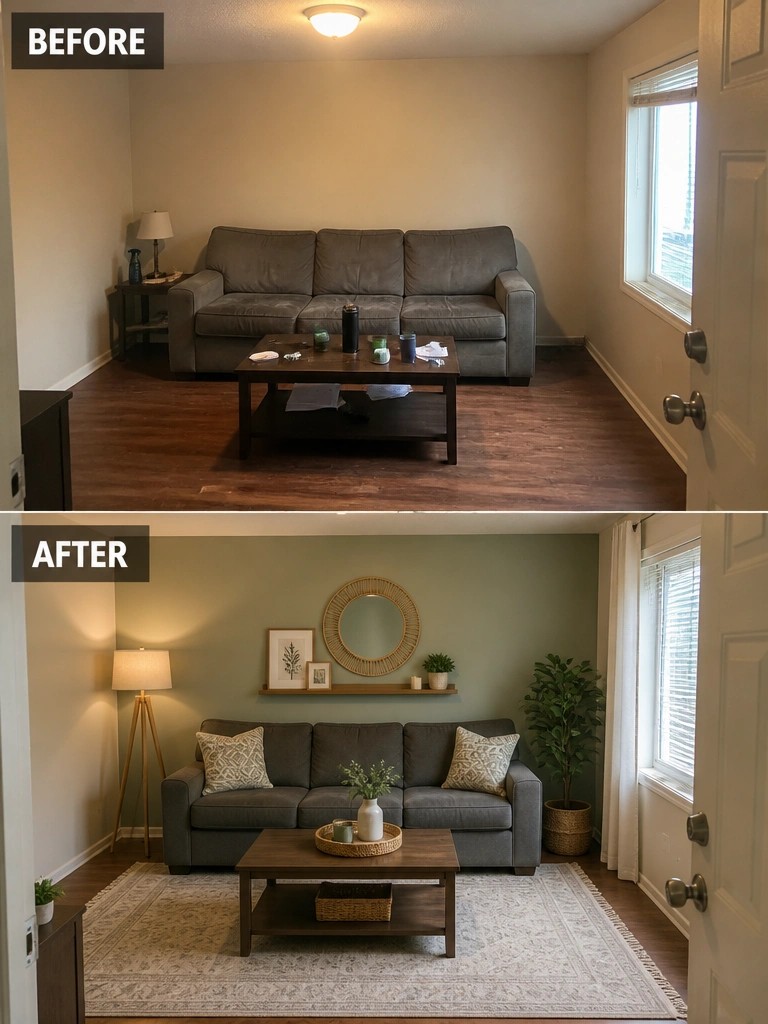
A living room can have all the right furniture and still feel unfinished. The main change here was adding a large rug under the seating area along with a few wall pieces and a floor lamp. Those simple additions pulled the existing sofa and table into a clear, usable zone.
This approach works best in rooms with hard floors or open layouts. Start with a rug big enough for the front legs of the sofa to rest on it, then add one or two lamps and a small amount of wall decor so the space feels intentional rather than bare.
Make A Plain Bedroom Feel Finished
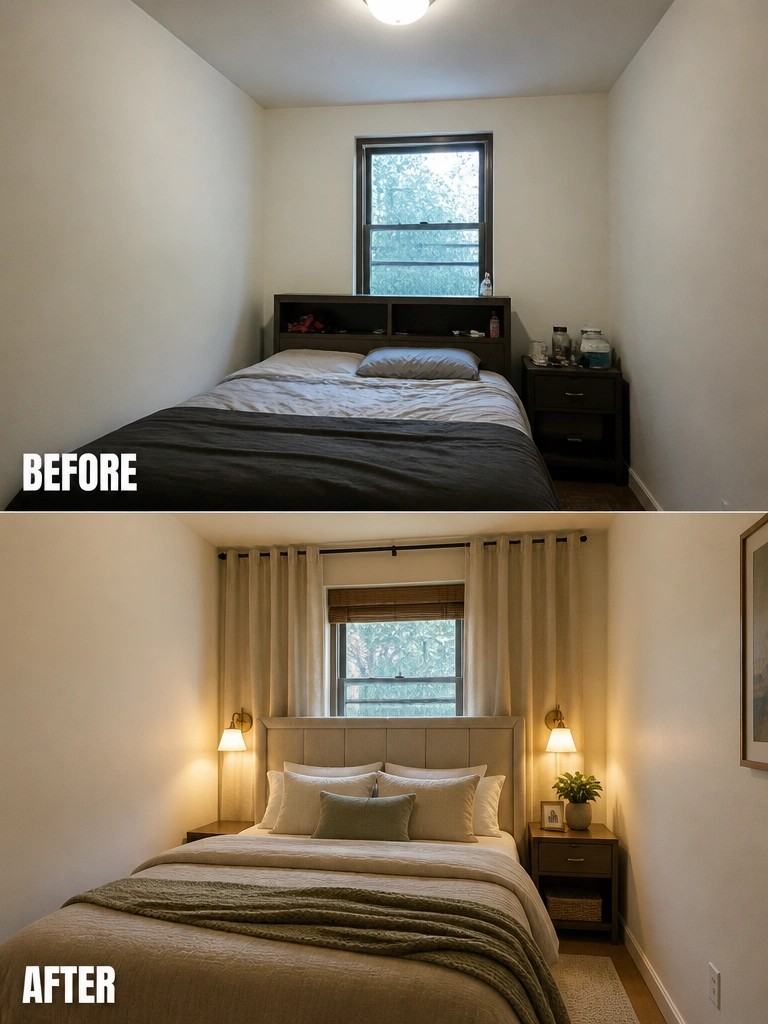
Many bedrooms start out functional but flat, with just a bed and basic furniture. The change here comes from adding curtains around the window and placing lamps on both sides of the bed. These two additions bring softness and balance that the room was missing.
This idea works well in any small or simply furnished bedroom where you want more warmth without buying new furniture. Start with the windows and lighting first, then layer in bedding or a rug if the space still feels bare. Keep the additions modest so the room stays calm rather than crowded.
Paint Your Cabinets To Refresh A Dated Kitchen
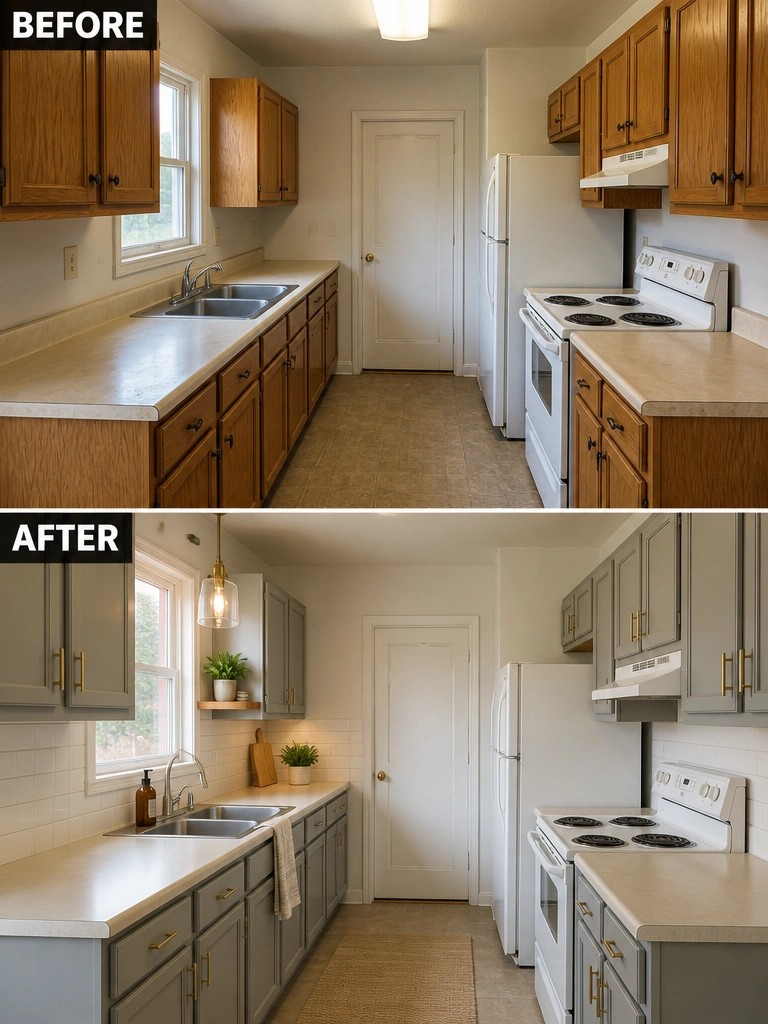
Many kitchens still have perfectly usable cabinets that simply look tired from years of the same finish. Painting them a lighter color and swapping the hardware brings an immediate update without replacing the whole set.
This works best in homes where the layout and appliances do not need changing. Focus first on good surface prep and a durable paint made for cabinets, then add a simple backsplash if the walls feel bare. One new light fixture can also help tie the refreshed cabinets together.
Paint The Vanity For A Quick Bathroom Refresh
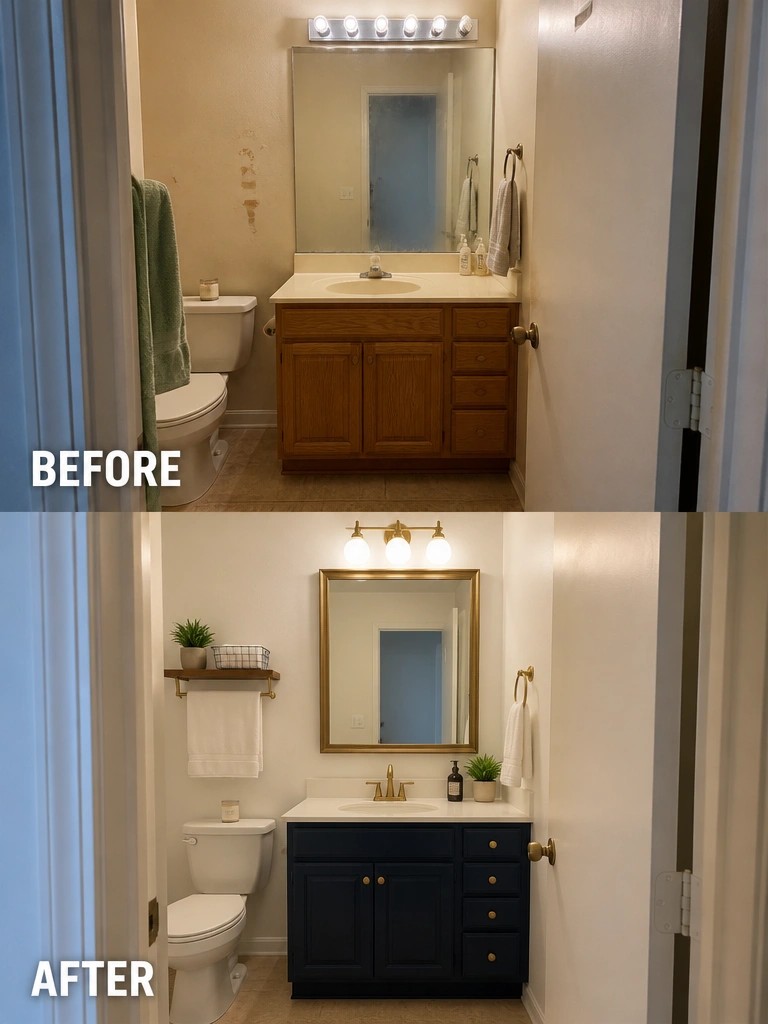
Many bathrooms still have functional vanities that just look tired. Painting the cabinet a darker color gives the whole room a fresh start without the cost of a full replacement.
This approach works best in small bathrooms where the vanity takes up a lot of visual space. Use a cabinet-grade paint, update the hardware, and consider a new mirror frame or light fixture to match the updated look.
Add Trim And A Rug To Give A Plain Room More Structure
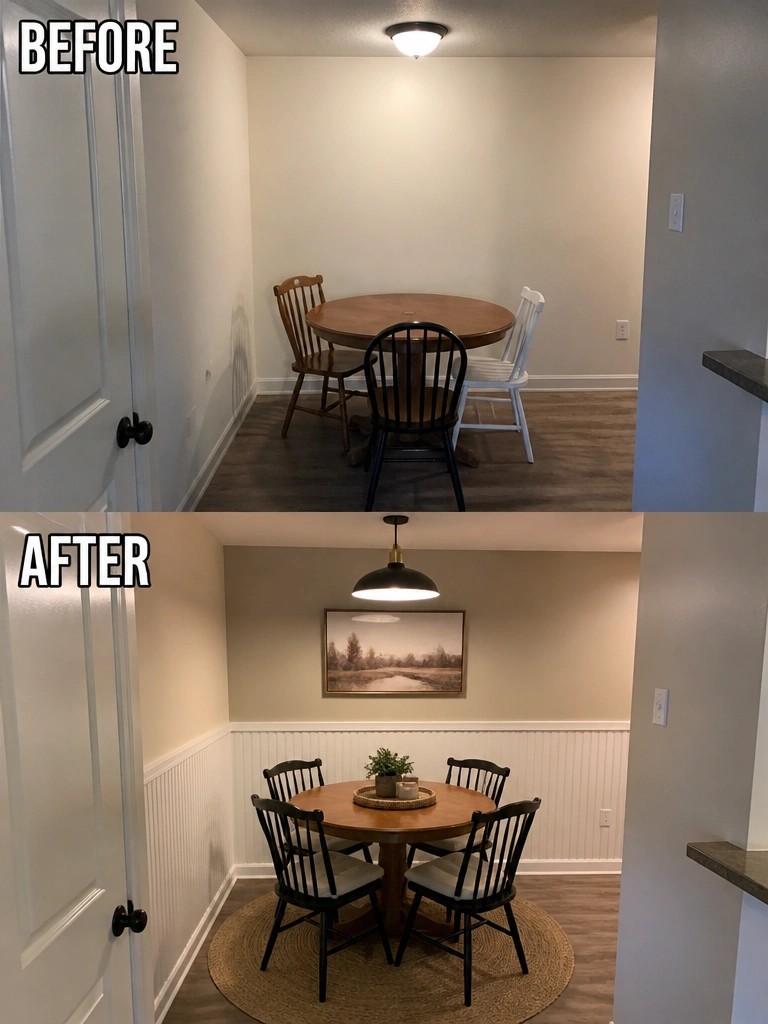
A small dining space often feels unfinished when the walls are bare and the floor runs straight through without any break. Adding beadboard wainscoting along the bottom half of the walls and placing a simple round rug under the table creates clear boundaries. The room suddenly reads as intentional instead of leftover space.
This approach works well in older homes or any area that already has decent furniture but lacks warmth. Keep the trim simple and match the rug size to the table so chairs stay on the rug when pulled out. It is an easy project that makes the room feel more settled without a full renovation.
Add A Bench And Hooks To Make An Entryway Work Better
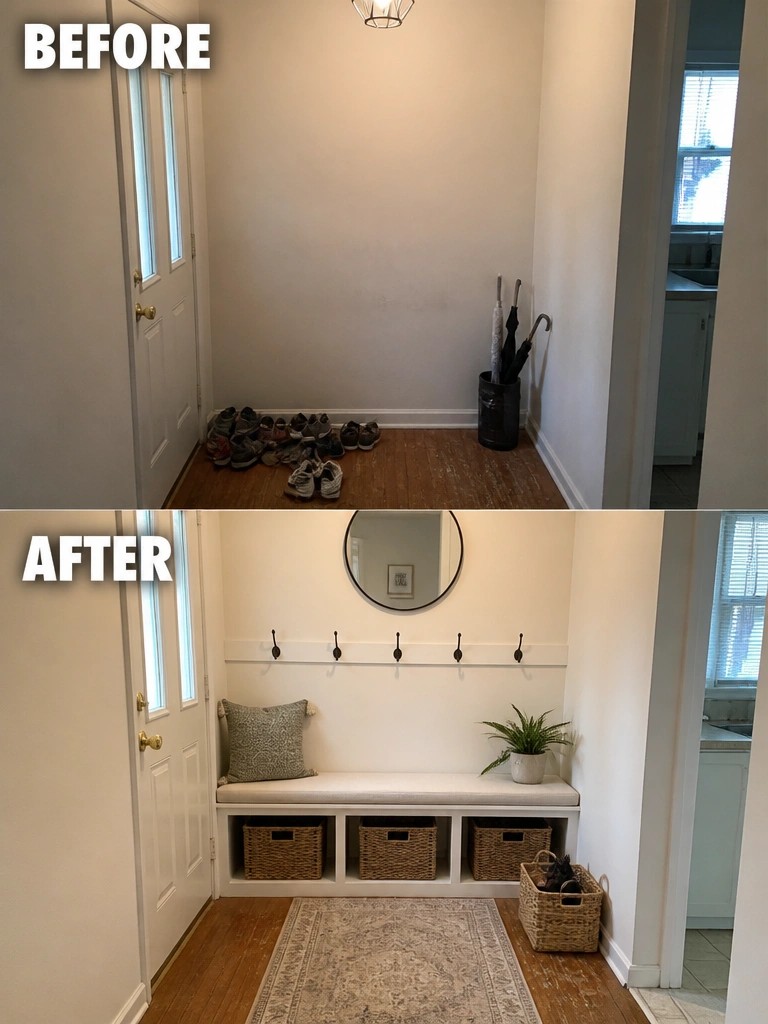
An entryway often ends up as a spot where shoes pile up and bags get dropped. Adding a bench with storage underneath and a row of hooks above it turns the space into something that actually helps with daily routines. The scattered shoes on the floor become hidden in baskets, and the empty wall gains a place to hang coats and bags.
This idea works best in homes with a small or narrow entry. Keep the bench low and the hooks evenly spaced so the area stays open and easy to move through. A simple rug in front helps define the zone without adding clutter.
Clear Clutter First When Updating A Home Office
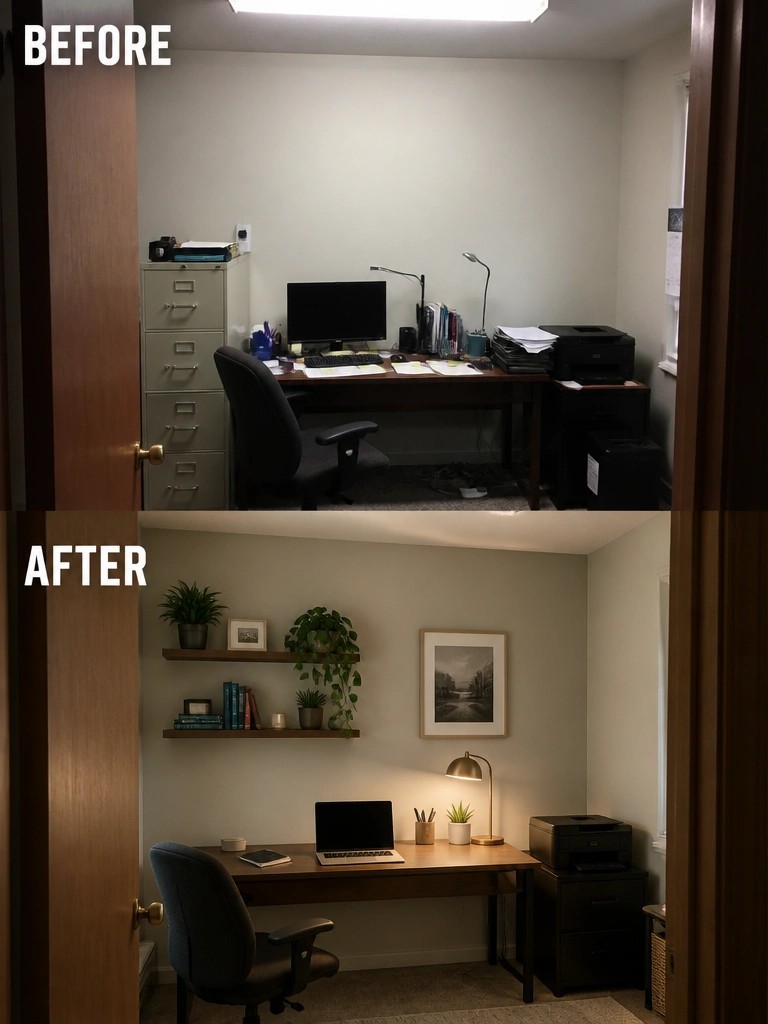
The main difference is how much was removed from the desk and surrounding area. Once the stacks of paper, extra equipment, and scattered items were taken away, the space opened up and became easier to work in.
This idea works best in small rooms where surfaces tend to collect things quickly. Go through what really needs to stay on the desk, then add one or two simple shelves to hold the rest in a more organized way.
Add Storage And A Counter To A Laundry Room
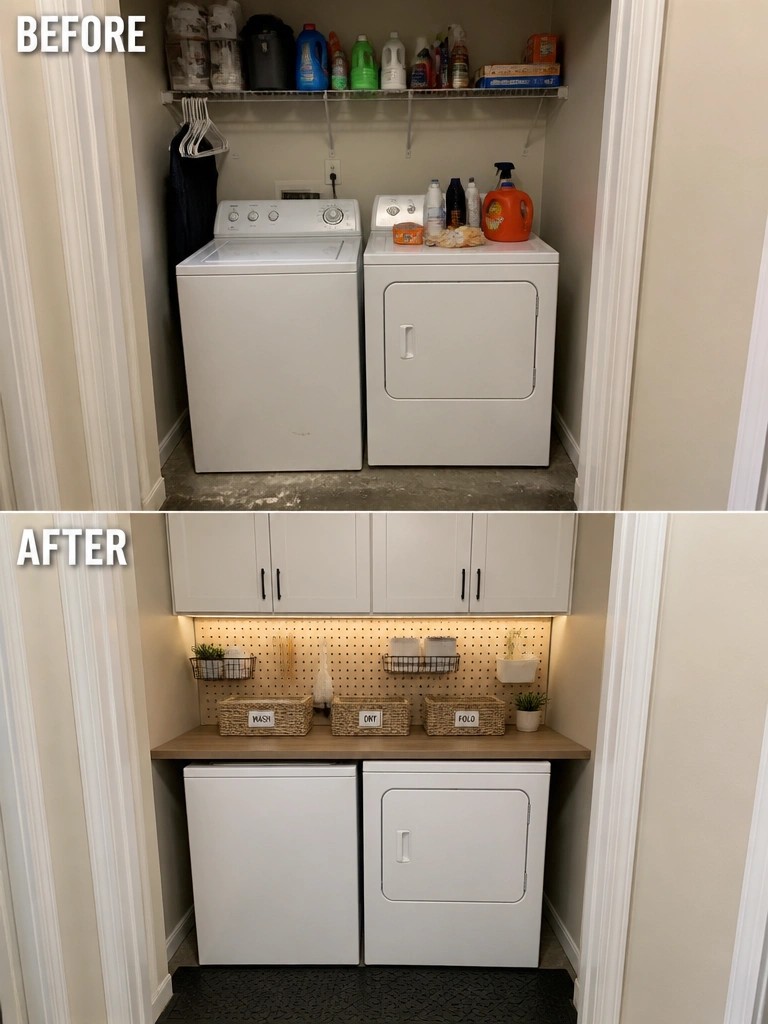
A laundry room tends to collect clutter fast when everything sits on open shelves. Adding upper cabinets and a simple countertop gives you a real folding surface and hides most of the bottles and supplies behind doors.
This setup works well in small or narrow spaces where open storage quickly looks messy. Use the pegboard or a few baskets for the things you reach for daily and keep the rest out of sight.
Use Baskets To Organize A Crowded Closet
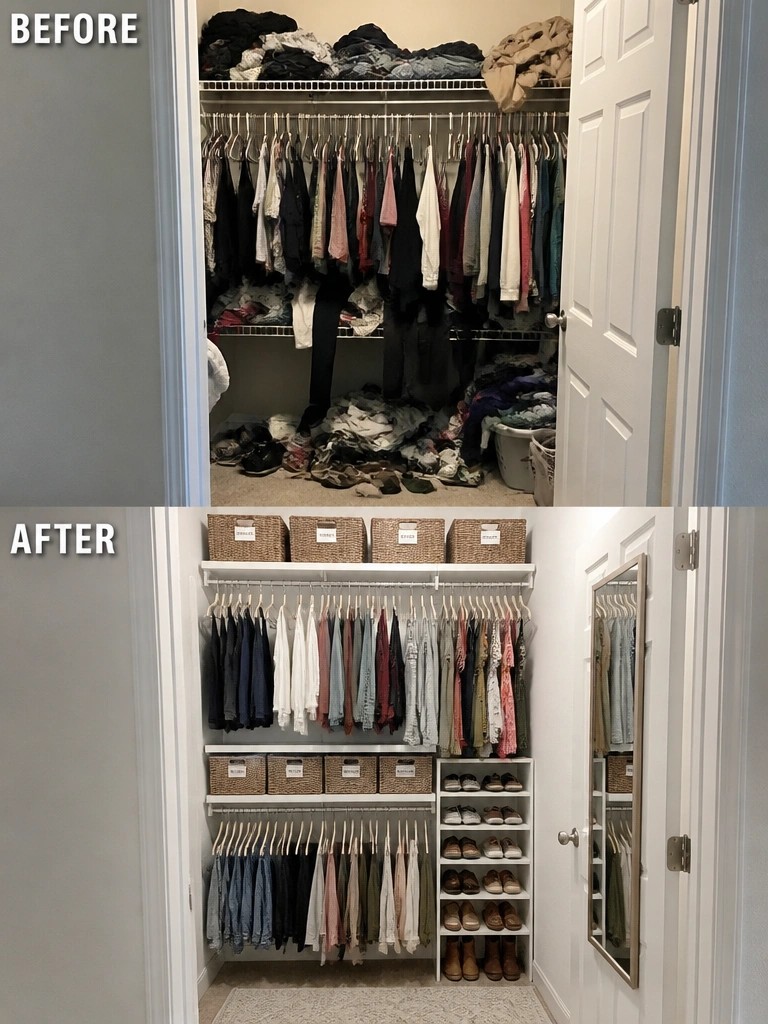
A closet often gets messy when there is no real system for the things that do not hang up. Adding a few shelves and some simple baskets gives those items a place to go, which is exactly what happened when the floor piles disappeared and the upper shelves gained matching storage.
This approach suits any bedroom closet that still feels usable but looks tired. Clear everything out first, then sort by type before choosing baskets so the sizes actually match what you need to store. Keep the labels basic so the system stays easy to follow.
Use A Rug To Define A Basement Seating Area
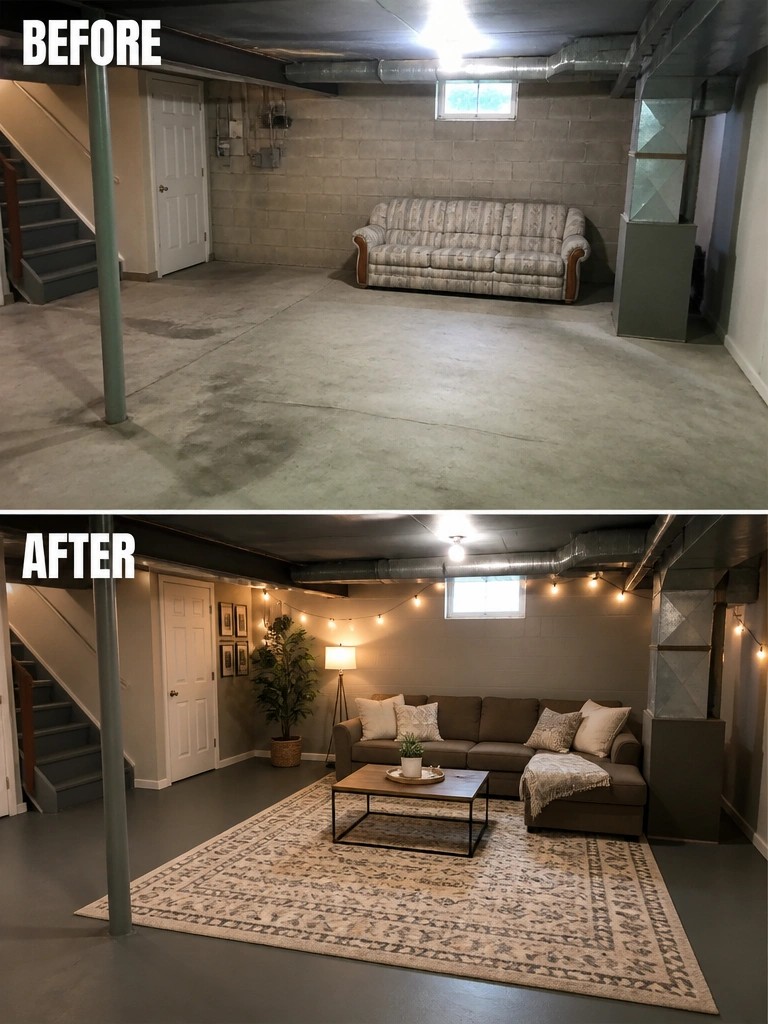
A bare basement with concrete floors often feels like leftover space rather than a real room. Adding one large rug instantly creates a defined zone for seating. The before photo shows an open concrete floor with nothing to anchor the furniture. In the after photo, the rug pulls the couch, coffee table, and lamps into a clear living area that feels intentional.
This approach works well in any basement or unfinished room where the floor is hard and cold. Keep the rug large enough to fit under the front legs of the main furniture pieces. Add a couple of lamps or string lights for warmth, but let the rug do most of the work of making the space feel finished.
Paint A Brick Fireplace For A Lighter Room
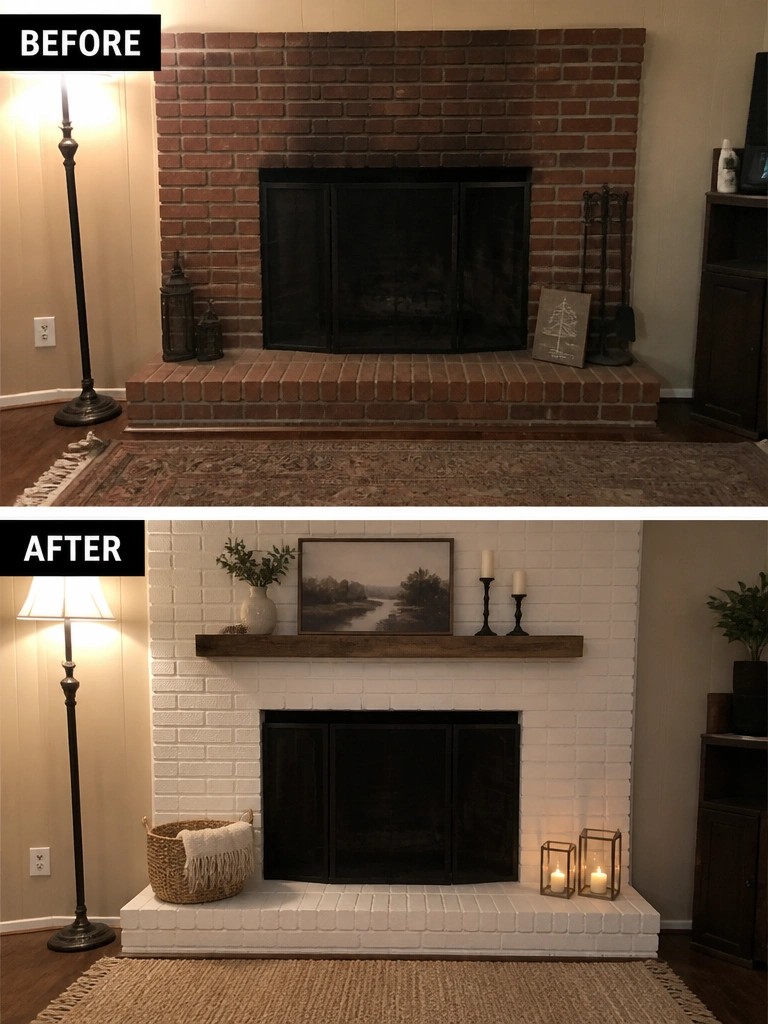
Many homes still have dark brick fireplaces that make the room feel heavier than it needs to. Painting the brick white and adding a simple wood mantel softens the look right away and lets the fireplace blend into the space instead of dominating it.
This works best in rooms that already feel usable but tired. Clean the brick well, use a masonry primer, and pick paint made for fireplaces so it holds up. Keep the styling light so the new surface stays the main change.
Add Built-In Shelving To An Empty Recess
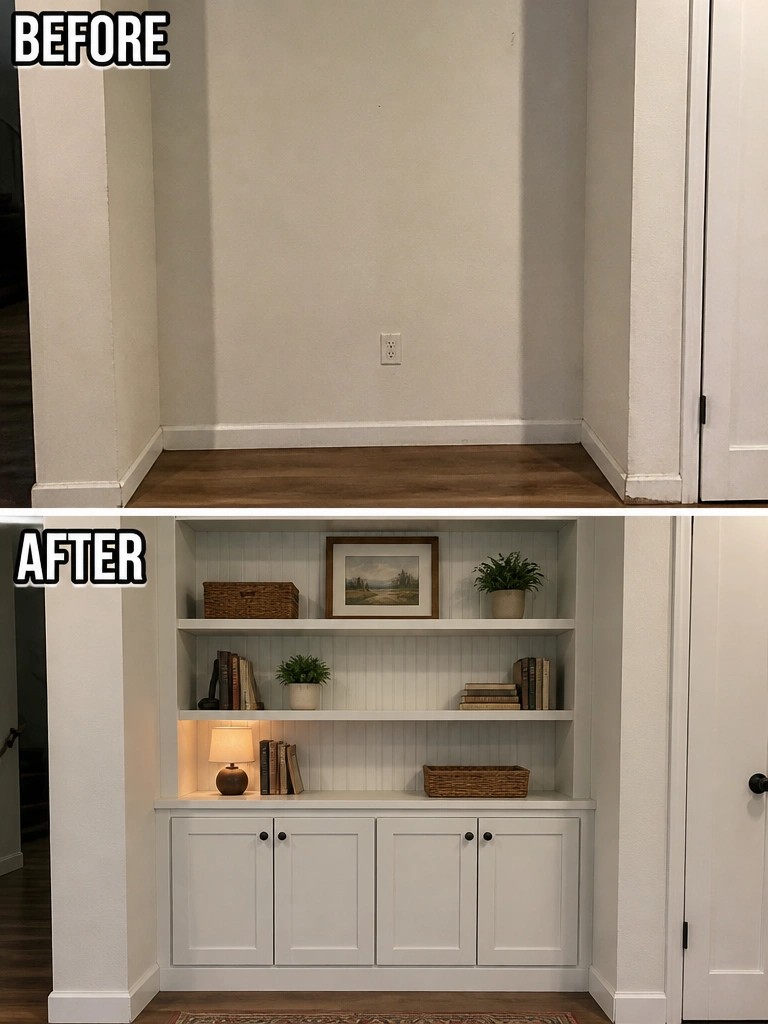
An empty wall recess often ends up looking like wasted space. Adding a simple built-in unit with lower cabinets and open shelves above gives the area a clear purpose and makes the whole room feel more finished.
This idea works best in homes with similar niches that sit between walls or next to doorways. Keep the cabinet style plain, add a few shelves at comfortable heights, and include a light strip underneath the top shelf if you want the space to feel brighter in the evening.
Layer A Rug And Curtains To Refresh A Tired Room
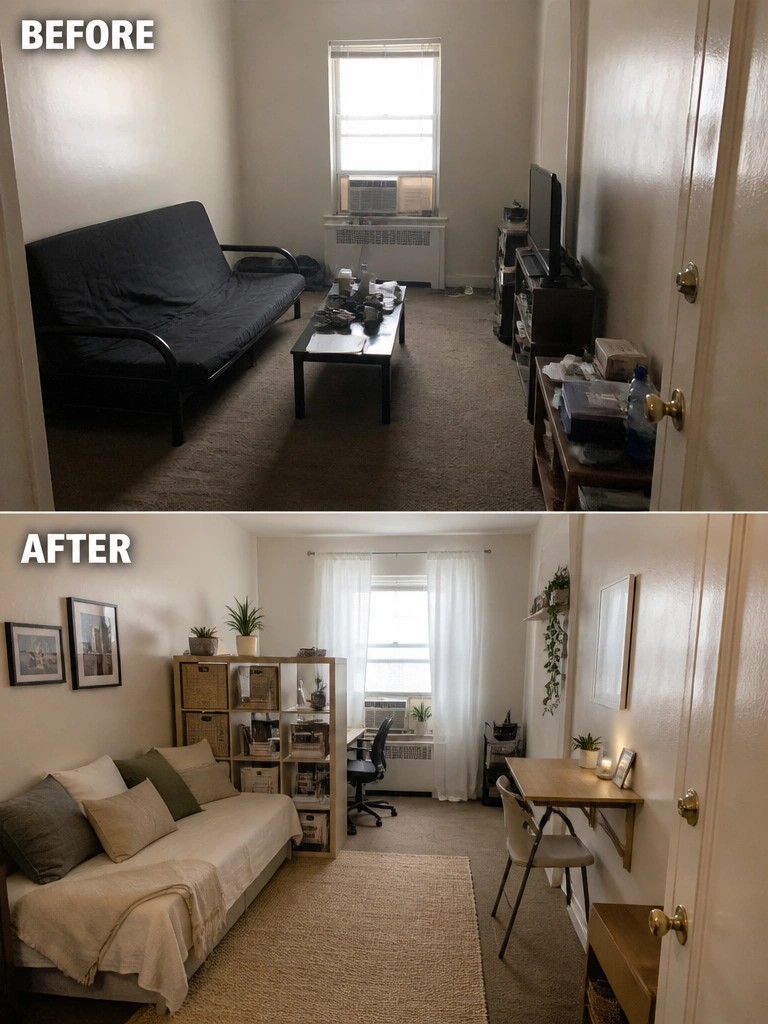
The before shows a usable living room that still felt flat because the furniture sat directly on the carpet with no clear boundaries. Adding a rug under the seating area and hanging simple curtains over the window instantly gave the space structure and a softer feel without moving walls or buying new furniture.
This idea works best in rooms that already have the basics in place but lack warmth. Keep the rug large enough to fit under the front legs of the main seating pieces, and choose light curtains that let daylight through. It is an easy update for rentals or older homes where you want the room to feel finished without spending much.
Refresh A Basic Bathroom With A Simple Curtain Swap
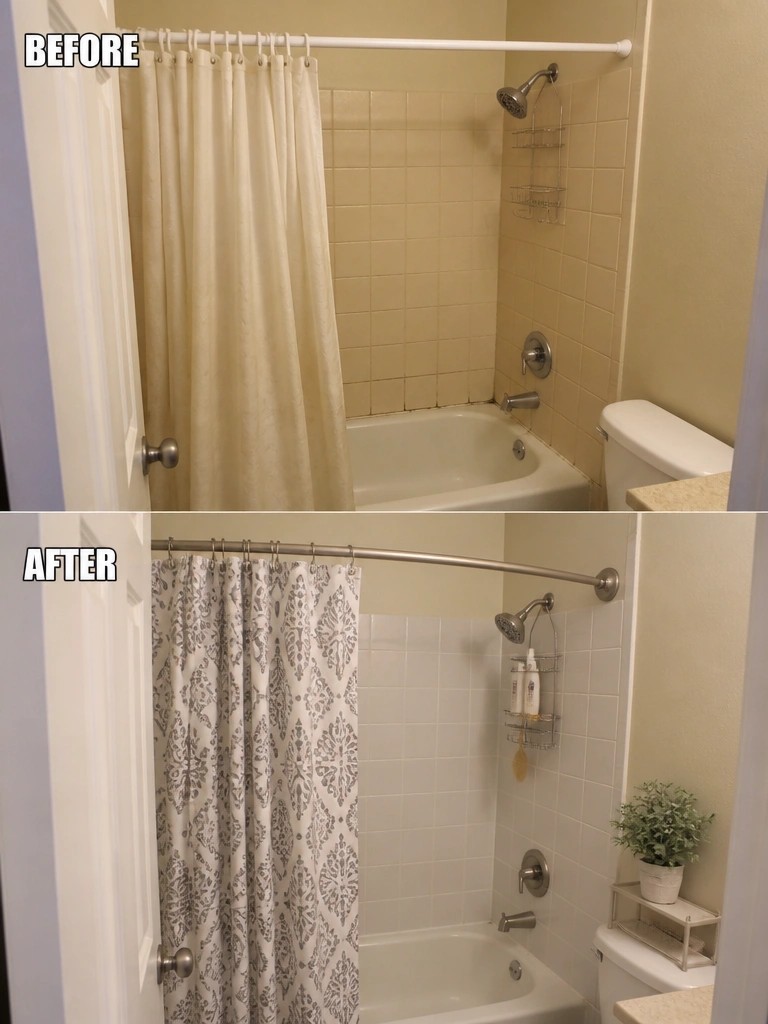
A plain bathtub area often feels tired because of one main detail. Swapping the old shower curtain and rod for a patterned one and a newer finish makes the whole space look updated. Adding a few small items like a shelf and plant helps tie it together without major work.
This approach suits rentals or homes where you cannot replace tile or fixtures. Choose a curtain with enough pattern to add interest, match the rod to your existing hardware, and keep extra pieces minimal so the change stays low cost and easy to adjust later.
Add Storage Baskets To Handle Toy Clutter
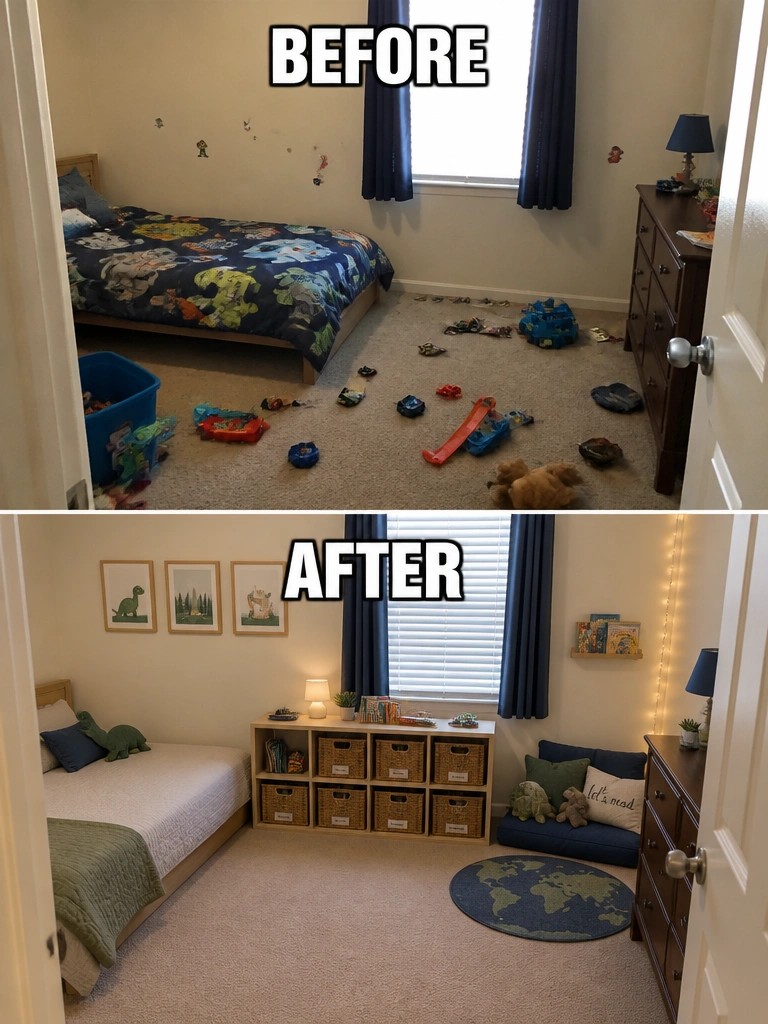
A cluttered kids room often feels overwhelming because toys end up spread across the floor with no clear place to go. In this case the before photo shows toys scattered everywhere, while the after shows the same room with a row of labeled baskets that keep everything contained and a low bench that doubles as seating and extra storage.
This approach works well in small bedrooms where floor space is limited. Start by choosing baskets that fit a simple shelf unit, then add a rug to mark off the play area so the room feels more structured without needing new furniture.
Add A Picture Ledge To A Bare Hallway
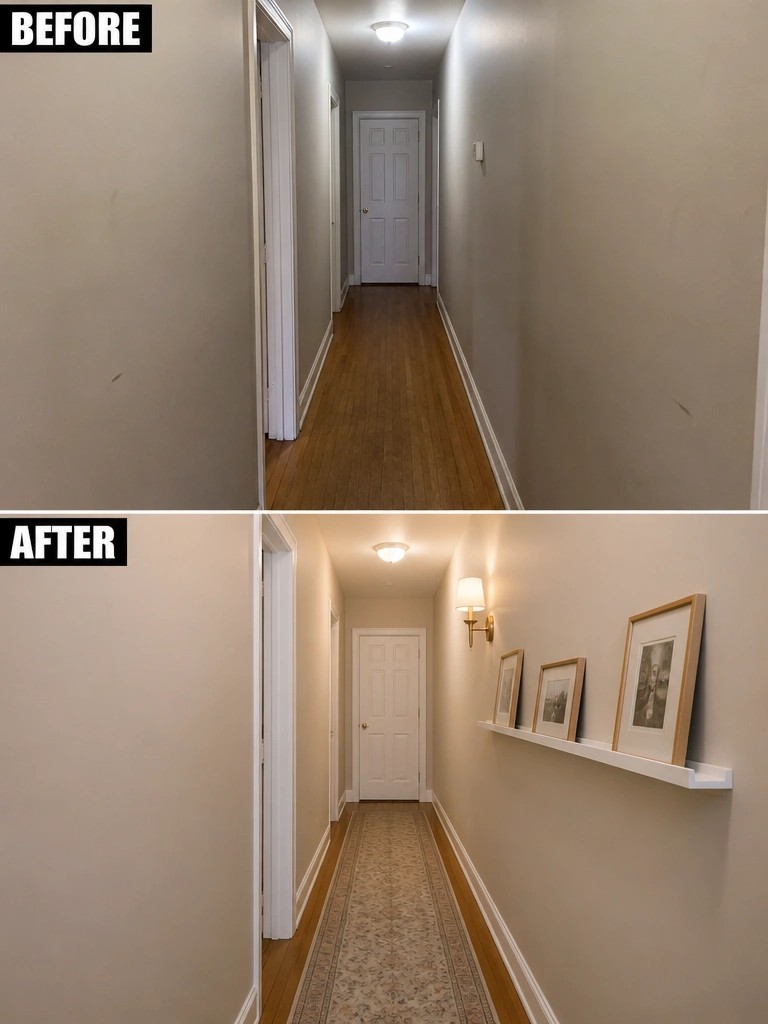
A plain hallway often feels like empty space that never gets used. Adding a picture ledge gives the wall a clear purpose and lets you show off photos without crowding the floor or needing extra furniture.
This idea works best in narrow hallways where space is tight. Keep the ledge simple, hang it at a comfortable height, and start with just a few frames so the wall stays balanced rather than cluttered.
Organize A Cluttered Pantry With Clear Containers
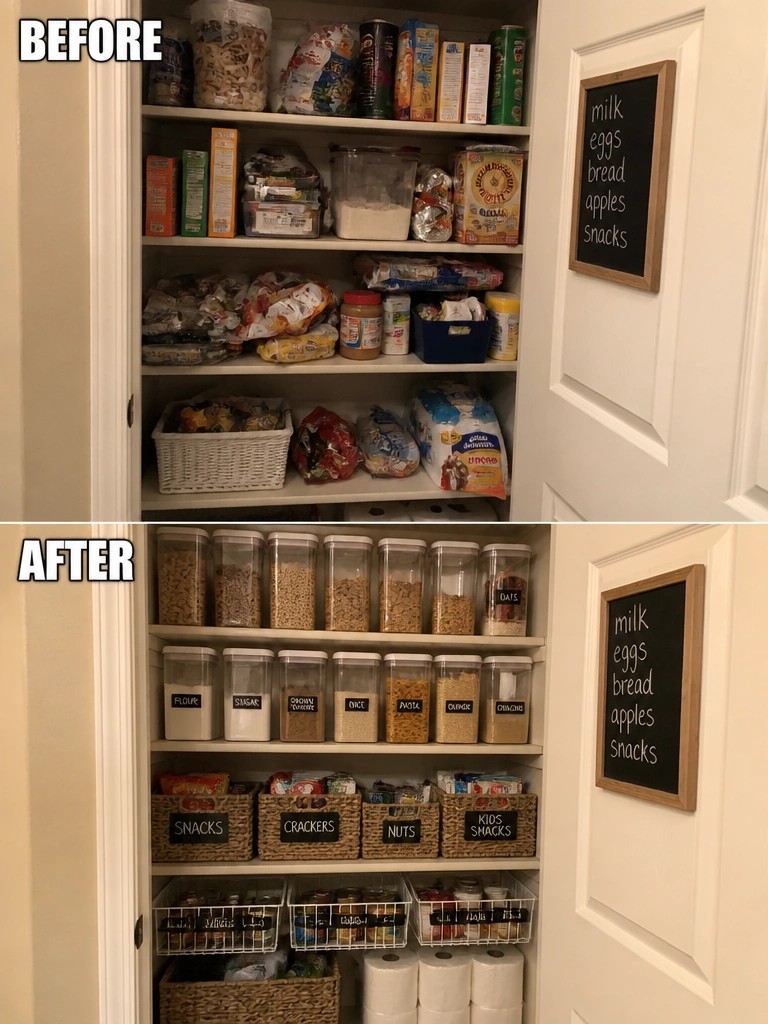
A messy pantry often makes it hard to find what you need and leads to buying duplicates. Switching to clear jars for staples and adding labeled baskets for snacks and smaller items turns the space into something much more practical.
This idea works best in kitchens where shelves are deep and items tend to get lost behind one another. Focus first on the foods you reach for every day, then choose bins and jars that fit the shelf height so nothing gets stacked awkwardly.
Swap Overhead Lighting For Wall Sconces
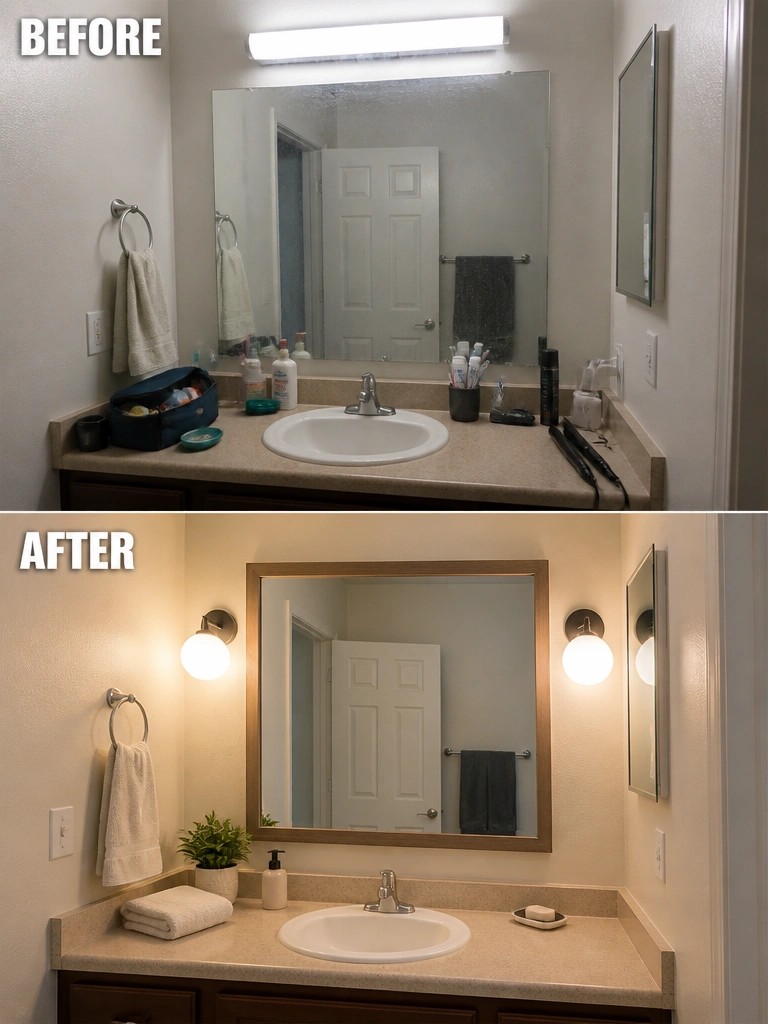
Many bathrooms still rely on one long fluorescent light above the mirror, which often creates harsh shadows and makes the space feel dated. Swapping that single fixture for a pair of wall sconces on either side of the mirror gives more even light for daily tasks and instantly makes the vanity area feel more finished.
This approach works well in small bathrooms where the counter stays in regular use. Keep the number of items on the countertop low so the new lighting can do its job without competing with clutter. Choose sconces that match the scale of your mirror and test the bulb temperature before buying multiples.
Add Built-In Storage To A Bare Entryway
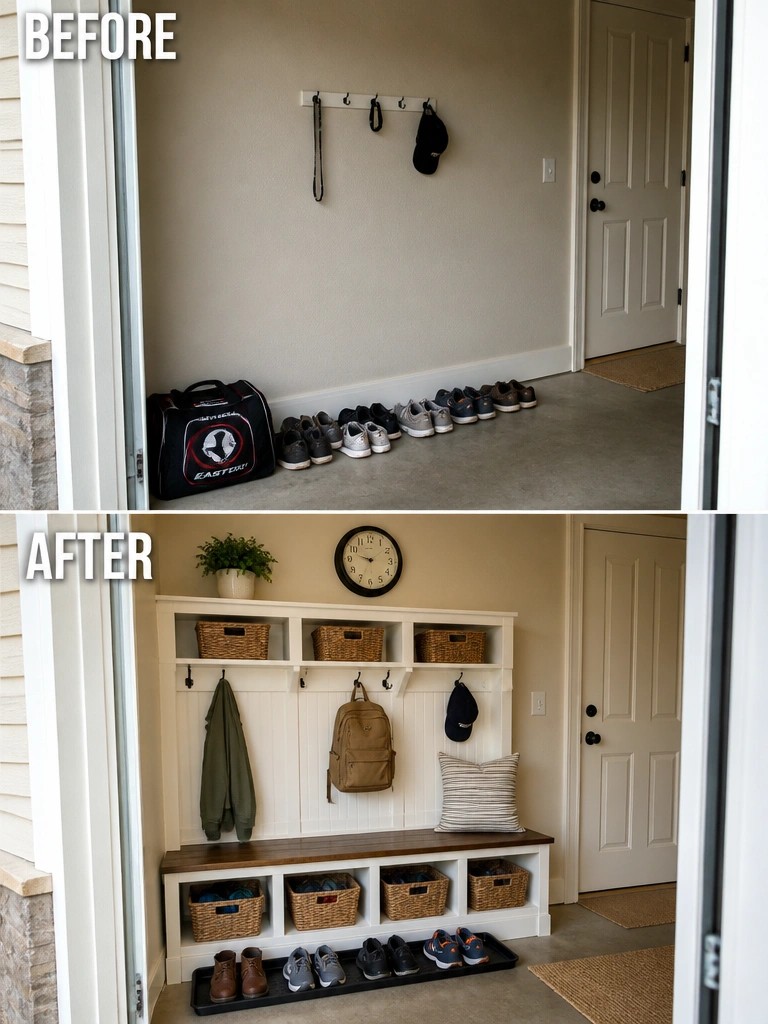
A plain entryway often ends up with shoes and bags piled along the wall because there is nowhere else to put them. Adding a built-in bench with hooks and baskets gives everything a place and keeps the floor clear.
This works best in homes that need daily drop zones. Build or buy a simple bench that matches your trim, add hooks at different heights, and use open baskets so items stay visible and easy to grab. It turns an awkward corner into something useful without a big remodel.
Refresh Stairs With A Carpet Runner
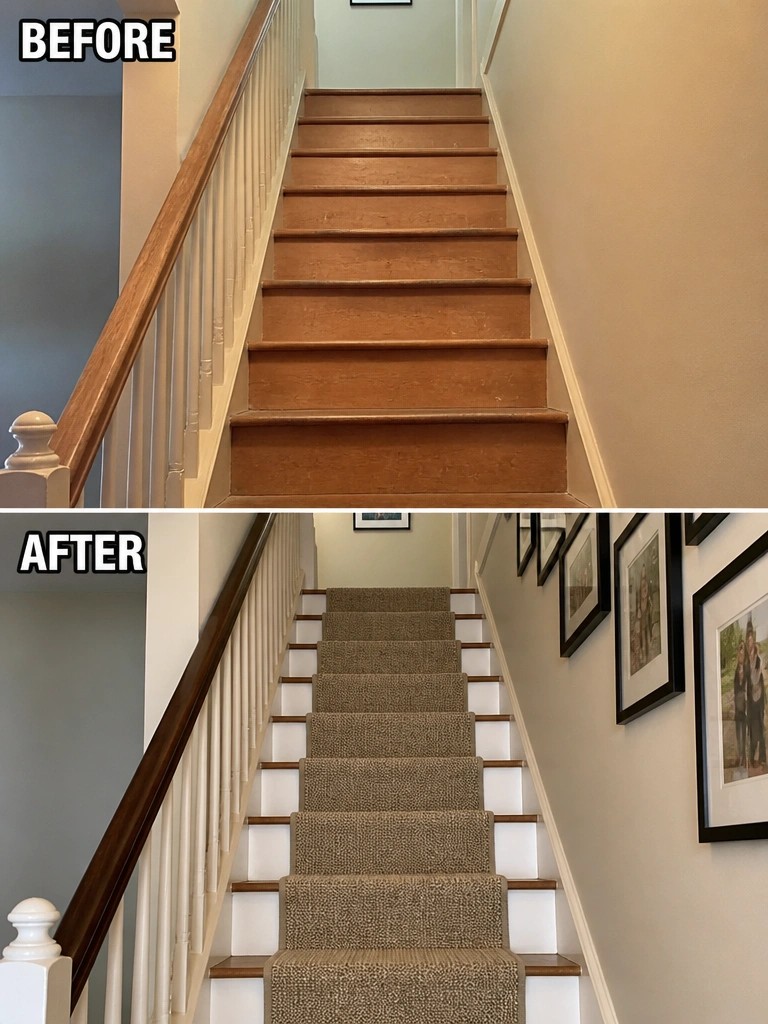
Wood stairs often start to feel dated once the finish wears down. Adding a carpet runner changes the look right away by softening the steps and giving the whole stairwell a cleaner finish. In this case the runner covers the center of each tread while leaving the wood edges visible, which keeps the original character without the worn appearance.
This idea works well in homes where the stairs are still solid but need a quick update. Choose a low-pile carpet in a neutral tone so it does not show dirt quickly, and secure it properly with rods or adhesive. The same approach can also make a narrow hallway feel more finished when the runner continues from the stairs.
Add Curtains And Layered Textiles To Finish A Bedroom
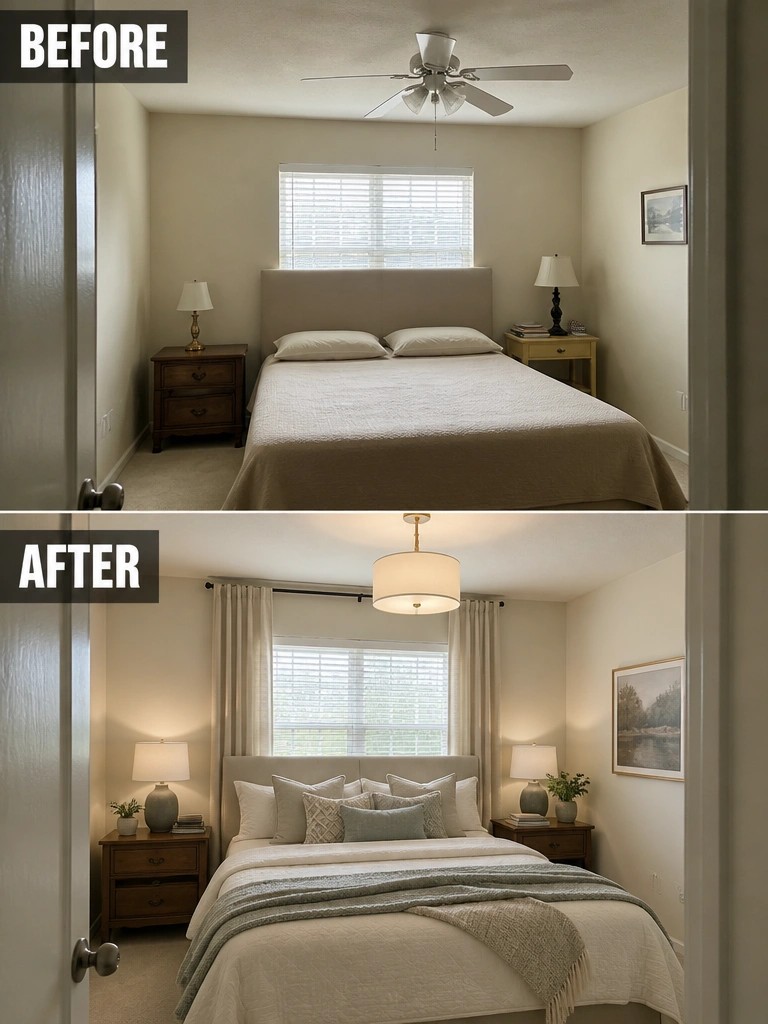
A plain bedroom often looks unfinished even when the furniture is already in place. The before photo shows a basic setup with no window treatments and simple bedding. Adding curtains around the window plus layers of pillows, throws, and a new overhead light instantly makes the room feel complete and calmer.
This approach works well in any bedroom that already has decent furniture but still feels bare. Start with curtains that reach the floor, then build up the bed with a mix of pillows and a lightweight throw. Keep the color palette simple so the layers add softness without clutter.
Frequently Asked Questions
Q: Where do I start when the room has too much stuff in it already?
A: Pull out anything you have not used in months and set it aside for a day. This opens up floor space so the simple changes you try next actually show up. Then add one new textile like a throw or curtain to shift the mood fast.
Q: Can I make a difference if my furniture is still fine but looks dated?
A: Layer in fresh accents around what you already own. A different lampshade or some wall hooks for hanging plants can pull attention away from older pieces without replacing them.
Q: What if I rent and cannot paint or drill?
A: Stick to removable swaps like command hook art, tension rod curtains, or slipcovers over cushions. These let you test ideas and undo them when you move without leaving marks.
Q: How do I keep the room usable while I try these updates?
A: Tackle one corner at a time so the rest stays functional. Finish that spot before moving on and you avoid living in total chaos for weeks.
