

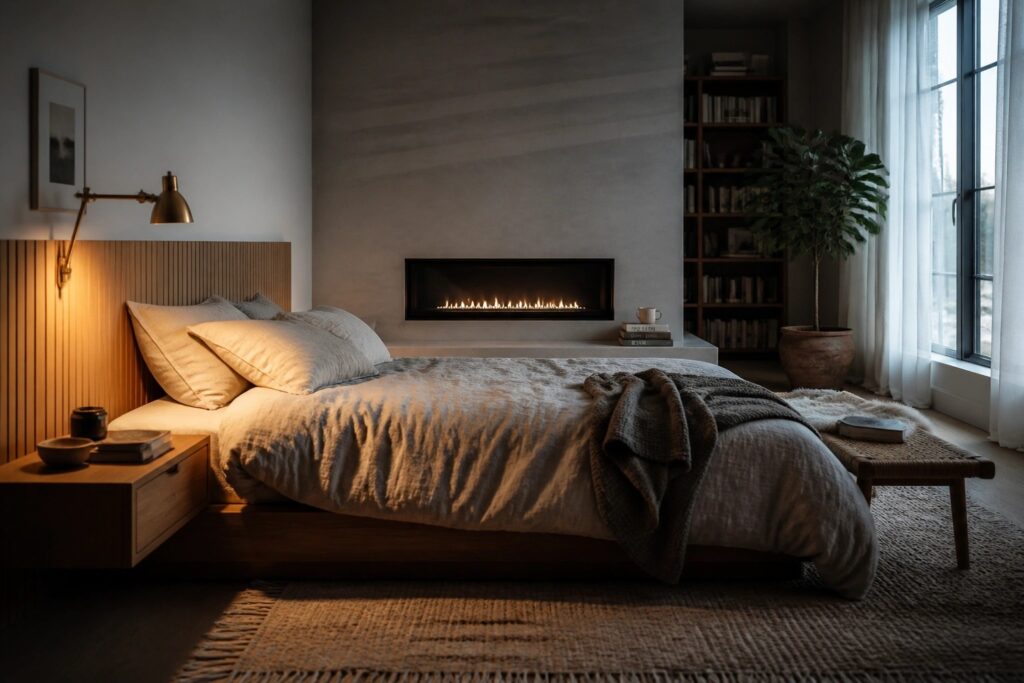
I have found that a fireplace in the bedroom changes the whole room once evening comes and the lights go down.
It matters where the seating sits relative to the fire so the warmth actually reaches the spot where I want to relax without heating the whole bed.
Some corners end up feeling cramped once the hearth and mantel are added because the original layout did not leave enough clearance.
I usually walk through the room a few times with the furniture pushed aside to test how the new focal point will affect daily movement.
That check often shows which ideas are worth trying first.
A Recessed Fireplace Facing the Bed
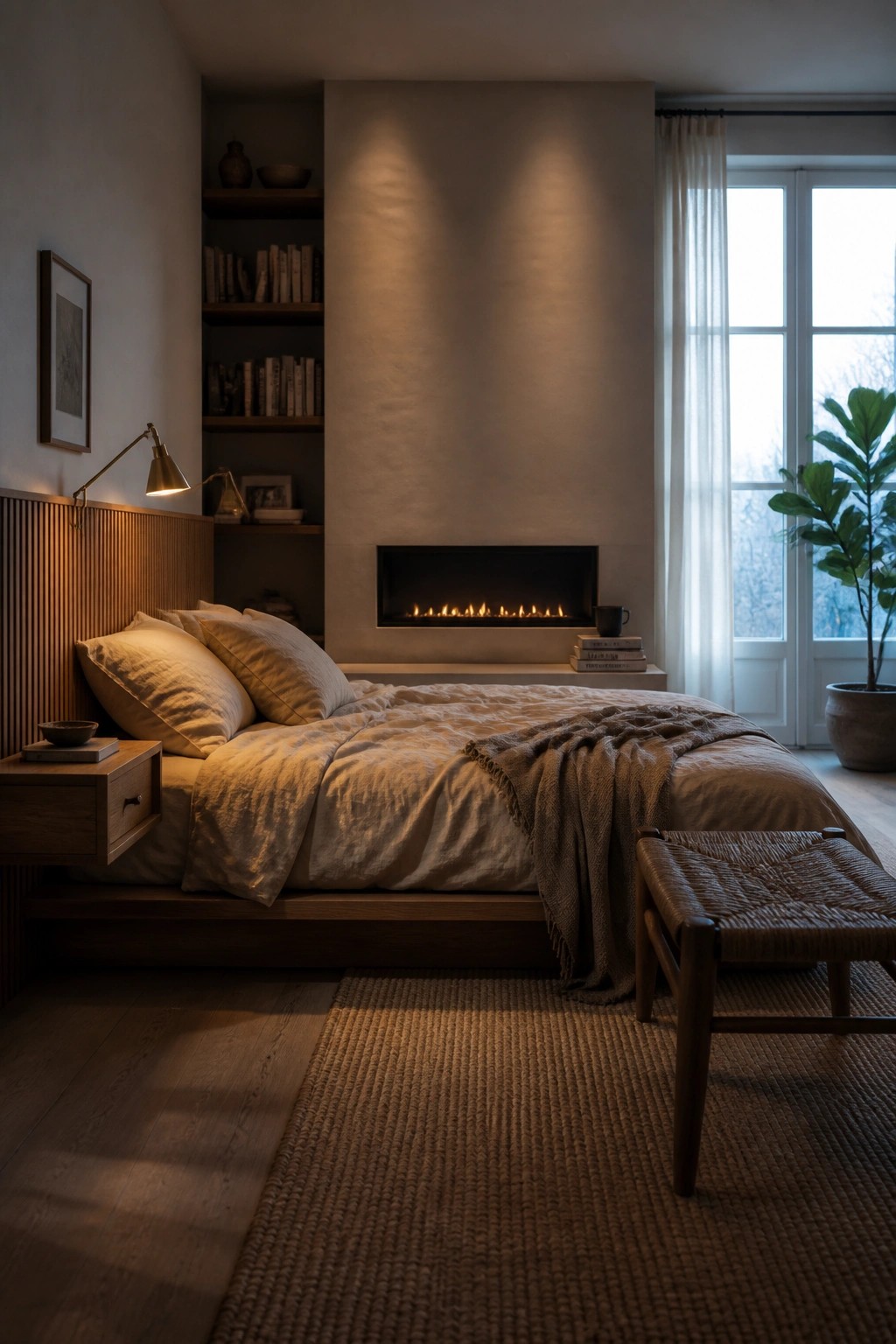
A recessed fireplace set into the wall gives the bedroom a steady focal point without extra furniture or visual noise. It keeps the space feeling open while still offering that quiet warmth people want at the end of the day.
This layout works well in rooms where the bed can sit opposite the fireplace. Use a simple surround and limit other strong patterns so the fire remains the main point of interest.
Place the Stove Between the Bed and Chair
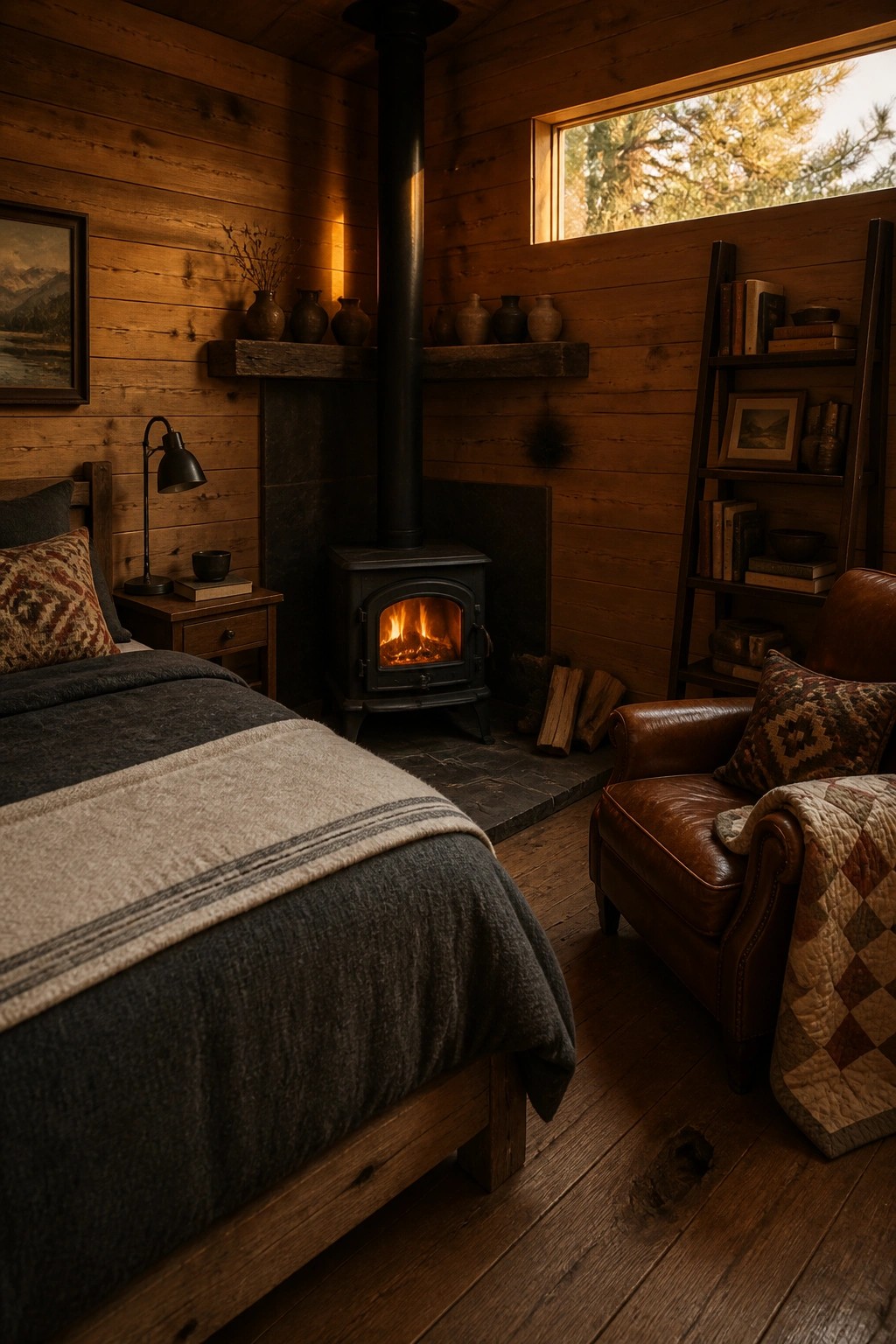
A wood stove works best when it sits where it can warm both the bed and a nearby chair at once. This simple layout turns the fireplace into the natural spot to settle in at the end of the day.
It suits smaller bedrooms and cabin-style spaces where one heat source needs to cover the whole room. Keep a clear path around the stove and choose seating that faces it so the warmth stays useful rather than just decorative.
A Fireplace With A Low Hearth Ledge
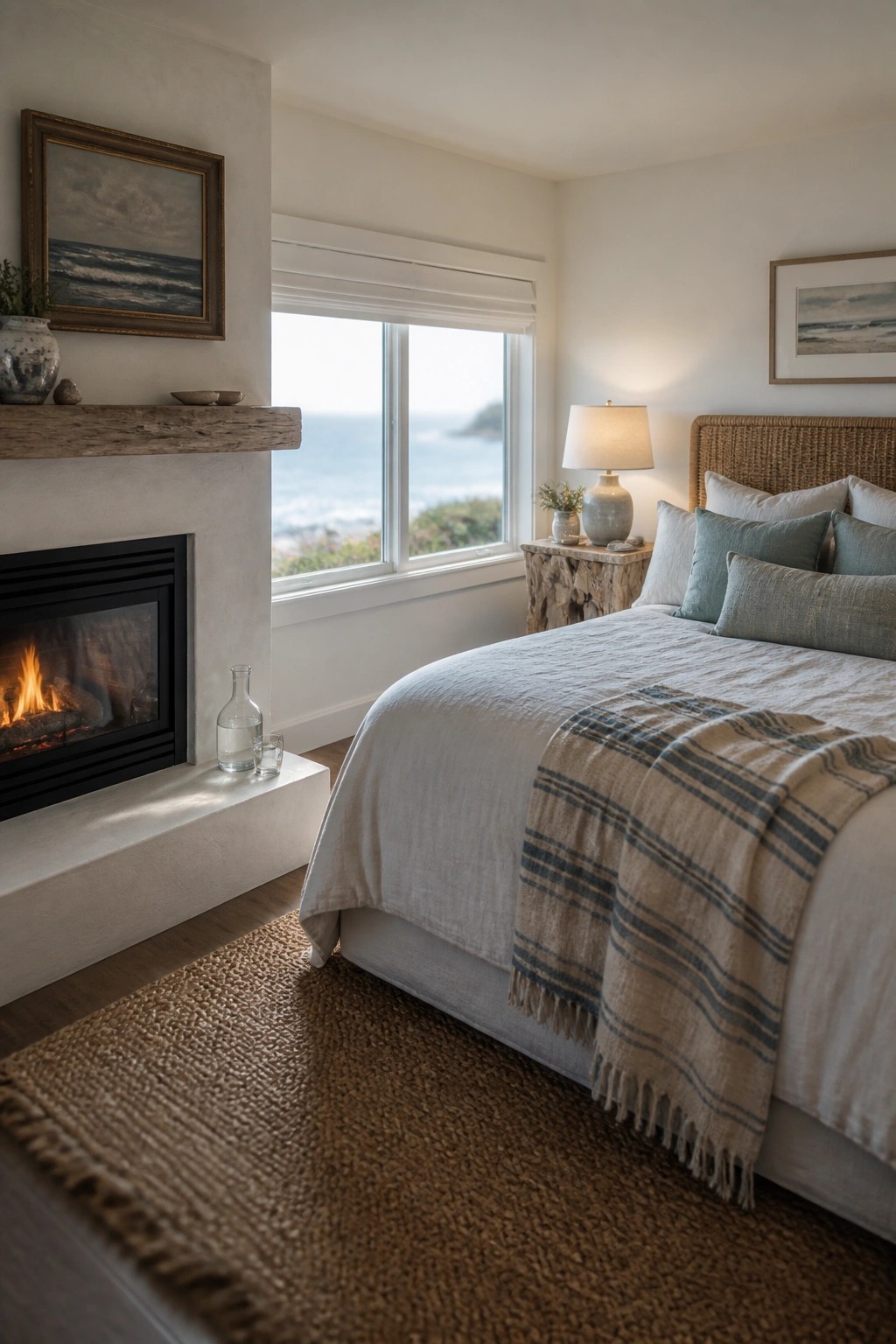
A low hearth in front of the fireplace gives the bedroom a calm focal point without taking up much floor space. It keeps the fire easy to reach while adding a quiet surface that feels natural for a few small items at the end of the day.
This setup works best in bedrooms where the fireplace sits on an outside wall and the bed can face it. Keep the ledge plain and at sitting height so it stays useful rather than becoming another surface that collects clutter.
Fireplace Facing the Bed
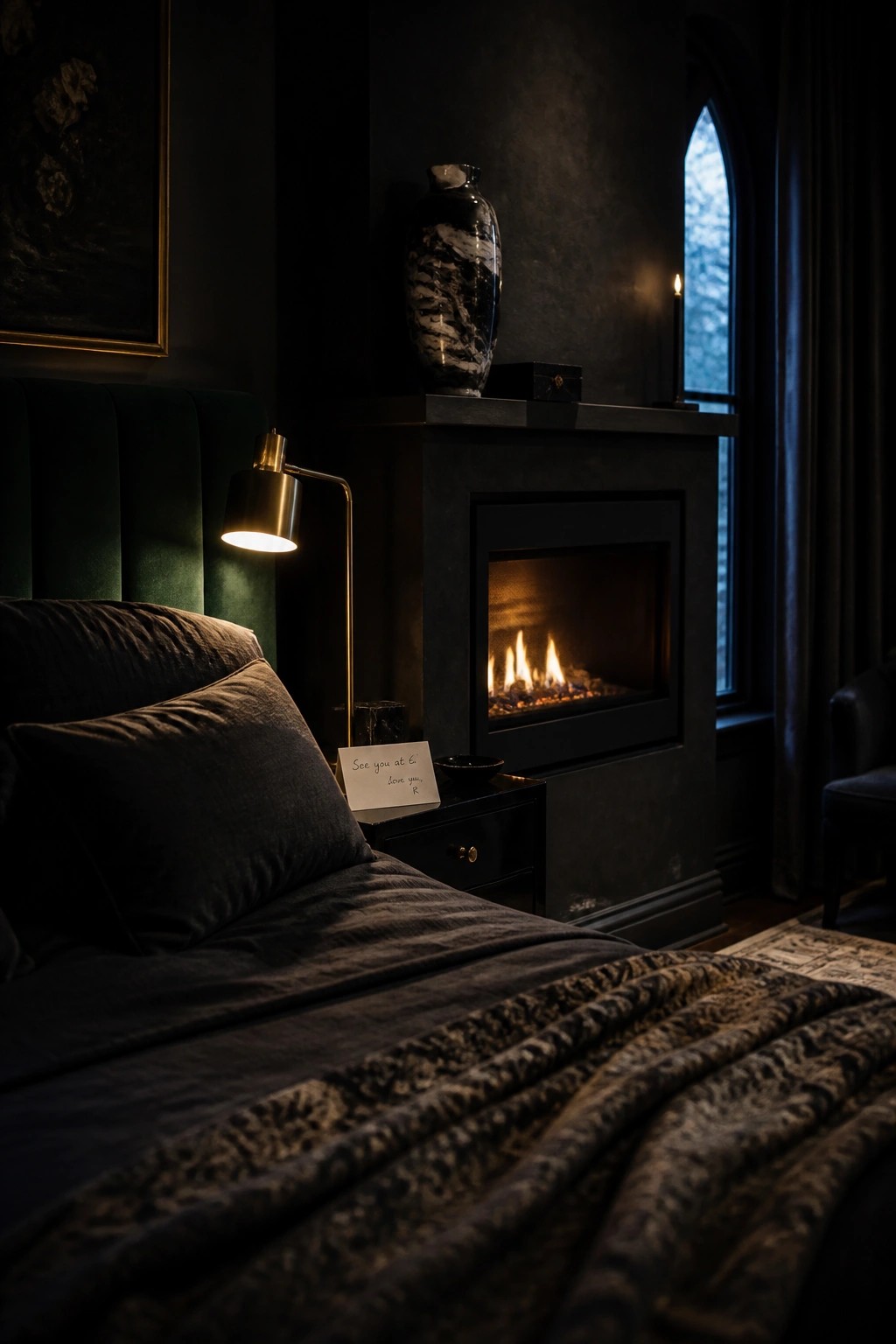
Many bedrooms feel calmer when the fireplace sits directly across from the bed. The fire becomes the main point of focus without extra layers of decor or bright lighting needed.
This works best in rooms where you want a simple evening routine. Keep the surrounding walls and bedding in darker tones so the flame stays soft and the space does not feel overdone.
Low Fireplaces That Sit Close To The Floor
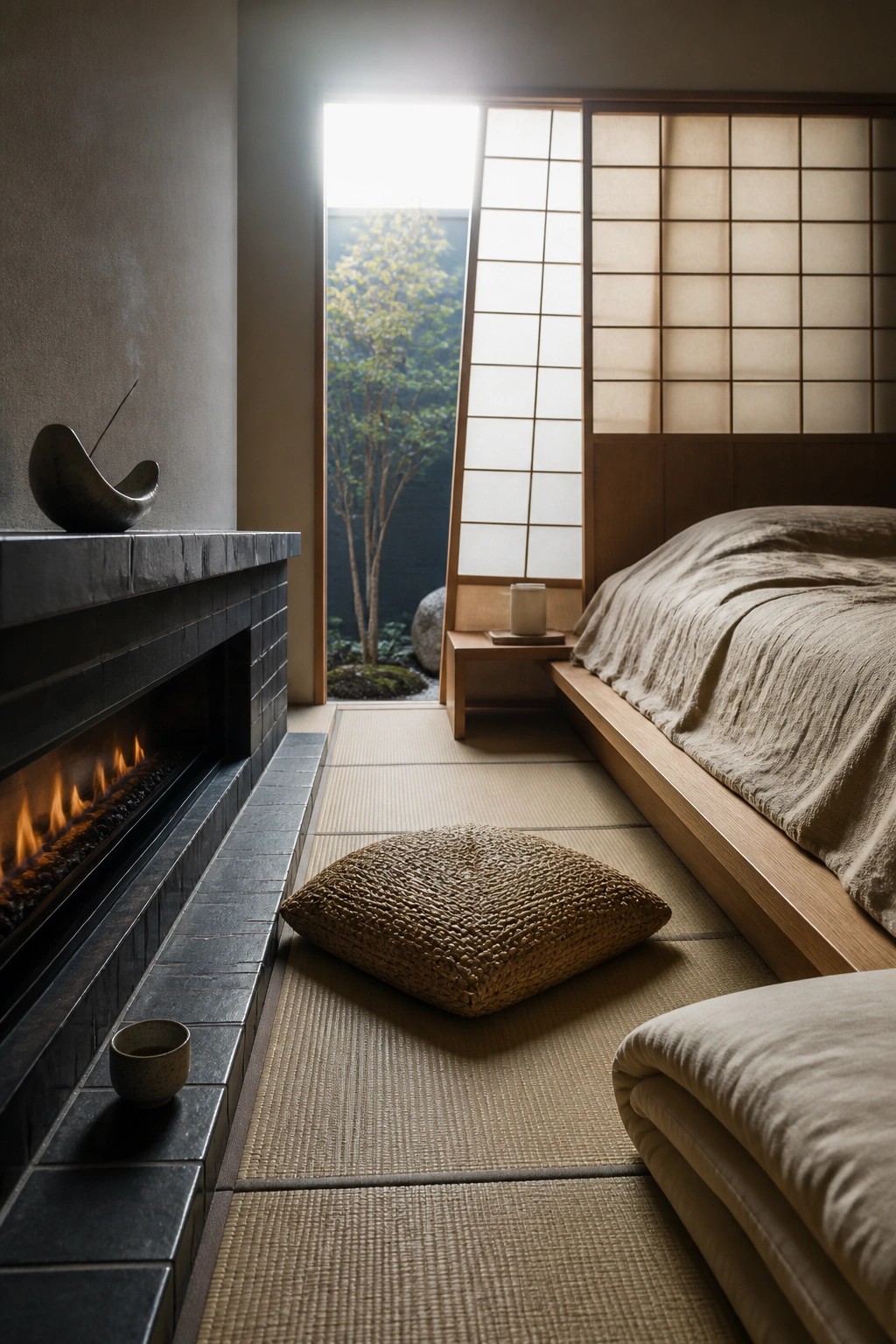
A low fireplace built right along the floor works well in a bedroom because it keeps the eye level and the space feeling open. Instead of a tall unit that takes over the wall, this style stays tucked down near the seating or sleeping area so the room stays calm and easy to move through.
It fits best in smaller or minimalist bedrooms where you want warmth without adding bulk. Keep the surround simple in stone or tile and pair it with low mats or cushions so the whole corner feels connected and quiet at the end of the day.
Built-In Shelves Around a Bedroom Fireplace
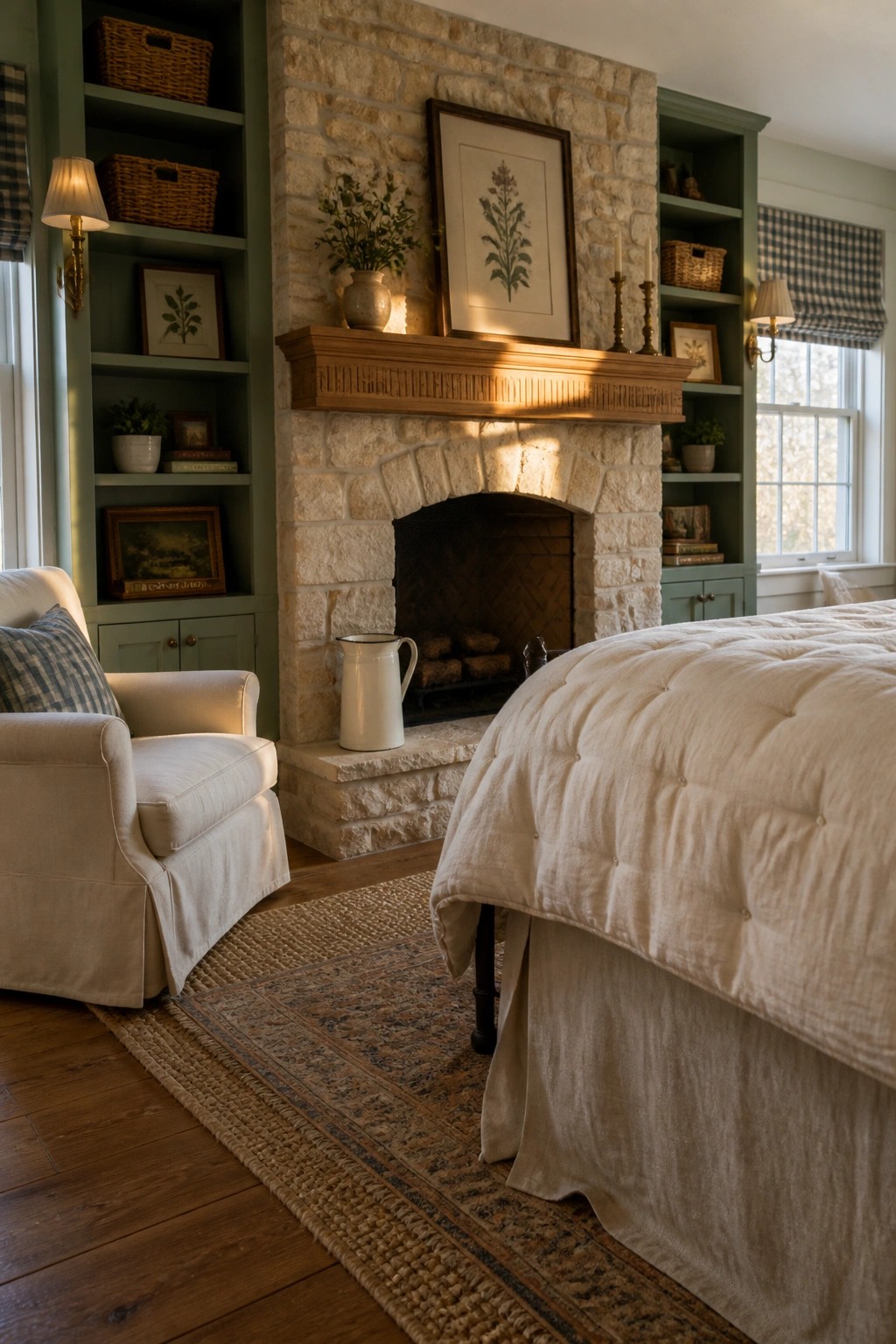
Built-in shelves on either side of a fireplace give a bedroom useful storage without crowding the space. The shelves hold books, baskets, and a few framed pieces while keeping everything within easy reach of a chair or the bed.
This works best in rooms that already have some traditional character. It suits homes where you want the fireplace to feel settled into the wall rather than added on later. Keep the shelves fairly full but not overstuffed so the area stays calm at the end of the day.
Add Fresh Flowers Around Your Bedroom Fireplace
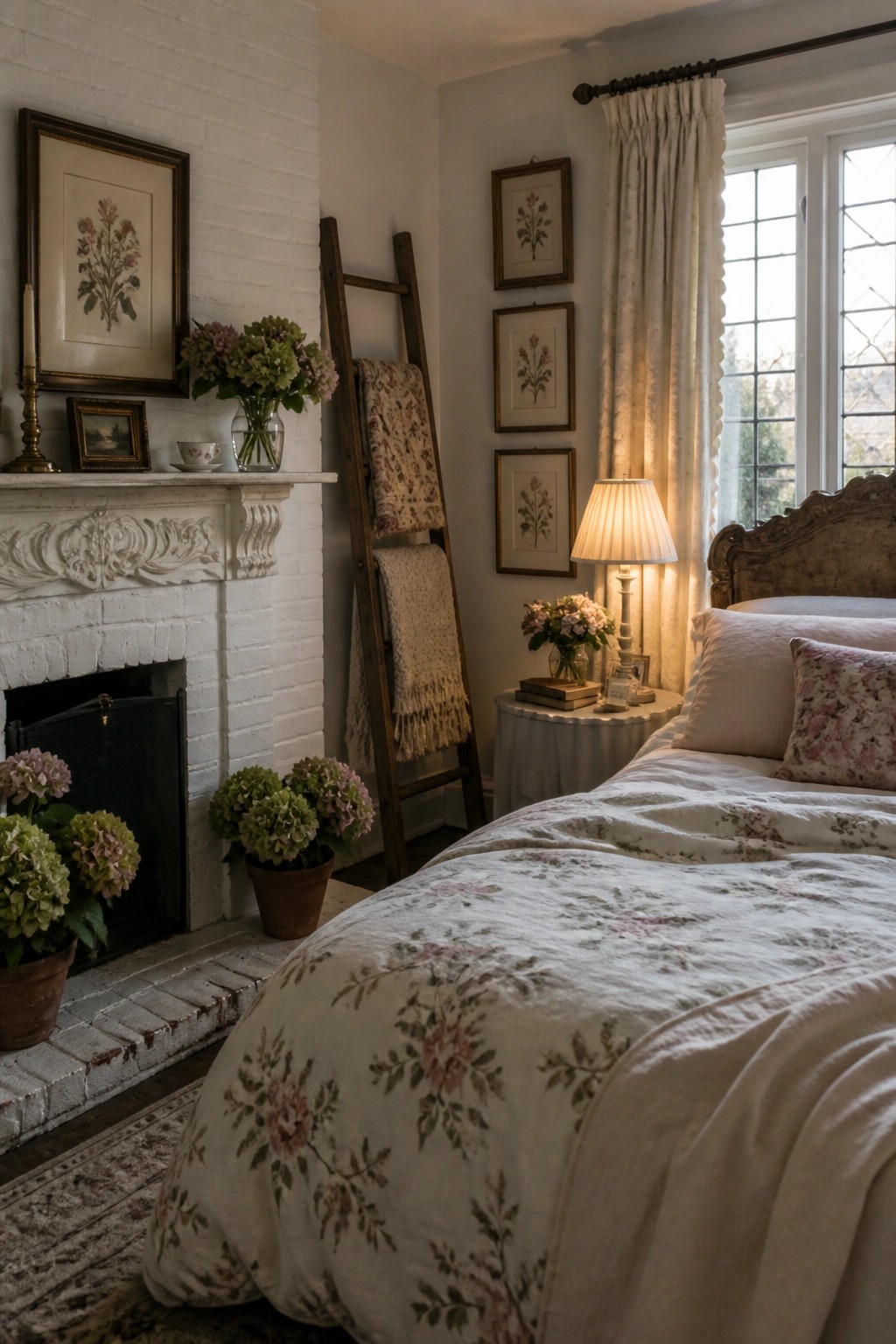
A fireplace gives the bedroom a natural spot to slow down. Flowers help that spot feel softer without adding much clutter or noise.
Set a couple of pots on the hearth and keep a vase or two on the mantel. This works best in lighter rooms where the color can stand out and the arrangement stays simple.
Fireplace Next to the Bed
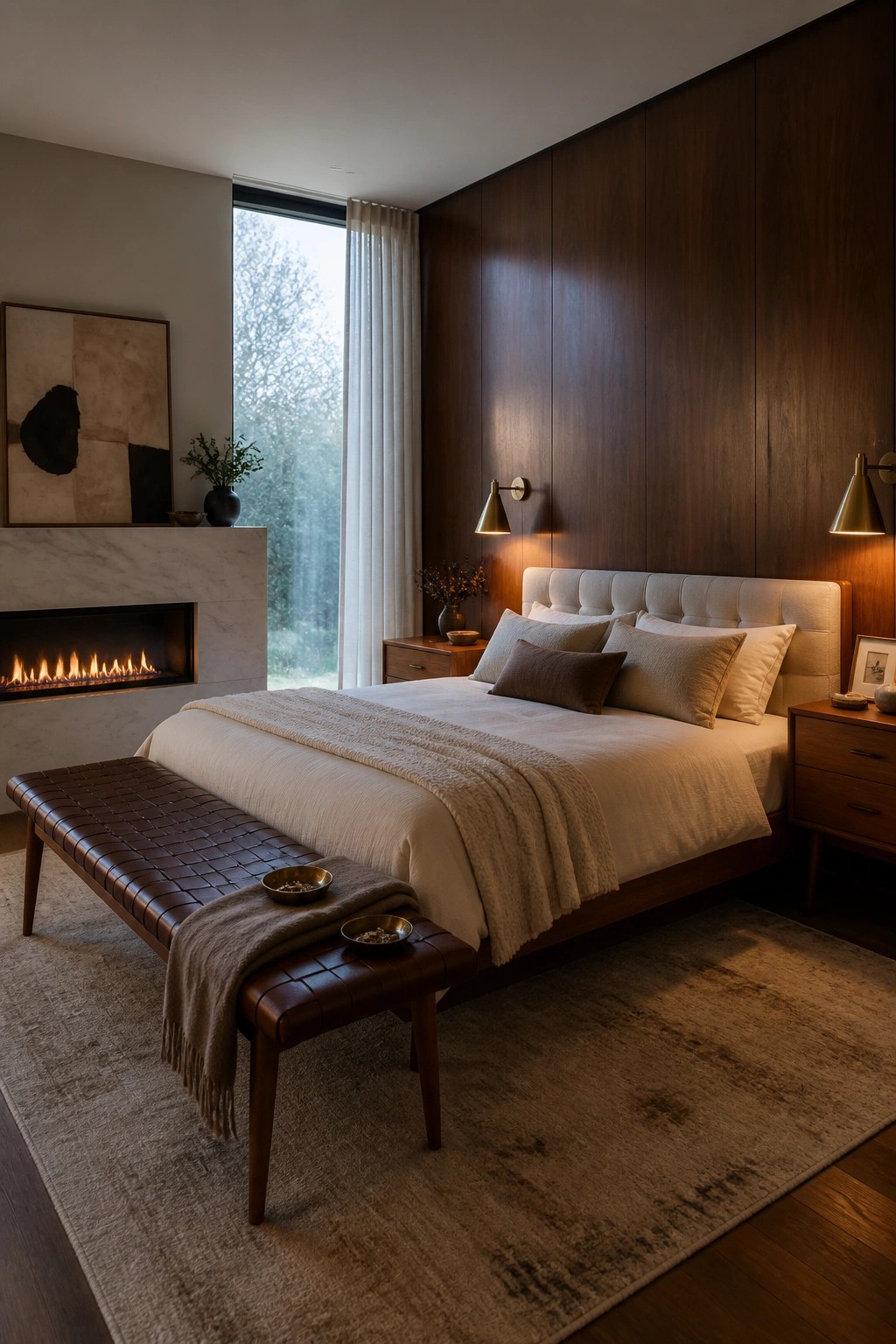
Placing the fireplace on the side wall lets you see the fire from bed without any extra effort. The marble surround keeps the look clean and helps the warmth feel steady rather than showy.
This setup works best in medium to large bedrooms where one wall can stay clear for the firebox. It suits homes that already lean on wood tones and soft neutrals, and it is worth keeping the mantel or surround fairly plain so the fire stays the main point.
Wood Stove In A Brick Alcove
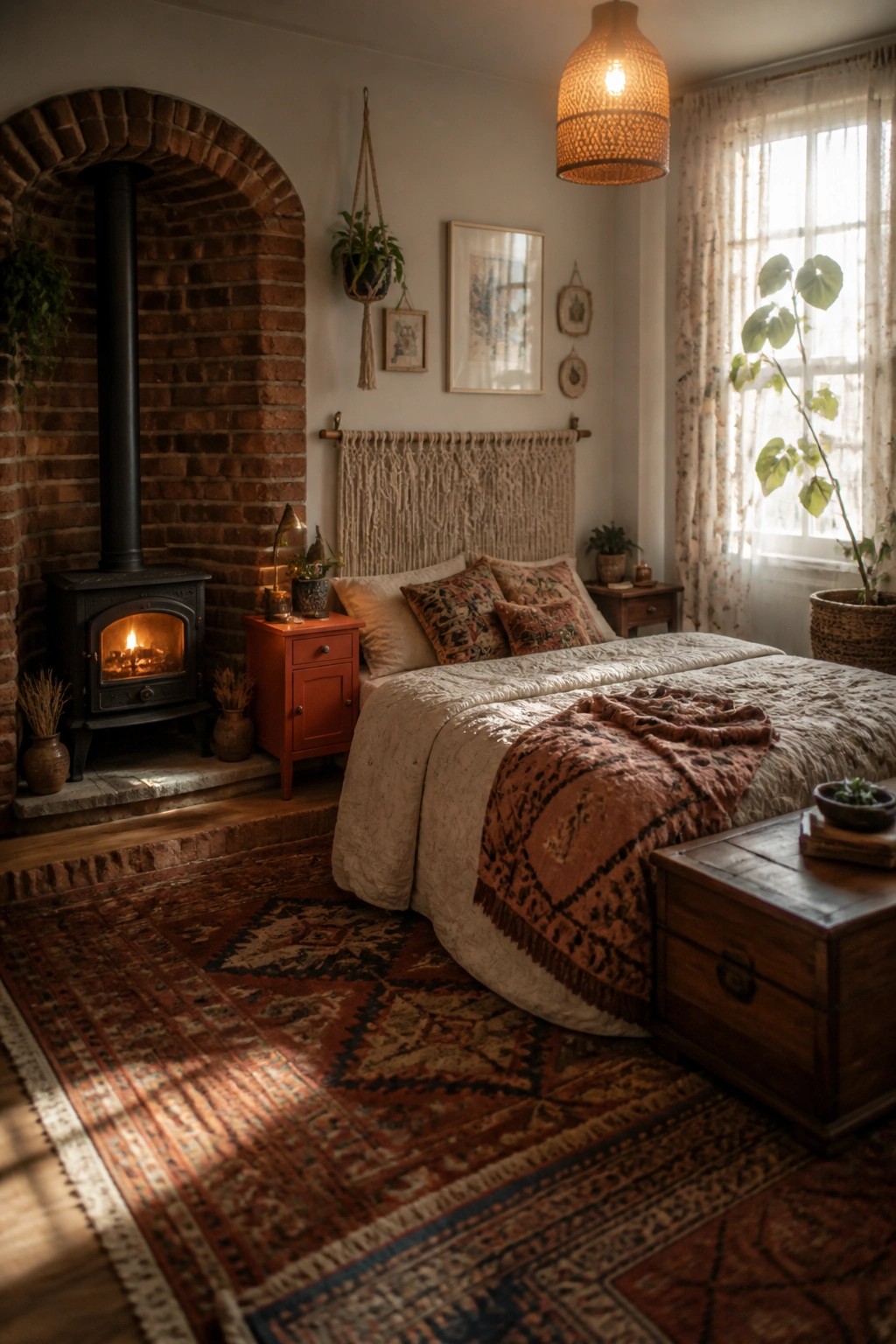
A wood stove set into a brick alcove brings steady heat and a quiet focal point to the bedroom. The arched opening keeps the stove contained while still letting the firelight reach the rest of the room.
This setup suits older homes or any bedroom with enough wall depth for proper clearance. Keep surrounding furniture low and simple so the stove remains the main source of warmth without crowding the space. Always check local codes for venting and floor protection before installing.
A Fireplace Positioned Next to the Bed
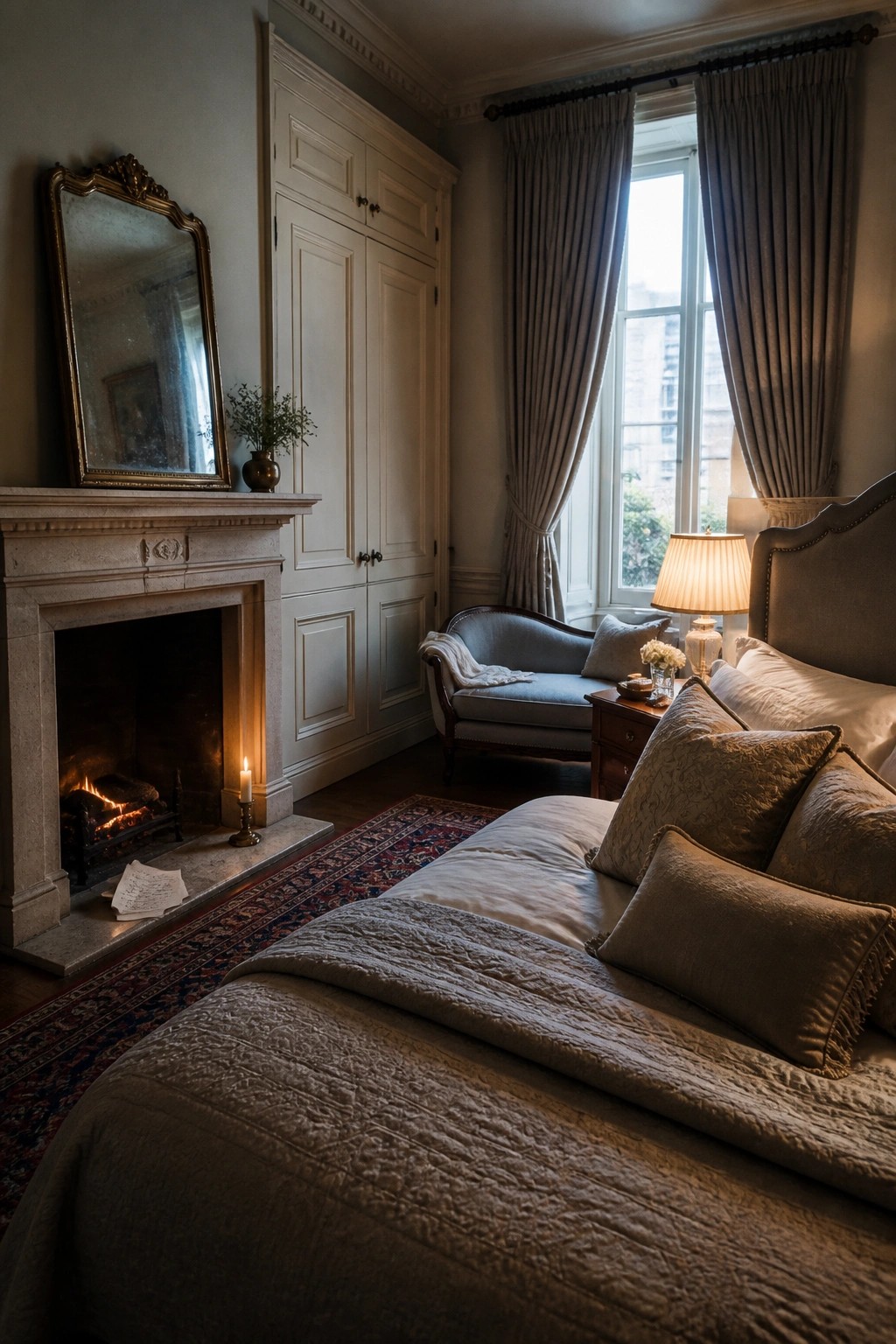
Many people like having the fireplace close to the bed because it turns the whole corner into a spot for slowing down at the end of the day. The fire gives off a steady light and a bit of warmth that feels easier on the eyes than a bright lamp, and it encourages you to sit or lie back without reaching for a screen.
This setup works best in bedrooms that already have the space for a mantel and hearth without crowding the walking area. It suits older homes with existing chimneys and rooms where you want one strong focal point rather than lots of extra lighting or decor. Keep the surrounding colors soft so the fire stays the main source of comfort.
Built-In Fireplaces That Sit Low In The Room
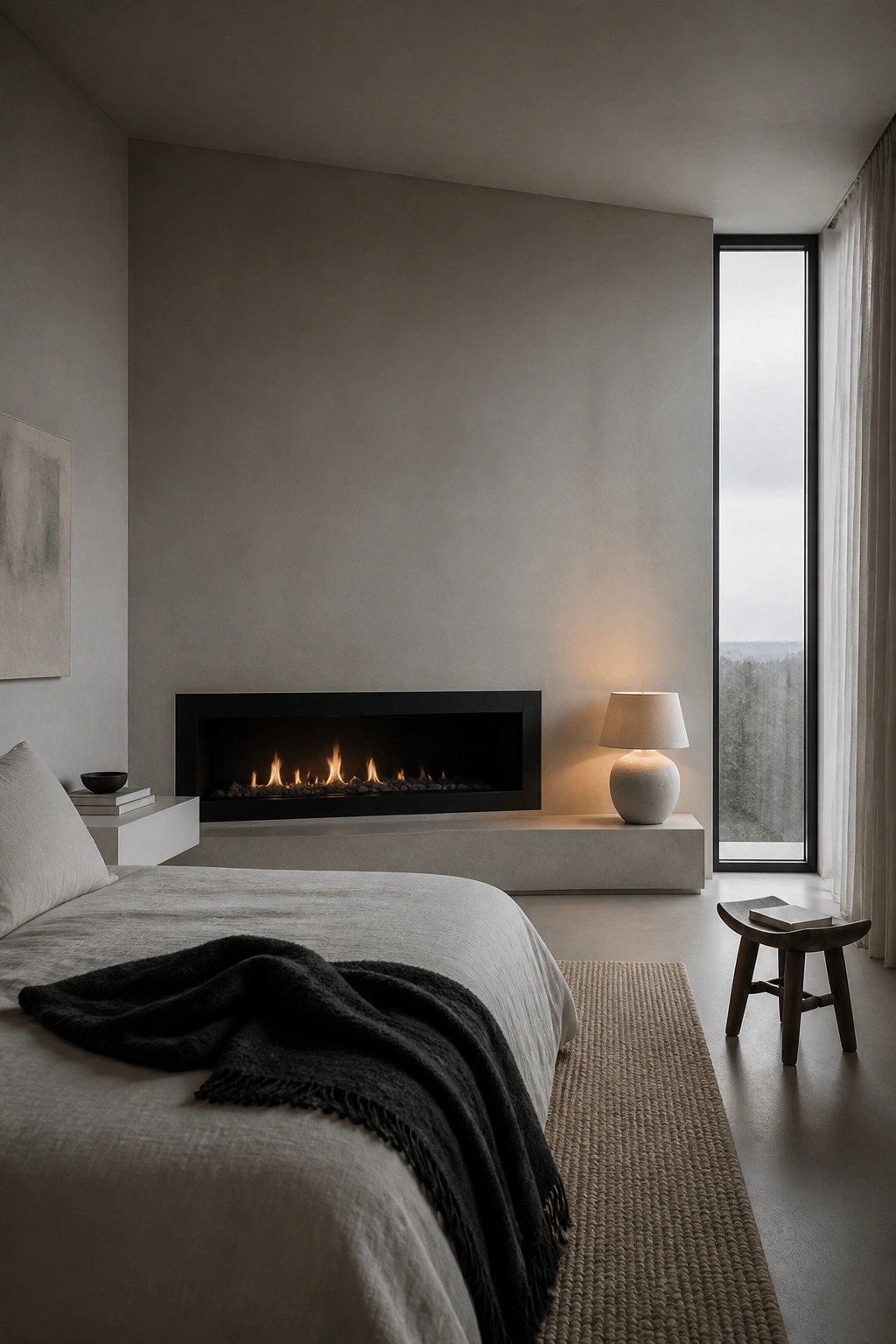
A fireplace set into the wall at a low height can turn the bedroom into a place that feels naturally calm at the end of the day. The fire stays visible from the bed without any tall surround or extra furniture getting in the way, so the room stays open and quiet.
This setup works best in simple bedrooms where you want the fire to be the only real focal point. Keep the wall plain, use a low bench or hearth for the fireplace, and place the bed so the flames are easy to watch from a resting position. Avoid adding much else around it.
Fireplace Built Into A Window Seat
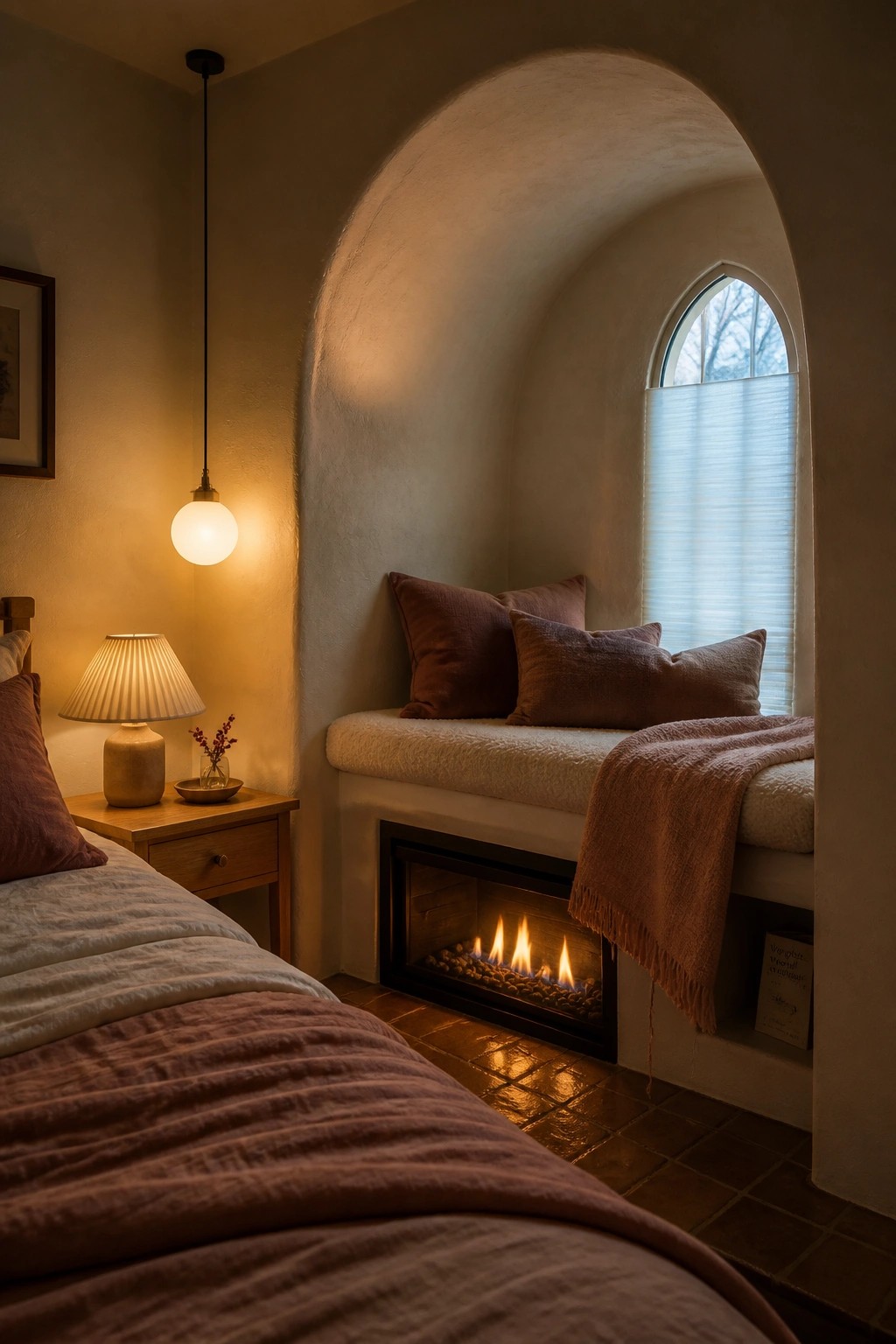
A fireplace set directly under a window seat gives you a warm corner that feels ready for quiet evenings. The built-in placement keeps the fire close without adding extra furniture or cluttering the floor.
This idea works best in bedrooms where you want steady heat and a place to sit at the same time. It suits homes with thicker walls or those willing to frame out a small niche during a renovation.
Concrete Fireplaces for Bedroom Calm
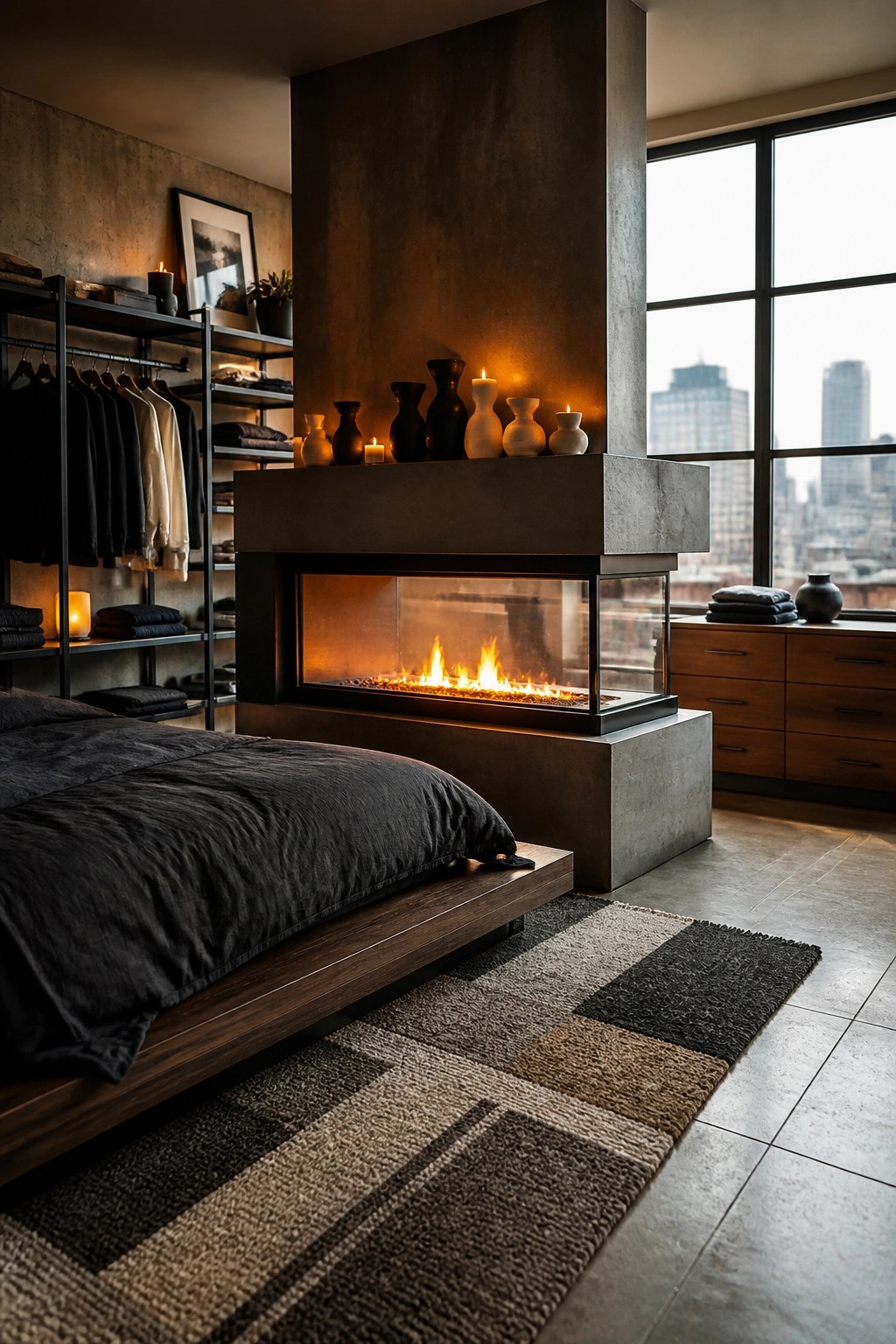
A concrete fireplace gives the bedroom a steady, grounded center that feels quiet without trying too hard. The solid material holds warmth visually and keeps the space from feeling too soft or cluttered around the bed.
This works best in modern rooms or open lofts where the concrete can tie in with other simple finishes. Keep the surround fairly plain and make sure the fire sits low enough to enjoy from a seated or lying position.
A Fireplace Creates a Calm Bedroom Corner
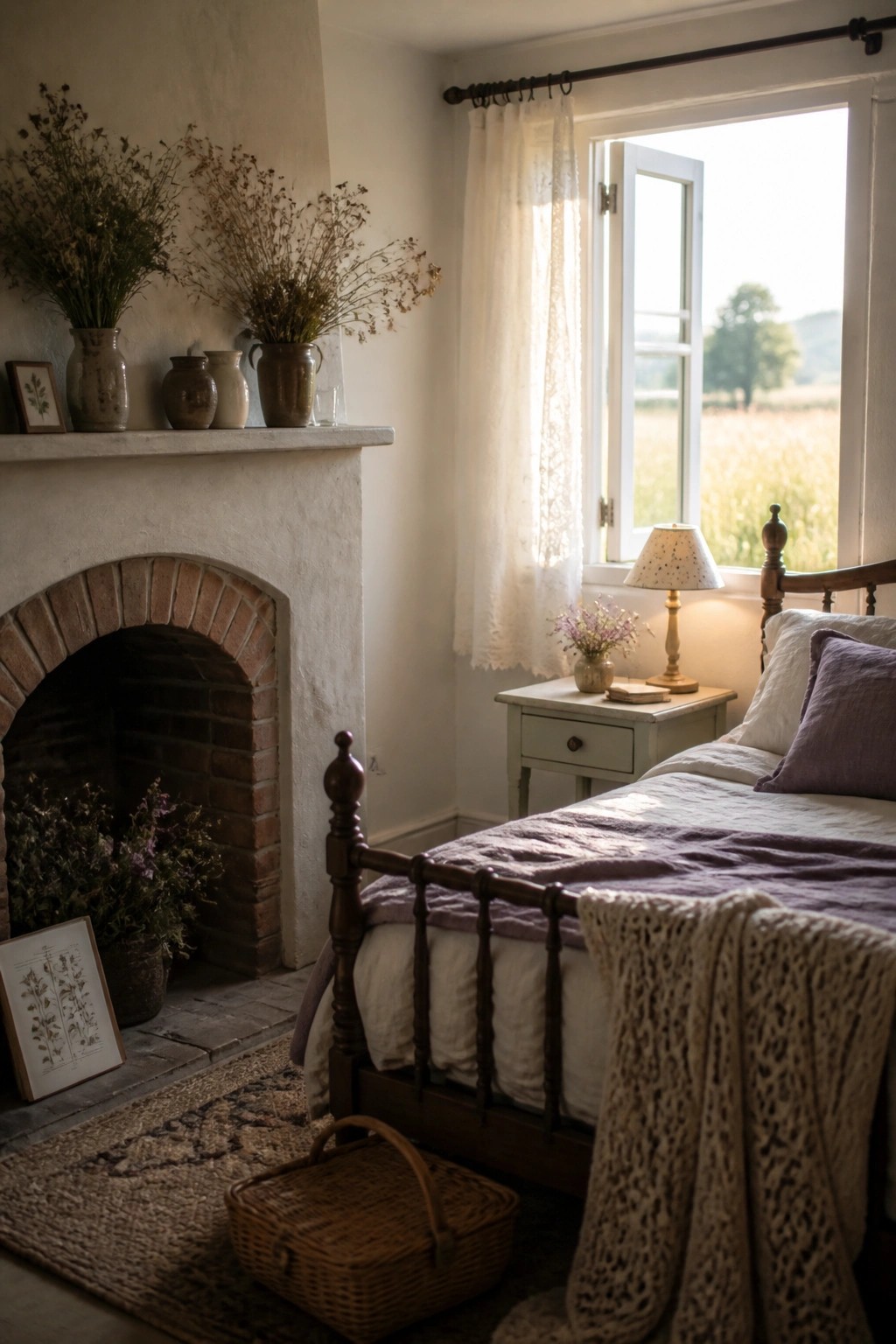
A fireplace gives the bedroom a natural spot to settle in at night. The brick surround and low mantel keep the focus on warmth rather than decoration, which helps the room feel quieter overall.
This setup works best in smaller bedrooms or older homes where you want one strong focal point. Keep the styling sparse so the fire stays the main feature and the space does not feel crowded.
Black Tiled Fireplace Walls In The Bedroom
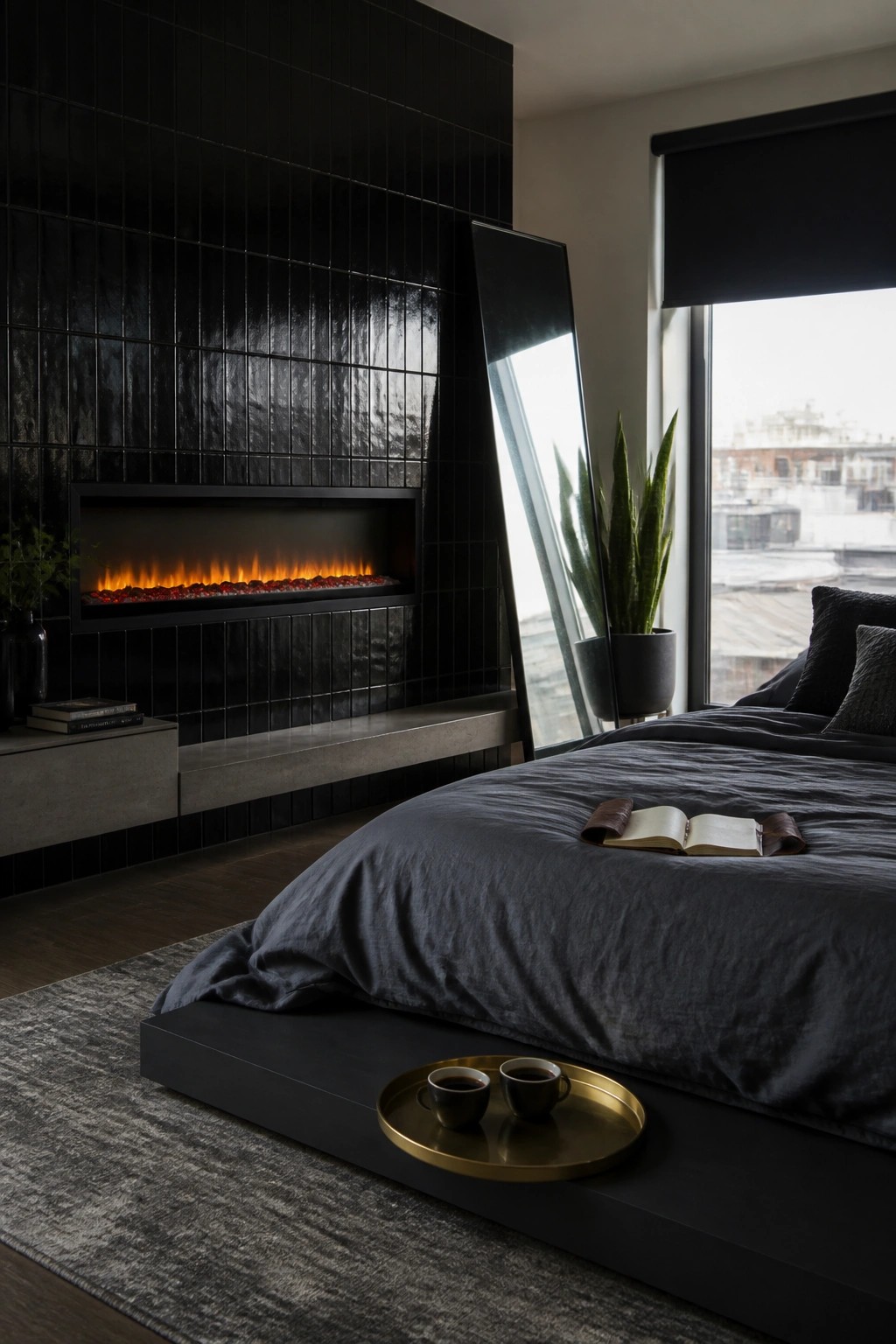
A fireplace set into a wall of dark glossy tiles gives the room a steady, grounded feel. The dark surface keeps the light from the fire contained and makes the whole corner read as one calm unit rather than a collection of separate pieces.
This approach works well in smaller bedrooms where you want the fireplace to feel built in rather than added on. Keep the rest of the room in similar dark tones so the tiles blend instead of stand out.
Built-In Shelves Around a Bedroom Fireplace
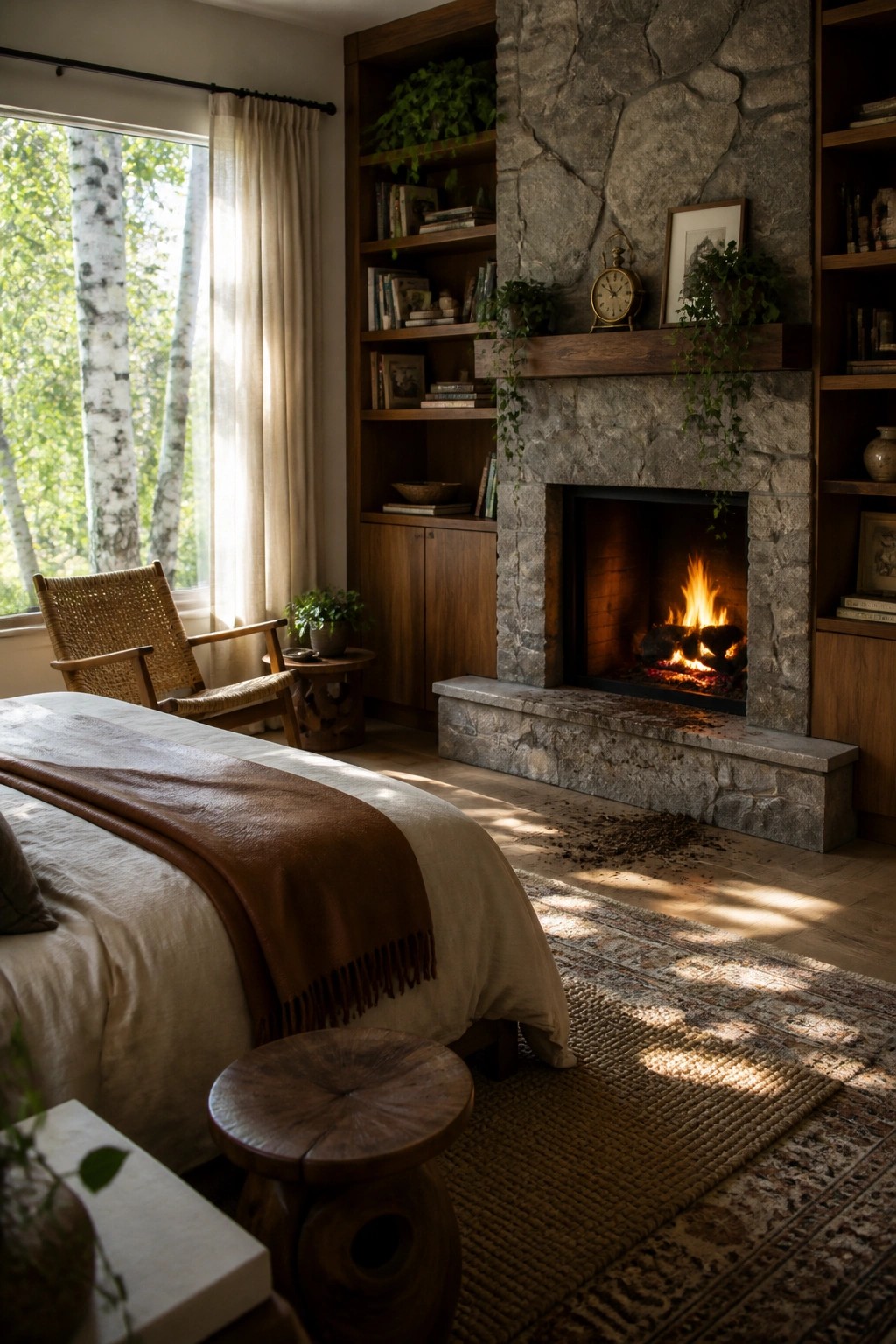
Built-in shelves on either side of a fireplace give the corner a settled, personal feel. The wood storage makes the stone surround look less heavy and turns the whole spot into a place for books and quiet moments instead of just heat.
This idea works well in bedrooms that already have some wall space next to the firebox. It suits homes where you want a simple spot to keep reading material handy without extra furniture, though it does need room for the shelves to feel balanced.
An Extended Hearth Beside The Bed
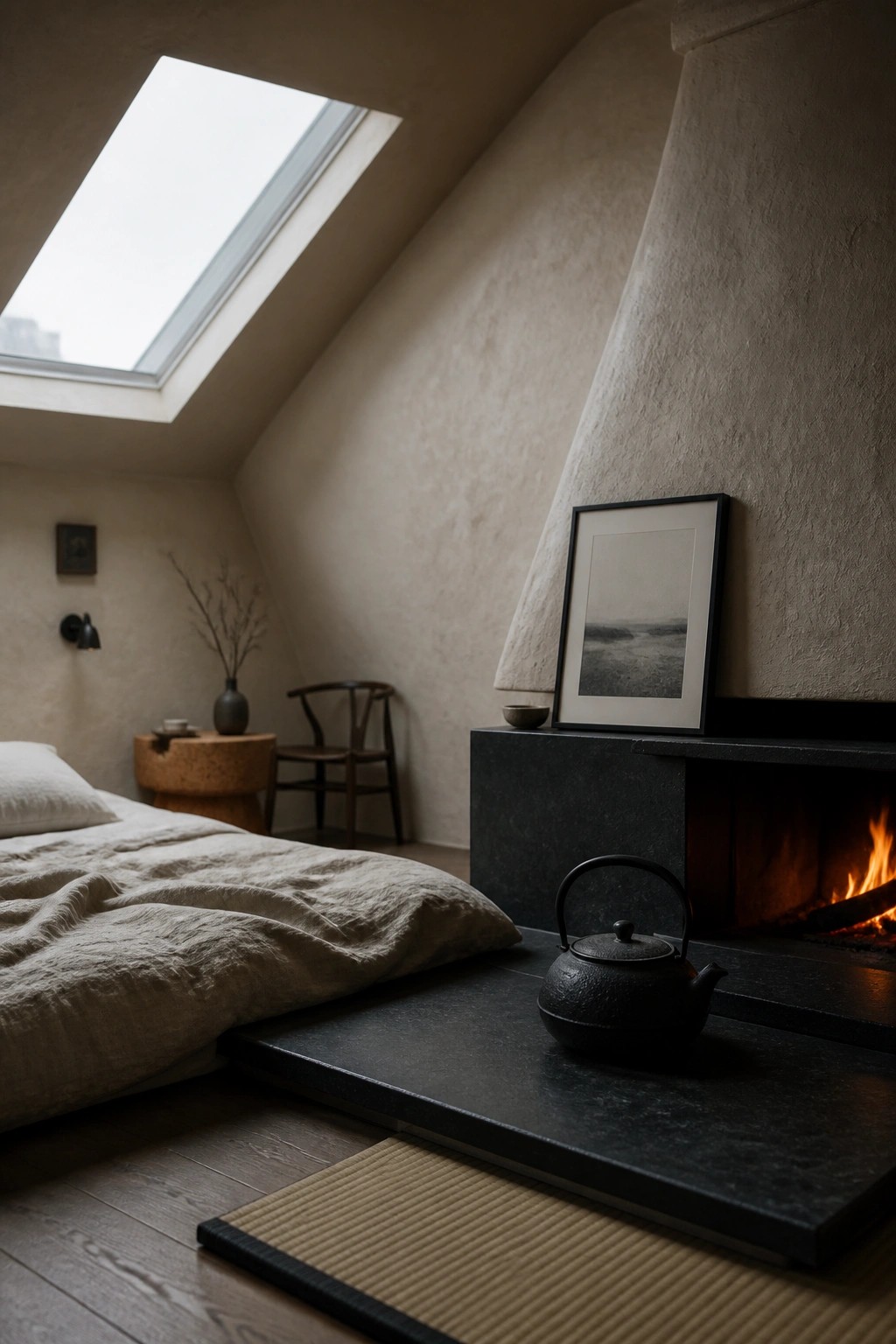
A wide, low hearth gives the fireplace a practical edge without adding extra furniture. It creates a steady surface right next to the bed for a kettle or a cup, which keeps the corner feeling calm and ready for evening use.
This setup suits smaller bedrooms or attic rooms where every bit of floor space counts. Keep the platform simple in material and height so it blends with the floor rather than competing with it.
Positioning The Bed Near A Fireplace
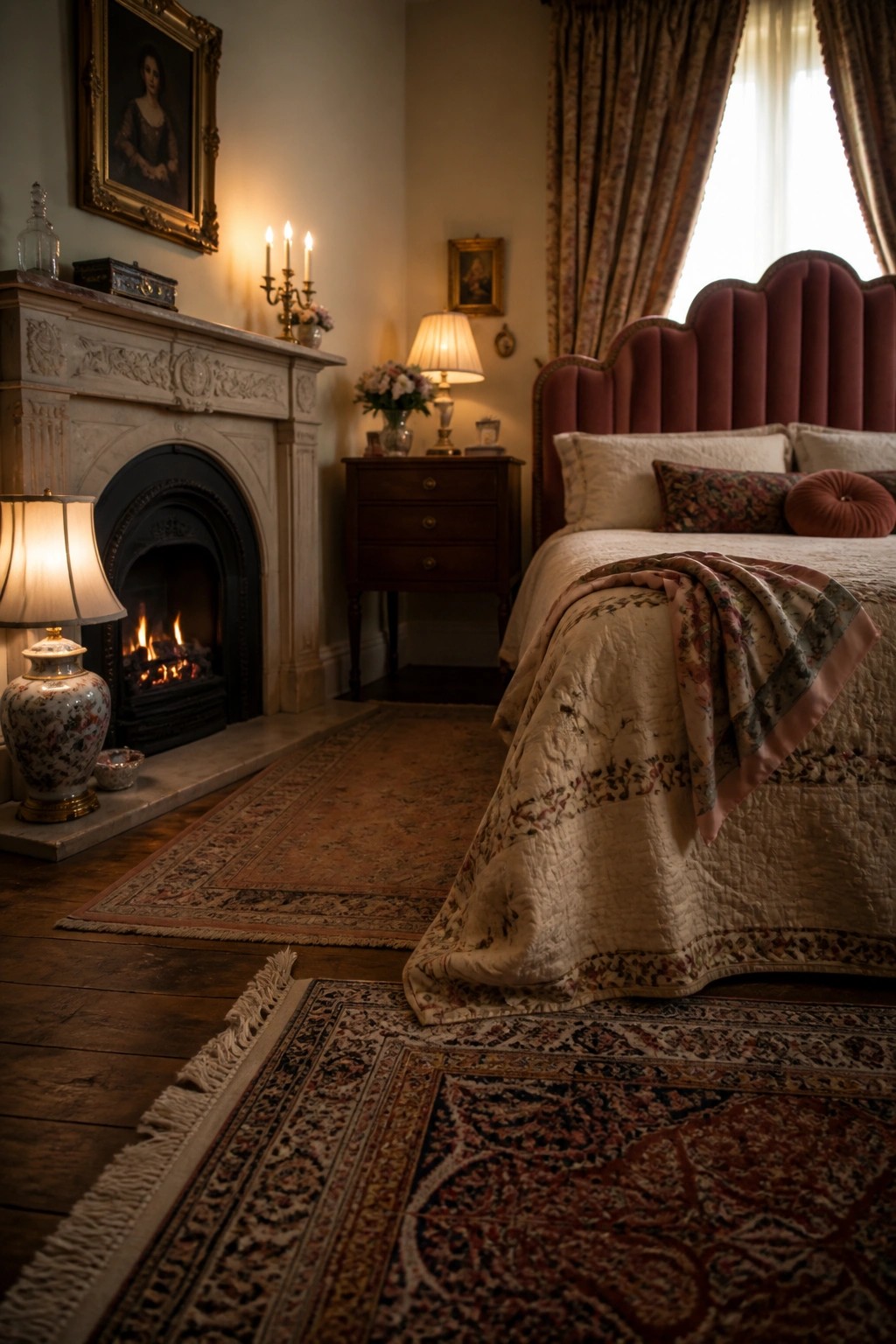
Many bedrooms feel more restful when the bed sits close enough to the fireplace to catch the warmth without any extra effort. The fire becomes the natural spot to look at while winding down, and the light stays soft enough that it does not keep you awake.
This setup works best in rooms that already have the chimney running along one wall. Keep the bed a few feet away so the heat stays comfortable, and use a low table or just the floor space for anything you might reach for at night. Older homes often lend themselves to this layout since the fireplace is already built in.
Fireplace Placed Across From The Bed
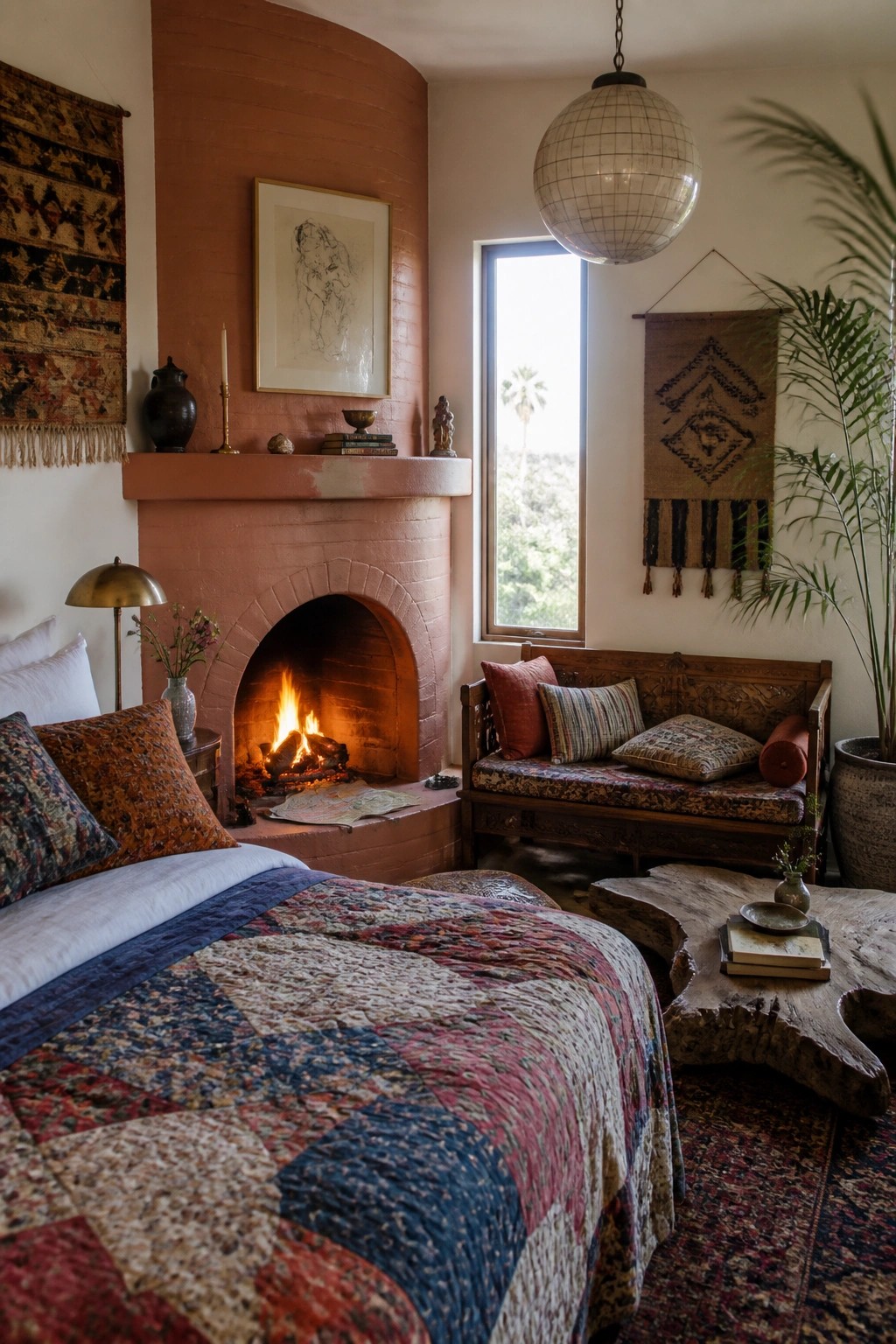
Many bedrooms feel more restful when the fireplace sits directly across from the bed. The fire becomes the last thing you see before sleep, and the warmth fills the space without needing much else.
This works well in rooms that already have a clear focal wall. Keep the mantel light so the flames stay the main draw, and choose a finish like clay or plaster that holds heat without looking too heavy.
Bedroom Fireplace with a Low Hearth Ledge
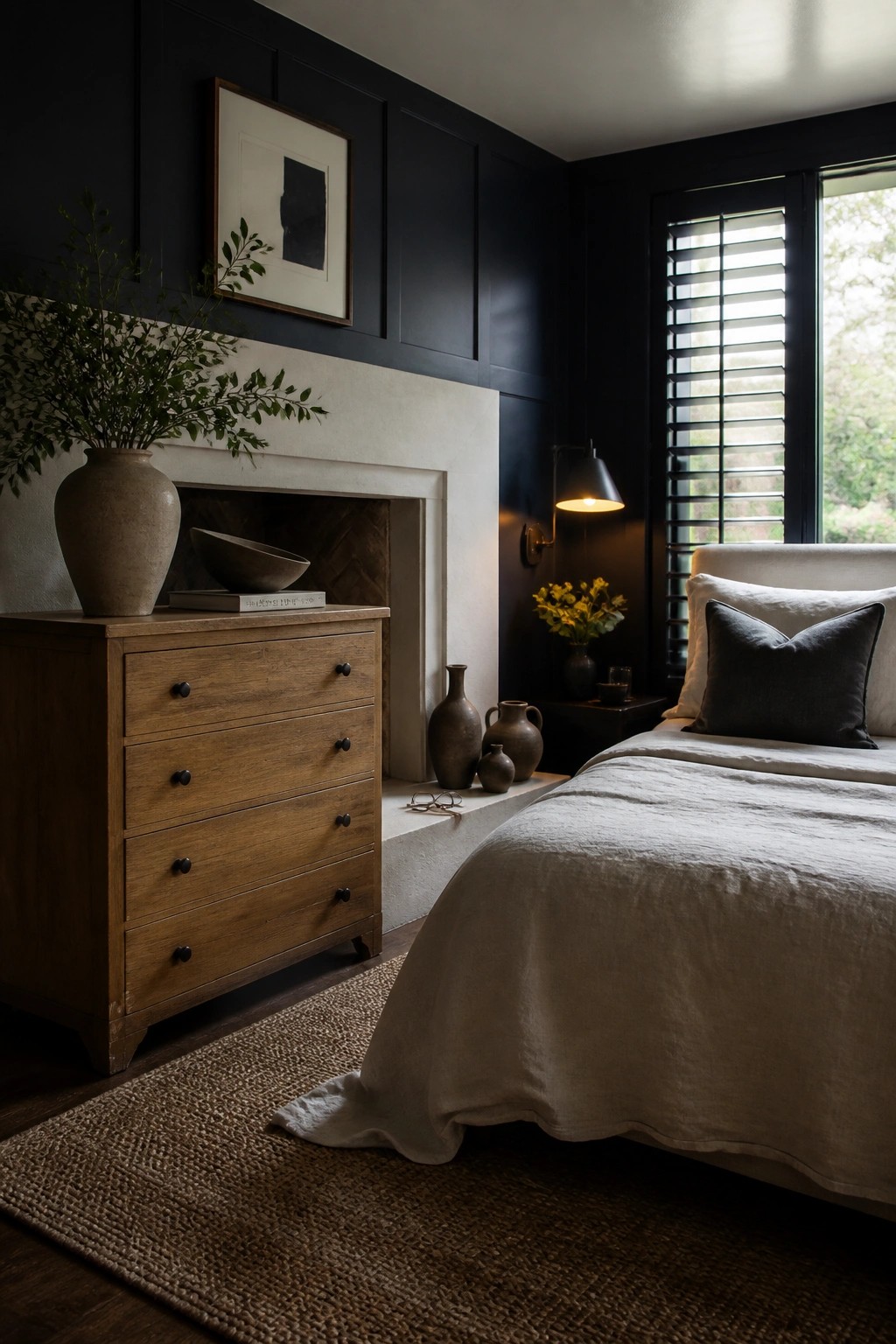
A low hearth next to the bed gives you a built-in surface that feels natural and useful. It keeps the fireplace close without crowding the room or requiring extra furniture right at the bedside.
This setup works well in smaller bedrooms where every inch counts. Place a dresser or nightstand on the other side of the hearth so the whole corner stays open and easy to move around. Just keep the ledge clear of anything that could be a hazard near the fire.
Frequently Asked Questions
Q: What kind of fireplace works if my bedroom has no chimney at all? A: Go with an electric or ventless gas model. These let you add the soft flicker and warmth without any construction. Just plug it in and enjoy the calm glow during your evening wind-down.
Q: How do I keep the fire from making the room too hot while I sleep? A: Pick a unit with adjustable heat settings or a timer. Run it on low for the first hour then let it cool naturally. This keeps the space cozy yet comfortable for rest.
Q: Can I add a fireplace if I’m renting the place? A: Yes, a portable electric version slides into any corner with no permanent changes. It gives the same serene vibe without touching walls or floors. Take it with you when you move.
