
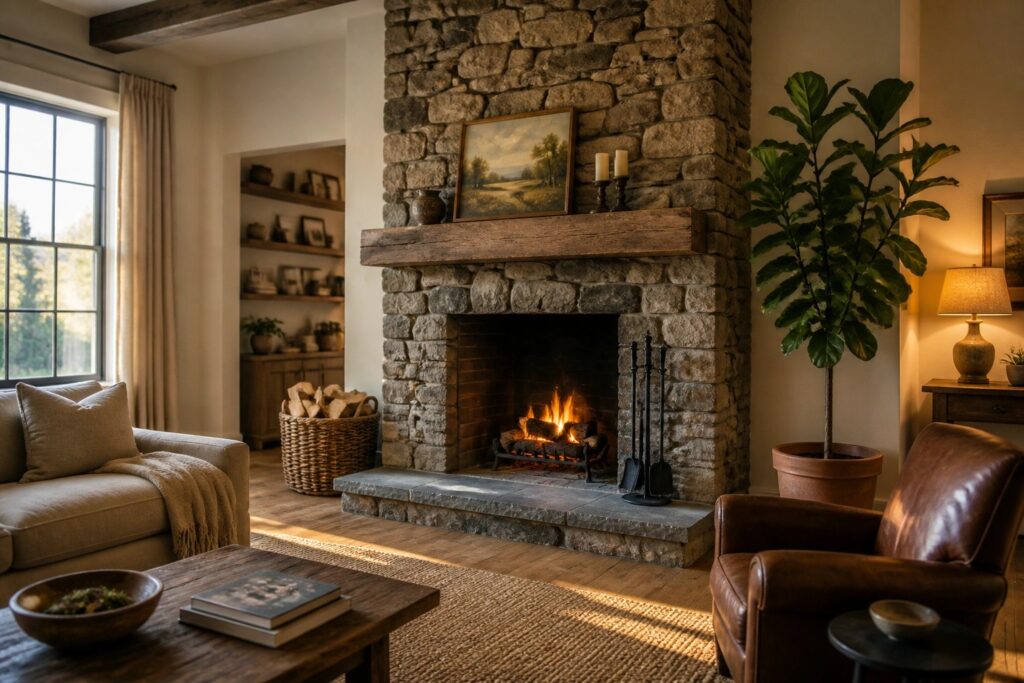
I have always found that a fireplace sets the tone for how the rest of the seating area comes together in a living room.
Natural stone brings a weight and texture that helps ground the colors and fabrics around it in a way that feels lasting.
The scale of the surround changes everything.
I would try adapting one or two of these to see how the proportions work in an actual room.
Over time you notice which details hold up once the fire is lit and people start using the space.
Natural Stone Fireplaces That Anchor Earthy Rooms
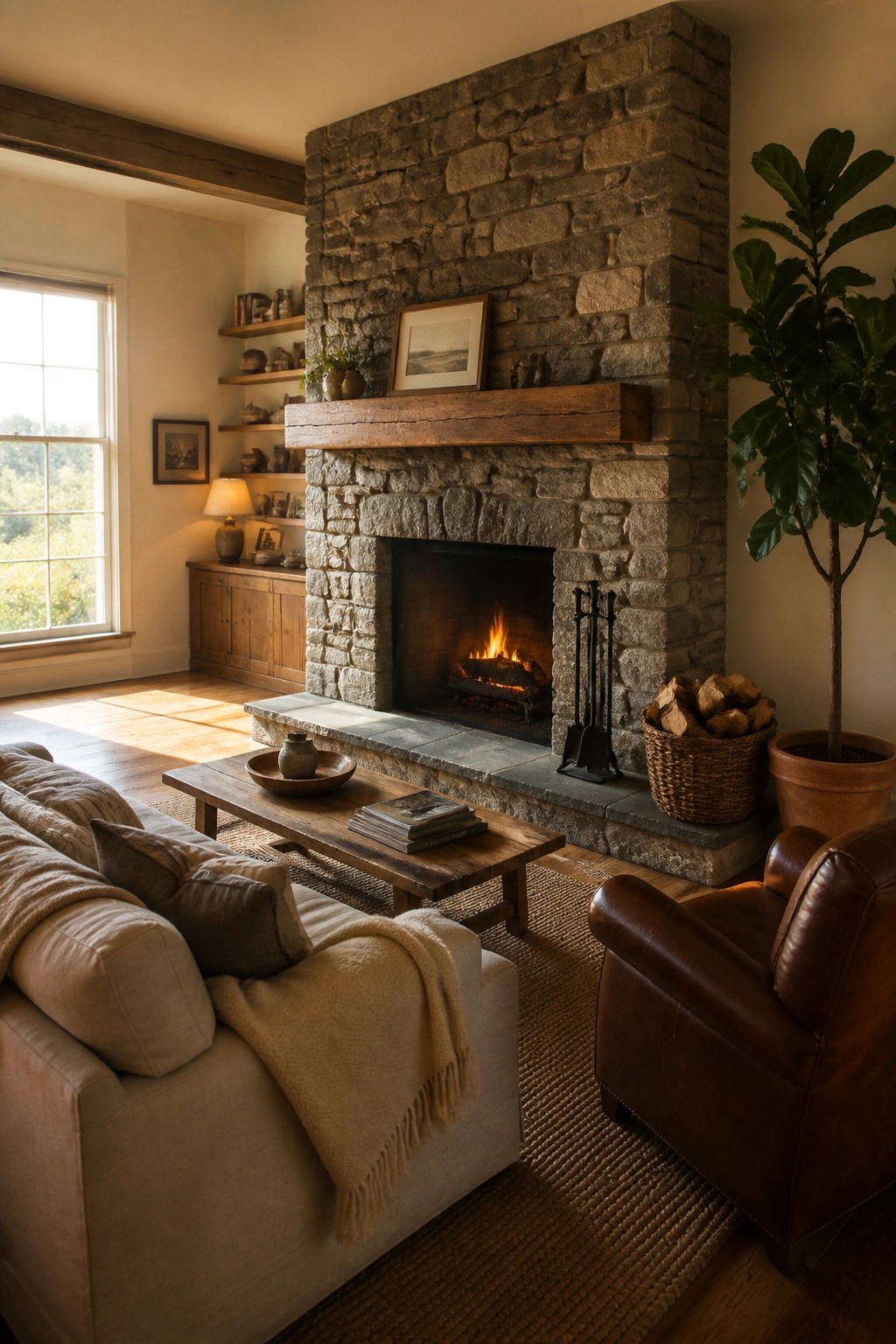
A large stone fireplace gives an earthy room a solid center without much extra effort. The rough texture and natural tones create a grounded feel that works well with wood, leather, and simple fabrics.
This approach suits older homes or new builds that lean toward a relaxed, lived-in look. Keep surrounding pieces low and neutral so the stone stays the main focus rather than competing with too many colors or patterns.
A Long Stone Hearth Ledge
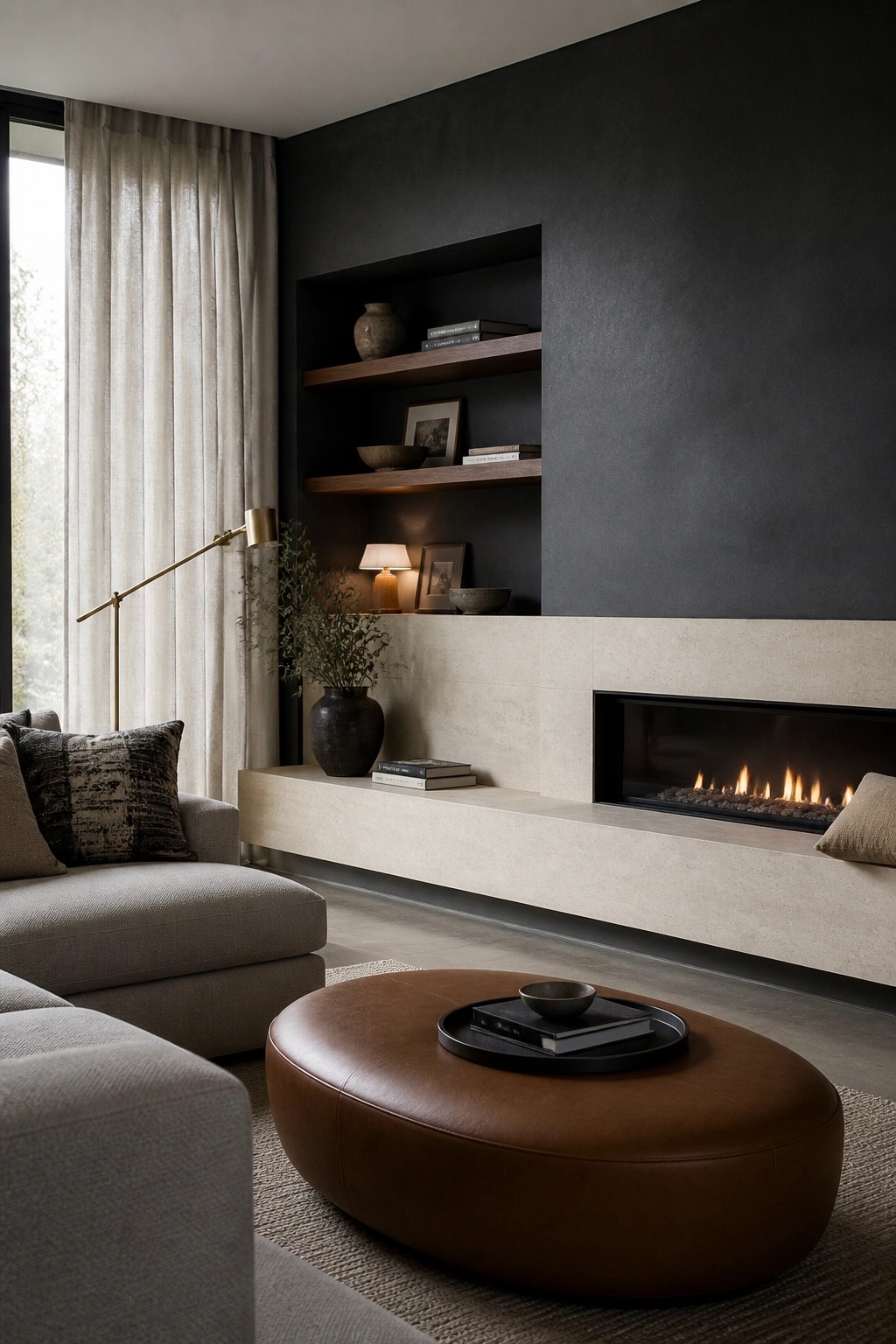
One idea that works well in earthy rooms is to let the stone around the fireplace stretch out into a long, low ledge. This gives the fire a solid base and creates a useful spot for books or a few simple objects without needing extra furniture.
It works best in living rooms where you want the fireplace to feel like part of the architecture rather than just a box on the wall. Keep the ledge low so it does not compete with seating, and choose a stone that matches the overall tone of the room.
Fireplaces With Built In Wood Storage
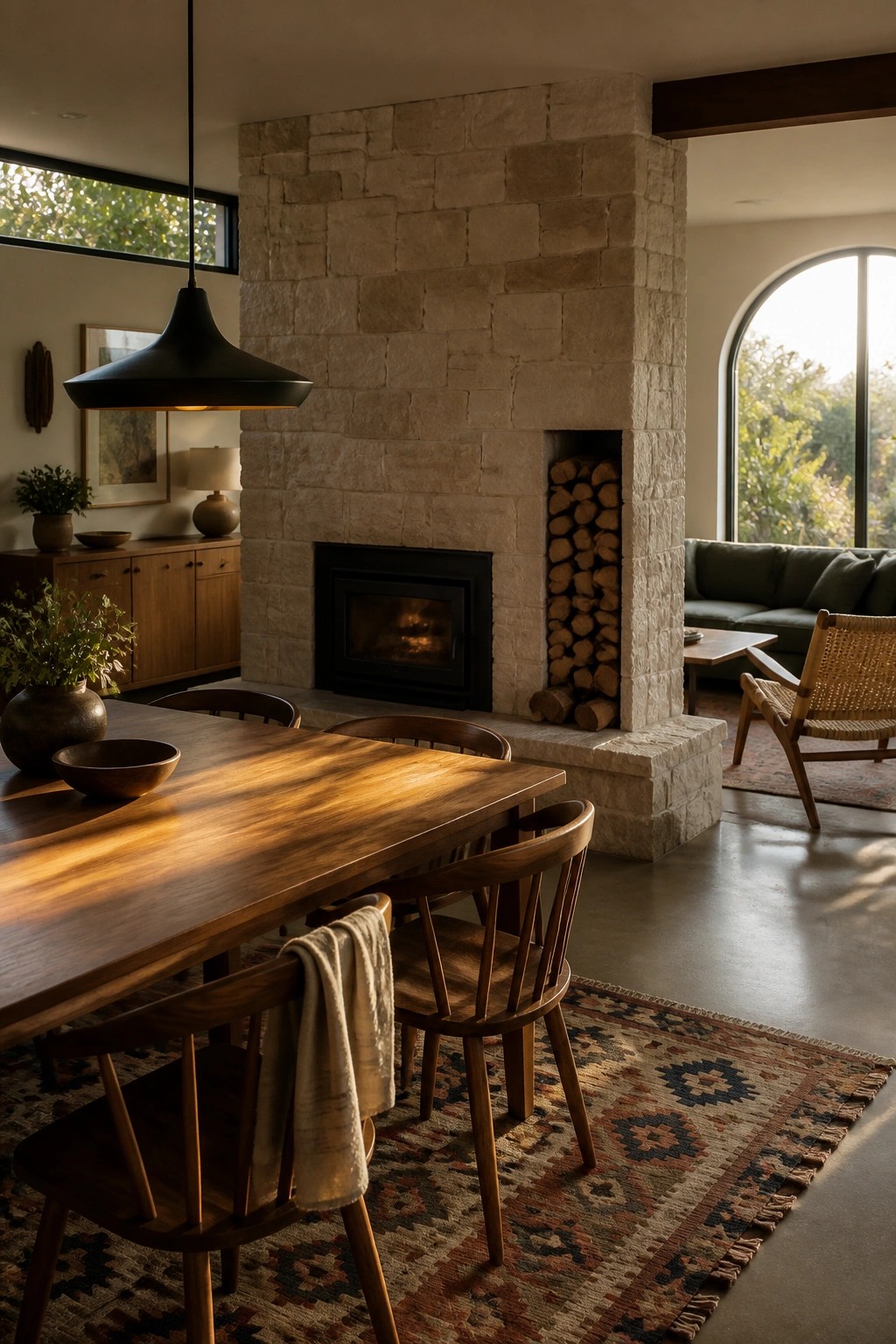
A stone fireplace feels more useful when it includes a spot for keeping firewood close at hand. The built-in niche keeps the logs off the floor and turns a practical need into part of the design.
This approach works best in homes that already lean on natural materials like wood floors and simple furnishings. Make sure the opening is deep enough for the size of logs you burn most often so the stack stays neat.
A Substantial Stone Chimney In A Simple Room
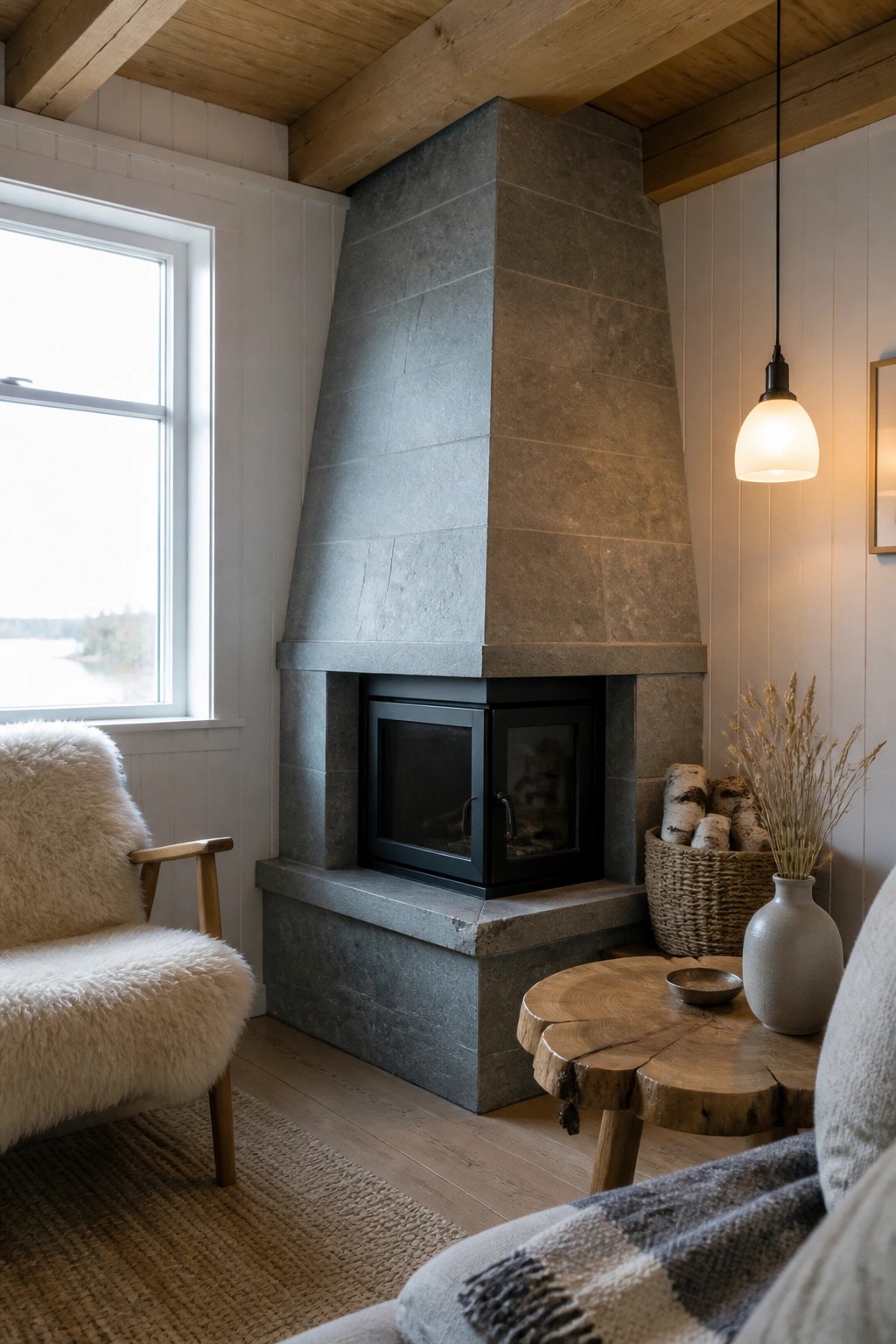
A tall stone chimney made from large blocks gives a room real weight. It works because the material feels solid and permanent while the light walls and wood ceiling keep everything from feeling heavy.
This approach suits cabins or homes with open ceilings where you want one strong natural element. Keep other surfaces quiet so the stone can stand on its own without competing details.
Natural Stone Fireplaces In Earthy Rooms
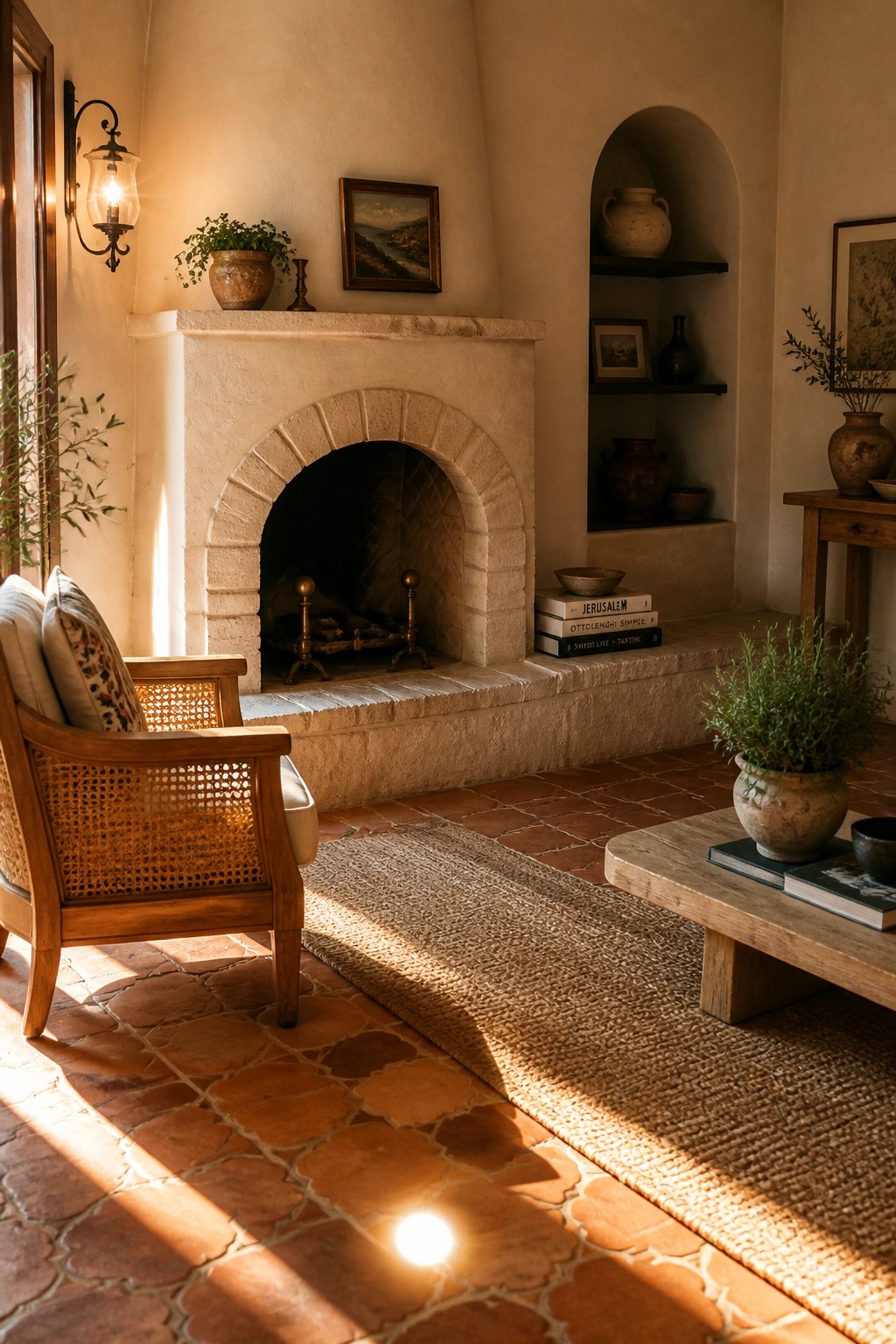
A fireplace built from light natural stone works well when the rest of the room already leans warm and simple. The stone adds weight without taking over, and it pairs easily with terracotta floors and wood furniture that already feel lived in. Many people like this look because it keeps the focus on the fire itself rather than on extra trim or color.
This approach suits older homes or new builds that want a quiet, grounded feel. Keep the stone fairly plain and let the arch or mantel shape do the work. Avoid adding too many dark accents around it, or the stone can start to feel heavy instead of calm.
Dark Stone Fireplaces For Earthy Rooms
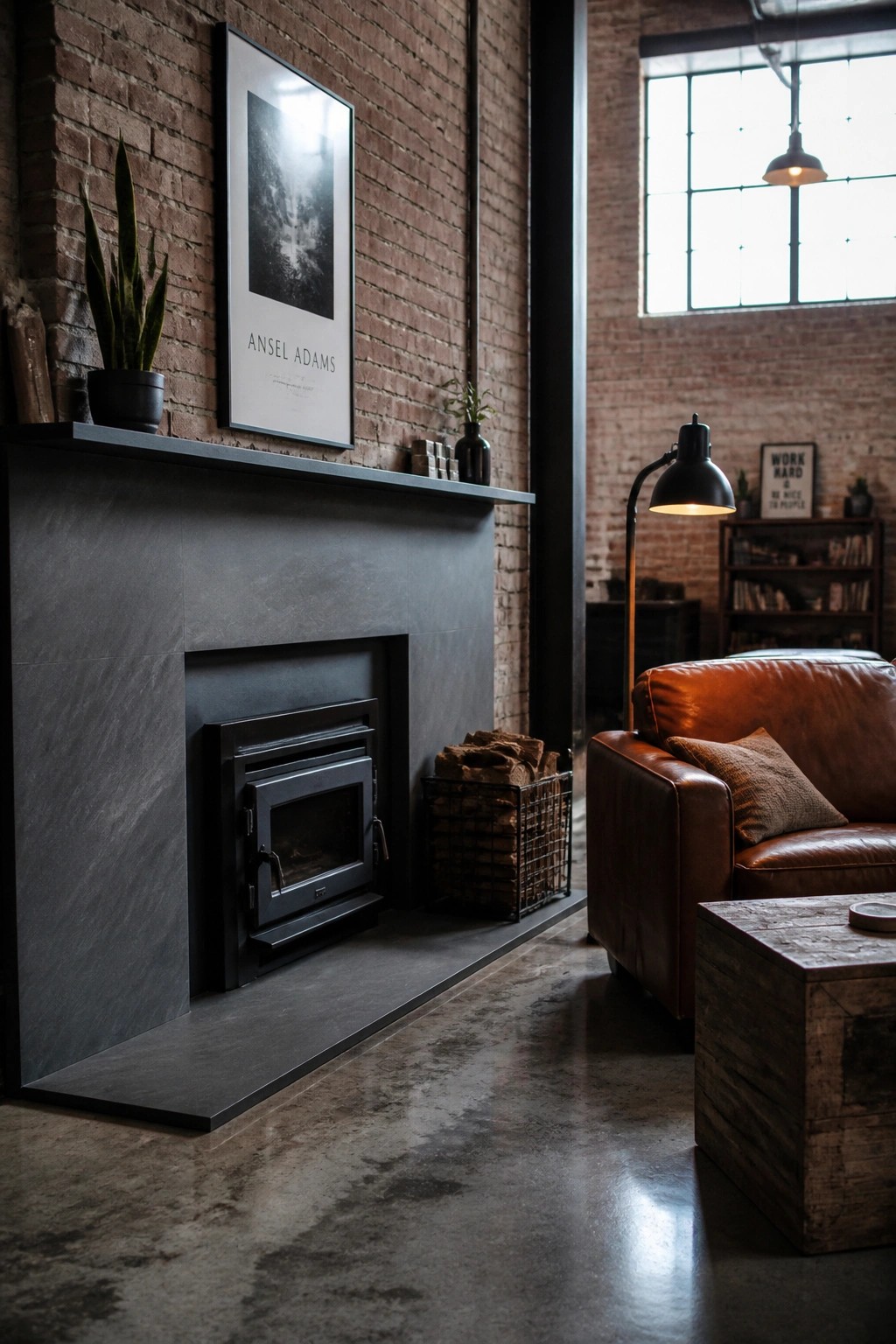
A dark stone fireplace adds real weight to a room without much effort. It creates a solid base that works especially well when the walls already have texture, like brick, and the rest of the furnishings stay simple and natural.
This choice fits older homes or converted spaces where you want the fireplace to feel permanent rather than decorative. Keep the stone in one deep tone and let the material itself carry the look instead of adding extra trim or color.
Rounded Stone Fireplaces in Earthy Rooms
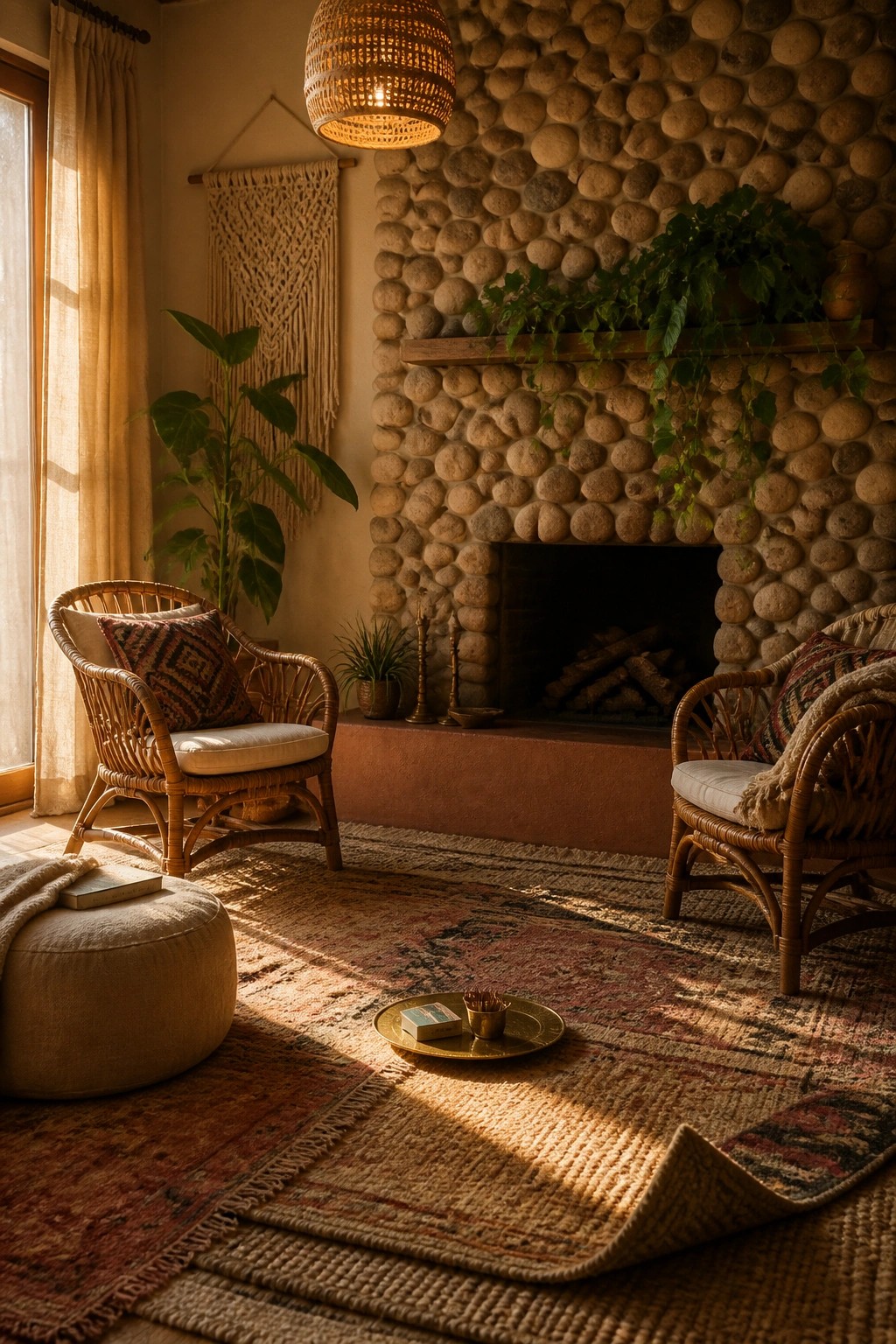
A fireplace made from smooth rounded stones gives a room an immediate sense of weight and texture. It works because the organic shape of the stones feels natural next to wood, rattan, and woven textiles, so the whole space stays grounded without looking overly styled.
This approach suits homes that already lean on natural materials. Keep other furniture simple and low so the stone remains the clear focal point rather than competing with too many layers.
Built-In Shelves Around A Stone Fireplace
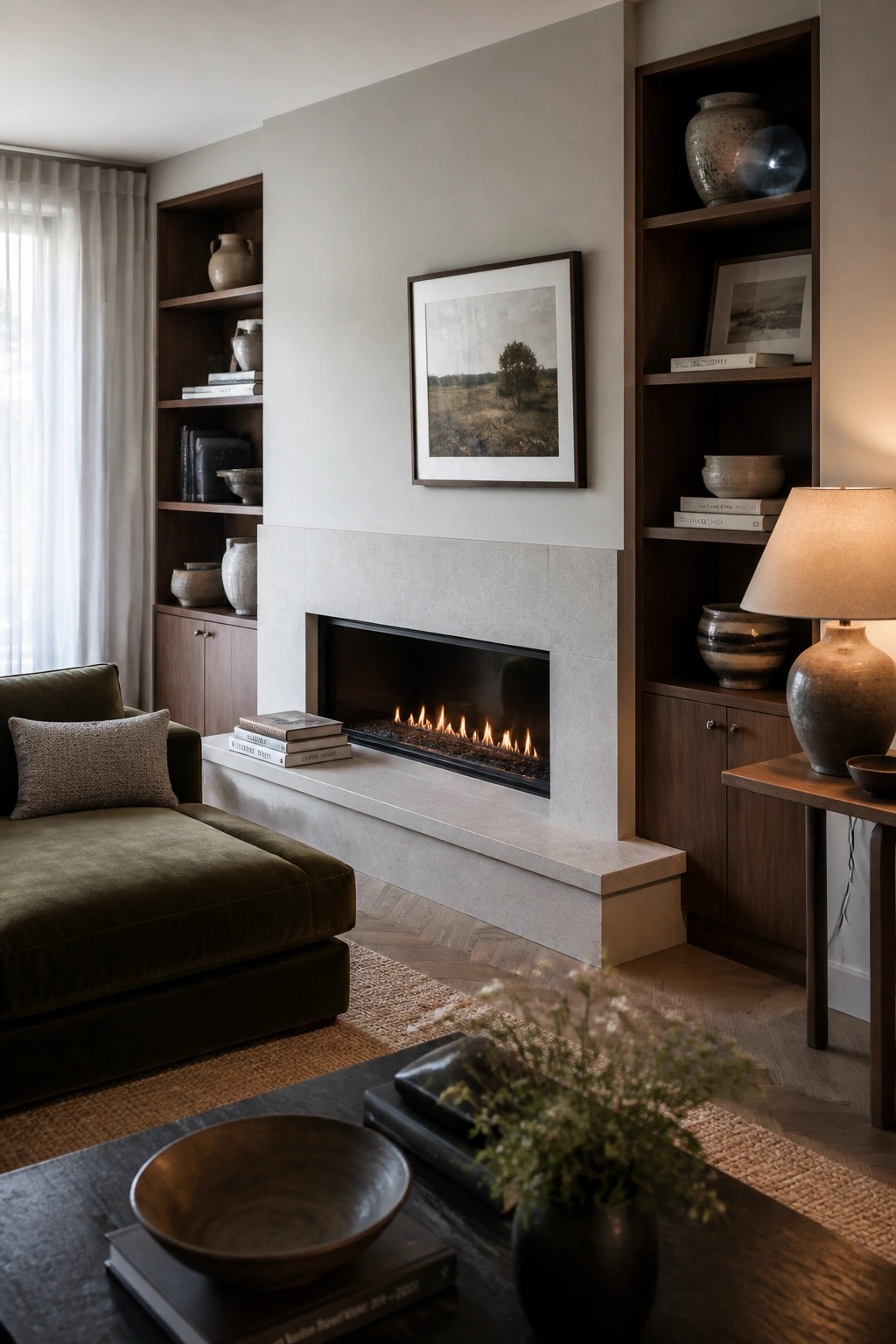
Placing open wood shelves on both sides of a stone fireplace helps tie the whole wall together. The shelves break up the flat surface without competing with the stone, and they give you a place to add texture through pottery, books, and a few simple objects. It keeps the focus on the fireplace while making the area feel more settled.
This works best in living rooms that already lean toward natural materials and muted colors. Keep the shelves fairly open so the stone still reads as the main feature, and avoid filling every shelf if you want the look to stay calm rather than busy.
Natural Stone Fireplace With Window Seat
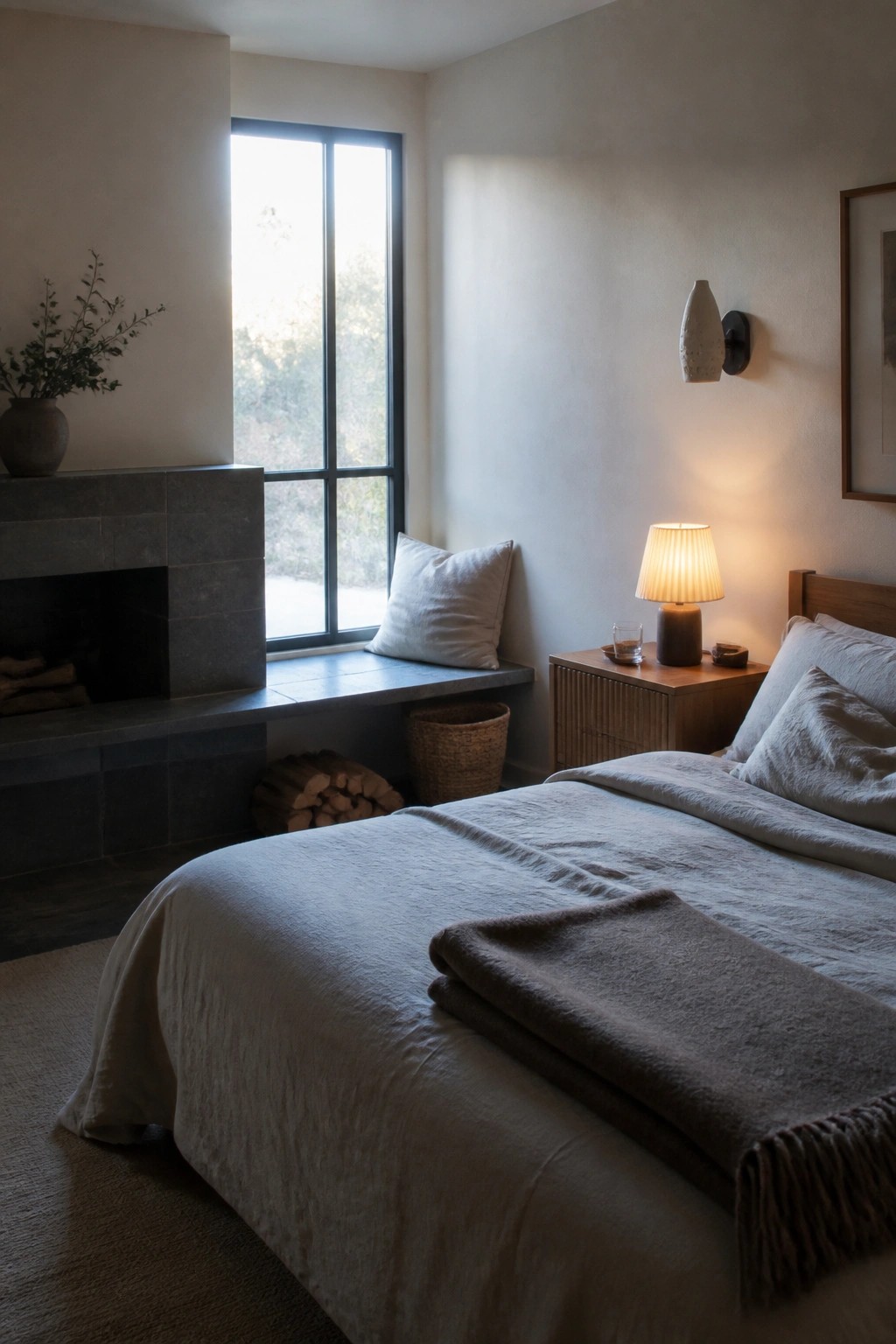
A natural stone fireplace works well in a bedroom when it sits low and blends into the wall rather than standing out as a big feature. The dark tiles give the room a steady base while the ledge above turns into a simple window seat.
This setup suits homes with wood floors and soft textiles already in place. Keep the stone color deep so it anchors the lighter bedding and walls around it.
Curved Stone Fireplaces With Built-In Seating
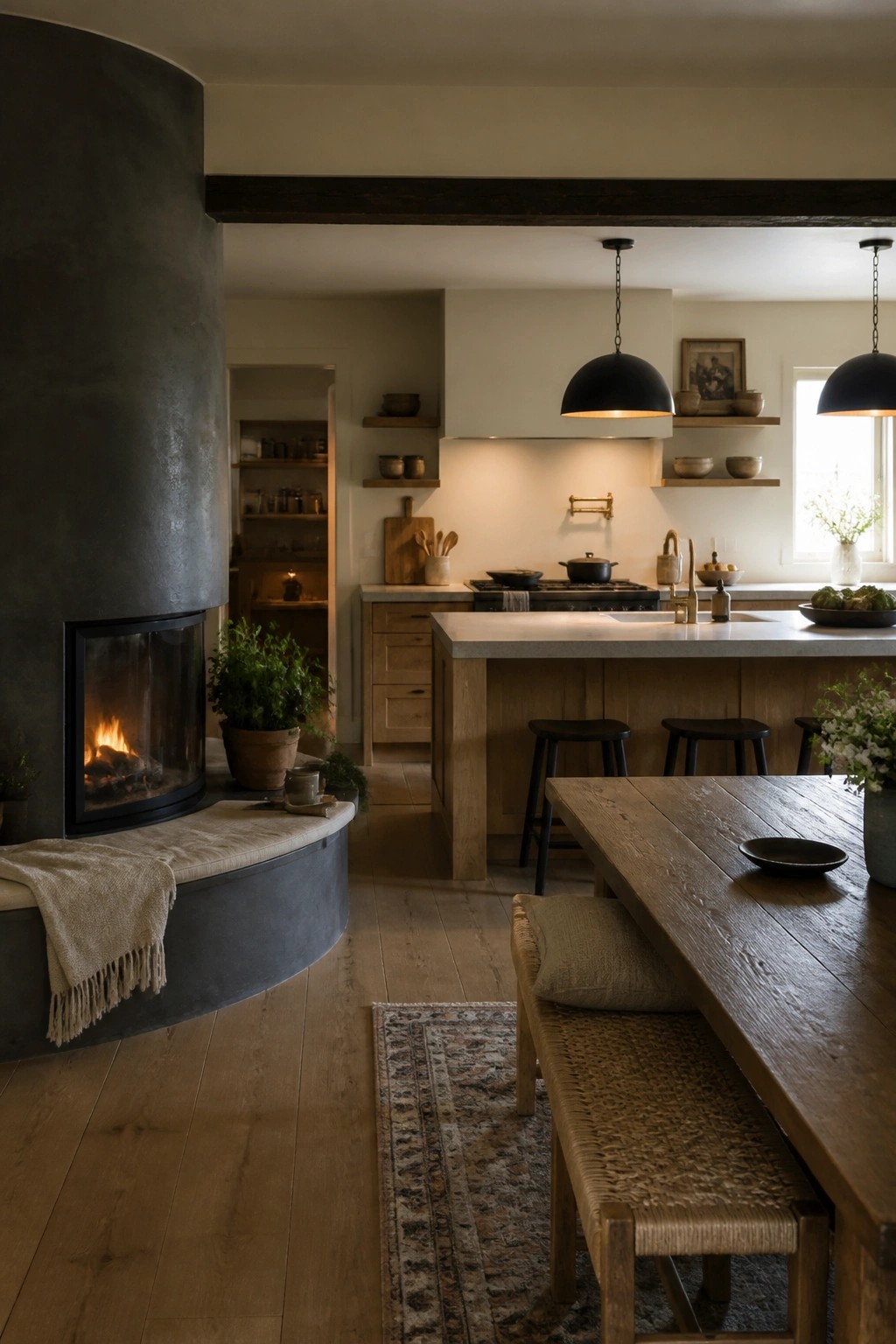
A curved hearth made from natural stone turns the fireplace into something you can actually use. Instead of a flat wall feature, the shape creates its own bench area right next to the fire, which makes the room feel warmer and more lived in.
This setup works best in open kitchen and living spaces where the hearth can connect to the main seating. Keep the bench simple with just a cushion and a throw so the stone stays the main material.
A Stone Fireplace Wall That Reaches the Ceiling
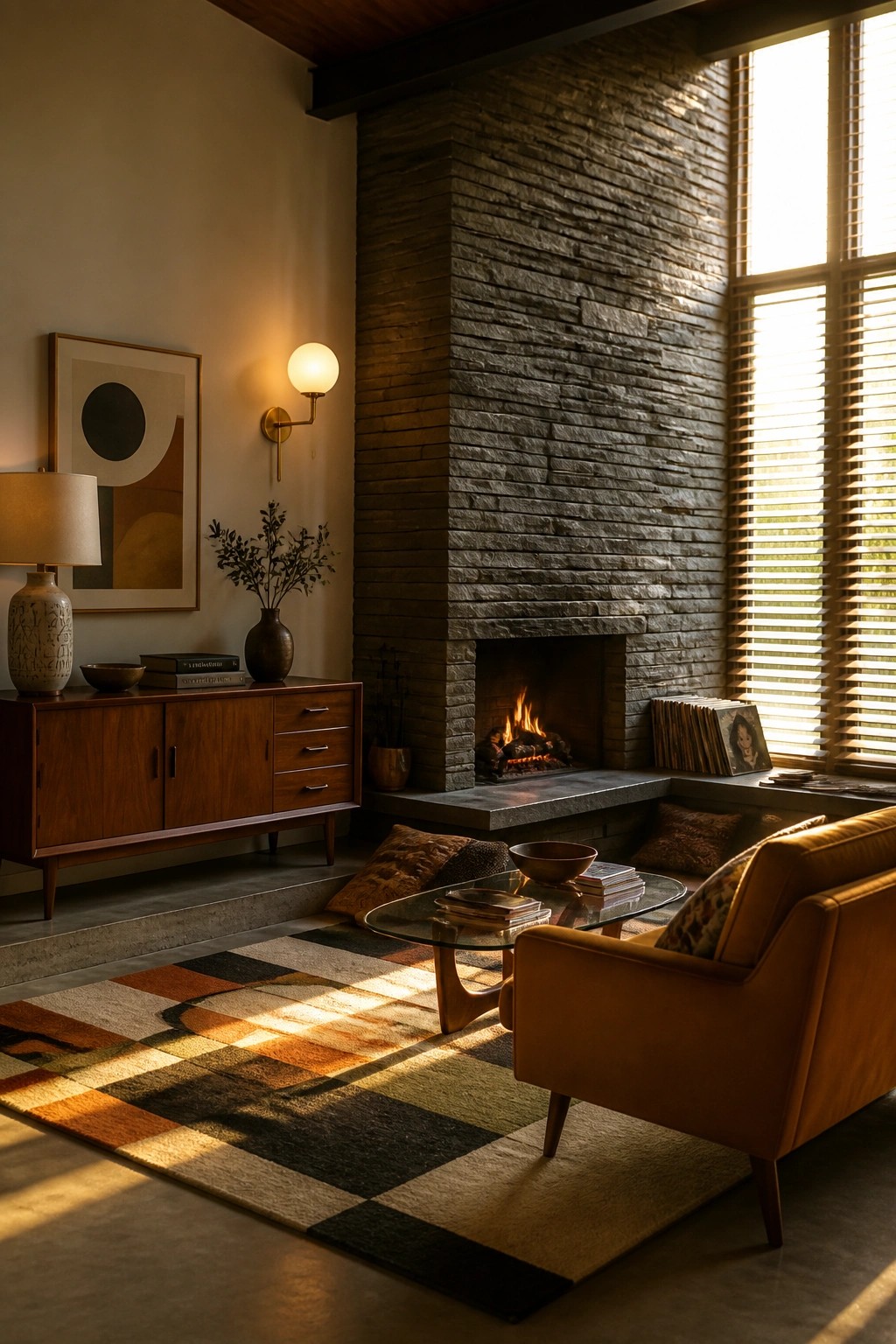
Running the stone all the way up to the ceiling turns the fireplace into a solid vertical anchor. The texture and height give the room a steady presence without needing extra decoration or bold colors around it.
This approach works best in living rooms with decent ceiling height and some open wall space. Keep other furnishings low and simple so the stone does the main work.
Stone Fireplaces In Entryways
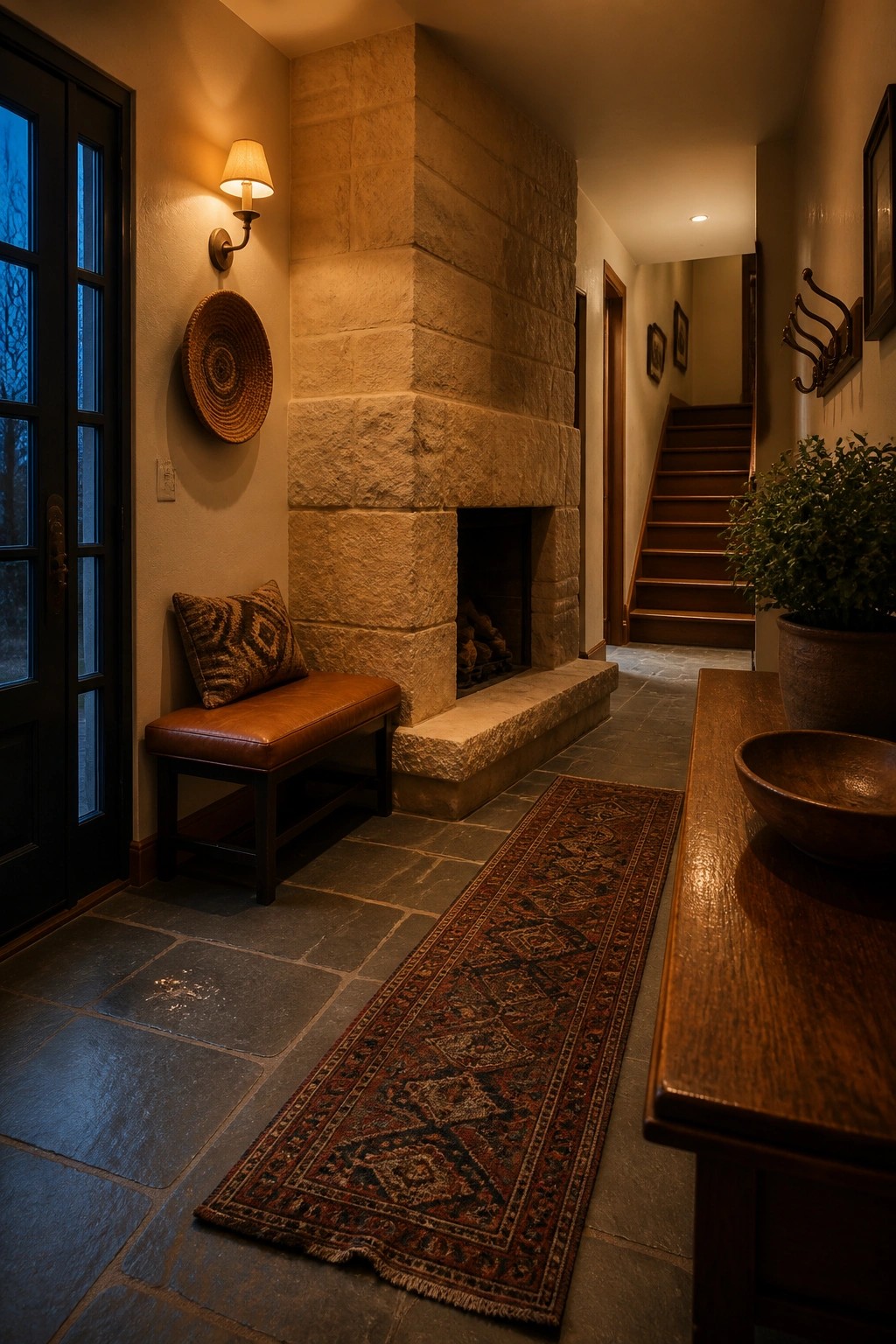
A stone fireplace can work well right in the entry or hallway because it gives the space an immediate sense of warmth and weight. The rough texture of the stone stands out against smoother walls and floors, and it turns what might otherwise feel like a pass-through area into something more settled.
This approach suits homes that open straight into living spaces or have a central stair. Keep the hearth low and simple so it does not block movement, and let the stone run tall enough to feel like part of the architecture rather than just a decorative insert.
Curved Stone Fireplaces
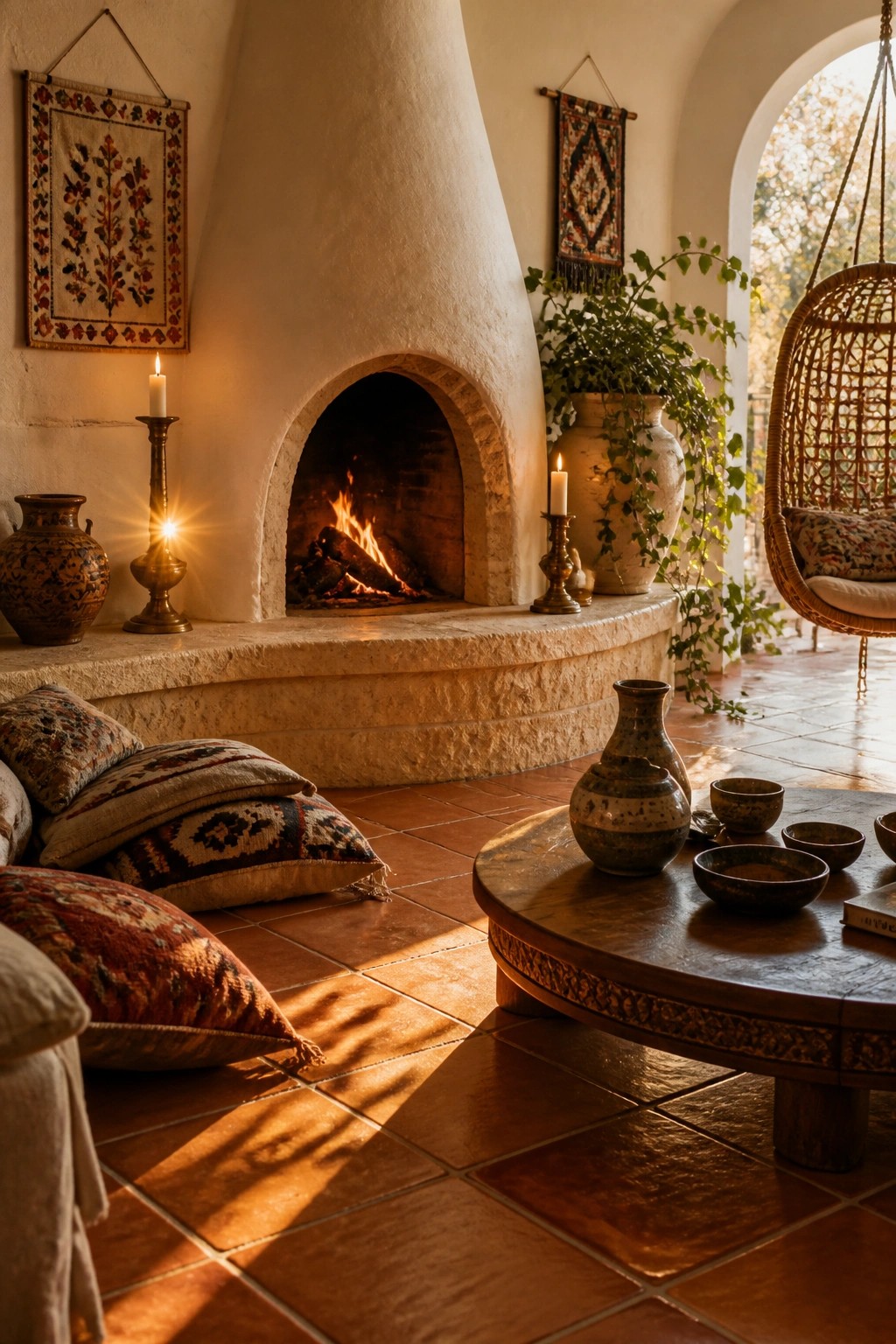
A curved stone fireplace gives a room a softer center than the usual square or rectangular versions. The rounded shape feels more natural and helps the fireplace blend into the space instead of standing out as a sharp block.
This works well in homes that already use warm floor tiles and simple textiles. Leave some open floor around the base so the curve can show, and keep other furniture low so the shape stays the main feature.
Stone Fireplace With Built-In Firewood Storage
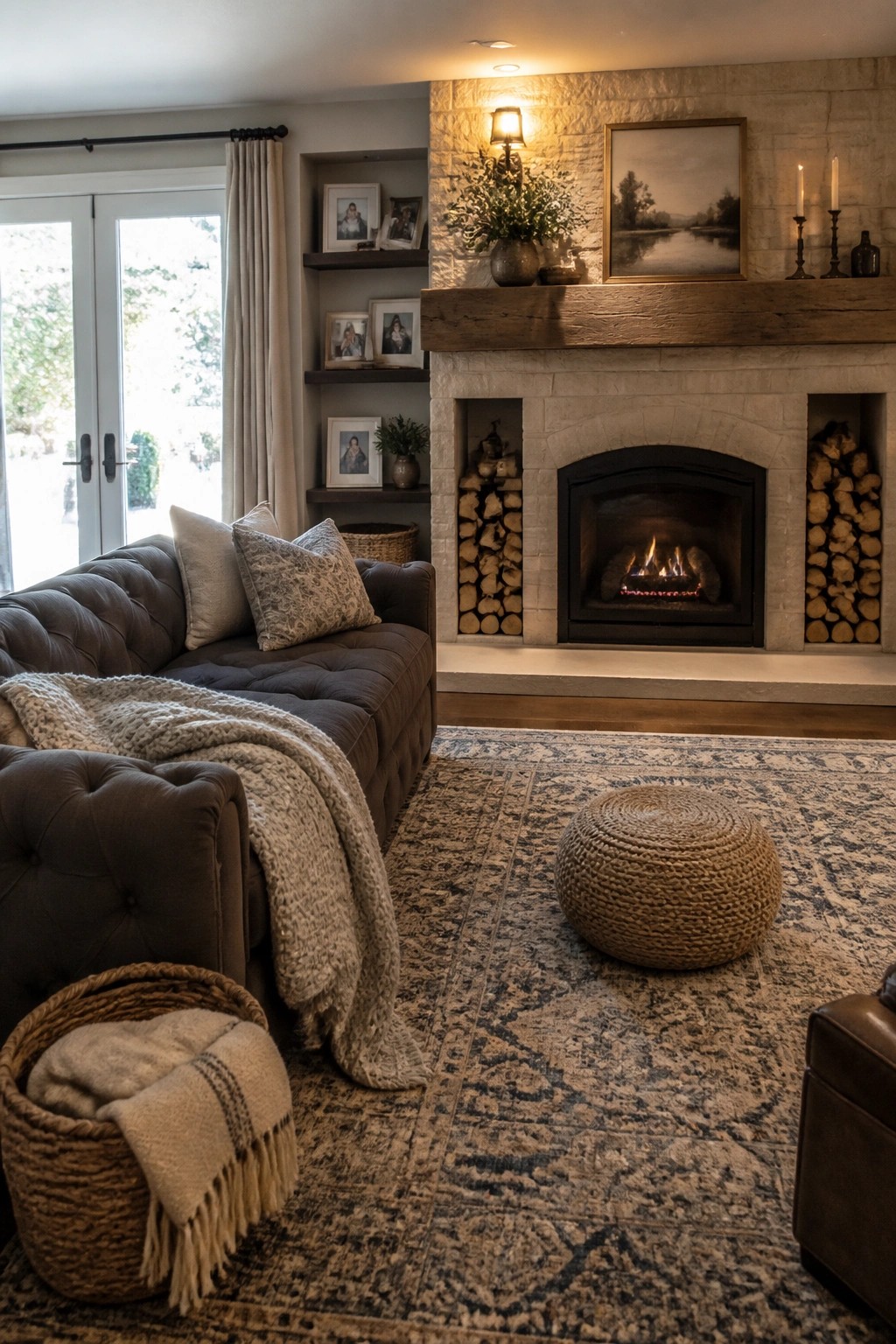
A natural stone fireplace feels even more grounded when you add recessed niches on either side for stacking firewood. The built-ins keep the fuel close at hand without cluttering the hearth or requiring extra baskets or bins in the room. It also lets the stone itself do more of the visual work.
This setup works especially well in living rooms that already lean earthy or rustic. It suits homes where the fireplace gets regular use, since the wood stays dry and organized right where you need it. Just make sure the niches are sized deep enough for standard logs and lined with a simple fireproof material so they hold up over time.
Stone Fireplaces That Anchor The Room
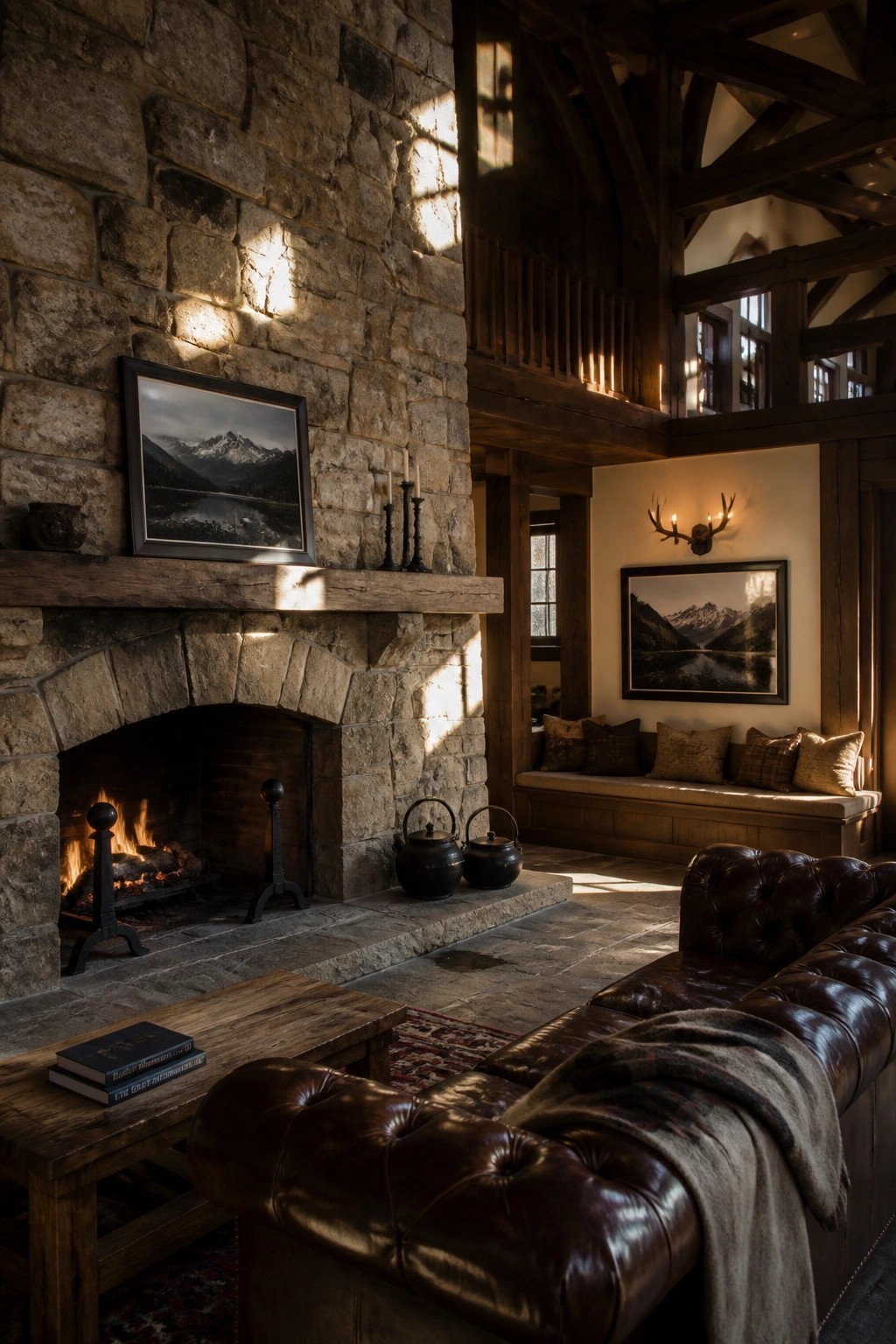
A big natural stone fireplace can pull an entire room together when the rest of the space stays simple. The rough texture and solid mass give the room weight without needing lots of extra decoration. It works especially well in homes that already lean toward wood, leather, and other natural materials.
This approach suits larger living areas or open cabin-style homes where you want one strong focal point. Keep the surrounding furniture low and unfussy so the fireplace stays in charge. Avoid crowding the hearth with too many small pieces or the effect starts to feel busy.
Stone Fireplaces With Wood Mantels
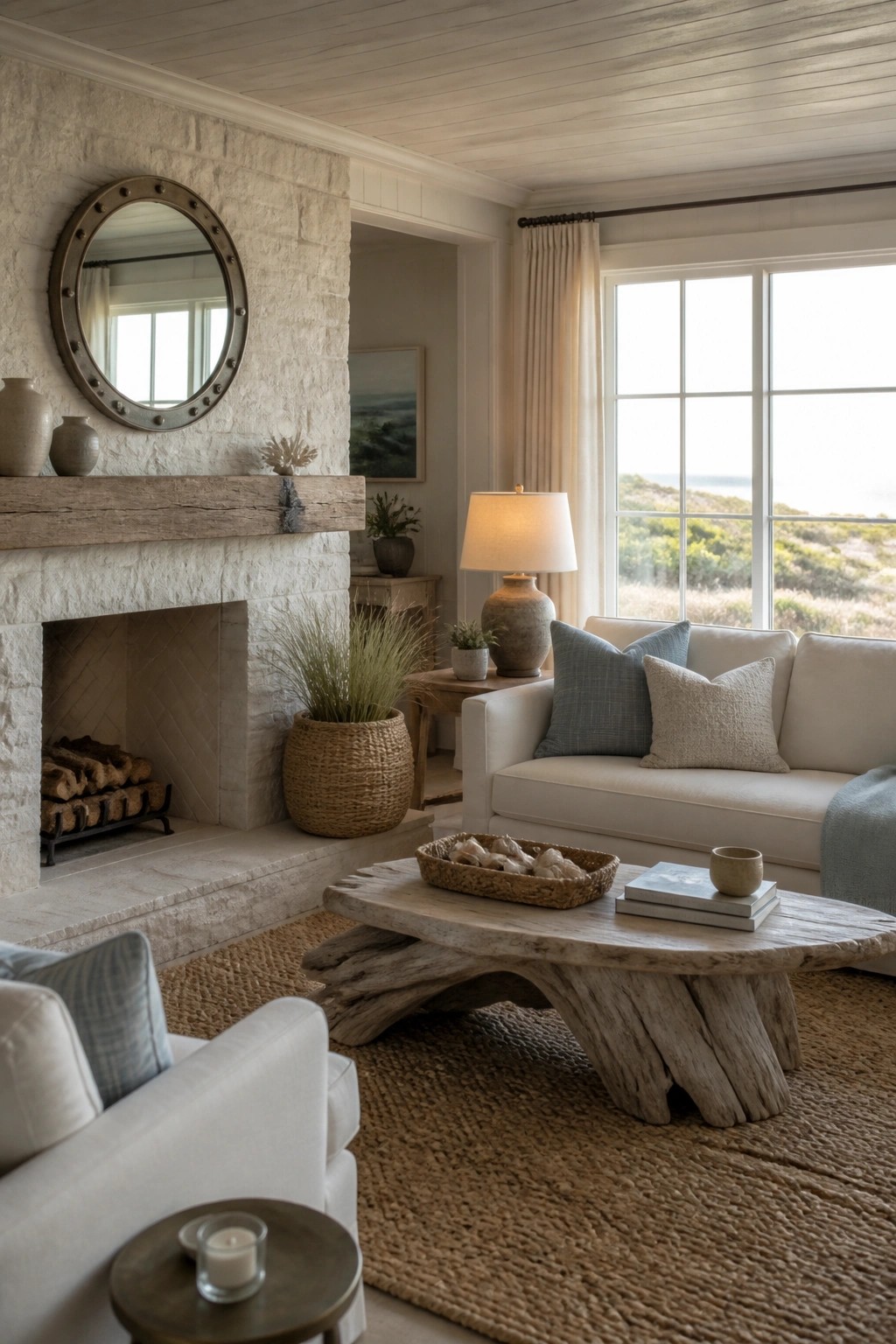
A stone fireplace gains a lot when you add a wood mantel across the top. The wood softens the heavy look of the stone and ties the whole wall into the rest of the room without much extra effort.
This works best in living rooms that already use natural textures and neutral colors. Keep the mantel simple and let the stone do most of the work.
Stone Fireplaces That Anchor A Dining Room
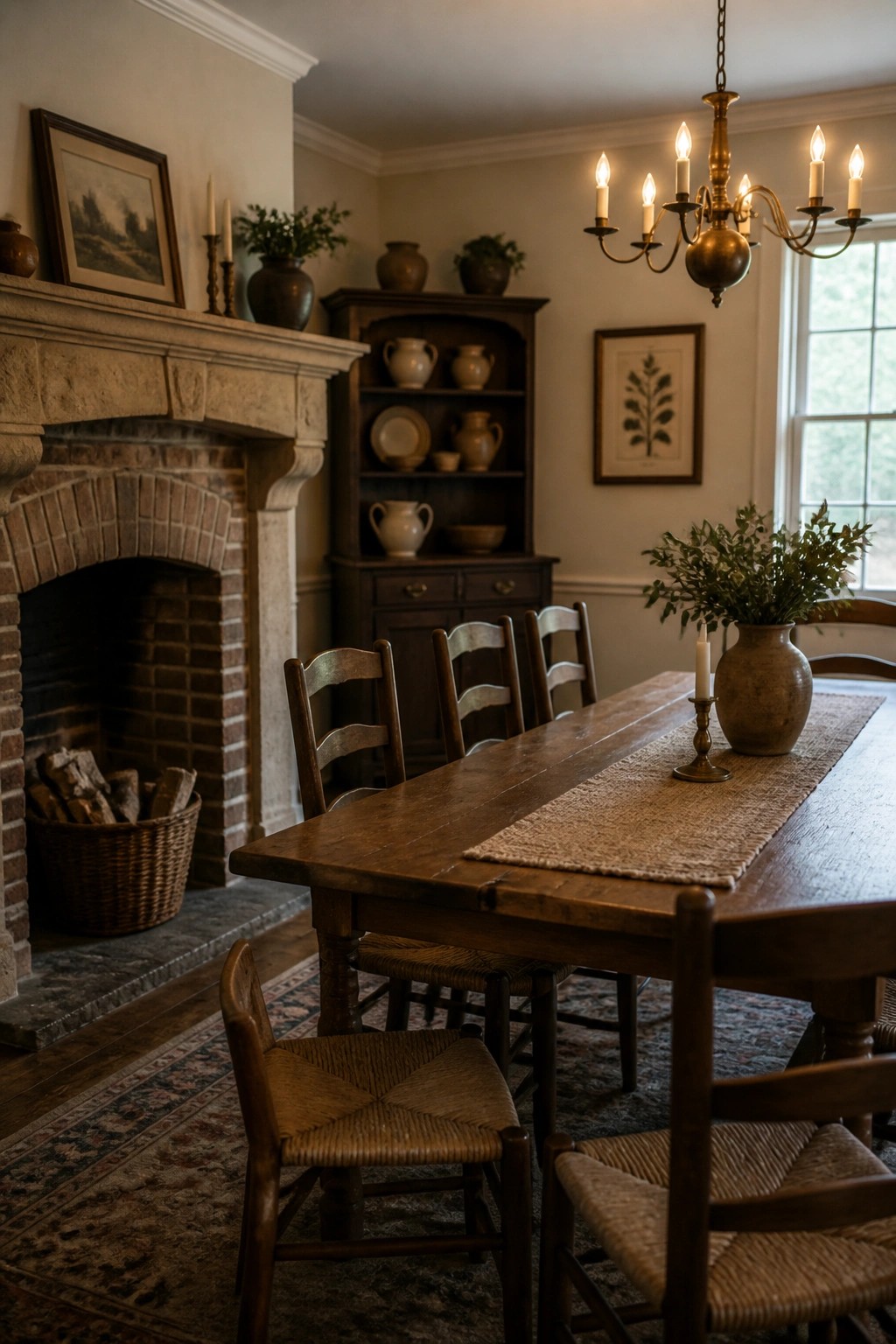
A big natural stone fireplace gives a dining room real weight and makes the space feel settled. It works especially well when the rest of the room stays simple, with wood furniture and neutral tones that let the stone stand out without competing.
This approach suits older homes or any space that already leans rustic. Keep the surrounding pieces understated so the fireplace stays the main feature rather than getting lost among too many textures.
Built-In Stone Fireplaces For Work Areas
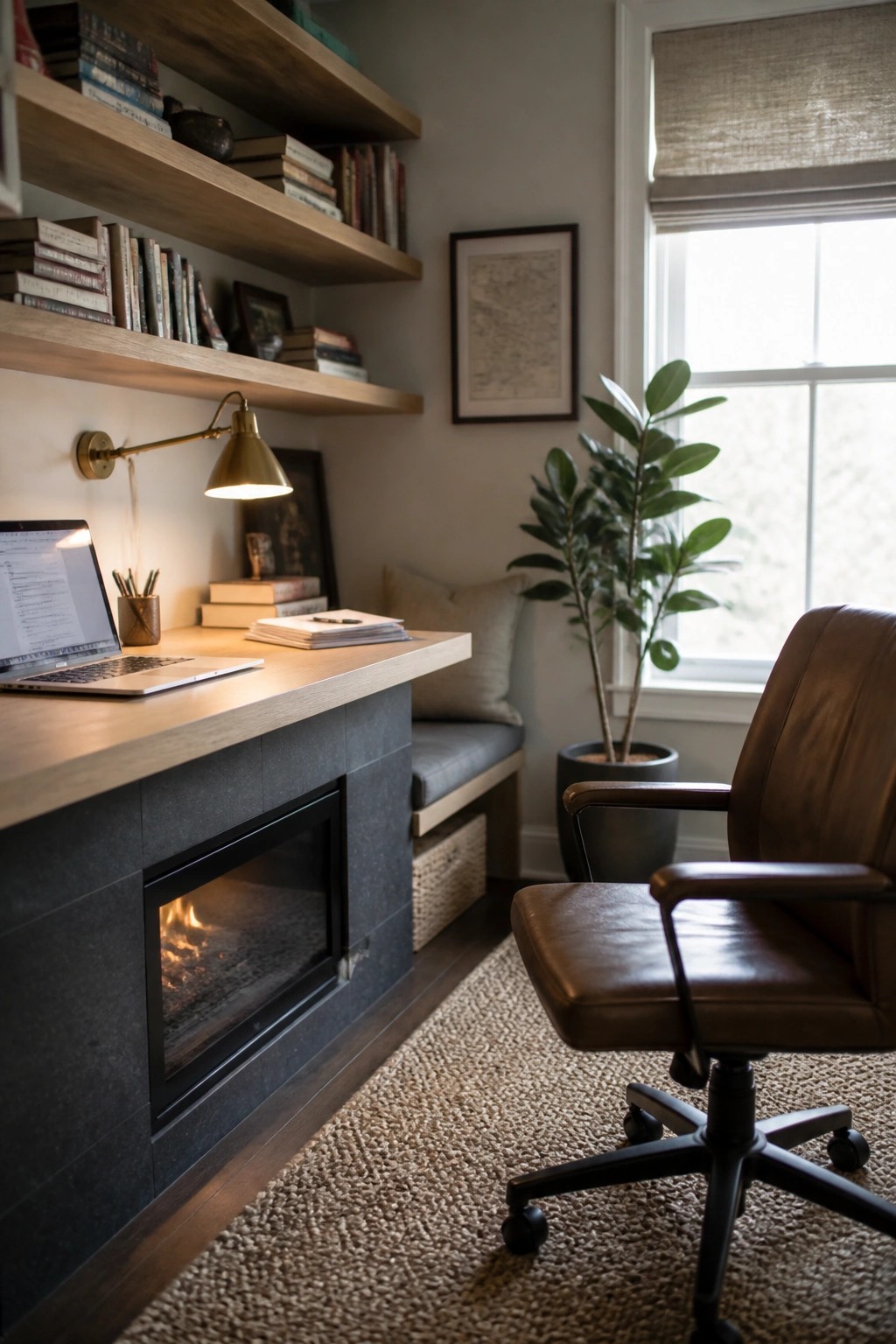
A fireplace set into the base of a desk or cabinet gives the room steady warmth without using up extra floor space. The dark natural stone keeps the look grounded and simple while the fire adds a quiet focal point right where you sit and work.
This setup works best in smaller rooms or homes that already lean earthy and practical. Keep the stone tones close to the floor and surrounding wood so the whole area feels connected rather than busy.
Marble Fireplaces That Anchor Earthy Rooms
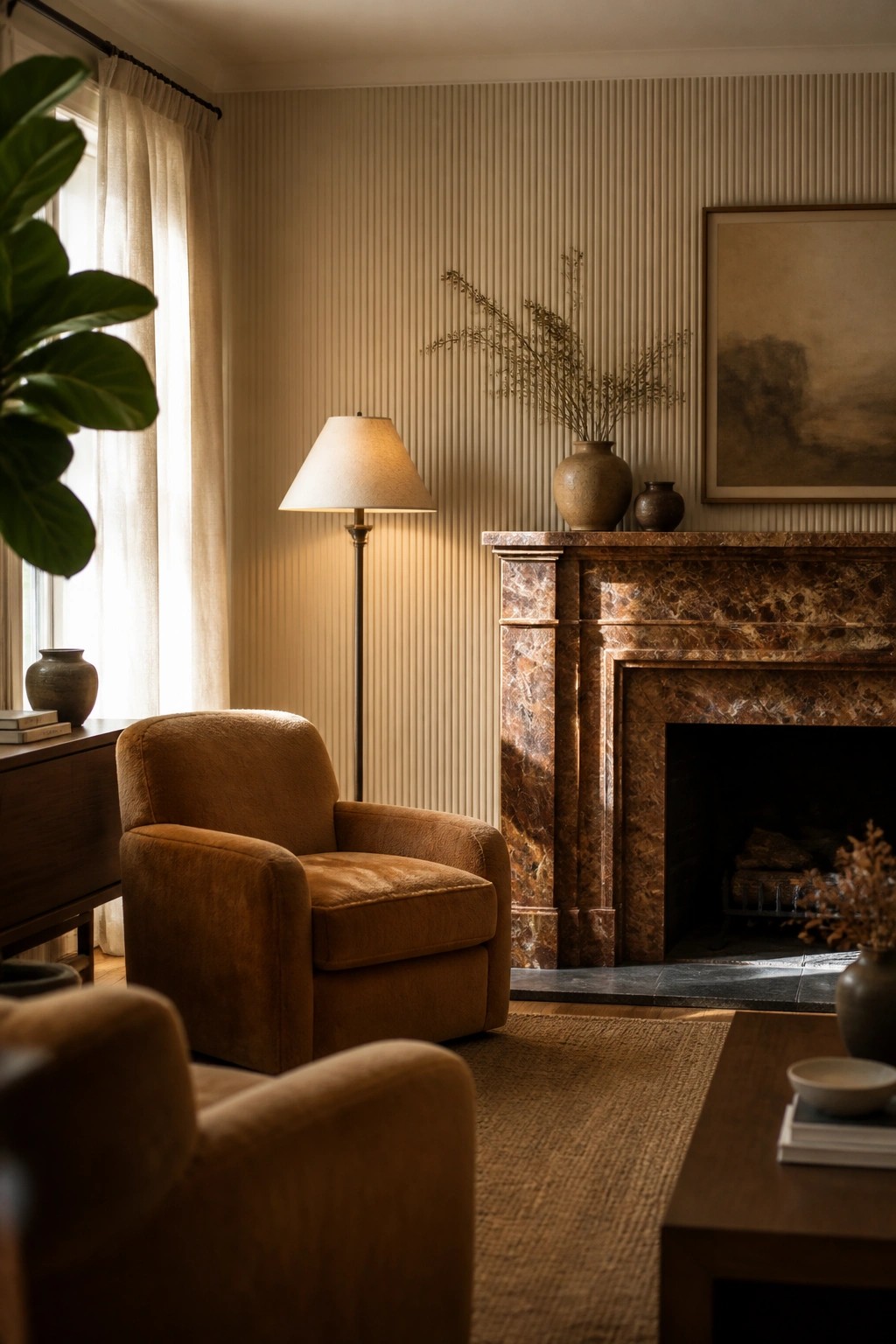
A fireplace surround in rich veined marble brings weight and natural texture to a room filled with soft fabrics and wood. The stone holds its own without needing extra decoration around it.
This approach works best in living rooms that already lean warm and neutral. Keep the walls and larger pieces simple so the fireplace stays the main point of interest.
Store Books On The Hearth
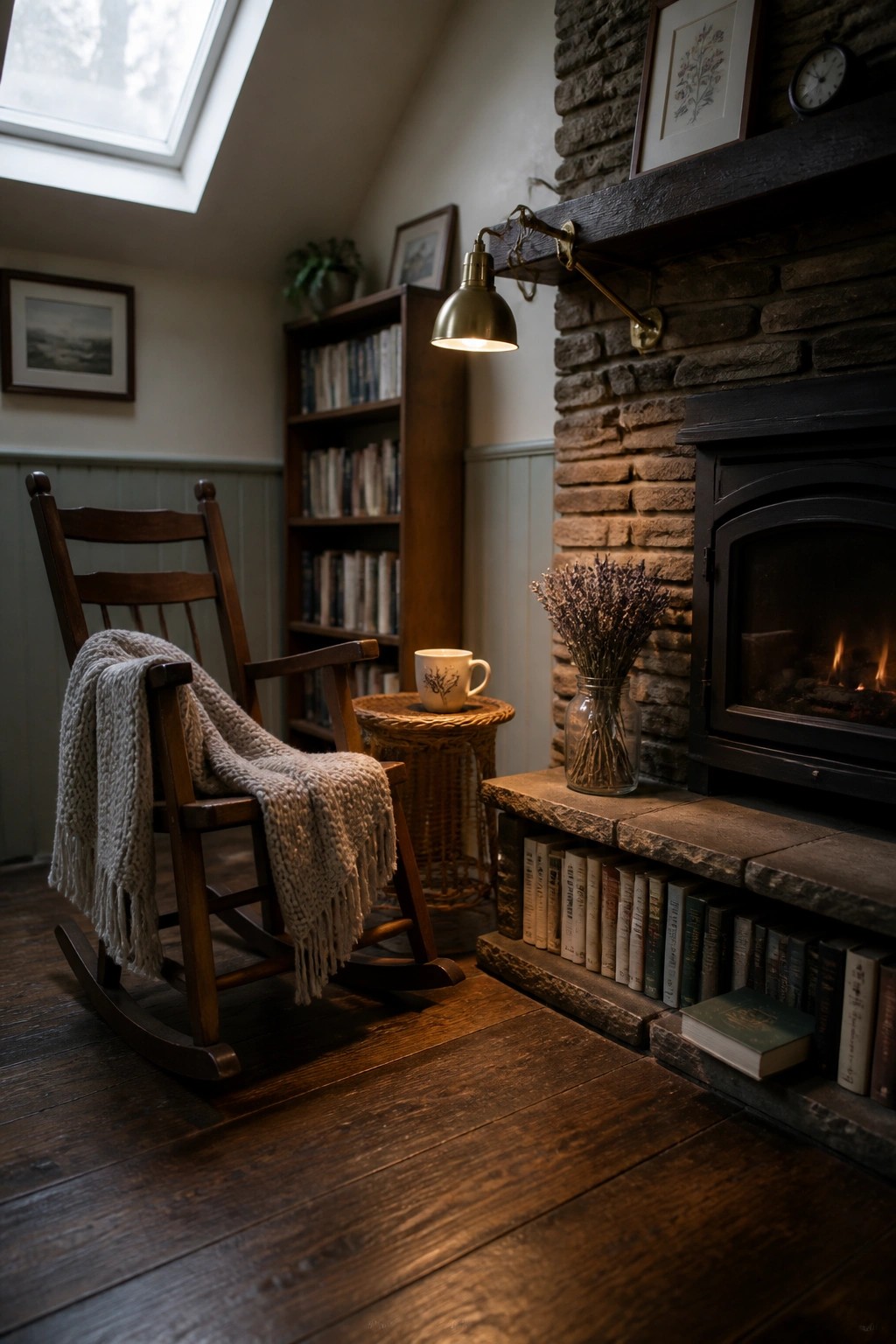
Placing books directly on the hearth turns the fireplace into more than just a heat source. The wide stone ledge gives you a spot for reading material that stays handy without needing another piece of furniture nearby.
This setup suits smaller rooms or reading corners where space is tight. Just keep the books a safe distance from the firebox so they stay dry and undamaged during colder months.
Frequently Asked Questions
Q: Will my stone fireplace get dirty fast from smoke and ash?
A: Wipe it down every few weeks with a damp cloth and mild soap. This keeps the natural look without buildup. Avoid anything abrasive that could scratch the surface.
Q: How do I pick stone that fits my room’s color scheme?
A: Look for tones already in your walls or rugs. Earthy grays and browns blend easiest with most interiors. Bring samples home to see them in your light.
Q: Does a big stone surround work in tight spaces?
A: Scale it down to a simple surround instead of a full wall. It still feels grounded without crowding the room.
Q: Can I mix different stone textures in one fireplace design?
A: Stick to one main texture for the surround and use a smoother hearth. This avoids visual clutter while keeping things interesting.
