

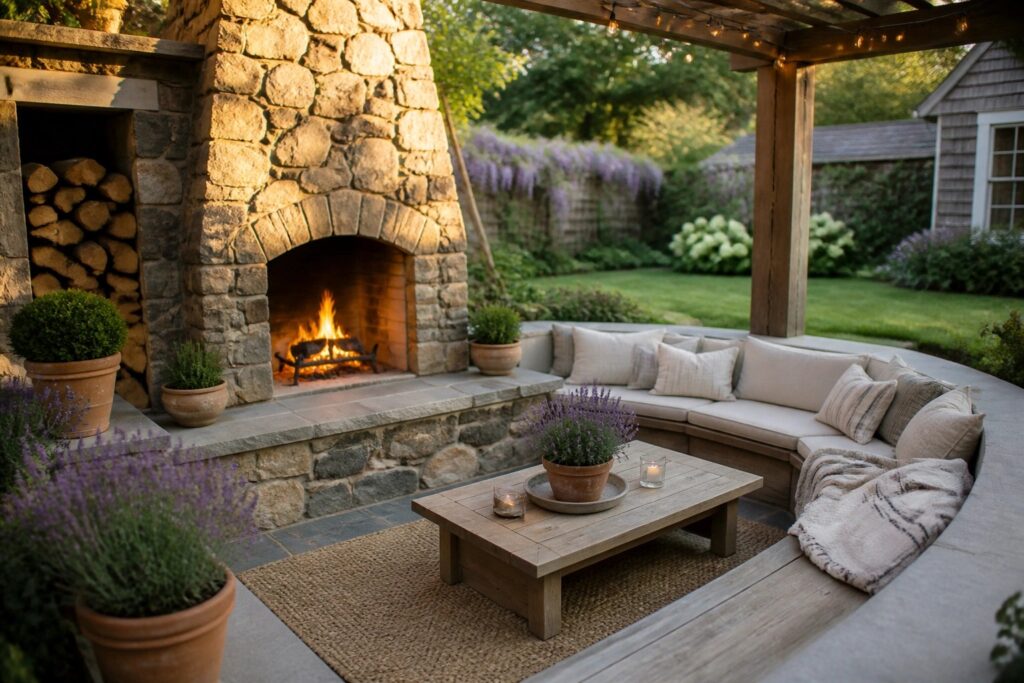
I’ve noticed that backyard seating areas often stay empty until something gives them a real reason to linger after dark.
Adding a fireplace tends to shift how the whole space functions by creating warmth that keeps people outside longer than they planned.
The scale has to feel right for the seating.
One setup I keep thinking about is how the fireplace placement can either pull everything together or leave parts of the yard feeling disconnected.
Trying a couple of these ideas in my own space made it clear that small adjustments in height and surround materials change how often we actually use the area.
Build Seating Around An Outdoor Fireplace
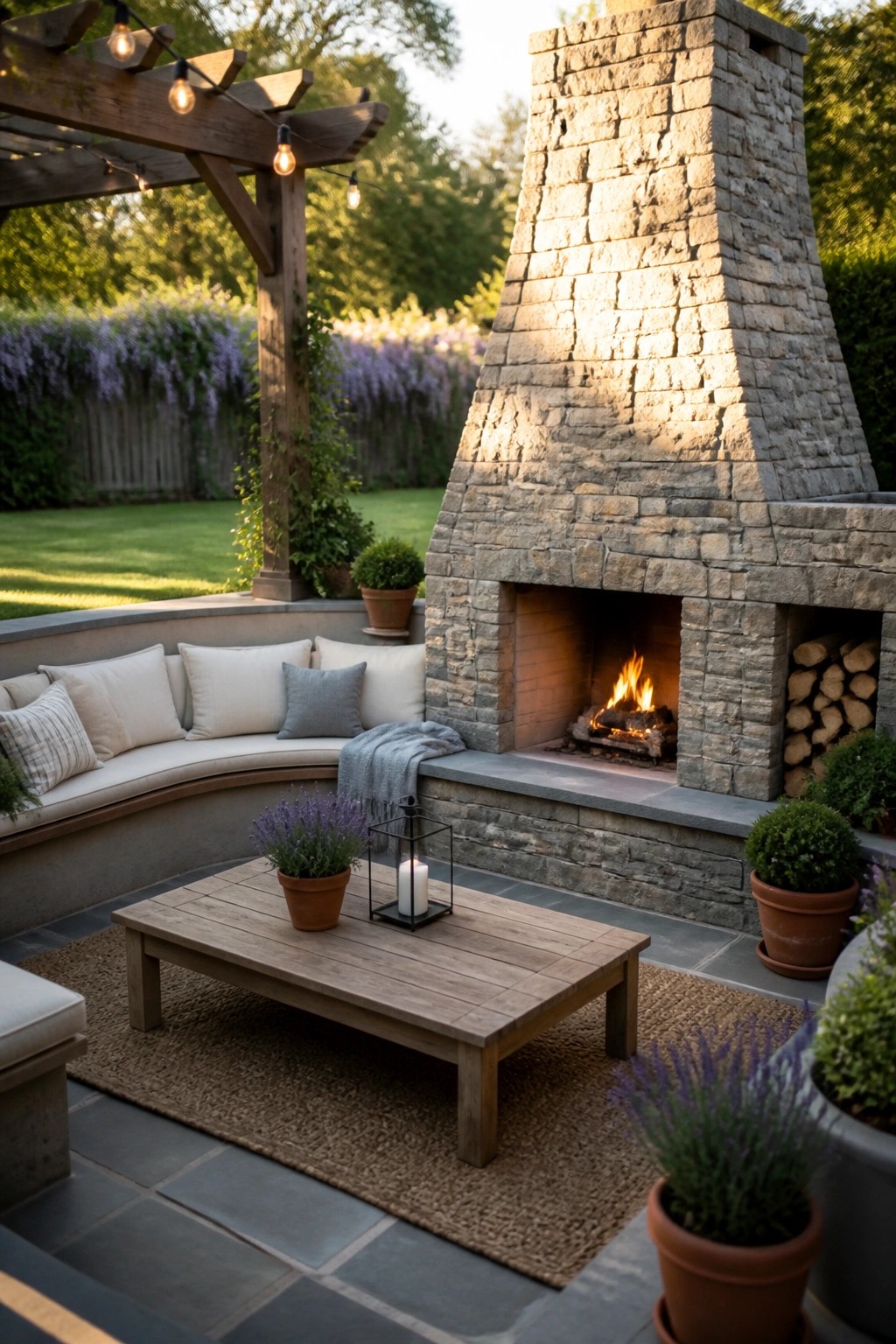
One way to make an outdoor fireplace feel like it belongs is to build the seating right into the same wall. The fire becomes the natural focus point, and people naturally gather around it without needing a separate arrangement.
This works best on a patio that already has some kind of edge or raised border. It cuts down on extra furniture, gives you built-in storage for wood, and keeps the whole area looking settled instead of temporary.
Fireplaces Built Into Patio Walls
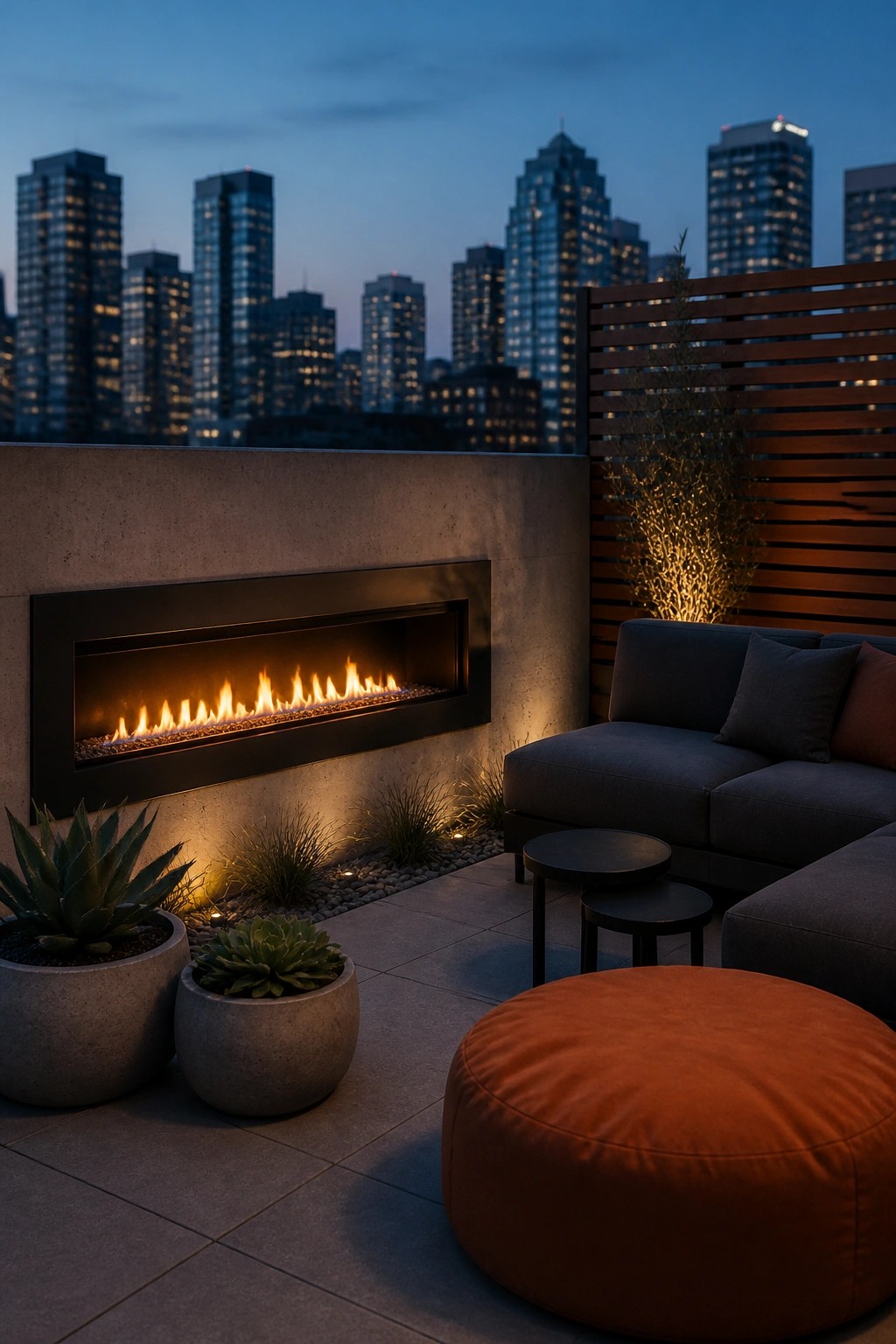
A linear fireplace set into a low concrete wall gives steady heat and a clear focal point without cluttering the floor space. It turns the wall into more than just a boundary and helps pull the seating area together on rooftops or terraces where every inch counts.
This approach works best on spaces with solid barriers already in place. Keep the firebox at a comfortable viewing height from the seating and choose a fuel type that matches how often you plan to use the area.
Place The Fireplace Right By The Pool
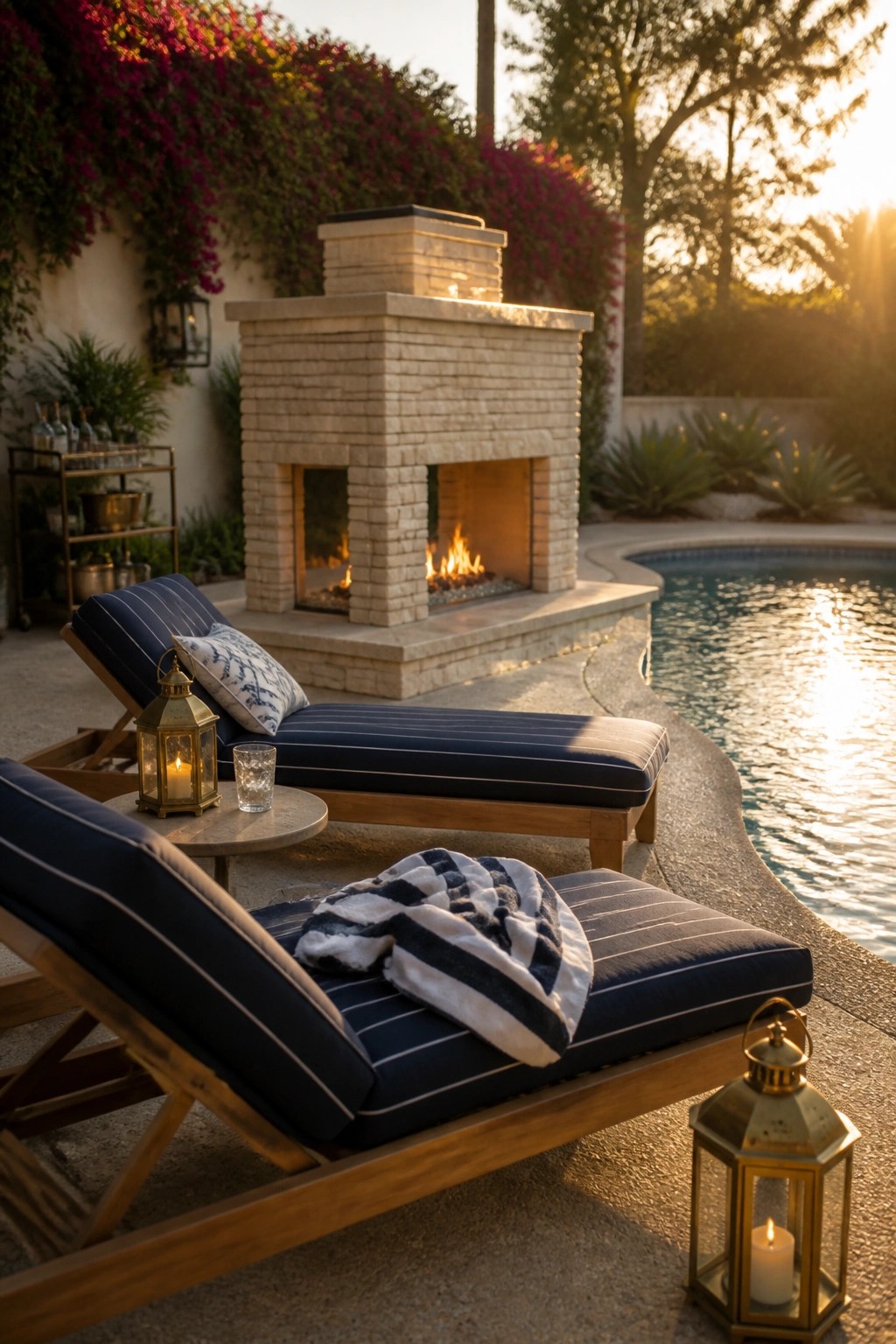
An outdoor fireplace works well when it sits close to the pool because it pulls the seating area into one easy spot. People can move between the water and the fire without crossing the whole yard, and the setup feels natural for evenings when the air cools down.
This layout suits homes with a decent sized patio or deck space right along the pool edge. Leave enough room around the chairs for walking and keep the firebox at a safe distance from the water so sparks stay contained.
Brick Fireplaces Anchor Outdoor Seating
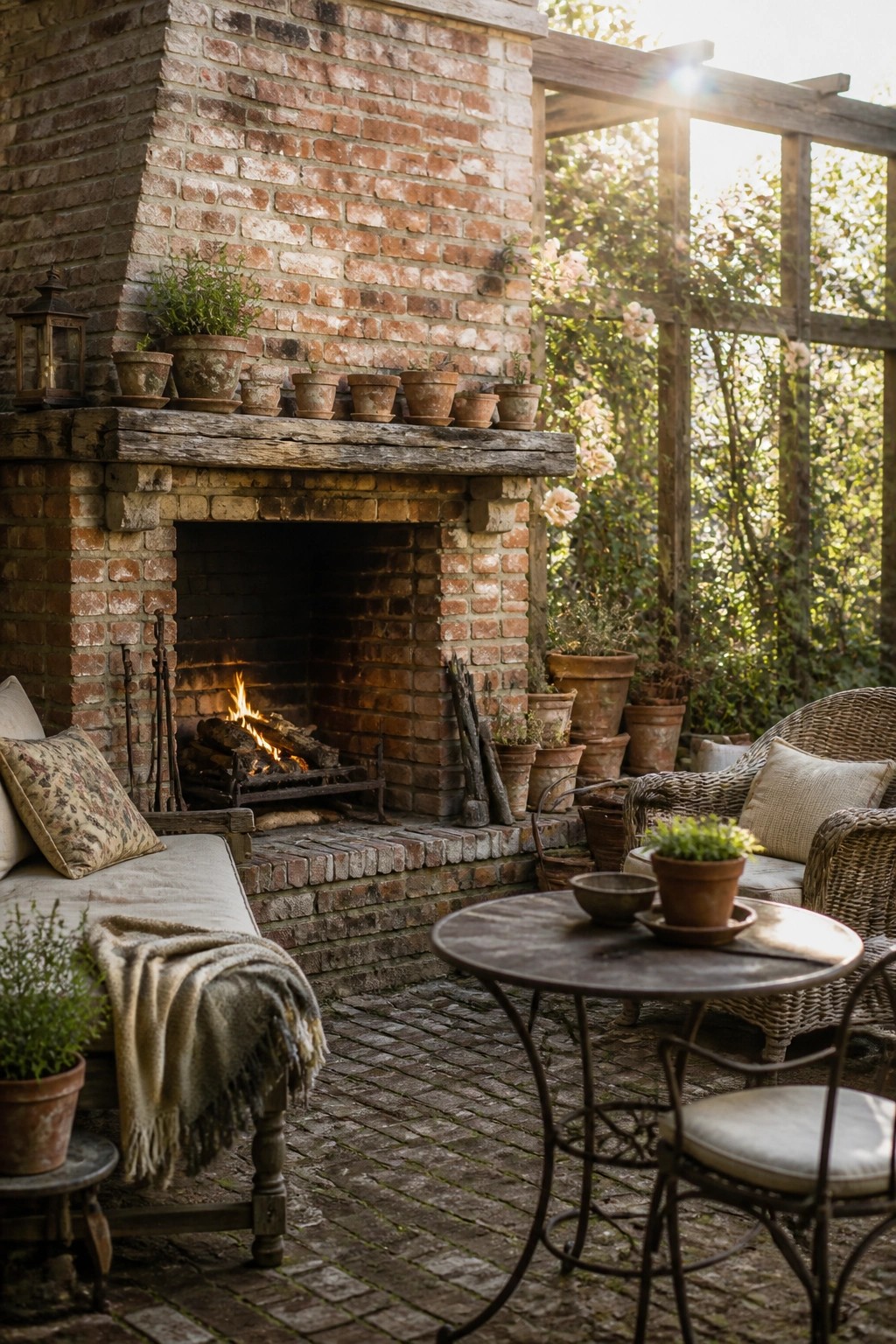
A brick fireplace gives an outdoor seating area a solid center that feels permanent and useful. It works especially well when the hearth is wide enough to sit on the edge or rest tools and logs nearby, and the mantel offers a spot for a few plants without crowding the space. Many people like the way brick ages and blends with garden surroundings over time.
This approach suits homes with a decent sized patio or yard where you want year round use rather than just summer evenings. Keep the seating simple and pulled close so the fire becomes the natural spot to gather. Make sure the chimney clears nearby structures and check local codes before building.
Add Built-In Storage To The Hearth
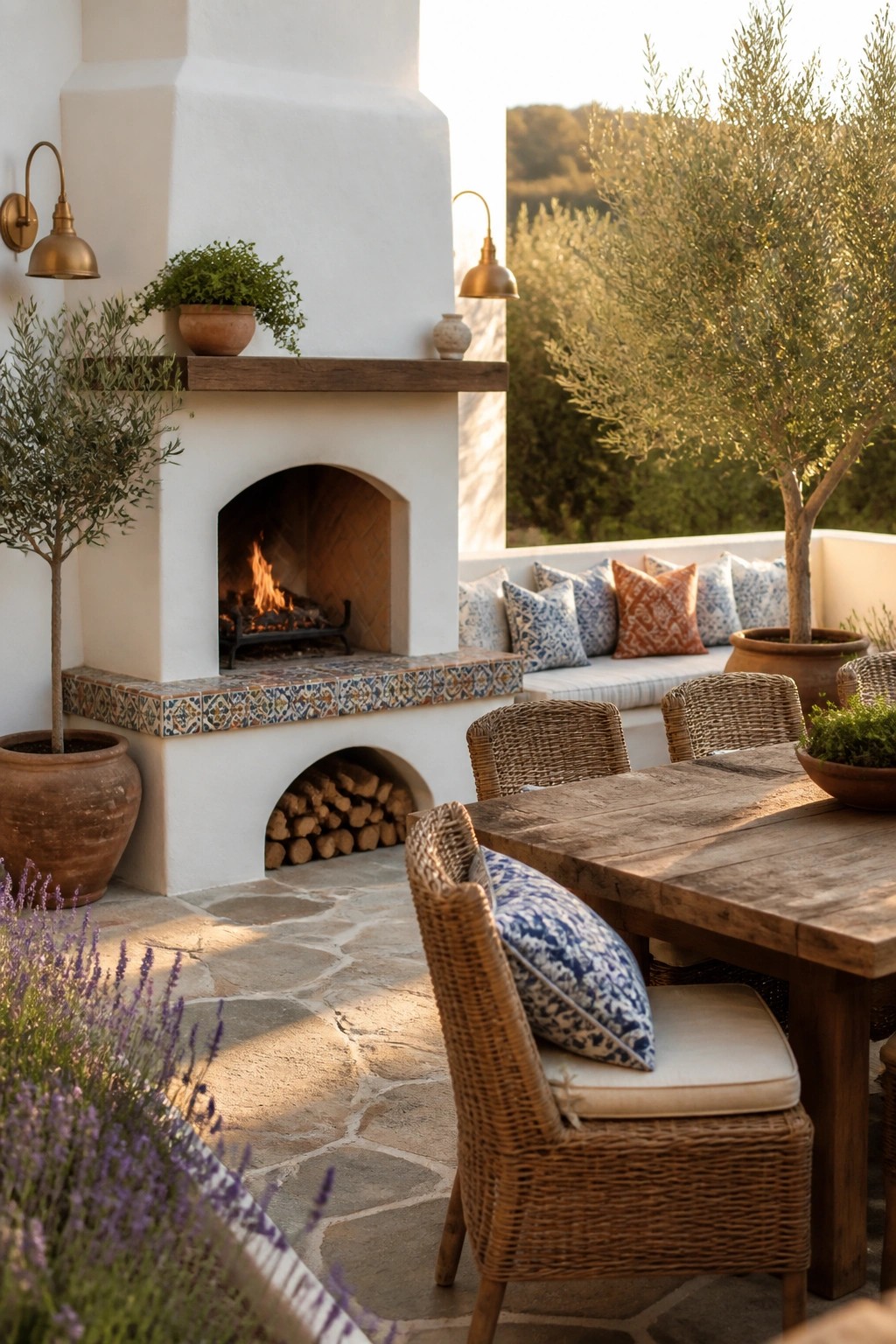
A fireplace feels more practical when the wood stays close by. Building a simple arched opening under the hearth keeps the stack neat and within reach without adding extra furniture on the patio.
This setup works best on smaller outdoor spaces where every corner counts. It also helps protect the wood from weather while keeping the overall look clean and uncluttered.
Build Seating Around A Stone Fireplace
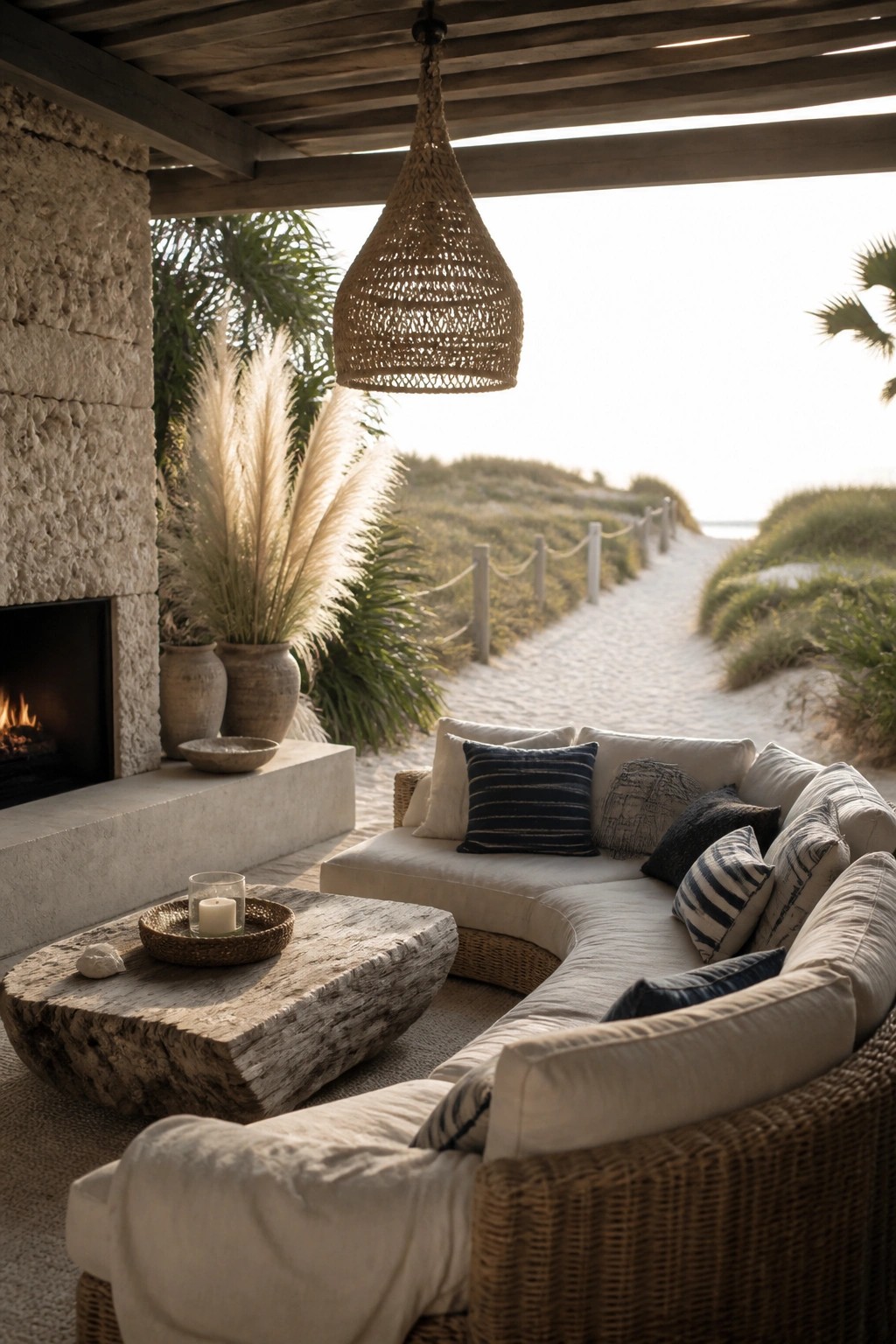
A stone fireplace placed at the edge of an outdoor seating area gives the whole space a clear center. It turns an open patio into something that feels more like a room, with the fire providing both warmth and a natural spot for people to gather.
This setup works best in backyards that have room for a solid structure without crowding the rest of the yard. Use rough stone that matches the surroundings and keep the seating low and curved so it wraps toward the fire without blocking the view beyond.
Building Seating Around a Large Outdoor Fireplace
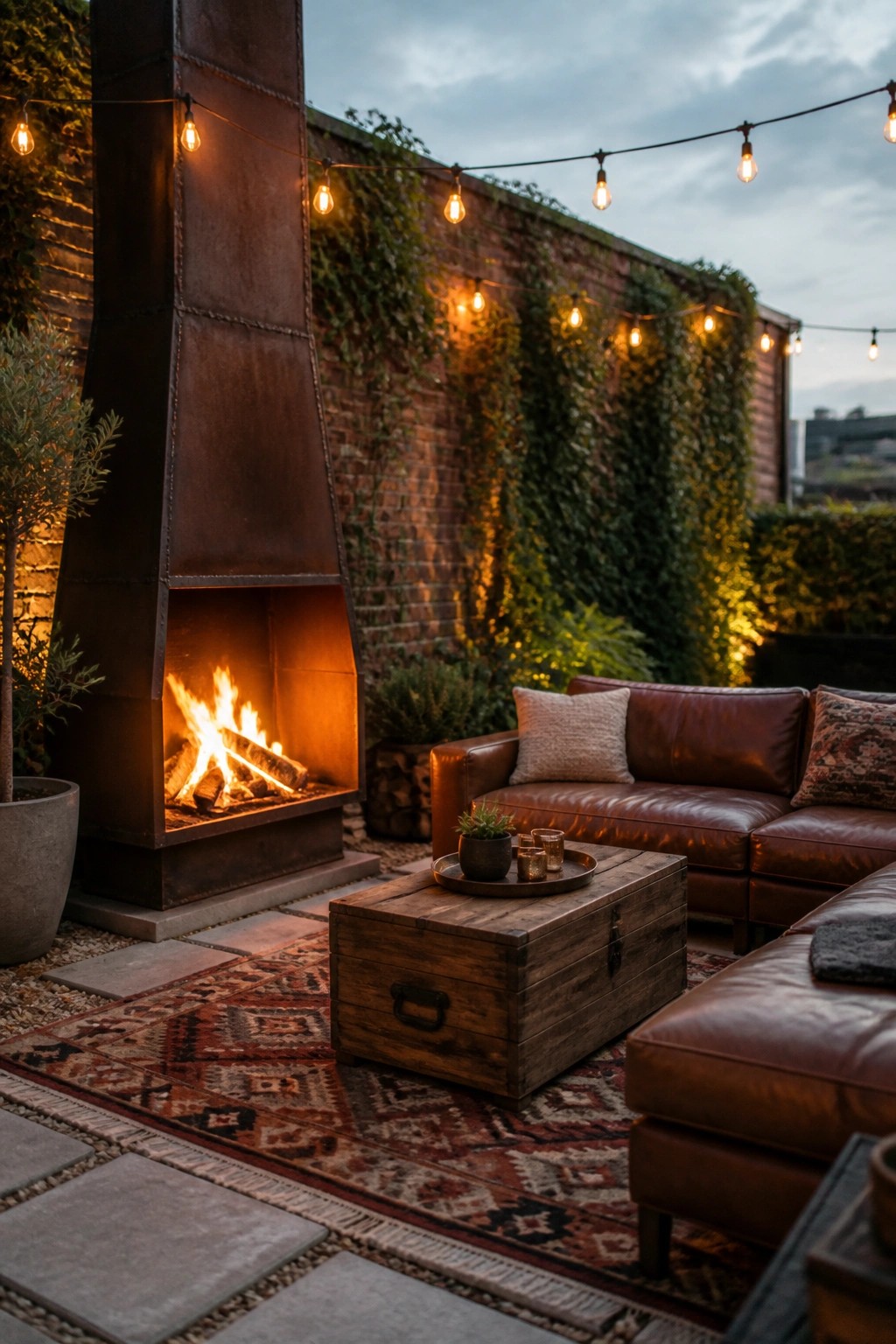
A tall metal fireplace can give an outdoor seating area a clear focal point without needing much else to hold it together. It draws people in during cooler evenings and makes the whole setup feel more like a real room than just furniture scattered on a patio.
This approach works best on medium to large patios where you can arrange sofas and chairs in a loose half-circle around the firebox. Keep the surrounding pieces simple so the fireplace stays the main feature, and make sure there is enough clearance for heat and easy access to wood storage.
Stone Fireplaces That Anchor Outdoor Seating
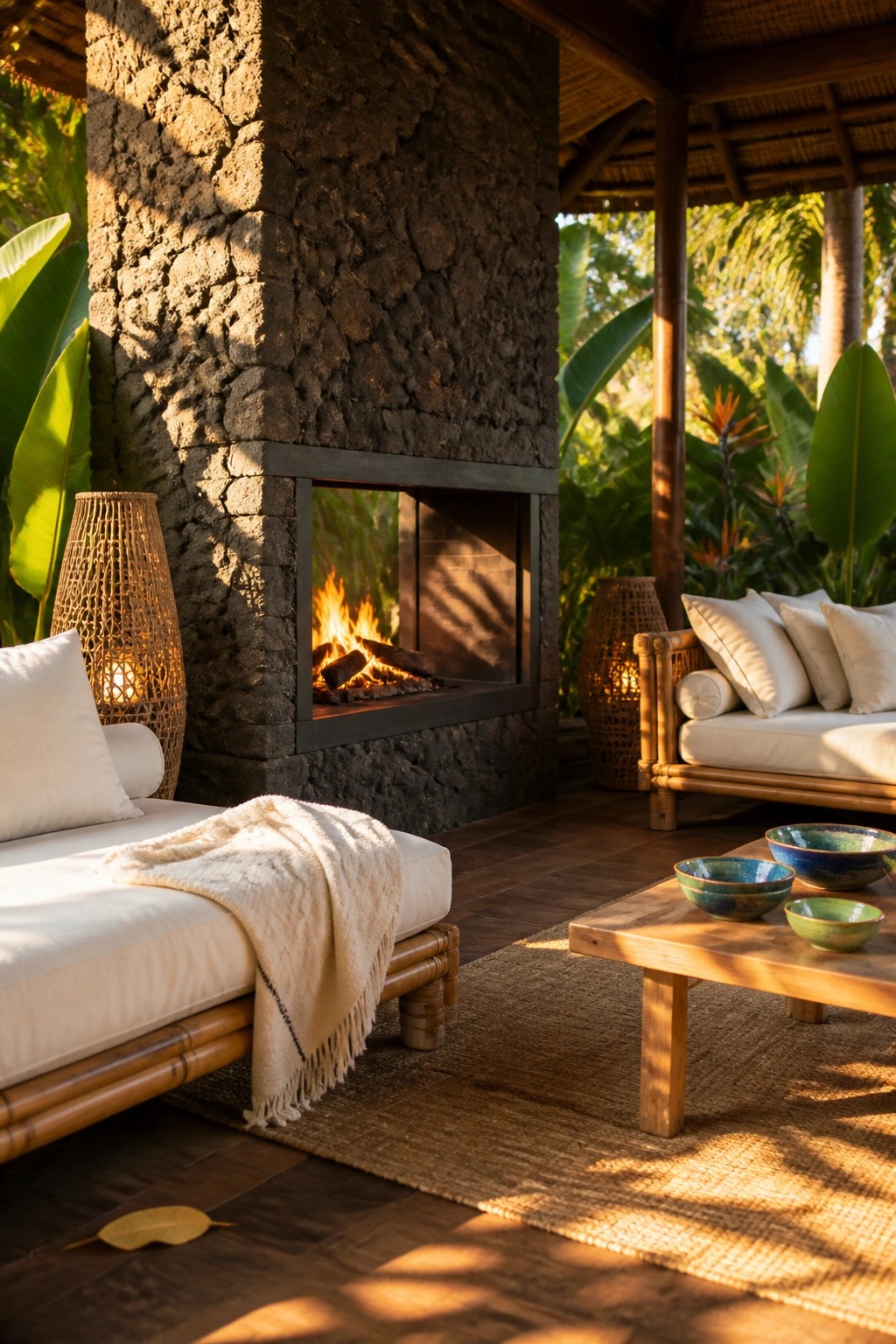
A big stone fireplace gives an outdoor seating area a clear center point. It holds the space together even when the rest of the setup stays simple and open to the garden.
This approach works best on covered patios or decks where you want the area to feel usable in cooler months. Keep the furniture low and the cushions light so the stone does most of the work.
Built-In Bench Seating Around a Fire Pit
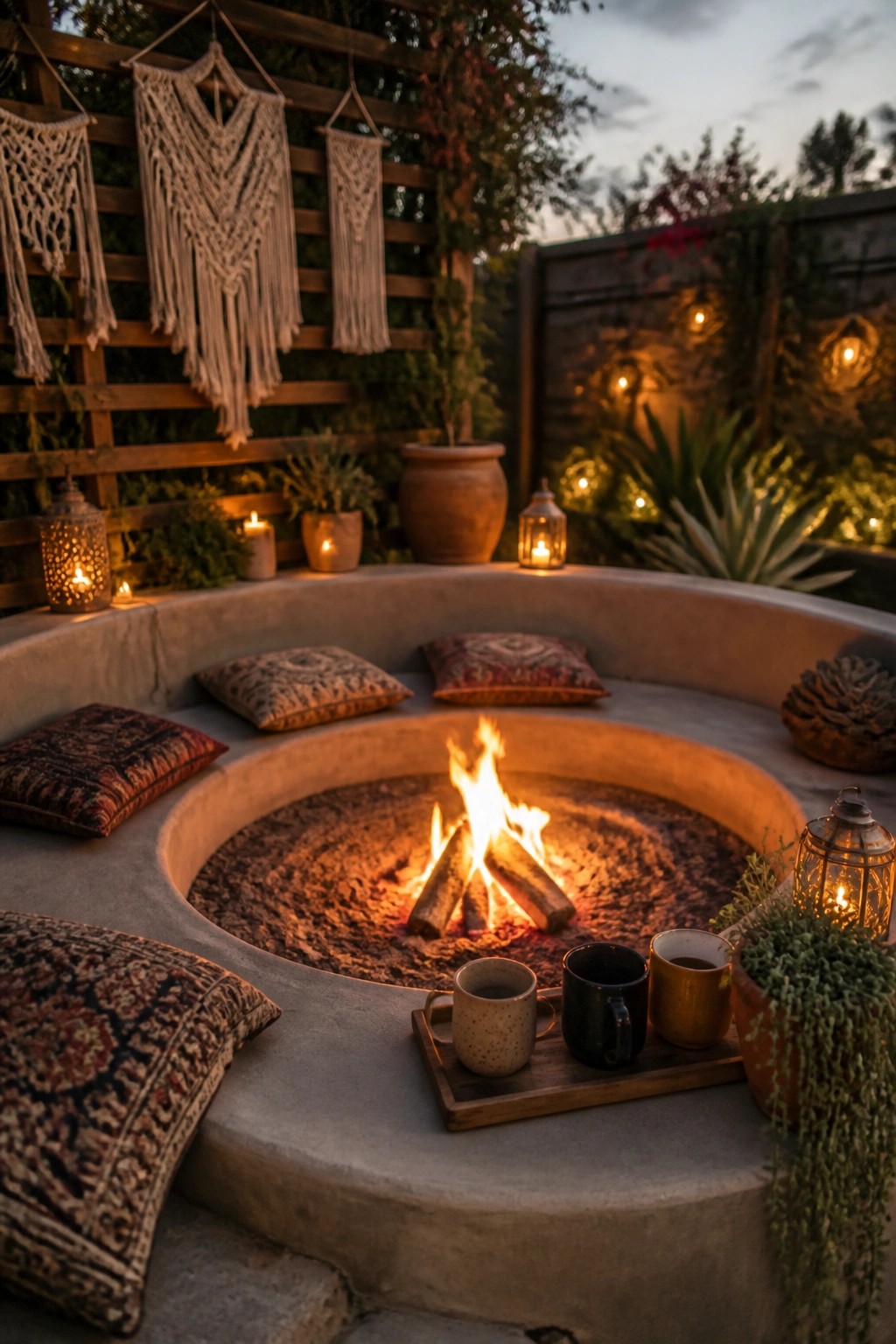
A circular concrete surround turns the fire pit into the main seating area without needing extra chairs. The ledge stays low enough to sit on comfortably and keeps people close to the flames.
This layout works best in smaller yards or on patios where space is limited. It creates one clear spot for gatherings and reduces the need for moving furniture around.
Add Built In Seating Around A Brick Fireplace
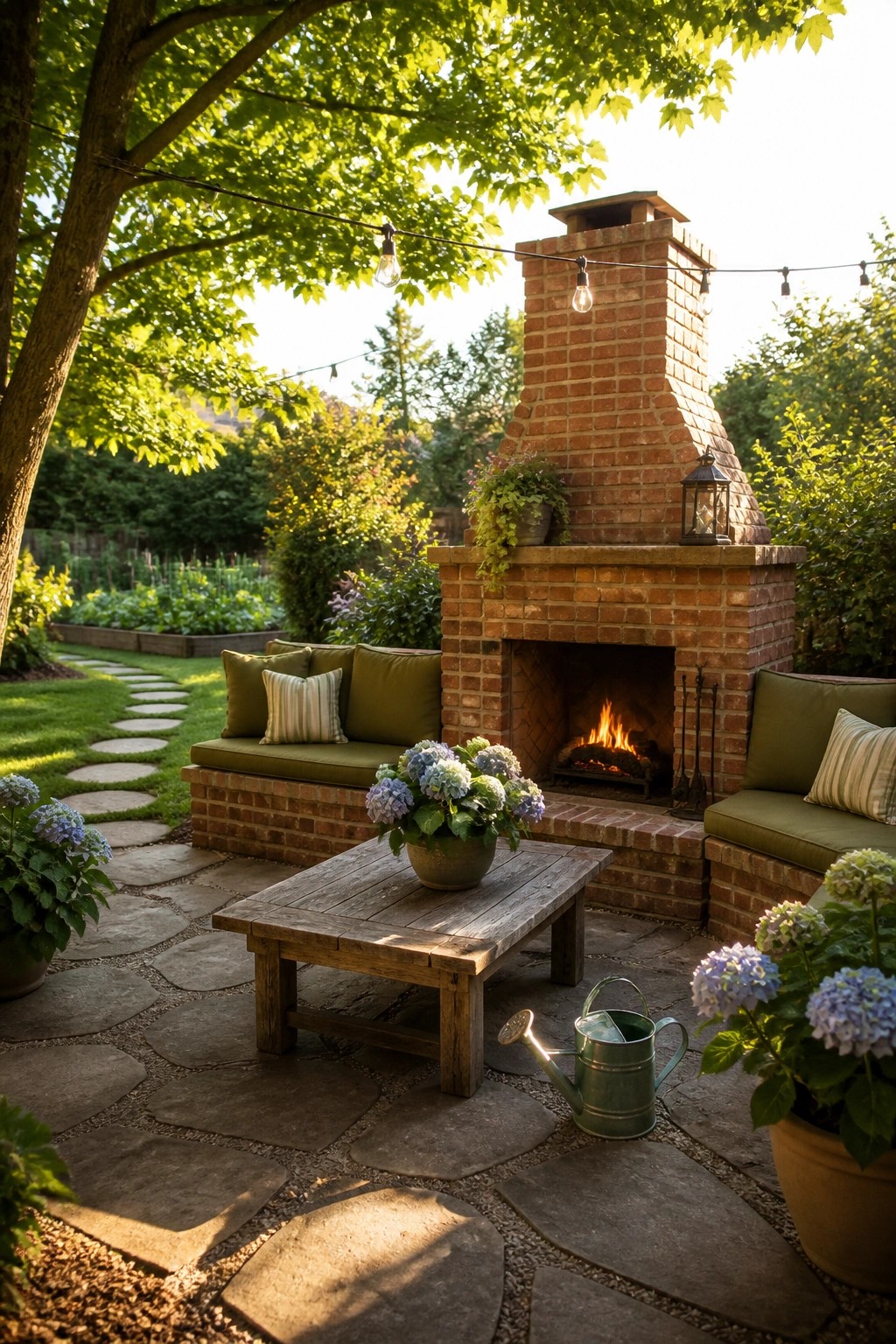
Many people like how an outdoor fireplace can anchor a seating area when you build the benches right into the base. It keeps everything in one spot and makes the space feel more settled without extra furniture floating around.
This setup works well on a stone patio where the fireplace can sit at the edge or corner. It suits homes that already have some garden space and gives you a simple way to use the area even on cooler evenings.
Build A Fireplace Into The Back Wall
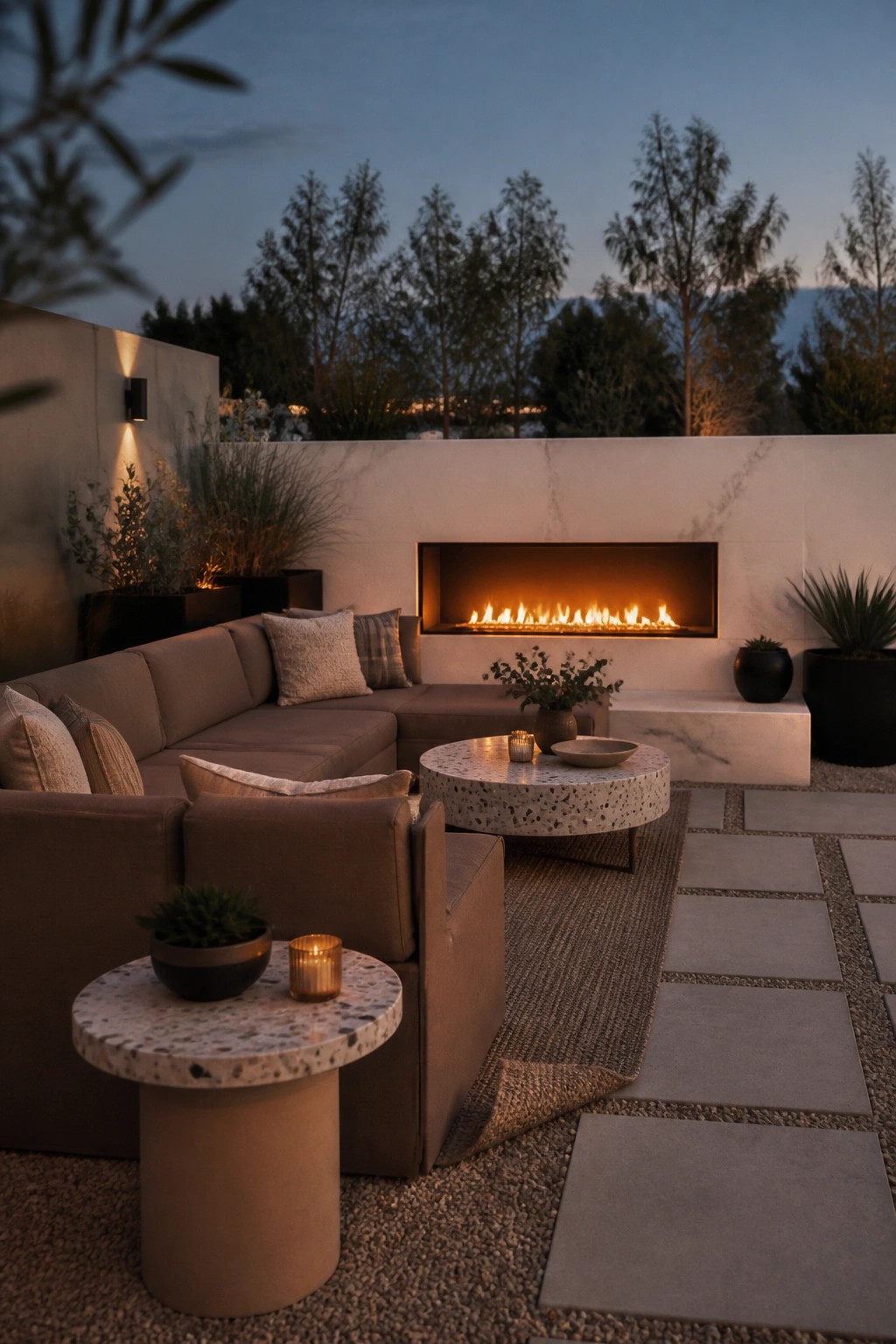
Tucking a linear fireplace into the back wall of a patio gives the seating area a clear center without adding extra furniture. The fire stays low and contained, so the space still feels open while the wall does the work of holding everything together.
This setup works best on patios that already have a solid boundary wall or raised edge. Keep the wall height in line with the back of the seating so the flames sit at eye level when people are sitting down.
Anchor a Seating Area With an Outdoor Fireplace
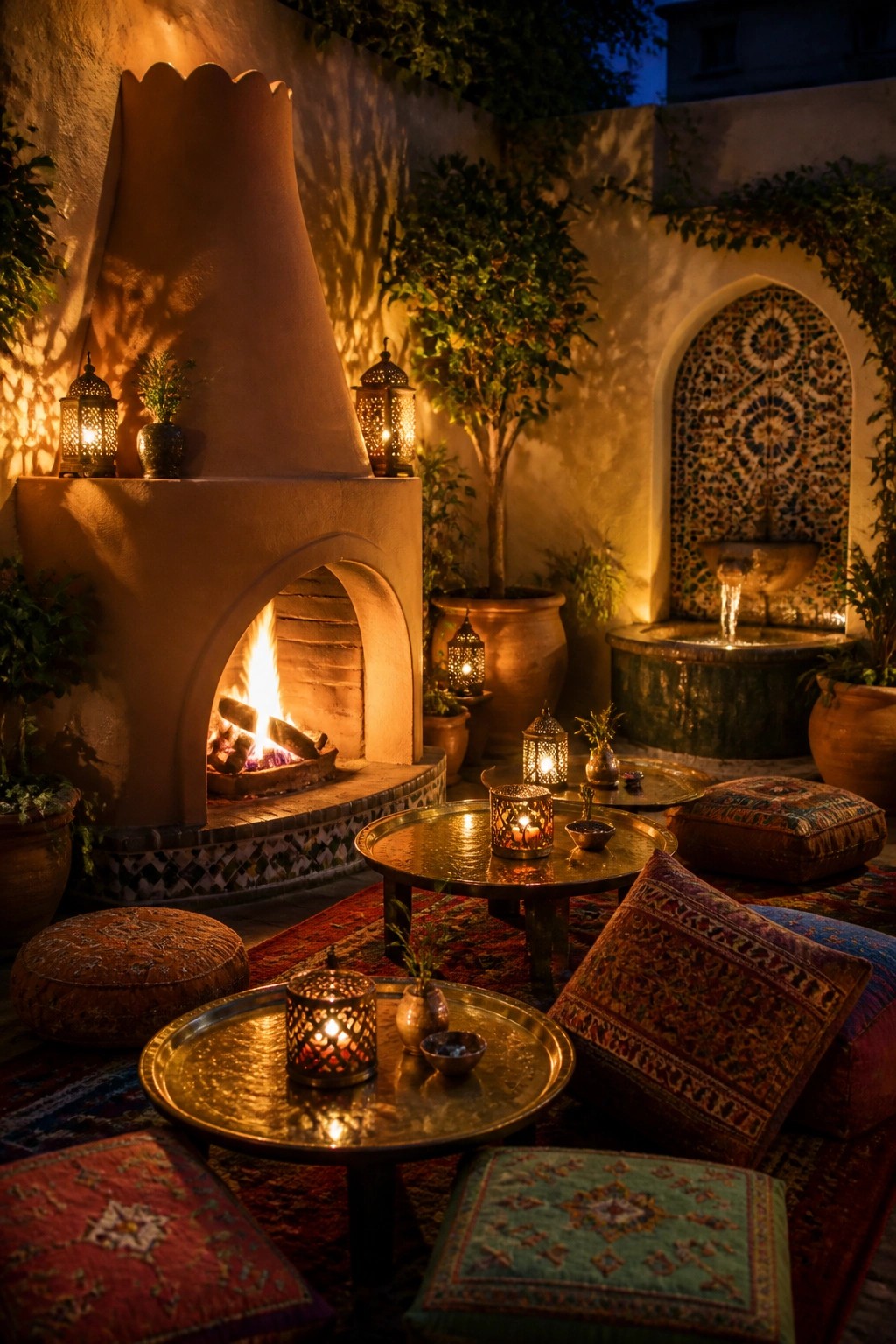
An outdoor fireplace can give a patio or courtyard a clear spot to gather. It works as a natural focal point that draws people in without needing a lot of extra structure.
This setup suits homes with walled outdoor spaces where you can arrange low seating around the fire. Keep the surrounding area simple with rugs and cushions so the fireplace stays the main feature, and leave enough open space in front for safety and easy movement.
Stone Fireplaces Anchor Casual Outdoor Seating
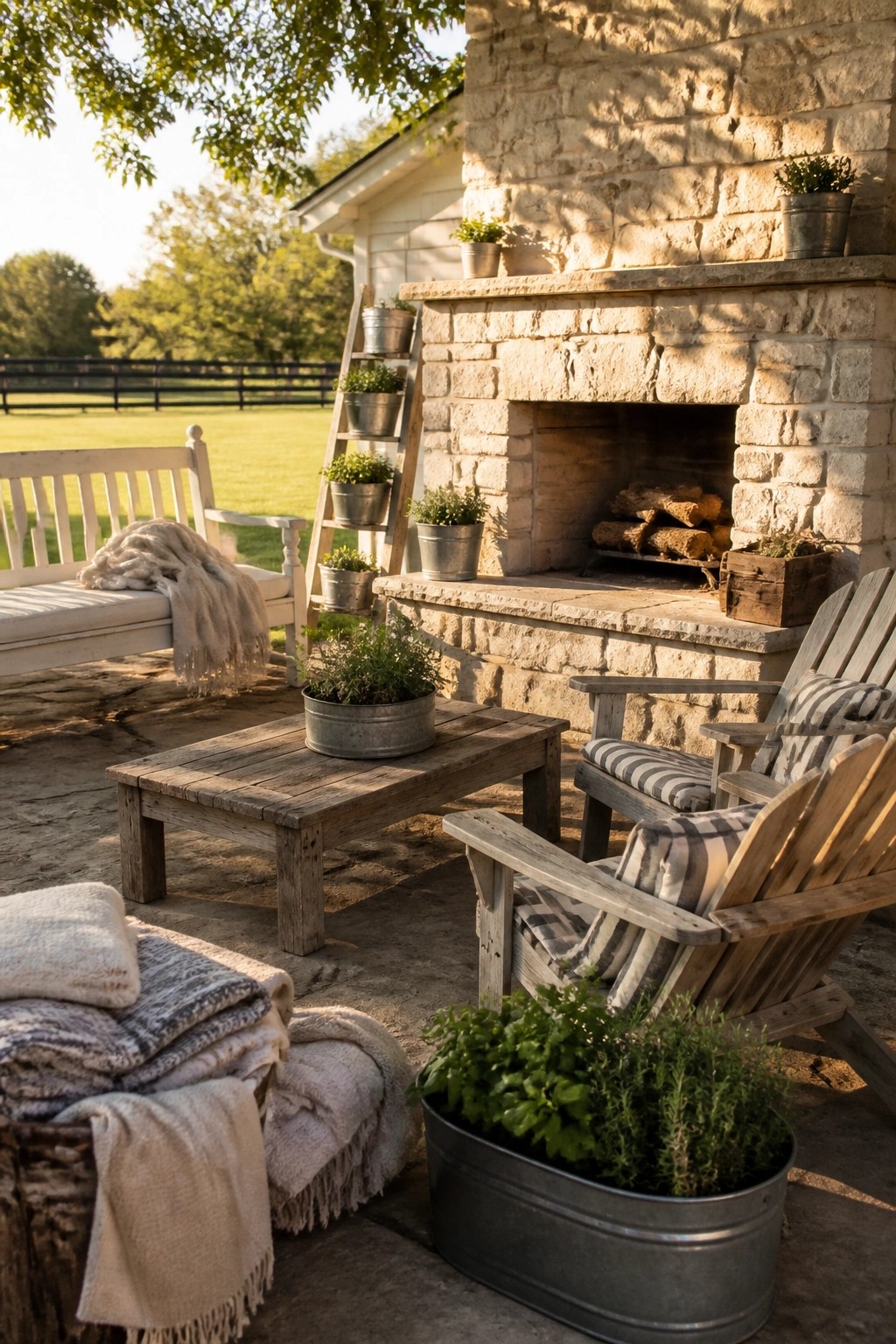
A large stone fireplace gives an outdoor seating area a clear center point. It draws people together without needing fancy layouts or extra structures. The fireplace becomes the reason the chairs and table sit where they do.
This setup works best on patios or open backyard spaces where you want year-round use. Keep the seating simple and close enough to the fire for warmth. Avoid crowding the area so the fireplace stays the main feature.
Fire Pit with a Water Channel
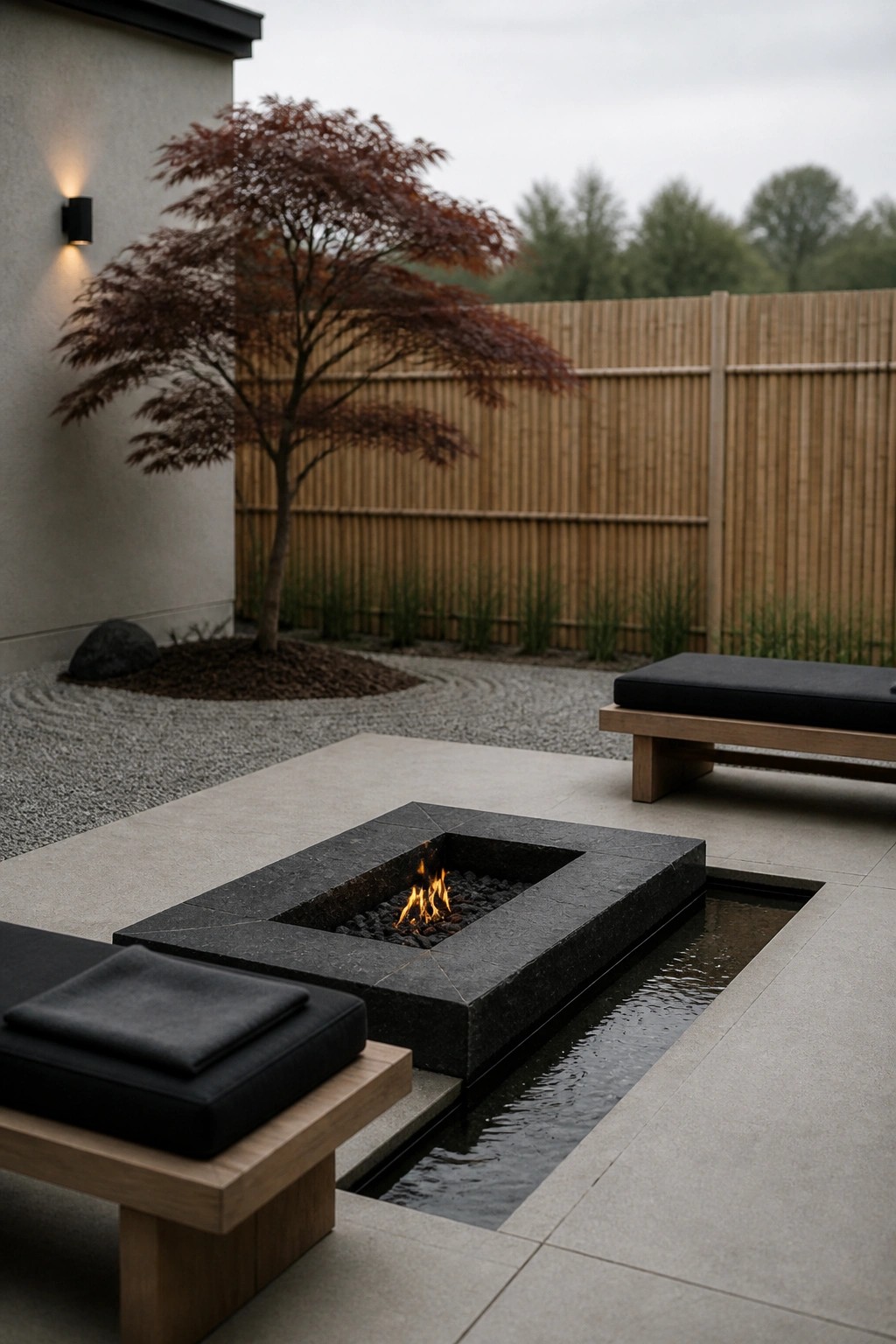
A fire pit next to a narrow water channel creates a simple way to anchor seating without making the space feel crowded. The moving water adds sound and a bit of separation, so the fire becomes the clear focal point while the rest of the patio stays open.
This works best on a flat concrete or stone patio in a smaller yard where you want both warmth and a calm backdrop. Match the channel edging to the fire pit surround and keep the benches low and close so the whole spot feels like one defined area.
Extend Bench Seating Along the Fireplace Wall
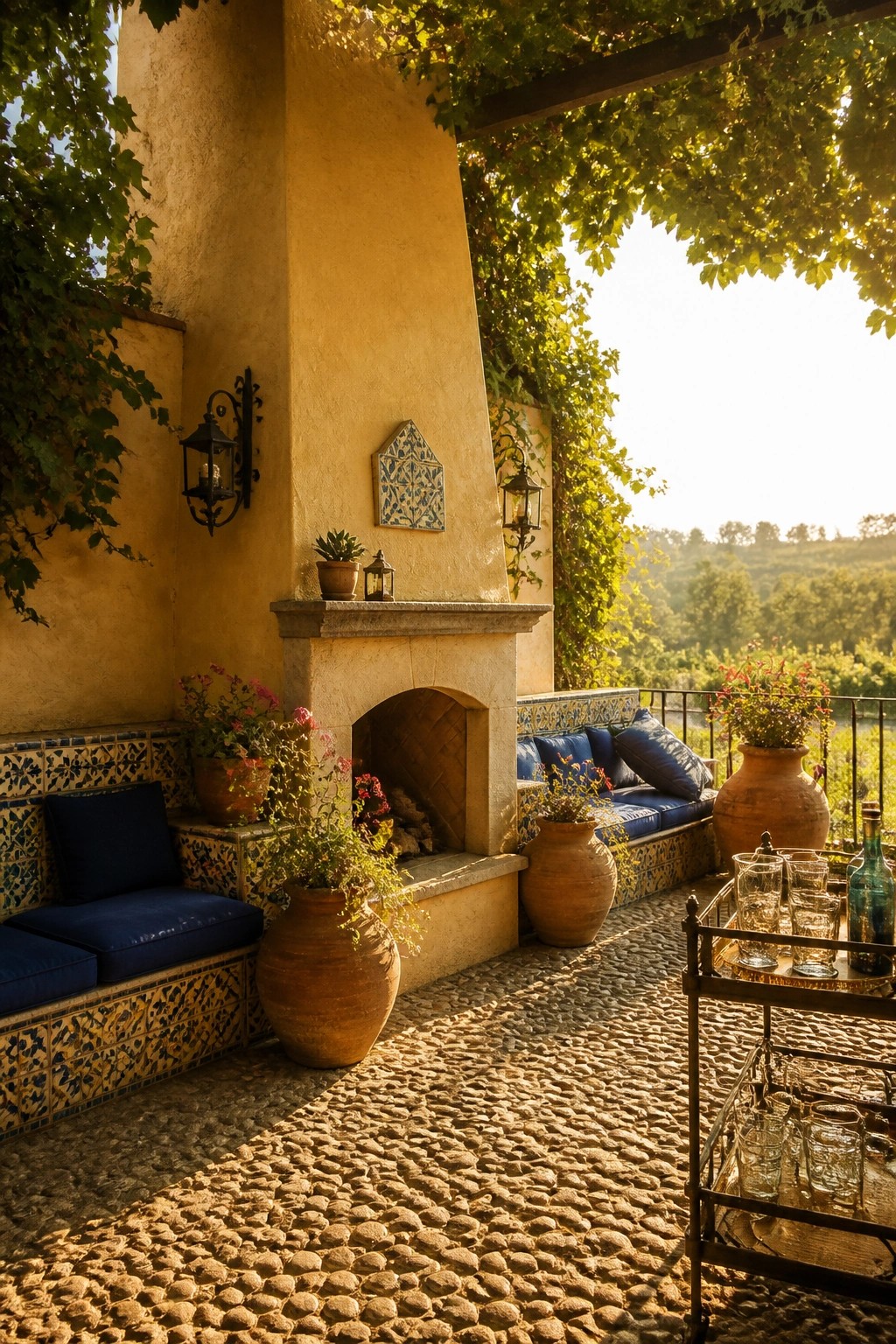
Many outdoor fireplaces feel more useful when the seating is built right into the base. This keeps everything in one spot and gives the area a settled look without needing extra chairs or sofas scattered around.
It works best on patios or terraces where you want one main gathering place. Match the tile or stone on the benches to the fireplace itself so the whole thing reads as one piece rather than separate elements added over time.
Build The Fireplace Into A Low Wall
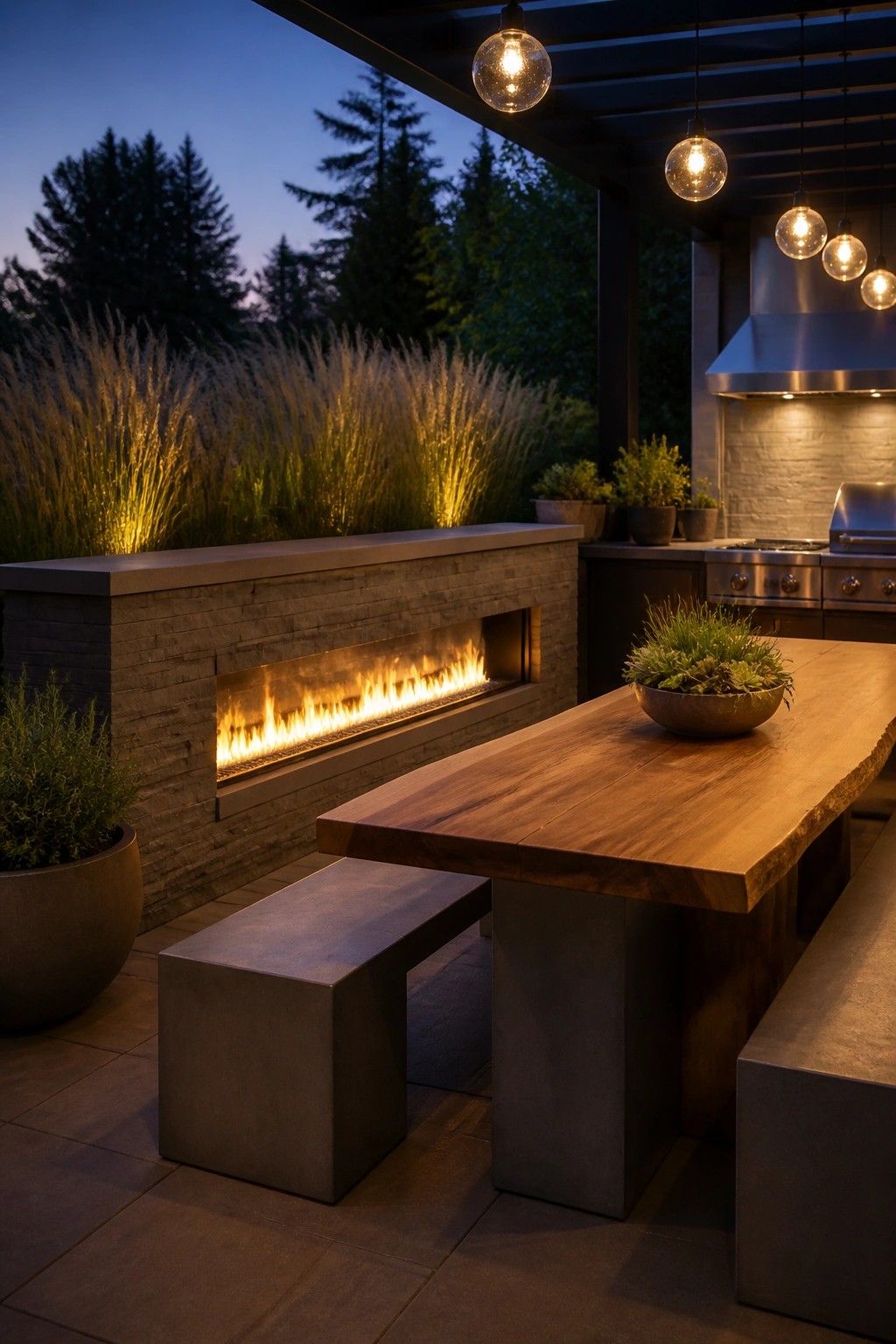
A fireplace set into a low wall gives the seating area a clear edge without adding extra furniture. The horizontal flame stays low and steady, so it warms people at the table without blocking views or taking up floor space.
This setup works best on patios that already have a kitchen or bar nearby. It suits homes that want simple lines and durable materials like stone and concrete, and it pairs well with long benches so the whole area feels connected.
Stone Fireplaces Anchor Outdoor Seating Areas
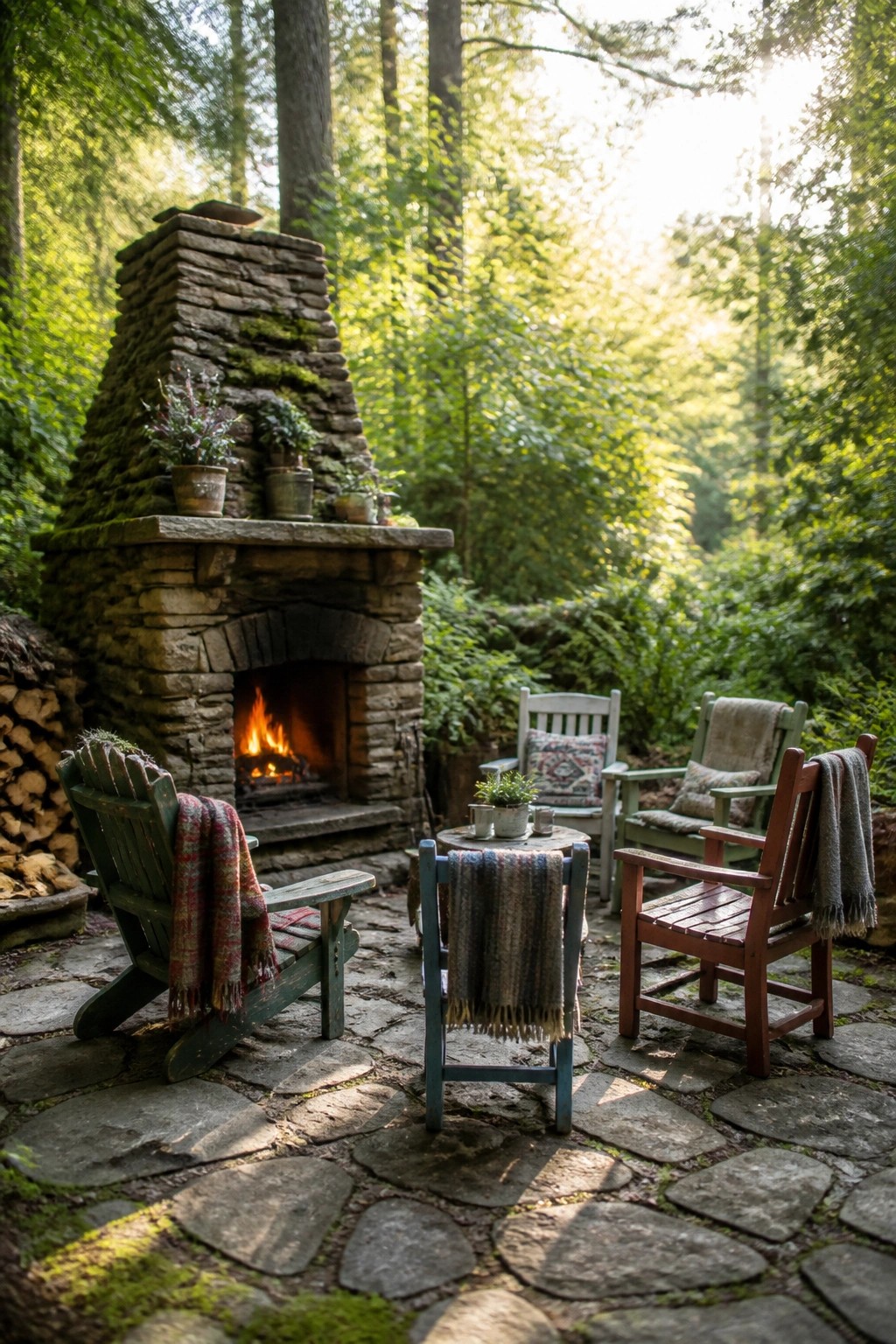
A large stone fireplace gives an outdoor seating area a clear center point. It turns an open patio into a defined space where people naturally gather around the fire.
This setup works best on wooded lots or bigger yards where the fireplace can sit comfortably among trees and plantings. Keep the seating simple and close so the whole group stays warm and connected without feeling spread out.
Give The Outdoor Fireplace A Strong Architectural Surround
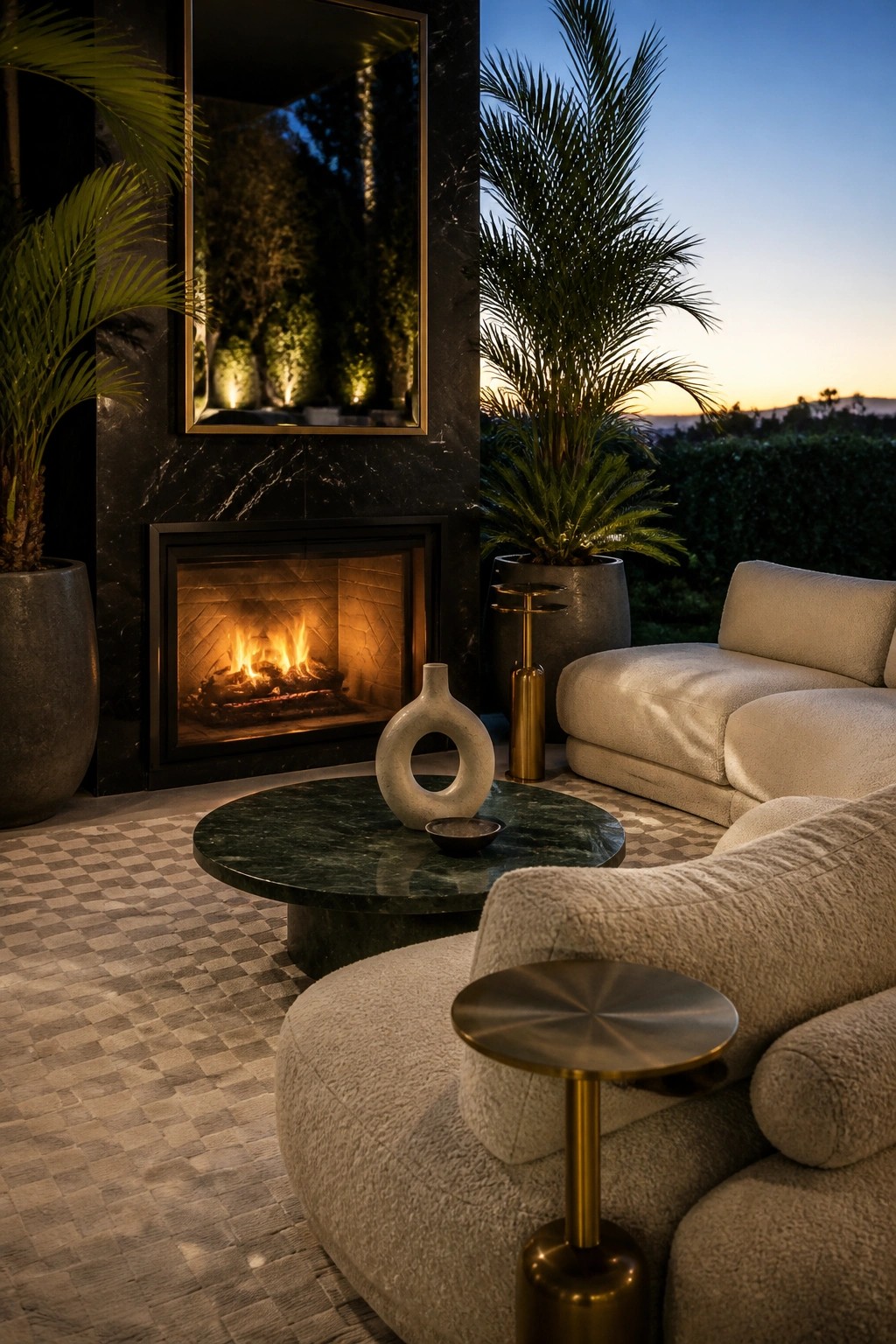
A fireplace with a solid, substantial surround can do a lot to hold an outdoor seating area together. The dark marble here turns the firebox into a clear focal point that the rest of the furniture can gather around without feeling scattered.
This approach works best on a larger patio or terrace where you have room to arrange seating in a loose arc or L-shape facing the fire. Keep the surround material consistent with other hard surfaces nearby so the fireplace feels built in rather than added on later.
Anchor the Patio with a Brick Oven Next to the Table
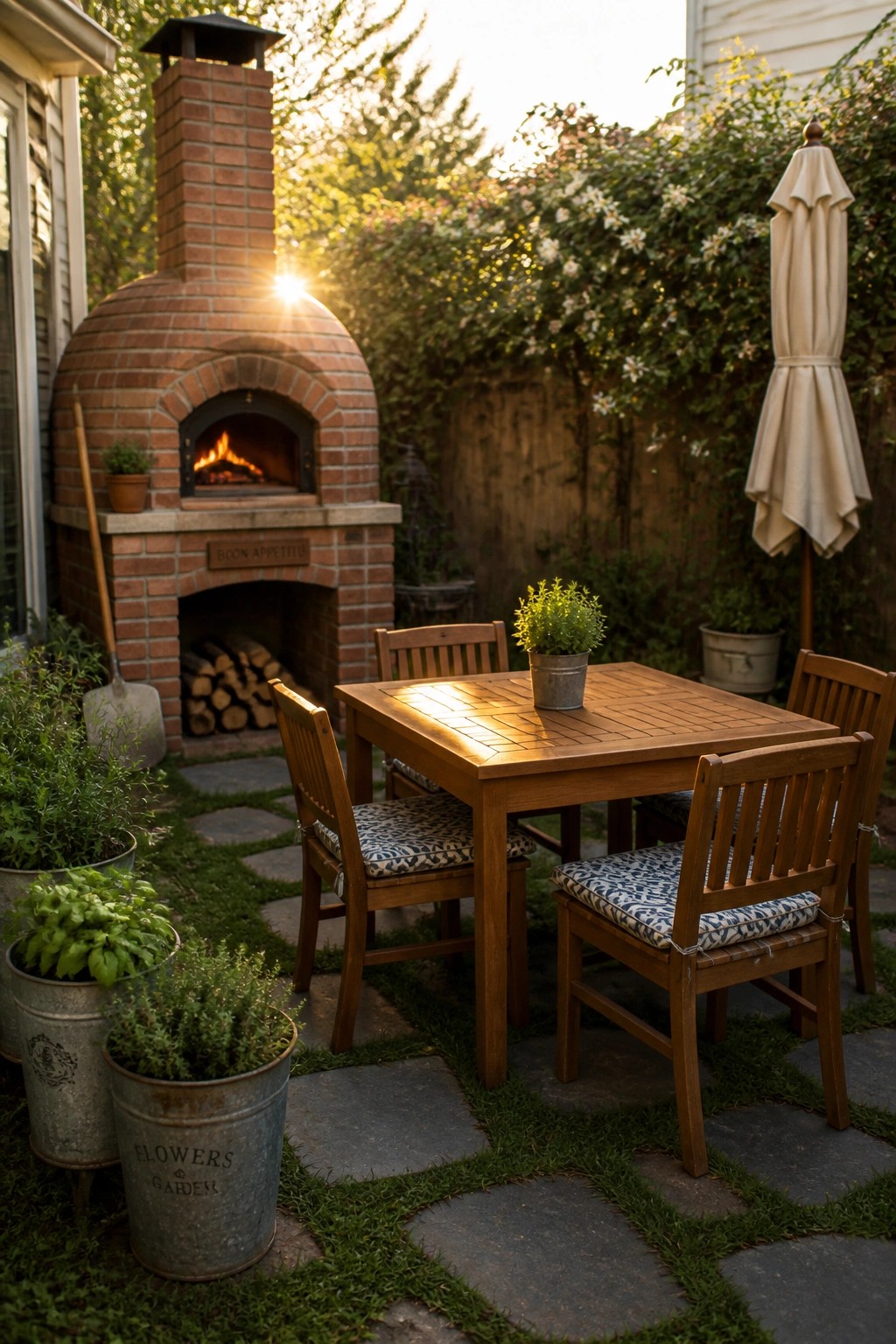
A brick pizza oven placed right beside the dining table turns an ordinary patio into a space that actually gets used for meals. The oven becomes the natural center without needing extra furniture or decoration to make the layout feel complete.
This setup works best in yards where space is limited or where you want cooking and eating to happen in one spot. Keep the seating simple and make sure there is enough room to move around the oven when it is hot.
Built-In Linear Fireplaces For Outdoor Seating
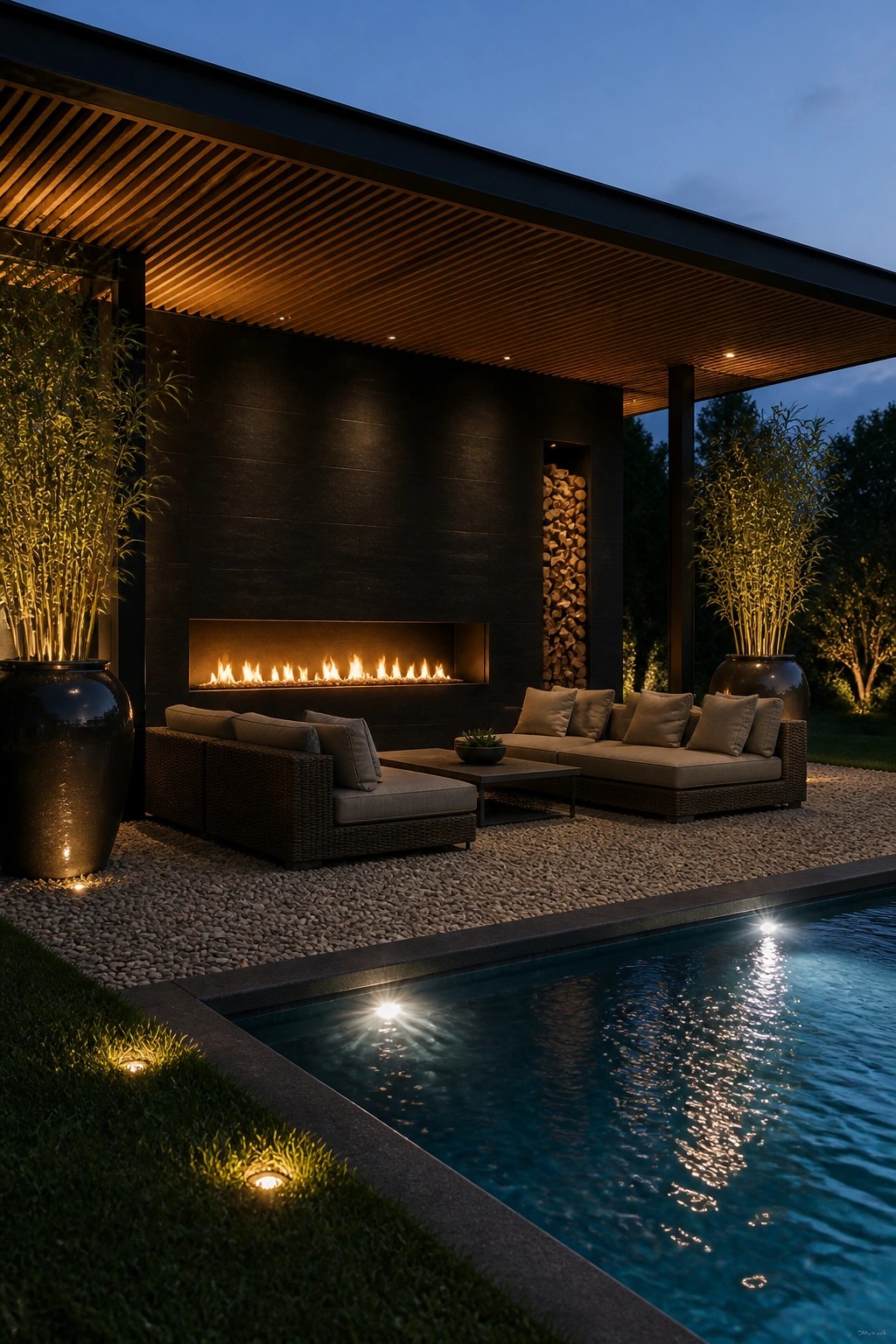
A linear fireplace set into an outdoor wall gives a simple way to anchor a seating area without adding extra furniture. The horizontal flame line keeps the focus steady and lets the rest of the space stay open for movement.
This approach works best on a covered patio or pool deck where the wall already exists and you want a focal point that feels built in rather than added later. Keep the seating low and face it toward the fire so the layout stays balanced.
Build Seating Into the Hearth
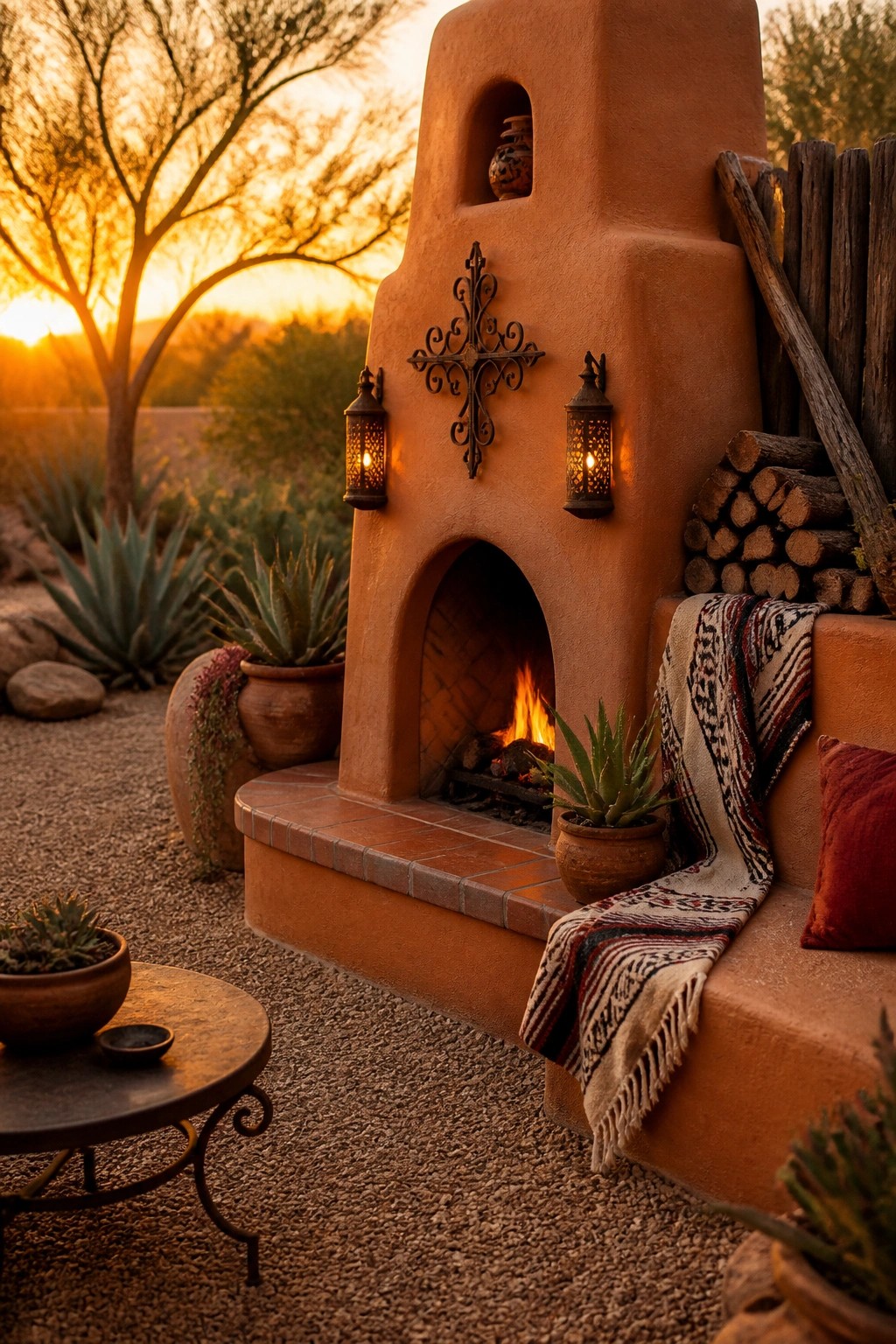
Many outdoor fireplaces leave the space around them open, which can make the seating feel separate. Extending the hearth into a wide bench solves that by turning the fireplace itself into the main place to sit. The structure stays simple and the seating feels like it belongs right there.
This approach works best with masonry or adobe styles in dry climates where the material already matches the yard. Keep the bench depth around 16 to 18 inches so it stays comfortable, and add a throw or cushion only when you need it.
Build Seating Around A Tall Stone Fireplace
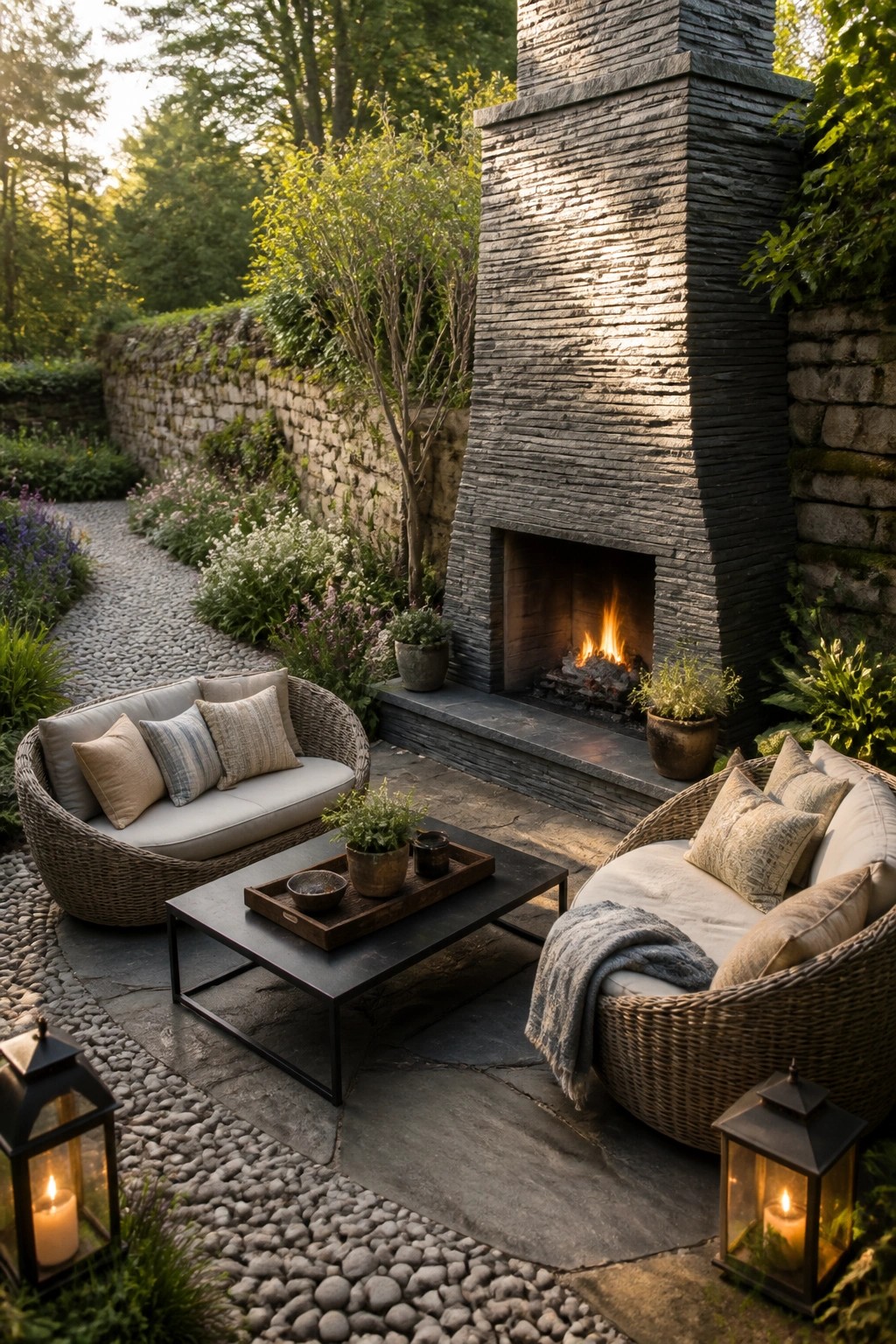
A tall fireplace made from stacked stone gives the whole seating area a clear center. It works well because the height draws the eye and the fire itself becomes the reason people gather, even on cooler evenings. The curved chairs sit close enough to feel connected without crowding the space.
This setup suits a medium to large backyard where you want one strong focal point rather than scattered furniture. Keep the surrounding paving simple so the fireplace stays dominant, and add just a few low lights nearby for evening use.
A Central Fire Column for Outdoor Seating
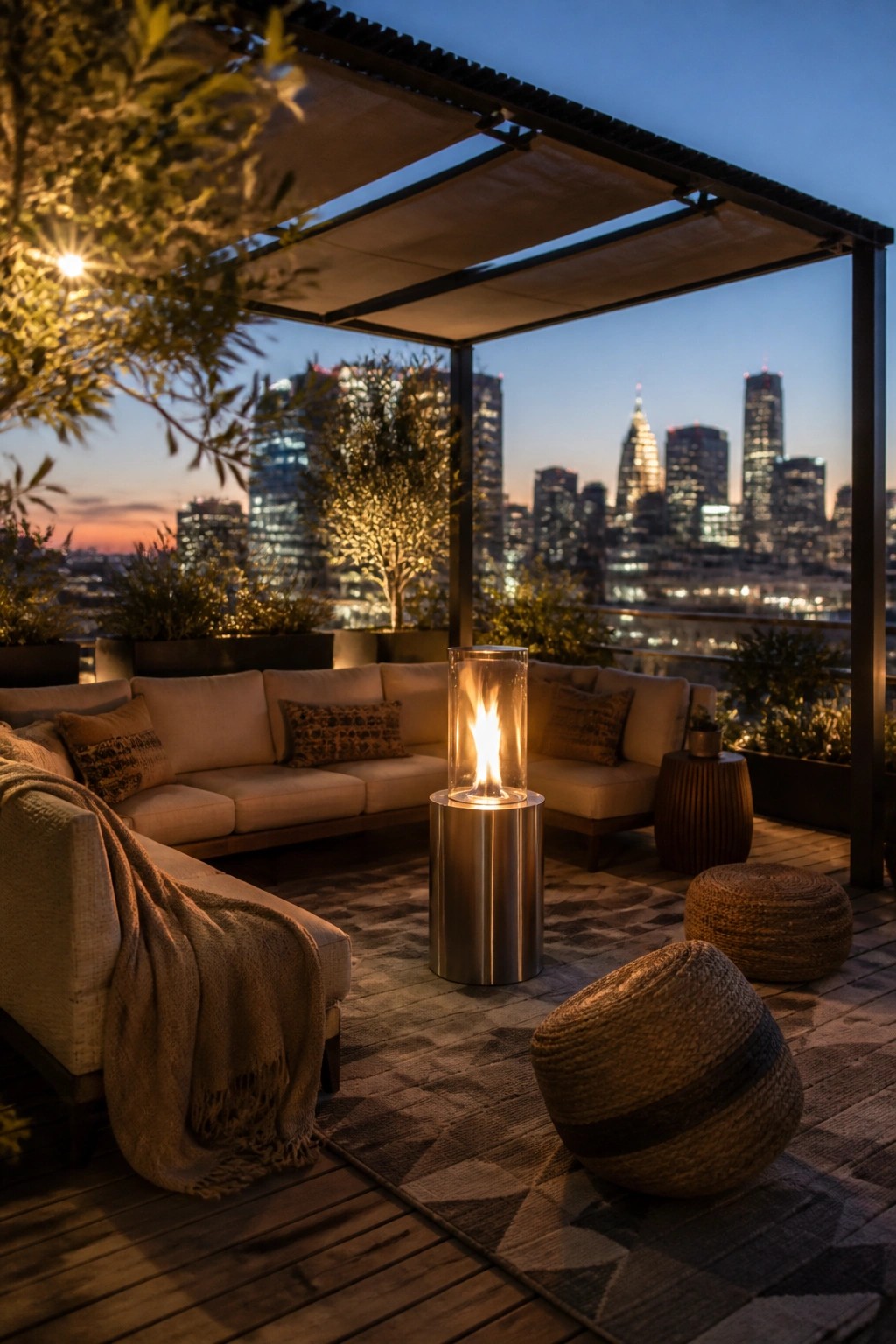
A tall glass cylinder fireplace works well when you want one clear focal point in the middle of an outdoor seating group. It gives off light and warmth without blocking views or taking up much floor space, so the chairs and sofas can curve around it naturally.
This setup works best on decks or rooftops where you have a city view and want the fire to feel like the center of the room. Keep the base simple and metal so it blends with modern furniture, and make sure the surrounding seats are low and deep enough for long evenings.
Stone Fireplaces For Covered Porches
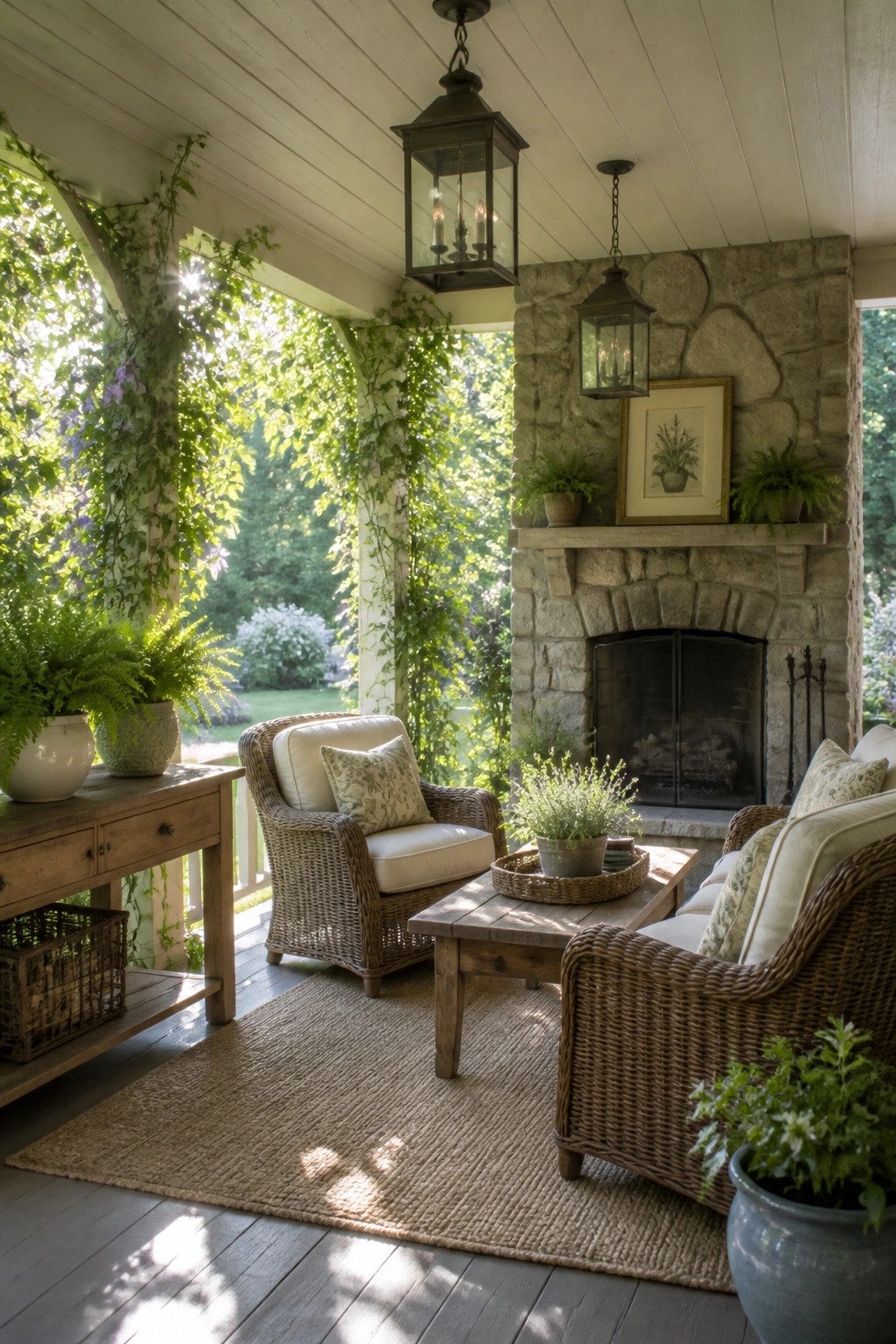
A stone fireplace gives a covered porch a solid focal point that turns the space into a real seating area. It works especially well when the porch already has some structure, since the fireplace adds weight and warmth without needing a full outdoor build.
This setup fits homes where you want to use the porch more often, even on cooler evenings. Keep the scale in mind so the fireplace does not overpower the seating, and match the stone to the house if possible.
Frequently Asked Questions
Q: How big should my fireplace be if the seating area is small? A: Match the height to your chairs so the flames feel inviting without crowding the space. Measure the patio edges first and test a few spots with a simple tape outline before you commit.
Q: What keeps the fire safe when kids play nearby? A: Set the unit on a solid base and leave a clear three-foot zone all around it. A low border of pavers or gravel stops stray sparks from reaching the grass or play area.
Q: How often do I need to clean an outdoor fireplace? A: Scoop out the ashes after every fire and brush the interior walls once a month. A quick cover during storms prevents most of the soot and water damage.
