

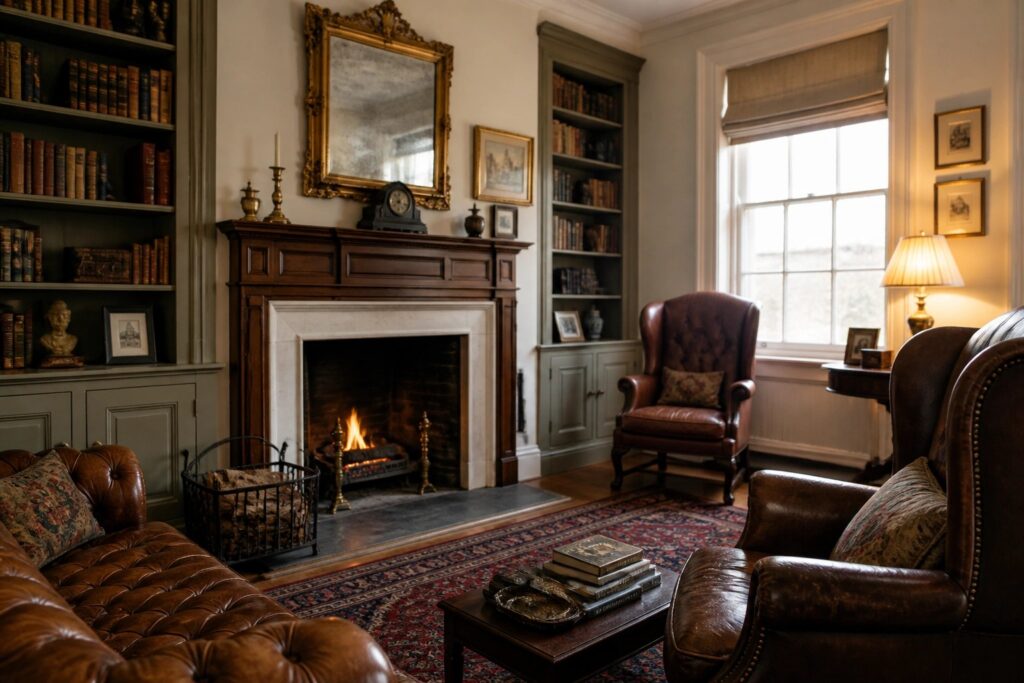
In older homes the fireplace usually sets the tone for how the whole room feels once you start using it every day.
I have found that the surround and the way the mantel meets the wall can fix awkward furniture placement faster than any other change.
Most people notice the firebox proportions right away when they walk into a traditional living room, even before they take in the rest of the furniture.
Mantel depth changes everything.
When I review ideas like these I tend to picture them in my own space first and only save the ones that would actually work with the existing ceiling height.
Built-In Bookshelves Around the Fireplace
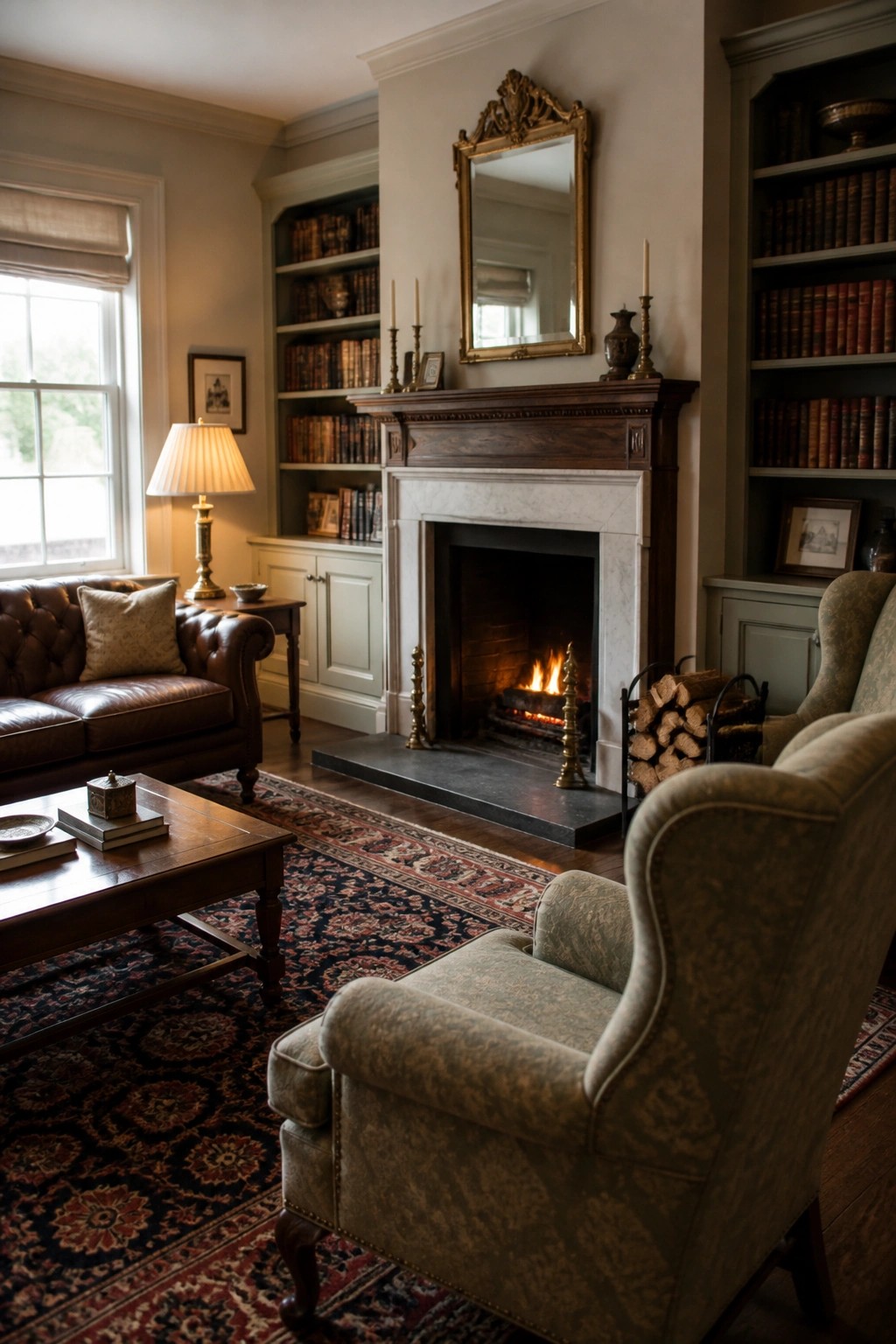
Many older homes place built-in shelves right beside the fireplace to create a balanced look that feels both practical and classic. The shelves hold books without crowding the room, and they keep the fire as the main focus while adding quiet storage.
This works best in living rooms or studies that already have some wood trim and traditional furniture. Keep the shelves the same color as the walls so the books and mantel stand out more than the woodwork itself.
Center Seating Around the Fireplace
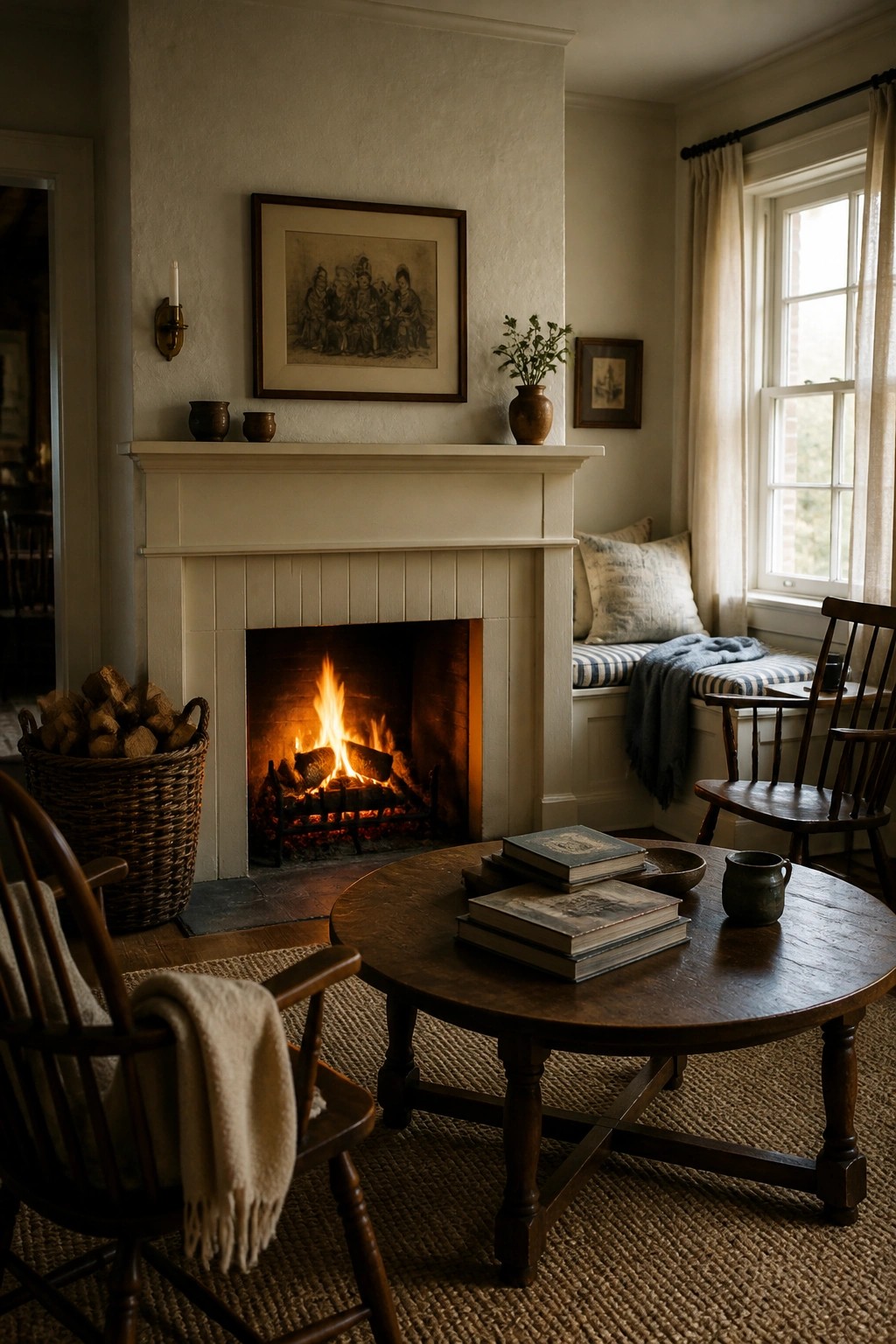
A wood-burning fireplace works best when seating is pulled in close. This creates a natural spot for reading, talking, or just sitting quietly without needing extra furniture or fancy layouts.
It suits older homes and smaller living rooms where you want the fire to feel like the main reason for the space. Stick to simple wood chairs and a low table, and leave enough room on the hearth for logs so the setup stays practical day to day.
Built-In Shelving Next to the Fireplace
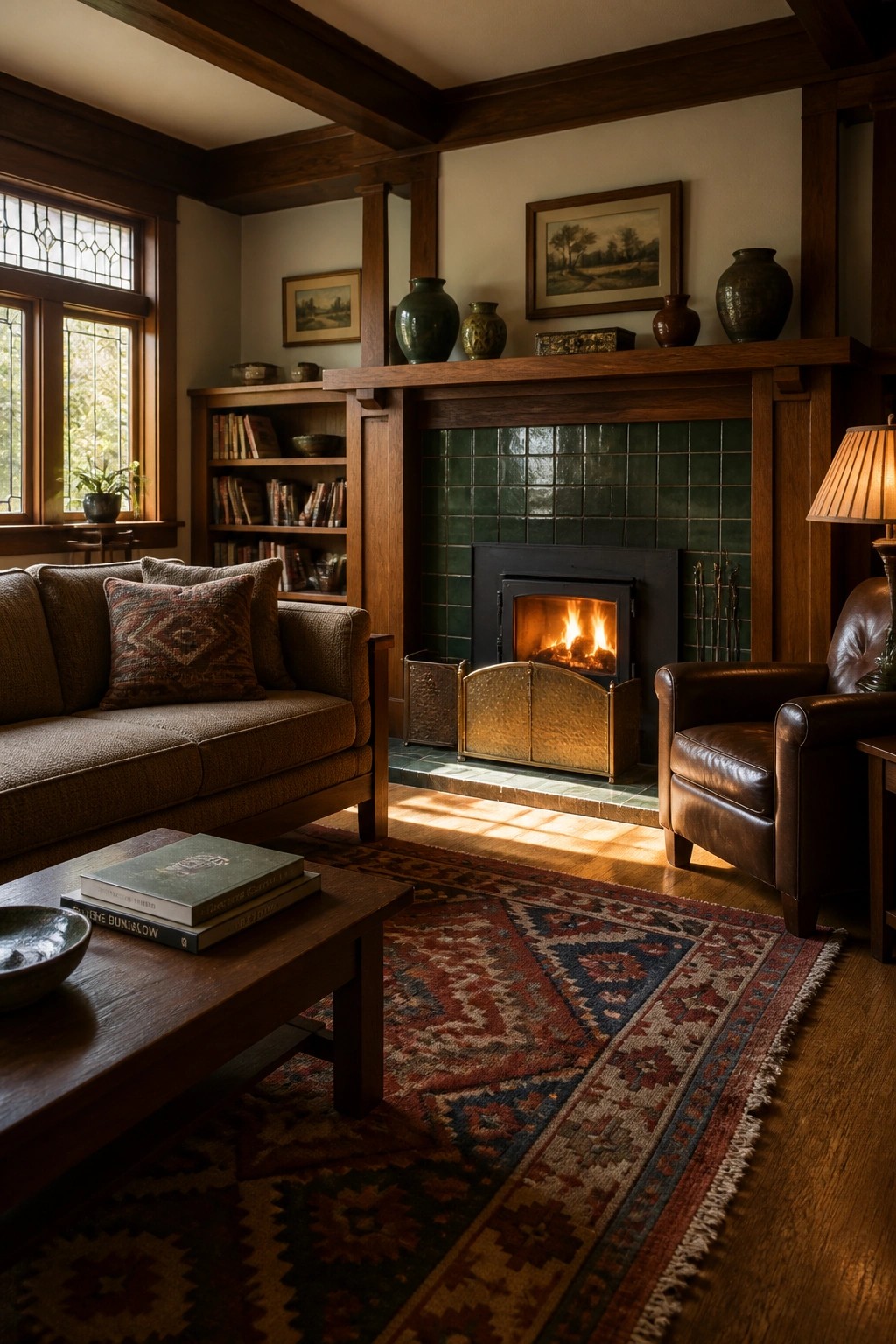
Placing built-in shelves right beside a wood-burning fireplace gives the room a settled, lived-in feel. The books and a few simple objects on the shelves draw the eye without competing with the fire itself, and the wood tones tie everything together in a natural way.
This setup works best in traditional homes where you want the fireplace to stay the main focus while still making good use of the wall space around it. Keep the shelves fairly full but not overcrowded, and leave a little breathing room so the hearth area does not feel closed in.
Built-In Bookshelves Around a Wood Stove
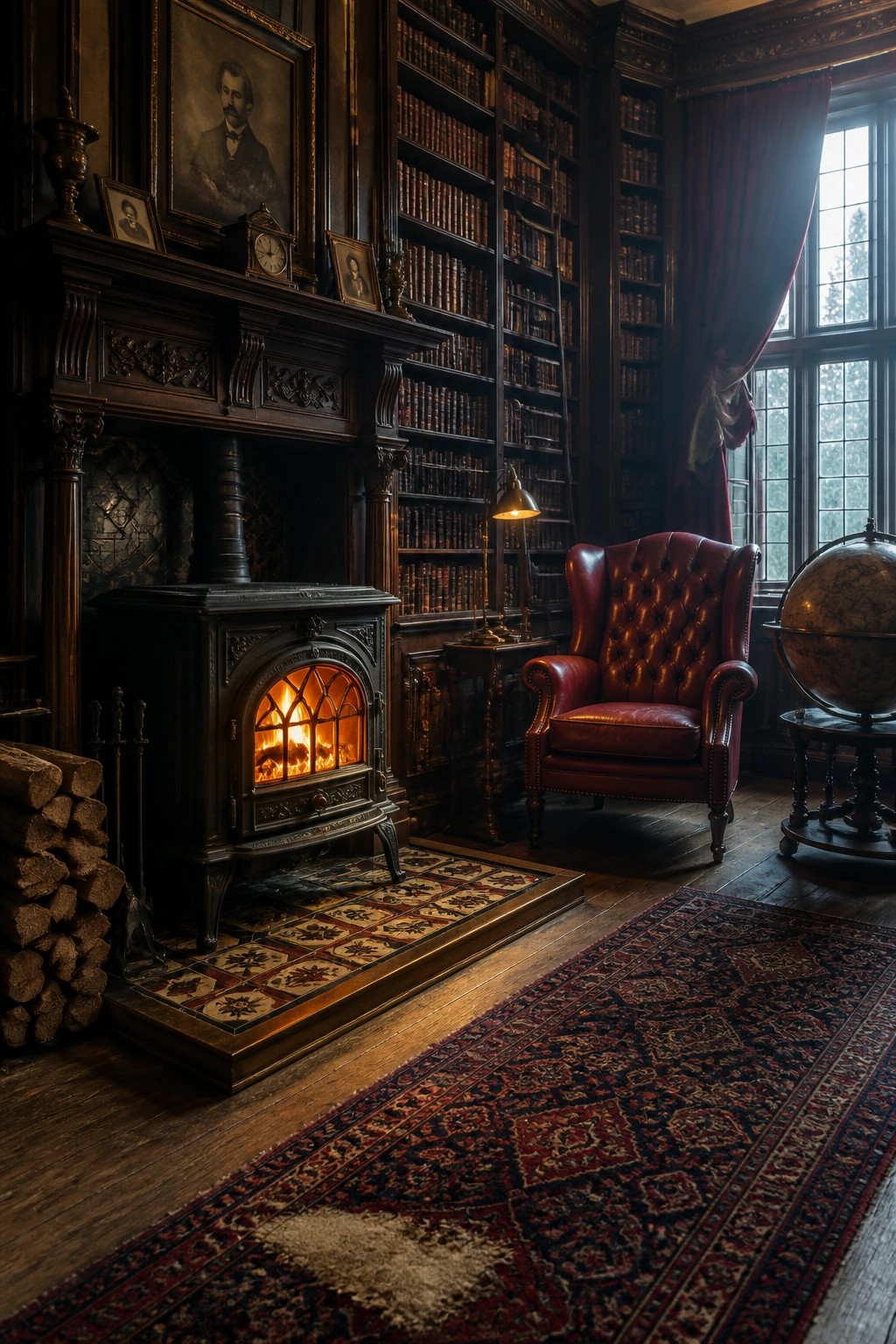
Many older homes already have deep bookshelves, and adding a wood stove in the middle of them makes the whole wall feel more useful. The shelves turn what could be just a heat source into the center of a reading space without needing extra furniture.
This setup works best in studies or living rooms where you want storage right where people sit. Match the wood tone on the shelves to the mantel so the stove looks built in rather than added later.
Stone Fireplaces With Reclaimed Wood Mantels
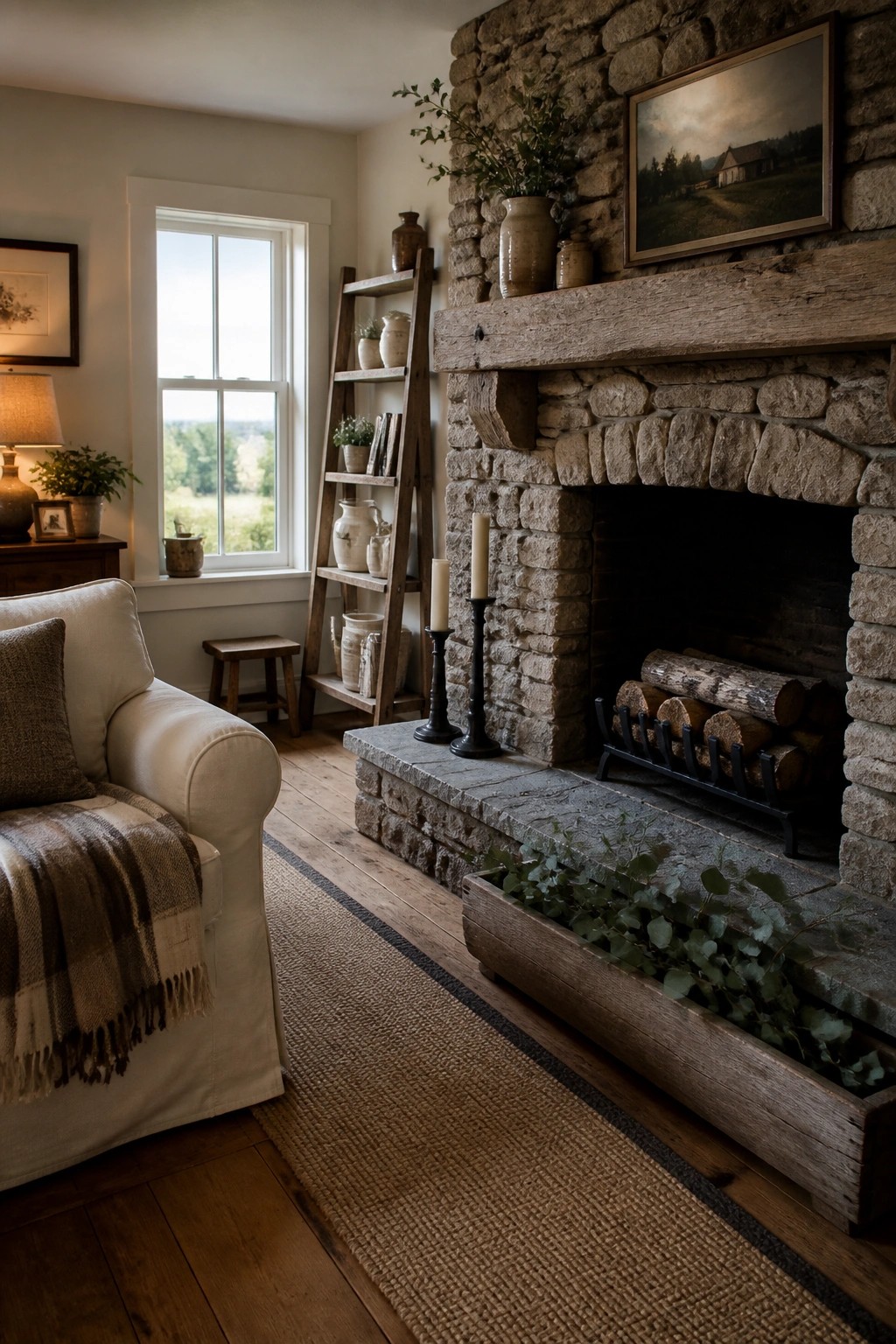
A thick reclaimed wood mantel adds warmth and age to a stone fireplace without much extra effort. The rough texture of the stone next to the worn wood creates a settled look that feels natural in traditional rooms.
This approach works best in homes that already lean rustic or country. Keep the mantel simple in shape and let the wood carry the character. Avoid painting it or adding too many layers of trim.
Fireplaces in the Dining Room
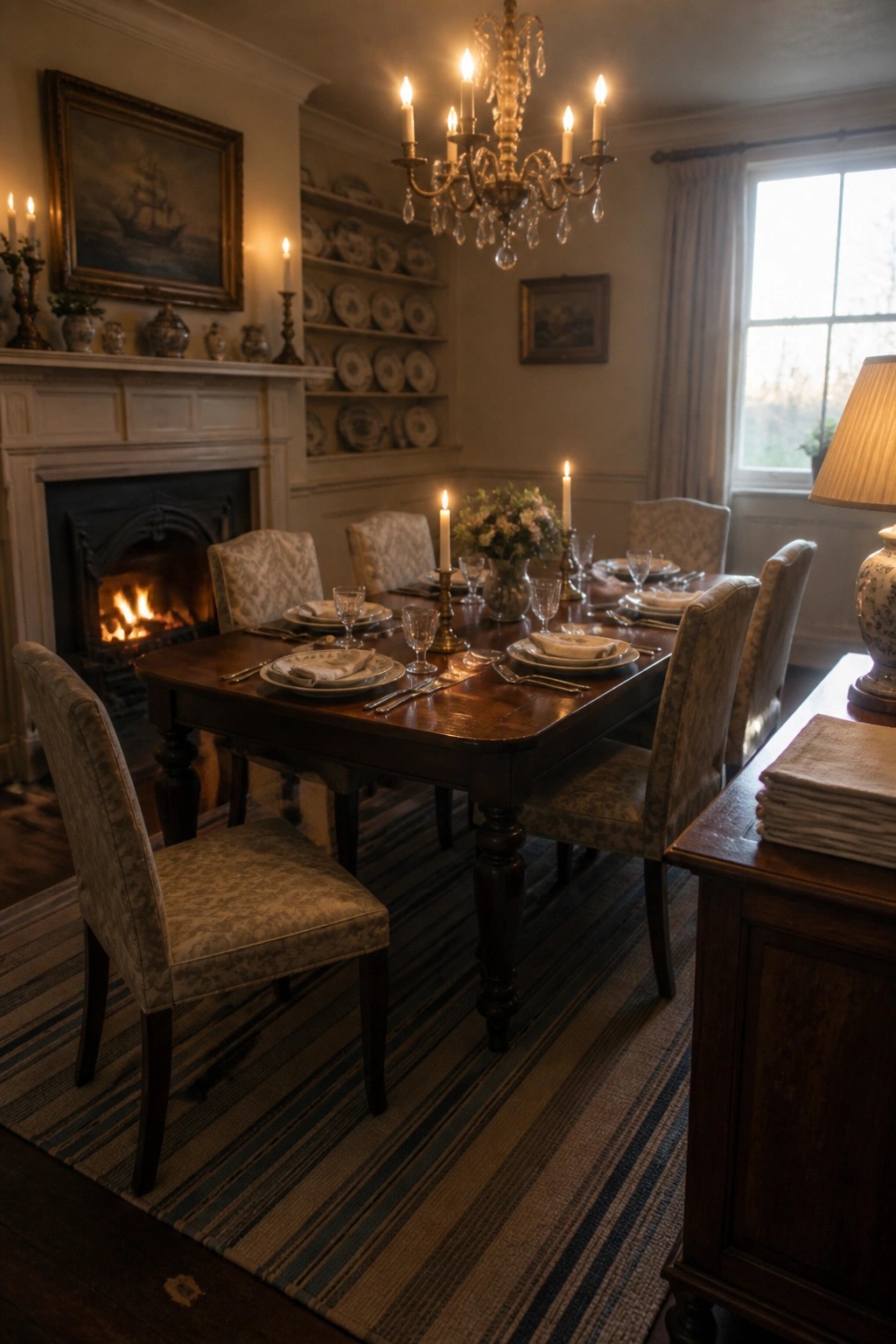
A wood-burning fireplace can turn a traditional dining room into a warmer, more inviting space. The steady flame gives off real heat and a soft glow that makes evening meals feel settled and comfortable without any extra effort.
This works best in older homes where the fireplace already exists or can be added without major changes. Keep the table and chairs simple so the fire stays the main focus rather than competing with too many other details.
A Fireplace in the Bedroom
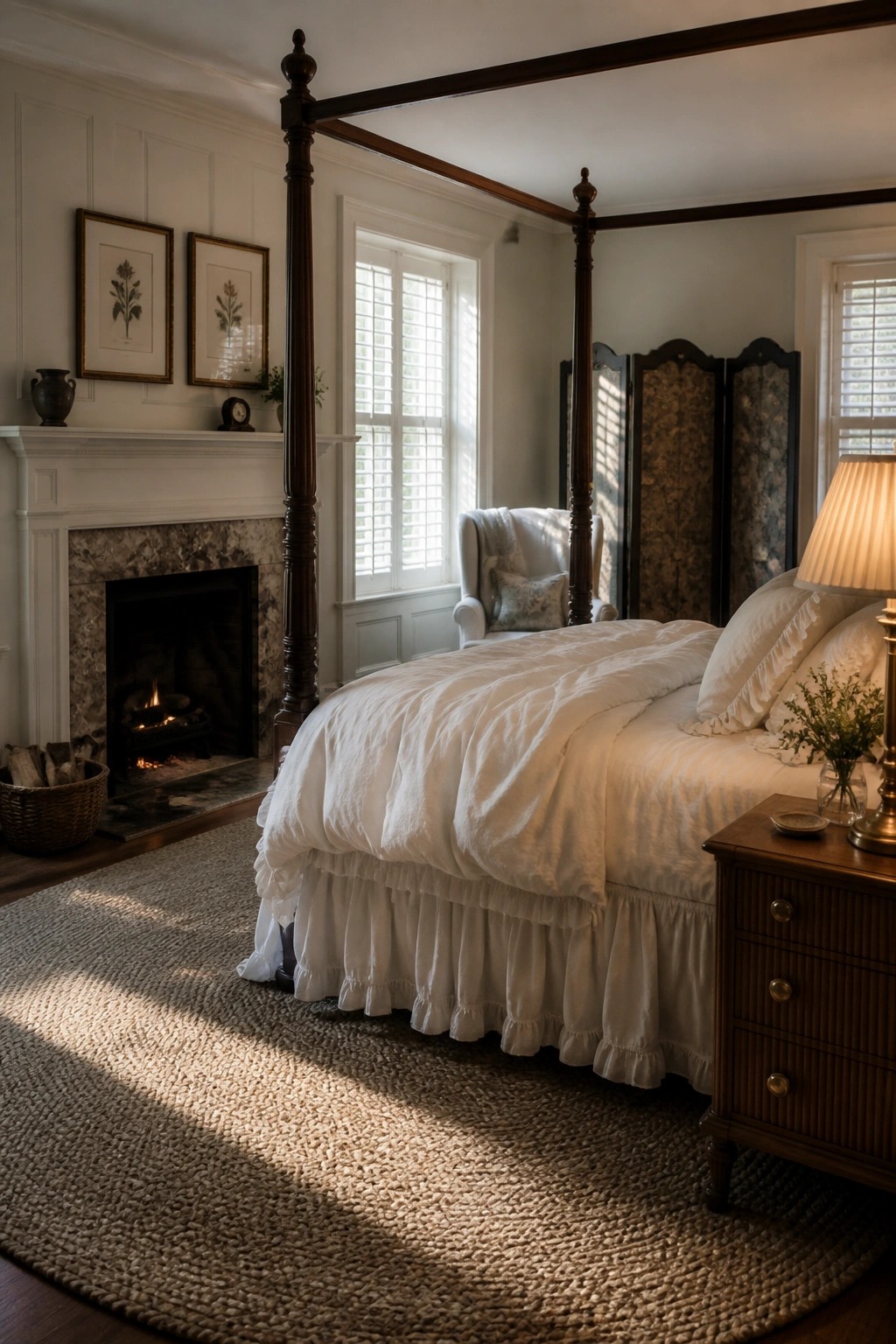
Many traditional homes benefit from adding a wood-burning fireplace to the bedroom. It creates a steady source of warmth without needing extra heating on cooler nights. The simple white mantel and clean lines keep the look classic rather than fussy.
This setup works best in homes with enough ceiling height and proper chimney access. Keep the surrounding walls light so the fire remains the main focus. Avoid crowding the mantel with too many objects.
A Big Stone Fireplace in the Kitchen
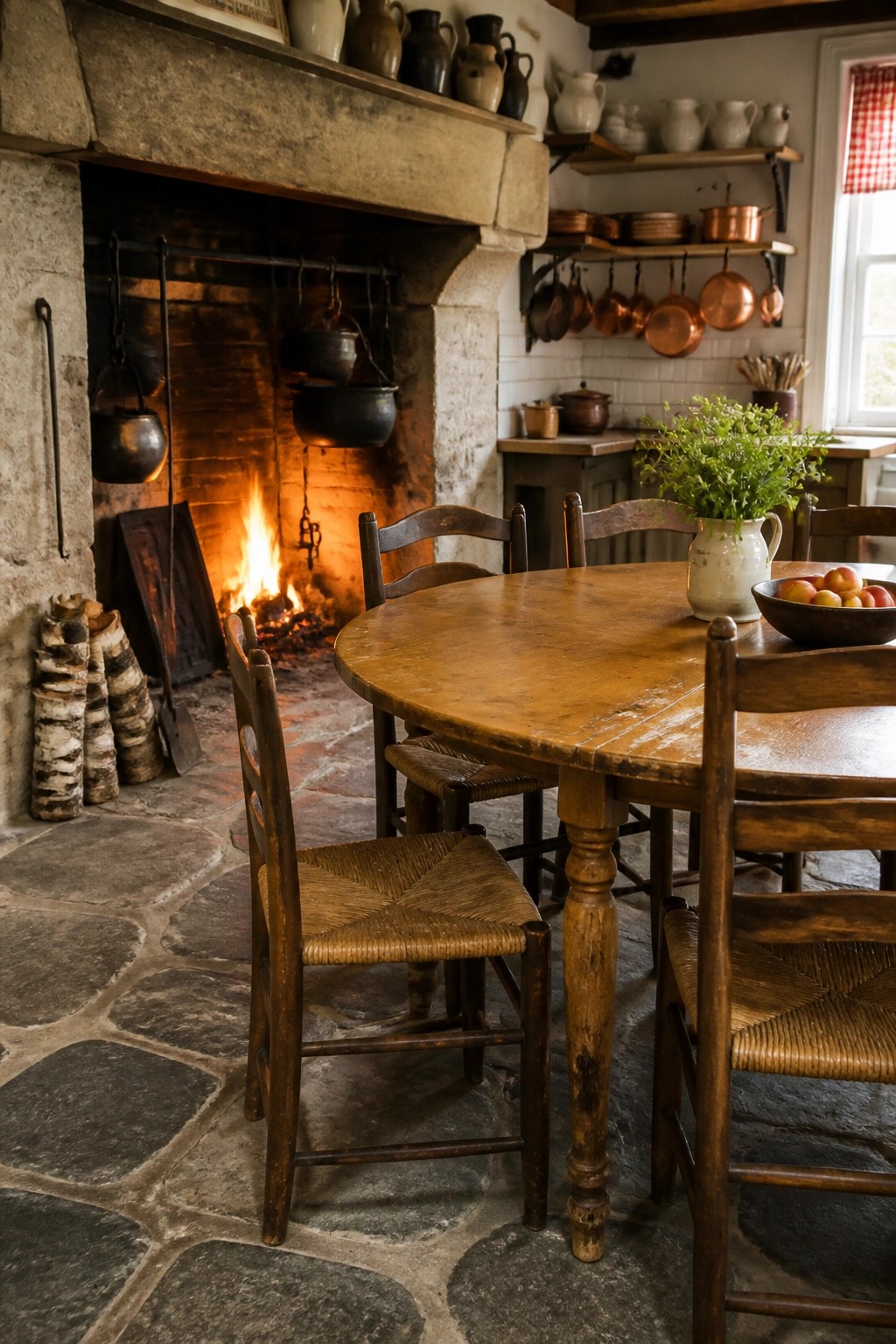
Many older homes feel more welcoming when the fireplace takes center stage in the kitchen. A large stone surround creates a natural gathering point that ties cooking, dining, and sitting into one space. The deep hearth and simple mantel keep the look grounded without extra decoration.
This approach works best in traditional houses that already have good chimney access. Place the table nearby so the fire stays part of daily life, and keep surrounding surfaces easy to clean. Check that the stone is sealed well if food prep happens close by.
White Brick Fireplace Surrounds
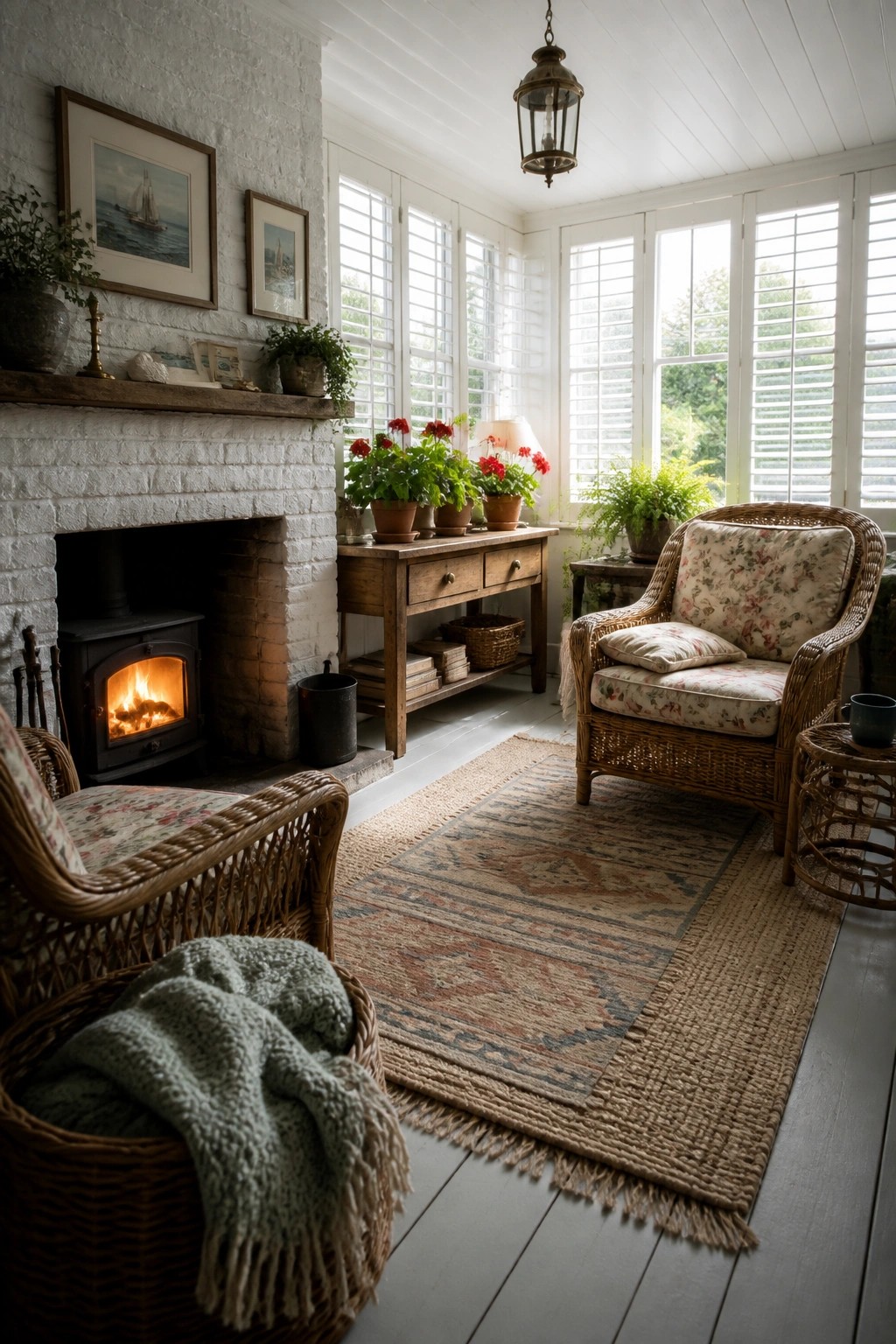
Many traditional homes feel more balanced when the fireplace stays plain. A white brick surround lets the wood stove stand out without adding extra trim or color that might date the room over time.
This choice works best in spaces with wood floors and simple furniture. It keeps the focus on the fire while still fitting the overall style of an older house.
Fireplaces in Entryways
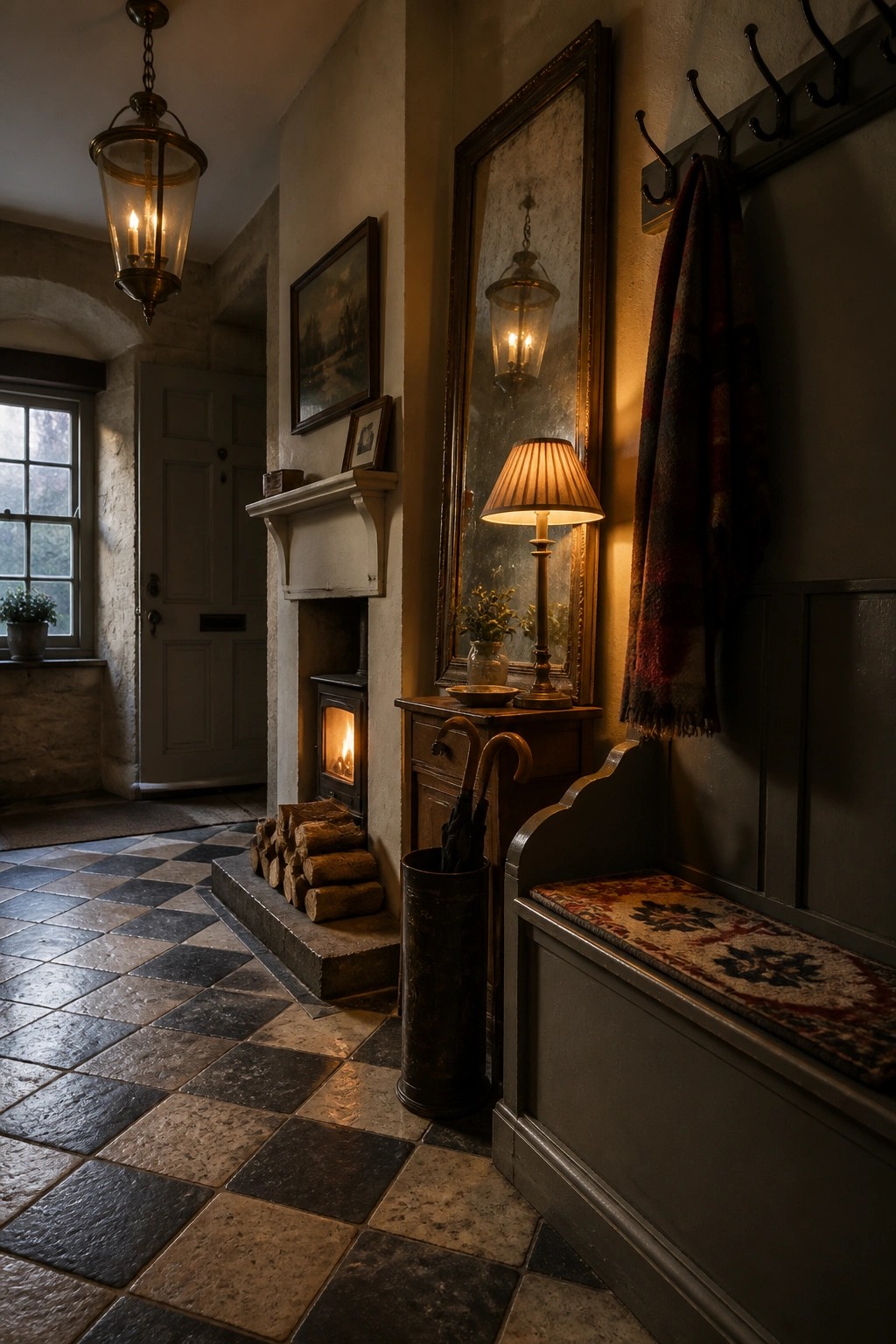
Many older homes tuck a small wood-burning fireplace into the entry or hallway. It gives immediate warmth the moment you step inside and adds a lived-in feel without taking over the space.
This setup suits narrow or transitional areas where a full living room hearth would not fit. Keep the hearth low and simple, and store a few split logs right beside it so the fire stays easy to use on cold days.
Fireplace Ideas for Traditional Home Offices
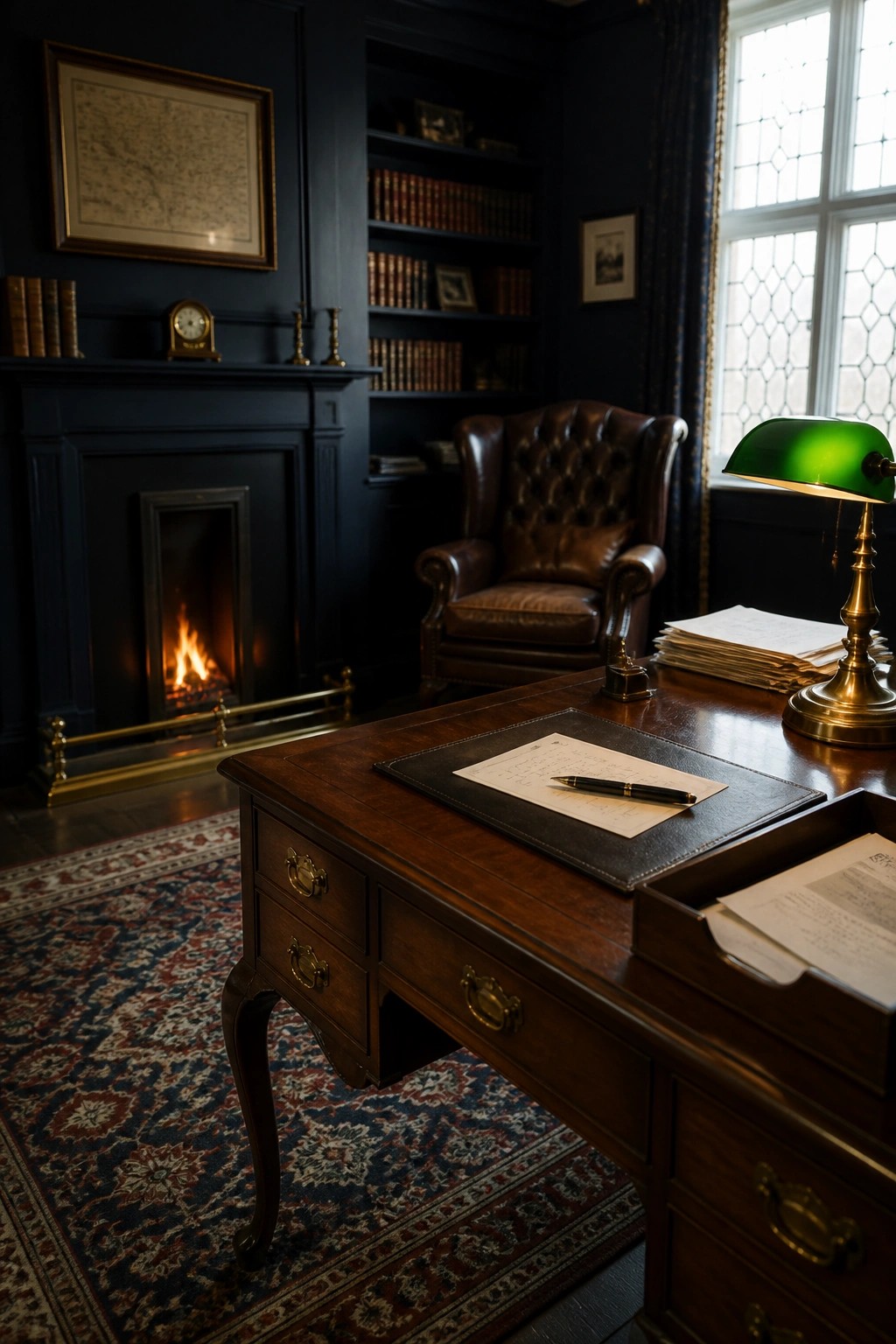
A wood burning fireplace fits naturally into a home study when the goal is a quiet, traditional feel. The steady flame adds warmth without needing much else to make the room feel complete.
This approach works best in older homes or any space with dark paneling and wood furniture. Keep the mantel simple and let the fire provide the main point of interest.
Built-In Bench Seating In The Fireplace
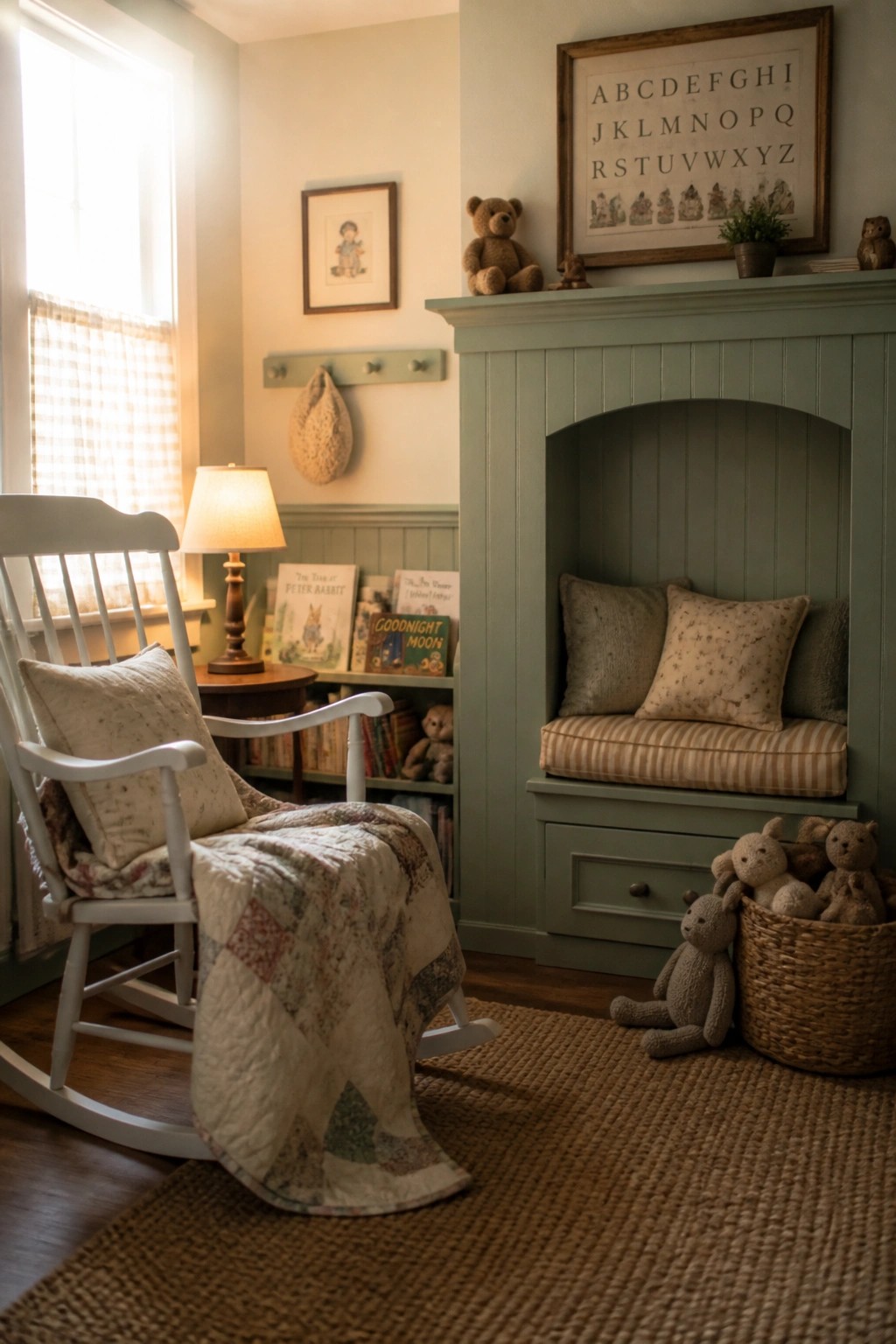
Many older homes turn the inside of a fireplace into a simple bench. This keeps the room from feeling cramped and gives you a warm spot to sit without adding extra furniture.
The bench can include a drawer underneath for blankets or toys. It works best in traditional rooms that already have wood trim and painted millwork. Just check that the materials stay safe if the fire is lit often.
Wood Stoves In Traditional Bedroom Fireplaces
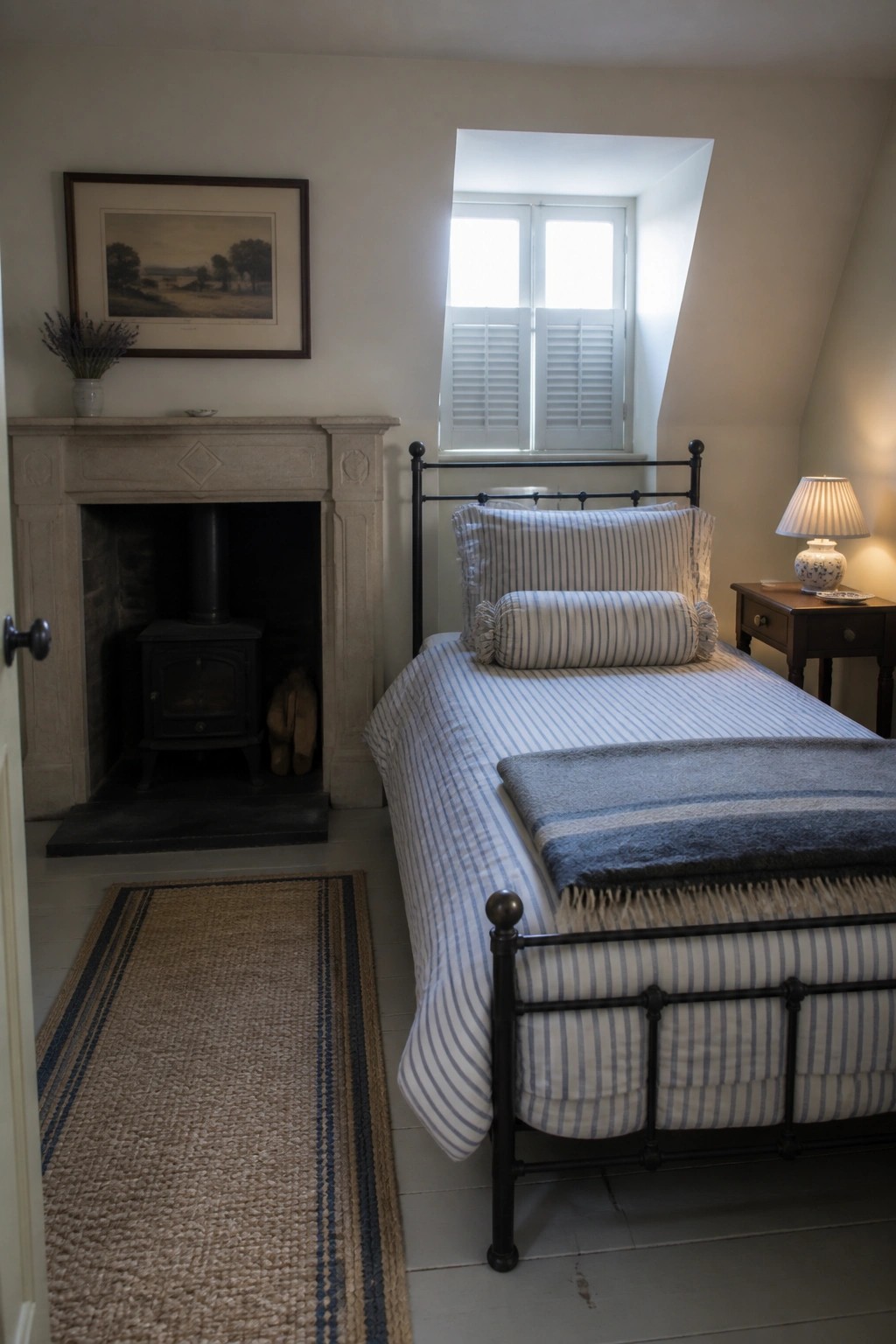
Many older homes still have working fireplaces in bedrooms, but a full open fire can feel too much for a small space. A compact wood stove tucked into the existing opening gives steady heat without the draft or mess. It keeps the original surround intact while making the room feel warmer on cold nights.
This setup works best in homes that already have masonry chimneys and simple traditional trim. Keep the stove modest in size so it does not crowd the hearth, and use a plain rug in front to catch any stray ash. The rest of the room can stay light and uncluttered.
Keep the Dining Table Near the Fireplace
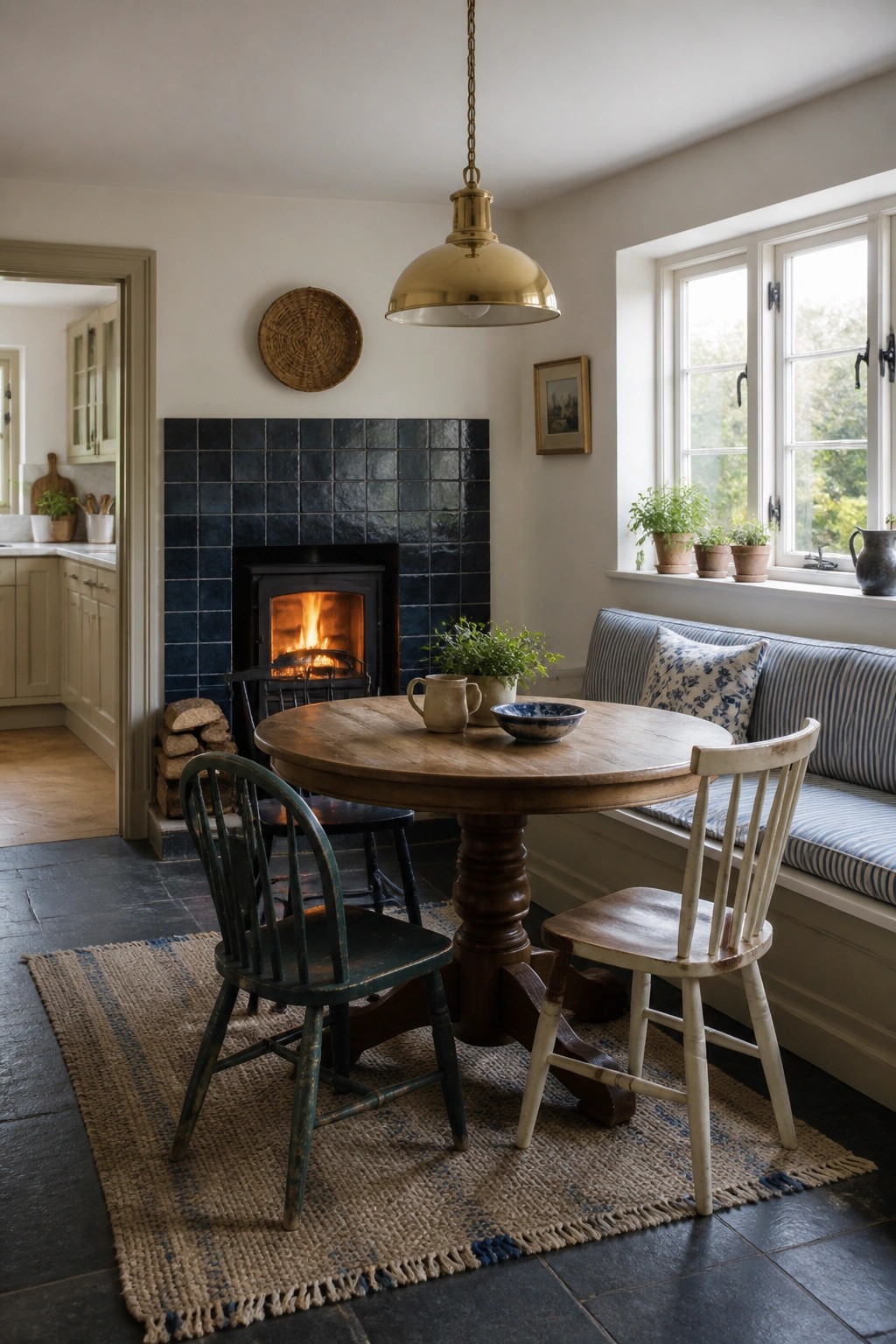
Many homes feel more lived in when the dining table sits close to the fireplace. The heat reaches the table, meals last longer, and the whole room feels pulled together without much extra effort.
This works well in traditional kitchens that open into a living space. Use a sturdy table and chairs that can take daily use, and leave enough room so no one sits too close to the fire.
Wood-Burning Stoves in Traditional Alcoves
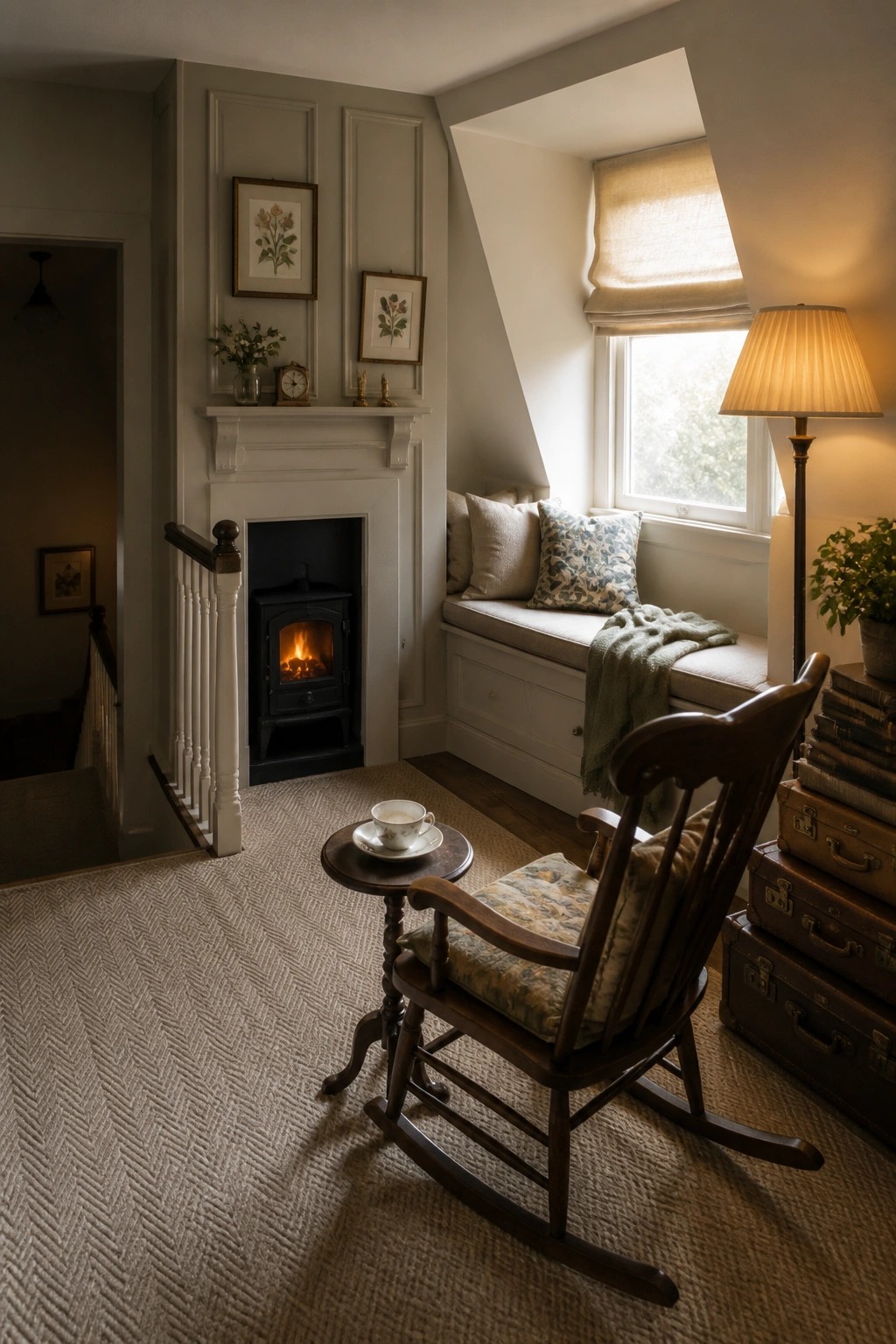
A compact wood stove works especially well when it sits inside an existing alcove with paneling around it. The setup keeps the fire visible and central while the rest of the room stays open and usable.
This approach suits older homes that already have trim details and built-in features. Place a window seat next to the stove so the corner becomes a natural spot to sit and enjoy the heat without adding much extra furniture.
Seating Around the Fireplace
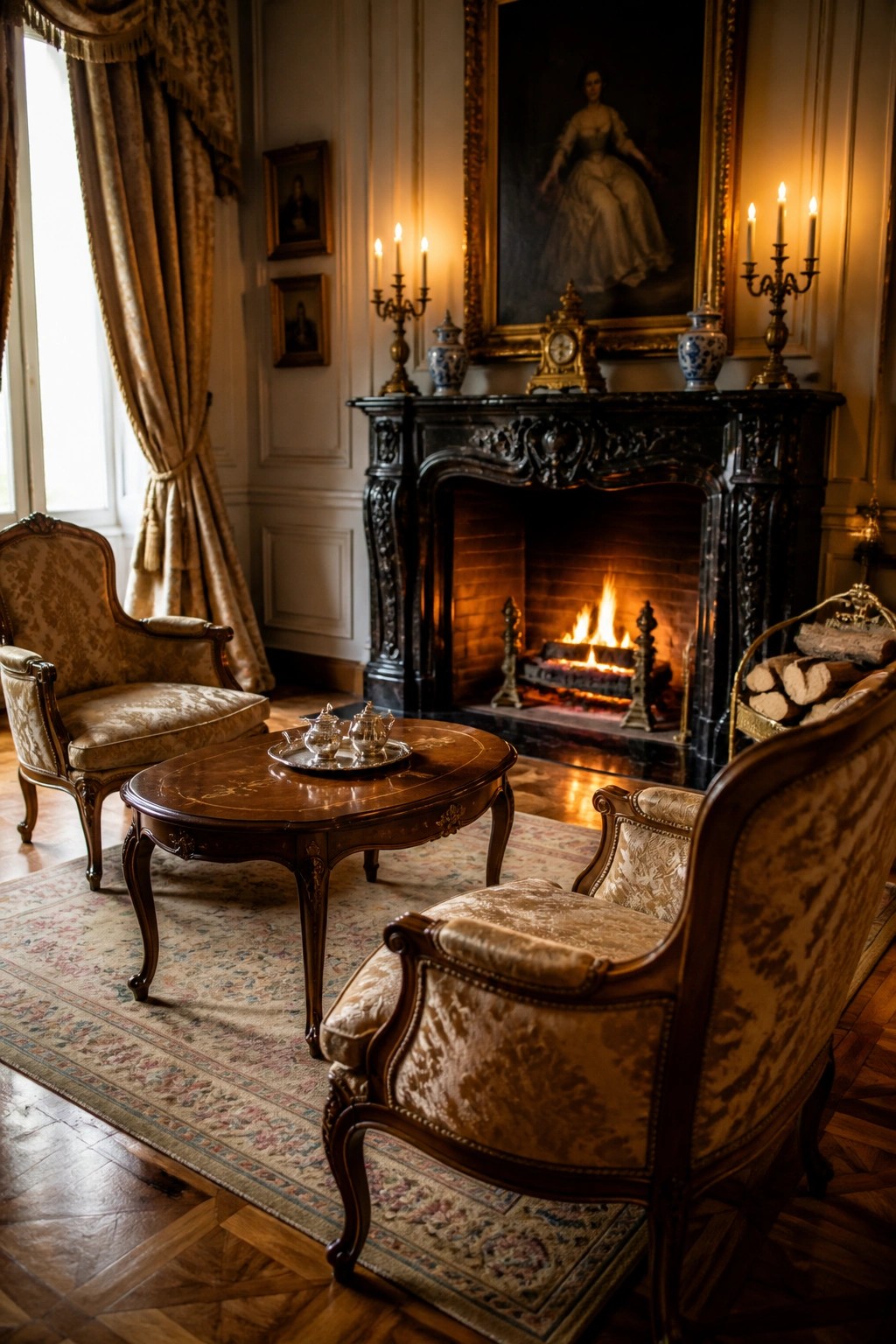
Placing a few upholstered chairs close to a wood burning fireplace gives the room a clear purpose. The fire becomes the spot people naturally gather, rather than just a decorative feature along the wall.
This works best in traditional homes where the living room is used for quiet evenings or conversation. Keep the arrangement simple, with the main seats angled toward the hearth and a low table in between for drinks or a tray.
Add Storage With A Bench By The Fireplace
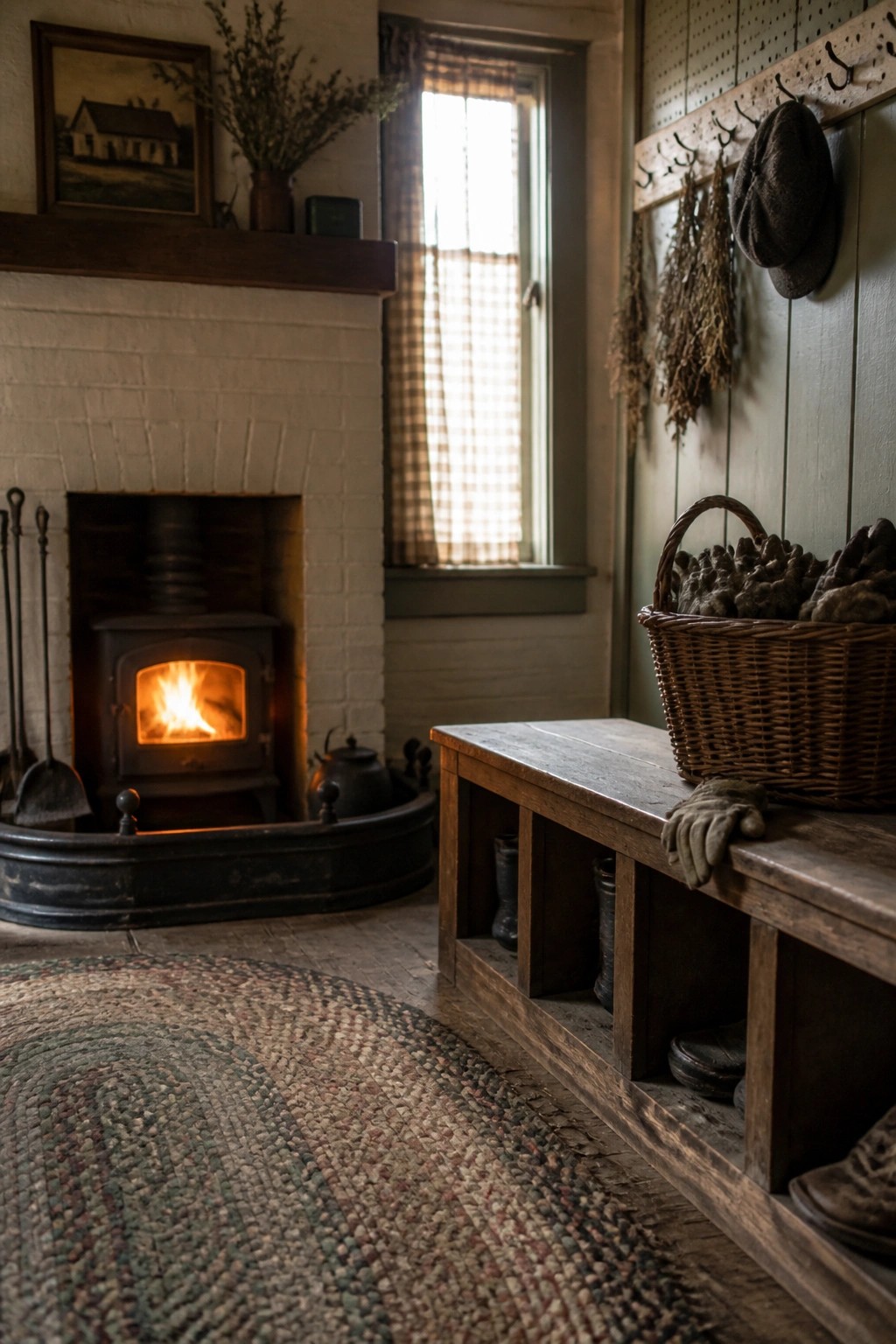
A bench next to the fireplace gives you a place to sit while you tend the fire and keeps boots, gloves, and kindling within easy reach. In older homes this simple piece turns an open spot into something useful without adding much clutter.
It works best in rooms that already have a wood-burning stove or fireplace and see daily traffic. Pick a low wooden bench with open cubbies so air can still move around the hearth and the fire stays the main focus.
Wood-Burning Fireplaces in Traditional Bedrooms
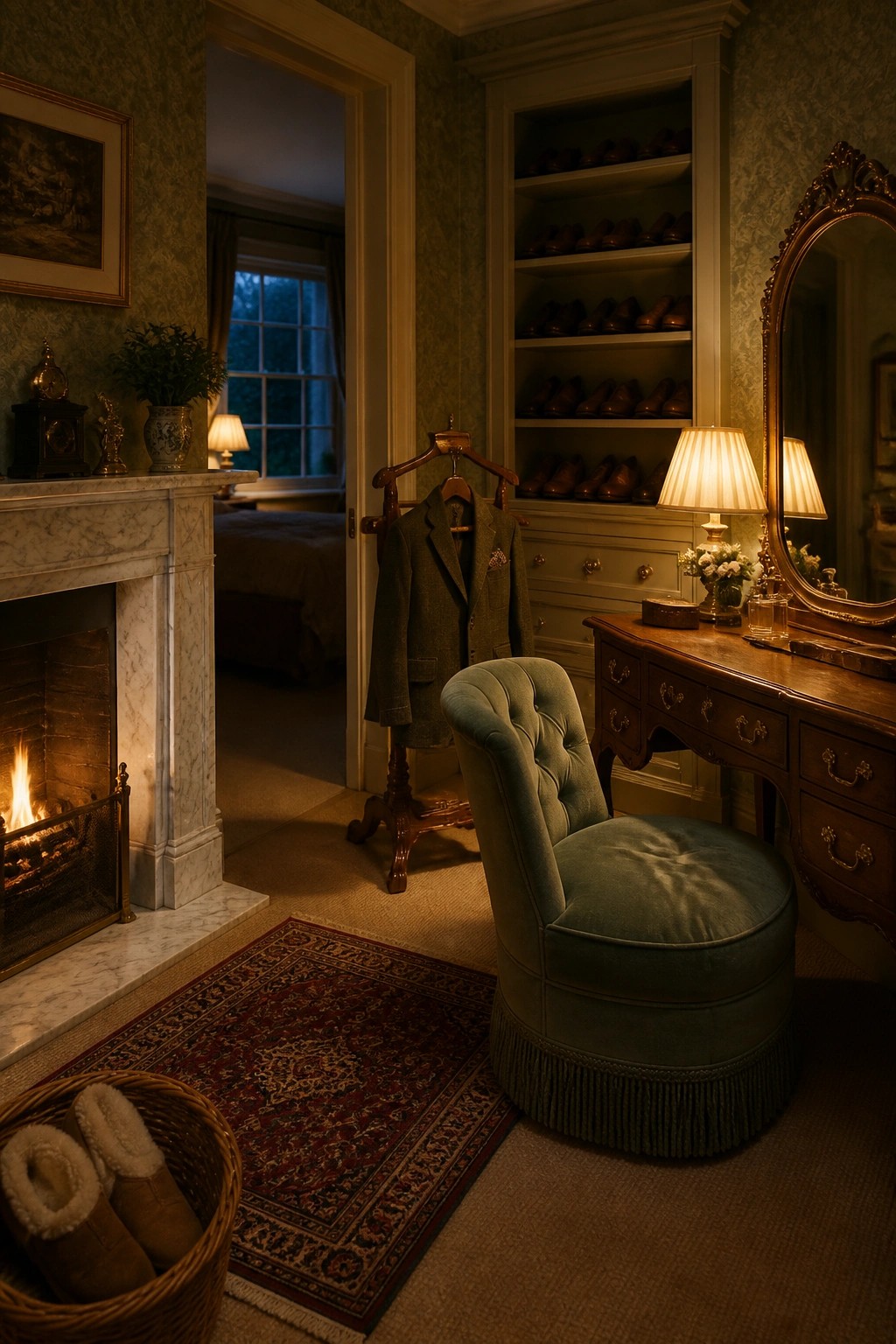
A wood-burning fireplace adds real warmth to a bedroom and gives the room a settled, traditional feel that stays useful year after year. The steady heat and soft light make the space more comfortable on cold nights without any extra effort.
This works best in older homes where the fireplace can sit naturally along one wall. Keep the mantel simple and match the scale to the room so the fire remains the main point without crowding the rest of the furniture.
Brick Fireplaces in Traditional Studies
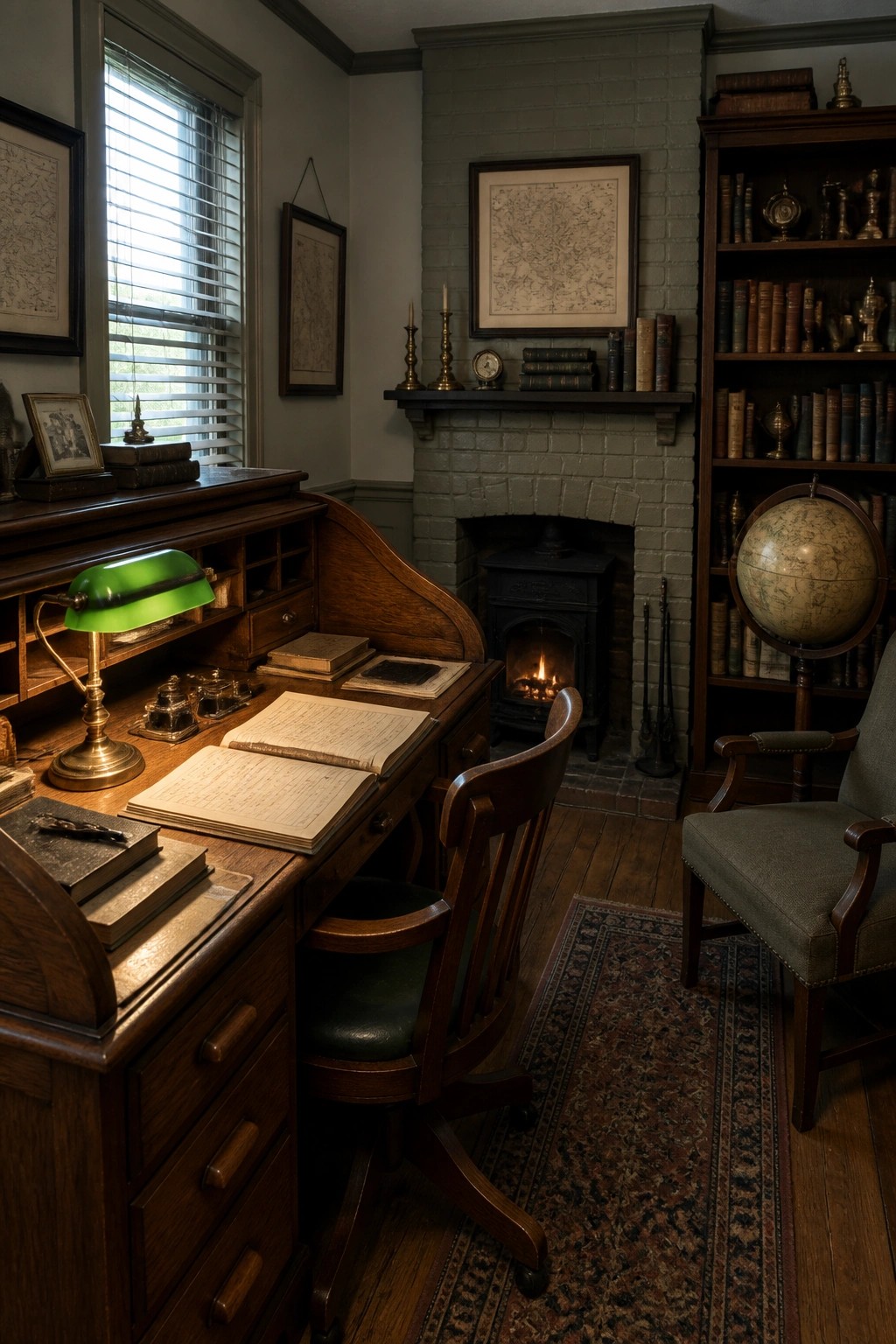
A wood-burning fireplace with a simple brick surround works well in a home study. It gives the room a steady focal point and keeps the space feeling warm and practical at the same time.
This approach suits older homes or any room already using dark wood furniture and built-in shelves. Keep the mantel clear and let the fire itself do the main job.
Wood Stove In The Sunroom
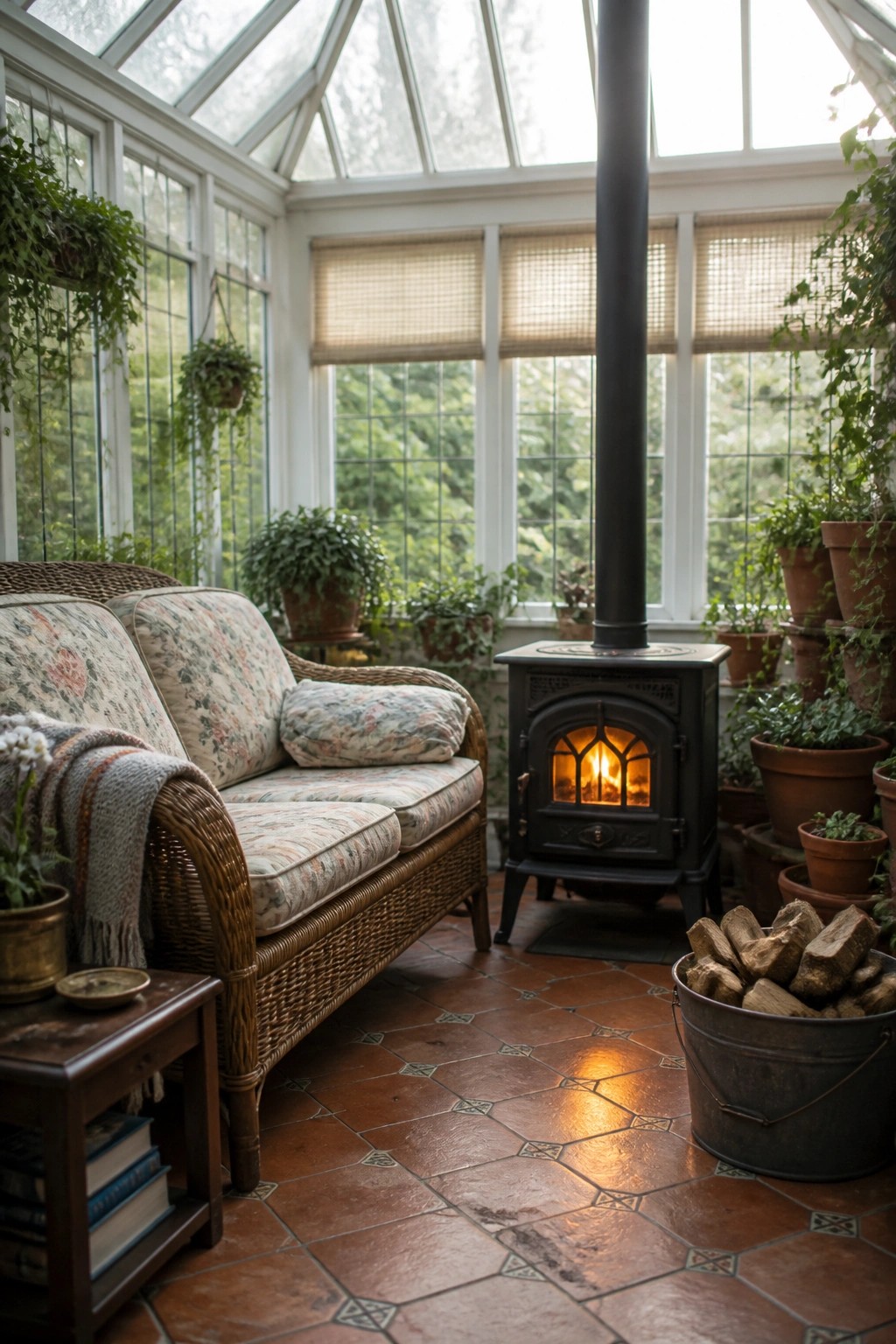
A wood stove fits well in a sunroom because it brings steady heat into a space that can feel cool even when the sun is out. The black cast iron model sits neatly on the terracotta floor and gives the room a simple, traditional anchor without blocking the view.
This works best in older homes where the sunroom already has plenty of windows and plants. Keep the stove on a solid tile base and place seating nearby so the warmth reaches people directly. Avoid crowding the area with too much furniture.
Tiled Surrounds On Wood Burning Fireplaces
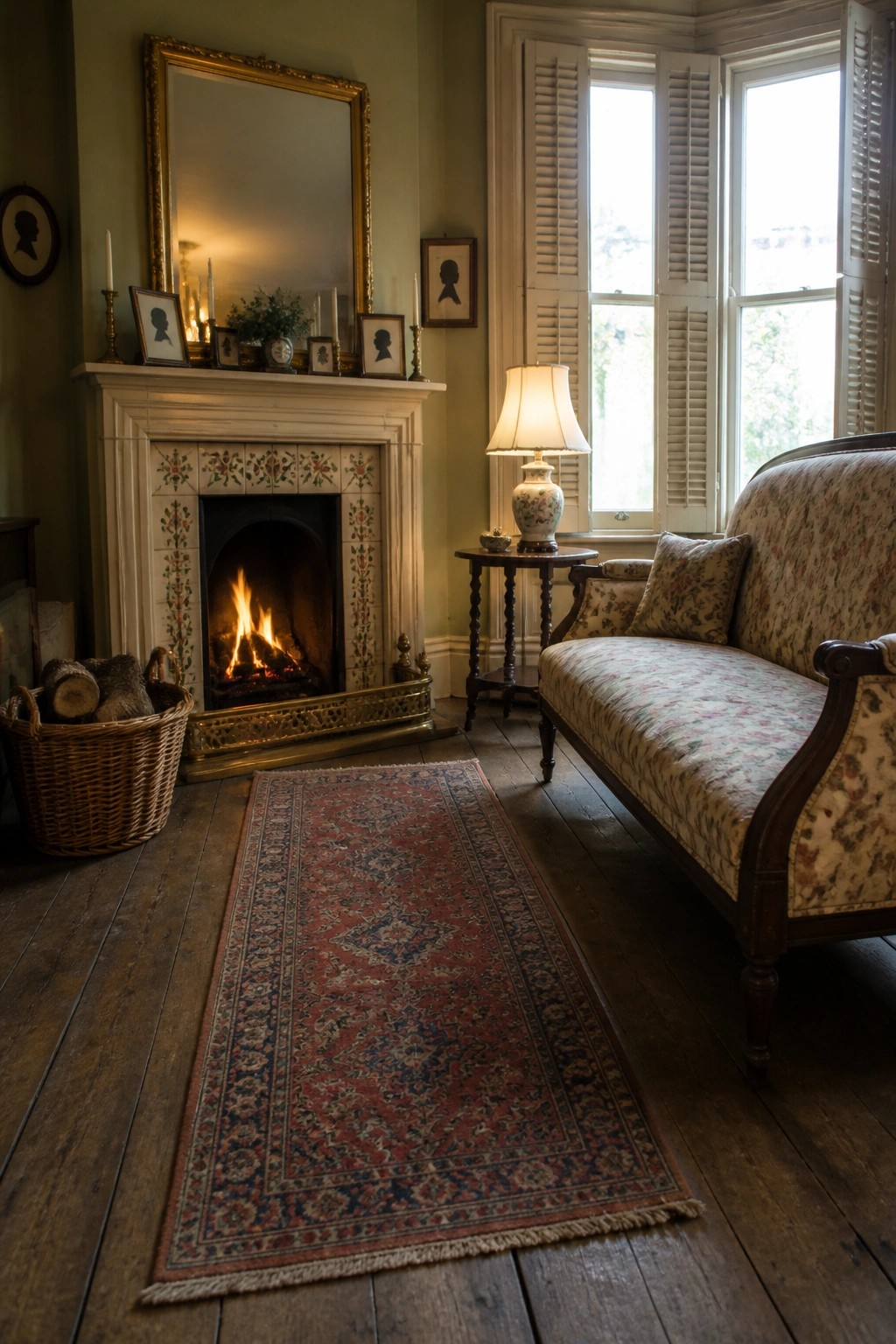
A tiled surround gives a wood burning fireplace a finished and traditional look that still feels warm and usable. The pattern adds quiet detail around the opening while the fire itself stays the main attraction in the room.
This approach suits older homes or any space that already has classic trim and wood floors. Keep the mantel styling light so the tile and flames do not compete with too many objects.
Brick Fireplaces in Everyday Rooms
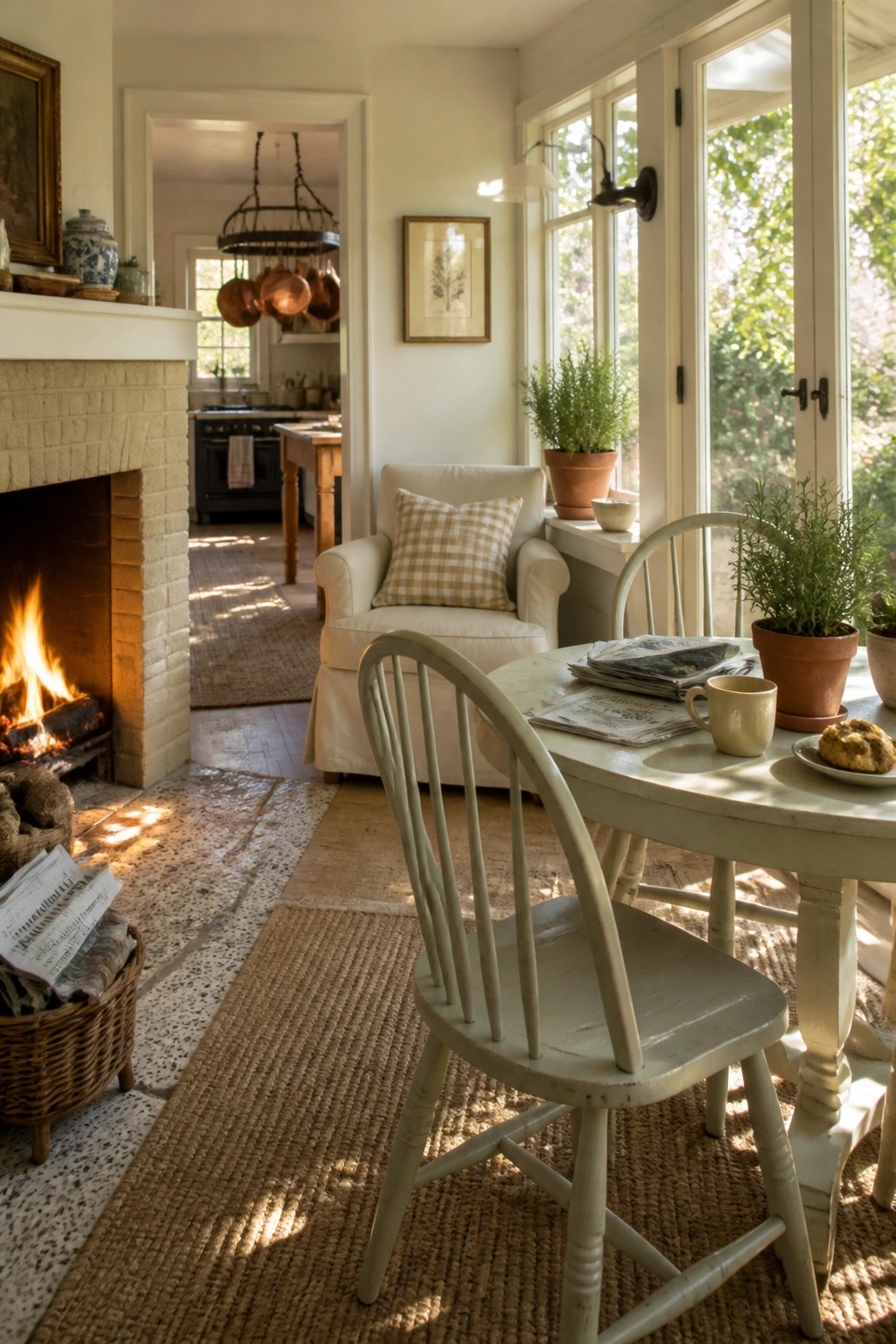
A brick fireplace gives a traditional home a steady center without needing much else around it. The material holds up well over time and pairs easily with wood floors and plain furniture.
It works best in main living areas that see daily use. Keep the hearth open and the mantel simple so the fire itself stays the focus.
Frequently Asked Questions
Q: Which wood should I burn to get a steady flame without much smoke?
A: Seasoned hardwood like oak or maple works well here. Split the logs small enough to fit your grate and let them dry fully before use. This keeps the fire going longer and cuts down on creosote buildup.
Q: How can I make sure the fireplace draws properly on a windy day?
A: Check the damper before you light anything. Open it all the way and hold a match up near the flue to test the pull. A good draft pulls the smoke right up instead of letting it spill into the room.
Q: What if I want to add a wood-burning fireplace to my traditional home later?
A: Hire a mason to check the chimney structure first. They can build a proper foundation and line the flue so everything meets code.
