

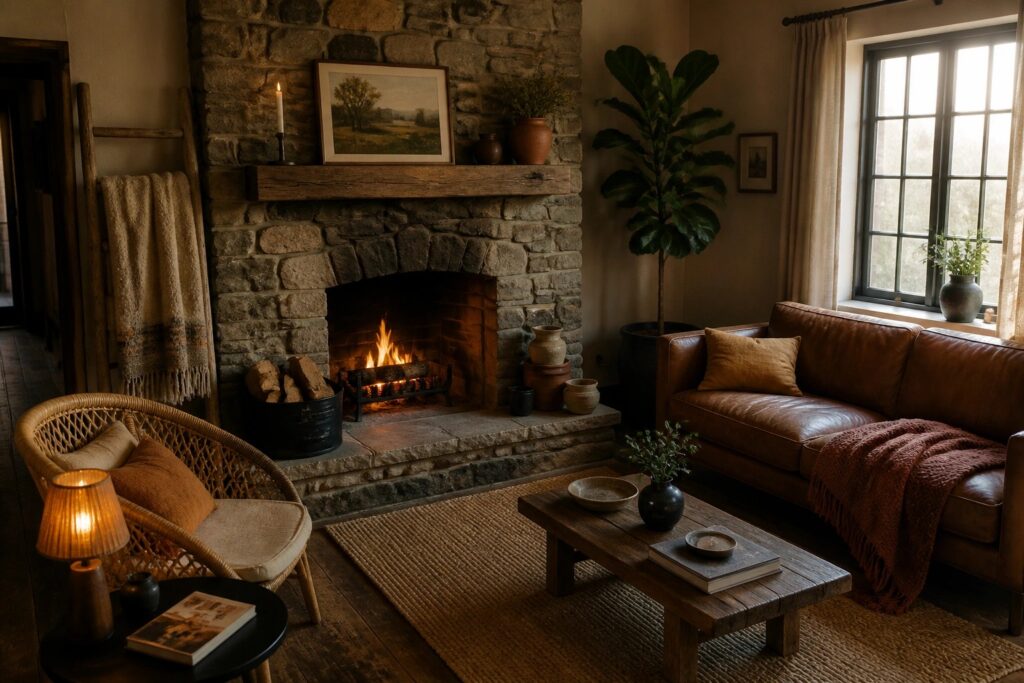
In my own living room the fireplace has always been the spot where family gathers so I pay attention to how the surrounding tones and textures hold up to daily use.
Warm earth tones tend to soften the hard lines of rustic stone or wood and make the heat from the fire feel more natural in the space.
Scale is easy to misjudge.
I often find that adding layers of texture around the hearth helps the room feel balanced even when the furniture gets moved around for different seasons.
A few of the approaches remind me to check how the light from the fire interacts with the walls before committing to a full change.
Stone Fireplaces with Rough Wood Mantels
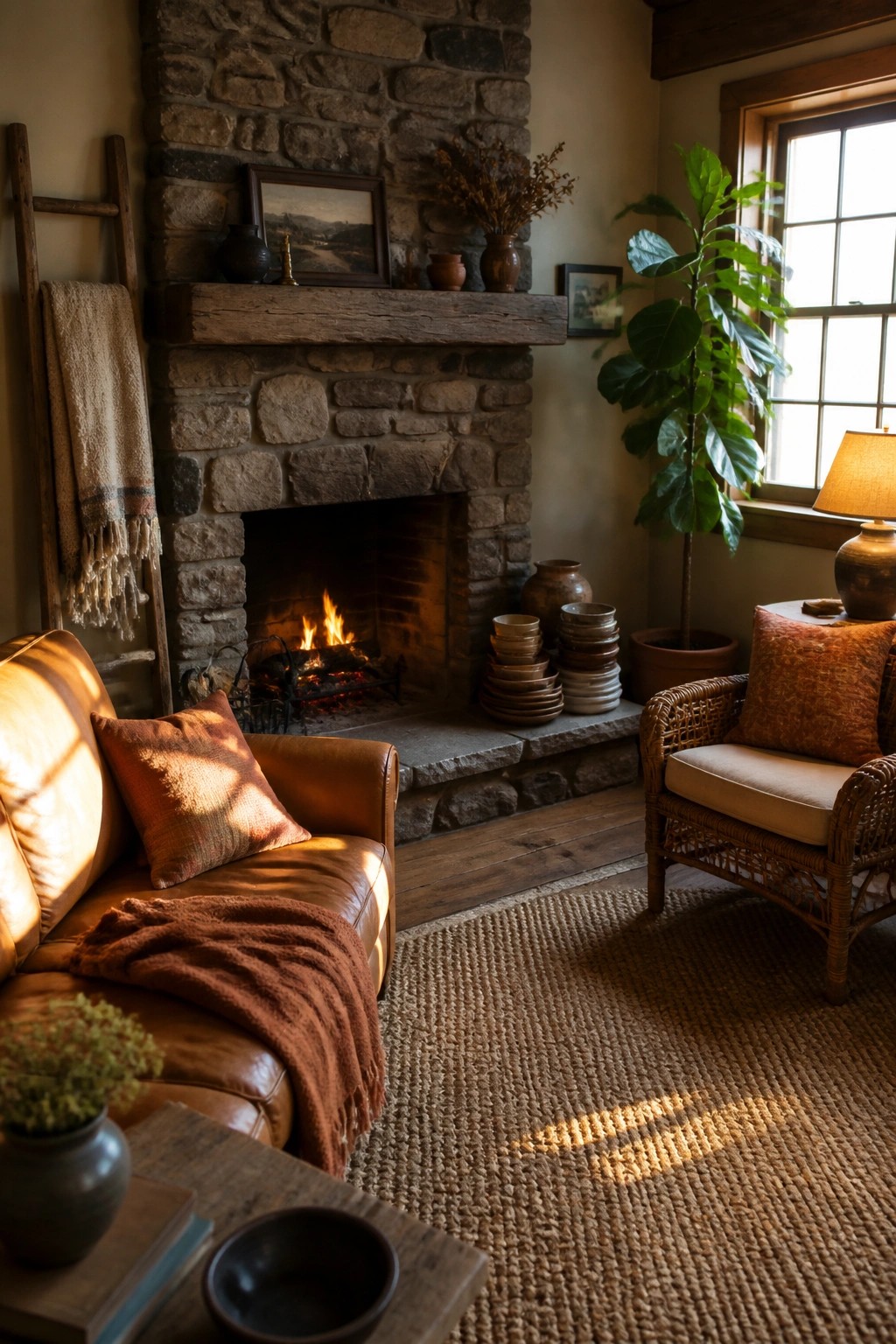
A large stone fireplace with a thick wood mantel gives a living room a solid center without needing much else. The natural colors and textures already pull the rest of the room together in a simple way.
This works best in spaces with wood floors and older details. Keep the furniture low and the colors warm so the fireplace stays the main focus.
A Stone Fireplace as the Focal Point
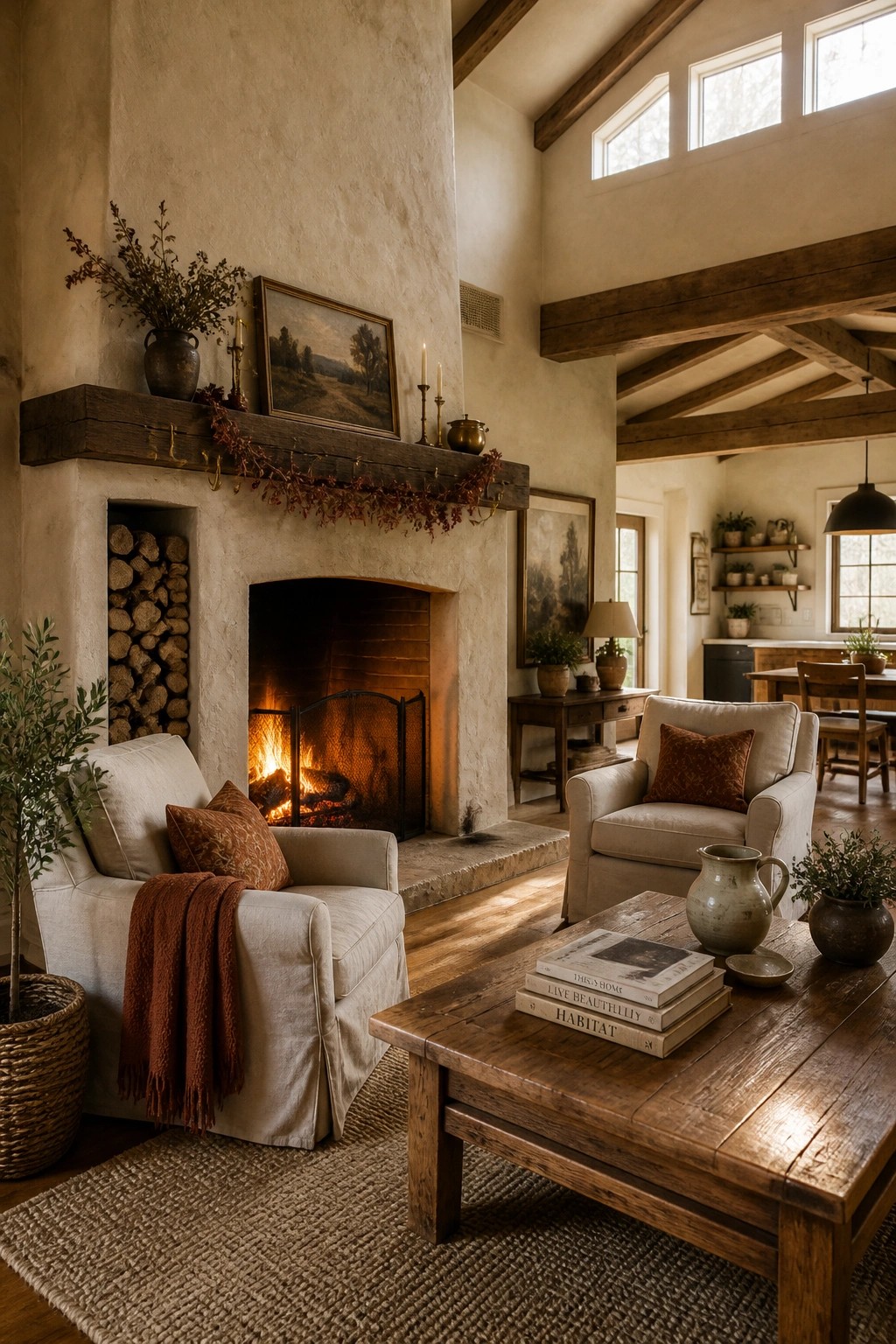
A large stone fireplace with a thick wooden mantel gives a rustic living room a clear center. It draws the eye right away and makes the rest of the room feel settled around it instead of scattered.
This setup works best in spaces that already have some height or open floor area. Keep the seating low and simple nearby, and stick to warm earth tones on the chairs and rugs so the stone and wood stay the main feature without competing.
Brick Fireplaces With Warm Sconce Lighting
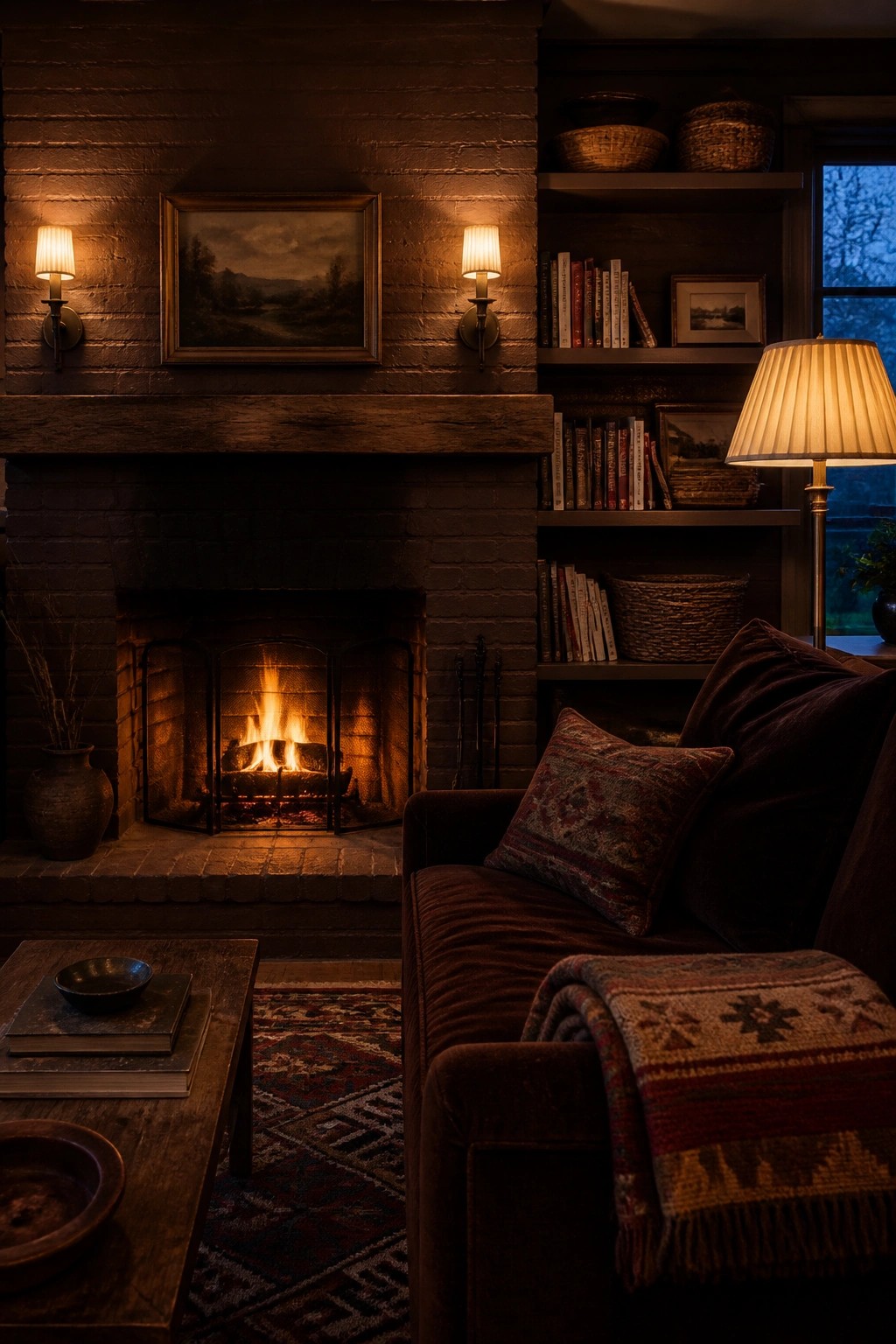
A brick fireplace gains a lot when you add simple sconces on each side. The light spreads across the brick and mixes with the fire glow, which keeps the space feeling warm even when the room is quiet.
This works best in smaller living rooms that already lean rustic. Stick to earth tones on the walls and furniture so the brick stays the main focus instead of competing with brighter colors.
River Rock Hearth Edging
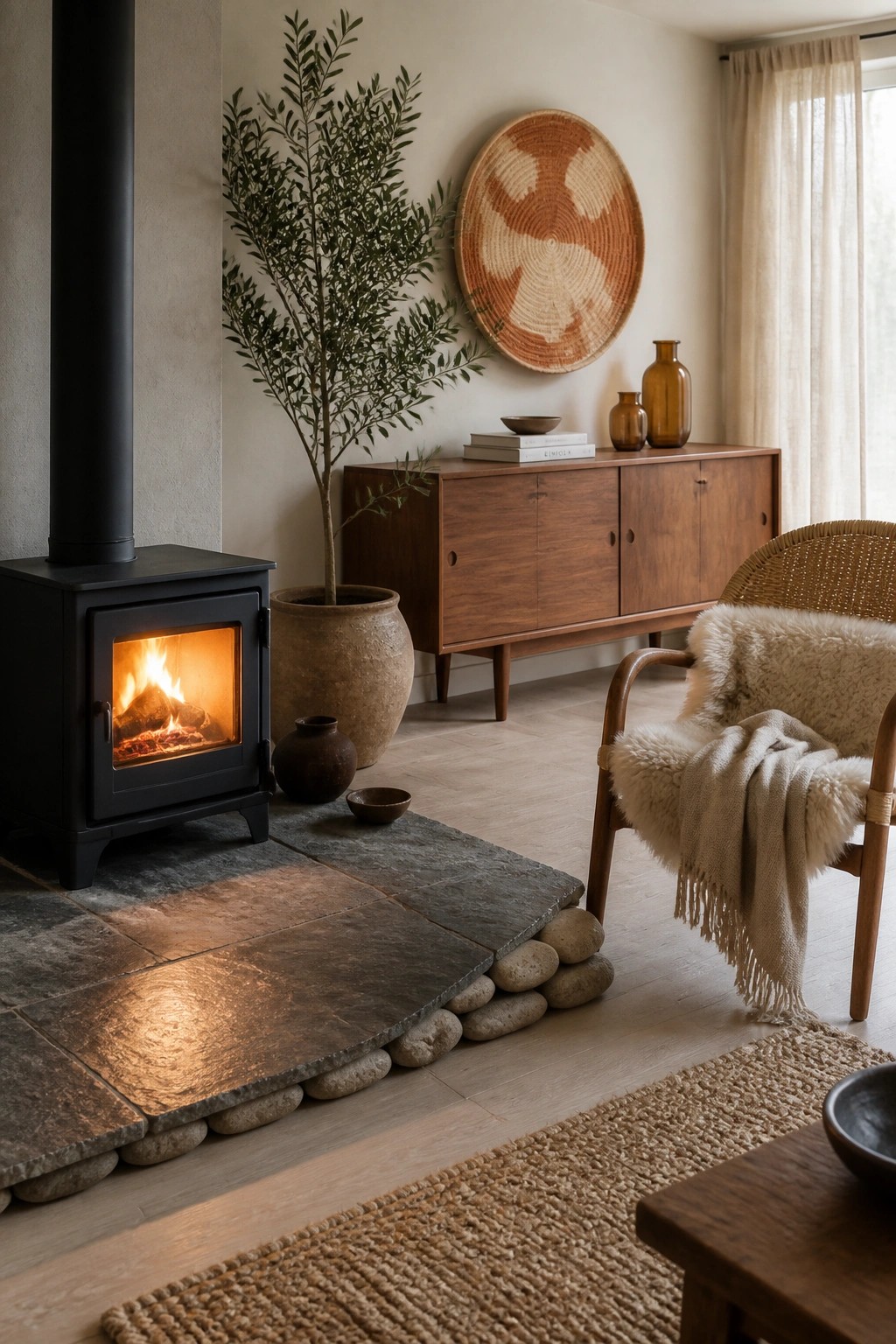
A border of smooth river rocks around a slate hearth gives the stove a grounded, natural base that fits right into an earth-toned room. It softens the hard lines of the tile and makes the whole fireplace area feel more like part of the floor instead of something added on later.
This works best in smaller living rooms where you want the stove to feel settled without a big built-in surround. Keep the rocks in a single layer and let them follow the curve of the hearth so the look stays simple and unfussy.
Mixing Brick And Plaster On The Fireplace
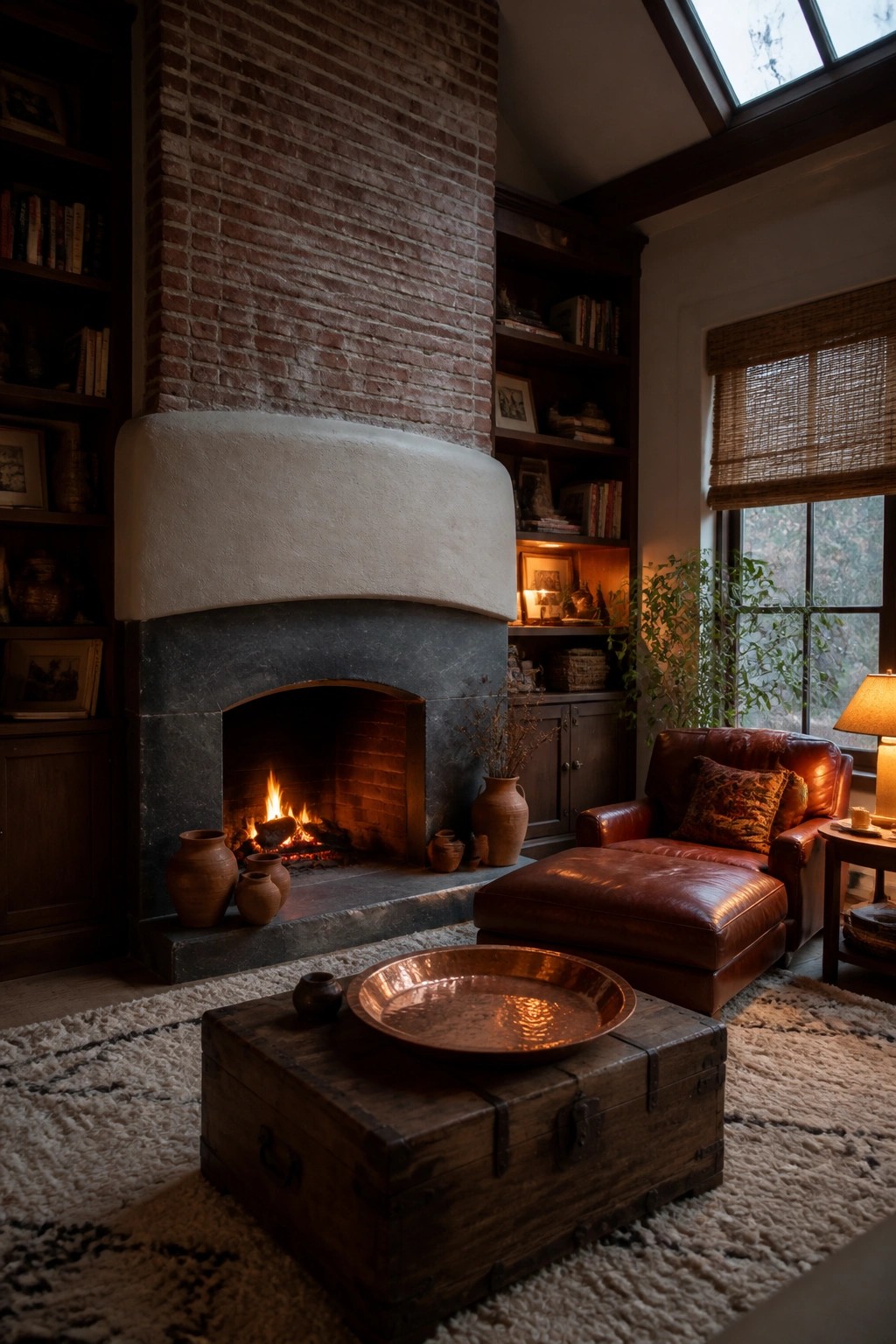
A fireplace that combines brick with plaster and stone gives a room real presence without extra decoration. The rough brick chimney and smooth plaster hood create contrast that feels natural and settled, especially when the rest of the room stays in warm browns and terracotta.
This works best in spaces that already have wood and leather. Keep the surrounding walls and furniture simple so the materials on the fireplace can stand out on their own.
Place A Window Seat Beside The Wood Stove
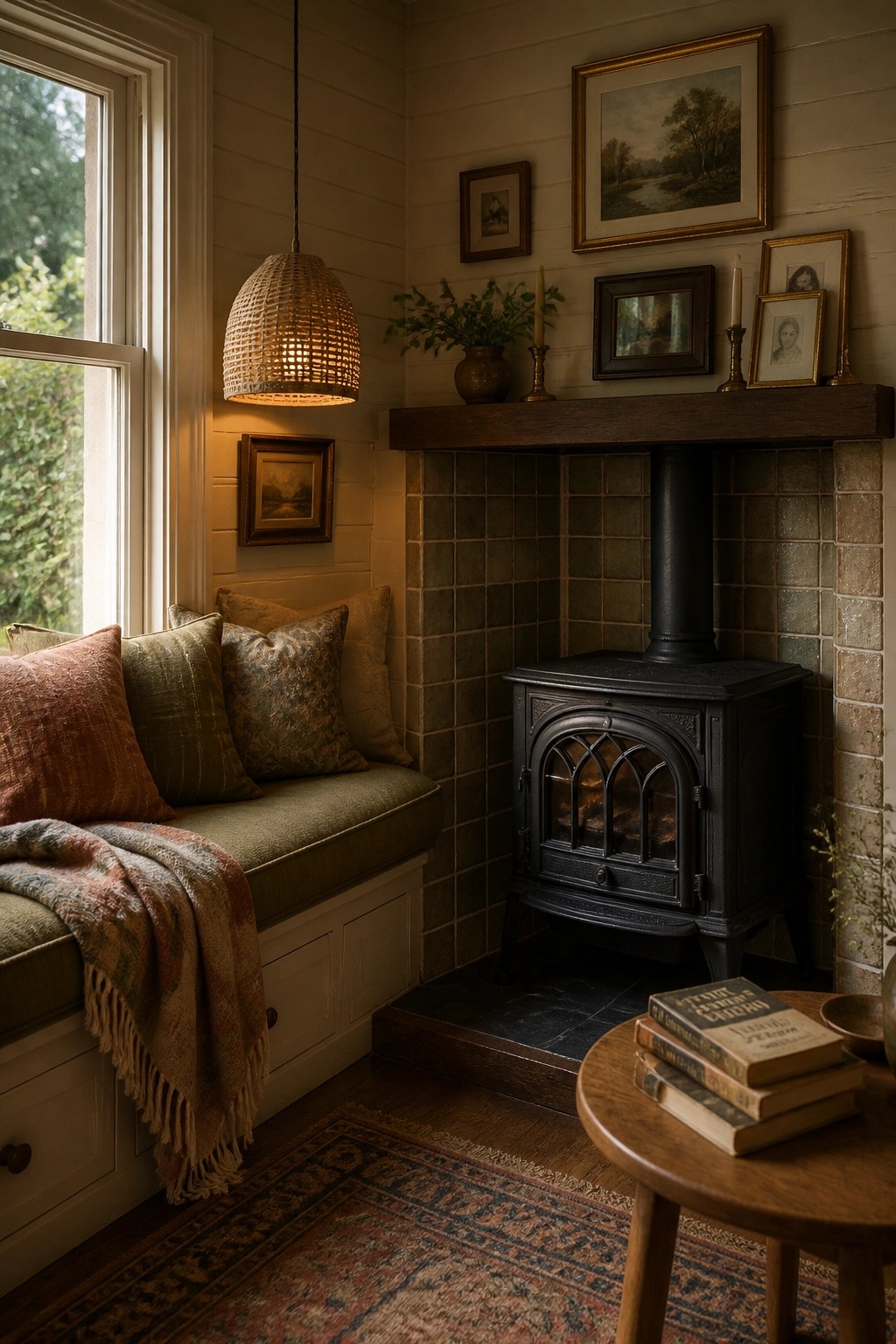
A window seat next to a wood stove gives you a natural spot to sit and enjoy the heat without taking up much floor space. The bench turns an otherwise empty corner into a useful place to read or rest, and the soft cushions in muted greens and rusts keep the whole area feeling warm and lived in.
This setup works best in smaller rooms where you need both seating and storage. Use a low bench with a lift-up lid if you want extra room for blankets, and stick to simple fabrics that match the wood and tile around the stove. Keep the rest of the corner light so the seat does not crowd the fire.
Stone Fireplace as the Natural Center
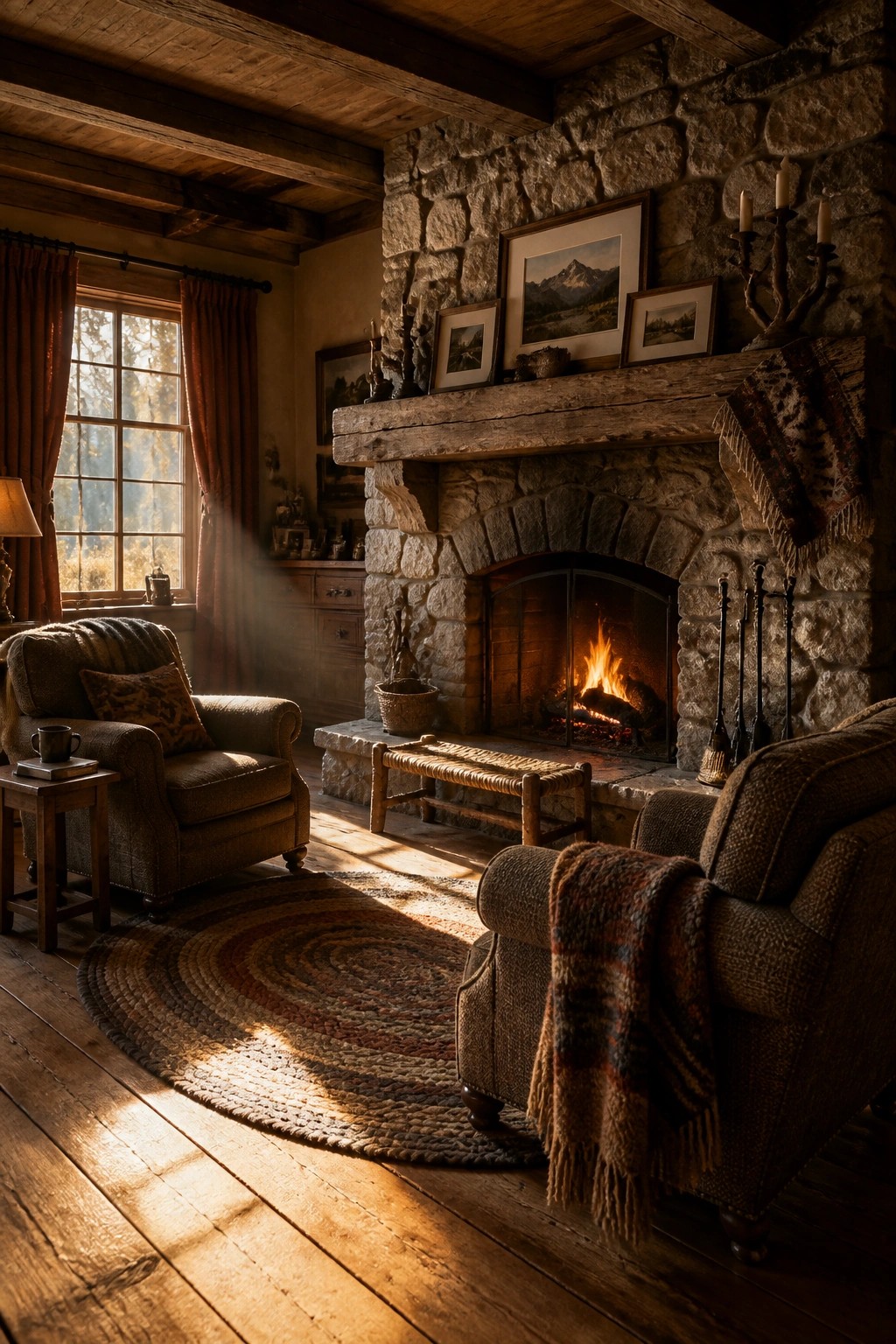
A big stone fireplace works well when you want the room to feel grounded right away. It pulls everything else into place without extra effort, especially when the rest of the space stays simple and the colors stay in the same warm range.
This setup suits older homes or cabins where the floors are already wood and the walls do not need much decoration. Keep the seating close and the textiles in browns and rusts so the whole room feels connected rather than scattered.
A Horizontal Fireplace in a Warm Solid Wall
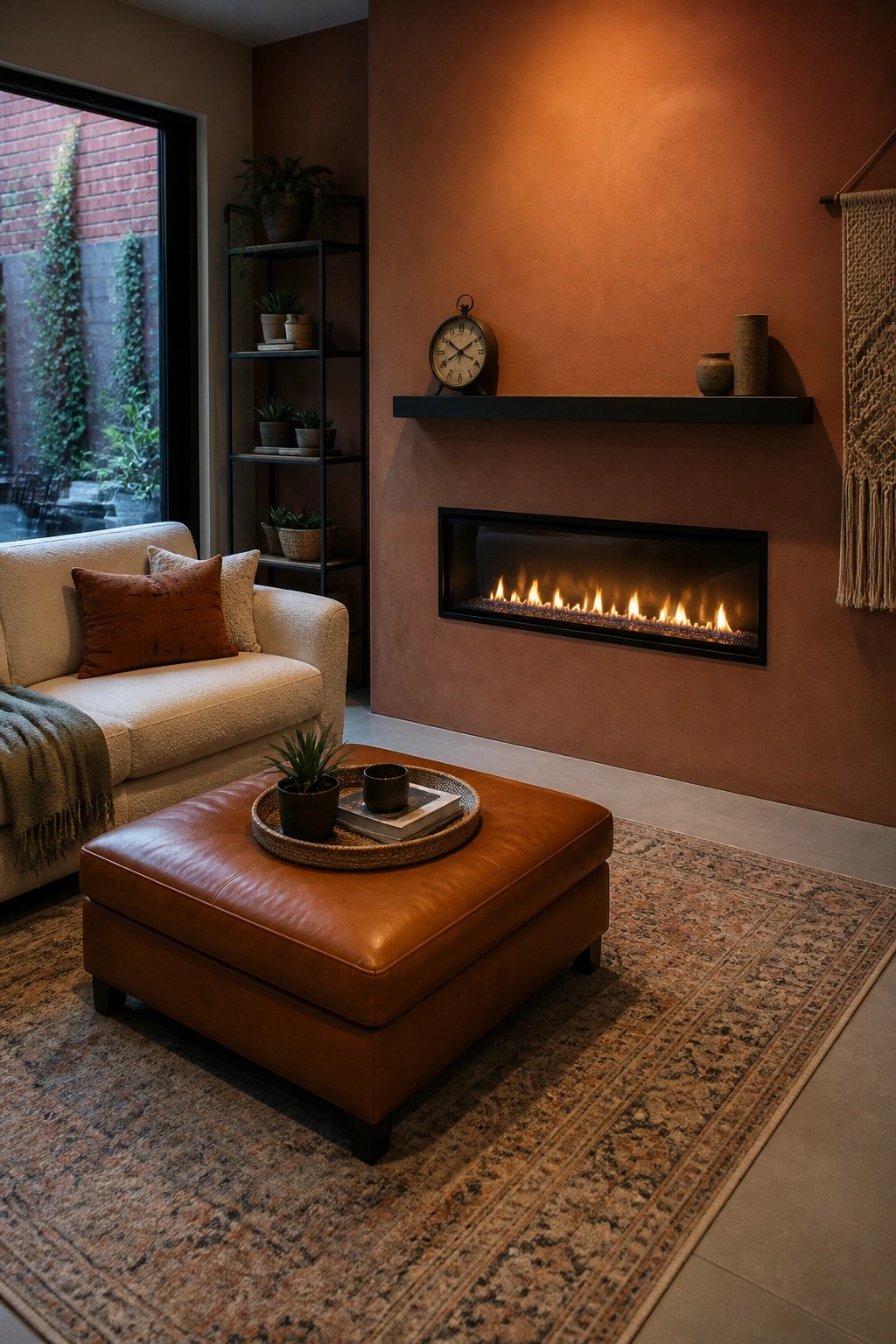
One simple way to make a fireplace feel cozy without extra fuss is to set it into a single warm wall color. The long, low opening sits flush in the terracotta surface so the flames become the main point of interest.
This approach works best in rooms that already use earth tones in the furniture and textiles. It keeps the look clean and current while still feeling grounded, and it suits smaller living spaces where you want the fire to stand out without a big mantel or heavy stone surround.
Built-In Bench Seating Next To The Fireplace
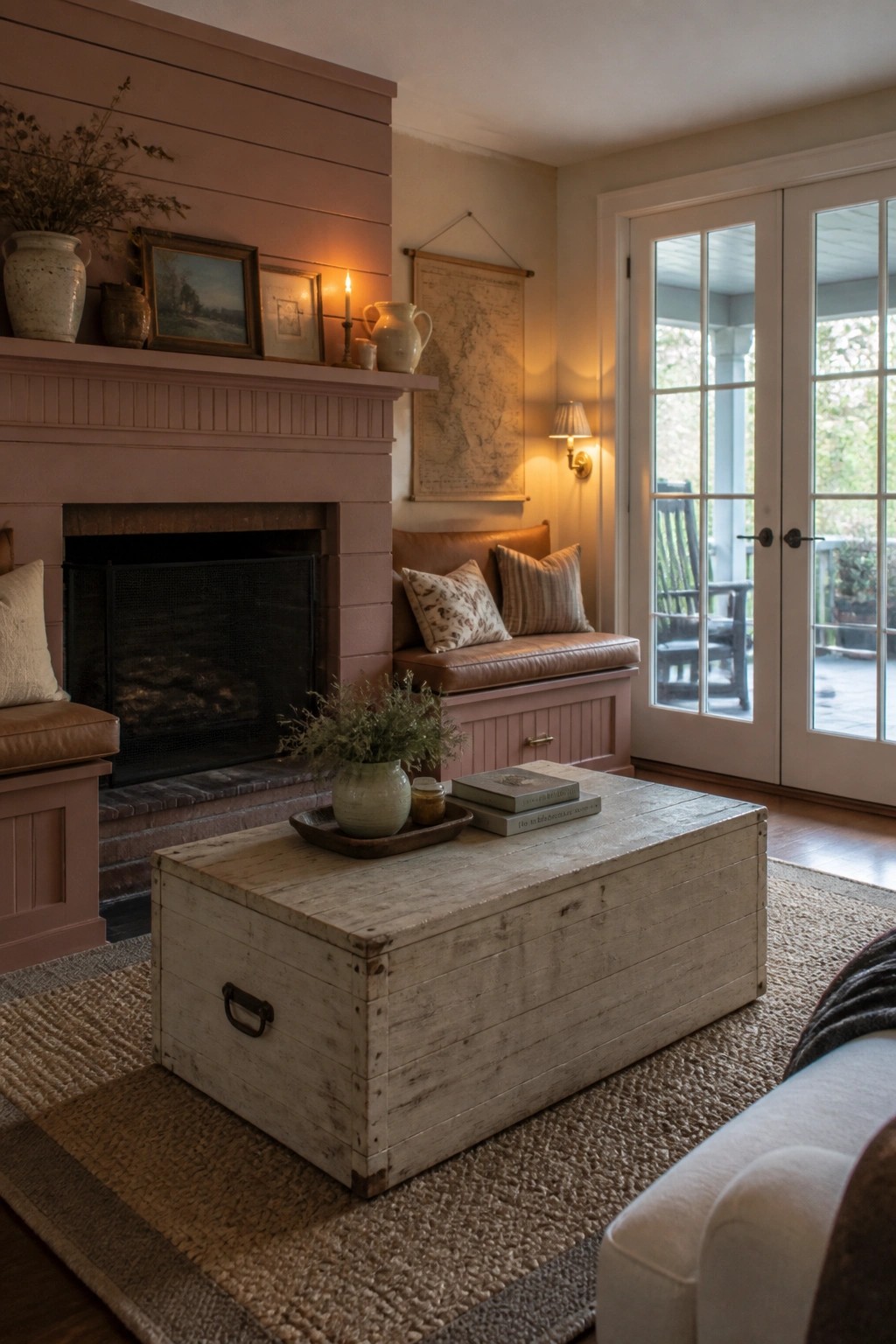
A built-in bench next to the fireplace adds seating and storage in one spot. It keeps the room feeling open while giving you a place to sit close to the fire without needing extra chairs.
This works well in smaller living rooms that need both comfort and function. Keep the cushions simple in soft earth tones so the bench blends with the rest of the space rather than standing out.
Stone Fireplace with Warm Textiles
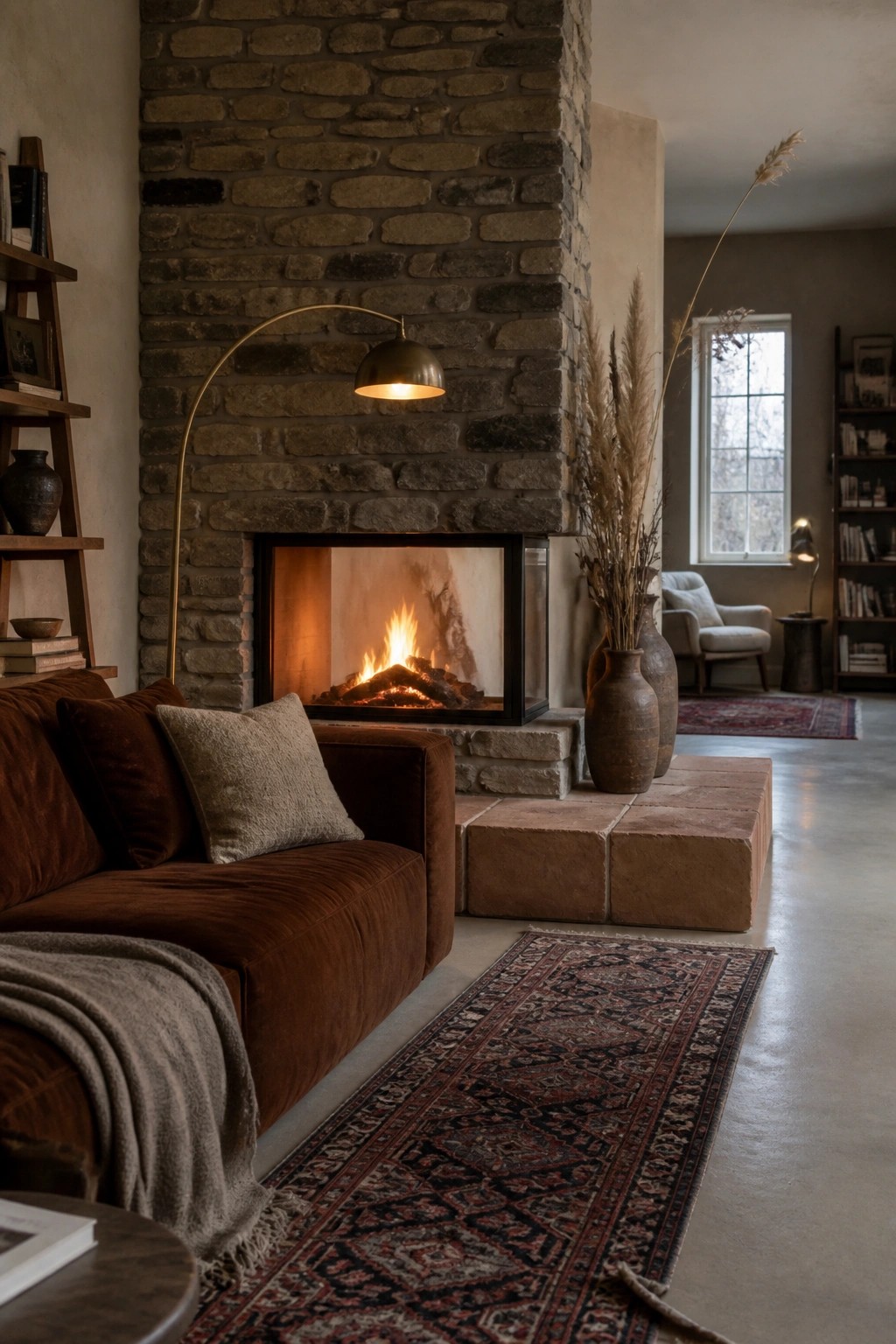
A big stone fireplace gives the room a solid, grounded feel that works especially well when the rest of the space stays in the same warm range. The rough texture of the stone pairs naturally with softer fabrics in brown and terracotta, so the whole area reads as one calm, connected zone rather than separate pieces.
This approach suits older homes or any room that already has some weight to it. Keep the sofa and rugs in similar earthy shades, add only a few simple accessories, and let the fire itself do most of the work on cooler nights.
Pairing Rust Chairs With a Stone Fireplace
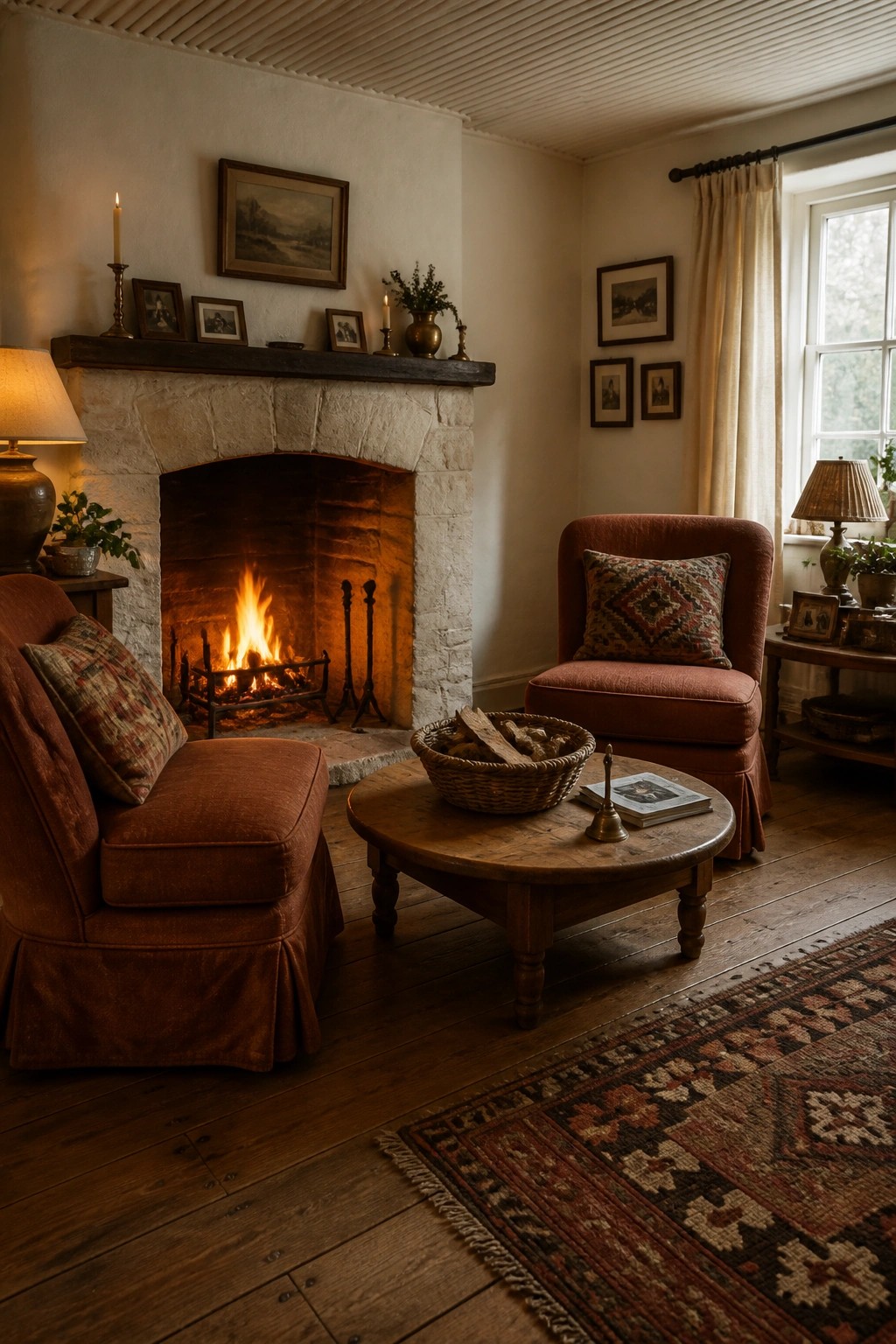
Rust-colored chairs bring out the natural warmth of a stone fireplace without competing with it. The tone sits nicely against wood floors and simple walls, and it picks up the glow from the fire in a way that feels natural rather than planned.
This approach works well in rooms that already have wood and stone. Keep other colors quiet so the chairs and fireplace stay the main connection. Too many patterns or bright accents can pull attention away from that balance.
Layering Earth Tones Around A Rustic Fireplace
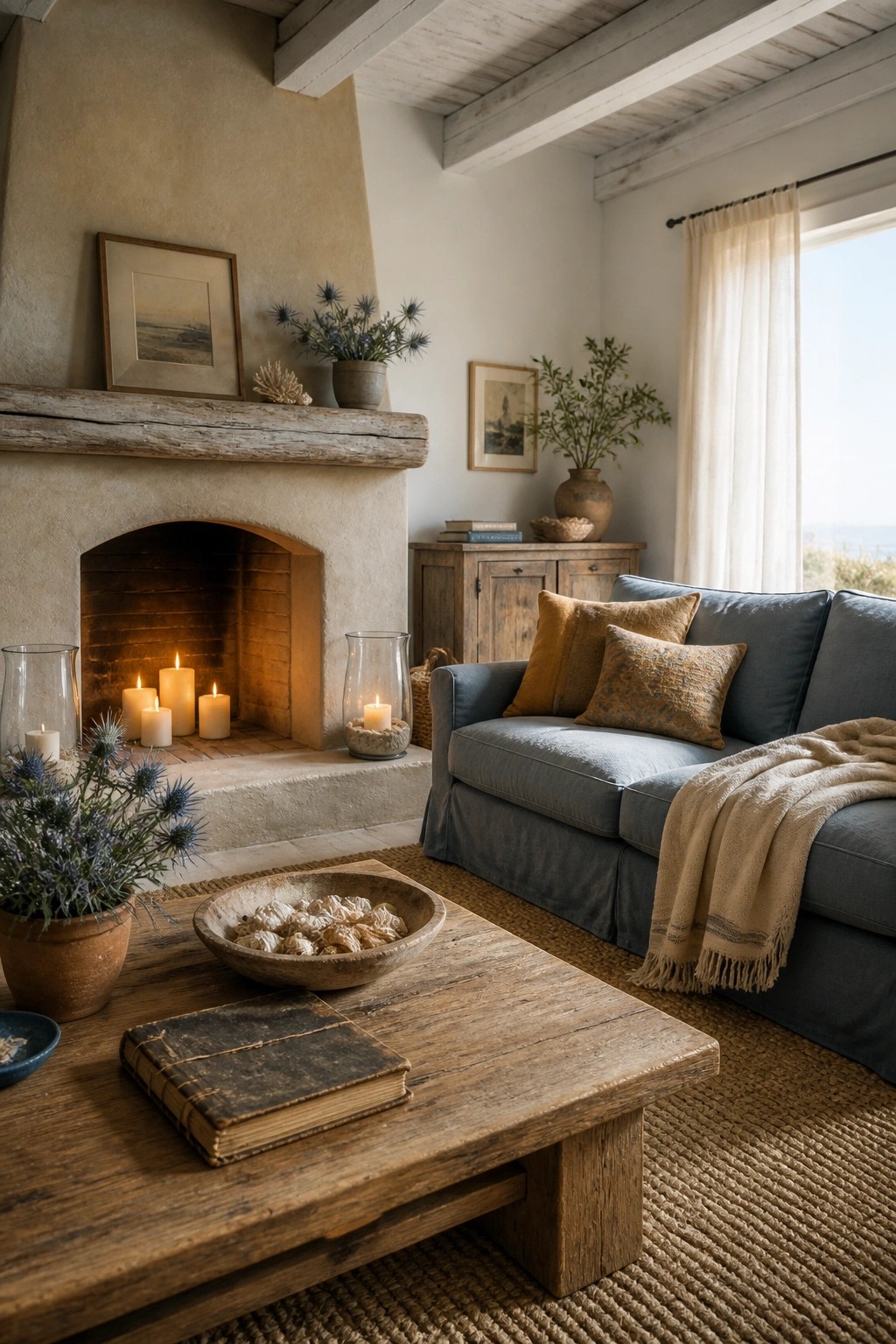
Many rooms feel more pulled together when the colors stay within the same warm range. A stone fireplace already brings in natural texture, so adding layers of clay, mustard, and soft browns keeps everything feeling connected rather than scattered.
This approach works best in spaces that already have wood floors or beams. Start with a main seating piece in a cooler neutral, then bring in pillows and throws in deeper earth shades so the fireplace stays the main focus without the room turning too dark.
Patterned Tile On The Fireplace
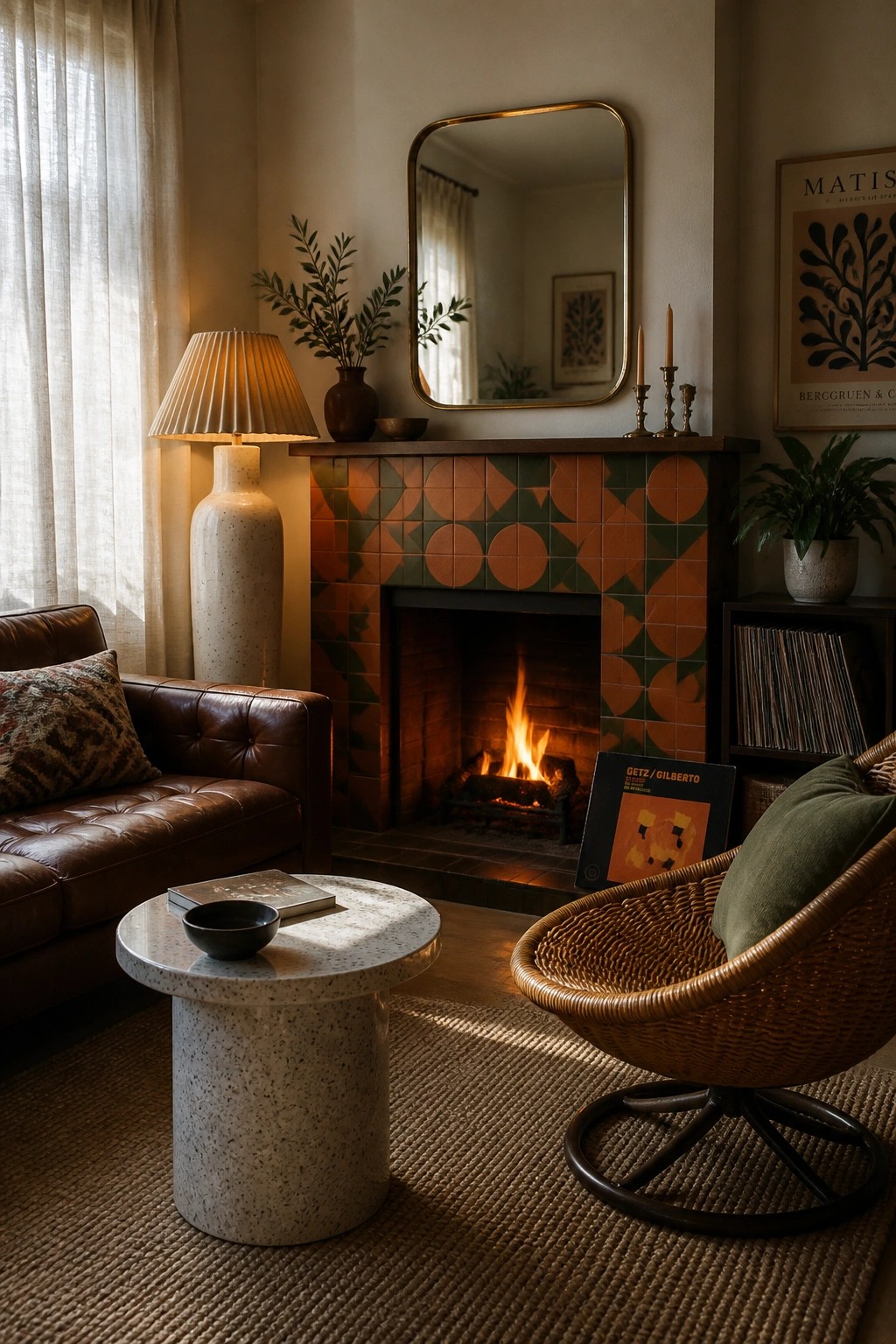
A patterned tile surround gives a fireplace more presence in a rustic living room. The geometric shapes in warm oranges and greens add color and texture while keeping everything grounded in earth tones.
This works best in rooms that already have natural materials like leather and wood. Keep the pattern bold but limited so it does not compete with the rest of the space.
Brick Fireplaces With Wooden Mantels
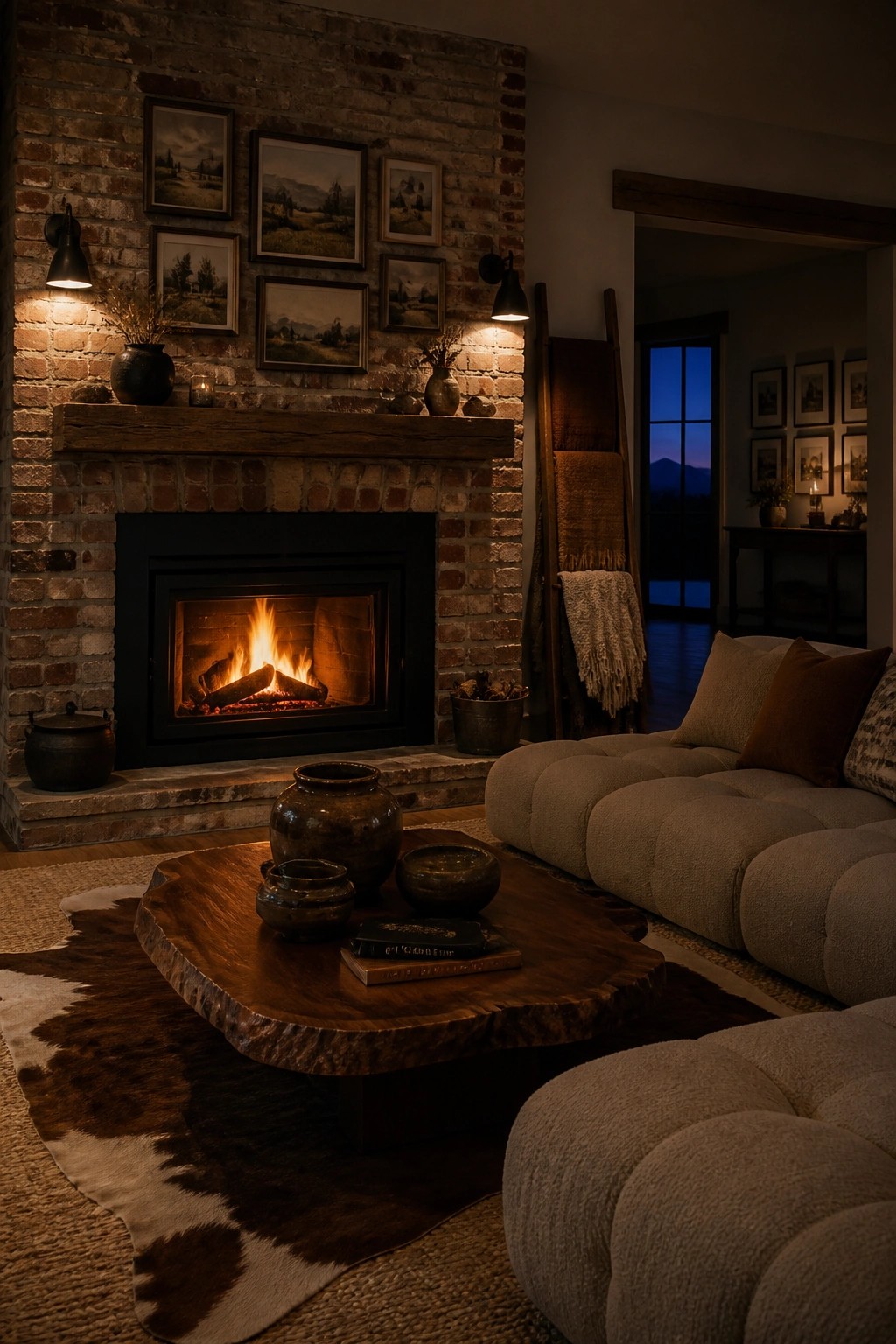
A brick fireplace with a solid wood mantel gives the room a sturdy base that feels natural and settled. The mix of rough brick and warm timber works well with earth tones and keeps the space from feeling too styled or finished.
This setup suits older homes or any living room where you want the fireplace to act as the main anchor. Keep accessories simple, like a few clay pieces on the hearth or nearby table, so the materials stay the focus.
Stone Fireplaces With Wooden Mantels
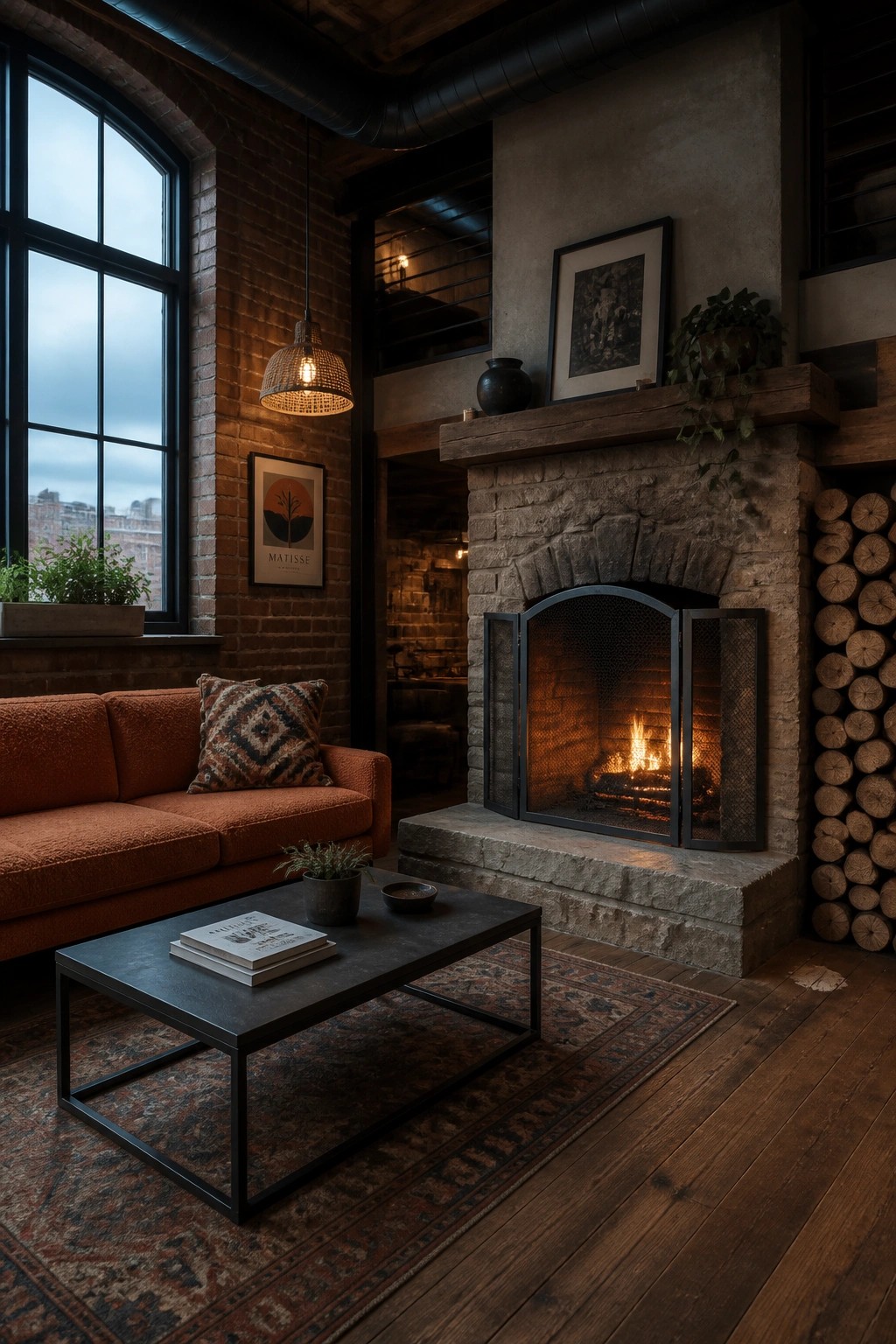
A stone fireplace gives a room real weight and helps tie together the warm earth tones that define a rustic space. The rough texture of the stone contrasts just enough with softer fabrics and wood to keep things from feeling flat.
This approach works well in older homes or any room where you want the fireplace to do most of the visual work. Keep the colors around it simple and let the natural materials carry the look.
Low Seating In Front Of The Fireplace
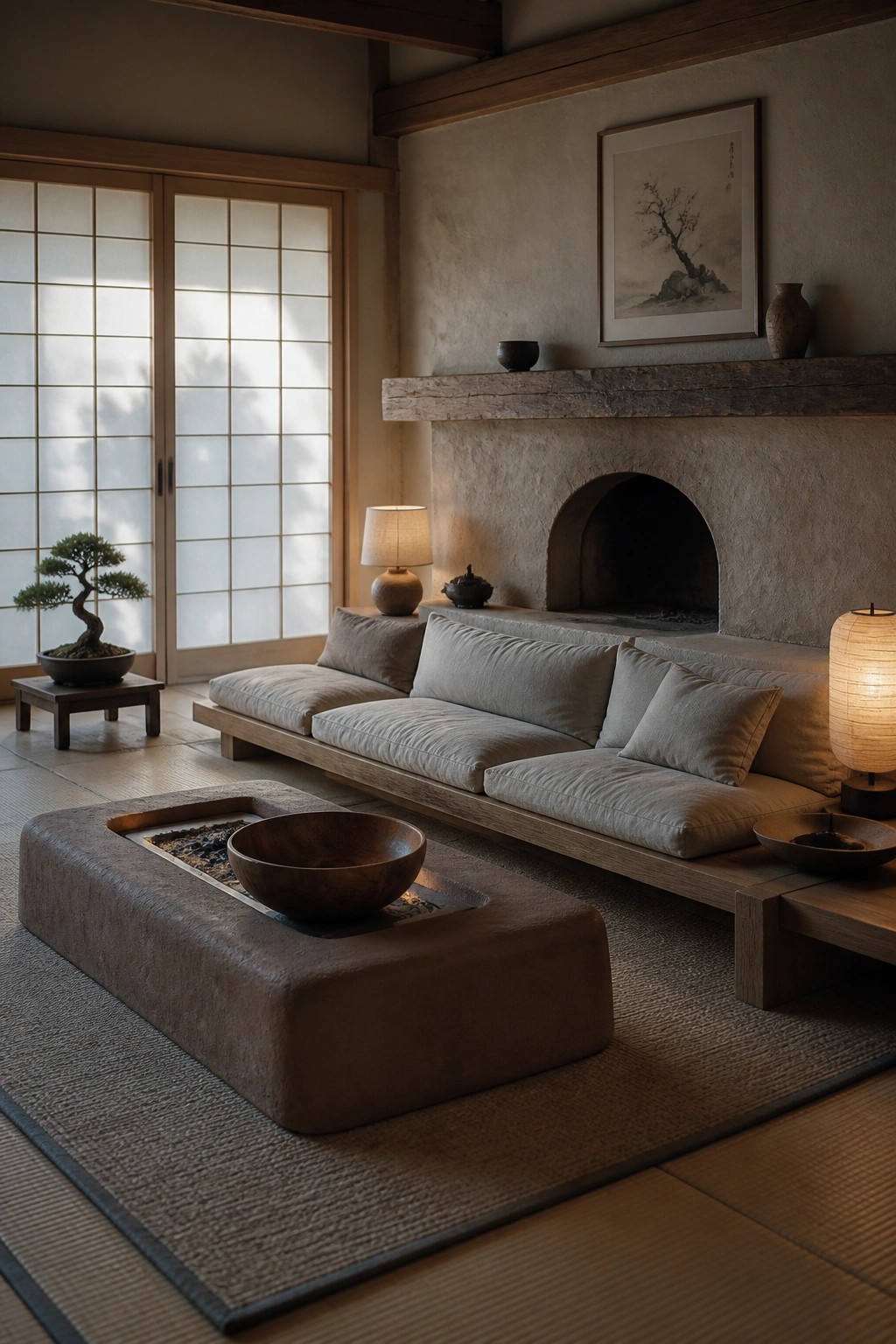
A low wooden sofa placed close to the floor works well with a big fireplace. It keeps everything grounded and makes the seating area feel connected to the rest of the room without adding height that might crowd the space.
This setup suits homes that already lean toward natural materials and simple lines. Stick with neutral cushions and let the wood and plaster do most of the work so the fireplace stays the main point.
Layering Rugs Around a Stone Fireplace
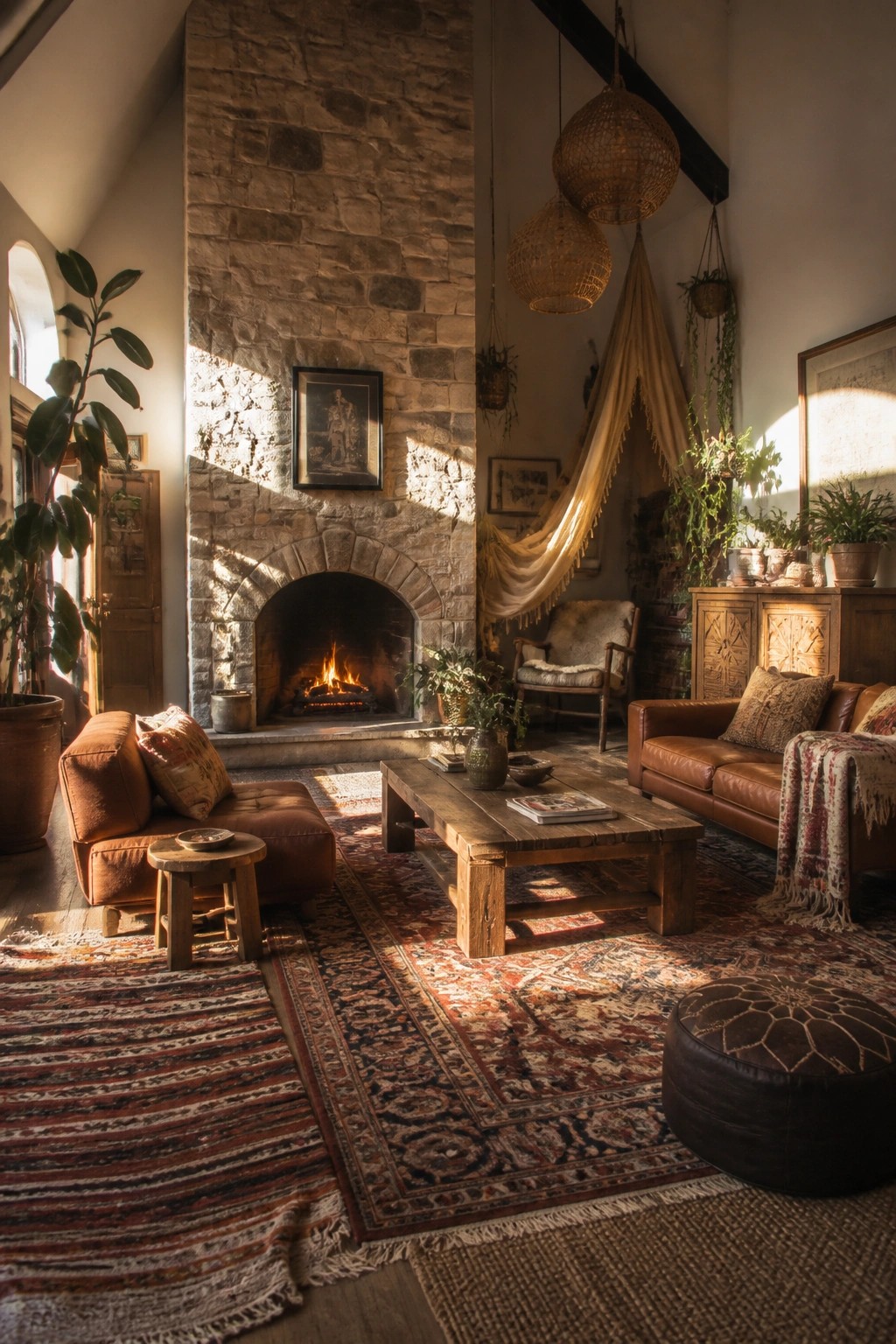
A large stone fireplace feels more inviting when you layer rugs in front of it. The mix of patterns and textures adds warmth and helps the seating area feel connected to the hearth without needing extra furniture.
This works well in rooms that already lean rustic. Keep the rugs in similar earth tones so they blend rather than compete, and let the fireplace stay the main focus.
Stone Fireplaces With Wooden Mantels
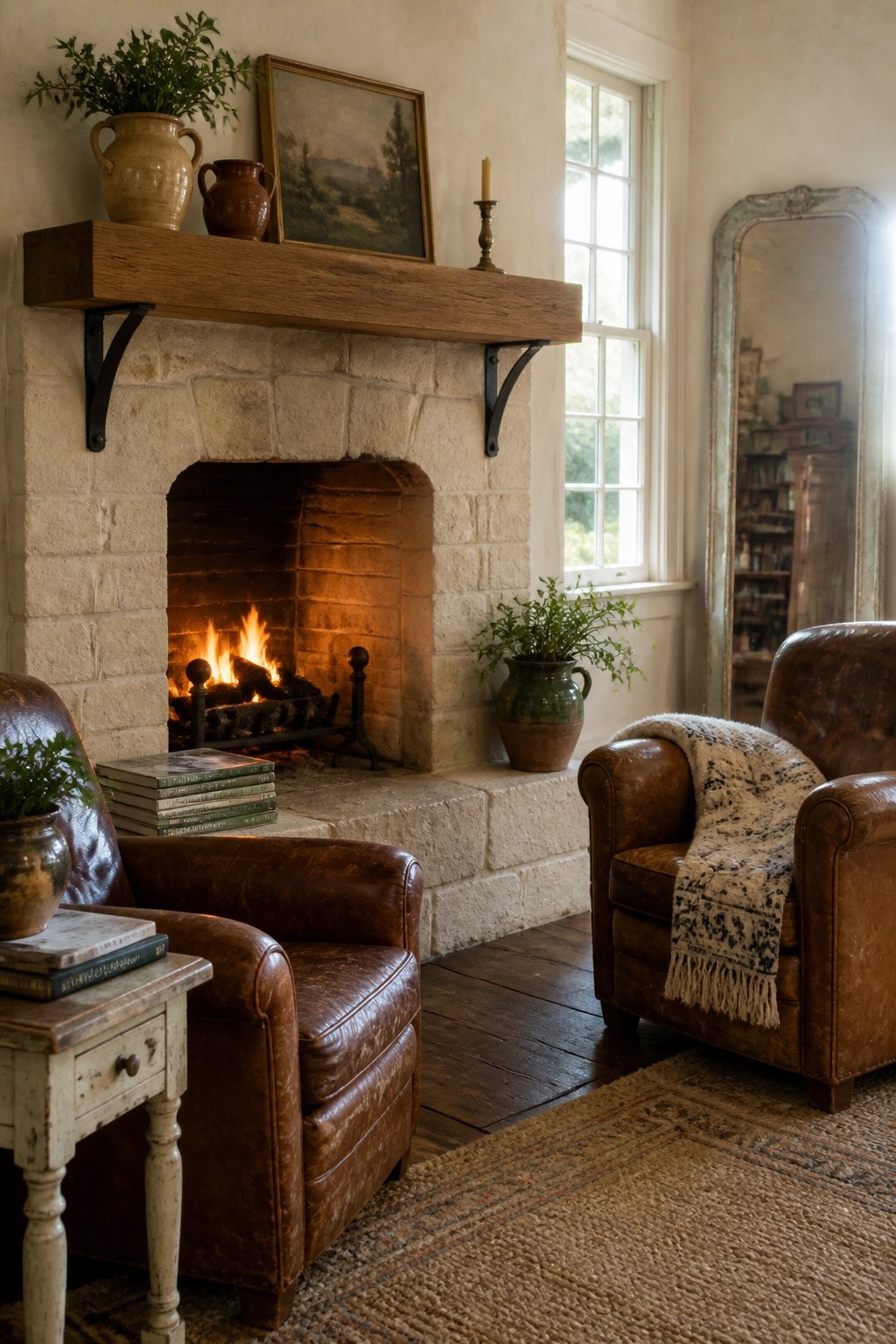
A thick wooden mantel on a stone fireplace gives the room a solid, grounded center. The contrast between the rough stone and the smooth wood feels natural and warm, especially when the rest of the space stays in soft earth tones.
This setup works best in homes that already lean rustic or have older features. Keep the mantel simple and let the stone carry the weight. It pairs easily with leather seating and neutral rugs without feeling busy.
Open Shelves Next to the Fireplace
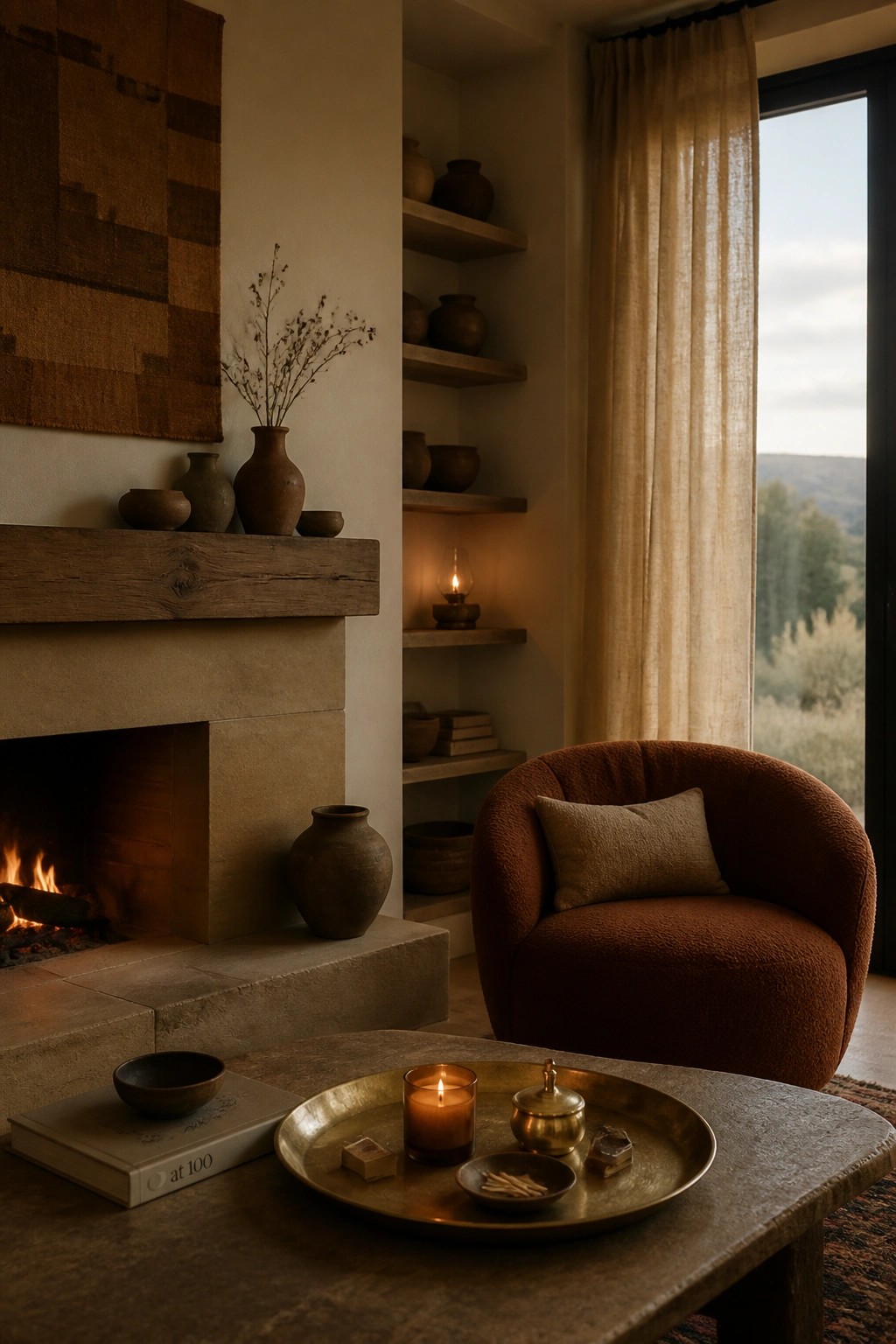
Open shelves built into the wall beside a fireplace give you a simple way to show off pottery and other pieces in warm earth tones. The arrangement keeps the focus on the fire while adding layers of texture that feel collected rather than styled.
This works best in smaller living rooms where you want extra storage without adding bulky furniture. Stick to a few larger vases and bowls so the shelves do not compete with the mantel or the fire itself.
Frequently Asked Questions
Q: Can I try these fireplace looks if I rent and can’t make big changes? A: Focus on the space right around the fireplace instead. Add a wooden mantel you can take down later and layer in throws or pillows in warm browns and clays. That pulls the rustic feel together without touching the structure.
Q: My living room has mostly cool gray walls already. Will earth tones still work around the fireplace? A: They will if you start small. Bring in just a few accents like a terracotta vase or a woven basket in deep rust to bridge the gap. The contrast can actually make the fireplace area feel more inviting.
Q: How do I keep the area from looking too busy with all these textures? A: Stick to two main tones and repeat them. A single wool rug in beige plus matching curtains can tie everything without adding extra stuff.
