
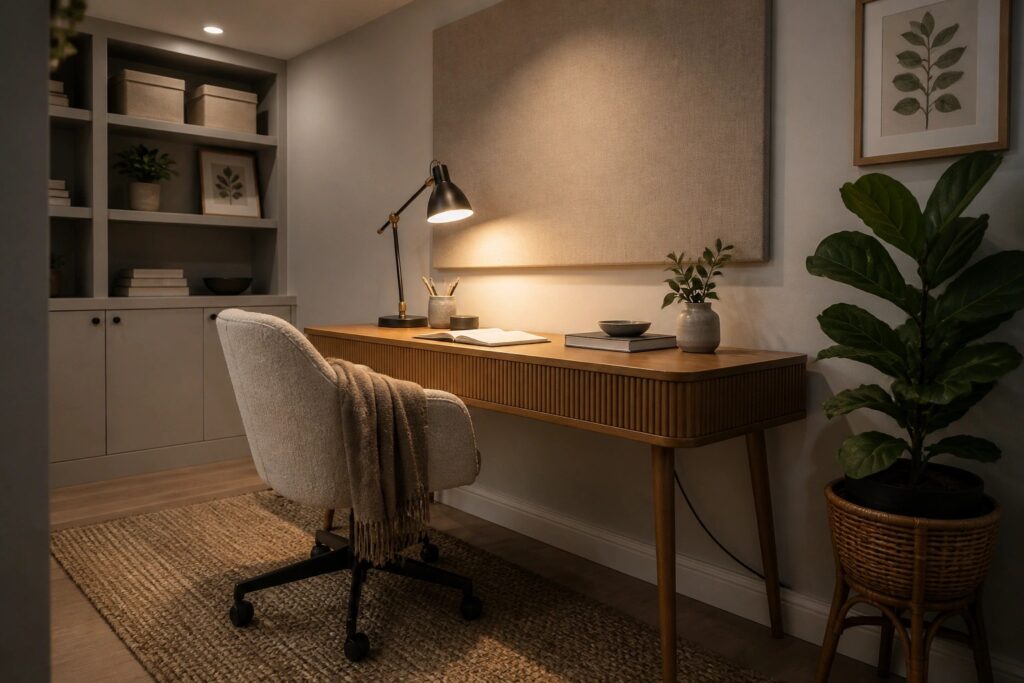
Working in a windowless office can make even a well furnished room feel heavier after a full day at the desk.
I have found that adding layers of texture often matters more than chasing brighter bulbs once the door stays shut for hours.
Small shifts in how furniture sits against the walls tend to open the space without moving anything major.
Layering soft fabrics helps more than I expected.
Trying a couple of these tweaks in my own setup showed which ones still felt useful after the first week.
A Textured Panel Softens A Desk Wall
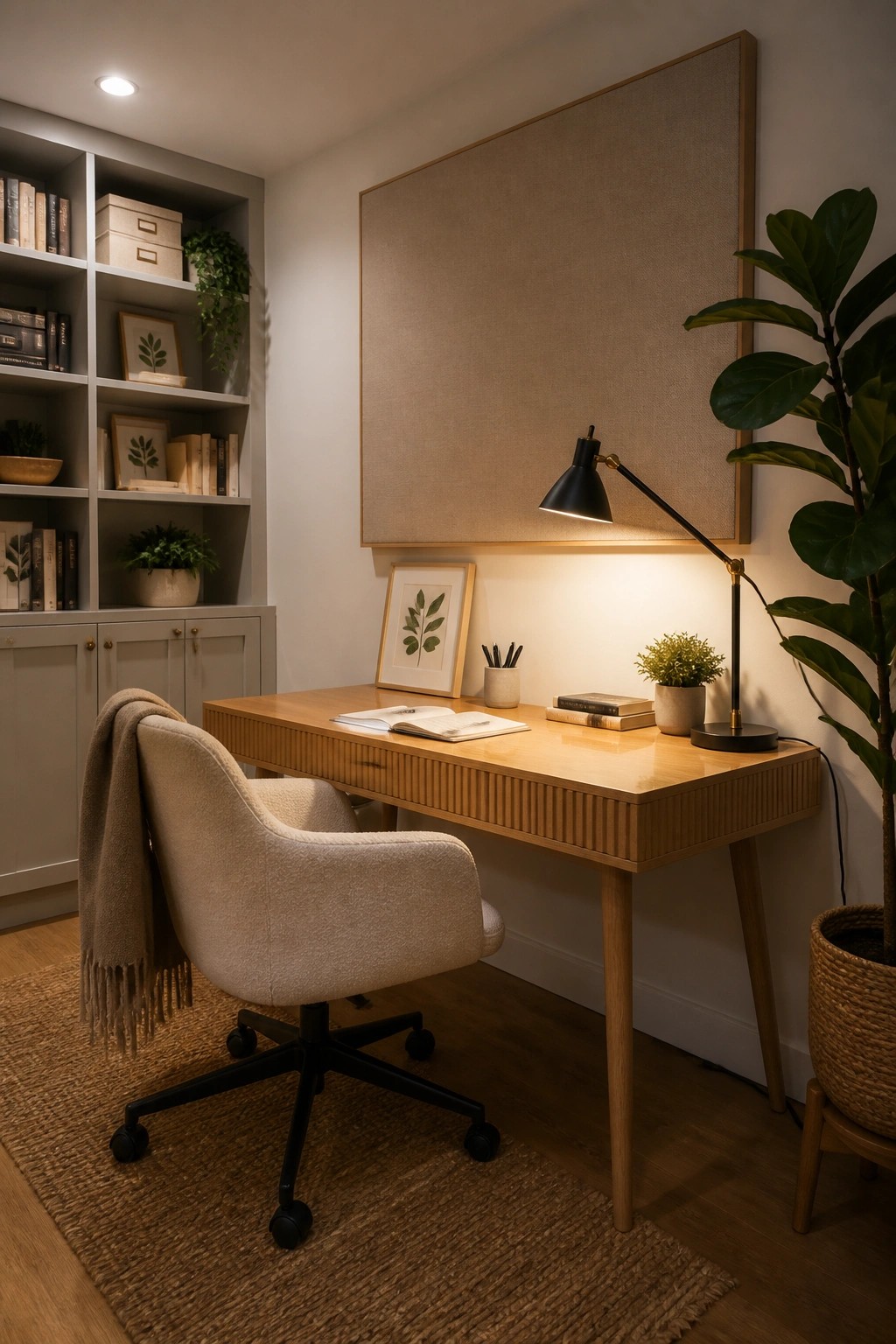
A large textured panel behind the desk gives the whole workspace a softer, warmer feel without adding clutter. It creates a gentle backdrop that makes the room feel more finished and less stark, especially when there are no windows to bring in natural light.
This idea works well in smaller offices or any space that needs a bit of quiet warmth. Choose a neutral fabric in a simple frame, then keep the desk surface fairly clear so the texture can do its job without competing with too many other things.
Dark Paneling And Warm Textures
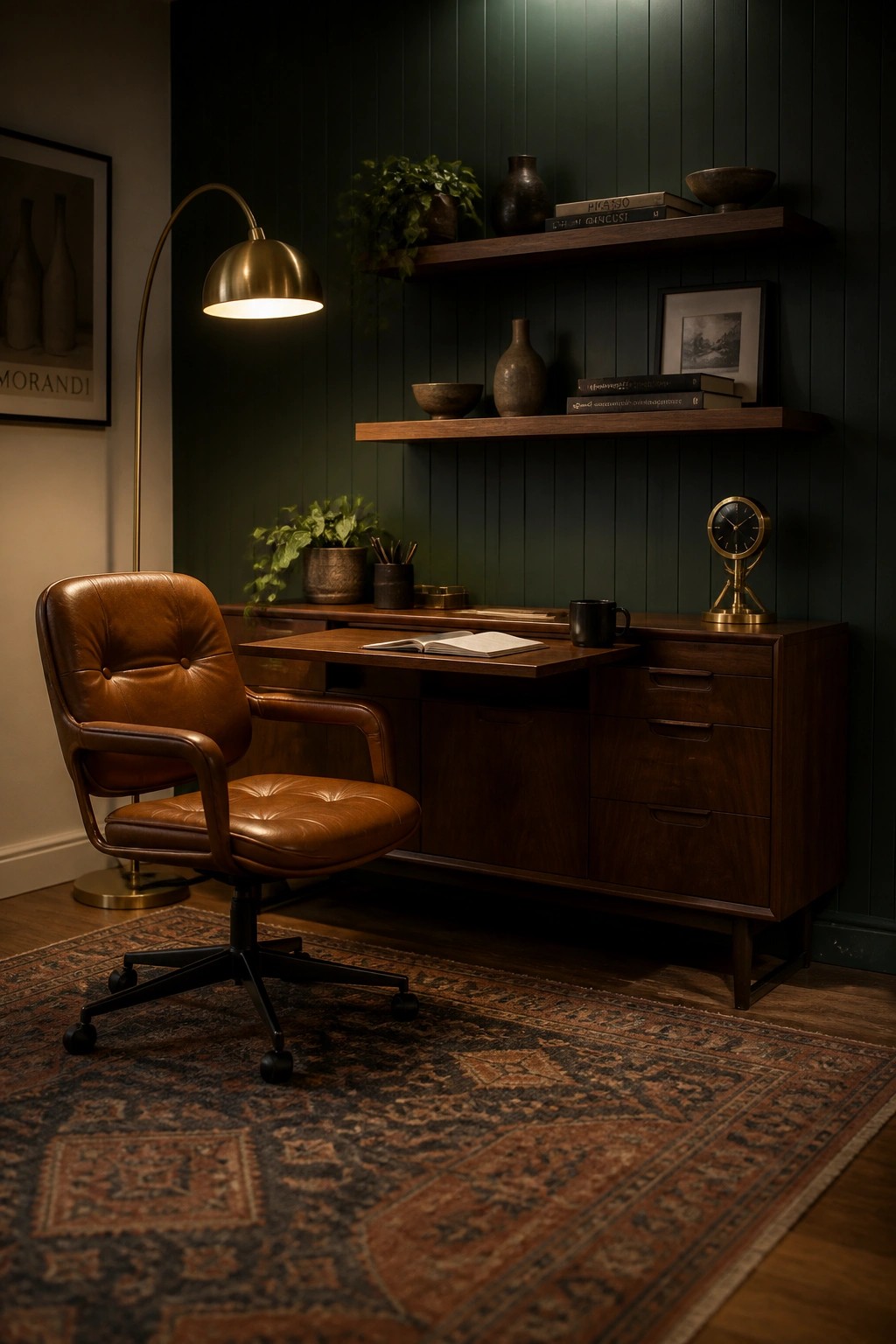
Deep wall color can make a windowless office feel more enclosed and comfortable rather than empty. The vertical paneling in a rich green sets a calm base that works well with the wood desk and shelves already in the room.
This approach suits small or interior offices where natural light is missing. Keep the furnishings in warm wood and leather to balance the darkness and avoid a heavy look. A rug on the floor helps soften the overall feel even more.
Layer Natural Textures With Warm Lighting
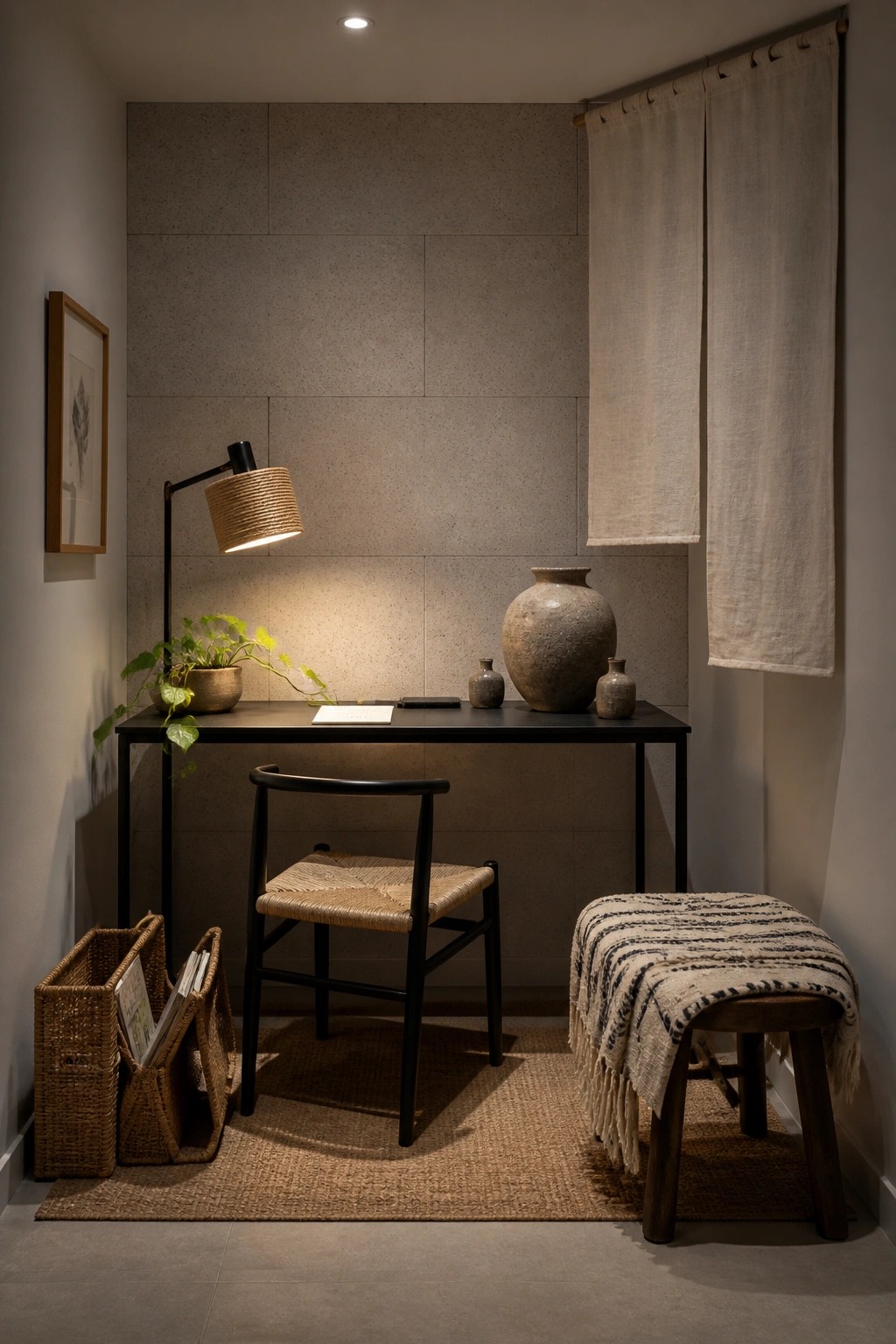
A single warm lamp and a few woven pieces can change how a windowless office feels. The light softens the hard surfaces while the natural fibers add a bit of warmth that plain walls and floors often lack. It keeps the space from feeling too stark without adding much clutter.
This works best in small or tight workspaces where you need comfort but do not want heavy furniture. Stick to one or two woven items like a lampshade or baskets, then let the lamp do most of the work. Too many textures can start to feel busy, so keep the rest of the room simple.
Turn An Unused Closet Into A Desk Nook
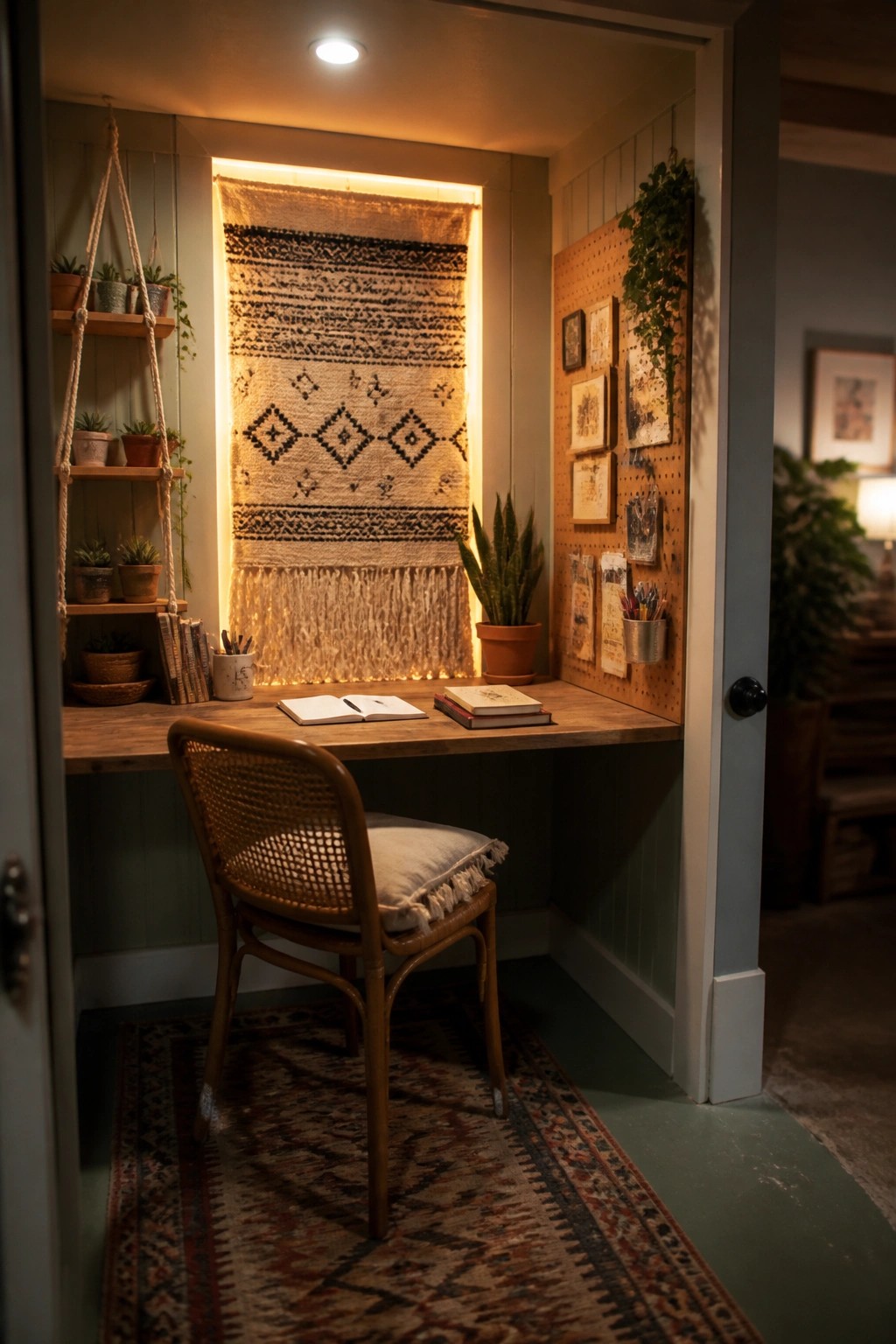
A small closet can become a quiet workspace when you add a simple built-in desk. It keeps the desk out of the main room and gives you a tucked-away spot that already has walls on three sides.
A pegboard on one wall helps with storage, and a soft light behind a hanging textile keeps the space from feeling too closed in. This setup works well in older homes where closets are often deeper than needed for clothes.
Keep Storage Simple With Woven Baskets
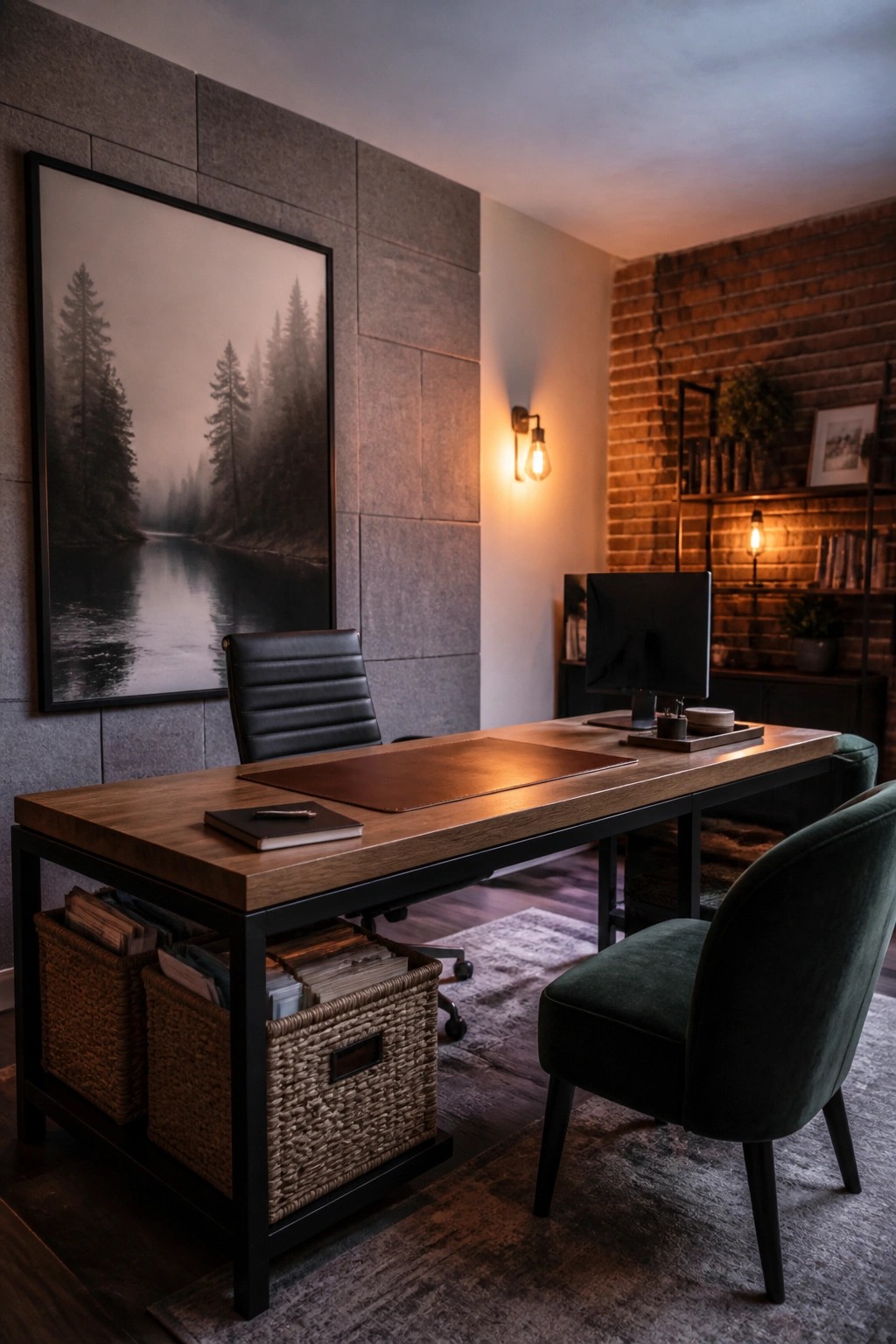
Woven baskets tucked under a desk give you a place to stash papers and supplies without adding more cabinets or shelves. They bring in a natural texture that softens the look of a workspace and keep the floor clear so the room feels less closed in.
This works especially well in smaller or windowless offices where every surface can start to feel heavy. Use two or three matching baskets that fit the desk height, and label them so you can grab what you need without digging around.
Use A Large Scenic Print To Mimic A Window
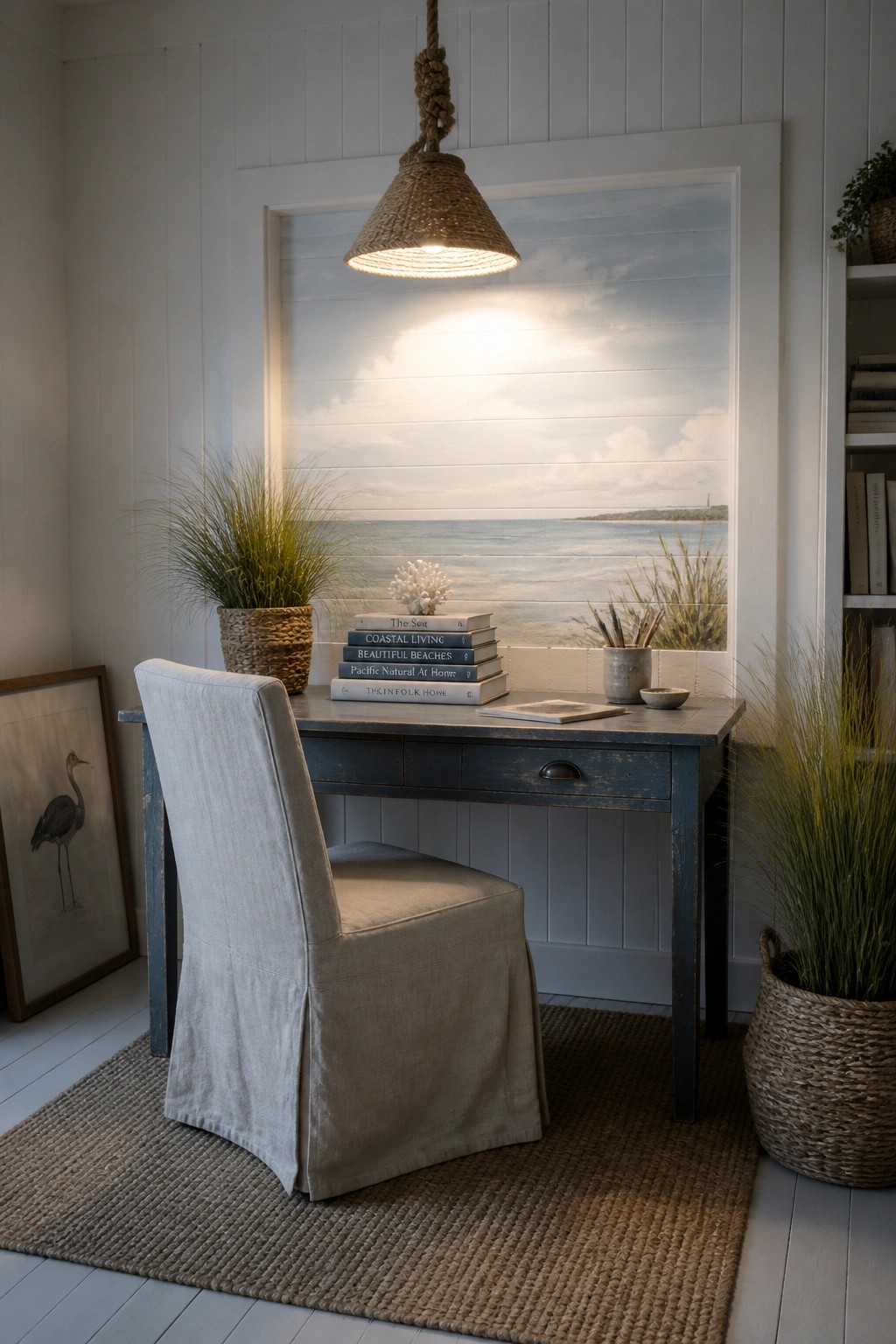
One simple way to soften a windowless workspace is to hang a large framed print right where a window would sit. It gives the eye somewhere to rest and makes the room feel less closed in without any construction.
This idea works best in small offices or tight corners. Pick a calm view like water or open land, keep the frame simple, and add a single light above it so the scene stays easy to see during the day.
Built-Ins Define The Desk Area
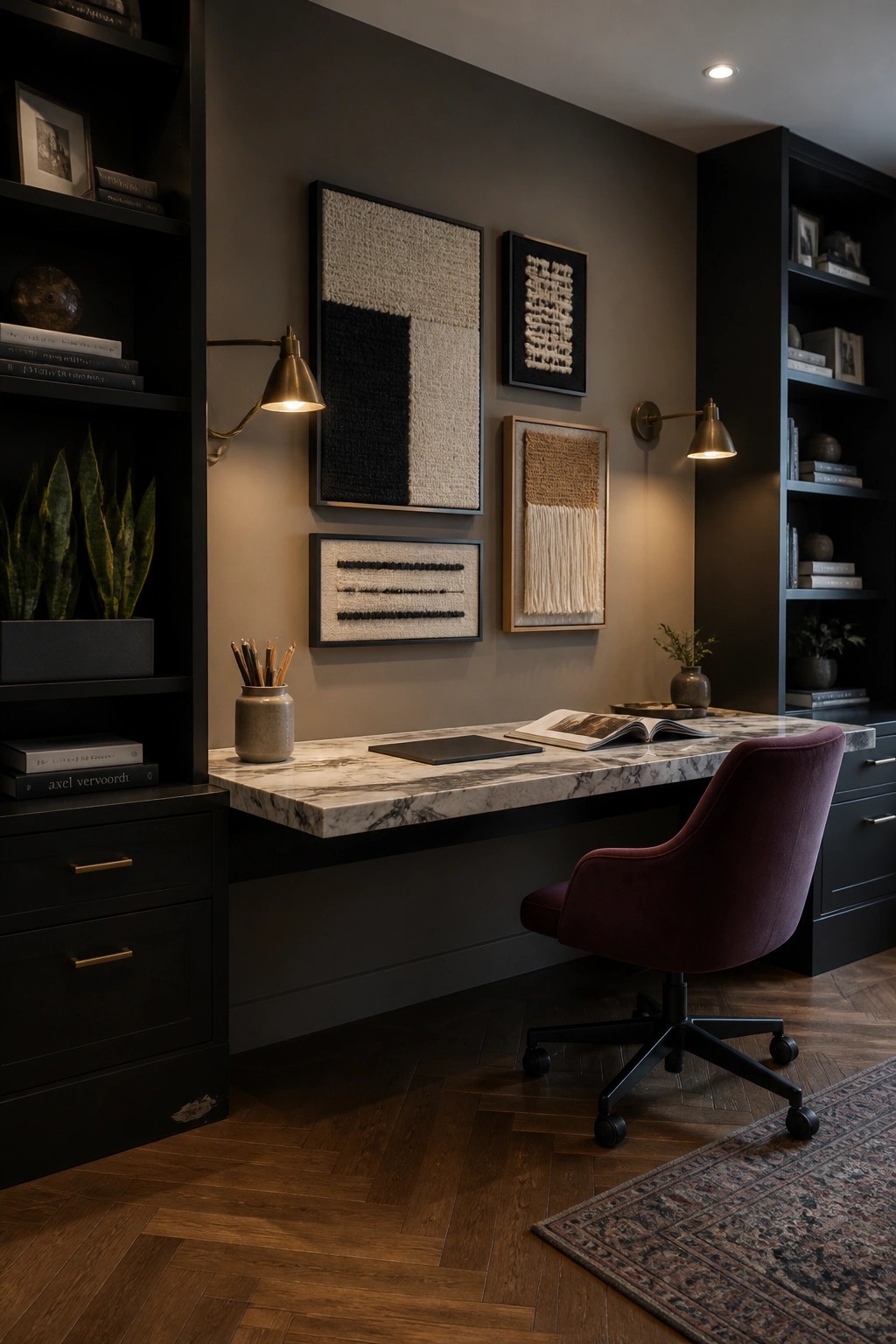
Built-in cabinetry on both sides of the desk turns an open wall into a contained workspace. The dark finish and full-height shelves create a sense of enclosure that helps a windowless room feel more intentional and less like a leftover corner.
This setup works best in smaller or basement offices where you need storage without adding visual clutter. Keep the desk surface light and simple, then let the surrounding built-ins carry the weight of books, files, and decor so the room stays functional rather than cramped.
Hang a Mood Board Above Your Desk
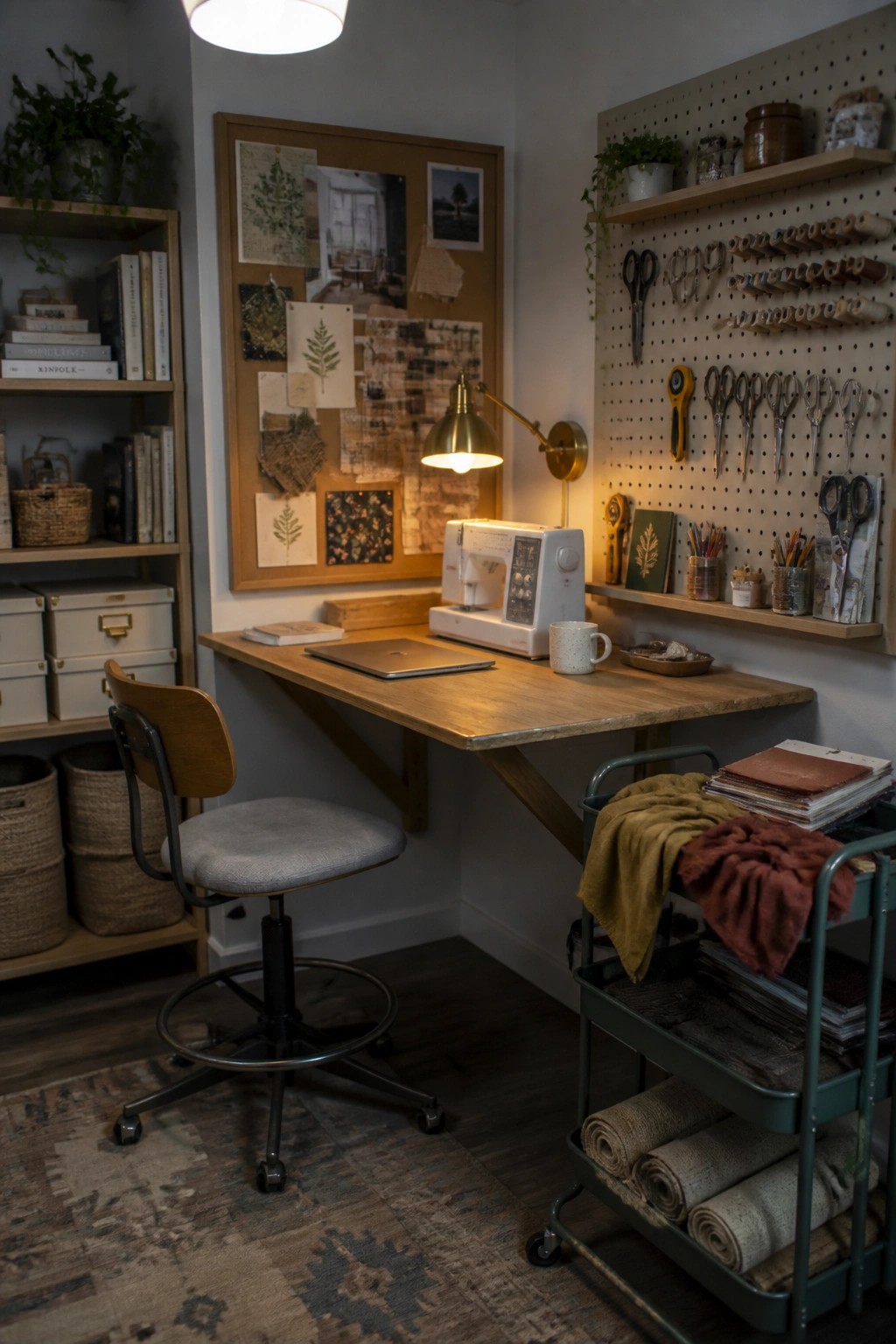
A mood board above the desk gives a windowless room something to look at besides plain walls. It adds layers of color and texture without taking up floor space or needing extra furniture.
Start with a simple corkboard or pinned fabric pieces and add a few prints or swatches that fit the work you do. This approach works especially well in small craft or sewing spaces where you want the area to feel personal rather than bare.
Backlit Artwork for Windowless Rooms
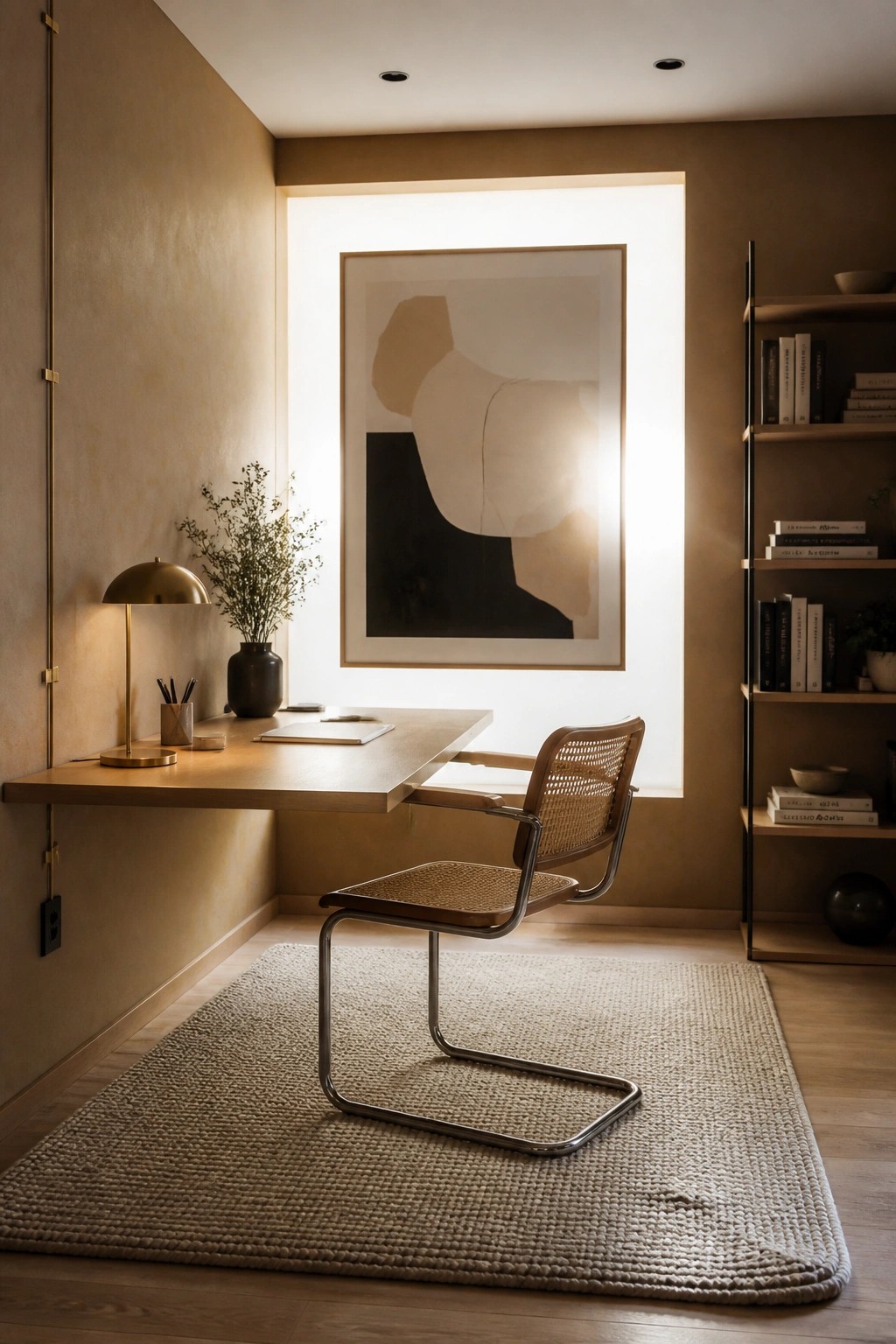
A backlit niche behind a large piece of art can make a windowless office feel much less closed in. The light source stays hidden, so the glow stays soft and even instead of harsh.
Try this in a small room where you need steady light without adding lamps everywhere. Keep the art simple in warm neutrals so the light does most of the work and the space stays calm.
Dark Green Walls and Built-In Shelving
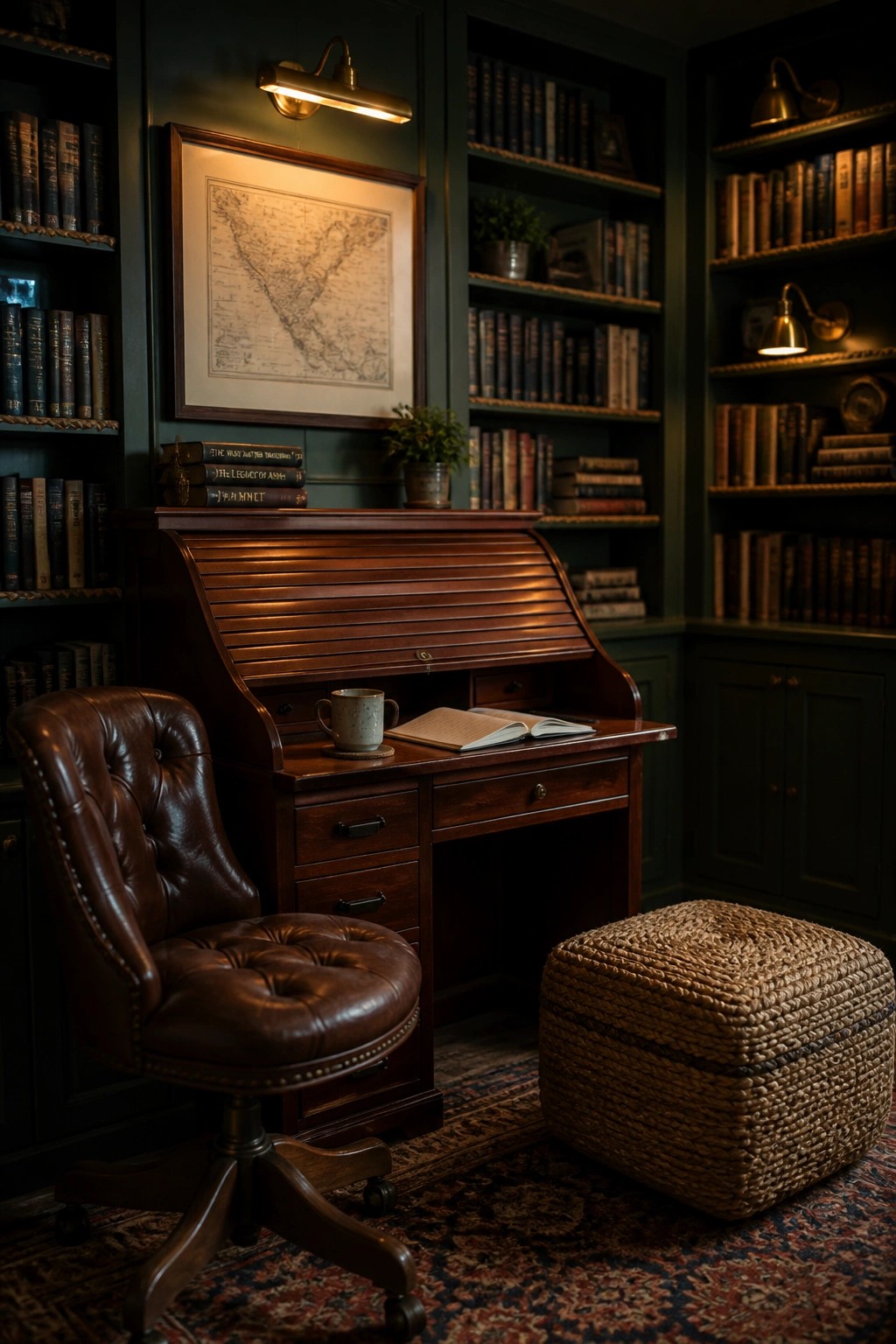
A deep wall color can make a windowless office feel more contained and restful instead of blank. When you add built-in bookshelves on most walls, the space gains warmth and texture that softens the lack of windows.
This works best in small or medium rooms where you want a quiet, focused feel. Choose a rich shade like forest green, fill the shelves with books, and keep the wood tones warm so the room stays inviting rather than closed in.
String Lights Around The Desk
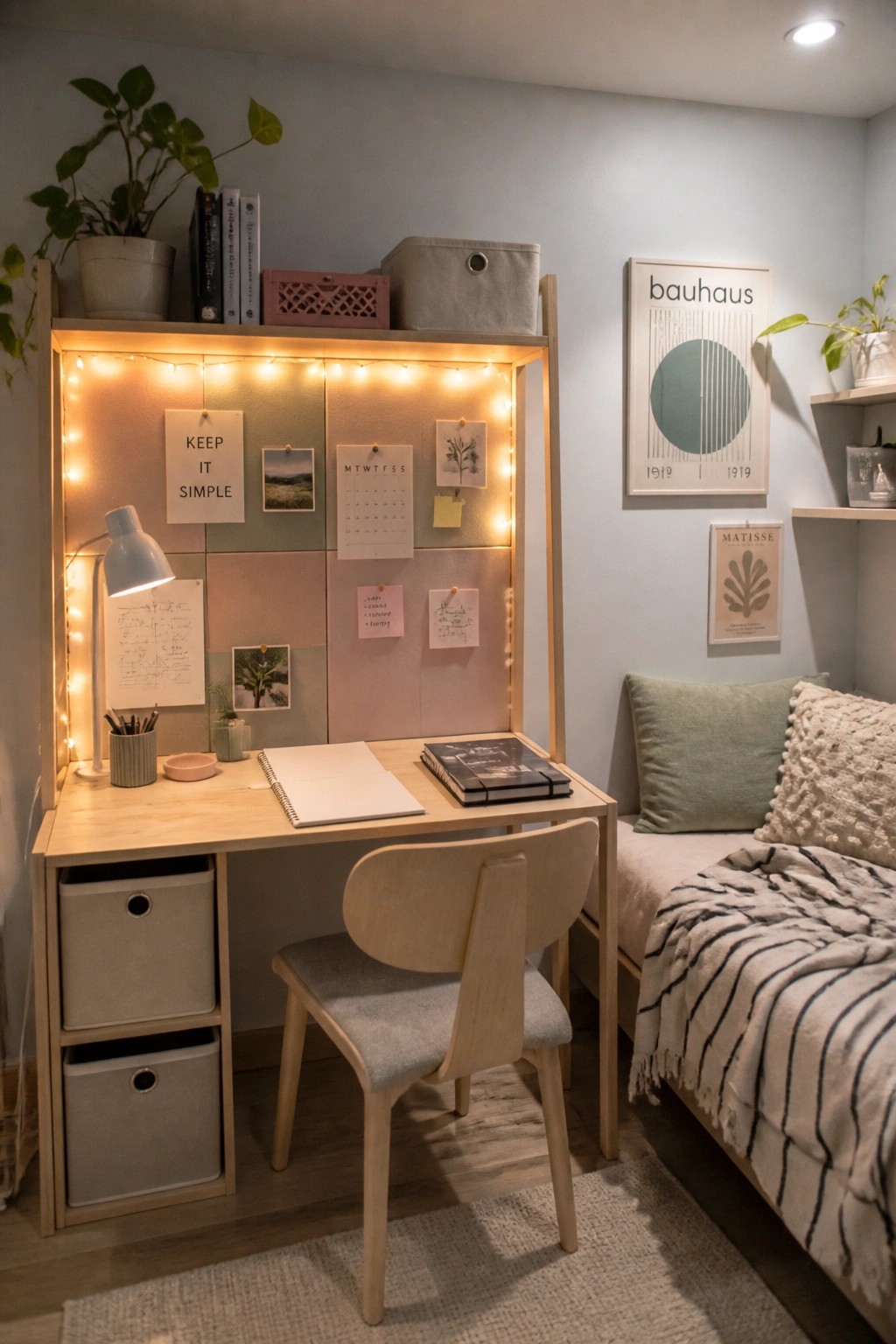
String lights can make a small workspace feel much softer, especially when there is no natural light coming in. Wrapping them along the edges of a desk hutch or bulletin board creates a gentle glow that takes the edge off plain walls and gives the area a bit of warmth without needing extra lamps.
This works well in tight rooms or corner setups where you want some visual interest but do not want to add bulky fixtures. Keep the lights on a dimmer if possible, and use them mainly to highlight a board or shelf rather than lighting the whole desk surface.
Built-Ins Under Stairs
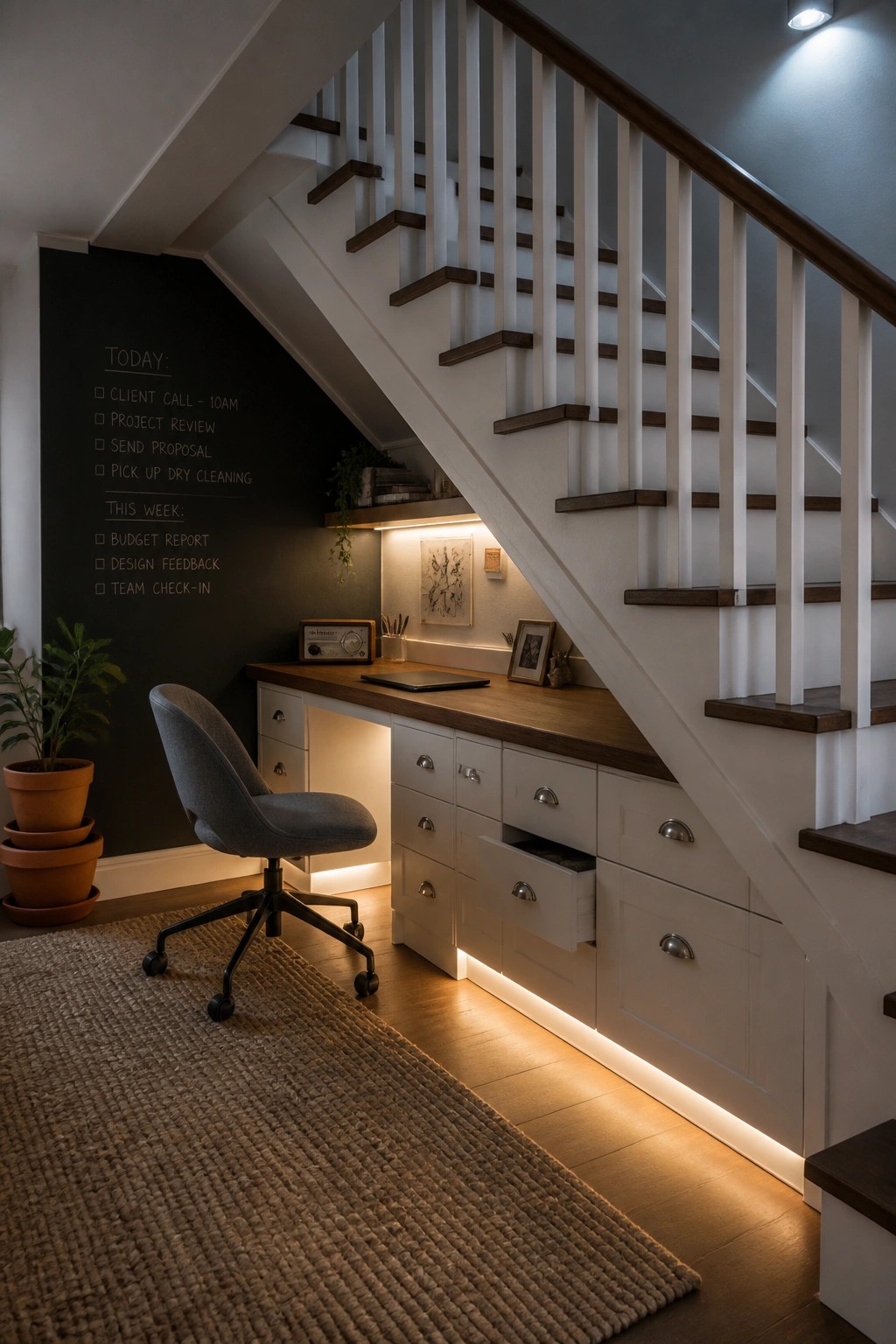
Built-ins under stairs turn an otherwise wasted area into a real workspace. The custom cabinetry fits the shape of the stairs exactly, giving you a desk surface and plenty of drawers without crowding the room.
This works best in homes where the stairs sit against a wall and the office needs to stay compact. Add a strip of warm lighting under the desk and cabinets so the space feels softer and more usable during the day.
Add a Large Map to One Wall
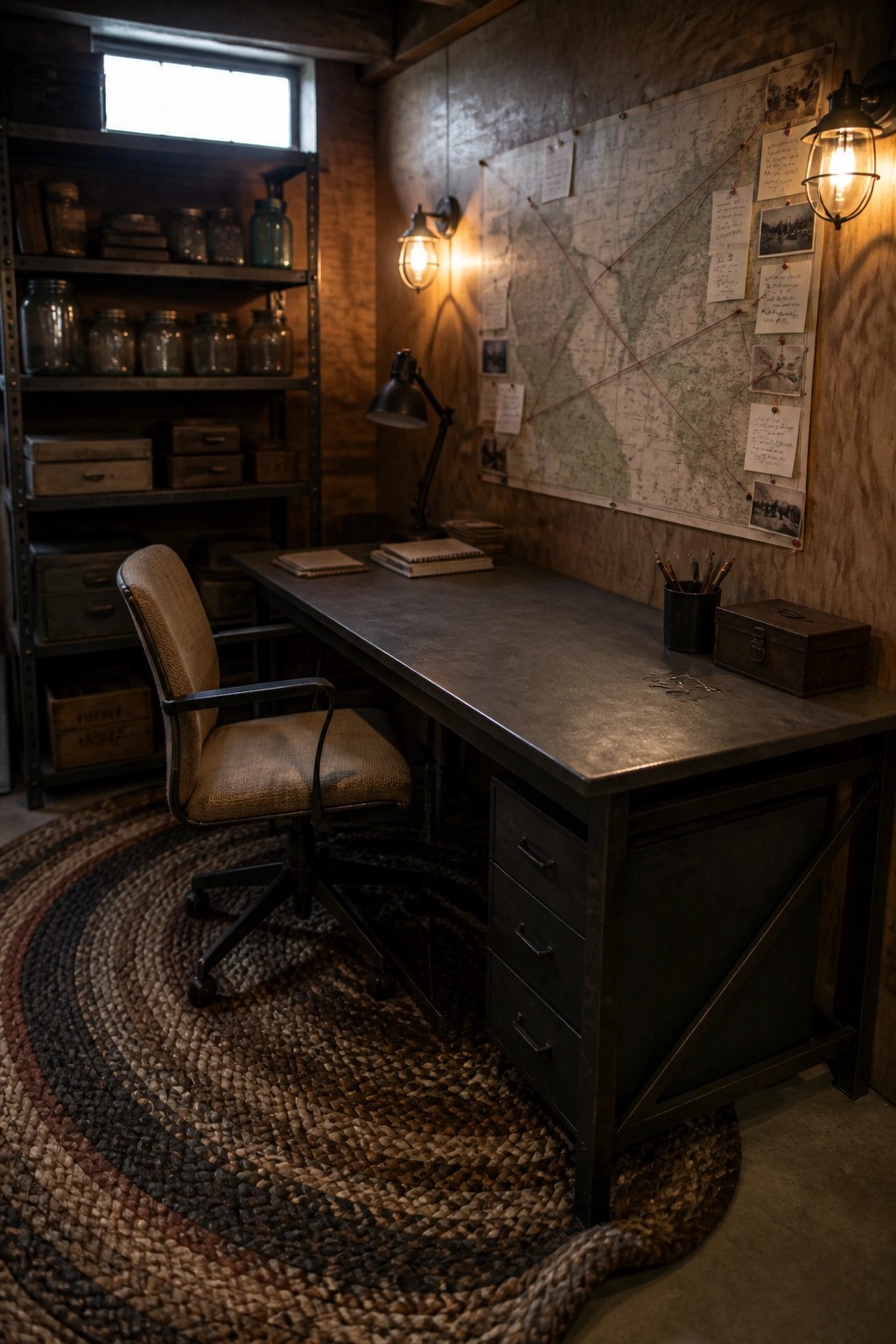
A map pinned across one wall gives a windowless office a clear focal point without needing much else. The strings and notes pull the eye across the surface and keep the room from feeling blank or closed off.
Hang it above the desk or along the longest wall so it stays in view while you work. Warm lamps on either side help the surface feel brighter at night, and the setup works especially well in older homes or basement rooms where daylight is scarce.
Use A Living Wall To Soften The Room
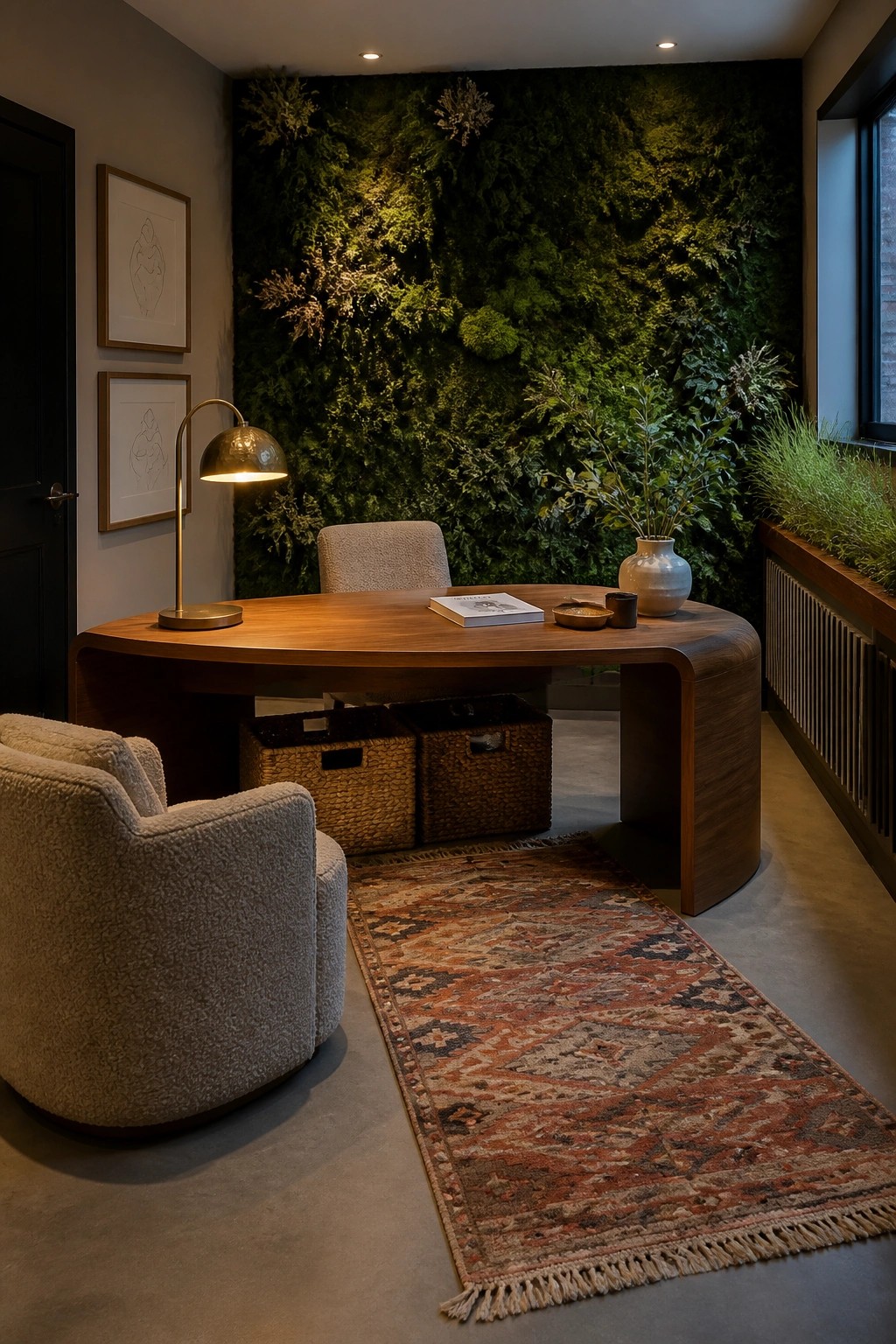
A living wall gives a windowless office something to look at that feels alive. The texture and green tones help the space feel less closed in and more comfortable over long hours.
This works best in smaller rooms where you face a blank wall most of the day. Keep the plants simple and plan for lighting so the wall stays healthy without much fuss.
Add a Large Mirror to Brighten the Room
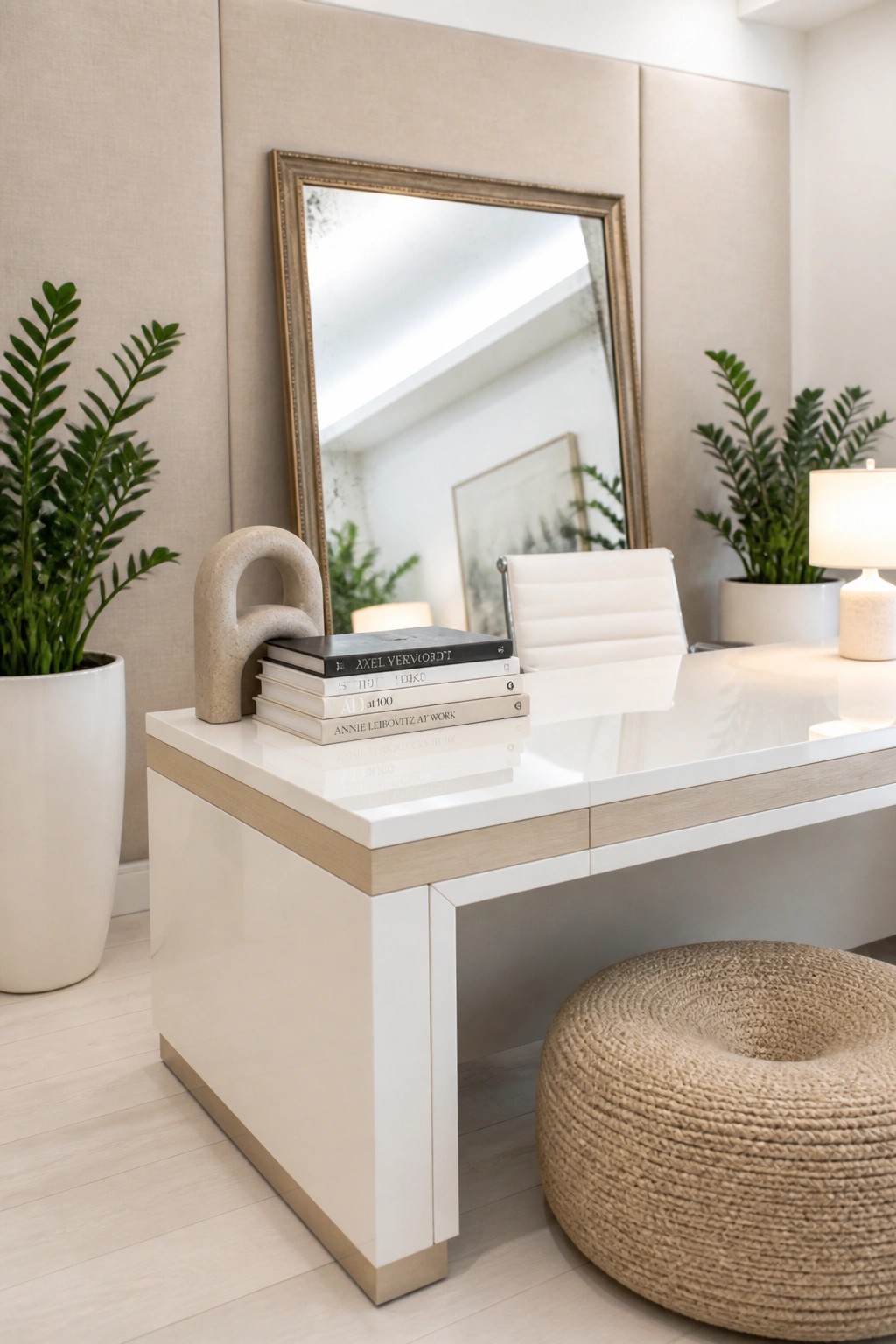
A mirror is one of the easiest ways to soften a windowless office. It catches whatever light is already in the room and spreads it around, which helps the space feel less closed in and more open.
Hang or lean a mirror across from the main light source or directly behind the desk so it reflects back into the room. This works best in smaller home offices where you want to keep the mood calm without adding more fixtures or furniture.
Fill the Walls with Framed Prints
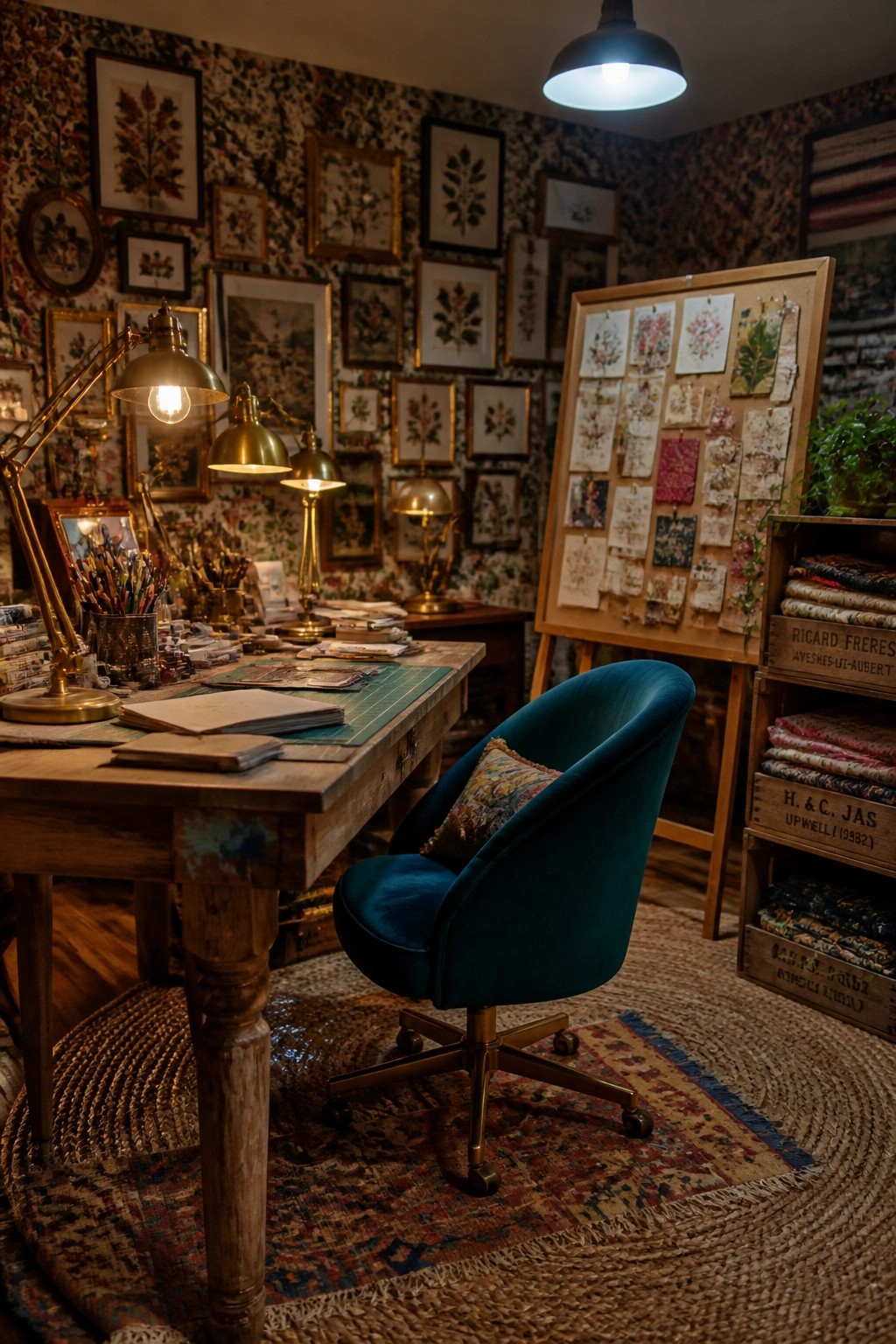
One of the easiest ways to make a windowless office feel less bare is to cover the walls with framed prints. In this room the prints are mostly botanical illustrations, but the same approach works with any subject you like. The layers of frames create depth and give the space a collected look instead of an empty one.
This works especially well in small or enclosed rooms because the art keeps the eye moving. Stick with similar frames or a loose theme so the wall does not feel scattered. You can start with a few favorite pieces and add more over time as you find them.
Large Artwork With Picture Lighting
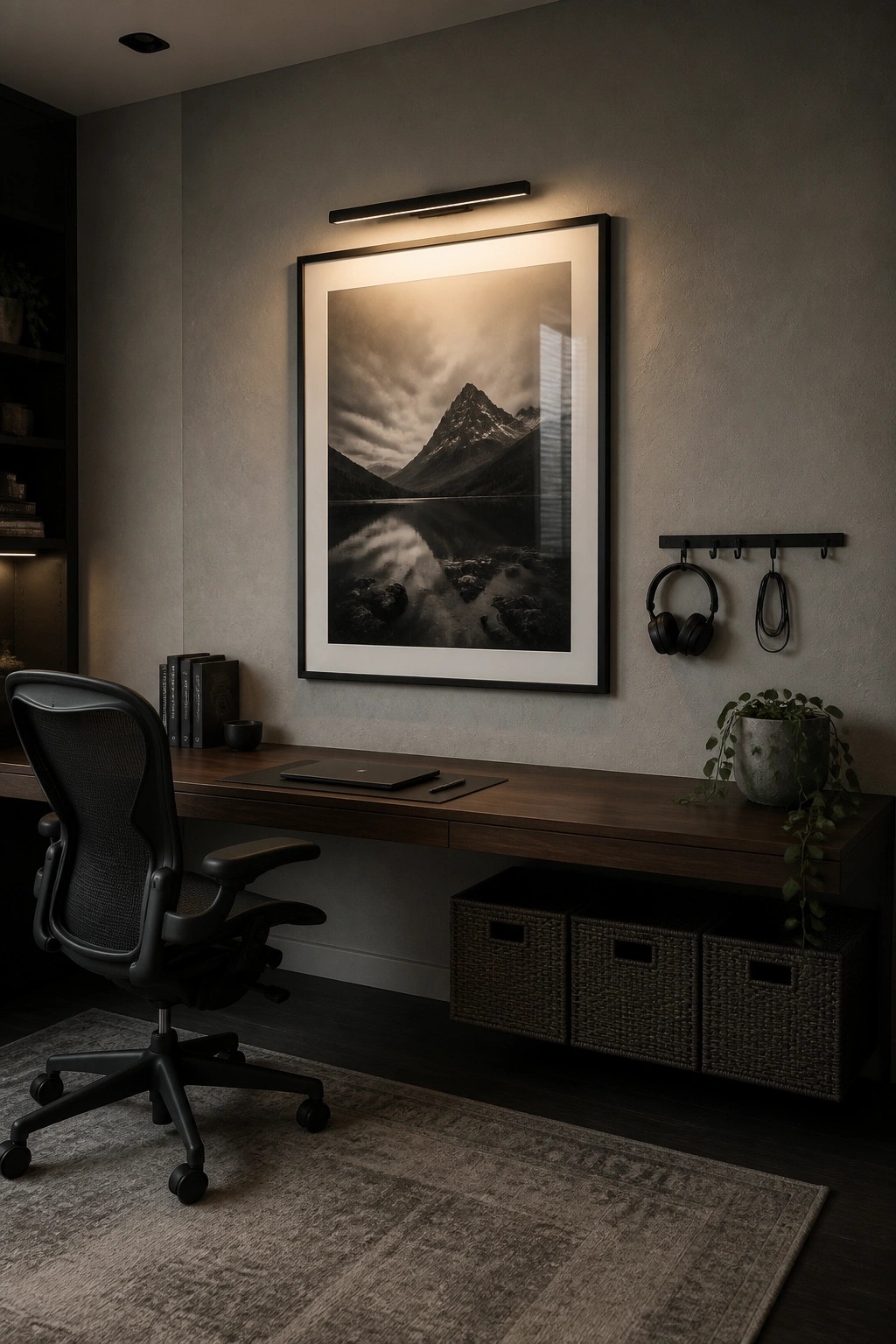
A big piece of art lit from above can give a windowless office the focus it needs. The light draws attention to the image and adds a layer of warmth that plain walls often lack.
This works best in smaller offices where the desk faces the wall. Keep the frame simple and choose a subject with soft tones so the space still feels calm rather than busy.
Warm Desk Lamps Create Cozy Work Areas
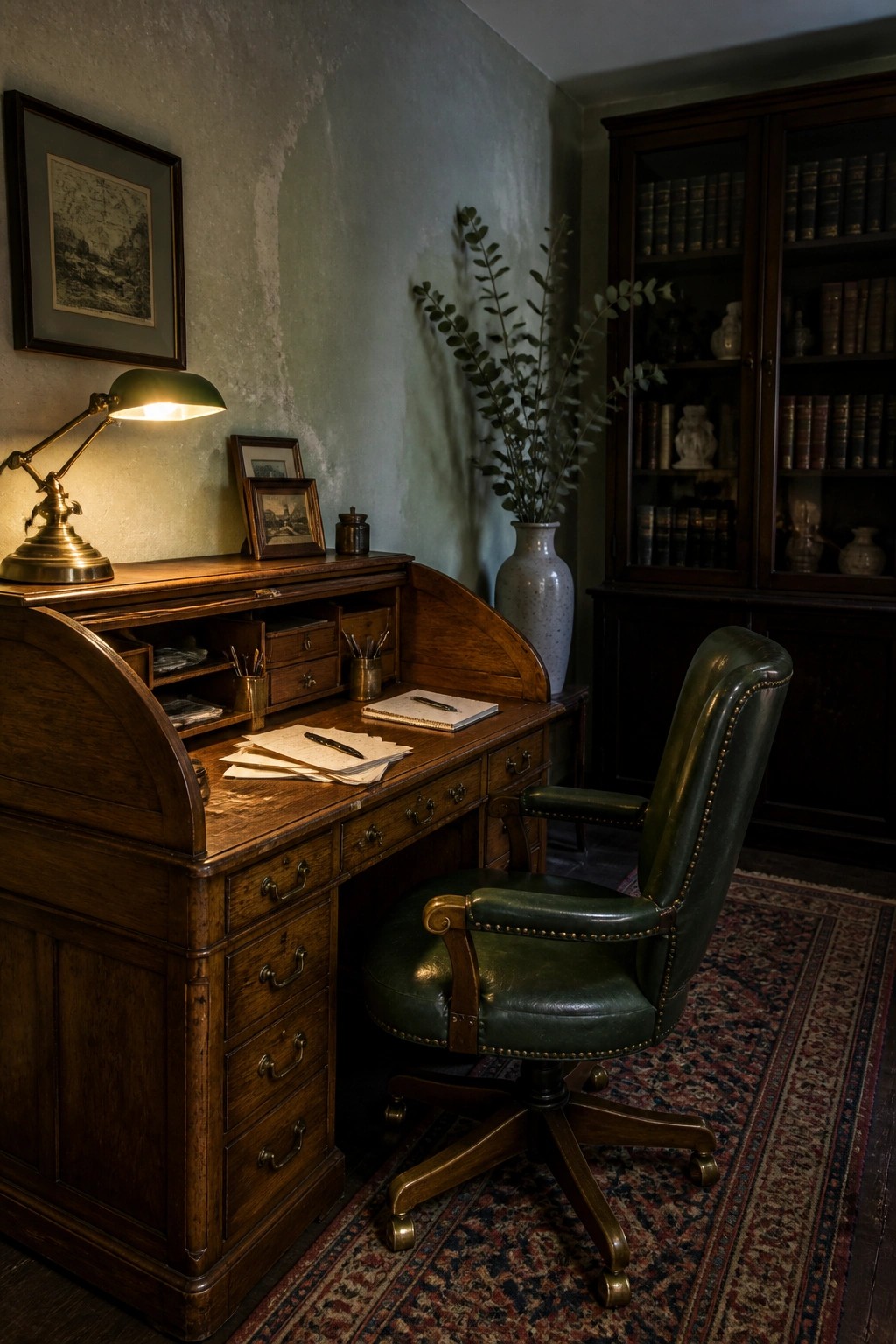
A good desk lamp does more than light your work. It brings a pool of warm light that makes the whole room feel less stark, especially when there are no windows to rely on. The brass lamp in this setup shows how a single focused light source can turn a plain desk into the heart of the room.
Place the lamp where it lights your main work surface without glare, and keep the bulb warm rather than cool. This works best in smaller or darker offices where overhead lights feel too harsh. Stick with a simple shade and a sturdy base so it feels like part of the furniture instead of an afterthought.
Roll Top Desks For Compact Offices
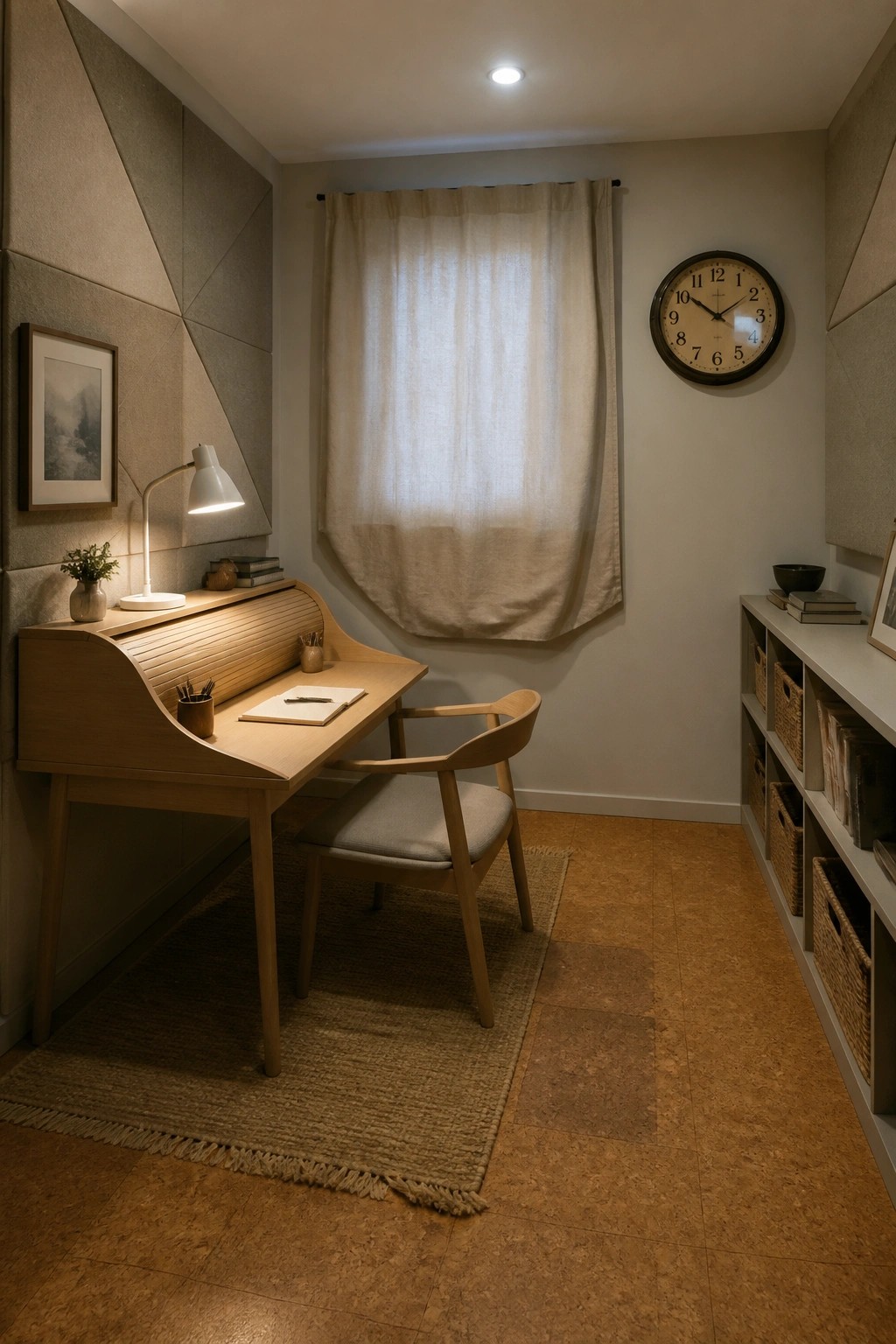
A roll top desk helps a small workspace feel more contained and calm. The cover lets you close everything away at the end of the day so the room does not look messy.
These desks suit tight corners or rooms with limited floor space. Add a rug underneath and keep the rest of the setup simple so the area stays focused without feeling cramped.
Open Shelving Keeps Small Offices Light
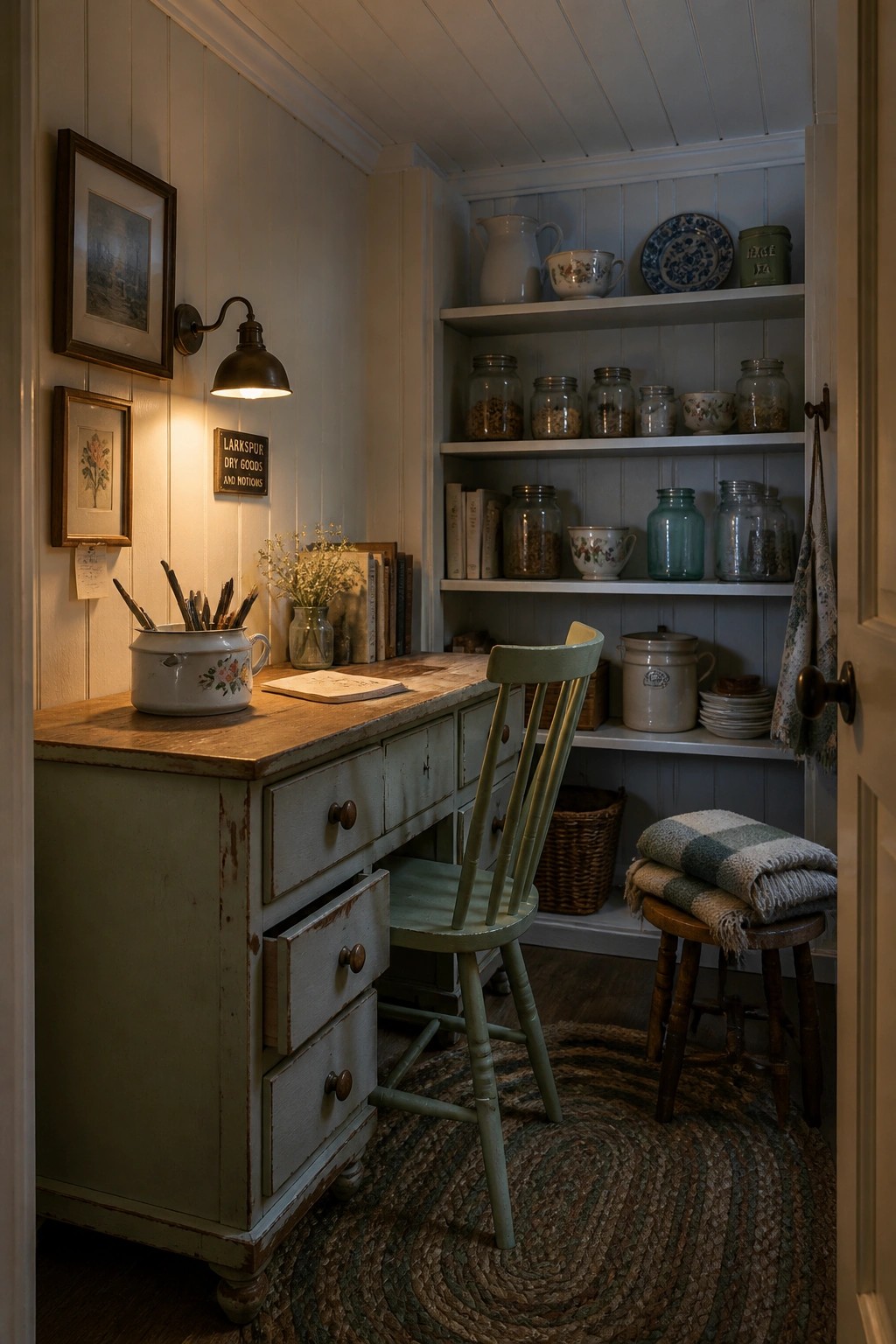
Open shelving works well in tight workspaces because it gives you storage without closing the space in. You can line the shelves with jars, books, and a few dishes so the wall feels useful instead of bare, and the room stays calm even when there is no window.
This setup suits older homes or small rooms that already have some trim or paneling. Keep the shelves the same color as the walls so they blend in, and only put out things you actually reach for. Too many tiny items can start to feel busy, so leave a little empty space between groups.
Use A Desk Lamp For Gentle Task Light
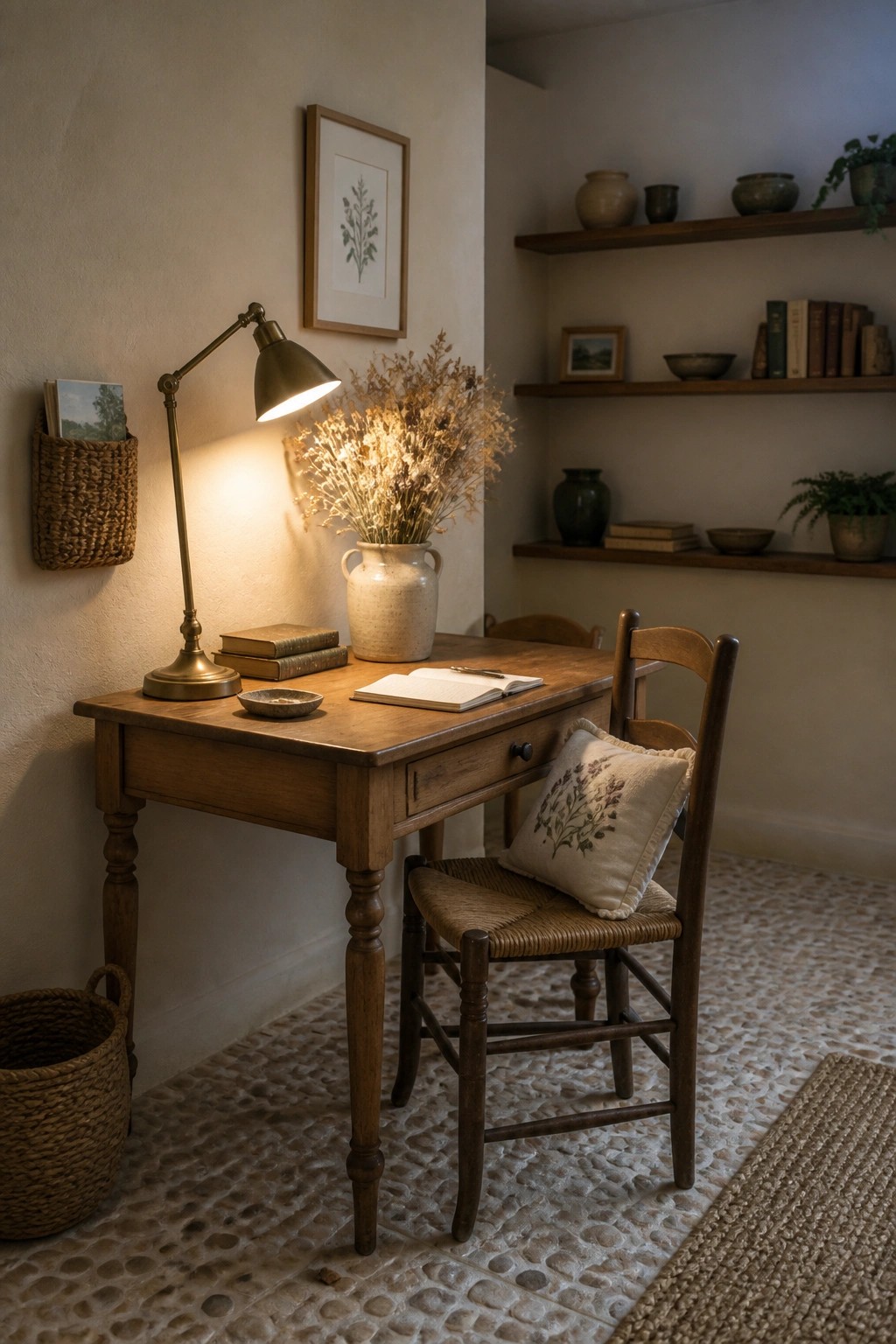
A small desk lamp can change how a workspace feels, especially when there is no natural light coming in. The warm glow it creates helps the whole area feel softer and more inviting without needing big changes.
Try placing the lamp on the left or right side of the desk so the light falls across your work area. This works well in small rooms or corners where you want to keep things simple and easy to use every day.
Mount A Chalkboard Calendar Over The Desk
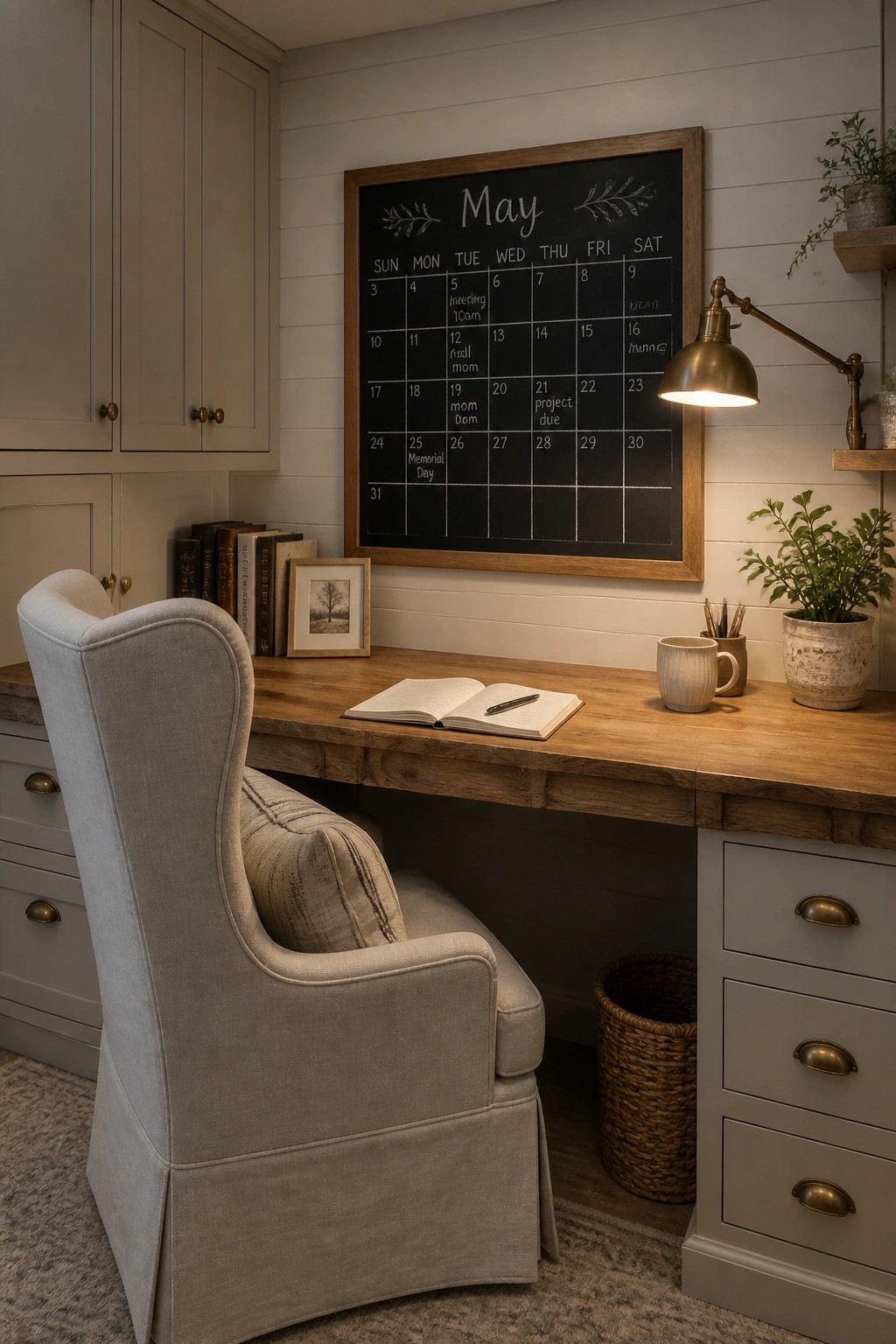
A chalkboard calendar turns a blank wall into a practical spot for tracking dates and reminders. It keeps the desk surface clear while giving the room a lived-in feel that works well in windowless spaces.
This approach suits small offices where you need both order and warmth. Choose a frame that matches your trim or desk finish so it blends in without feeling like an afterthought.
Frequently Asked Questions
Q: How can I add lighting without it feeling like an office overhead? A: Place a small floor lamp in the corner and angle it toward the wall. This bounces light around gently and warms up the whole area.
Q: What works best if I want some green but hate watering plants every week? A: Pick a couple of hardy fakes that look real and tuck them on a shelf. They stay fresh and give the space that soft natural touch without any upkeep.
Q: My desk is tiny so most decor ideas feel like too much. What should I try first? A: Swap your mouse pad for a textured one and add a single small plant. These two changes pull the eye in and make the surface feel more inviting right away.
Q: How do I stop the room from looking flat after I add these touches? A: Layer a throw blanket over your chair and hang one piece of art at eye level. The mix of soft fabric and something on the wall adds depth without crowding anything.
