
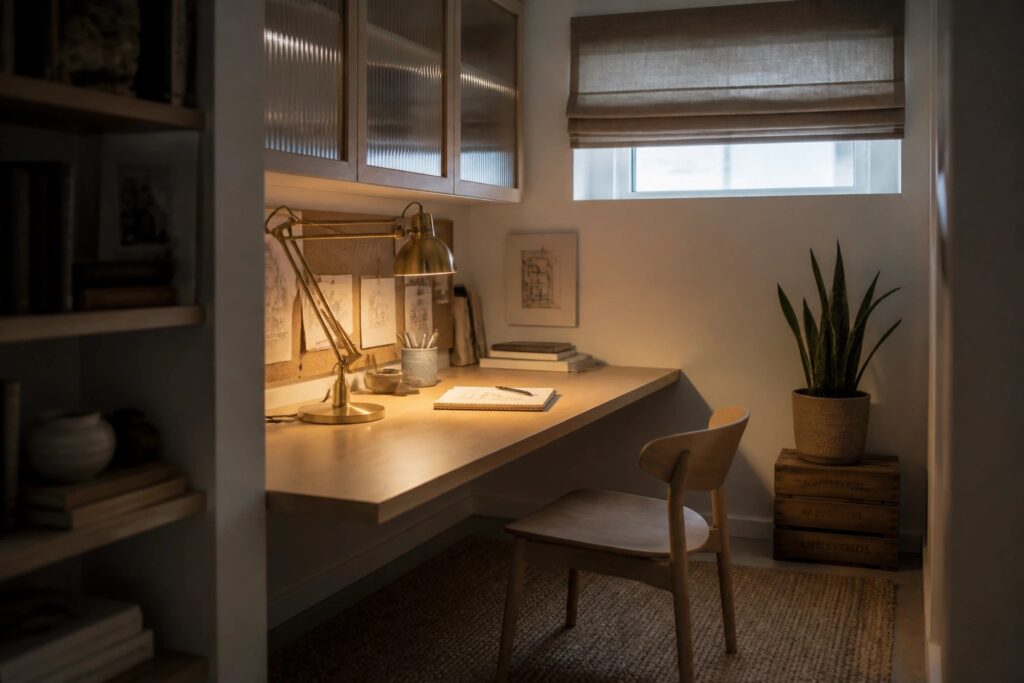
When I tried turning a dim corner room into a study, the lack of natural light made the space feel closed in no matter how I arranged the furniture.
Over time I learned that the right choices in color, surface, and layout can open things up without adding windows or skylights.
I usually test a couple of these adjustments first in my own home before suggesting them to anyone else because results vary with the actual light levels.
Most people notice right away how a few reflective elements change the way the room feels during the day.
Small tweaks add up.
Add Task Lighting to Built-In Study Desks
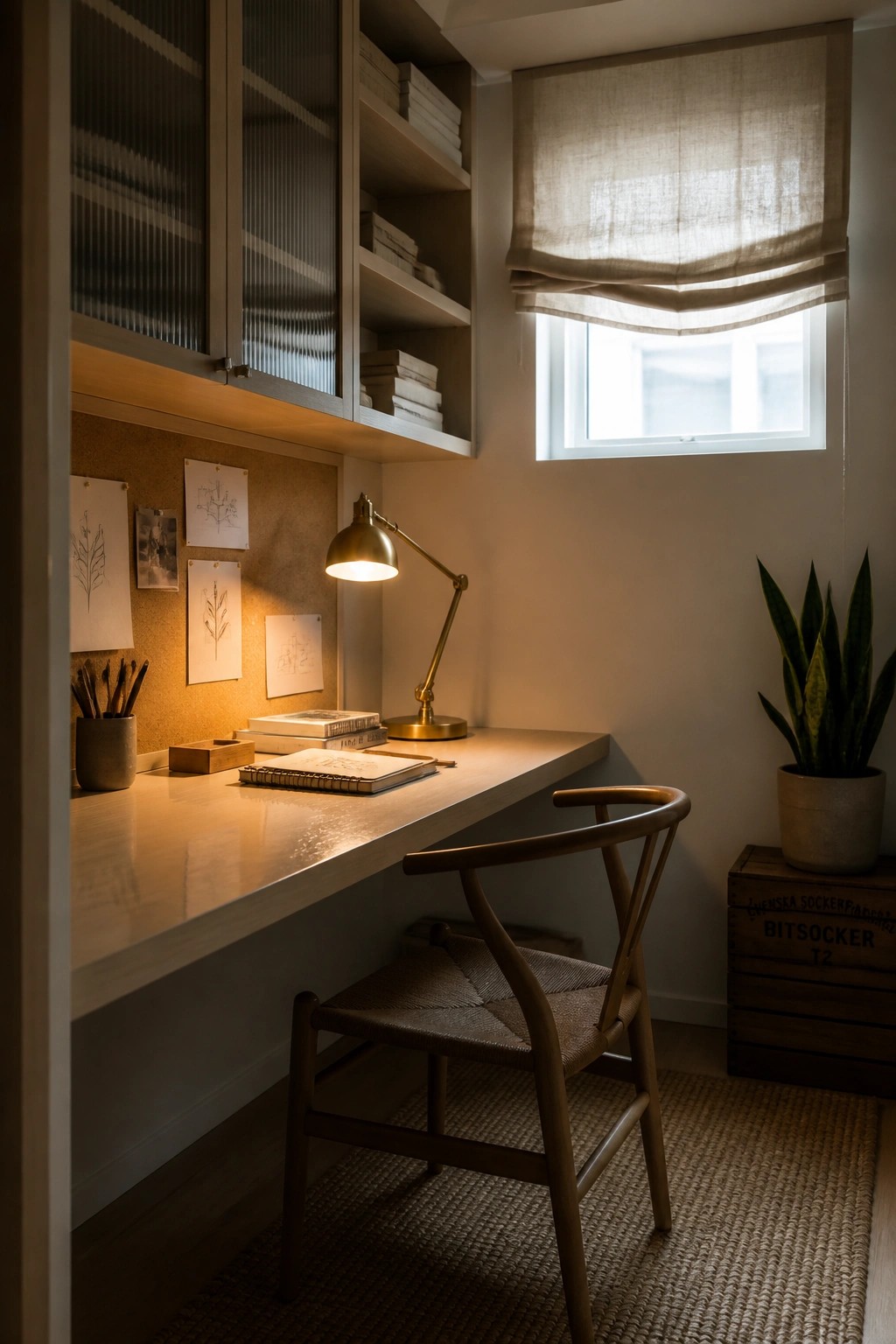
A small desk tucked into a corner often struggles with natural light, and that is where a single focused lamp makes the biggest difference. The brass fixture in this setup sits low enough to light the work surface directly while the warm glow from the shelf above softens the whole area without needing extra windows.
Place the lamp on the side opposite your writing hand so the light falls across the desk evenly. This works best in narrow rooms or under existing cabinetry where a larger floor lamp would not fit. Keep the shade simple and the bulb warm so the light feels steady rather than harsh during long hours at the desk.
Add Under-Shelf Lighting Over Your Desk
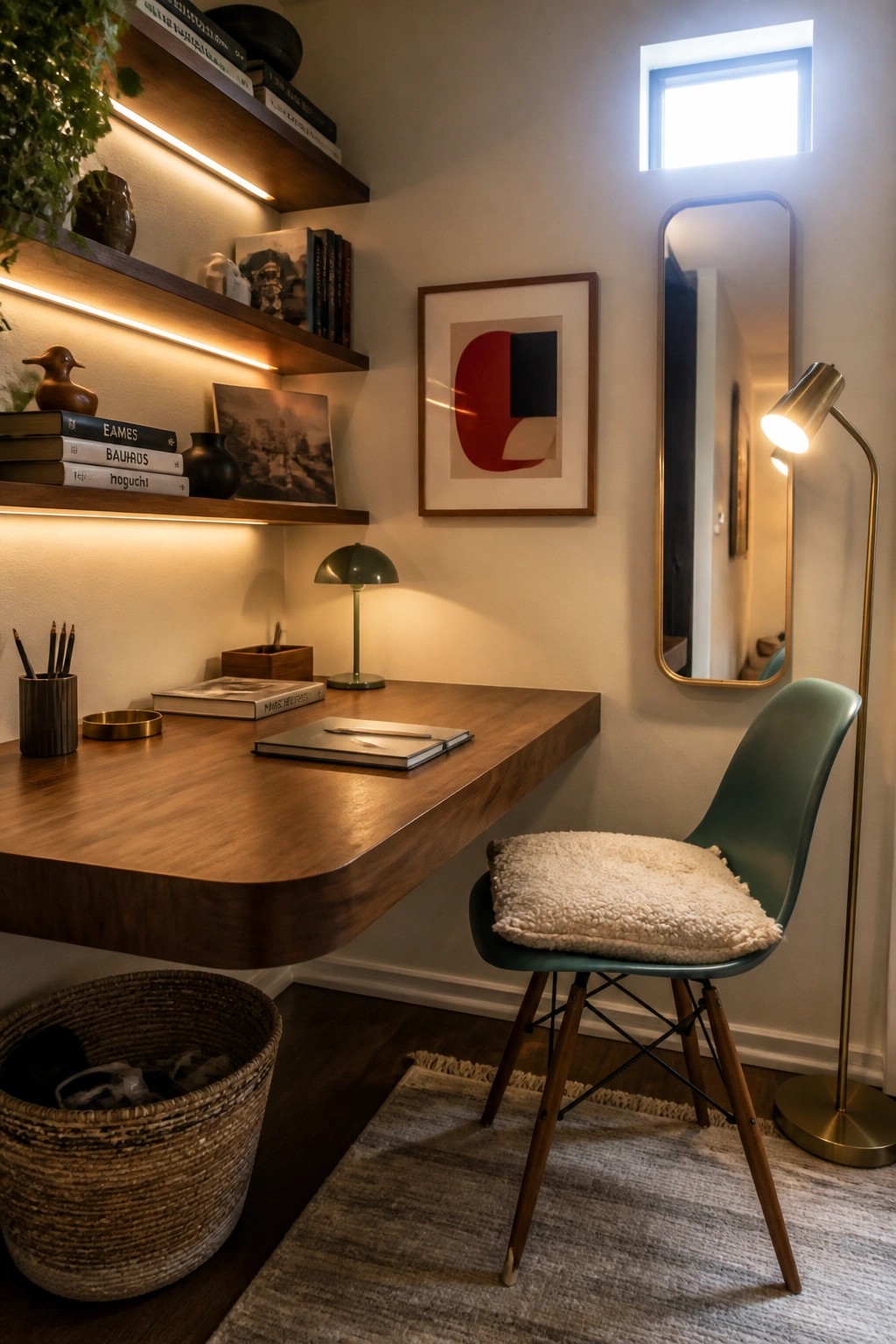
Many studies sit in darker corners or have only small windows, which makes them feel closed in during the day. A simple row of lights tucked under the shelves above the desk spreads a steady, even glow across the work surface without needing extra lamps.
This works best in smaller rooms or spaces where natural light stays limited most of the day. Use a warm tone so the light feels soft instead of bright and clinical, and keep the shelves shallow enough that the light reaches the desk evenly.
Built-In Lighting Brightens Compact Study Spaces

Many small studies get very little natural light, so adding lighting directly into the cabinetry above the desk helps the whole area feel more open. The light spreads across the work surface and bounces off light-colored walls and surfaces.
This approach works well in narrow rooms where a built-in desk runs along one wall. It gives you storage and task lighting in the same spot, and it avoids the clutter of extra lamps on the desk itself.
Add a Desk Lamp for Better Task Lighting
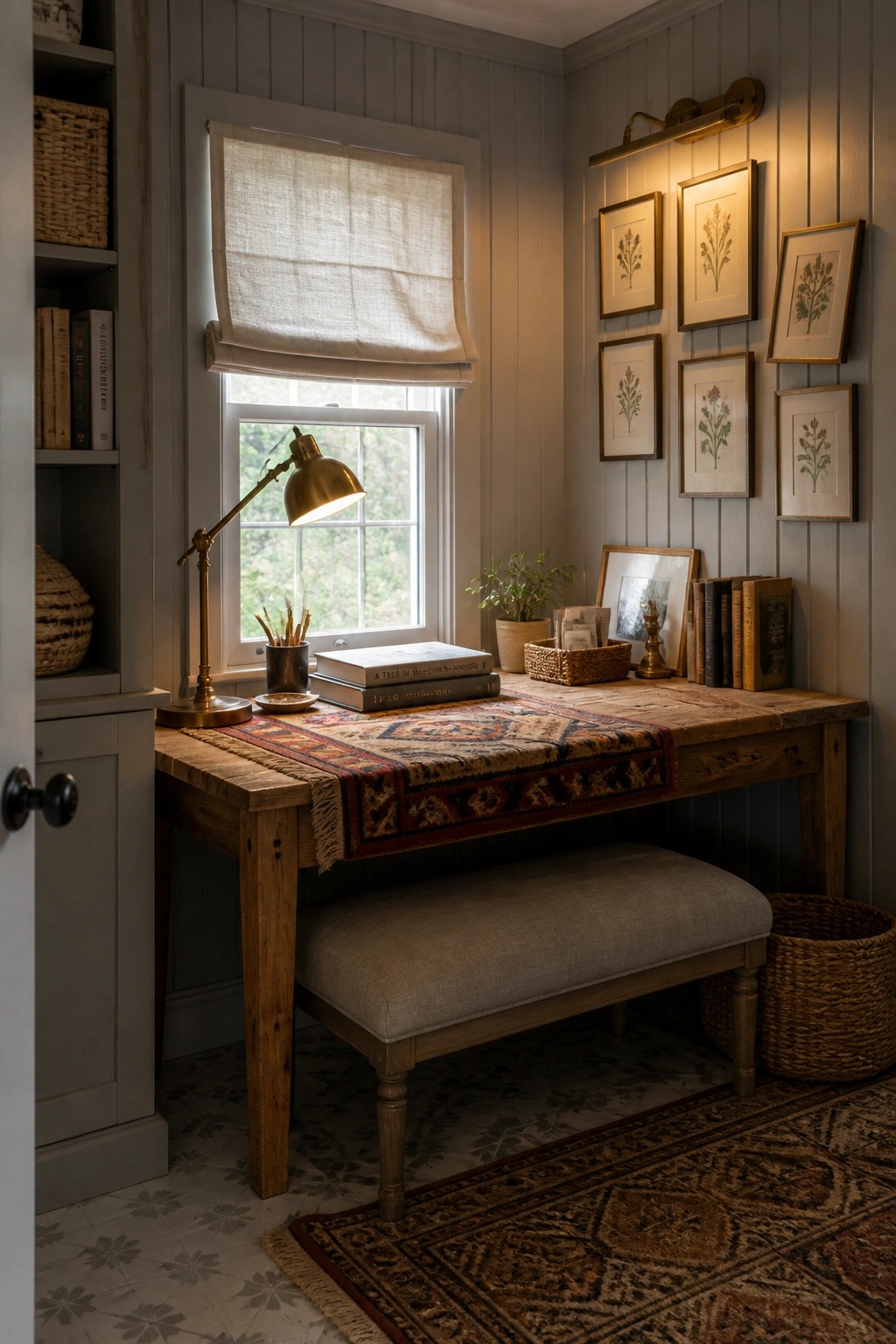
A desk lamp gives you direct light exactly where you need it most. In rooms with limited natural light, this simple addition keeps the workspace bright and usable even on darker days.
Set the lamp on the side opposite your writing hand so it does not cast shadows across the desk. It works especially well in small studies or corners that only have one window.
Illuminated Shelving For Dark Studies
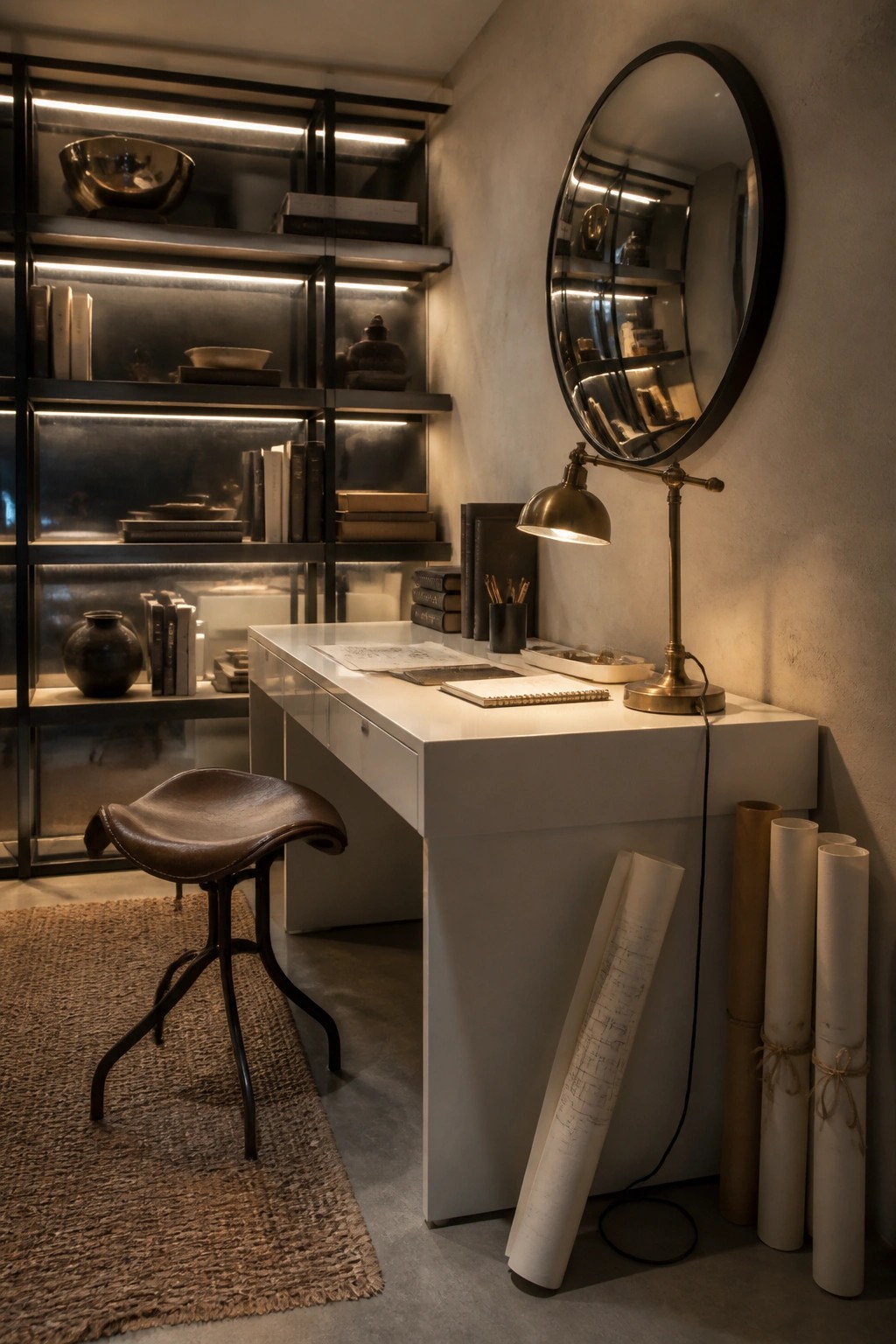
Built-in shelves with built-in lighting can make a big difference in a study that gets little natural light. The glow from the shelves bounces off the desk surface and helps the whole area feel more open instead of closed in. It also gives you a place to store books and objects without adding more lamps that take up desk space.
This works especially well in small rooms or basement studies where windows are limited. Keep the shelves simple and use warm bulbs so the light feels steady rather than harsh. It is an easy upgrade if you are already planning custom shelving.
Add A Desk Lamp For Focused Light

A desk lamp gives you direct light right on your work surface, which helps a lot when the room only has a small high window. It keeps the space usable for reading or writing without needing to depend on natural light alone.
Put the lamp toward the back or side of the desk so the light reaches across your papers or keyboard. This works especially well in narrow studies or any room where the window sits too high to light the desk properly during the day.
Add A Swing Arm Lamp
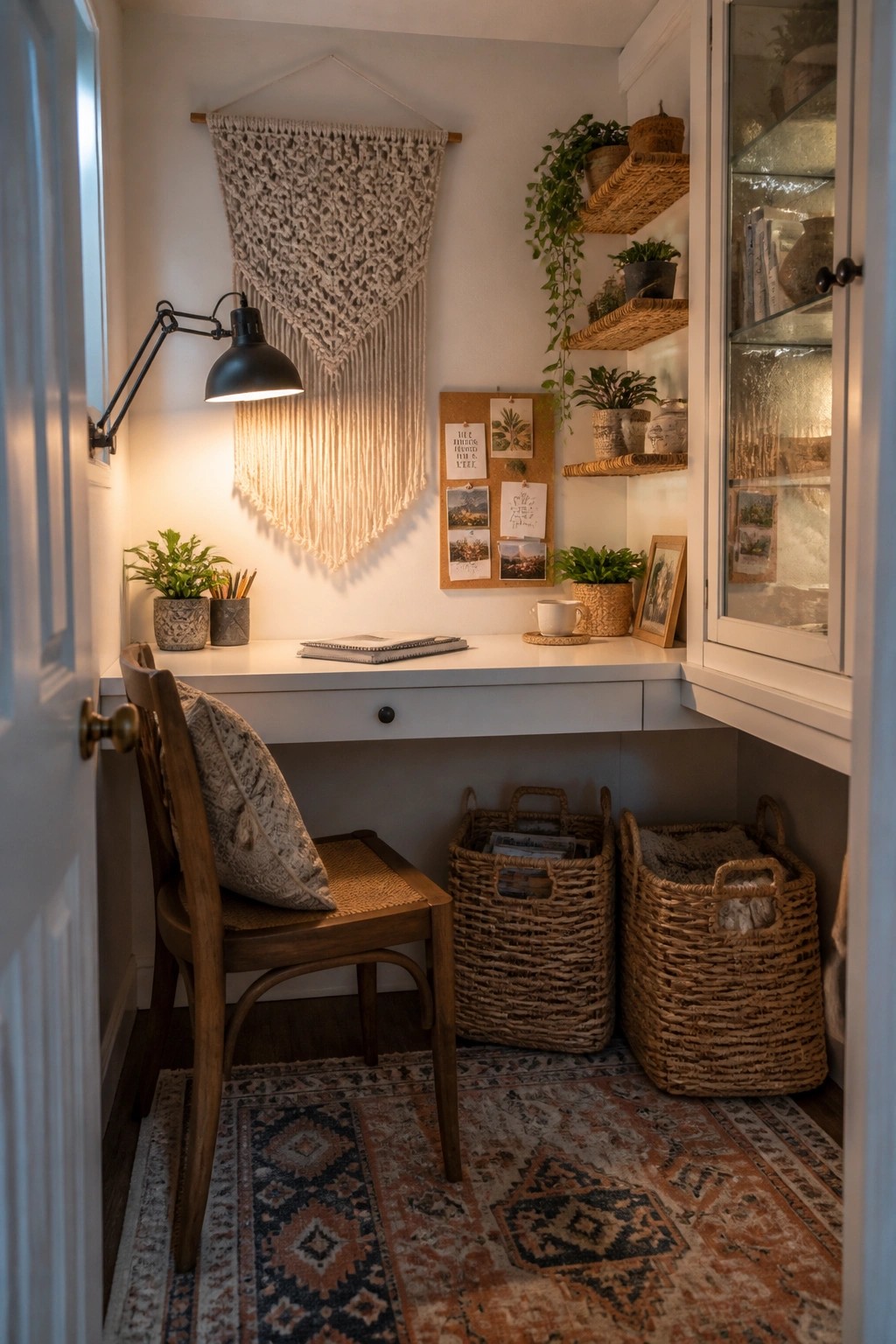
A swing arm lamp gives you direct light right over the work surface. In a small study with limited windows, this kind of lamp keeps the desk bright without needing to light the whole room.
Mount it on the wall so the arm can swing in or out as needed. It works especially well in narrow nooks or corners where a floor lamp would take up too much space.
Add a Tall Mirror to Reflect More Light
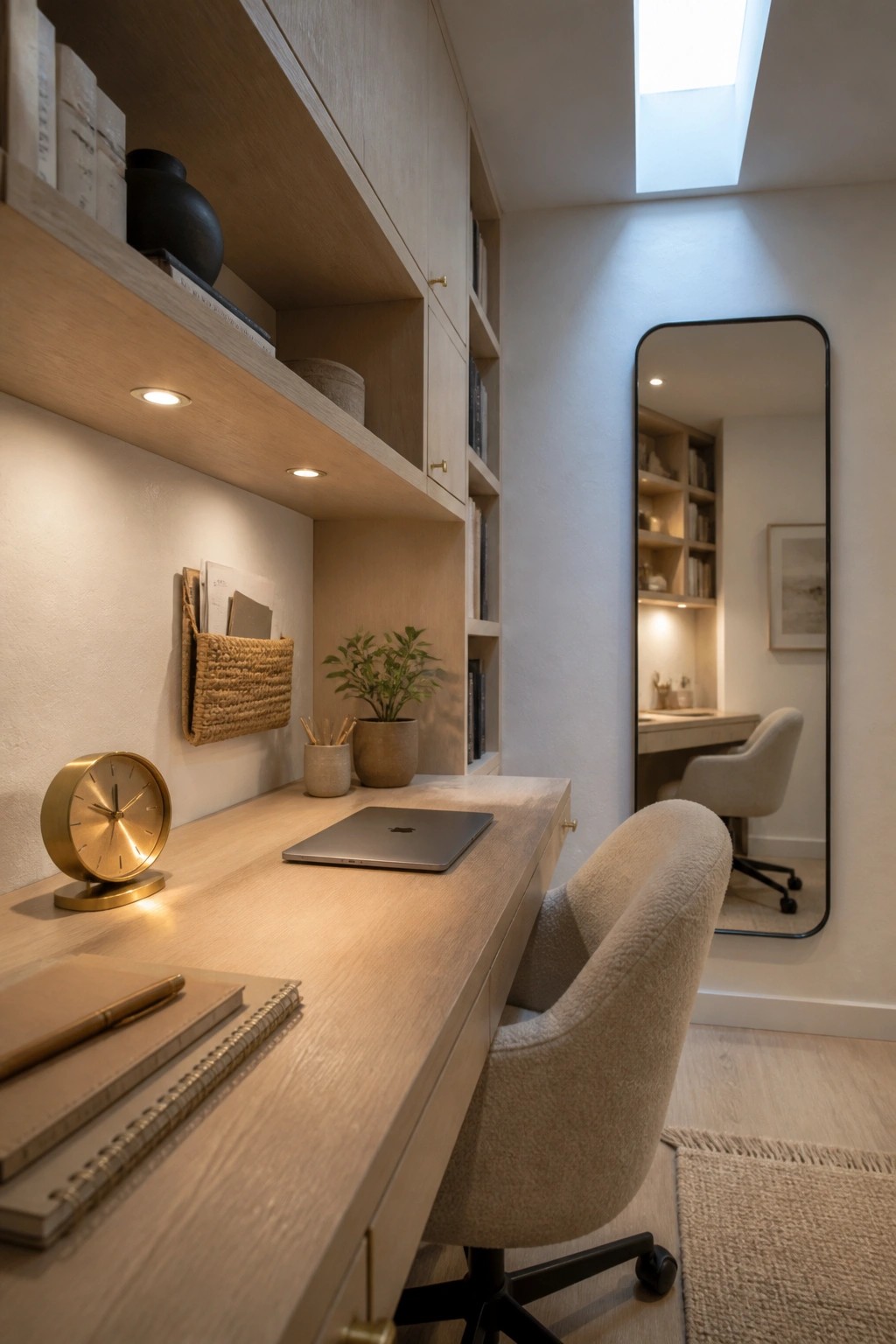
A tall mirror can make a big difference in a study that gets only indirect light. It catches what light there is and sends it back across the room, so the space feels brighter without any extra fixtures.
This works especially well in narrow or tucked-away spots. Place the mirror across from a window or skylight, and keep the frame simple so it blends with the walls.
Use A Mirror To Reflect Light

A large mirror can make a big difference in a study that gets little natural light. It catches whatever light comes in from the window and bounces it back into the room, which helps the space feel less closed in. Dark walls make this even more useful since they tend to absorb light instead of spreading it around.
Try placing the mirror on the wall next to or across from the window so it picks up the brightest spot in the room. This works well in smaller studies or rooms with only one small window. Keep the frame simple so it does not block too much of the reflection.
Add a Desk Lamp for Task Lighting
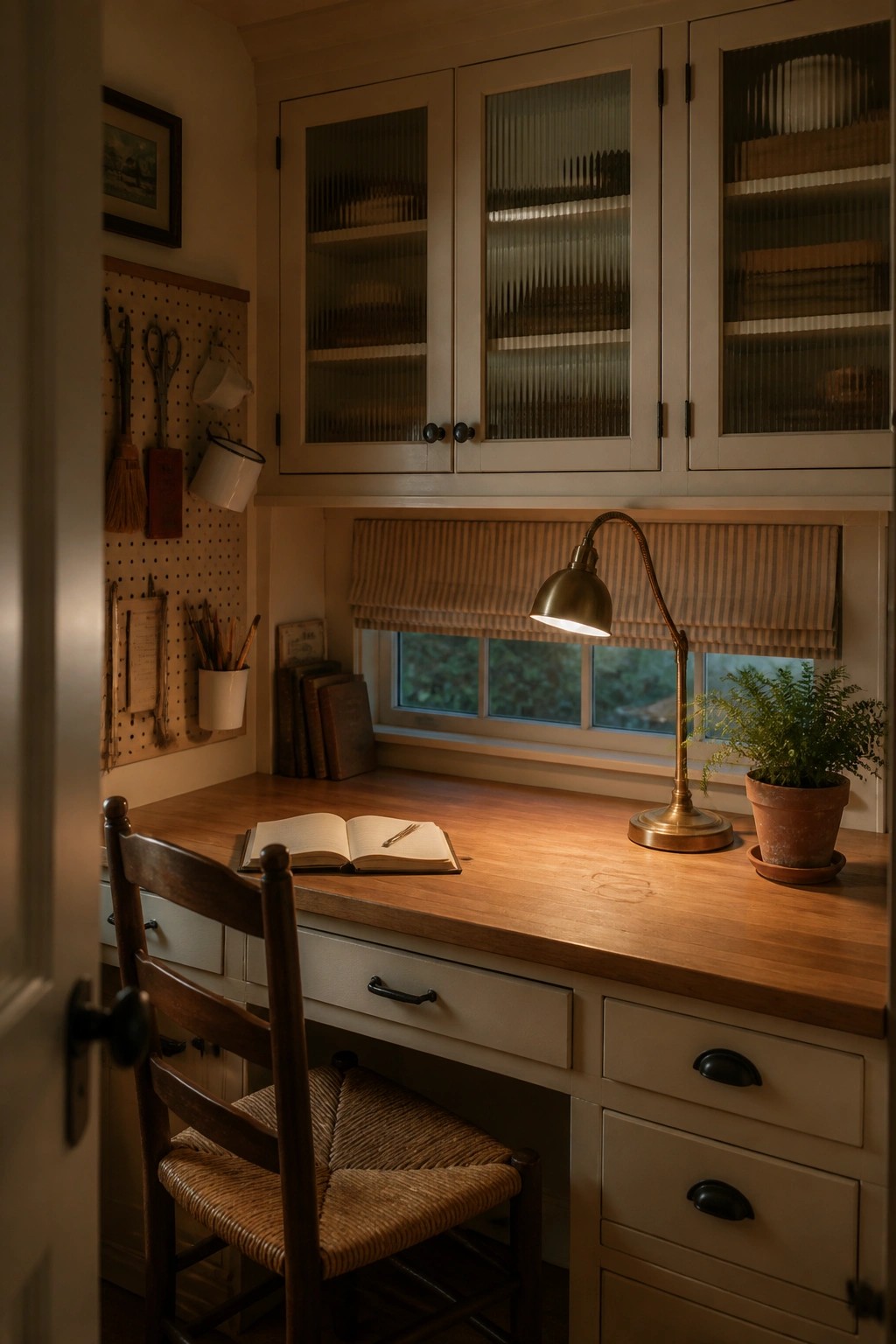
Many studies end up with only a small window for light. A desk lamp solves this by putting bright light exactly where you need it for reading or writing.
Place the lamp on the desk so the light falls across your work surface without glare. This setup works in almost any older home or room where adding windows is not possible.
Use a Large Mirror to Reflect Light

A large mirror can help a study feel brighter even when natural light is limited. It catches light from lamps or small windows and bounces it across the room, which reduces the closed-in feeling that often comes with darker spaces.
Try placing the mirror opposite your main light source or along a side wall so it spreads illumination toward the desk area. This approach works well in compact rooms or corners where adding more windows is not an option.
Layered Lighting For Low Light Studies
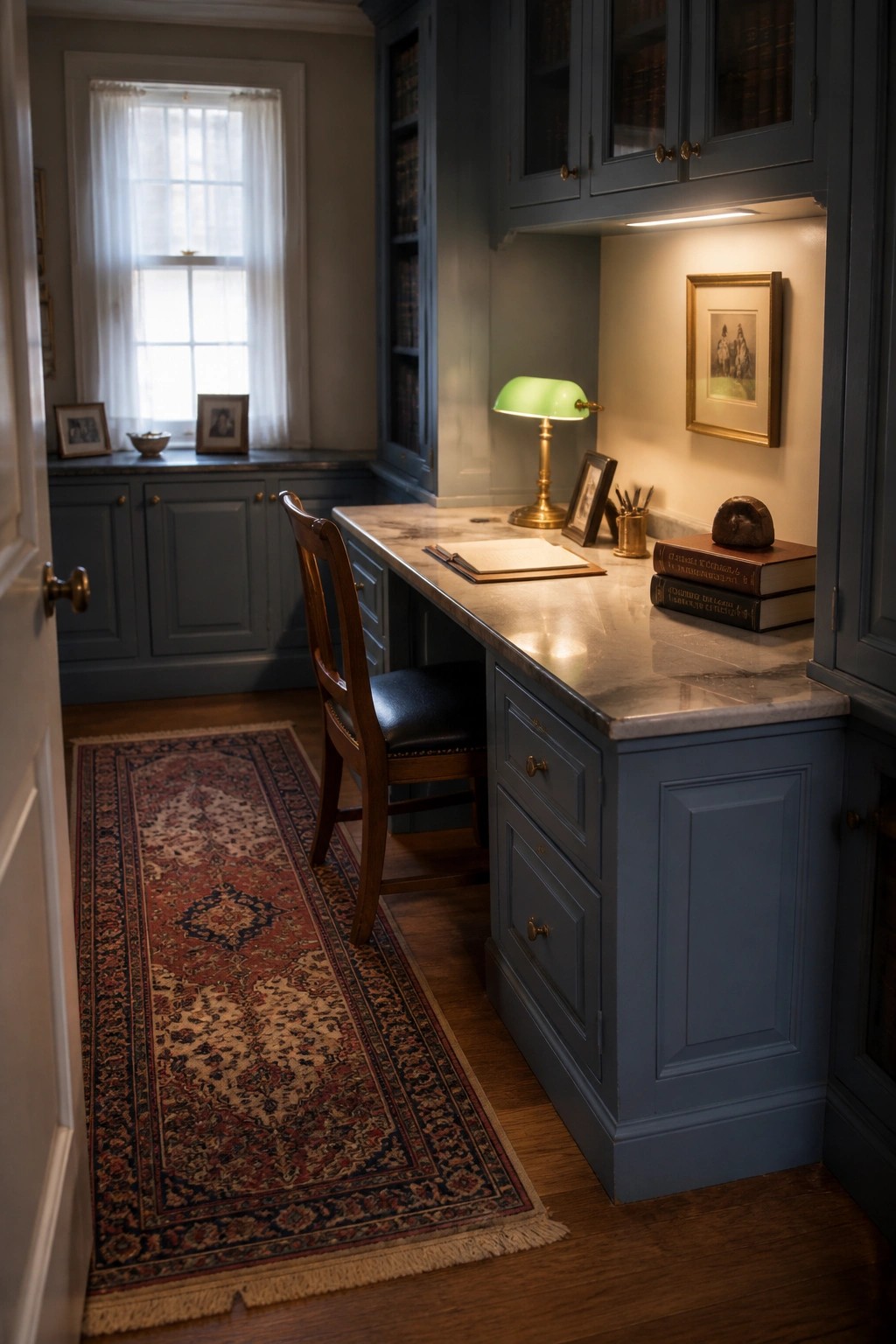
One reliable way to keep a study usable when it only has one small window is to layer lighting right at the desk. A strip light tucked under the upper cabinets spreads a steady glow across the work surface, while a classic shaded lamp adds focused light exactly where it is needed.
This setup works especially well in older homes or rooms with deep walls that block daylight. Run the under cabinet light on a separate switch so you can use it alone during the day, then turn on the lamp for evening work. Keep the shades or bulbs warm rather than cool so the whole area feels inviting instead of harsh.
Tuck A Desk Into A Light Alcove
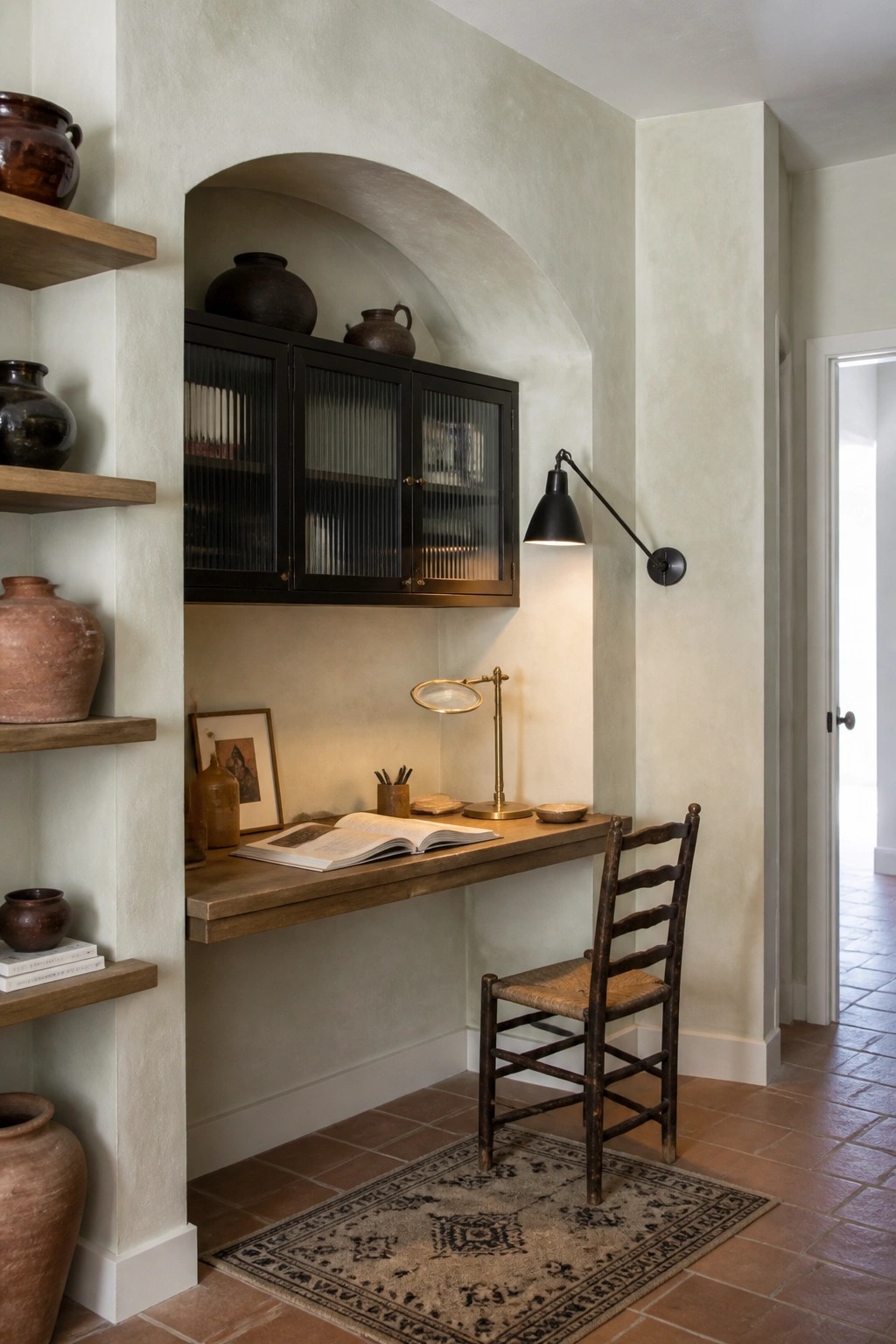
A recessed alcove with pale walls gives a study spot extra brightness even when natural light is scarce. The light surface bounces what little light comes in, and the built-in desk keeps the floor clear so the space feels less cramped.
This setup works well in older homes or rooms with few windows. Keep the walls a soft off-white or pale tone, add a simple floating desk, and use minimal furniture so the light stays the main feature.
Add A Mirror With Built-In Lighting

A large round mirror with its own light bar helps bounce artificial light around a study that gets little daylight. The reflection multiplies what light is already there, so the room feels less dim even when the only sources are lamps and overhead fixtures.
This works best in small home offices or tight corners where adding windows is not possible. Place the mirror above the desk so it catches light from a task lamp, and keep surrounding surfaces light in color to help the effect carry further.
Add a Warm Pendant Light Over the Desk
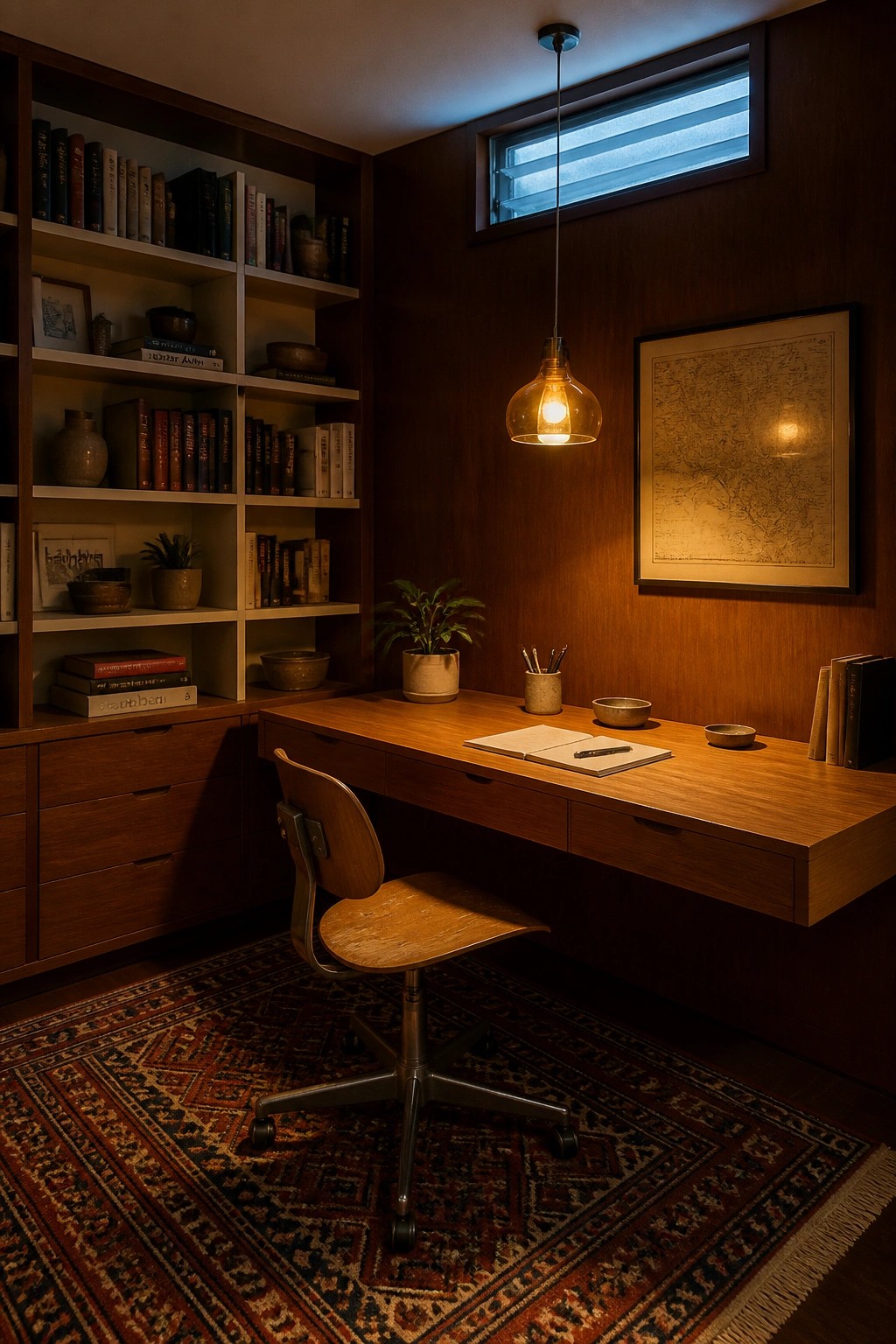
A pendant light with a warm bulb creates a focused pool of light right where it is needed most. In a study that gets little daylight, this single fixture can make the whole desk area feel more usable without relying on harsh overhead lights.
It suits smaller rooms or spaces with dark wood tones that tend to absorb light. Hang the light low enough to illuminate the work surface but high enough to avoid glare on the page or screen.
Under-Shelf Lighting For A Small Desk

Adding lights under the upper shelves brings steady brightness right where you need it most. In rooms with only one small window, this kind of built-in lighting keeps the desk area usable even on darker days.
It works best in compact spaces where a floor lamp would feel too big. Run a simple LED strip along the bottom edge of the cabinet and pair it with a basic desk lamp for extra control when the natural light fades.
Diffuse Light With Translucent Screens
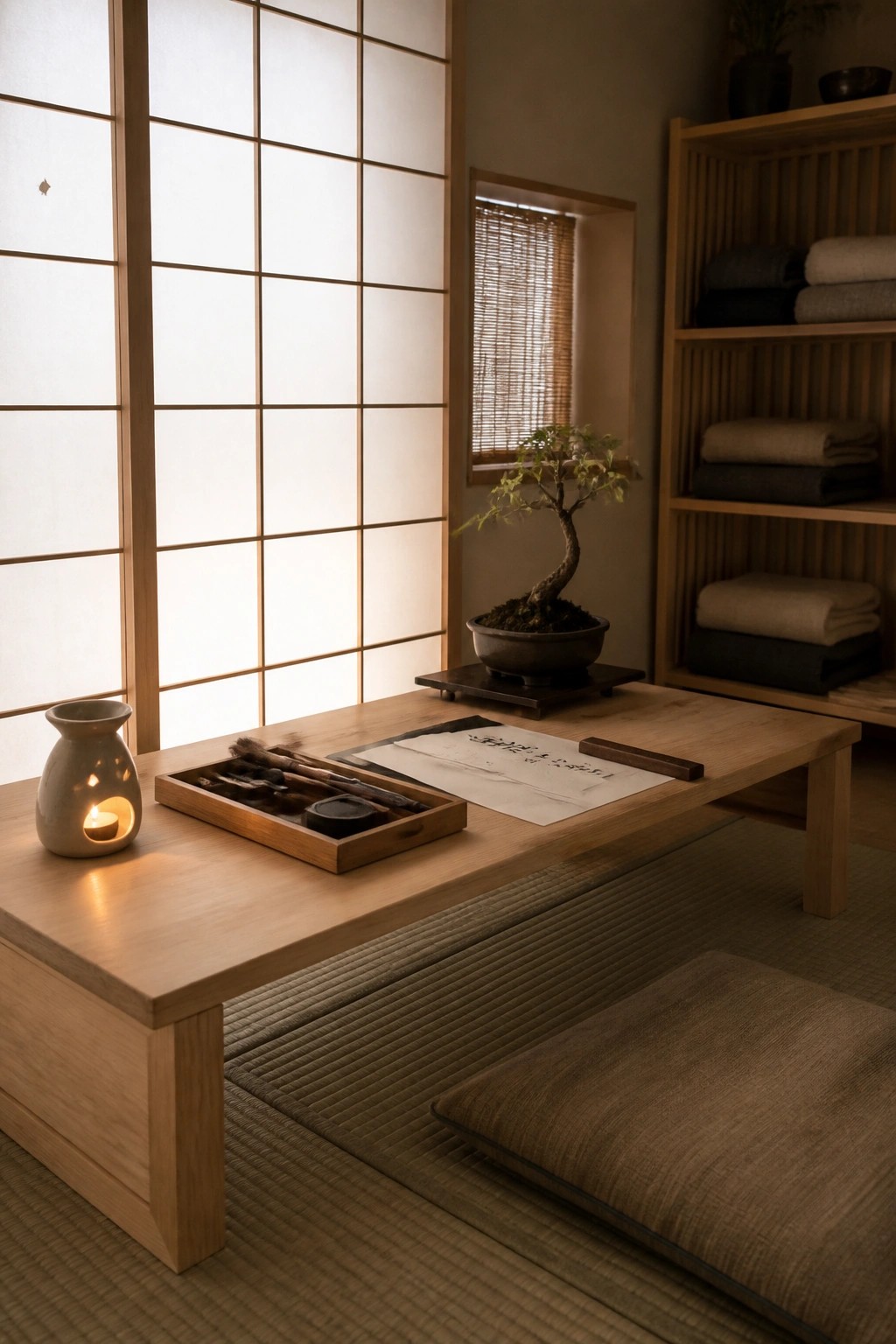
Large translucent screens can turn limited natural light into something much more usable for a study. They spread the light evenly across the room instead of letting it hit one spot or creating harsh shadows. This setup works especially well when windows are small or the light outside stays low for much of the day.
Place the screens across the main window wall and keep the rest of the room simple. Low tables and minimal furniture help the light reach farther without getting blocked. This approach suits smaller studies or any space where you want steady light without adding lamps during the day.
Built-In Desks With Overhead Storage
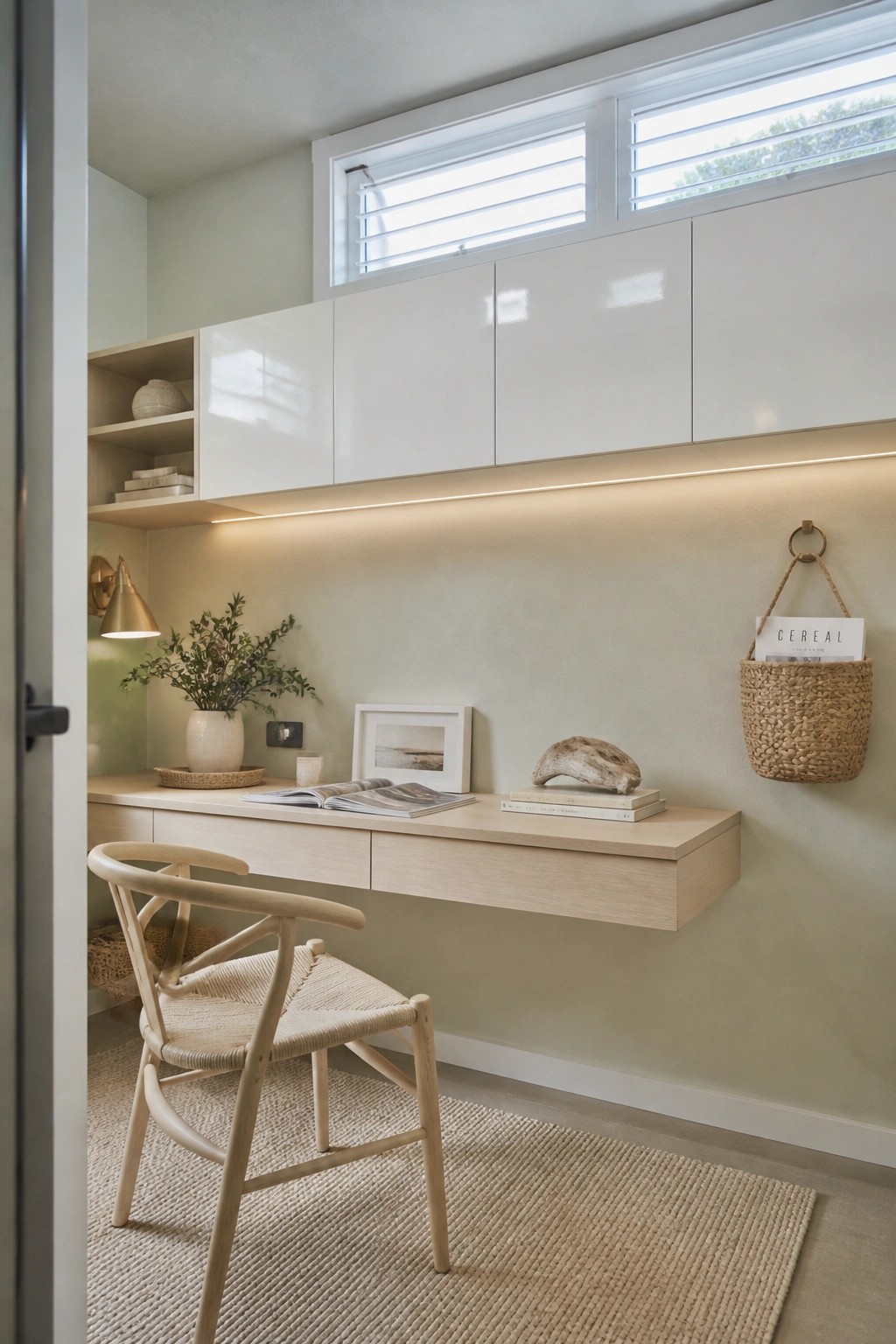
A built-in desk with cabinets above it works well in a small study that gets little natural light. The overhead storage keeps the work surface clear while the under-cabinet lighting adds brightness right where it is needed. Light wood tones on the desk help reflect what light is available.
This approach suits narrow rooms or awkward corners where a freestanding desk would take up too much floor space. Keep the cabinets a bright white and add a simple strip of LED lighting underneath so the area feels open rather than closed in.
Add Under-Shelf Lighting to Brighten Compact Studies
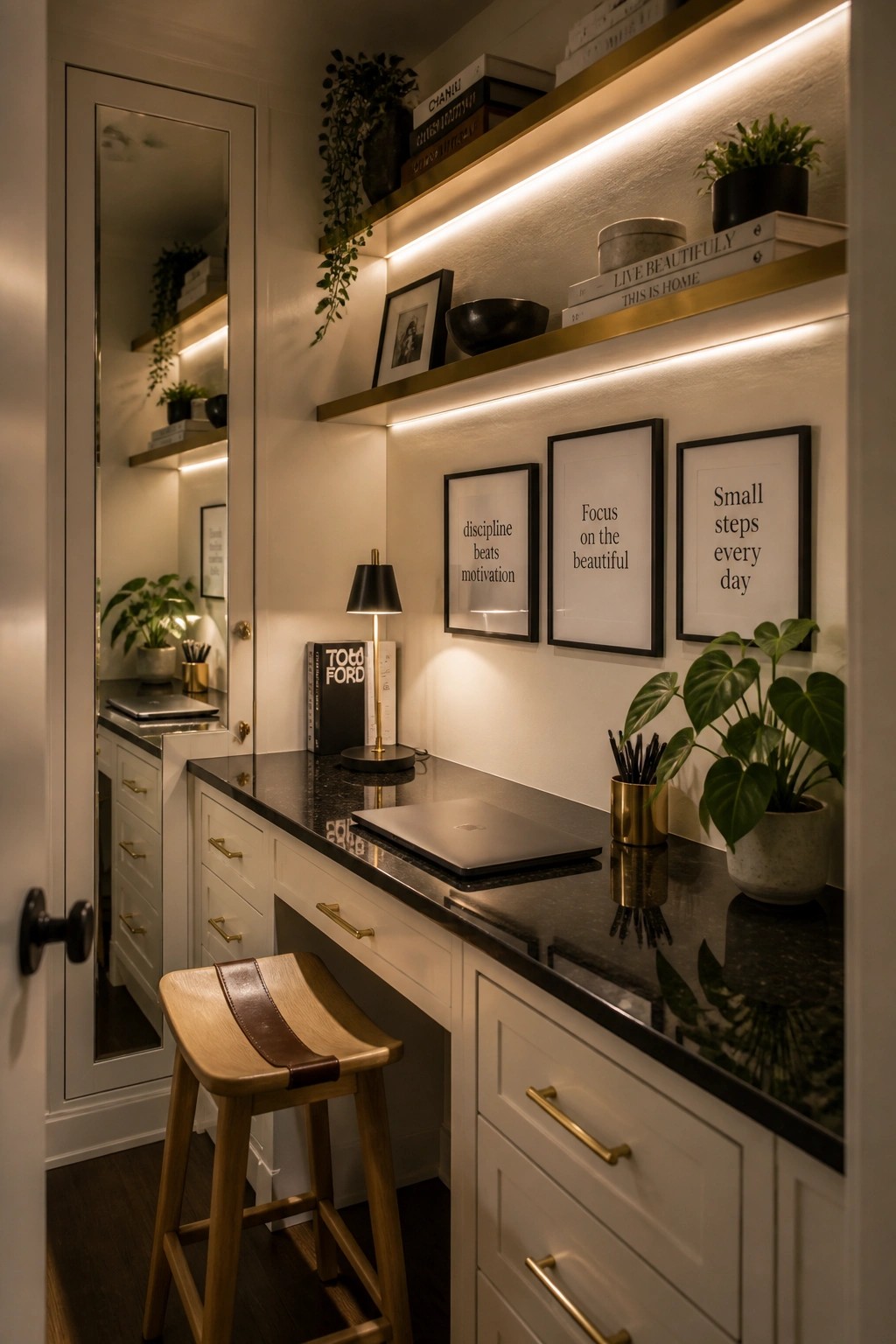
Under-shelf lighting turns a small desk area into a workable spot even when natural light is scarce. The strips run along the bottom of the shelves and cast a steady glow right where it is needed most.
This setup suits narrow rooms or alcoves that lack windows. LED strips are simple to install and let you keep the surface clear while still giving enough light for reading and writing.
Yellow Walls With Mirrors To Bounce Light

Yellow walls help a study feel brighter even when natural light is limited. The color reflects whatever daylight comes in and adds a warm tone that keeps the space from feeling dull or closed in.
Hang several mirrors together on one wall to catch and spread the light further. This works best in smaller studies or rooms with only one window, and it pairs well with a simple desk setup so the room stays functional rather than overly busy.
Frequently Asked Questions
Q: My study has just one tiny window. How do I stop it from feeling gloomy during the day?
A: Place a tall floor lamp near the window and angle it to bounce light off the ceiling. This spreads brightness across the whole room without needing extra fixtures.
Q: Are mirrors actually helpful here or do they just look obvious?
A: Hang a mirror across from your main lamp so it catches and spreads that light. It makes the space feel twice as open without any extra effort on your part.
Q: What if I want some color but worry it will close the room in?
A: Paint one wall a soft warm tone and keep everything else light. Your desk and shelves will still reflect what light you have while the accent adds interest.
Q: How should I handle bookshelves without blocking the little light I get?
A: Set the tallest units against the wall away from the window. Leave gaps on lower shelves so light can travel through instead of stopping short.
