
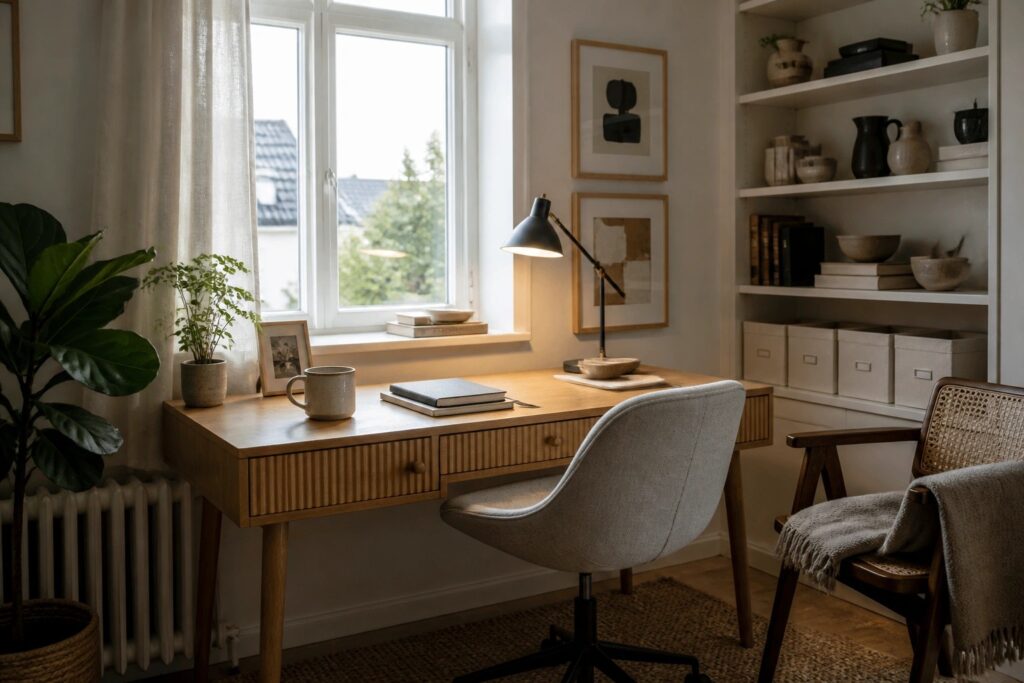
I have spent more time than I expected trying to get my home office right for those long stretches at the desk.
The way a room supports both focused work and quick breaks often determines whether I can stay productive all day.
Small changes in layout matter more than they seem at first.
I usually test a couple of these adjustments myself before committing to them in my own space.
Over time I have learned that comfort comes from thinking through how each part of the room gets used during an actual workday.
Desk Placement by a Window
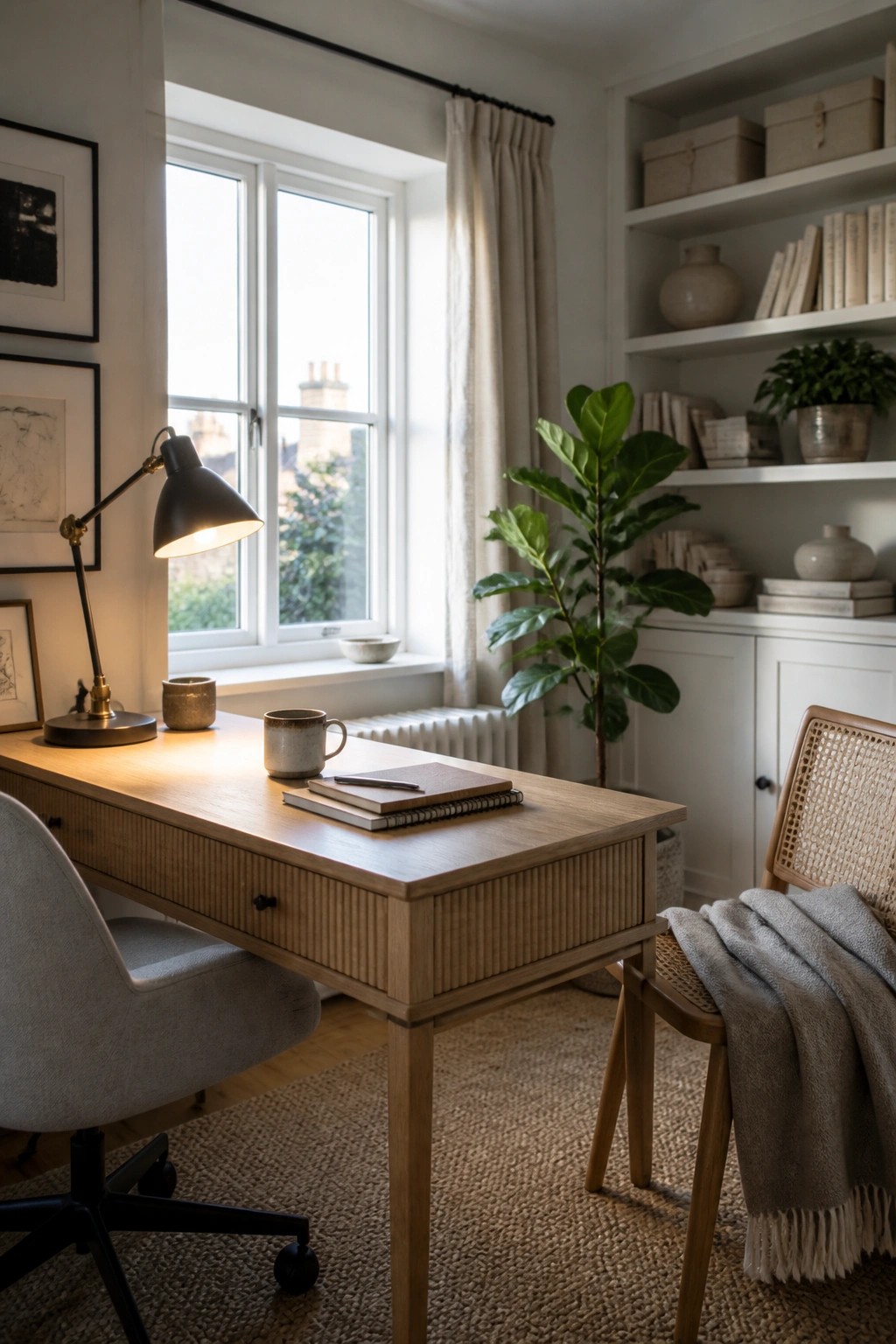
Working long hours at home goes smoother when the desk sits near a window. Natural light cuts down on eye strain and makes the space feel less like a closed-off corner during the day.
This works best in rooms where the window faces a quiet view rather than direct sun all afternoon. Add a simple shade so you can adjust for glare, and keep the rest of the setup light so the desk area stays open and easy to use.
Use A Solid Wood Desk For Daily Comfort
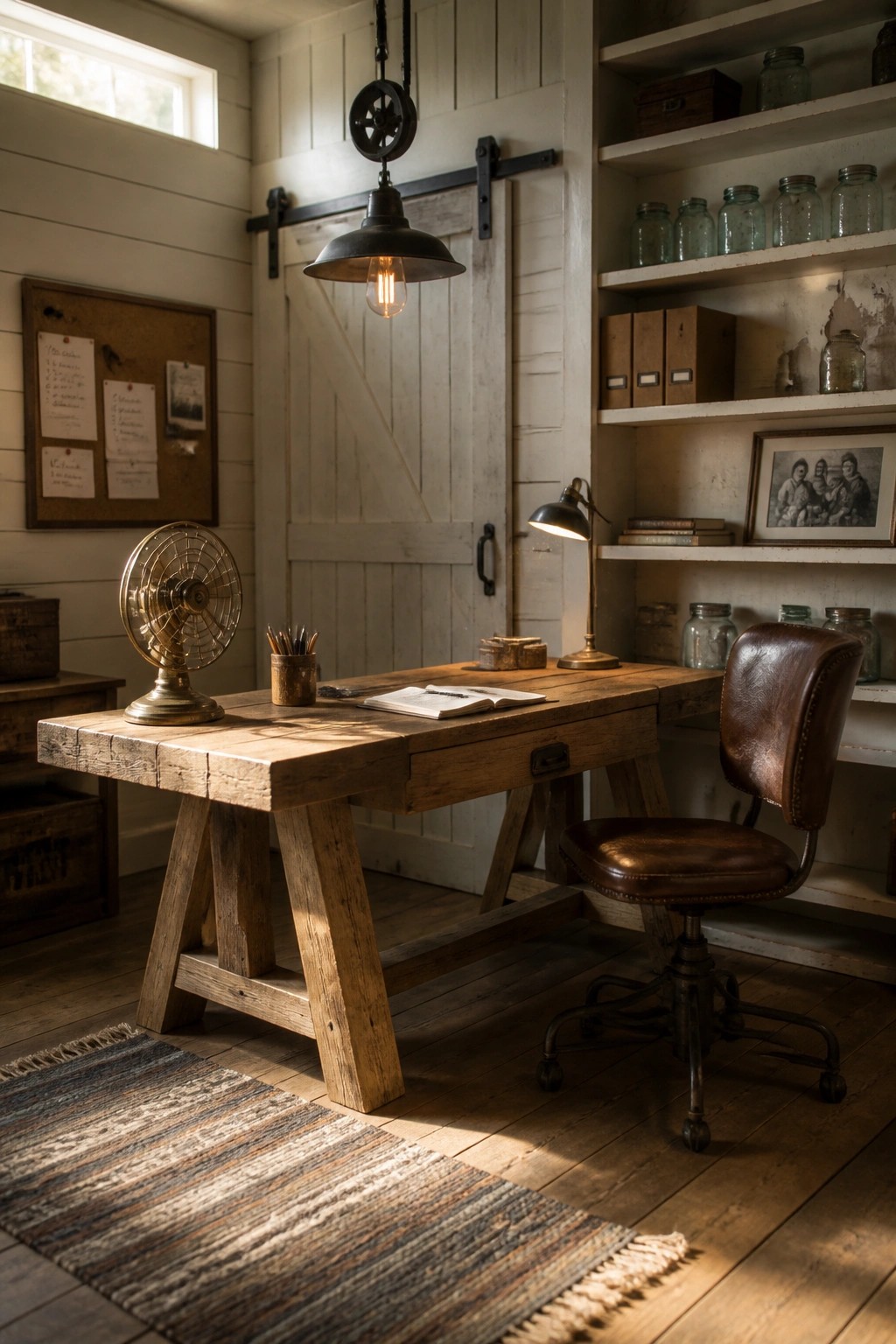
A solid wood desk gives a home office real weight and presence. It feels steady under your arms during long hours and pairs naturally with a leather chair for that grounded comfort many people want when they work from home all day.
This setup works best in smaller rooms where you need furniture that lasts and does not feel flimsy. Keep the rest of the space simple so the desk and chair stay the main focus. Avoid overcrowding the surface if you want the wood grain to show through.
A Concrete Desk for Daily Use
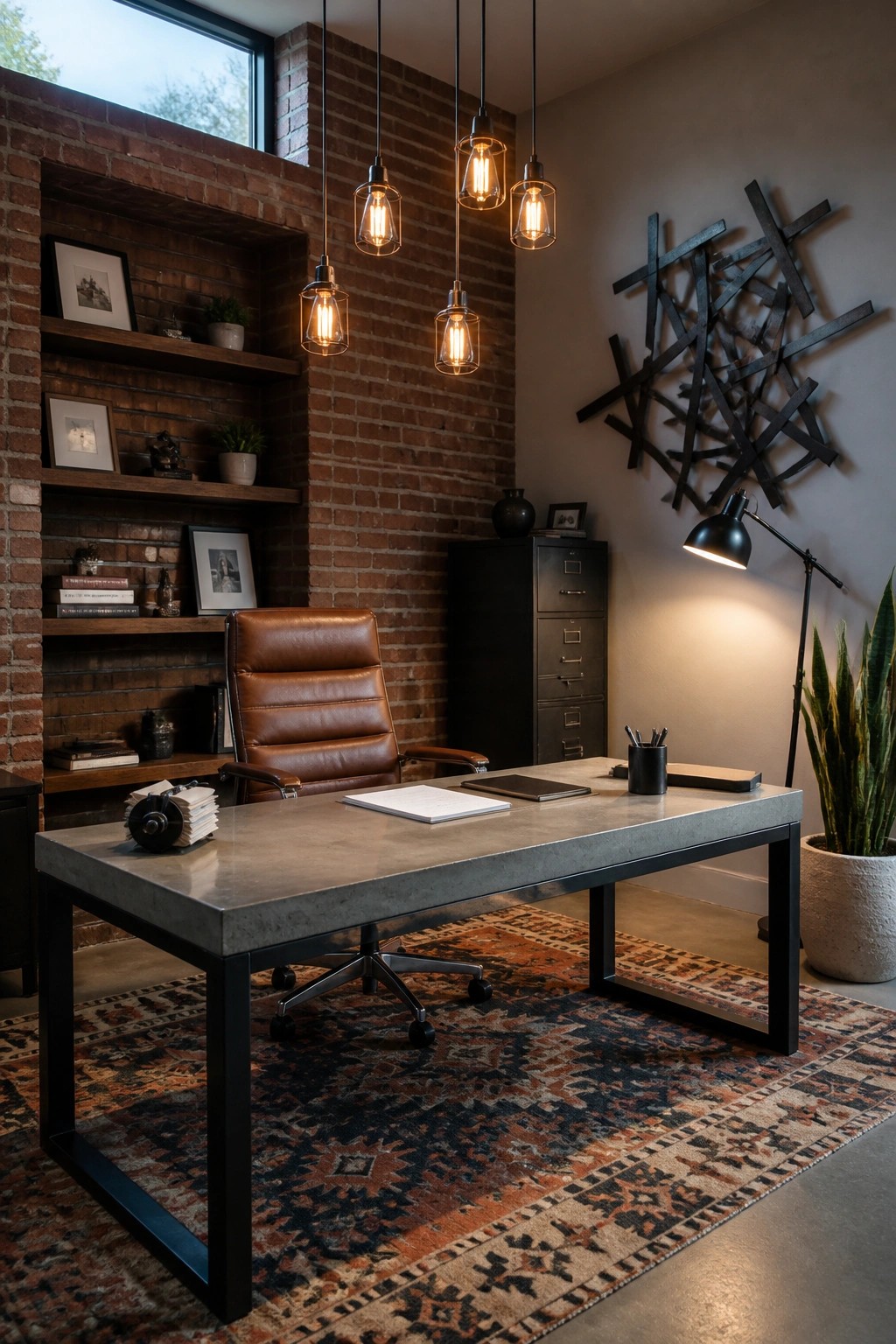
A concrete desk top gives a home office a solid, grounded feel that holds up well during long workdays. The surface stays cool and smooth, and the weight of it makes the whole workspace feel more permanent than a lighter wood or laminate option.
This setup works best in rooms with some existing texture, like brick walls, where the desk can sit without needing extra decoration. Keep the chair comfortable and the surrounding surfaces clear so the desk itself becomes the main place to spread out and stay focused.
Adding A Window Seat To Your Office
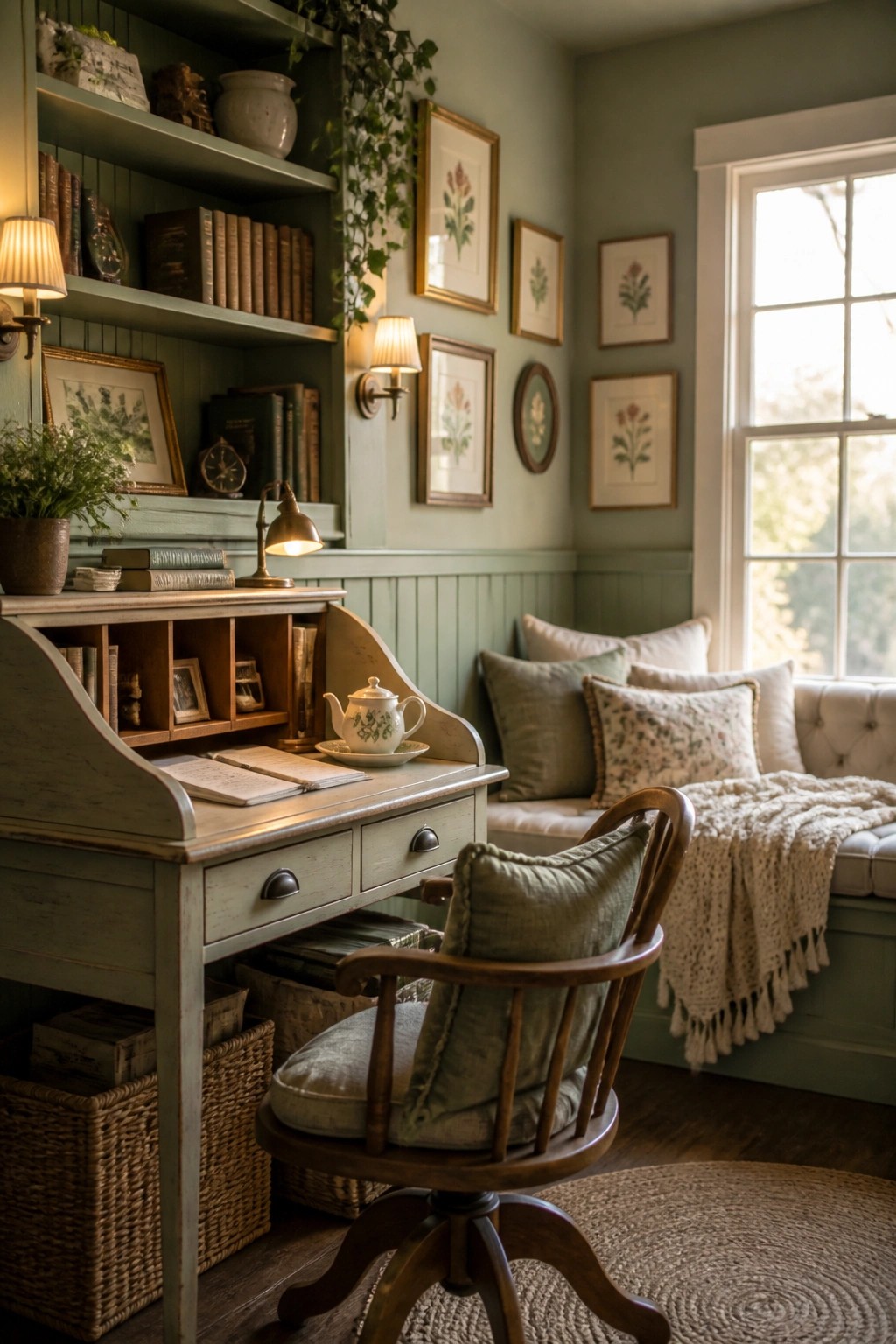
A window seat gives you a place to shift position during long workdays without leaving the room. It turns a quiet corner into a spot for reading notes or taking a short break while still staying close to your desk.
This setup works best in rooms that already have a deep window ledge or space for a built-in bench. Keep the cushions simple so the seat stays useful rather than just decorative, and make sure it does not block natural light from reaching your main work area.
Low Desk Setups For Long Workdays

A low desk keeps the whole workspace closer to the floor, which can make long hours feel less stiff and more settled. The simple wood surface and open layout around it help the room stay calm instead of crowded with bulky furniture.
This approach works best in smaller rooms or homes that already use natural materials and soft light. Place the desk near a window with filtered light, keep the stool low and supportive, and avoid adding too many extra pieces that raise the eye level.
A Wooden Desk With A Supportive Chair

A solid wood desk paired with a rolling office chair gives you room to spread out and stay comfortable through long hours. The desk surface holds books and papers easily, while the chair lets you adjust height and move around without strain.
This works best in rooms with decent natural light and a bit of floor space. Add a rug underneath to keep the chair rolling smoothly and to mark off the work area from the rest of the room.
Natural Textures And Plants For A Calmer Office
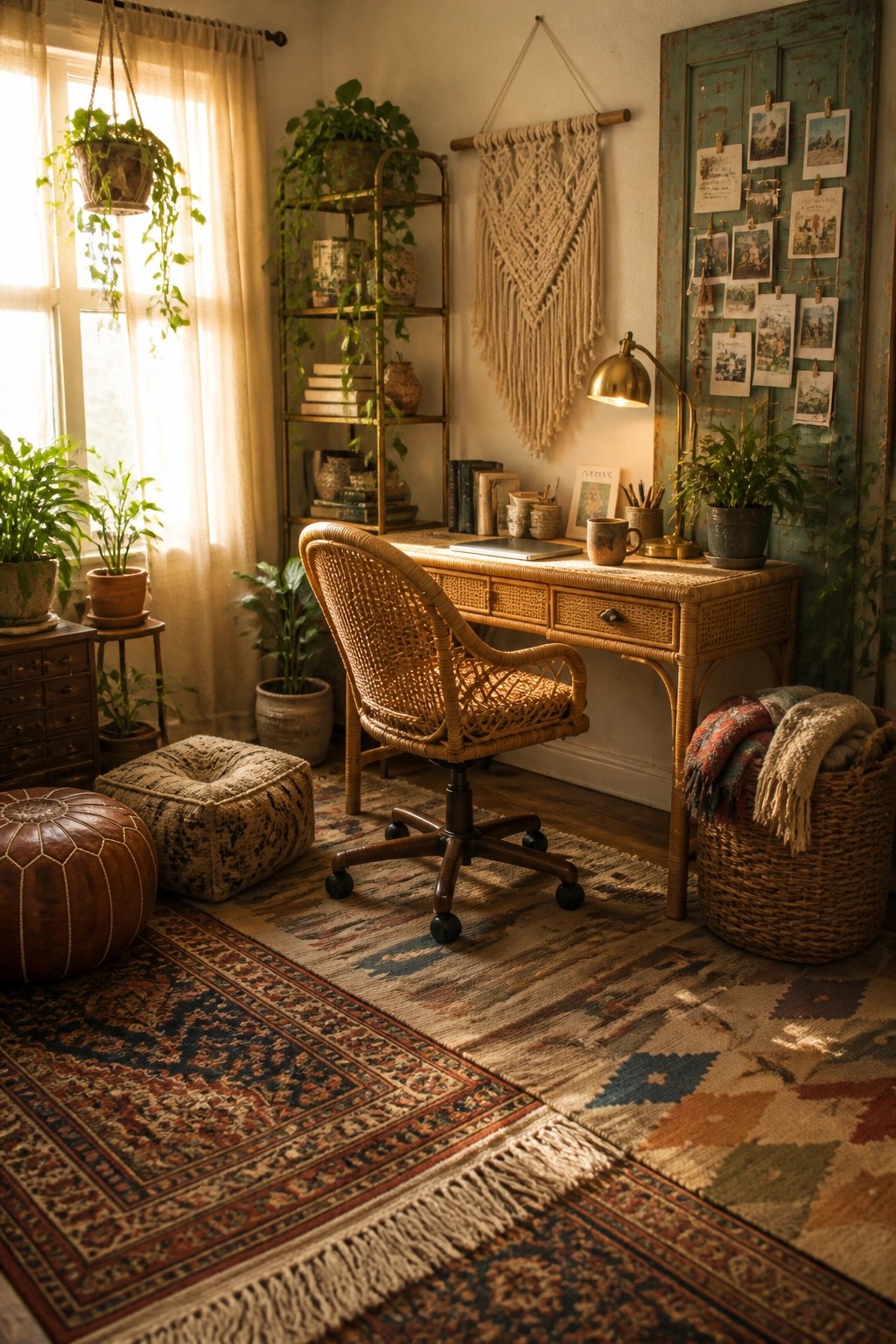
Many people find that rattan furniture and lots of greenery help a home office feel less like a workspace and more like a comfortable room. The mix keeps the space from feeling cold or stiff during long hours at the desk.
This idea works best in rooms that already get decent natural light. Start with one woven piece and add plants gradually so the room stays practical rather than crowded.
Position the Desk by the Window

Placing a desk right in front of a window makes long workdays feel less closed in. Natural light cuts down on eye strain, and the view outside gives your mind a quick rest without needing to leave the room.
This setup works best in spaces that get steady daylight and have a bit of room for the desk to sit flush against the wall. Keep the surface clear so the light stays open, and choose a chair that rolls easily in case you need to adjust for glare at different times of day.
Leather Armchairs For Desk Seating
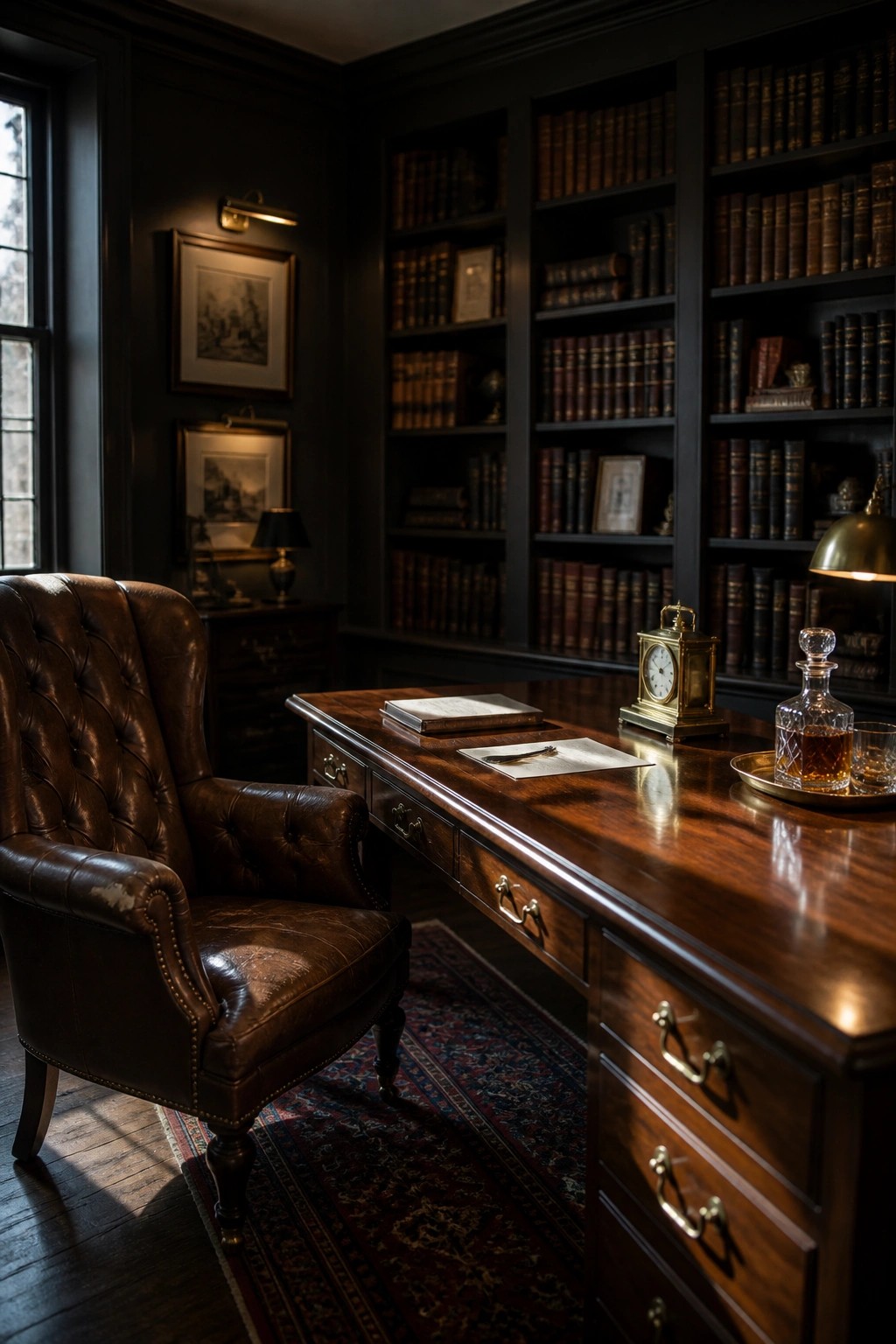
A leather armchair next to the desk gives the room a steady, comfortable presence that holds up through long workdays. The deep seat and solid frame make it easier to stay put without shifting around every few minutes.
This setup fits best in rooms with dark wood tones and plenty of built in storage. It works well in older homes or any space where you want a traditional look that still feels practical for daily use.
Long Built-In Desks For Attic Offices
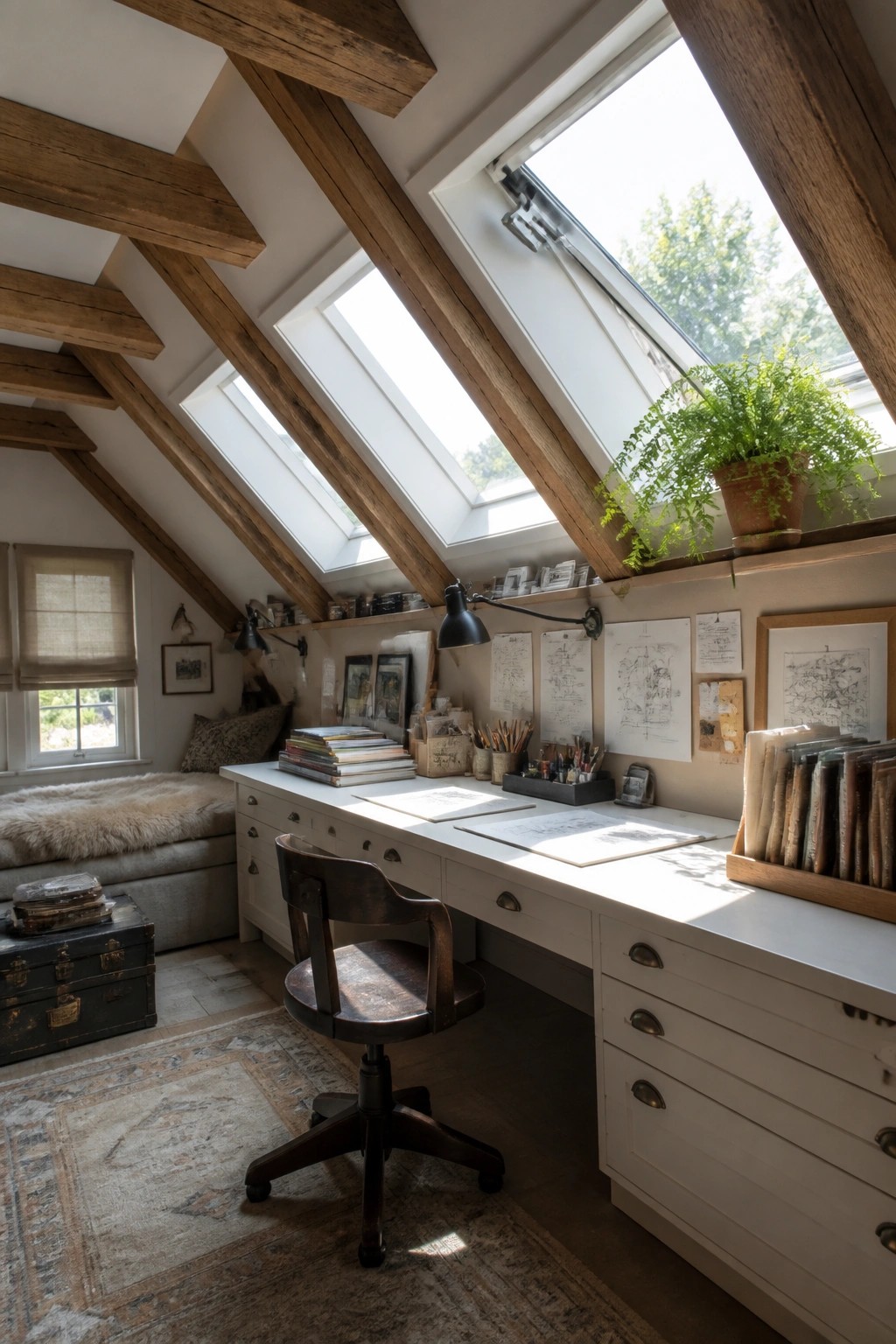
Attic rooms often have odd angles and limited wall space, so a long built-in desk can turn the whole length into one usable work area. It gives you room to spread papers and supplies without crowding the floor, and it keeps the setup feeling simple rather than cluttered.
This works best in homes where the attic already has decent headroom along one side and good natural light from above. Keep the desk surface light in color so the space does not feel too closed in, and leave enough room for a chair that can tuck in when not in use.
Open Shelving With Labeled Baskets

Open shelves with simple baskets give a home office a practical way to store papers and supplies without adding bulky cabinets. The baskets keep things sorted by category so you can grab what you need quickly during the workday.
Mount the shelves above or beside the desk so the storage stays accessible but off the work surface. This approach suits smaller rooms or spaces that already have enough closed storage elsewhere and helps the office feel lighter overall.
Built-In Desks For Compact Workspaces
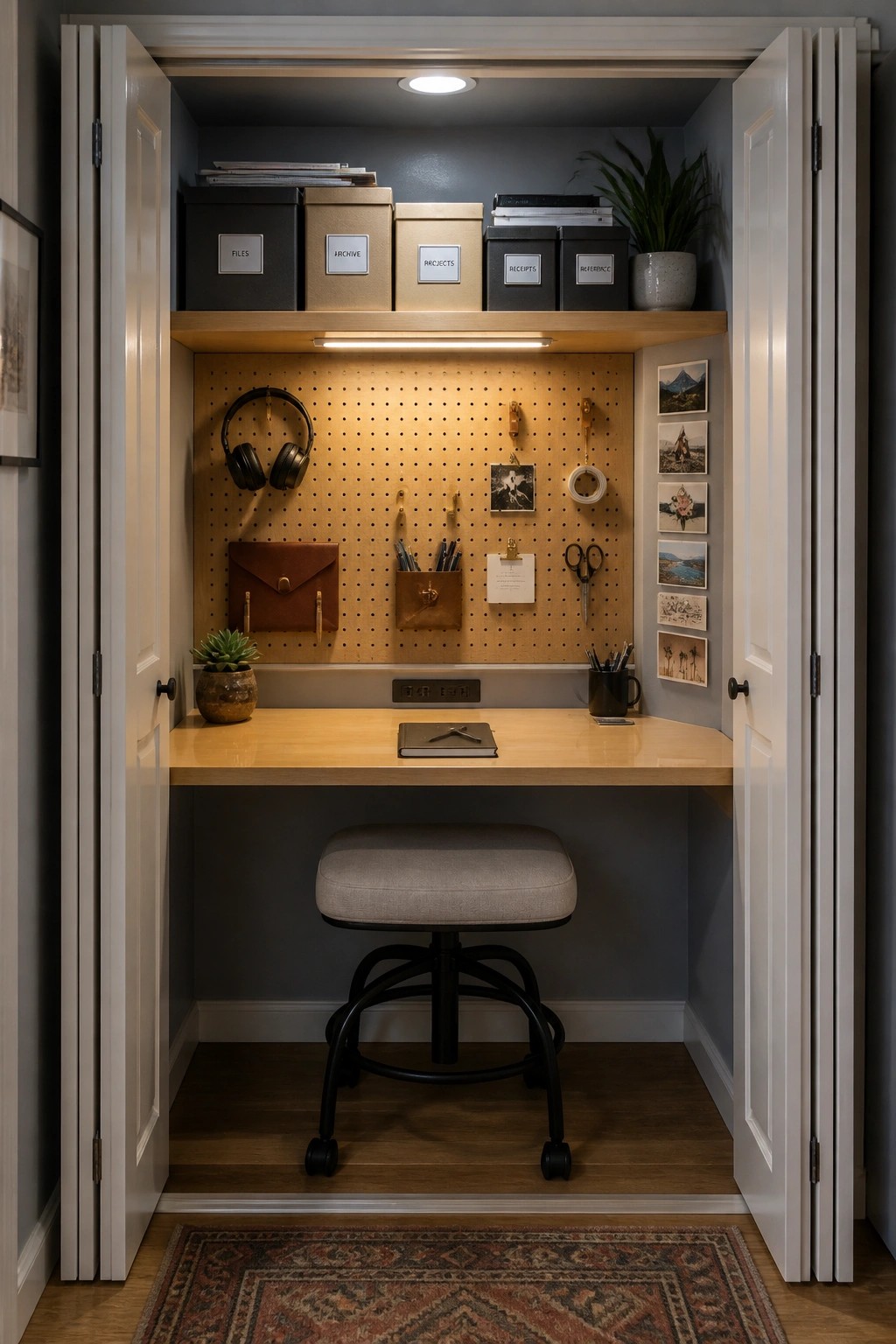
A closet can become a surprisingly useful home office when you add a simple built-in desk and some wall storage. The setup keeps everything in one spot, which helps the rest of the room stay clear and calm during long workdays.
This kind of nook works best in apartments or smaller homes where a full room is not an option. Keep the pegboard organized with just the tools you reach for often and leave the top shelf for files or supplies you use less.
Glass Partitions To Create A Dedicated Office
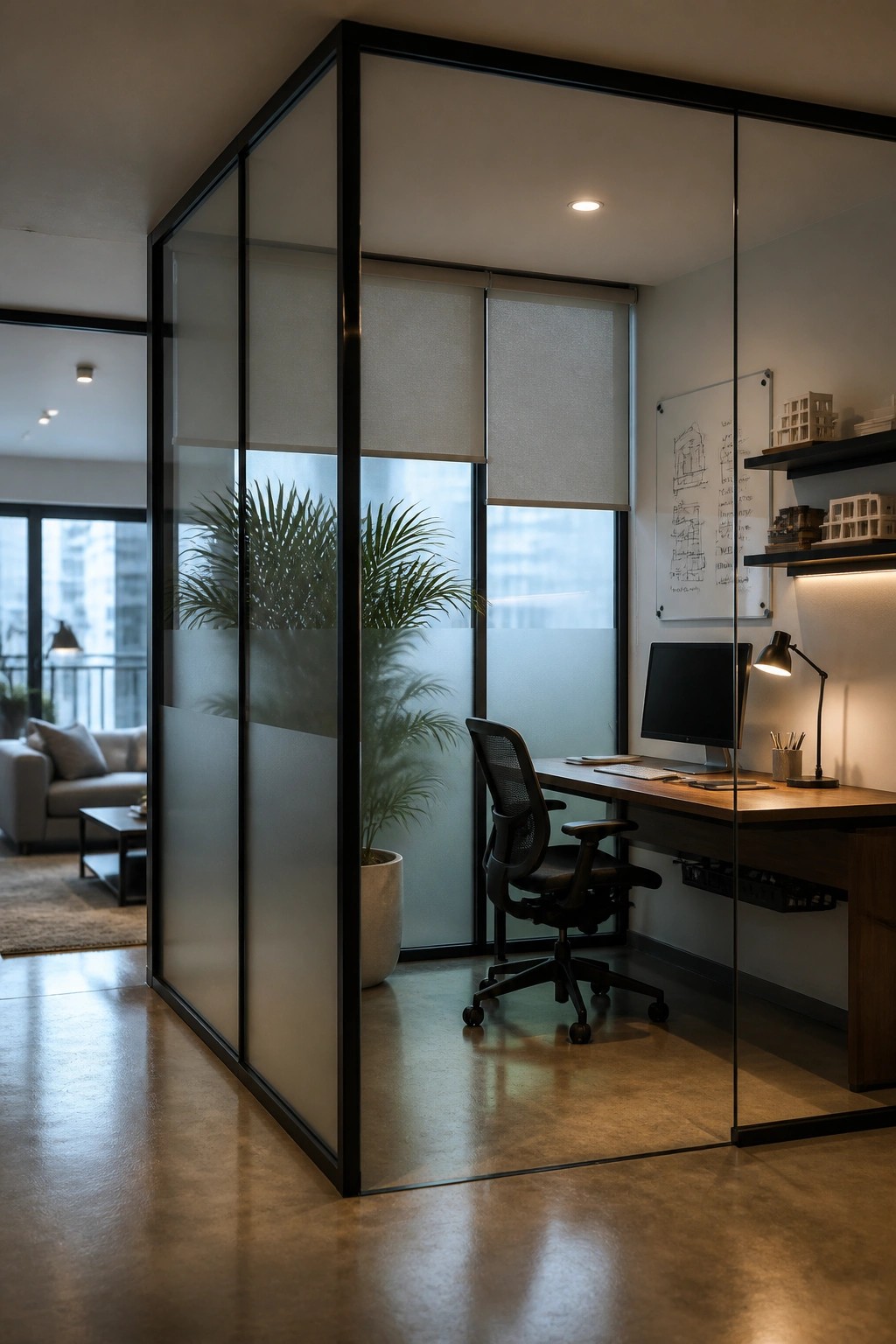
Glass walls give you a clear way to set aside a workspace without cutting it off from the rest of the home. The enclosed feel helps you stay focused during long workdays, while the glass keeps the space from feeling too closed in or dark.
This approach works best in open layouts where a full room might take up too much space. Frosted panels on the lower sections add just enough privacy around the desk without blocking all the light from the main living area.
Add a Window Seat to Your Office
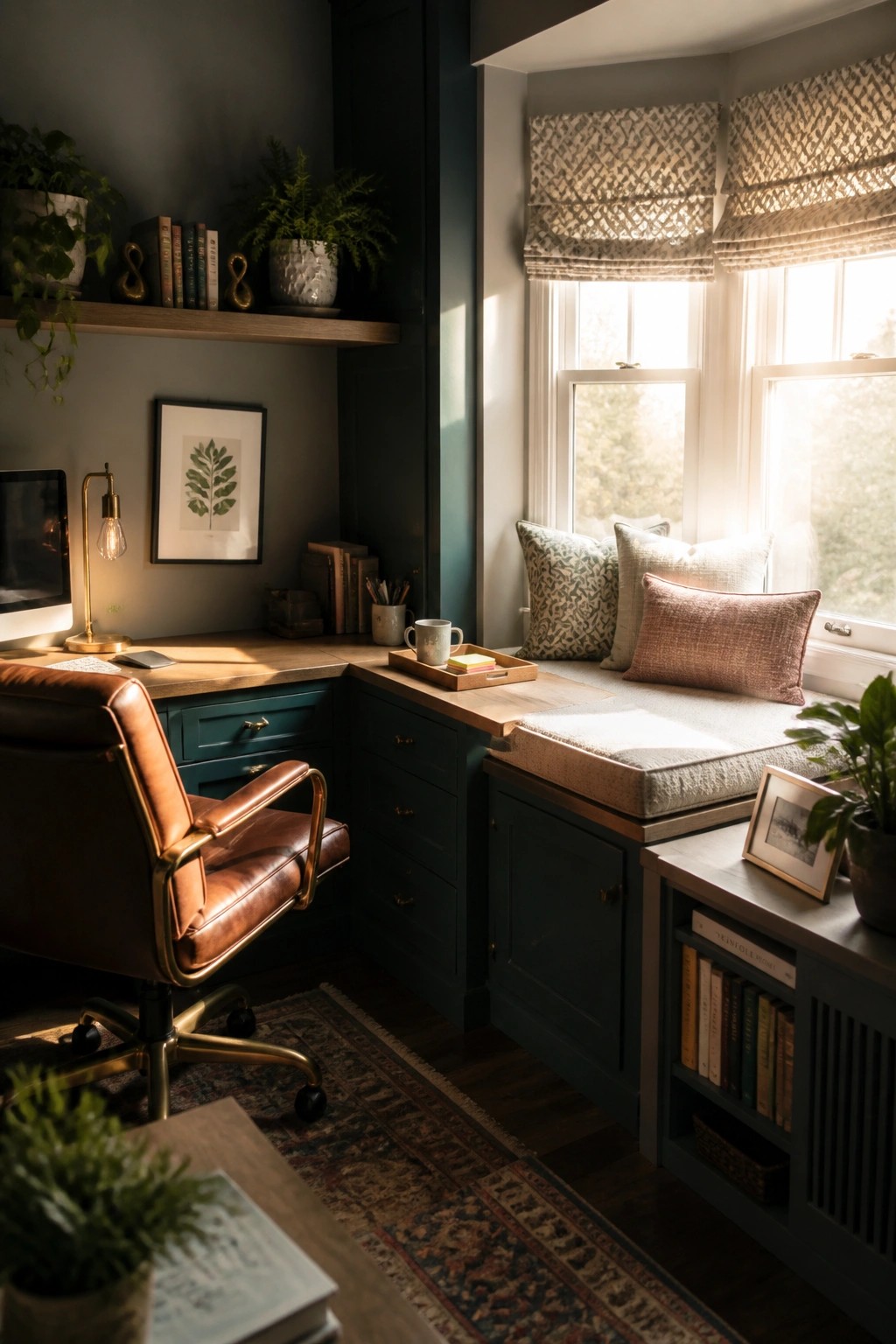
A window seat gives you a comfortable place to shift positions during a long workday without leaving the room. It turns an empty wall into something useful and helps the space feel less rigid than a desk and chair alone.
This setup works well in smaller offices or corner layouts where natural light is strong. Keep the cushions simple and add a tray for coffee or papers so the seat stays practical rather than purely decorative.
Use A Chair Mat Under The Desk Chair
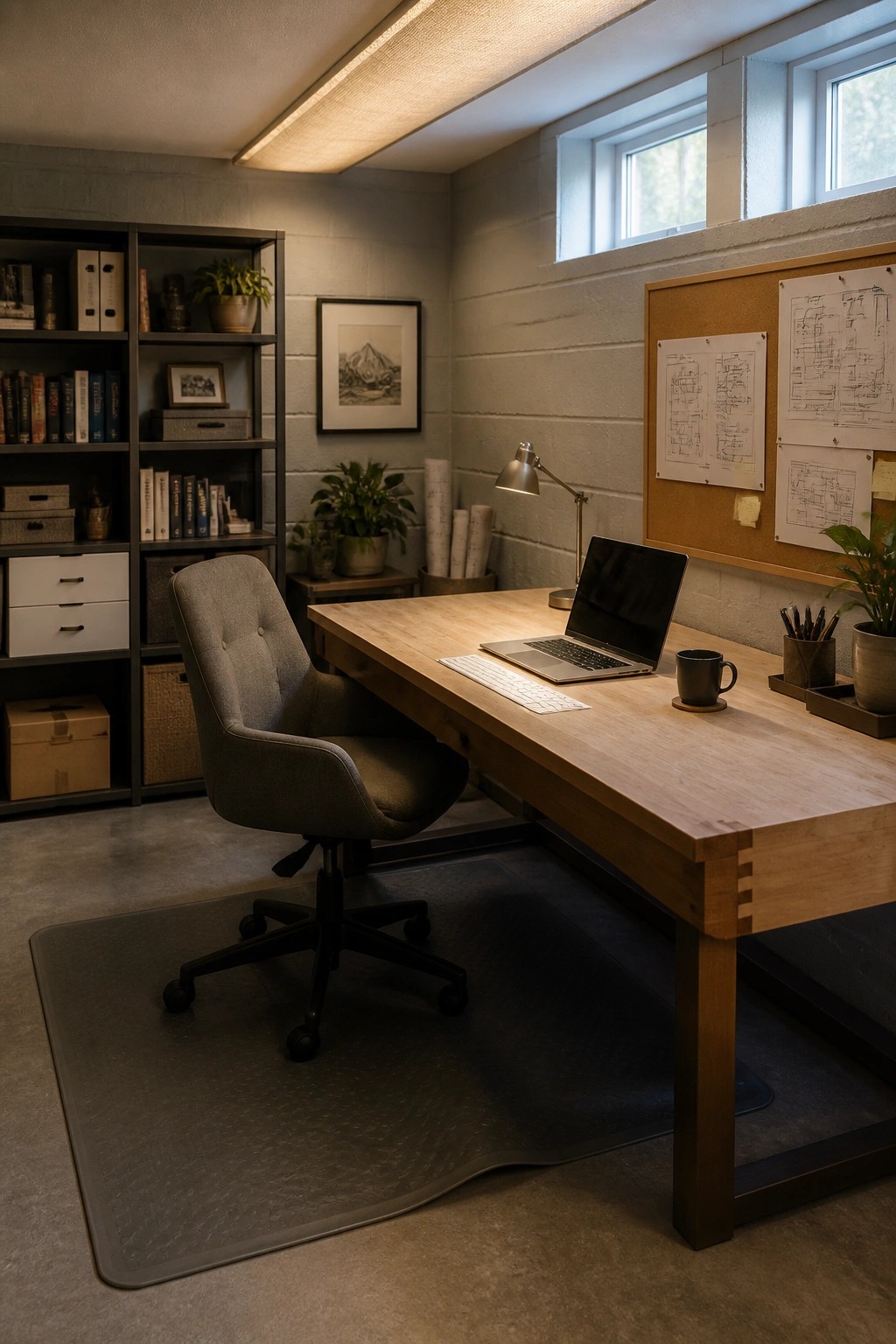
A floor mat makes a real difference when you spend full days at a desk. It lets the chair roll freely without scuffing the floor and gives you a bit more freedom to adjust your position as the hours go by.
This setup works especially well on hard surfaces like wood or concrete. Pick a mat that extends a little beyond the normal reach of the chair so you stay comfortable even when you lean back or move side to side.
A Roll Top Desk in the Bedroom
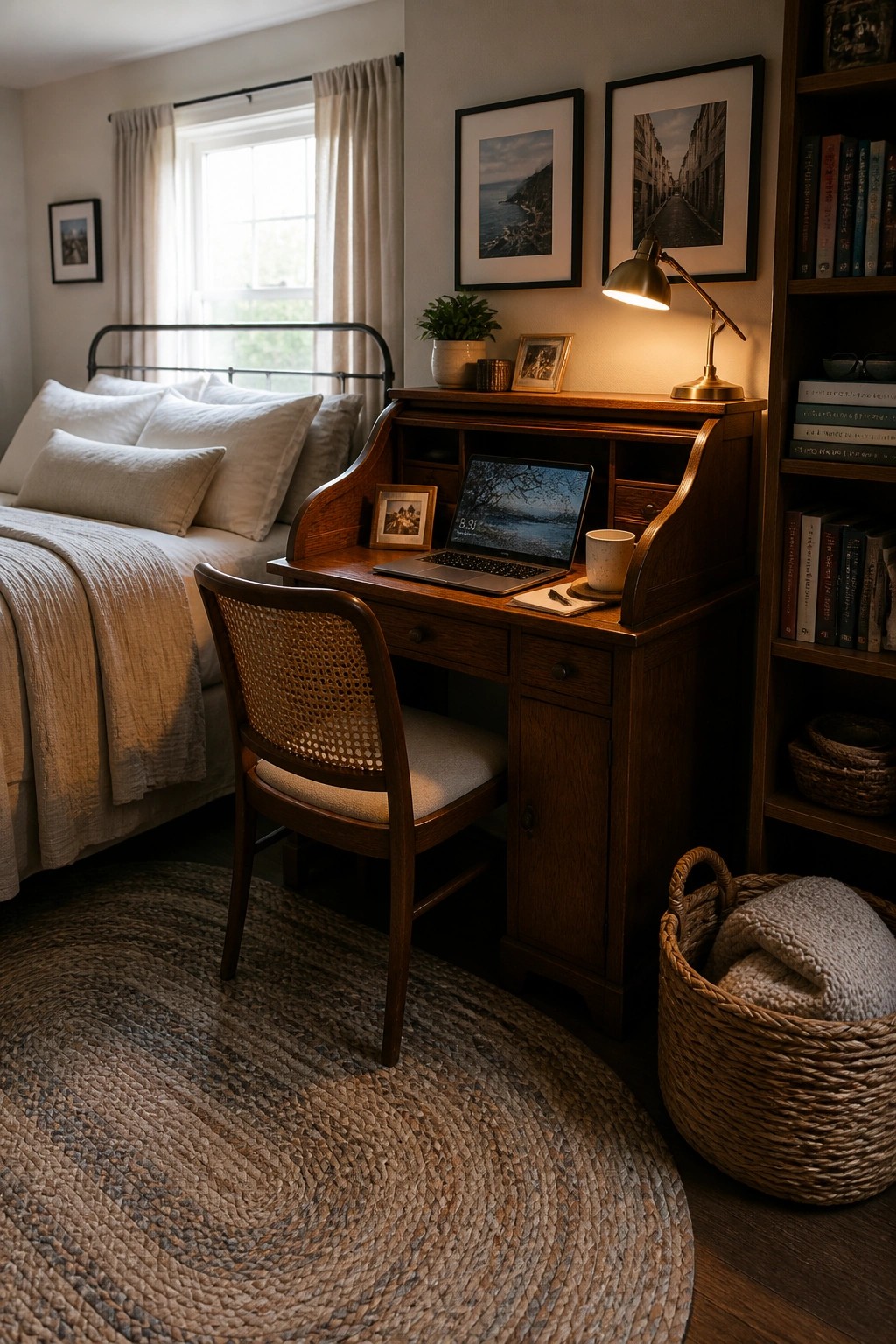
A roll top desk brings a simple solution when you want a workspace inside the bedroom. The closed top hides clutter at the end of the day, and the wood gives the area a settled feel that works for long hours without making the room feel too office-like.
This setup fits best in smaller homes or for people who like staying in one quiet spot. Pair the desk with a cushioned chair and keep the surrounding textiles soft so the space stays comfortable rather than stark.
A Compact Desk With Wall Storage

A small desk tucked into a corner works well when you add storage right on the wall above it. Shelves hold baskets and supplies while a peg rail keeps frequently used items off the surface and easy to reach. This setup leaves the desk clear for actual work and prevents the space from feeling crowded.
It suits apartments, older homes, or any room that serves more than one purpose. Keep the wall elements simple so the area stays calm during long workdays, and place the desk near a window if possible for natural light.
Long Desk Along the Windows

A long desk that runs the full length of a narrow room gives you real workspace without taking over the floor. The setup works because the windows sit right above it, so daylight stays steady through the day and the room feels less cramped.
This layout suits homes with awkward hallway-style spaces or spare rooms that are long but not wide. Keep the opposite wall clear for walking through and add storage underneath the desk so the surface stays open for actual work.
Position Your Desk By Open Doors

Many home offices feel better when the desk sits right by a set of open doors. The light and air that come in make long workdays less tiring and help the room feel less boxed in.
This setup works best in houses that open straight onto a garden or courtyard. Keep the chair on a flat surface so it does not shift, and have a way to close the doors quickly if the weather turns.
A Long Wooden Desk with Storage Below
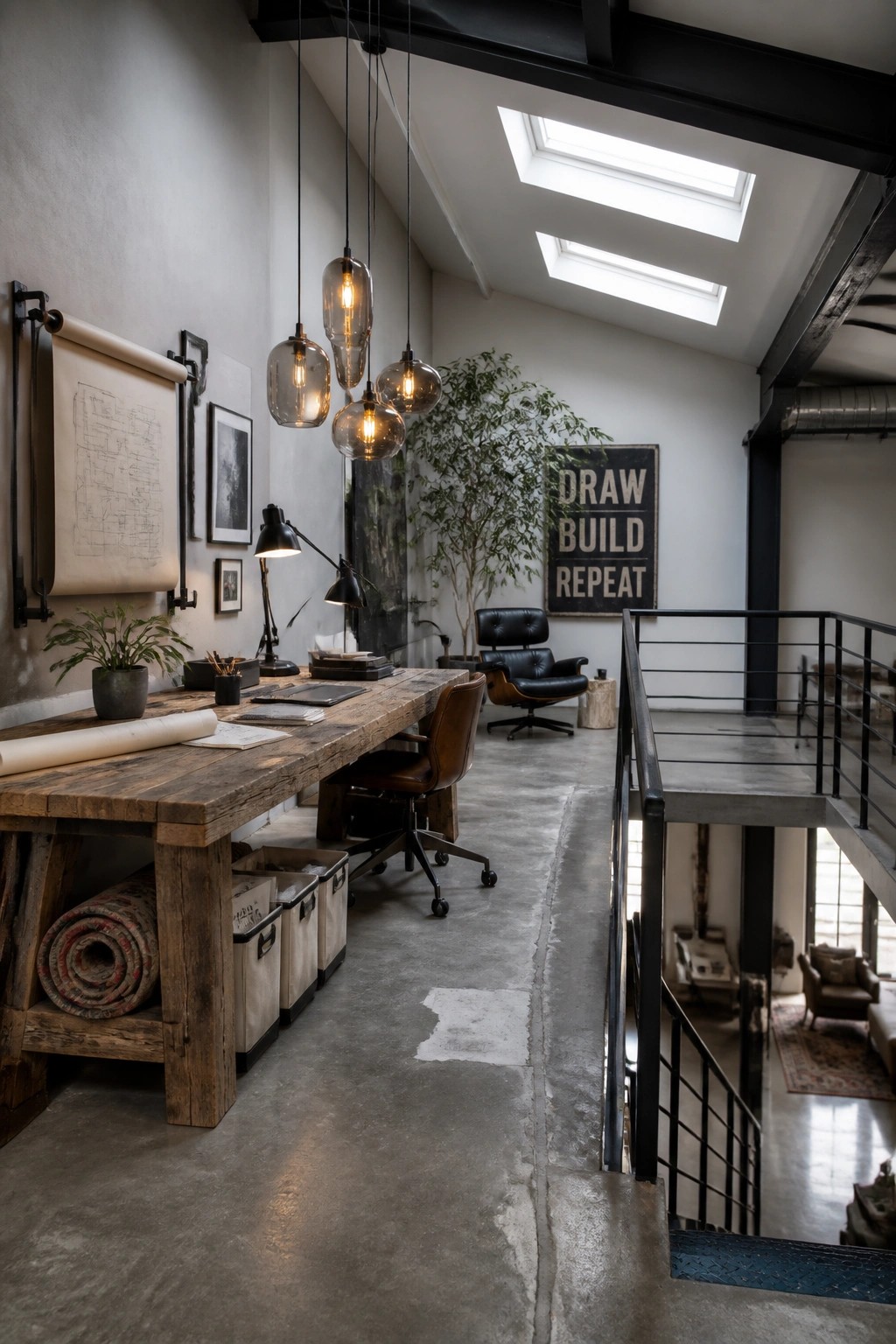
A long wooden desk gives you plenty of room to spread out during long workdays without feeling boxed in. The solid surface and simple structure make it easy to stay organized even when projects pile up.
Place bins or crates underneath to hold files and supplies so the top stays clear. This setup works well in converted spaces or rooms with high ceilings where you want the desk to feel grounded rather than bulky.
Desk With Plenty Of Drawers

A desk that offers real storage changes how a home office feels during long workdays. With multiple drawers you can keep papers, supplies, and small items out of sight, so the surface stays clear and the room feels less crowded.
This setup works best in a traditional or classic-style home where the desk can sit against a wall of built-ins. It gives you quick access to what you need without adding extra furniture that takes up floor space.
Use Under-Desk Storage to Cut Down on Clutter
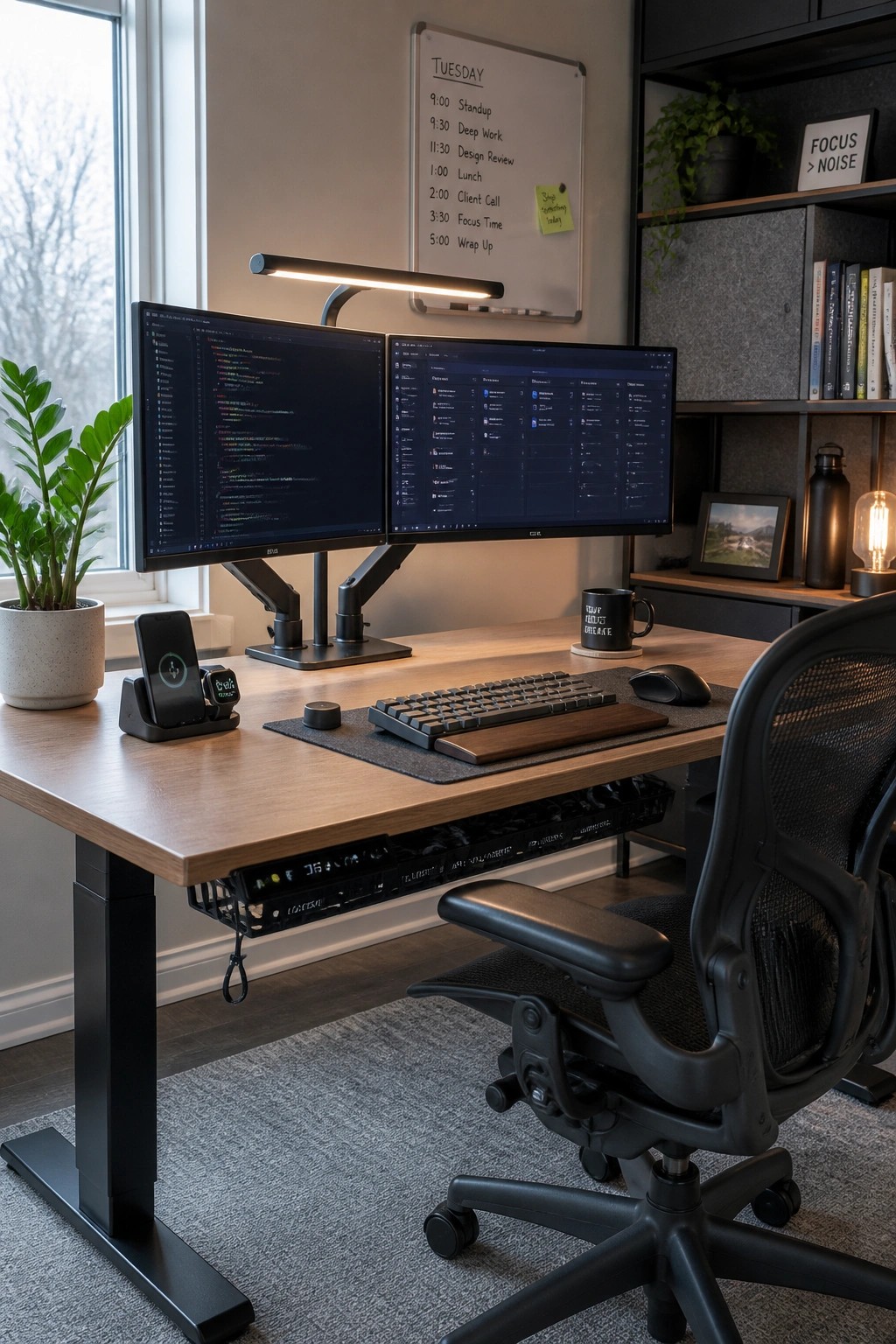
Many people end up with cables and small devices scattered across their desk by midday. Adding a simple under-desk basket or tray keeps those items out of sight while still within reach. This setup works especially well on a height-adjustable desk, since the lower shelf stays hidden whether the desk is raised or lowered.
It suits smaller rooms or anyone who wants the top surface clear for notes and papers. Just make sure the basket is easy to access and does not interfere with your chair when you sit down.
Keep Tools Within Reach With Pegboard

A pegboard wall above the desk turns a plain workspace into something much more practical. You can hang tools, scissors, and supplies right where you need them, which keeps the surface clear and saves time when you are working long hours.
This setup works best in a room where you do hands-on tasks or switch between projects often. Make sure the board sits at a comfortable height and use sturdy hooks so heavier items stay put. The large wooden bench below adds plenty of room to spread out without feeling cramped.
Frequently Asked Questions
Q: What kind of chair works best for sitting all day?
A: Look for one that supports your lower back and lets you adjust the height easily. Keep your screen at eye level so you do not hunch forward. Walk around every hour to stay loose.
Q: How can I add natural light without getting glare on my screen?
A: Position your desk so the window is to the side instead of right in front or behind you. Use a sheer curtain to soften bright sunlight. A small desk lamp helps on cloudy days.
Q: My apartment has no extra room for an office. What then?
A: Claim a corner of the living room and use a folding screen to mark it off. A wall-mounted desk that folds up saves space when you finish work.
Q: How do I cut down on noise during calls?
A: Add a thick rug or some curtains to soak up sound. Headphones with good noise canceling make a big difference too.
