

When you work in a small office that shares space with other parts of the house the storage has to fit the way the room actually gets used each day.
I have noticed that the solutions which hold up are the ones built around real habits like where the printer sits or how often files need to be reached.
Small shifts in placement can change the whole feel of the room.
Trying a few of these ideas in my own setup made it clear which ones keep the floor clear without adding extra steps.
It helps to look at the existing traffic paths first before bringing in any new pieces.
Add Open Shelves And A Pegboard Above The Desk
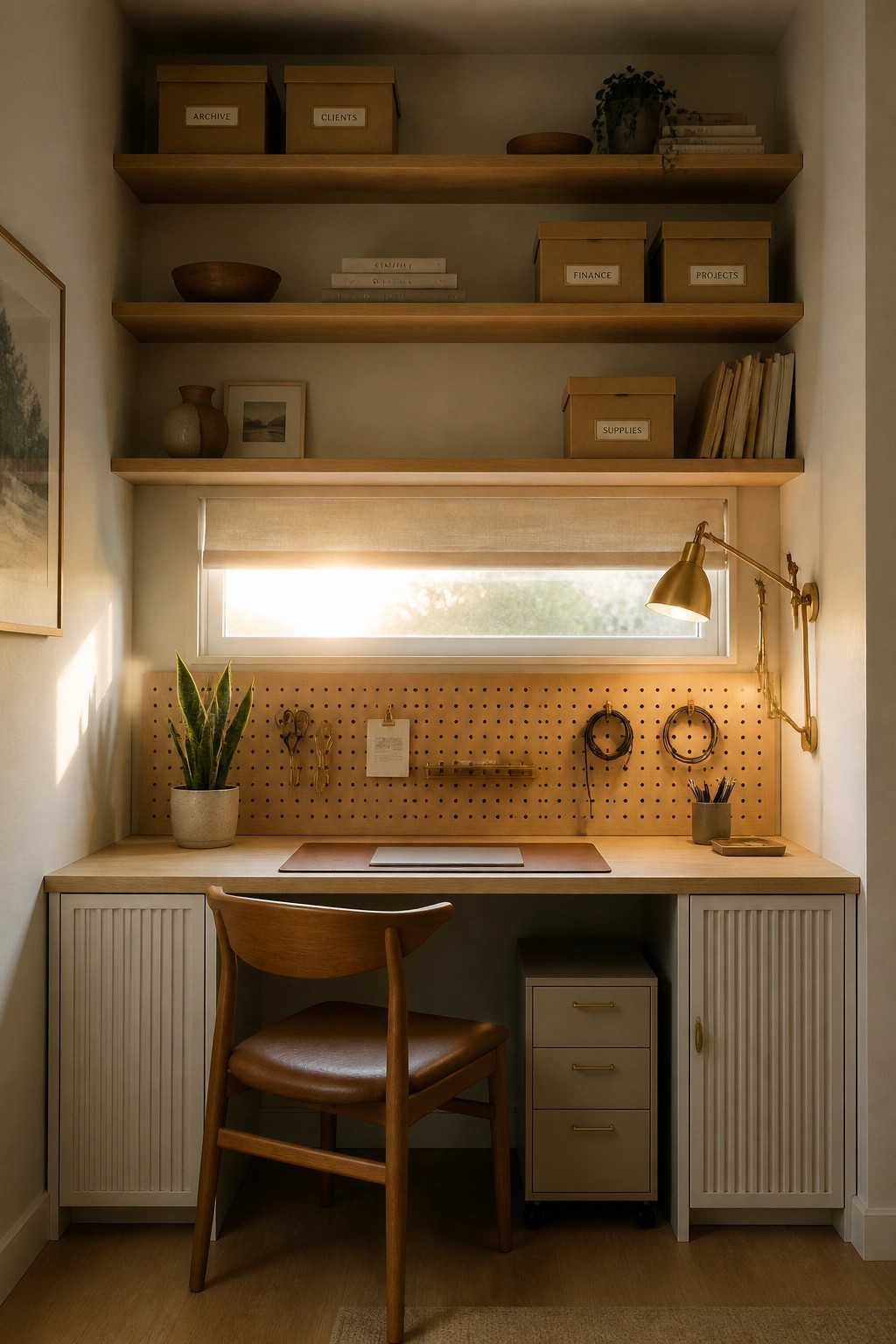
Vertical storage keeps the floor clear in a small office. Shelves above the desk hold boxes and supplies without eating into walking space, while a pegboard right behind the desk puts tools and cords within reach.
This setup works best in a narrow room or alcove where every inch counts. Mount the shelves at different heights so you can fit both tall bins and flat stacks, and use the pegboard for items you grab often.
Wall Mounted Fold Down Desks Save Floor Space
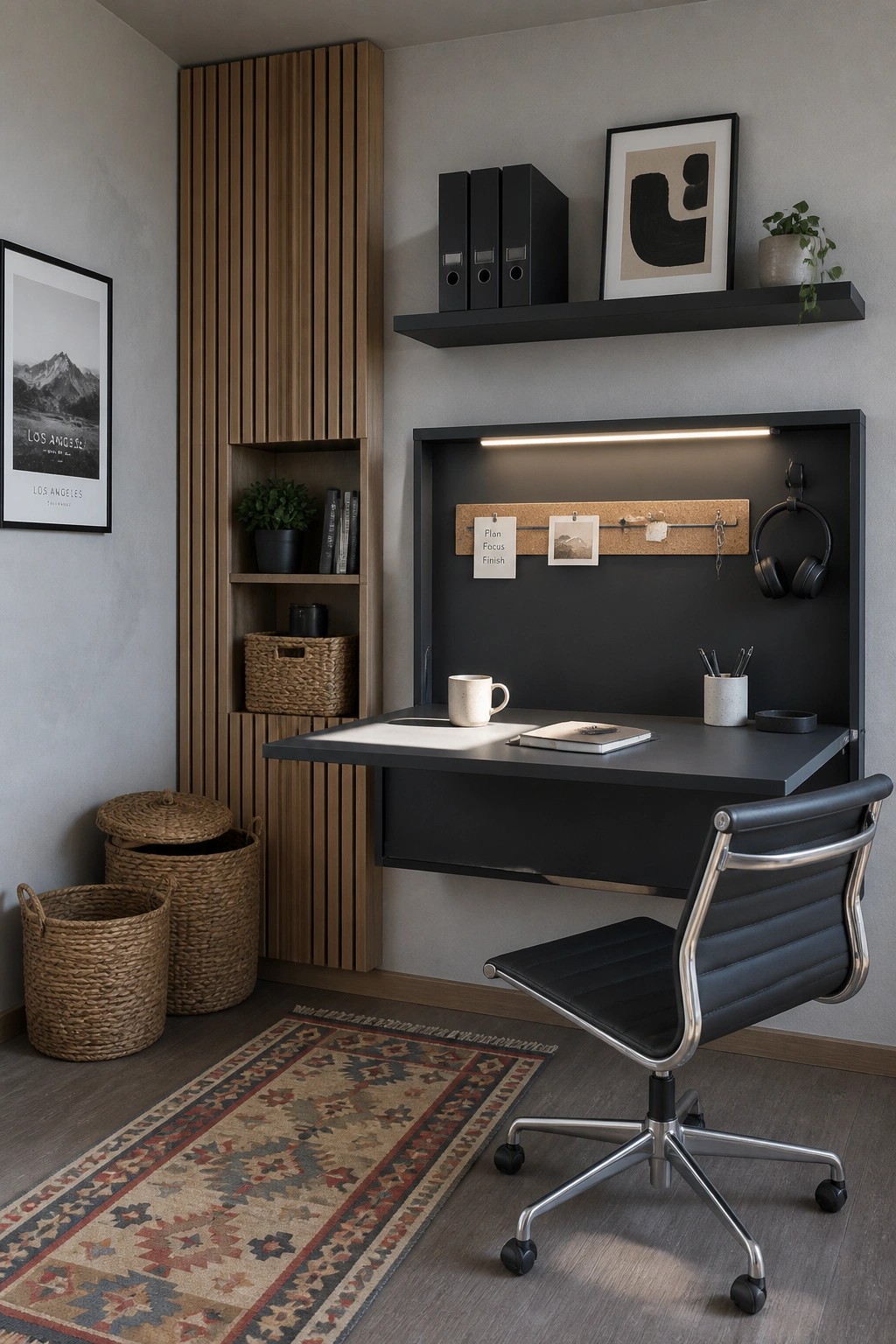
A fold down desk mounted to the wall lets you tuck everything away when the work day ends. In a small room this keeps the floor open and stops the space from feeling crowded with furniture that stays out all the time.
This setup works best in apartments or homes where the office shares space with another room. Add a tall cabinet or a few baskets nearby for papers and supplies so the surface stays clear during the day. Just make sure the wall can handle the weight and leave enough room for the chair to pull out.
Hide Your Small Office With Sliding Barn Doors
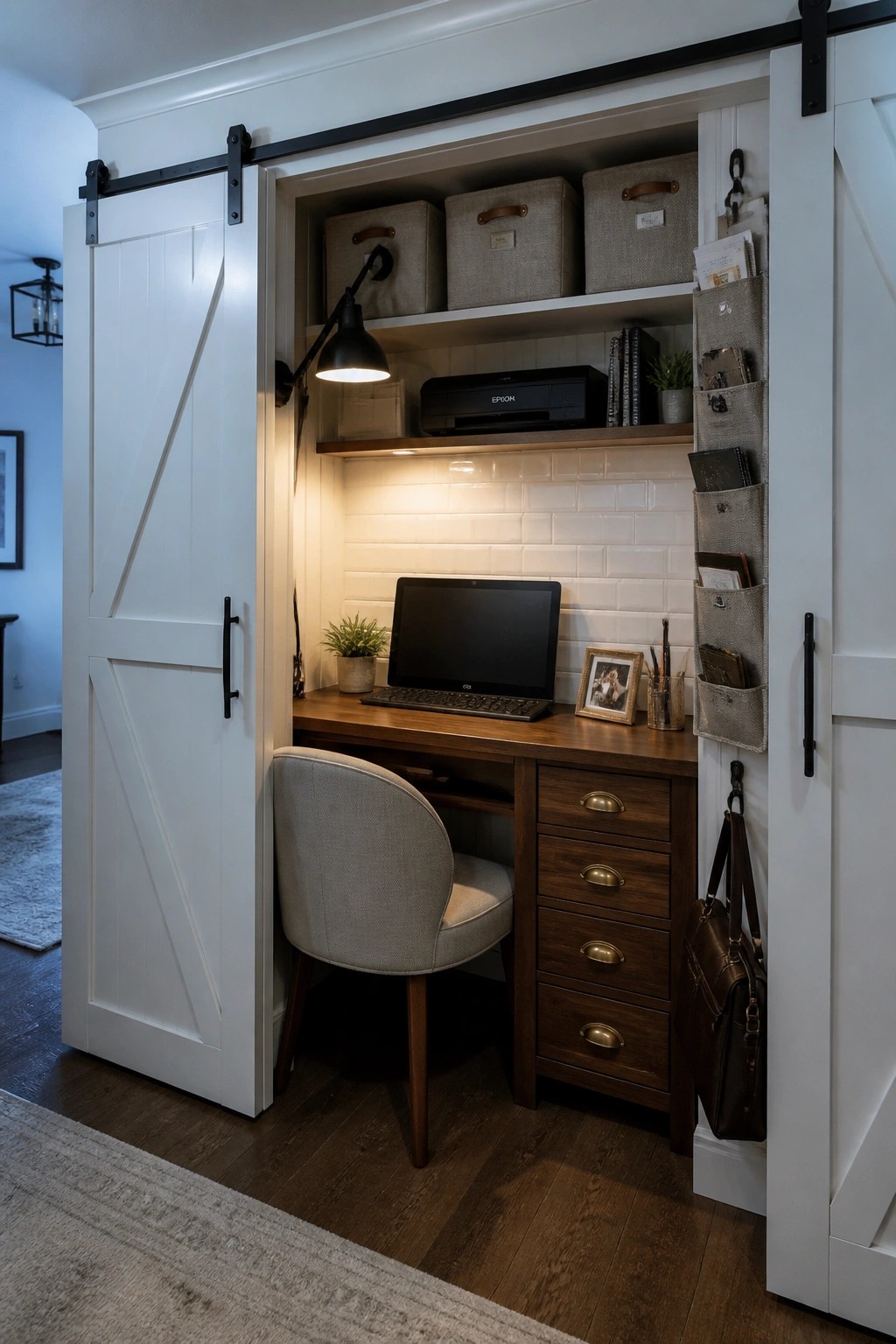
Many homes lack a spare room for a desk, so people look for ways to fit one into a hallway or corner without losing the rest of the space. Sliding barn doors solve this by letting you close off the whole setup at the end of the day.
This works best in apartments or older homes where floor space is tight. The doors keep the desk and papers out of view while still giving you a real workspace when the doors are open.
Vertical Shelving With Labeled Bins
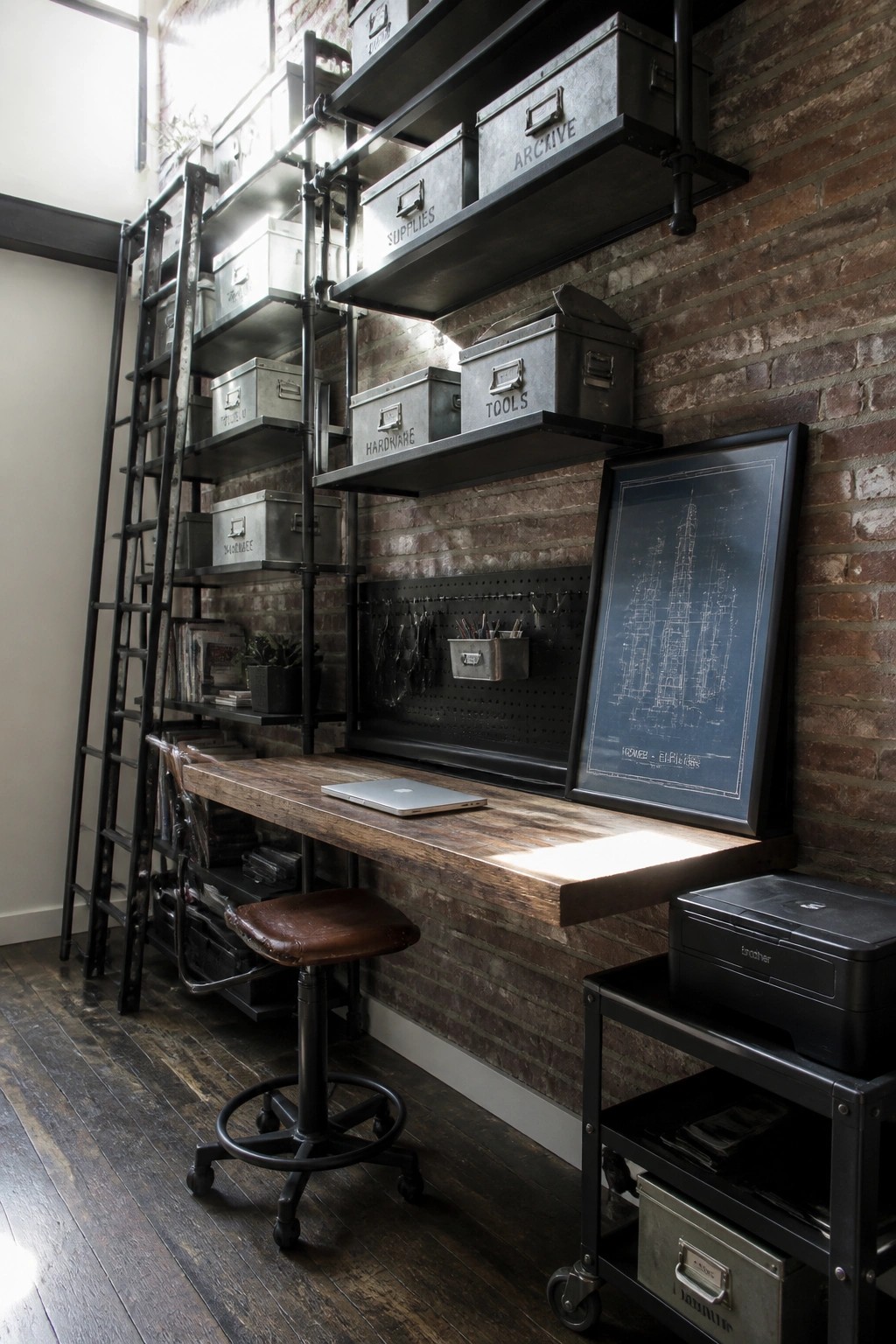
Small offices often lose floor space to desks and chairs, so going vertical is one of the simplest fixes. Pipe-style shelves mounted on the wall let you store boxes, supplies, and files without taking up any room below.
Metal bins with clear labels keep things sorted and visible at a glance. This approach suits older homes or apartments where built-in cabinetry is not an option.
Build Storage Into A Window Seat
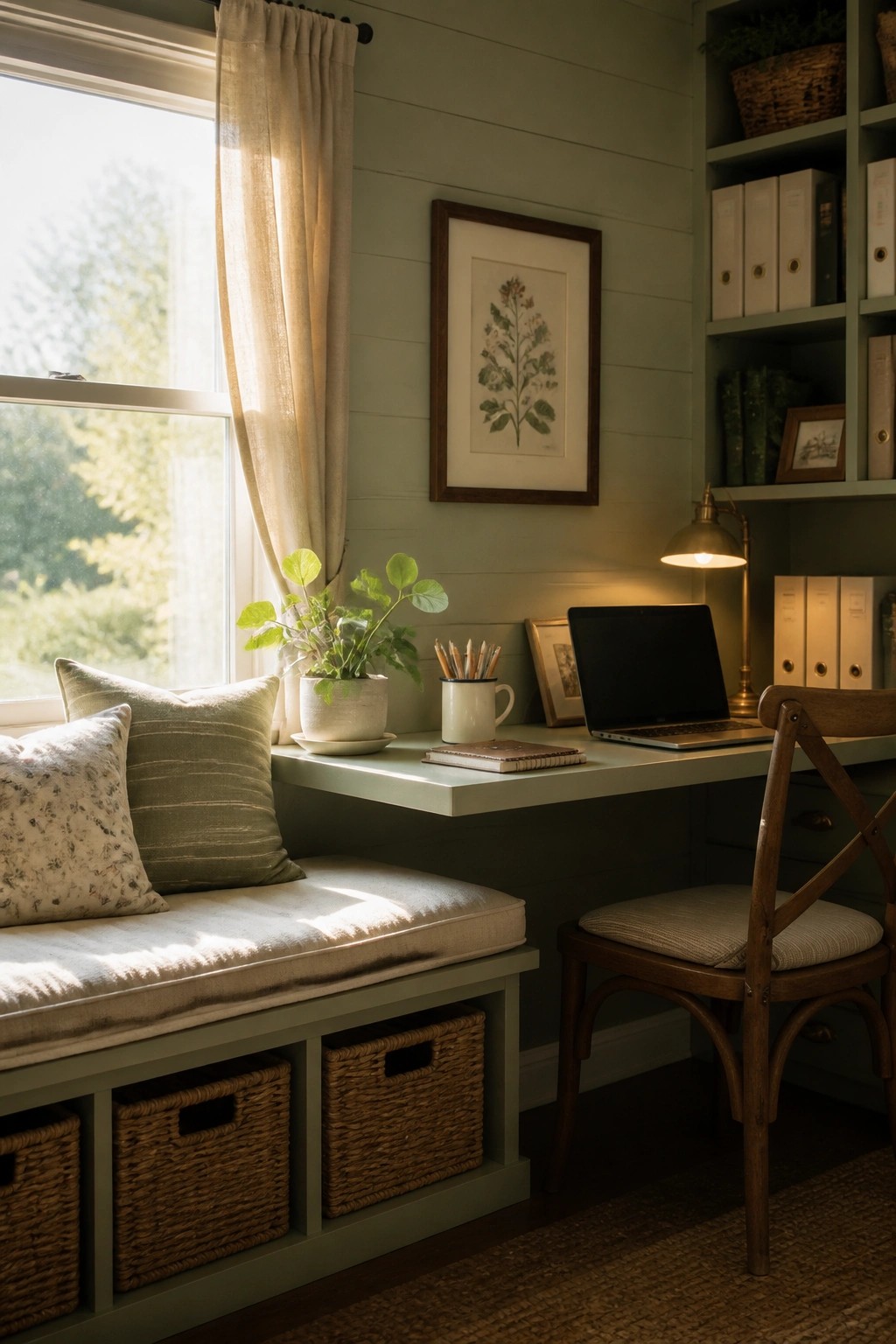
A window seat with open storage underneath gives you a place to sit and extra room for things you do not need every day. In a small office it keeps the floor clear and makes the most of an awkward wall under the window.
This setup works best in rooms that already have a deep window sill or enough wall space. Use baskets or bins that slide in easily so you can reach what you need without pulling everything out. Keep the top surface simple so it stays useful for sitting or stacking a few papers.
Built-In Storage With An Integrated Desk

A built-in unit like this turns one wall into both a workspace and storage without eating up floor space. The shelves above hold books and supplies while the desk surface stays clear for daily use, and the lower cabinets hide things you do not need out all the time.
This setup works best in small rooms or apartments where every inch counts. Keep the unit narrow and use the vertical space for items that would otherwise sit on the floor or crowd a separate desk.
Wall Baskets Free Up Floor Space In Small Offices
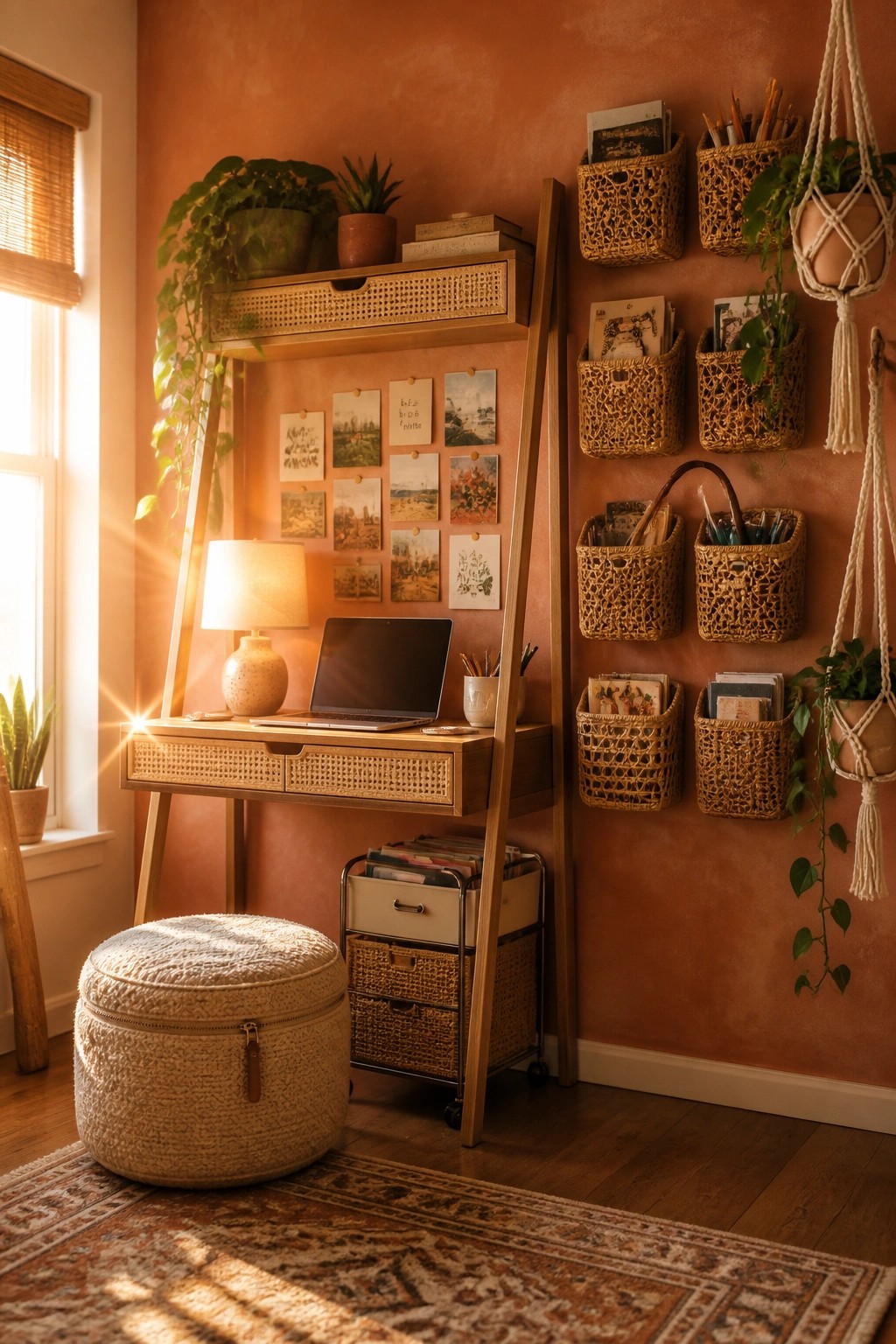
Small offices often run out of places to put things without crowding the room. Wall mounted baskets give you extra storage by using the vertical space that usually goes unused.
They work well in tight floor plans because they keep supplies visible and within reach while leaving the floor clear for a desk and chair. Group them by type so papers stay in one area and tools stay in another.
Built-In Storage Units Maximize Wall Space
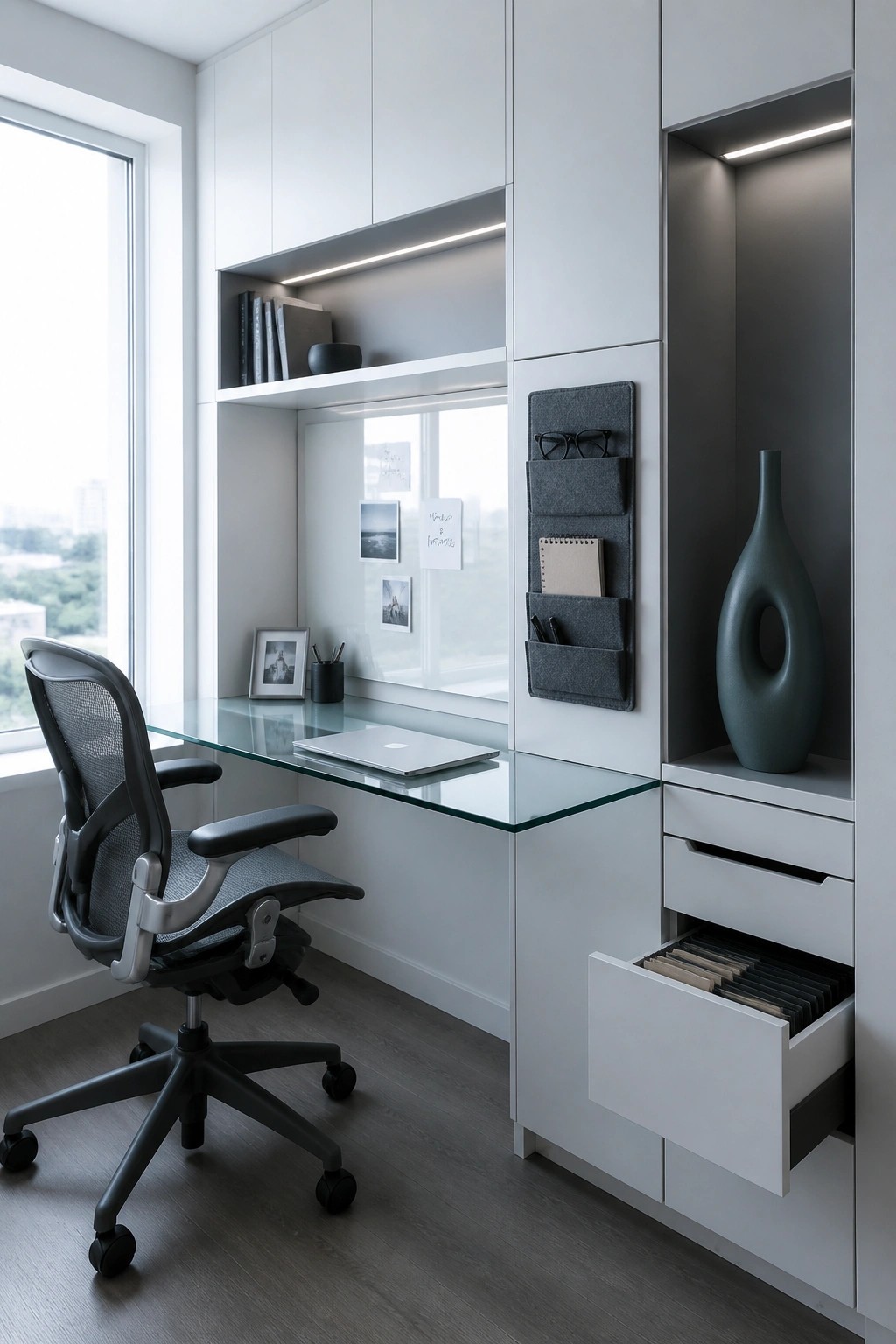
Built-in cabinets and wall pockets turn a narrow wall into a full storage system without eating into floor space. The combination of upper cabinets, lower drawers, and hanging organizers keeps supplies and papers sorted while leaving the desk surface clear for daily work.
This setup works best in small rooms or corners where every inch counts. Add a mix of closed storage for files and open pockets for quick-access items, and keep the desk depth shallow so the chair still has room to move.
Wall Hooks Keep Bags Off The Floor
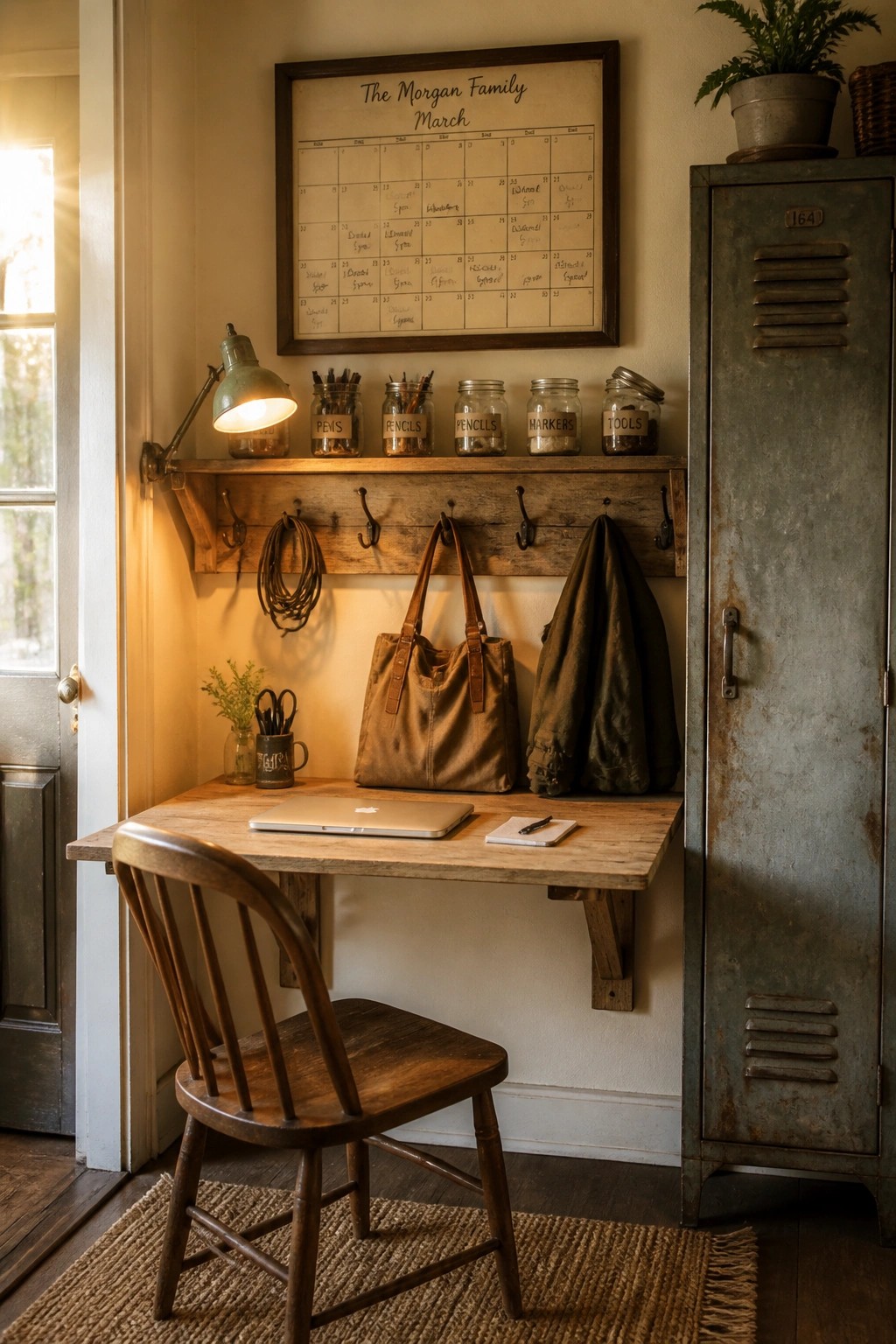
Mounting a simple shelf with hooks above a desk gives you a place to hang bags and coats without taking up any floor space. This works especially well in a small office because it keeps daily items within reach but out of the way, so the desk stays clear for actual work.
It suits tight floor plans where adding another piece of furniture would feel crowded. Try placing the hooks at a height that lets you grab things quickly in the morning, and use small jars on the same shelf for pens or supplies so everything stays together in one spot.
Floating Desks With Pegboard Storage
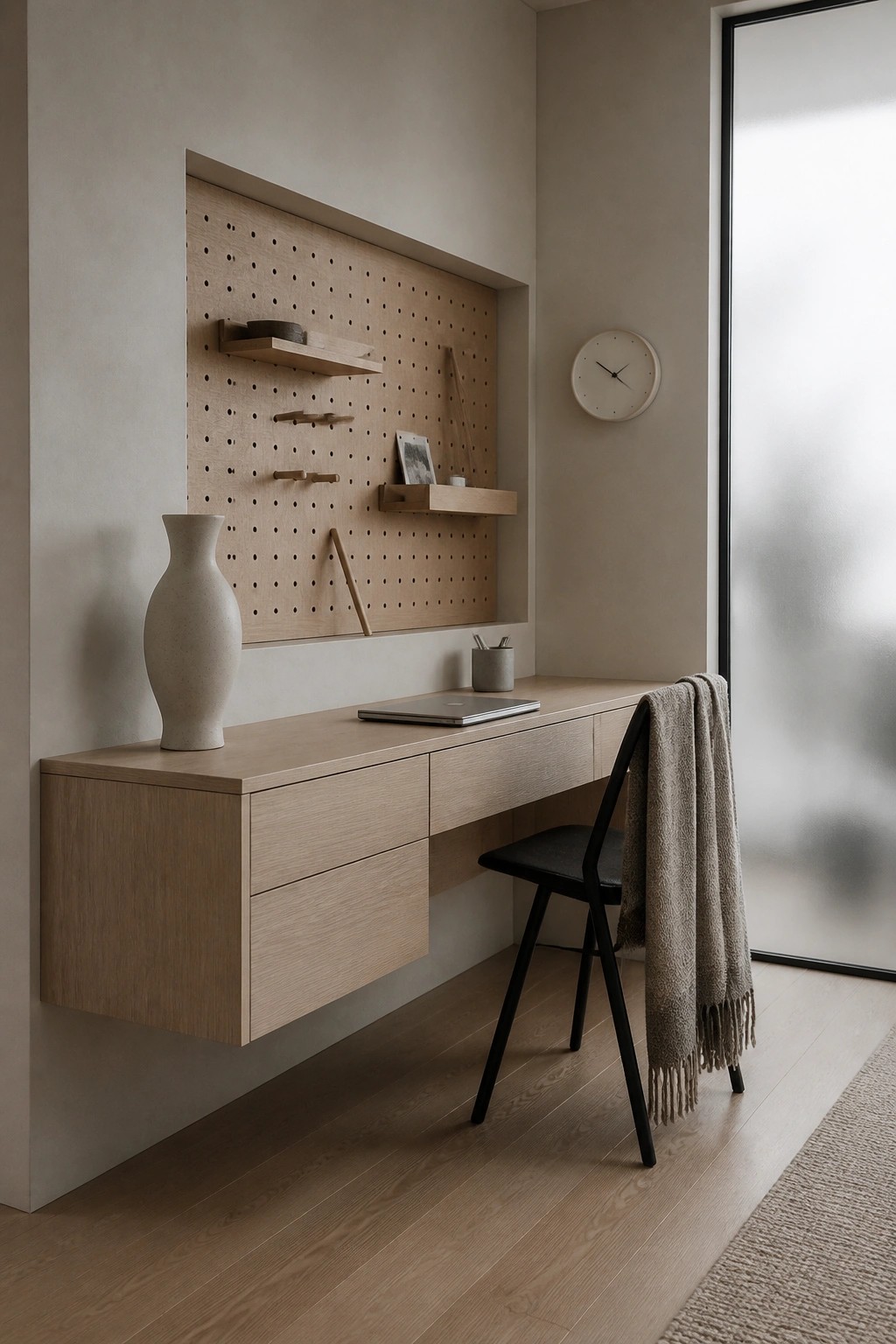
A floating desk with a pegboard above it keeps the floor open in a small office. This approach gives you a work surface plus vertical storage without adding bulky pieces that take up walking space.
Mount the desk at a comfortable height and use the pegboard for hooks, small shelves, and tools you reach often. It works best in apartments or any room where the floor plan leaves little room for traditional office furniture.
Overhead Storage With A Rolling Ladder
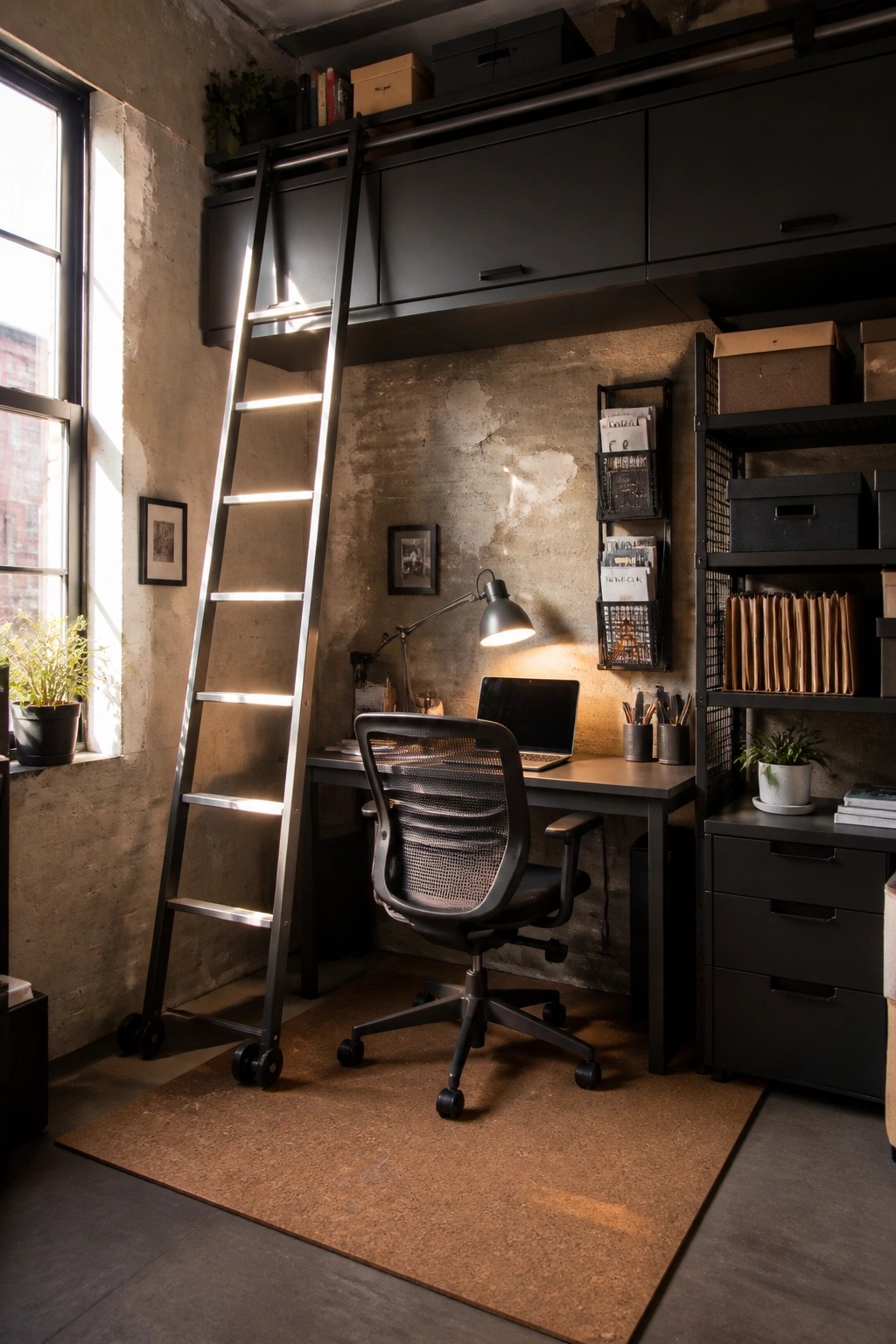
Small offices often lose floor space to cabinets and shelves that sit right at desk level. Moving storage overhead frees up that room and keeps the main work area open for a desk and chair.
This approach works best in rooms with taller ceilings where the extra height would otherwise go unused. A rolling ladder makes the upper cabinets easy to reach without needing a step stool every time. Keep the ladder on a track or choose one with locking wheels so it stays put when you need it.
Built-In Storage Under Window Desks
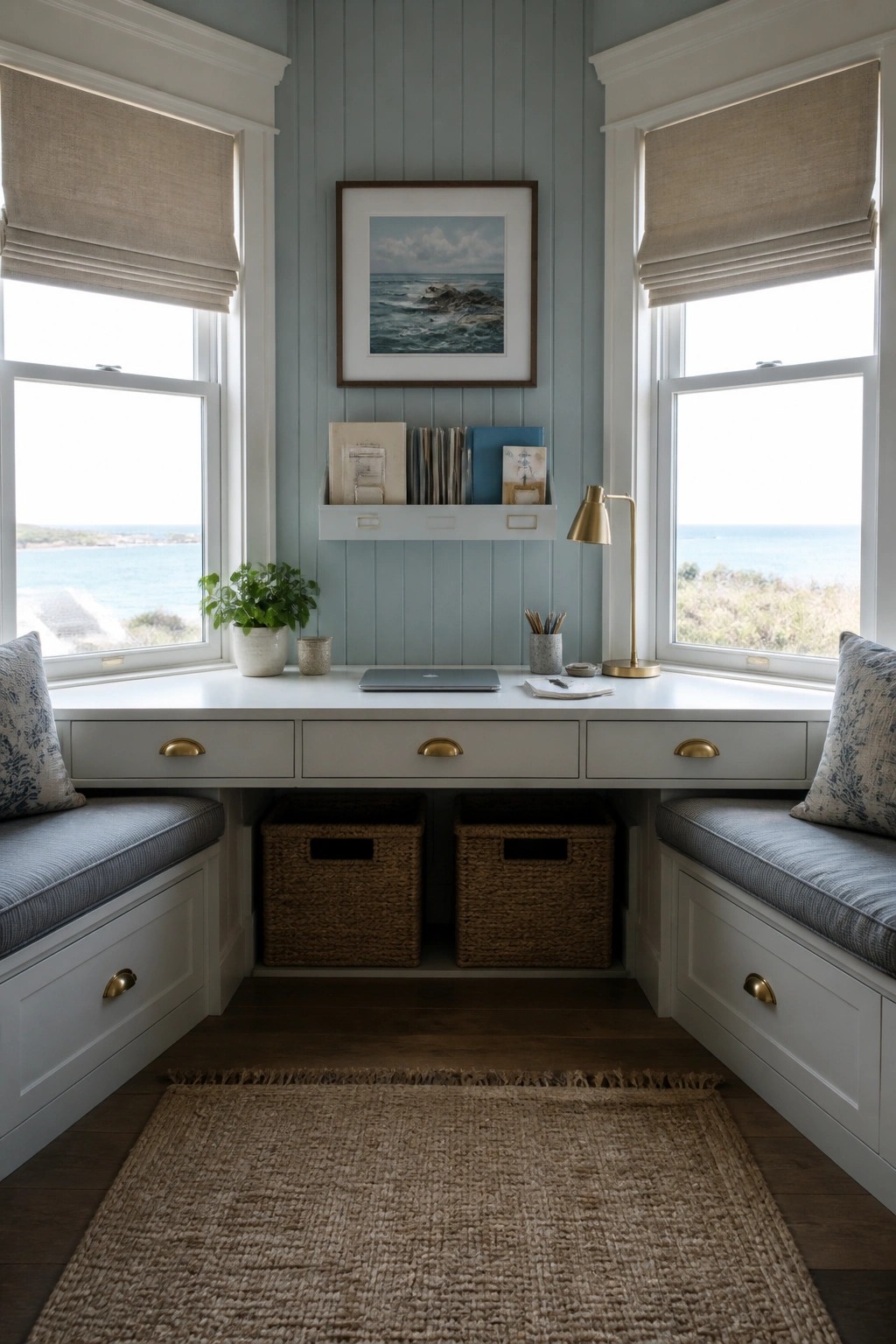
Built-in drawers and baskets under a window desk give you extra storage without eating into the floor space. This works well in small offices where every inch counts and you want the work surface to stay clear.
Place baskets in the open areas for items you reach for often, and use the drawers for papers and supplies that need to stay out of sight. It suits homes with tight floor plans and turns the space under the desk into useful storage instead of wasted room.
Mount Cabinets Above the Desk
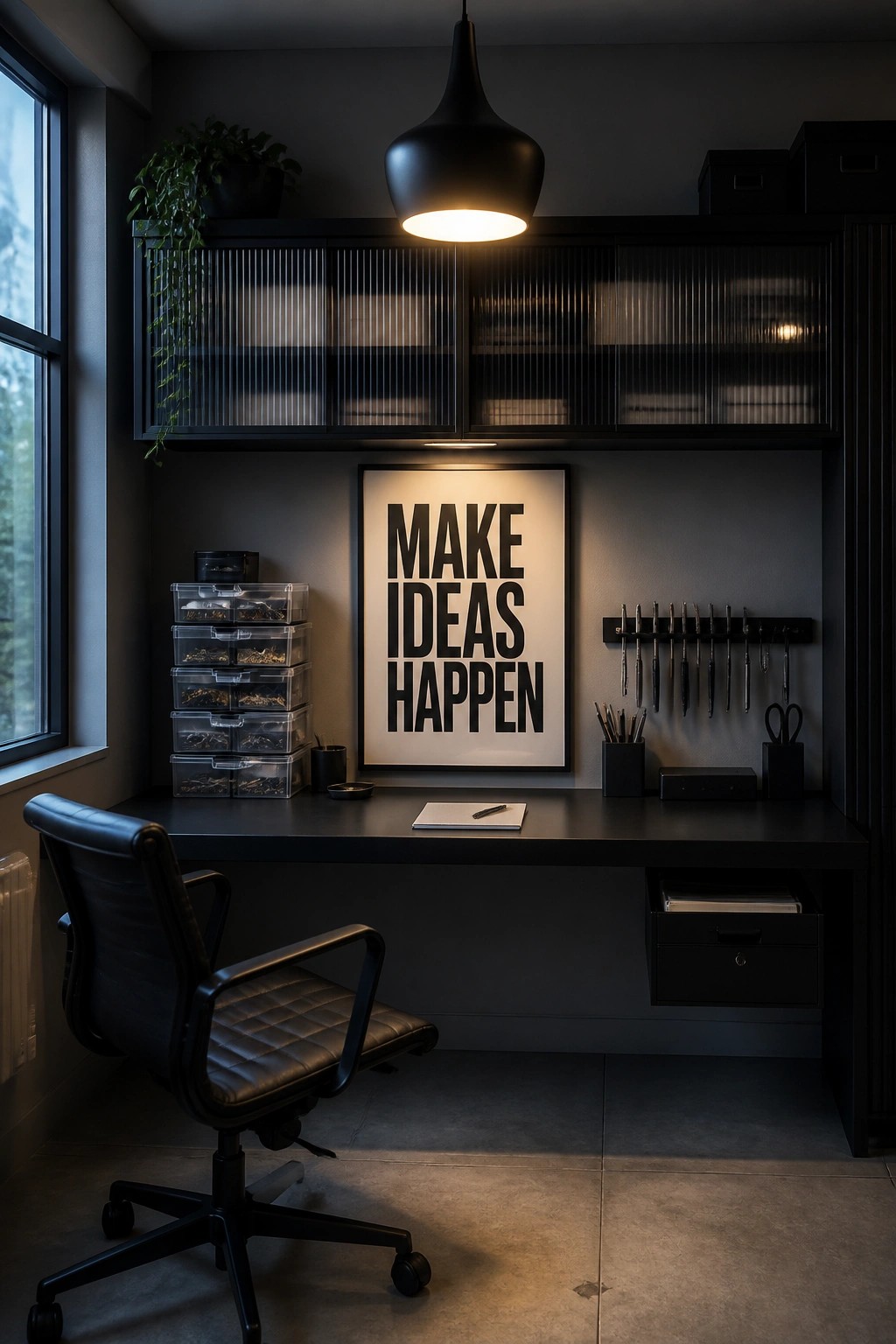
Many small offices run out of floor space quickly when storage stays at ground level. Wall cabinets above the desk solve that by moving bulk items up and out of the way. This keeps the work surface clear and leaves room to move the chair freely.
The approach suits rooms that serve more than one purpose. Keep the cabinets shallow so they do not feel heavy, and pair them with a narrow rail for tools or pens. Clear bins on the desk itself can then handle the rest without crowding the floor.
Built-In Shelving Around The Desk
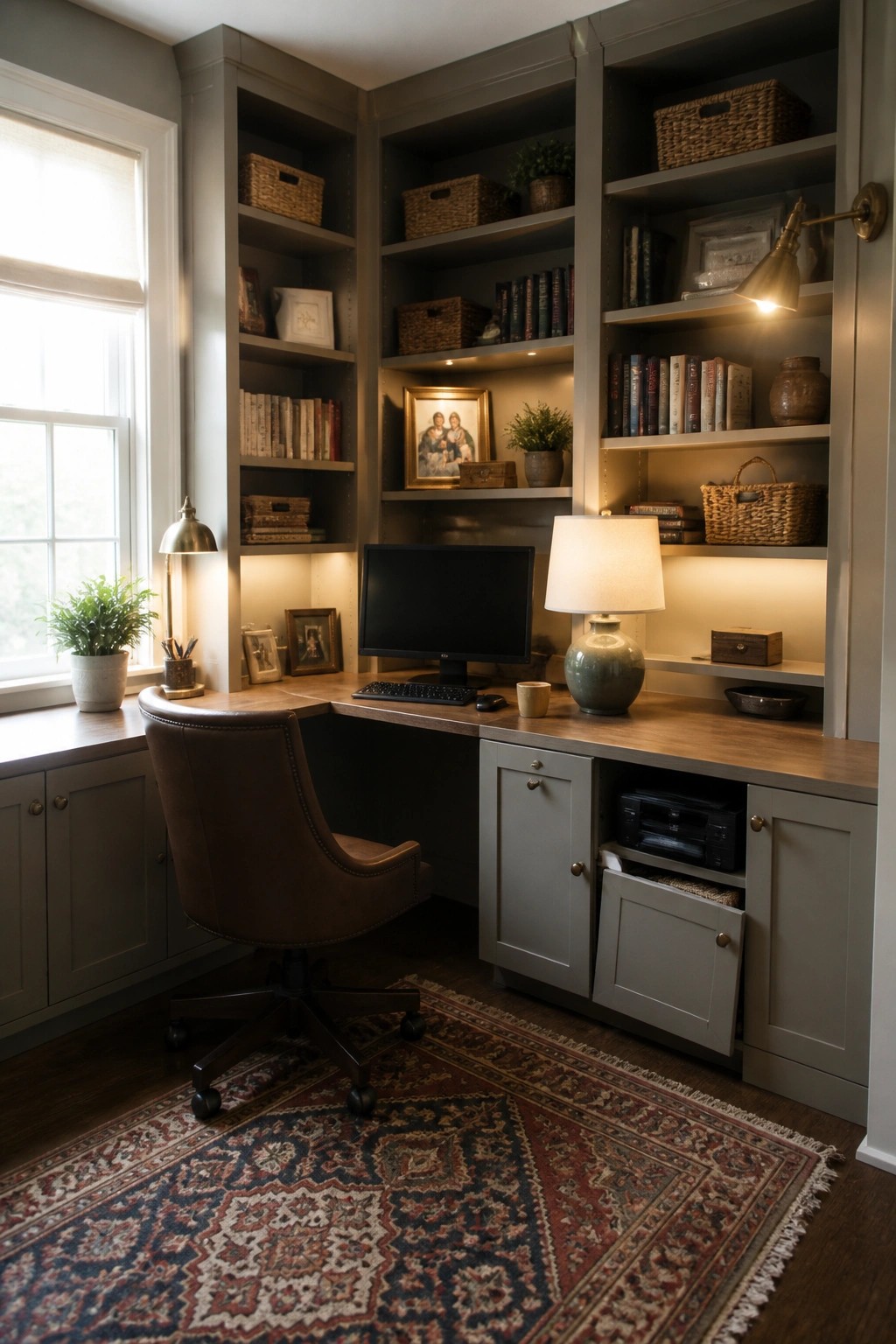
Built-in shelving and cabinets can turn empty wall space into useful storage in a small office. They keep everything off the floor and give you room for books, bins, and supplies without adding more furniture that crowds the room.
This setup works best when the shelves wrap around the desk area and include both open and closed storage. It suits older homes or any space where you want the room to feel tidy but still have plenty of places to put things away.
Wall Pockets Keep Supplies Off The Floor
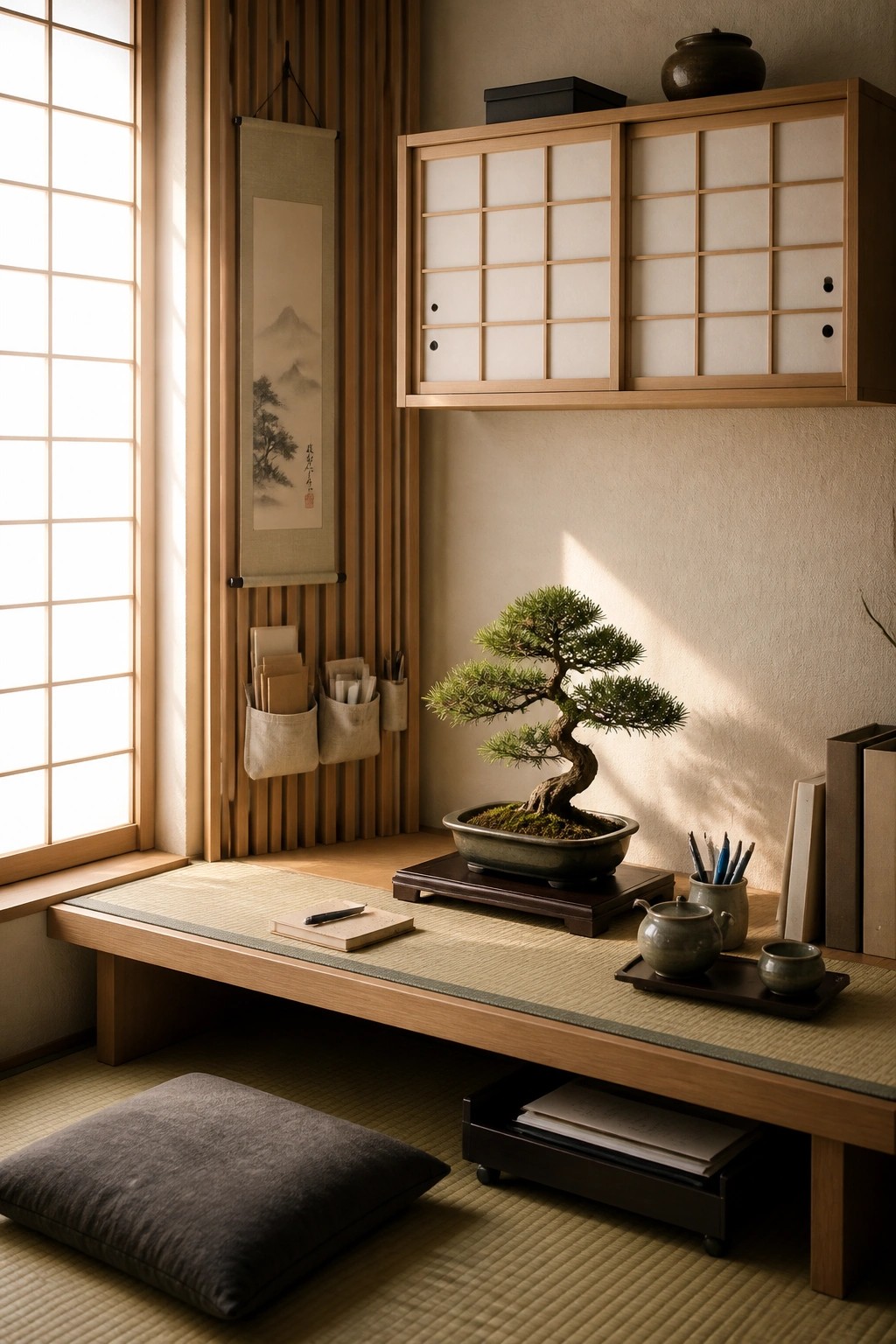
Wall pockets give you a simple way to store papers and small tools without adding more furniture to a tight office. They hang flat against the wall and hold everyday items where you can reach them quickly.
This approach works best in small rooms that already have a low desk or platform setup. Place the pockets near your main seating area and keep only what you use daily inside them so the space stays open and easy to clean.
Storage Under The Stairs
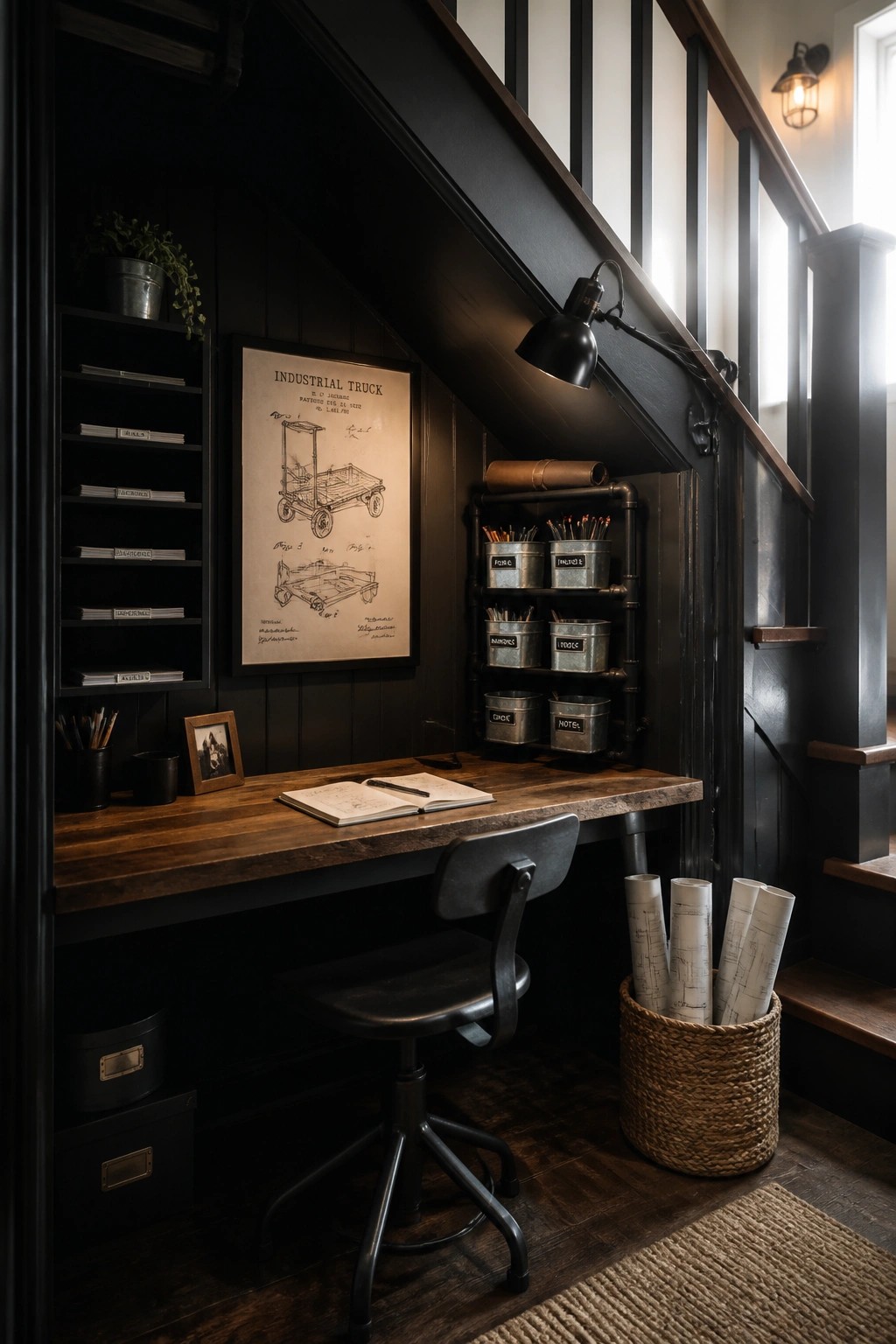
Many homes have an awkward gap under the stairs that goes to waste. Turning it into a small office with a built-in desk and some simple storage makes the space useful again without needing extra room.
Pipe racks holding labeled bins keep supplies easy to reach and fit the narrow shape well. This approach works best in older homes or any tight floor plan where you need an office but do not have a full room to spare.
Use A Pegboard For Vertical Storage

A pegboard turns an empty wall into flexible storage that does not eat into floor space. In a small office it keeps supplies visible and reachable while leaving the desk clear for work.
Mount it above the desk or along one side and add baskets or hooks as needed. This setup works best in rooms where built-in cabinets are not an option and you want to adjust the layout later without much effort.
Built-In Cabinets Above The Desk
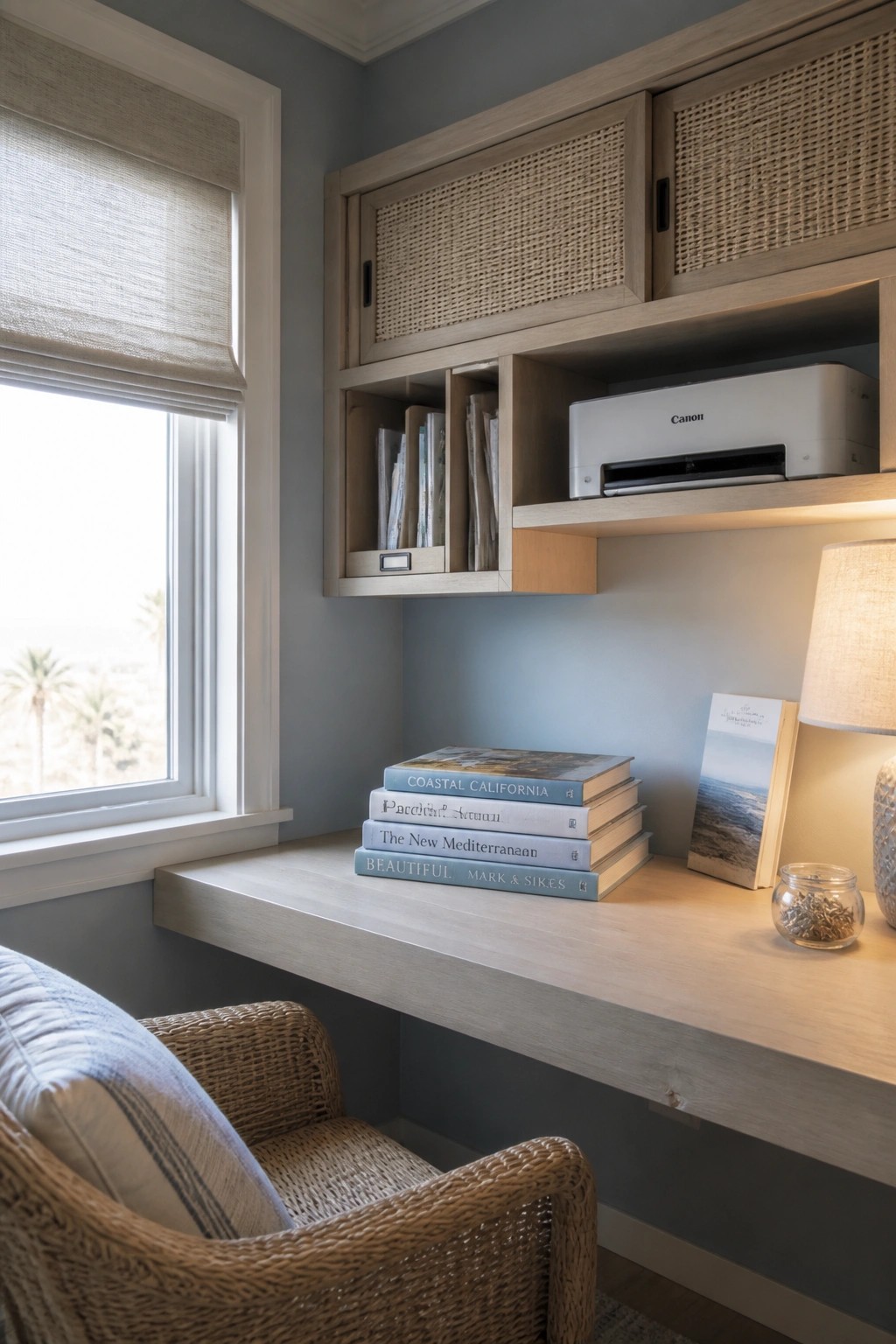
Wall cabinets give you storage without eating into floor space. In a small office they keep the desk surface clear while holding the printer, files, and other items that would otherwise pile up.
This setup works best along a blank wall or above a floating desk. Choose shallow cabinets so the room still feels open, and mix closed doors with a few open spots for things you reach for often.
Cabinets That Open Into Workstations

A tall cabinet with a drop-down desk surface gives you a full workspace without taking up floor space all the time. The storage stays hidden behind doors when the desk is closed, so the room does not feel like an office.
This setup works best in a guest room, hallway alcove, or living room corner where you need the space to serve more than one purpose. Look for versions with plenty of small drawers and shelves so papers and supplies stay organized inside.
Floating Storage Keeps Small Offices Open

Mounting cabinets and desks on the wall instead of placing them on the floor is one of the easiest ways to gain breathing room in a tight office. The setup leaves the floor clear, which makes the space feel larger and gives you room to move a chair or stool in and out without crowding.
This approach works best in rooms that already have limited square footage, since it keeps everything off the ground and still provides closed storage above and drawer space below. Just make sure the wall can handle the weight and leave enough clearance underneath for your legs and any seating you need.
Add Storage Above the Desk
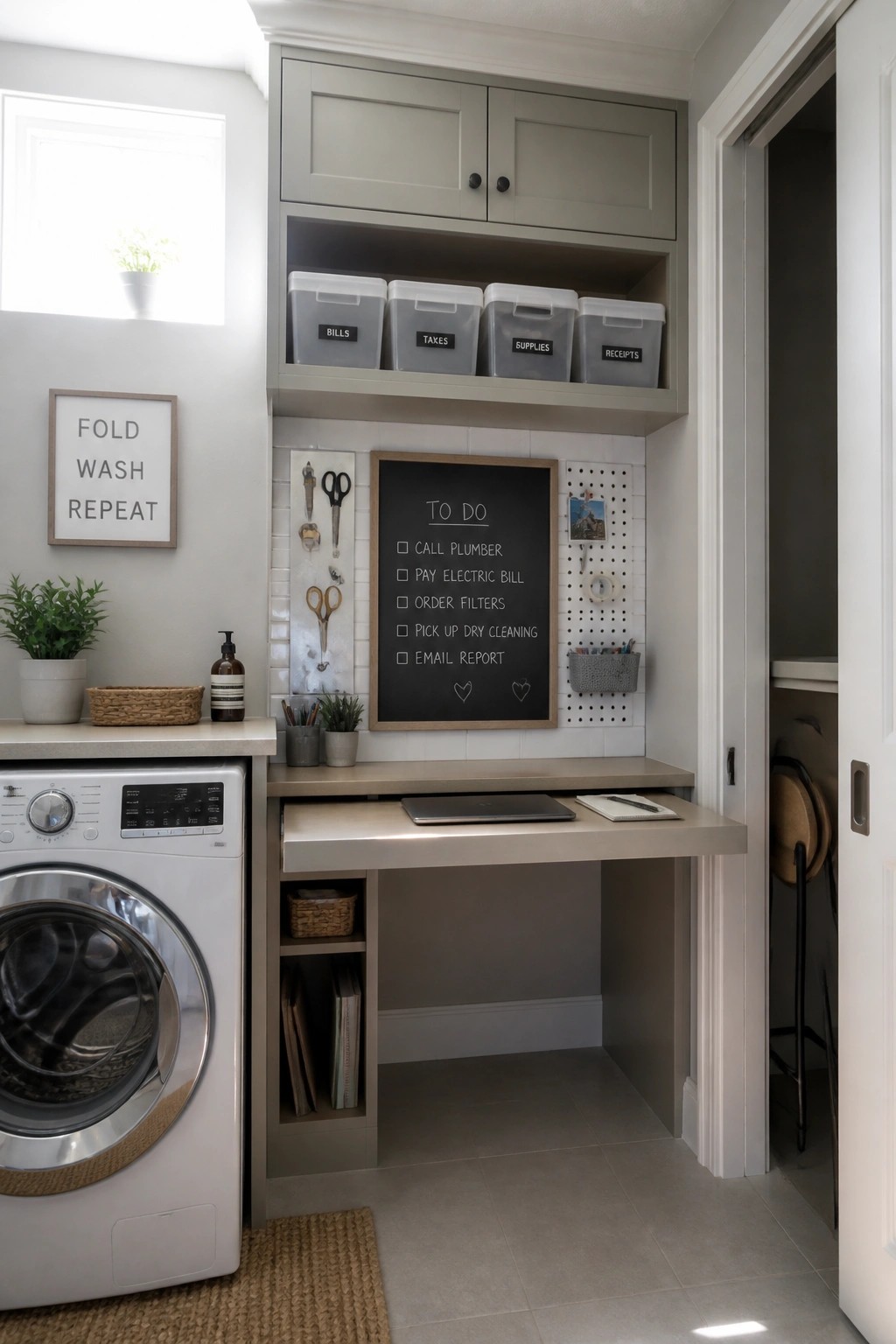
Small offices often run out of room fast. Placing cabinets and open shelves directly above the desk uses the wall space that usually goes to waste and keeps the floor clear for movement.
This setup works best in narrow rooms or multi-purpose spaces like laundry areas. Use clear bins with simple labels so you can grab what you need without digging through drawers.
Tall Cabinets With Fold Out Shelves
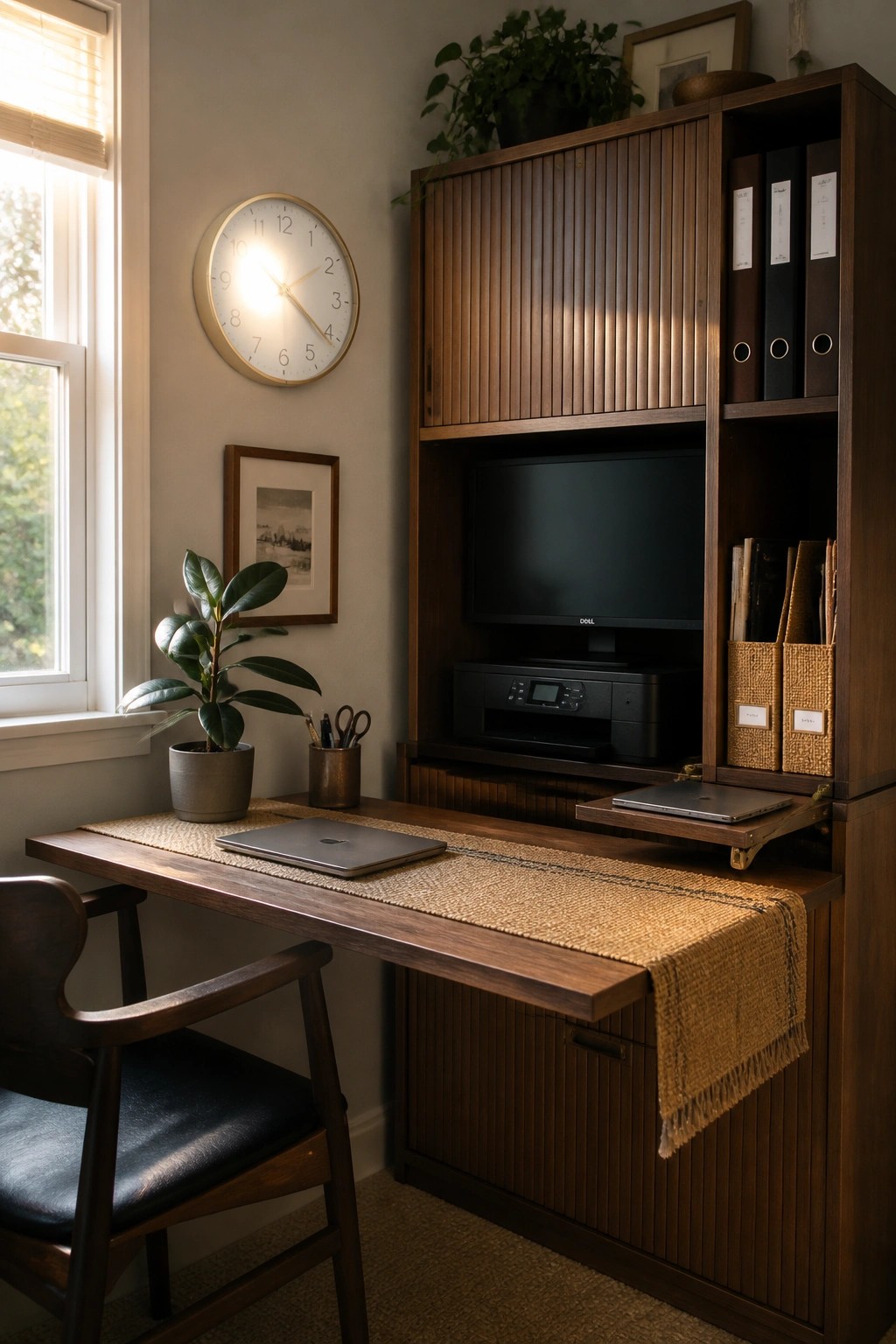
A tall storage cabinet can hold a lot in a small office without spreading across the floor. The fold out shelf gives you extra surface space only when you need it, which helps keep the room from feeling crowded.
This setup works best in rooms that double as other spaces during the day. Tuck the shelf away when it is not in use and pull it out for a laptop or papers. It suits homes where every inch of floor space matters.
Add Open Storage To Your Desk
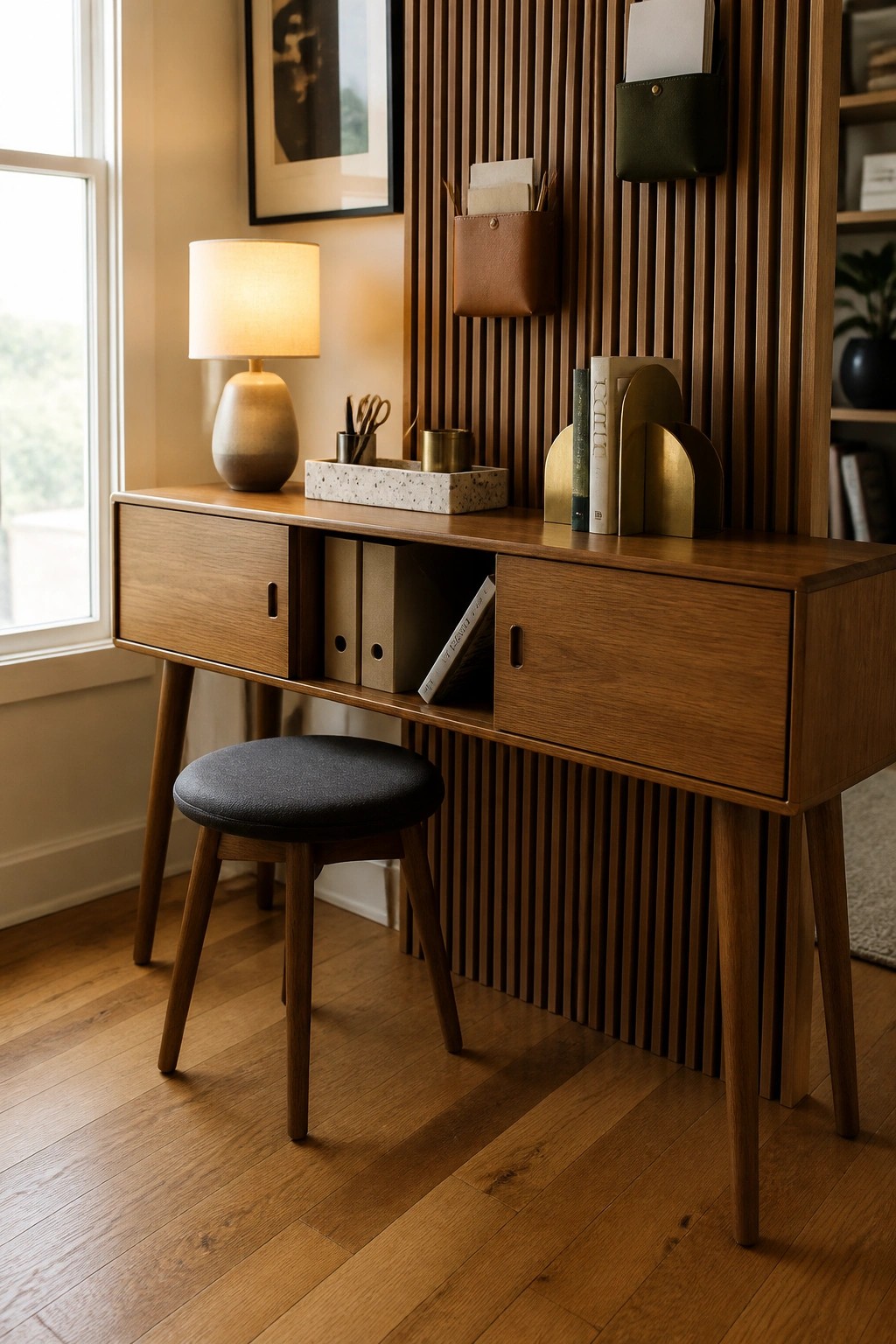
A desk with open cubbies in the center gives you a place to keep binders and folders without adding more furniture. The drawers on each side handle smaller supplies, so the whole setup stays compact.
This works best in small rooms where floor space is tight. Tuck a stool underneath and use the open area to reach what you need quickly.
Wall-Mounted Storage For Compact Workspaces

A wall-mounted desk paired with hanging mesh baskets above it gives you a full work spot without eating into floor space. This approach keeps papers, files, and supplies within reach while leaving the area below open and easy to walk through.
It works especially well in hallways, alcoves, or any narrow spot that would otherwise sit unused. Just make sure the wall can support the weight and leave enough clearance so the desk does not block traffic.
Tall Storage Units With Built-In Desks

Many small offices work better when storage and workspace share the same tall piece instead of sitting side by side. A single unit can hold files, supplies, and a work surface without taking up extra floor space.
This setup suits apartments or rooms that double as living areas. Choose one with a fold-down desk and baskets or shelves below so the surface can stay clear when not in use.
Frequently Asked Questions
Q: How do I store files without a big cabinet taking over the room?
A: Use wall pockets or over-door organizers for papers you handle often. Sort them by project so everything stays within reach. Clear out old documents monthly to avoid buildup.
Q: What if my floor slopes a bit in this old building?
A: Skip anything on wheels and go for stable stackable crates instead. Anchor taller pieces to the wall with simple brackets for safety. Measure twice before buying so pieces sit level.
Q: Can I keep my printer and scanner accessible yet out of the way?
A: Place them on a sturdy wall-mounted shelf above your main workspace. Run cords through a small grommet in the shelf to manage clutter.
Q: How do I handle tools I reach for every day?
A: Keep a narrow rolling drawer under the desk for those items. Pull it out only when working.
