
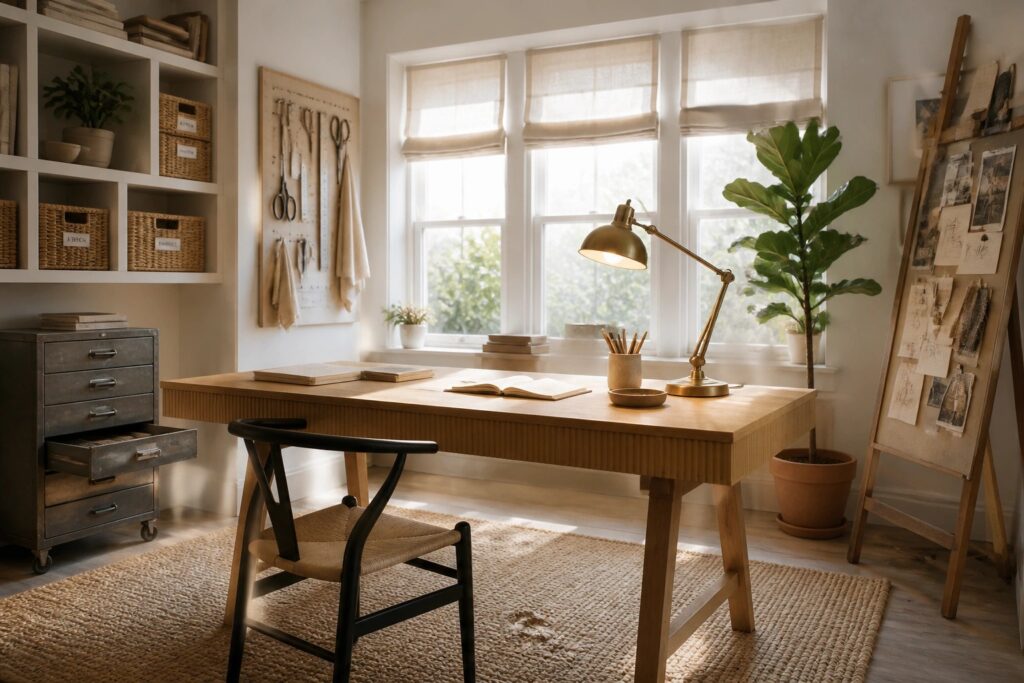
I’ve noticed that work rooms tend to hold up during long creative sessions only when the layout lets you shift between focused work and quick breaks without leaving the space.
Many setups look fine in photos but start to feel restrictive once you spread out sketches, notes, and reference materials across the day.
Storage placement matters more than most people expect.
I usually try small changes like moving a task lamp or adding a low shelf near the main chair first because those tweaks often reveal whether the room can support hours of use without constant rearranging.
Ideas that account for real fatigue and changing light throughout the day end up being the ones I keep returning to.
Position Your Desk Near Large Windows

Natural light helps a lot when you need to focus for hours at a time. Setting the desk right in front of the windows keeps the space bright without relying only on lamps, and it gives your eyes a break during long sessions.
This works best in rooms that already have good window space. Keep the view clear, match the desk height to the sill if you can, and add a simple stool so you can shift positions easily when you need to.
A Large Work Table with Built-In Storage
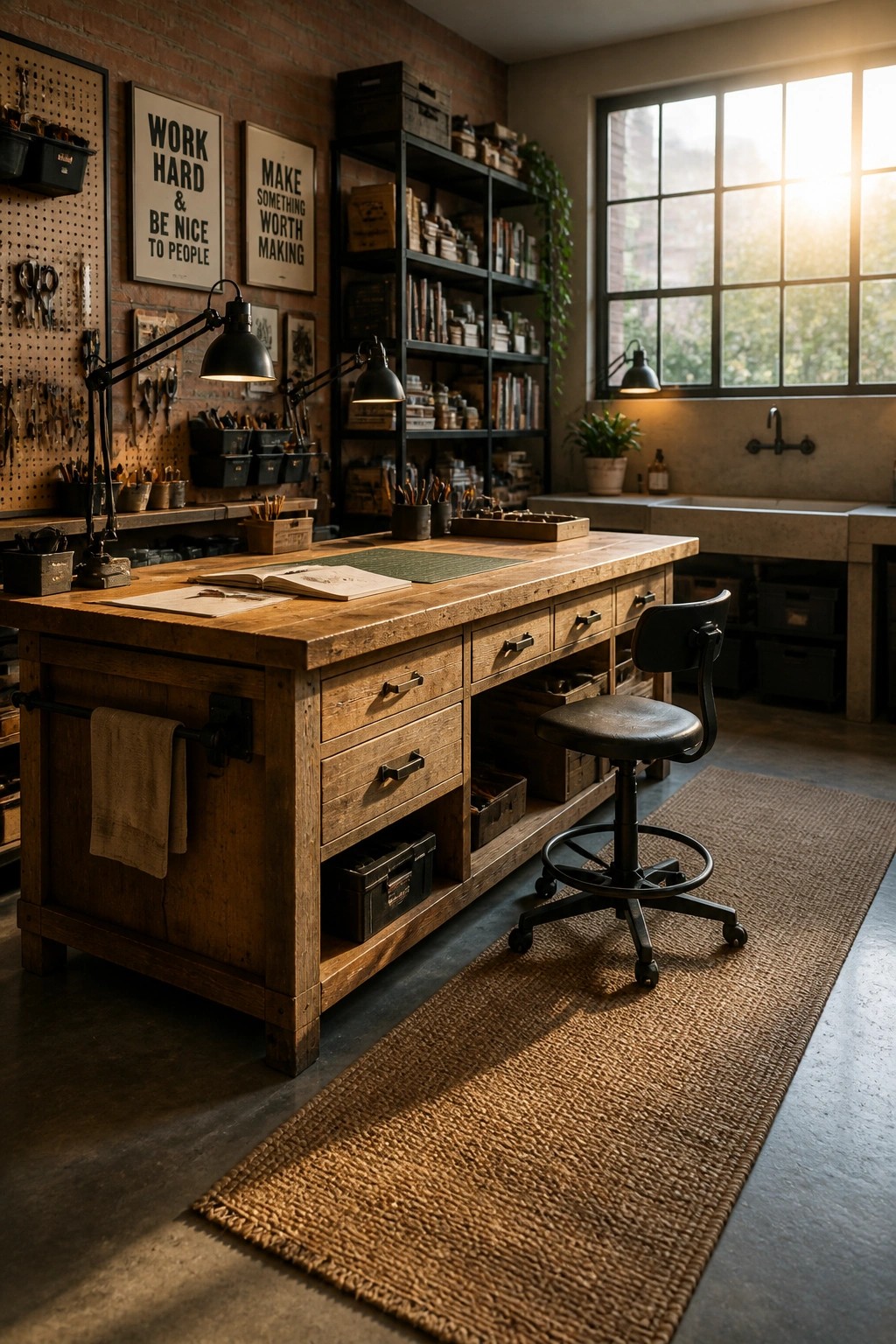
A big central table with drawers and open shelves underneath keeps tools and supplies close at hand. This setup works well when you need to stay focused for hours without constantly getting up to hunt for things.
It suits a dedicated work room where space allows for one main piece of furniture rather than lots of smaller units. Make sure the drawers glide smoothly and leave enough legroom so you can sit comfortably for long stretches.
Built-In Desks With Storage Built Right In
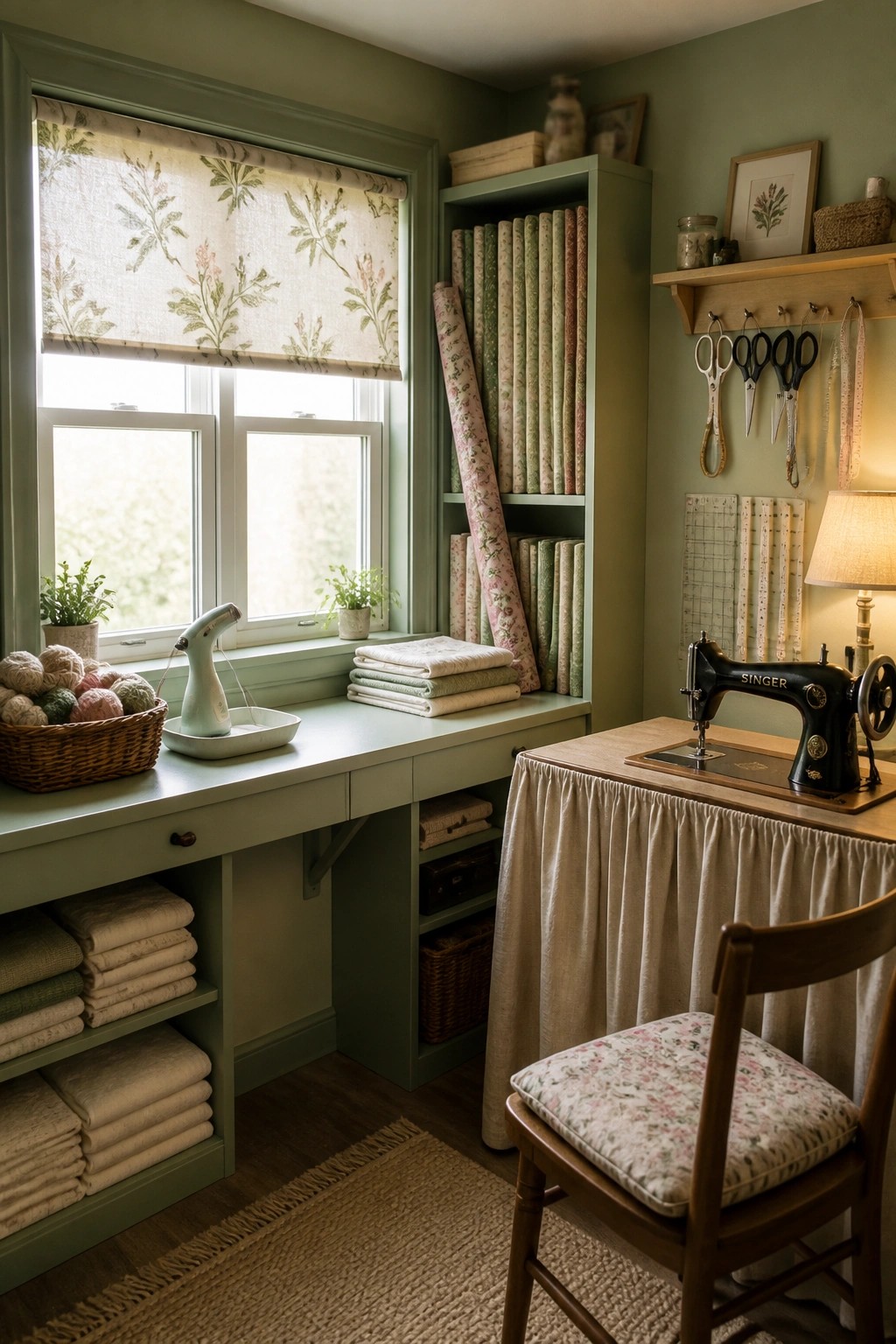
A desk that has storage right around it makes a big difference when you are working for hours at a time. Everything stays close without piles forming on the work surface, and the built-in shelves and cubbies hold supplies in a way that feels steady rather than temporary.
This setup works best in a smaller room that is used mainly for one activity. Keep the most used items at arm’s reach and leave a bit of open space on the desk itself so the work area does not feel crowded.
Low Tables For Longer Sessions
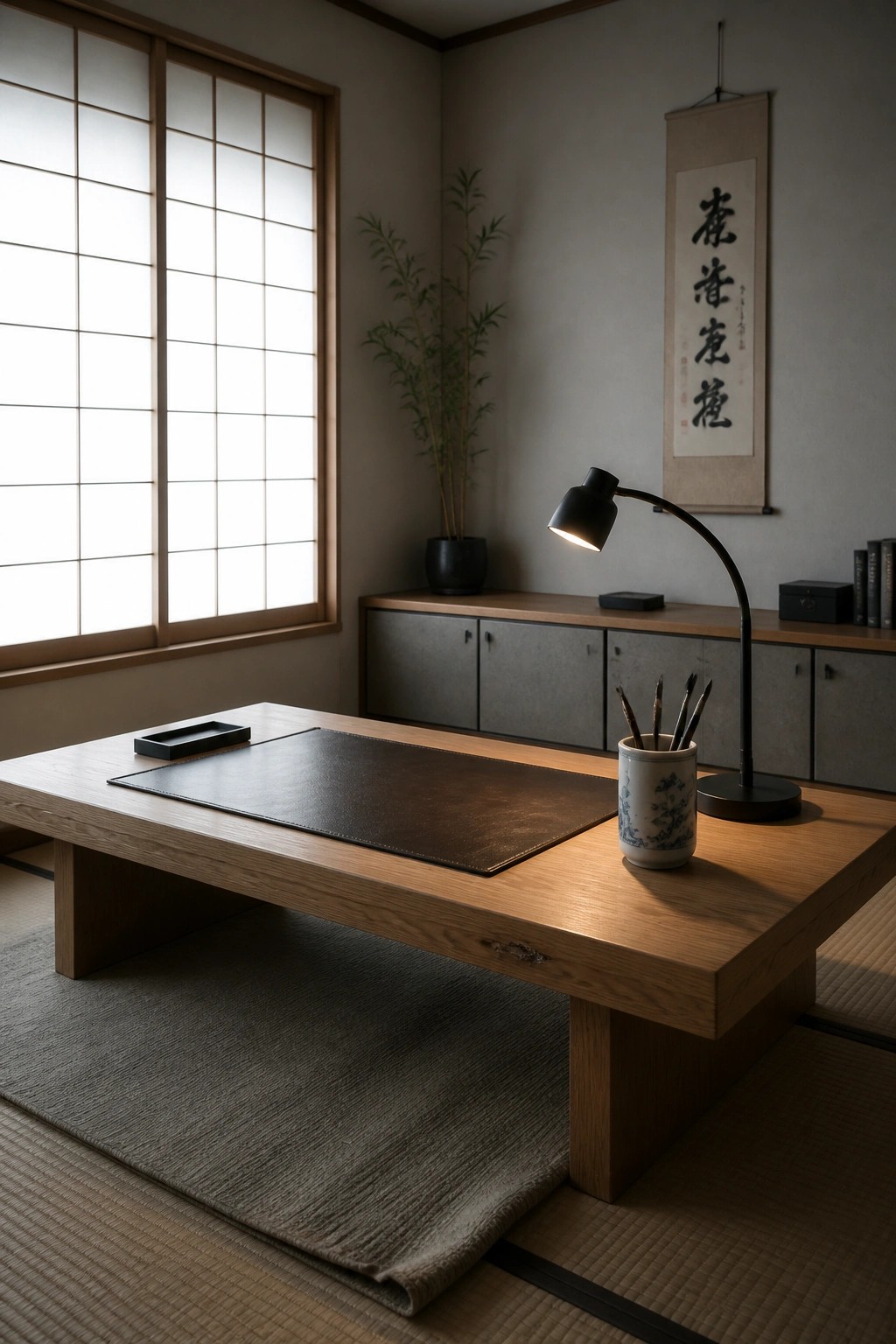
A low wooden table placed right on the floor changes how a work space feels during long hours. It encourages a grounded seating position that many people find easier on the back than a standard chair and desk, especially when the session stretches for hours.
This setup works best in smaller rooms or homes that already lean toward simple, minimal furnishings. Keep the surface mostly clear and add only what you need for the task at hand, like a single lamp and a mat to protect the wood.
A Large Central Work Table
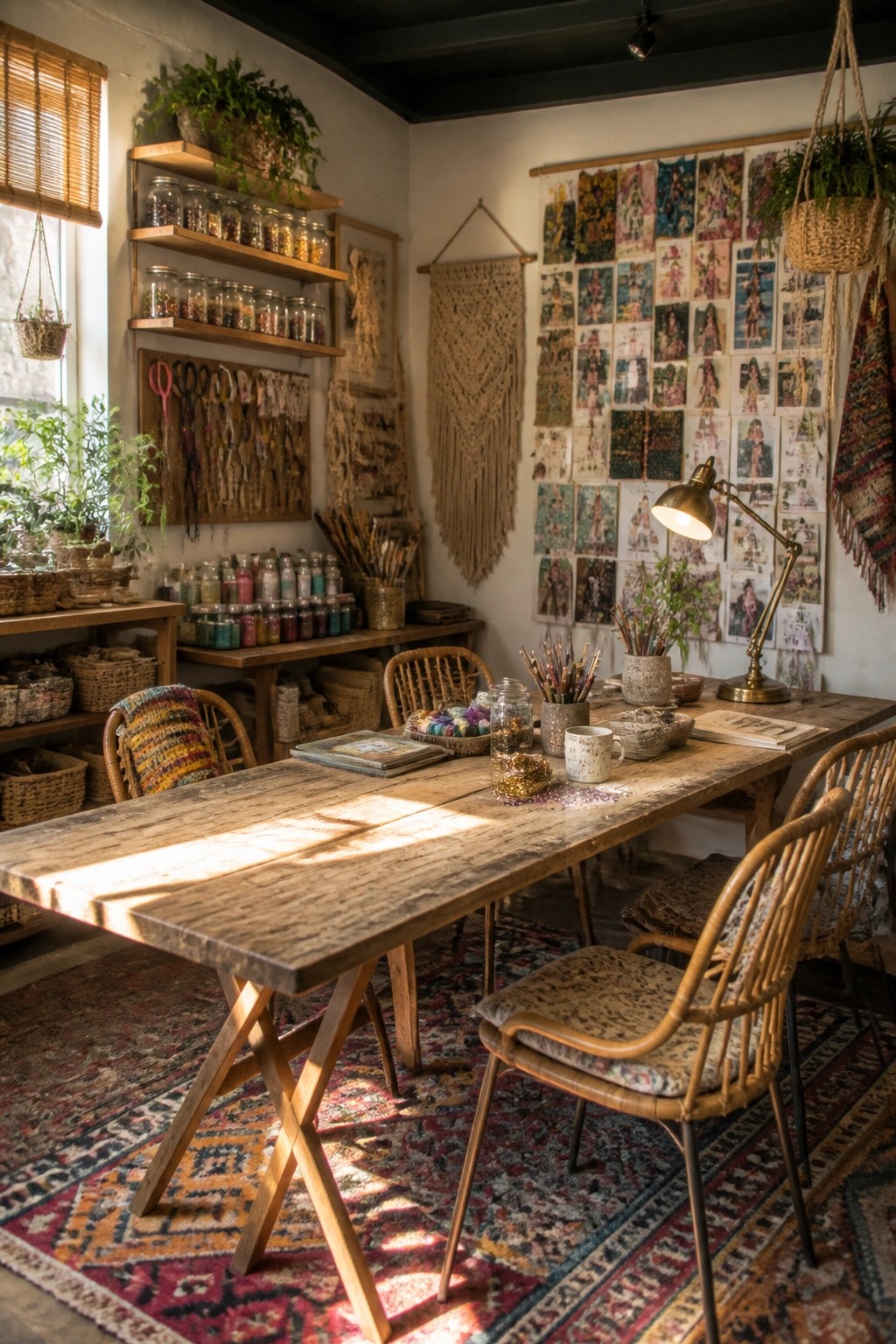
A big, sturdy table gives you the space to spread out supplies and projects without feeling cramped during long sessions. It becomes the main spot where everything happens, from sketching to assembling pieces, and keeps you from constantly clearing space.
This setup works best in rooms that already have wall storage and good natural light nearby. Choose a table that is solid enough to handle heavy use, and leave enough room around the edges so you can walk around it freely.
Built-In Storage Around The Desk

A built-in desk with shelving above it keeps supplies and reference materials close without taking up extra floor space. This setup works well in smaller rooms because the storage sits right where you need it, and the surface stays clear for actual work.
Place it along a wall with good natural light, like near a window, so the area feels open even when the shelves fill up. It suits homes that need a dedicated spot for long hours without the clutter of freestanding bookcases.
A Large Central Work Table
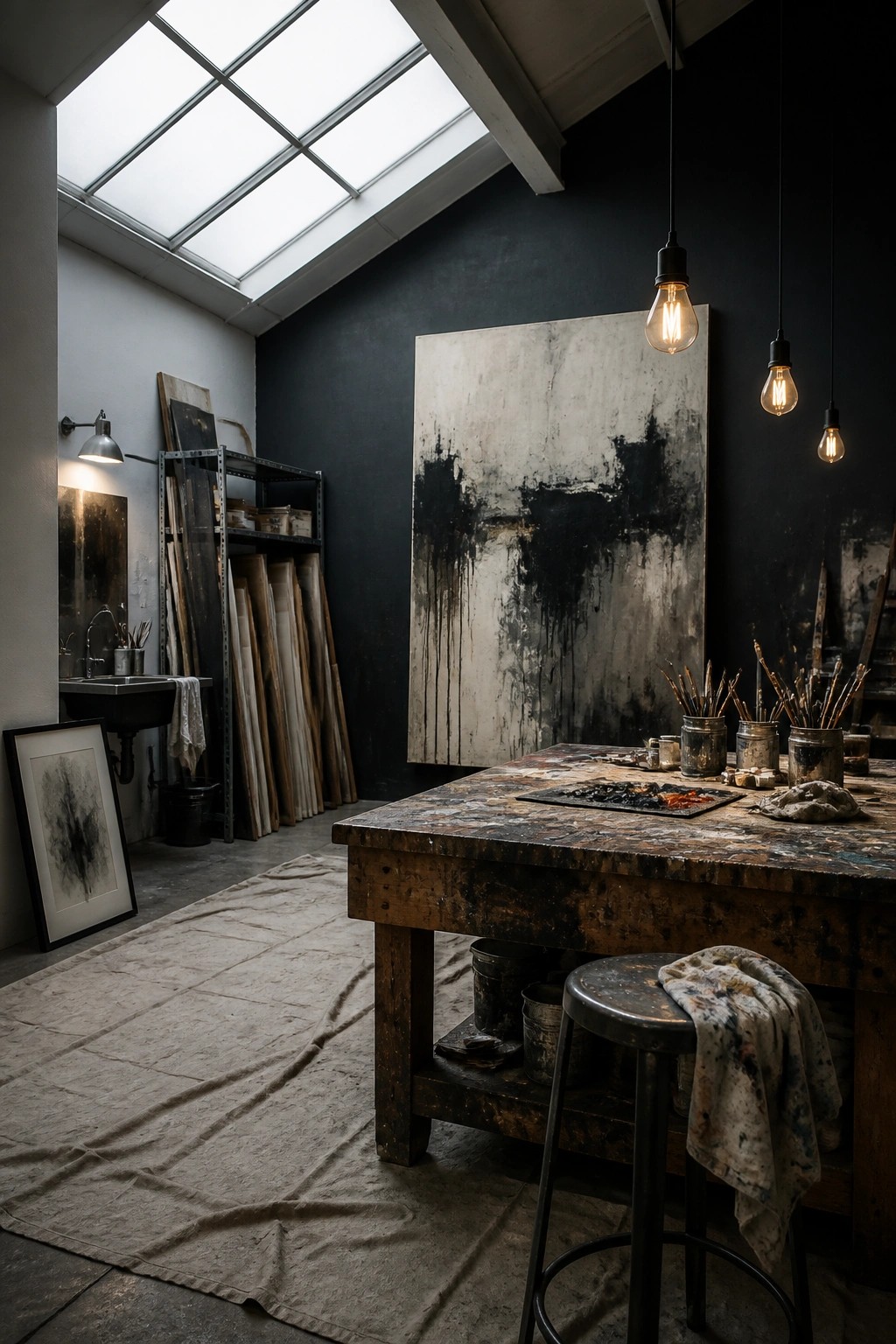
A big, solid table gives you room to spread out materials and keep everything within reach during long work sessions. It becomes the main spot where projects can stay set up instead of getting packed away each time.
This setup works best in a dedicated studio or spare room where the table can stay messy. Choose something sturdy with a thick top so it holds up to heavy use without needing constant care.
Built-In Shelves Around A Desk

Built-in shelves next to a desk give you storage without crowding the floor. They keep books, supplies, and small pieces you like to look at right where you can reach them, which helps during long work sessions.
This setup suits smaller rooms or any space where you want things organized but still in sight. It works best when the shelves sit at a comfortable height so you can grab what you need without standing up.
A Sturdy Workbench With Open Storage
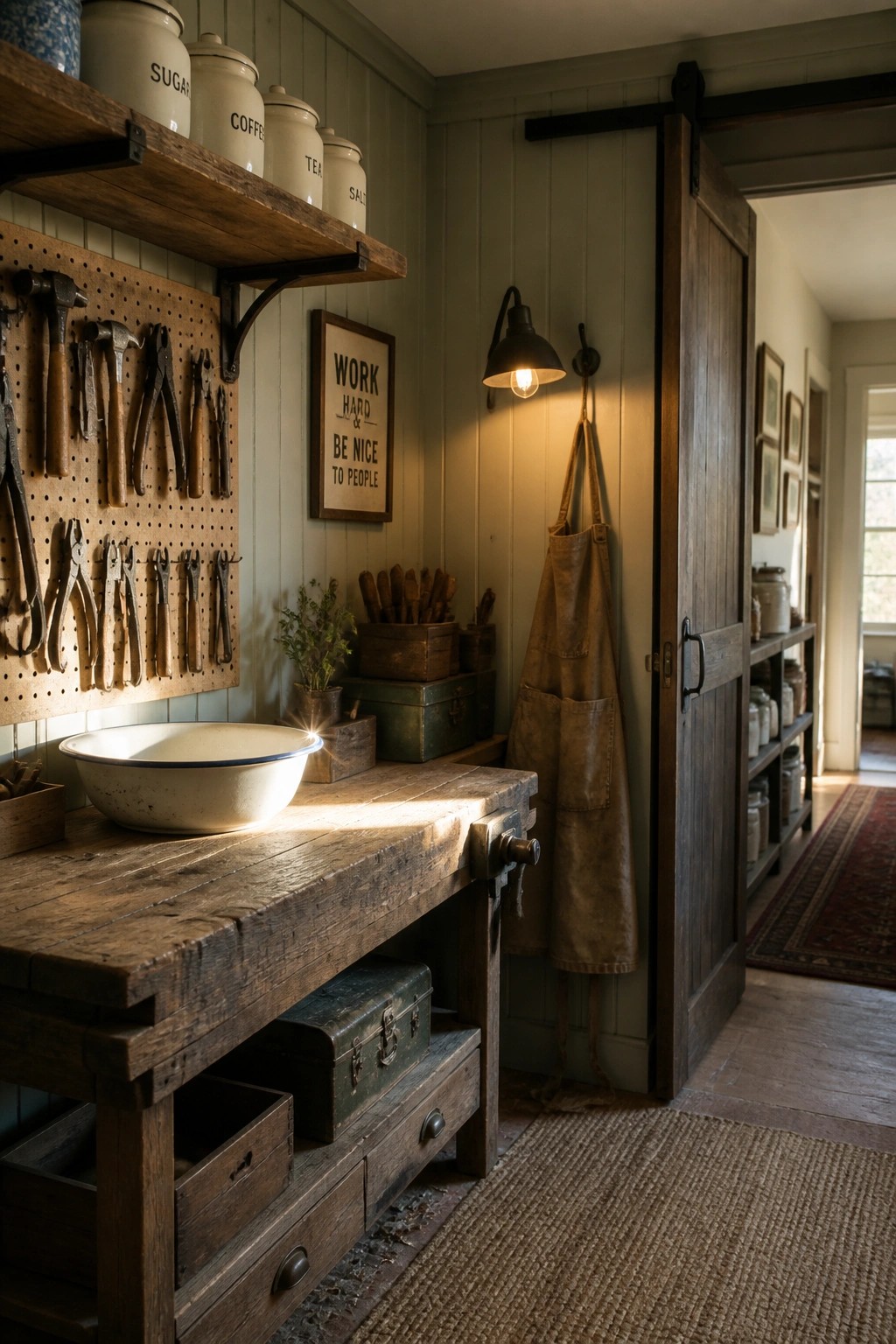
A big, solid workbench gives you room to spread out and keep working without constant rearranging. The open shelves and drawers underneath let you grab what you need quickly, which helps when you want to stay focused for hours.
This setup works best in a dedicated work room where you handle projects that take time. Keep the bench height comfortable for standing and add a pegboard above it so tools stay visible and within reach. Avoid crowding the surface so the space stays practical day after day.
A Large Central Table With Storage Below
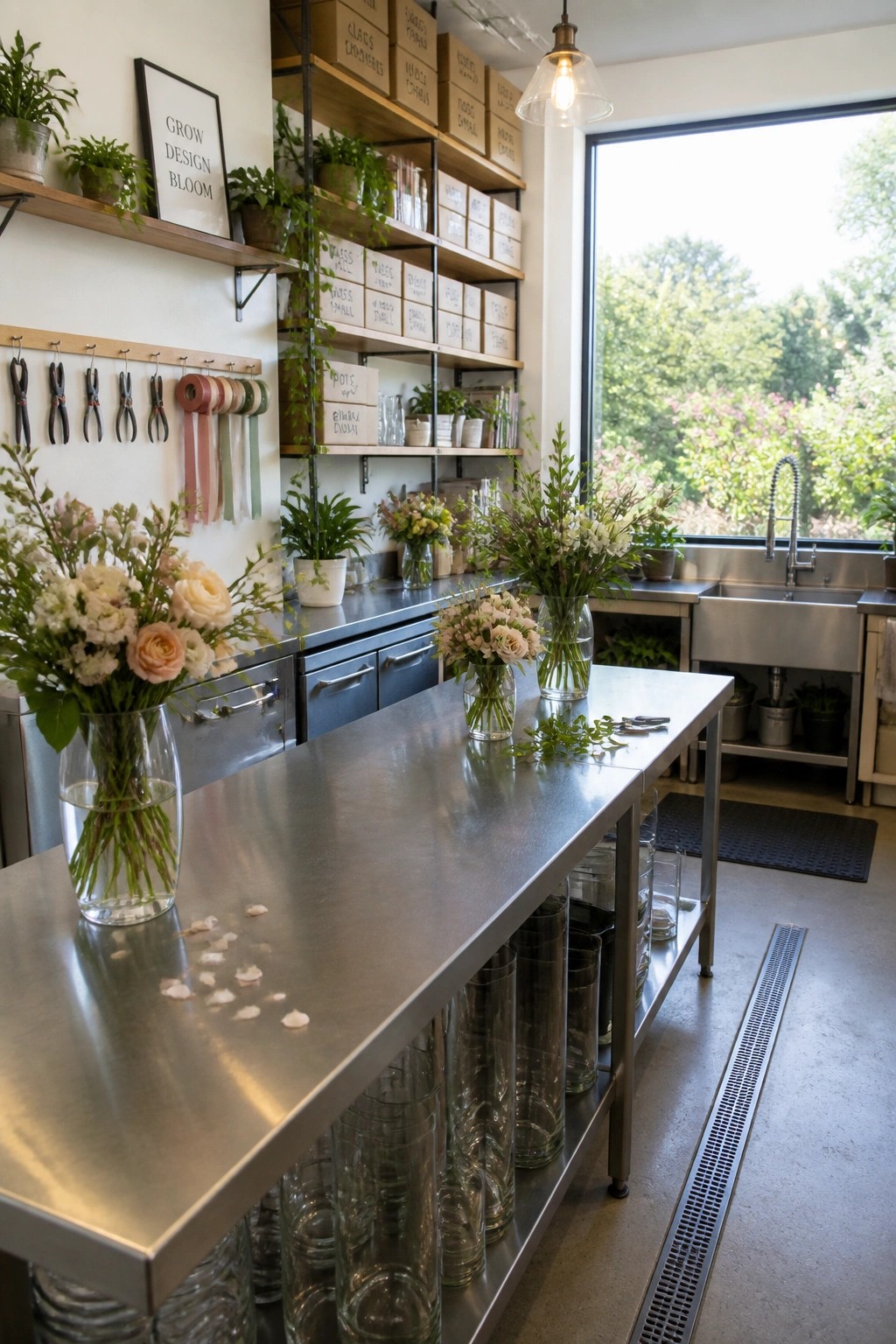
A big central table gives you a solid place to spread out without crowding yourself during long sessions. The durable surface holds up to daily use and keeps your main workspace clear while still letting you reach what you need.
Lower shelves built right into the table hold extra supplies close by so you spend less time walking around the room. This works best in a studio or craft space where you want to stay focused without constant interruptions.
Position A Desk Under Skylights
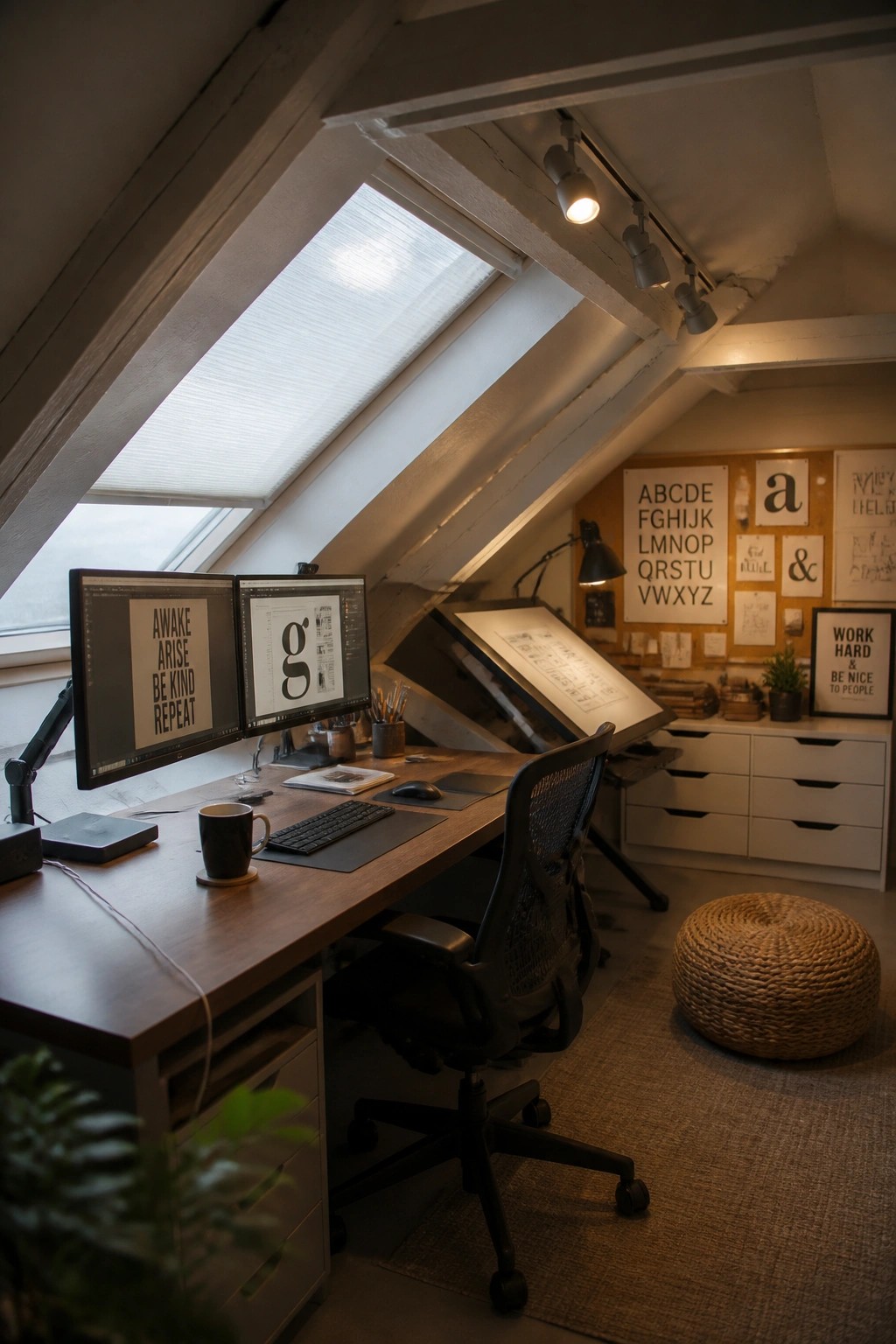
Many work rooms feel dim and closed in after a few hours. Placing the desk directly under a skylight brings steady natural light that keeps the space feeling open and easier on the eyes during long sessions.
This approach works best in homes with unused attic space or sloped ceilings. Keep the desk surface clear except for the essentials and choose a supportive chair so the focus stays on the work rather than fighting the room.
Invest In A Supportive Office Chair

A chair you can actually sit in for hours changes how a work room feels. This one has a high back, thick cushioning, and a bit of give that keeps your posture from slumping during long stretches.
Put it on a flat-weave rug so the wheels move easily and your feet stay comfortable. It suits any smaller room where you want to stay focused without needing to get up every twenty minutes.
Mobile Island Storage For Craft Supplies
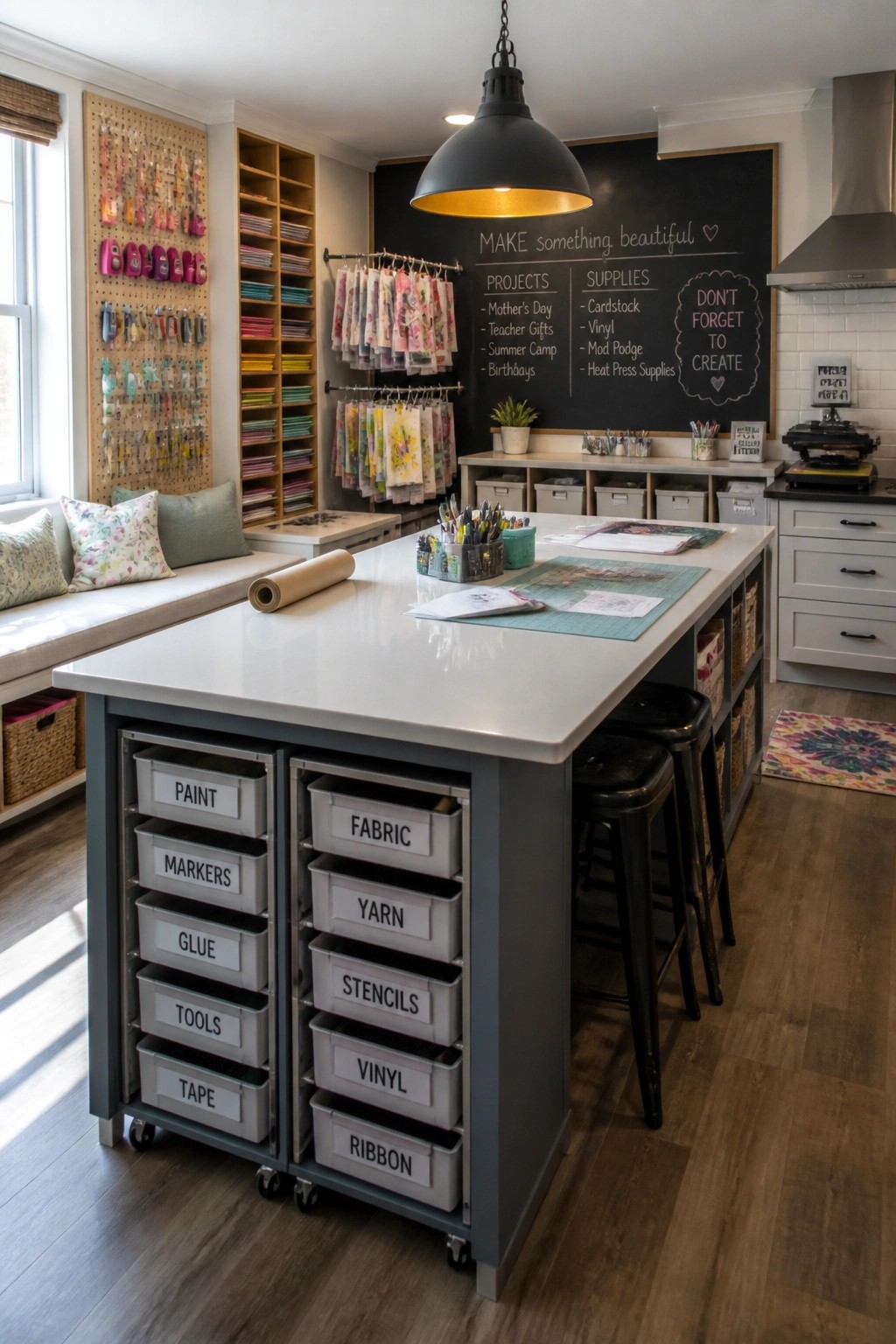
A large central island on wheels gives you a solid work surface while keeping supplies sorted and close at hand. Labeled bins along the sides let you pull out paint, fabric, or yarn without digging through drawers or walking across the room.
This works best in a dedicated craft space where you stay for long stretches. Keep the island in the middle so you can reach both sides easily, and roll it aside when you need more floor space for bigger projects.
Desk Placement Near A Window

A desk set right in front of a large window makes long work sessions easier on the eyes and the mind. Natural light reduces the need for harsh lamps during the day and gives a sense of openness even in a small room. The view outside also offers a quick break for the eyes without leaving the workspace.
This setup works best in rooms that get steady daylight. Keep the desk low and simple so it does not block the light, and add only what you need for the day. A window seat nearby can double as extra surface space or a spot to stretch during breaks.
Dark Walls Reduce Distractions
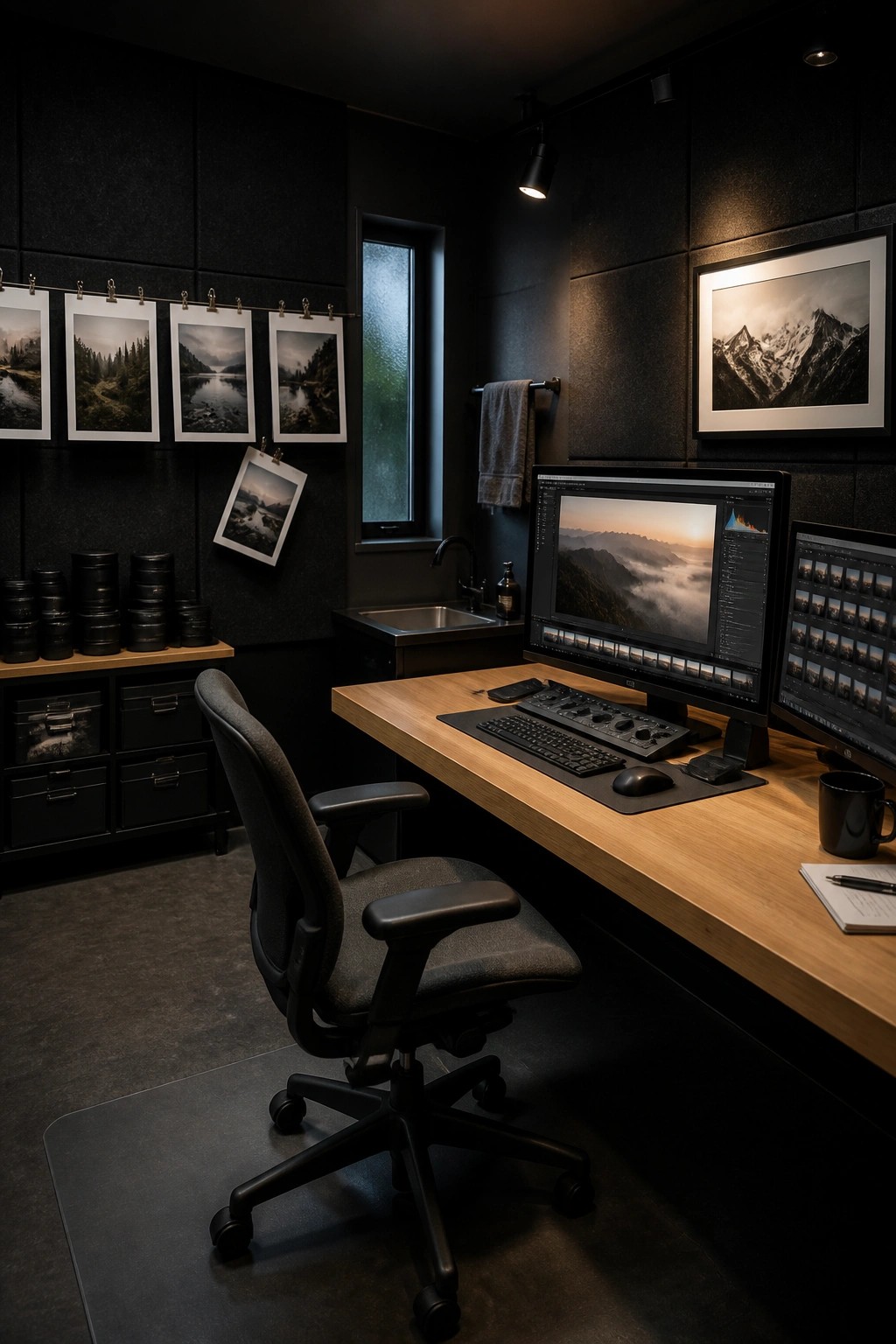
A dark room like this one helps keep the focus on the screen during long editing sessions. The deep walls and limited light cut down on visual noise, so the eye stays on the work instead of wandering around the space.
This setup works best in a small dedicated room where you can control the lighting. Paint the walls a dark color, add task lighting over the desk, and keep the rest of the room simple so it stays calm for hours at a time.
Open Shelving Keeps Supplies Within Reach
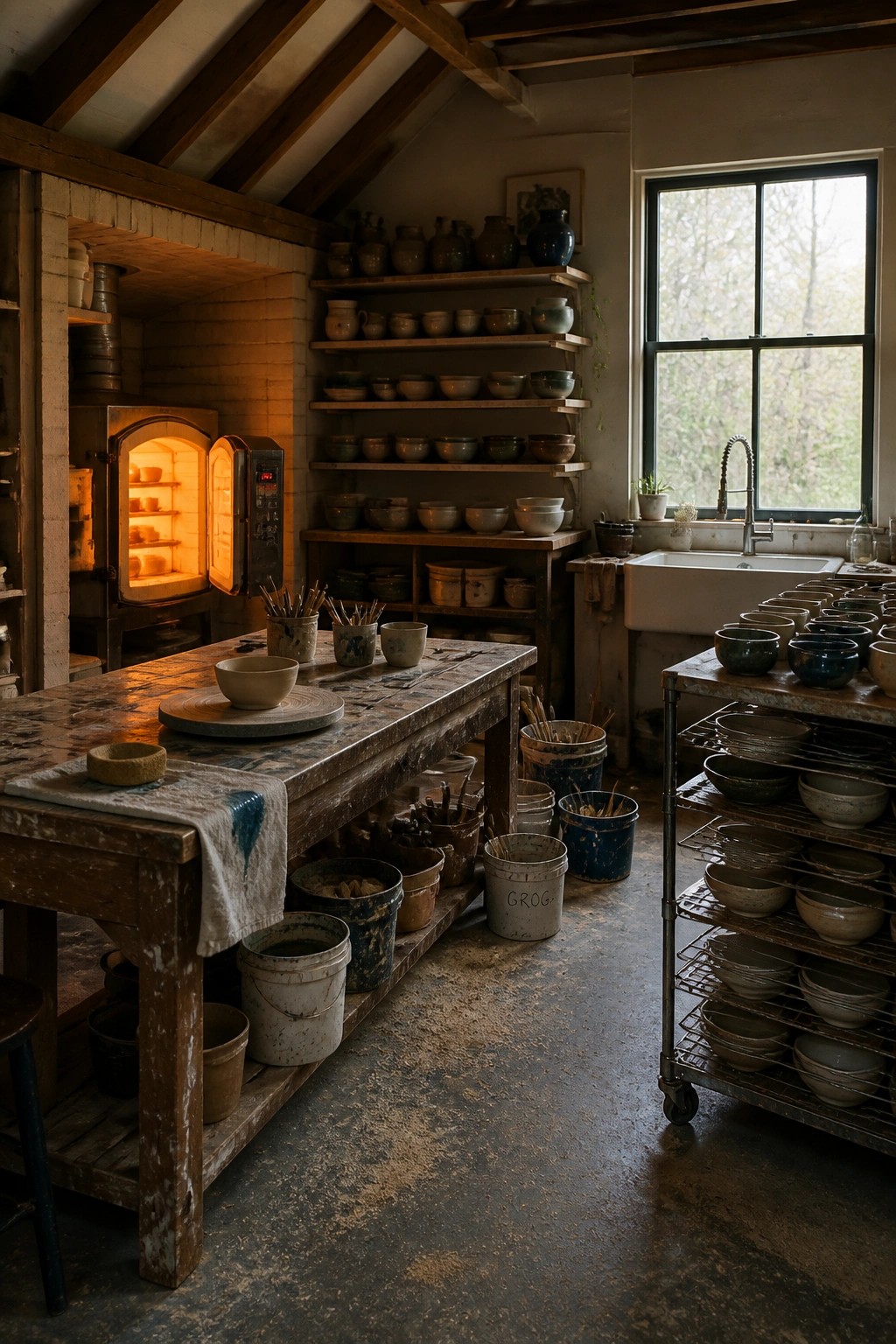
Open shelving works well in a work room because it lets you see your materials and pieces without opening doors or moving things around. In a space meant for long sessions, that visibility saves time and keeps the flow going when you need a certain tool or want to check on drying work.
This approach suits studios or hobby rooms where projects stay out for days at a time. Use sturdy wooden shelves for heavier items and add a rolling rack for pieces that need to move between stations. Just leave enough space between rows so nothing gets crowded.
Built-In Shelving Under Stairs For Work Nooks

A small work area fits neatly under the stairs when you add built-in shelves for storage and a simple desk surface. This layout keeps supplies close without crowding the room, which helps during long sessions when you need easy access to books and materials.
It works best in homes where space is limited but you still want a defined spot to focus. Keep the desk narrow and add a comfortable chair so the area feels usable rather than cramped.
Central Work Table For Better Flow
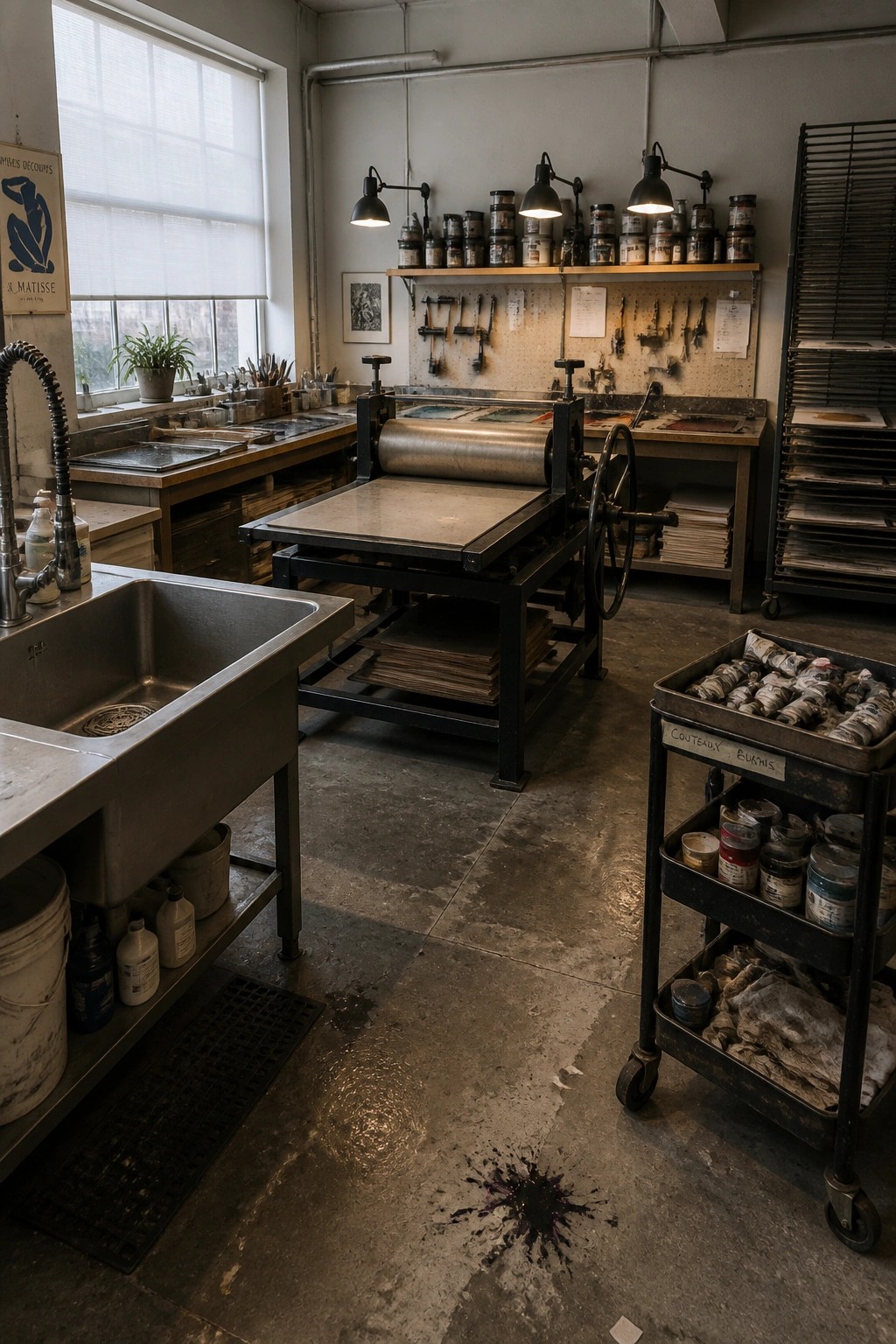
A big central table or press gives you room to move around the project without constantly shifting things out of the way. In a space meant for long hours, that simple layout keeps supplies and tools close while the main work stays front and center.
This setup works best in studios or workshops where the process gets messy. Keep a sink or utility area on one side and open storage on the other so you can clean up or grab materials without leaving the main station.
Add A Lounge Chair For Long Sessions
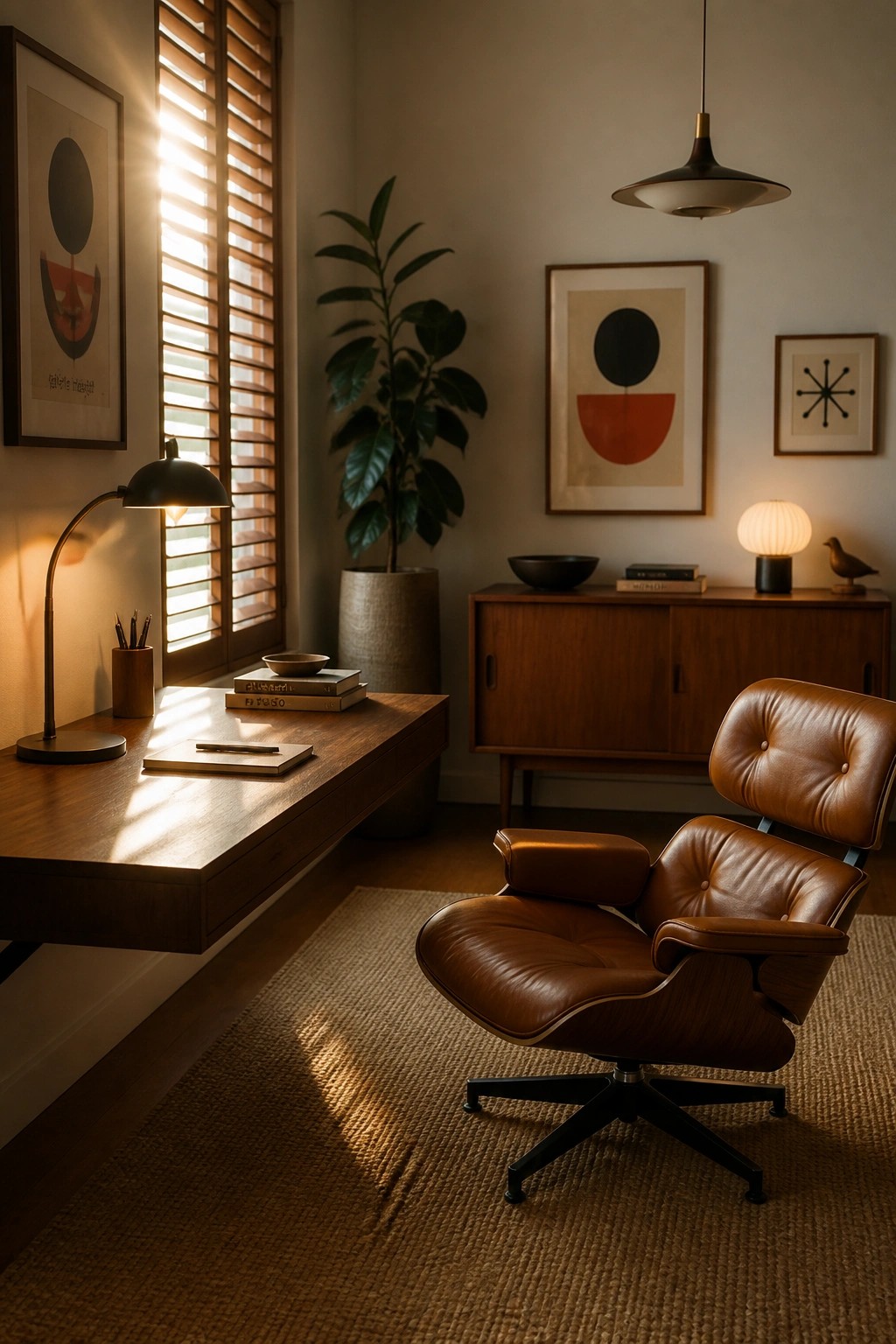
Many work rooms focus only on the desk and task chair, but adding a separate lounge chair gives you a place to shift positions during long creative stretches. It helps prevent stiffness and lets you move into a more relaxed posture when you need to think through ideas or review notes.
Place the chair near the desk in a spot with good natural light so it feels like part of the same workspace rather than an afterthought. This setup works especially well in smaller rooms where you want flexibility without adding more furniture than necessary.
A Large Workbench With Storage Below
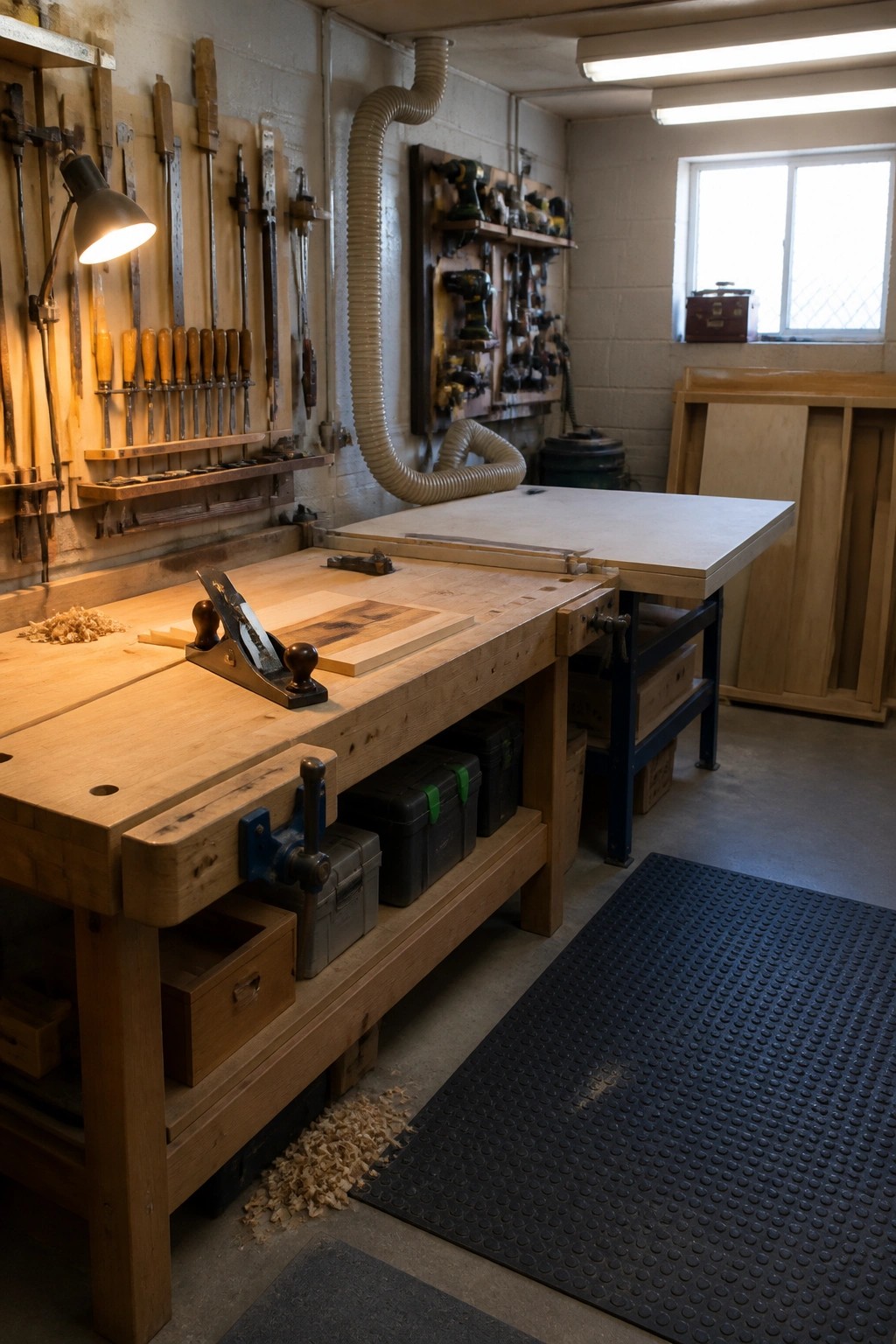
A big wooden workbench gives you room to spread out and stay focused during long sessions. The solid top holds up to heavy work, while drawers and open shelves underneath keep supplies close without cluttering the surface.
This setup works best in a dedicated room where you can leave projects out overnight. Place it in the center or along a wall with good lighting so you can move around it freely. Keep the surrounding floor clear for easy sweeping.
Adding A Piano To Your Work Room
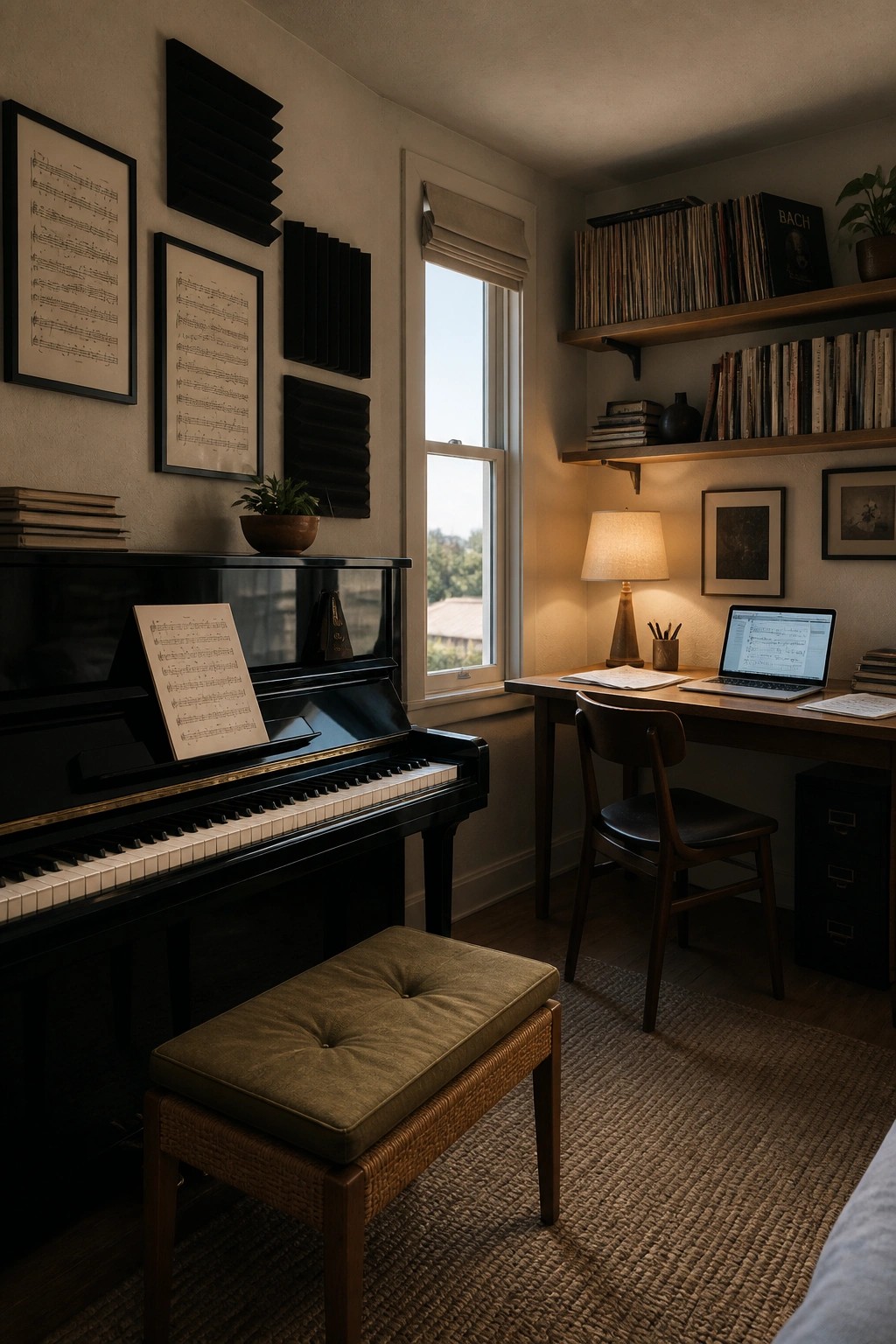
A piano in the work room gives you an easy way to step away from the desk without breaking your focus entirely. Many people find that switching to music for a few minutes helps reset their mind during long stretches of creative work.
Place the piano where you can reach it quickly but still keep the main desk area clear. This setup works best in a room you already use for composing or writing, and it helps if you keep sheet music and a bench ready so the switch feels natural.
Labeled Storage Bins Keep Supplies Within Reach
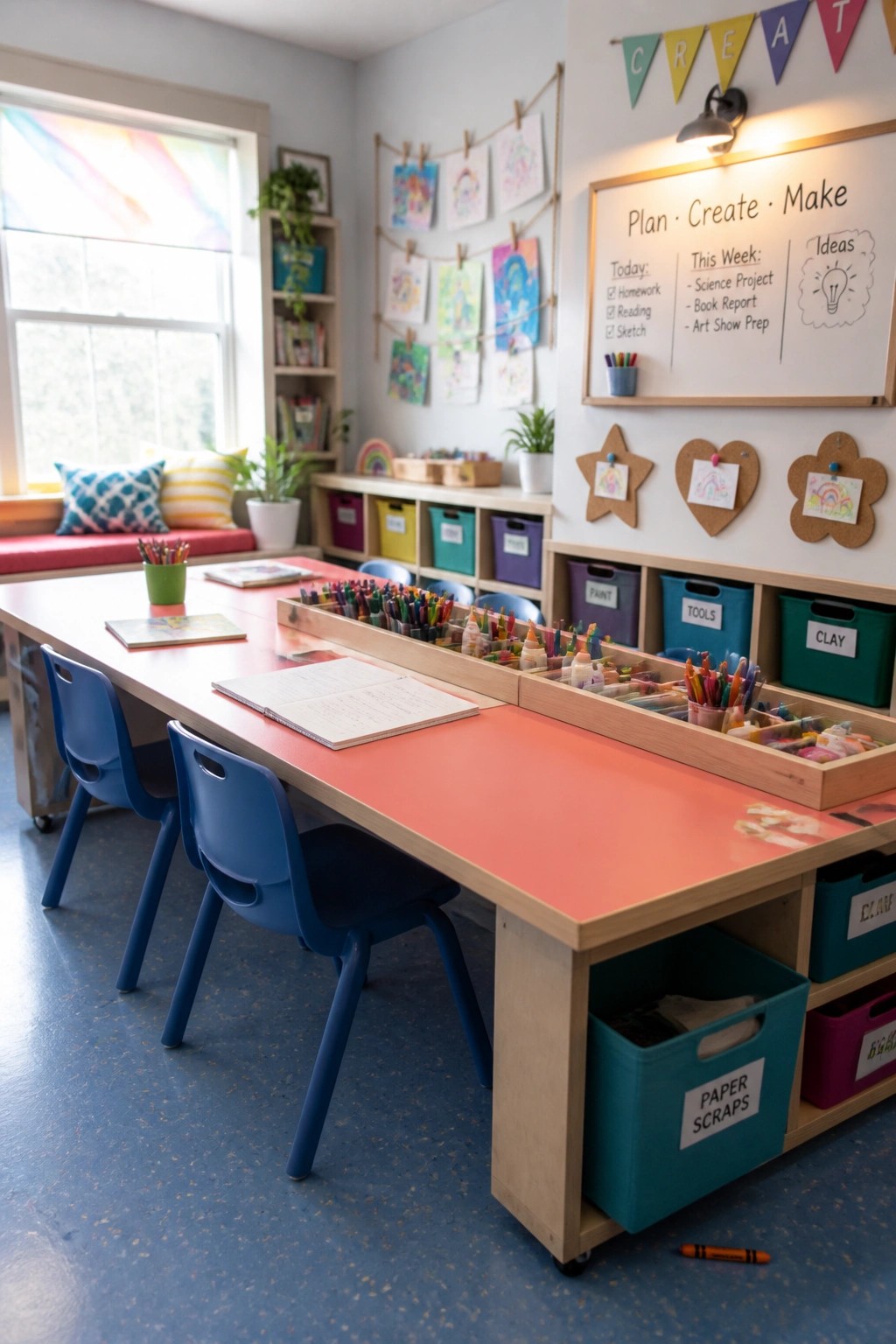
A long work table works better when storage sits right beside it instead of across the room. Labeled bins let you grab what you need without digging through piles, which helps a session stay focused instead of turning into a search.
This setup suits a shared family space or a room used by kids who work on their own. Keep the bins at a reachable height, use clear words on the labels, and leave a little room inside each one so things do not spill out when the bins get moved often.
Built-In Bookshelves Keep Supplies Close At Hand

Built-in bookshelves turn a workroom into a space where everything stays within reach. They hold books, files, and reference materials without taking up floor space, which helps during long sessions when you do not want to keep getting up.
This setup works best in rooms that can handle custom cabinetry along one or two walls. It suits homes where the work area needs to double as a library or storage zone, though it does require enough depth in the room so the desk does not feel cramped.
Open Wall Storage Keeps Supplies Within Reach

Many work rooms feel more practical when supplies stay visible instead of tucked away in drawers. A simple pegboard paired with shallow shelves holds jars, tools, and small containers right at eye level so nothing gets lost during long sessions.
This approach works best in rooms that double as both desk space and project areas. It suits homes where the user needs quick access to different materials without clearing the main work surface every time.
Frequently Asked Questions
Q: How can I stop my eyes from getting tired during long work sessions?
A: Position a soft lamp behind your monitor so it lights the room evenly. This cuts down on screen glare without needing harsh overhead lights. Try adjusting it as the day goes on to match natural light changes.
Q: My small space feels cramped with all the gear. What helps?
A: Keep only the tools you use daily on the desk. Store the rest nearby on easy shelves.
Q: Should I add music or sounds to the room for better focus?
A: Play low background tracks that match your mood. Many creators find it helps block out distractions without pulling attention away. Test a few options until you find what keeps you in the zone.
