
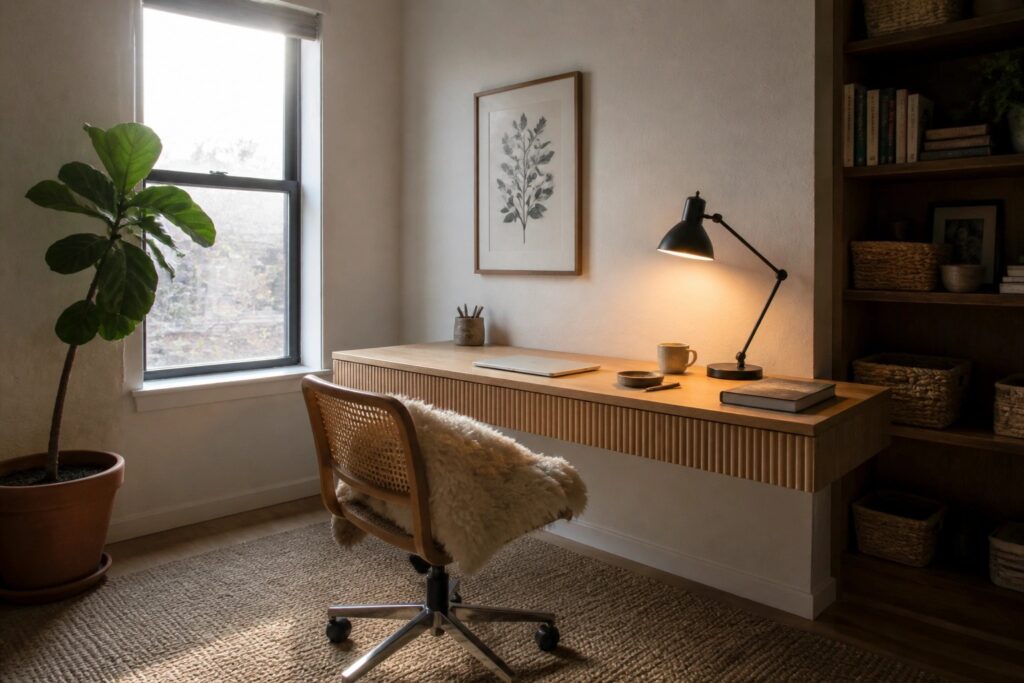
Working in a space all day makes it clear how much the materials affect both focus and mood.
I have seen offices where wood elements tie everything together without needing extra decoration.
Warm neutrals tend to soften the edges of a room that might otherwise feel too rigid for long hours.
Small details like grain patterns or subtle texture shifts can change the whole feel once you live with them.
One idea from this group stood out when I tested it in my own setup.
Floating Desks Keep Small Offices Feeling Open
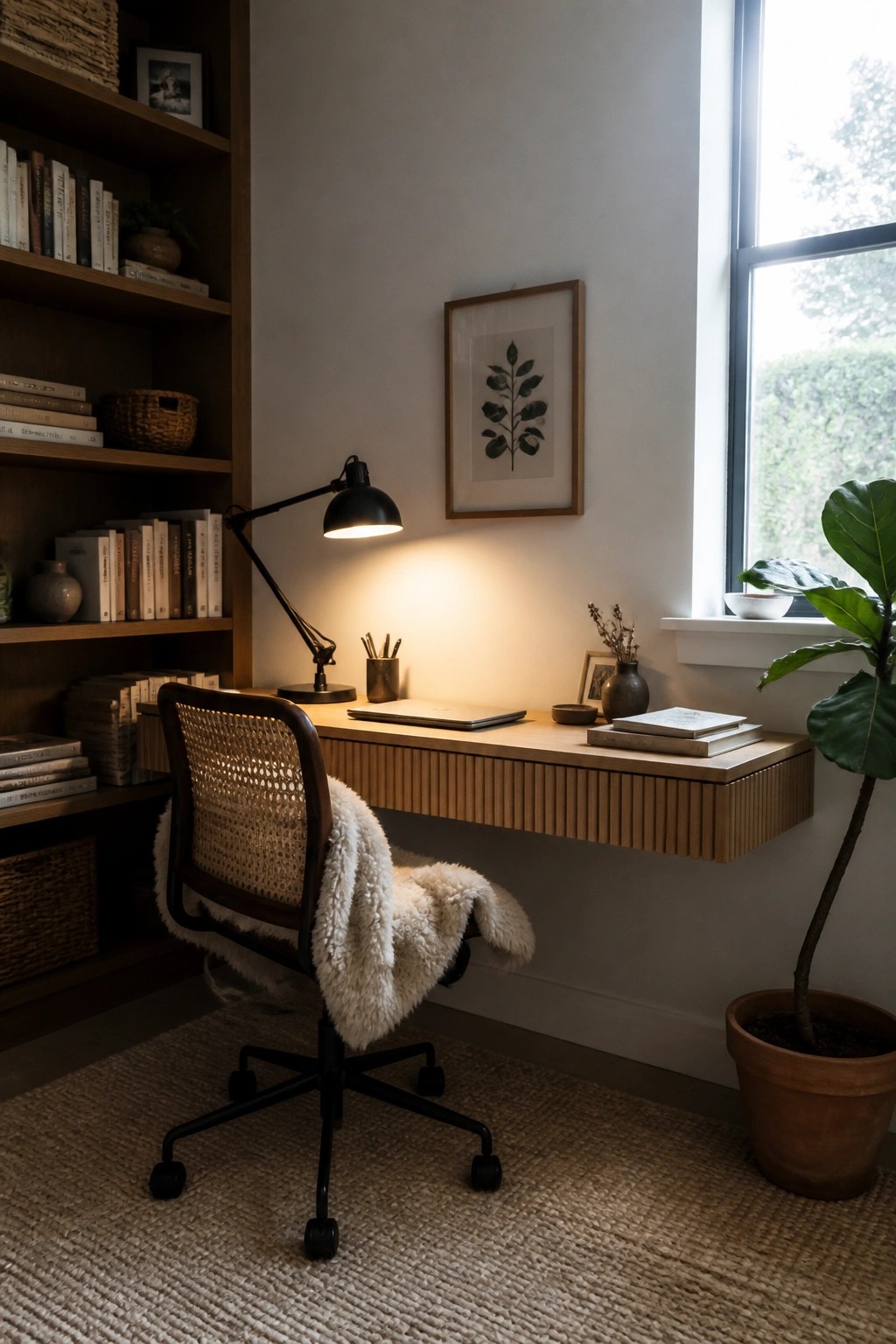
A floating desk can make a big difference in a compact office because it leaves the floor clear and avoids the heavy look of a traditional desk with legs. This setup works especially well when you want the room to feel calm and uncluttered while still having enough surface space for daily work.
It pairs naturally with simple wall shelves for books and supplies. The look suits homes that already use wood tones and warm neutrals, and it works best in corners or along one wall where you need the rest of the room to stay usable.
A Wood Desk in Warm Neutrals
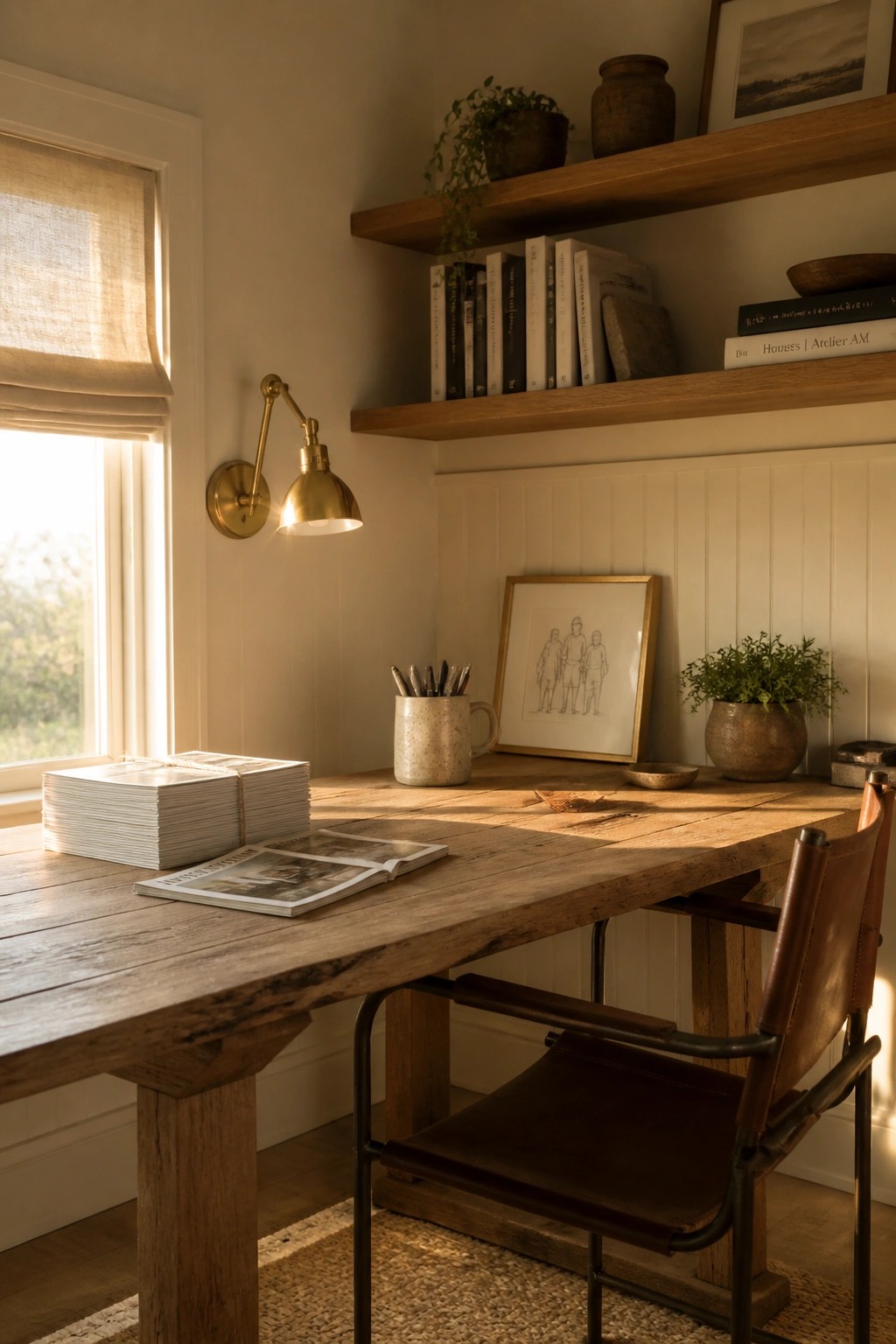
A solid wood desk gives an office a calm base that feels finished without extra layers. The grain and tone do most of the work, so the rest of the room can stay simple with light walls and soft fabrics.
This approach suits smaller rooms or corner spots where you want the desk to anchor the space. Place it near a window for natural light, add a few books or a plant on a shelf above, and keep other pieces minimal so the wood stays the focus.
Built-In Shelving In A Home Office
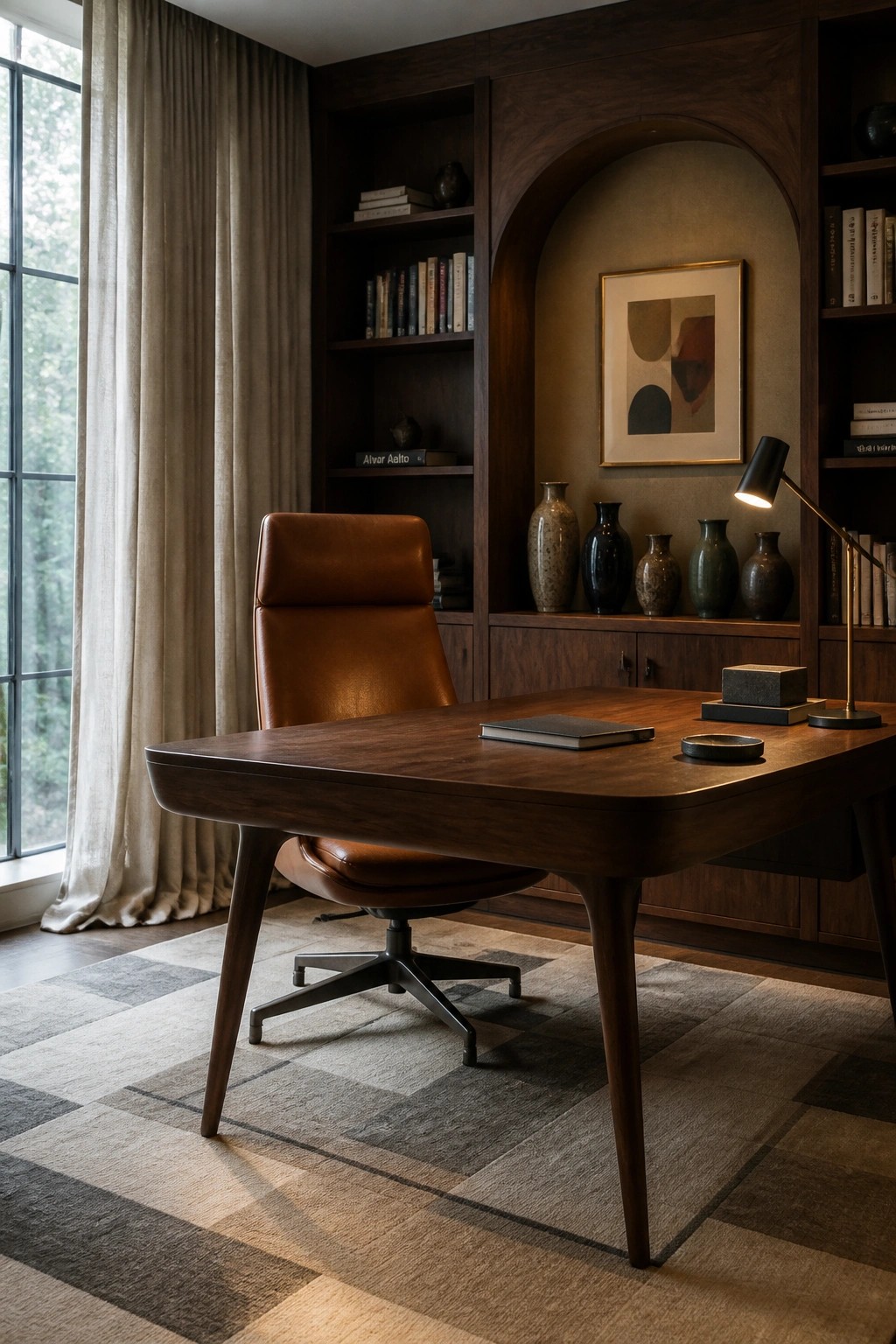
Built-in shelving gives an office a finished look while keeping everything in reach. It works well when you want storage that does not crowd the room or compete with the desk.
Match the wood tone to your desk so the pieces feel connected rather than added on later. Use the shelves for books you actually reach for and leave a little open space for a few objects that keep the wall from feeling too full.
Wood Desk with Woven Chair for Everyday Use

A wooden desk paired with a woven chair gives an office a grounded feel that still stays light. The natural textures keep the space from looking too formal, and the warm tone of the wood works nicely against softer wall colors.
This combination suits smaller rooms or spaces used for long stretches of work. Place the chair on a simple rug so the wood and weave can stand out without extra layers around them.
A Substantial Wood Desk In The Office
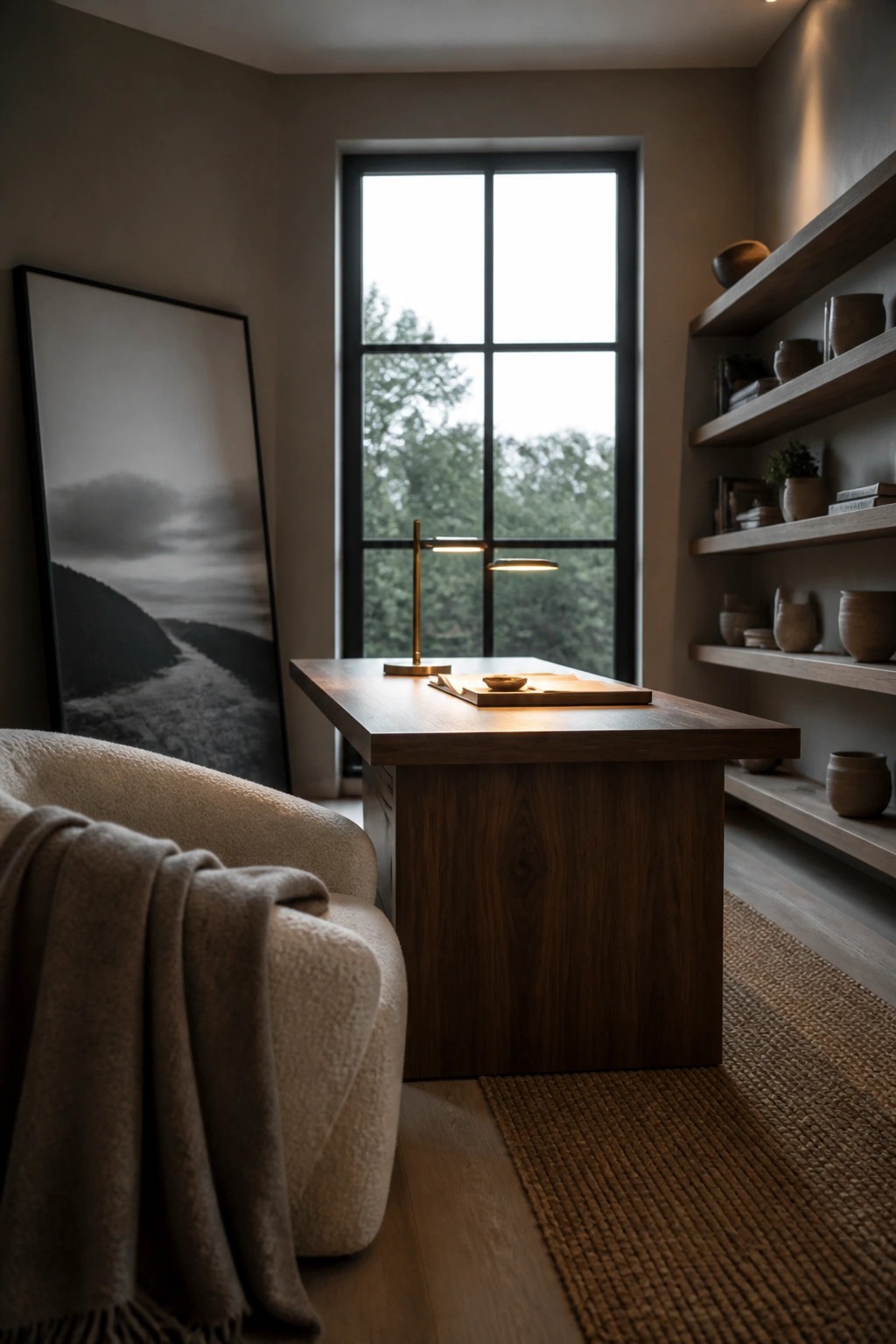
A solid wood desk brings weight and warmth to an otherwise simple neutral office. It stands out without needing much else around it, especially when the rest of the room stays quiet in tone and texture.
This works best in smaller rooms or spaces that need one clear focal point for work. Keep the finish matte and the shape straightforward so the wood feels natural rather than styled. Pair it with light walls and a few collected items on open shelves if you want the room to feel personal but still calm.
A Solid Wood Desk for Everyday Warmth
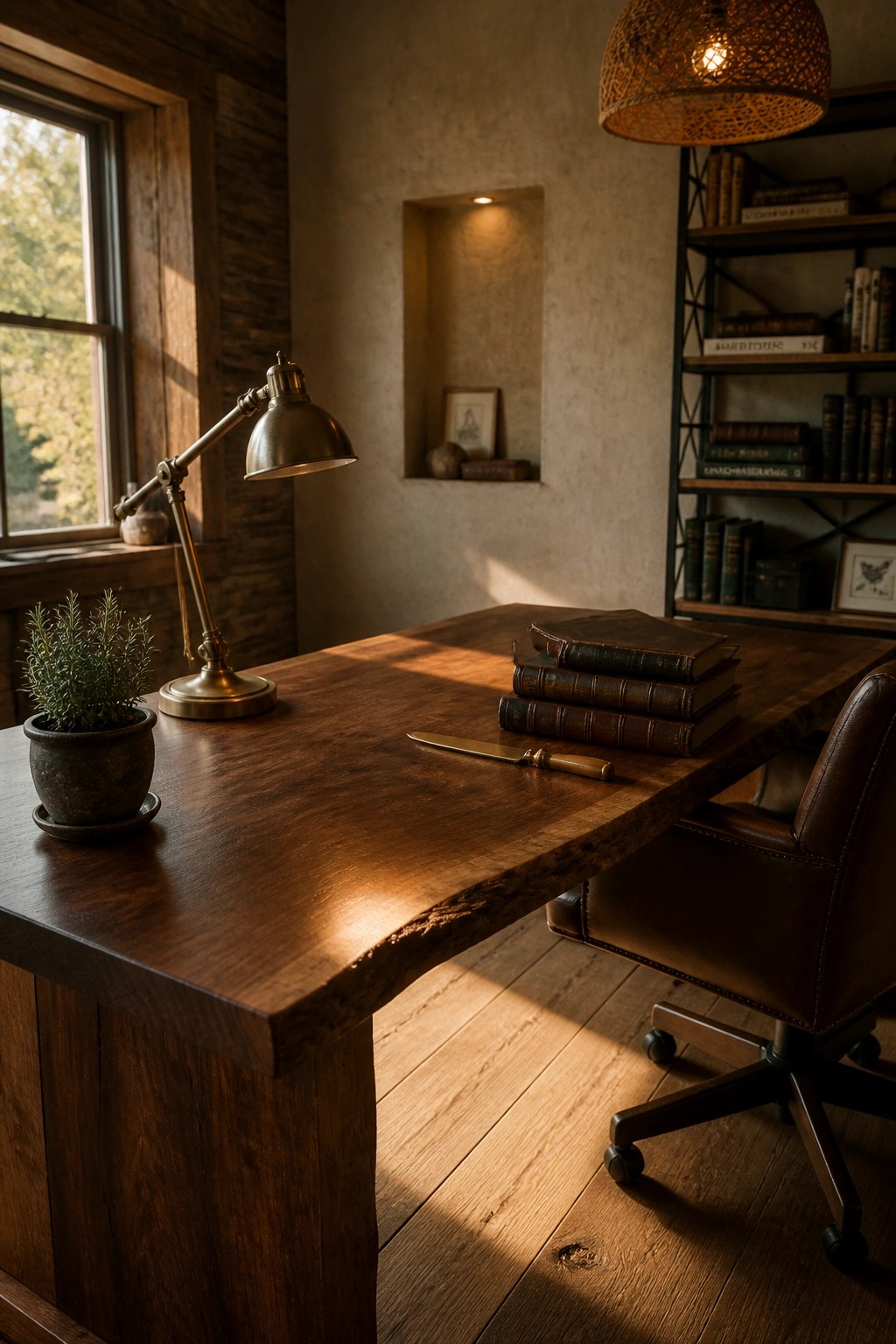
A heavy wooden desk gives an office a steady, grounded feel that lighter furniture often lacks. It works especially well in rooms kept to warm neutrals because the wood itself supplies most of the color and texture.
Set the desk where it can catch natural light and keep the surrounding pieces simple. A leather chair and a few books are usually enough. This approach suits homes that already lean on wood tones and want the office to match rather than stand apart.
Desk And Window Bench Combinations
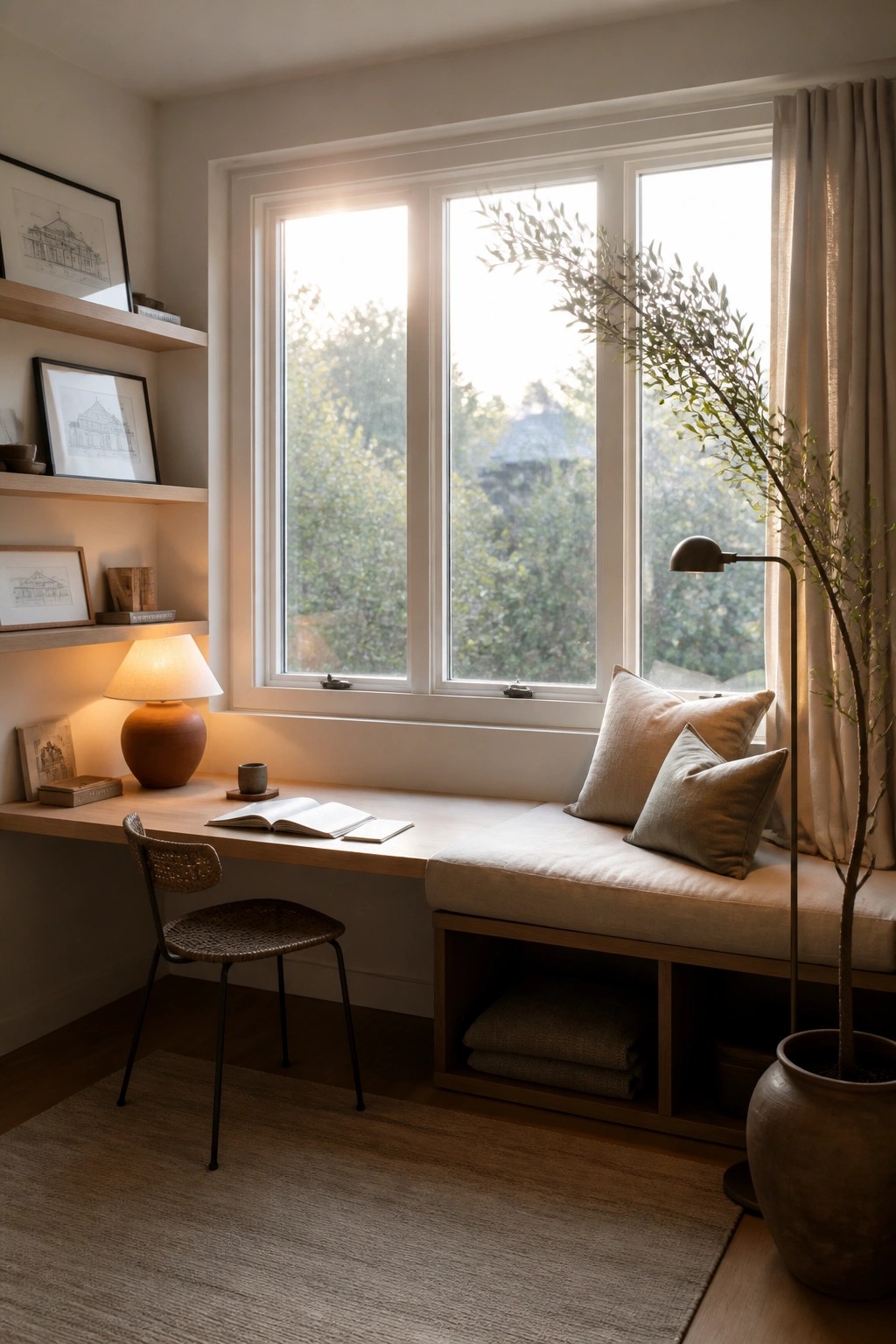
Running a desk right up to a window bench is a simple way to gain extra seating without crowding the room. The bench adds a place to sit or stretch out while the wood surfaces tie the whole area together in a quiet, natural way.
This layout suits smaller offices or spare rooms where you need the space to work harder. Use the bench storage for blankets or files, and keep cushions in soft tones so the area stays calm during long work hours.
Built-In Shelving Extends Desk Storage

A built-in shelving unit next to the desk adds useful storage without taking up extra floor space. It keeps books, baskets, and supplies close at hand while the long work surface stays open for daily tasks. The wood tones tie everything together and give the room a calm, finished look.
This approach suits smaller offices or rooms that need to serve more than one purpose. It works best when the shelving matches the desk material so the whole area feels connected rather than pieced together.
Roll Top Desks Keep Things Tidy Without Sacrificing Style
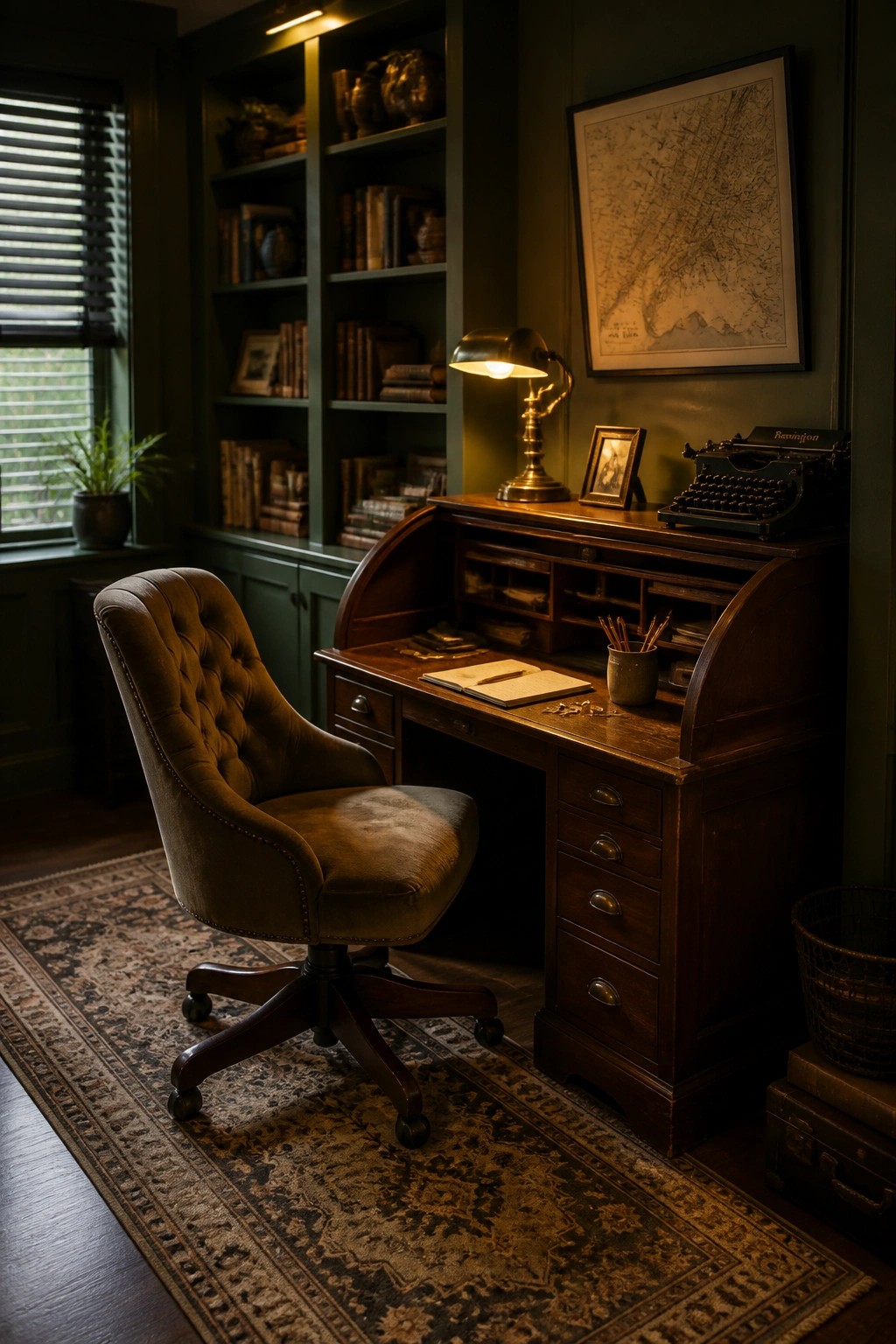
A roll top desk gives you a place to close up papers and supplies at the end of the day. The wood surface and built in slots fit right into an office that already uses warm tones and natural materials, so the room stays calm instead of cluttered.
Place one against a wall with open shelves nearby and a simple chair in front. It works best in smaller offices or rooms that need to feel finished when guests stop by. Avoid oversize versions if the space is tight.
Choosing a Drafting Table for the Main Desk

A large wooden drafting table makes a strong choice for an attic office because it offers a generous work surface that fits neatly under the sloped ceiling. The tilt helps with drawing or reviewing plans, and the solid wood brings warmth that matches the neutral walls and floor.
This setup works best in smaller or tucked-away rooms where you need one substantial piece rather than several smaller ones. Keep the rest of the space light with a simple stool and minimal storage so the table stays the focus without crowding the room.
Fitting A Desk Under The Stairs
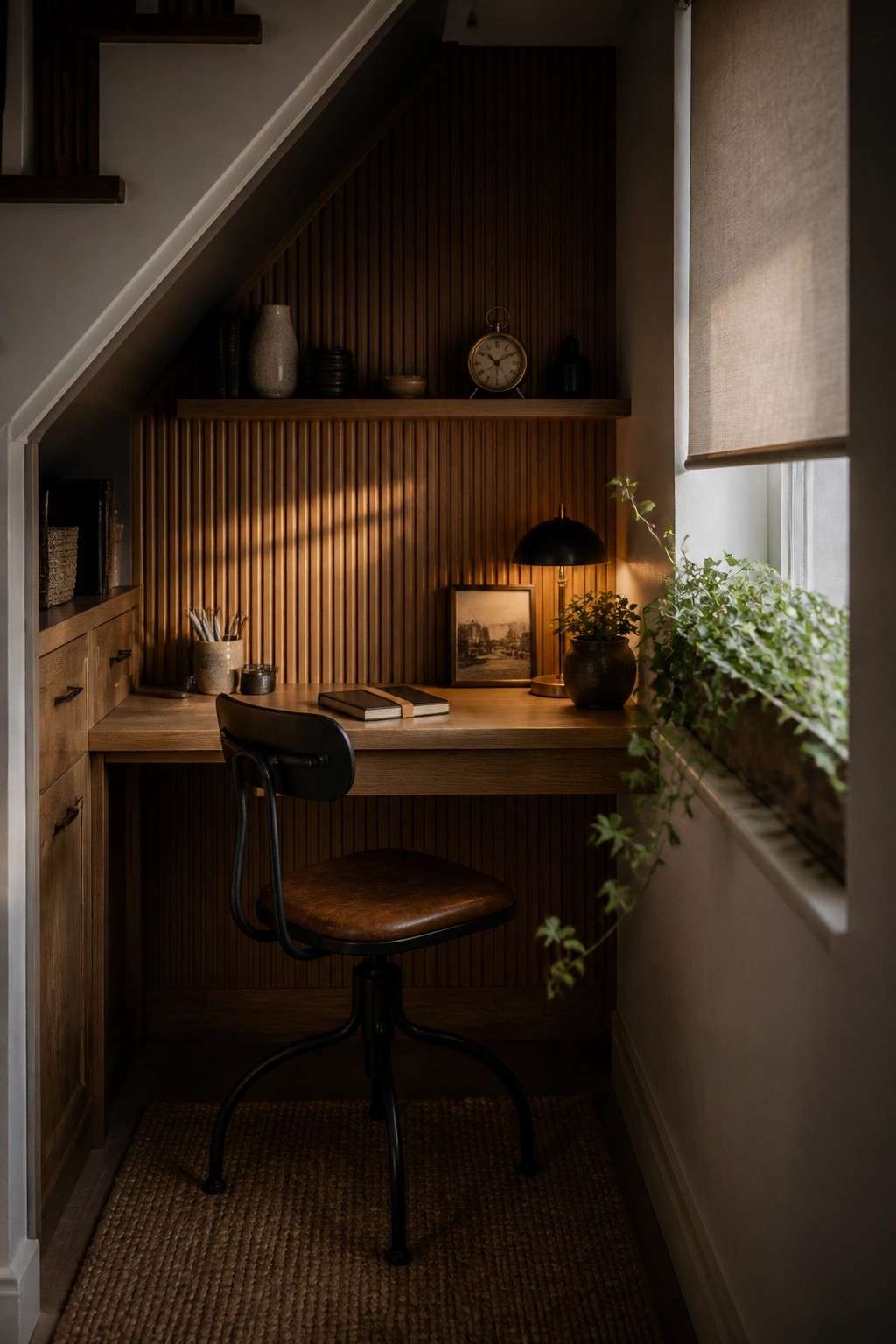
Many homes end up with awkward space under the stairs that never gets used well. Turning that spot into a simple wooden desk keeps the area functional and still feels like part of the room rather than an afterthought.
This works best in smaller homes or houses where a full office is not practical. Keep the materials warm and limited so the nook stays calm and does not feel squeezed.
Low Wooden Desks With Floor Seating

A low wooden desk paired with floor cushions creates a workspace that feels grounded and easy to settle into. The warm wood tones blend naturally with neutral walls and soft flooring, which helps the whole room stay calm without looking empty.
This approach suits smaller rooms or homes that already favor simple layouts. Keep accessories minimal so the wood remains the main feature, and choose a cushion thick enough for longer sitting periods.
Dark Wood Desks in Warm Neutral Offices
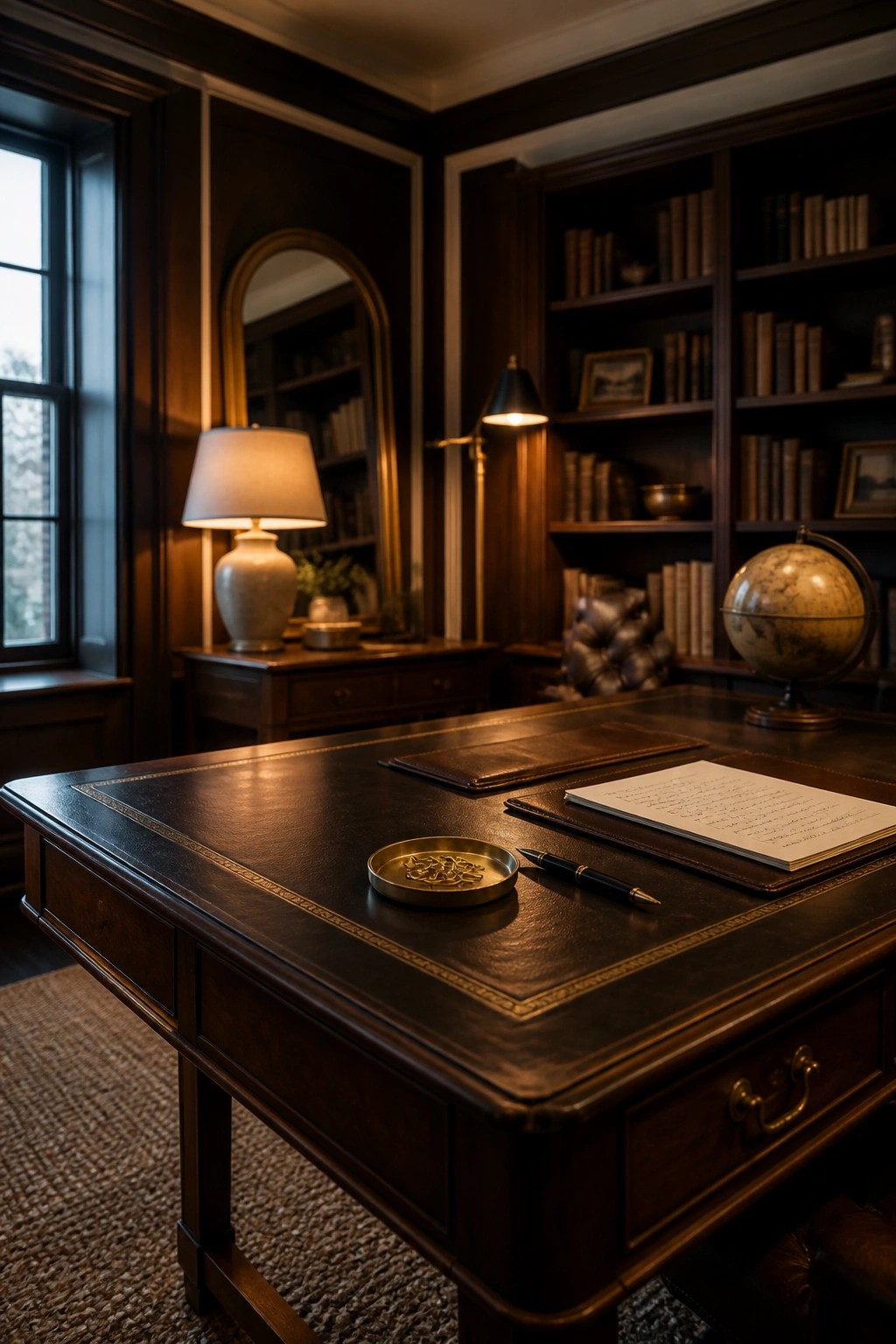
A dark wood desk brings weight and presence to an office without needing much else around it. The rich finish works especially well with built-in shelves and simple leather pieces, since the wood itself sets a calm, established tone that lighter furniture rarely achieves.
This setup suits homes with deeper wall colors or older architecture where you want the room to feel settled rather than bright and open. Stick to warm neutrals on the walls and floor so the desk stays the main feature instead of competing with too many other dark tones.
Built-In Desks With Display Boards

A built-in counter gives you a steady workspace without crowding the room. Cabinets above and below keep supplies tucked away while the long surface handles daily tasks like paperwork or school projects.
Add a corkboard on the wall behind the seating so notes and artwork stay in sight but off the desk. This approach fits homes that need a shared spot rather than a separate office room. Stick to wood tones and soft neutrals to keep the area from feeling cluttered.
Built-In Shelving With Warm Lighting
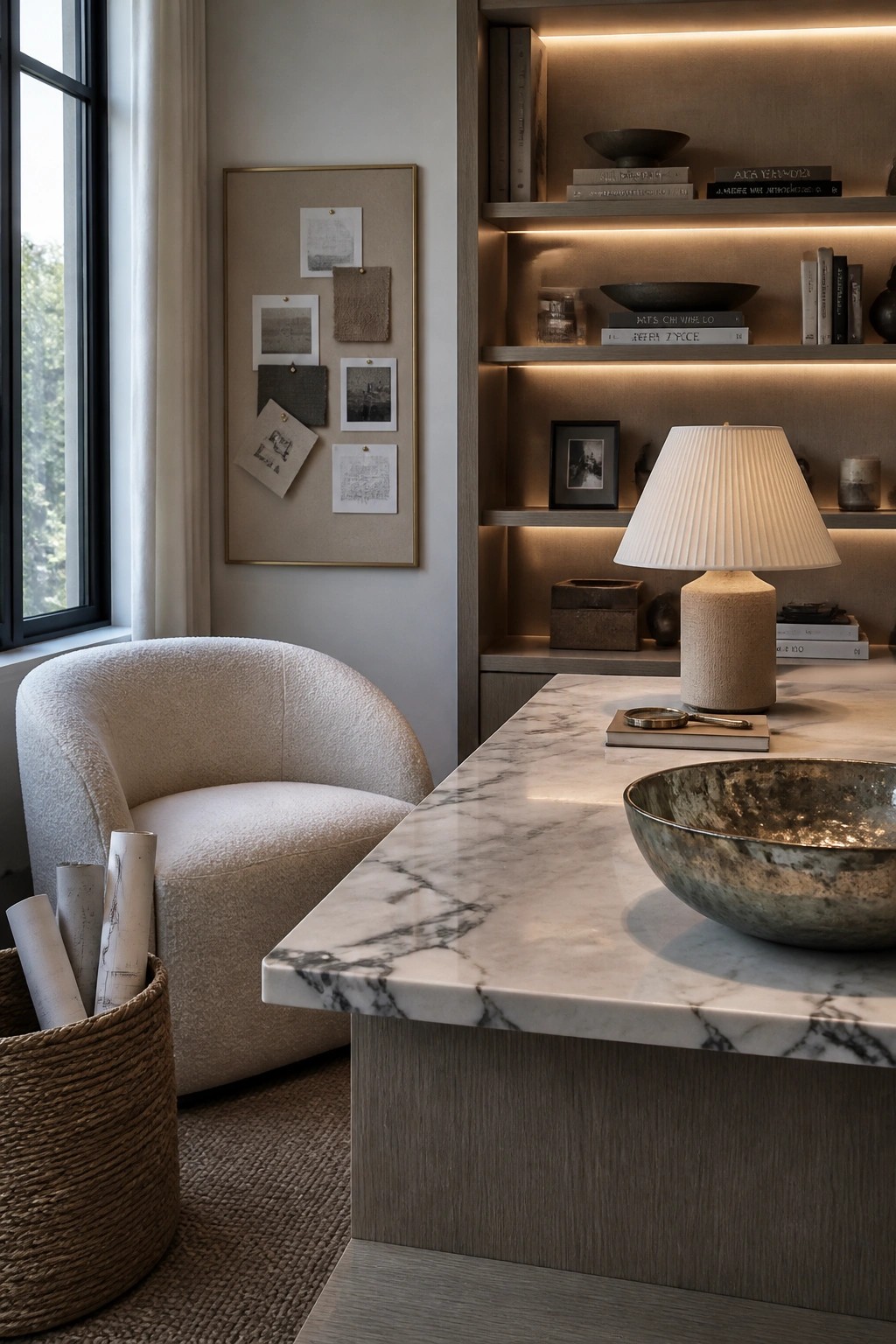
Built-in shelves give an office a clean, settled look while adding storage that actually feels useful. The built-in lighting turns them into a quiet focal point without needing extra lamps or clutter on the desk.
This setup works best in rooms with wood tones and soft neutrals, where the light can bounce gently off the surfaces. Keep the shelves fairly open so they do not feel heavy, and use them for a mix of books and a few simple objects rather than filling every inch.
A Solid Wood Desk Sets the Tone
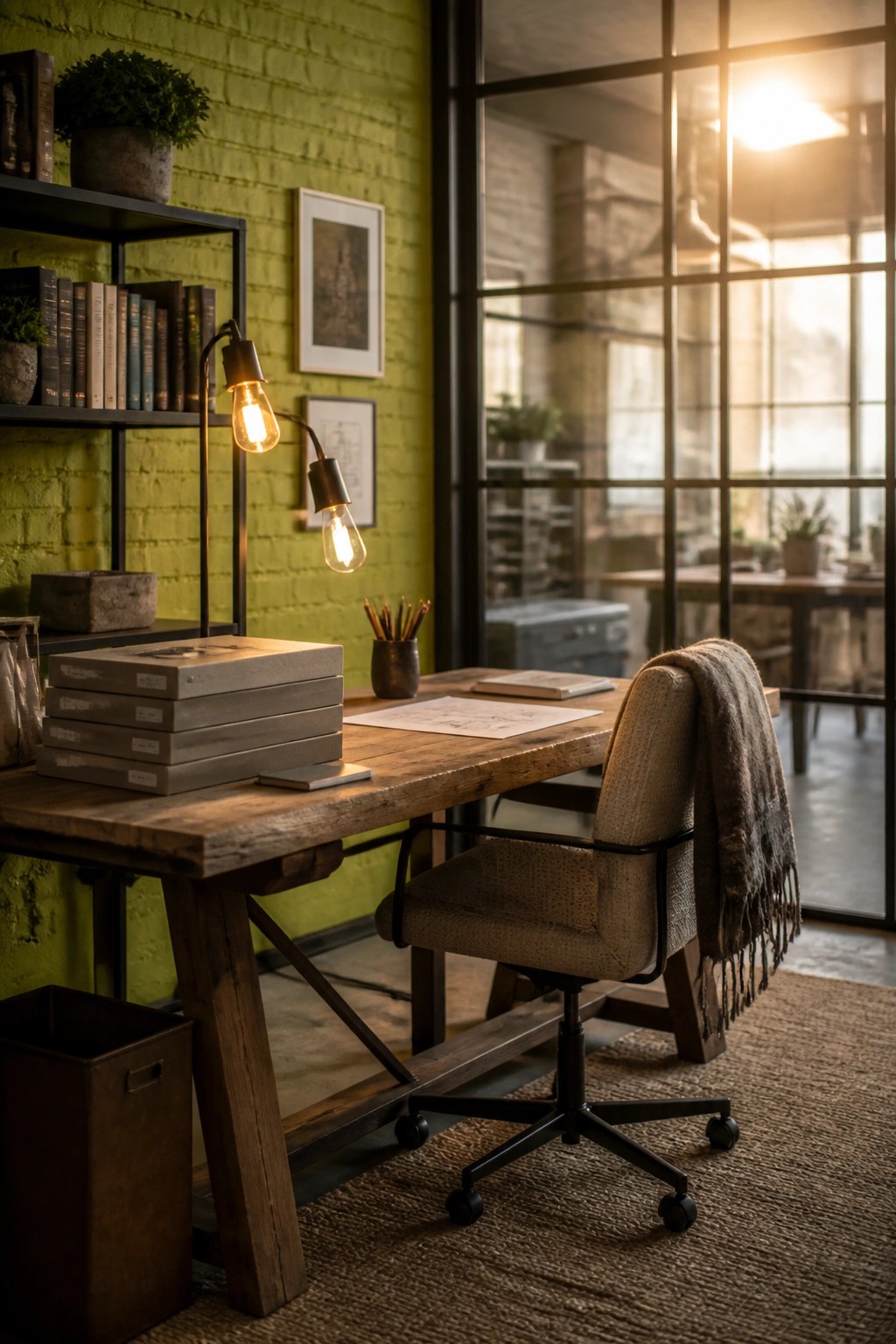
A big wood desk gives an office real presence without needing much else. The grain and warm color pull the room together and make neutral fabrics and simple lighting feel more finished.
This works best in smaller home offices where you want one main piece to do the heavy work. Keep the walls and shelves fairly plain so the desk stays the focus, and add just one or two upholstered pieces in matching tones.
A Simple Desk in the Bedroom

A desk in the bedroom works well when it stays light and simple. Light wood keeps the space from feeling crowded, and neutral fabrics on the chair help the whole setup blend in rather than stand out. This approach suits smaller homes where a separate office is not possible.
Place the desk near a window for natural light and add a few open shelves nearby for books and papers. Keep the colors soft so the room still feels like a place to rest at the end of the day. Avoid heavy storage pieces that can make the space feel like a full office.
Add A Daybed To Your Office

A daybed gives an office a place to rest without turning the room into a full bedroom. It works especially well when you need somewhere to read or think away from the desk.
This idea suits smaller rooms that need to stay useful for work but still feel comfortable. Pair the daybed with simple wood storage above it so the space stays tidy and the warm neutrals keep everything calm.
Pegboard Storage Keeps Tools Within Reach
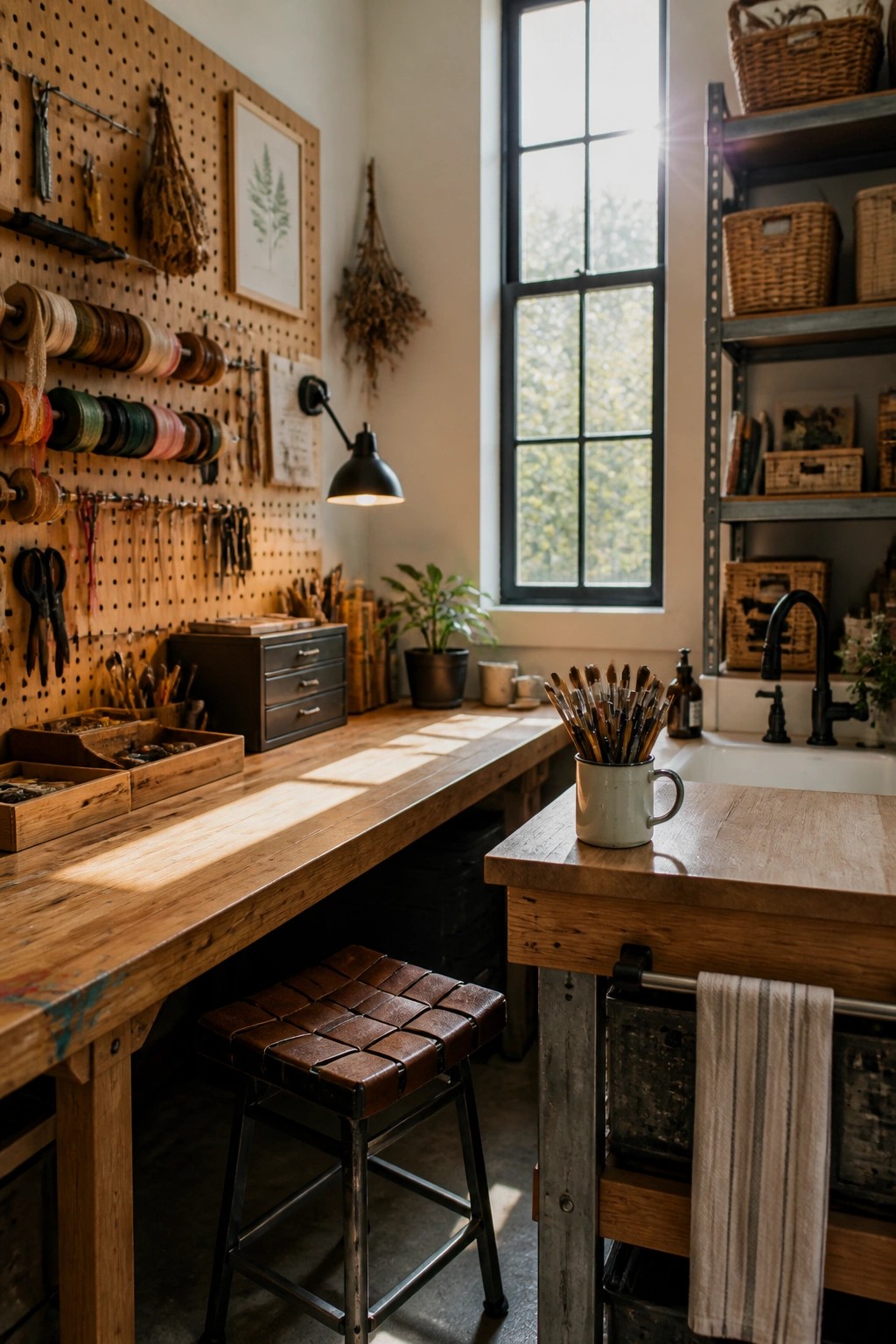
A pegboard wall turns a simple workspace into something more practical. It keeps tools, supplies, and small items visible and easy to grab without digging through drawers. The wood tones in the desk and shelves help the setup feel warm instead of industrial.
Mount a pegboard above a long work surface in a home office or craft room. Use basic hooks and a few small shelves so the wall stays useful rather than crowded. This works best in spaces where you need frequent access to different supplies.
Wood Desk with Woven Leather Seating

A wooden desk paired with a woven leather chair gives an office a grounded, comfortable feel. The natural materials keep the space from looking too stark while still staying practical for daily work.
This setup works best in smaller rooms or quiet corners where you want warmth without clutter. Keep the rest of the furnishings simple and let the wood and leather carry the look.
Desk Under a Window

Placing a desk directly under a window brings steady natural light into the workspace without taking up extra floor area. The wood surface picks up the light and keeps the room feeling open even when the desk is fairly deep.
This works best in smaller rooms or apartments where every bit of brightness counts. Keep the top mostly clear and add a simple lamp only for darker hours so the window stays the main source of light.
Dual Desks In Light Wood

Many people find that two separate desks work better than one large table when two people share an office. The matching light wood keeps the room feeling open and calm instead of crowded.
Place the desks across from each other near a row of windows so both spots get good natural light. Woven chairs and a few plants help the space feel softer without adding much extra furniture. This layout works especially well in homes that need one room to handle more than one workday.
Floating Shelves Keep the Desk Clear
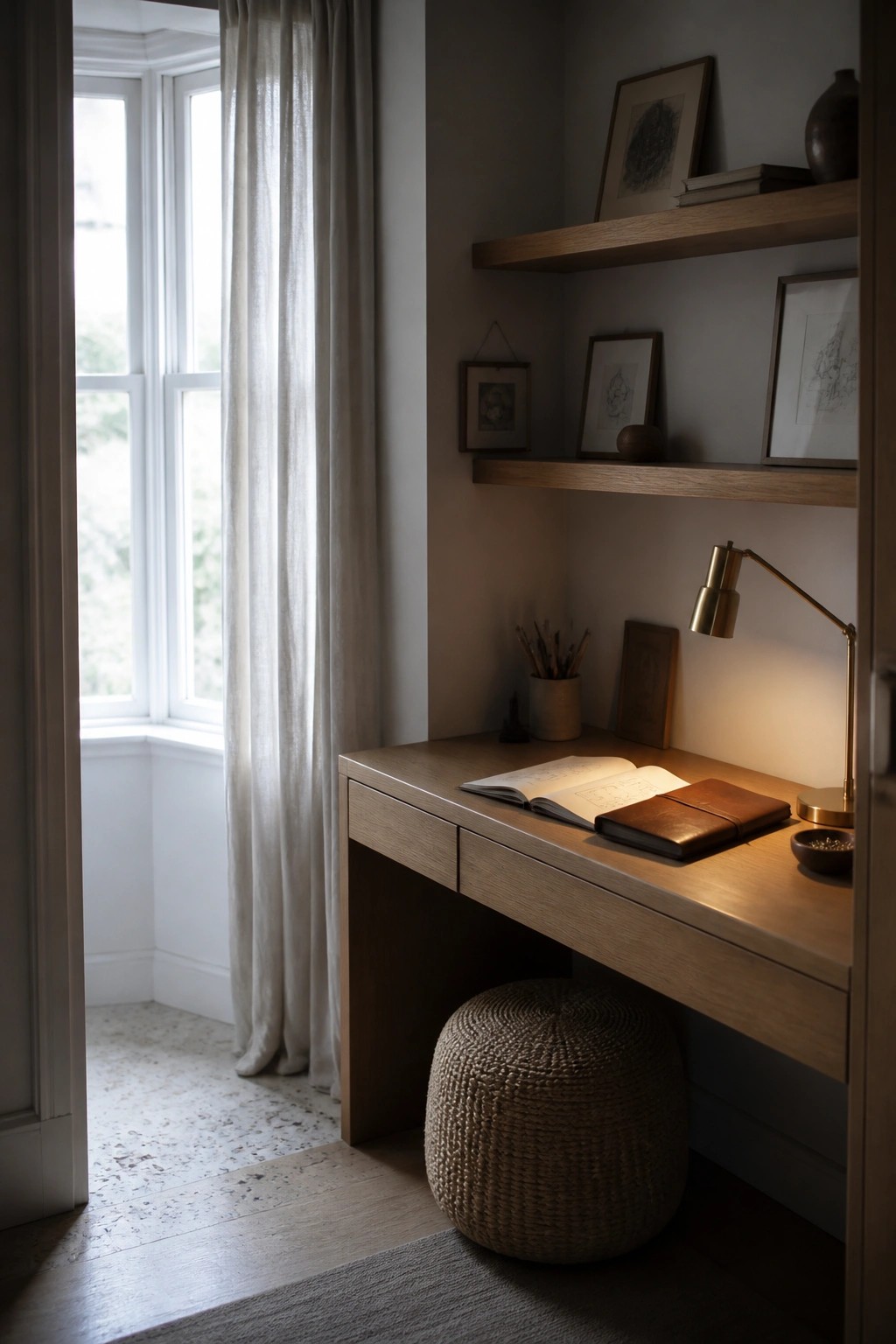
Floating shelves above a desk give you storage without crowding the floor or making the workspace feel boxed in. The wood ties in with the desk below, and the whole setup stays simple enough that the surface can actually be used for work instead of turning into a shelf extension.
This works best in smaller rooms or tight corners where you still need a place to keep books and a few objects handy. Stick to a couple of narrow shelves rather than loading them up, and the area stays open and easy to move around in.
Mount A Material Sample Board In Your Office
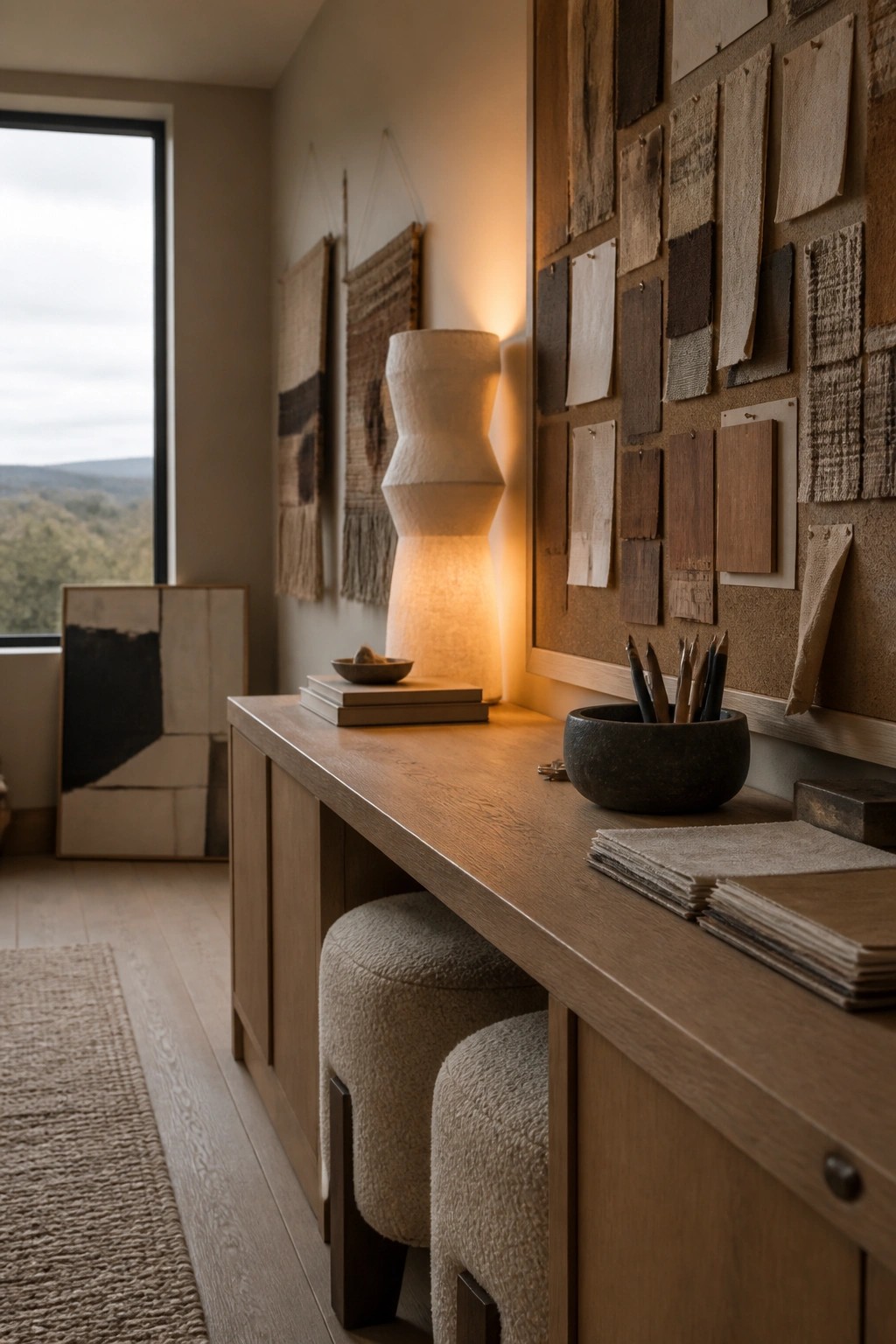
Many home offices benefit from keeping a material sample board close at hand. It gives you a quick way to check how wood tones, woven textures, and warm neutrals actually look together while you work.
This approach suits smaller spaces or rooms that double as offices. Pin samples directly above the desk so you can reach for them when choosing new pieces or rearranging what is already there.
Frequently Asked Questions
Q: How do I mix different wood tones without it looking messy? A: Start with one main wood as your base. Then bring in a second tone only in smaller pieces like a desk or shelves. Keep any third tone to a single accent if you must.
Q: What if my walls are already painted a cool gray? A: Warm it up with textiles in soft beige or taupe. Layer a couple of wool rugs or linen curtains to shift the feel. The wood pieces will tie everything together nicely.
Q: How can I keep the office from feeling too dark with all this wood? A: Add plenty of light sources. A floor lamp in one corner and a desk lamp with a white shade do the trick. Light fabrics on chairs help reflect brightness too.
