
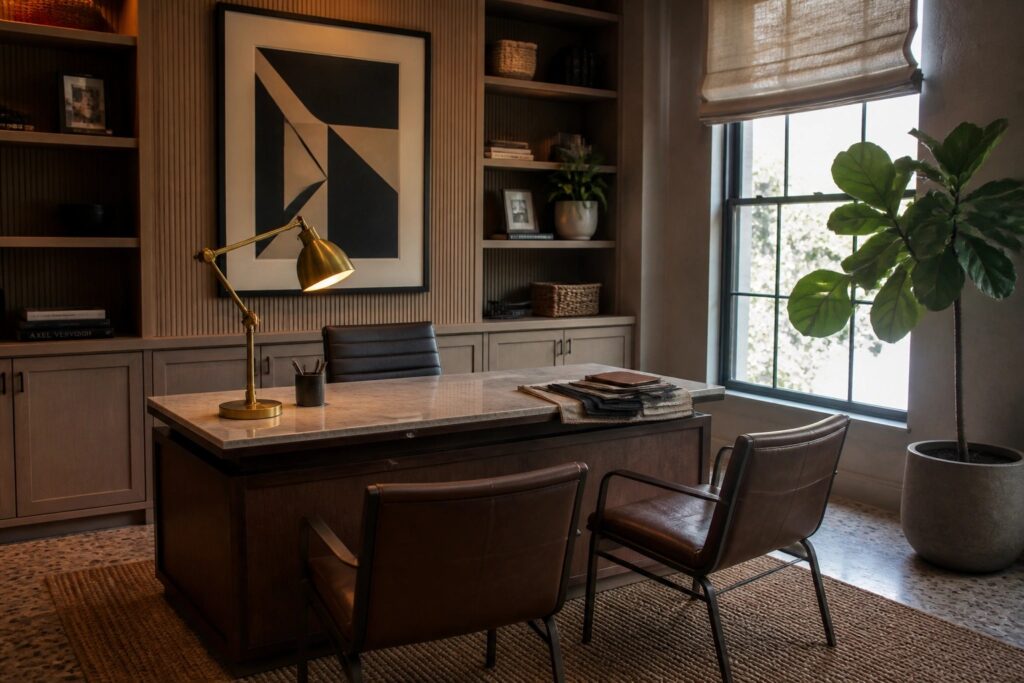
When I set up a workspace that clients will visit I think first about how the whole room needs to function for actual meetings rather than just looking neat in photos.
Furniture placement and lighting often decide whether the space feels like a professional area or simply a desk squeezed into a spare room.
I have noticed that the details clients pick up on right away are usually the ones that also make daily work easier like having enough surface space and a chair that does not creak during long conversations.
Over the years I have learned to test a few pieces in the actual room before committing because what looks balanced on paper can shift once the desk and storage are in place.
Layout always comes first.
Built-In Storage Behind the Desk
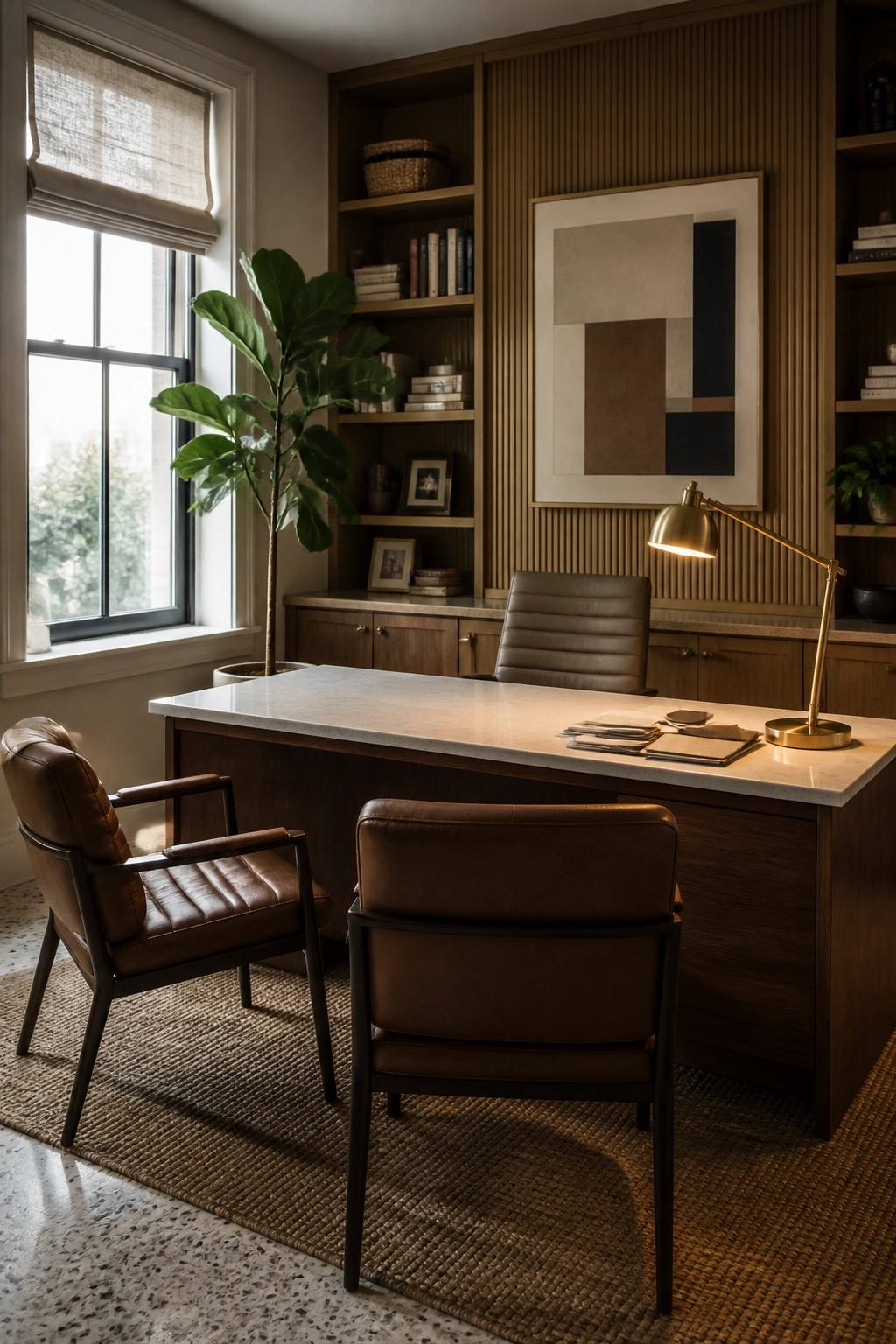
Built-ins work well in a home office because they give you plenty of room for files, books, and supplies without adding extra furniture that can crowd the space. The mix of open shelves and closed cabinets keeps things looking neat while still letting you display a few items that make the room feel personal.
This setup works best in rooms where you meet with clients regularly. Place the built-ins along the main wall so the desk sits in front of them. Keep the colors simple and stick to one wood tone so the whole area feels calm and put together.
Add a Window Seat for Client Seating
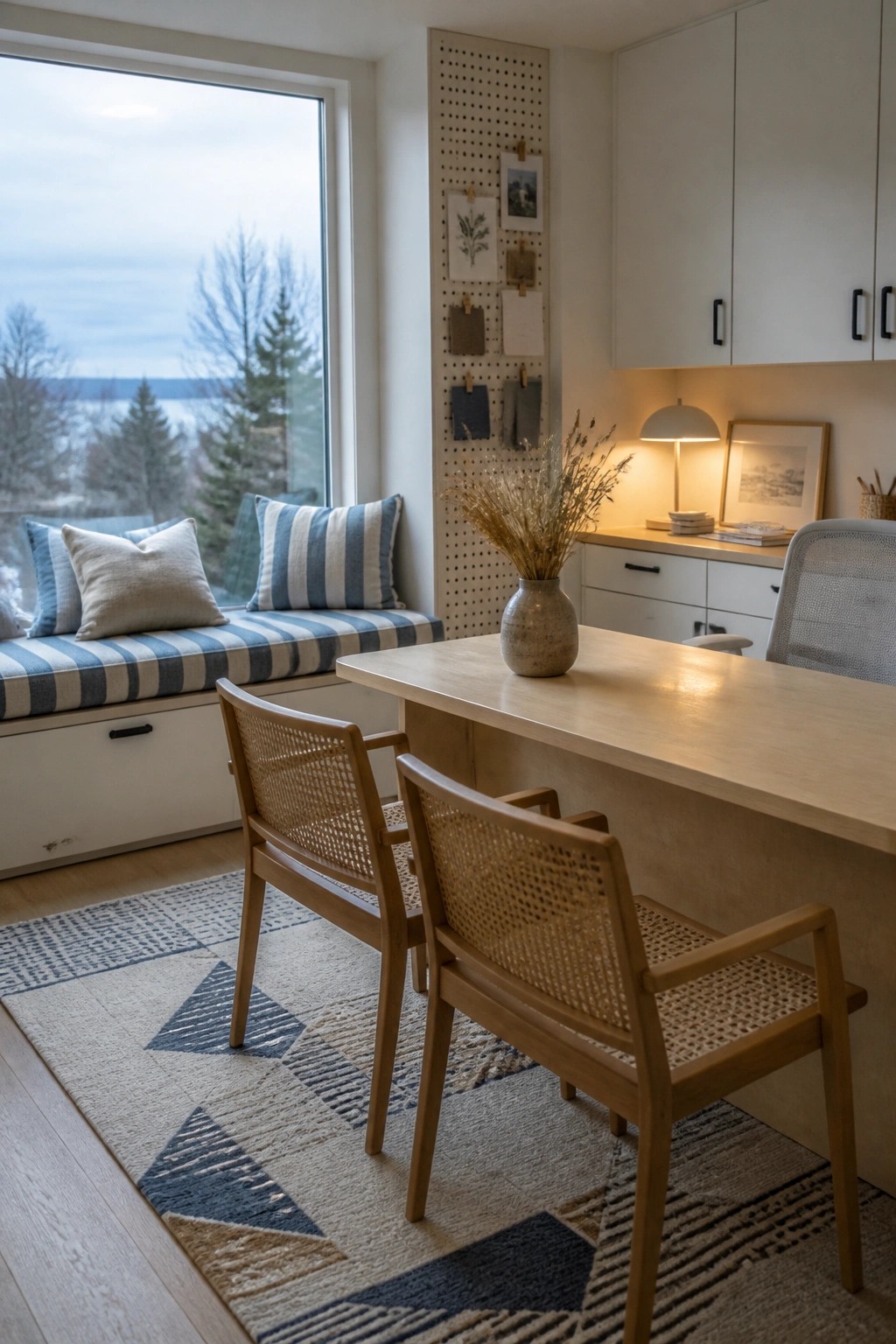
A window seat gives clients a comfortable place to sit without pulling up extra chairs around the desk. It also brings in more natural light and keeps the room from feeling like a standard office setup.
This works well in smaller home workspaces where you want the space to feel open but still functional. Add storage underneath the seat so it stays useful for files or supplies without taking up extra floor space.
Round Table for Client Meetings
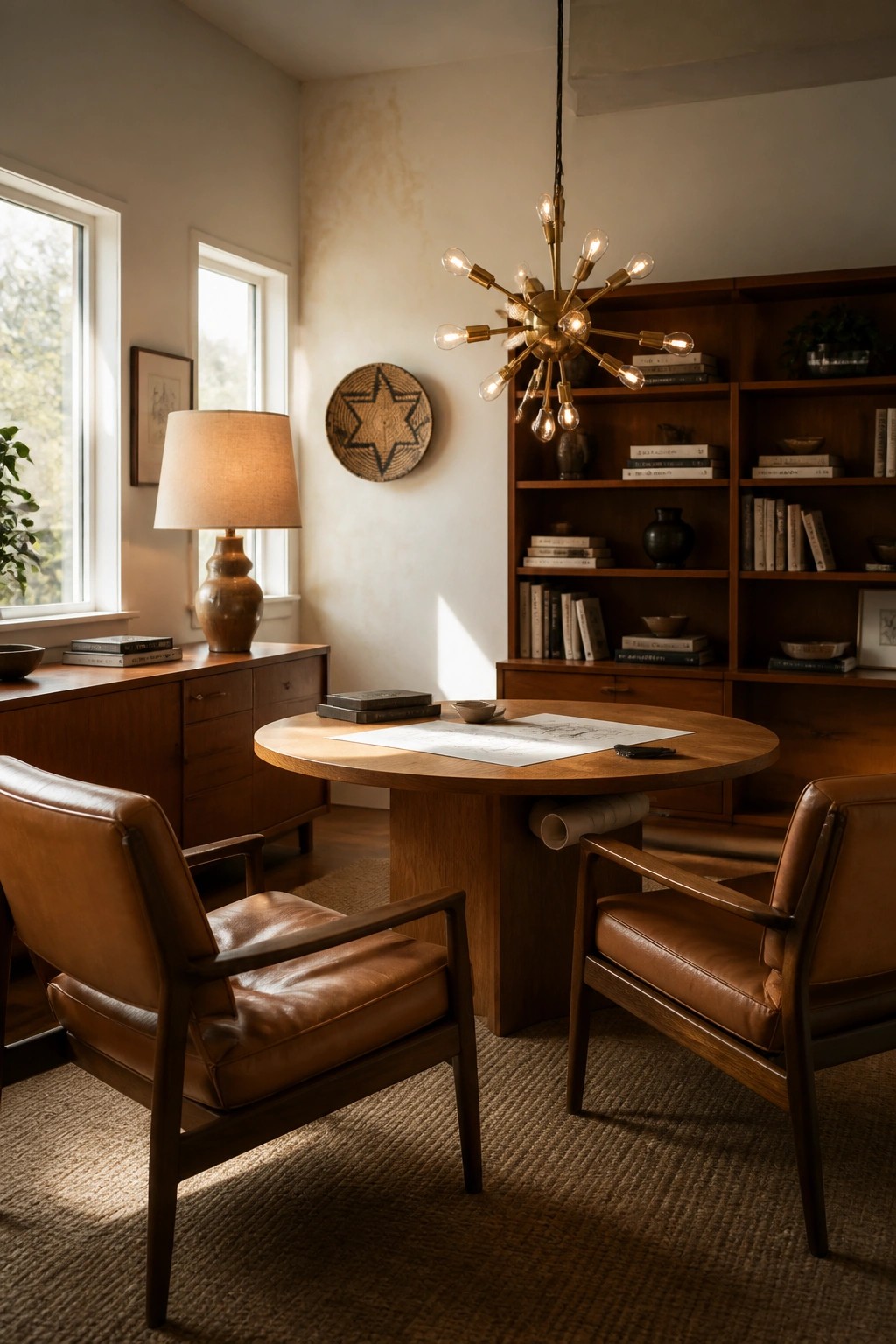
A round table works well in a home office when clients come by. It removes the barrier of a traditional desk and lets everyone sit at the same level, which keeps conversations relaxed.
This setup fits smaller rooms best and works in homes where the office needs to feel welcoming rather than corporate. Keep extra furniture minimal so the table stays easy to move around.
Using Matching Chairs Across from the Desk
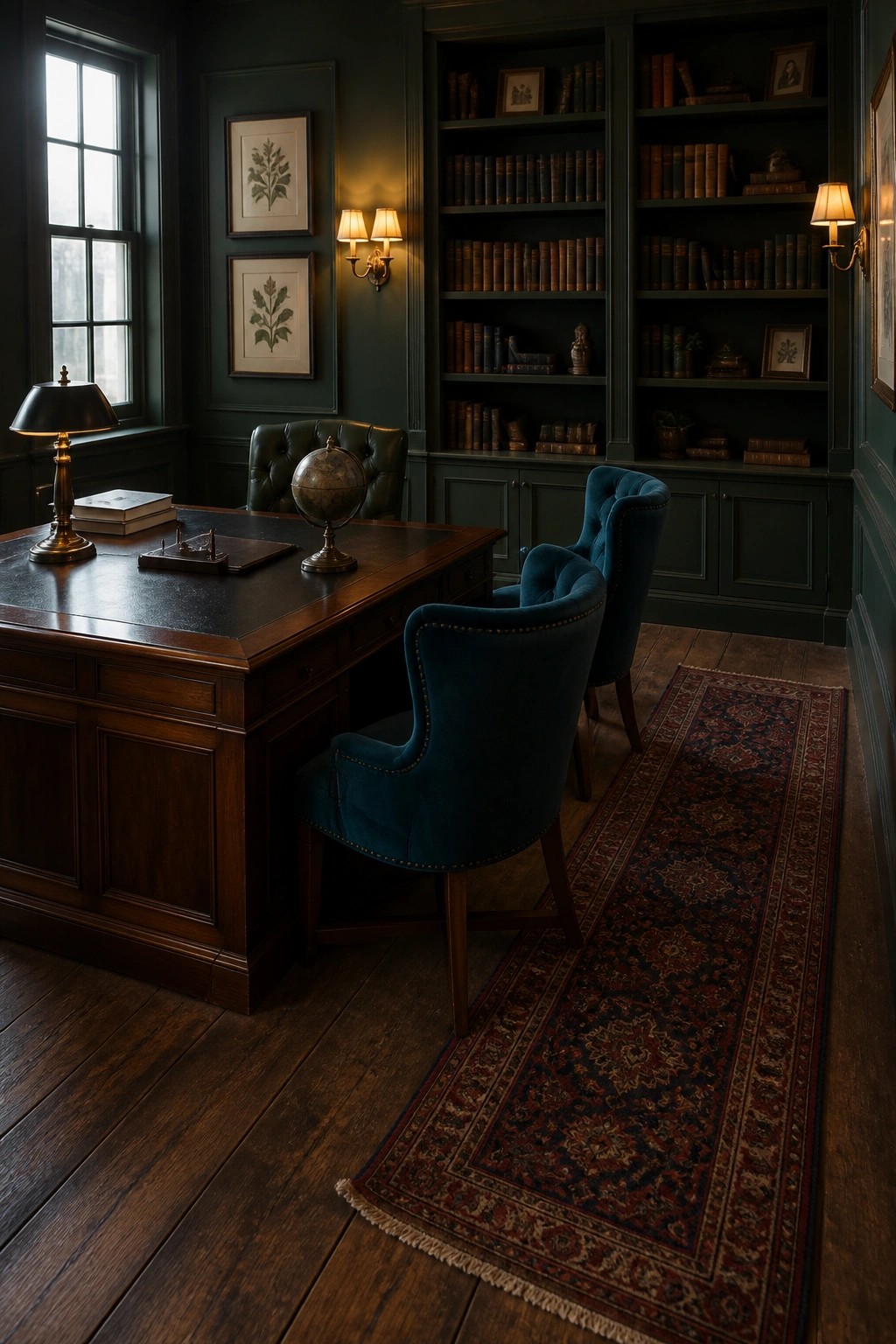
Placing two matching armchairs right in front of the desk creates a clear spot for conversations. It keeps the focus on the person behind the desk while giving visitors a comfortable place to sit without crowding the workspace. The setup feels more intentional than a single chair or a random bench.
This arrangement works best in home offices that host clients on a regular basis. Pick chairs with some structure so they look polished but still feel inviting. Leave enough room in front of the desk so people can pull the chairs out easily and settle in without feeling cramped.
Add Woven Armchairs For Client Conversations
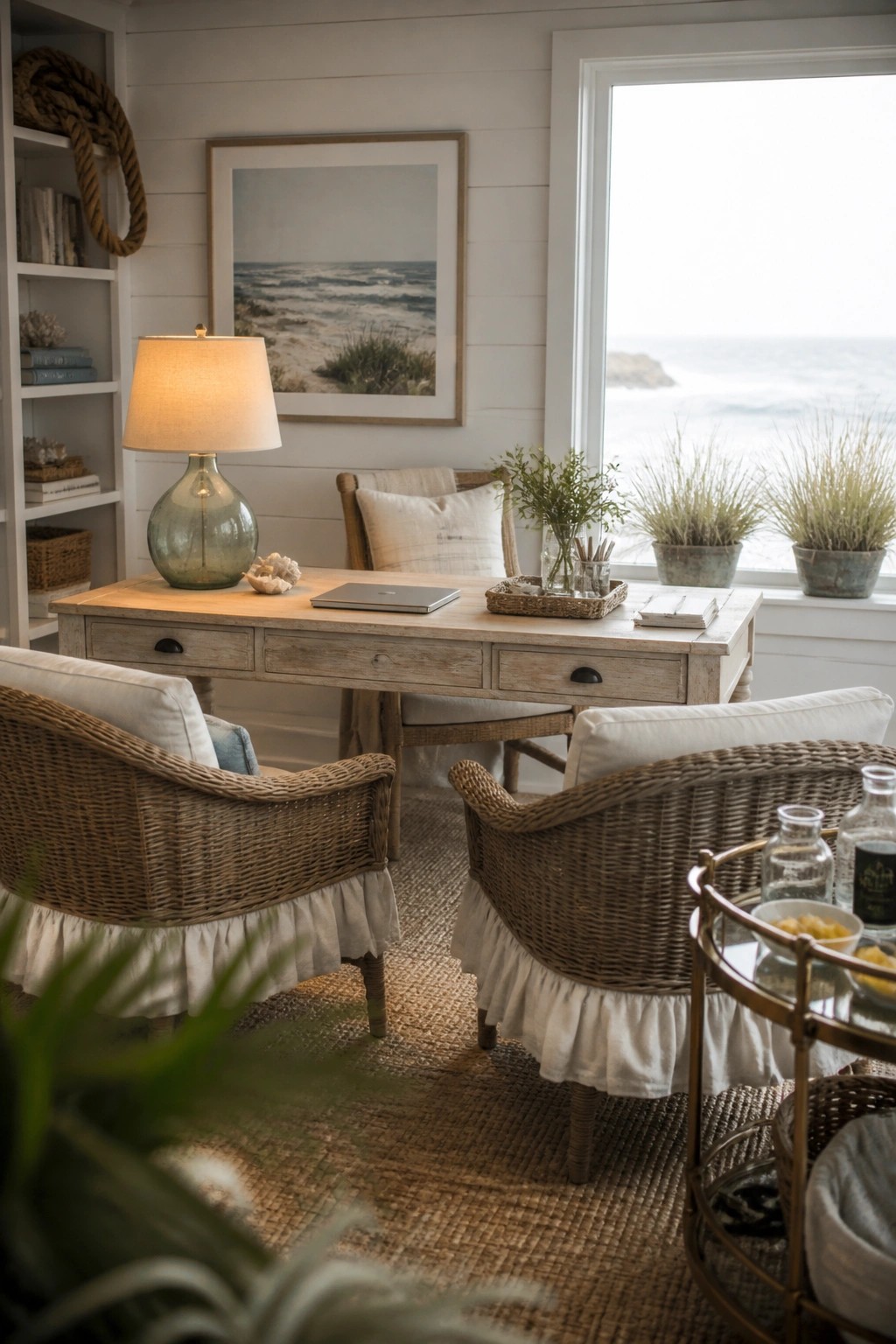
Woven armchairs give a home office a softer edge that helps clients relax during meetings. The natural texture feels casual but still polished enough for work, and the light skirts keep the look from feeling heavy or corporate.
They suit smaller workspaces where you want a dedicated spot for sitting across from someone rather than talking over a desk. Keep the chairs simple and low so the focus stays on the conversation instead of the furniture itself.
Position Comfortable Chairs Across From The Desk

A large desk works better for client meetings when you place a couple of upholstered chairs right in front of it. This setup turns the desk into a shared surface instead of a barrier, and the softer seating helps people relax during longer conversations.
Choose chairs that are low enough to feel inviting but still look professional. Keep them on a rug so the area feels defined, and make sure there is enough space for legs and bags. This arrangement suits most home offices that see regular visitors.
Labeled Storage Baskets On Open Shelves
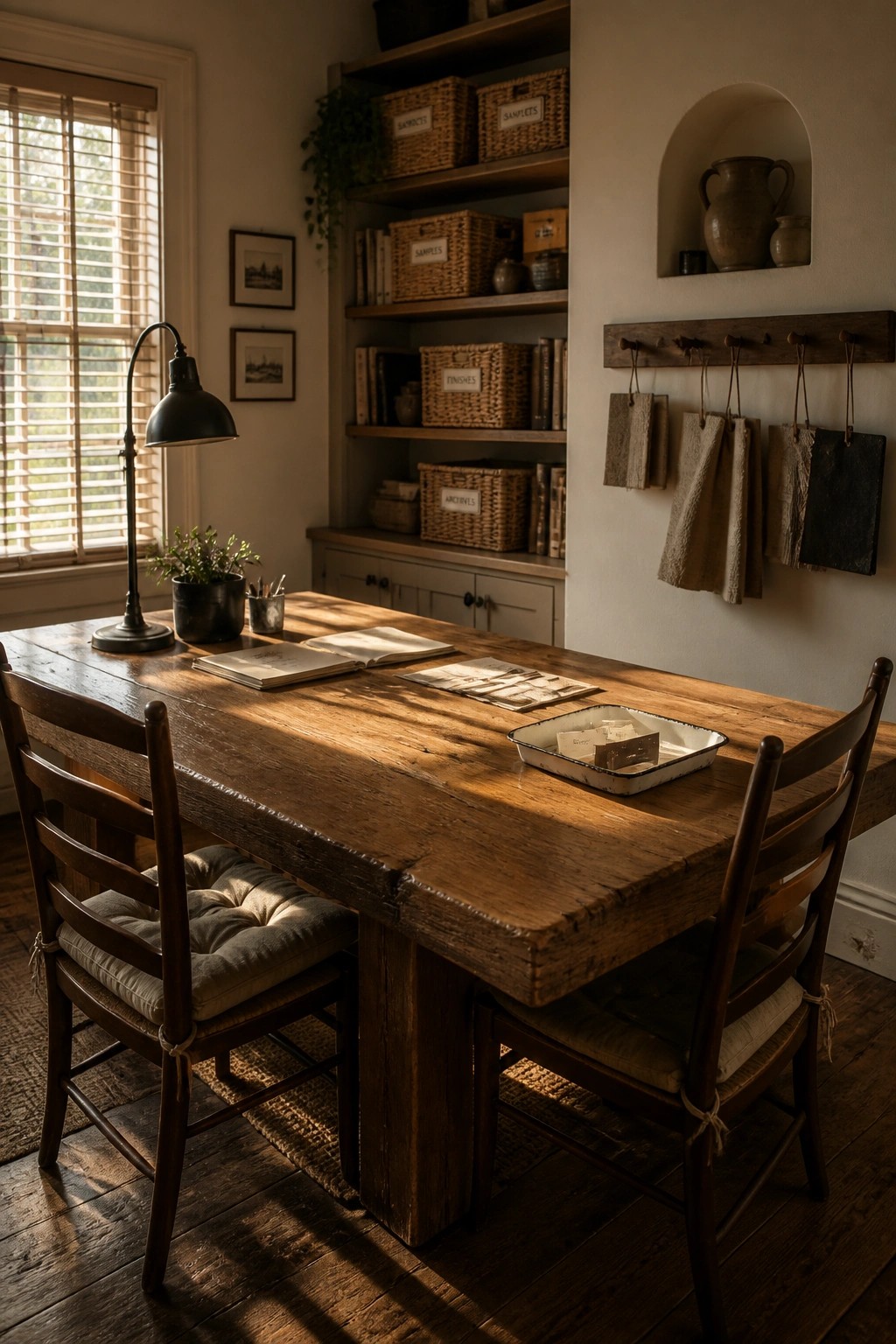
Open shelves with labeled baskets give a workspace a practical way to keep samples and supplies in order. The tags make it easy to find what you need without digging through drawers or stacks of boxes.
This approach suits client-facing offices where materials need to stay visible but contained. Use sturdy baskets with clear labels and leave a little extra room on each shelf so things do not feel crowded.
Adding Guest Chairs Around the Desk
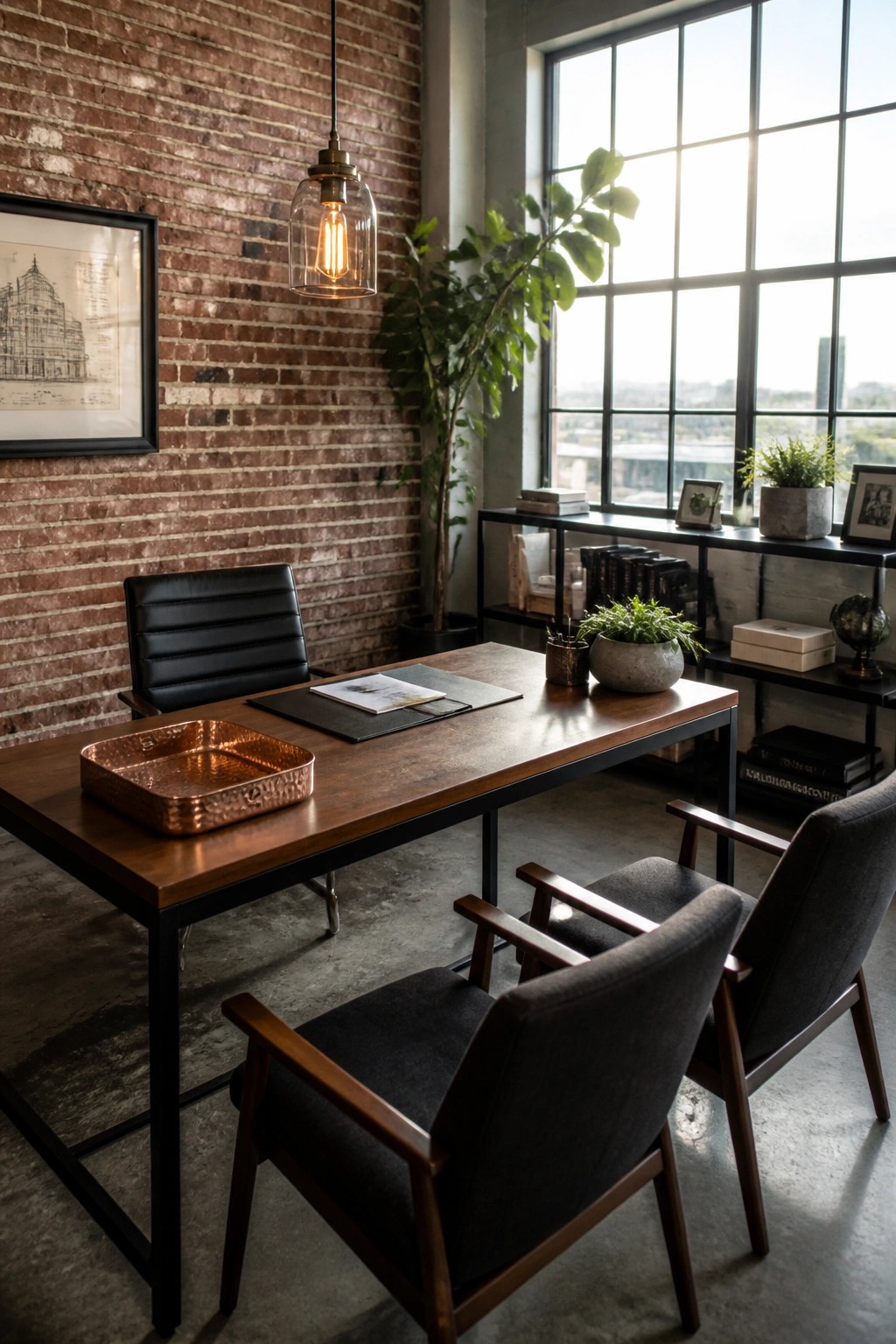
A desk works better for client meetings when you place a couple of chairs on the opposite side. This setup turns the workspace into a spot where conversations can happen naturally without anyone feeling like they are on the wrong side of the table.
The chairs do not need to match the desk chair exactly. Just keep them at a similar height and scale so the whole arrangement feels balanced. This works well in smaller home offices where you want the room to handle both focused work and occasional meetings.
A Console Desk With Guest Chairs
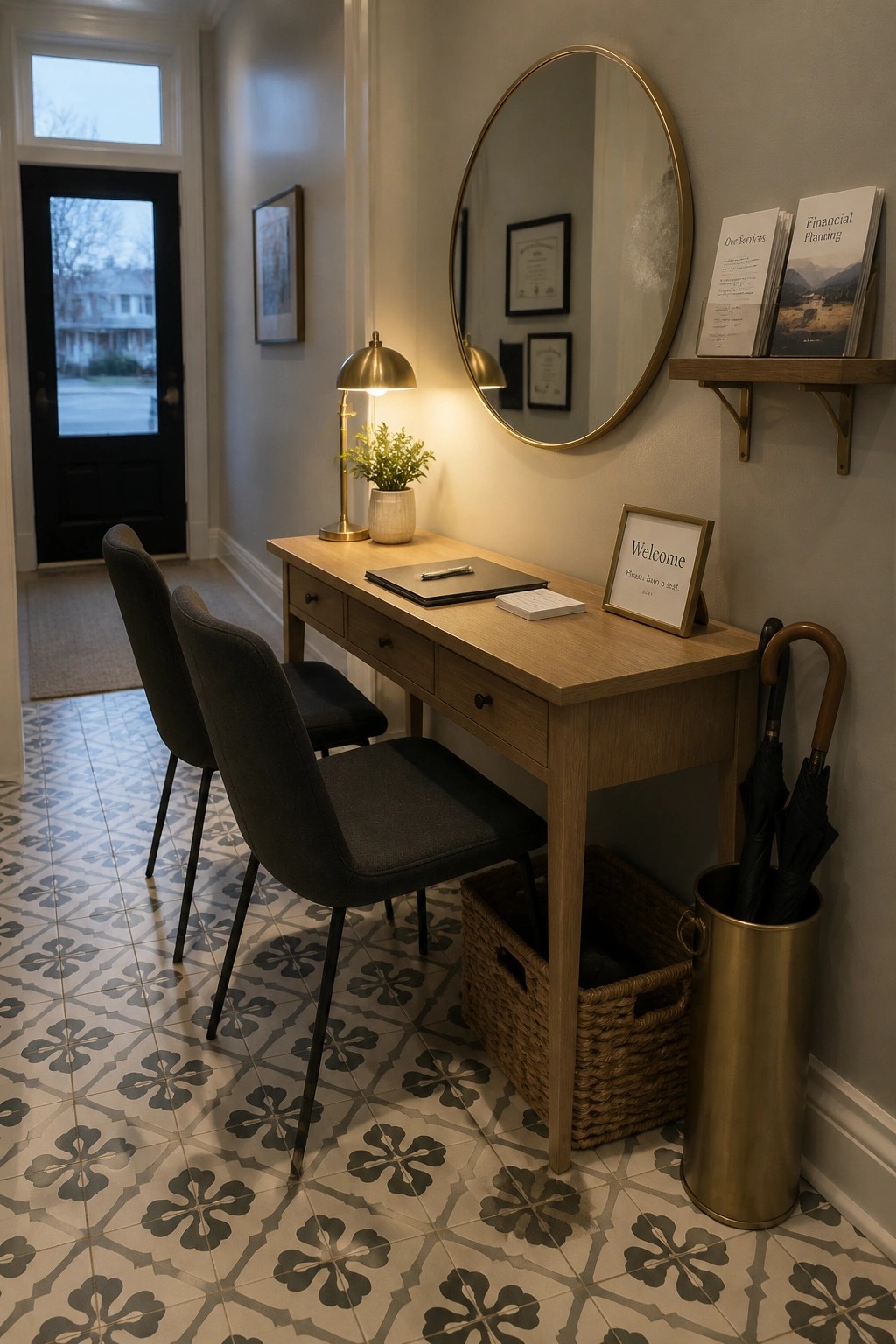
A console desk works well when you need a place to meet clients without dedicating an entire room. The narrow shape keeps the walkway clear while still giving you enough surface for papers and a laptop.
This setup suits homes with limited space or those that want the workspace near the entry. Place two chairs on one side so clients can sit comfortably without blocking traffic.
Built-In Seating For Client Meetings
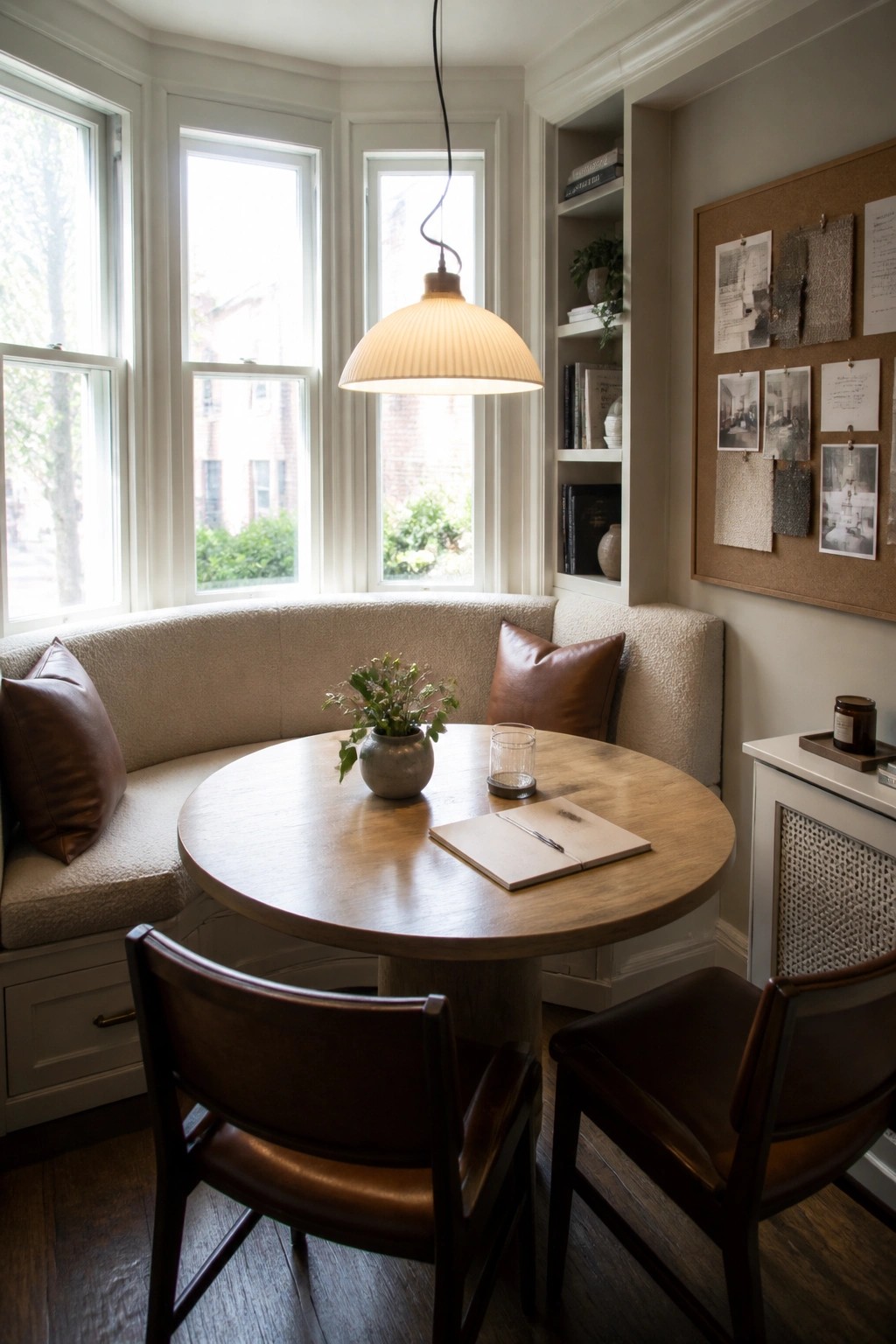
A built-in banquette around a round table makes a small corner work well for meeting with clients. It uses the space efficiently and gives everyone a comfortable place to sit without crowding the room.
This kind of setup works best in a home office that already has a window seat or bay area. Keep the surface mostly clear so you can spread out notes or samples during conversations.
Position Two Chairs Across From the Desk

A simple way to make a home office feel ready for clients is to place two chairs right in front of the desk. This setup turns the workspace into a natural spot for conversations without needing a separate table or conference area.
It works well in smaller rooms where you want to keep things efficient. Just make sure the chairs are comfortable enough for longer talks and leave enough space so people can sit without feeling cramped.
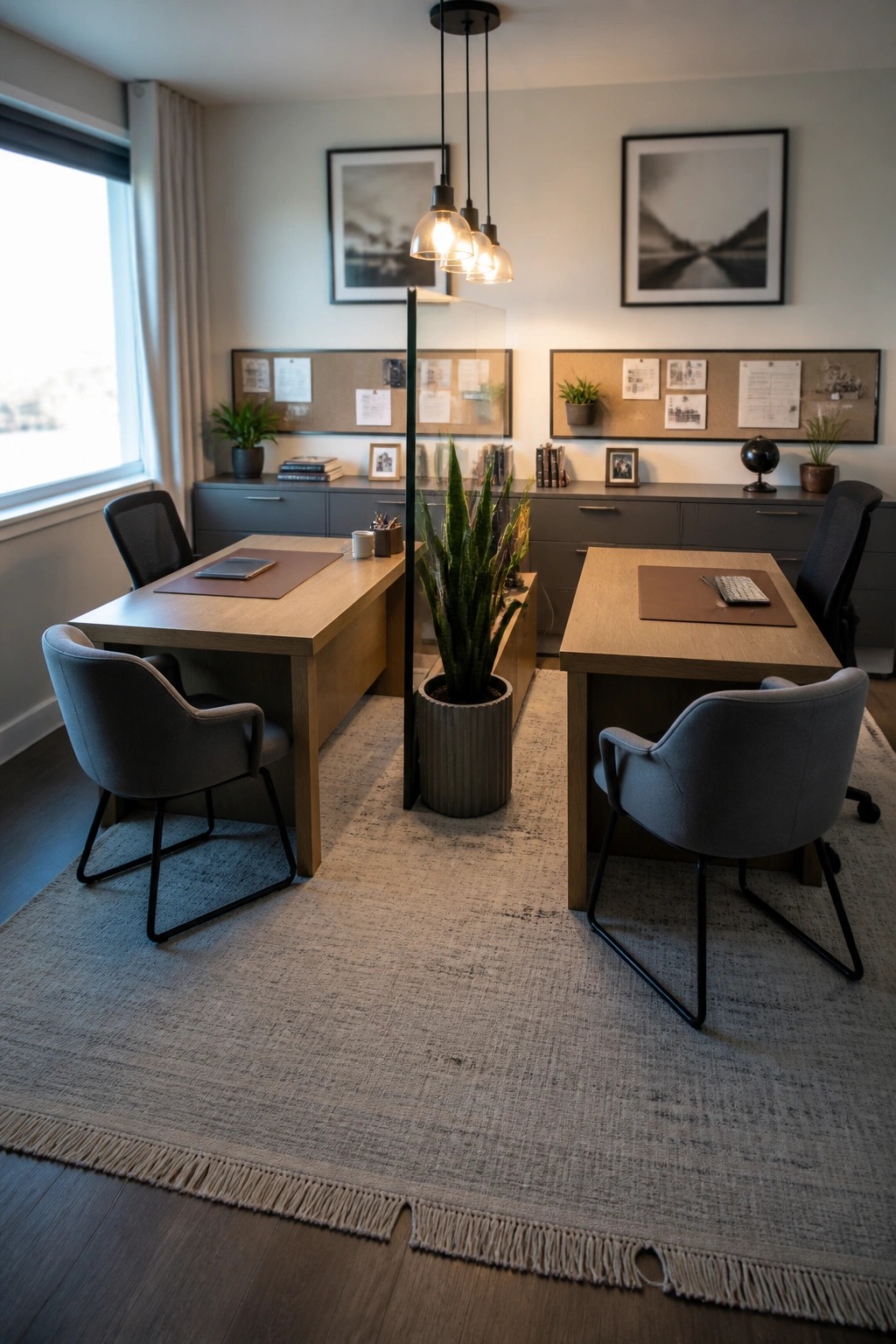
A glass divider between two desks gives each person a clear workspace while keeping the room open and bright. This setup works especially well when the office needs to handle client meetings without feeling cramped or fully closed off.
It suits smaller homes where one room has to serve two people. Keep the divider low enough to maintain conversation flow and pair it with simple furniture so the space stays practical for daily use.
A Large Wooden Table For Client Meetings

A large wooden table gives you a solid surface for spreading out documents and hosting in-person meetings without feeling cramped. It reads as professional yet approachable, which helps put clients at ease in a home setting.
This works best in a spare room or open area where the table can stay in place full time. Keep seating simple and comfortable so the space can shift easily between work use and everyday needs.
Mount the Desk to the Wall
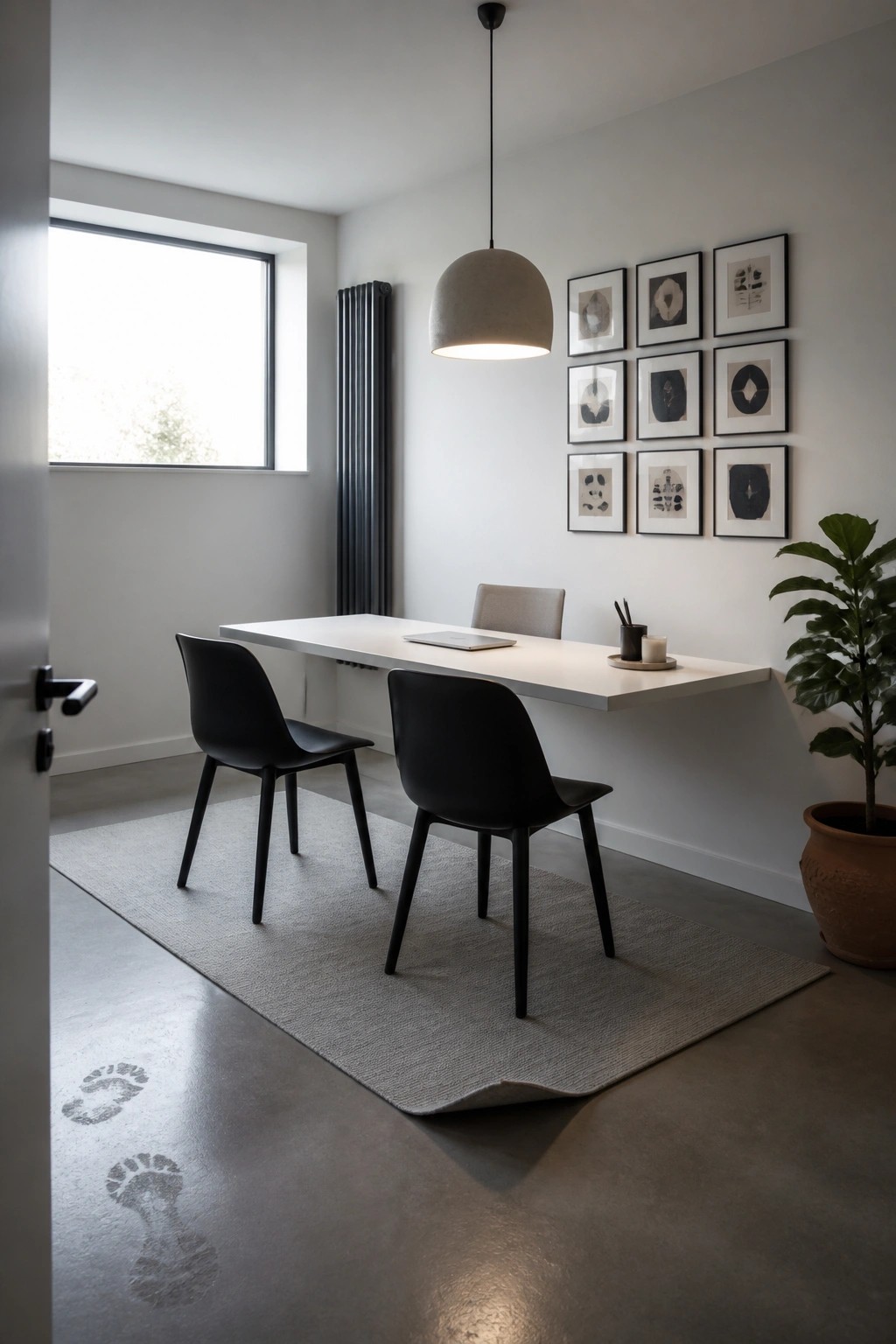
Mounting the desk straight to the wall keeps the floor clear and makes even a small room feel more open. It also gives the space a simple, finished look that works well when clients stop by.
This approach suits homes where the office needs to stay tidy without much effort. Just check that the wall can support the weight and pick a depth that leaves enough room to pull up a chair comfortably.
Blend Natural Wood With Indoor Plants
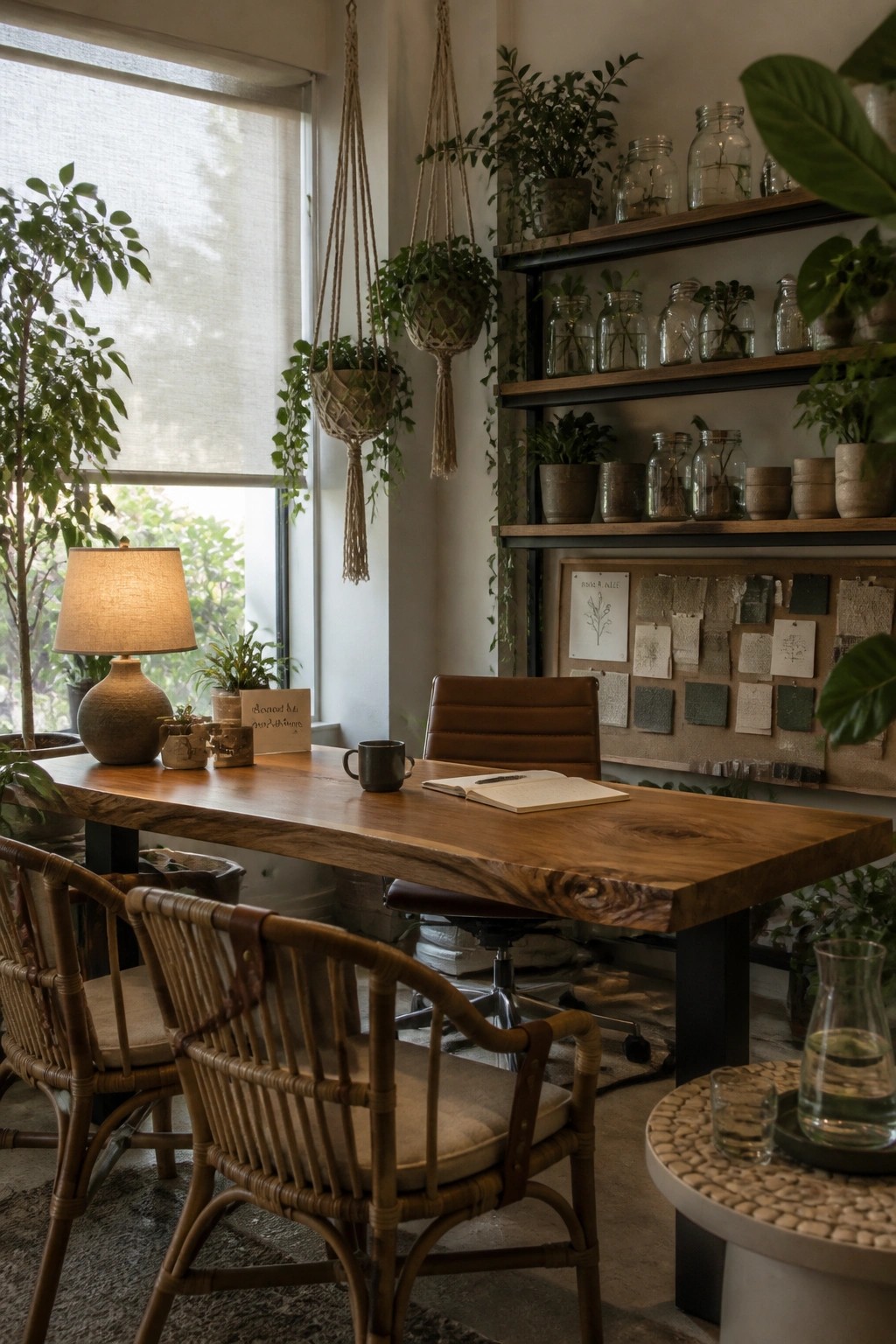
A large wood desk paired with plenty of greenery gives a home office a grounded feel that still reads as professional. Clients tend to relax faster when the space avoids the cold look of all-metal or laminate furniture.
This works best in rooms that get steady daylight. Keep bigger plants near the windows and tuck smaller ones onto shelves so the room stays balanced and easy to maintain.
Add a Separate Seating Area for Clients
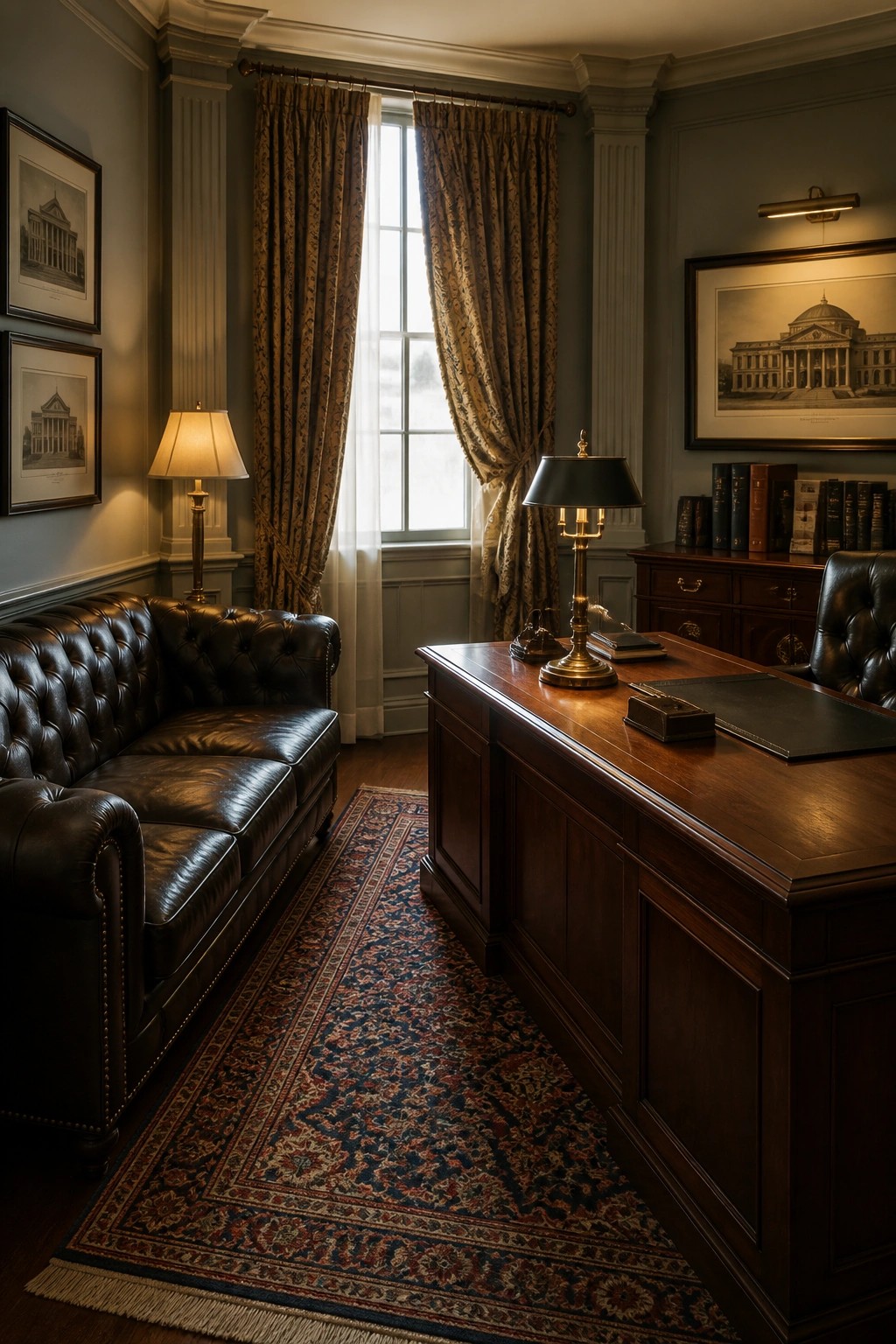
A desk alone works fine for daily tasks, but client meetings often feel more natural when there is a place to sit comfortably away from the main work surface. Adding a sofa or a couple of chairs creates that option without turning the room into a full living space.
This approach suits larger home offices that handle regular visitors. Keep the seating close enough to the desk for easy conversation but still leave clear walking paths around the room.
Create Separate Zones With A Tall Room Divider

Many client-facing home offices need a way to keep the desk area out of sight during meetings. A tall upholstered divider does this without building walls or making the space feel closed in.
This works best in open rooms where you want the workspace to stay functional but not dominate the whole area. Position the divider behind the desk so clients see a calmer seating zone first, and keep the fabric neutral so it blends with the rest of the room.
Using a Backlit Niche Behind the Desk
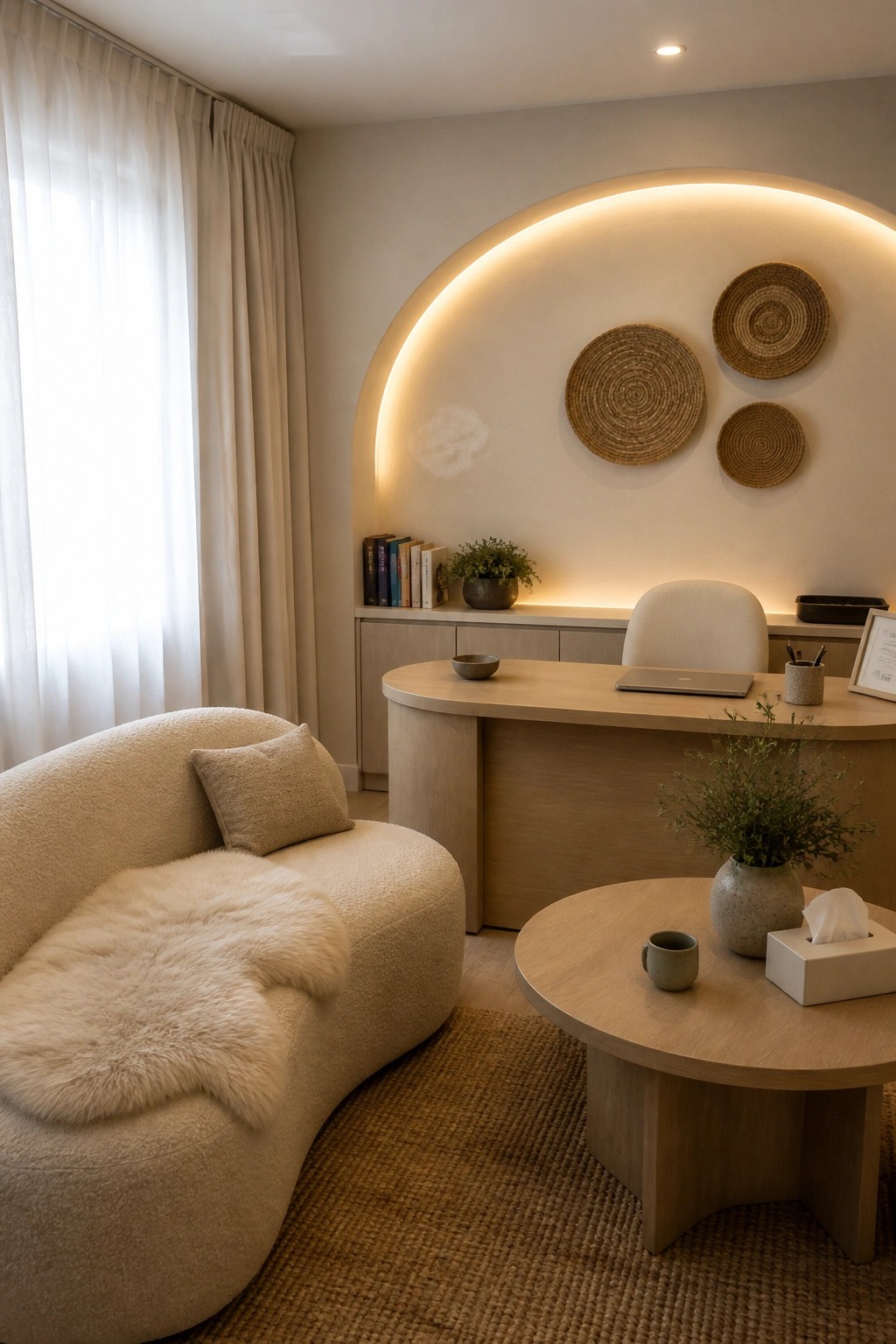
A backlit niche adds quiet structure to a workspace without making it feel stiff. The curved shape and soft glow keep the area from looking flat while giving clients something simple to rest their eyes on during meetings.
This setup works best in smaller rooms where you need one clear focal point. Keep the lighting warm and low so it stays comfortable for longer conversations, and limit the items inside the niche to just a few pieces.
A Long Table That Doubles As A Meeting Spot
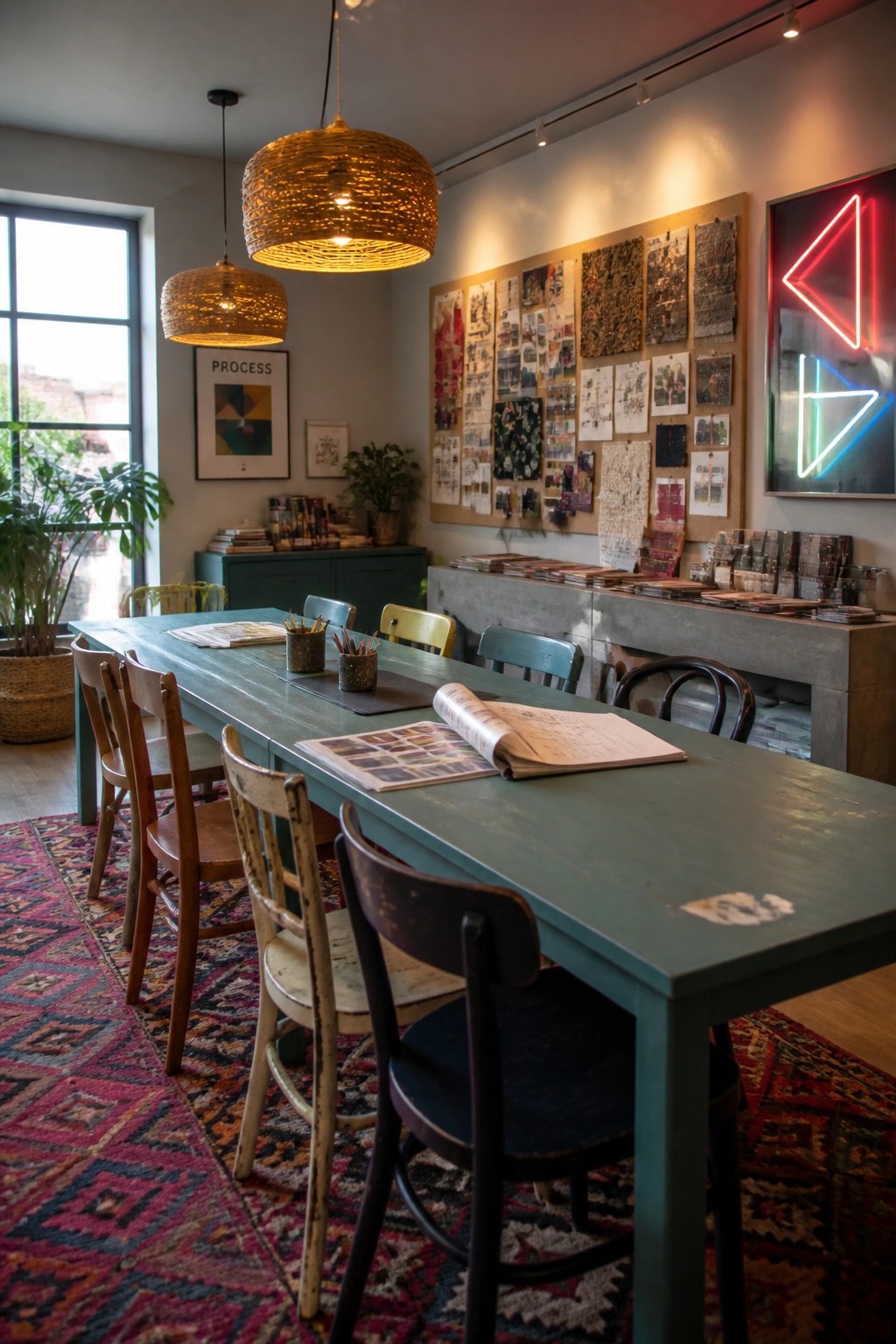
A single long table gives a home office more flexibility than rows of desks. It lets you spread out samples or sketches during a client visit and then clear space for focused work later in the day. The setup feels less formal, which helps conversations stay relaxed.
This approach works best in a spare room or larger corner of a living area where clients might drop by. Keep a few extra chairs nearby so the table can seat different group sizes without rearranging the whole room. Avoid crowding it with too many permanent items so the surface stays usable for both daily tasks and presentations.
Round Tables For Client Meetings
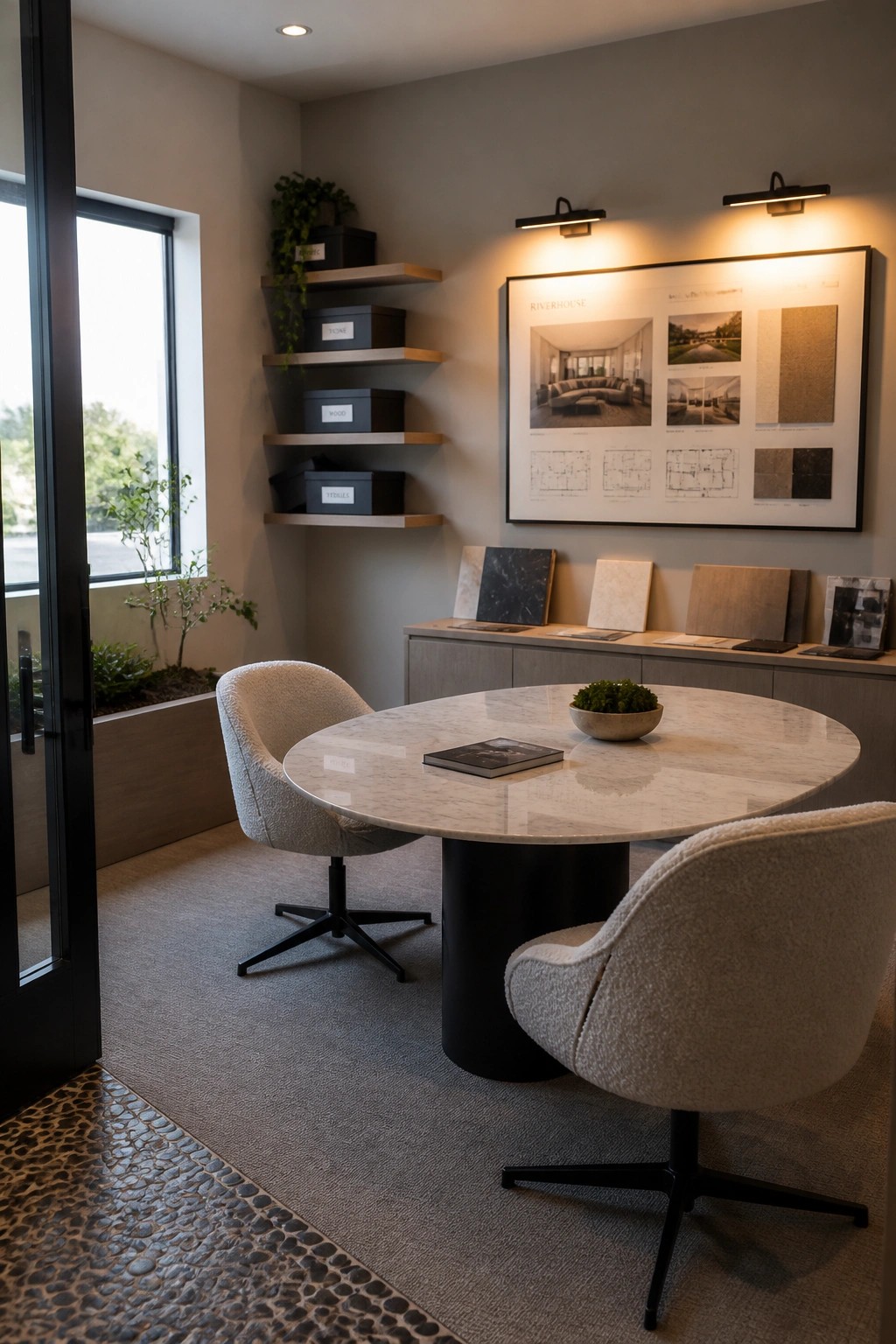
A round table takes away the usual head-of-the-table setup and makes meetings feel more equal. Clients tend to relax when there is no obvious power seat, and conversations flow more naturally in a home office setting.
This layout suits smaller client-facing spaces where you want the focus on discussion rather than formality. Keep the surface mostly clear and limit extra items to one or two material samples so the table stays practical for spreading out plans or samples.
Hide the Office Behind Sliding Barn Doors

A small alcove can work well as a client meeting space if you can close it off when needed. Sliding barn doors give you that option without taking up floor space or making the room feel chopped up. The doors slide out of the way during the day and tuck the desk and chairs out of sight when guests are over.
This setup suits homes where the main living areas stay open and tidy. It works best in a hallway or larger room with an unused corner, and the doors can match your trim or stand out as a simple contrast. Just make sure the track runs smoothly and the nook has good lighting so it still feels usable when open.
Arrange Two Armchairs In Front Of The Desk
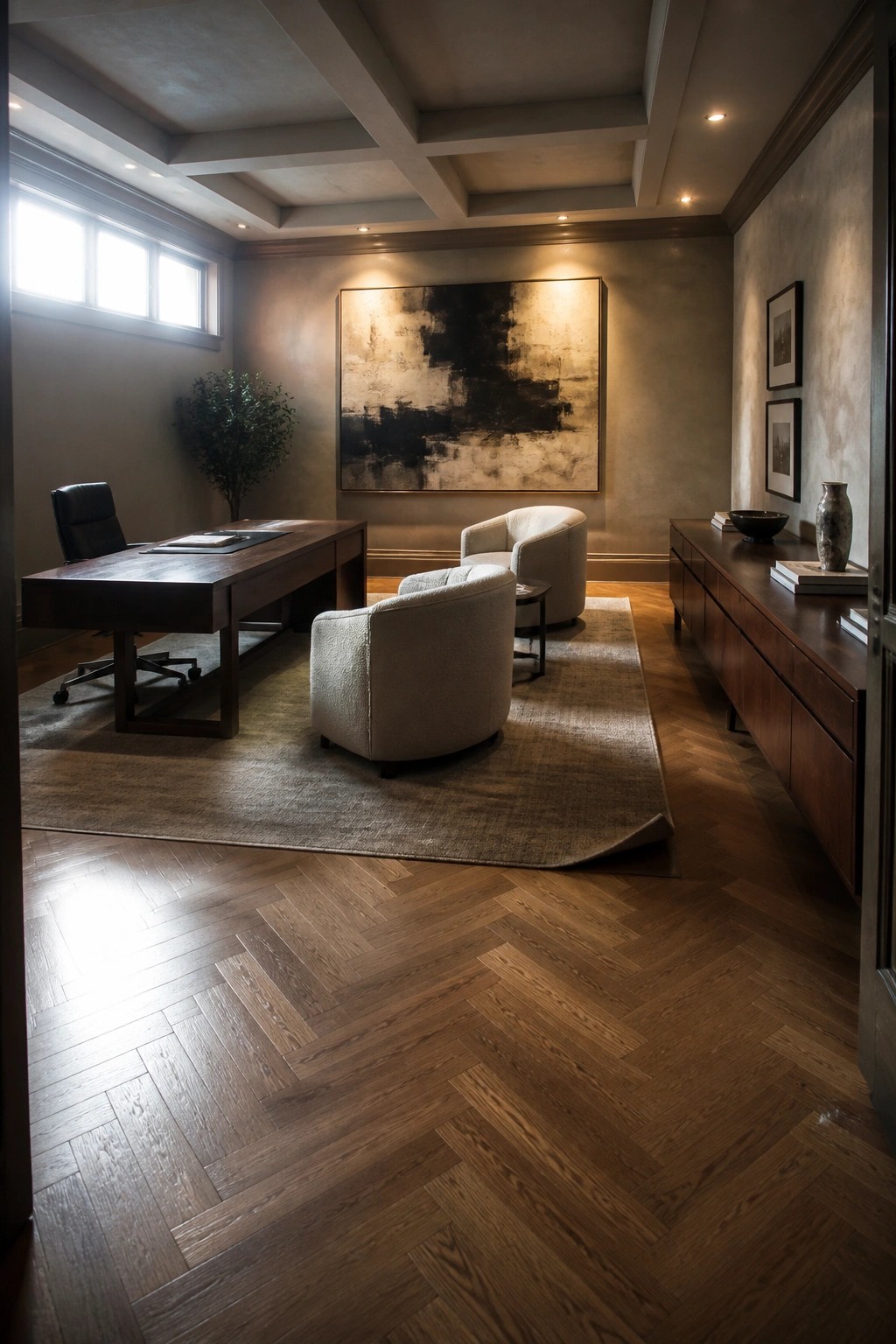
Many home offices still feel too formal when the only place to sit is behind the desk. Placing two comfortable armchairs across from it changes the tone right away and makes the room feel more open to conversation.
This layout works best in spaces where clients or colleagues will visit regularly. The chairs give people a clear spot to settle in without turning the desk into a barrier, and they can be pulled closer or angled as needed. Keep the pair simple and low so they do not compete with the desk itself.
Woven Chairs for Client Meetings

Rattan chairs with soft cushions give a home office a relaxed feel that helps clients settle in during meetings. They add texture without making the space feel too formal, and they pair well with warm flooring like terracotta tiles.
These chairs work best when placed directly across from the desk so conversation stays natural. They suit homes that already lean toward natural materials and earthy tones rather than sleek modern finishes.
Frequently Asked Questions
Q: What if I only have room for a desk and one shelf in my workspace? A: Focus on a lamp and a couple of books that match your work style. Add one small plant if it fits. Rotate the items every few months to keep the look current.
Q: How do I pick pieces that will not go out of style too fast? A: Choose neutral colors and simple shapes for your main items. Wood tones and metal accents tend to last longer than trendy patterns. Skip anything too bold unless you can swap it easily.
Q: Should I add anything special for when clients visit in person? A: Set out a small tray with water and a notepad near the seating area. This keeps things ready without extra effort. It shows you thought ahead for their comfort.
Q: What about keeping things organized so it does not look messy during meetings? A: Use a drawer to tuck away loose papers before anyone arrives. Clear the desk surface except for your main screen and one notepad.
