
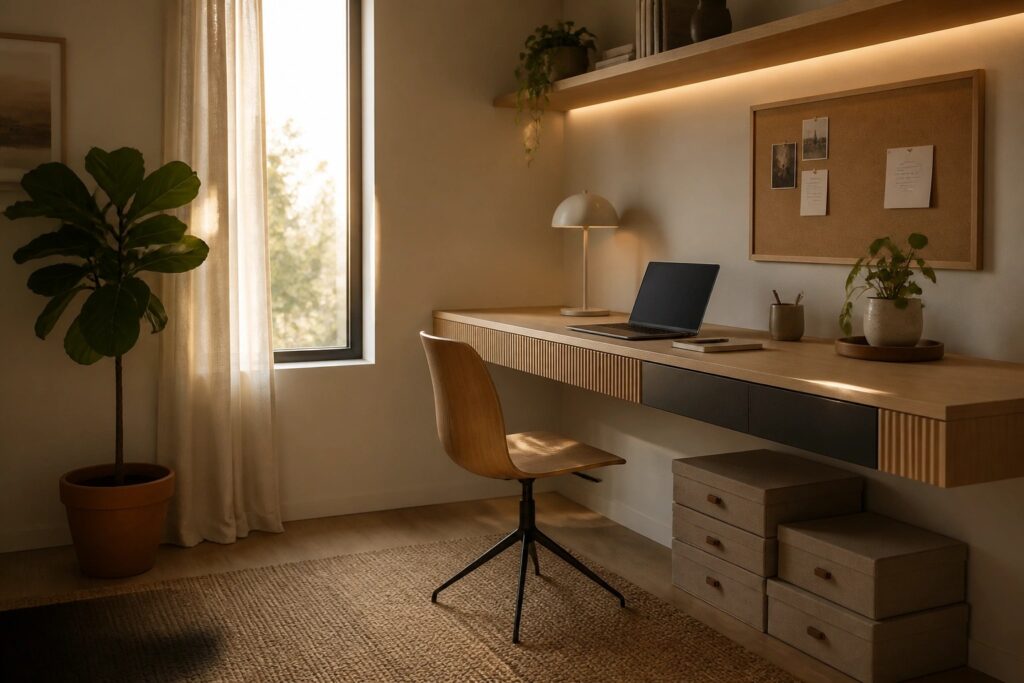
When I tried turning a spare corner into a workspace last year, the room only started to feel usable once I stopped letting every surface hold something.
Clean lines make a small office feel bigger because they keep the eye from catching on edges or piles, but that only lasts if storage actually stays out of view during a normal workday.
Hidden storage changes the daily feel.
I have watched setups that looked tidy on paper quickly turn cramped once mail, chargers, and notebooks found their way back out.
Testing a few of these ideas in my own space showed me which ones hold up once real work begins.
Wall Mounted Desks With Hidden Storage
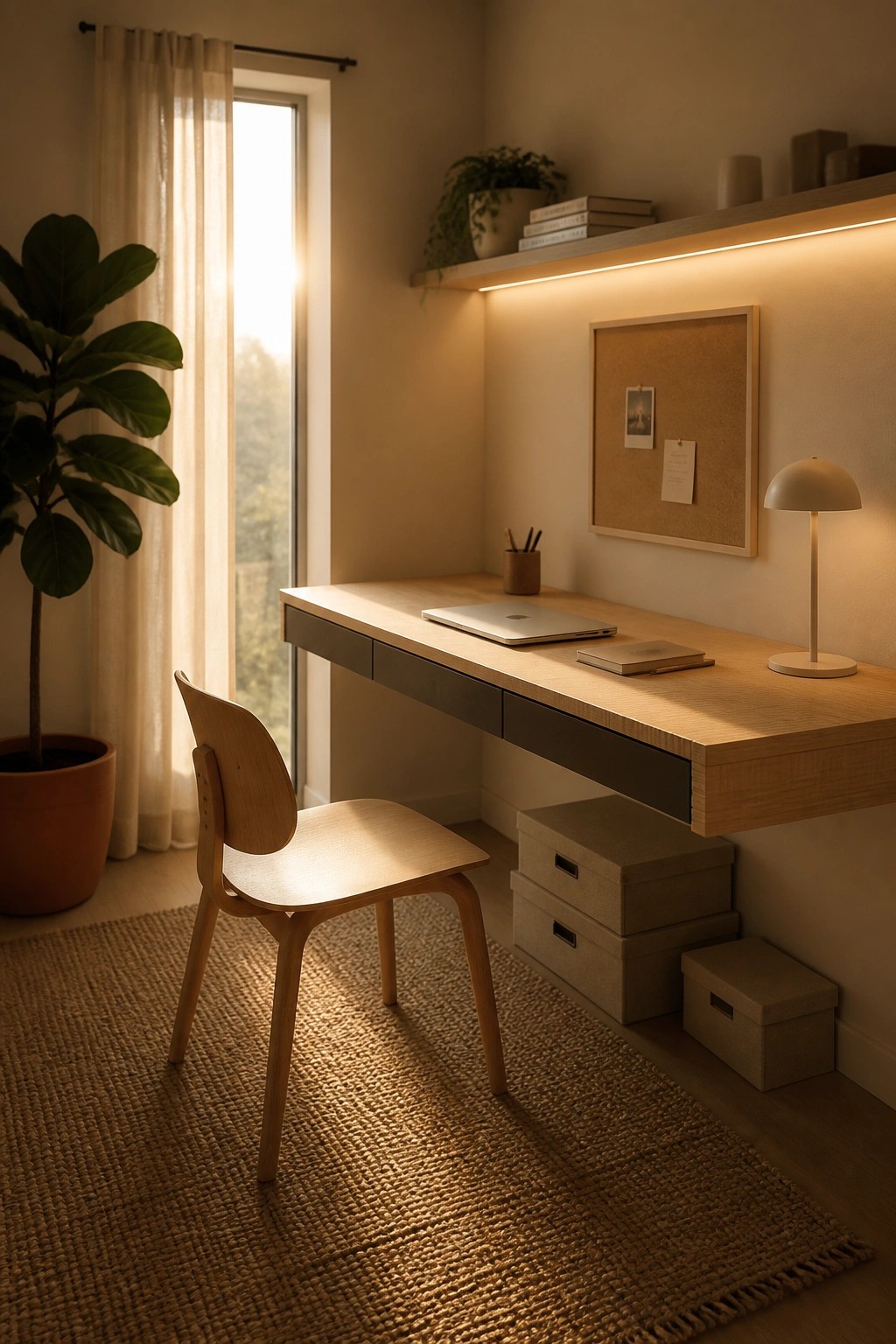
A wall-mounted desk keeps a small office feeling open because it lifts the work surface off the floor and tucks storage into the structure itself. The clean lines come from the flat top and the low drawers that sit flush rather than sticking out.
This approach works best in rooms that double as something else during the day. Add a couple of simple boxes on the floor below if you need extra files or supplies, but keep the top mostly clear so the desk does not start to feel crowded.
Fold-Down Desks With Hidden Storage
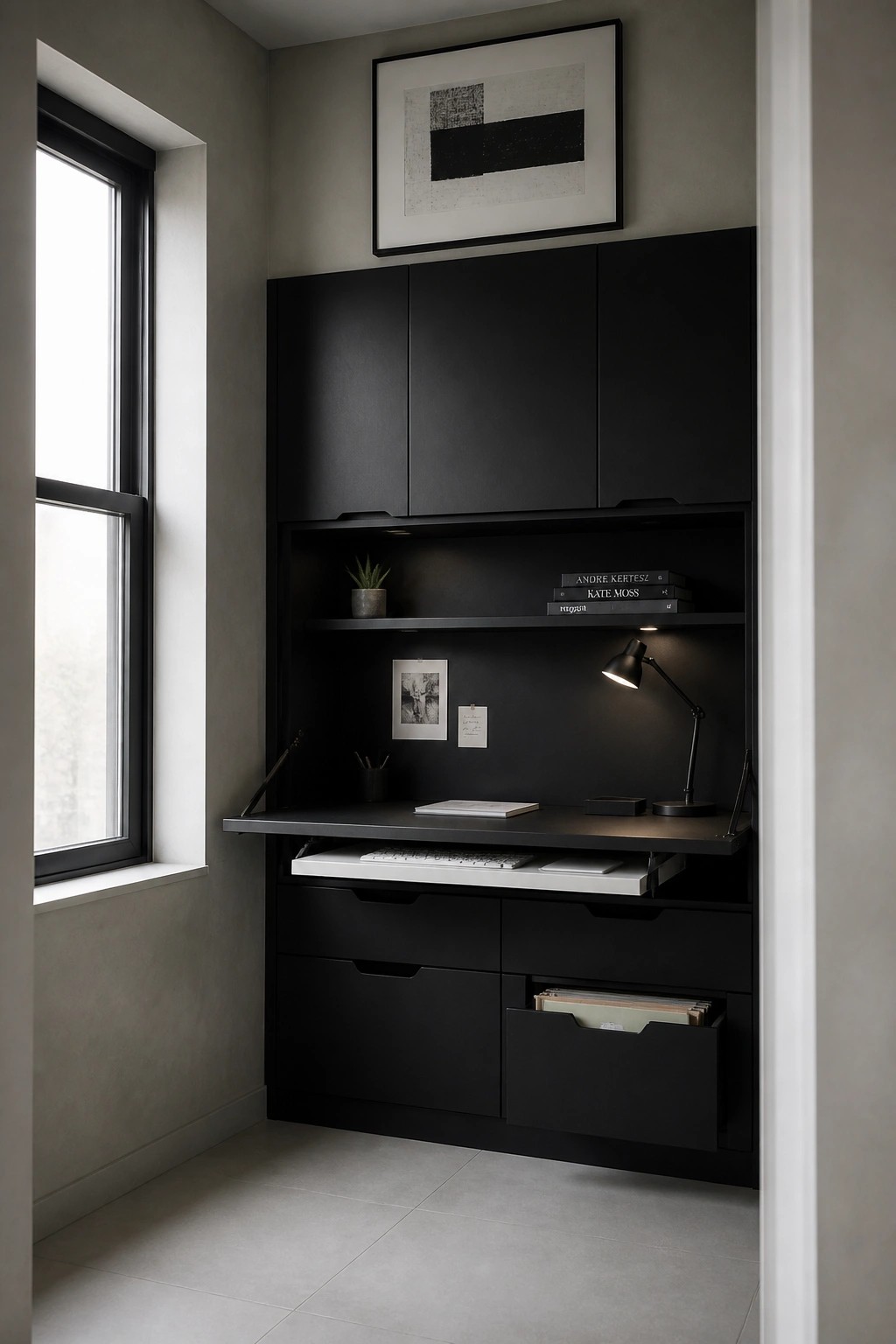
A fold-down desk works well in small offices because it removes the work surface when it is not needed. The whole area stays clear instead of looking like a permanent workstation.
This approach suits apartments or spare rooms that need to serve more than one purpose. Choose sturdy hardware and add drawers or shelves around it so papers and supplies stay out of view.
Built-In Desk Drawers For Small Spaces
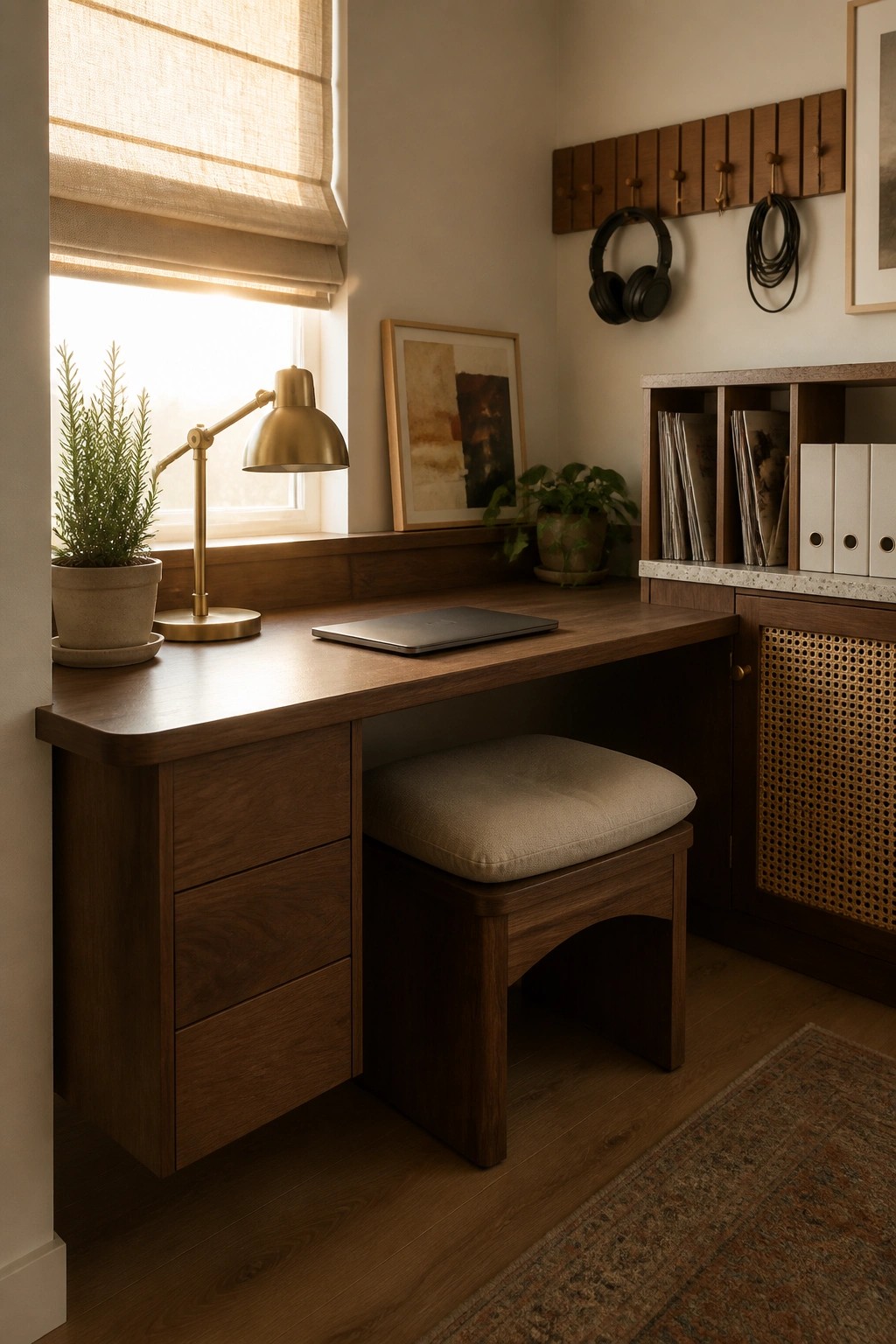
A desk with drawers built right into the frame helps a small office stay neat without extra furniture. Everything stays within reach but out of view, so the surface stays open for actual work.
This setup suits rooms that need to feel calm and simple. Match the wood tone to nearby cabinetry so the desk blends in rather than standing out as another piece.
Hidden Storage Behind Vertical Wood Slats

Vertical wood slats can cover cabinet doors without breaking up the look of a wall. This keeps a small office feeling open while giving you real storage space right where you need it.
The same idea works behind a desk or along one wall in a spare room. Match the wood tone to the desk so the whole area reads as one surface instead of separate pieces.
Built-In Desks Keep Small Offices Tidy
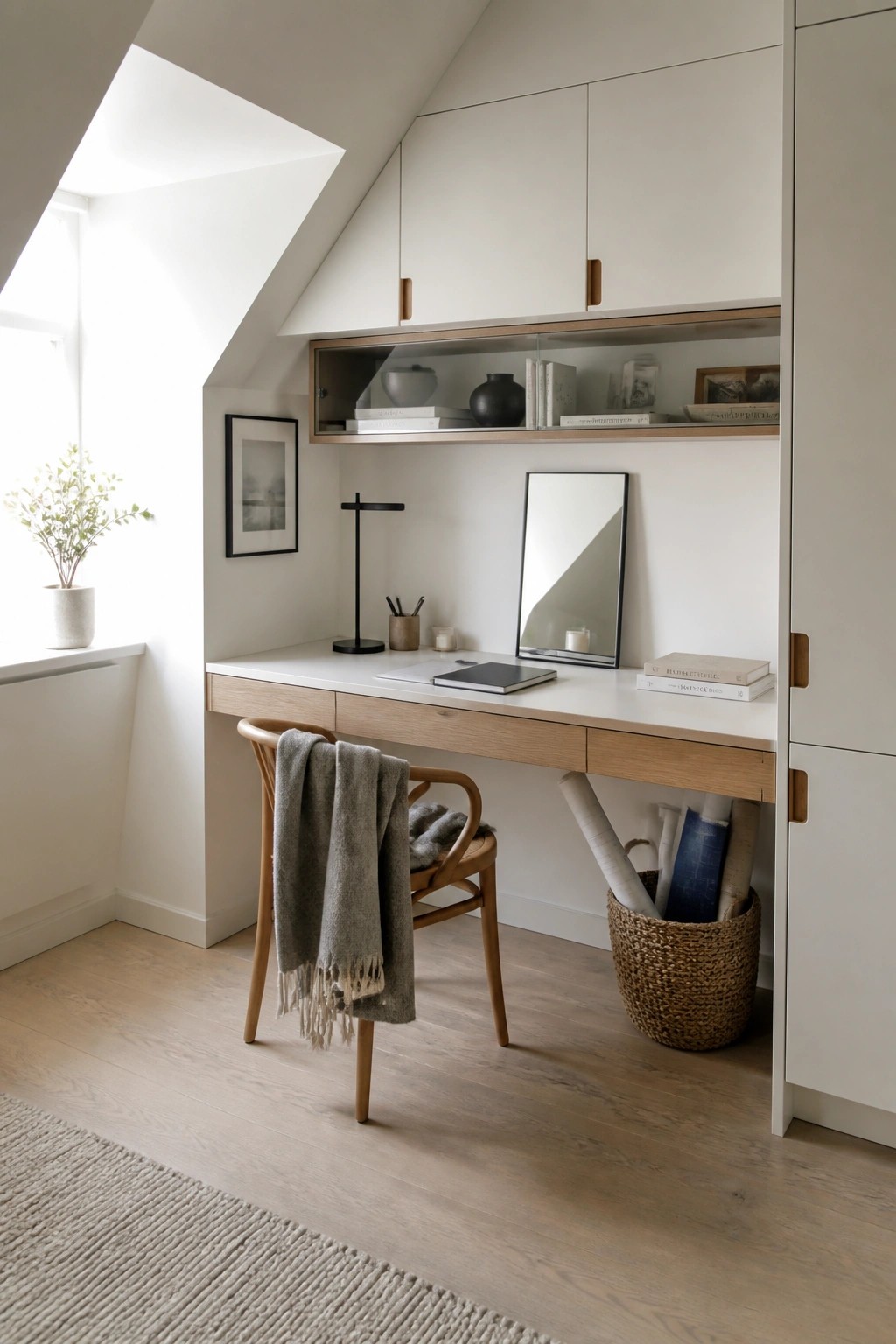
A built-in desk turns a small or awkward space into a working area without adding extra furniture. Cabinets above the desk and drawers below give you places to tuck things away so the surface stays clear and the room feels open.
This setup works best in homes where every inch counts, like attic offices or narrow rooms. Keep the lines simple and match the desk to nearby cabinetry so storage blends in rather than stands out.
Pegboard Storage Keeps Small Offices Organized
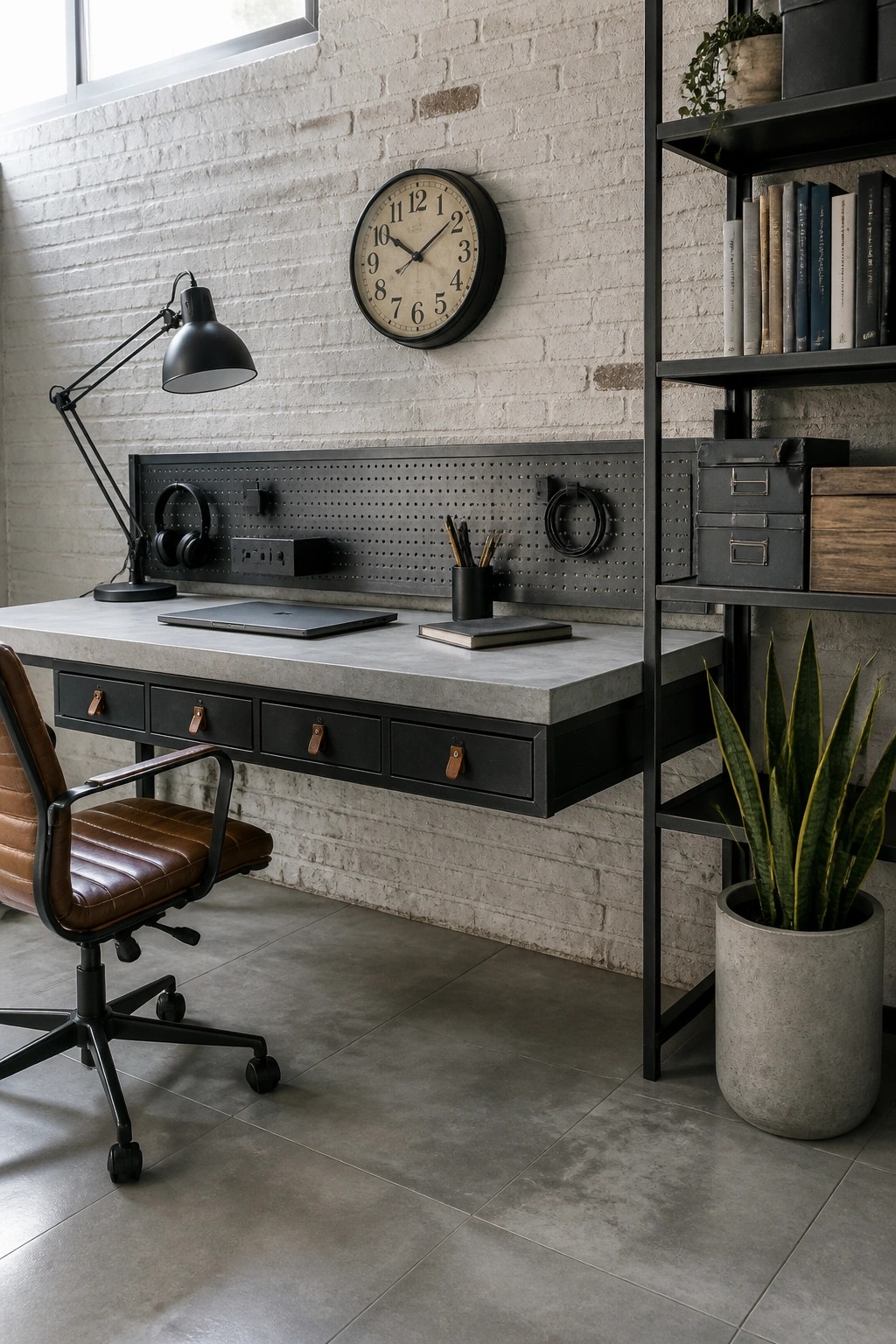
A pegboard mounted right above the desk gives you a simple way to store headphones, chargers, and pens without crowding the work surface. The clean lines stay intact while everything stays easy to reach.
This setup works well in smaller rooms where floor space is limited. Pair it with a desk that has shallow drawers below so most items stay out of sight when not in use.
Closets Turned Into Hidden Offices
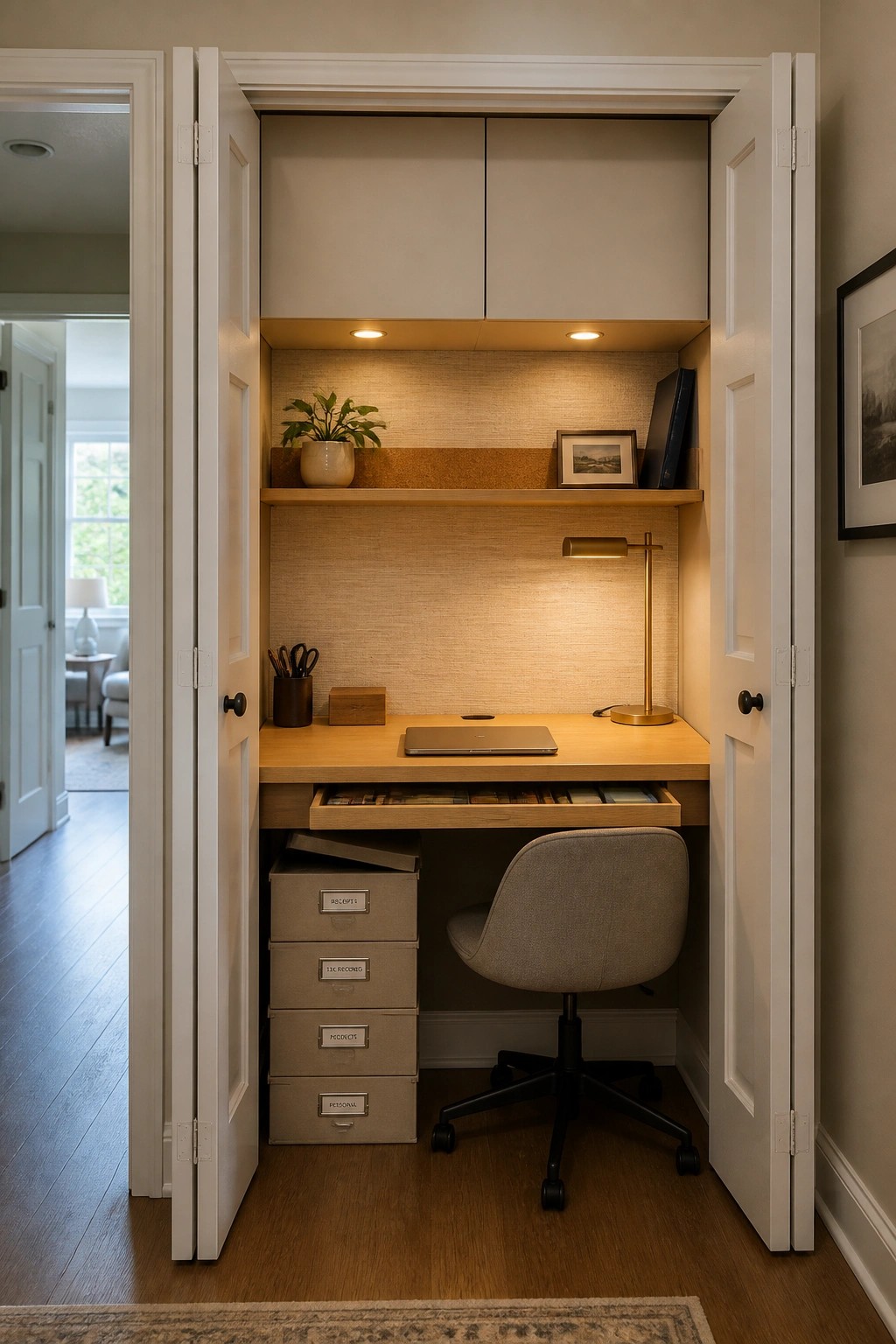
A closet can become a small office that stays out of sight when the doors close. The clean lines come from keeping the desk and shelves built in, so nothing sticks out into the room. Hidden storage below the desk and in upper cabinets keeps papers and supplies contained without extra furniture.
This setup works best in homes or apartments where floor space is limited. Use the same wood tones for the desk and shelves to keep the look simple, and make sure the doors open fully so the chair can slide out easily.
Built-In Bench Storage For Small Offices
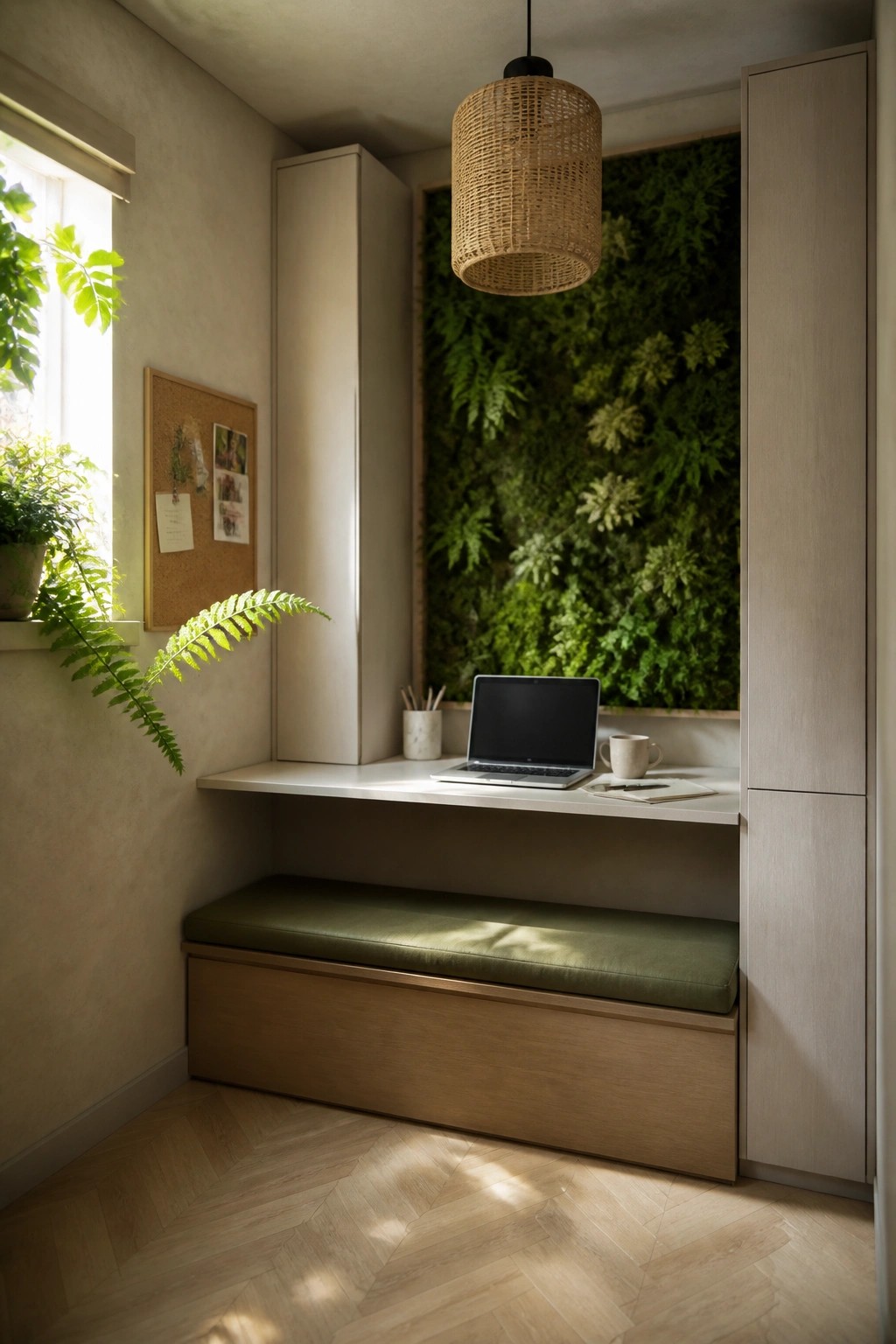
A built-in bench with storage underneath gives you a place to sit without adding extra furniture that crowds the room. The drawer hides papers and supplies while the top surface stays clear for work. This keeps the space feeling open even when the office is small.
It works best in an alcove or corner where you already have wall space to build against. Make sure the bench height matches your desk so you can use it comfortably for long stretches. Avoid filling the drawer with things you need every day since pulling it out each time gets old fast.
Built-In Desks With Hidden Storage
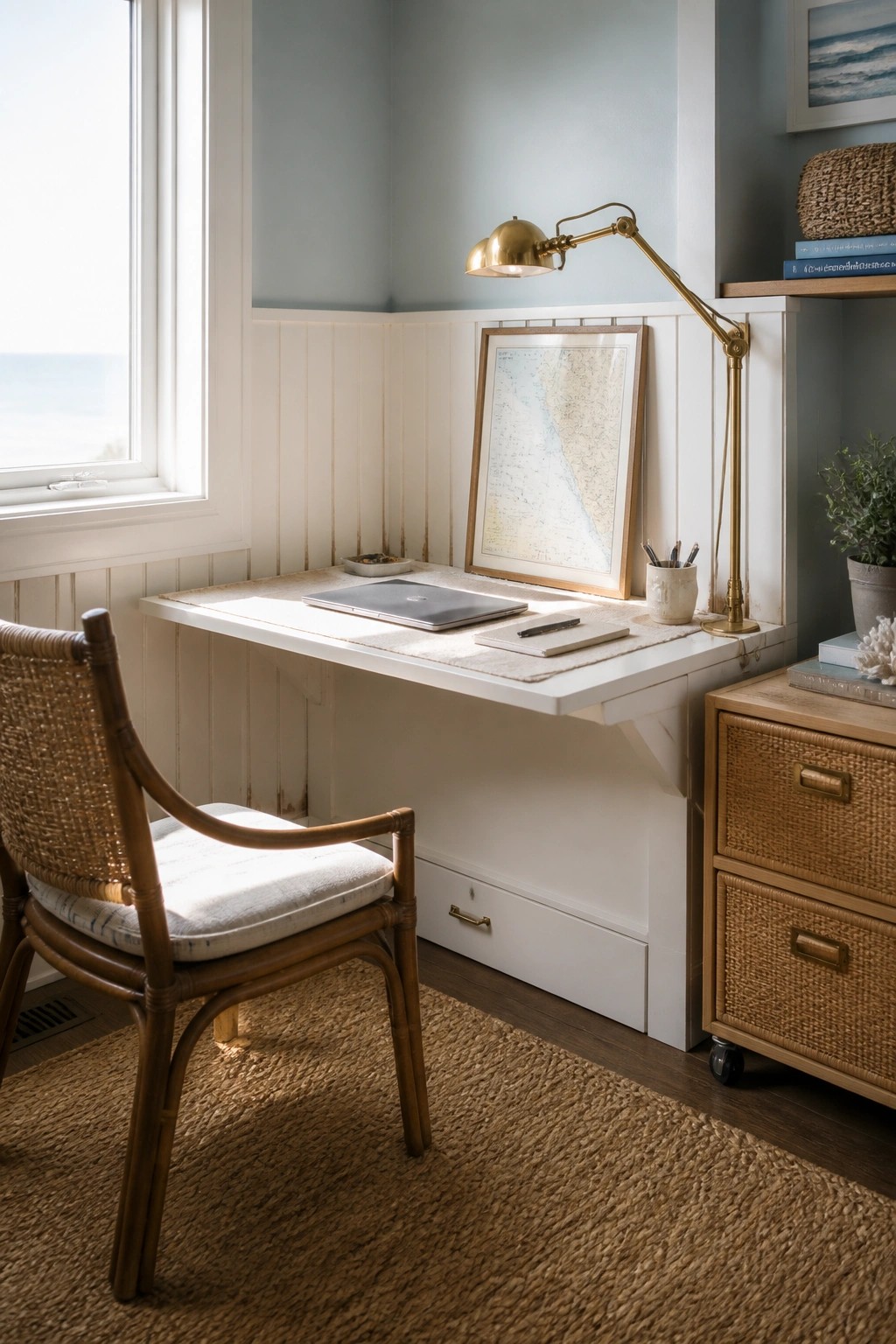
A built-in desk fits neatly into a small office by using wall space that might otherwise sit empty. The drawer below keeps supplies tucked away so the top stays clear and the room feels less crowded.
This works best in homes where floor space is limited and you want a simple modern look. Match the desk finish to the trim and add just one or two pieces of furniture so the area stays functional without feeling busy.
Built-In Bench Storage For Small Offices
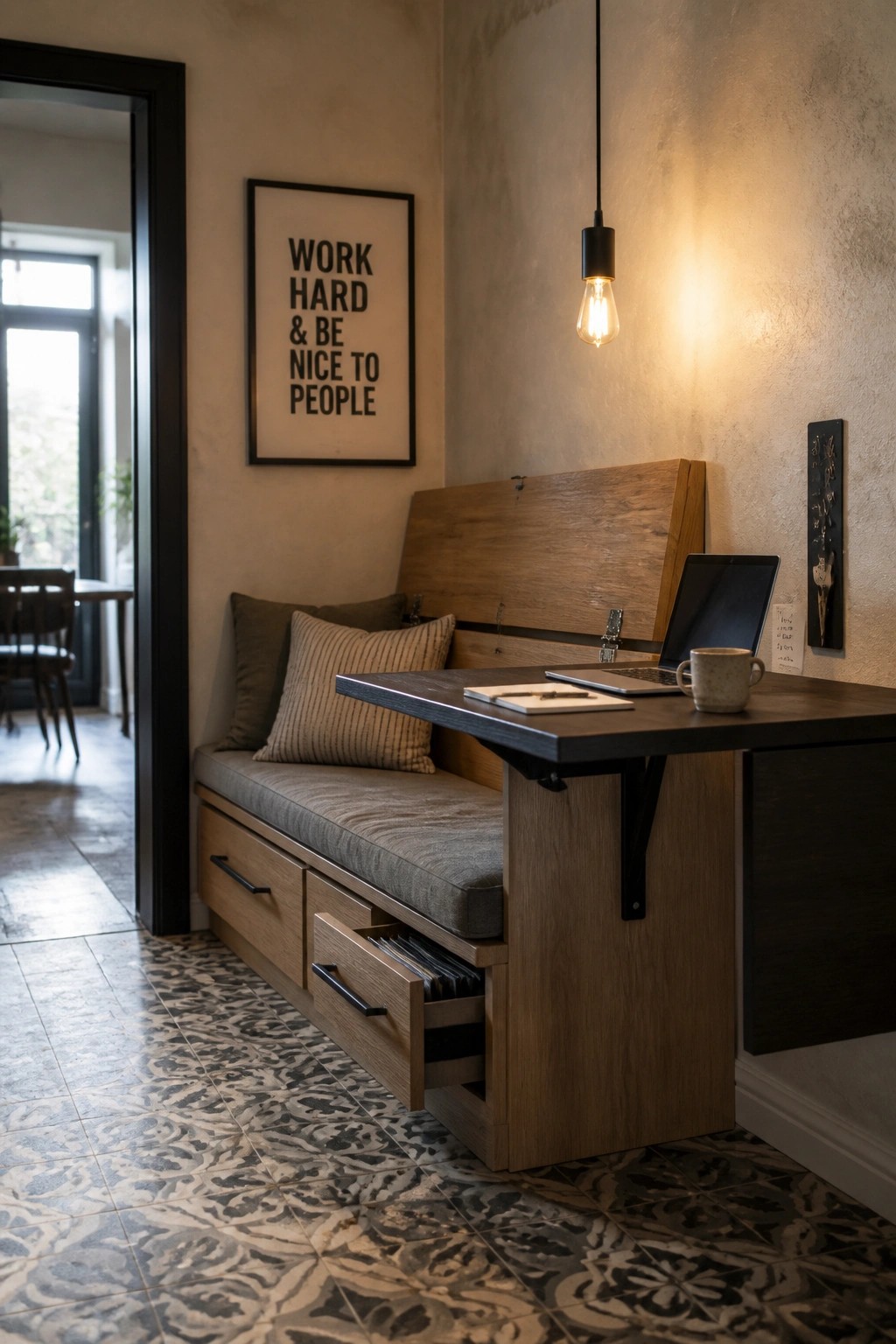
A bench with drawers built into the base gives you seating and file storage in one piece. It keeps the floor clear and cuts down on extra furniture in a tight room.
This works best along a wall where you can mount a desk above it. The drawers hold papers and supplies without adding visual clutter, and the setup stays simple enough for most small homes.
Built-In Desks With Overhead Storage
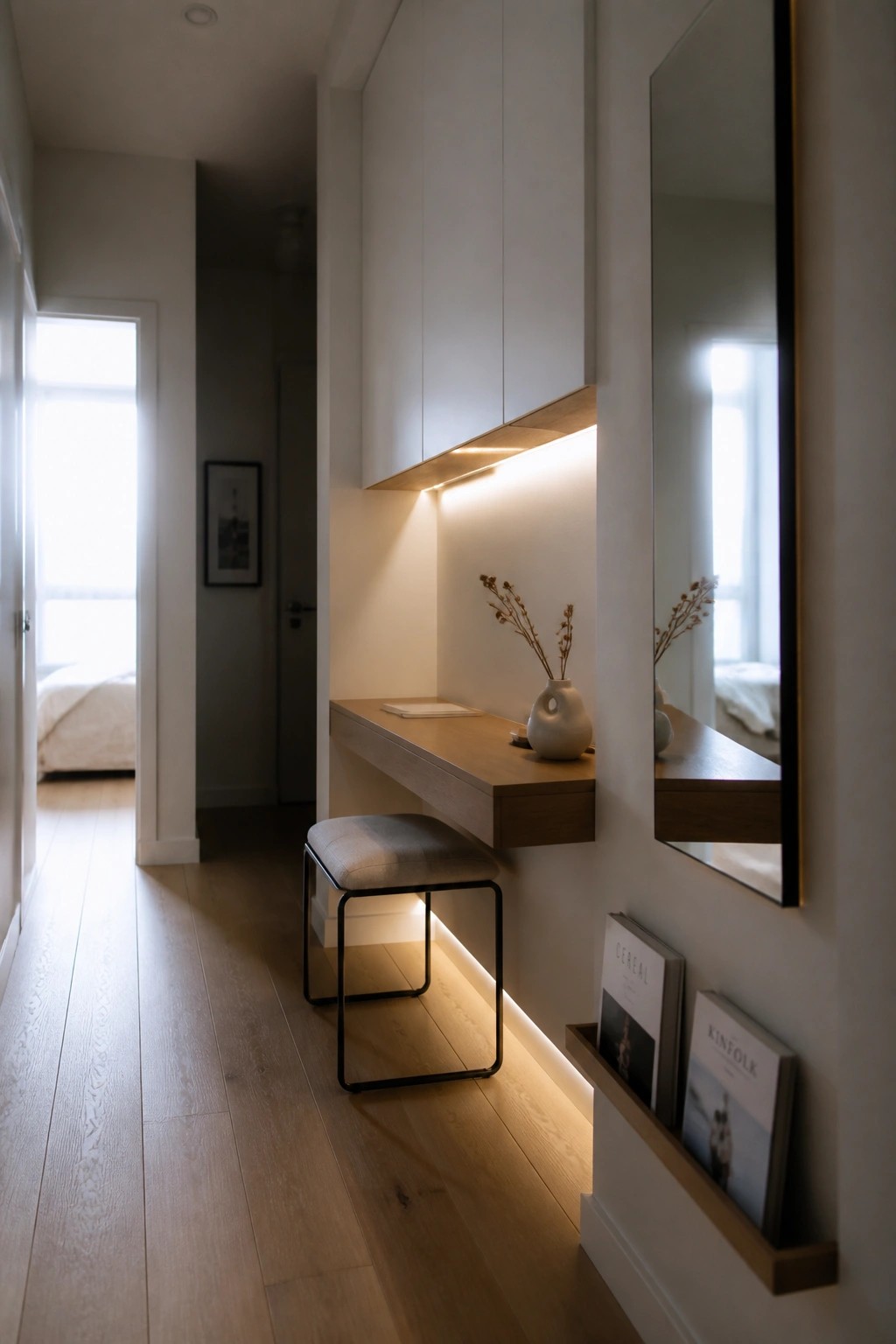
A narrow desk set into a hallway or alcove can give you a workable office without taking over a whole room. Cabinets mounted right above the surface keep supplies tucked away so the desk stays clear and the area feels open.
This approach works best in smaller homes or apartments where space is shared. Keep the lines simple and add a bit of lighting underneath the cabinets so the spot stays usable after dark.
Built-In Shelving For Hidden Storage
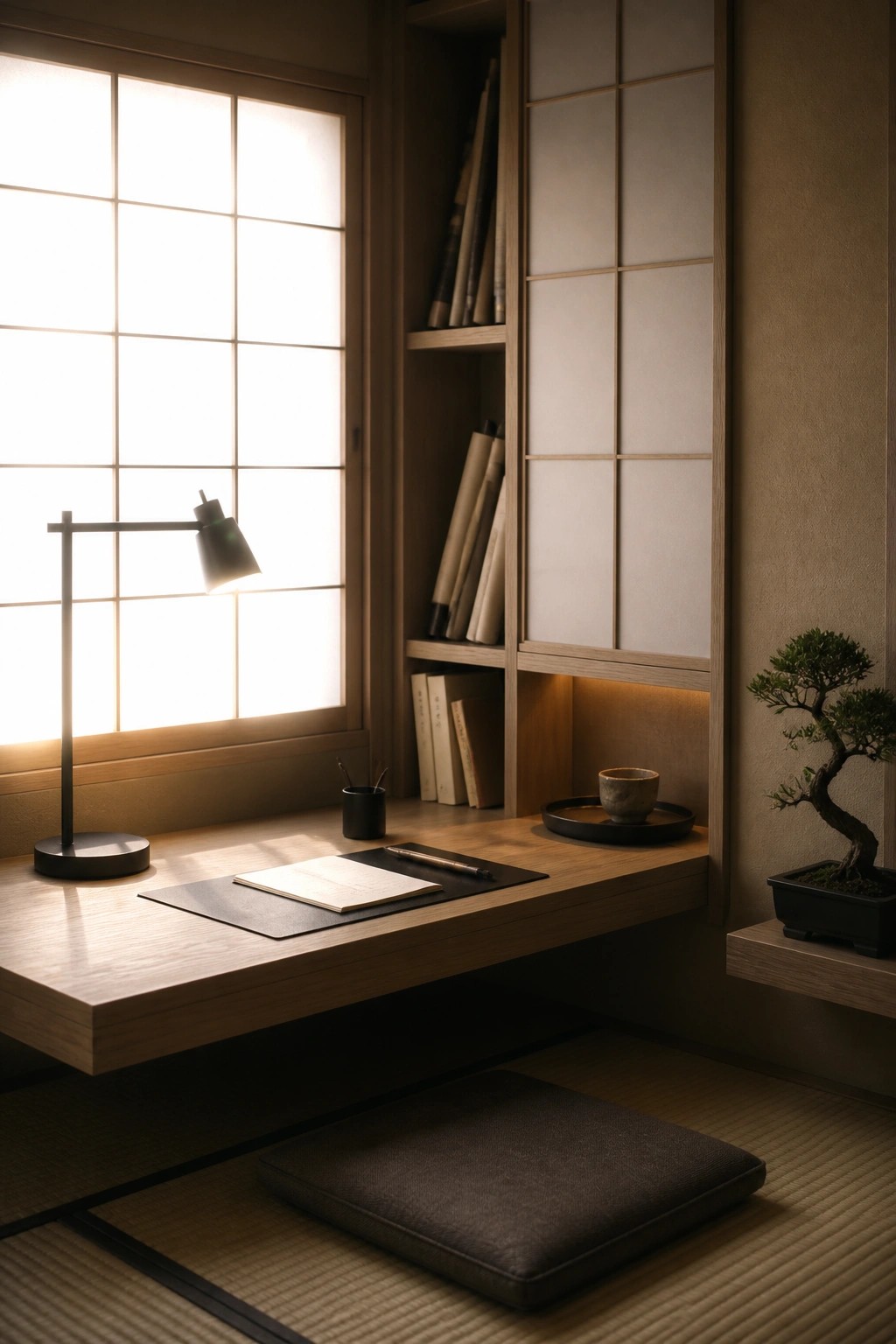
A built-in cabinet unit next to a low desk can hide papers and supplies without adding extra furniture. The clean wood lines keep the space open and calm, which helps a small room feel less crowded even when work piles up.
This setup works well in a spare bedroom or corner of a living area where you want the office to disappear at the end of the day. Keep the cabinet doors simple and match the desk finish so the storage feels like part of the wall rather than an add-on.
Wall Cabinets Add Hidden Storage Above The Desk

A wall cabinet mounted right over the desk gives you a spot for supplies that stays out of the way. It keeps the work surface clear while still making pens, paper, and small items easy to grab.
This setup works best in compact rooms where floor space is limited. Look for a shallow depth so it does not feel like it hangs too far out, and choose doors that close fully to hide the contents.
Floating Desks With Hidden Storage
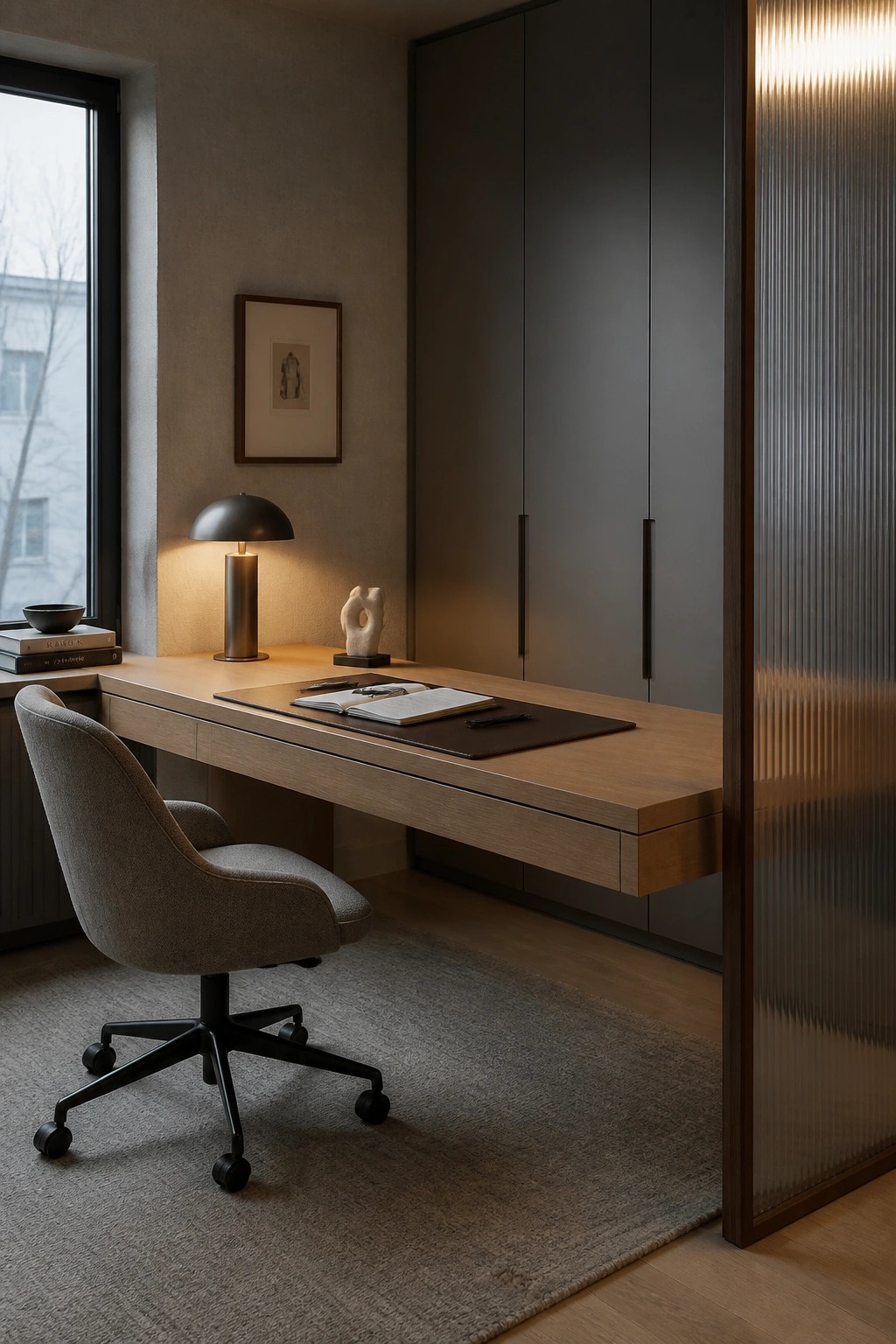
A floating desk with built-in drawers keeps the workspace clear and the room open. It gives you a place to work without adding bulk to the floor, which helps small offices feel less cramped.
Add tall cabinets next to it for papers and supplies that stay hidden. This works best in apartments or spare rooms where you want the space to double as something else when the day ends.
Built In Cabinets Hide A Compact Office
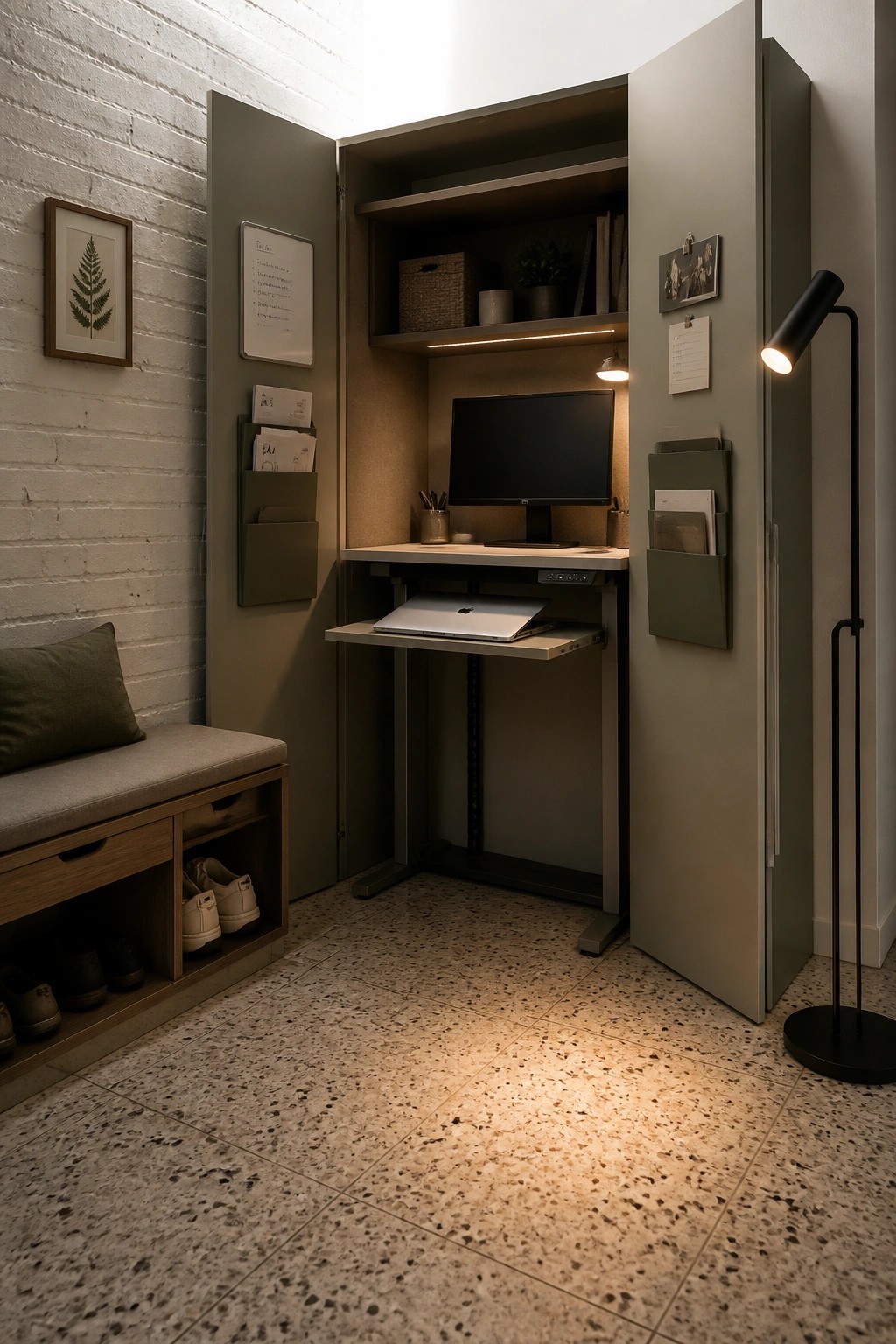
Many small homes need a workspace that does not take over the room when it is not in use. Closing the doors on a built in cabinet keeps the area looking calm and uncluttered while still giving you a proper desk and storage inside.
This approach works best in living rooms or hallways where a separate office is not possible. Keep the doors simple and match them to the surrounding walls so the cabinet blends in rather than stands out.
Built-In Drawers Keep Supplies Tucked Away
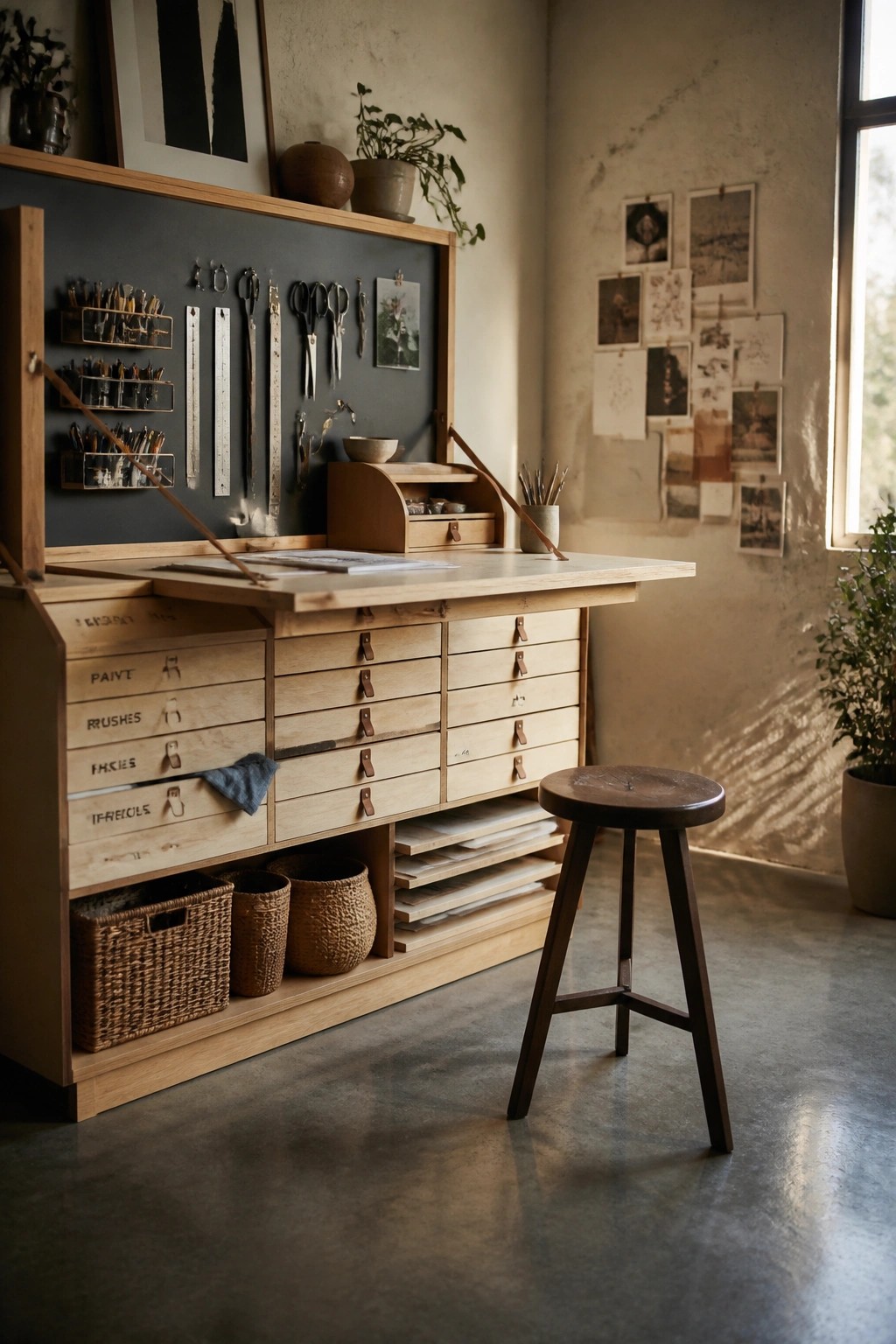
A desk with lots of shallow drawers gives you room to sort and hide all the little things that usually pile up. Everything stays out of sight, so the top stays clear and the whole piece still looks like regular furniture.
This works best in a small room that has to serve more than one purpose. Keep the drawer fronts plain and the labels simple so the storage does not call attention to itself.
Built-Ins With Hidden Storage
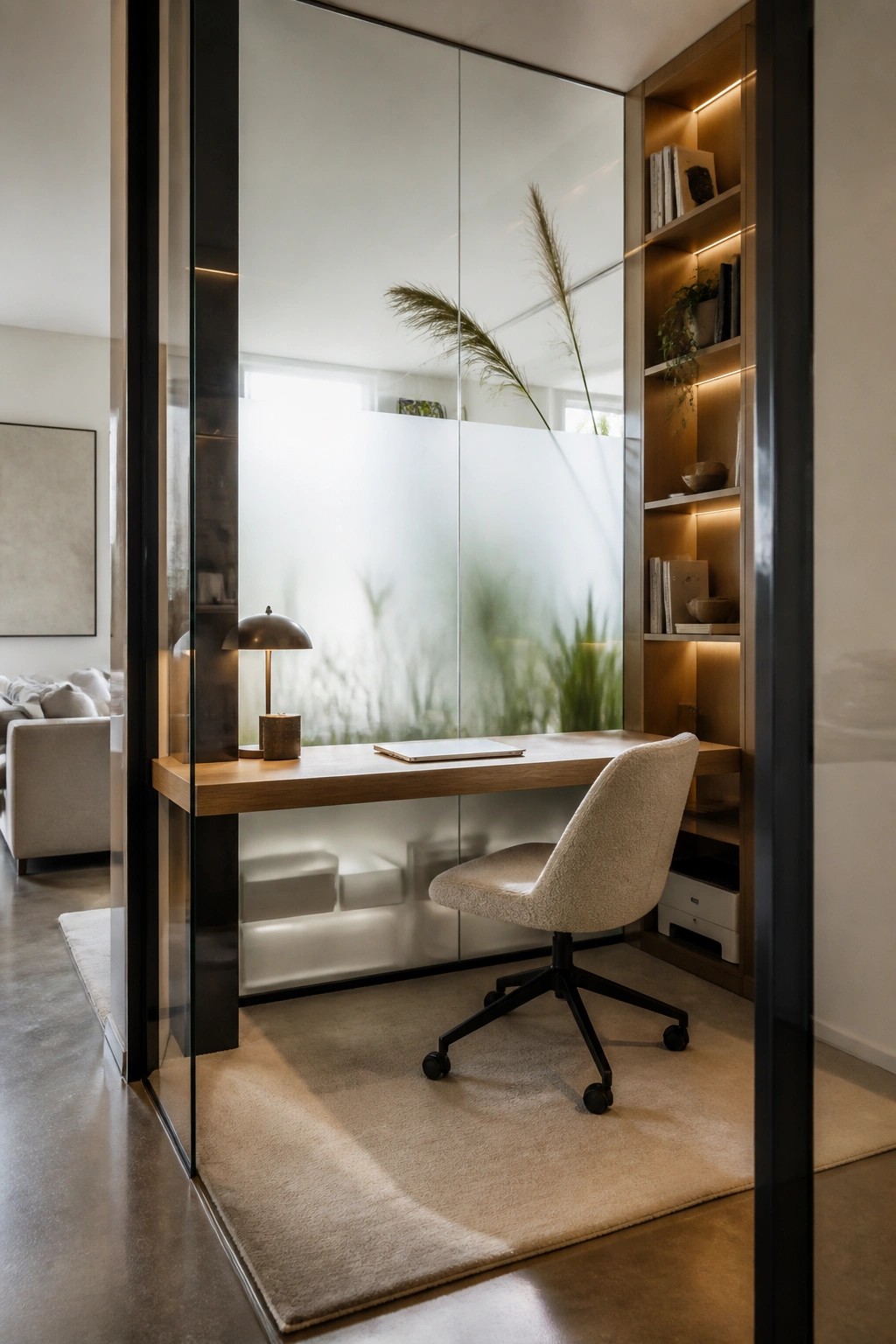
A built-in unit next to the desk gives you open shelves for the things you use often and closed space below for everything else. This keeps the surface clear and the whole area looking simple instead of crowded.
It works well in a small room or corner where you need every inch. Place the unit along one wall so the doors or drawers stay out of the main walking path. Stick to the same wood tone as the desk to keep the lines clean.
Built-In Desk Under The Stairs
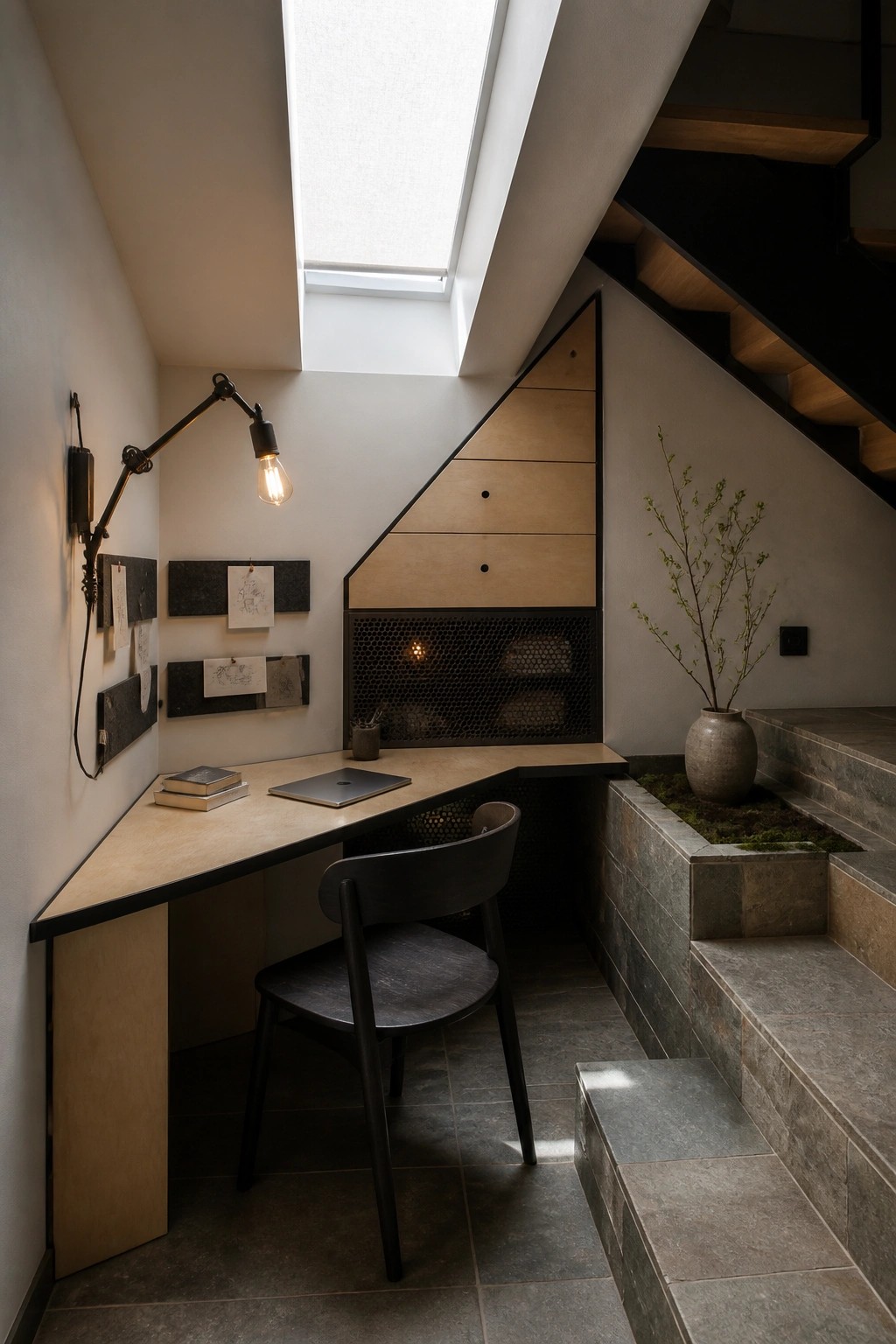
One simple way to add a small office is to build the desk directly into the unused space under the stairs. The clean lines of the desk and surrounding panels keep the area from feeling crowded, while the storage stays tucked away out of view.
This works best in homes with open stairs that leave a usable gap below. It suits modern layouts that already rely on built-ins, and a simple mesh screen can hide supplies without adding extra furniture.
Built-In Desks With Hidden Storage

Built-in desks with hidden storage help small offices stay neat without extra furniture. The drawers pull out only when needed, so the main surface stays clear for work.
This setup works best in rooms that serve more than one purpose. Keep everyday items tucked away in the compartments so the space feels open even on busy days.
Frequently Asked Questions
Q: How do I keep daily supplies handy without cluttering the clean surfaces?
A: Slide a shallow tray into a wall niche or under a bench seat. Grab what you need in seconds and tuck it away again. This keeps the main workspace open and sharp.
Q: What if my cables still show no matter how I arrange things?
A: Run them through a desk grommet straight into a hidden channel behind the wall. Secure the rest with clips inside a base cabinet. The room stays neat because the wires never reach the visible areas.
Q: Can this style work if I need a spot for occasional paperwork piles?
A: Drop the papers into a slim pull-out bin that sits flush with your desk side. Close it after each session so the lines stay uninterrupted. One contained spot handles the mess without extra furniture.
