

Over time I have found that a workspace holds up only when the desk, chair, and light placement match the way I actually move through a full day at home.
The first detail that usually matters is how the setup handles changing light and the need to stand or stretch without breaking focus.
Not every corner supports steady routines the same way.
A few adjustments I tested in my own place showed that one extra surface for notes or a clearer path to the window can keep the room from feeling cramped by midafternoon.
I tend to return to ideas that let the space serve both the work itself and the quick resets needed to stay consistent.
Position Your Desk by a Window
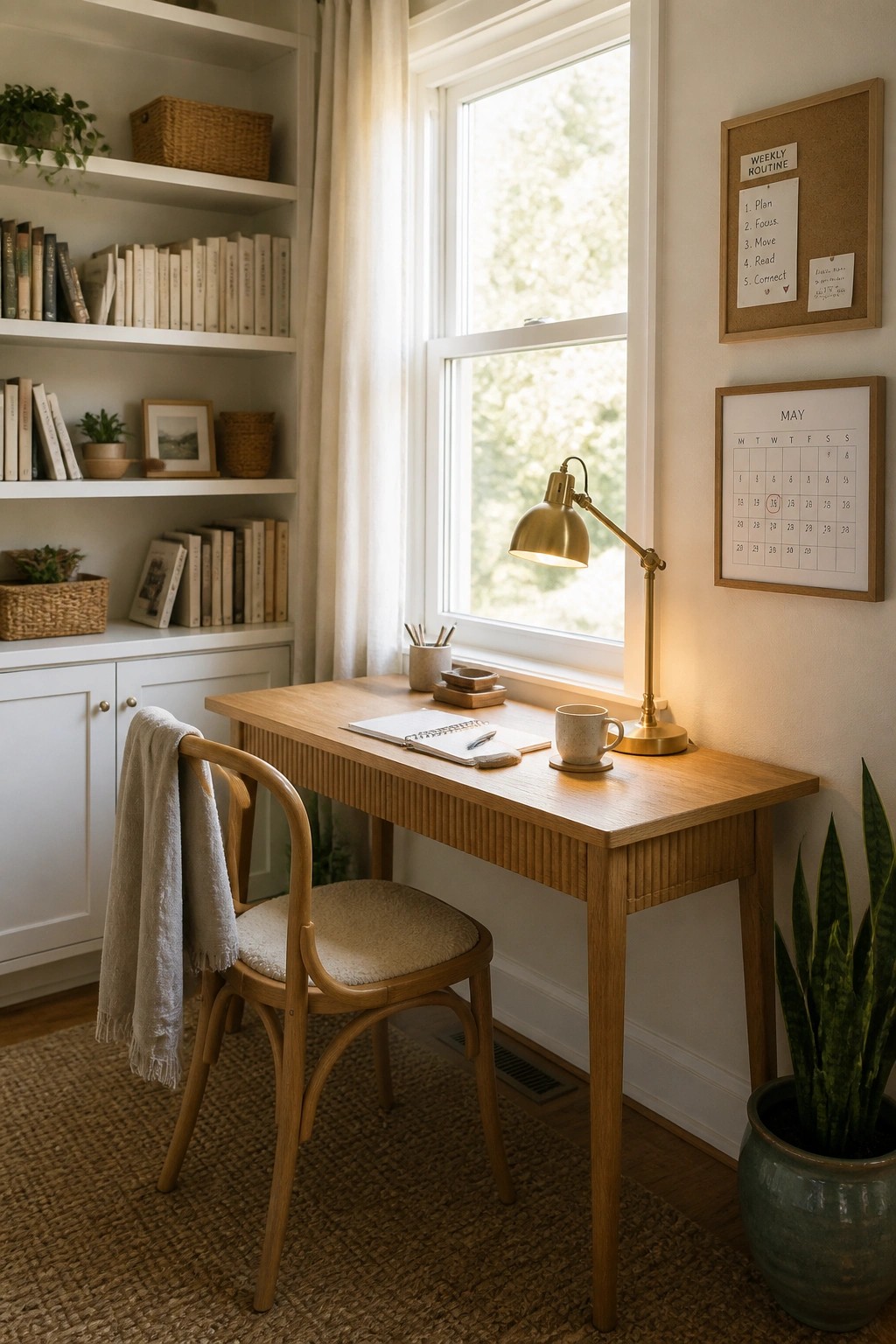
Placing the desk right by a window makes the whole workspace feel brighter and more inviting during long workdays. Natural light helps keep energy steady, and the view outside gives your eyes a break without needing to leave the room.
This setup works especially well in smaller homes where every corner needs to serve a purpose. Keep a few shelves or a cabinet nearby so supplies stay organized and within reach, which makes it easier to stick with a steady routine.
Paint an Alcove Dark to Set Off Your Desk
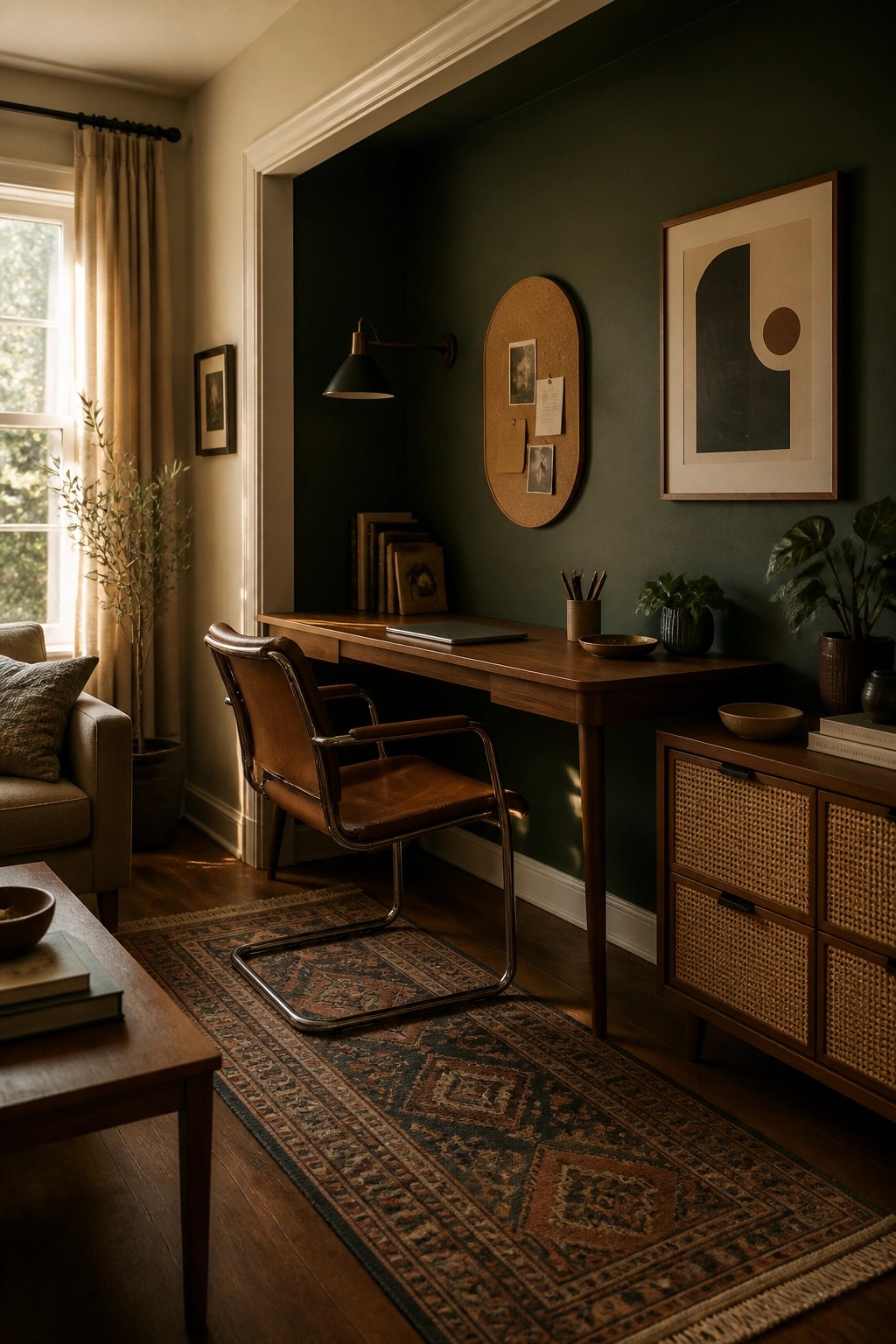
Many people find that a workspace stays more consistent when it feels slightly separate from the rest of the room. A dark wall color tucked into a small alcove or corner does this without any extra construction. It pulls the desk area together and makes the space feel more contained.
This approach works well in homes that have open living areas or limited square footage. Pair the dark paint with a simple wood desk and a comfortable chair so the spot still feels warm enough for long hours. Keep the surrounding room lighter so the alcove reads as a clear work zone rather than a heavy corner.
Place Your Desk Near a Window
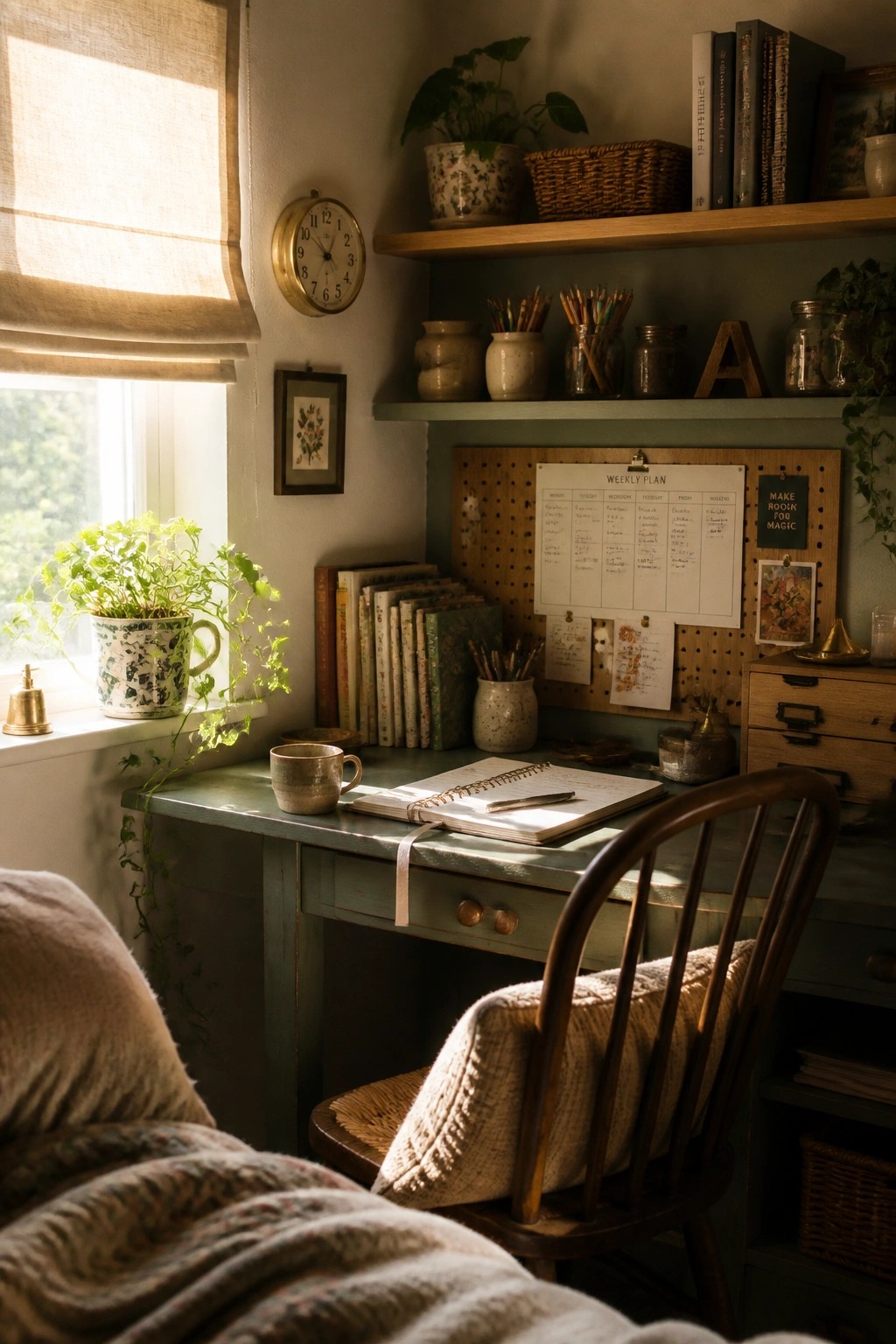
A desk set right by a window brings steady natural light into the workspace without needing extra lamps during the day. This setup also lets plants thrive on the sill and nearby shelves, which keeps the area feeling fresh and less closed in during long work hours.
It works well in smaller rooms or corners where you want the space to feel open rather than boxed in. Try to keep the window treatment simple so the light stays consistent, and add just a few plants that can handle the exposure.
Built-In Desks With Overhead Shelving
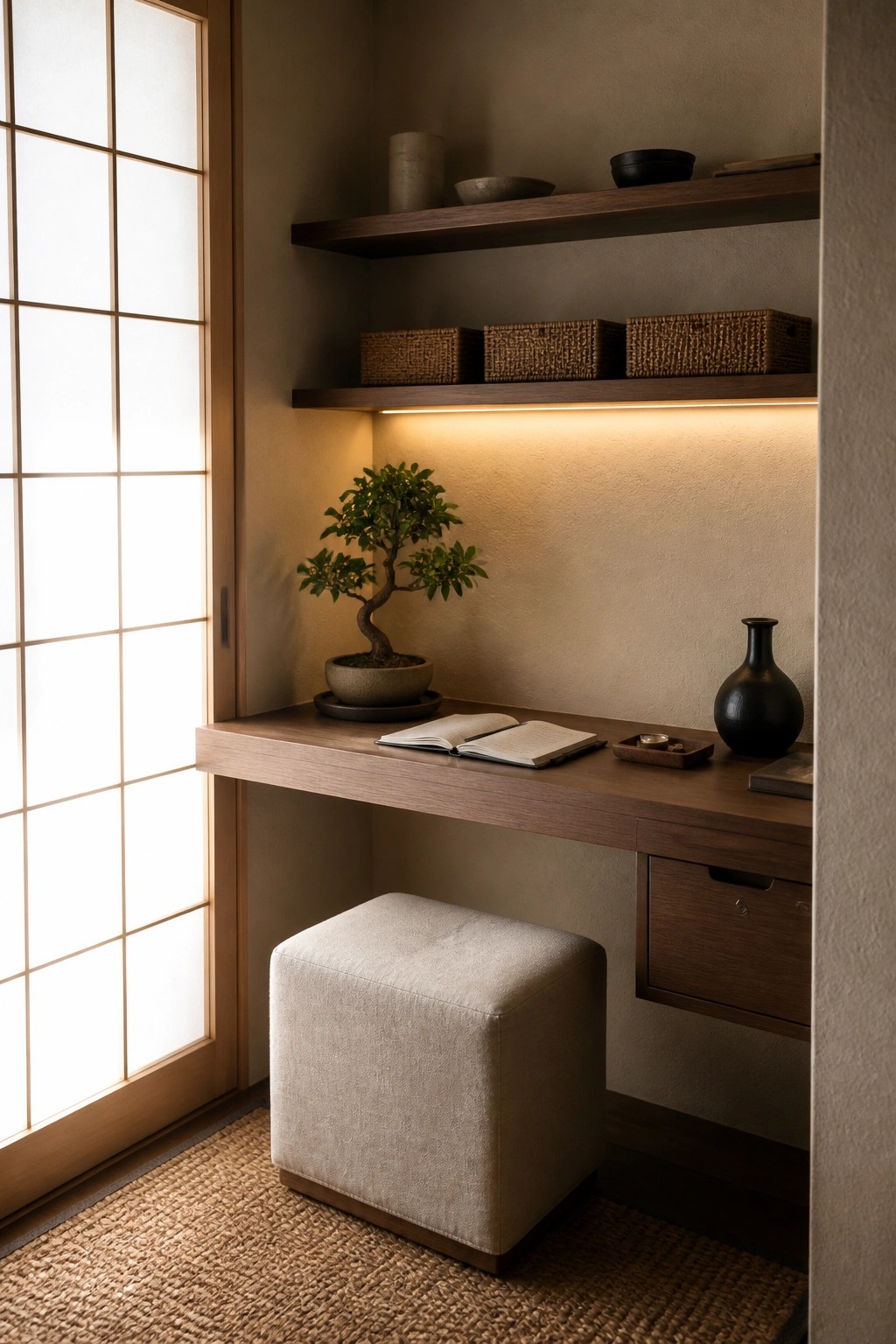
A built-in desk with shelves right above it creates a workspace that stays organized without feeling cramped. The wood surface and simple shelves keep everything in reach while the open space below leaves room for a stool or chair.
This kind of setup works well in smaller rooms or quiet corners where you need a dedicated spot that does not take over the whole area. It suits homes that already use natural wood tones and helps the workspace feel like part of the room instead of a separate office.
Place Your Desk Beneath Skylights
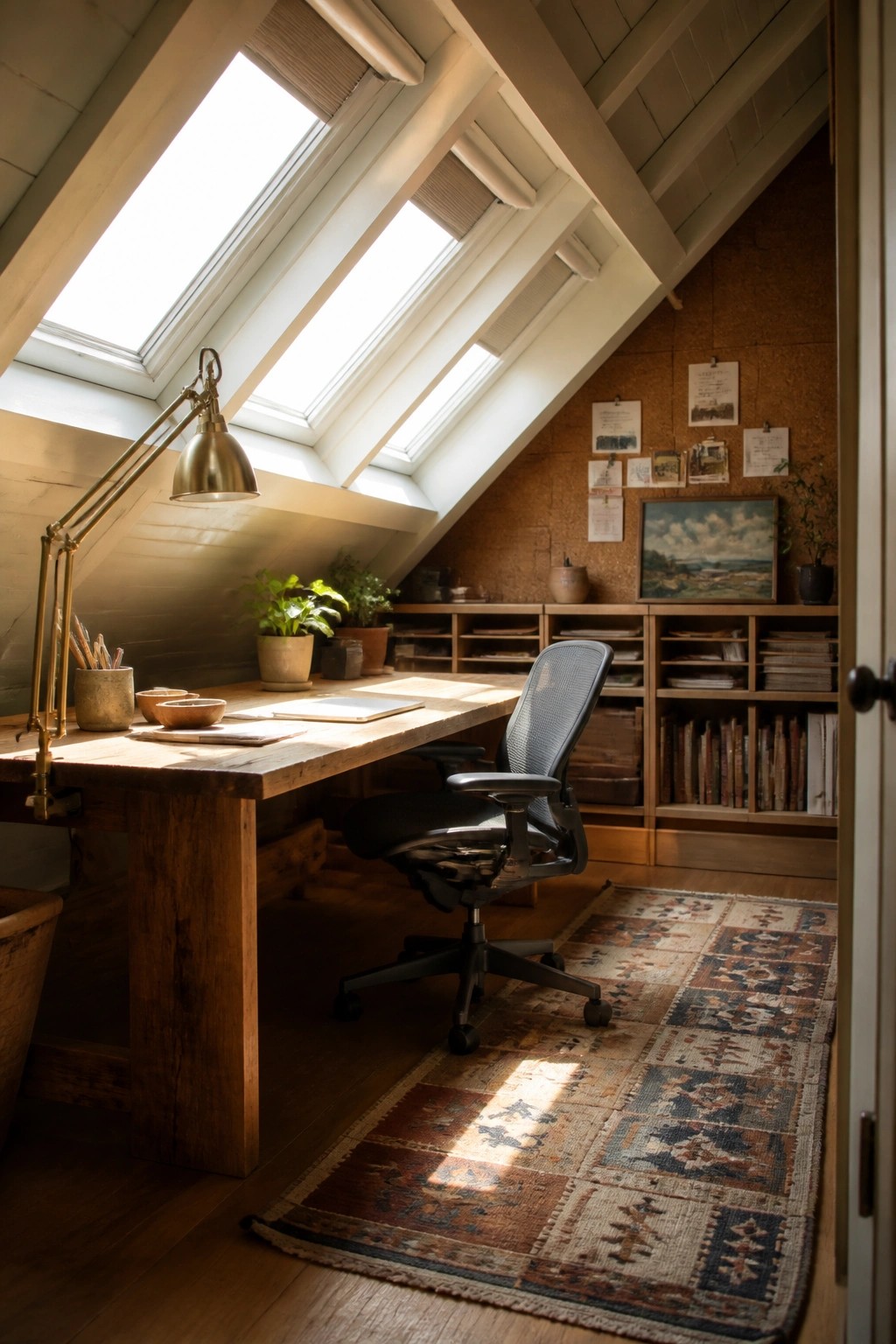
Natural light makes a big difference when you need to stay focused during long workdays. Putting the desk right under skylights brings in steady daylight that feels softer than overhead lamps and helps the whole space feel less closed in.
This setup works especially well in attic rooms or any area with a sloped roof. Keep the desk surface clear enough for the light to spread and add a simple task lamp only for darker hours. It suits smaller homes that need to turn unused upper space into a practical work area without major changes.
Define Your Workspace With A Slat Screen
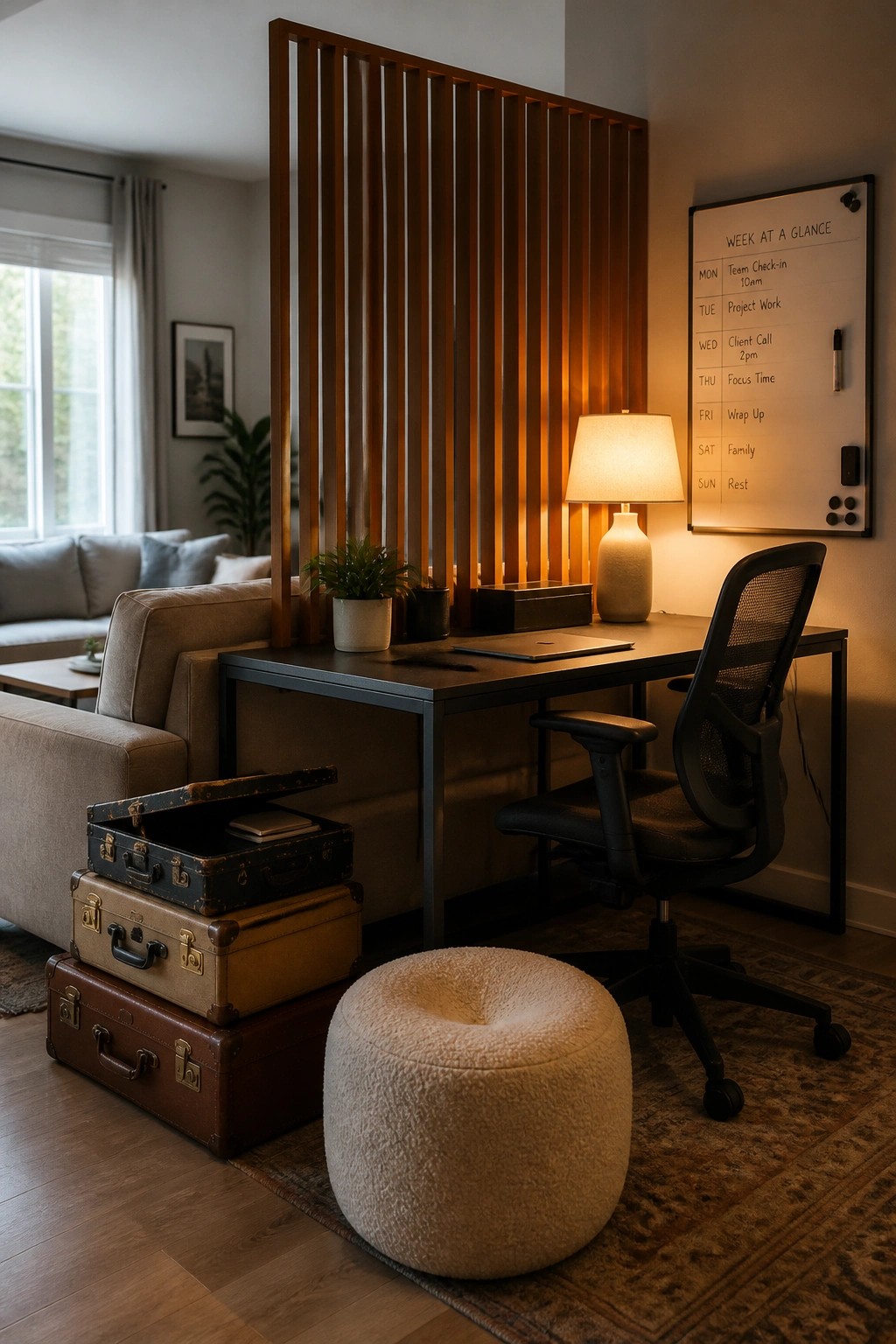
A vertical slat screen creates a clear boundary for your desk without closing off the room. It helps the workspace feel set apart while still sharing light and a sense of the larger space around it.
This approach works best in open living areas or combined rooms where you need a daily work spot that does not take over everything else. Keep the divider simple, add a lamp on the desk, and the area starts to feel like a consistent place to sit down and focus.
Built-In Shelving With Matching Storage Bins
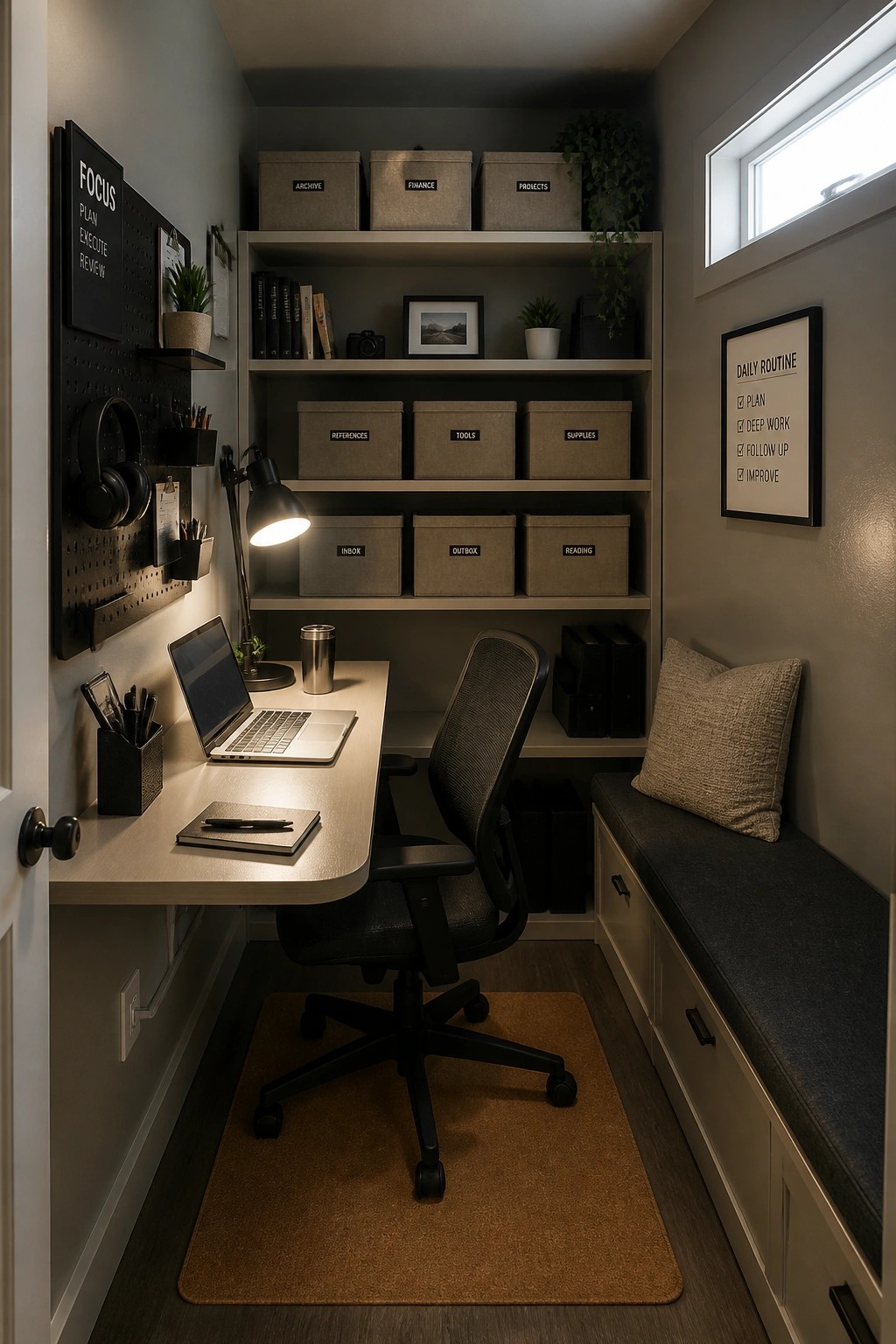
Built-in shelves lined with uniform storage bins turn a narrow space into a workspace that stays organized without much effort. The matching bins keep everything out of sight while still making it easy to find what you need, and the labels on the front remove any guesswork during a busy day.
This setup works especially well in small rooms or converted closets where floor space is limited. Keep the bins consistent in size and color so the shelves look calm rather than cluttered, and leave a little open space on the desk itself for daily tasks.
A Desk Built Into the Bay Window
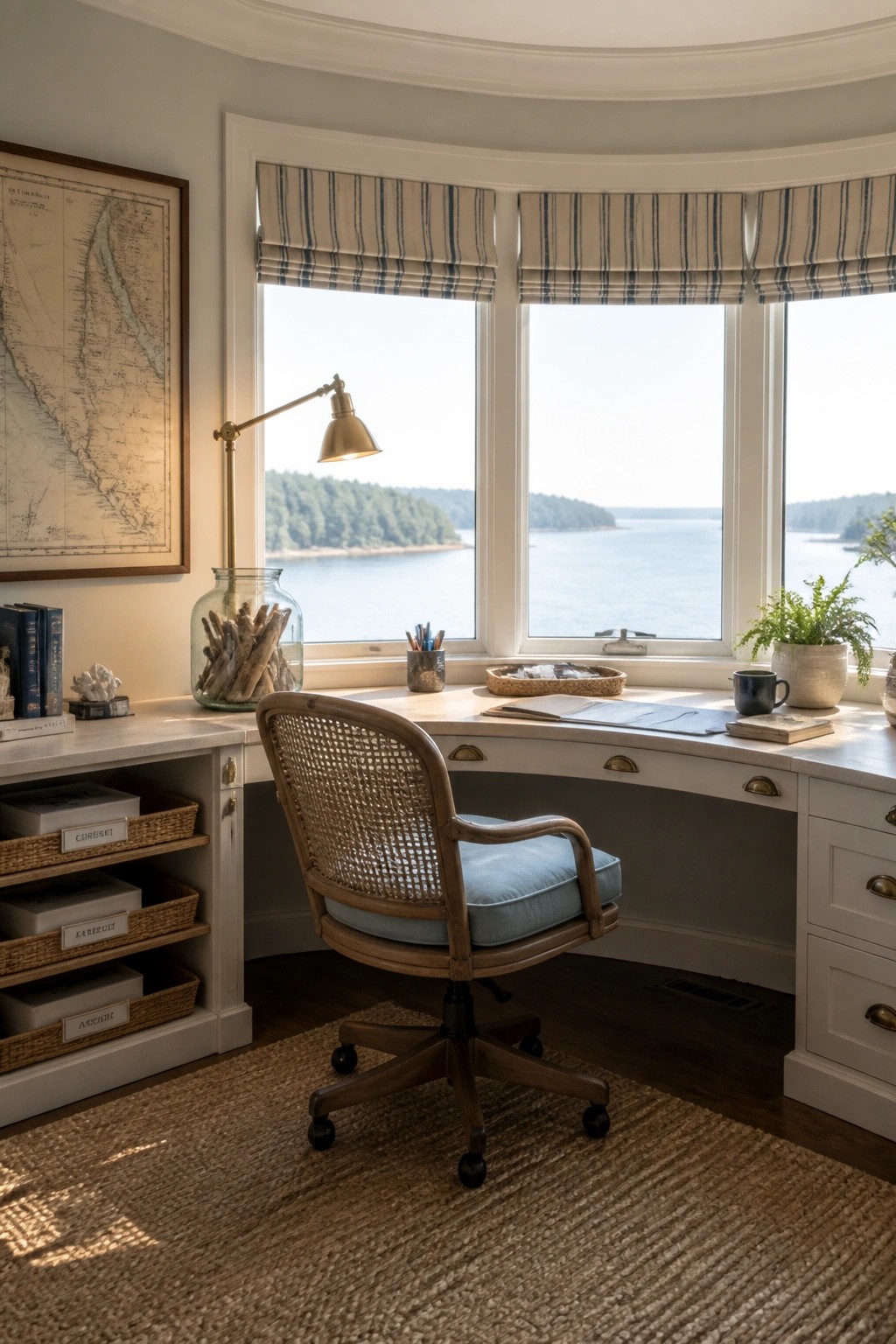
A desk that follows the curve of a bay window keeps the workspace bright and connected to the view outside. It turns an awkward window shape into a steady spot for daily work without needing extra floor space or heavy furniture.
This idea suits homes that already have a deep window bay or alcove. Keep storage low and open so the area stays easy to move through and does not crowd the room.
Layer Natural Textures Around Your Desk
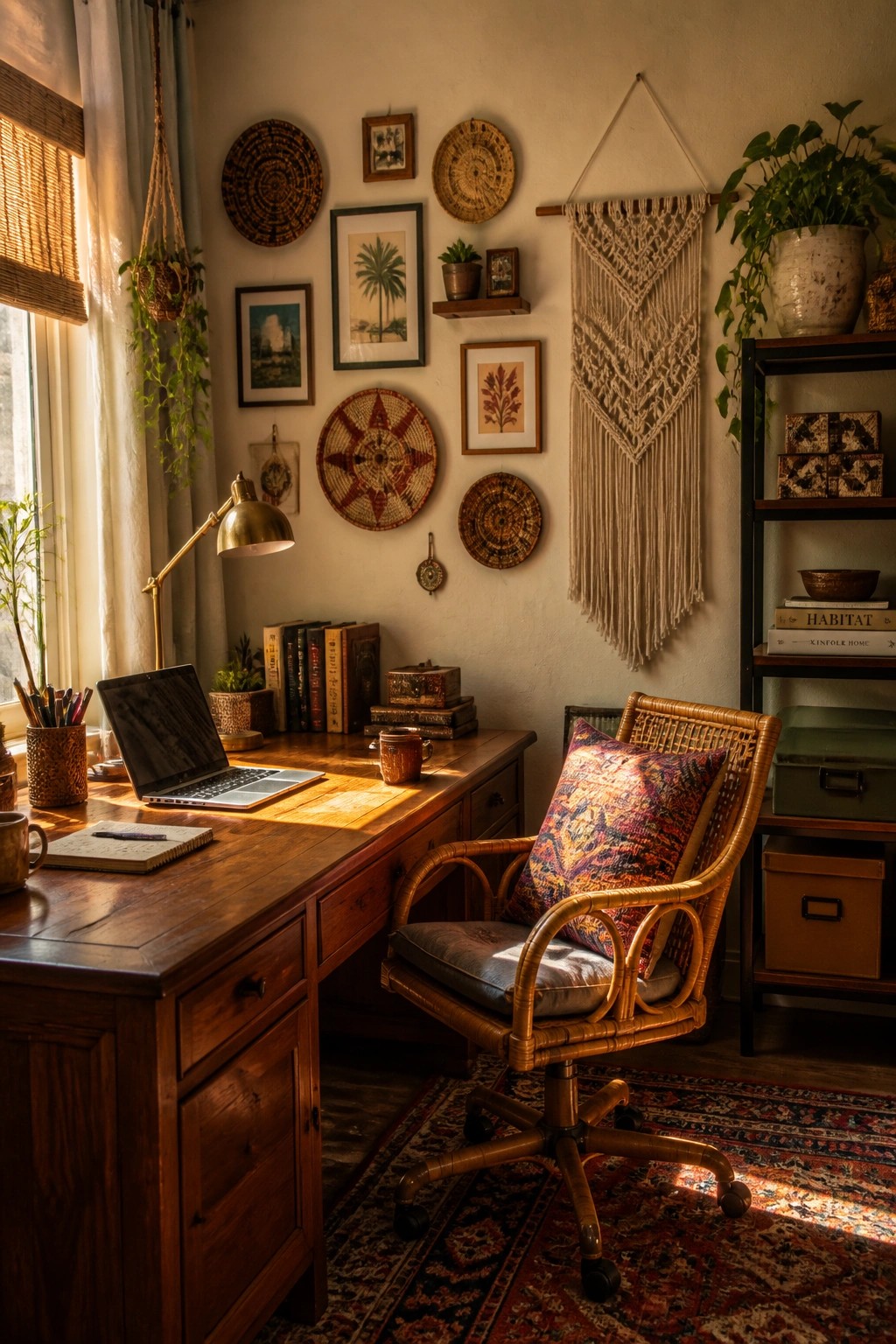
Natural textures keep a workspace from feeling cold or overly functional. Wood surfaces, rattan seating, and woven wall pieces add warmth that makes it easier to sit down and stay focused for hours.
This mix works best in smaller rooms or homes that already lean toward a relaxed style. Keep the main furniture simple and let one or two woven accents handle the rest so the space stays calm instead of cluttered.
Turn One Wall Into A Simple Command Center
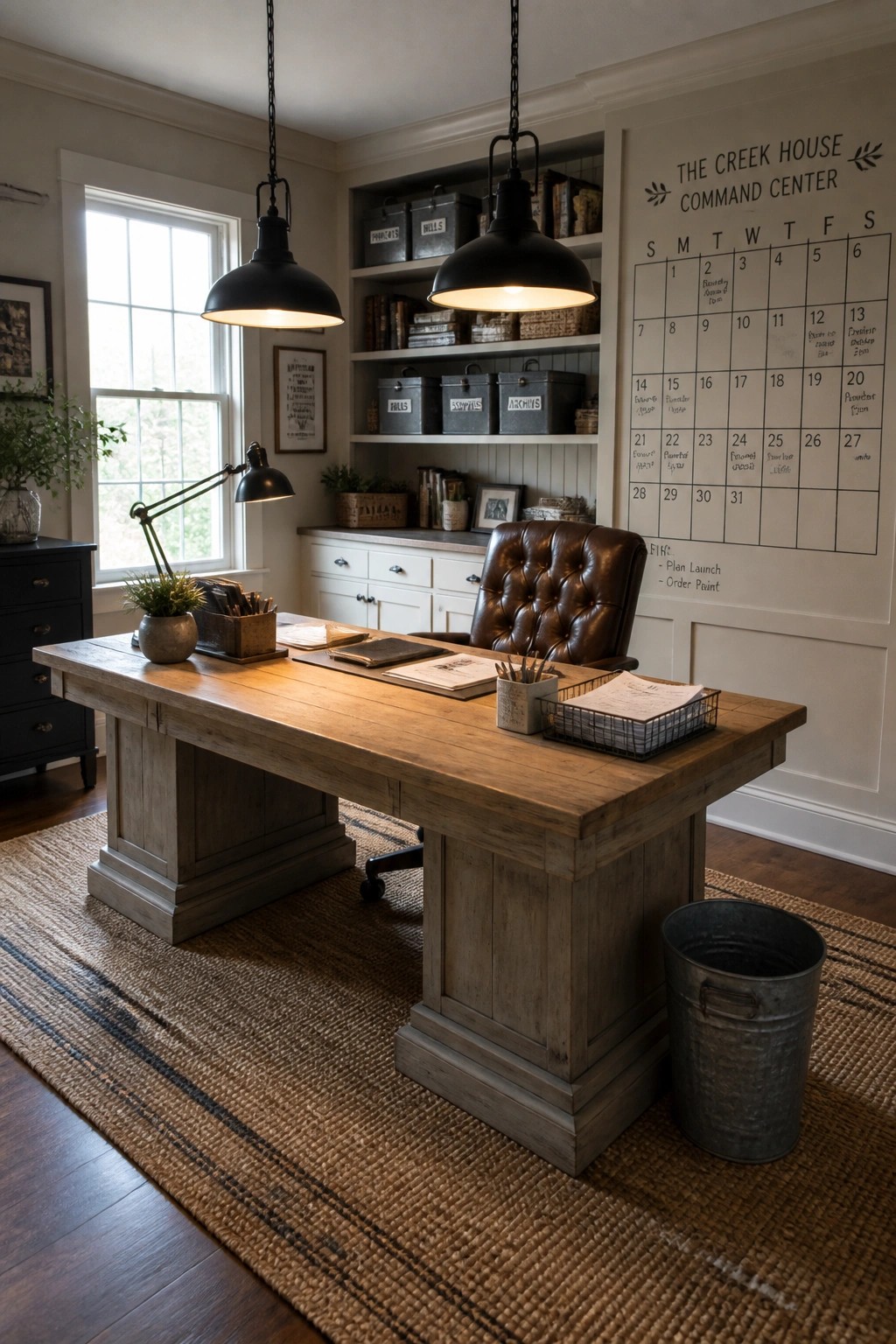
A wall calendar placed right above the desk gives you a clear view of the month without reaching for your phone. It keeps appointments and tasks visible while you work, which helps maintain a steady routine over time.
This works best in a room where you can dedicate one wall to planning tools. Add a few open shelves or bins nearby so papers and supplies stay within reach without cluttering the desk surface.
Adding A Task Lamp To Your Workspace
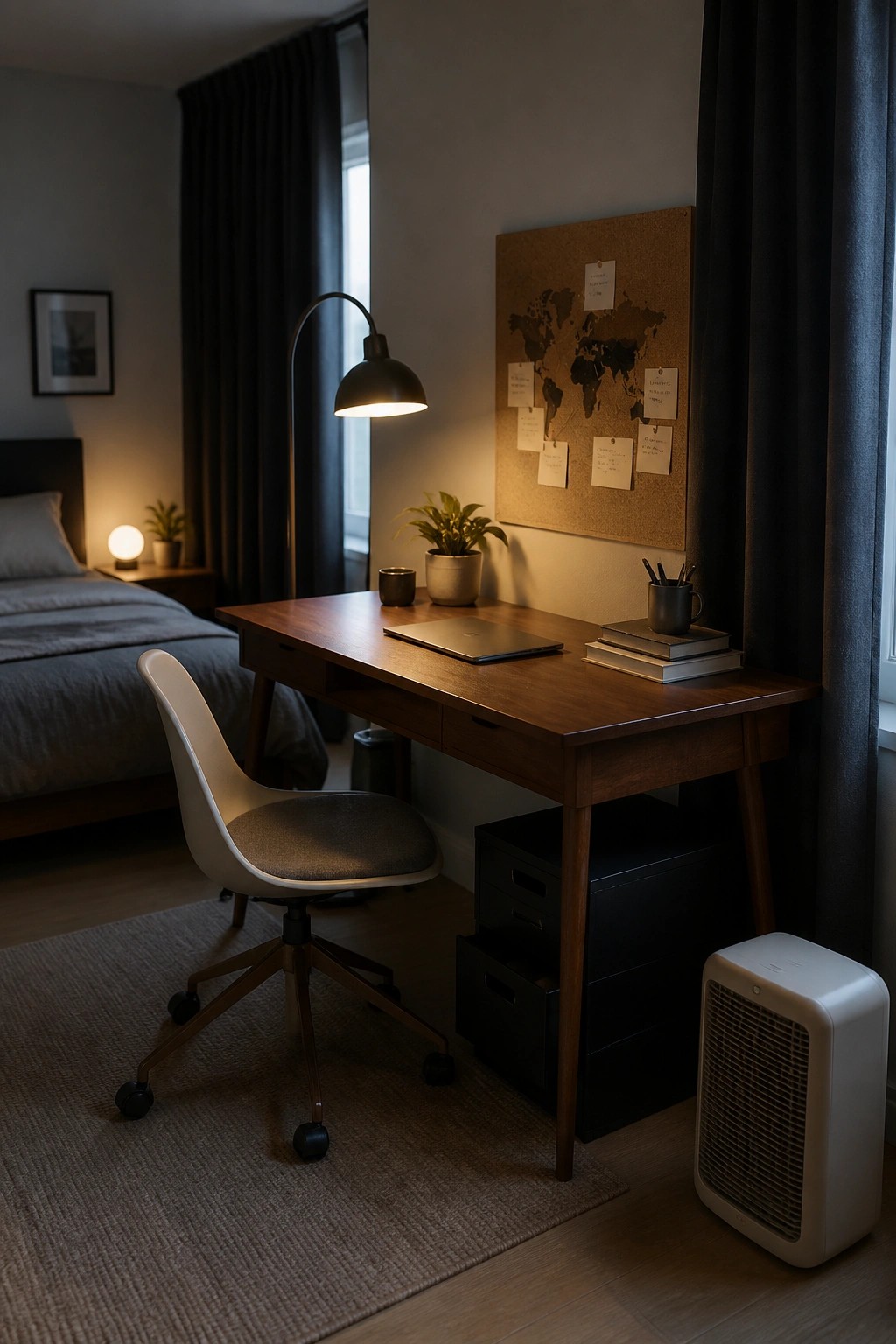
A task lamp makes it easier to stay focused during long work sessions. It directs light exactly where you need it, so you can work comfortably without turning on every light in the room.
This approach works well in bedrooms or smaller homes where space is shared. Place the lamp on the side that matches your writing hand and keep the shade angled to cut down on screen glare.
A Work Table With Open Storage Underneath
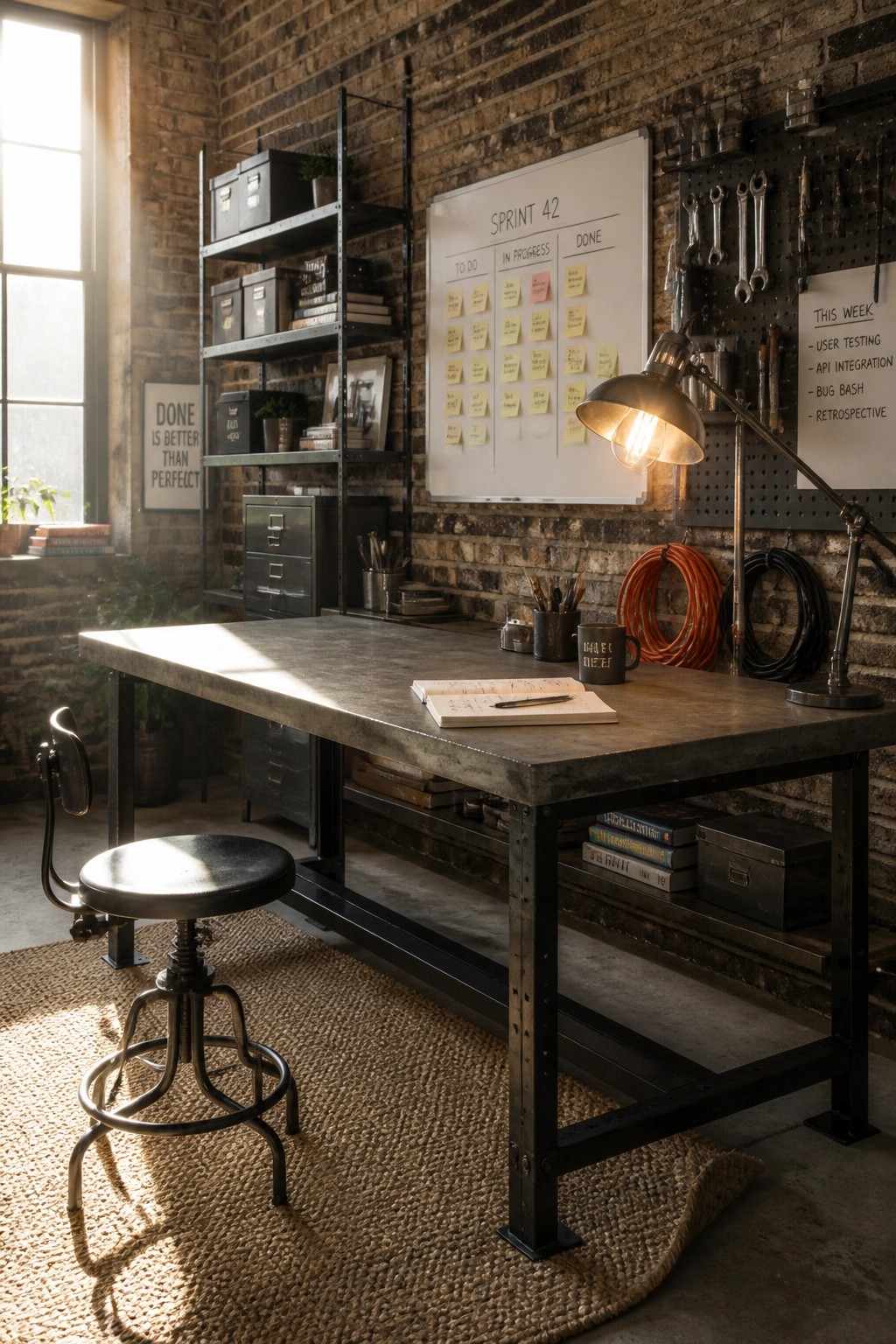
A thick work table with open space below gives you room to keep books and supplies close without adding extra furniture. The lower shelf stays easy to reach while you work, and the solid top holds up to daily use without feeling cramped.
This setup works best in smaller home offices where you want quick access to reference materials. Keep only what you use often on the shelf so it does not turn into clutter.
Soft Colors Help a Workspace Feel Less Like an Office
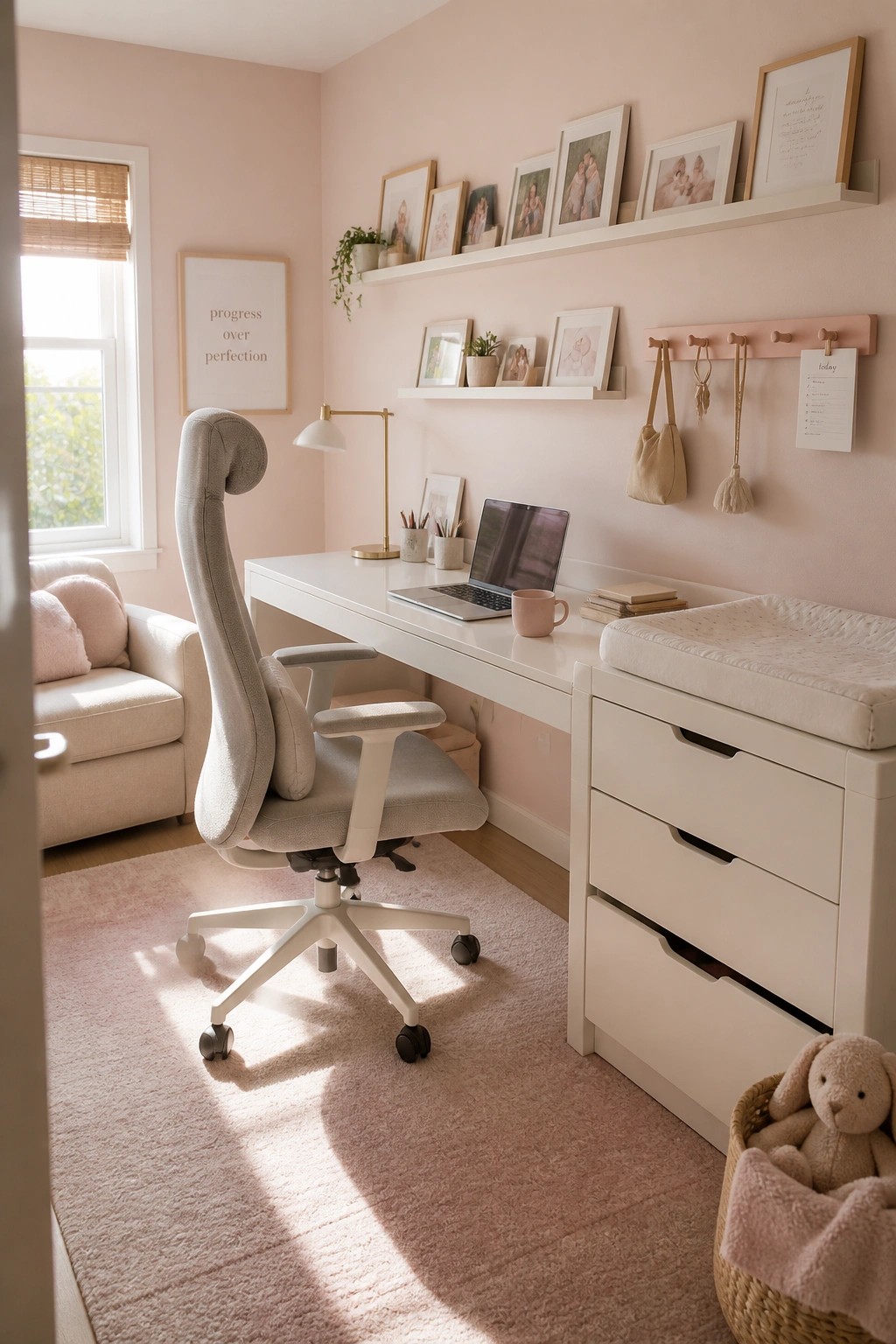
A gentle color scheme can make it easier to sit down each day without that heavy feeling some offices bring. Soft pink walls and warm neutrals turn the space into something calmer, which helps when you need to focus for hours at a time.
This approach works especially well in smaller rooms or spaces that double as something else during the day. Keep the furniture simple and light so the color stays the main thing you notice.
Built-In Shelves for a Focused Office
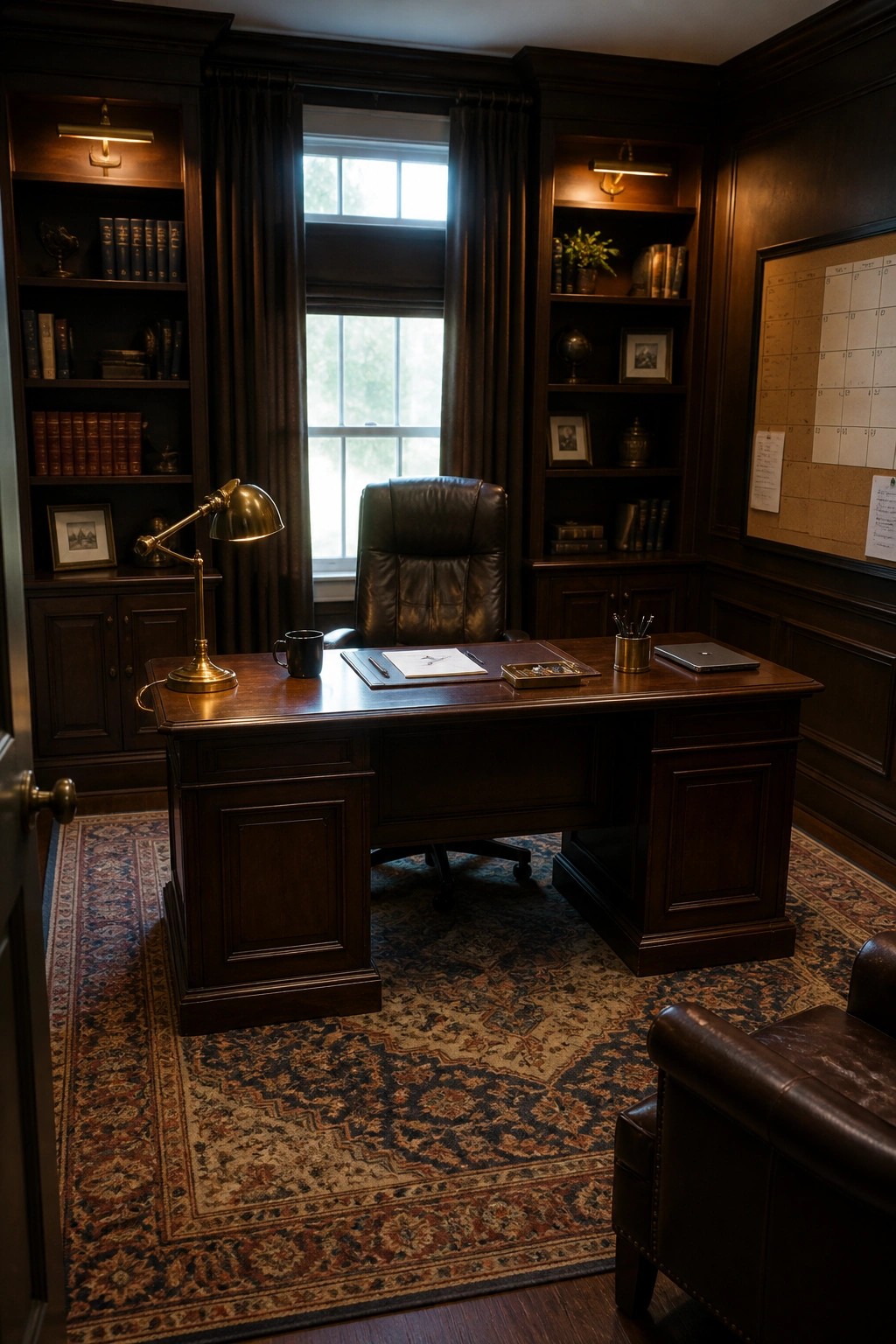
Built-in shelving around a desk gives the workspace a settled, purposeful feel. It keeps books and supplies close without adding extra furniture that can crowd the room, and the enclosed look helps the space read as a dedicated work area rather than a corner of another room.
This approach works best in homes with enough wall space to run shelves from floor to ceiling on either side of a window. It suits people who want a quieter, more traditional office rather than an open, minimal setup. Keep the shelves from getting too packed so the room still feels calm during long workdays.
Add a Compact Workspace Counter in the Kitchen
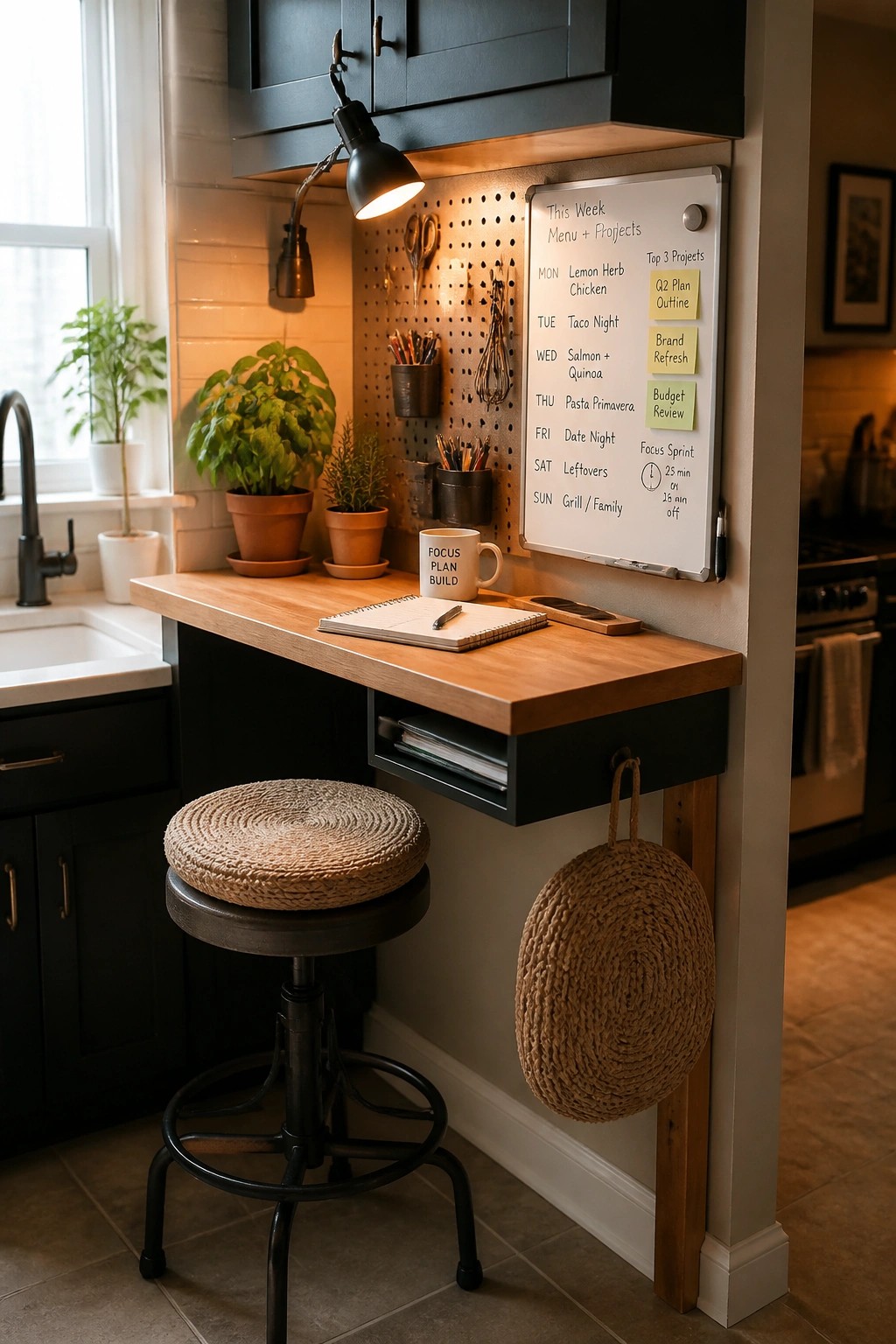
A small workspace built along an existing kitchen wall keeps remote work close to daily routines without taking over another room. The counter sits at a comfortable height for notes and calls, while the wall above holds a pegboard and whiteboard for quick access to tools and schedules.
This setup works best in homes where the kitchen already serves as a central hub. Keep the surface clear except for a notebook or laptop, and use the boards to track weekly tasks so everything stays in one spot rather than scattered around the house.
Add a Standing Desk With a Mat
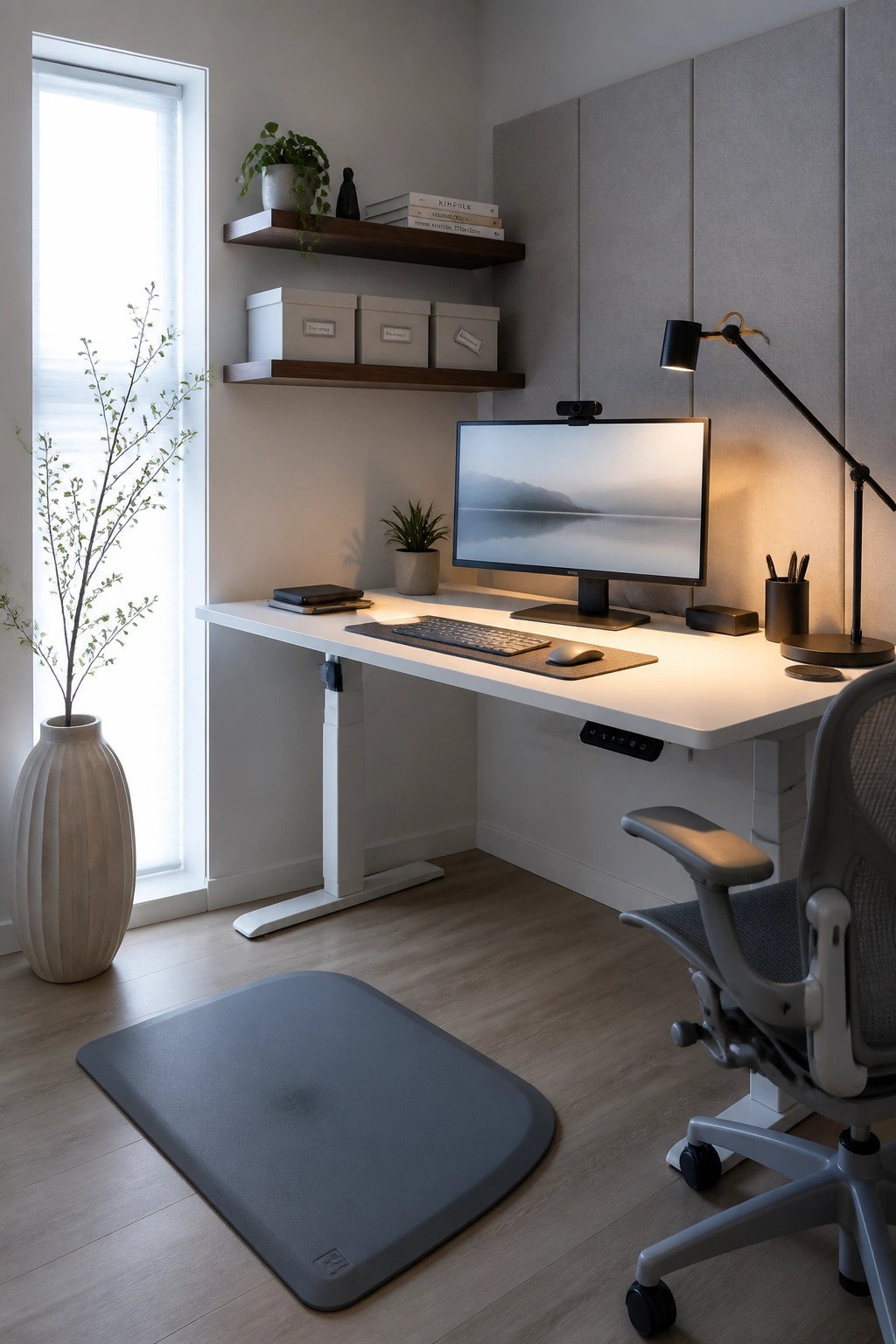
A height adjustable desk paired with a simple floor mat makes it easier to stay comfortable through long work hours. Many people find they feel less stiff when they can switch between sitting and standing without much effort.
This setup works well in smaller home offices where space is limited. Place the mat where you stand most often and keep the desk controls easy to reach so you actually use the feature throughout the day.
Warm Desk Lighting Supports Longer Work Sessions
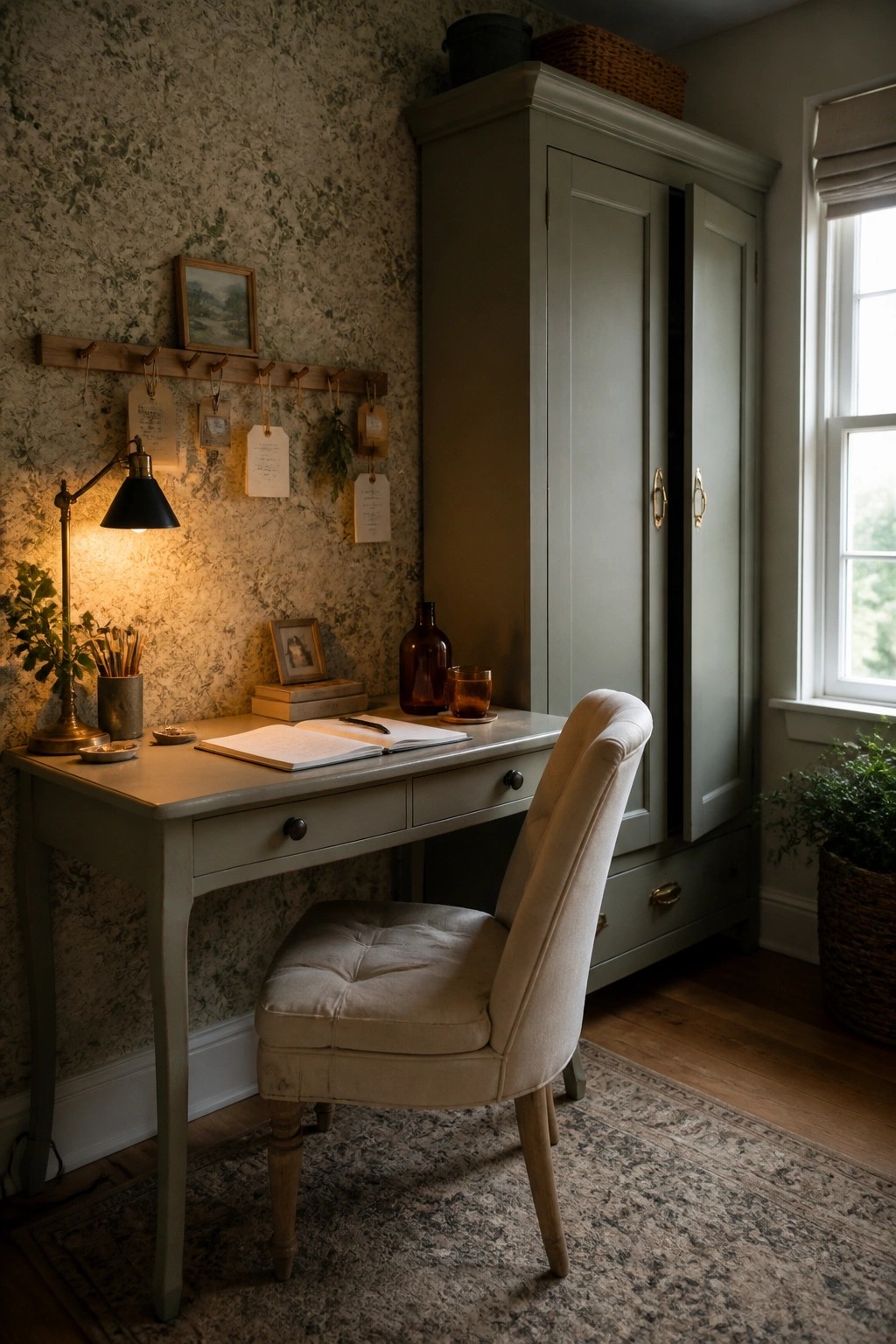
A simple task lamp creates a focused pool of light that makes evening work feel less harsh. The warm glow keeps the space feeling calm instead of like an office that never shuts down.
Set the lamp on the side opposite your writing hand so it does not cast shadows across the page. This approach suits smaller rooms or corners that already hold other furniture.
Labeled Storage Bins Simplify Daily Use
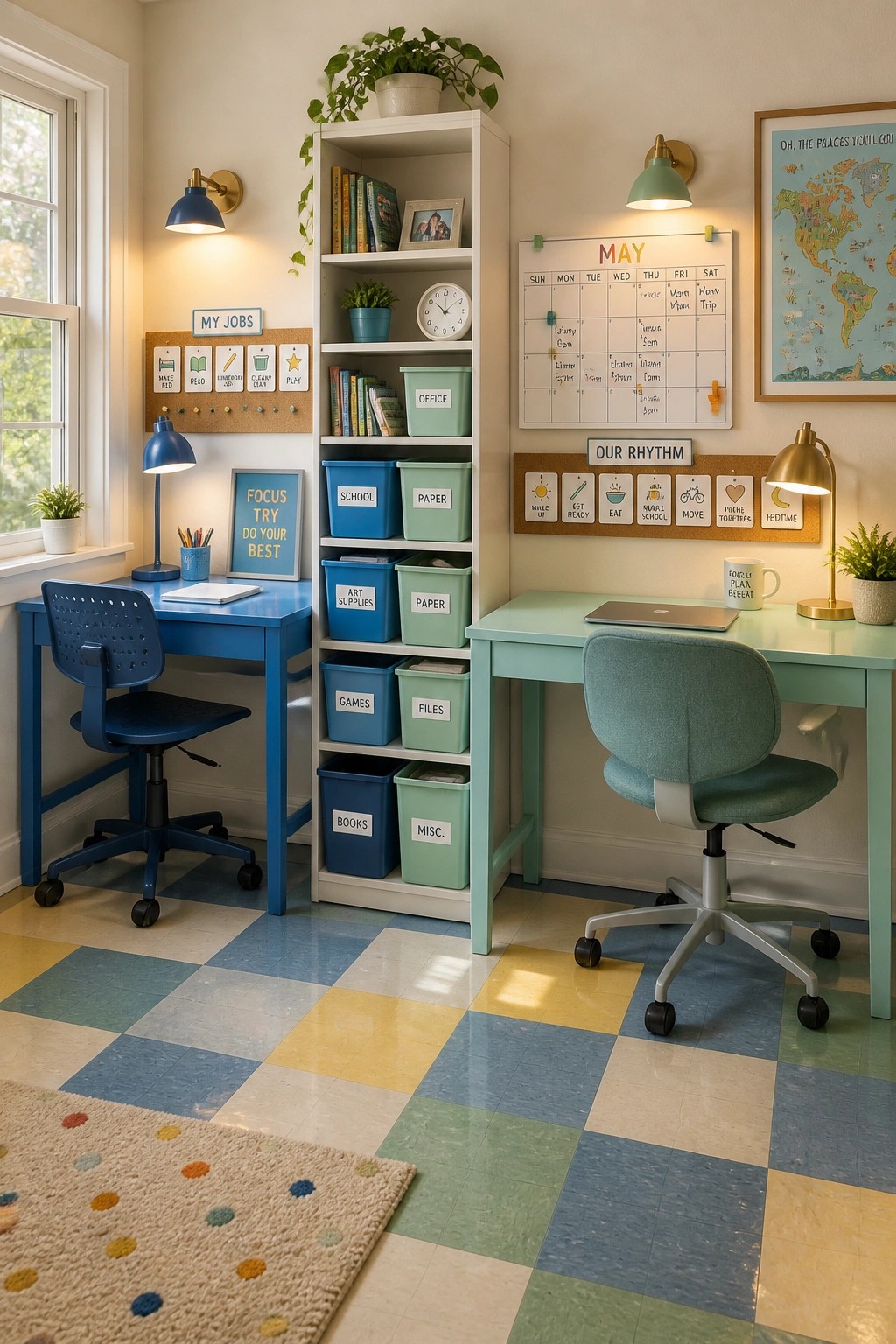
Open shelving becomes much more useful when you fill it with labeled bins. The system keeps supplies visible and makes it easy to put things back without hunting through drawers or piles.
This approach works best in a room that serves more than one person. Keep the bins at reachable heights and choose simple labels that everyone understands. Over time the setup stays tidy because there is a clear spot for each item.
Wall Mounted Desks For Narrow Spaces
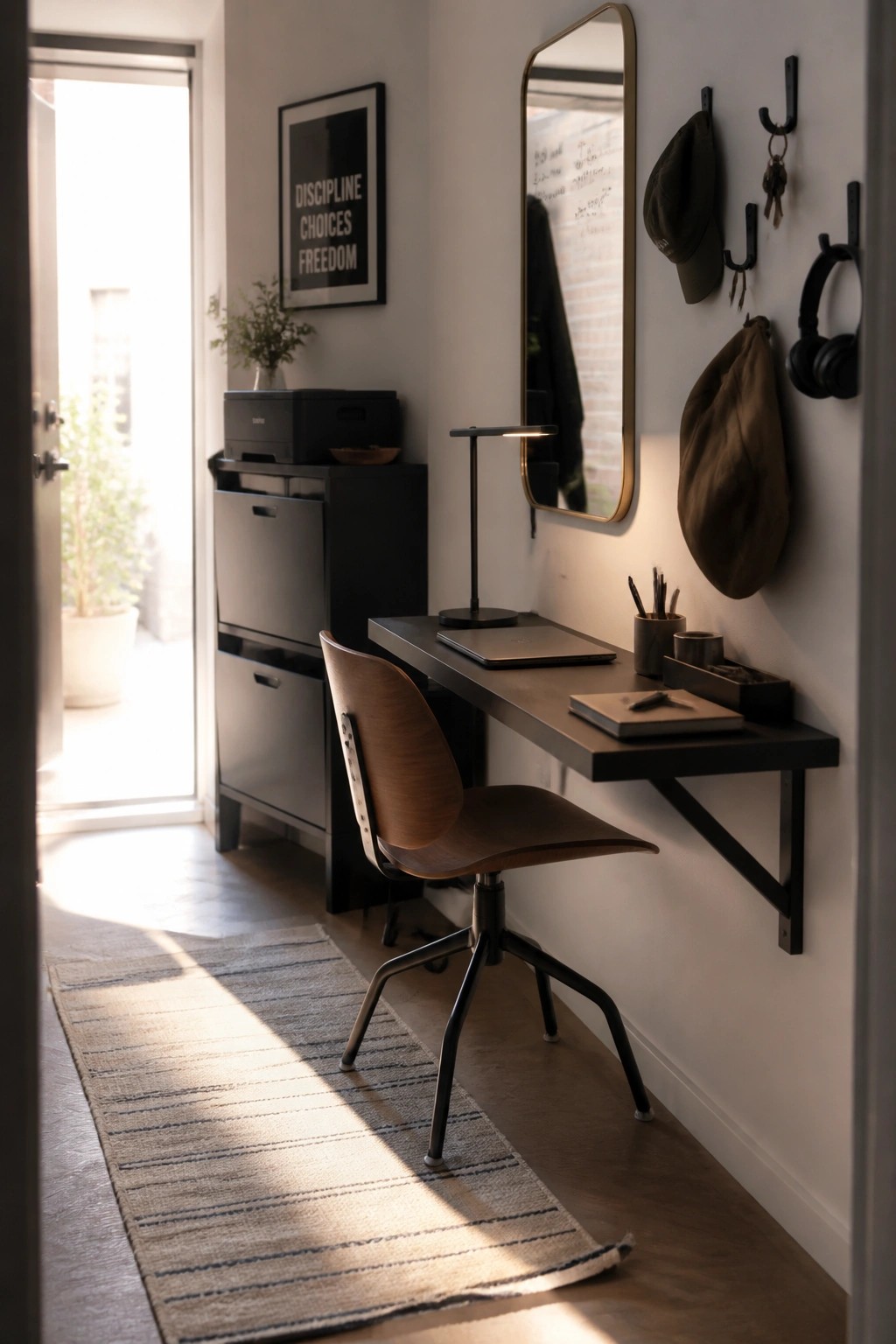
A wall mounted desk works well when you need a workspace but do not have a full room to spare. It keeps the floor clear so the area still feels open and easy to walk through.
This approach fits best in hallways or entry zones where you want a consistent spot to sit down each morning. Choose a sturdy bracket system and a chair that tucks in neatly so the space stays practical day after day.
Built-In Bench Storage For Small Workspaces
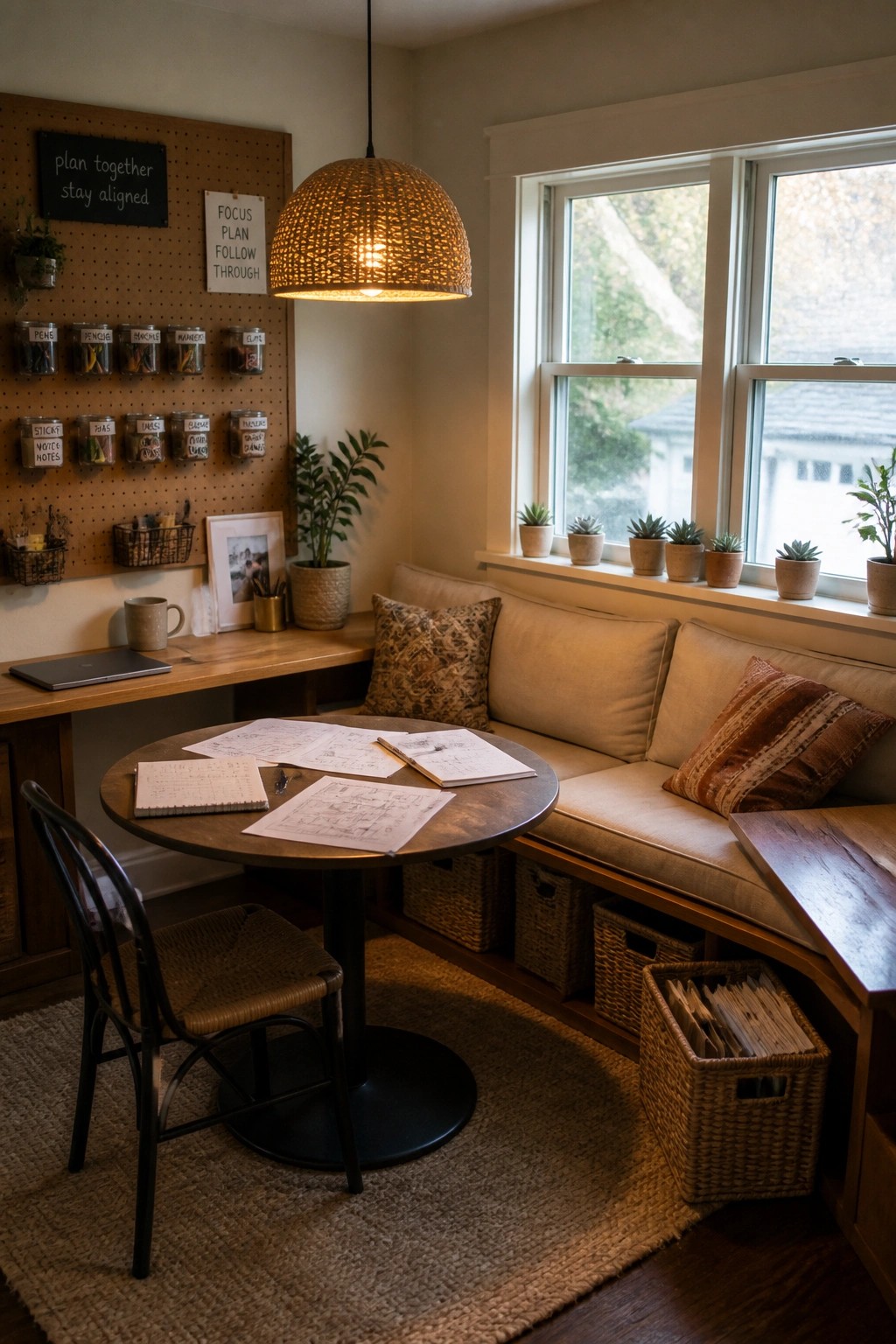
Many home offices feel cramped when you try to add both seating and storage. A built-in bench with open baskets underneath solves that by giving you a place to sit while keeping supplies within reach but out of the way.
This works best in corner setups or smaller rooms where floor space is limited. Use sturdy baskets that slide out easily, and keep only the items you reach for often so the system stays practical over time.
Mount A Weekly Planner Board In Your Workspace
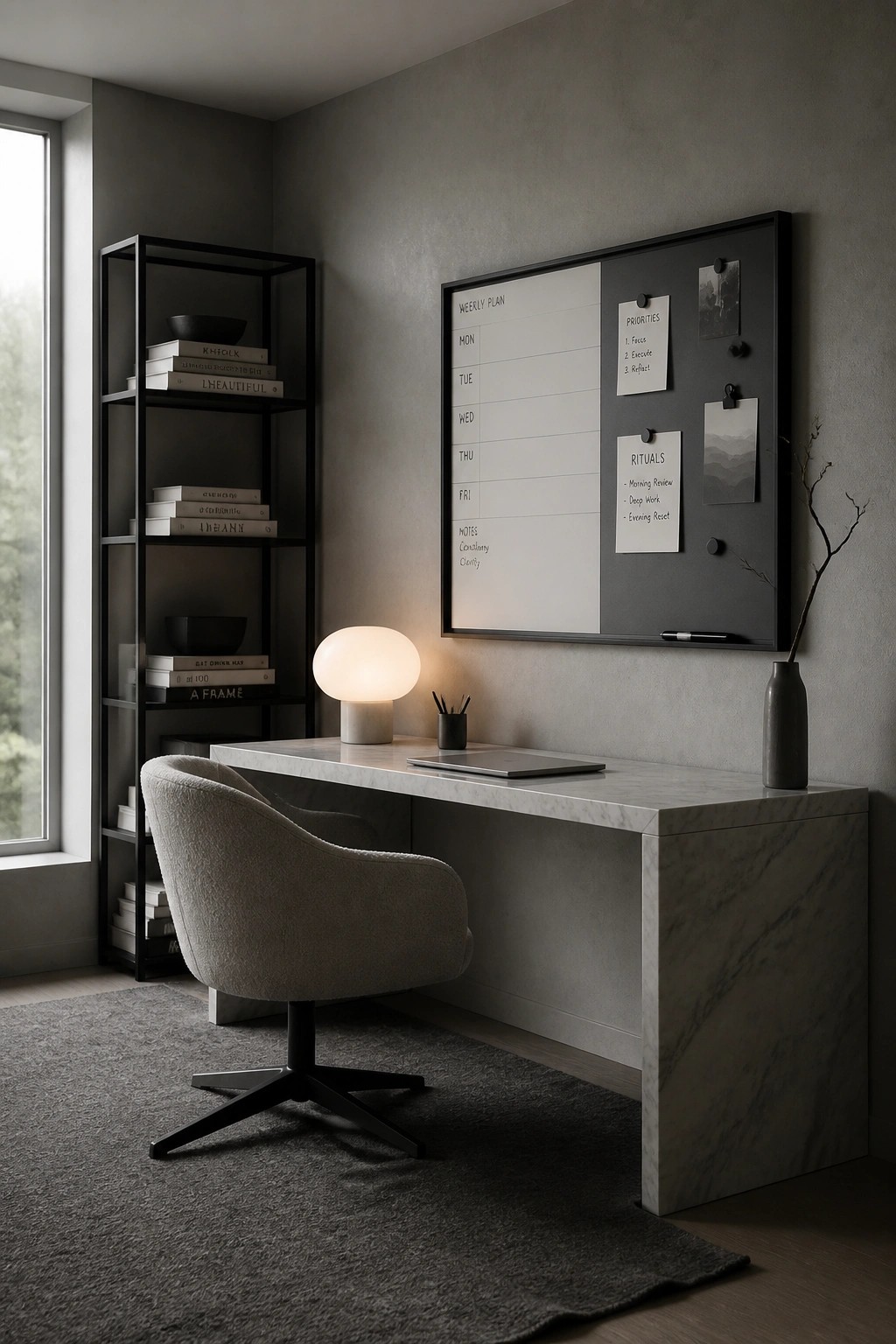
A large board placed right above the desk keeps your schedule and priorities in plain sight every day. It turns the wall into a working tool rather than empty space, which helps many people stay on track with remote routines.
This approach works best in smaller home offices where you want one main spot for planning. Keep the board simple with clear sections for the week ahead and a few daily habits, then use it each morning before you start.
Mount a Large Pinboard Over the Desk
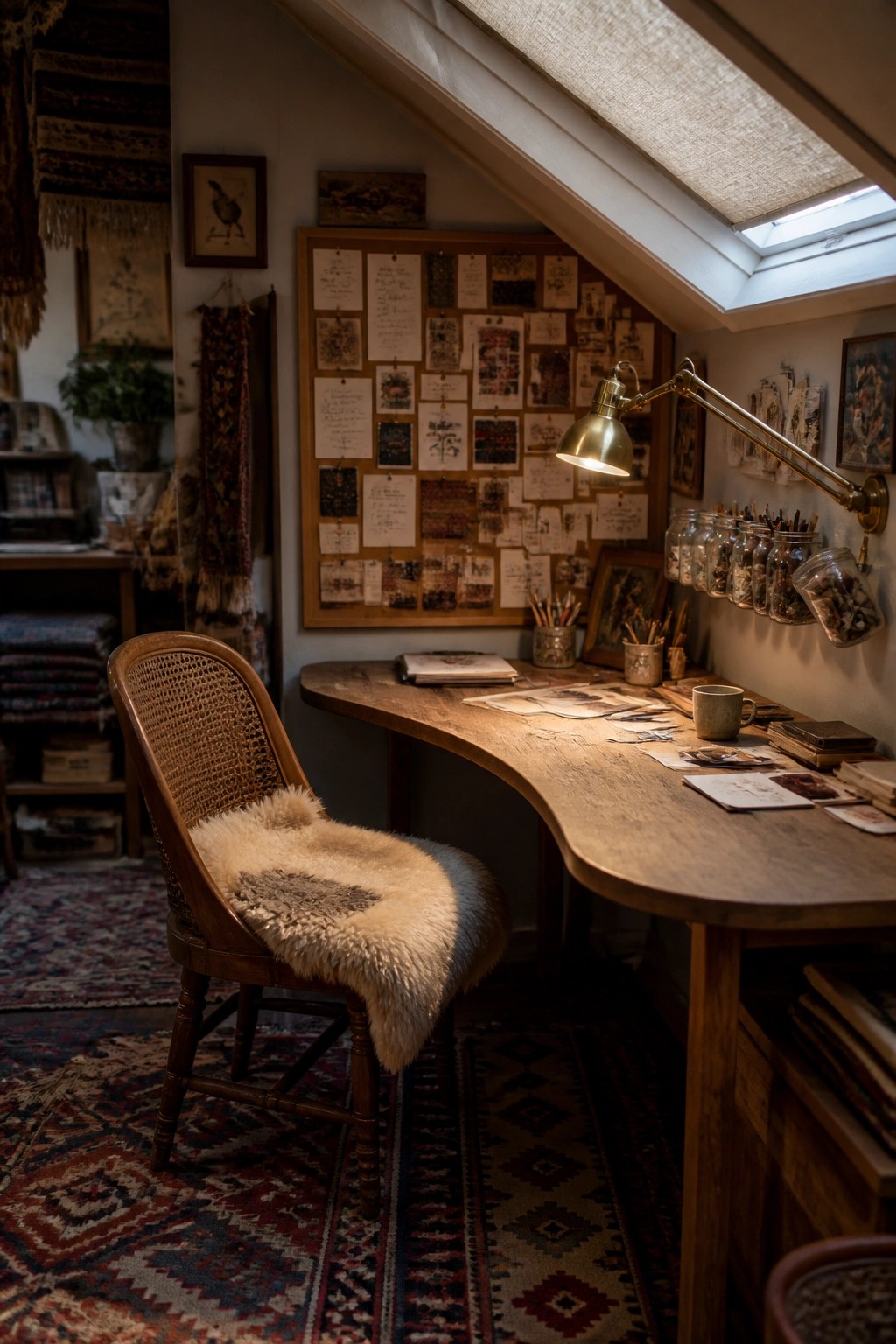
A big pinboard filled with sketches, notes, and reference images keeps everything you need right in front of you while you work. It turns an empty wall into a practical spot that supports daily routines instead of just sitting there as decoration.
This setup works especially well in smaller or tucked-away rooms where space is limited. Place the board where you can reach it from your chair, and only keep current projects pinned up so it stays useful rather than overwhelming.
Frequently Asked Questions
Q: How do I handle eye strain from screens in a dimly lit cozy setup?
A: Add a small task light aimed at your keyboard. Keep the main light soft but behind you. Move it around until your eyes feel good during a test session.
Q: What works if my apartment is tiny and I cannot fit extra furniture?
A: Use a folding chair that tucks away. Stack storage bins as side tables. Focus on one or two items that make the biggest difference in comfort.
Q: How can I prevent my routine from falling apart on busy days?
A: Keep your morning start simple. Just sit down and open your laptop at the same time. The cozy feel will help you ease in without extra steps.
Q: Should I change the layout every season?
A: Stick with what feels right for now. Small tweaks like swapping a blanket work better than big changes.
