
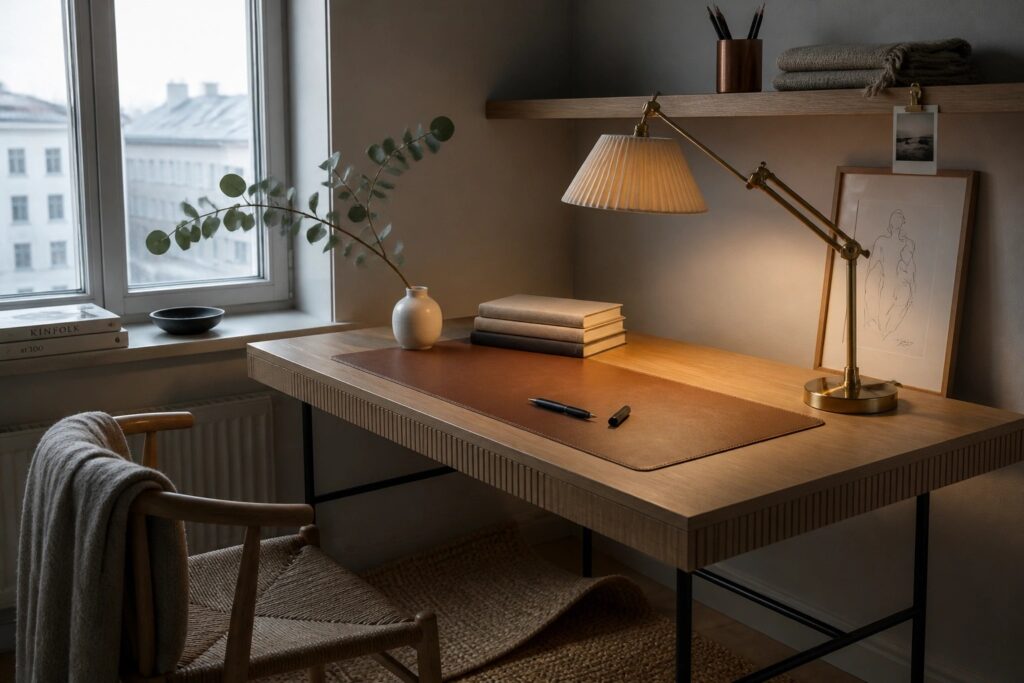
I have noticed that my desk only feels right when the items on it support the way I actually work rather than compete for attention.
Over time I learned that adding personality to a workspace takes more than scattering things around because the surface needs to stay usable from morning until evening.
Small details matter here.
The setups that hold up best are the ones that keep the main area clear while letting a few favorite objects sit where I can see them without reaching over them all day.
Testing one change at a time shows me which pieces actually improve the feel of the room instead of just looking good for a day or two.
A Leather Desk Pad for a Neater Workspace
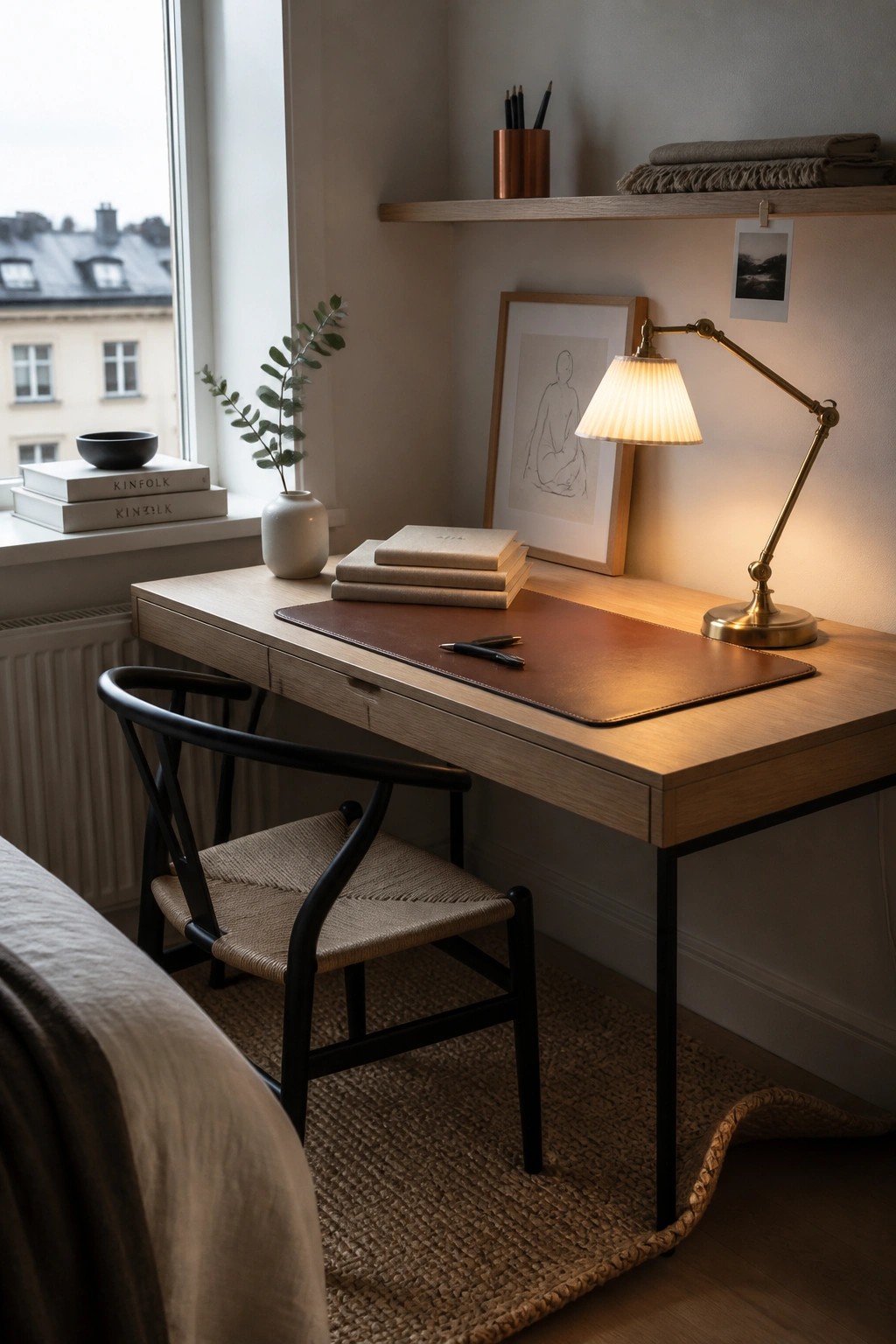
A leather desk pad gives the surface a clear boundary and keeps everyday items from sliding around. It adds a bit of texture without crowding the space or pulling attention away from the work itself.
This approach suits smaller rooms or shared spaces where you want order without extra decoration. Stick to a simple neutral tone and keep only a few items on the pad so the desk stays practical day to day.
Pair Warm Wood With A Single Plant
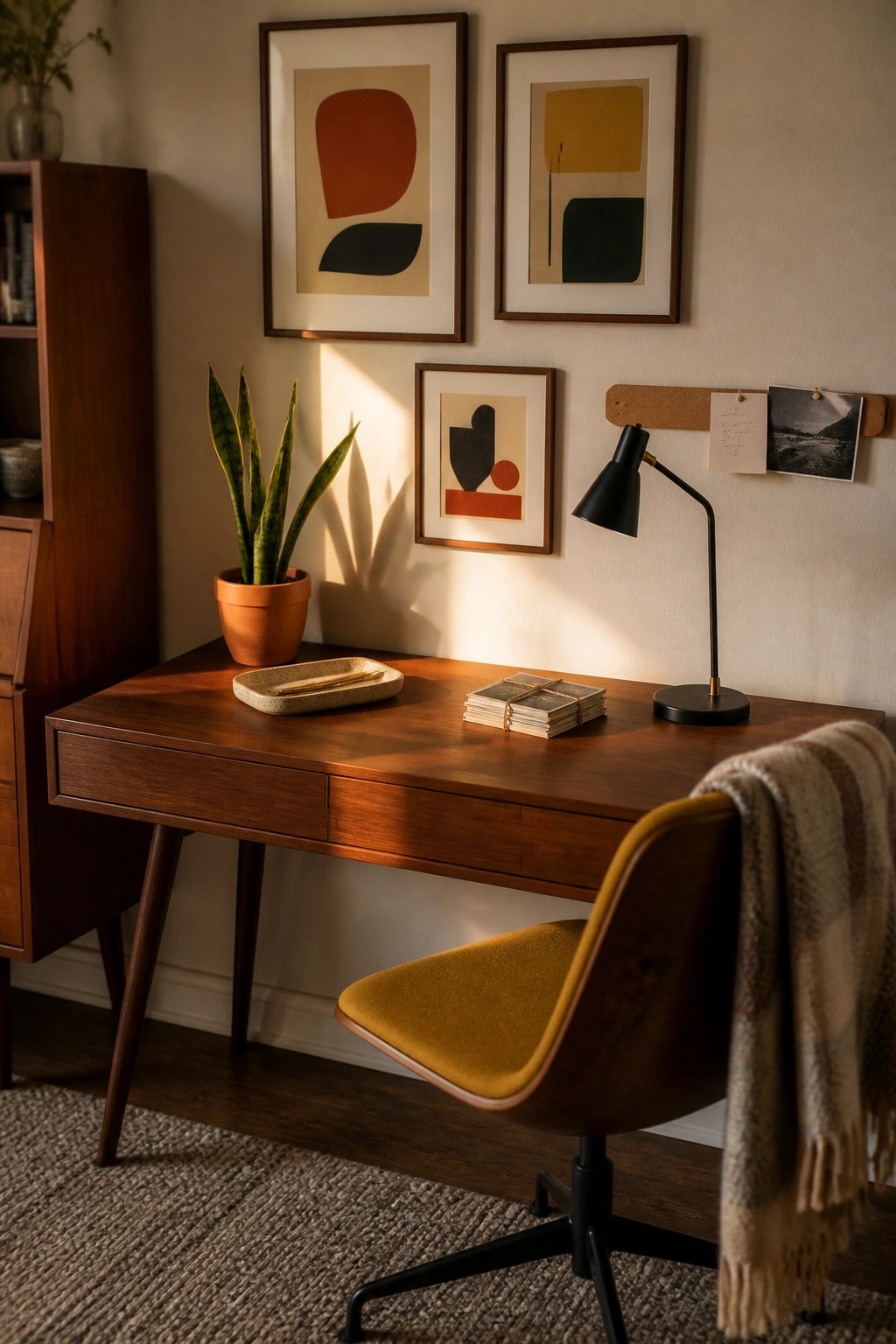
A wooden desk already brings a lot of warmth on its own. Adding just one plant next to it gives the space a bit of life without piling on extra objects or colors that might pull focus.
This works especially well in smaller home offices where you want the desk to feel personal but still calm. Stick to one or two natural pieces and let the wood and chair color do the rest.
Hang A Chalkboard Calendar Over The Desk
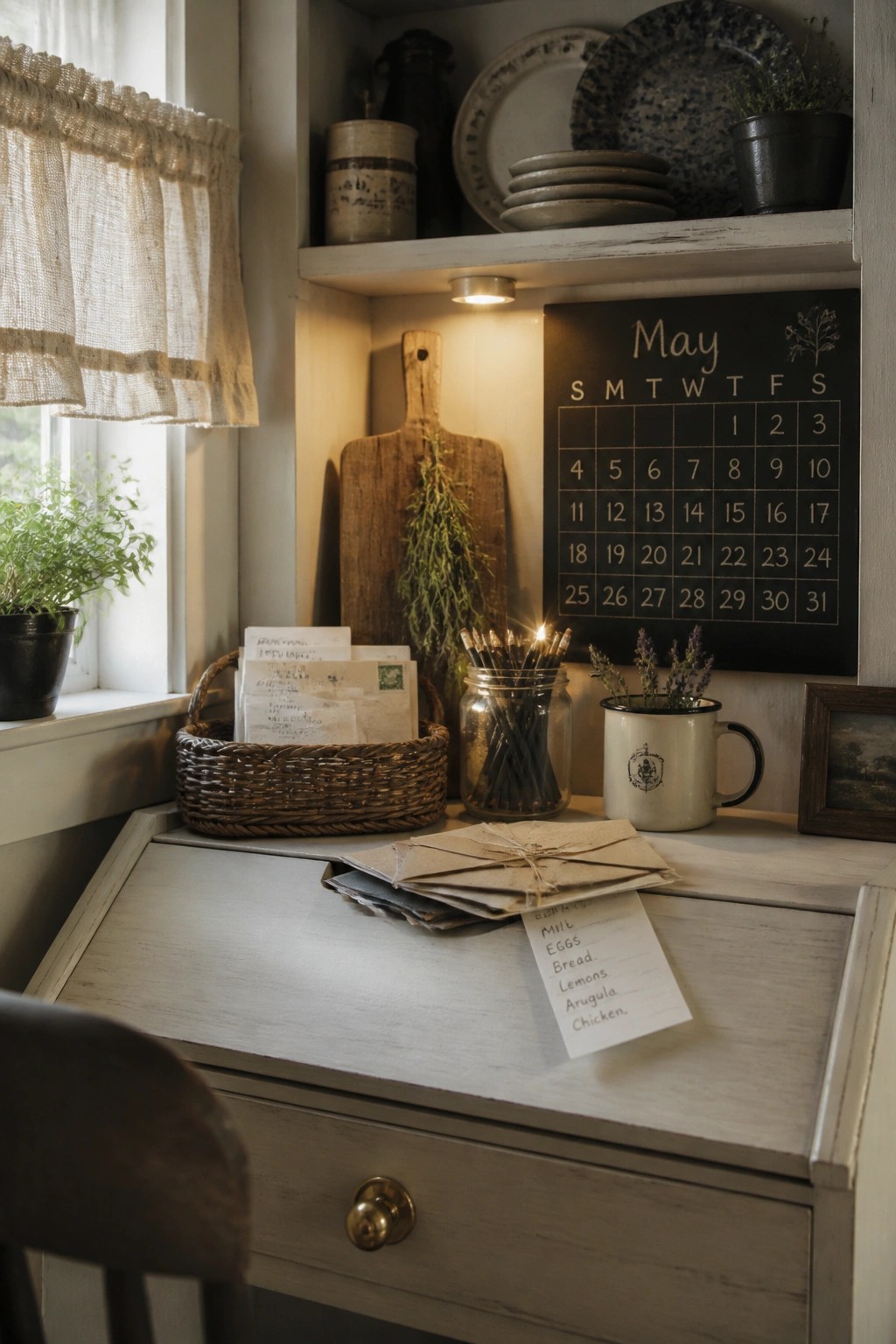
A chalkboard calendar gives you a place to note dates and reminders without covering the desk itself. It stays visible at a glance and adds a simple, useful touch that feels personal rather than decorative.
This setup works best in a kitchen desk or small workspace where you need quick access to the calendar. Keep the board modest in size so it does not crowd the wall or pull attention away from the work surface.
A Soft Lamp Adds Gentle Light
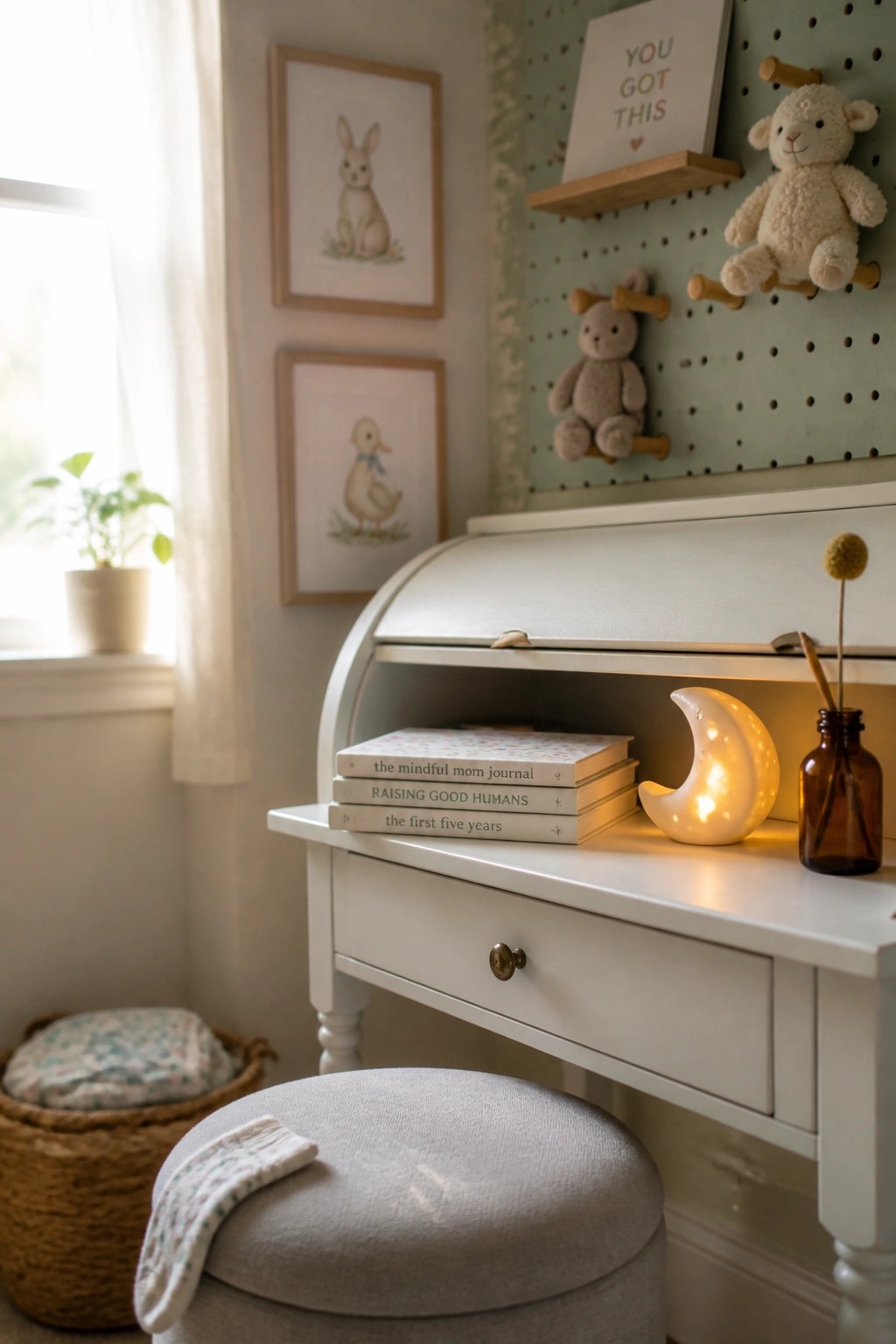
A small glowing lamp next to a short stack of books gives the desk a calm point of interest. It adds warmth and a bit of personality while leaving plenty of clear space for actual work.
This approach suits any desk that needs to stay practical. Keep the lamp low and simple so the light stays soft and the surface does not feel crowded.
One Small Print Above The Desk
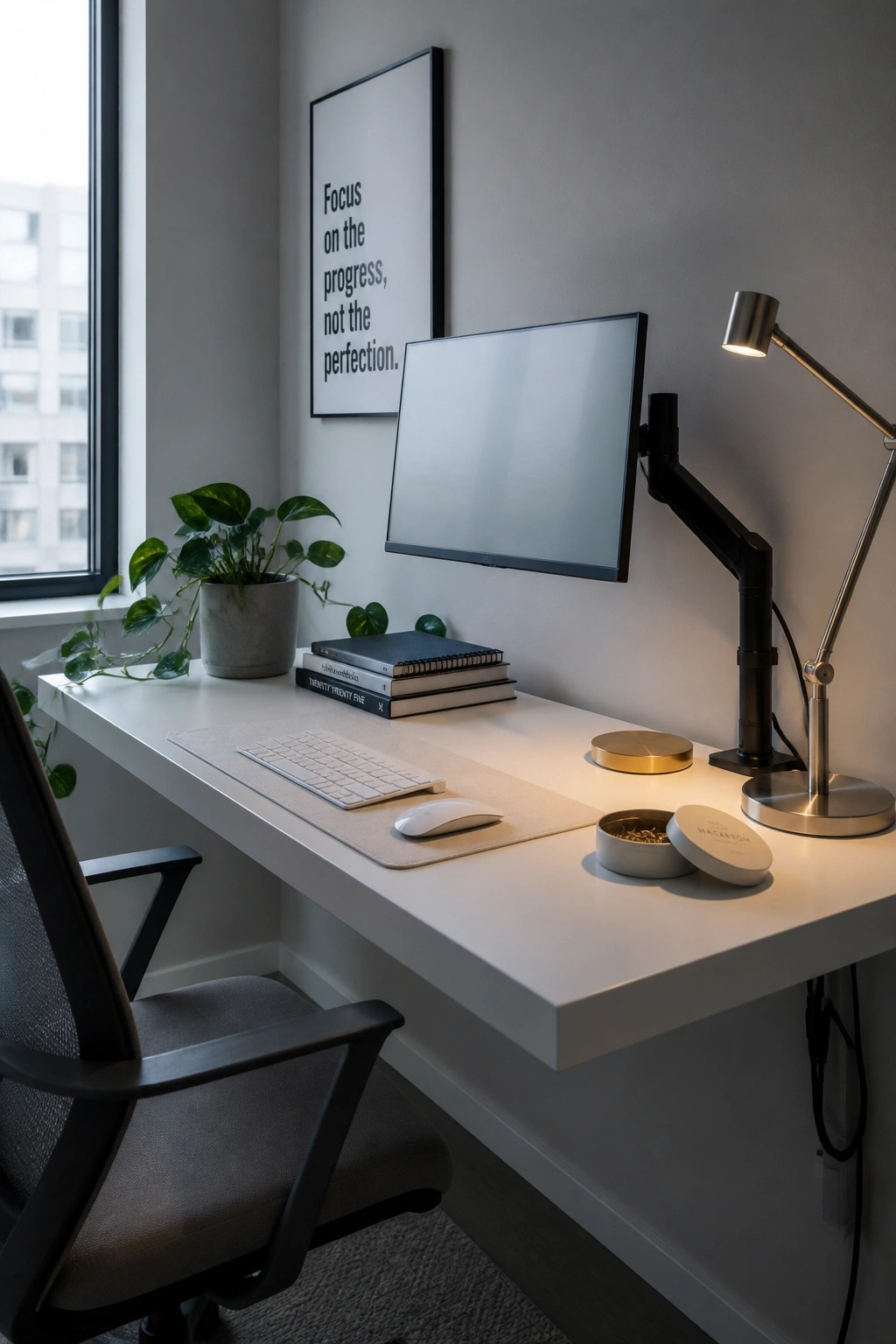
A single framed message on the wall can give a workspace a bit of personality without crowding the surface or creating visual noise. Many people find that a short phrase they like keeps the room from feeling completely blank while still letting the desk stay calm and usable.
Keep the frame plain and the text short so it does not compete with what you are doing. This works especially well in smaller rooms or setups where you already have a monitor and a few everyday items on the desk.
Add A Few Natural Finds To A Desk
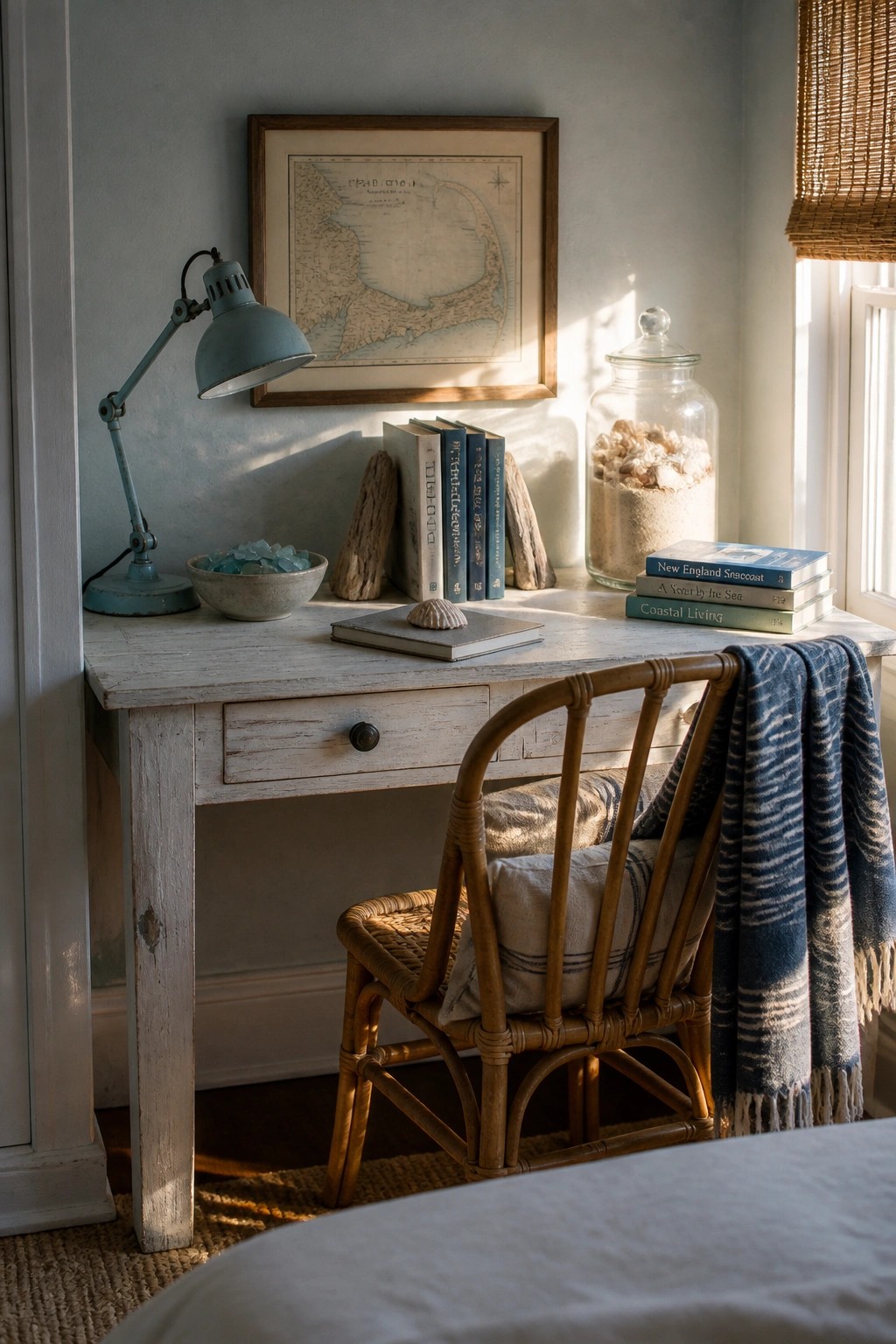
A desk stays more usable when the decor stays small and quiet. A couple of driftwood pieces holding books and one shell on top can give the surface some personality without crowding the space or pulling attention away from the work.
This kind of styling suits older homes or rooms that already have soft colors and simple furniture. Keep the rest of the surface clear and limit yourself to three or four similar objects so the desk still feels open and calm.
Woven Textures Add Personality to a Desk
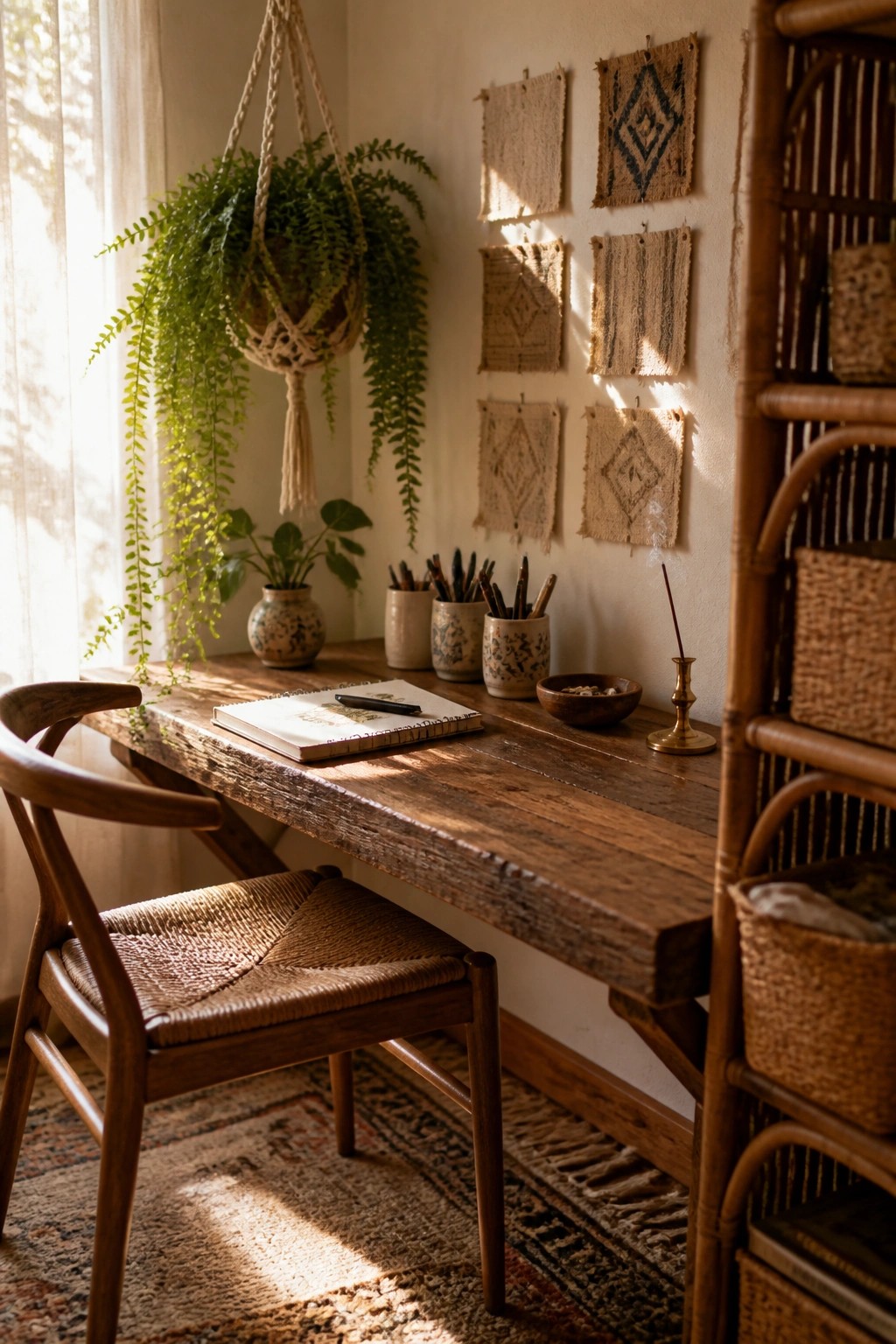
Woven pieces give a desk some character without crowding the surface or pulling attention away from work. A chair with a woven seat or a few small wall hangings can soften the space while keeping it calm and usable.
These details suit homes that already use natural materials. Keep the number of pieces small so the desk stays clear enough for daily tasks.
Keeping Desk Decor To A Few Books And Prints
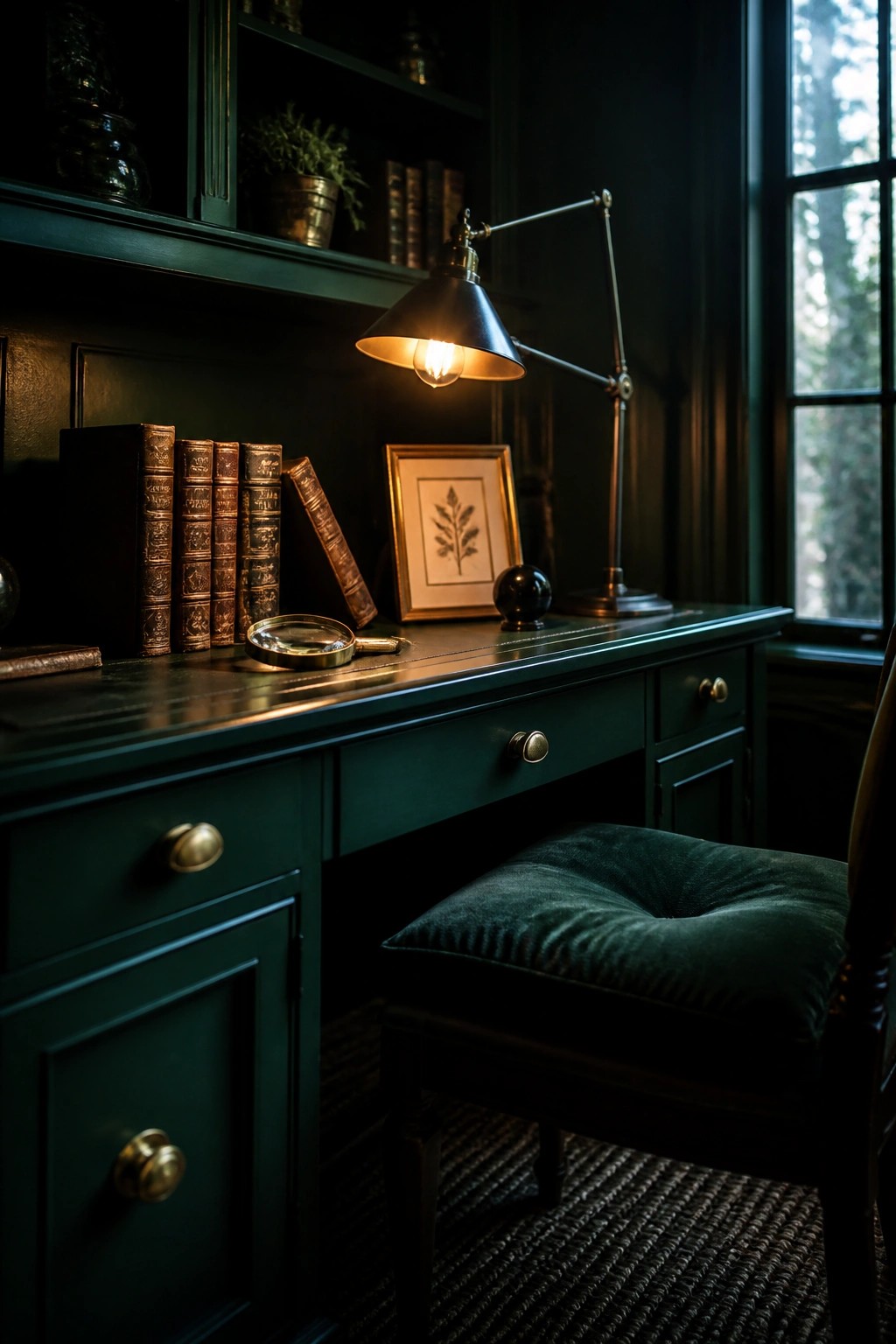
Many workspaces feel calmer when the surface stays mostly clear. A short stack of old books and one small framed piece can still give the desk some personality without pulling attention away from the work itself.
This works best in a room that already has some depth to the walls or cabinetry. Pick items that feel personal but stay low in number, and leave open space around them so the desk remains practical day to day.
Use Ceramic Pots For Supplies
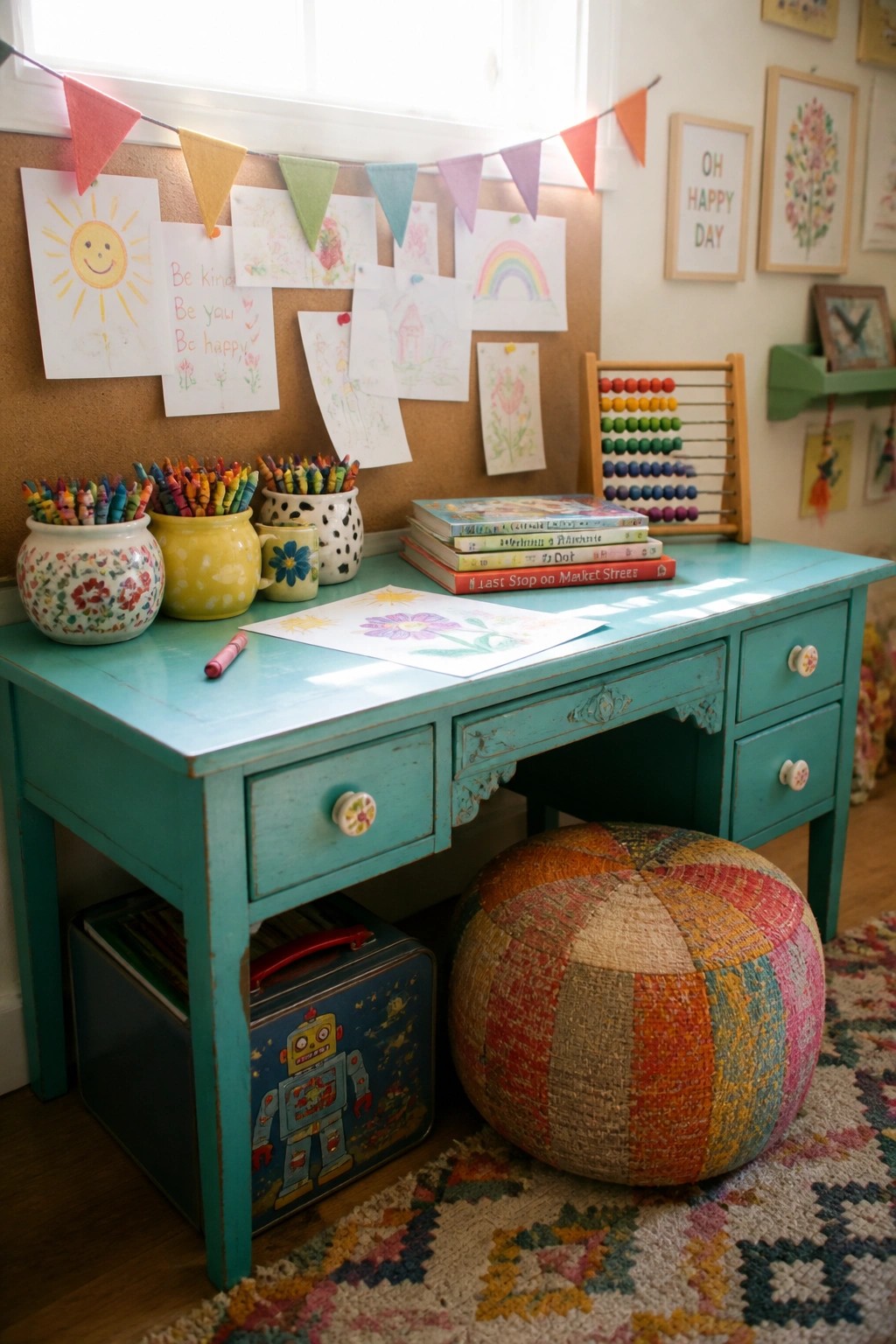
Many people like keeping crayons and markers out where kids can reach them. Ceramic pots add a bit of color and pattern while keeping everything in one spot instead of scattered across the desk.
This setup works best in a playroom or small corner that already has a desk. Stick to two or three pots so the surface stays clear enough for drawing.
Group Small Items On One Tray
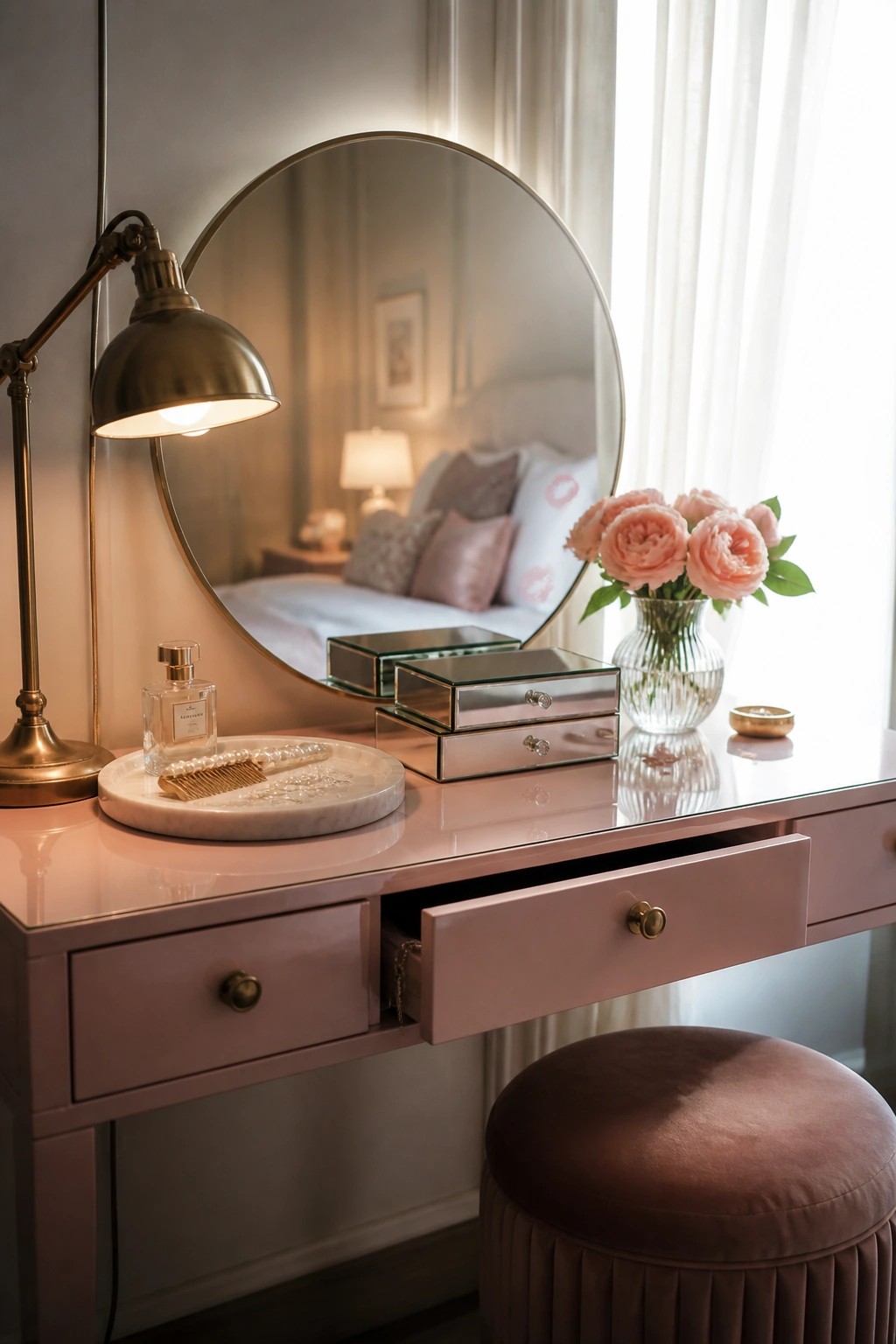
A tray works well on a desk when you want a few personal things nearby but still need the surface to stay calm. It pulls a perfume bottle, comb, and a few pieces of jewelry into one spot so they do not scatter and create visual noise.
This approach suits bedrooms or small home offices where the desk doubles as a vanity. Choose a simple tray in stone or metal that matches the desk finish, and leave the rest of the surface clear. The mirrored boxes in the background show the same idea at a larger scale by hiding everyday items out of sight.
One Adjustable Lamp for the Desk
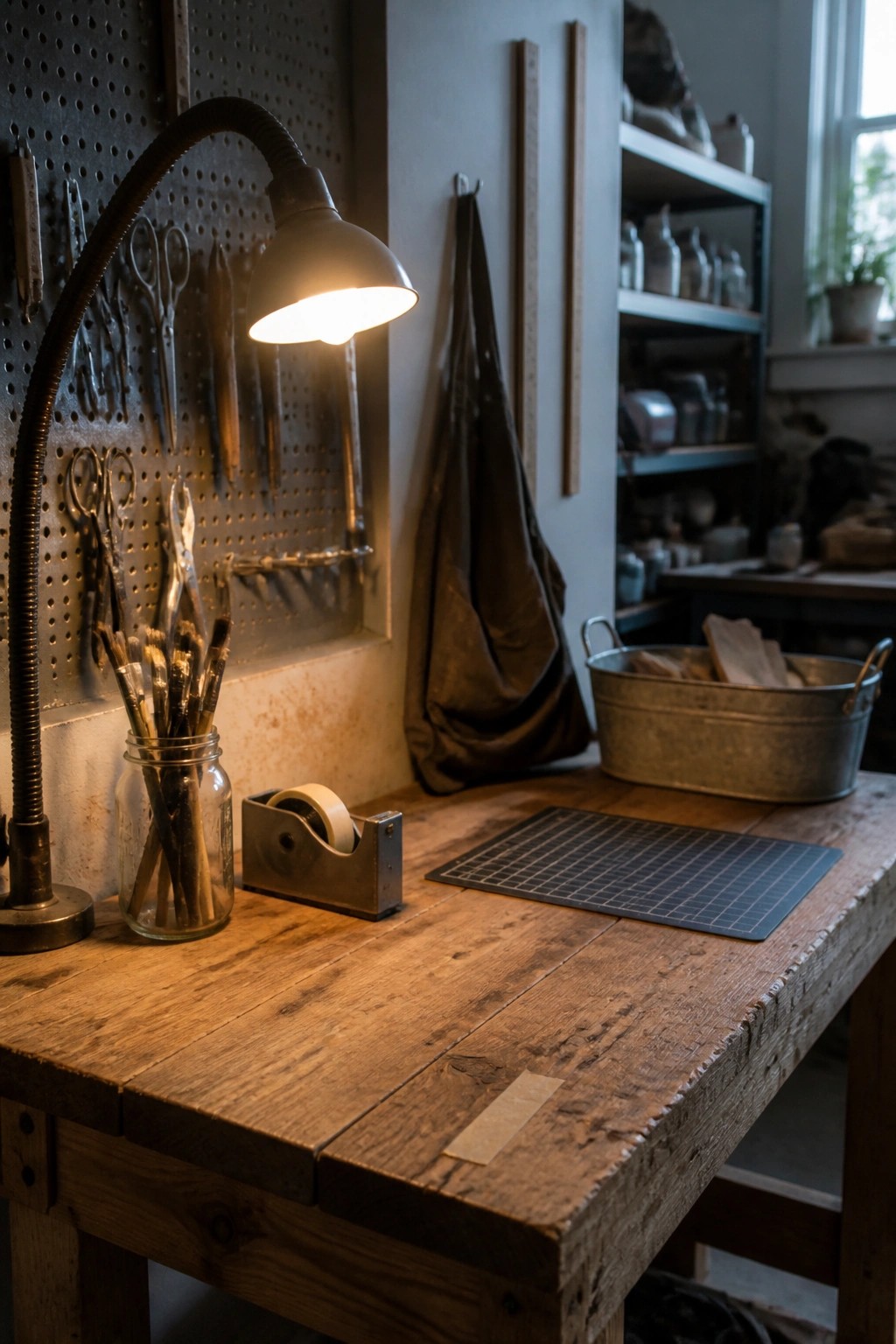
A task lamp gives you light right where the work happens. It cuts down on eye strain and keeps the rest of the desk from needing extra lights or clutter.
Set it toward the back corner so the beam falls across your main surface. This works in small craft spaces or home offices where you want the desk to stay useful without turning into a display.
Open Storage Under A Desk Bench
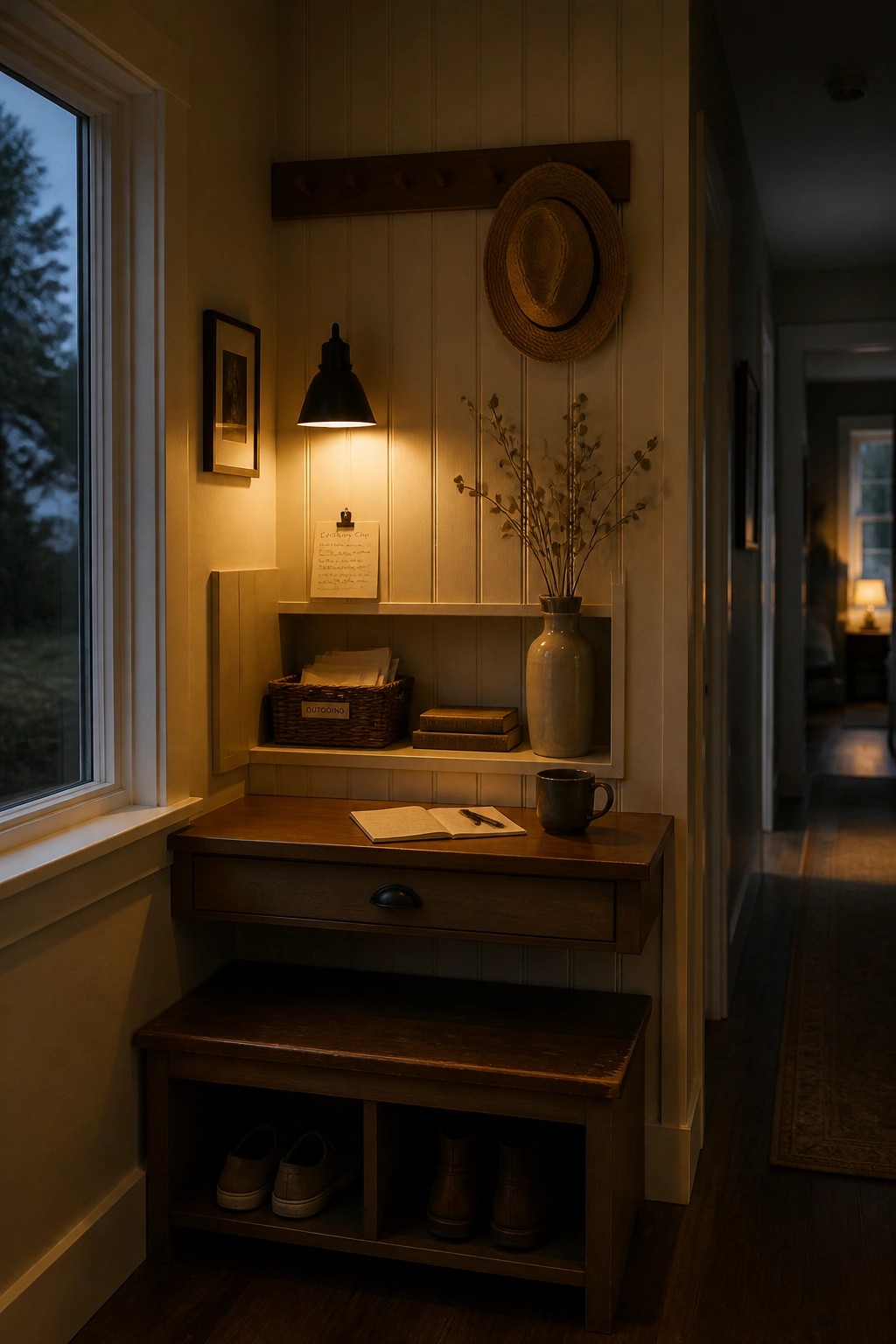
A bench with open cubbies right under the desk gives you a spot for shoes or bags without needing another piece of furniture. It keeps the desktop free for just a notebook and a mug while the wood adds warmth.
This setup works best in small rooms or entry nooks where every inch counts. Stick with a simple wood tone so the storage stays useful instead of turning into another display area.
Keep Photos Minimal
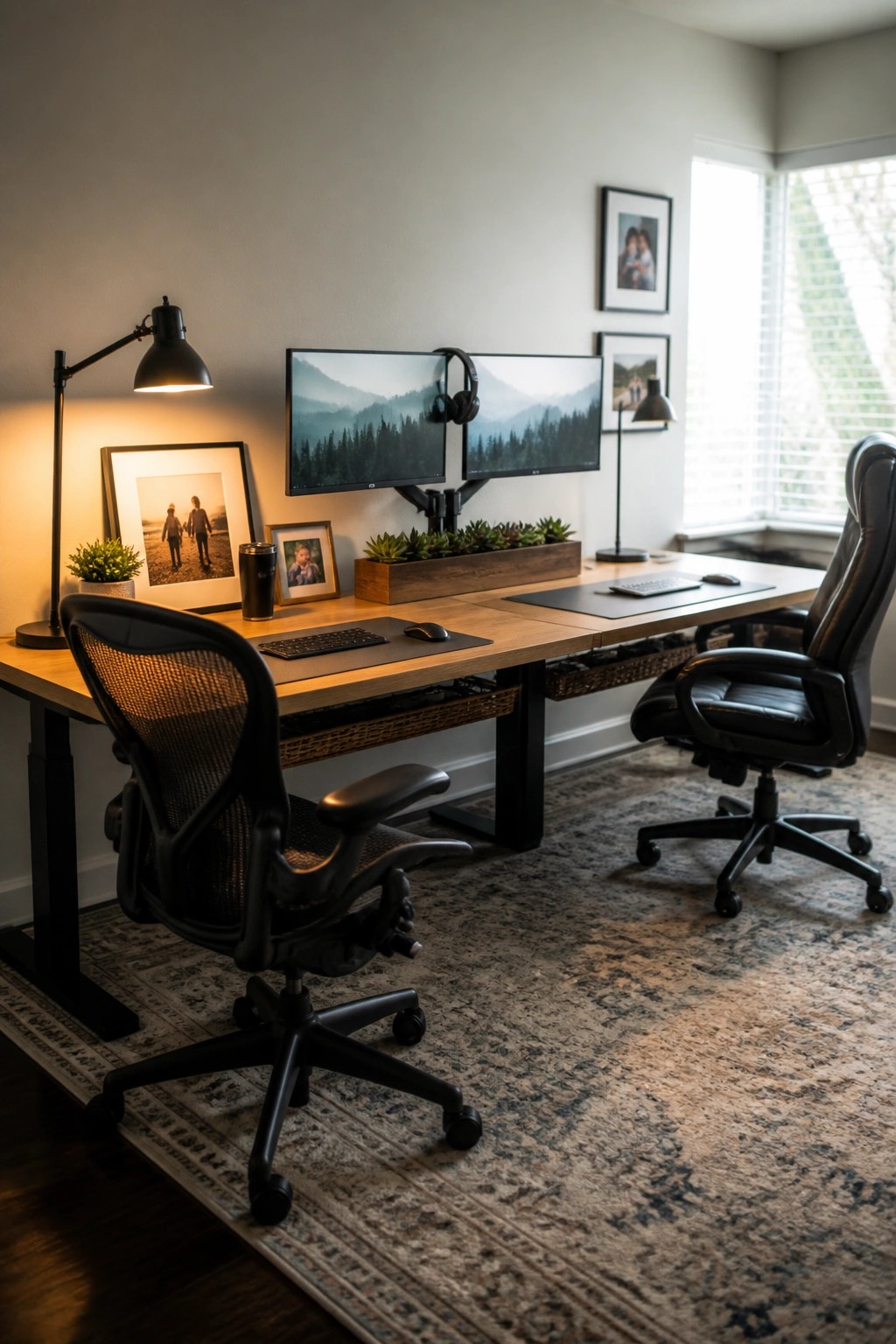
A desk feels more like your own when you add a photo or two, but too many quickly turn into clutter. The setup here shows how a couple of framed pictures placed near the edge of the workspace add personality while leaving plenty of clear surface for work.
This approach works best in a home office that needs to stay focused. Stick to one or two small frames and maybe a low plant, then stop there. It keeps the desk looking personal without pulling your attention away from the task at hand.
Roll Top Desks Keep The Workspace Organized
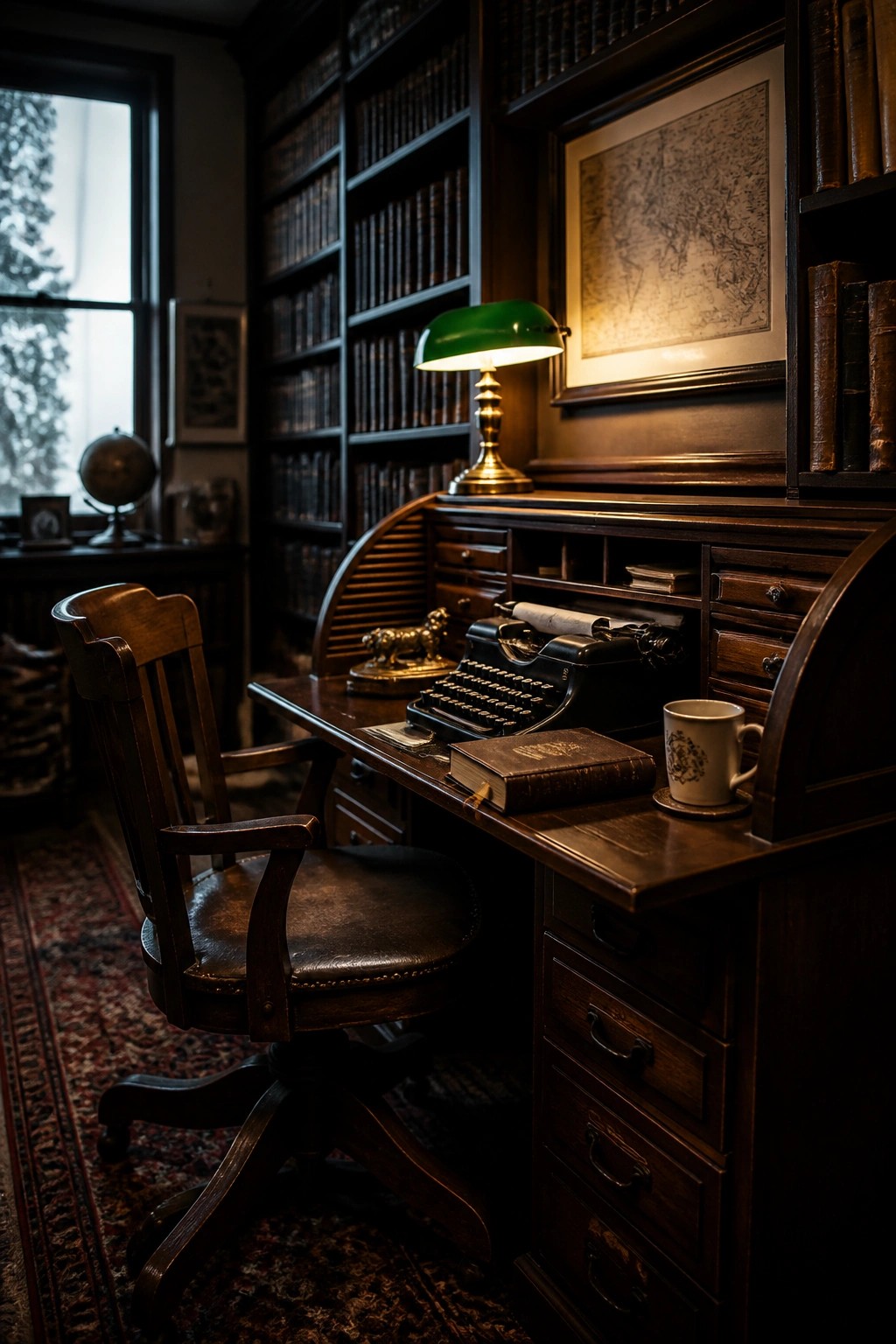
A roll top desk gives you a place to work that already includes storage for papers and small items. The lid closes over everything at the end of the day so the surface stays clear.
This type of desk works best in a study or spare room where you want a traditional feel without extra shelves or bins. Keep the top mostly empty except for a lamp and one or two pieces you use daily.
Use A Photo Display Above The Desk
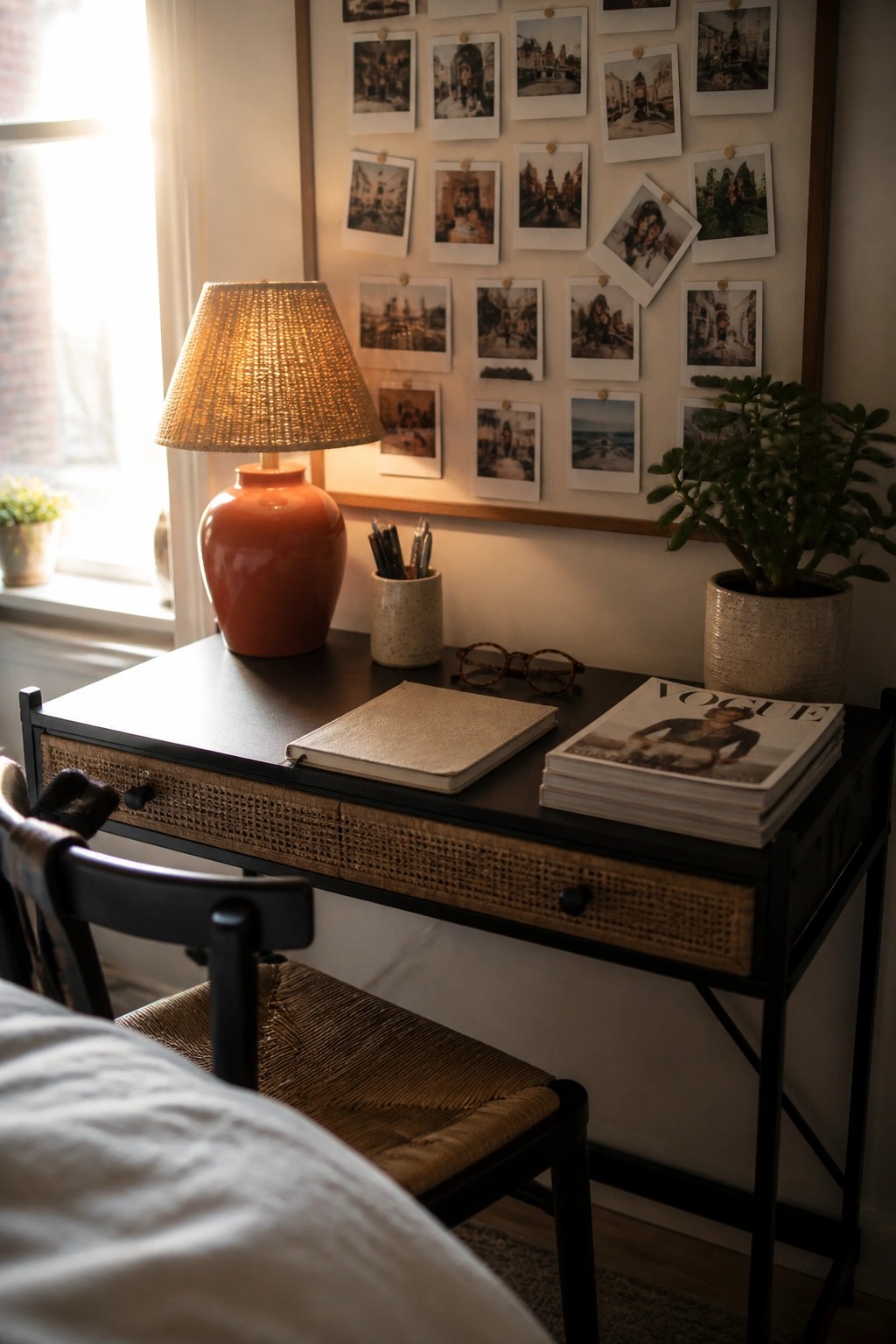
A wall of small photos pinned above the desk gives the space personality while leaving the work surface clear. It adds interest without pulling attention away from whatever you are doing at the table.
This works best in a small room or corner where you want something personal but still calm. Keep the photos fairly uniform in size and spacing, and limit the items on the desk itself so the wall stays the main point of interest.
Use A Single Plant As Desk Decor
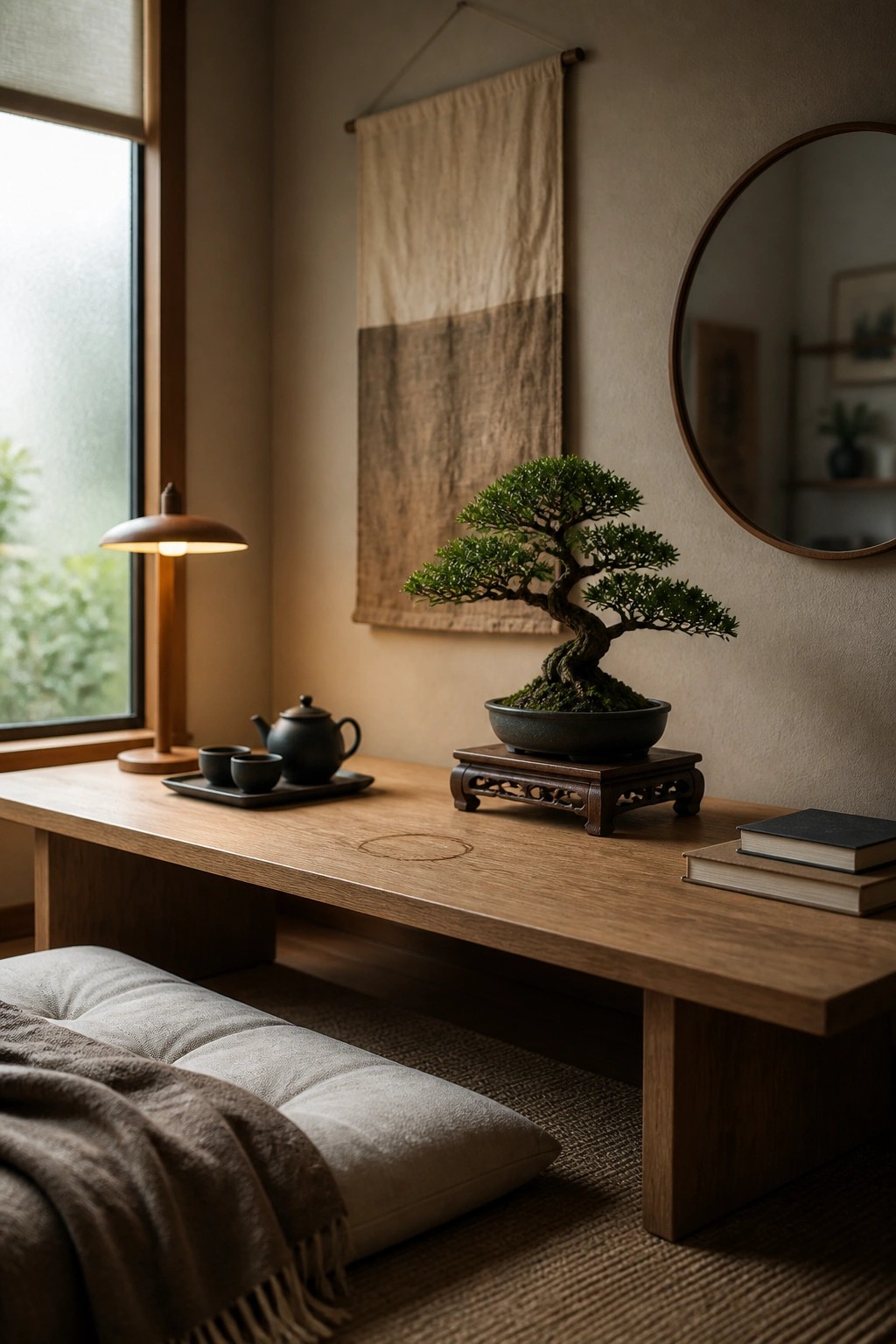
A single plant can give a desk some life without turning it into a display area. The bonsai here sits alone on the wood surface and feels like enough on its own.
This approach works well in smaller rooms or any workspace where you want to stay focused. Keep the rest of the surface clear, use simple materials like wood, and let the plant stay the only living thing in view.
Store Supplies in Metal Boxes and Jars
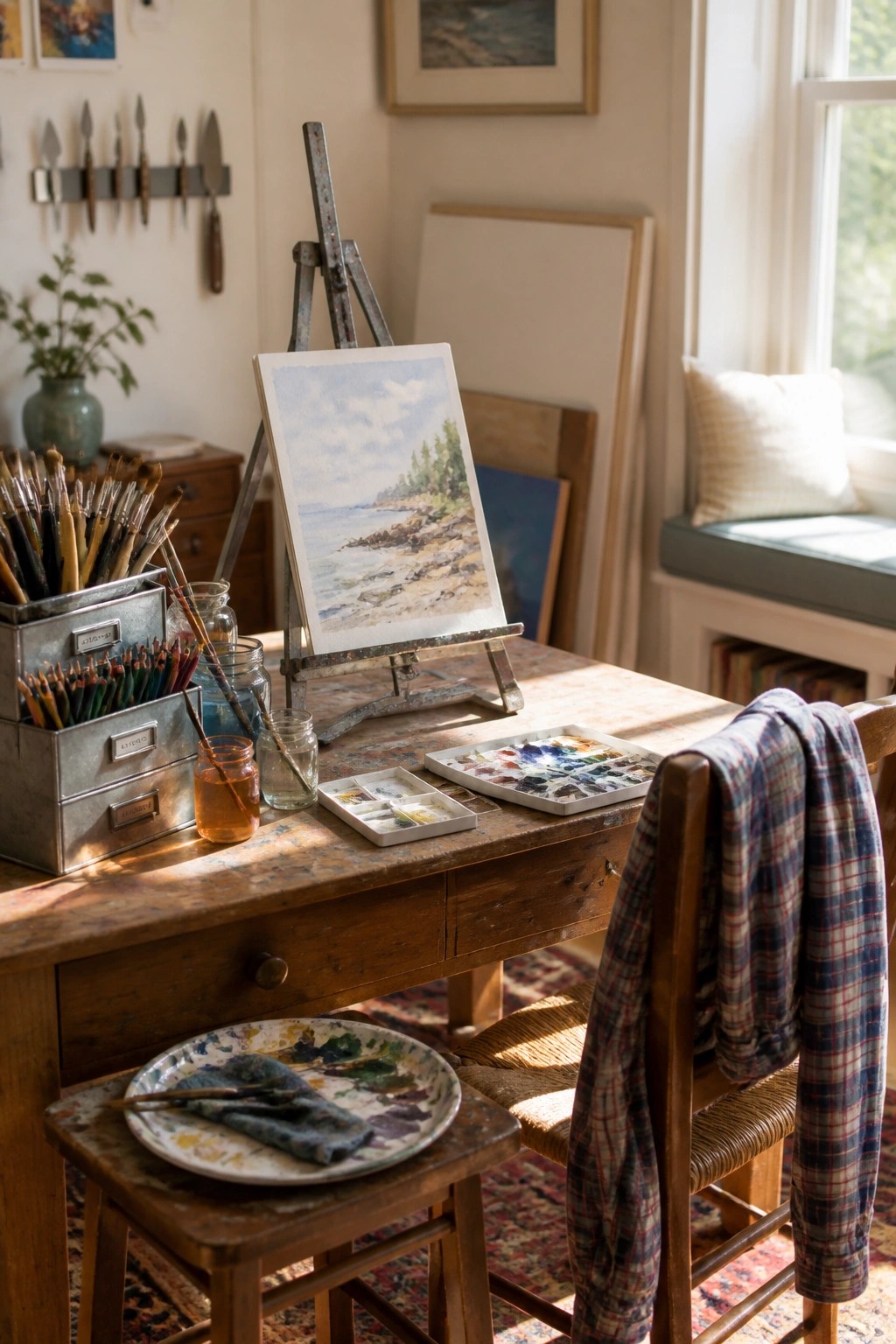
Many creative desks stay useful when supplies sit in simple containers instead of spreading across the surface. Metal drawers and glass jars hold brushes, pencils, and paints in one spot, so the workspace keeps its personality without turning into a mess.
This approach works well in any room that doubles as a workspace. It suits older homes where desks often serve multiple roles, and it helps when you want tools close at hand but still need clear space for actual work.
A Floating Wood Shelf for Daily Items
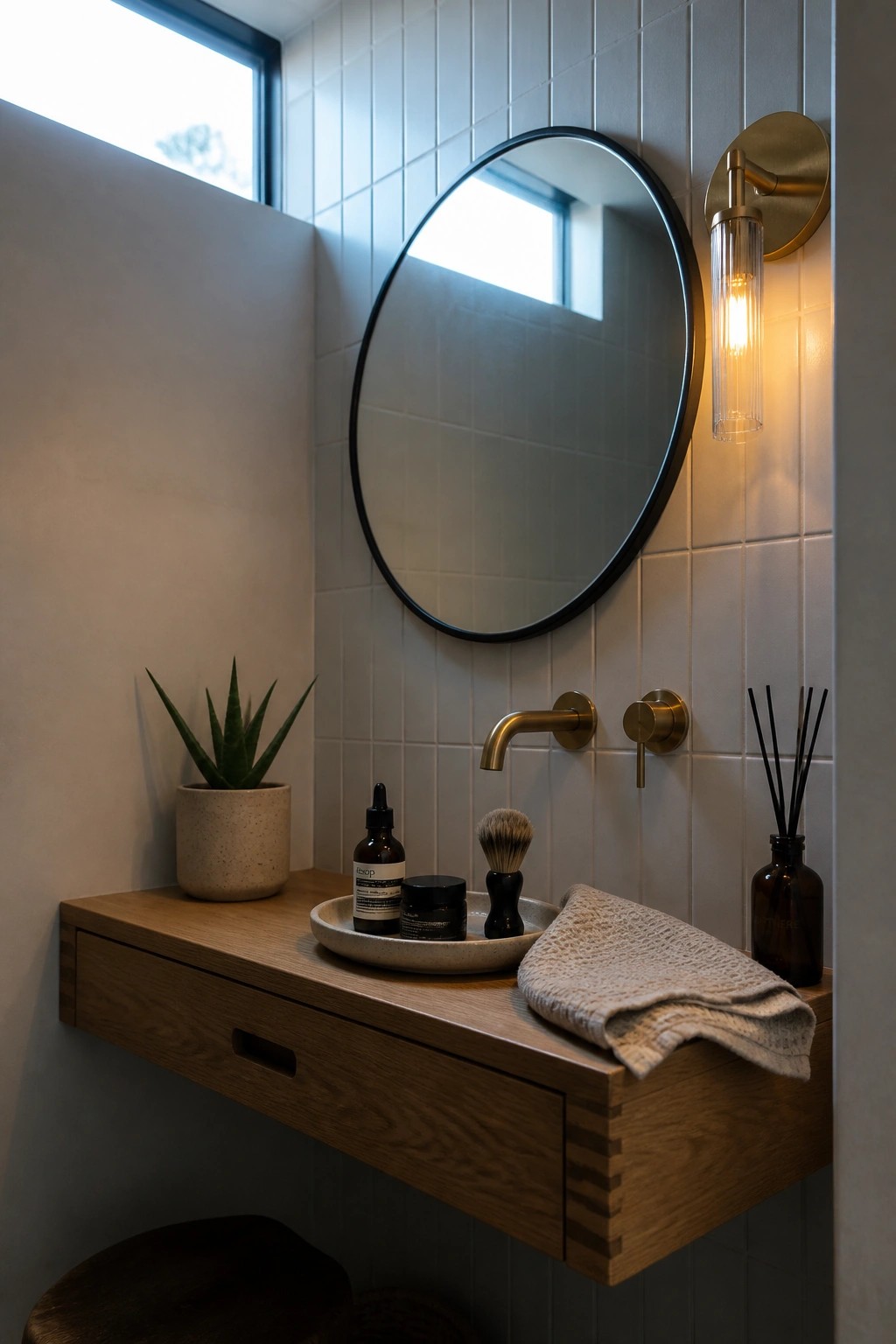
A floating wood shelf gives you a clean place to keep the things you reach for every day. The wood adds a bit of warmth without filling the wall with cabinets or extra surfaces that collect dust.
Place it at a comfortable height and keep only a few items on top. A small tray helps group bottles and brushes so the surface stays open. This setup works well in small bathrooms or any spot where you want function without visual clutter.
Travel Prints Above The Desk
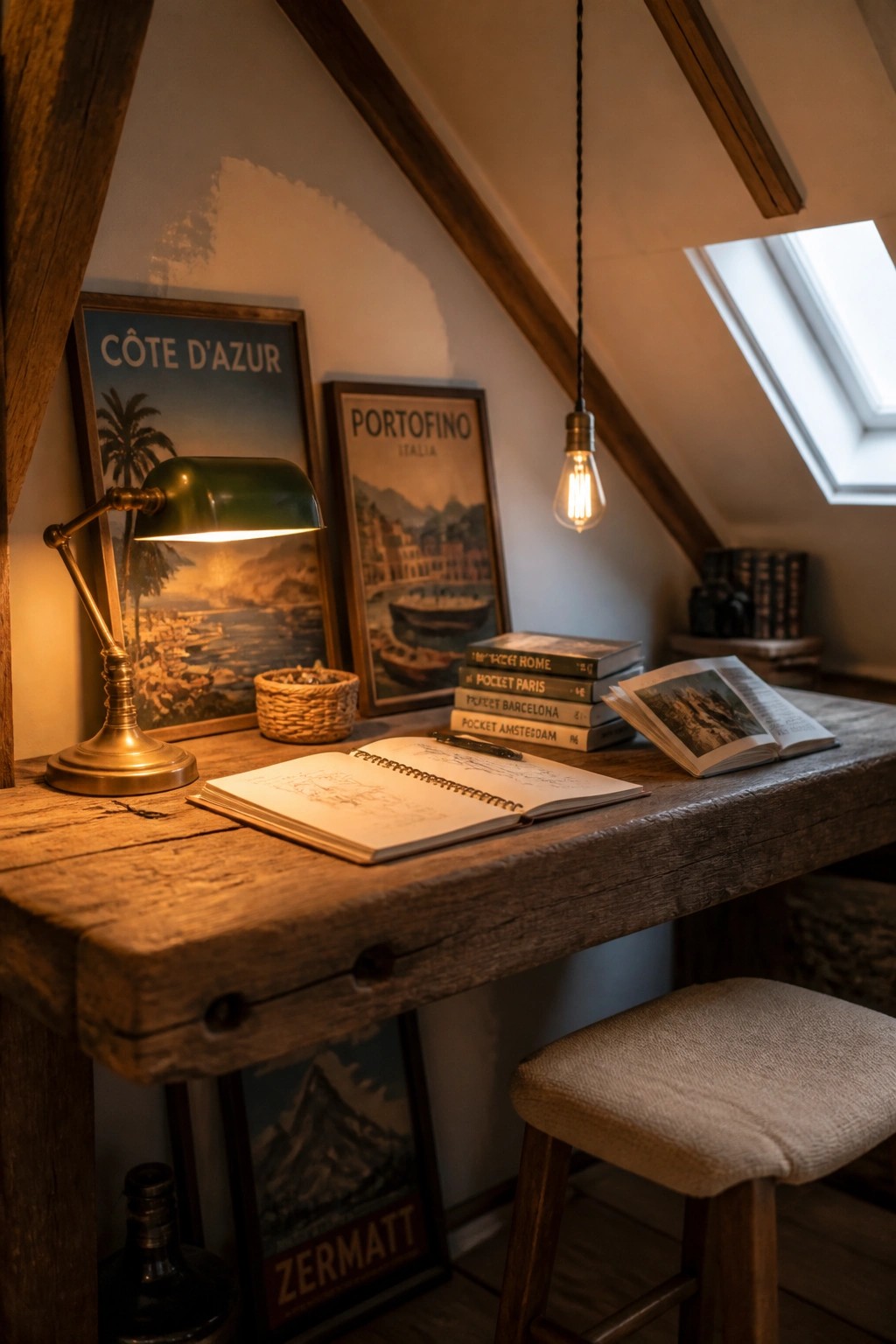
Travel prints give a desk area some character without crowding the surface. A few framed posters on the wall behind the desk add interest while the workspace itself stays clear for writing or reading.
This works well in smaller rooms or attic offices where wall space is tight. Choose two or three prints in similar tones so the look stays simple rather than busy.
Frequently Asked Questions
Q: How do I keep my desk decor from becoming a distraction during long work sessions?
A: Pick items that sit quietly in the background. A small sculpture or textured tray works well. Move anything that pulls your eyes away.
Q: What if I share my desk with someone else?
A: Choose neutral pieces that still feel personal to you. Swap in one or two things that are just yours. This keeps the space balanced for both of you.
Q: My office has strict rules on desk items. What works?
A: Focus on small functional pieces like a nice pen holder. They add personality without standing out.
