

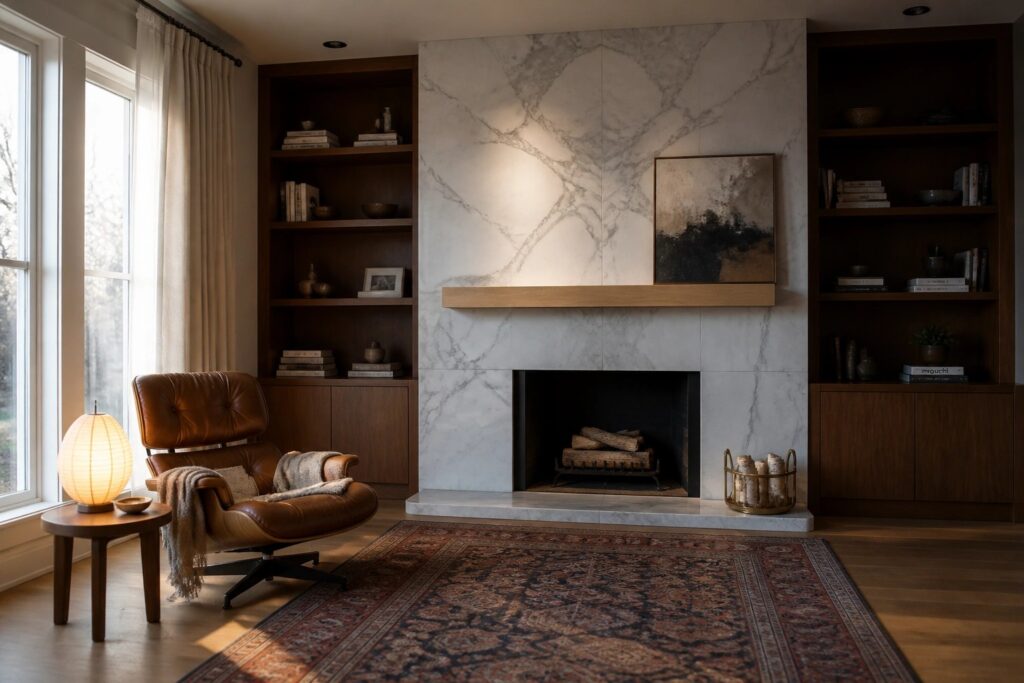
I have noticed that the fireplace surround tends to anchor the whole living room, so when the tiles start to look tired the space can feel off even if everything else is in good shape.
Updating just that section often brings the room back into balance without touching the rest of the layout or furniture.
The right tile choice changes everything.
I tend to check how a new material will handle everyday use like leaning against it or placing tools nearby before deciding on a finish.
It also helps to picture the updated surround next to the existing mantel and flooring so the change feels like it belongs rather than standing apart.
Marble Tile For The Fireplace Surround
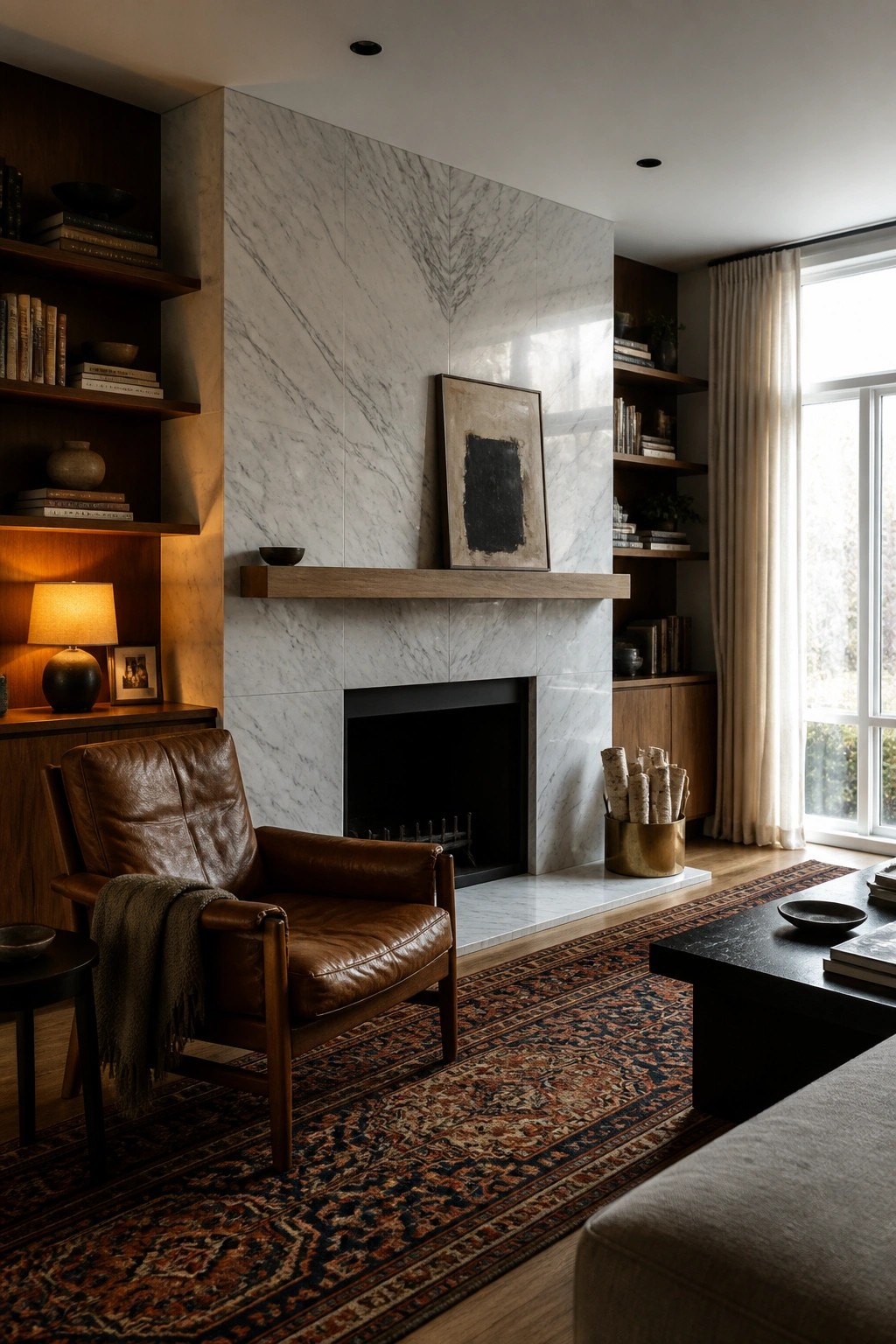
Marble tile gives a fireplace a clean and lasting update without needing a full rebuild. The large format pieces keep the surface simple and bright while the natural veining adds just enough interest to hold attention.
This approach works best in rooms that already have wood tones and layered textures. It suits older homes that need a lighter touch around the hearth but still want something that feels substantial rather than trendy.
White Mantel Over Brick
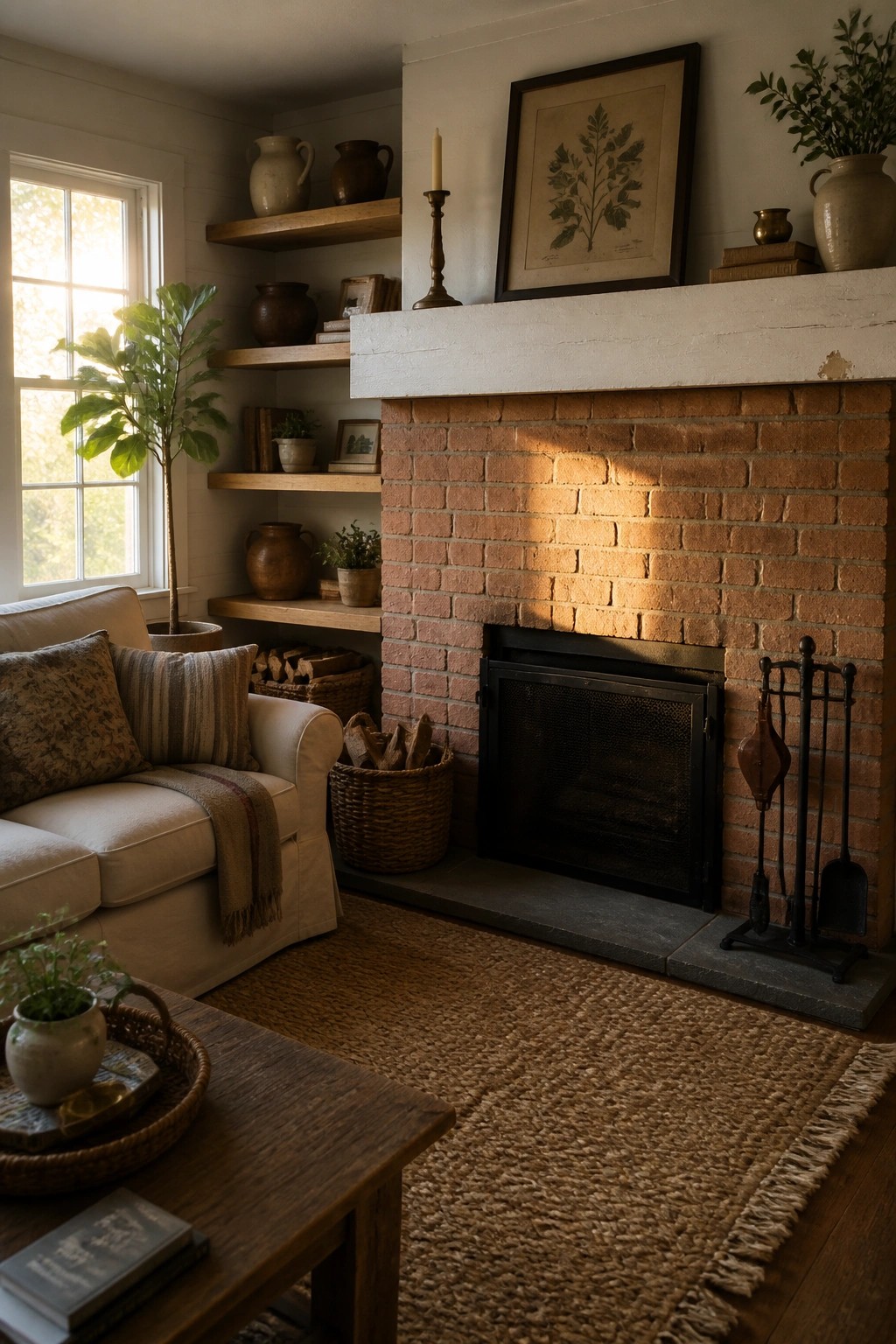
A white mantel can give an old brick fireplace a cleaner, lighter look without tearing anything out. The bright wood stands out against the red bricks and makes the whole surround feel updated right away.
This works well in rooms that already have wood tones and soft neutrals. Keep the mantel simple in shape and finish so the brick stays the main feature instead of fighting with extra trim or color.
Blue Tile Gives a Fireplace a Simple Color Update
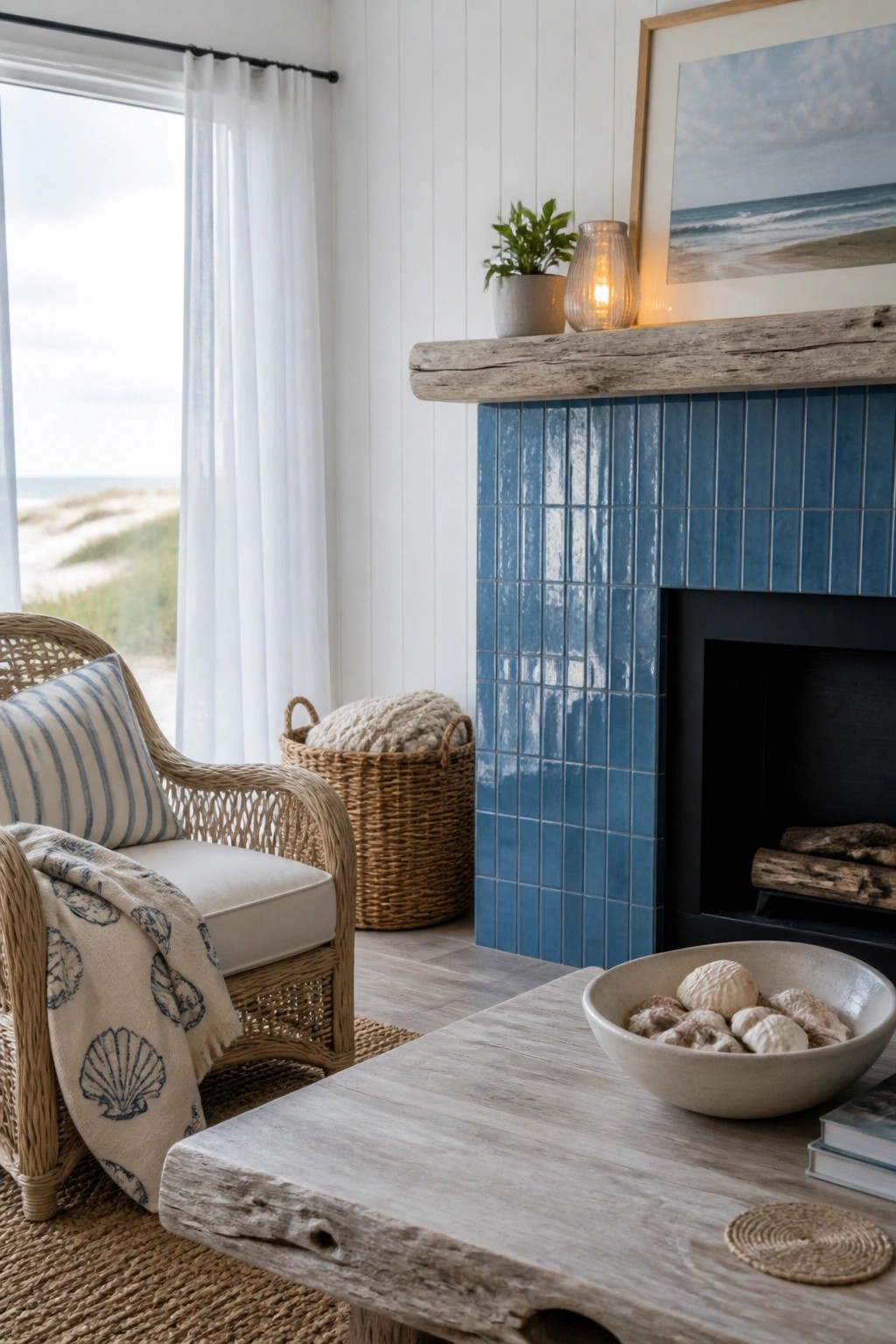
Many fireplaces end up with plain or dated tile that makes the whole room feel flat. Switching to a strong blue can shift the look without a full renovation, and it works especially well if the room already has some natural wood or light walls.
This idea suits casual homes that need a bit of brightness around the hearth. Keep the mantel simple, like a weathered wood piece, so the tile stands out without competing. Avoid very dark rooms where the blue might feel heavy instead of fresh.
Dark Hexagon Tiles For The Fireplace
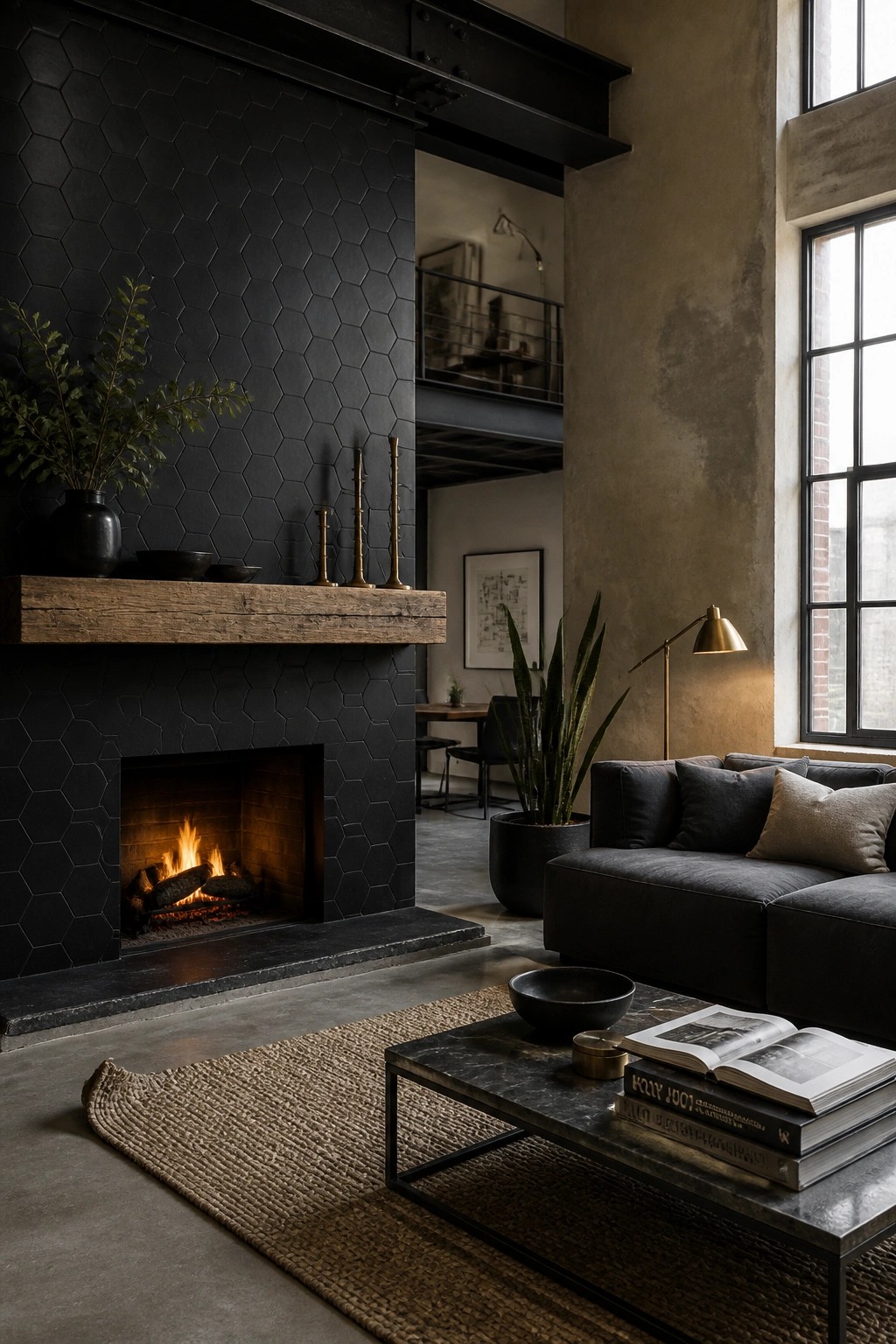
Hexagon tiles in a deep dark finish give a fireplace a strong graphic look that still feels simple. The shape adds pattern without clutter, and the color helps the surround blend into the wall while still drawing the eye.
This approach works best in larger rooms with high ceilings or industrial details where the scale can handle it. Keep the rest of the space fairly plain so the tile does not compete with too many other textures.
Vertical Tiles Refresh A Fireplace Surround
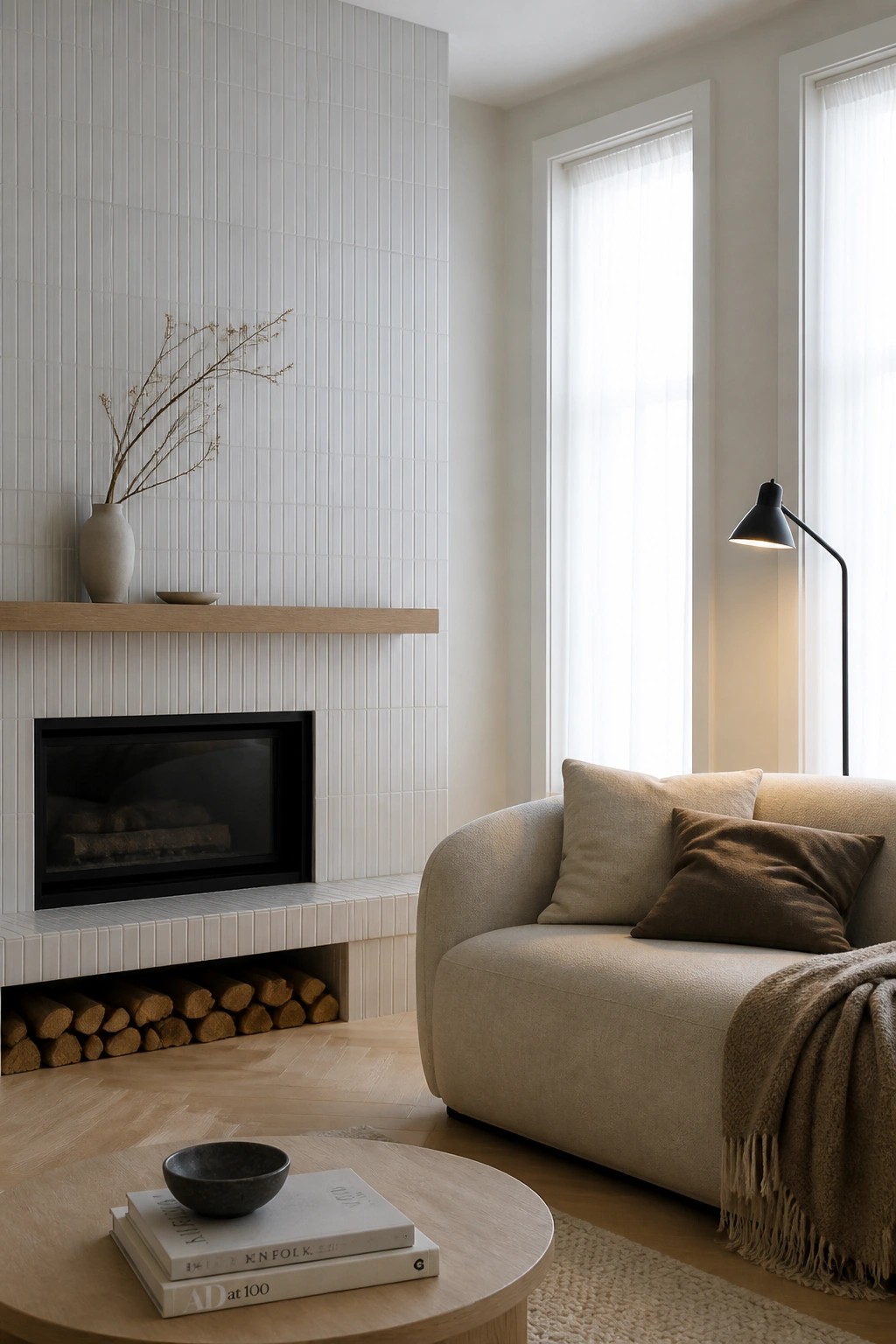
Many older fireplaces feel dated because of the tile layout. Switching to vertical tiles changes the look right away by making the surround appear taller and more streamlined.
This approach works best in rooms that already have clean lines and light walls. Keep the tile color simple and consider adding a wood mantel if you want a bit of warmth without extra decoration.
Dark Large Format Tiles
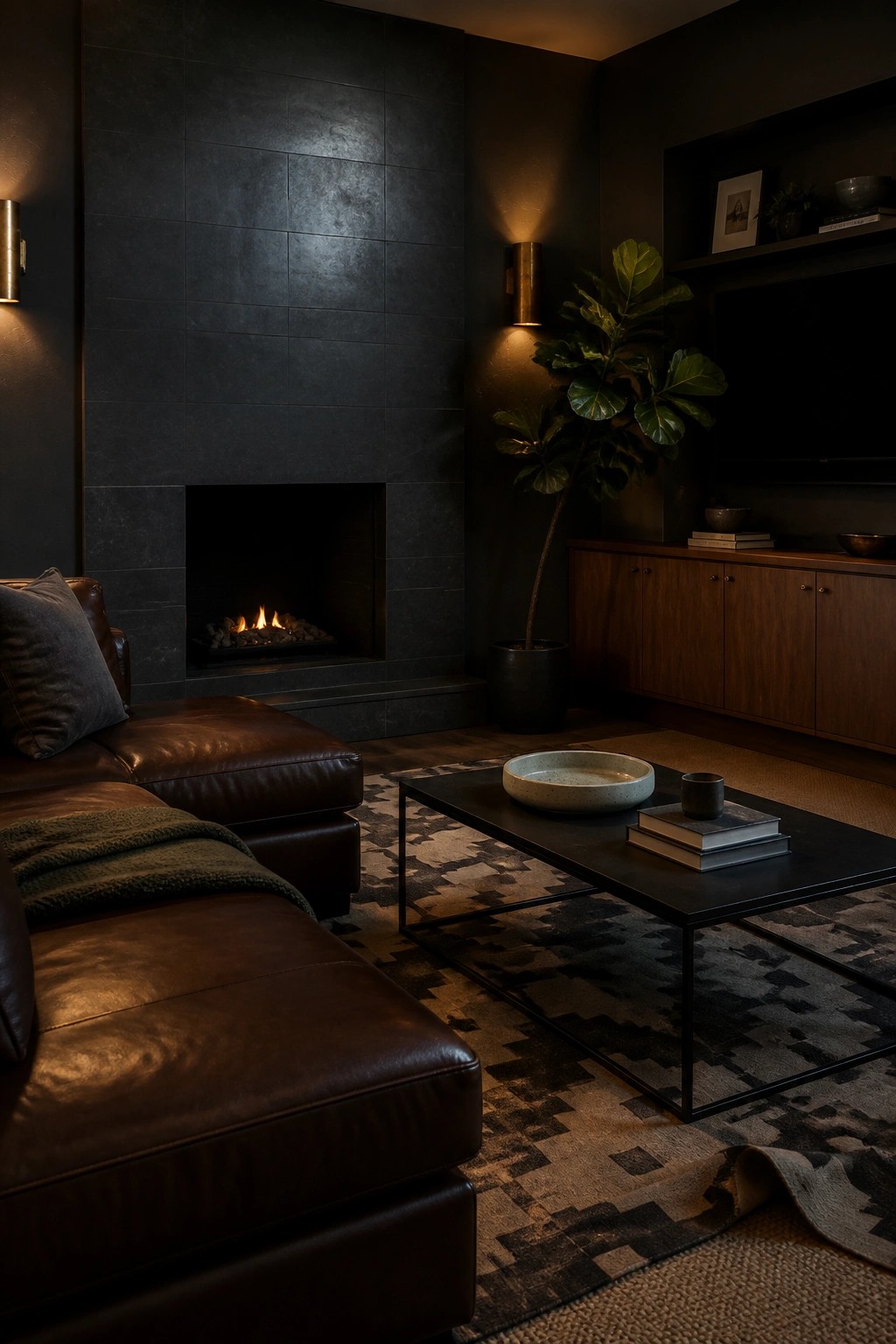
Large dark tiles can turn an old fireplace into a strong focal point without much extra work. They cover the surround in one solid color and texture, which makes the whole wall feel updated and modern rather than dated. The matte finish also helps hide soot and minor wear over time.
This approach works best in rooms that already have some weight to them, like spaces with leather seating or darker wood tones. It suits homes that lean contemporary or industrial, and it pairs well with simple mantels or no mantel at all. Just keep the grout lines minimal so the tiles read as one surface.
Penny Tiles On The Fireplace Surround
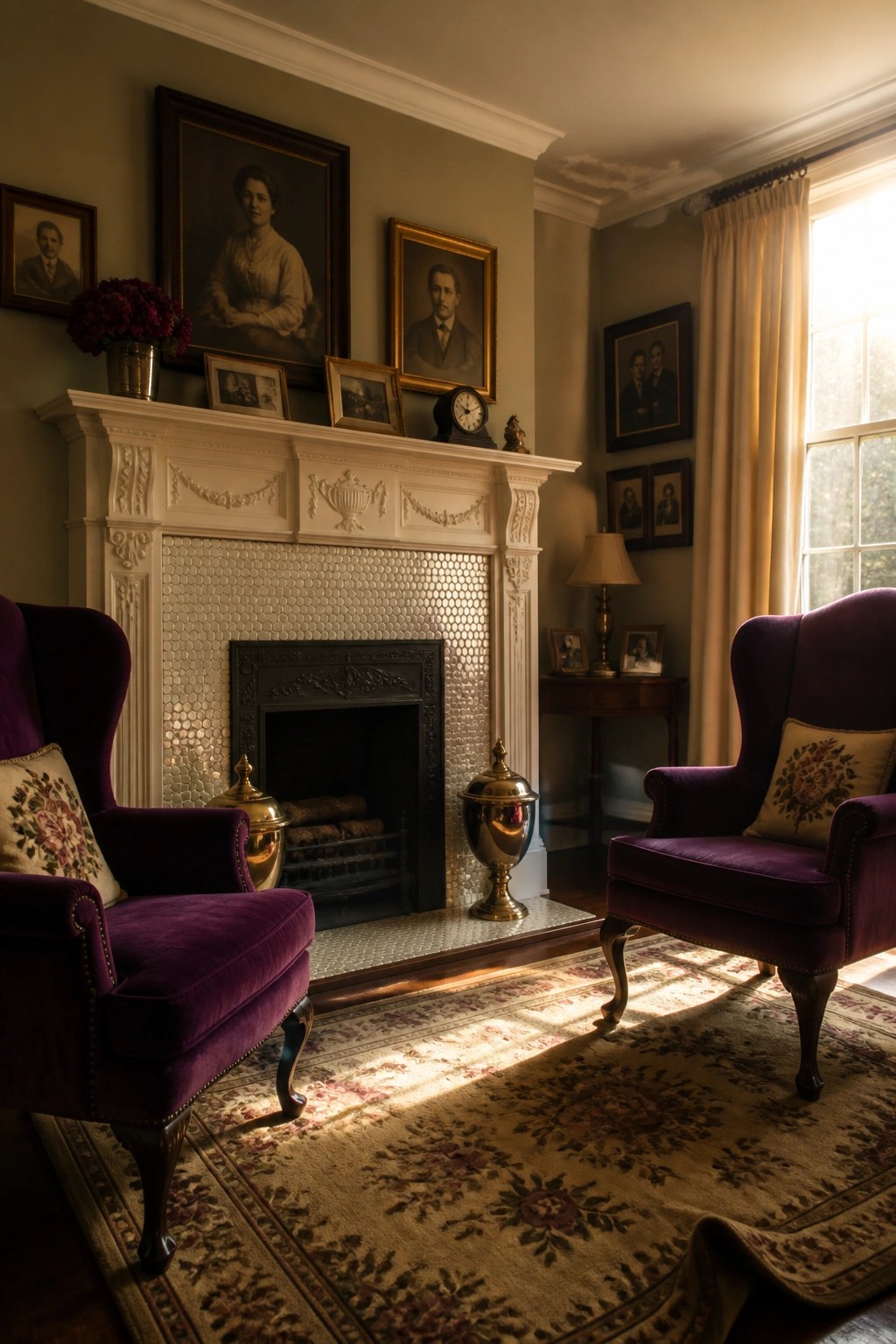
Penny tiles give an old fireplace surround a fresh update without changing the mantel itself. The small round shape adds texture and a soft shine that catches light in a way larger tiles cannot.
This approach works well in traditional rooms where the goal is to keep the existing architecture but refresh the center. Stick with a metallic finish if the room already has some warmth from wood or fabric, and keep the grout tone close to the tile so the pattern reads clearly.
Green Tile Gives A Fireplace New Life
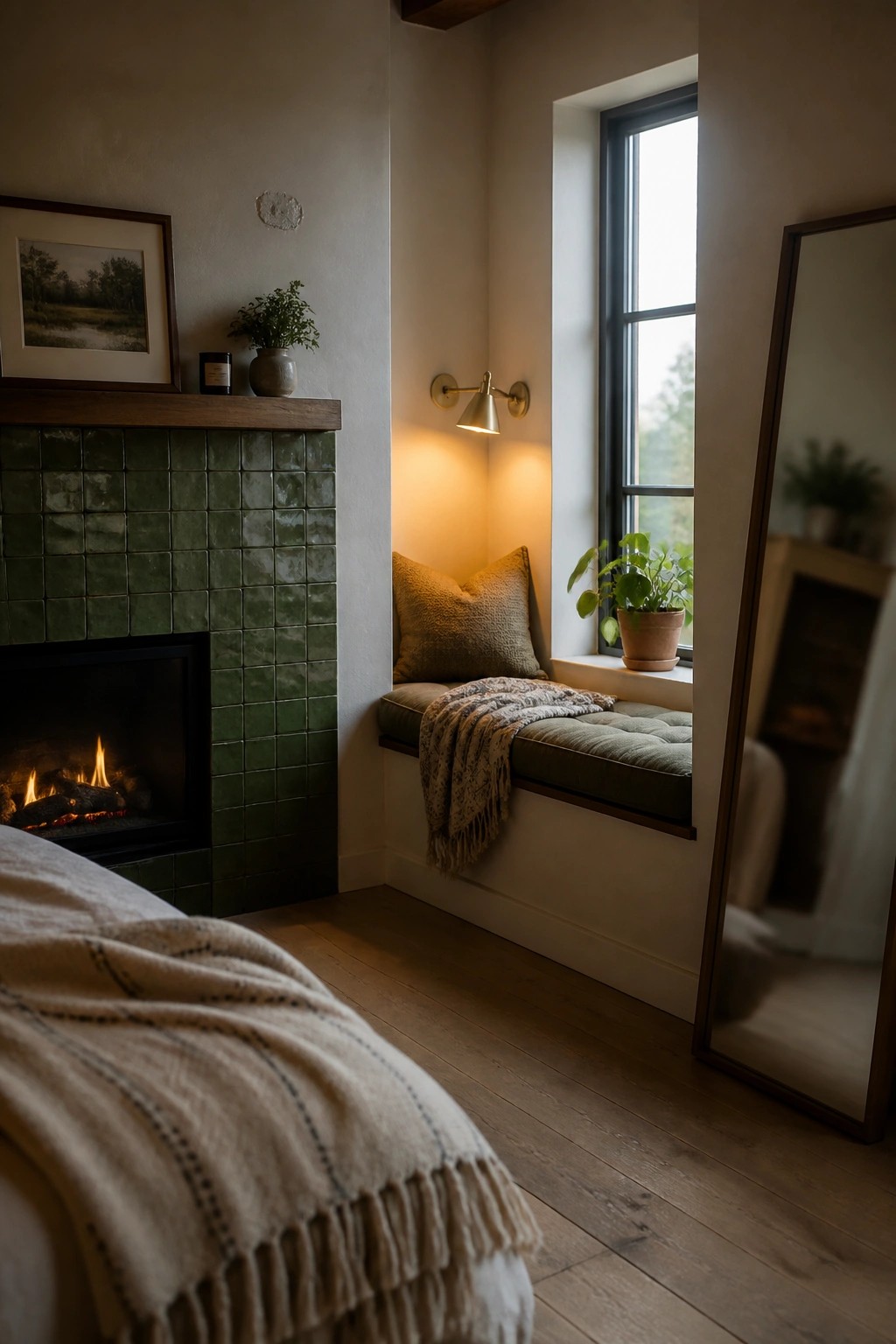
Green tile can turn an old fireplace into the main feature of a room without much extra work. The square format keeps the look simple while the color adds depth that plain stone or brick often lacks. Many older surrounds benefit from this kind of change because it feels fresh but still fits with wood mantels and natural floors.
This works well in living rooms or bedrooms where you want the fireplace to feel cozy rather than stark. It suits homes with wood tones already in place, since the green pairs easily with them. Just watch the grout color, since dark grout can make the tiles feel heavier than needed.
Patterned Tiles Refresh an Old Fireplace
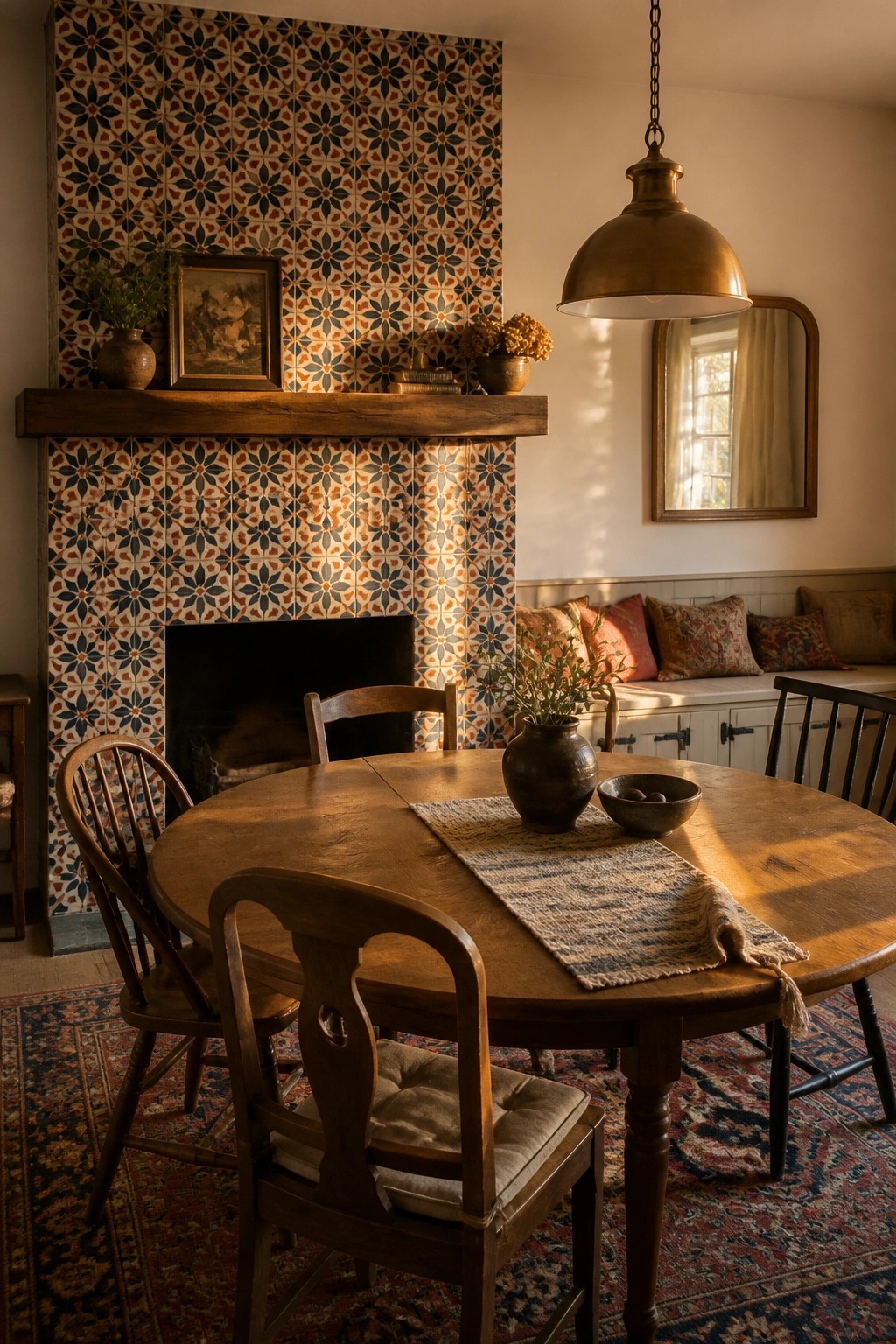
Patterned tiles give an outdated fireplace surround a quick lift without a full rebuild. The repeating design adds color and texture that draws the eye while still letting the fire remain the main focus.
This approach works best in rooms that already have some wood tones and simple furniture. Keep the pattern scale in mind so it does not feel too busy next to other details in the space.
Metallic Hexagon Tiles Refresh A Fireplace Surround
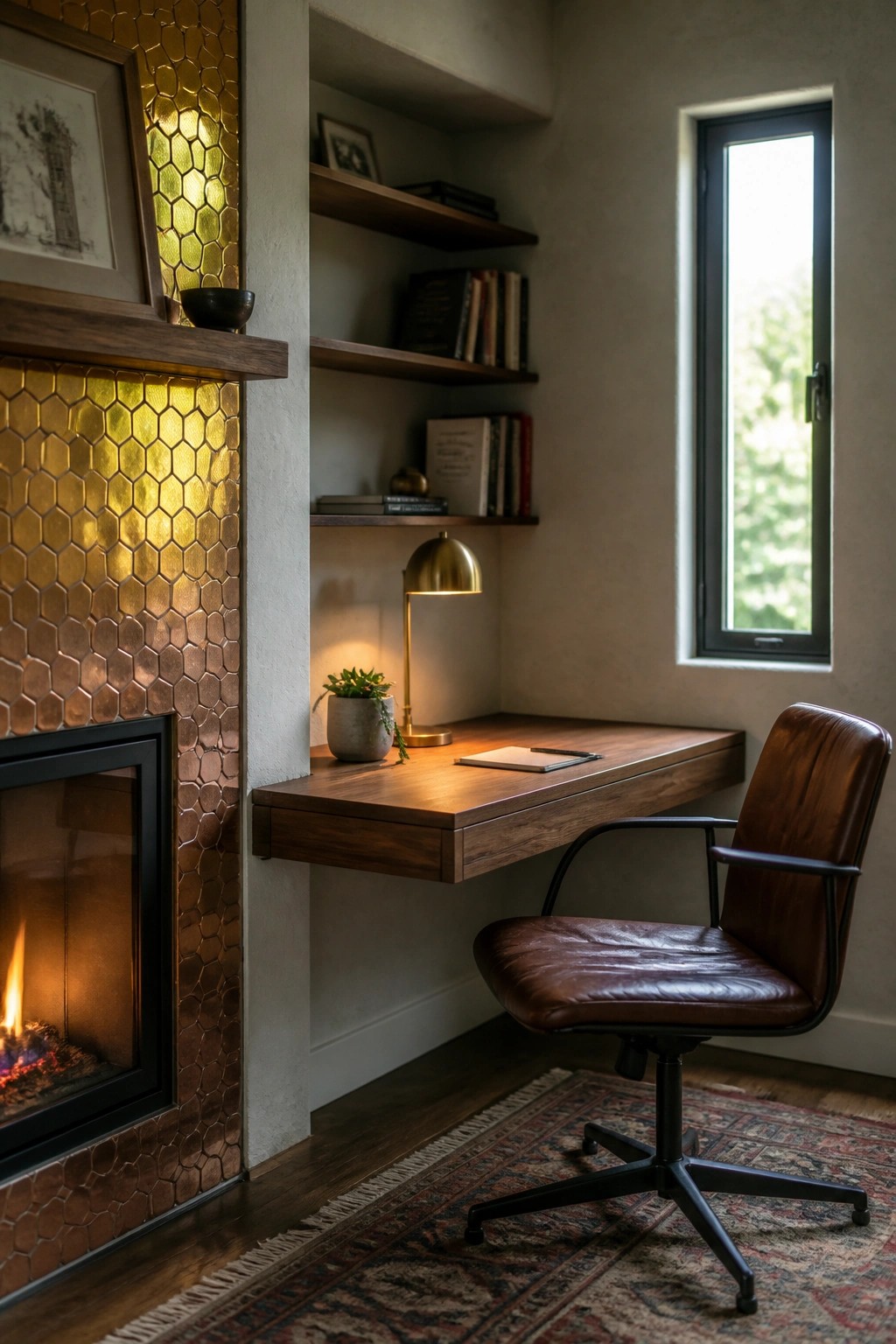
Metallic hexagon tiles give an old fireplace a fresh look without needing a full remodel. The copper finish catches light from the fire and nearby lamps, adding subtle shine that feels warm rather than flashy. This choice works especially well when the surround sits next to built-in shelves or a desk, turning the fireplace into a quiet focal point.
It suits homes that lean modern or transitional and pairs best with simple wood mantels and neutral walls. Keep surrounding furniture low and understated so the tiles stay the main detail. Avoid mixing them with too many other patterns or busy colors.
Scalloped Tiles For A Gentle Refresh
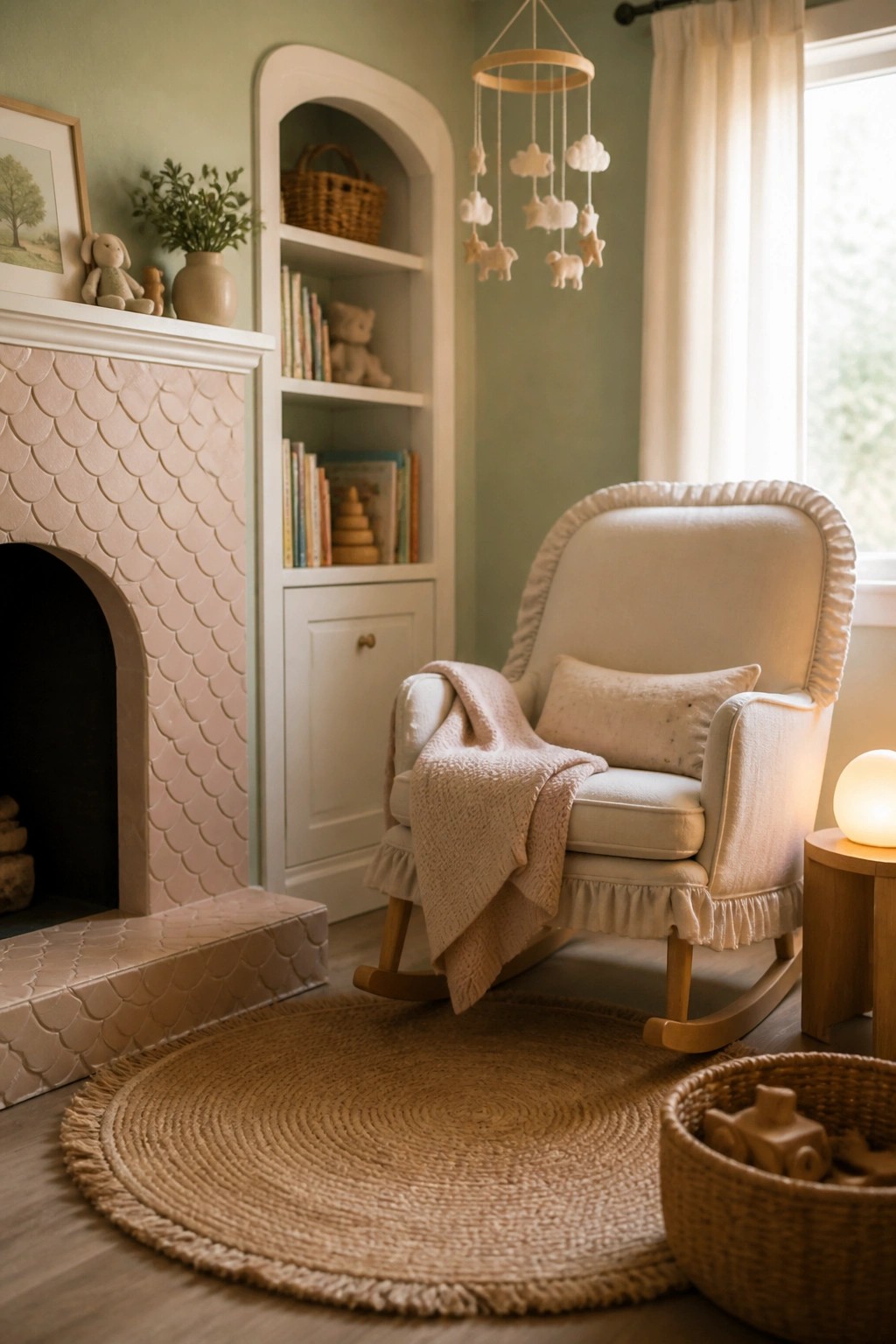
Scalloped tiles work well when you want to update an old fireplace without making it feel too formal. The rounded edges add quiet movement across the surface, and a soft color keeps the hearth from overpowering a smaller or lighter room.
This approach suits homes that already lean traditional but need a softer touch. It pairs best with simple trim and neutral walls so the pattern on the tiles stays the main detail.
Speckled Tile On Fireplace Surrounds
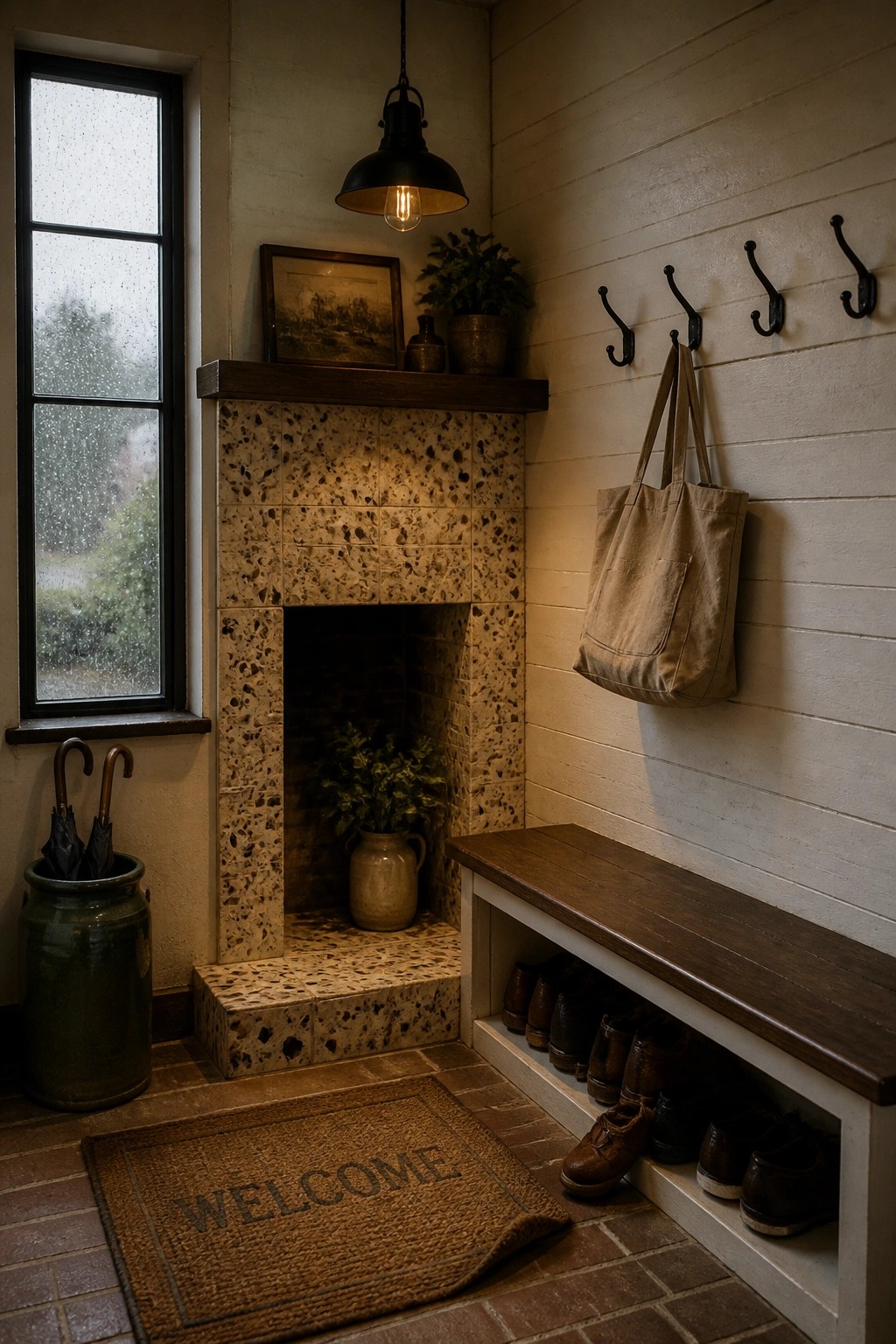
Speckled tile gives an old fireplace a fresh update without making it look brand new. The mix of tones and texture adds interest while keeping the surround grounded and simple.
This approach works best in homes with wood floors or trim already in place. Keep the pattern fairly even so the fireplace blends in rather than becoming the only focal point.
Bookmatched Marble Surrounds
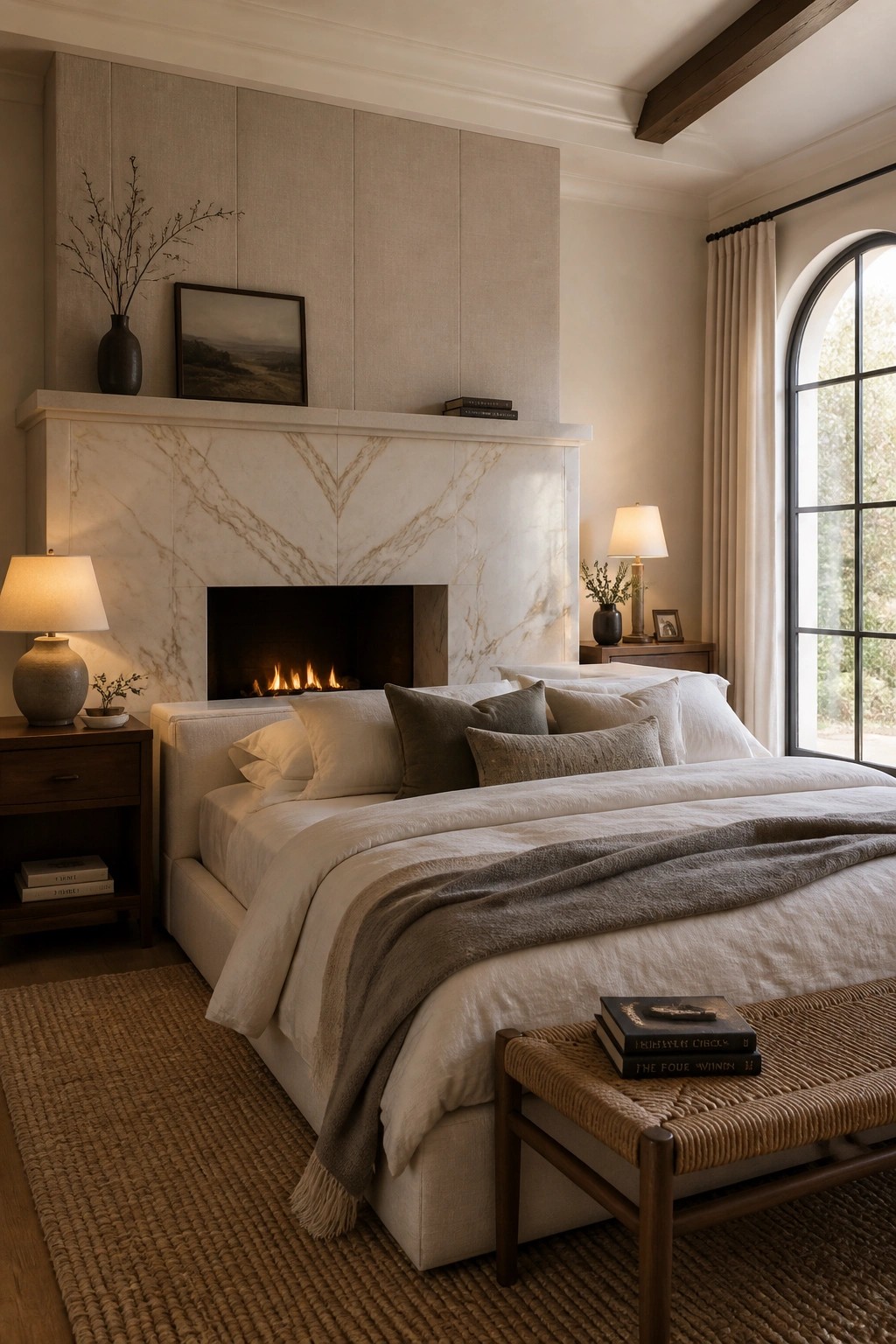
Large marble panels cut and placed to mirror each other can turn a plain fireplace into the main feature of a room. The veining runs across the surface in a way that feels intentional and calm rather than busy. This approach works especially well when the rest of the space stays quiet in tone.
It suits older homes that need a refresh without changing the whole mantel. Keep the surrounding walls simple and let the stone carry the weight. Watch the scale though, since very bold patterns can overwhelm smaller rooms.
Deep Green Tiles In A Diamond Pattern
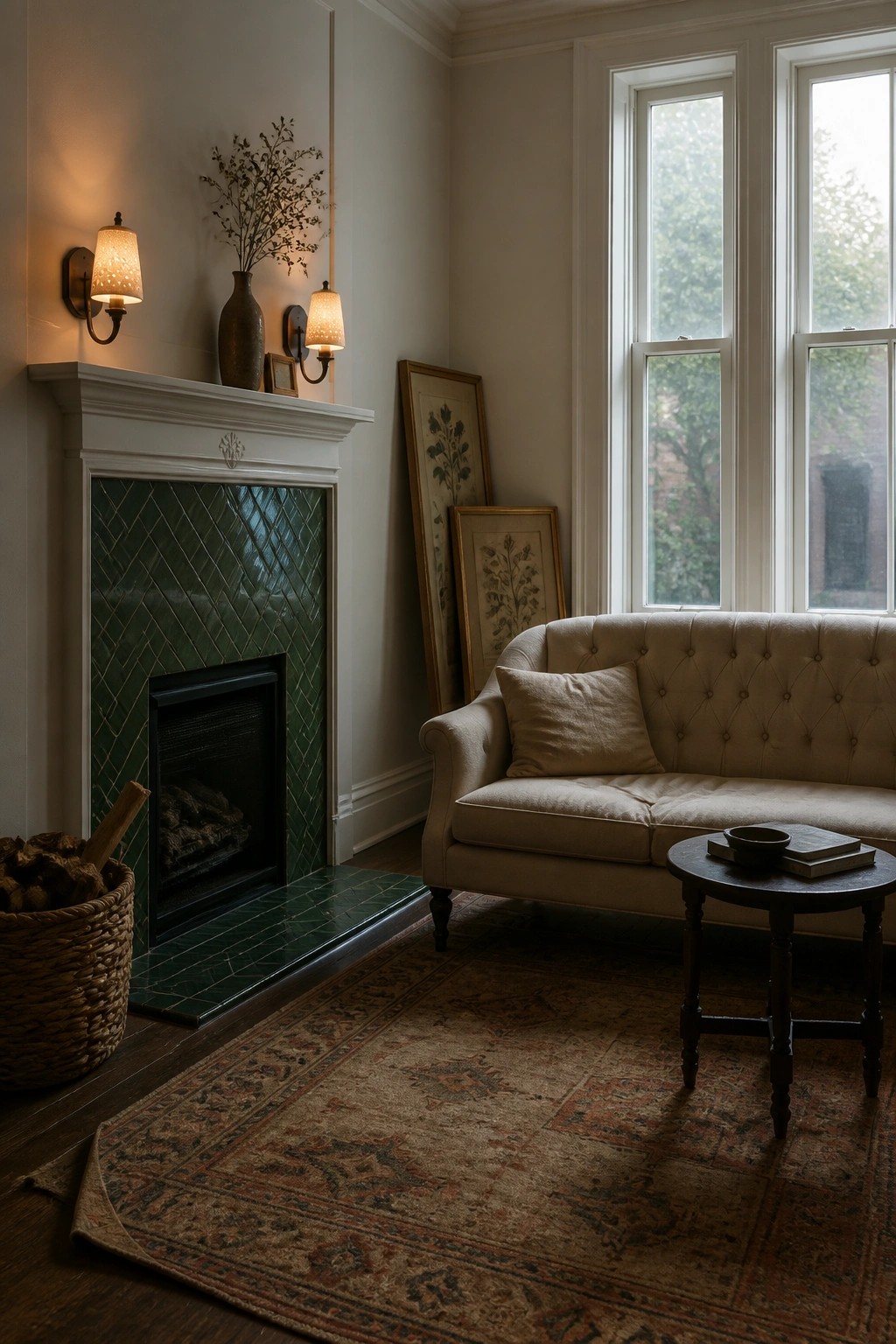
A deep green tile surround can give an older fireplace a lift without changing the whole room. The diamond layout adds quiet interest while the color feels rich rather than trendy. It works because the tone stays grounded and pairs easily with most wood tones and neutrals.
This choice suits homes that already have traditional trim or mantels. Keep the mantel white or a soft off-white so the tile stands out on its own. Avoid overcrowding the area with too many small accessories since the pattern already draws the eye.
Pebble Tile Hearths
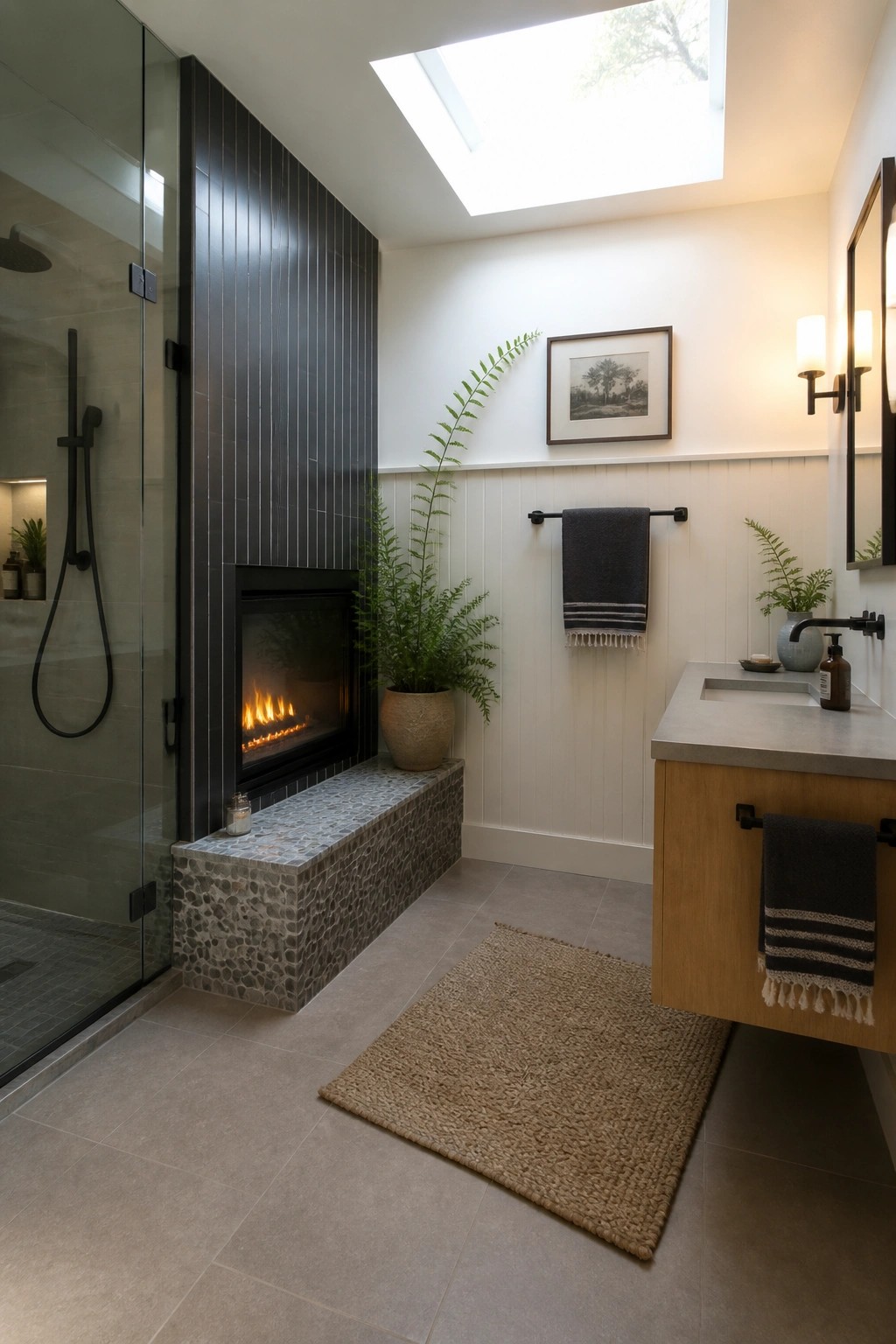
Pebble tile gives a fireplace a grounded, natural look that works especially well in smaller rooms. The rounded stones create texture and break up smooth surfaces without needing extra trim or detail. Many people like how it softens the hard lines of a modern firebox while still keeping the overall style clean.
This approach suits bathrooms or compact living spaces where you want warmth without clutter. It works best when the tile stays limited to the base or lower surround so the pattern does not overwhelm the room. Dark grout helps the stones stand out and keeps the look intentional rather than busy.
Try A Bold Tile Color
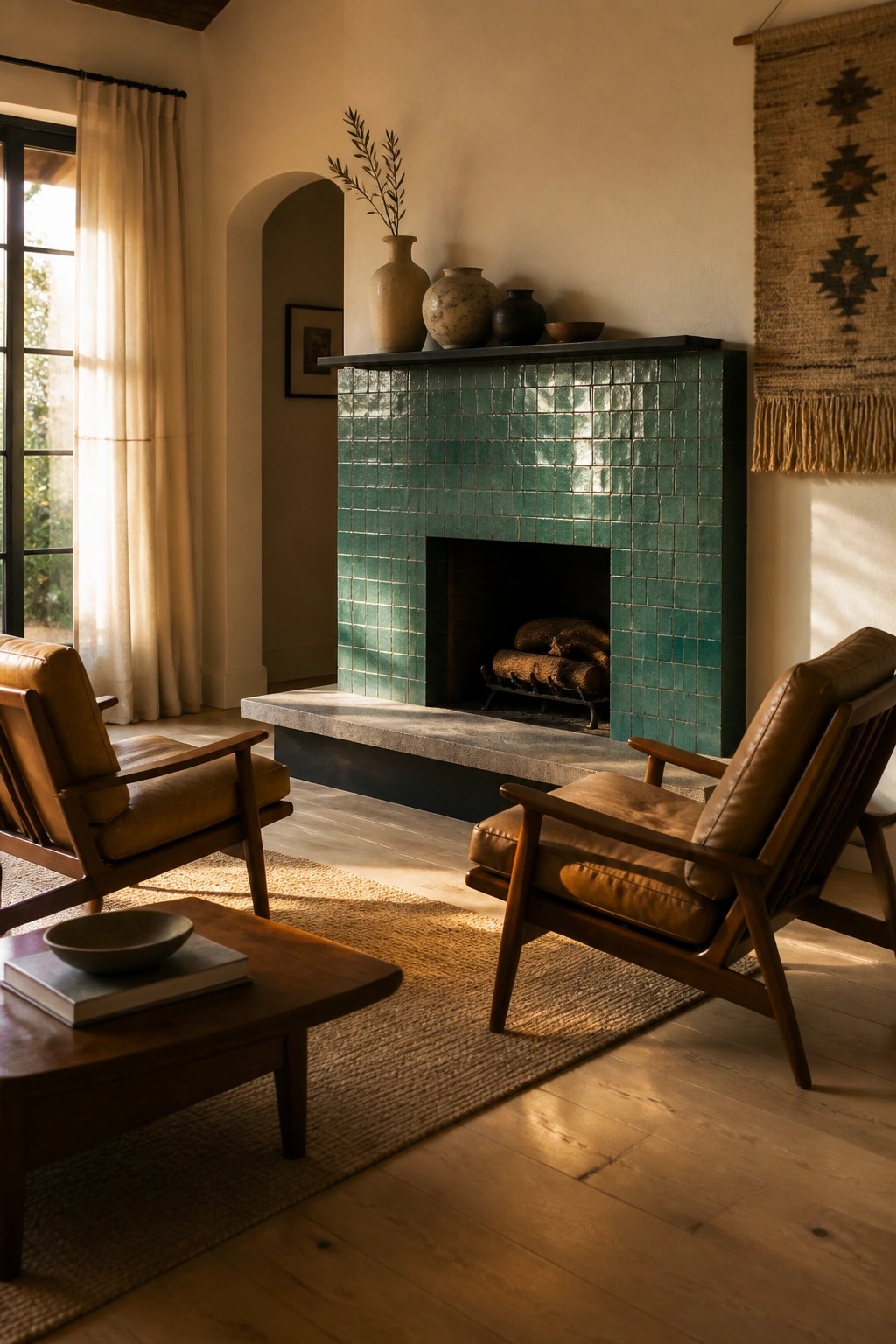
A bold tile color can refresh an old fireplace surround without any structural changes. The deep green tiles here turn what might have been a plain black opening into the main point of interest in the room.
This approach works best in spaces that already have neutral walls and wood tones. It suits older homes where the fireplace feels tired, and it pairs well with simple furniture so the color does not overwhelm the rest of the room.
Herringbone Layout For Fireplace Tile
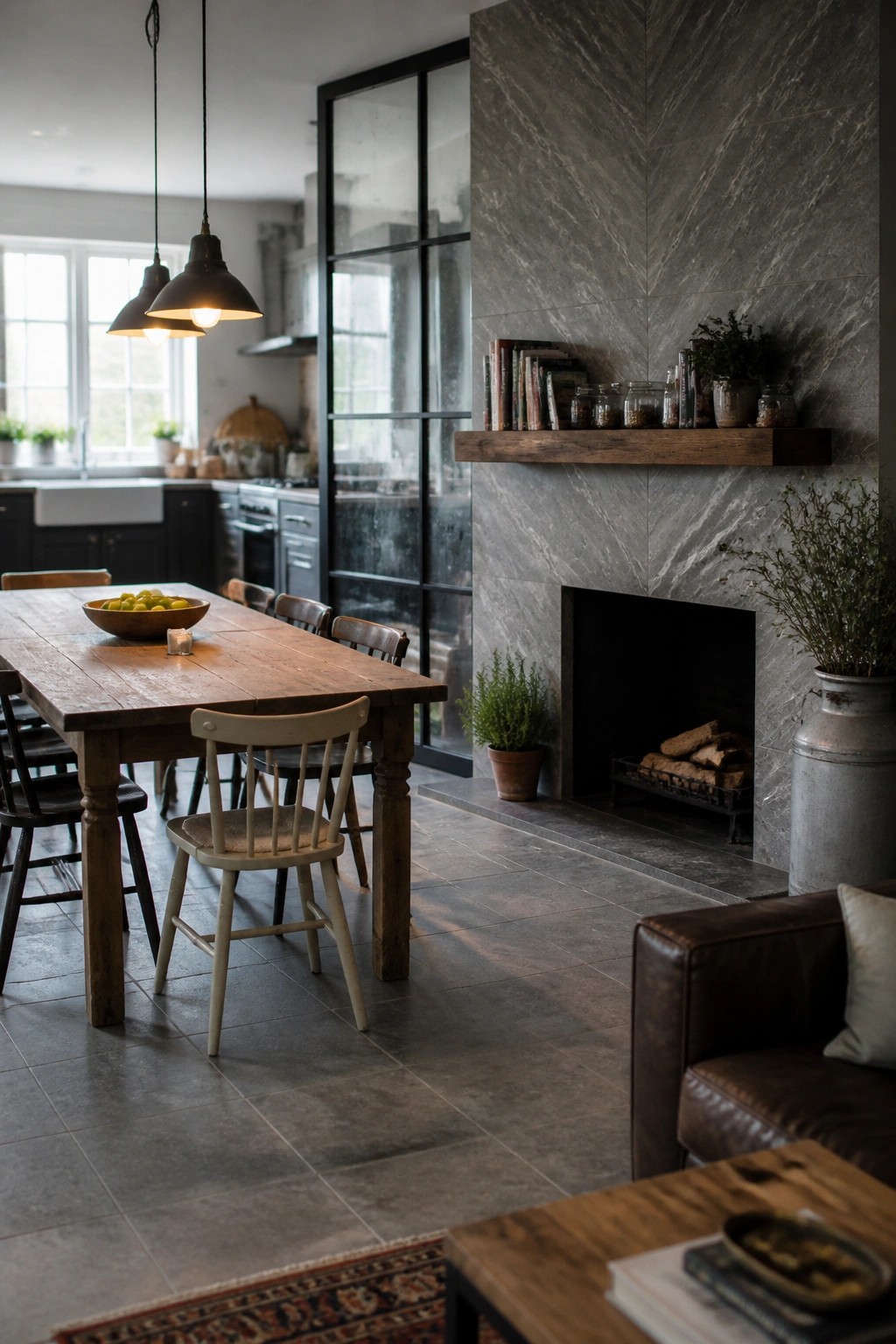
A herringbone pattern on the fireplace tile adds texture and movement that a straight stack never quite reaches. The angled lines catch light differently throughout the day and keep the surround from looking flat even when the rest of the room stays simple.
This layout works best in spaces where the fireplace sits between two rooms or needs to hold its own without extra trim. Use larger tiles in a single neutral tone so the pattern stays clear, and keep the mantel narrow so it does not compete with the lines.
Extend The Hearth Into Built-In Seating
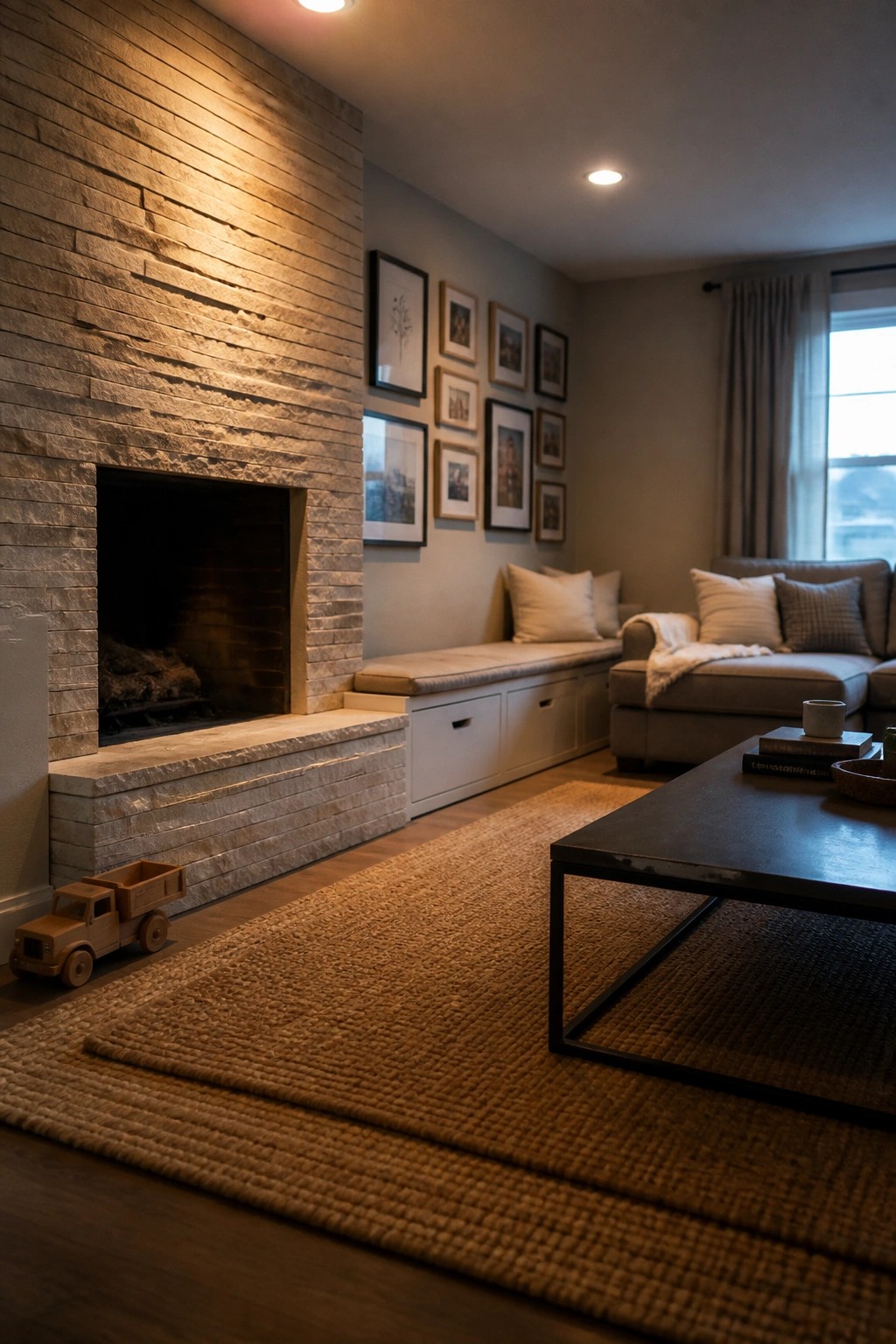
A simple way to update an old fireplace is to run the same surround material down and create a bench right off the hearth. The stacked stone keeps going in a straight line, so the bench feels like part of the fireplace instead of something added later.
This works best in living rooms that need extra seating but do not have space for another chair. The drawers underneath give hidden storage, and you can add a cushion on top to make the bench comfortable for sitting or just resting things on.
Pale Tiles Give An Old Fireplace New Life
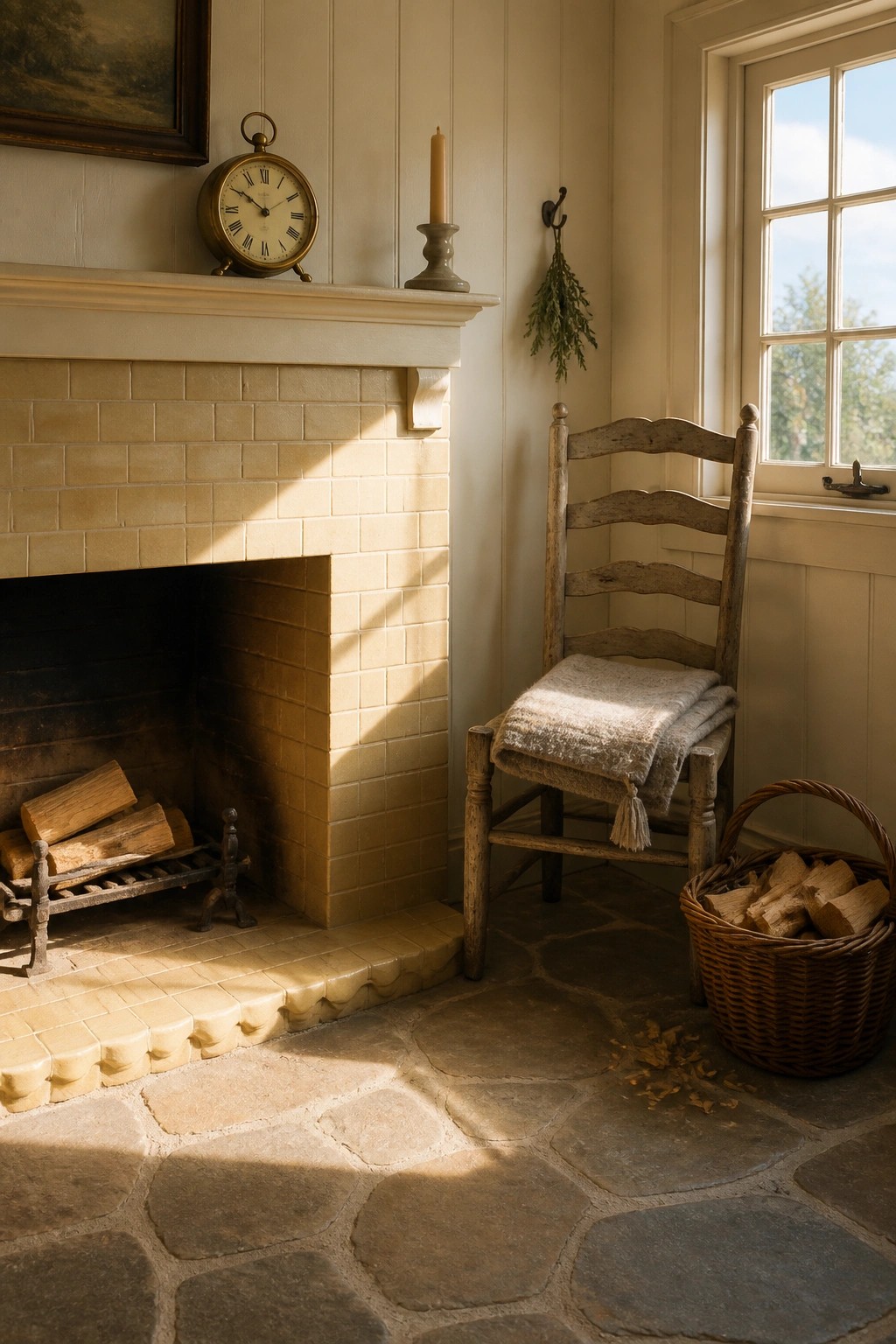
Light neutral tiles can make an older fireplace feel much brighter without changing the whole room. The soft color reflects light instead of soaking it up, which helps the surround look less heavy and dated.
This approach works best in spaces that already have wood or stone nearby. Keep the grout light as well so the tiles stay looking clean over time.
Marble With A Patterned Hearth Border
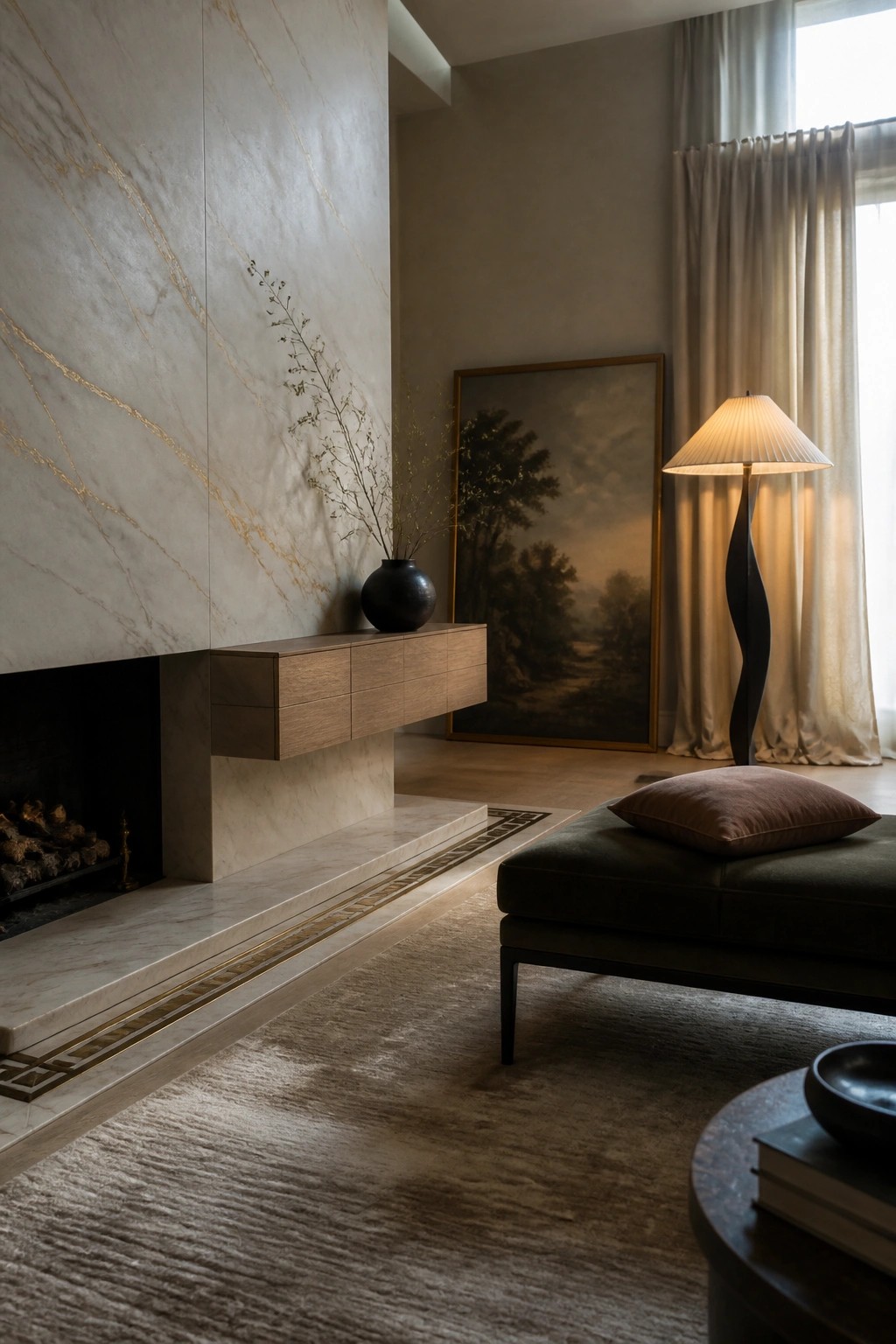
Large marble tiles can give a fireplace a cleaner, more updated look without needing a full renovation. The soft veining adds just enough movement, while the narrow patterned border along the hearth keeps the whole thing from feeling too plain or heavy.
This approach works especially well in rooms that already have wood tones or neutral walls. Keep the border simple so it frames the firebox without competing with it, and make sure the tile size stays consistent with the scale of the room.
Patterned Tiles Around the Firebox
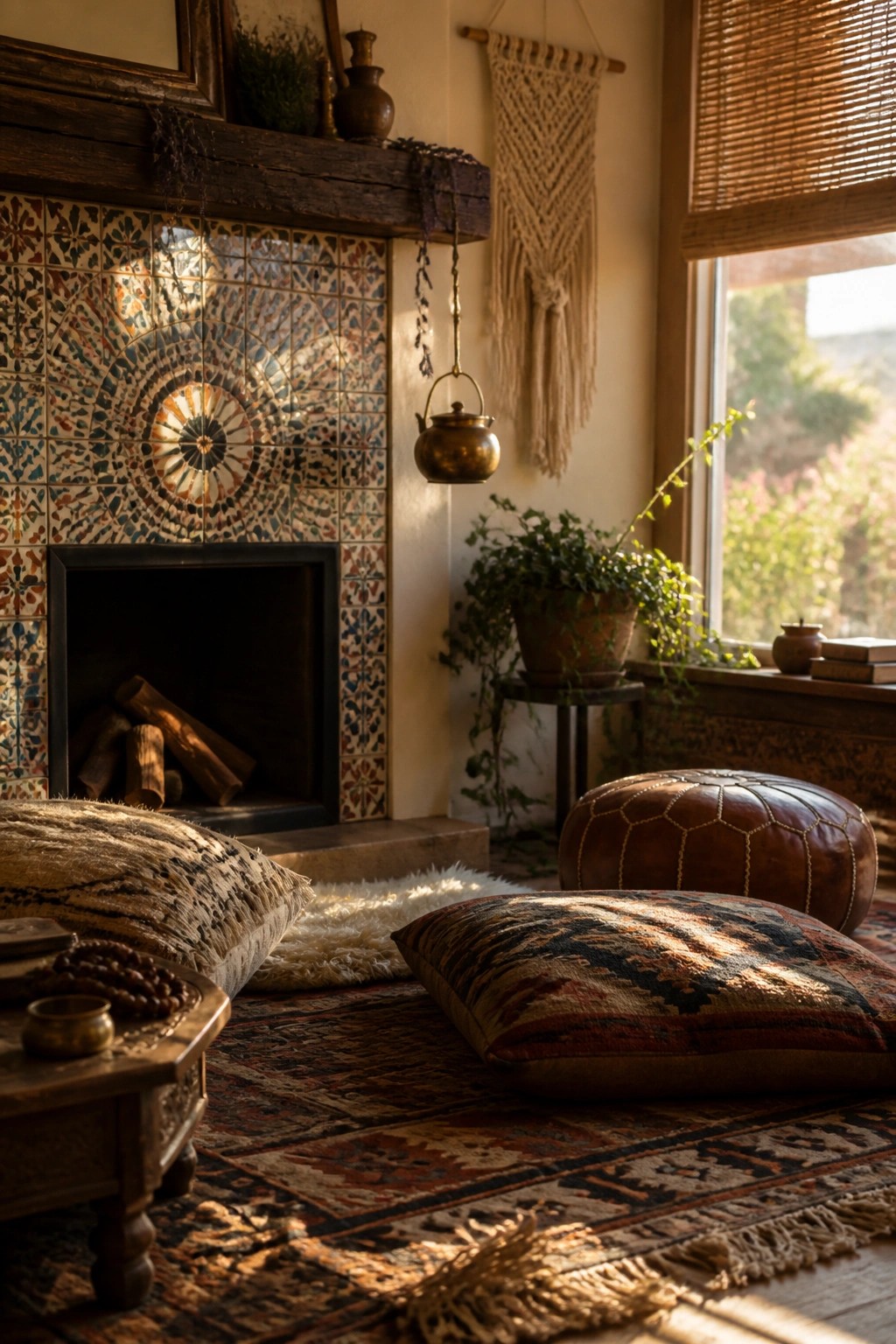
Many older fireplaces look tired because the tile is plain or dated. Switching to a bold patterned tile gives the surround new life and adds plenty of character in one move.
This approach works best in rooms that already have some texture, like wood beams or layered rugs. Keep the pattern focused on the firebox area so it draws the eye without taking over the whole wall.
Full Height Tiles Around The Fireplace
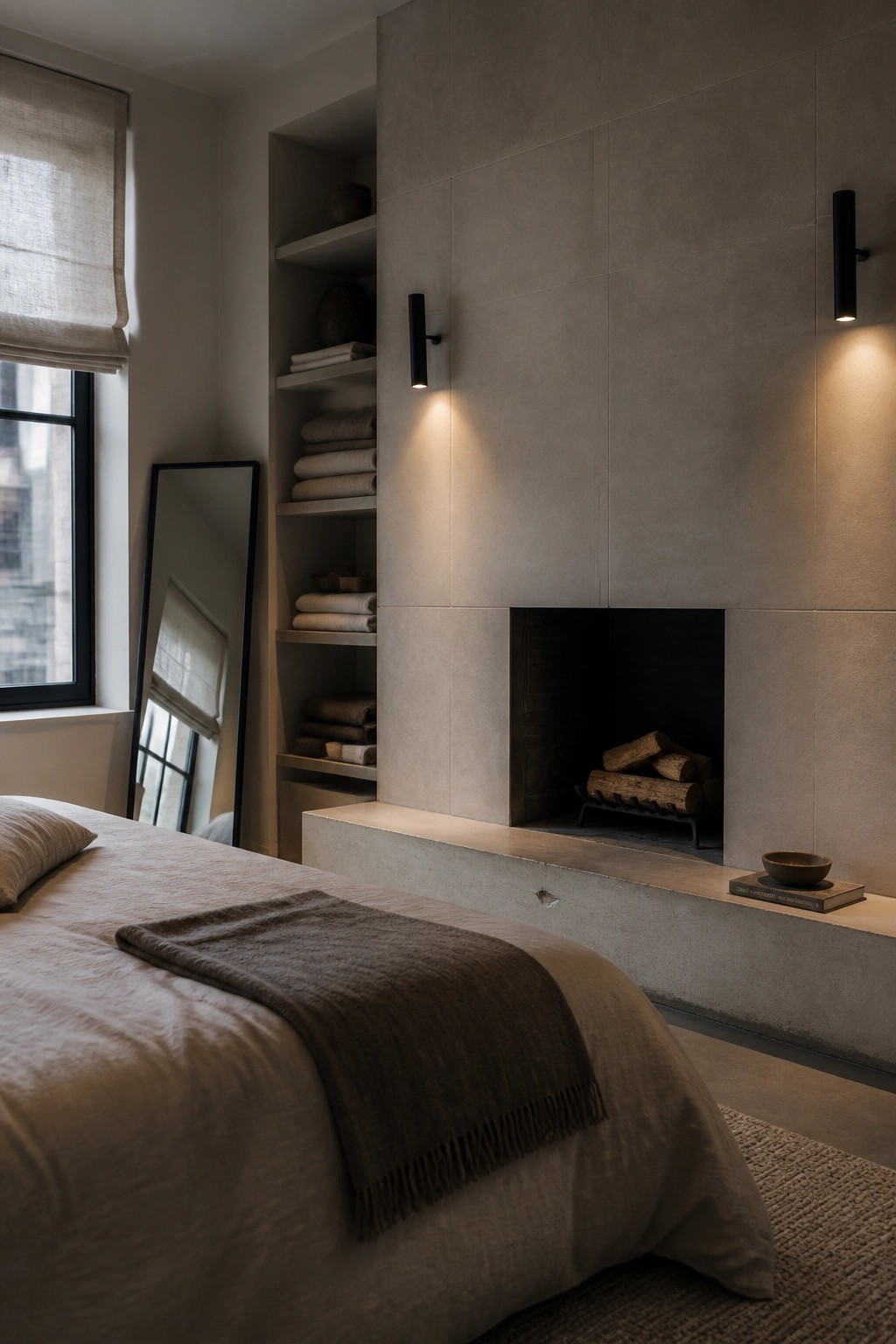
Covering the entire wall with the same large tiles gives the fireplace a built in look instead of letting it sit like a separate box. The surface stays calm and the eye moves smoothly across the room instead of stopping at the edges of the surround.
This approach works best in smaller bedrooms or living rooms where you want the fireplace to feel quiet. It pairs well with simple floating shelves on one side for extra storage and it keeps the whole wall from looking busy.
Red Brick Tiles For Traditional Fireplaces
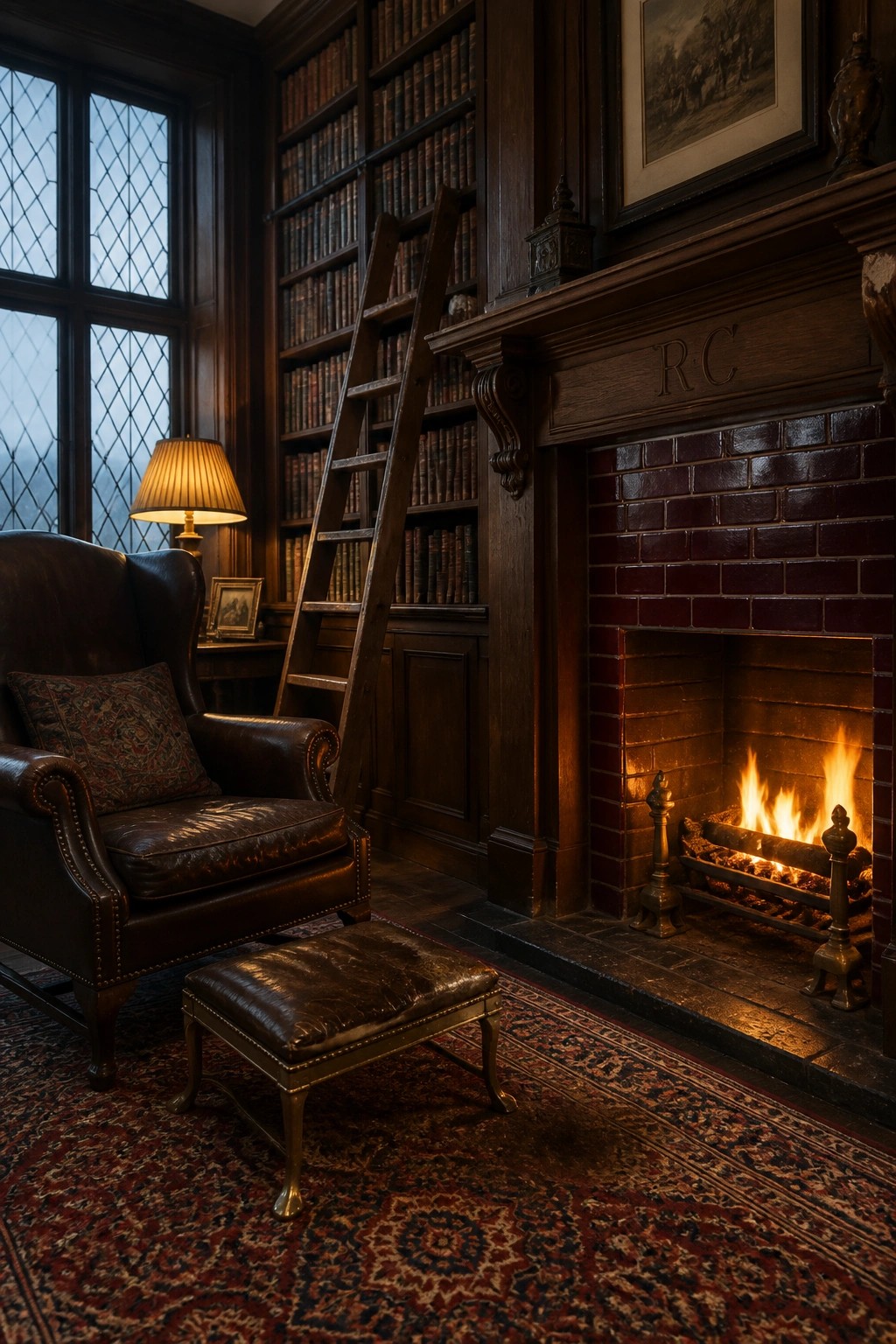
Red brick tiles give a fireplace a solid, settled look that holds up well in rooms with lots of wood. The deep color stands out against dark paneling without needing extra trim or decoration.
This approach works best in older homes or spaces already lined with bookshelves and heavy furniture. Keep the mantel simple so the tile itself stays the main feature.
Horizontal Stacked Tile On The Fireplace
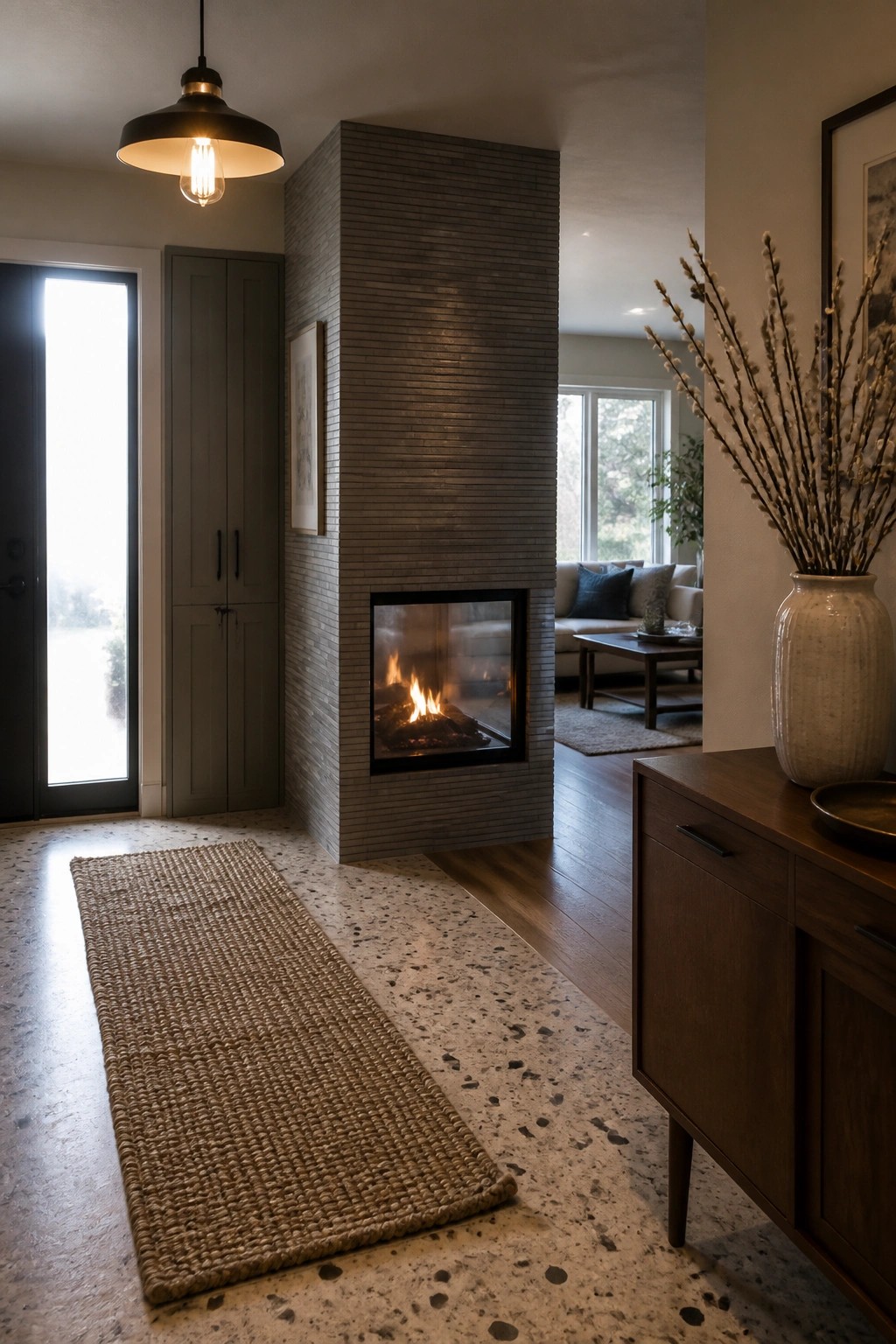
Stacked tile in a soft gray gives the fireplace a simple refresh that feels current without trying too hard. The horizontal lines add texture and keep the surround from looking flat or dated next to the rest of the room.
This style works best in living spaces with wood floors and calm wall colors. It suits homes that want a modern touch but still need the fireplace to feel warm and usable rather than like a statement piece.
Green Patterned Tiles for the Fireplace
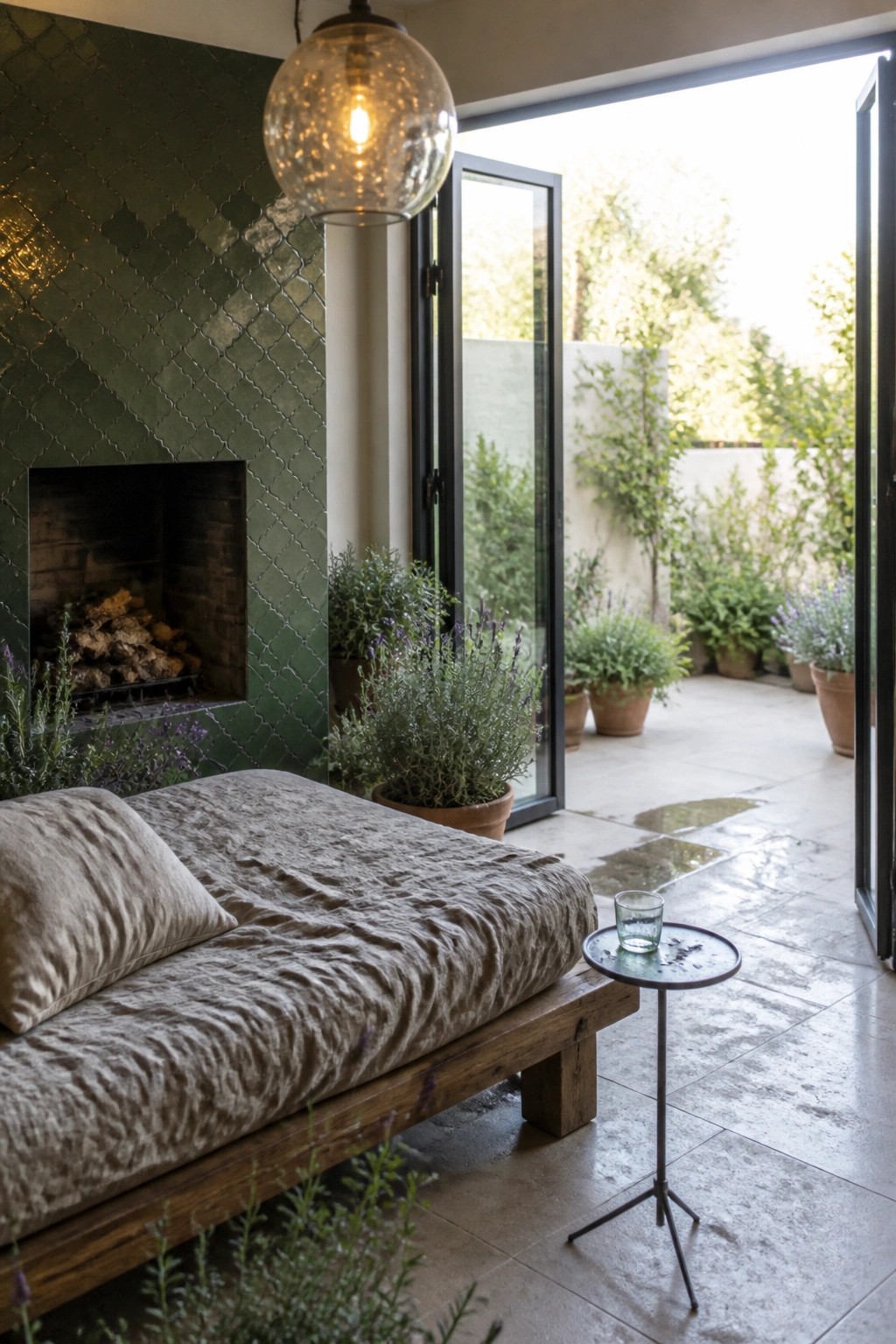
A deep green tile with a scalloped pattern can give an old fireplace a fresh update without much fuss. It stands out nicely against lighter walls and makes the fireplace feel like a real part of the room instead of something dated.
This style works well in spaces that get used every day, like a bedroom or sitting area where you want the fireplace to feel cozy but not heavy. Keep the rest of the room simple so the tile does the work, and make sure the grout color matches the tile closely for a cleaner look.
Frequently Asked Questions
Q: Can I use these ideas if my fireplace sees heavy use in winter? A: Choose porcelain tiles since they handle heat well. Lay them with thin grout lines to reduce cracking risks over time. Check the manufacturer’s specs before you buy.
Q: Do I have to remove the old surround completely first? A: Sometimes you can tile right over a clean flat surface. Scuff up the existing material so the new adhesive grabs better. This saves time if the old layer sits solid.
Q: How do I decide on a pattern without seeing it in my space? A: Grab a few sample tiles and lay them out on the floor near your fireplace. Live with the arrangement for a day or two before committing.
Q: Will grout color change how the whole thing looks? A: Pick a grout shade close to the tile for a seamless effect. Or go darker to highlight each piece.
