
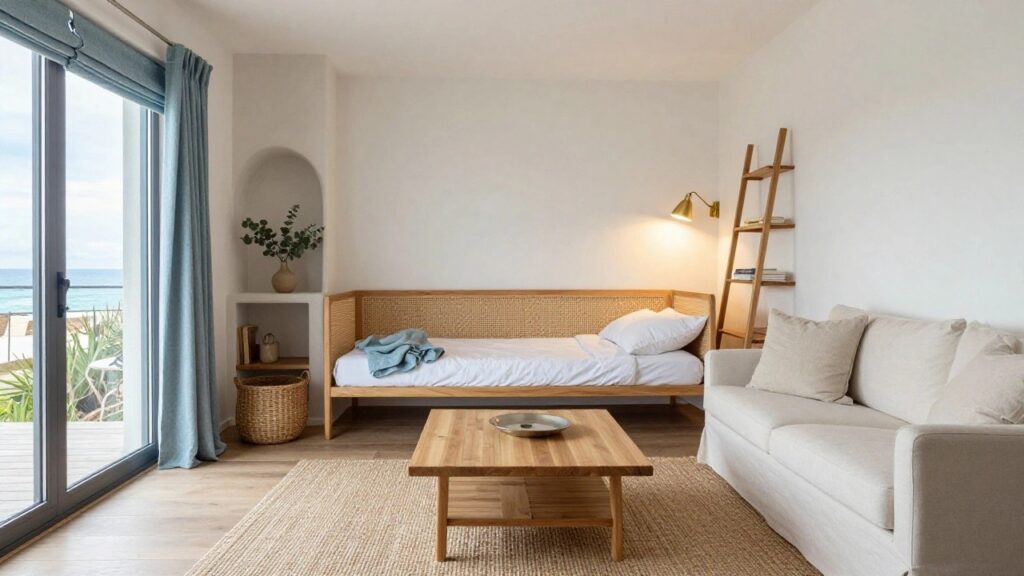
In small homes, blending a living room and bedroom succeeds when the layout lets you shift from lounging to sleeping without the spaces fighting each other. I tried opening up my own combo years back, and it clicked only after I positioned the sofa to screen the bed just enough from daily view. Cluttered transitions or poor light flow catch the eye first every time. These ideas lean on rugs, low partitions, and shared focal points to knit everything together naturally. A few stand out as easy tweaks worth sketching for your floor plan. Start with the Studio Apartments guide.
Corner Bed and Sofa Layout
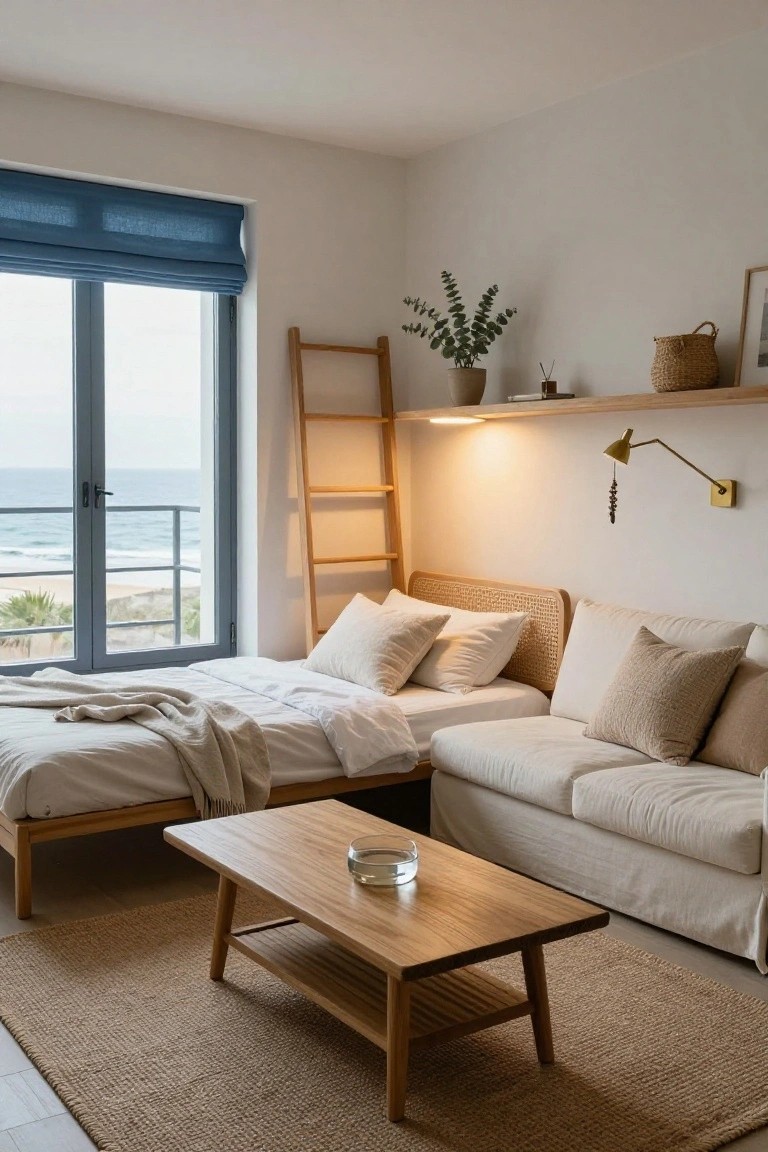
In tight spaces like studios or small apartments, one straightforward way to blend a bedroom and living area is to tuck the bed into one corner and the sofa into the other, with a low coffee table right in the middle. This setup keeps everything open and connected, like in this room where the low wooden bed platform sits next to a simple linen sofa. The ocean view through the big windows pulls it all together without any walls getting in the way.
You can pull this off in any compact room by sticking to low furniture heights so the space feels bigger and airier. It works best in places with a nice view or lots of light, and natural wood pieces plus neutral fabrics keep it calm. Just make sure the bed has good storage underneath… otherwise clutter sneaks in fast.
Platform Bed with Built-In Drawers
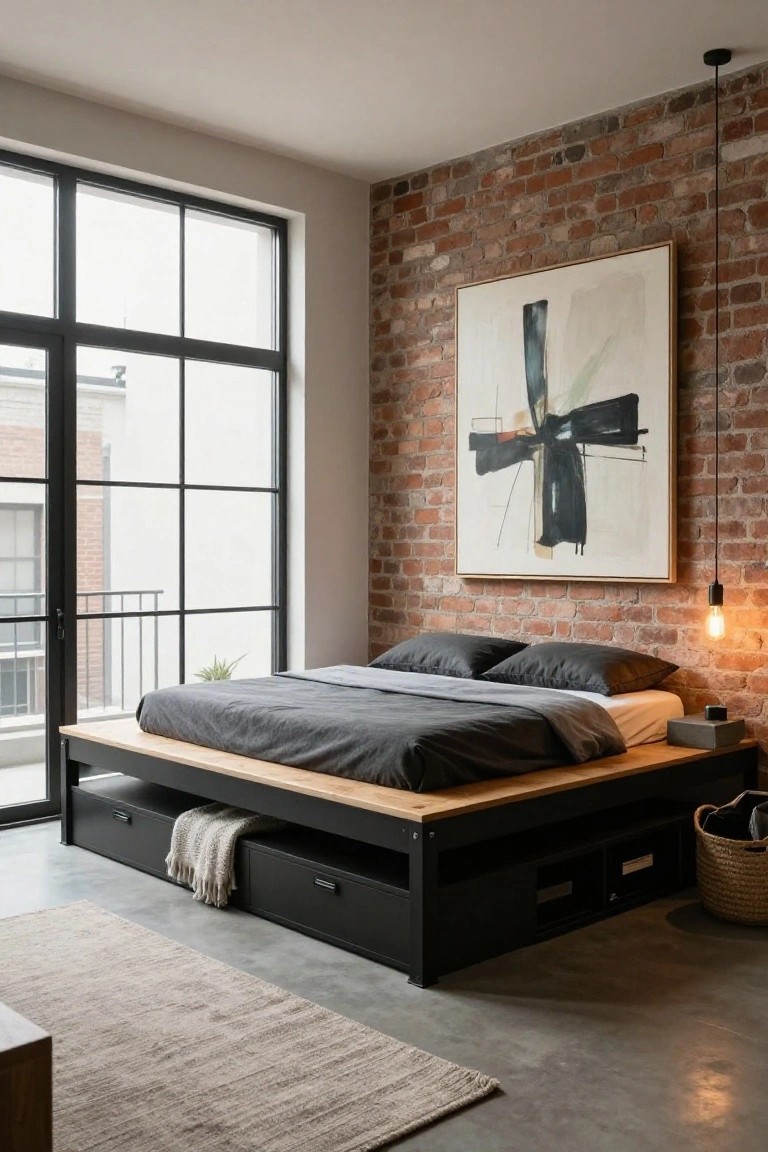
One simple way to make a bedroom feel more open and practical is a low platform bed like this one. It sits right on the floor with black metal drawers underneath for linens or clothes. No bulky frame eating up the room. That keeps things airy, especially in smaller spots where you might blend sleeping and sitting areas.
This setup works best in lofts or apartments with high ceilings and hard floors. Pull out the drawers for easy access, and the wood top gives a warm touch against brick walls. Just make sure the drawers are deep enough for what you store. It saves on nightstands too.
Slatted Wood Divider for Living Bedroom Combos

A simple slatted wood screen stands tall between the sitting area and bed, letting light pass through while carving out separate zones. The vertical slats give privacy without closing off the room completely. Warm tones from the wood tie right into leather sofas and side tables, making the whole space feel connected.
This works great in apartments or small homes where you need both living and sleeping spots. Go for a freestanding or built-in screen about head height. Add a plant or lamp nearby to make it less stark. It suits midcentury or casual modern looks best, but watch the scale so it doesn’t crowd a tiny room.
Tall Bookshelves Create Bedroom-Living Flow
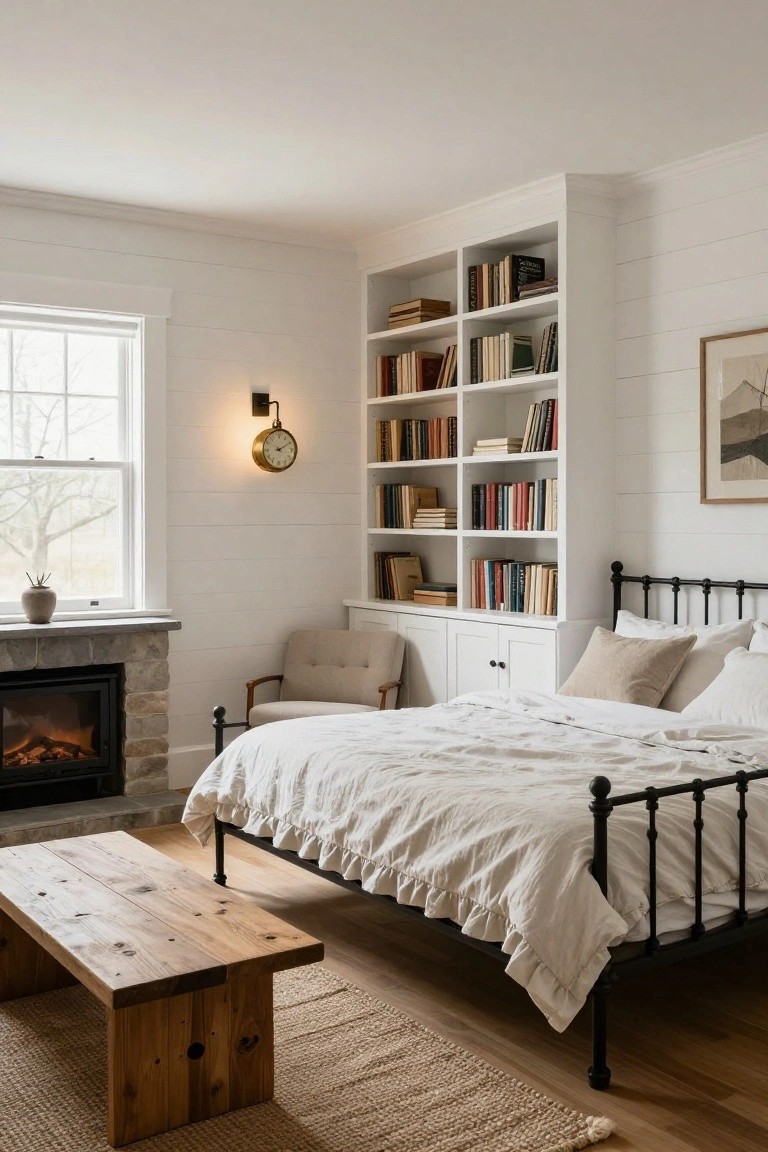
Tall white bookshelves wrap around the corner in this bedroom setup, flanking a stone fireplace and framing the bed. They turn what could be just a sleeping spot into a spot for reading or lounging, with books adding that lived-in feel. The black iron bed sits right there, keeping everything connected.
You can pull this off in tighter spaces like apartments or older homes with odd room shapes. Go floor to ceiling if you have the wall height. Keep the shelves simple, no fancy doors, and fill half with books so it does not overwhelm. Works best with neutral walls to let the wood tones pop.
Japanese Low Seating for Living Bedroom Flow

One smart way to blend living and sleeping areas is with low furniture like this beige sofa and thick floor cushion on tatami mats. It keeps the space open during the day for relaxing or chatting, then you just add bedding to the cushion at night. The natural wood table and simple bonsai shelf add calm without cluttering things up.
This works best in small apartments or guest rooms where you want everything to feel connected. Stick to neutral fabrics and wood pieces for that easy flow. Just make sure the low sofa has good cushions if you spend a lot of time there… otherwise your back might complain after a while.
Velvet Bedding Softens Dark Walls
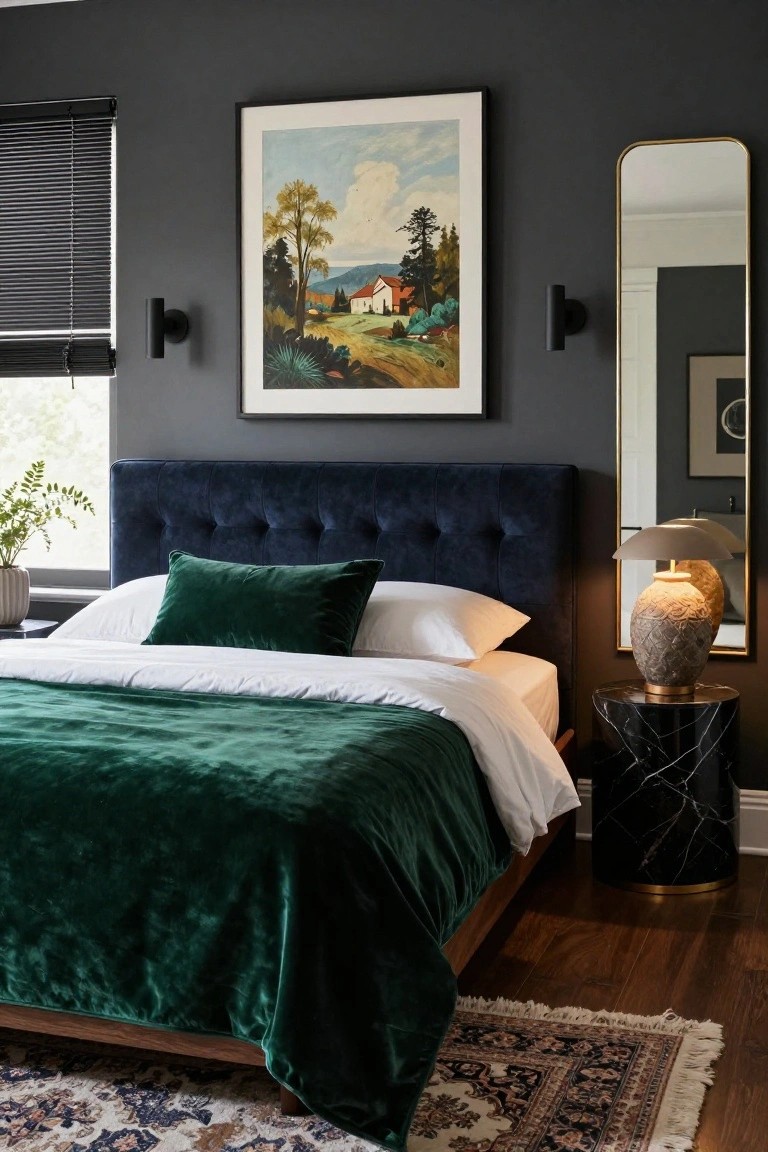
Deep green velvet on the duvet and pillows gives this bedroom a plush touch. Paired with the navy velvet headboard and charcoal walls, it turns what could be a stark space into something cozy and layered. The texture catches the light just right, making the room feel lived-in without much effort.
You can pull this off in any average-sized bedroom, especially ones with low light. Layer the velvet over plain white sheets for contrast, and keep side tables simple like the black marble one here. Watch the velvet doesn’t overwhelm, though. Stick to one or two pieces max.
Boho Canopy Bed Setup
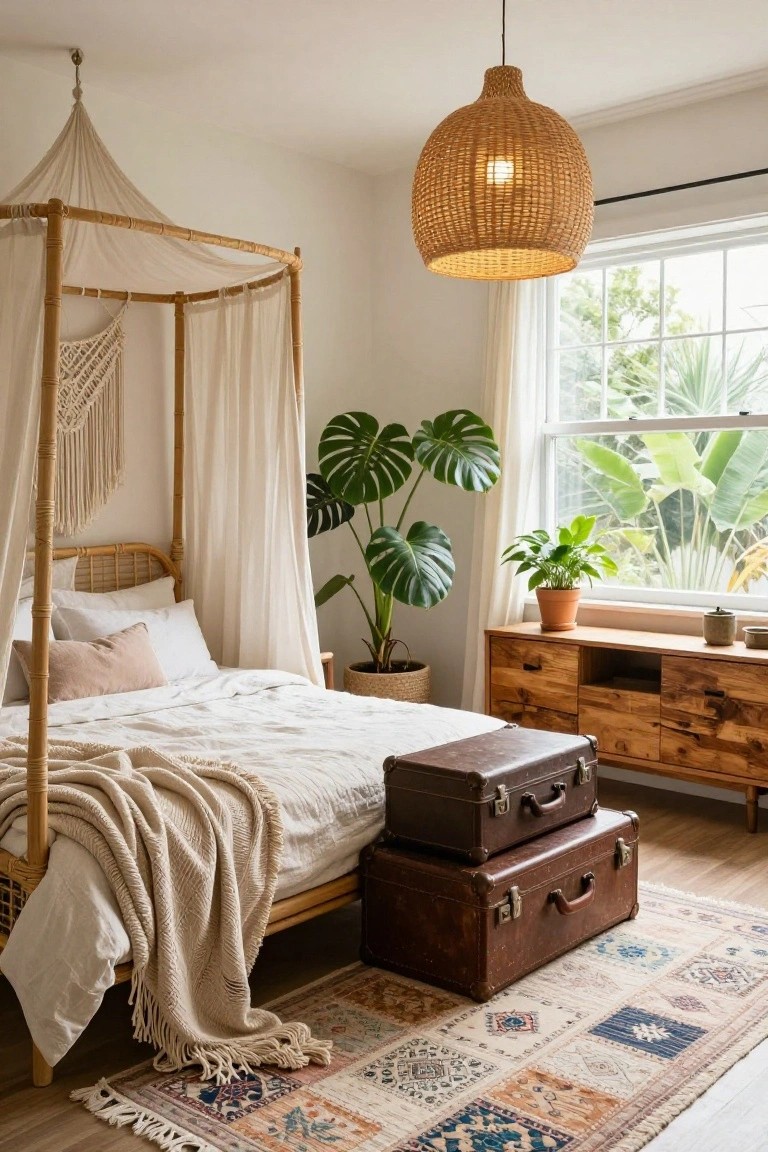
A bamboo canopy bed like this one pulls the bedroom together with its simple draped fabrics and woven frame. The sheer white curtains let light filter through softly. Paired with a few big plants, it gives the whole room a calm, vacation feel without much effort.
Try this in a sunny bedroom where you want a cozy spot that still feels open. It works well in smaller homes or combo living-bedroom setups, since the open design keeps things flowing. Just add some stacked suitcases nearby for extra storage if space is tight.
L-Shaped Wooden Sofa with Built-In Shelf
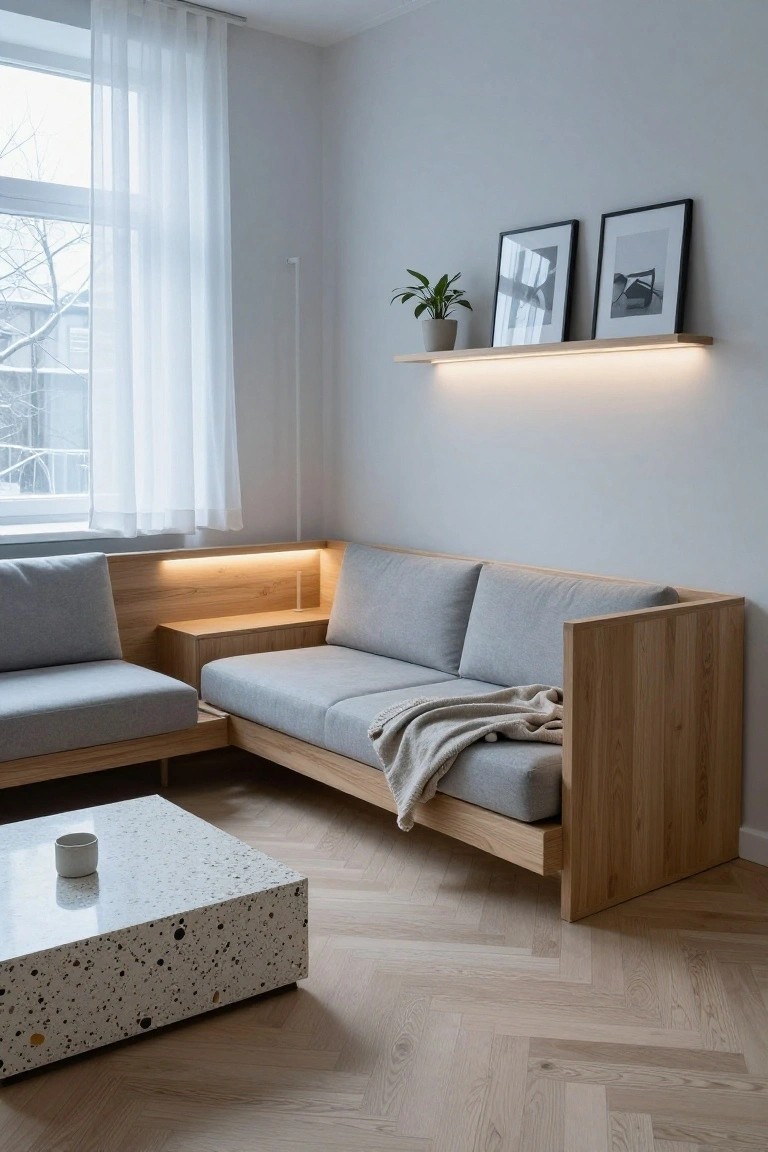
One smart way to make a living room flow into a bedroom area is this L-shaped wooden sofa with a built-in shelf on one end. The natural wood frame keeps things warm and sturdy, while the shelf holds a candle or books right where you need them. Soft LED lights tucked under the shelf add a gentle glow without taking up floor space. It’s practical for tight spots.
Put this kind of seating in an open corner to zone off sleeping from lounging. Gray cushions like these stay neutral and comfy. It fits apartments or small homes best, but watch the wood finish so it matches your floors. Easy to build or buy custom.
Bedroom Bench for Extra Seating

One simple way to make a bedroom feel more like a living area is to add a bench at the foot of the bed. In this setup, a low marble console holds an upholstered cushion that looks plush and inviting. It gives you a spot to sit while getting dressed or just reading, without crowding the room. The neutral tones keep everything calm and connected.
This works best in smaller bedrooms where you want multi-use furniture. Look for one with built-in storage underneath, like cubbies for blankets or books. Pair it with the bed’s upholstery for a matched look. Skip anything too bulky, or it might make the space feel closed in.
Corner Bench with Under-Seat Storage
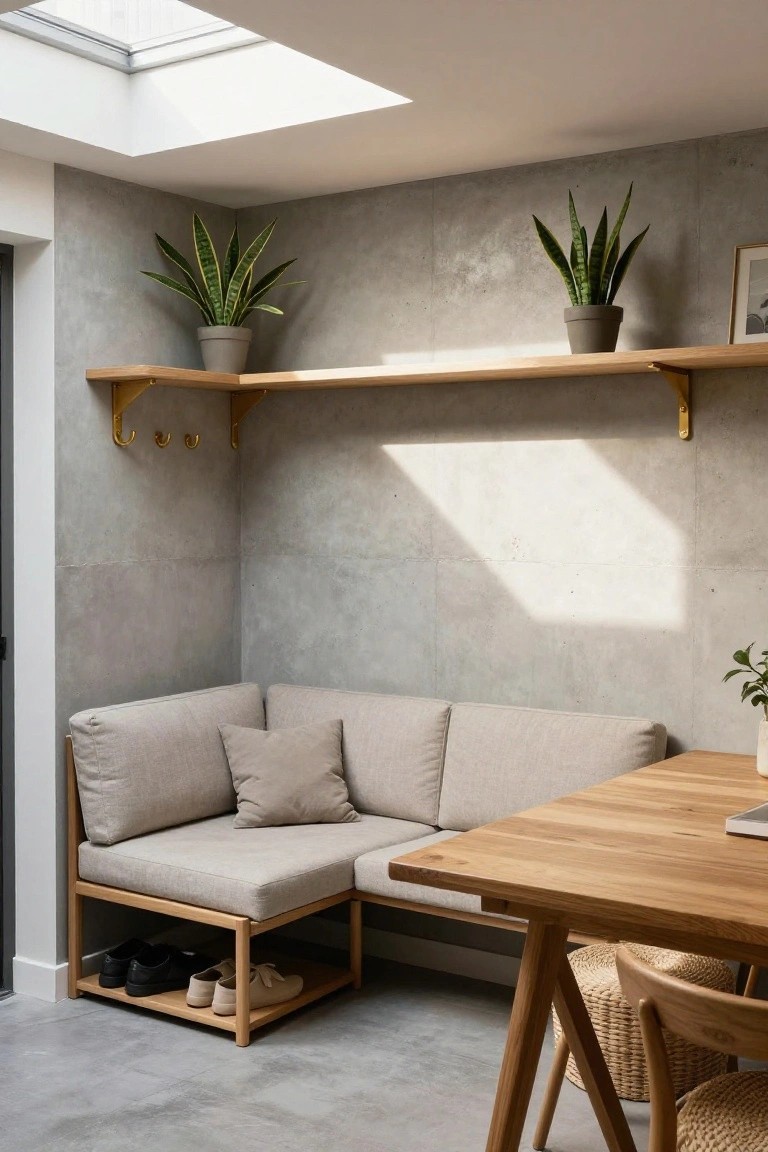
One smart way to make a small living space work harder is a bench-style sofa with open storage right underneath. Here you see shoes tucked neatly into the wooden frame below the cushions. It keeps clutter off the floor and turns dead space into something useful, all without eating up extra room.
This setup fits best in apartments or studio combos where you need seating plus a spot for daily stuff. Put it in a corner near a window or door, add a table nearby for meals or work, and it flows right into the rest of the room. Just keep the storage simple so it stays airy.
Corner Banquette with Built-In Storage

A corner banquette like this one turns wasted space into practical seating that fits a living room bedroom combo perfectly. Built right into the walls, it hugs the windows and lets you enjoy the view while lounging. The simple white base with blue striped cushions keeps things airy and casual.
You can tuck linens or blankets in the storage underneath, which makes it handy for everyday use. It works best in smaller homes or coastal spots where you want seating without crowding the floor. Just measure your corner first… and pick cushions that match your vibe.
Poufs for Casual Low Seating

One simple way to make a living room feel more relaxed and open is with rattan poufs around a low coffee table. Here, two woven ones sit right on the rug next to a chunky travertine table, inviting you to kick back without taking up much space. It pulls the eye in softly and leaves room to move around, which helps when you’re trying to blend living and sleeping areas.
Put these in smaller homes or apartments where every inch counts. They pair well with a basic sofa and neutral colors, especially near windows for that light feel. Just keep the table sturdy so it doesn’t wobble under drinks or feet.
Bookshelves Framing the Bed
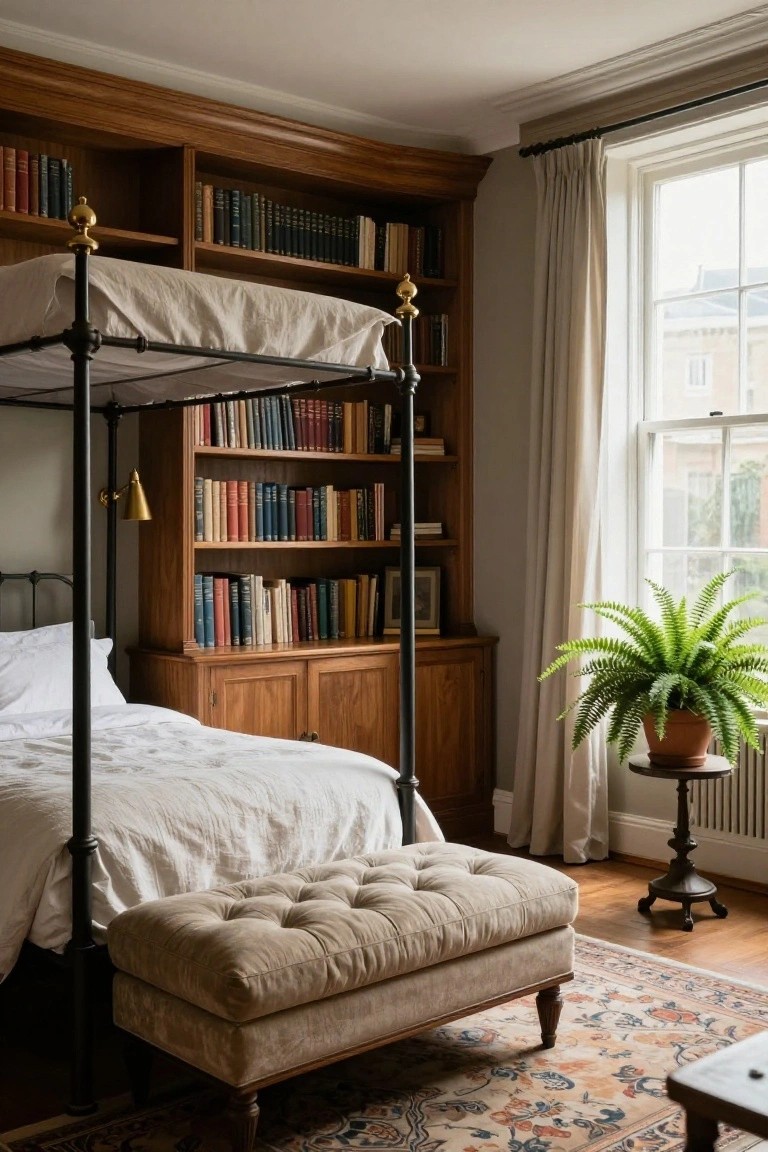
One simple way to make a bedroom feel like your own private library is to build bookshelves right into the walls around the bed. Here the dark wood shelves wrap the corner and rise high, holding rows of colorful books that draw the eye up. A black iron four-poster bed nestles in perfectly, turning sleep into something bookish and calm.
This works best in a room with good natural light from a nearby window. Book lovers will like how it keeps everything handy, no extra furniture needed. Go for sturdy shelves that can hold weight, and add a wall lamp for late-night reading. It suits older homes with paneled details already.
Daybed Nook for Easy Living Room Bedroom Flow

A low daybed tucked against the wall works great as the heart of a combined living and sleeping space. Piled with colorful pillows and a woven blanket, it shifts from daytime lounging spot to nighttime bed without much fuss. Nearby poufs pull up for company, keeping things open and relaxed.
This setup fits small homes or studios best, where you want flexible seating that doesn’t eat up floor space. Go for sturdy, low furniture like a terracotta table to match. Layer in plants for a lived-in touch, but pick easy-care ones.
Use Glass Partitions to Divide Living and Bedroom Areas

One smart way to make a living room and bedroom combo feel separate but still connected is with a tall glass partition like this one. The black metal frame gives it a sturdy look without blocking light, and you can see right through to the storage cabinet on the other side. It keeps things open and airy. No more staring at an unmade bed from the couch.
This setup works great in small apartments or studios where you need zones but hate feeling closed in. Put the living area on the open side with your sofa and rug. Use the enclosed spot for a bed or dresser. Just make sure the glass is easy to clean… and pick frames that match your style, like slim black metal for modern vibes or wood tones for something warmer.
Cozy Stone Fireplace Rooms
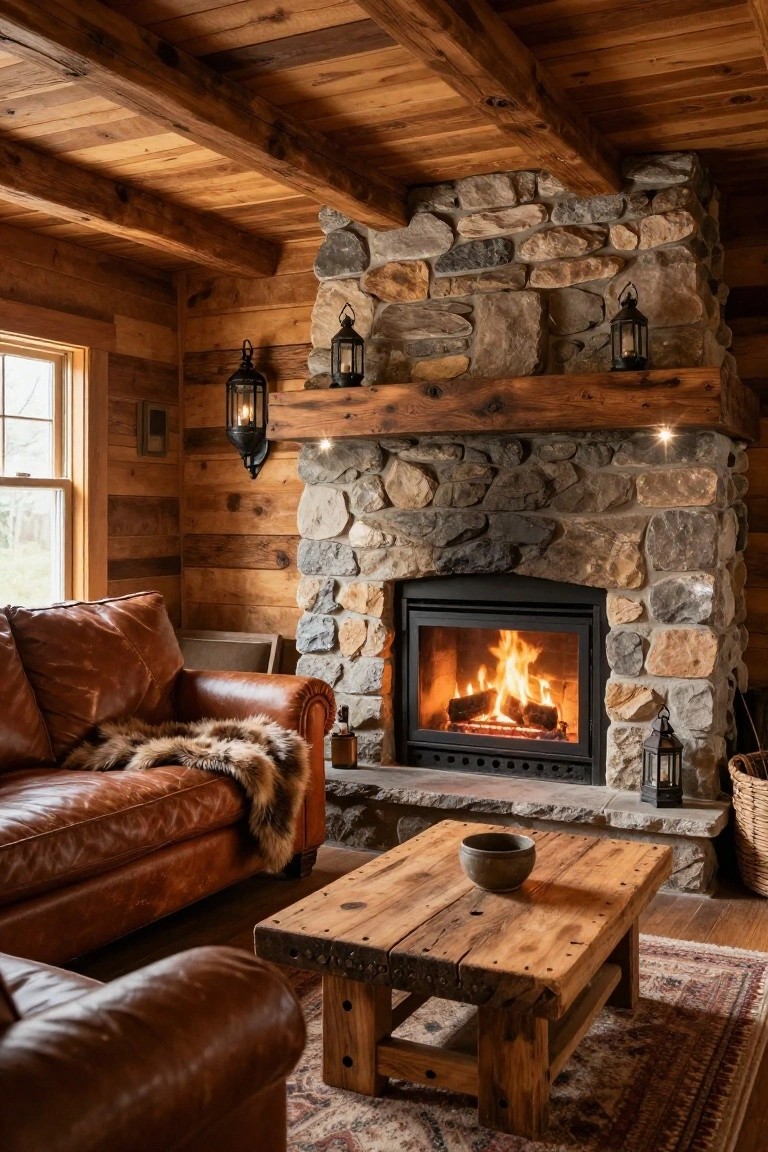
A stone fireplace like this one really sets the tone in a wood-heavy room. Those rugged rocks climbing up to the timber beams pull everything together into something solid and warm. No wonder it feels like the perfect spot to unwind.
Stone hearths work great in cabins or older farmhouses where you want that lived-in feel. Go for varied stone sizes to keep it natural, then add low leather seating nearby. Just make sure your chimney pulls well, especially with open layouts.
Bold Mustard Velvet Sofa
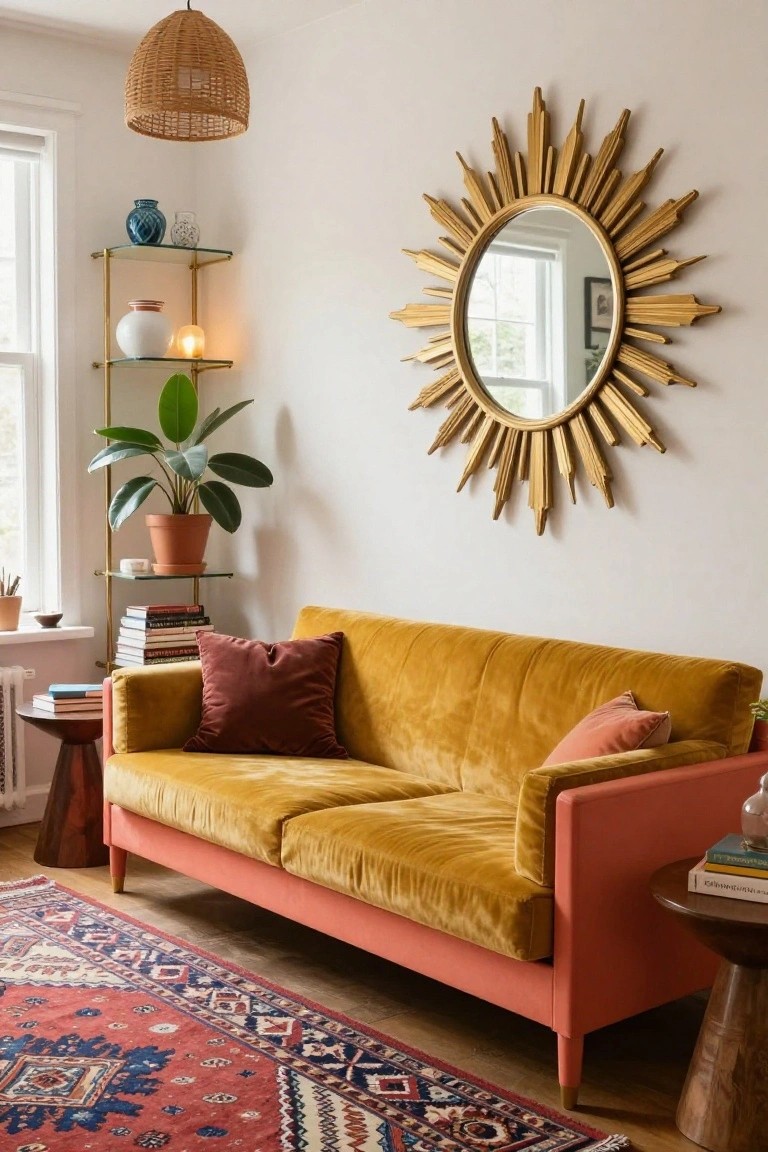
A mustard yellow velvet sofa like this one turns a simple seating area into something warm and welcoming. The rich fabric adds softness and depth right away. Up top, a big gold sunburst mirror reflects light and keeps things feeling open, while the orange frame on the sofa gives a fun pop of color.
Put this kind of sofa in a living room that doubles as a chill zone, maybe flowing into a bedroom setup. It suits apartments or small homes with white walls best, letting the tones stand out. Add a plant or two nearby, but keep side tables simple so the sofa stays the focus.
Low Wood Furniture for Living Bedroom Combos

Low wood furniture like this sturdy table and platform sofa keeps things simple and multi-use. The table sits right at floor level with a handy drawer for storage, and the sofa hugs low too, so the whole area feels like one calm zone. Natural wood warms up the neutral walls and shoji screens without crowding the space.
This works best in small apartments or studios where you want living and sleeping areas to flow together. Pair it with a neutral rug and soft lamp light for evenings. Just make sure the heights suit your family, since everything stays close to the floor.
Window Sill Bookshelves
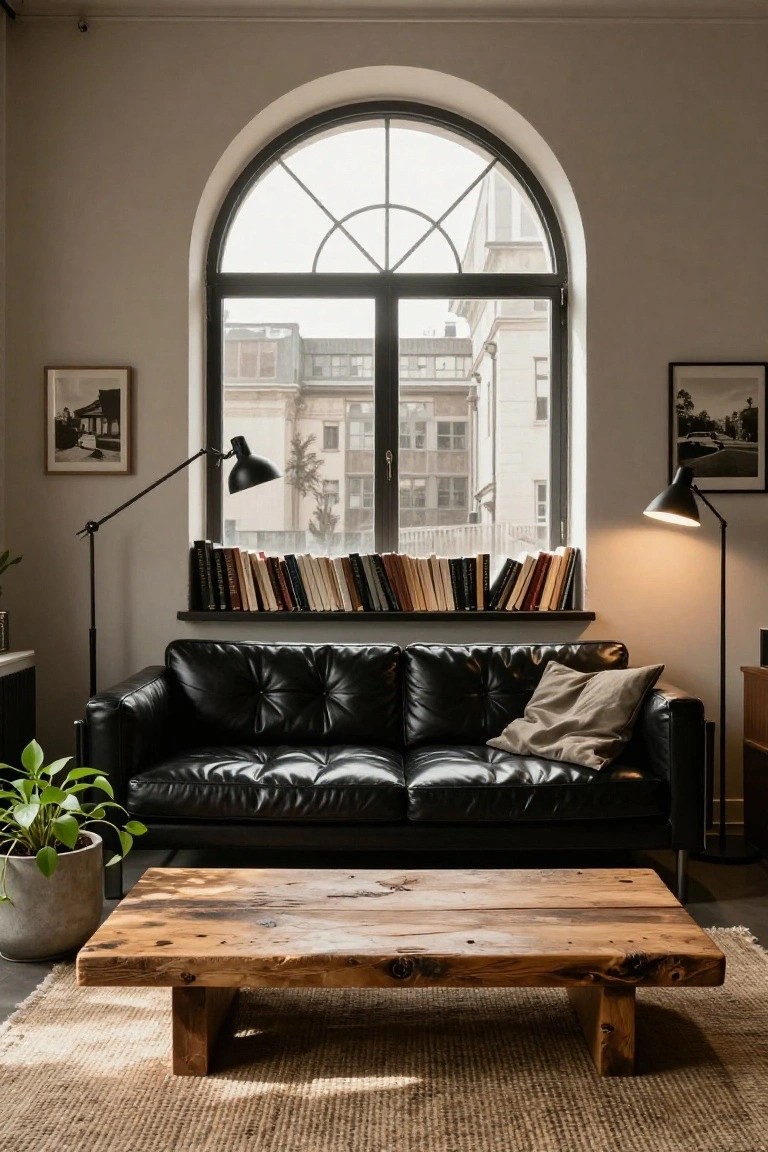
One simple storage trick in living rooms is lining a deep window sill with books. It turns that ledge into a ready-made shelf without eating up wall space. Books sit right there under the glass, close to the light, and you still get a clear view out. In this room, it lines up with the sofa below so everything feels connected.
This idea fits older apartments or homes with thick walls and big windows. Stack books by color or size to keep it neat. Add a lamp nearby for reading spots. Just don’t overload it, or the books might block the light. Works great in small spaces where every inch counts.
Casual Sofa with Throws for Bedroom Flow

A simple linen sofa like this one, tossed with a blue throw and matching pillows, makes a living room feel ready for lounging or overnight guests. The cream fabric stays neutral against white paneled walls, while the soft blue adds just enough color to keep things calm and lived-in. It’s an easy way to blur the lines in tight spaces.
Use this in studios or small apartments where one room handles everything. Go for low-slung sofas that double as daybeds, layer on machine-washable textiles, and keep nearby furniture minimal like that wood table here. It suits coastal or minimalist homes best… avoid dark colors that shrink the room.
Black Iron Bed Frames in Soft Bedrooms

A black iron bed frame like this one gives the room a sturdy, vintage feel right away. Against pale beige walls and a quilt covered in soft flowers, it stands out without overwhelming the space. That mix keeps things calm but interesting, especially with simple pillows and a nearby wood dresser adding to the old-house charm.
Put one in a bedroom that’s short on color or pattern. It suits apartments or older homes best, where you need something durable that doesn’t take up visual space. Keep surrounding pieces light colored, and skip busy rugs… just let the bed do its thing.

A built-in daybed right under the window is a smart way to blend living and sleeping areas without taking up extra floor space. It gives you a spot to lounge during the day and crash at night, all while letting in plenty of natural light. The simple wooden bench with soft cushions and throws keeps things cozy and casual.
Tuck it into a corner near a seating area, like with a curved chair nearby. Stack linens and plants on a ladder shelf for easy access. This works great in apartments or small homes where every inch counts. Just make sure the bench is sturdy enough for regular use.
Warm Wood Beds in Neutral Rooms
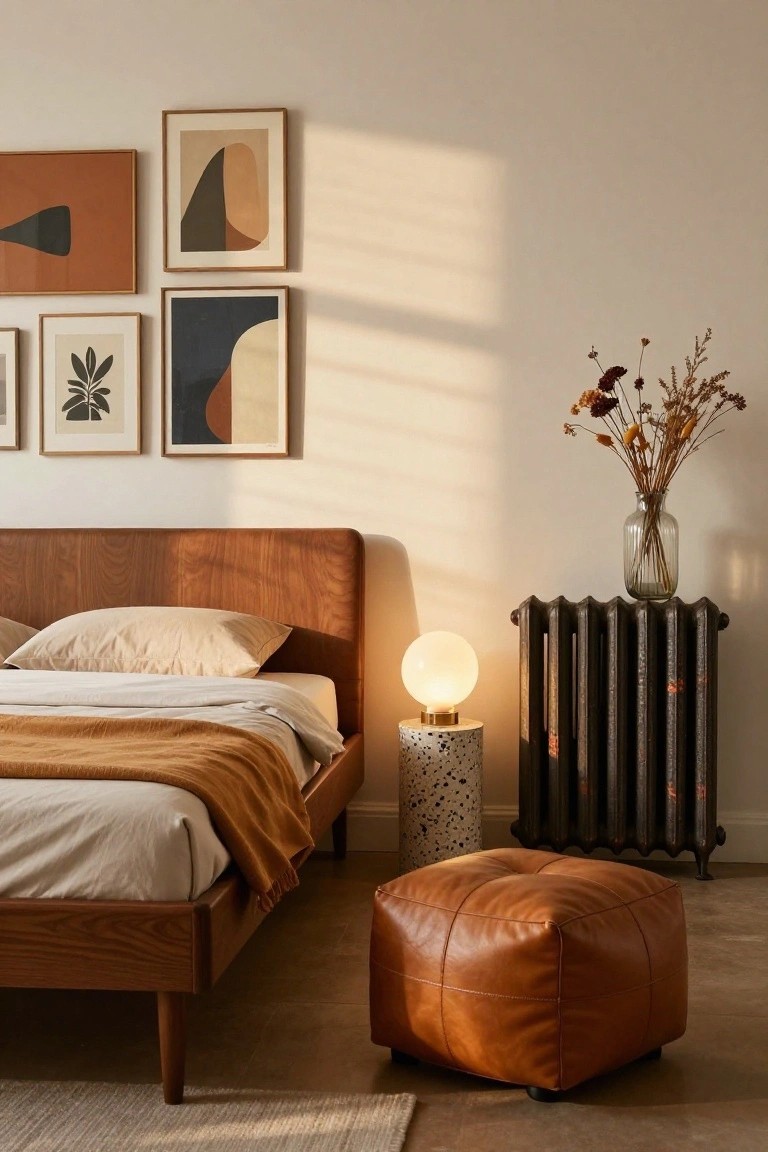
A wooden bed like this one adds real warmth to a bedroom done mostly in light neutrals. The rich brown tones on the frame and headboard pull the eye without overwhelming the pale walls or sheets. It grounds the space nicely, especially with soft afternoon light coming in.
Put this setup in a compact bedroom or even an open living-bedroom combo where you need that cozy anchor. Go for mid-century style legs and pair with creamy bedding plus one or two orange accents, like a throw or ottoman. It suits rentals or simple homes that could use more natural feel… just keep the wood finish matte to avoid fuss.
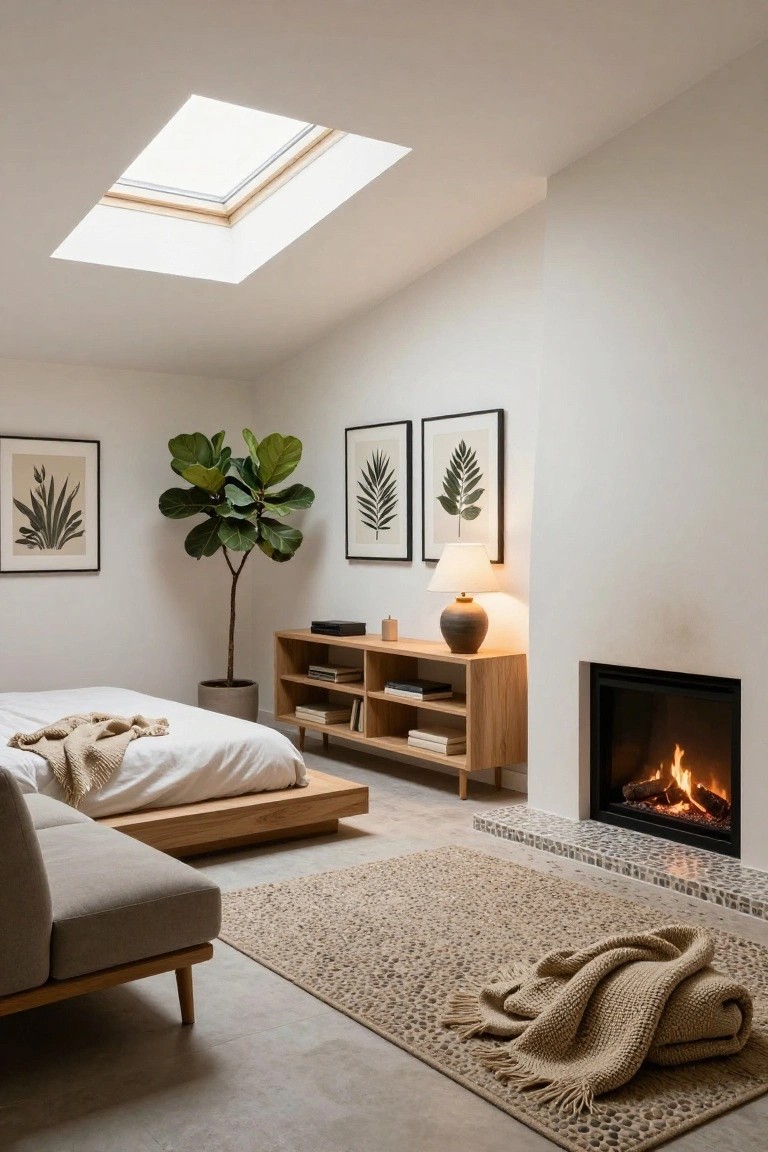
One easy way to make a bedroom double as a living area is to slide in a simple wood shelving unit between the bed and sofa. Here, an oak console holds books, a lamp, and media gear right next to the fireplace. It pulls the zones together without crowding the room. The low platform bed and neutral sofa stay out of the way, so the space feels open and useful.
This works best in compact spots like attics or studios where you want lounge time without a separate room. Pick light wood to match white walls, and keep shelves sparse. Skip heavy dividers. Add a big plant nearby for life… it softens things quick.
Library Bookcase as Cozy Sofa Backdrop
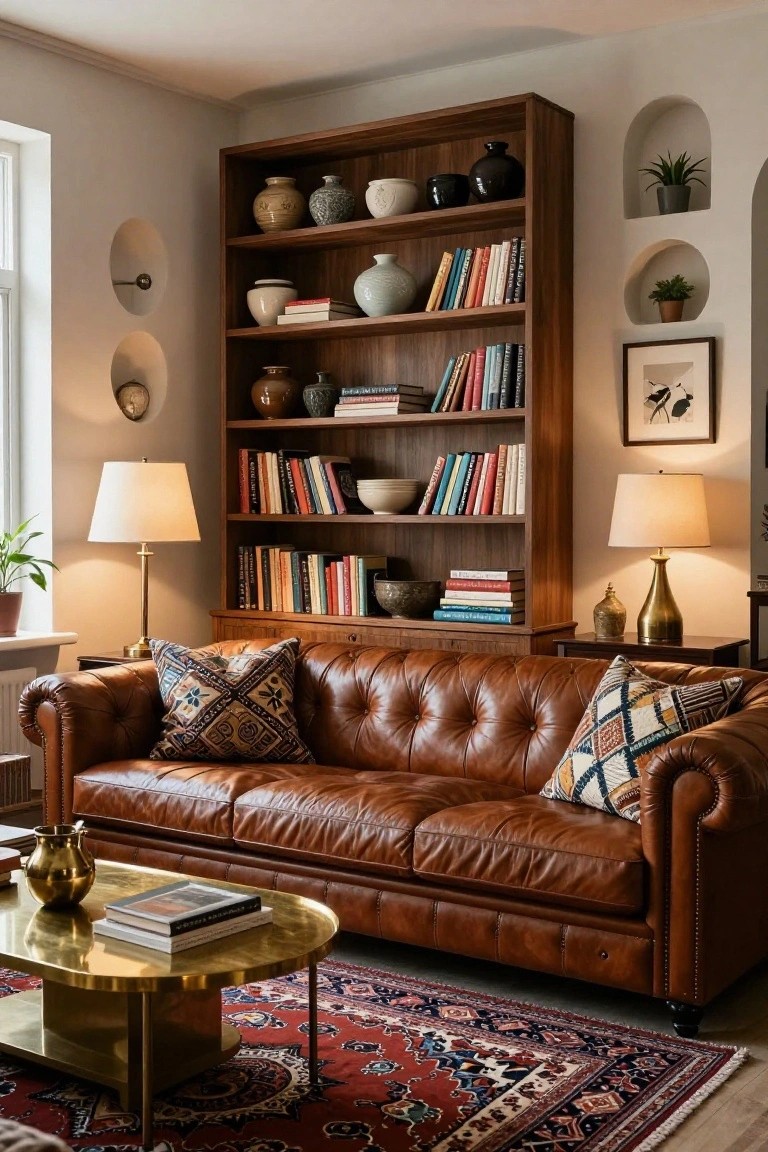
Tall wooden bookcases like this one work great right behind a sofa. They turn a simple seating spot into a real library corner without needing extra walls. Here the shelves mix books with pottery pieces and bowls, giving the space that lived-in feel people love. The brown leather sofa sits easy in front, and it all feels warm and settled.
You can pull this off in smaller homes or open living bedroom setups. Pick a bookcase about as wide as your sofa, fill lower shelves light for easy reach, and add some brass lamps nearby for evenings. It suits traditional or eclectic rooms best. Just don’t overload the top shelves, or it might feel top-heavy.
Frequently Asked Questions
Q: How do I split the living and sleeping areas without walls getting in the way?
A: Grab a tall sliding screen or open bookshelf to carve out zones. Let light filter through so the room stays airy. Drape sheer curtains over it for a soft, changeable barrier.
Q: My combo space feels cramped already – any quick fixes?
A: Tuck in slim furniture like a narrow console or wall-mounted TV. Push the bed against one wall and float the sofa opposite. Mirrors on the far wall bounce light around and stretch the feel.
Q: What colors pull the whole room together?
A: Paint walls in one warm neutral, then layer textures for interest. Blues nod to calm sleep vibes while greens wake up the lounge spot.
Q: How do I stash clothes without the bedroom vibe taking over?
And curtains hide it all when guests drop by.
