
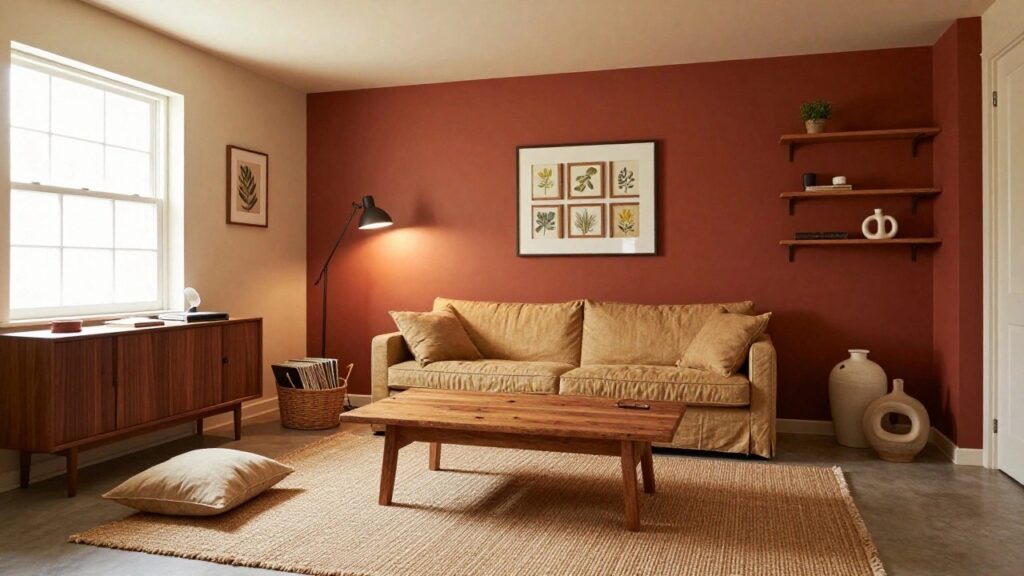
Basements have a way of feeling tucked away and dim until colors step in to warm them up.
I once painted mine in muted taupes, and it suddenly flowed better with the upstairs rooms instead of hiding below.
People notice wall tones first down there because they shape how light bounces around the whole space.
Good schemes layer soft neutrals with subtle accents so the room functions for movie nights or workouts without clashing.
Test the ones that nod to your floors or rugs, since they hold the real harmony together.
Terracotta Walls Paired with Wood Tones
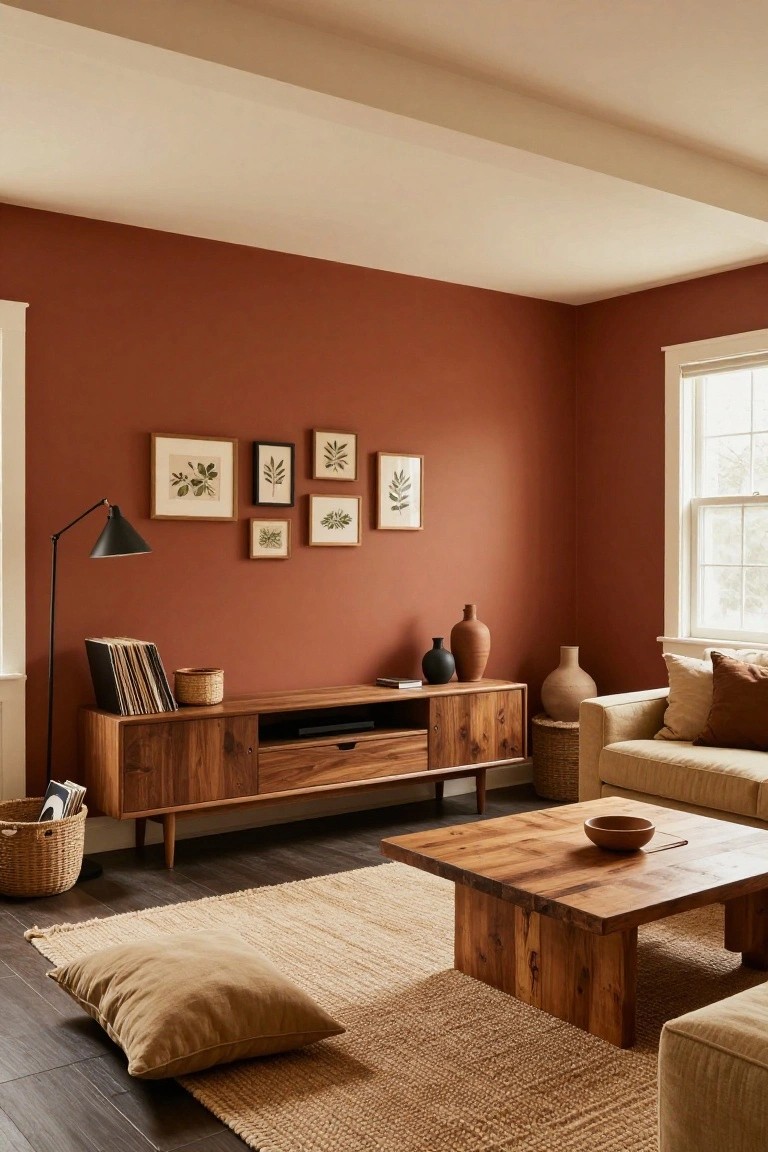
A terracotta wall color like this one warms up a room right away. It works well against natural wood furniture, like the walnut media console and coffee table here. The tone feels earthy and lived-in, pulling everything together without much effort.
Try it in a basement where cooler tones might otherwise feel stark. It suits casual family spaces best, especially with low ceilings. Just make sure you have good lighting… otherwise the color can pull too orange. Layer in baskets and woven pillows to keep the look relaxed.
Sage Green Walls for Restful Rooms
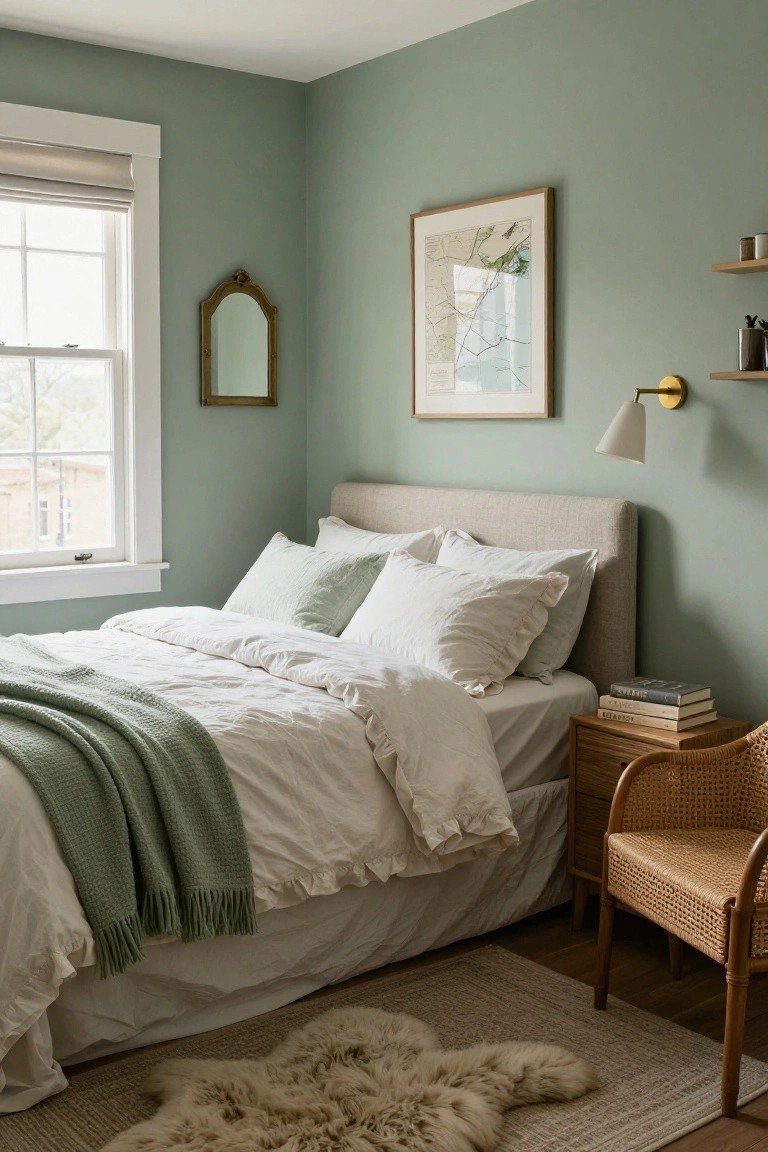
Sage green walls give a room a gentle, calming feel that’s easy on the eyes. They pick up on nature without going too bold, and here they’re paired with a white duvet and simple wood pieces to keep things fresh and airy. It’s a color that softens older spaces nicely.
You can pull this off in a basement bedroom by painting just the main walls sage and leaving the ceiling white. Add white linens and a textured throw for that layered look. It suits homes with not much natural light… makes the space feel bigger and more inviting without much fuss.
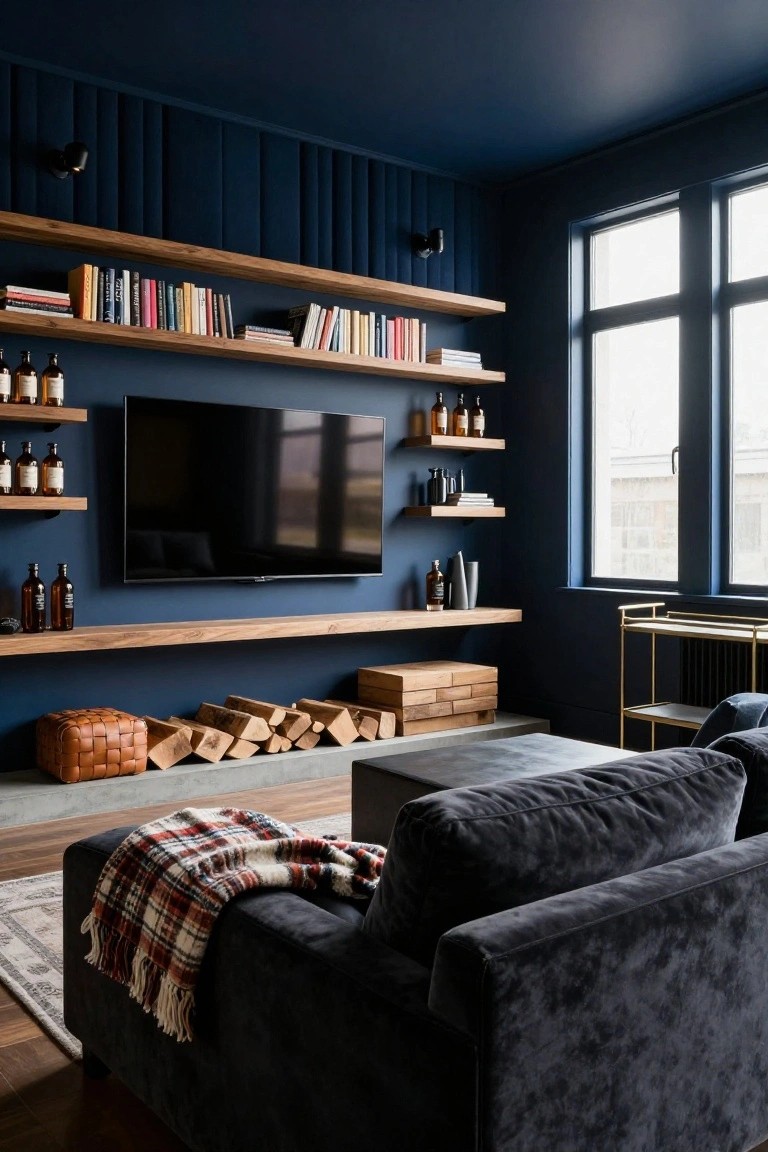
Deep navy blue walls wrap this basement room like a blanket. It pulls the space in, making it feel snug even on a gray day. The wood shelves loaded with books and bottles bring just enough warmth to balance the dark tone without overwhelming it.
This setup works best in low-light basements where you want that cave-like comfort. Add similar floating wood shelves around a TV or fireplace, then layer in velvet seating and wool throws. Skip bright whites here. They fight the mood.
Gray Walls with a Warm Yellow Accent
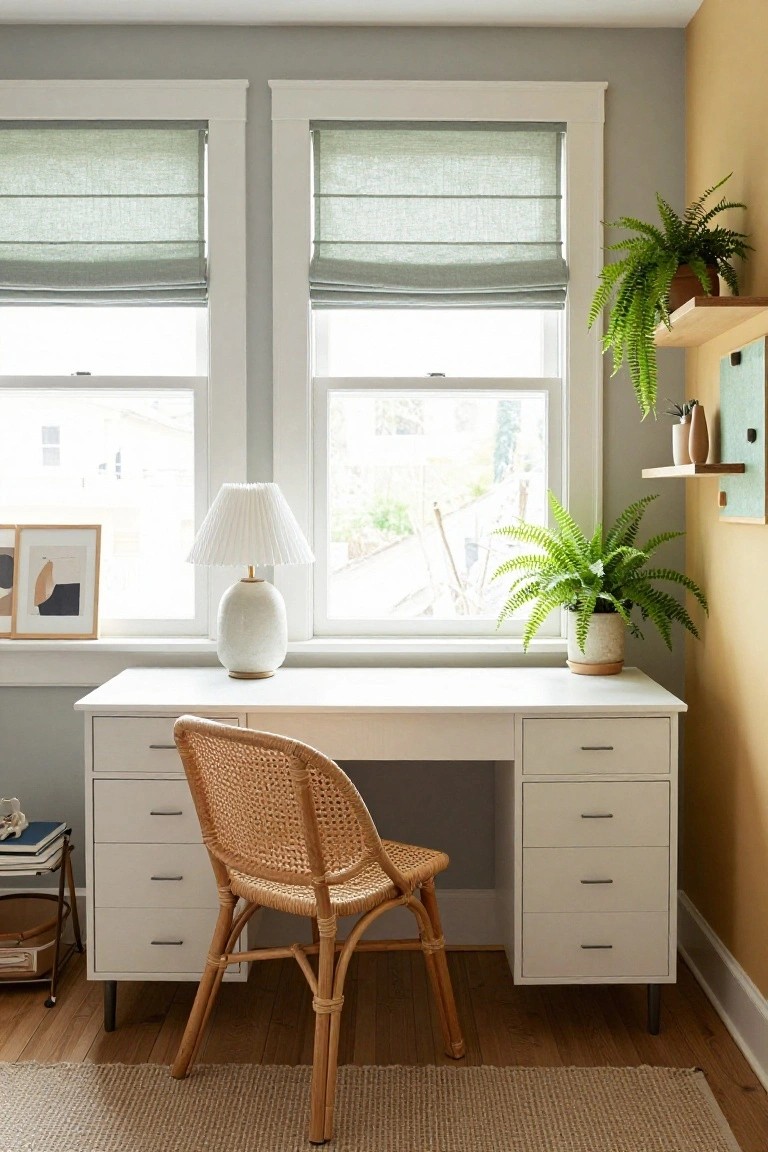
Sometimes a simple color shift makes a room feel just right. Here, light gray walls keep things calm and easy on the eyes, while a soft yellow on one wall adds quiet warmth without overwhelming. The white desk sits clean against it all, and a few green plants tie the look together nicely. It’s harmonious, not busy.
This combo works well in basements, where gray can make small spaces feel bigger and hide any quirks in the walls. Pick a muted yellow for the accent side, pair with white or light furniture, and layer in natural textures like a rattan chair. Skip bold patterns… keep it restful.
Sage Green Kitchen Cabinets
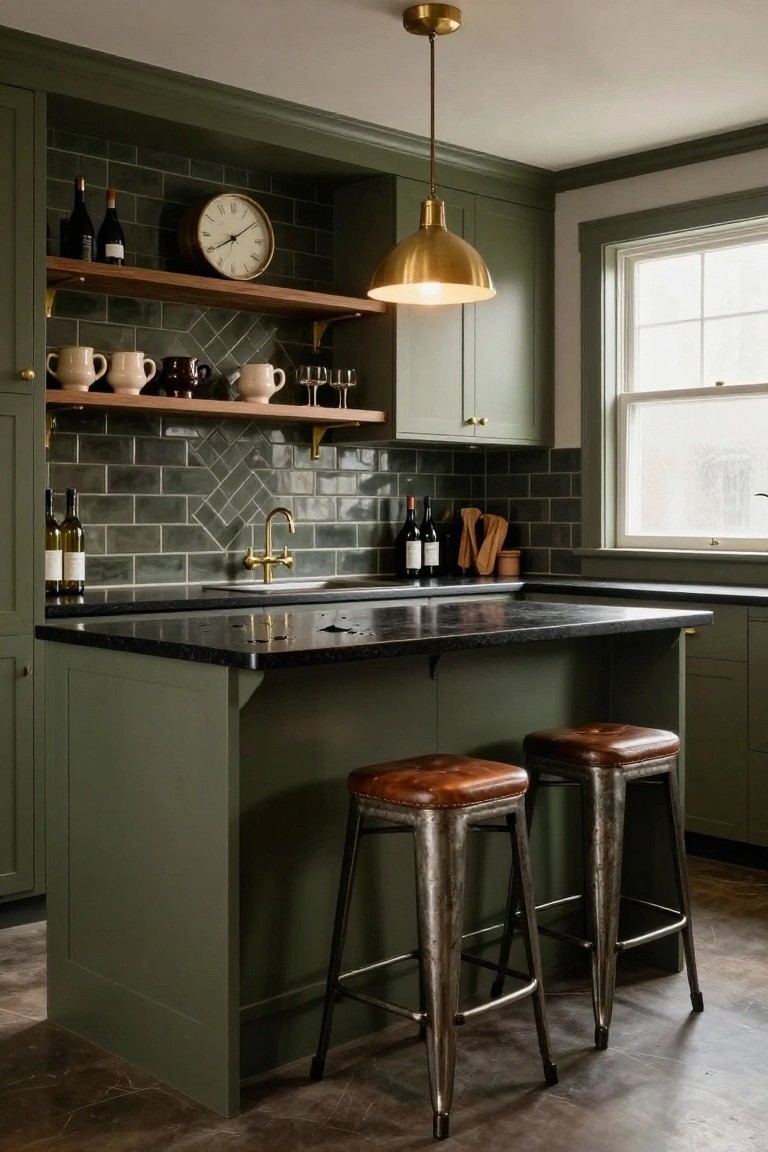
Sage green cabinets give a kitchen that grounded, cozy feel right away. In this setup, the muted green on the lower cabinets and island pairs with a black granite top and brass faucet. It keeps things calm and earthy, like a nod to nature indoors. That color just settles in without overwhelming the room.
For basements, sage green works well since it handles lower light and adds warmth. Use it on built-ins or islands in family spaces, then mix in black counters for contrast and wood shelves for texture. Skip shiny finishes down there. It suits older homes or rentals looking for easy updates.
Teal Walls Warm Up Basement Play Spaces
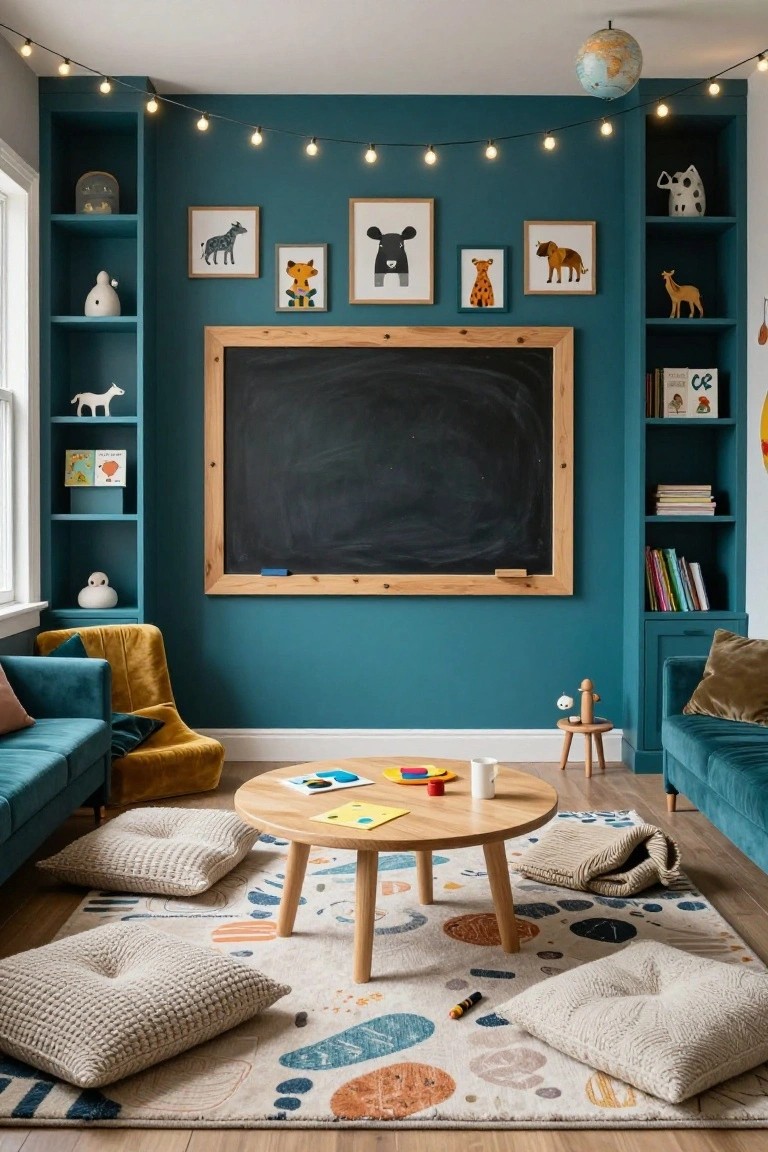
Teal walls give this basement a fresh, lively feel that chases away any dark, cave-like vibes. The color pops against the wooden chalkboard frame and shelves, pulling in light from the string lights overhead. It works because teal mixes cool blue tones with green warmth, making the space cozy without feeling cold.
Try it in a kid-focused basement room where you want play and learning zones. Pair the teal with natural wood pieces like the low table and stools, plus plush velvet seating and floor pillows. It suits family homes best, but watch the lighting, add warm bulbs if needed to keep it snug.
Soft Greige Walls in Laundry Rooms
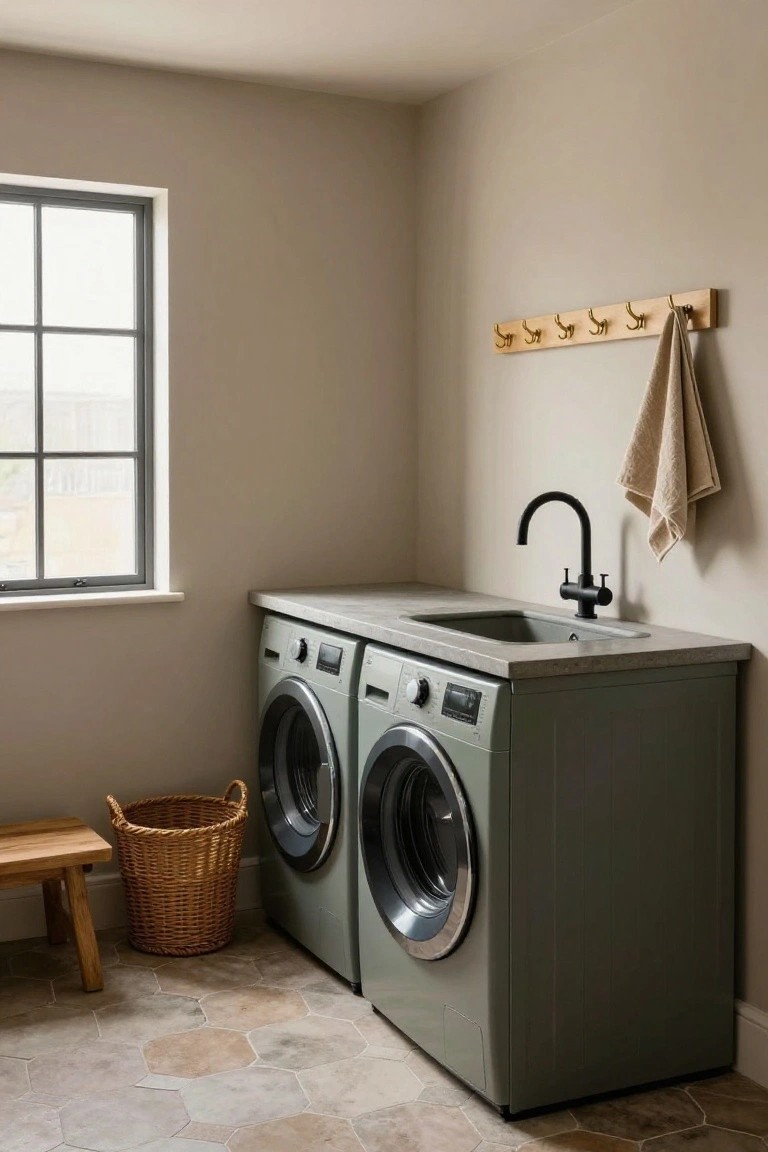
Greige walls give this basement laundry a calm, easy feel that makes chores less of a hassle. Paired with sage green washers and a concrete sink counter, the look stays neutral but not boring. Those warm hexagonal floor tiles add just enough contrast without overwhelming the space.
Try greige in smaller utility spots like basements or mudrooms where you want things practical yet nice to look at. It works best in homes with natural light from a window, keeping the room from feeling too closed in. Skip bold colors here, they can make the area busy fast.
Rich Maroon Walls for Basement Lounges
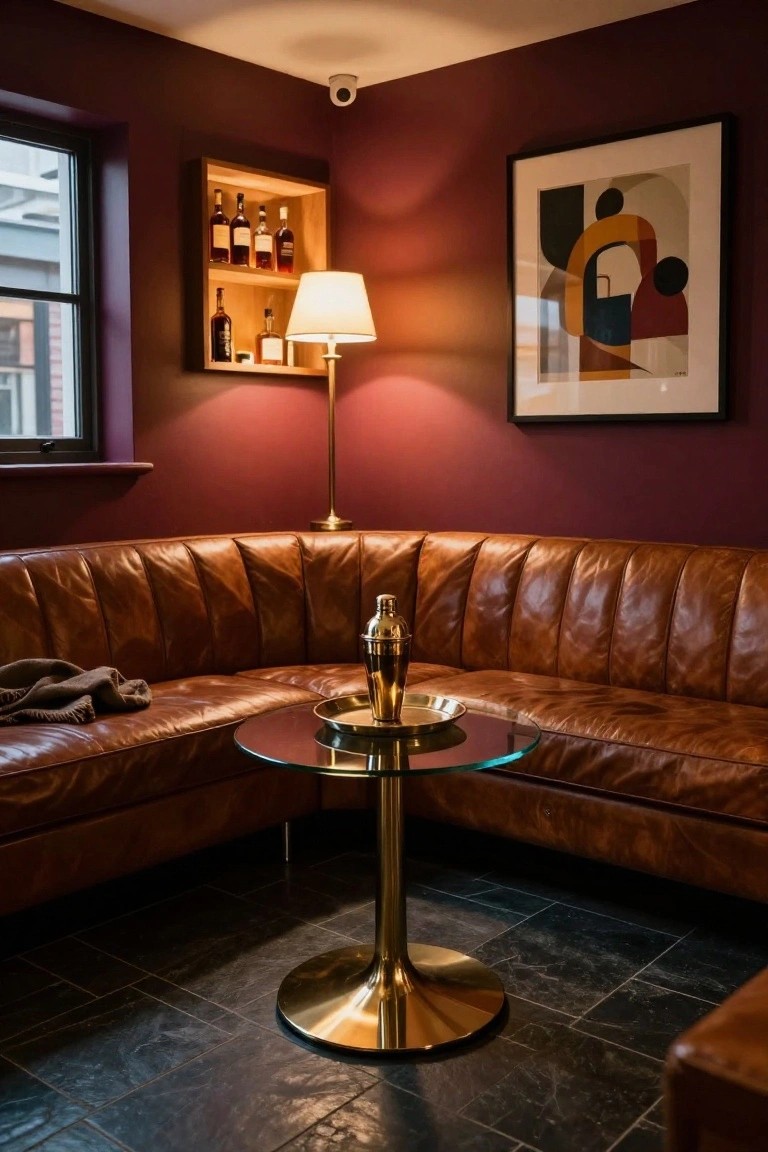
Deep maroon walls make a basement corner feel like a private spot worth lingering in. They bring warmth to spaces that often stay dim, and here they pair nicely with tan leather seating for that easy, lived-in look. A few brass touches keep things from getting too heavy.
Try this in a low-ceiling basement bar or reading nook. Stick to matte finishes on the walls to avoid glare, and mix in wood shelves for bottles or books. It suits older homes best… just add brighter rugs if the room runs small.
Blush Pink Walls with Sage Green Arch
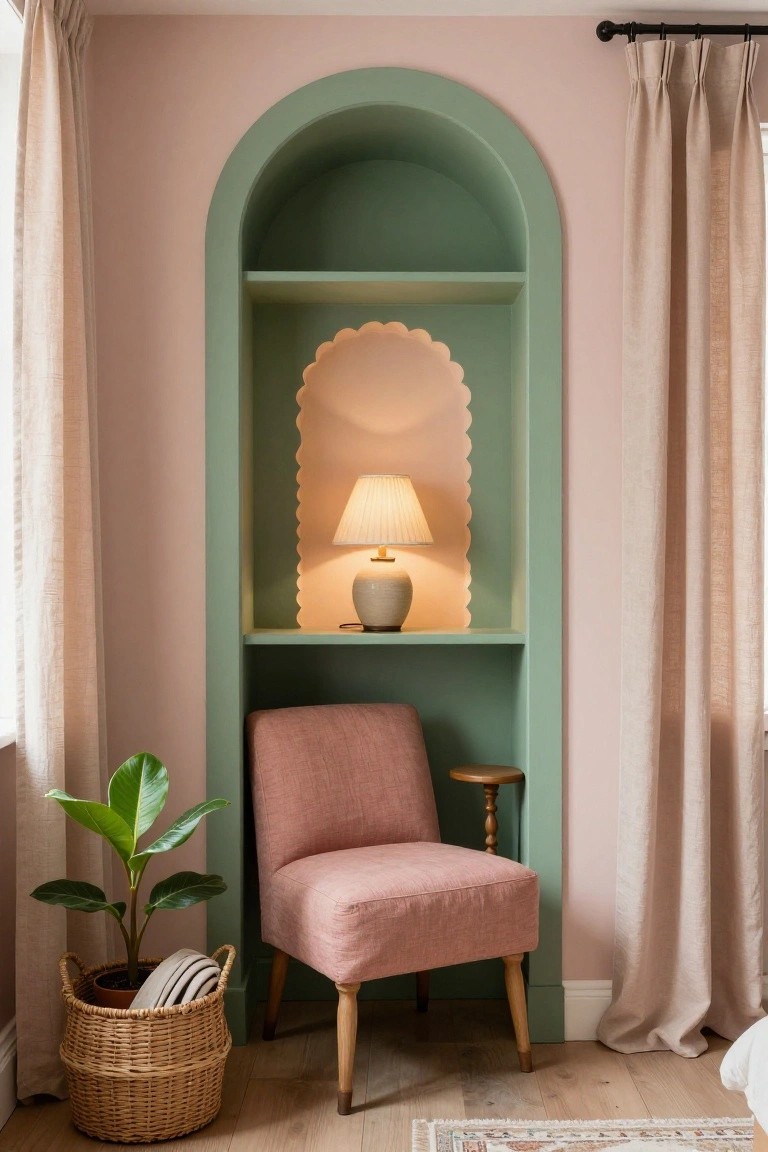
A soft blush pink on the walls sets a gentle, cozy base here. Then that sage green arched niche painted right into the wall adds a fresh pop of color. It frames a simple lamp nicely, drawing the eye without taking over. The scalloped edge inside gives it a bit of whimsy too.
Try this in a basement corner for reading or relaxing. It suits smaller spots where you want calm but not bland. Paint over plain drywall or jazz up an old recess. Pair with a chair nearby… keeps things practical and pretty.
Gray Walls with Beige and Black Accents
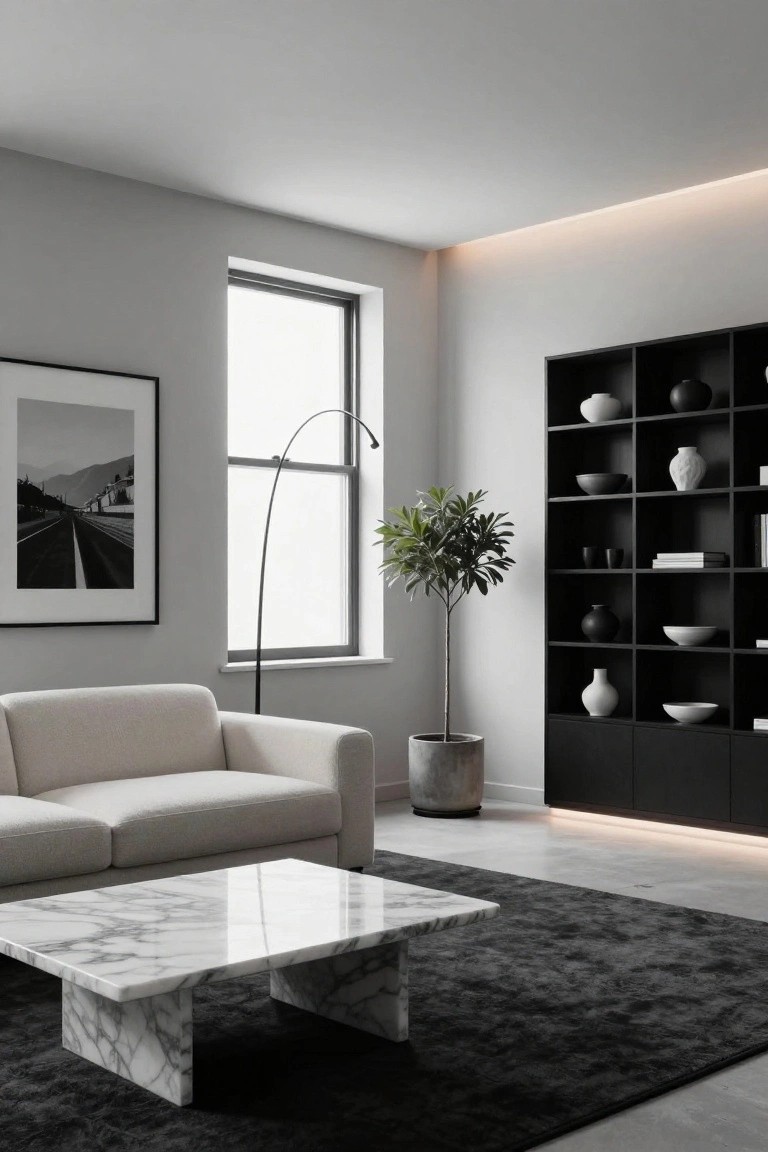
Gray walls like these give a basement that quiet, steady feel right away. They pair simple with a beige sofa and black shelves full of white pots, keeping the whole room tied together. No busy colors to fight each other. It just settles in calm.
Try this in a basement with not much natural light. The gray bounces what light there is, and beige keeps it from going cold. Black adds some weight without darkening things too much. Good for apartments or starter homes where you want easy upkeep.
Sage Green Walls with Warm Wood Tones
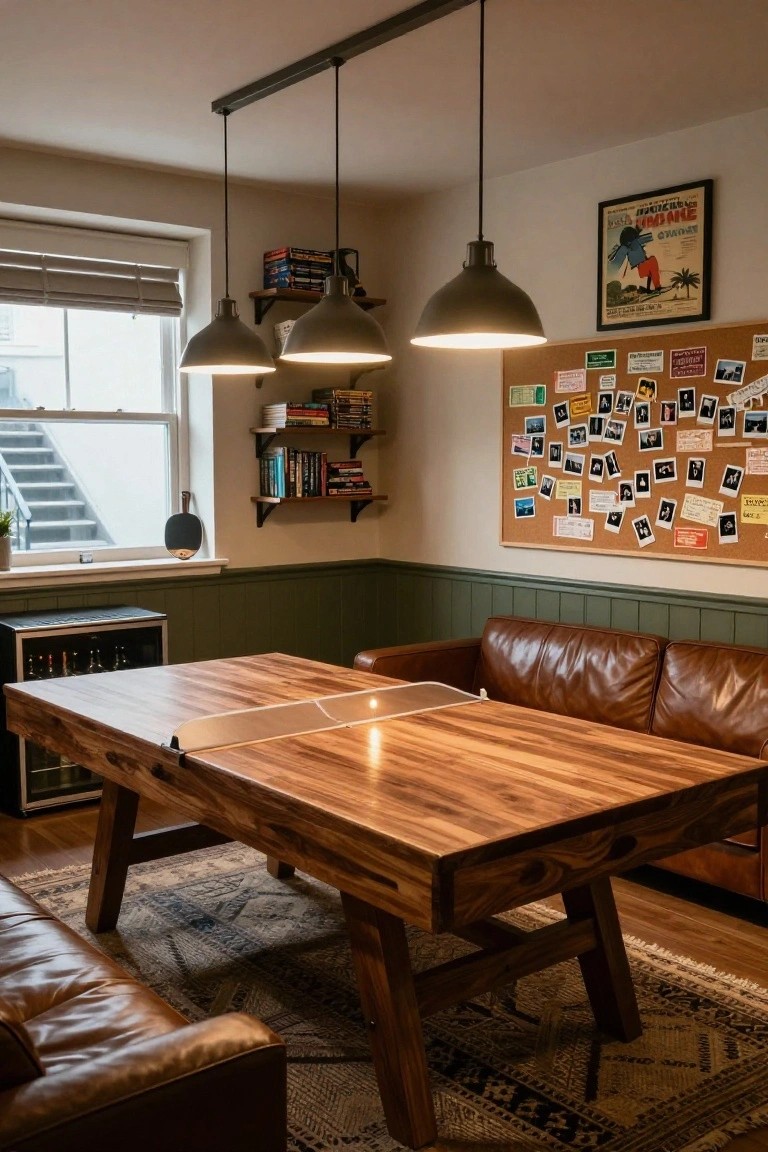
This color combo takes a basement rec room and makes it feel lived-in and welcoming. Sage green on the walls sets a soft backdrop that doesn’t overwhelm. Then the warm wood on that big table pulls everything together. Paired with tan leather sofas, it keeps the space cozy without going too dark.
Use it in family basements or game areas where you want comfort over flash. It suits homes with some wood trim already. Watch the lighting though. Those pendant lights help the green stay fresh. Avoid super bright greens or they’ll fight the wood.
Cozy Grays with Warm Wood Tones
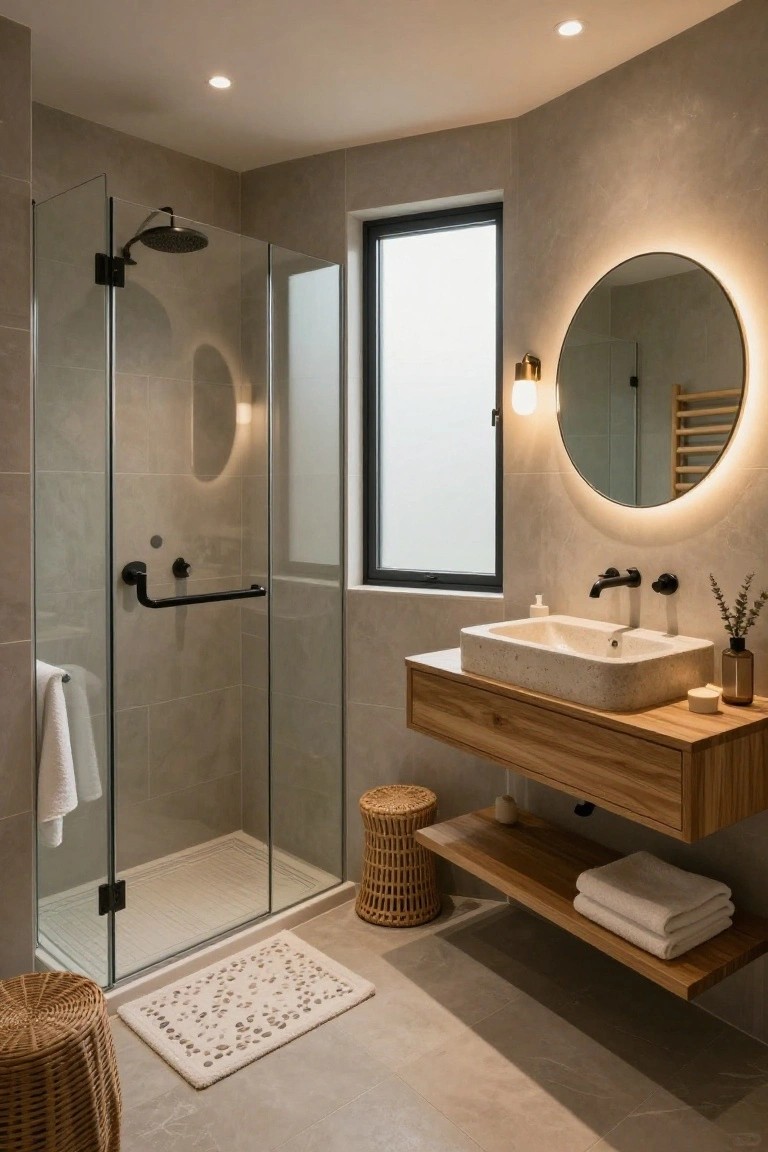
Soft gray walls and floors set a calm base here, while the light wood vanity pulls in some everyday warmth. It keeps the room feeling open and spa-like, especially with simple touches like the rattan stool. Those neutral tones mix easily without clashing.
This look fits basements well, since the wood brightens dimmer spots and the grays hide everyday wear. Try it in a small bath or powder room. Pick matte finishes on the wood to avoid glare, and pair with plants for extra life.
Deep Green Walls for Basement Coziness
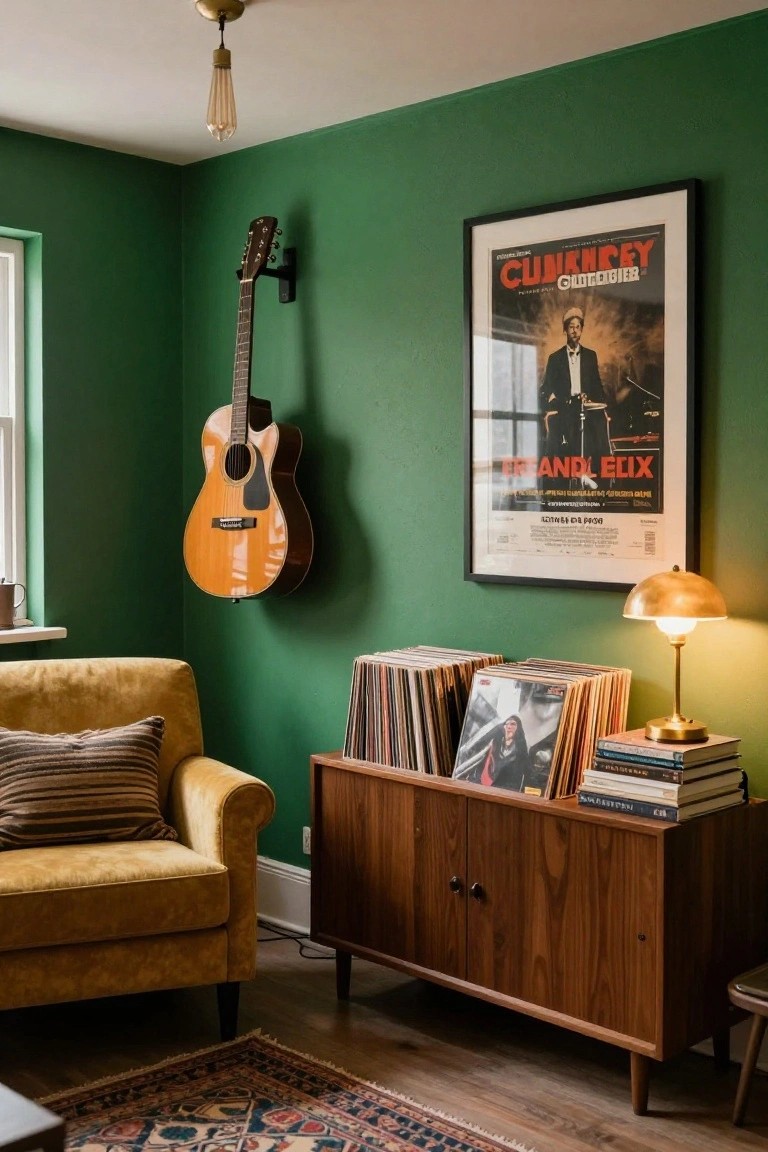
Deep green walls like these turn a basement room into a snug retreat right away. The color hugs the space and cuts any chill feel basements often have. A mustard yellow chair pops against it nicely, while wood tones from the cabinet keep everything grounded and warm.
This works best in smaller basement corners, say for reading or listening to records. Stick to warm accents like brass lamps or leather pillows to balance the green. Skip cool grays or whites here… they fight the cozy mood.
Sage Green Cabinets and Wood Tones
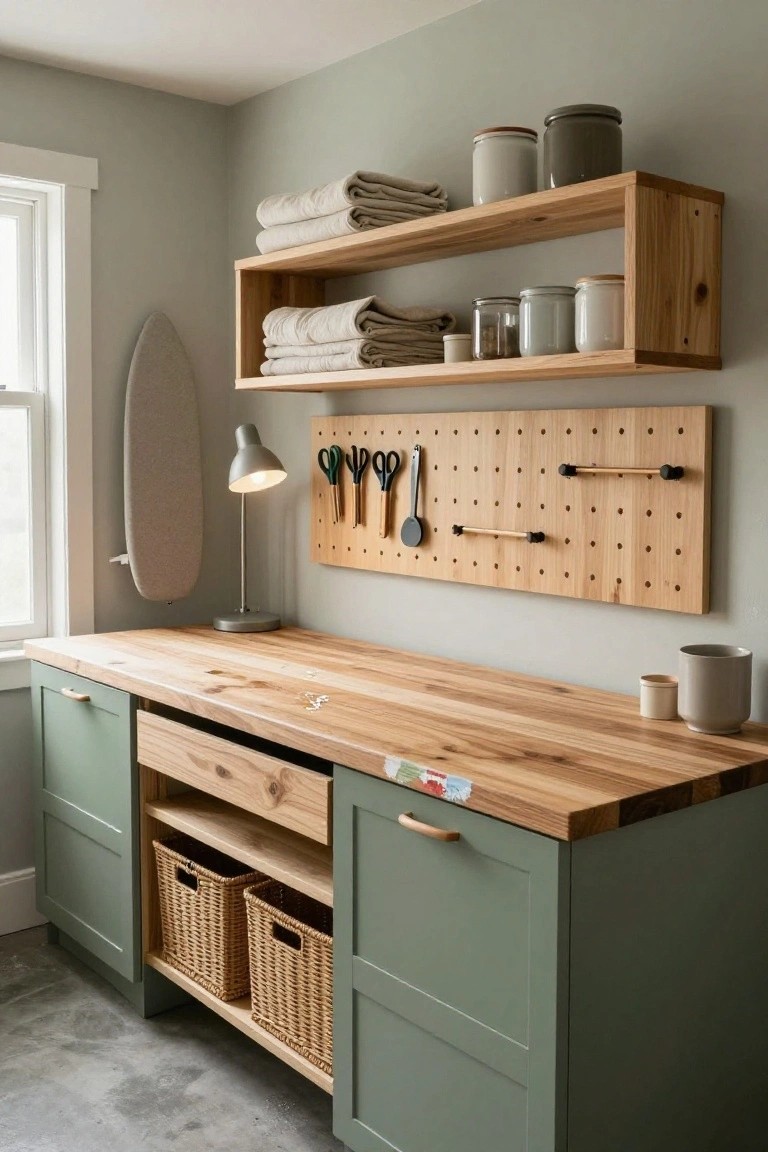
This color combo takes a basement utility room and makes it feel right at home. Sage green cabinets sit under a sturdy wood workbench, while oak shelves and a pegboard hold linens, jars, and tools. The green keeps things calm and fresh. The wood adds that natural warmth. Together they turn a work space into something cozy, not cold.
Put this in laundry or sewing areas where you need storage and a surface to use. It suits basements with concrete floors… just paint walls pale gray to lift it. Go for butcher block on the top. Skip dark greens, though. They can make small spots feel smaller.
Cozy Brick and Terracotta Scheme
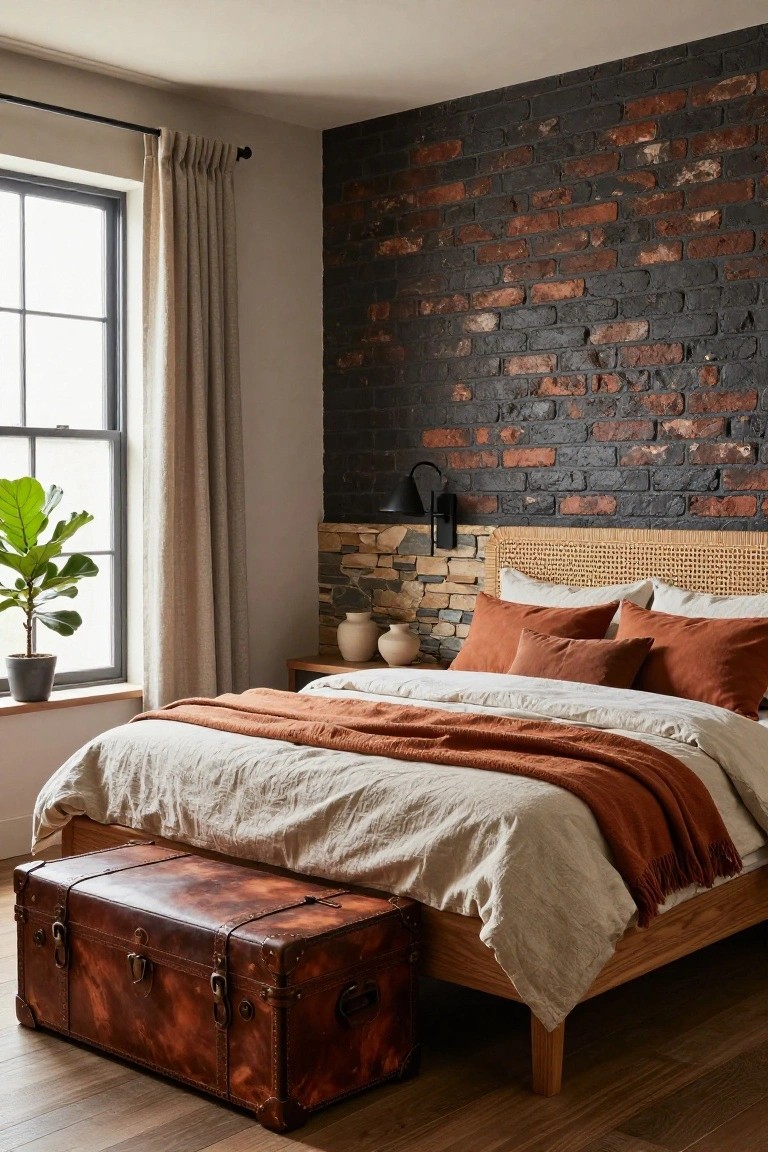
That dark exposed brick wall sets the tone here. Paired with terracotta pillows and throws on neutral linens, it pulls warm rusty shades from the bricks right into the bedding. The result is a space that feels snug and lived-in, like an old cabin updated for today.
This works well in basements since the brick adds depth without needing much light. Layer the same tones on a rug or cushions, and stick to light wood furniture to open things up. Skip it if your basement stays damp, though. Brick likes dry spots.
Warm Wood Bar Against Dark Walls
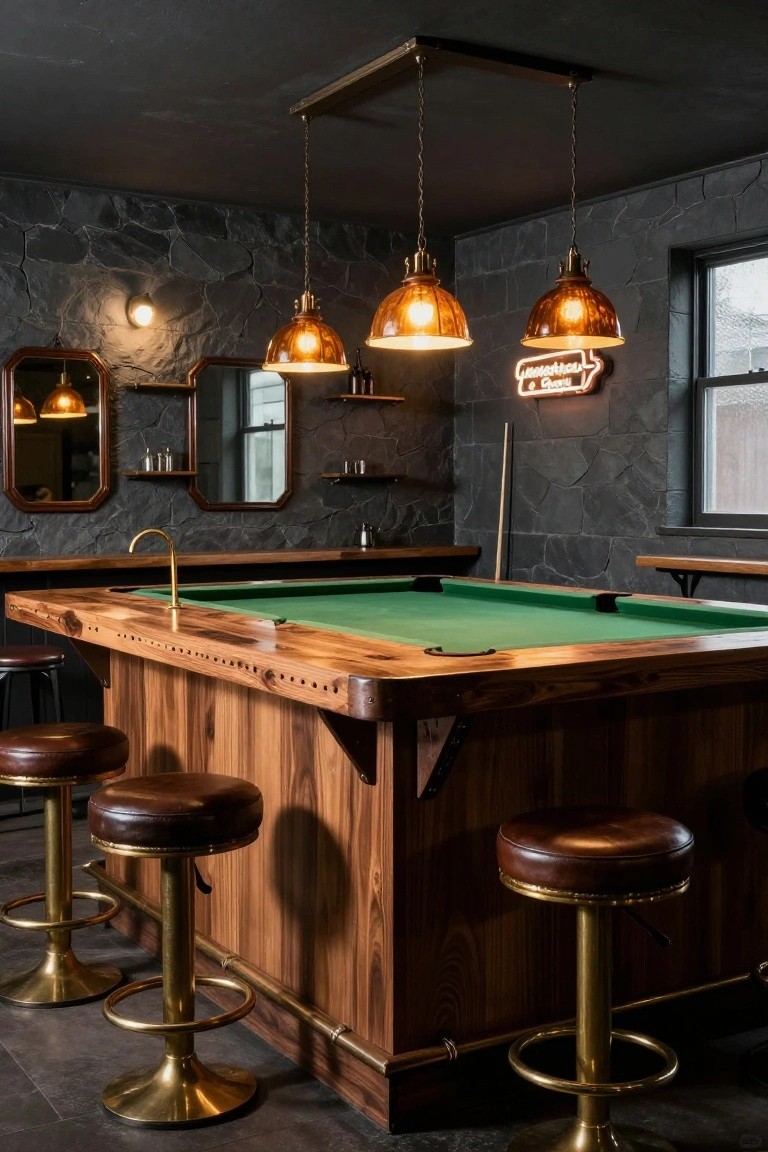
Dark slate walls give this basement a cozy, cave-like feel without getting too gloomy. The big wooden pool table doubles as a bar counter, bringing in those rich, golden tones that warm everything up right away. Brass stools and hanging lights pick up the glow, while the green felt adds a fresh pop.
This look works best in basements with low light or stone features already. Start with a sturdy wood surface like the bar here, then layer in metallic accents for shine. Skip bright colors; stick to earth tones so it stays relaxed for game nights or casual hangs. Just right for family rec rooms.
Warm Beige for a Calming Room
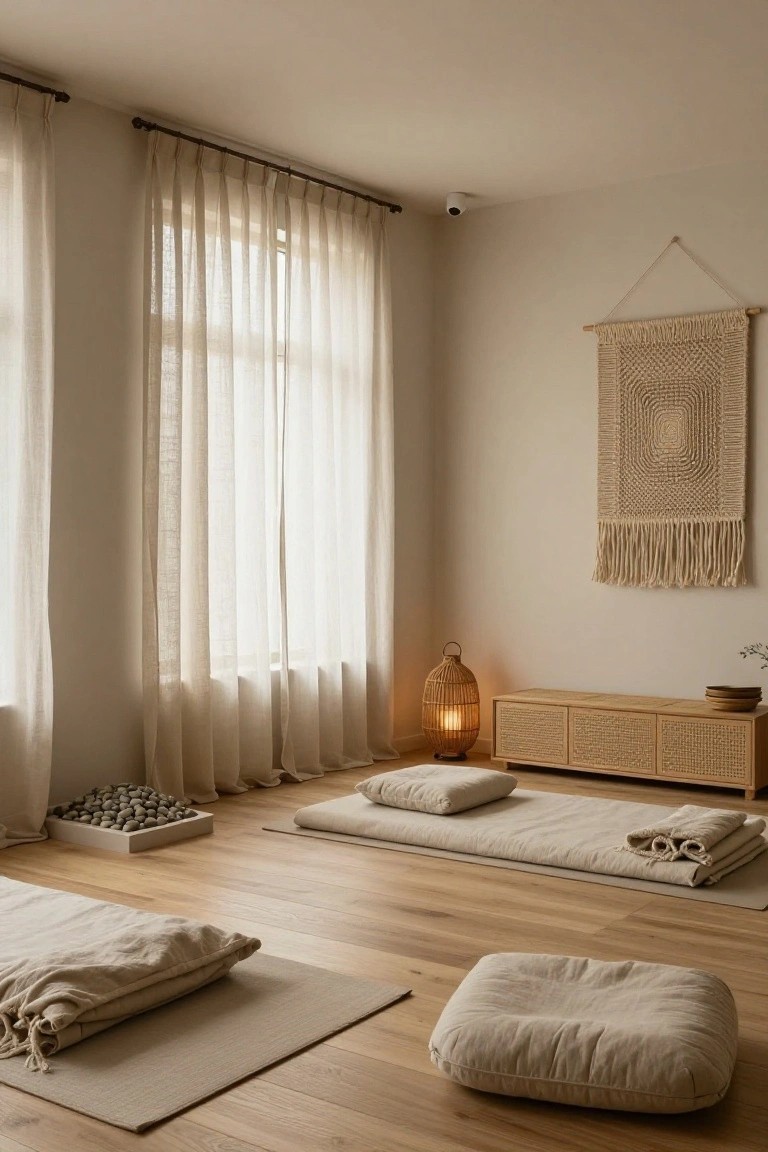
Warm beige shows up here on the walls, linens, and cushions, pulling the whole space together into something restful. Paired with natural wood floors and a rattan bench, it keeps things light and easy, even with big windows letting in soft light. No need for patterns or dark accents. It just feels steady.
Try this in a basement to make it less cave-like. Paint the walls that same warm beige, add linen throws on simple furniture, and use floor cushions for seating. It suits family rooms or guest spaces where you want calm without fuss. Skip cool grays, though. They can make things feel flat down there.
Pale Blue Tiles with White Shiplap Walls
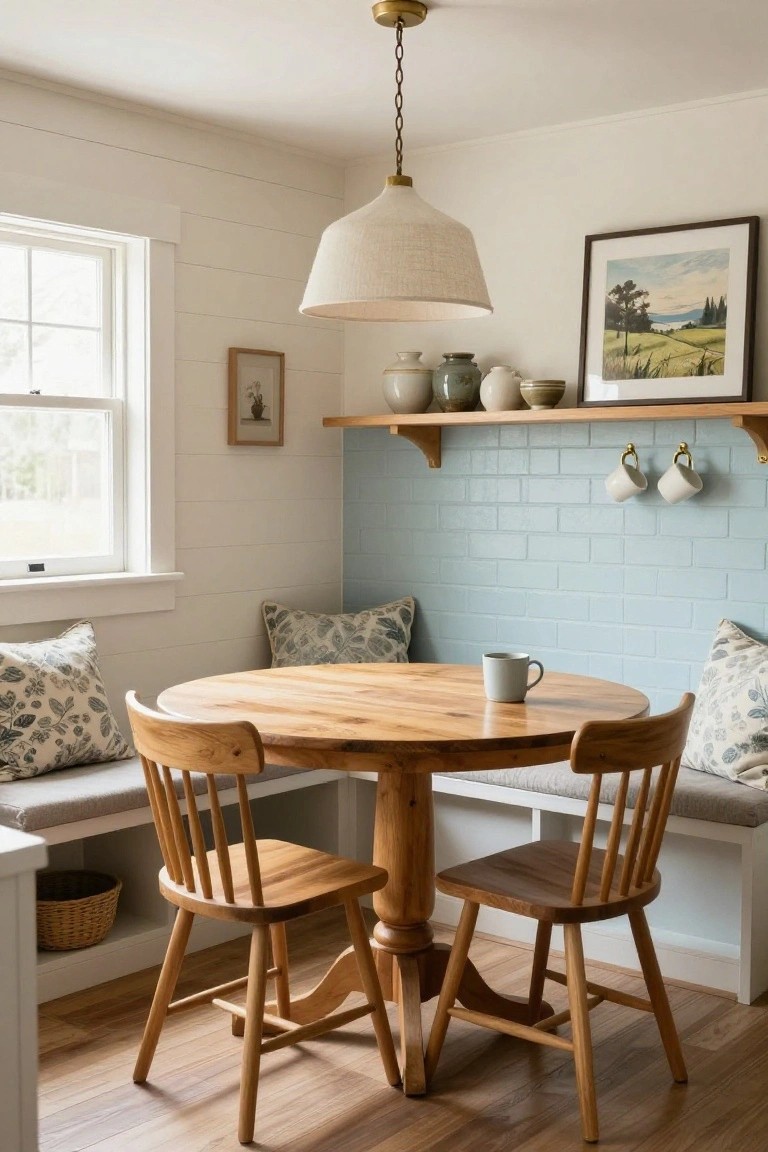
A pale blue subway tile backsplash makes a simple feature wall here, tucked behind open wood shelves and up against white shiplap. The soft blue picks up light from the window while the shiplap keeps things farmhouse fresh. Natural wood chairs and table pull in warm tones that stop it from feeling cold.
This combo works well in basements wanting that airy yet snug look. Use it on one wall to open up the space, maybe in a family nook or wet bar area. Stick to matte tiles and pair with wood elements… avoids anything too stark. Good for homes with low light.
Warm Earthen Walls for Cozy Basements
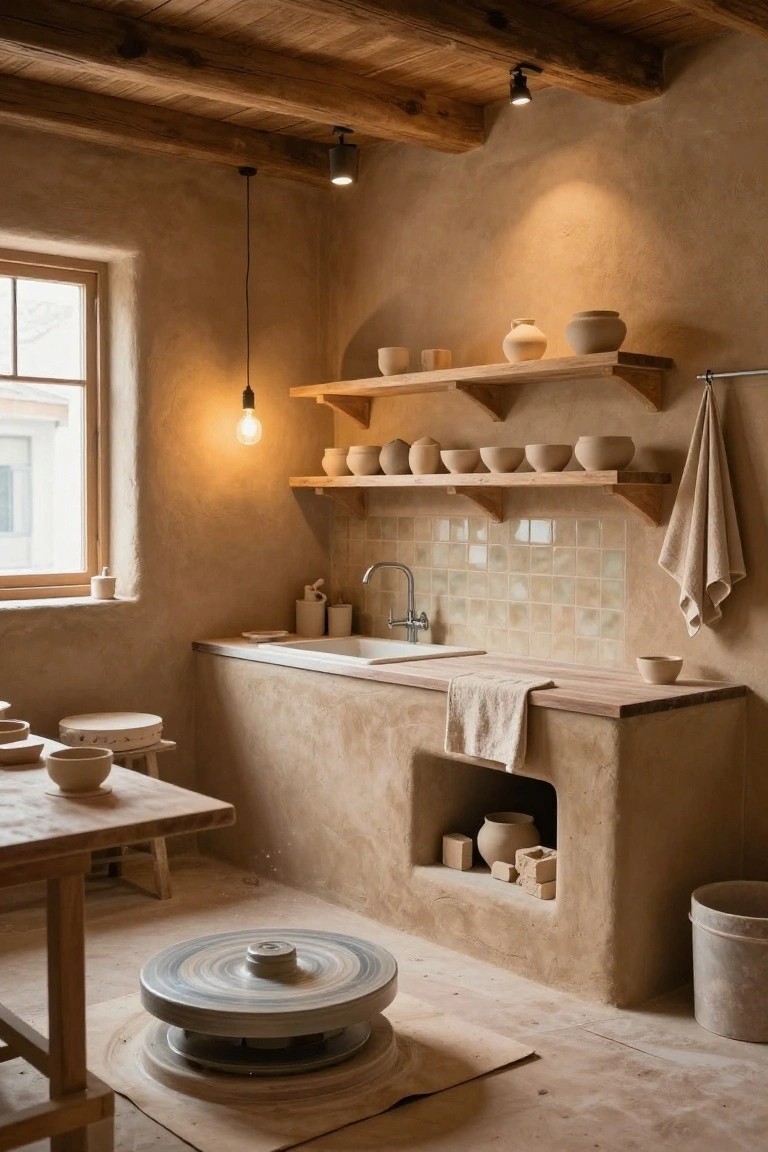
Those soft, sandy beige walls made from clay-like plaster pull the whole room together. They echo the raw pottery on the shelves and even the wheel on the floor, giving a calm, natural feel that’s perfect for dimmer basement light. Wood beams overhead add just enough contrast without clashing.
Paint your basement walls in a similar matte earth tone, then layer in textured pieces like unglazed ceramics or linen towels. It suits older homes or craft areas best… avoid glossy finishes that fight the rustic vibe.
Dark Gray Cabinetry with Warm Wood Tones
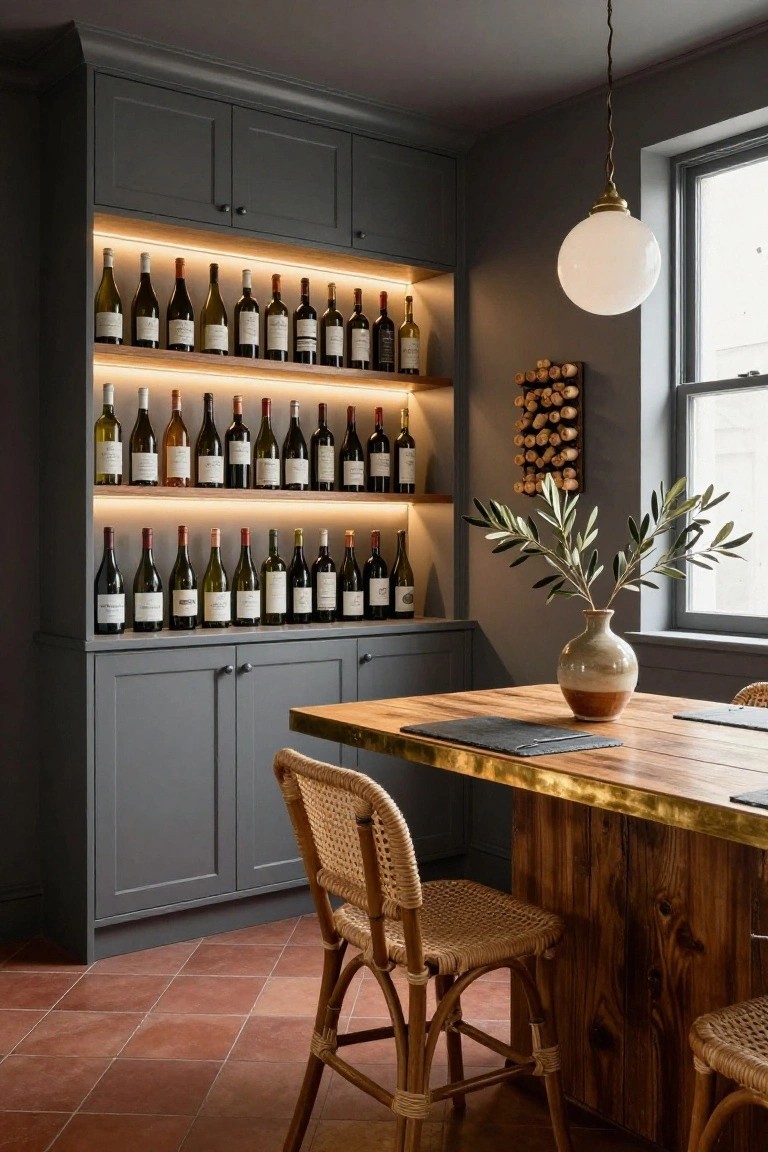
This setup uses tall charcoal gray cabinets as a wine storage wall, lit softly from behind to highlight the bottles. The warm wood table right next to it pulls everything together. That gray keeps things calm and modern, while the wood adds real coziness, especially on those terracotta floors. It’s a simple way to make a basement feel lived-in without going overboard.
Try this in smaller basements where you want storage but not clutter. Pair the gray with natural wood furniture like a live-edge table and rattan chairs. It works best in spaces with some natural light from windows. Just keep the lighting warm… too cool and it might feel stark. Good for casual dining spots.
Burnt Orange Accents in Neutral Rooms
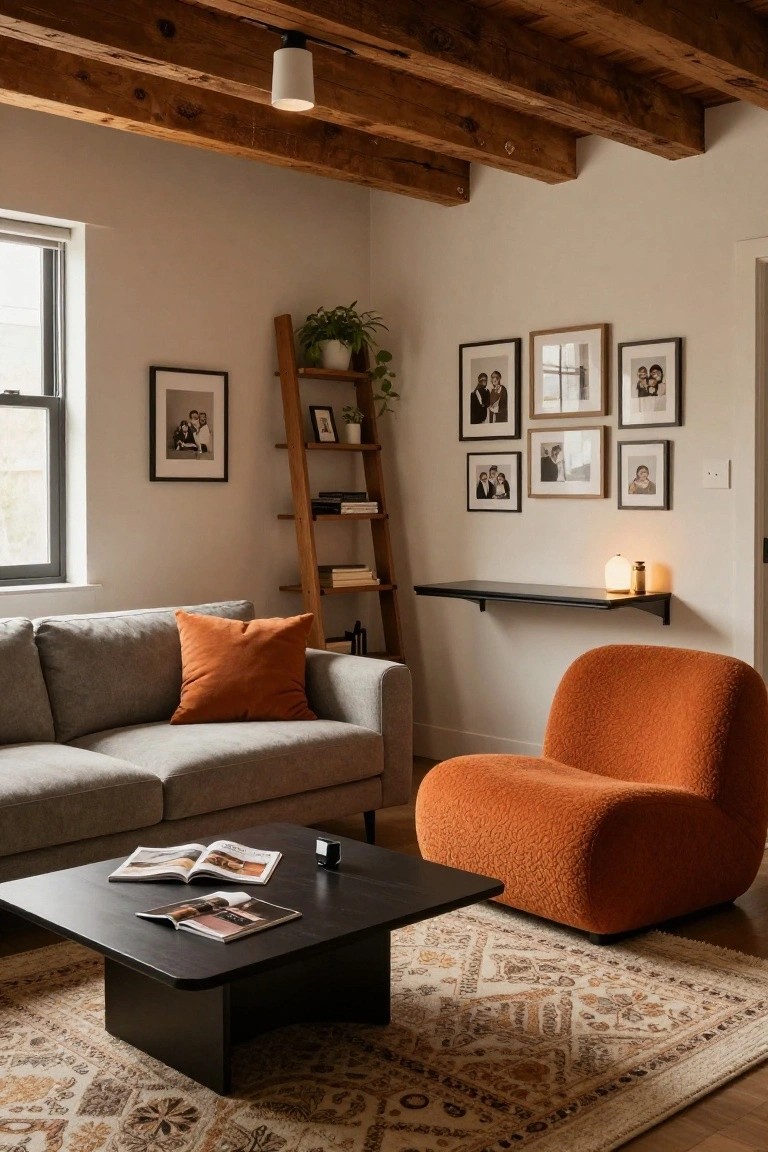
A gray sofa gets a lift from plump orange pillows and a fuzzy burnt orange chair right next to it. Those terracotta tones pop against the pale walls and warm beige rug. They add just enough color to make the space feel snug and welcoming, without fighting the wood beams overhead.
This works nicely in basements where you need warmth to balance cooler concrete vibes. Start with seating or pillows in that shade. It suits casual family spots best. Stick to one or two pieces so it stays calm.
Sage Green Cabinets Warm Neutral Bathrooms
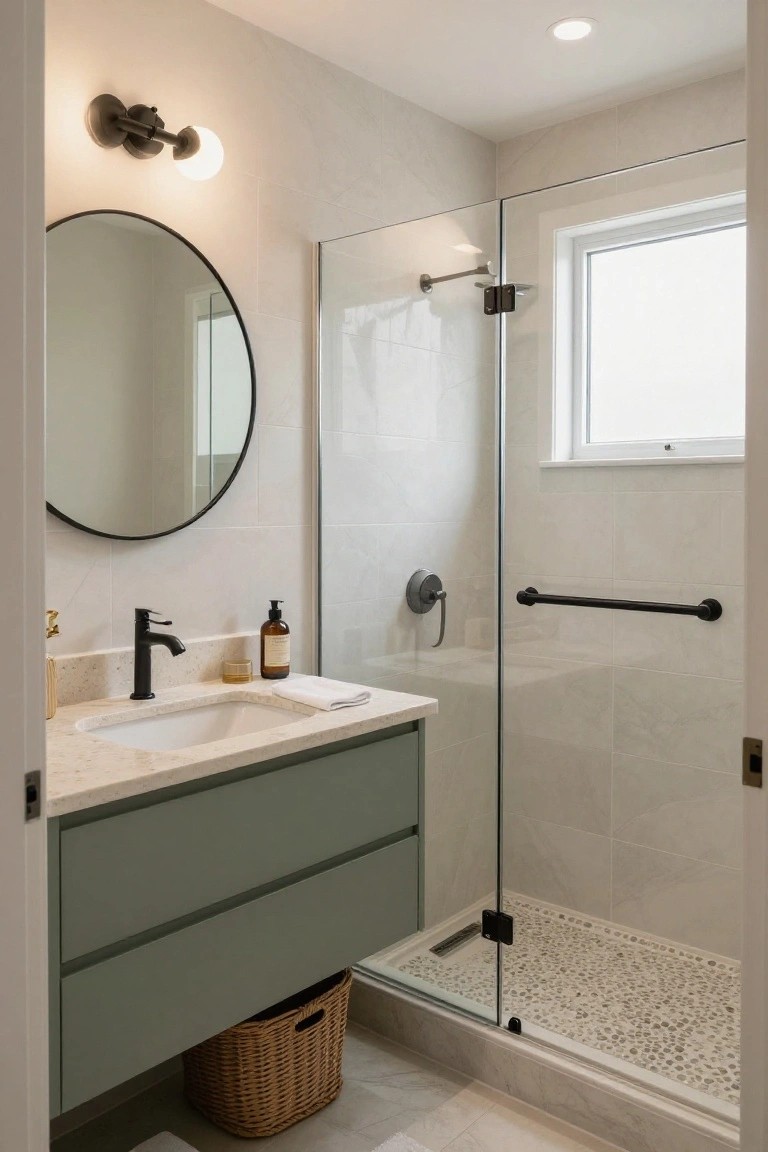
Sage green cabinets like these show how a soft color can settle into a mostly white bathroom. The green sits low under the sink, against light tiles and a pebble shower floor. It brings a natural feel without pushing too hard. Rooms end up calm and a little lived-in.
Put this in a basement bath where you want color but not a lot of fuss. It suits small spaces best, paired with whites and blacks. Just make sure the lighting hits right, or the green might look flat. Easy to pull off with stock cabinets.
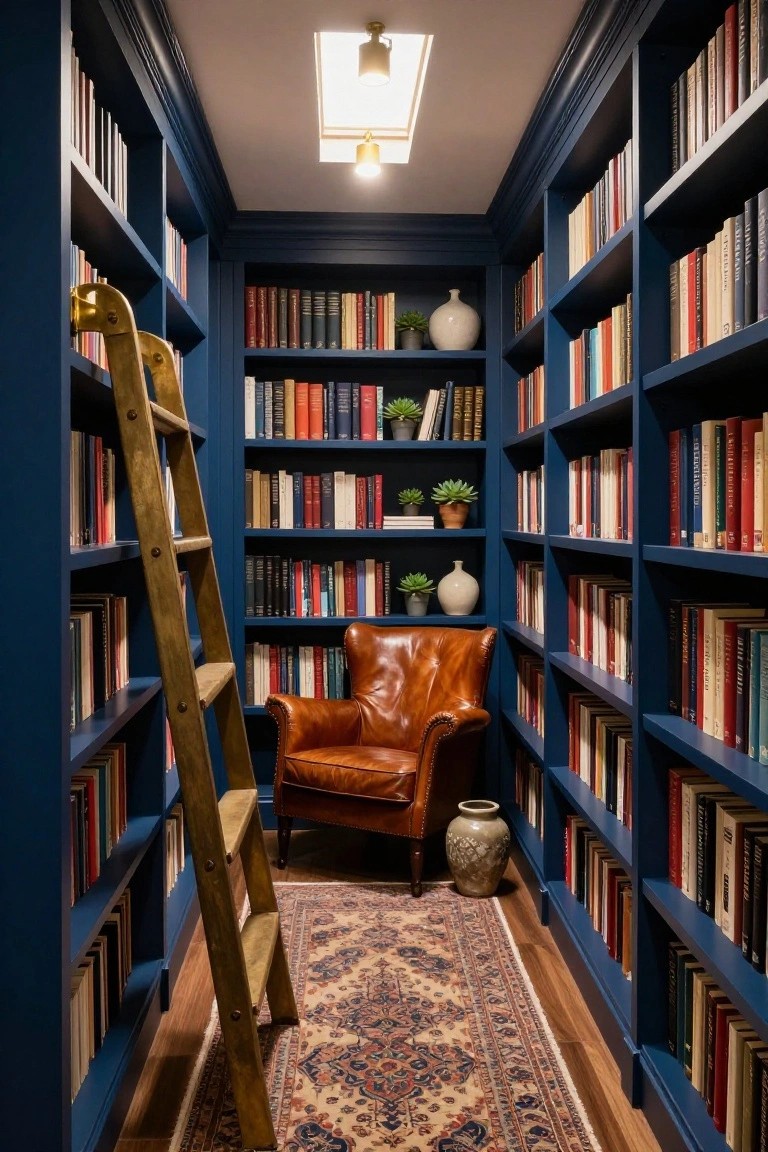
Deep navy blue on floor-to-ceiling bookshelves turns a narrow basement room into a snug reading spot. The rich color wraps the space, making it feel like a hidden retreat without getting too dark. A wooden ladder and leather armchair add just enough warmth, and simple plants break up the shelves nicely.
This works great in basements with limited natural light. Paint your built-ins navy, then layer in wood furniture and a patterned rug for balance. Skip bright whites here. It suits homes with book collections… keeps things practical yet cozy.
Soft Gray Walls with Warm Wood Tones
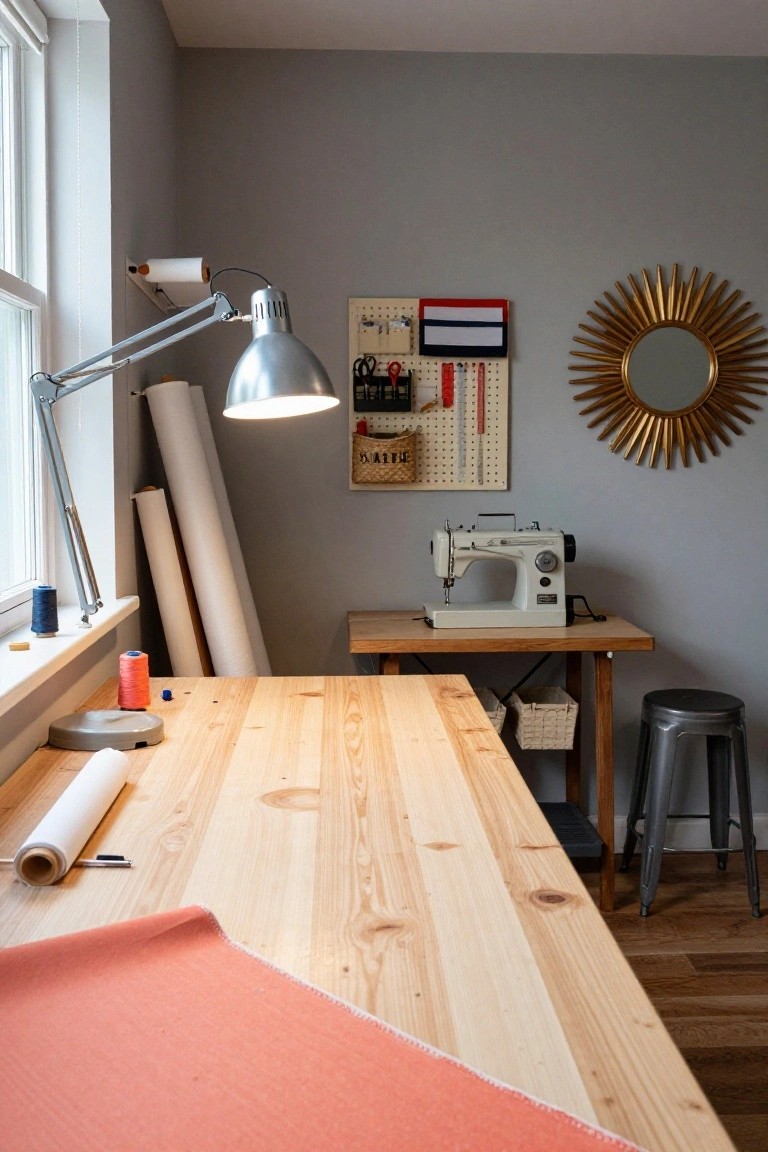
Gray walls often get a bad rap for making basements feel cold. But pair them with a simple pine workbench like this one, and you get real coziness. The light wood surface warms things up naturally, while the gray keeps clutter from overwhelming the room. A sewing machine sits right there, ready for work, proving this combo handles everyday use without losing its calm feel.
Try it in craft spaces or home offices where you need good light and function. It suits rented basements too, since paint and a thrift-store table can pull it off quick. Just watch the accents. Orange fabric or gold mirror details add enough color without clashing.
Warm Terracotta Tones in a Plant Nook
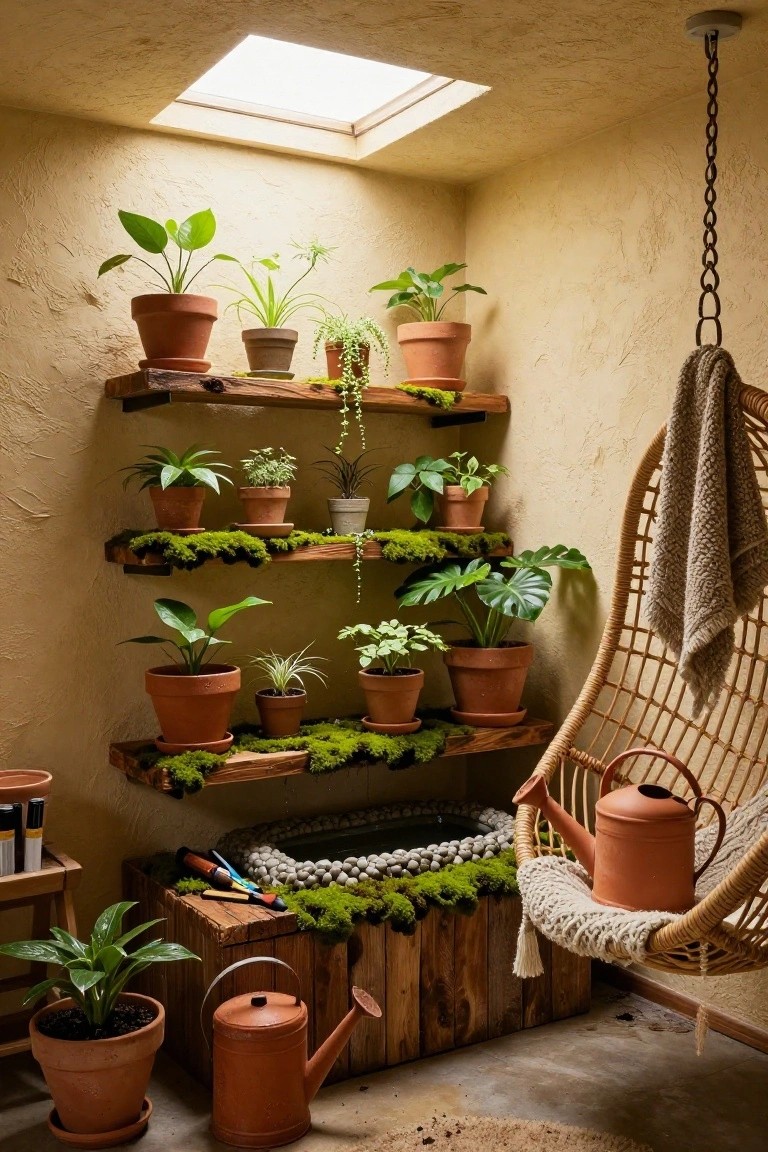
Terracotta pots catch the eye here, holding all kinds of green plants on simple wooden shelves. Paired with those soft beige walls and bits of moss, they build a color scheme that’s easy on the eyes and full of life. It’s a good way to warm up a basement without much fuss.
You can pull this off in any dim corner by starting with a few shelves and cheap clay pots. It suits plant folks or anyone wanting a touch of outdoors inside. Just make sure the space isn’t too damp, or the moss might spread where you don’t want it.
Frequently Asked Questions
Q: My basement is dark with no windows. What colors make it feel brighter and cozier?
A: Pick soft warms like buttery yellows or pale terracottas. They reflect artificial light gently and warm up the space fast. Add lamps with warm bulbs to pull it all together.
Q: How do I test a color scheme before painting the whole basement?
A: Paint large swatches on foam board and prop them against the walls. Walk by them morning and night to catch how lights shift the tones. Pick what makes you smile every time.
Q: Can I add bold colors to these cozy schemes without ruining the vibe?
A: Throw in one punchy accent, say a rusty orange pillow or rug. It sparks interest while the neutrals keep things grounded. And that contrast? Pure magic.
Q: My basement has low ceilings. Do certain colors help it feel taller?
A: Stick to light neutrals on the walls, like soft grays or off-whites. They fade into the background and lift your eye upward. Skip dark floors to avoid closing in the room.
