
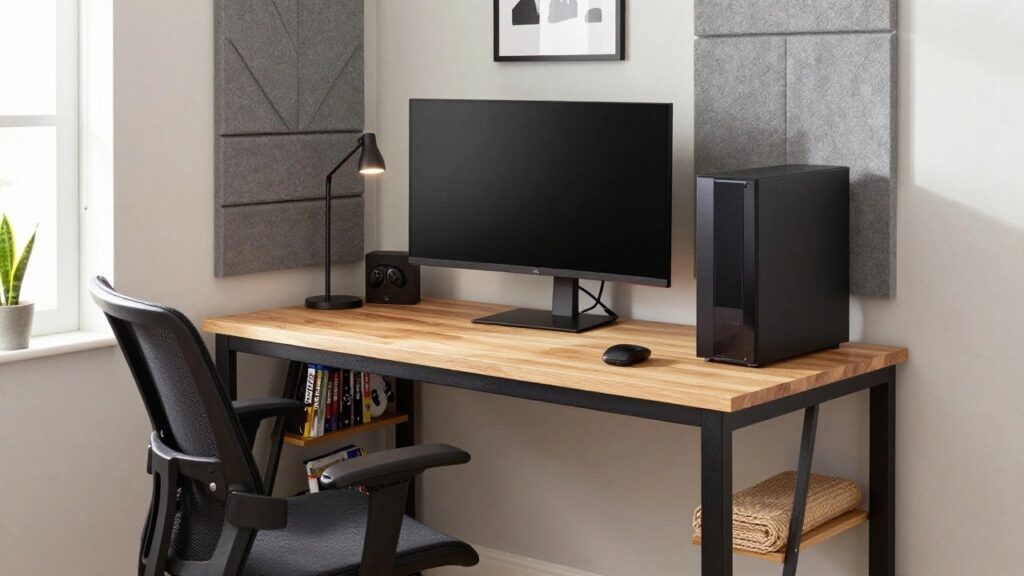
I’ve squeezed gaming setups into a few cramped rooms over the years, and they only pull off that polished look when the layout keeps daily life flowing smoothly. You step inside and first notice if screens dominate the space or blend into a setup that leaves room to breathe. In my last place, I mounted monitors on adjustable arms above a low console, which freed up the floor and made late-night sessions feel less boxed in. These ideas lean on vertical storage and soft lighting to handle cords and gear without turning the room into a tech cave. That balance turns small spaces into spots worth lingering in.
Ladder Shelf Storage Beside the Desk
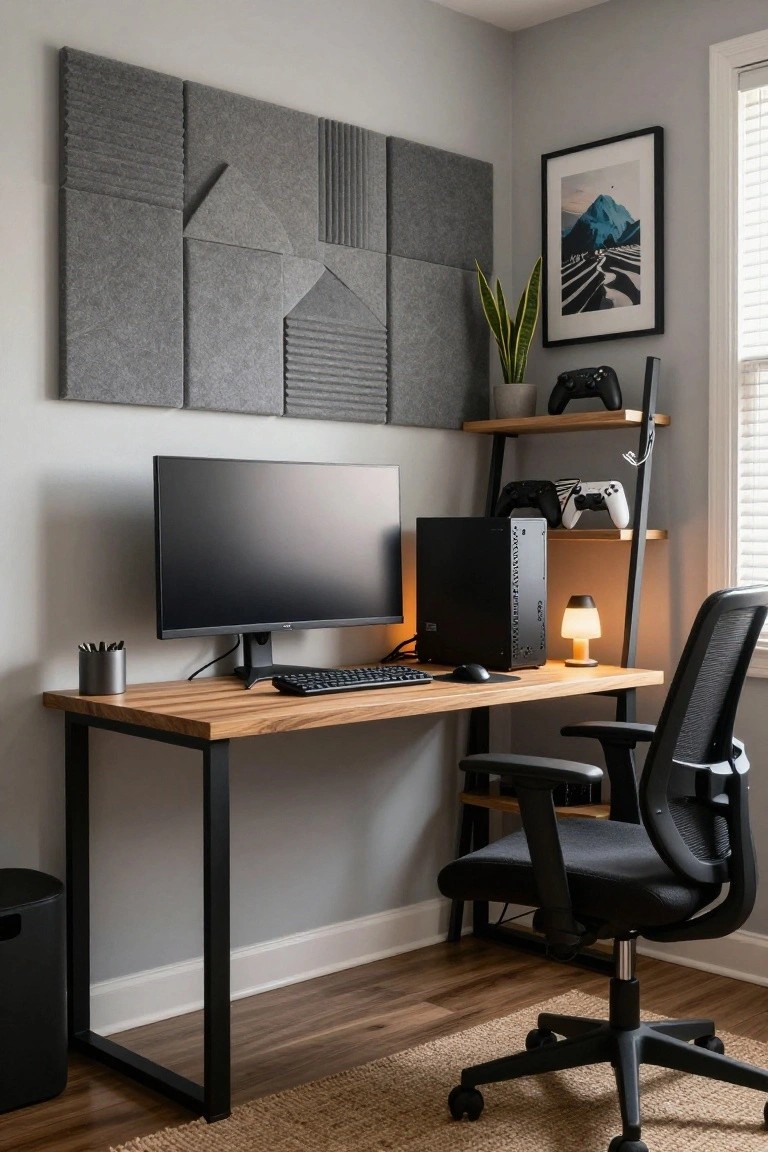
Small gaming rooms need every inch of space to count. A leaning ladder shelf like this one tucks right next to the desk, holding controllers for PS5 and Xbox plus a potted plant. It keeps gear organized and easy to grab, without eating up floor area.
This works best in corners of apartments or spare rooms. Match the oak shelves to a wooden desk for a natural flow. Skip heavy items up top to avoid tipping. Add a small light underneath if you game late.
Recommended Products

Full Motion Adjustments - Adjustable monitor wall mount arm offers +90° to -45° tilts, 180° swivel, and 360° rotation. This monitor arm extends up to 21.6", making it easy to set the monitor at the optimum angle and position for increased productivity and comfort. Perfect for remote workers, gamers, content creators, traders, students, developers, and professionals who share screens in collaborative environments. Easily switch between portrait and landscape modes for coding, design, or any task.

Fits 17” to 32” Screens- Single monitor wall mount fitting 17” to 32” screens weighing up to 8.0kg with VESA 75x75mm or 100x100mm hole patterns. Mounts to wood studs or drywall and creates a clean, ergonomic display. Please Note: Hardware for monitors with curved or recessed backs is not included.
Overhead Shelving Clears Floor Space
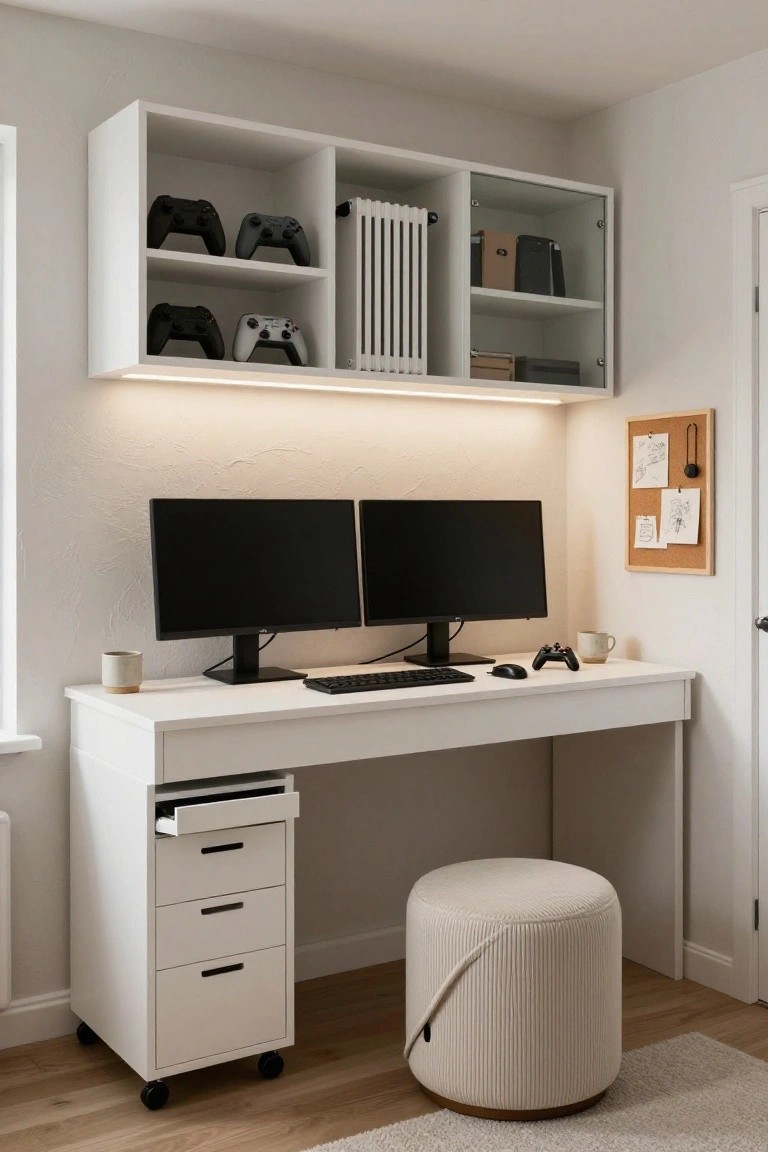
Small gaming setups need every inch of room to breathe. These wall-mounted shelves sit right above the desk, holding controllers and keeping the surface free for monitors and keyboard. The slim white design blends with the desk below. A simple LED strip runs underneath, giving soft light without taking up desk real estate.
This works best in corners or tight spaces like apartments. Measure from desk to ceiling first, so your chair slides back easy. Stick to open shelves for quick grabs. Just don’t stack too much, or it starts looking busy.
Recommended Products

MATERIAL UPGRADE: We've upgraded the fabric of these stuffed animal bean bag chair covers to thicker, softer, and premium fabric to enhance the comfort and durability of the bean bag covers for long-lasting use. These lazy beanbag chairs will become your favorite place to chill out (Bean Bag No Filler)

1. Classical Fabric: We adopt the tested corduroy fabric, which is soft, cosy, environment-friendly, skin-friendly, air-permeable, wear-resistant, stain-resistant and fade-proof. The comfortable bean bag is supposed to be the best-loved place for you and your children.(Bean Bags No Filler)

Premium Corduroy Bean Bag Chair Cover (No Filler): Please note this is only a bean bag cover without filler. Crafted from high-quality corduroy fabric, it features ultra soft, cozy, skin-friendly and breathable texture, along with eco-friendly, wear-resistant, stain-resistant and fade-proof performance. This comfy bean bag cover is an ideal cozy spot for you and your kids, and it can also serve as a pet bed.
Bunk Bed Desk for Small Gaming Rooms
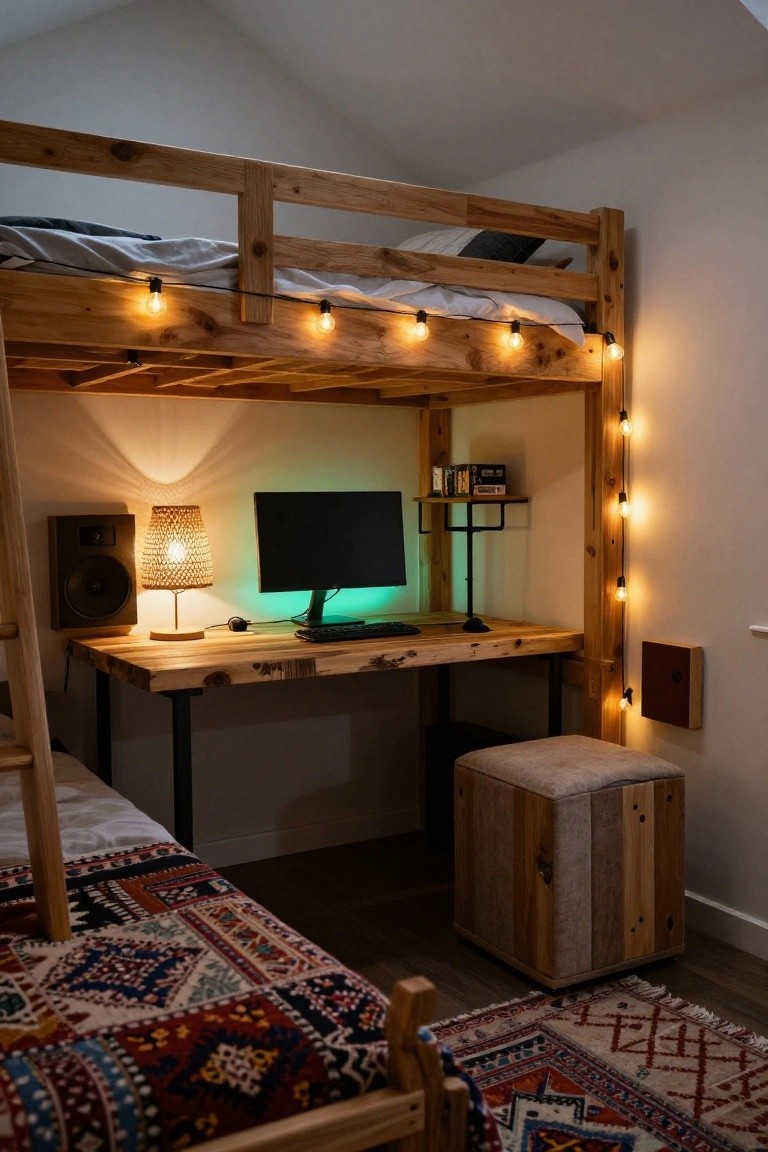
Small rooms need smart setups like this bunk bed over a desk. It stacks sleeping and working vertically so you keep the floor open. The rough wood desk fits a monitor, keyboard and speakers right underneath, with room for a stool. String lights along the bed add a cozy glow without taking space.
This works best in tight bedrooms or lofts where every inch counts. Go for sturdy wood builds that match your style, and check the ladder is safe. It’s practical for gamers or students. Just watch the desk legroom… nobody wants cramped knees.
Recommended Products
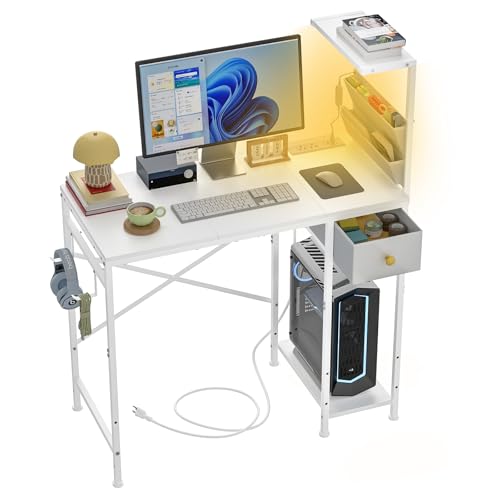
【App & Button-Controlled LED】Enjoy a personalized atmosphere with the built-in RGB LED strip, featuring 7 color options and 20 dynamic modes. Whether you’re deep into work or immersed in a game, the LED lights elevate the experience. Easily adjust brightness, color, and speed using the button control or mobile app. This customizable feature turns your space into a fun, focused, and visually striking computer desk gaming setup — ideal for bedrooms and home offices

Height Adjustable Rolling End Table: This versatile end table features adjustable height settings, ranging from 27.9 inches to 41.3 inches, allowing you to customize your workspace whether you're standing or sitting. Includes a retainer with five fixed height settings to prevent the table from slipping and ensure safe use. The desk is USPTO Patent Approved

Premium Craftsmanship- Select American walnut with rich, unique grain patterns and durable aluminum posts for timeless elegance on any desk, gaming station, or studio; each piece features a distinct wood grain that makes your headphone holder a functional work of art
Compact Wooden Desk for Gaming
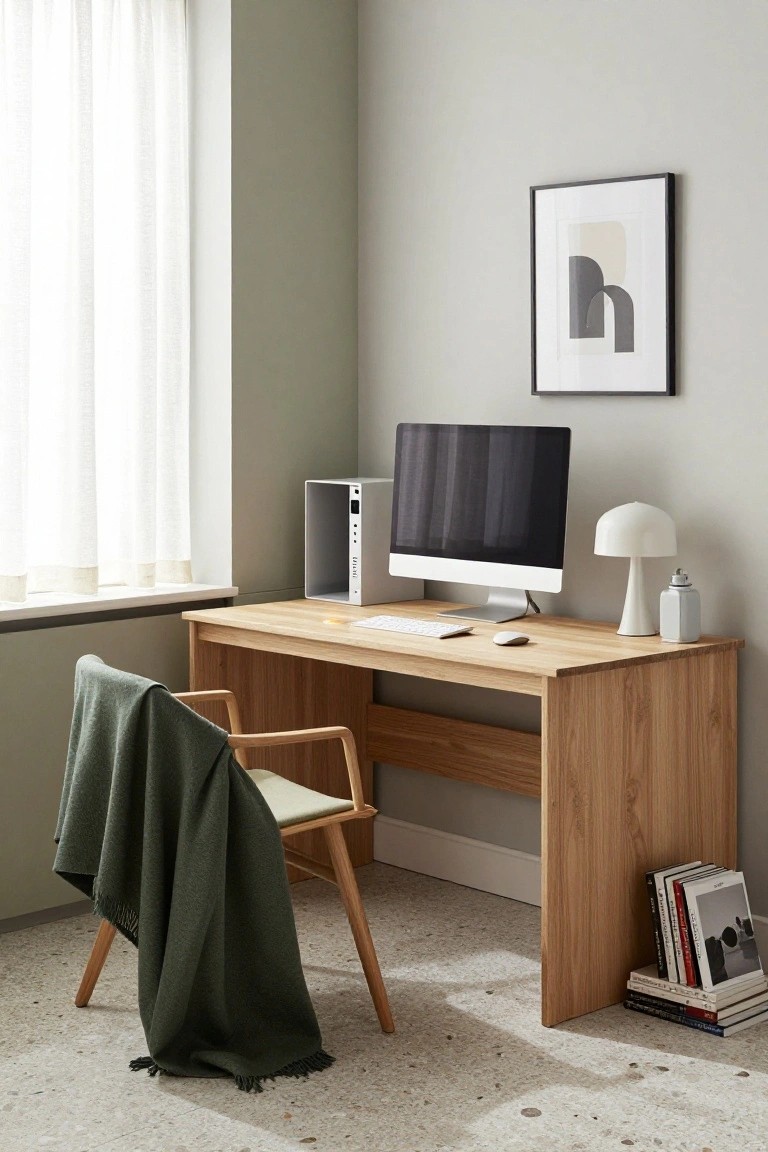
A simple wooden desk like this one fits right into a small room without taking over. Tucked in a corner by the window, it holds just the basics: an iMac screen, keyboard, mouse, and a slim PC case on top. The light oak finish blends with pale walls, so the gaming spot feels calm and part of the room instead of a bulky addition.
This works best in apartments or spare rooms where space is tight. Go for a sturdy desk with open legs for legroom, and drape a chair with a soft throw for comfort during long sessions. Keep shelves minimal, maybe a few books, and let window light do the work. It stays practical without clutter.
Compact Corner Gaming Desk
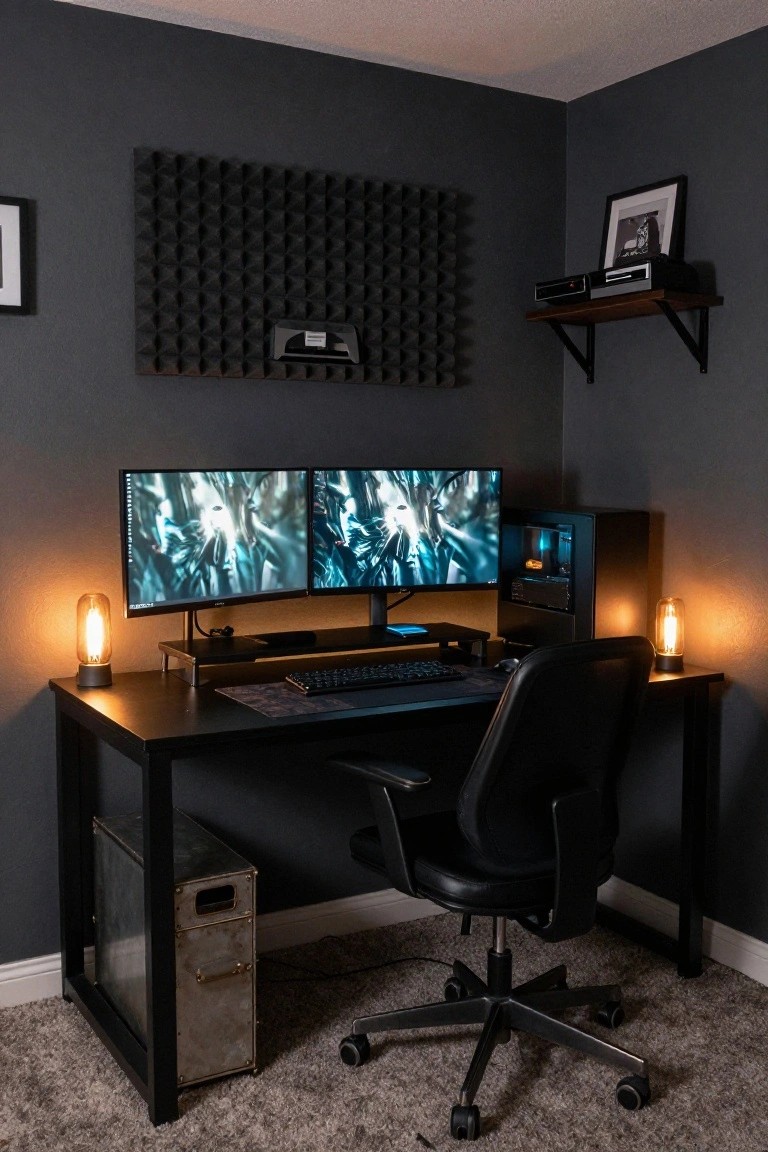
Tucking a gaming desk into the corner like this keeps a small room feeling open. The black metal desk hugs the walls, with dual curved monitors stacked neatly on a riser and the PC tower slid right beside it. Dark walls and acoustic foam panels make the whole spot blend in, so it doesn’t eat up the space.
This works best in apartments or spare bedrooms where every inch counts. Go for slim furniture in matte black to match most walls, and add those warm Edison lamps for late-night sessions without harsh glare. Just keep cables hidden under the desk to avoid the mess.
Wall Pegboard Clears Desk Space
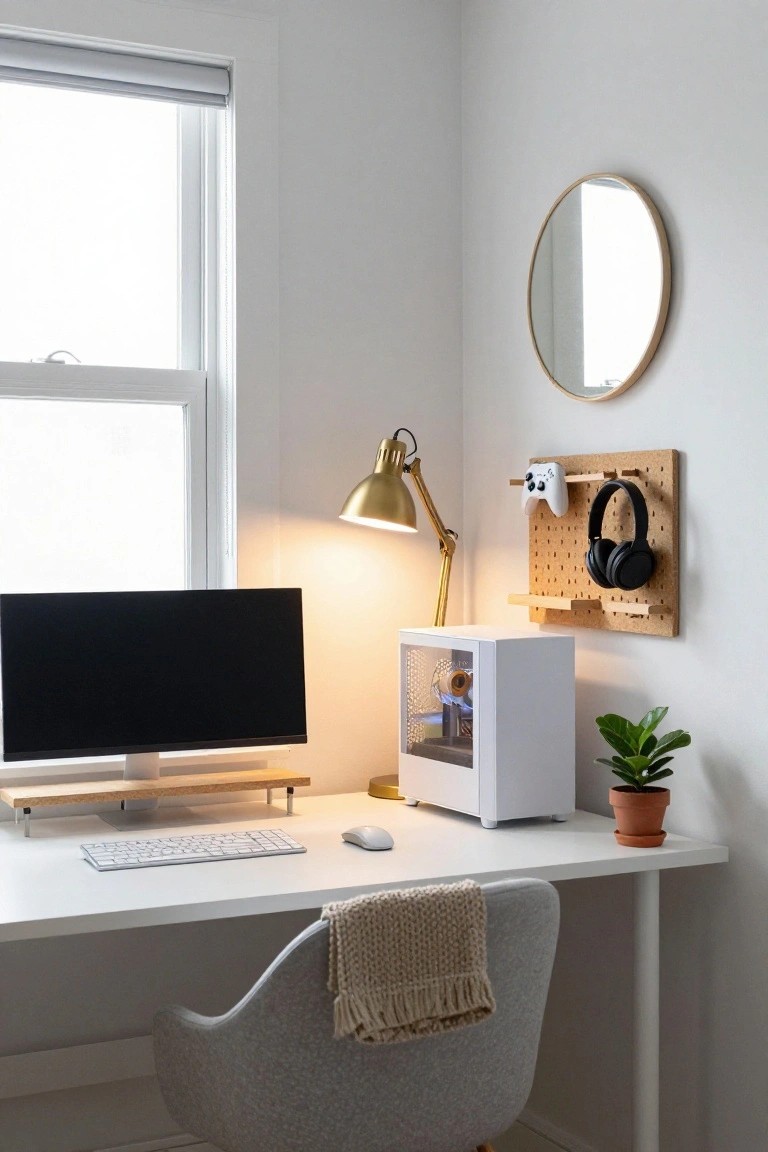
Small gaming setups need every bit of desk real estate. Here a plain wooden pegboard mounted right by the white desk holds headphones and a controller off the surface. It keeps things tidy around the keyboard and mouse. Plus that little plant nearby softens the tech feel without crowding in.
This works well in tight corners or spare rooms turned gaming spots. Pick up a pegboard, screw it secure to the wall, and customize with hooks or shelves for cables or headsets. Cheap to do and easy to change. Avoid overloading it though… keeps the wall from sagging.
Brick Wall with Floating Wood Shelves
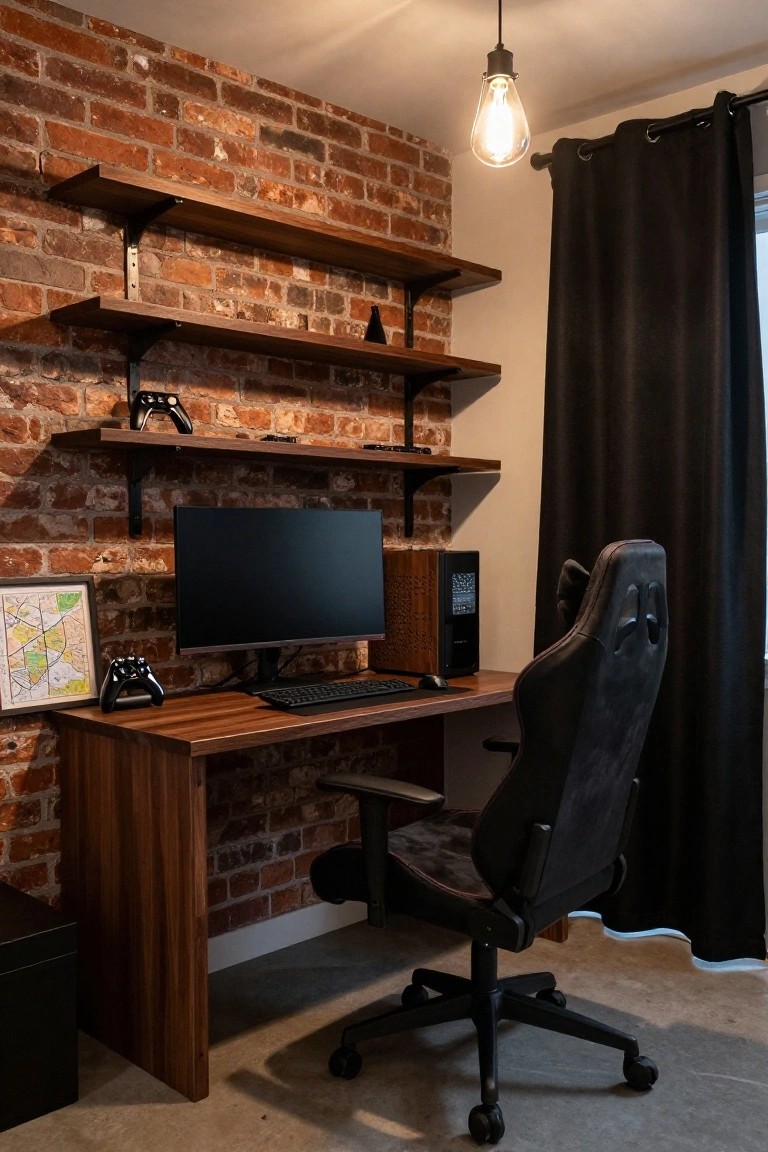
Floating shelves on an exposed brick wall give this gaming setup smart storage without eating floor space. The rough brick texture pairs nicely with the warm walnut wood of the shelves and desk. It holds controllers and small gear up high, leaving the desk open for play.
This idea fits tight rooms like apartments or spare bedrooms. Mount shelves at eye level over a basic desk and chair setup. The brick brings some edge, but seal it first if dust is an issue. Keeps things practical and not too crowded.
Compact Corner Gaming Desk
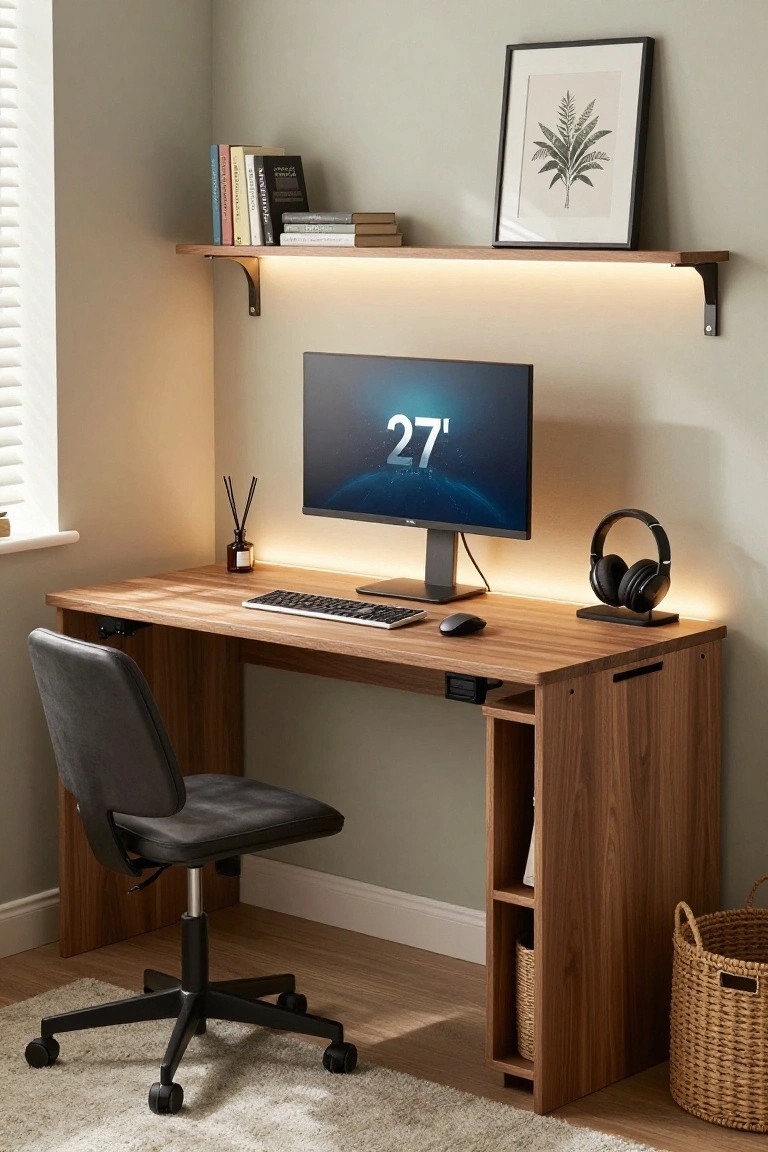
A corner desk setup like this one turns tight spaces into workable gaming spots. The L-shaped wood piece hugs the walls with open shelves for books or gear right above the workspace. That slim LED strip tucked under the shelf gives off a soft glow that highlights the setup without crowding the room.
This works best in bedrooms or small home offices where floor space is at a premium. Go for walnut tones to warm things up against light walls, and add cable slots to keep it neat. Just measure your corner first… makes all the difference.
Gaming Desk by the Window
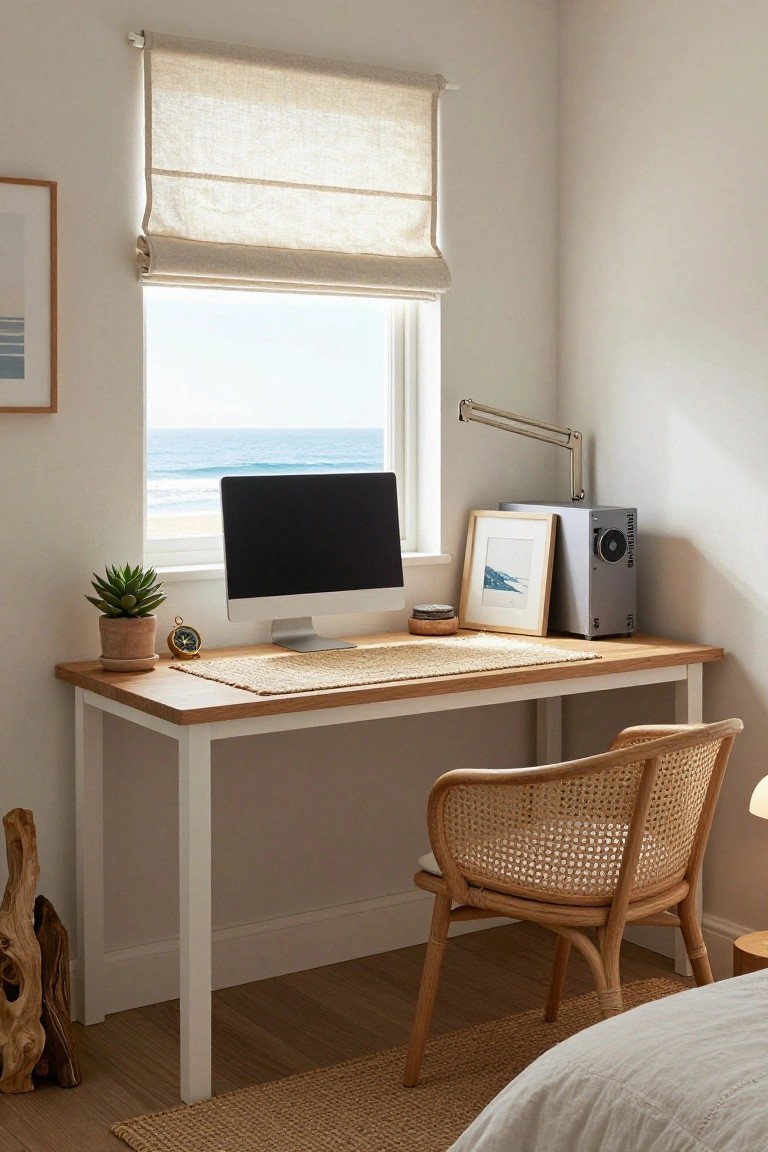
Tucking a gaming desk right up against a big window like this pulls in tons of natural light and gives you an ocean view to stare at between matches. The light oak desk keeps it simple, with just the essentials like the PC tower and screen, plus a few plants and that woven rattan chair for comfort. It makes even a tight corner feel open and easy on the eyes, way better than staring at a blank wall.
This works great in small bedrooms or apartments where space is short. Face the window for that view, mix in wood and natural textures to cut the tech chill, and skip heavy shelves. Coastal spots shine with it, but any room with good light pulls it off. Just keep the desk clutter low so the view stays the star.
Vertical Shelves Maximize Tiny Gaming Spaces
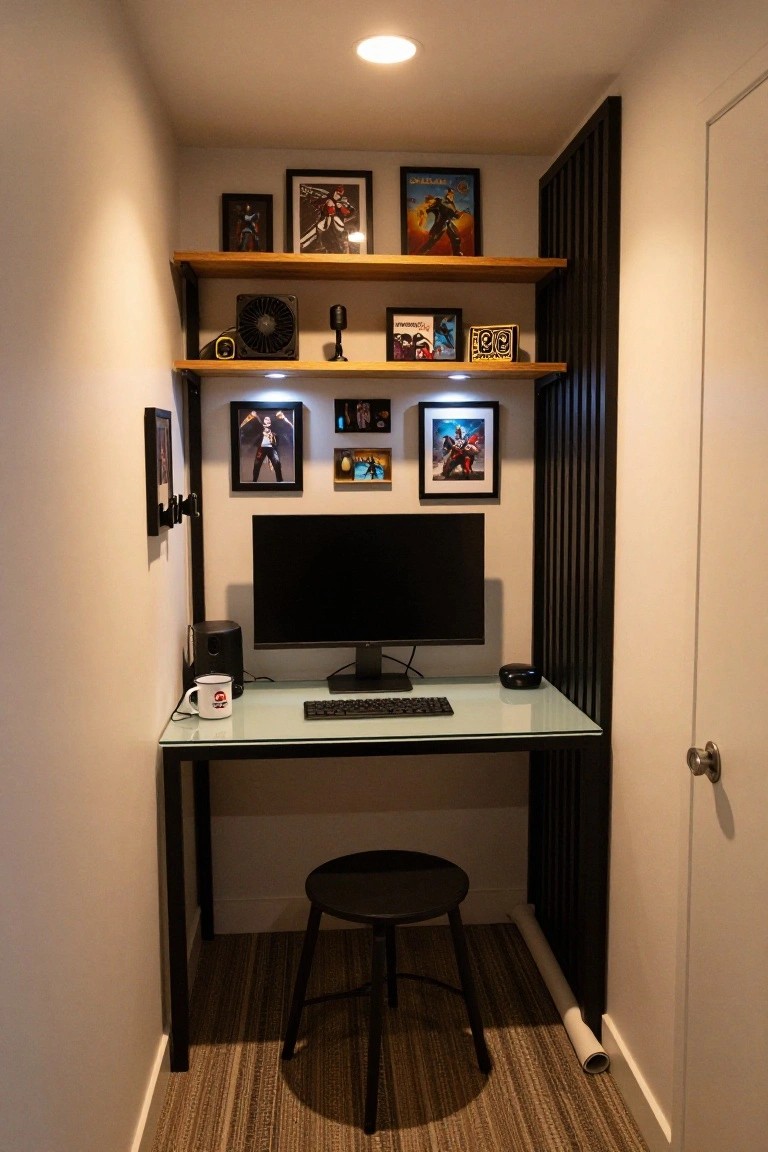
Going vertical with wall-mounted shelves is a simple fix for small rooms that need to pack in a lot. Here, wooden shelves line the walls above a slim glass desk, holding gaming posters, figures, and even a fan without crowding the floor. It keeps the setup feeling open and focused, even in a space this tight.
This works best in closets, alcoves, or spare corners where floor room is scarce. Pick floating shelves that match your wood tones, add LED strips for task lighting, and secure them well for heavier items. Skip it if your walls can’t take the weight.
Corner Gaming Desk for Tight Spaces
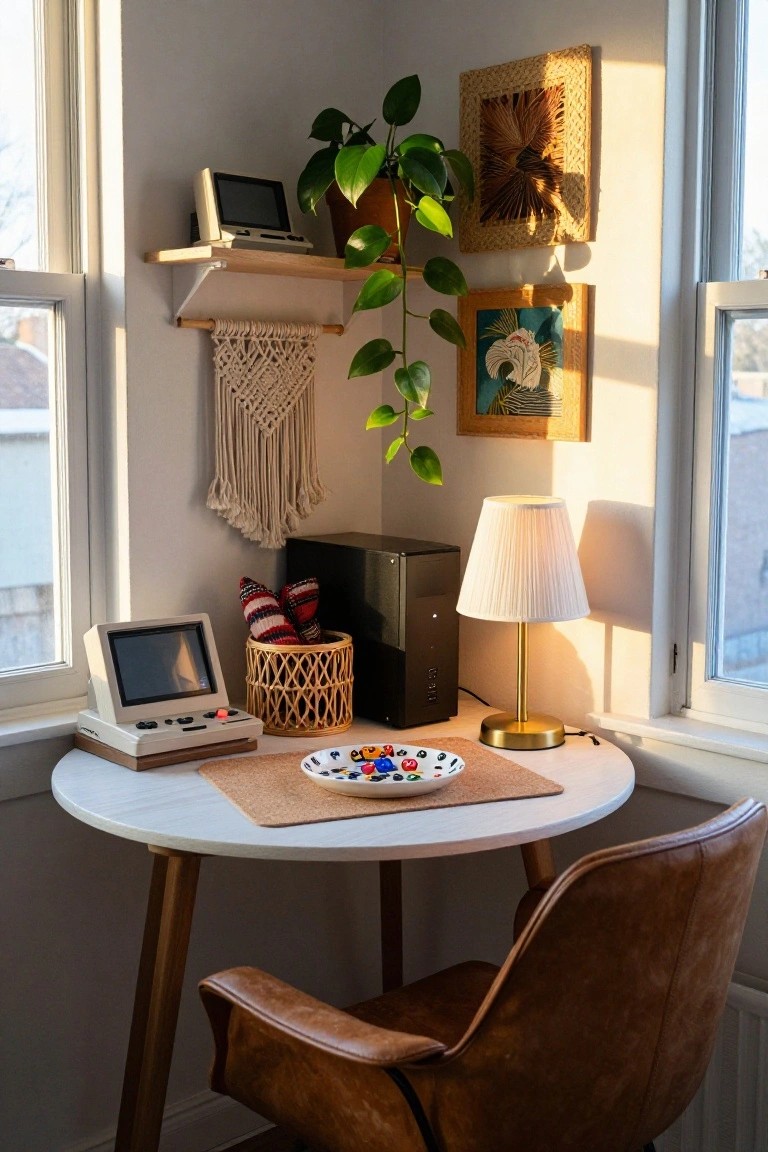
A corner desk like this one makes gaming work in the smallest rooms. They tuck a round white table right into the angle of two walls, fitting a retro monitor dead center and sliding the PC tower underneath or beside it. The leather chair pulls up snug, and a bit of afternoon light from the windows keeps everything feeling open instead of cramped.
This setup shines in apartments or spare bedrooms where you can’t spare much floor. Hunt for a table around 30 inches across, add a plant or two for green, and you’re set. Skip bulky furniture… it stays practical and out of the way.
Wall Shelves Free Up Gaming Desk Space
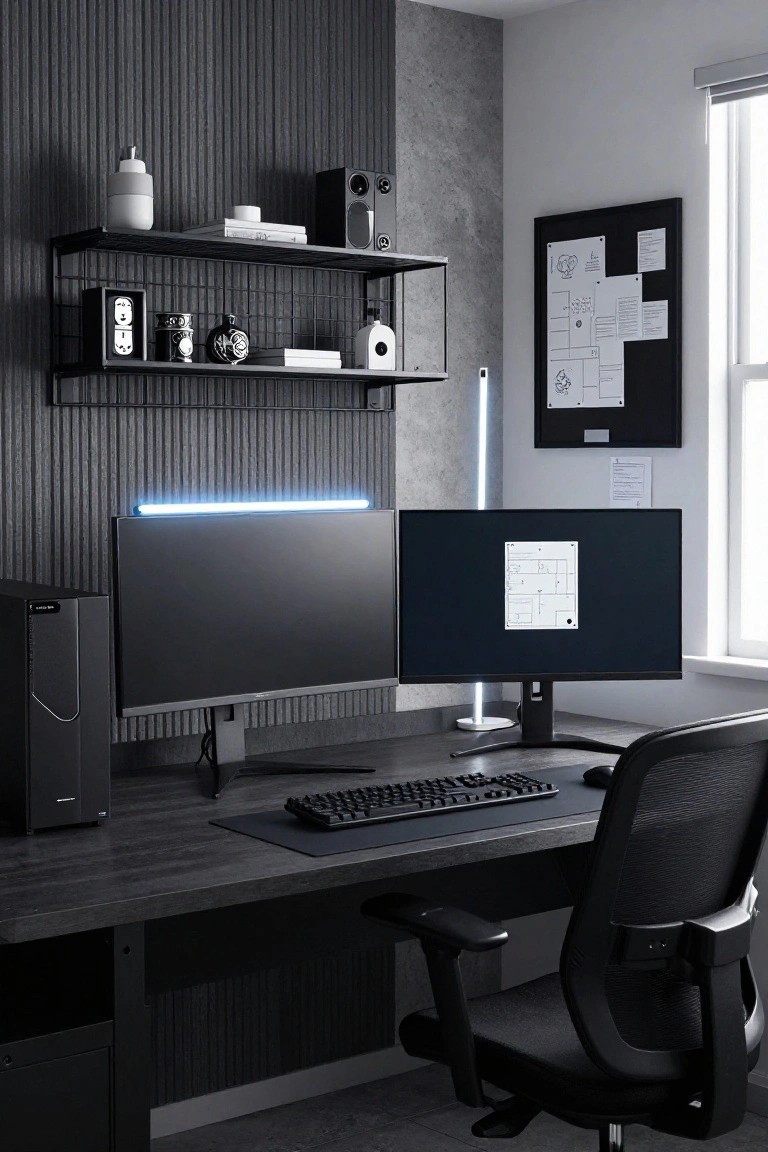
In a small gaming room, every inch of desk counts. These black metal shelves hung right above the monitors hold speakers, a few books, and jars without taking up floor or surface room. They keep cables and gear off the workspace so you can focus on the game, and the open design lets light flow through.
This setup fits best in apartments or spare rooms where space is tight. Put the shelves high enough not to crowd your sightline, maybe 6 to 8 inches above the screens. Start with basics like audio gear, then add small plants or collectibles… just don’t overload them.
Wooden Corner Desk for Gaming
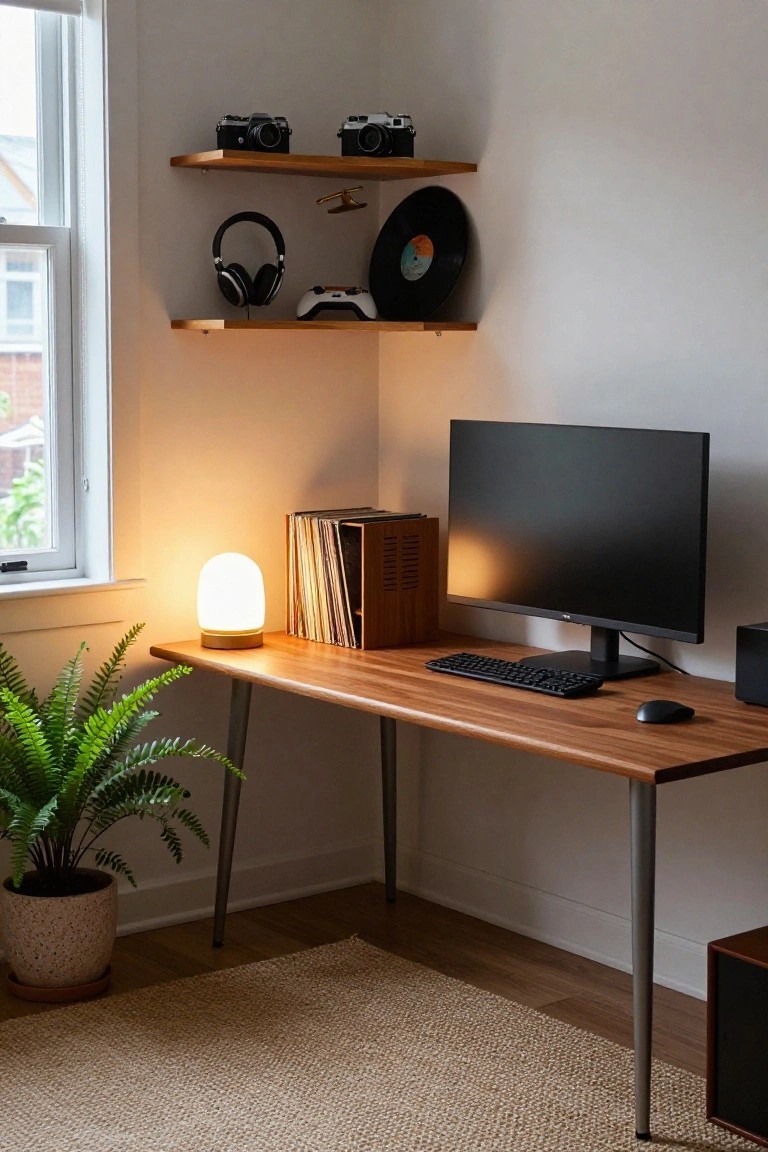
A simple wooden desk tucked into the corner makes a smart gaming spot in a small room. It holds the monitor, keyboard, and mouse without crowding the space, and the warm wood tone keeps things feeling homey. Shelves above pull in vinyl records and cameras, blending gaming with other hobbies so the setup doesn’t look like just another tech zone.
This works best in rooms under 150 square feet where you want function without fuss. Pair it with a tall plant like a fern for some green, and keep the monitor slim to save depth. Skip bulky chairs; a stool slides under easy. It’s practical for renters too, since most pieces are freestanding.
Bedroom Corner Gaming Desk
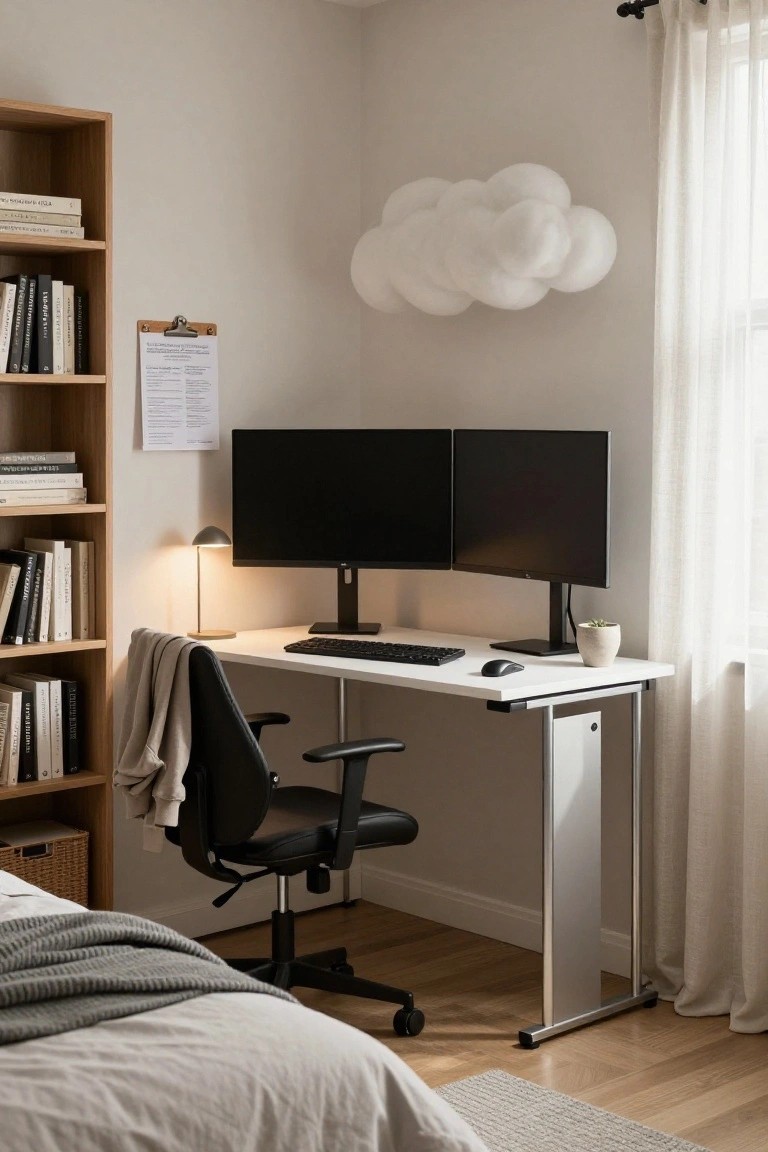
This setup fits a full gaming station right into a tight bedroom corner. A slim white adjustable desk holds dual monitors, keyboard, and mouse without taking over the room. Flanking oak bookshelves pack in games, books, and decor to keep everything handy yet out of the way. The soft glow from a desk lamp and that fun cloud wall light keeps it cozy, not cluttered.
It’s perfect for apartments or small homes where you need work and play in one spot. Go for a standing desk if you switch between sitting and standing during long sessions. Stick to light wood tones and whites to make the space feel bigger. Watch the cable mess though. Tuck them behind the desk legs for a cleaner look.
Sloped Ceiling Gaming Nook
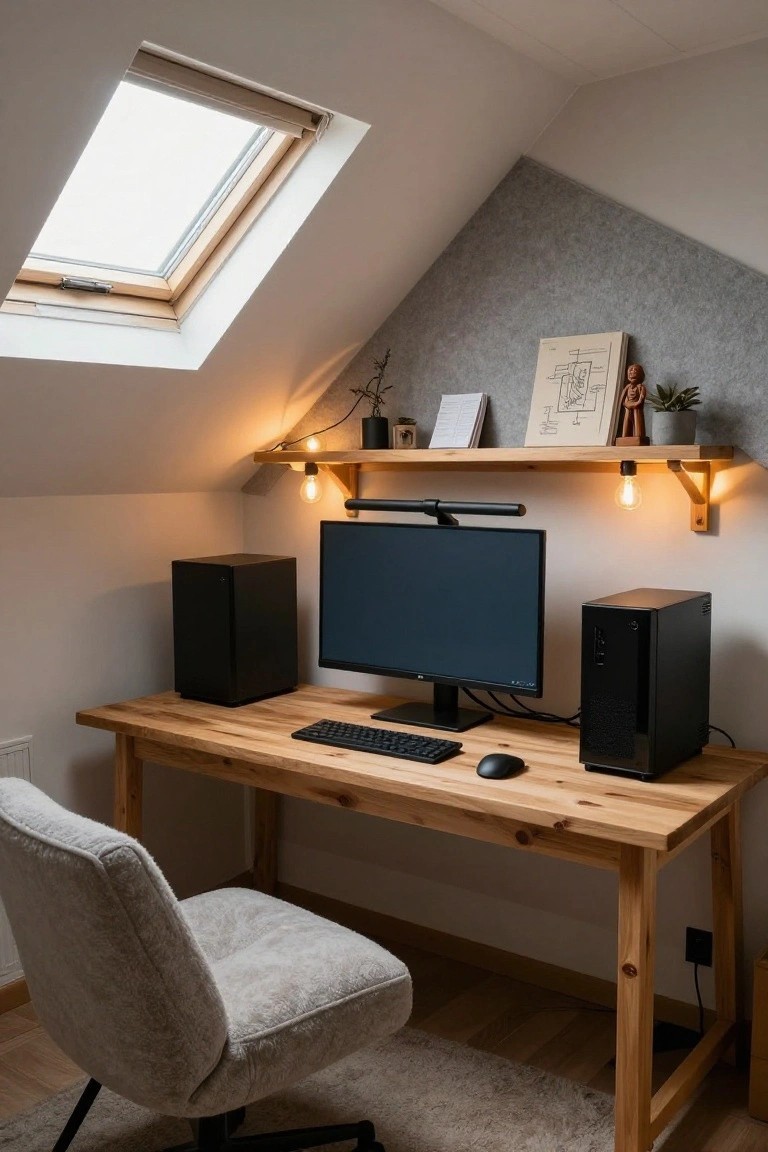
Turning a sloped attic ceiling into usable space is a simple win for small gaming setups. Here the wooden desk slides right into the corner under the angle, with black PC towers tucked on each side. Floating shelves follow the roofline exactly, holding a few plants and lit by warm hanging bulbs that keep the whole spot feeling open yet focused.
This fits best in unused attic corners or any tight room with odd angles. Match the shelves to your desk for a pulled-together look, run cords behind them to stay neat, and pick bulbs that give off soft light for long sessions. Watch the height so you don’t bump your head reaching up.
Pull-Out Desk in Tall Cabinet
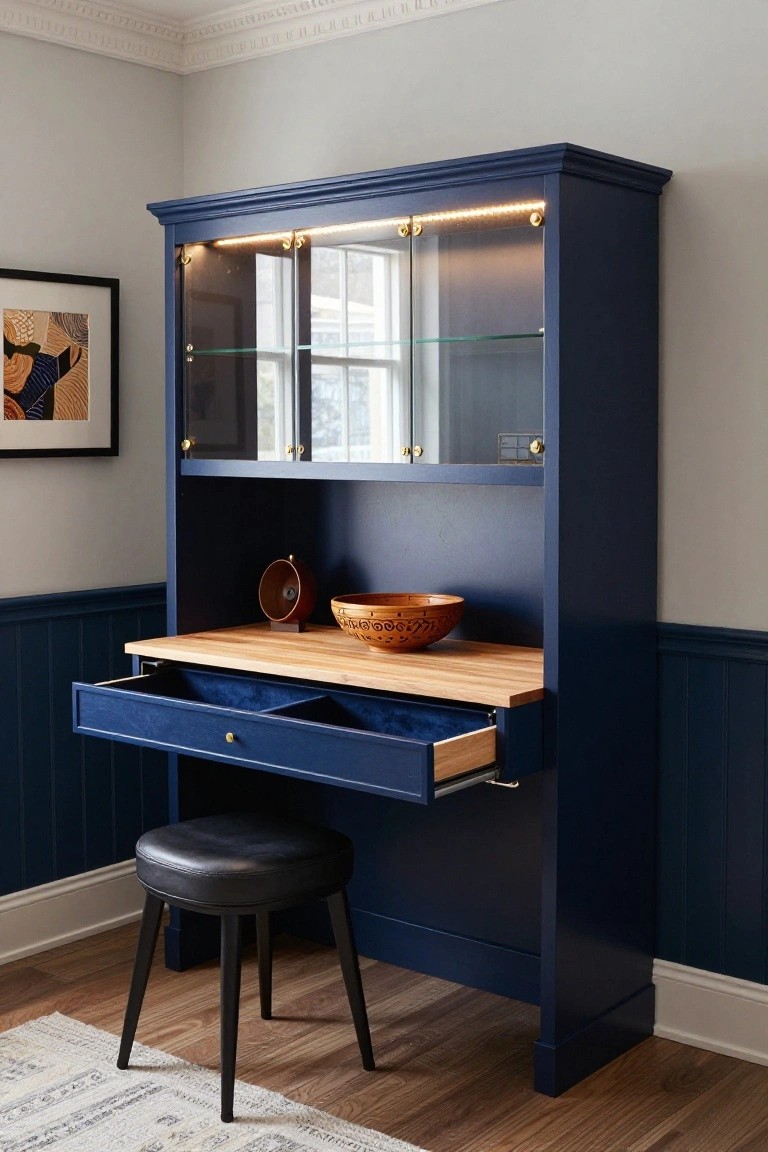
One smart way to fit a gaming setup into a small room is this tall cabinet with a pull-out desk. The navy blue finish keeps it looking like regular storage most of the time. Glass doors up top let you display controllers or figures with soft LED lighting inside. When you’re not gaming the desk slides away clean.
This works best in corners of bedrooms or offices where space is tight. Pull it out for your monitor and keyboard then tuck it back to free up the floor. Just measure your gear first to make sure it fits the drawer space. A simple stool slides right under.
Gaming Desk Tucked by the Fridge
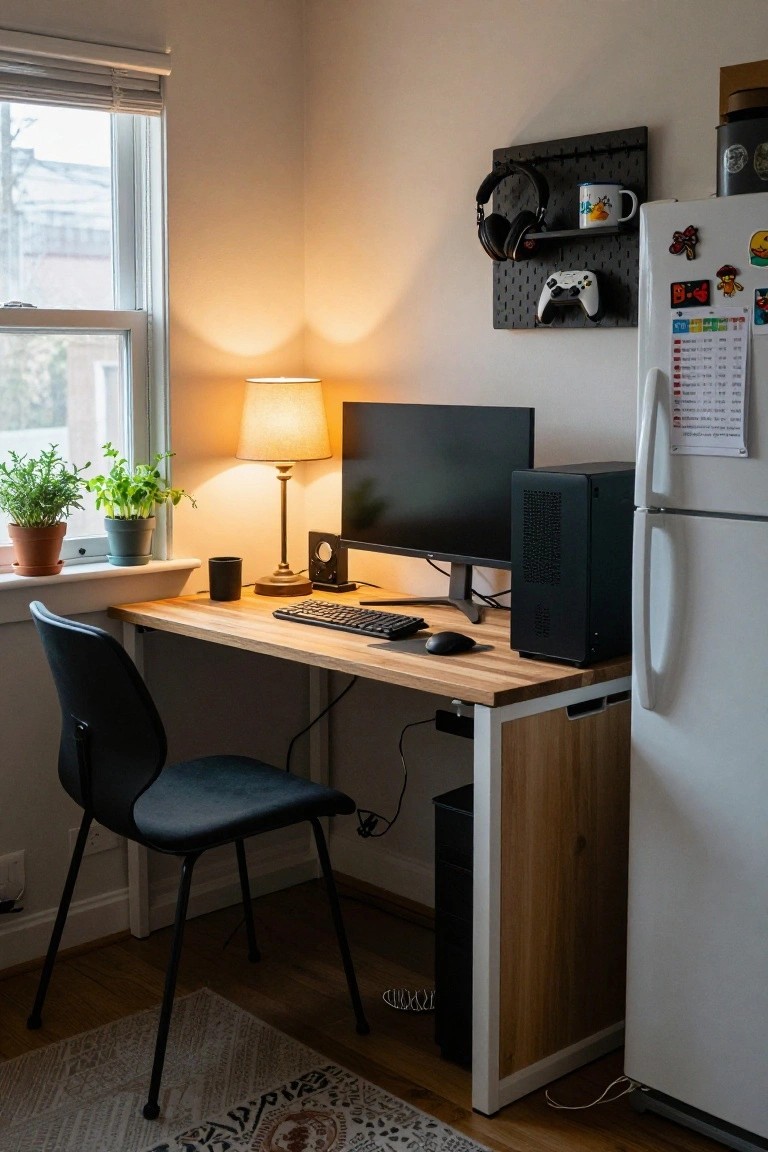
Small rooms need setups that grab every inch. This one fits a full gaming station right into a kitchen corner, using the fridge as one wall. A basic wooden desk holds the monitor, keyboard, and PC tower. Above it, a pegboard keeps headphones and controller handy without eating floor space. Plants by the window add a touch of green, keeping it from feeling too cramped.
Try this in apartments or any tight spot near appliances. Measure first to ensure cables won’t pinch. It works best where you want gaming without taking over the room. Just keep the desk surface clear for actual play.
Brick Wall Gaming Nook
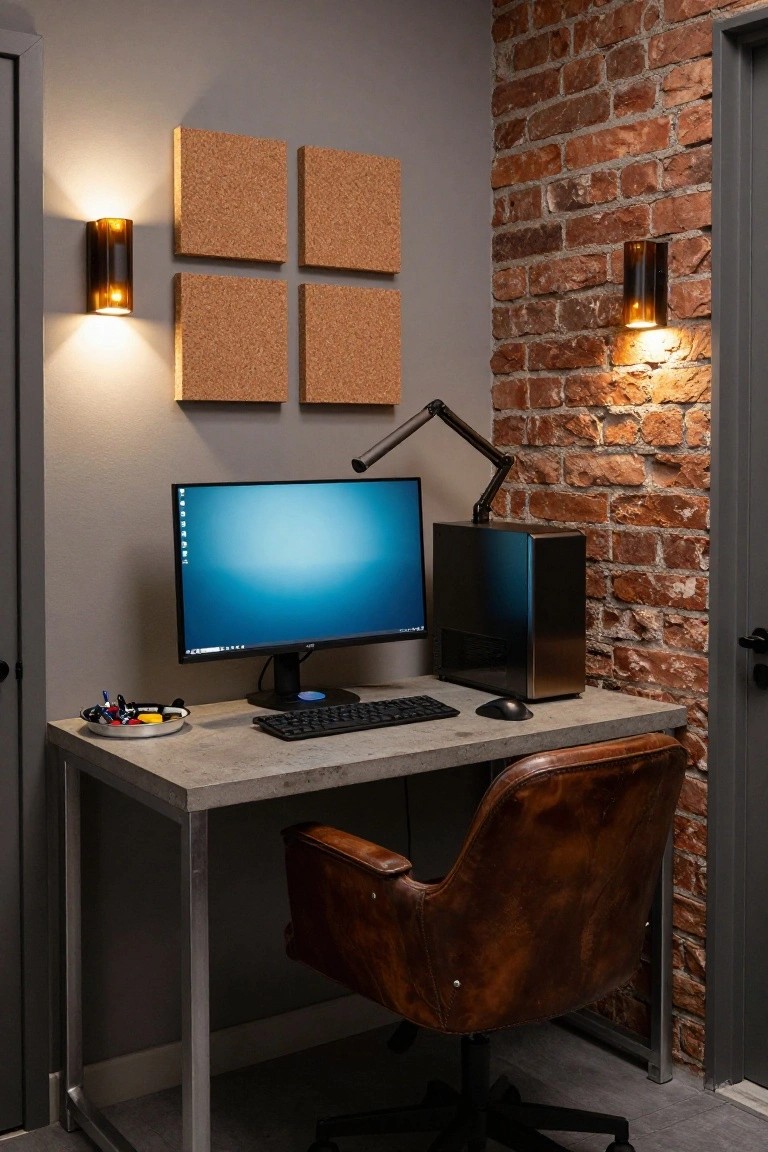
A brick wall like this one turns a tight corner into a real gaming spot. It brings in texture and warmth right away, so the desk and setup don’t feel squeezed in. Those cork panels up top handle echo too, which helps when you’re deep in a game.
This look fits older apartments or basements with brick showing already. Just slide a metal desk against it, add a leather chair, and you’re set. Skip busy decor to let the wall do its thing, and the room stays open.
Frequently Asked Questions
Q: How do I tame cable chaos in a cramped gaming corner?
A: Run cables along baseboards with stick-on clips that blend right in. Bundle extras with soft ties and tuck them behind your desk leg. You gain breathing room fast.
Q: What’s the smartest desk pick for my tiny room?
A: Go for one with fold-down sides that expand only when you play. Measure your chair and monitor first to nail the depth. It pulls double duty as a nightstand too.
Q: How do I squeeze in good lighting without clutter?
A: Clip LED strips under shelves for that glow-up effect. Point them away from your eyes to cut glare. And dim them for late nights.
Q: Can a wall mount really free up my floor space?
A: Yes, bolt your monitor or TV arm to the wall above eye level. Swing it out for play, push it flat to vanish. Your legs thank you.
