

Bedrooms tend to collect clutter faster than other rooms because they hold so much daily use and seasonal items.
When storage stays an afterthought the floor and surfaces end up carrying the load and the whole space starts to feel unfinished.
I tried reorganizing my own closet with simple dividers before buying anything new and the difference in how the room breathed was immediate.
Solutions that build on what is already there often work better than starting from scratch with big pieces.
The real test comes down to whether the setup holds up once normal life resumes.
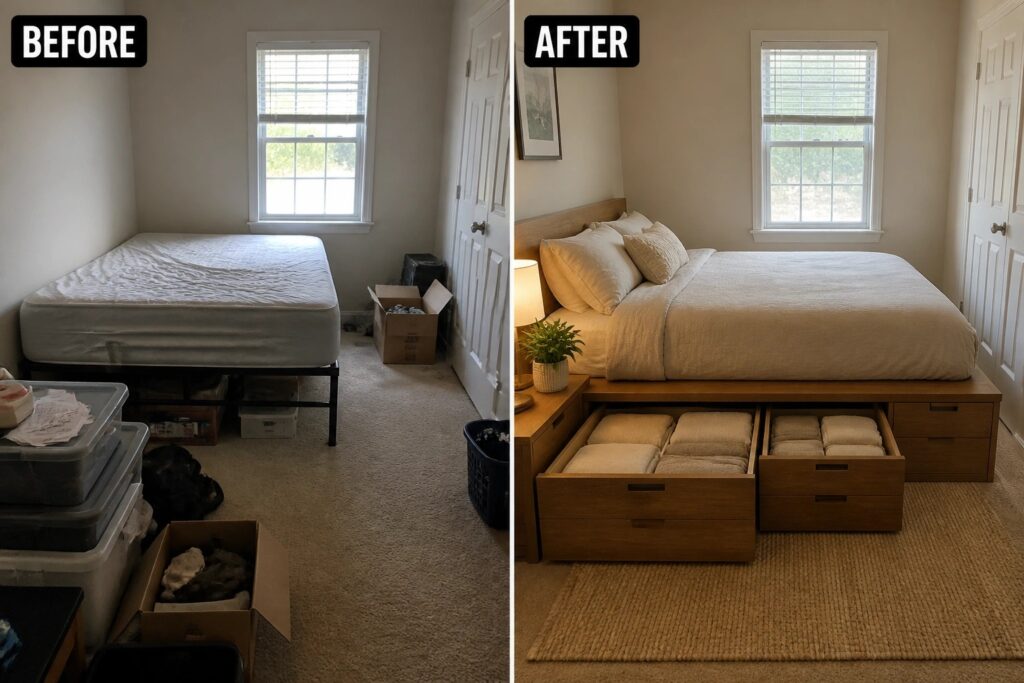
Add Built-In Drawers To A Bed

An open metal bed frame tends to collect clutter underneath, with bins and loose items scattered across the floor. A platform bed with built-in drawers solves this by turning that awkward space into usable storage that stays hidden and organized.
This idea works best in smaller bedrooms where every inch counts. Choose a bed with deep, easy-glide drawers and use them for extra bedding or off-season clothes so the rest of the room can stay clear.
Add Built-Ins To Organize Closet Storage

A cluttered closet often wastes space even when it looks full. In this case the main change was adding a full set of built-in shelves, drawers, and divided cubbies that turned one hanging rod and a messy floor into clear zones for folded clothes, shoes, and accessories. The result feels much roomier because everything now has a set place instead of piling up.
This idea works well in any bedroom where the closet is the main storage spot. Measure the space first and decide what needs daily access so you can place those items at eye level. Keep the rest simple by using matching bins or cubbies rather than filling every inch with new pieces.
Add Built-In Storage Around The Bed

A bedroom with limited floor space often ends up relying on small nightstands that never quite hold everything. Building shelves and cabinets into the wall behind the bed turns that empty vertical area into useful storage without crowding the room. The added drawers below and lit open shelves above give places for books, baskets, and everyday items while keeping the floor clear.
This approach works best in smaller bedrooms or rooms where you want the bed to feel anchored without adding more freestanding furniture. Keep the built-ins the same depth on both sides so the space stays balanced, and use the lighting only where you actually need it for reading or display.
Add A Loft Bed With Built-In Storage

Raising the bed off the floor lets you turn the empty space underneath into real storage instead of leaving toys and clutter spread across the carpet. The after setup shows how a simple loft structure with shelves, bins, and a desk below keeps everything in one place and leaves the room feeling much larger.
This idea works best in smaller bedrooms where floor space gets taken over quickly. Pick a loft with open bins or drawers that are easy for kids to reach, and make sure the desk area stays clear for homework so the storage does not end up blocking daily use.
Add Built-In Storage With A Window Seat

Many bedrooms leave the space under a big window unused or cluttered with a single chair. Building a window seat across the full width adds seating while hiding storage in the drawers below and open shelves on the side. The shift from a loose chair and laundry basket to one clean unit shows how the room gains function without losing floor space.
This idea works best in bedrooms with wide windows where you can fit a bench that matches the exact width. Keep the cushions simple so the storage stays easy to reach, and use the shelves for items you actually need nearby rather than filling them with decor. It suits smaller rooms that need more places to store blankets or clothes without adding another piece of furniture.
Swap A Bulky Dresser For Wall-Mounted Storage
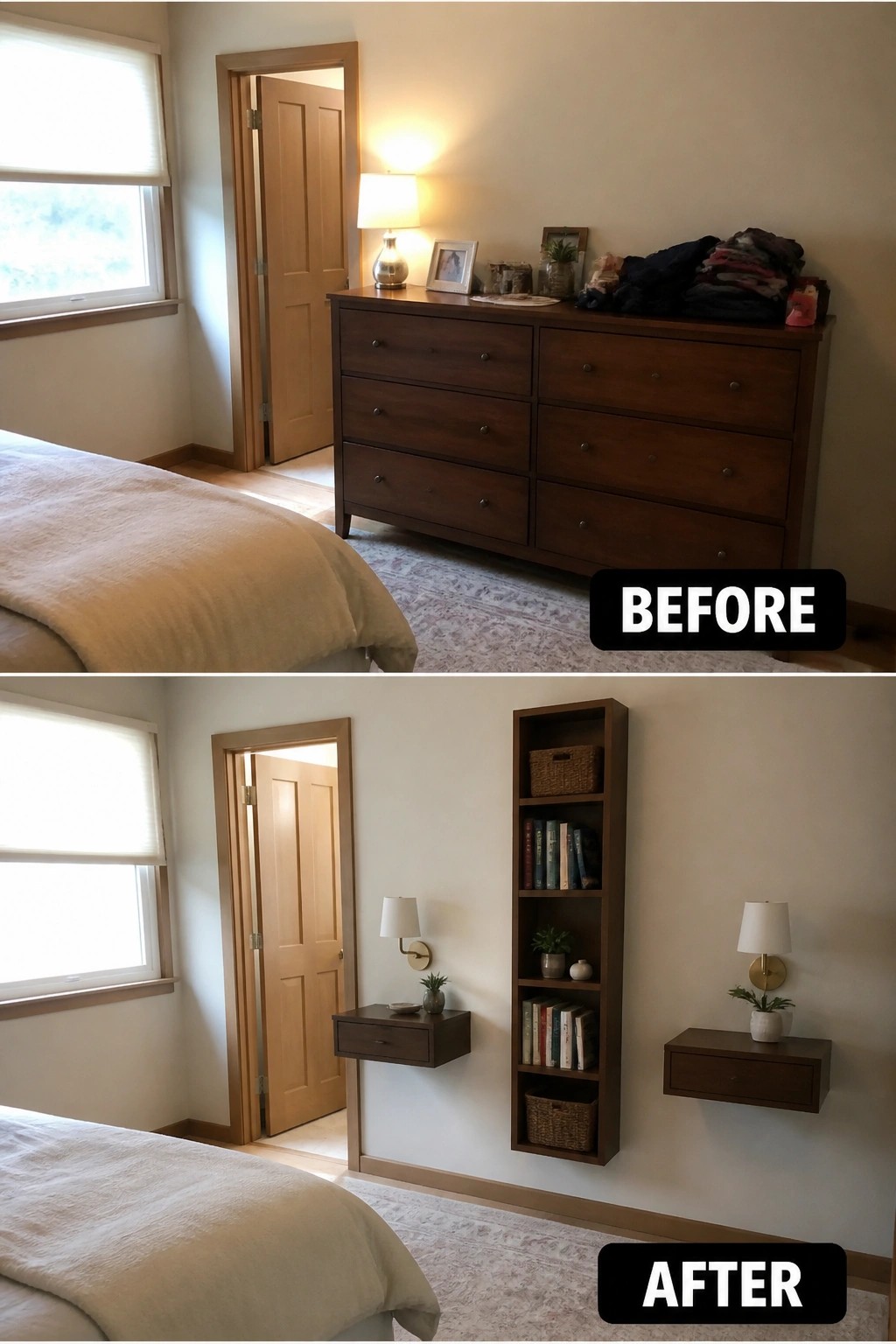
A wide dresser often ends up holding too much on top and taking up valuable floor space along one wall. Removing it and adding a narrow vertical unit plus a pair of floating nightstands keeps the same amount of storage while leaving the room feeling much more open.
This idea works best in bedrooms where floor space is limited or where you want the bed area to feel less crowded. Mount the pieces at a height that matches your bed and use the open shelves for items you reach for daily so the surfaces stay clear.
Replace Temporary Racks With A Built-In Closet System
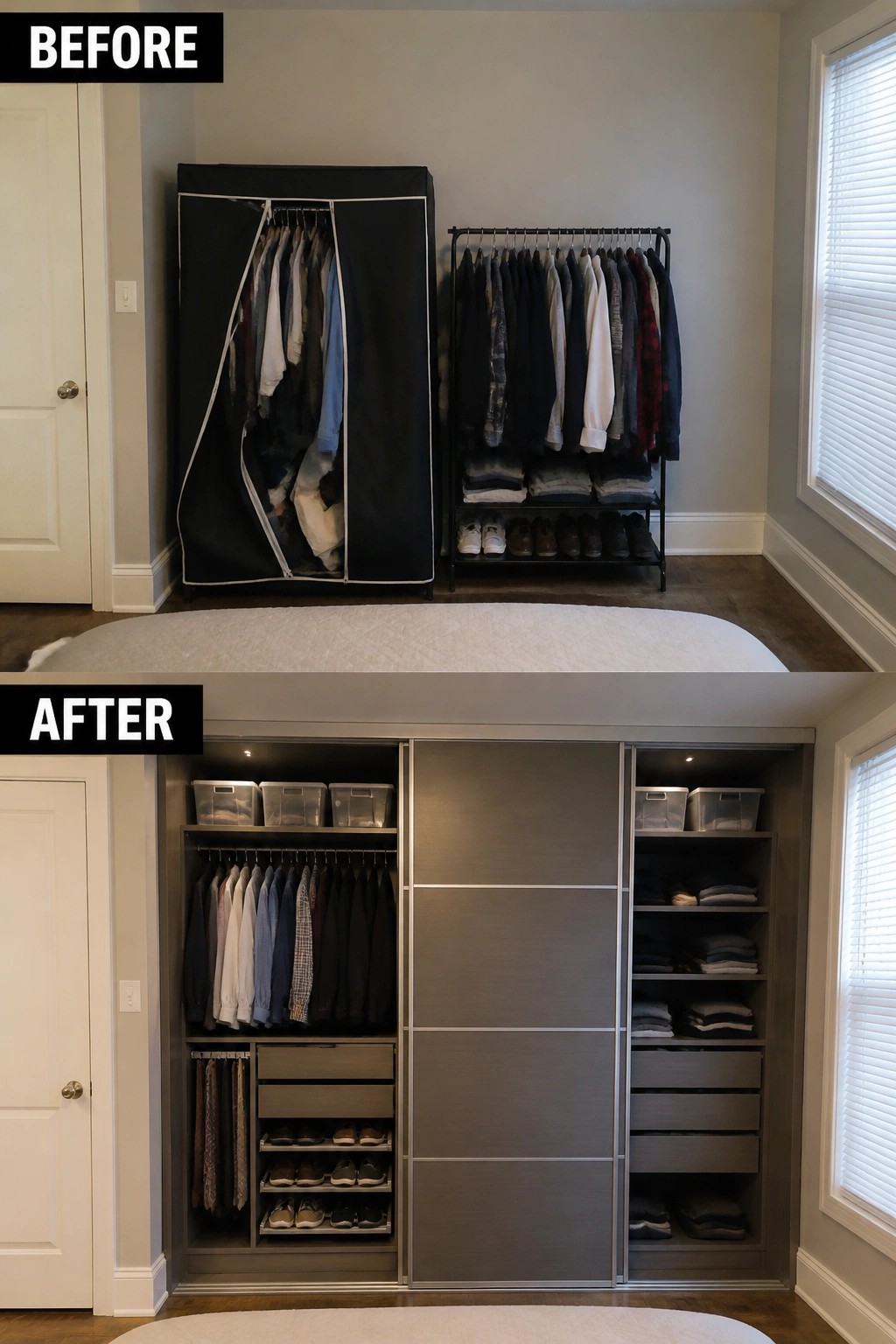
Swapping out loose clothing racks and a fabric wardrobe for a full built-in closet keeps everything contained in one place. The enclosed design with sliding doors and internal shelves stops clothes from spilling into the rest of the room.
This idea works best in bedrooms where floor space feels tight. Measure the area first, then plan shelves and drawers around what you actually wear so the storage stays practical instead of just looking neat.
Install Built-In Storage Along Sloped Bedroom Walls

A room with a sloped ceiling often ends up with random bins and boxes pushed against the wall because regular furniture does not fit. Built-in drawers turn that same awkward space into useful storage while keeping the floor clear and the room feeling much larger.
This approach works best in attics, bonus rooms, or any bedroom where the ceiling drops low on one side. Measure the longest wall first, then plan the height of each drawer so nothing sticks out into the walking space. White or light paint on the fronts helps the unit blend with the walls rather than adding more visual weight.
Add Built-In Storage To Make A Bedroom More Functional
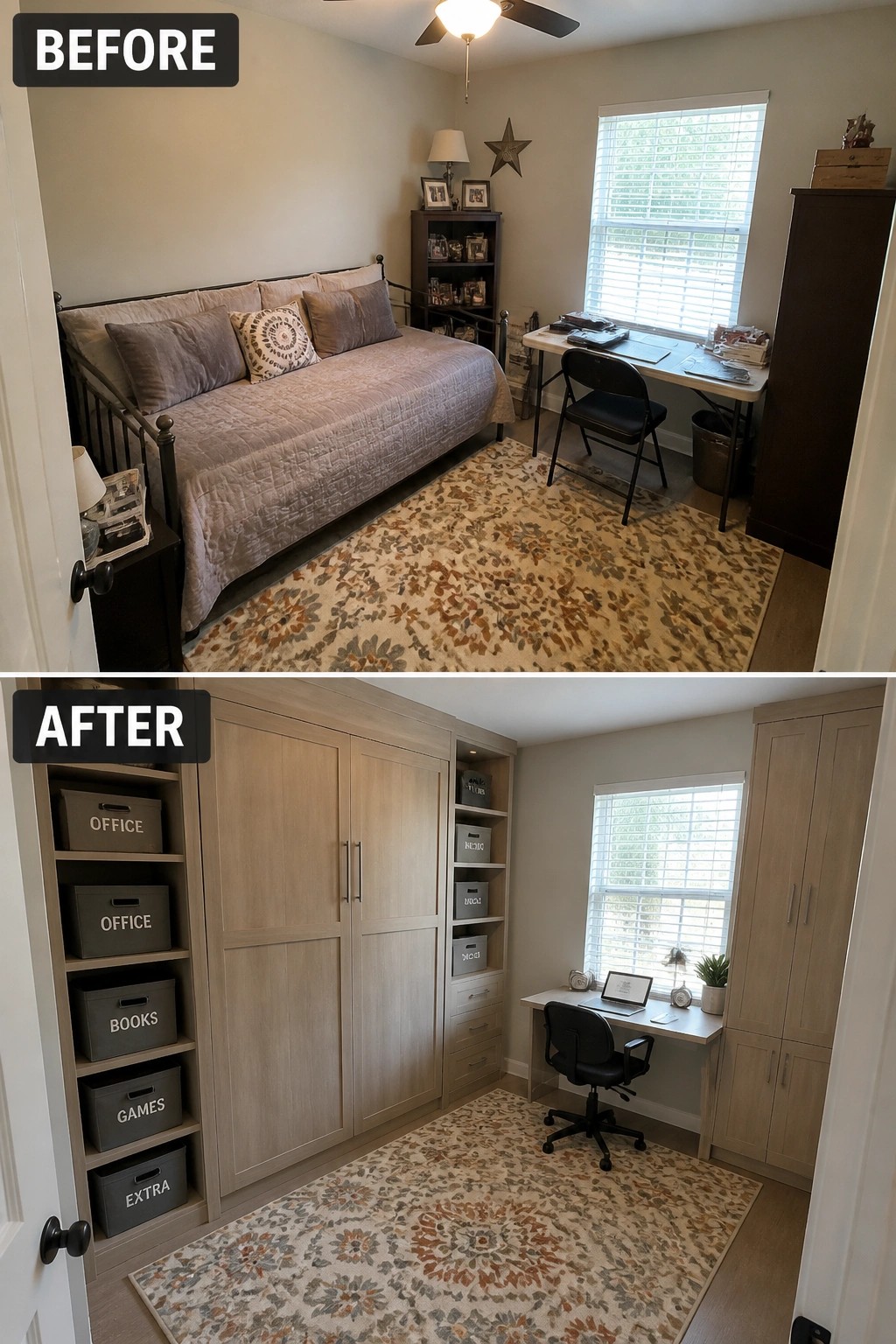
A bedroom that doubles as an office or hobby space often ends up cluttered when there is nowhere to put the extra items. Adding floor-to-ceiling cabinets along one wall solved that problem here by moving everything from papers to games into labeled bins that stay hidden but remain easy to reach.
This approach works best in rooms that already have a clear main use, like sleeping, and need a second function without taking up more floor space. Keep the cabinet style simple and match the finish to any existing furniture so the storage feels built for the room rather than added later.
Add Built-In Storage Behind The Bed

A plain bedroom wall often ends up as wasted space while clothes and linens pile up on the floor. Adding a full wall of shelves and drawers right behind the bed gives you room for baskets, books, and folded items without crowding the floor or needing extra furniture.
This idea works best in rooms where square footage is limited and you want everything within reach of the bed. Measure the wall first so the unit fits the bed width, then keep the lower drawers at a comfortable height for daily use.
Add Labeled Storage Bins To Manage Toy Clutter
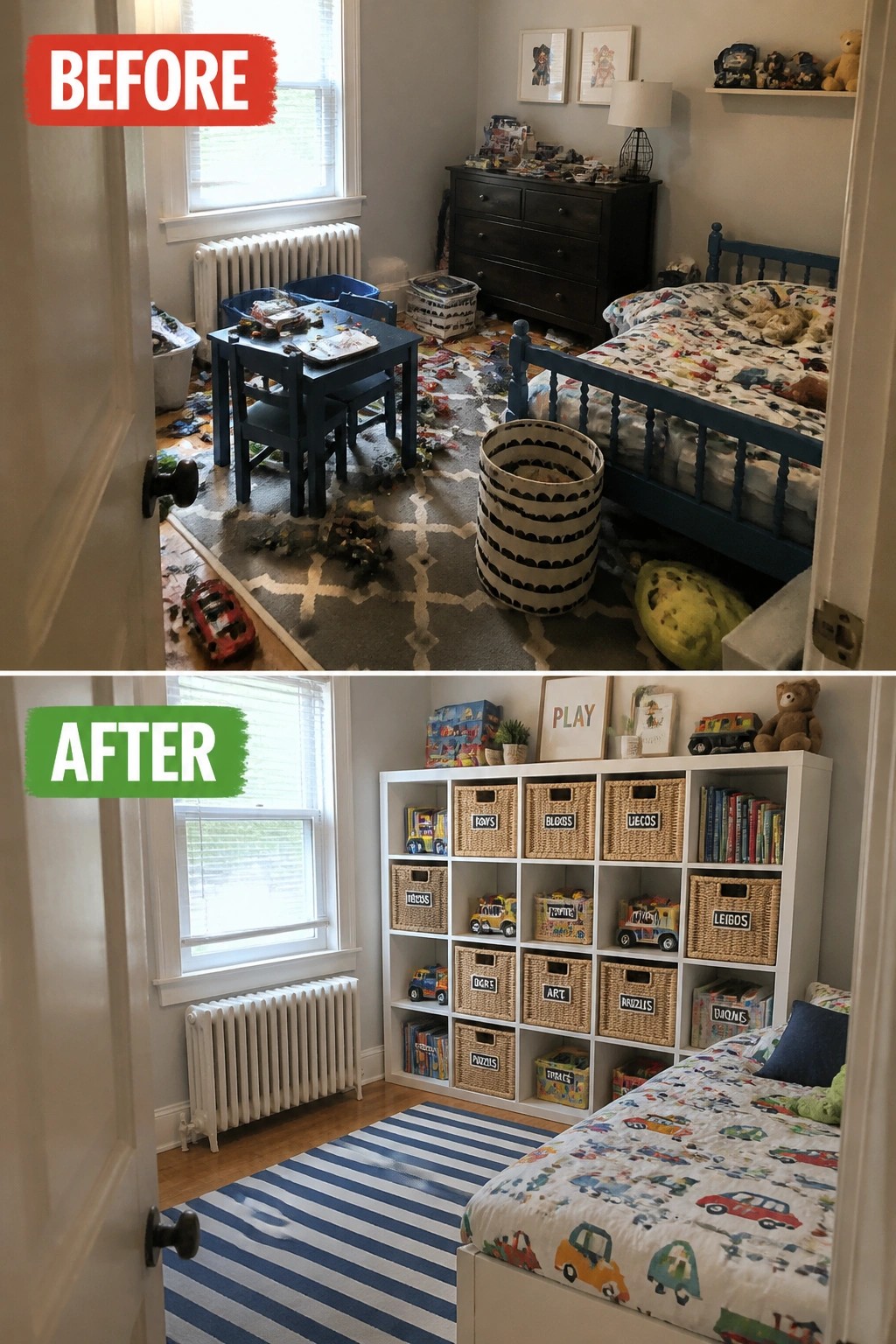
A child’s bedroom can quickly fill with toys when there is no clear place to put them away. The before shot shows pieces scattered across the rug with only a few loose bins in sight. Adding one large white cubby unit fitted with labeled baskets gives every category its own spot and keeps the floor clear.
This setup works best in rooms that serve as both play space and sleeping area. Sort toys into groups first, then label the baskets so children can help with cleanup. The system stays useful as interests change since the bins can be swapped or relabeled without buying new furniture.
Build A Vanity Into A Closet For Better Storage

A cluttered closet full of hanging clothes and scattered jewelry often wastes the space right next to a dresser. Turning the opening into a built-in vanity with pull-out drawers gives everything a proper home while keeping the surface clear for daily use.
This approach works well in smaller bedrooms where floor space is limited. Measure the depth of the closet first so the drawers do not stick out too far, and add simple lighting above the mirror so the area is actually usable in the evening.
Replace A Dresser With Built-In Closet Storage
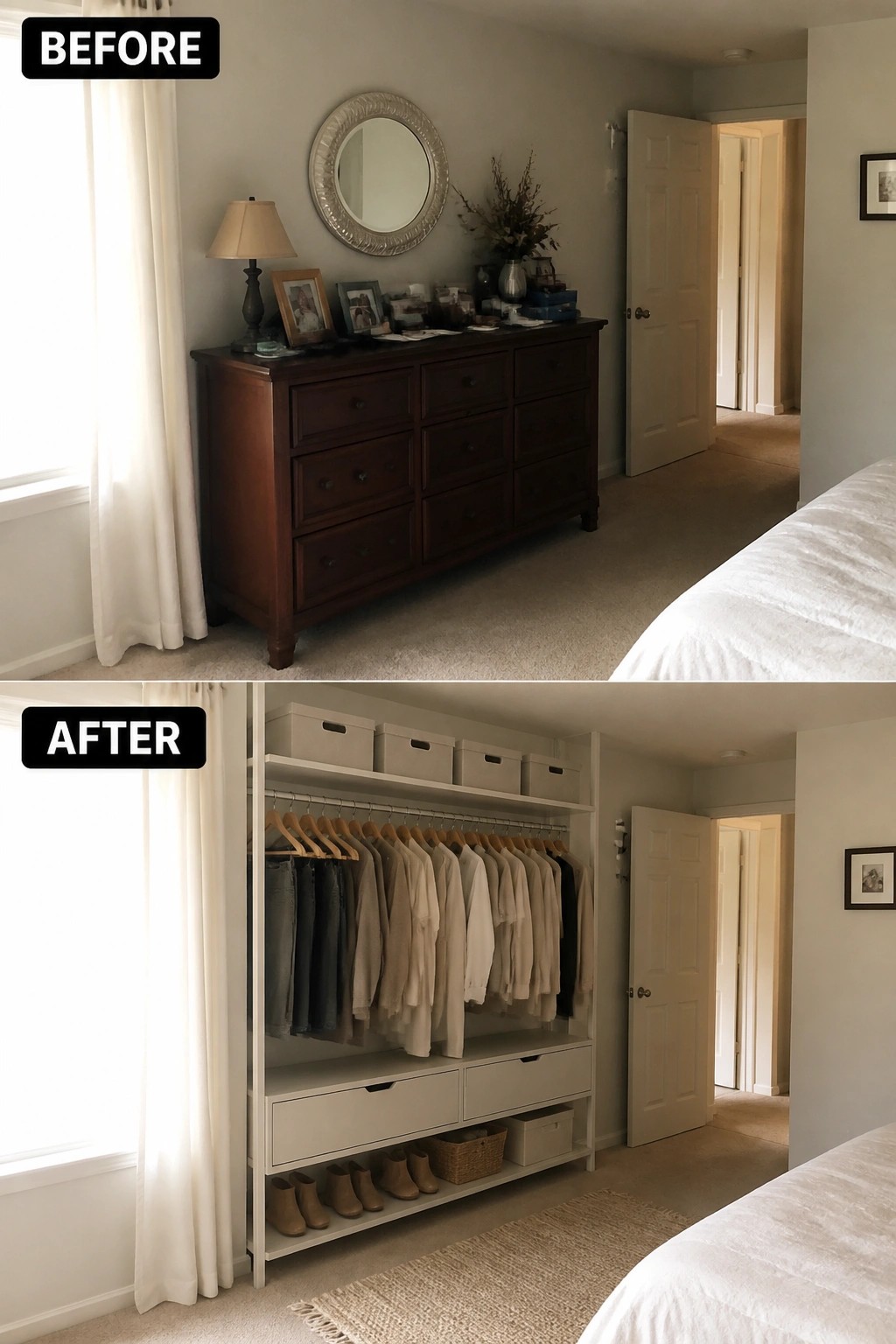
A large dresser often ends up holding random items on top while taking up valuable floor space. Replacing it with a built-in system along the wall creates hanging space, shelves, and drawers in one organized unit and removes the need for extra furniture.
This idea works well in bedrooms that have a clear wall section near the bed or doorway. Focus on a simple layout with both hanging rods and lower drawers so the storage matches what you actually use every day.
Add Over The Door Storage To Cut Down On Bedroom Clutter

Kids rooms often end up with toys and bags left on the floor near the door because there is no simple place to put them away. An over the door organizer turns that empty space into useful storage and keeps the floor clear without adding furniture.
This idea works best in smaller bedrooms where every inch counts. Pick an organizer with a mix of pocket sizes so books, small toys, and backpacks each have a spot, and make sure the door can still close fully once everything is filled.
Add Built-In Storage To Organize An Entryway

An open console table often ends up covered in shoes and small items because there is no real place to put anything away. Built-in shelving with drawers and cubbies solves that by giving everything a spot while keeping the floor clear.
This approach works especially well in homes without a coat closet right by the door. Measure the wall space first, then decide how many open shelves versus closed drawers you need so daily shoes stay easy to reach but still out of sight.
Use Under-Bed Storage For Shoes And Extra Items

Many bedrooms collect shoes and bags under the bed because there is no other obvious spot for them. Adding low trays that slide out under the frame keeps everything contained and off the floor while still easy to reach. A few labeled bins stacked beside the bed handle seasonal clothes and linens without crowding the room.
This idea works best in smaller bedrooms where closet space is tight. Measure the clearance under your bed first so the trays fit without sticking out. It is a simple way to gain storage without buying large furniture.
Add Built-In Storage To Organize A Bedroom

Open shelving often leads to visual clutter, especially when linens and blankets pile up and spill over the edges. In this bedroom the change came from replacing the tall open racks with floor-to-ceiling built-in cabinets that hide everything behind doors and drawers while still offering easy access through labeled baskets.
The same approach works in any bedroom that feels crowded by loose storage. Measure the longest wall first, then plan for a mix of hanging space, deep drawers, and open cubbies sized for baskets. Keep the cabinet color close to the wall tone so the unit blends in rather than taking over the room.
Build Storage Into A Narrow Space Between Windows

A narrow spot between two windows often ends up with a single piece of furniture that never quite fits. Replacing it with a built-in unit turns the same area into useful storage without blocking light or making the room feel smaller.
This approach works well in bedrooms where you need extra drawers but want to keep the space open. Measure the width and height carefully first, then decide how many drawers versus open shelves you actually need. A simple white finish helps the unit blend in rather than stand out.
Add Built-In Storage To Clear Up Closet Clutter
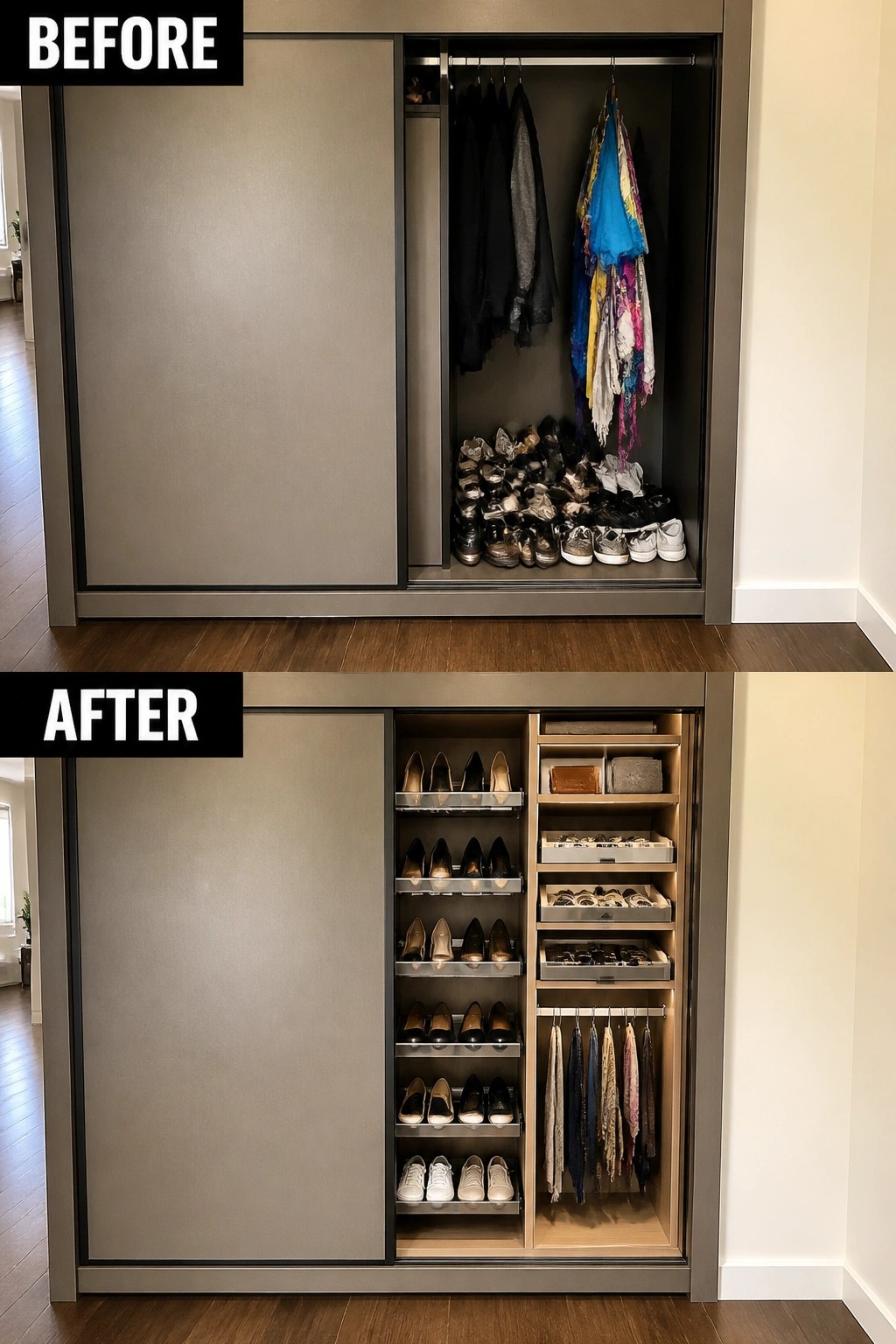
A closet that starts out with shoes piled on the floor and clothes hanging in a tangle often wastes the space it has. Built-in shelves, pull-out trays, and a short hanging rod turn the same area into something that actually holds what you own without the mess. The main change is moving from open floor space to stacked compartments that keep shoes visible and accessories in drawers.
This idea works best in bedrooms where the closet is small or shared. Measure the depth and height first, then choose inserts that match what you store most. Start with shoe shelves and a few trays before adding anything else, and leave a little empty room so the system stays easy to use every day.
Add Baskets And Shelves To Improve Closet Storage
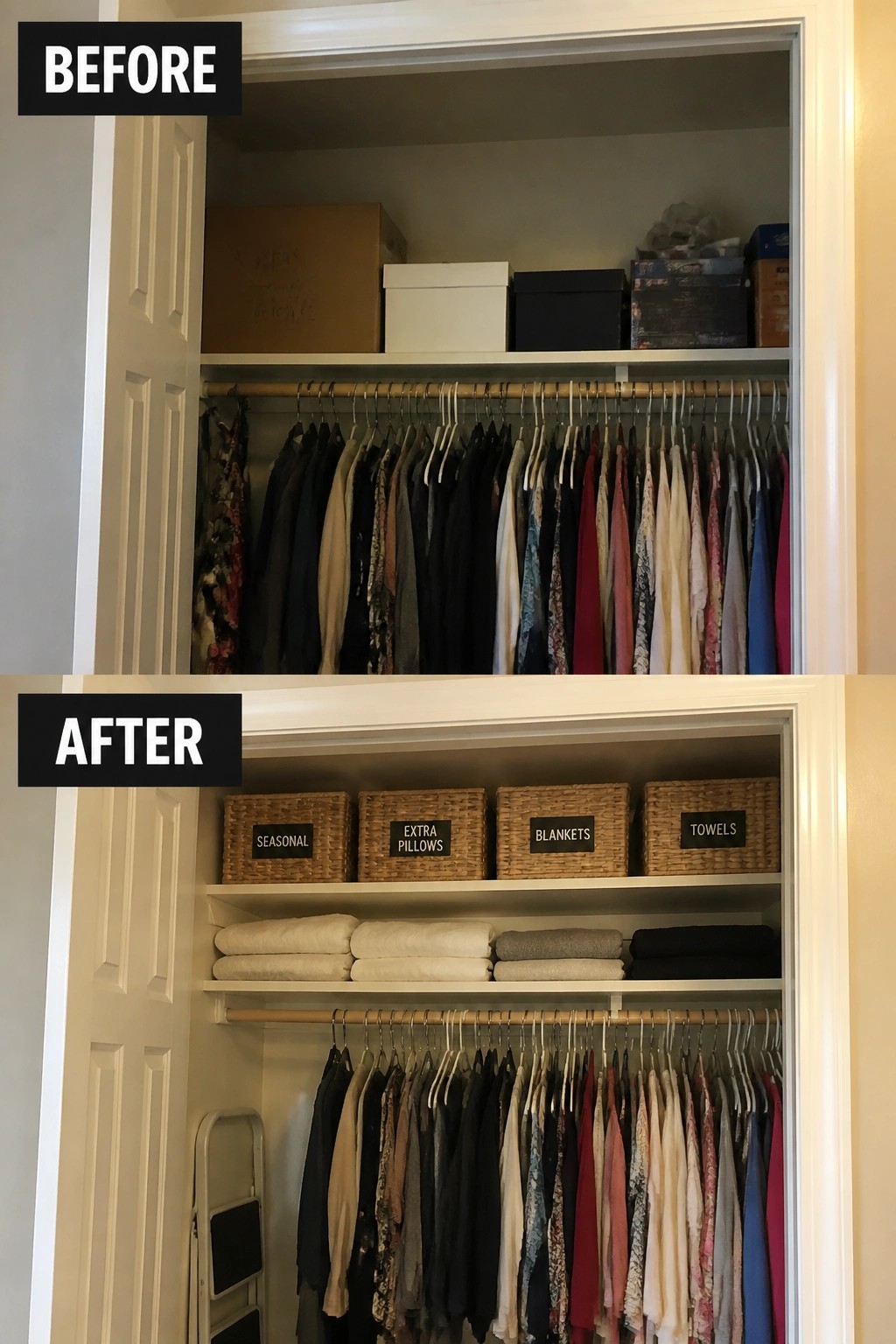
A closet with only a hanging rod often ends up with boxes stacked on the top shelf and clothes jammed together. Adding a middle shelf and placing matching baskets on the upper level gives each type of item its own spot, which keeps things visible and stops the top shelf from turning into a catch-all.
This idea works in any bedroom closet that has unused vertical space. Clear the area first, add one or two shelves if the existing rod sits too high, then choose baskets sized to the items you store most often. Labels help you reach what you need without pulling everything out.
Add Built-In Nightstand Storage To Reduce Clutter

The cluttered dark nightstand in the before photo is replaced with a clean white built-in that tucks everything behind drawers and an open shelf. This keeps the surface clear while still giving a spot for charging and a few small items.
Built-ins work well in bedrooms where you want less visual mess and more practical storage right next to the bed. They suit smaller rooms especially, since they use the wall space without adding another piece of furniture that sticks out.
Add Shelves And Labeled Bins To Organize A Closet
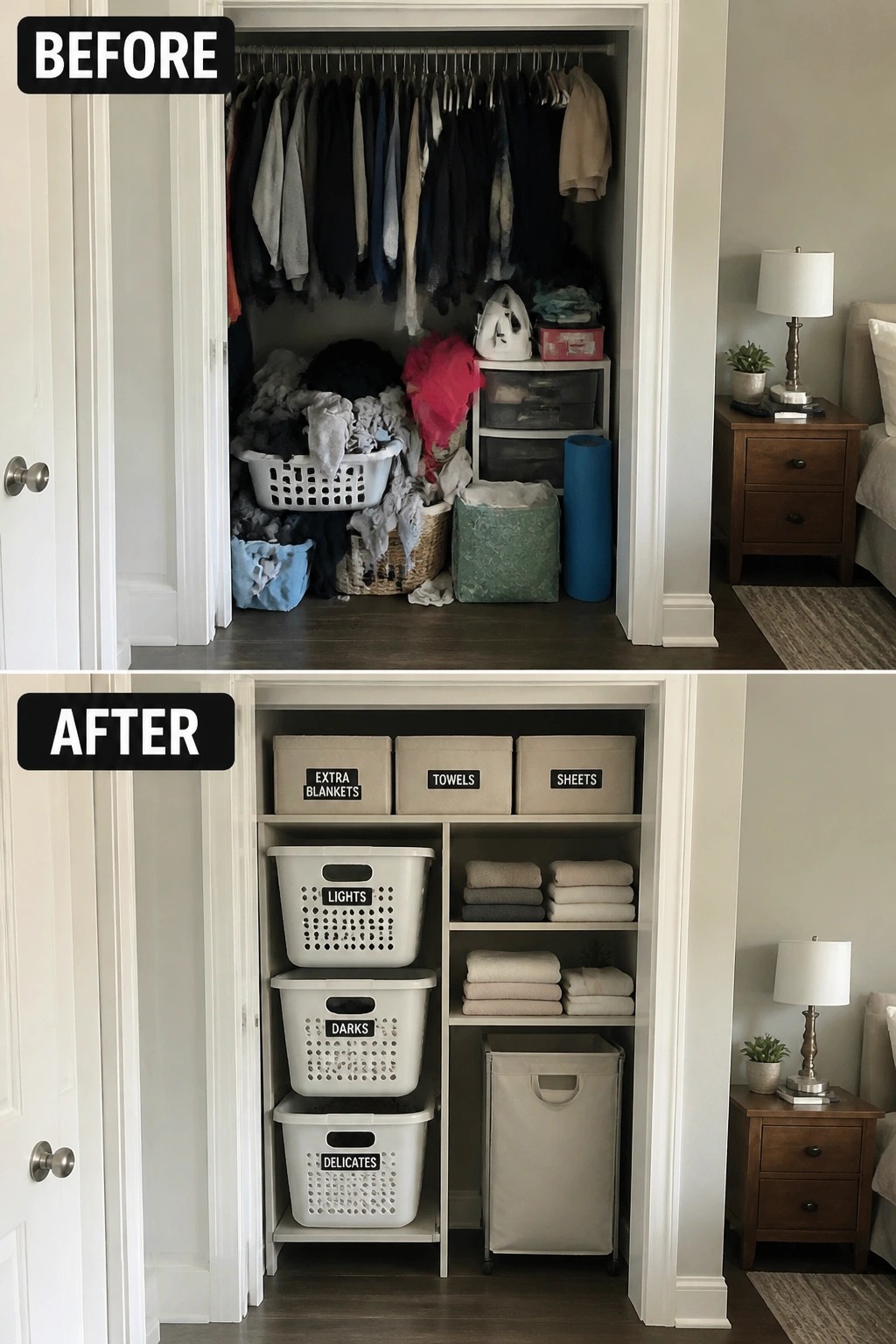
A cluttered closet wastes space when everything ends up in piles on the floor. Adding a few simple shelves creates separate zones for different items, and labeled bins keep laundry sorted and linens easy to grab without searching through everything.
This idea works best in bedrooms where the closet has decent height but no built-in structure. Measure the space first, then pick bins that fit the shelves and assign them clear categories so the system stays practical over time.
Add Built-In Storage Around The Bed

The bedroom had books stacked on the floor and nightstands, which left the space feeling crowded and disorganized. Adding a headboard unit with shelves gave the books a dedicated spot while keeping the bed area tidy and functional.
This approach works best in rooms where floor space is limited or where books and small items tend to pile up. Measure the wall first and match the finish to nearby furniture so the new storage blends in without taking over the room.
Add Built-In Storage To Organize A Bedroom

Many bedrooms end up with coats, clothes, and accessories piled in a corner because there is simply not enough closet space. The before photo shows exactly that problem, with a rack overflowing next to a single mirror. The after photo shows how a wall of mirrored built-in closets can solve it by hiding everything behind doors while still reflecting light back into the room.
This idea works best in bedrooms that feel cramped or where clothes have nowhere to go. Measure the wall first and keep the doors simple so the room does not feel smaller. Mirrored fronts help the space stay bright, and the storage inside can be adjusted over time as needs change.
Add A Platform Bed Frame For Neat Storage
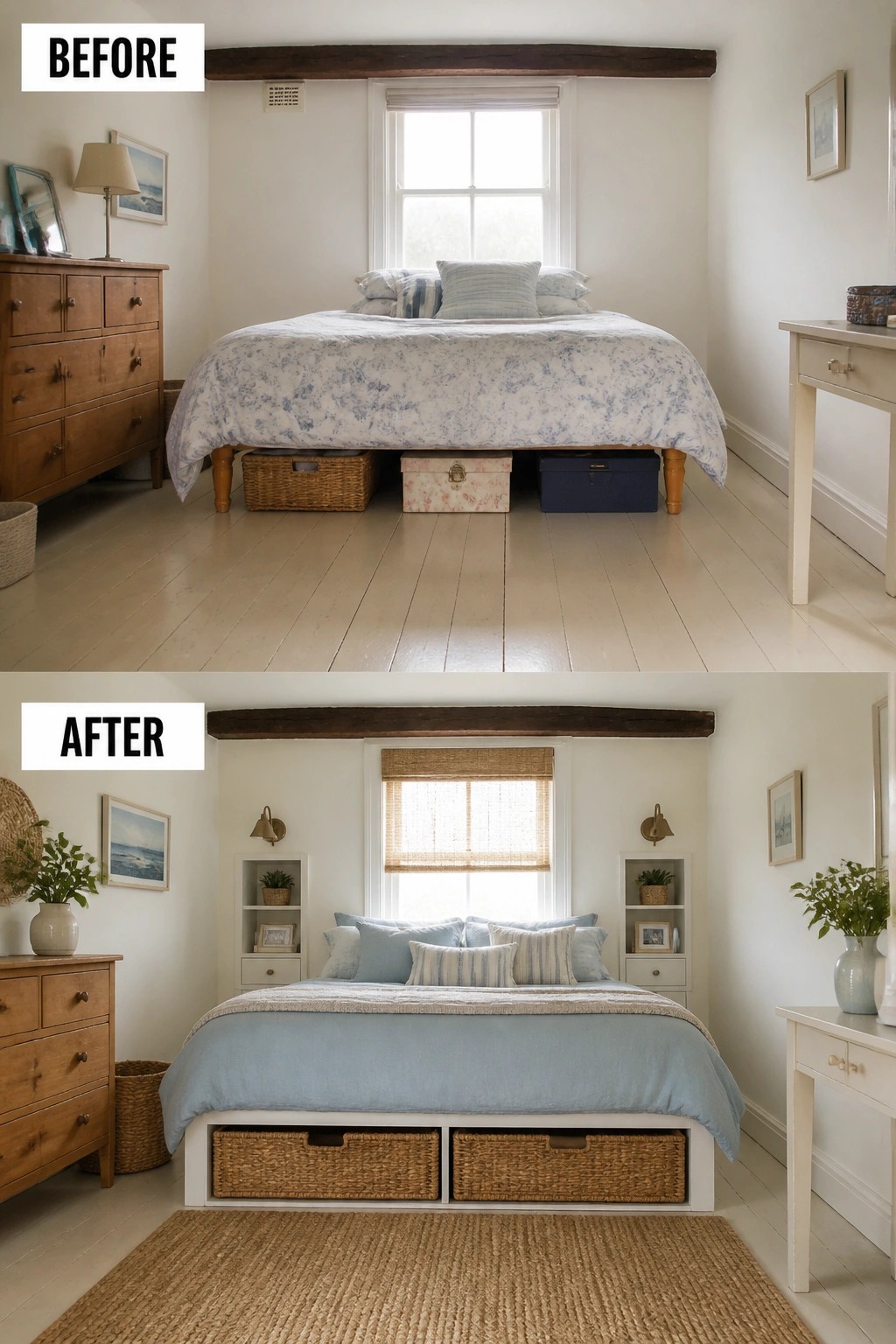
Many bedrooms end up with boxes and baskets pushed under the bed because there is nowhere else to put them. The before photo shows everything sitting out in the open, which makes the room feel unfinished. A simple platform frame lifts the bed and creates a clean base that hides the storage while still keeping it easy to reach.
This idea works especially well in smaller rooms where floor space is limited. Look for frames with wide cubbies that fit standard baskets so the storage looks intentional rather than just tucked away. It keeps the floor clear and makes the bed the main feature without extra clutter around it.
Frequently Asked Questions
Q: My bedroom has no built in storage. Which ideas should I try first?
A: Look at your empty walls and floor first. Hang a few pegboards for quick access to everyday things. Under bed drawers can hold the rest.
Q: How do I store seasonal items without taking up floor space?
A: Slide flat bins under your bed for sweaters and extra blankets. Label them clearly so you can grab what you need each season without digging around.
Q: Will these changes work if I move often?
A: Stick to pieces you can take with you like freestanding shelves and portable organizers. Skip anything that requires drilling into walls.
