

When my bedroom starts to feel cramped even though nothing new has been added, it is usually because every surface ends up holding something that does not need to stay there.
I have learned that moving a few things out of sight or grouping similar items together often opens up the room more than any new piece of furniture could.
The ideas that work best for me are the ones that use what is already in the room but place it with more intention so the space feels calmer at the end of the day.
Small adjustments add up quickly.
Over time I keep the ones that make getting ready in the morning feel less rushed.
Clear Nightstand Tops To Reduce Visual Clutter

The biggest shift here came from removing the extra books, glasses, and loose cords that covered the nightstand surface. Once those were gone, the space felt noticeably calmer even though the furniture stayed exactly the same.
Focus on keeping only the items you use every night. Tuck the rest away in a drawer or move them to another spot. Run cords behind the table or use a small cord clip so nothing hangs down the front. This works especially well in small bedrooms where every surface adds to the overall feeling of busyness.
Cover An Open Closet With Curtains

An open closet often becomes the spot where clutter builds up fastest in a bedroom. Adding curtains across the opening hides the mess inside while keeping everything easy to reach. The change turns a messy storage area into a calmer backdrop without buying new furniture or doing any construction.
This works especially well in small bedrooms where the closet sits right next to the bed. Hang a simple rod above the doorway and choose a fabric that matches your walls or bedding. The goal is to soften the view rather than create a perfect system inside.
Simplify A Busy Wall With One Large Piece

Many bedrooms collect small frames, notes, and scattered items on the wall above the bed until the space starts to feel restless. Replacing that collection with one larger centered piece removes the visual noise and lets the room settle.
This idea works best when you keep the surfaces on either side of the bed simple as well. Limit each nightstand to a lamp and one or two small objects so the whole area feels balanced without extra effort.
Simplify The Bedding To Reduce Visual Clutter
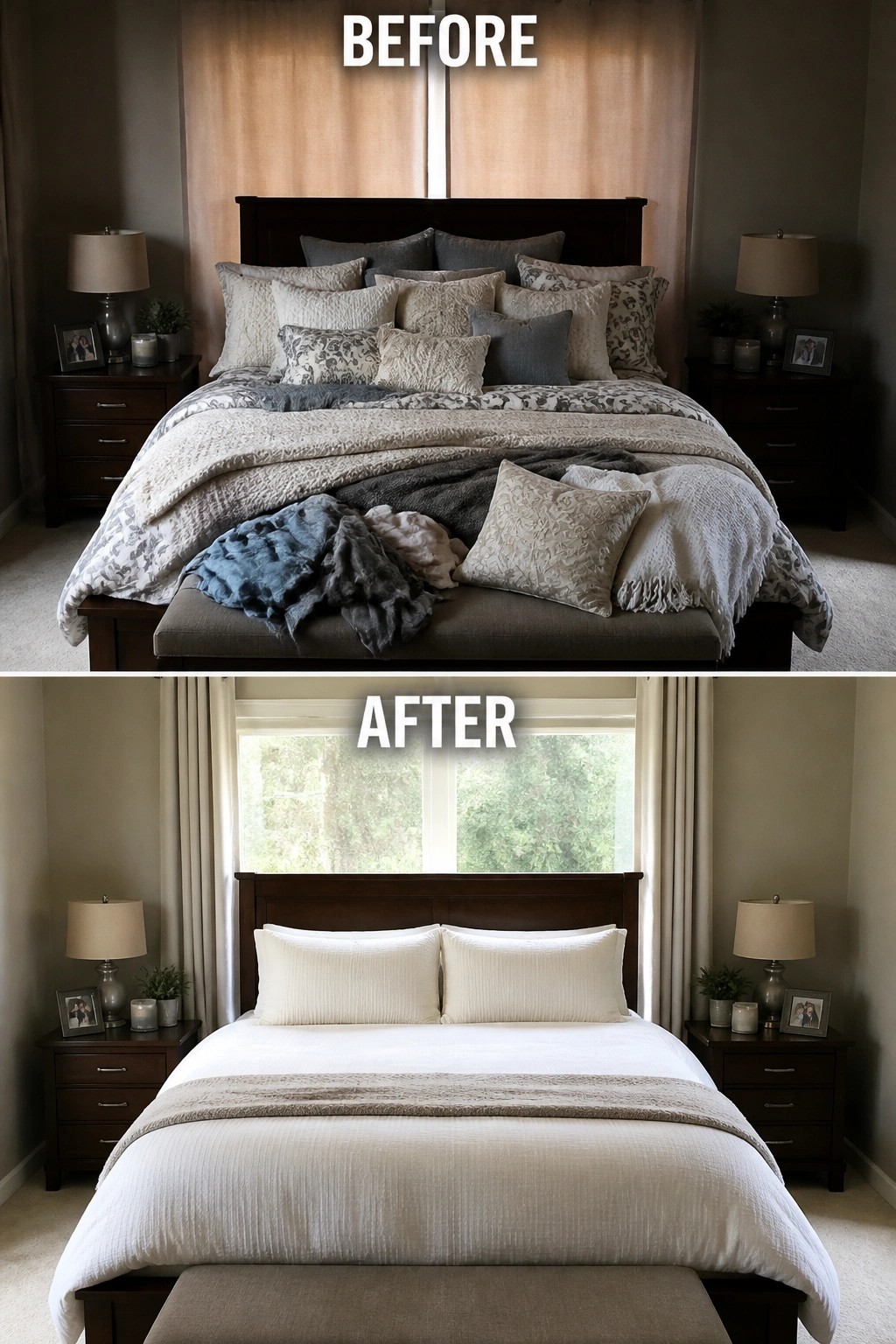
A bedroom often feels cluttered when the bed is covered in too many pillows and mixed layers. Clearing most of the pillows and switching to a simple white duvet with one light throw instantly made the space feel calmer and more open.
This idea works best in rooms where you want a restful look without buying new pieces. Limit the bed to two pillows and keep the bedding to one main color or texture. It keeps the focus on the room itself instead of the layers on the bed.
Clear Clutter From Dresser Tops First
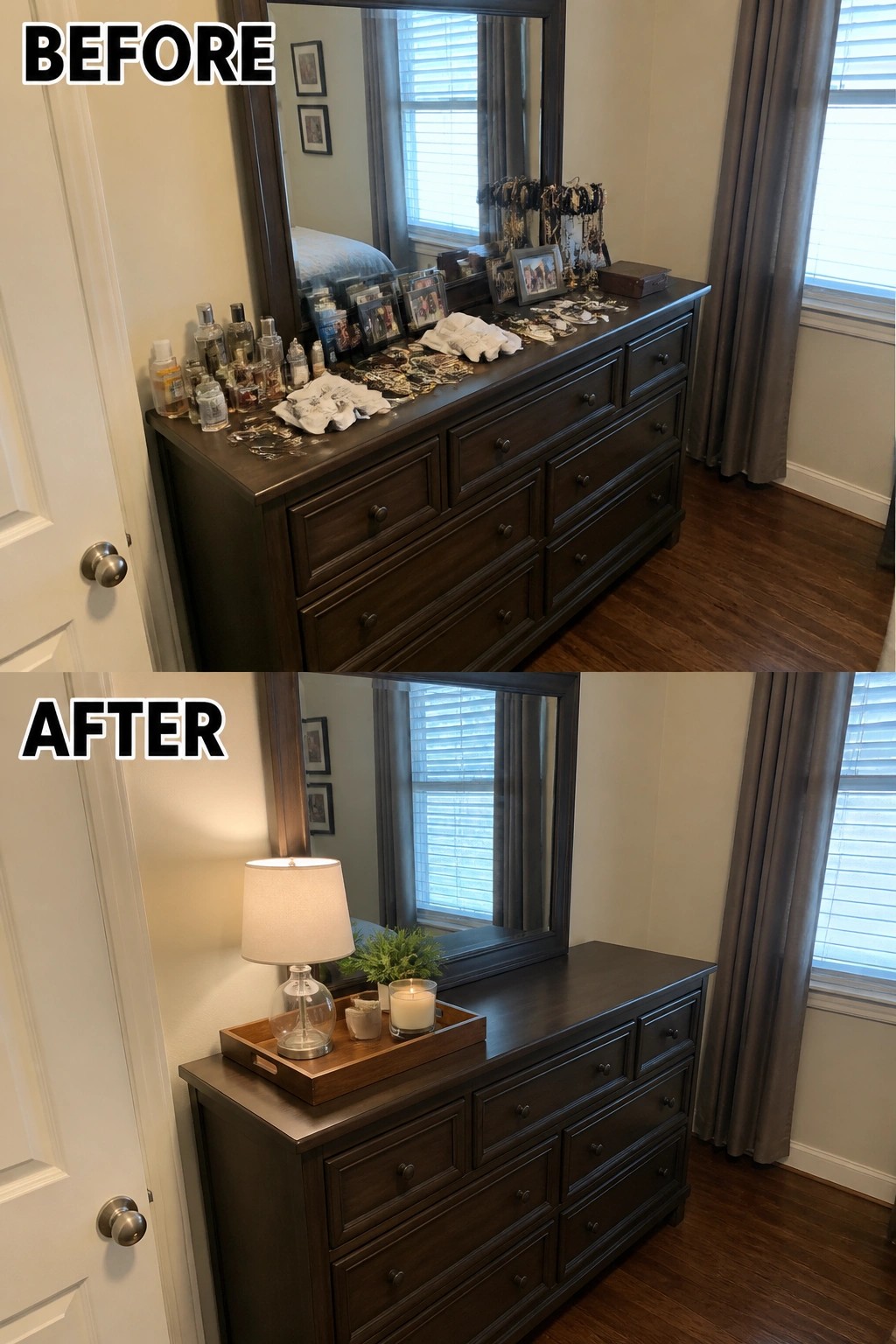
A dresser top covered in bottles, jewelry, and loose items quickly makes a bedroom feel messy. Removing most of those things and keeping only a few useful pieces creates a much calmer look while the furniture stays exactly the same.
Start by clearing everything off the surface. Put away what you do not use daily, then add back just one or two items like a lamp and a small tray. This works well in any bedroom where flat surfaces tend to collect clutter over time.
Hide Clutter With Matching Storage Bins

A lot of bedrooms end up with random items pushed under the bed because there is no better place for them. The before photo shows the usual result. Loose shoe boxes, bags, and piles of stuff sit out in the open, and the whole area looks messy even though the bed itself is made. Switching to a row of matching bins keeps everything out of sight while making the space under the bed look intentional.
This approach works best in rooms that already have a bed with decent clearance underneath. Pick bins that are the same size and color so they line up cleanly along the edge. Label them if you want to find things quickly, but keep the labels small so they do not draw attention when someone walks into the room. The goal is simply to stop the area from looking like open storage.
Use Wall Sconces To Clear Nightstand Space
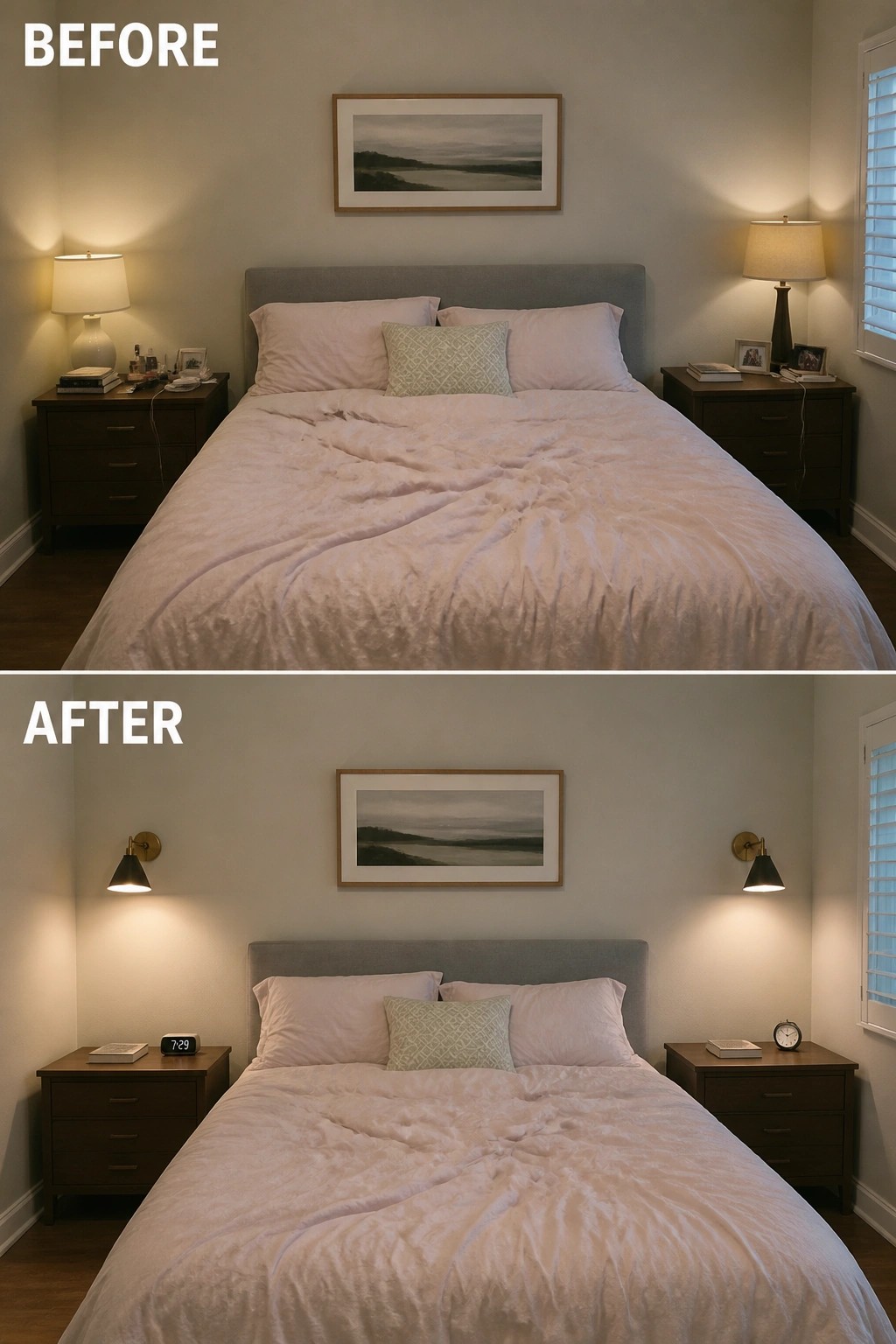
Moving the lamps off the nightstands and onto the wall is one of the easiest ways to reduce visual clutter in a bedroom. The before version had full tables with lamps, books, frames, and random items taking up every bit of surface. Once the lamps were swapped for wall sconces, the same tables looked noticeably calmer with just a few small objects left on them.
This idea works especially well in smaller rooms where nightstands already feel tight. Pick sconces that sit at the right height for reading and keep only daily essentials on the tables. The rest can go in a drawer or somewhere else in the room.
Clear The Desk Surface First

A cluttered desk quickly makes any bedroom feel busy even when the rest of the room is tidy. Removing everything and putting back only the items used every day instantly lowers visual noise. In this case the tangled cables, stacks of paper, and extra gadgets disappeared, leaving just a laptop, a notebook, and one small light.
This approach works well in small bedrooms where the desk shares space with the bed. Start by taking every loose item off the surface, then add back only what you reach for daily. The same desk and chair stay in place, so the change comes from editing rather than buying.
Replace A Crowded Gallery Wall With One Large Piece

A bedroom wall covered in dozens of small frames and objects pulls attention in every direction. Switching to one large centered artwork above the bed removes that scattered look and lets the room feel noticeably calmer without moving any furniture.
This idea works best when the goal is rest rather than display. Pick one piece that spans most of the space above the headboard, keep the surrounding wall plain, and let the single image do the work. It suits any bedroom where too many small items on the wall make the space feel busy.
Give Shoes And Coats A Designated Spot
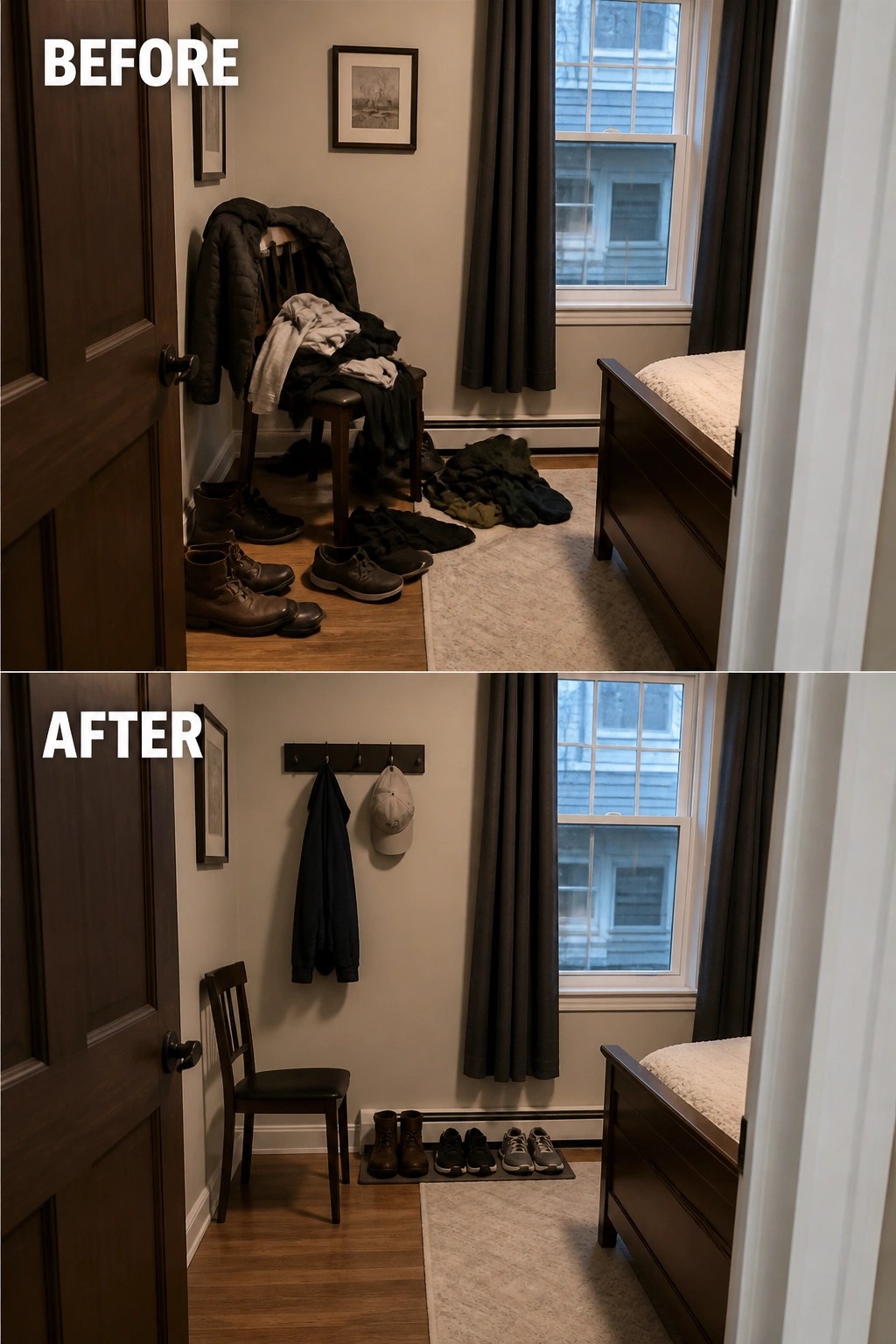
The before photo shows a common bedroom problem. Clothes end up draped over a chair and shoes get scattered across the floor, which makes the whole corner feel messy even when the room is otherwise clean. In the after photo, a simple wall rack holds the jacket and cap, while the shoes sit neatly on a low mat. The chair stays but now has room to be used.
This approach works well in any bedroom where you need a landing spot near the door. Pick a small section of wall, add a few hooks at a comfortable height, and place a slim mat or tray underneath for shoes. It keeps things off the floor without requiring new furniture or a full closet overhaul.
Use Matching Bins To Clear Visual Clutter On Shelves

The shelves went from a jumble of loose blankets, frames, and scattered objects to rows of matching bins that keep everything out of sight. This single swap makes the wall feel much calmer while still holding the same amount of stuff.
Matching bins work best on open bedroom shelving where loose items tend to pile up quickly. Pick a neutral tone that blends with the wall color and stick to the same size so the rows stay even and easy to maintain.
Clear The Floor To Reduce Bedroom Clutter

A bedroom often feels calmer once the floor is free of scattered bags, shoes, and clothing. In this case the main change was moving the open suitcase under the bed and hanging jackets on simple wall hooks instead of leaving them in a pile. The shoes were placed on a small mat rather than left loose across the room. These small shifts alone made the space look much larger and less chaotic without buying any new furniture.
This approach works well in any small or medium bedroom where daily items tend to land on the floor. Start by finding existing spots such as under the bed, inside a closet, or on basic hooks before you add more pieces. Keep only what you use every day within reach and put the rest out of sight. The result is a room that feels open and easier to keep clean.
Replace Busy Wallpaper To Reduce Visual Clutter
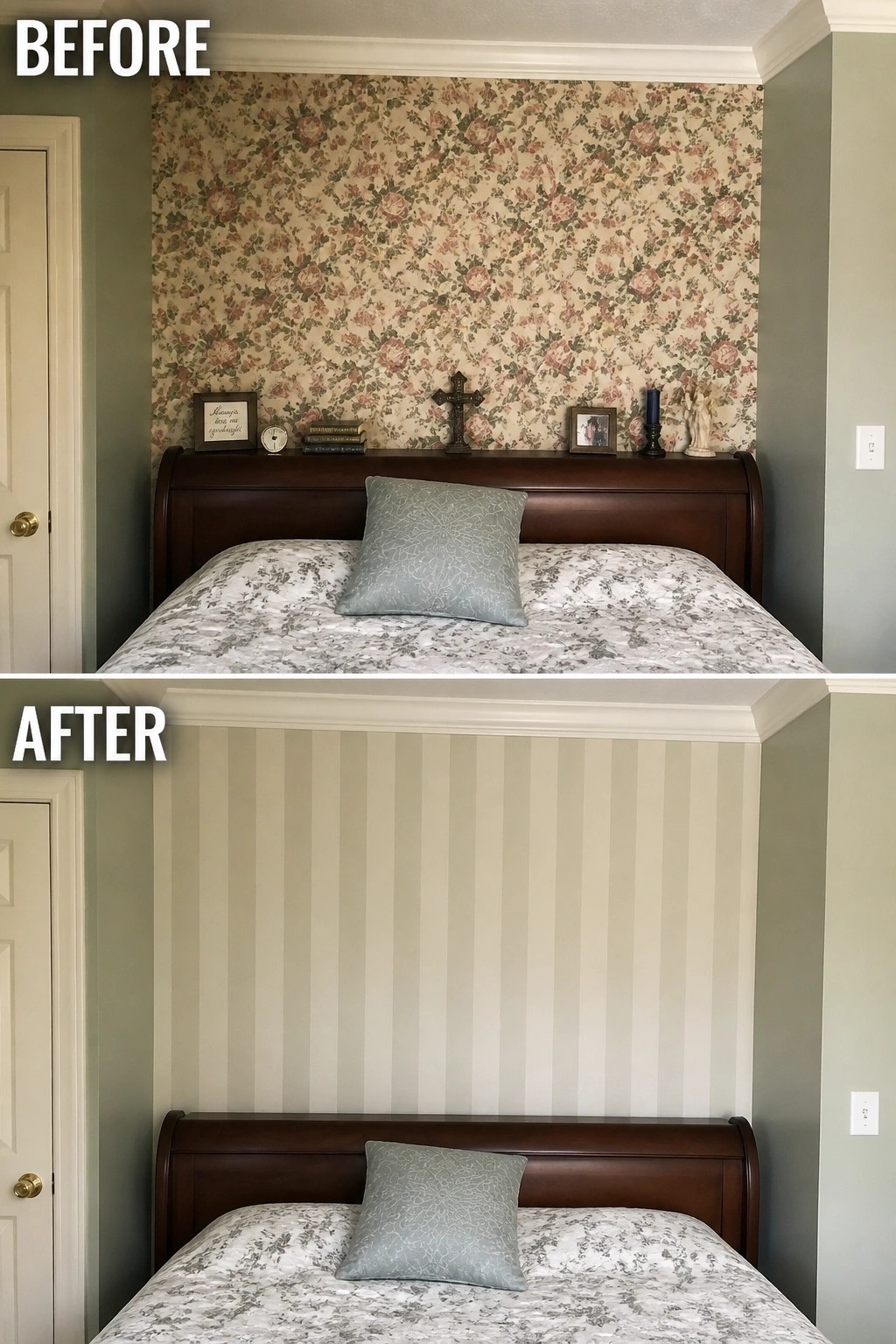
The main change here is swapping a dense floral wallpaper for a simple striped pattern on the wall behind the bed. The room immediately feels calmer because the pattern no longer competes with the bedding and other items in the space.
This works especially well in bedrooms where you want to keep the same furniture and linens. Choose a low-contrast stripe or a very quiet pattern so the wall recedes instead of adding more visual noise.
Clear Clutter From Windowsills
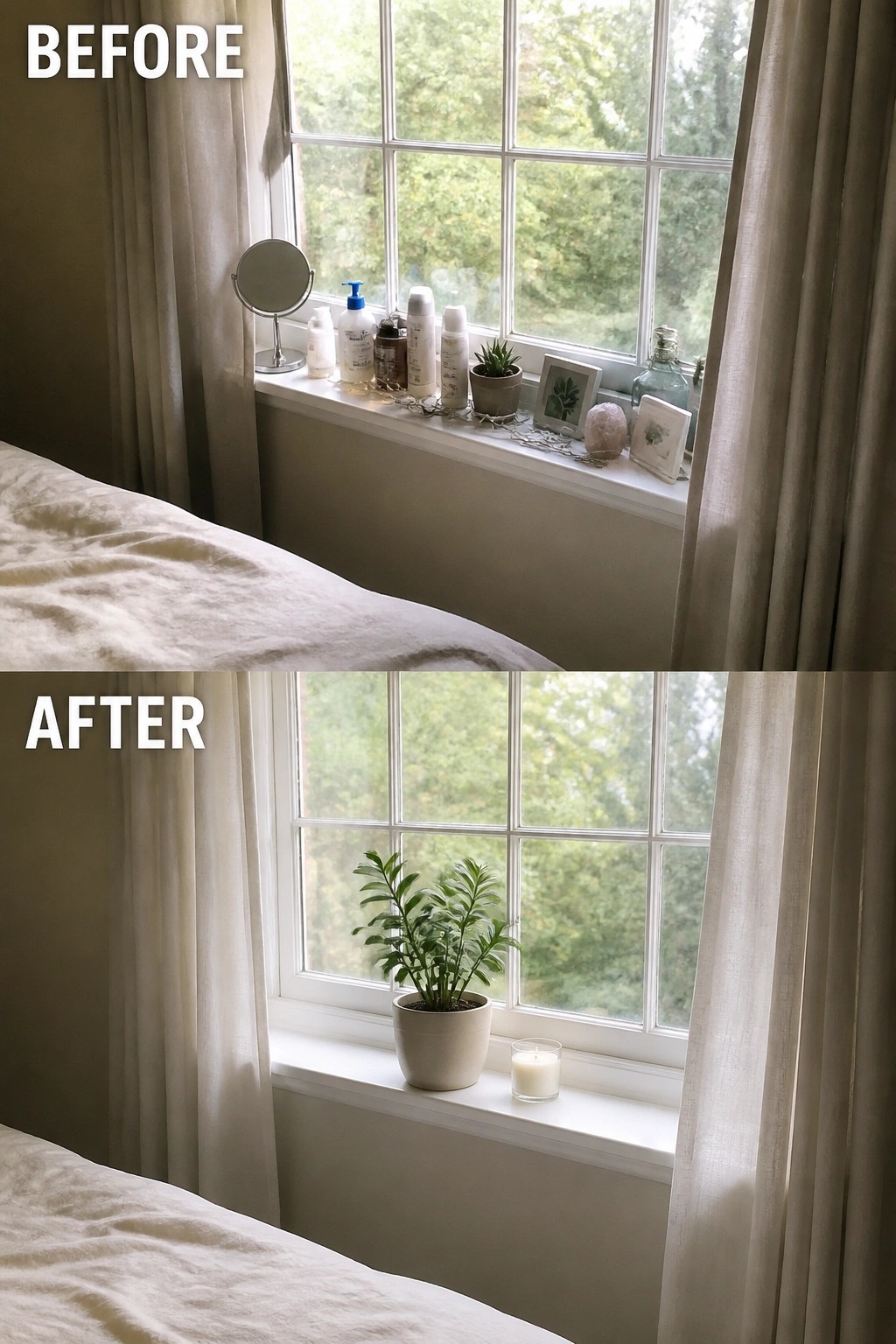
Many bedrooms collect small bottles, frames, and random items on windowsills over time. Removing most of them and keeping only one or two simple pieces makes the window area feel lighter and keeps the focus on the view outside.
This approach works well in any bedroom where surfaces start to feel busy. Start by taking everything off the sill, then put back only what you actually use or truly like. The rest can go into a cabinet or be removed altogether.
Swap Heavy Curtains For Sheer Ones

Heavy blackout curtains can make a bedroom feel closed in and darker than it needs to be. In this case, switching to light sheer panels opened up the window area, let daylight reach farther into the room, and cut down on the visual weight along the wall without moving any furniture.
Sheer curtains work best in bedrooms that already have a shade or blind for privacy at night. They soften the look of the window while keeping the space from feeling boxed in. If your room tends to get too bright in the morning, layer them over a simple roller shade so you can adjust as needed.
Choose Warmer Lighting For A Calmer Bedroom

The main change in this bedroom comes from the lighting. The before photo shows bright, cool bulbs that make the room feel sharp and busy even with the furniture in place. The after version switches to warmer bulbs and adds shades on the lamps, which softens the whole space without moving anything else.
This idea works best in rooms that already have a decent layout but still feel off. Start by changing the bulb color temperature first, then add shades if the bases allow it. It keeps the focus on reducing glare rather than adding more objects.
Stick To A Limited Color Palette
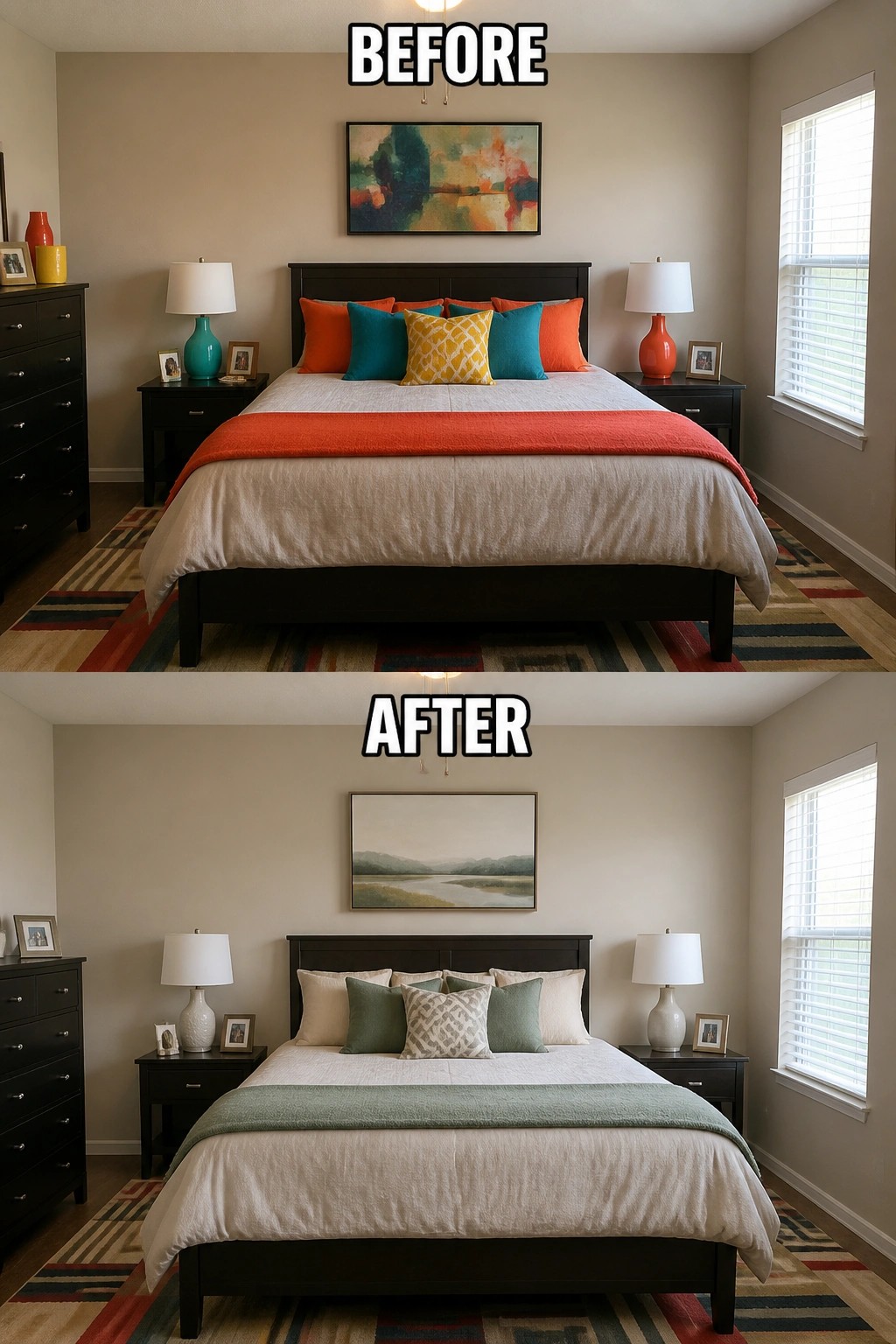
The bedroom went from a mix of bright orange, teal, and bold patterns to a much quieter mix of soft neutrals and muted green. Keeping the same furniture and rug but changing only the bedding, pillows, and art made the space feel noticeably less busy and easier to rest in.
This approach works well in any bedroom where the furniture is staying put. Pick two or three colors at most, then repeat them across the pillows, throw, and one piece of art. It keeps the room from feeling scattered without requiring new pieces or major changes.
Add Wall Hooks And Organizers To Reduce Floor Clutter

Getting items off the floor makes a small bedroom corner feel much calmer. The before shows a wooden chair buried under clothes and papers along with a laundry basket that took up walking space. The after uses a simple wall rack and a few pockets to hold the same things without crowding the floor.
This idea suits any room that needs a daily drop zone for keys, bags, and mail. Mount the hooks at a height that feels natural to reach. Use a slim organizer with divided sections so papers stay sorted. Keep the floor empty so the room feels more open and easier to clean.
Frequently Asked Questions
Q: How do I pick which items to move out of my bedroom first when the surfaces feel crowded? A: Start with anything you have not touched in the last week and shift it to another room. This clears space fast and shows you what actually earns its spot.
Q: My closet door stays open and the clothes inside add to the mess. Any quick fix? A: Face all the hangers the same way and keep only the outfits you wear this season on the front rod. Slide the rest behind them so the open door shows one clean line instead of a jumble.
Q: Lighting feels harsh and makes every pile stand out more. Can I soften it with what I already own? A: Move a floor lamp into the corner and point it at the ceiling. The bounced light cuts sharp shadows without needing new bulbs or shades.
