

I often notice that a bedroom starts to feel flat when the bed and dresser stay locked in the same corners for too long.
Moving those same pieces into a new arrangement can open up walking space and make the room feel more settled without any major purchases.
Small swaps help more than expected.
Adding a taller lamp beside the bed or pulling a rug under the existing frame usually pulls the whole space into better balance.
I like testing these layout tweaks first in my own room because they show quickly whether the furniture already there can support the rest of the changes.
Use Curtains And Rugs To Finish A Bedroom

A bedroom can feel unfinished even when the main furniture is already in place. Here the existing bed stayed, but adding curtains, a rug, and a pair of lamps helped pull the room together and made the space feel more settled.
This idea works best in rooms where you want to keep what you already have rather than start over. Hang simple curtains to soften the windows, choose a rug large enough to sit under the bed, and add lamps on the nightstands so the room feels balanced at night.
Make A Plain Bedroom Feel Finished

A plain bedroom often feels unfinished even when the furniture is already in place. In this case the room gained warmth and purpose once a large rug was added under the bed, the bedding was switched to crisp white layers, and simple wall sconces with a floating shelf were installed above the headboard. Those changes turned an empty-looking space into one that feels settled and comfortable without replacing the existing bed frame or dresser.
This approach works well in smaller bedrooms where you already like the main pieces but want the room to feel more complete. Start with one large rug to anchor the bed, then add two or three sources of light at different heights, and finish with a few pieces of wall art or a narrow shelf. Keep the color palette limited so the layers read as calm rather than busy.
Layer Textiles And Rugs To Finish A Bedroom

A plain bedroom can feel unfinished even when the main furniture is already there. Adding a rug under the bed, curtains at the window, and layered bedding made this space feel much more complete without replacing the dresser or bed frame.
This idea works best in rooms that already have the basics but still look bare. Start with one large rug to anchor the bed, then add curtains and a few soft layers like throws and pillows. It suits neutral bedrooms where you want more warmth without major changes or new furniture.
Refresh An Existing Bunk Bed With Paint And Storage

Painting the metal frame white and adding storage bins underneath turns a cluttered kids’ room into one that feels much more organized. The change keeps the original bunk bed in place while making the lower level usable for both sleeping and toy storage, which cuts down on the mess that usually piles up around the floor.
This approach works well in smaller bedrooms where the bed already takes up most of the space. Start with a simple coat of paint on the frame, then choose bins that fit the under-bed clearance so everything has a spot without adding extra furniture.
Paint The Walls Dark To Make A Bedroom Feel Finished

The main change in this bedroom came from painting the walls a deep navy. The original light beige walls left the space looking flat, while the darker color gives the bed and headboard something solid to sit against.
This idea works best in rooms that already have a decent bed and carpet but feel unfinished. Pick a dark shade that still lets the furniture stand out, then add a pair of simple lamps on nightstands to balance the look. It suits smaller or average bedrooms where you want more warmth without buying new furniture.
Paint The Nightstand To Refresh The Whole Room

Many bedrooms already have a solid bed frame and nightstand that still work fine, but the dark wood can make the space feel heavy and dated. Painting the nightstand a light color and swapping the small lamp for a wall sconce immediately brightens the corner and helps the existing furniture blend better with the rest of the room. The change feels bigger than it is because the main pieces stay in place.
This approach works especially well in smaller bedrooms where you want to keep storage but need the space to feel lighter. Try matching the paint on the nightstand to the wall color or trim so the furniture recedes a bit. It is an easy weekend project that lets you keep what you already like about the room without buying new pieces.
Paint Existing Furniture To Refresh A Bedroom
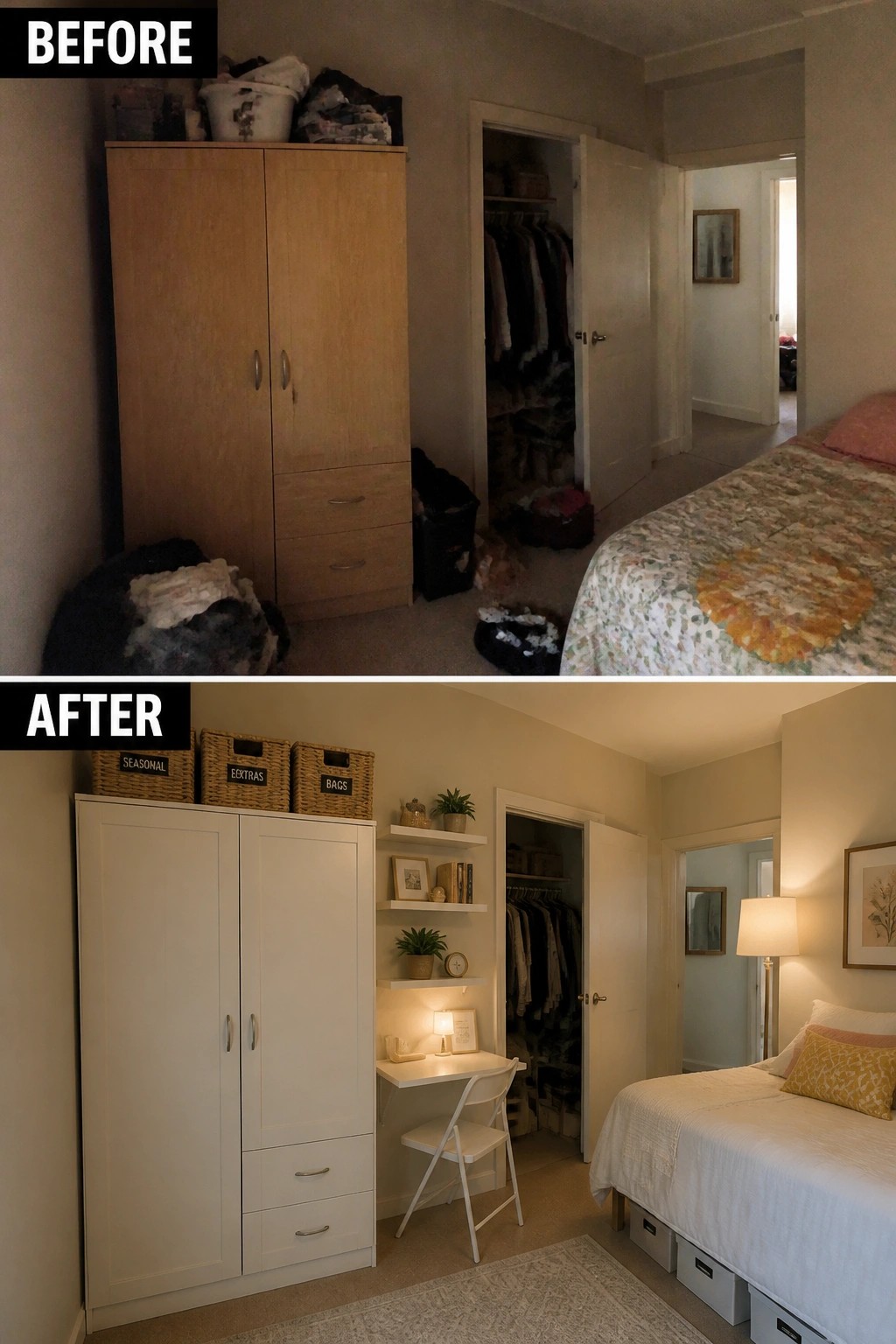
Painting the main wardrobe white made the biggest difference here. The room went from feeling crowded and messy to much calmer once the bulky wood piece blended in better and the floor clutter was cleared away with simple bins and a small desk setup.
This idea works well in bedrooms that already have solid but dated furniture. Start by clearing everything out so you can see the real space, then decide what to paint and what storage pieces will actually get used every day. It keeps costs down and avoids the need for a full room overhaul.
Refresh An Existing Daybed To Finish An Attic Room

Clearing out the clutter first made the biggest difference here. Once the boxes and random items were gone, the daybed could take center stage again. New neutral bedding, a mix of pillows, and a simple rug pulled the whole space together without needing new furniture.
This approach works especially well in rooms with sloped ceilings or limited floor space. Keep the color palette calm and let the existing piece set the scale. One or two plants and a few baskets are usually enough to make the room feel settled.
Refresh A Bedroom By Updating Textiles And Storage
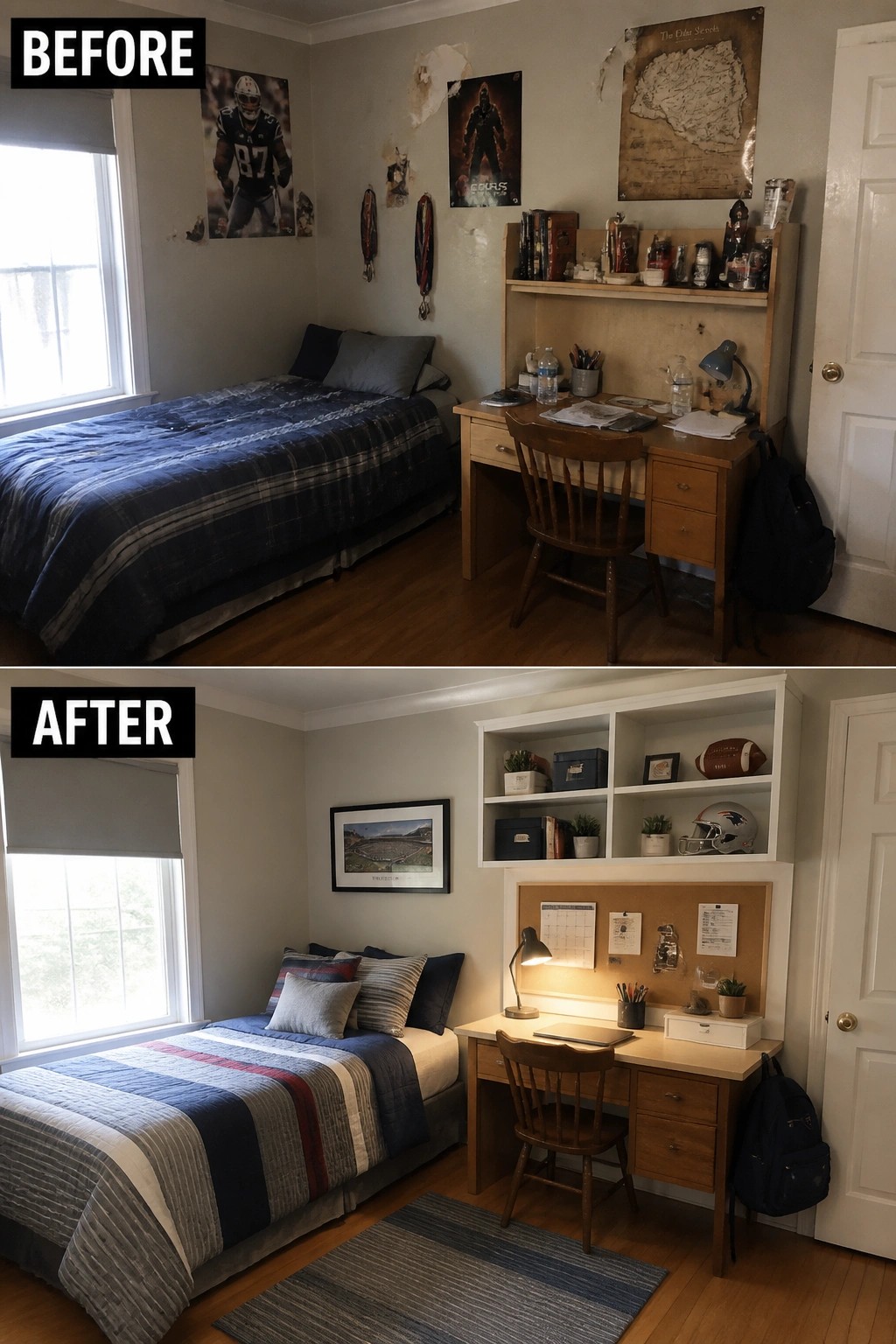
The main change here is swapping the dark plaid bedding for a lighter striped set and replacing the bulky wooden hutch with open white shelves. These two updates make the room feel cleaner and more put together while the desk and chair stay in place.
This approach works well in any small bedroom where you want to keep solid wood pieces but need the space to feel less heavy. Stick with bedding and a rug that pull from the wood tones already in the room, and use the new shelves for items you actually reach for instead of filling every spot.
Finish A Bedroom With Curtains And A Rug

A four-poster bed already gives a room structure, but it can still feel unfinished without soft layers around it. In this case the bed stayed in place while sheer curtains were added to the frame, a large rug went down, and simple lamps appeared on either side. Those changes alone made the space feel warmer and more settled.
This approach works well in any bedroom that already has its main furniture. Start with one large rug to define the bed area, then add fabric where it will soften hard lines, like curtains on a canopy or a throw across the foot of the bed. Keep the rest of the room simple so the new layers do not compete.
Use Paint To Warm Up A Neutral Bedroom

A plain bedroom with white walls can feel a little cold even when the furniture is already in place. Painting one wall behind the bed in a warm terracotta color immediately changes the mood and gives the room a finished look without replacing anything else.
This approach works especially well when you want to keep your existing bed and nightstand. Pick a color that plays off the wood tones you already have, then add just a couple of pillows or a small piece of art so the wall stays the main focus.
Refresh A Bedroom By Painting Existing Furniture

Many bedrooms start to feel dated when the furniture is all dark wood and the bedding leans heavy. Painting the armoire a softer gray and switching to lighter bedding and curtains immediately makes the room feel brighter and more current while keeping the original pieces.
This idea works best when the furniture is still in good shape but the finish feels off. Pick one main piece to update first, choose a paint color that sits well with your walls, and keep the rest simple with neutral layers so the room does not feel overcrowded.
Add Shelves And Lighting To Finish A Bedroom

The before photo shows a bedroom that felt half done, with just a metal dresser and a bed against plain walls. Adding a set of open shelves above the dresser along with a pair of wall sconces gave the room a clear focal point and made the space feel much more complete without replacing the main pieces.
This approach works well in bedrooms where the furniture is already functional but the walls look empty. Keep the shelves at a height that lines up with the top of the dresser, use the same finish on the brackets and lights, and add a small nightstand on the other side to balance the layout. The result is a room that feels styled and personal while still keeping the original dresser and bed as the foundation.
Add Layers To Make A Plain Bedroom Feel Finished

A basic bedroom often feels unfinished when it only has the bed and a few lights. Adding a rug under the bed, swapping in patterned bedding, and bringing in several plants gave the room more texture and a settled look without changing the furniture.
This idea works best in simple spaces where the bed is already in place. Start with one large rug to anchor the bed, then add plants and a few textiles in similar tones so the room feels layered but still easy to move around in.
Update A Bedroom By Painting The Walls And Refreshing The Textiles
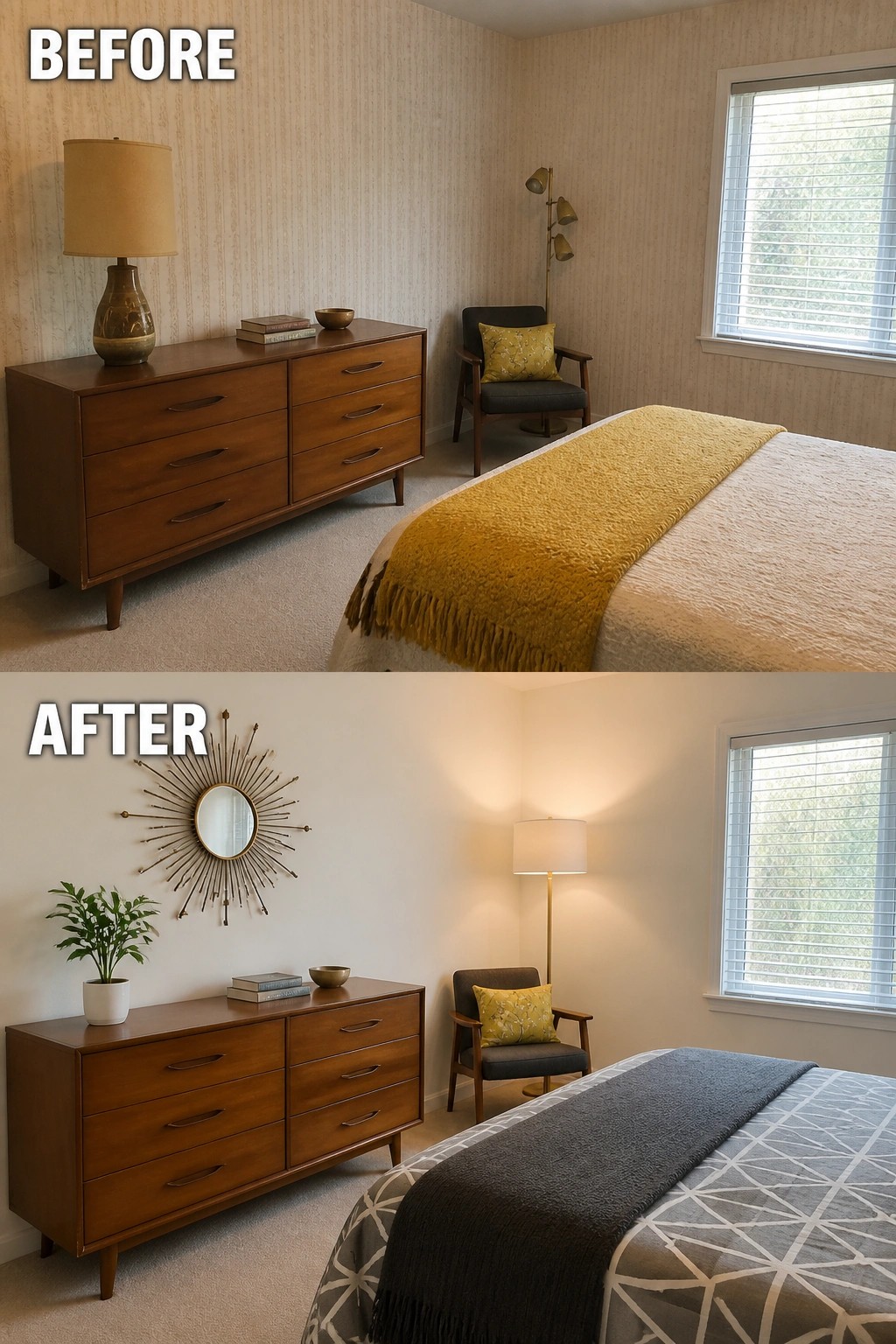
Painting the walls a light neutral color and switching the bedding instantly made this bedroom feel brighter and less dated. The original striped wallpaper and bold yellow throw created a heavy look, but the clean walls and new gray throw let the existing wood dresser and chair feel like they belong in a more current space.
This idea works well when you want to keep solid wood furniture instead of replacing it. Choose a light wall color first, then update the largest textiles like the bedding or throw to pull the room together without adding too many new pieces.
Add Built-Ins Around An Open Closet

An open closet can leave a bedroom feeling unfinished, especially when clothes and bins stay visible all the time. Adding doors across the center and building simple shelving on each side hides the daily mess while giving the room a more complete, intentional shape. The change turns the closet from the main focal point into part of the wall.
This works best in smaller bedrooms where you want storage without adding bulky furniture. Keep the new shelves shallow so they do not crowd the space, and use matching trim and paint so the whole wall reads as one unit. Start with the doors if budget is tight, then add the side units later.
Refresh An Older Bedroom With Wall Color And Soft Layers

Many bedrooms with older furniture feel unfinished when the walls stay patchy or cool toned. A fresh coat of warm paint and new layers of bedding and a rug can shift the whole room while keeping the original bed and dresser.
This idea suits older homes where the furniture still has good lines but the finishes have aged. Choose a soft wall color first, then add a rug and change the bedding to tie the space together without replacing the main pieces.
Paint Built-Ins White To Brighten A Bedroom

The dark wood built-ins behind the bed made the room feel heavy and closed in. Painting them white opened up the space right away and gave the whole room a lighter, cleaner look without removing anything.
This idea works well in bedrooms that already have solid built-ins but feel dated. Start with the paint color first, then swap heavy curtains for something lighter so the windows let in more light. It keeps the storage you need while making the room feel more current.
Use Curtains To Define A Bedroom Space

Many small or open bedrooms feel unfinished because the bed sits out in the middle of the room with nothing around it. Adding floor-length curtains on both sides creates a simple nook that makes the bed feel more private and settled. The light fabric softens the walls and helps the whole space feel calmer without any major construction.
This idea works well in studio apartments or rooms that double as living space during the day. Hang the curtains from a ceiling track or a simple rod so they can be pulled open when you want more light and air. Keep the fabric neutral and add one rug under the bed to finish the look.
Refresh An Existing Sofa With A New Slipcover

Swapping the slipcover on a sofa can shift the whole feel of a room without buying new furniture. The original blue cover and colorful quilt made the space look a bit busy, while the new neutral fabric lets the sofa blend in and feel calmer. Adding the ottoman and wall shelves helped the area look finished rather than like a leftover corner.
This idea works well in bedrooms where the sofa already fits the layout but needs a fresher look. Choose a washable neutral fabric so it stays practical over time, and keep any added pieces in the same tone. It keeps the focus on updating what you already have instead of starting over.
Turn A Window Into A Seating Spot With Storage

A dresser under a window often leaves the space feeling flat and unused. Replacing it with a long bench that has a padded seat turns the same area into a place where someone can actually sit and look outside. The storage baskets underneath keep the function of the old drawers without losing any floor space.
This idea works well in bedrooms that already have enough drawer space elsewhere. Choose a bench that fits the width of the window so the proportions stay balanced. A few pillows and a light throw are usually enough to make the seat feel inviting.
Make A Plain Bedroom Feel Warmer With Paint And Textiles
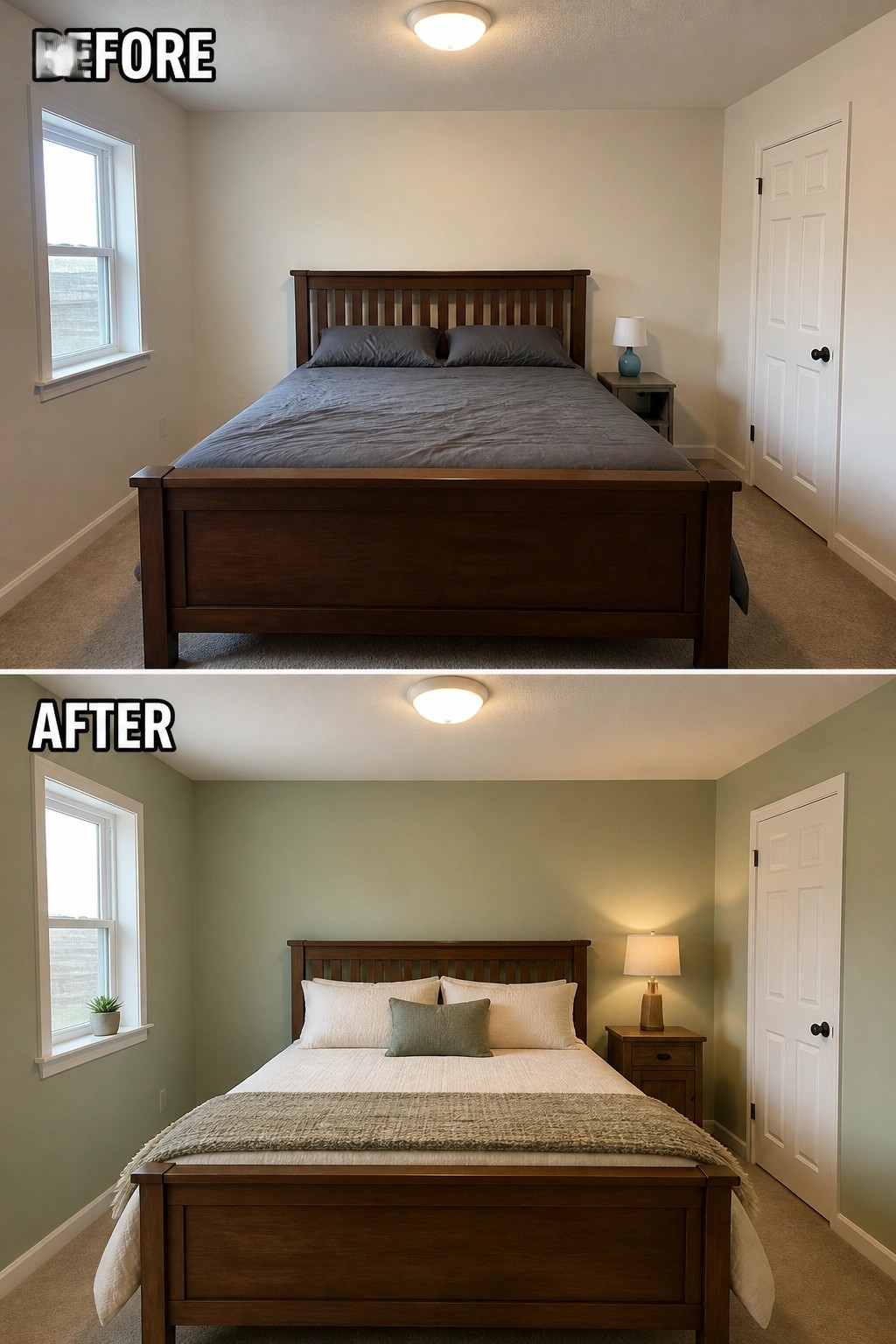
A soft wall color can shift the whole mood of a bedroom without touching the main furniture. In this case the walls moved from a cool off-white to a gentle sage green, and the bedding changed from a single dark cover to lighter layers with a textured throw on top. The new lamp also adds a warmer glow than the old one. These small shifts make the room feel calmer and more put together while the bed frame stays exactly the same.
This idea works well in any bedroom that already has decent furniture but feels flat or chilly. Pick a muted paint color that still shows some warmth, then layer what you have on the bed instead of buying everything new. Keep the changes simple so the room still feels like a place to rest rather than a styled photo.
Frequently Asked Questions
Q: How do I pick paint colors around my wooden bed frame? A: Start with the wood grain and choose a wall shade that complements it. Test samples on the wall next to the frame at different times of day. A warm neutral often makes the wood pop nicely.
Q: What small changes refresh my nightstands without replacing them? A: Add a couple of matching lamps and a small plant on each. Layer a runner or tray on top to hide surface marks. These tweaks make them look planned and fresh.
Q: How should I arrange accessories with my bulky armoire? A: Place taller items like lamps beside it to balance the height. Keep the top clear or use just one statement piece. This avoids a cluttered look while highlighting the armoire.
