

I have walked into bedrooms where the closets feel too tight to organize and the odd corners end up collecting dust because nothing seems to belong there.
Sorting out those spots often starts with rethinking the layout before any new pieces come in.
That step usually makes the rest of the room click into place more easily.
I would try a couple of the simpler storage adjustments first to see what actually holds up in daily use.
It feels good when those forgotten areas start serving a clear purpose instead of sitting idle.
Add Built-Ins To Organize A Small Closet

Many small closets become dumping grounds because a single rod and shelf cannot handle everyday clothes and shoes. Adding a full set of built-in rods at two heights, plus side shelves and a low bank of drawers, turns the same narrow space into something that actually holds what you own without constant rearranging.
This idea suits bedrooms where the closet is the only storage option. Measure the width and depth first, then plan the layout around your tallest hanging items and the shoes you wear most often. Keep the top open for baskets if you need seasonal overflow.
Turn An Awkward Bedroom Corner Into A Vanity Station

An empty corner in a bedroom often ends up filled with boxes or left unused. A simple floating desk with a wall shelf above it turns that space into a working vanity area. The round mirror and wall lights add function without crowding the floor.
This idea suits small bedrooms where a full dresser or vanity would feel too large. Mount the desk at a comfortable height and keep the finish light so the room stays open. It gives you storage and a clear spot for daily routines while leaving the rest of the floor free.
Add Built-In Shelving To A Basic Closet
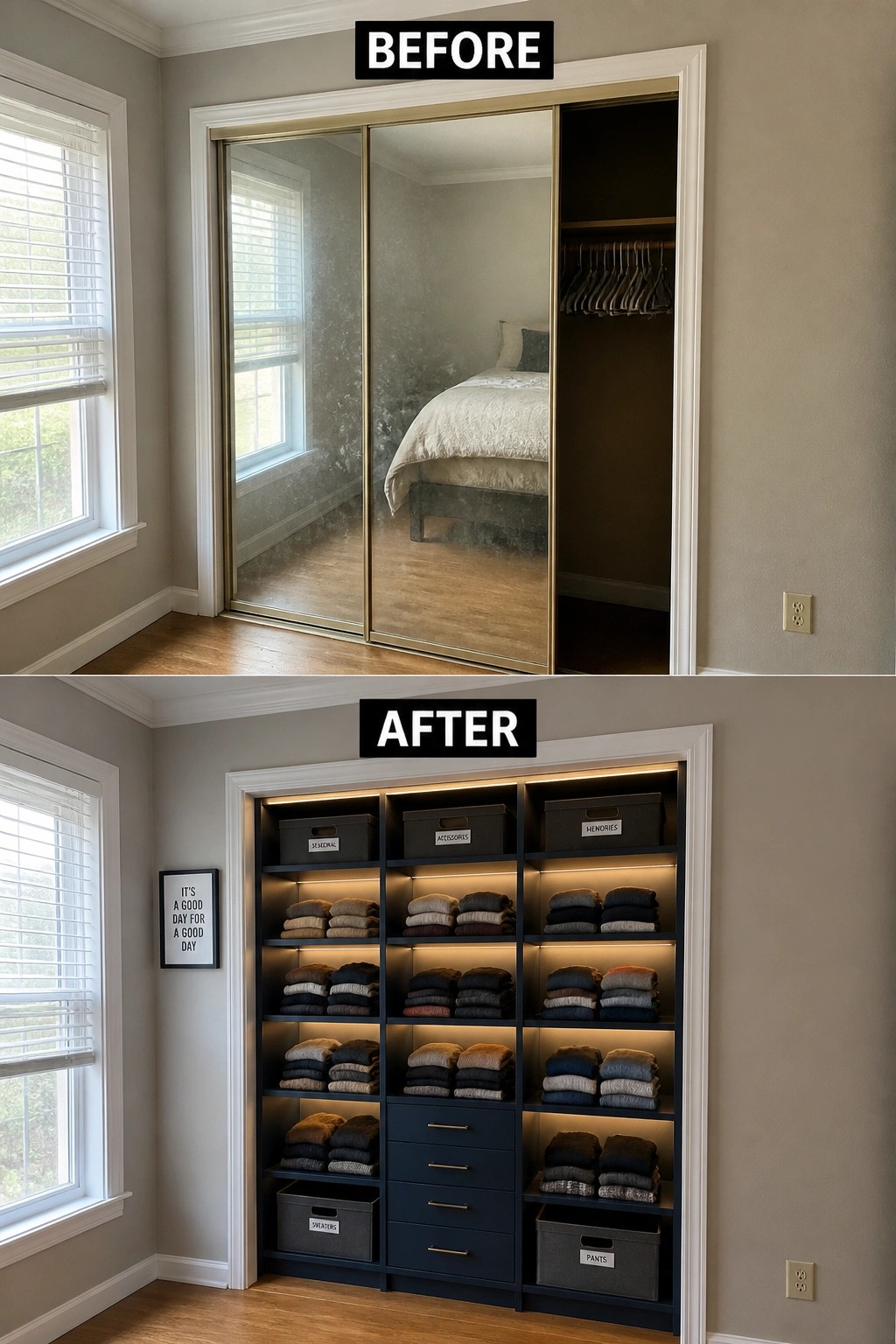
A plain sliding-door closet often wastes space because the doors block access and the single hanging rod leaves most of the height unused. Replacing the doors with open shelving and adding a few drawers turns the same footprint into a place where folded clothes, bins, and accessories all stay visible and reachable. The built-in lights make it easier to see what is stored on every level without extra lamps.
This approach works best in bedrooms where the closet is the main storage area and floor space is tight. Keep the new unit the same depth as the original closet so the room still feels open. Start with a simple frame of shelves and drawers, then add bins only for items that need grouping. The result is practical storage that fits the room instead of fighting against it.
Add Low Storage To A Sloped Closet

A sloped ceiling closet often ends up as a dumping ground because the shape makes it hard to use standard shelves or tall units. Adding a low dresser across the front turns the awkward space into real storage while leaving room above for hanging clothes. The change from scattered bins and loose piles to a clean row of drawers makes the whole area feel much more practical.
This approach works well in older homes or any bedroom with eaves and limited closet depth. Keep the dresser shallow enough to sit comfortably under the slope and match the finish to the trim so it blends in. Add a simple rod to one side for everyday clothes and use baskets on top for smaller items.
Swap Bi-Fold Doors For A Sliding Barn Door

Many bedroom closets feel cramped because the doors swing or fold in a way that blocks half the opening. A sliding barn door solves that by moving out of the way completely, so you can reach everything without fighting the doors.
This idea works best in smaller bedrooms where space is tight. Keep the inside simple with basic shelves and a few bins so the closet stays easy to use every day.
Turn A Standard Closet Into A Built In Nook

A basic closet with bifold doors often wastes wall space in a small bedroom. Removing the doors and opening up the area lets you add a bench seat, drawers below, and a few shelves above. The change turns empty storage into a spot for sitting and keeping books or small items within reach.
This idea works best in bedrooms where floor space is tight and you need one more place to sit or store things. Keep the bench depth shallow so it does not stick out too far, and add a wall sconce if the nook feels dark. The same approach can work on any closet that is no longer needed for hanging clothes.
Turn A Plain Closet Door Into Practical Storage
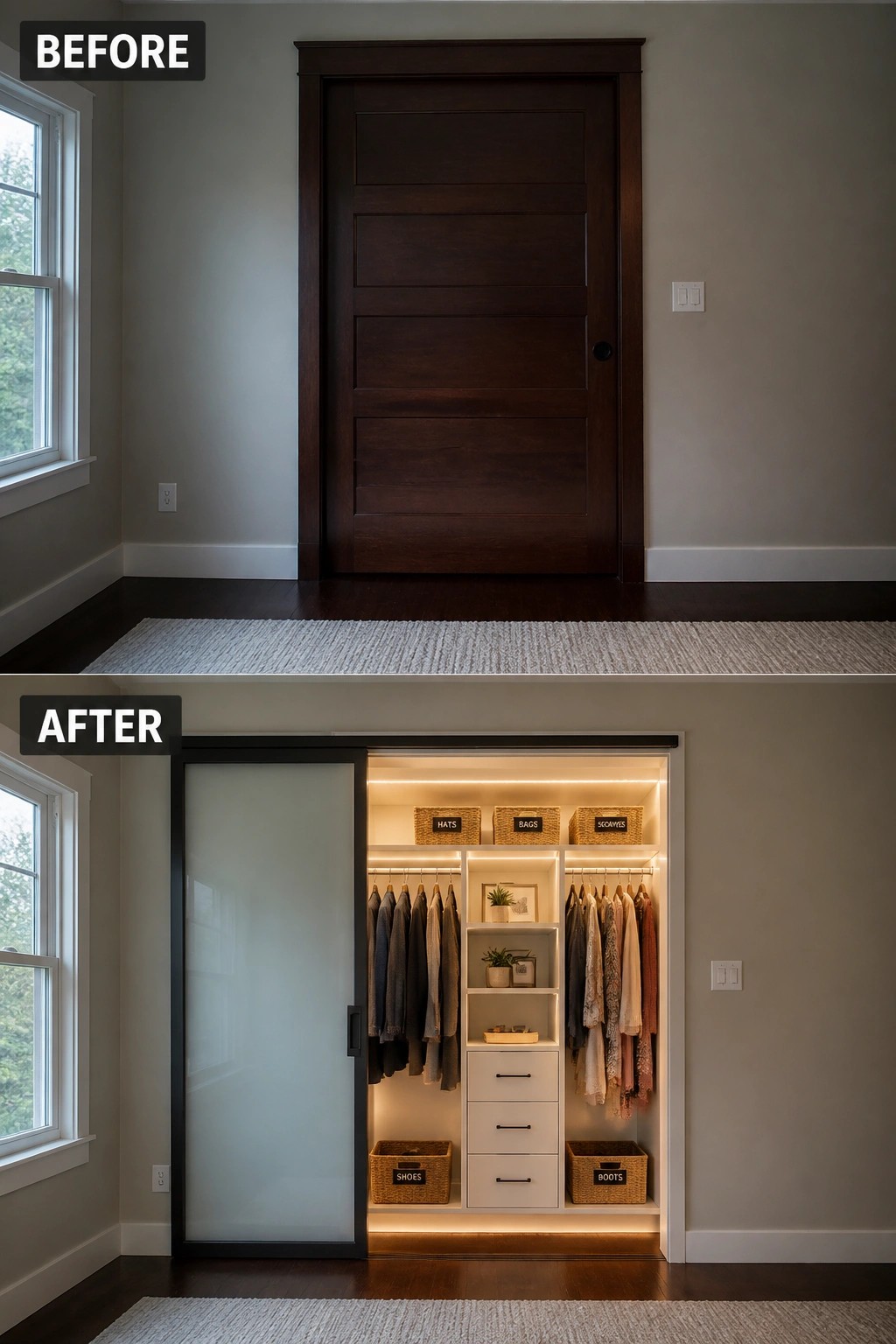
A standard bedroom door often hides space that could hold daily items. Swapping it for a sliding door and adding shelves, hanging rods, and drawers turns that area into real storage without taking up extra floor space.
This idea suits small bedrooms or rooms where built-in closets were never added. Measure the opening first, keep the layout simple with a mix of hanging space and drawers, and add a basic light strip so the contents stay easy to see.
Add Built-In Storage To A Basic Closet

A single rod across an open closet rarely makes good use of the space. Adding side shelves, a second lower rod, and a set of drawers turns the same footprint into separate zones for hanging clothes, folded sweaters, and smaller items.
This approach suits any bedroom where the closet is the main storage area. Start with the height and width of the existing opening, then keep the center section open for longer pieces while filling the sides with shelves and drawers. The result stays practical without crowding the room.
Build Storage Into An Awkward Bedroom Corner

Many bedrooms end up with one empty corner that never gets used. Adding a built-in closet unit fills that space and gives you real storage without making the room feel smaller.
This idea works best when the existing closet is too tight or awkwardly placed. Match the finish to the walls so the new piece feels like part of the room, and keep open shelves narrow enough that they do not stick out past the bed.
Add Pull-Out Shelves To Maximize Closet Space
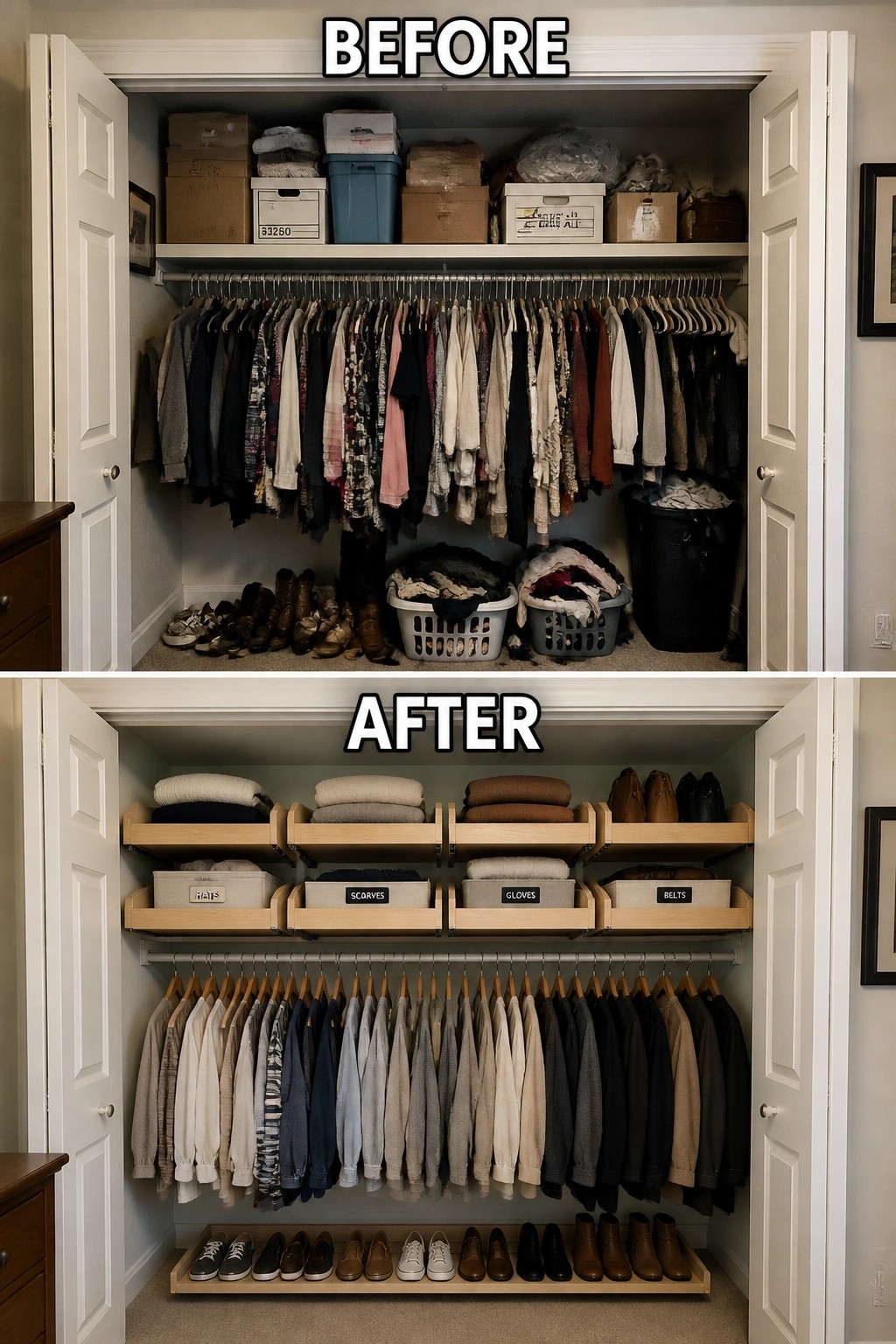
A small closet often ends up messy because there is nowhere to put the smaller items that do not hang well. Adding a row of pull-out shelves above the hanging rod gives those things a proper home and keeps the floor clear for shoes.
This setup works especially well in bedrooms where the closet is narrow or shallow. Start with a basic hanging rod and then add the shelves and a low shoe tray. The shelves can hold folded clothes, hats, scarves, and gloves without stacking everything on top of each other.
Turn A Plain Closet Into Open Shelving

A solid closet door can waste useful space in a small bedroom. Replacing it with open shelves turns the area into storage that is easy to reach and simple to keep organized. The dark closed door in the before photo became a set of lit shelves that hold baskets and a few folded items.
This works best in older homes where closets are narrow or lack good access. Start with basic shelving and add lighting so you can see what is stored on each level. Use baskets to hide smaller items and keep the look clean without crowding the room.
Turn An Awkward Bedroom Corner Into Useful Storage

An empty corner in a small bedroom rarely gets used well on its own. Fitting a corner wardrobe into that space adds hanging room, shelves, and drawers without eating into the rest of the floor. The before shows just a lone floor lamp, while the after shows a fitted piece that follows the walls and puts the corner to work.
This approach suits bedrooms where standard closets run out of room or where the layout leaves odd angles. Keep the finish close to the wall color so the wardrobe blends in rather than stands out. Measure twice before ordering, and leave enough clearance for the doors to open fully.
Use Baskets And Labels To Organize A Small Closet

A closet that starts as a pile of loose towels and linens often stays that way because nothing has a clear spot. Switching to matching baskets with simple labels groups similar items together and makes the shelves feel much less crowded even though the space itself has not changed.
This idea suits any bedroom closet that feels too small for what you need to store. Sort by category first, then label each basket so you can pull out exactly what you want without unpacking the whole shelf. Adding a row of hooks at the bottom gives hanging space for scarves or bags without taking up floor room.
Add A Central Island To Organize A Narrow Closet
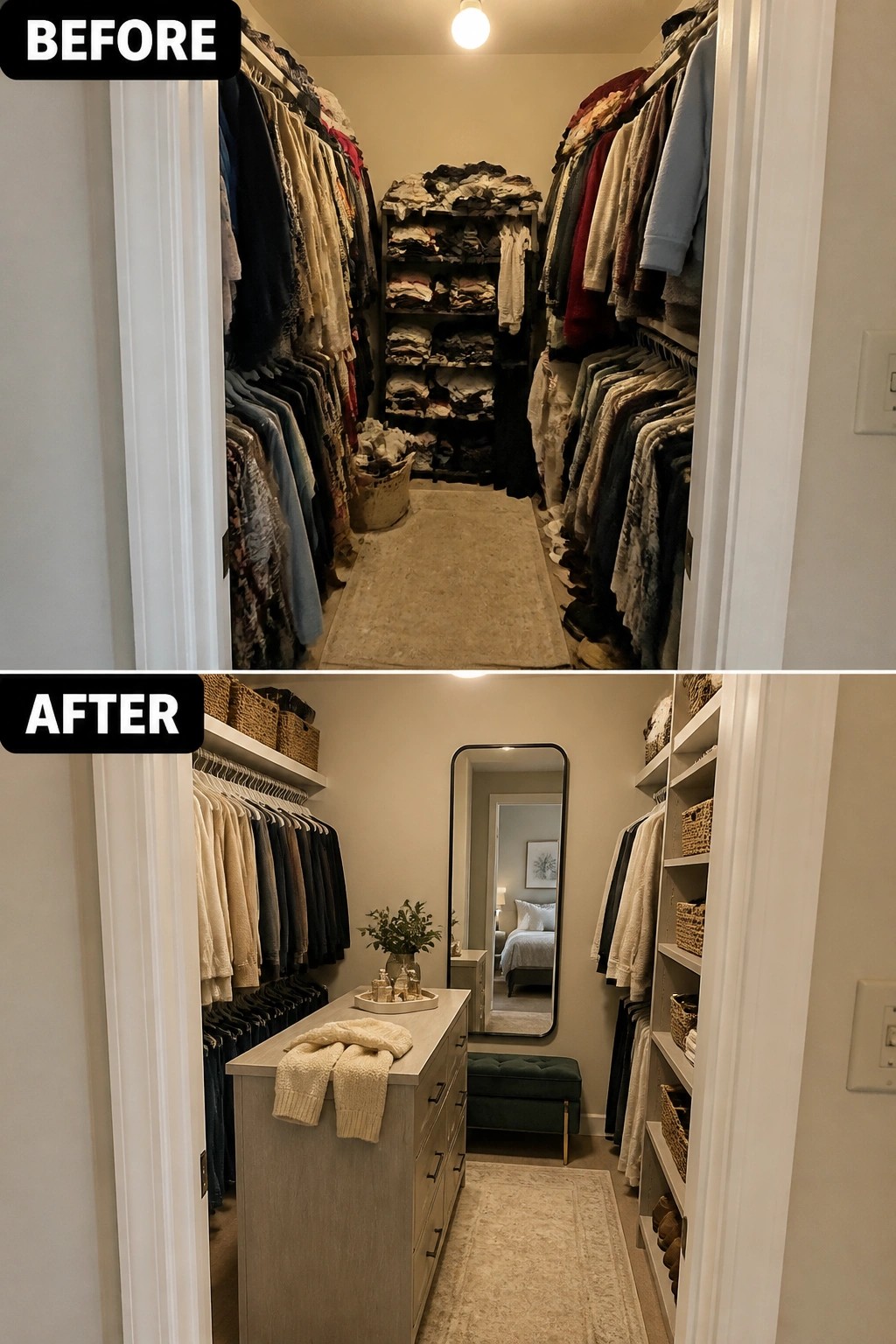
A long narrow closet often ends up with clothes piled on shelves and shoes scattered on the floor. Adding a central island or dresser gives you a place to fold and store items while keeping the walking path clear on both sides.
This setup works well in bedrooms where the closet is deep enough to hold a narrow piece of furniture. Measure the width first so the island leaves room to move and reach both walls easily. Baskets on upper shelves and a full-length mirror on the back wall help keep the space tidy and usable every day.
Add Built-In Shelves To Organize A Small Closet

A basic closet with just a hanging rod often leaves a lot of empty wall space that goes to waste. Adding a few shelves at different heights, along with some hooks below, turns the same area into useful storage for folded items, baskets, and accessories that do not need to hang.
This approach works well in bedrooms where the closet is narrow or has an awkward vent placement. Measure the space first and keep the shelves shallow enough to leave room for hanging clothes above or below them. Simple painted wood or pre-made units can give the same organized look without needing custom carpentry.
Install Built-Ins To Organize A Small Closet

A single hanging rod and open floor often leave clothes wrinkled and hard to find. Adding shelves, drawers, and a second rod gives every item a set place and keeps the floor clear.
This works best in bedrooms where the closet is narrow or shallow. Start with a simple system that matches the depth you have, and leave room for the clothes you actually wear most days instead of trying to fit everything at once.
Turn An Awkward Corner Into Simple Shoe Storage

A messy pile of shoes often takes over the space near a door, especially when there is not much room to work with. Swapping a tall open rack for a low storage bench with cubbies underneath gives the area a clear purpose and keeps daily shoes out of the way.
This setup works well in small entries or corners that already have a radiator or limited floor space. Keep the bench shallow so it does not block the walkway, and add one or two narrow shelves above for keys or plants if you want a bit more order without crowding the wall.
Add Built-In Shelves To Organize A Small Closet
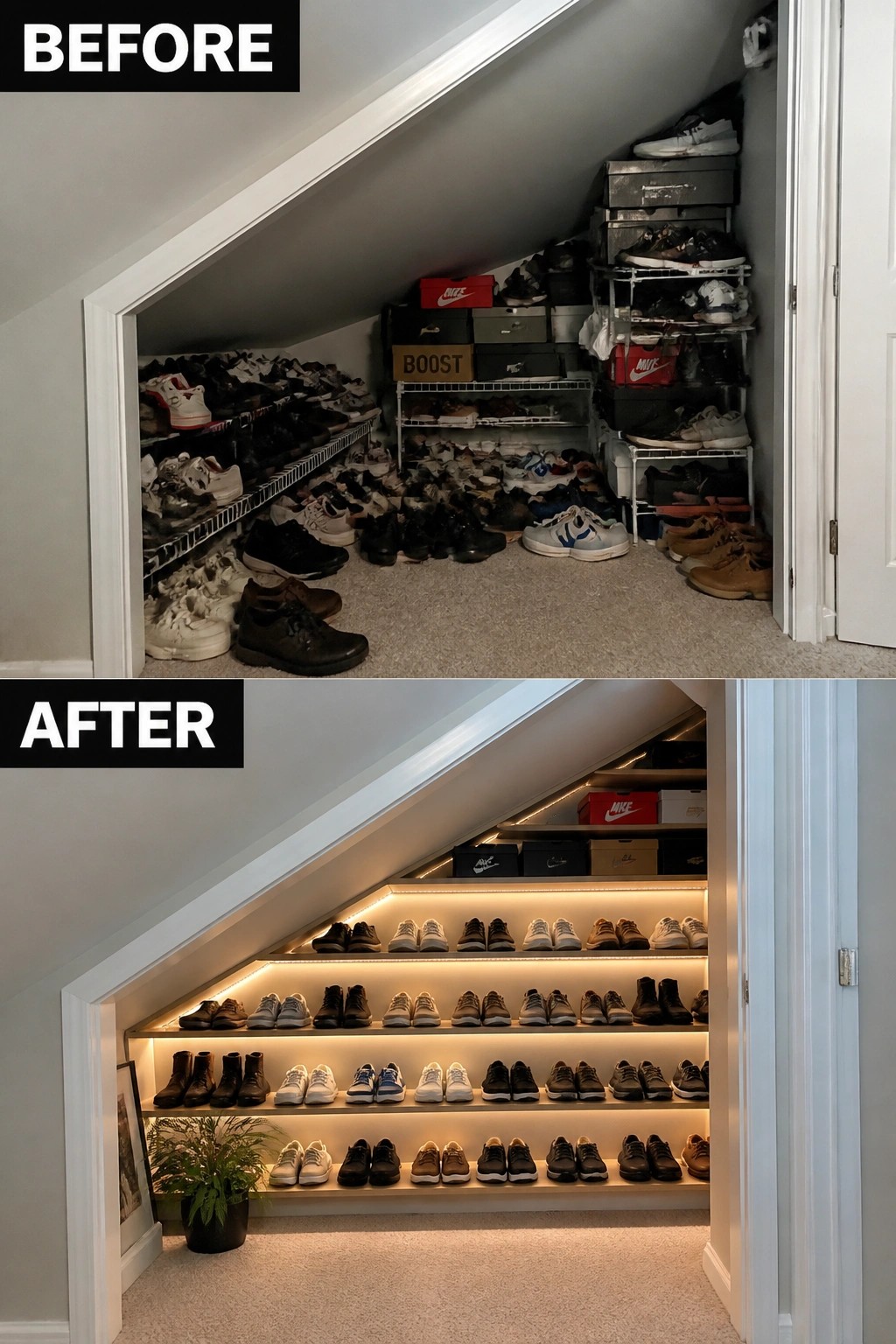
A messy under-stair closet often ends up as a dumping ground for shoes and boxes because the shape makes standard storage awkward. Built-in shelves fix that by following the slope of the ceiling and creating flat, usable surfaces at every level. The addition of simple strip lighting turns the whole space into something you can actually see and use instead of just stuffing things inside.
This approach works best in bedrooms or hallways where you need everyday access to items that would otherwise pile up on the floor. Start by measuring the depth and height at each step, then build or hire out simple plywood shelves that sit flush against the walls. Keep the number of rows modest so nothing feels cramped, and use the lighting only on the levels you reach most often.
Turn An Unused Closet Into A Window Seat

One practical way to handle an awkward closet next to a window is to build a bench inside it. The open space becomes a place to sit with storage drawers below and shelves above, which turns wasted depth into something useful instead of leaving the corner empty.
This works best in smaller bedrooms where the closet sits right by a window. Keep the door if you want the option to close it off later, and use the shelves for baskets or a few small items. It gives the room extra seating without taking up floor space.
Convert A Small Closet Into A Compact Desk Area

A closet stuffed with linens often takes up space without serving daily needs. Clearing it out and adding a desk surface along with basic shelving turns the same footprint into a usable workspace that keeps everything within reach.
This approach works best in bedrooms where floor space is tight. A pegboard on the back wall and a simple overhead light help keep tools and papers organized without crowding the area. Start with a good cleanout, then measure twice before adding any shelves or a desk panel so the new setup actually fits the depth of the closet.
Add A Rotating Rack To Organize A Small Closet

A cluttered closet floor and crowded hanging space often leave little room for accessories. Adding a central rotating rack gives scarves, belts, and smaller items their own spot without taking over the main rod. The change turns a messy pile into something you can actually reach.
This setup works best in narrow or corner closets where standard shelves feel cramped. Keep the top shelf for labeled bins and use the rack only for items you reach for often. It keeps the floor clear and makes daily use simpler without a full closet rebuild.
Use A Rug To Define A Small Closet

A small closet often becomes a dumping ground because the floor has no clear purpose. Placing a simple rug on the floor creates an obvious zone for shoes and everyday items. The before photo shows an empty tiled floor with clutter only on the upper shelf. After the change, the rug anchors the space and keeps shoes neatly in place while the shelf holds just a few baskets.
This idea works best in bedrooms where the closet door stays open often. Choose a rug that fits the floor without blocking the door swing. Keep the rest of the closet simple so the defined floor area stays easy to use every day.
Build Open Shelving Inside A Bedroom Closet
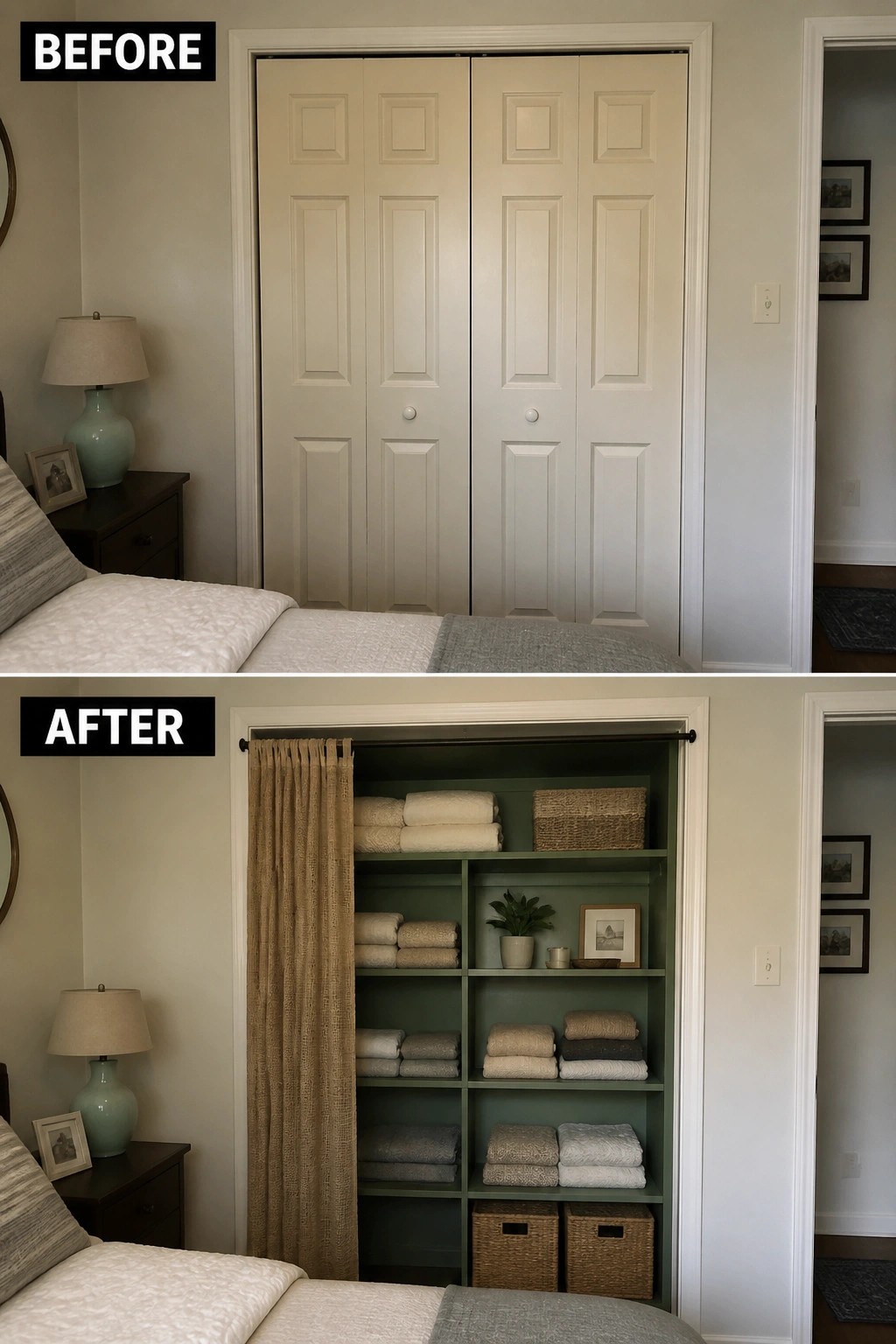
A standard closet with bifold doors often wastes space and hides what you actually need. Opening it up and adding built-in shelves turns the same spot into daily storage that stays neat and easy to reach. The curtain keeps the look soft while still letting you see what is inside.
This works well in smaller bedrooms where every inch counts. Paint the shelves to match or contrast the room, keep the arrangement simple with matching bins or folded items, and leave enough room on each shelf so nothing feels crammed. It is a practical step before adding more furniture or bins elsewhere.
Add Shelves To Organize A Small Closet

A closet that had shoes piled on the floor and clothes crammed together became much more practical once shelves and baskets were added. The floor stayed clear and everything gained its own spot without needing a bigger space.
This approach works best in hallways or bedrooms where the closet is narrow and already has a door. Measure the inside walls first, then add basic white shelving that fits the existing frame. Keep the top shelf for baskets and use the lower levels for shoes so the area stays easy to reach every day.
Frequently Asked Questions
Q: What can I really do with that narrow slice of space behind the bedroom door? A: Slide in a tall but skinny cabinet that matches your wall color. It tucks away out of the way yet gives you room for folded clothes or extra linens without crowding the walkway.
Q: My closet is barely two feet deep. How do I fit more than one row of hanging clothes? A: Put a second rod halfway down for shirts and shorter items. Leave the top rod for coats and dresses. This simple swap often doubles what you can store.
Q: The corner by the window feels wasted. Can I turn it into actual storage? A: Build a low bench with a hinged lid across that spot. It gives you a place to sit while pulling on shoes and hides blankets or sweaters inside at the same time.
Q: Should I bother with lighting inside a closet this small? A: Stick a battery puck light on the ceiling. Hit the switch when you need it and the whole space stops feeling like a dark hole.
