


Many bedrooms end up looking unfinished when everything stays in the same soft tone without any contrast in materials or finishes.
Warm neutrals paired with things like wood, wool, or woven accents tend to pull the space together in a way that feels more lived in.
Texture changes make the biggest difference here.
I usually start by swapping out a few pillows or adding a throw before moving on to bigger pieces.
These approaches show how a bedroom can feel more complete once the surfaces start to work with each other.
Add Rugs And Curtains To Finish A Plain Bedroom

A bare bedroom often feels unfinished even when the furniture is in place. Adding a large rug under the bed and hanging simple curtains around the window gives the room an immediate sense of warmth and structure. The soft layers also help tie the bed into the rest of the space instead of letting it float against empty walls.
This approach works well in any small or neutral bedroom where you want more comfort without buying new furniture. Start with the floor and windows first, then add a few pillows and a throw in similar tones. Keep the colors close so the room stays calm rather than busy.
Warm Up A Bedroom With Wood And Soft Neutrals
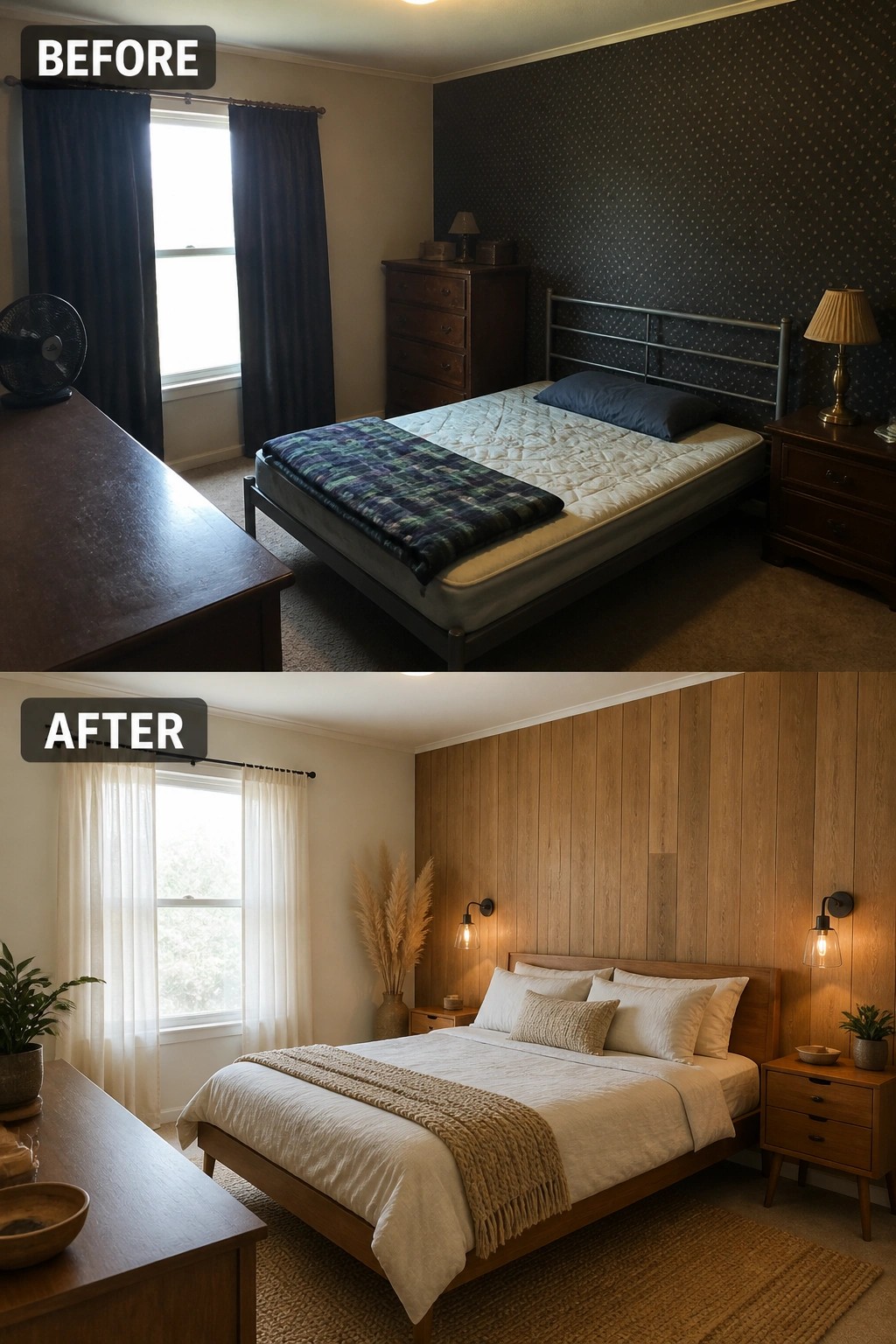
A dark patterned wall and heavy furniture can make a bedroom feel closed in. Switching the accent wall to light wood paneling and layering in pale bedding, a woven rug, and simple linen curtains immediately opens the space and gives it a calmer, more settled feel. The change is mostly about replacing cool dark tones with warmer materials that reflect light instead of absorbing it.
This approach works especially well in older homes where one wall feels too busy or dated. Start with the wall treatment, then bring in wood furniture and textured fabrics in the same warm range so nothing competes. Keep the palette simple and avoid adding too many new colors at once.
Swap Bold Patterns For Warm Neutral Layers
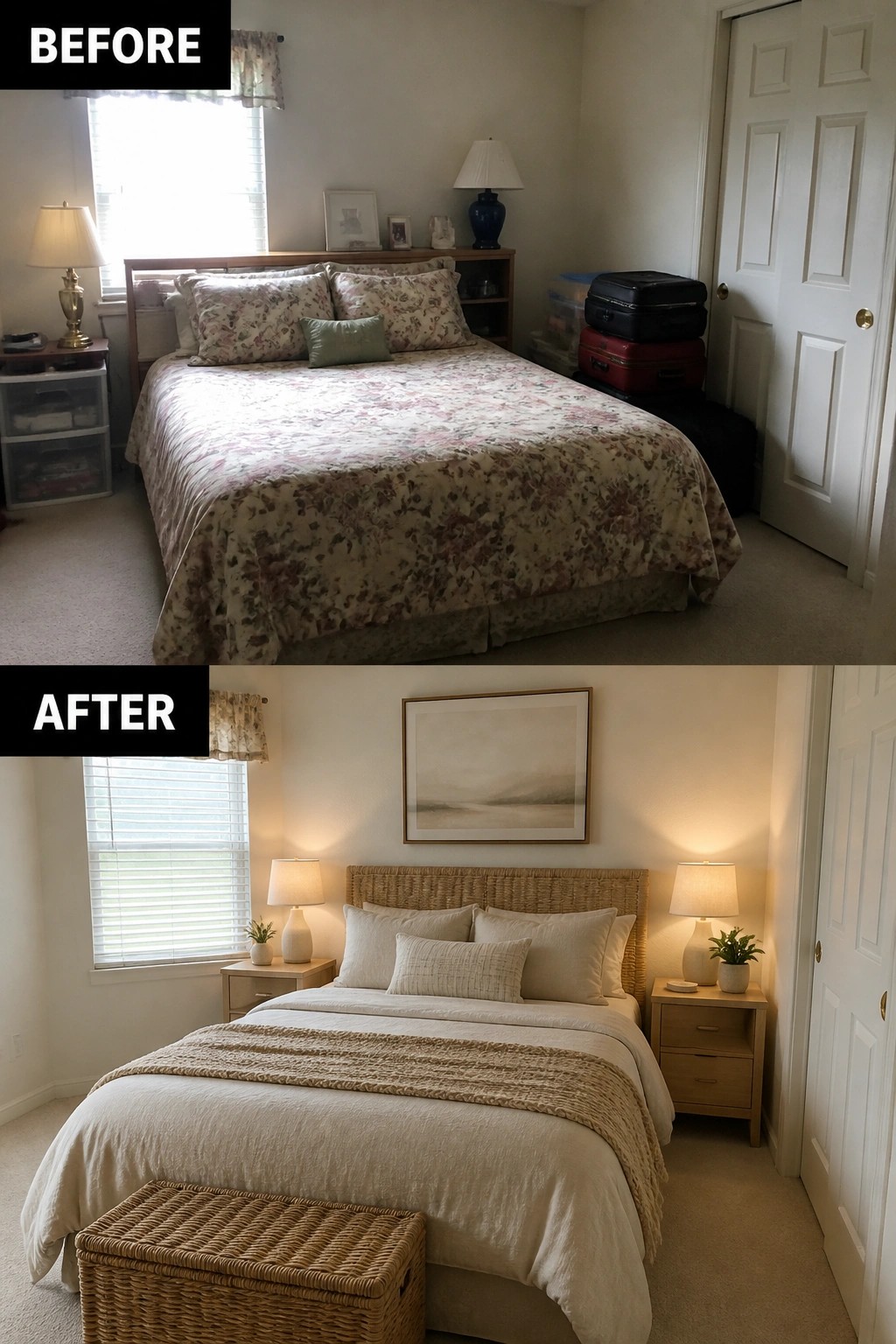
A busy floral comforter and mismatched accessories made the bedroom feel cluttered and dated. Replacing the pattern with simple neutral bedding and adding a woven headboard created a much calmer space that feels easier to rest in.
This idea works best when you want to refresh a room without major changes. Keep the color palette limited to two or three soft tones, then add interest through texture on the headboard, a throw, or matching lamps on either side of the bed.
Layer Natural Textures To Warm Up A Bare Bedroom

An empty bedroom with plain walls and nothing but wood floors can feel cold and unfinished. Adding a bed with a woven headboard, a couple of jute rugs, and simple linen bedding turns the space into something calm and usable right away.
This approach works best in rooms that already have decent light and flooring. Start with the bed and rugs to define the space, then bring in one or two wood pieces like a bench or nightstand. Keep the palette to warm neutrals so the textures do the work without needing much color.
Add Built-In Storage Under The Bed In An Attic Room
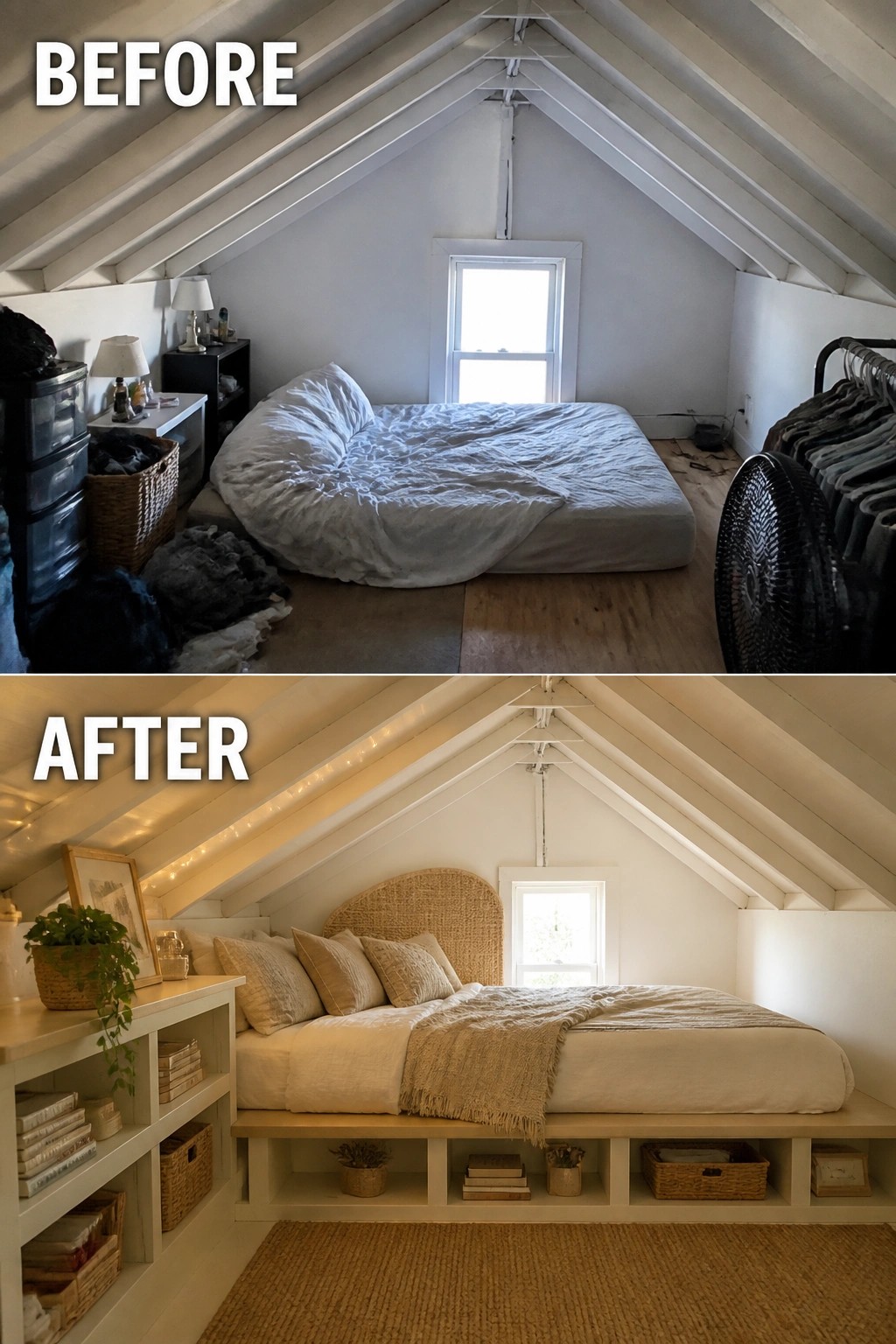
An attic bedroom often starts with odd angles and nowhere to put things. The before photo shows the space feeling scattered, while the after shows a simple wood platform that lifts the bed and creates open cubbies underneath for baskets and books. That one change turns the whole room into something that feels planned instead of leftover.
This idea works well in any small bedroom with sloped ceilings or limited wall space. Keep the bedding in warm neutrals and add a few woven pieces so the storage does not stand out. Measure the bed first so the platform fits without crowding the walkway, then use the cubbies for items you reach for often.
Lighten A Dark Bedroom With Warm Neutrals

A dark bedroom with black walls and heavy gray bedding can feel closed in fast. Switching to warm beige walls, soft white curtains, and layers of cream and brown instantly opens the space and makes it feel calmer without losing any warmth.
This approach works well in rooms that already have decent natural light. Paint first, then add a simple woven rug and linen or cotton bedding in the same tone range so nothing fights for attention. Keep the furniture light too, and the room will feel finished instead of heavy.
Add A Wood Accent Wall To Warm Up A Neutral Bedroom
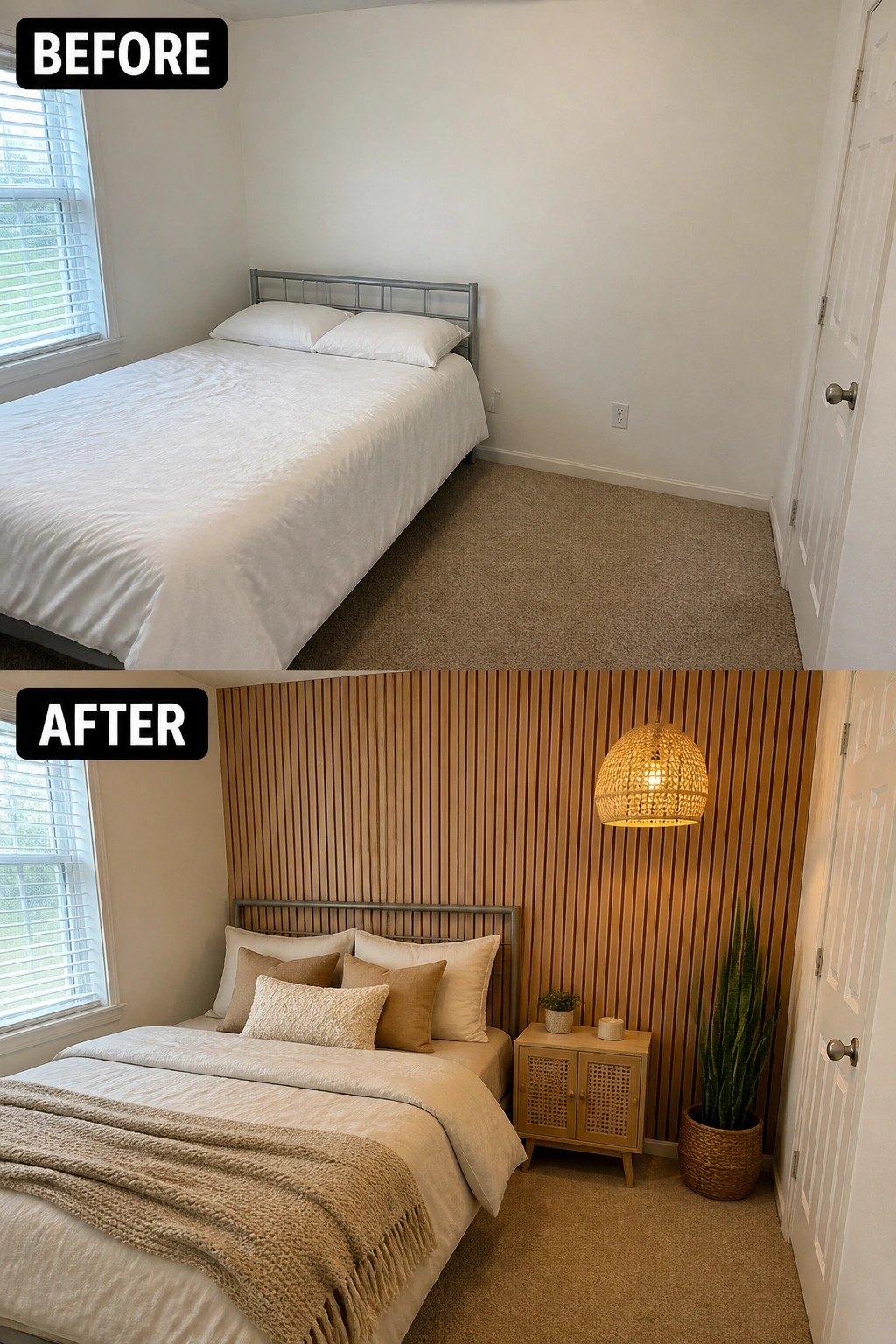
A plain bedroom with white walls often feels flat even when the furniture is in place. Adding a vertical wood accent wall behind the bed brings instant warmth and texture, while a pendant light and a few extra pillow layers help the space feel more finished without crowding it.
This idea works best in smaller rooms where you want one strong focal point. Keep the rest of the walls light, choose a natural wood tone that matches your flooring, and let the accent wall carry the cozy feeling.
Use Wood And Layered Neutrals To Warm Up A Bedroom
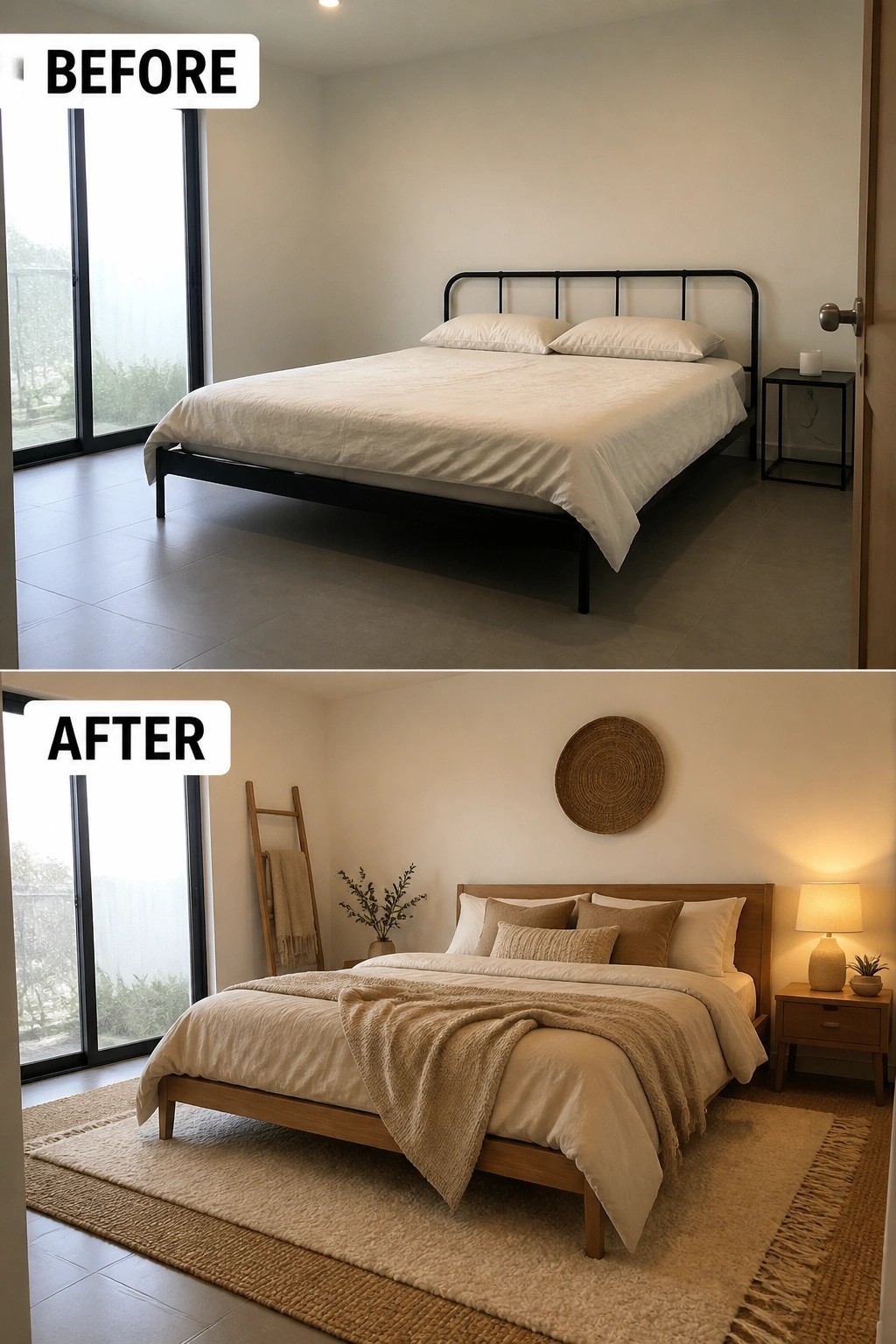
A plain bedroom with a black metal bed often feels cold and unfinished, even when the basics are in place. Switching the bed to a simple wood frame and adding a large rug, textured bedding, and a few natural accents makes the room feel much more settled and comfortable.
This approach works well in any bedroom that needs more softness without a lot of color. Start with the bed and rug as the main anchors, then add a couple of pillows, a throw, and one or two lamps so the lighting feels even. Keep the palette limited to warm neutrals so nothing competes.
Layer Warm Neutrals For A Calmer Bedroom

The bedroom shifted from bright turquoise walls and a busy mix of posters to a much softer space once the walls were painted a warm beige. Layering cream bedding, a fringed throw, and a simple macrame hanging replaced the clutter and gave the room a quieter feel.
This works especially well in smaller bedrooms where bold color can start to feel too much. Paint the walls first, then add texture through bedding and one or two natural pieces like a jute rug or woven chair so the room feels finished without looking crowded.
Lighten A Heavy Bedroom With Warm Neutrals

A bedroom loaded with dark wood and busy patterns often feels closed in. Replacing the heavy curtains and dark floral bedding with sheer panels and simple light layers brightens the whole space while keeping it calm and comfortable.
This idea suits bedrooms that feel weighed down by older fabrics or finishes. Begin with the largest items like curtains and the main bedding, then bring in a few natural textures such as a woven accent or light wood pieces to soften the room without stripping it bare.
Warm Up A Plain Bedroom With Natural Textures
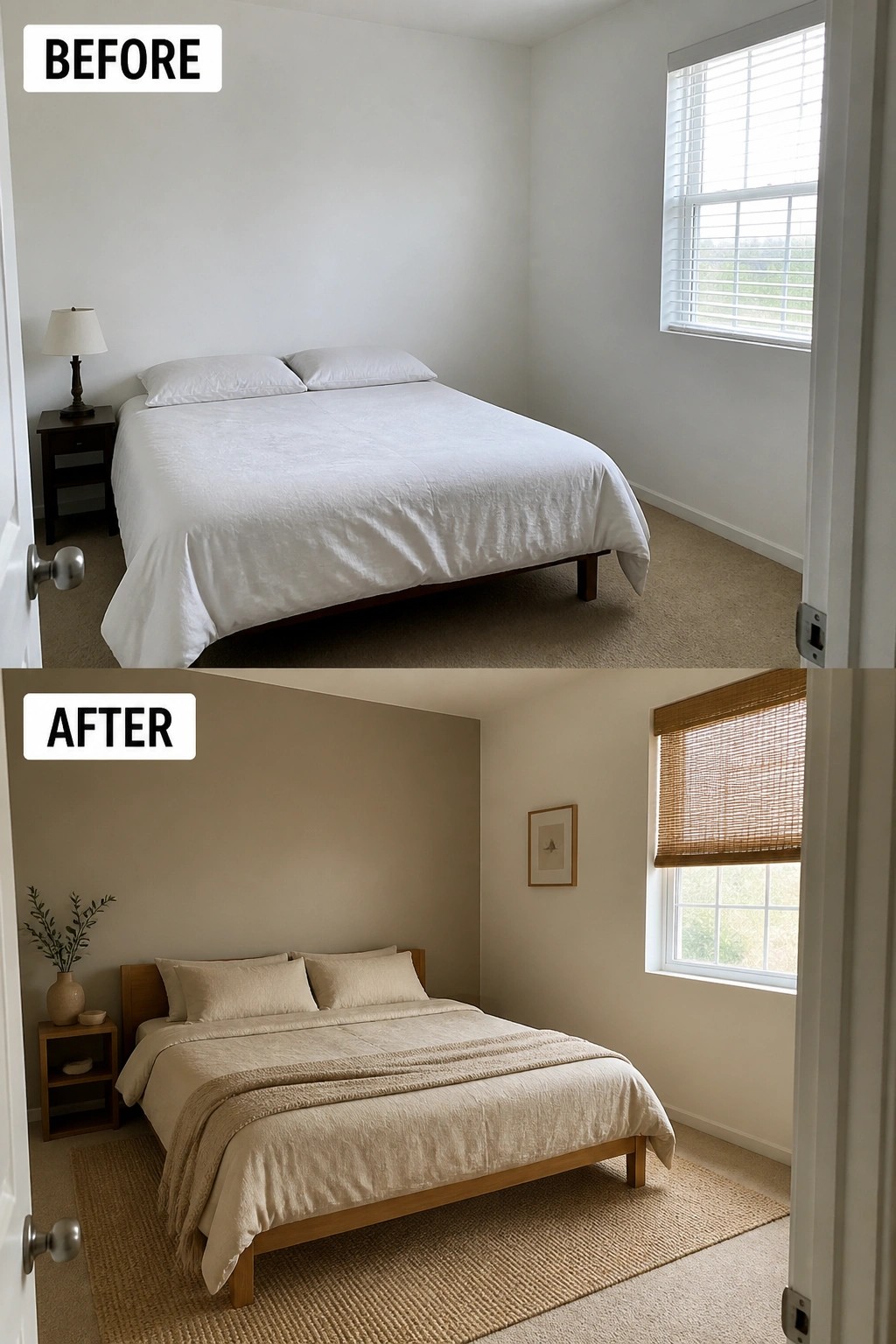
A bedroom with white bedding and plain walls often feels cool and unfinished. Switching the bedding to warm beige tones, changing the bed frame to light wood, and adding a woven shade plus a jute rug instantly makes the space feel softer and more lived in.
This works best in smaller bedrooms where you want a calm feel without adding much furniture. Keep the color range narrow so the natural textures stand out, and start with the bedding and rug before worrying about smaller details.
Layer Warm Neutrals To Finish A Bare Bedroom

An unfinished attic room with bare walls and floors often feels cold and temporary. Adding soft neutral bedding, a large woven rug, and a few simple layers like a chunky throw and string lights around the window turns the space into a room that feels complete and ready to use.
This idea works best in small bedrooms or attic spaces where major renovations are not an option. Focus first on the bed and floor to anchor the room, then add just enough lighting and textiles to soften the walls without filling every corner.
Add A Window Seat To Warm Up A Neutral Bedroom
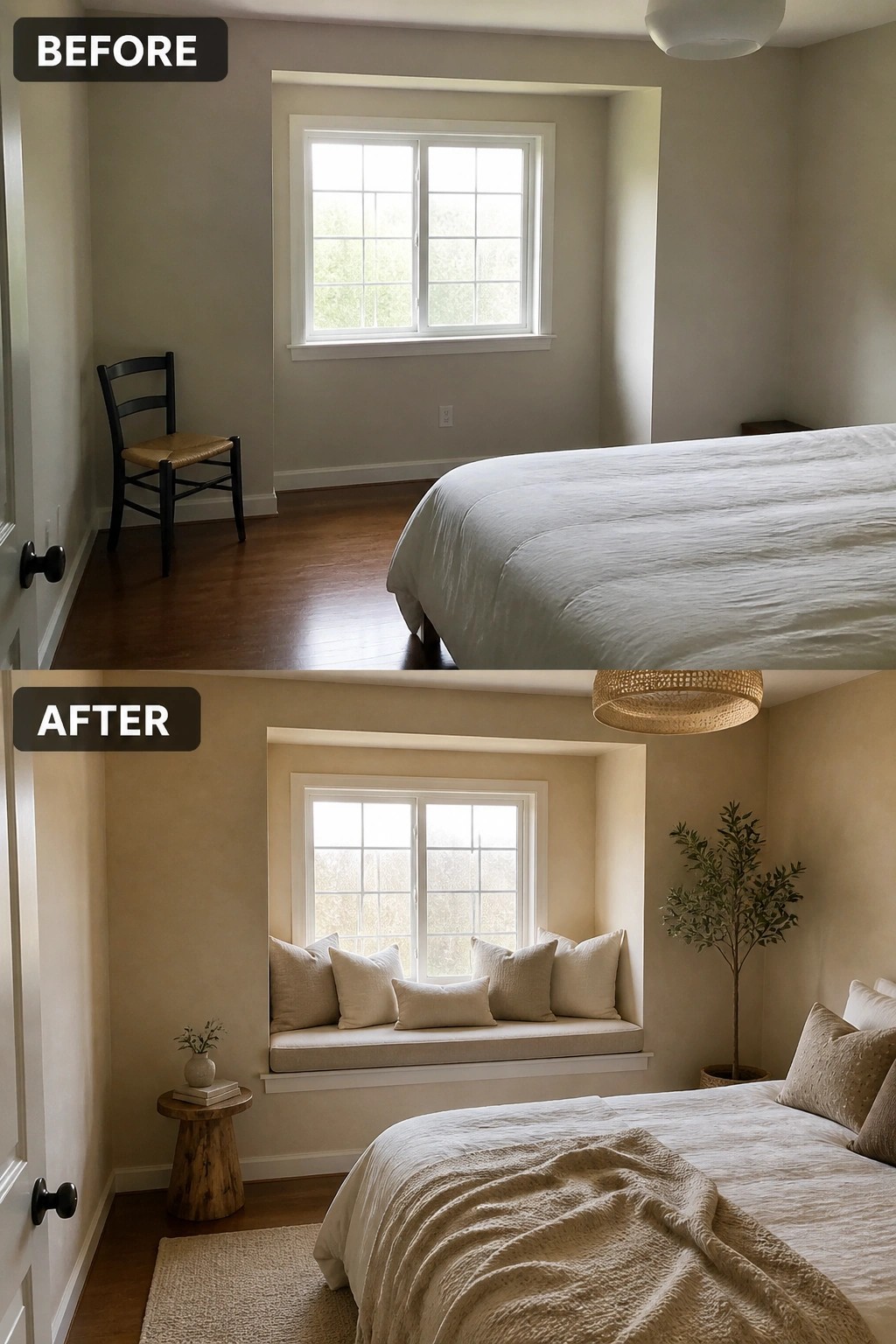
A plain bedroom with just a bed and basic window can feel a little cold and unfinished. Adding a window seat with a simple cushion and a few pillows turns that empty wall into a soft spot to sit or read. The change makes the room feel more lived in without needing a lot of new furniture.
This idea works best in smaller bedrooms where you want to add comfort without crowding the floor. Keep the cushion and pillows in the same neutral tones as your bedding so everything stays calm. A small side table and one tall plant nearby help the seat feel like part of the room instead of an afterthought.
Lighten Dark Walls To Open Up A Narrow Bedroom
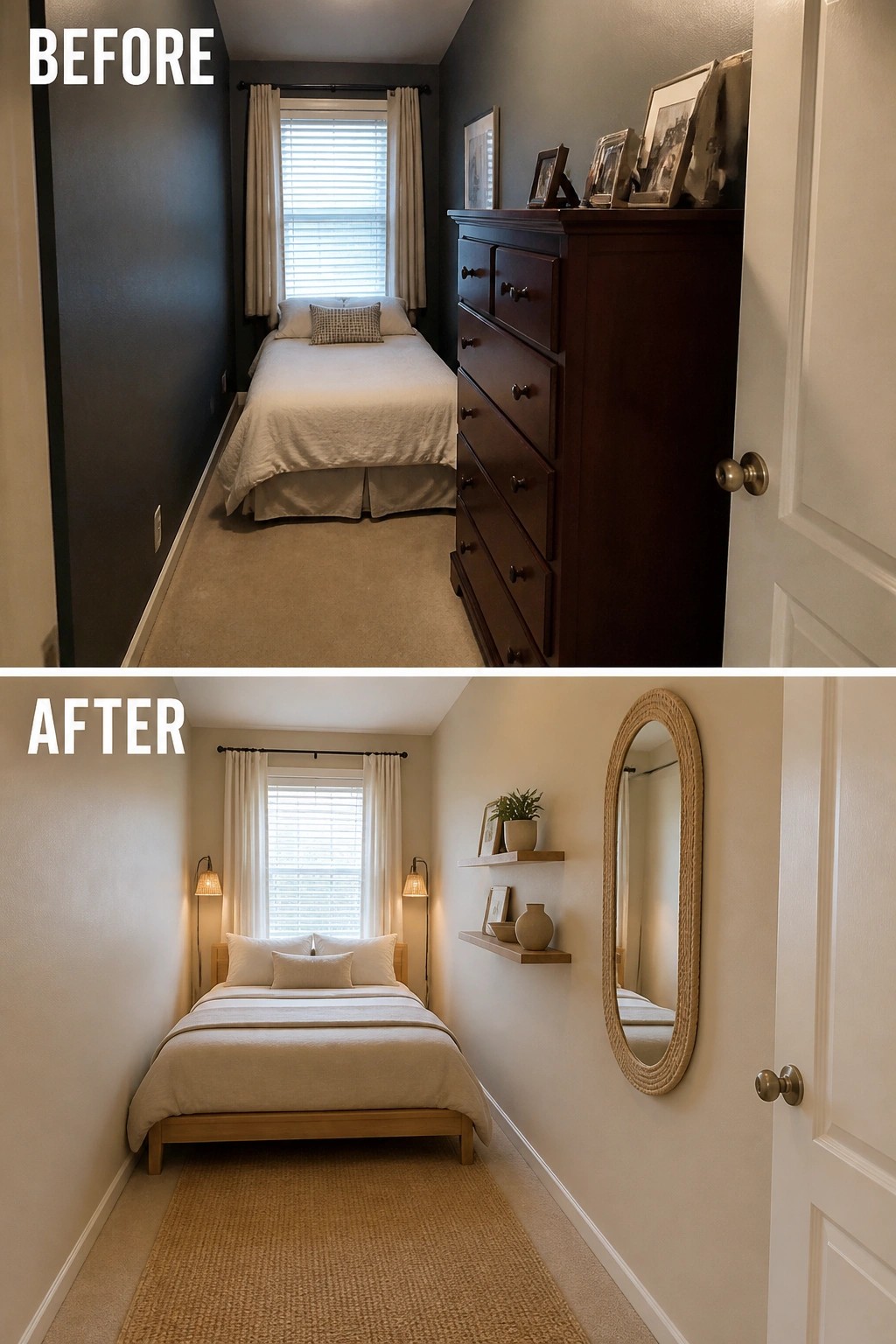
Painting over dark walls makes the biggest difference in a small bedroom. The before photo shows how deep navy paint and a heavy dresser made the space feel closed in and dated. Switching to a warm off-white and removing the oversized piece instantly gave the room more air and a calmer feel.
This approach works well in older homes or any narrow room where light is limited. Keep the furniture low and simple, then layer in natural textures like a woven rug and a few wooden accents. The goal is to let the walls do the work instead of adding more pieces that compete for space.
Warm Up A Bedroom With Soft Neutrals And Textures

A bedroom with busy patterns and dark flooring often feels dated and heavy. Switching to light wood floors, simple white bedding, and a few natural textures like a jute rug and woven light softens the whole space and makes it feel calmer.
This idea works best in average-sized bedrooms where you want to keep things restful. Start with a neutral base on the walls and bed, then layer in texture through rugs and lighting. It suits most homes and avoids the need for major changes.
Use A Room Divider To Define The Sleeping Area

A plain bedroom often feels unfinished when the bed sits out in the open with no separation from the rest of the space. Adding a simple woven screen creates a clear sleeping zone, softens the light, and gives the room a calmer layout without closing it off completely. The change from a messy, floating bed to a low frame with layered neutrals shows how one piece can pull everything together.
This idea works well in small apartments or rooms that double as living space. Keep the divider light and natural so it does not block light or make the room feel smaller. Pair it with low furniture, soft bedding, and one or two warm lamps to keep the focus on comfort rather than clutter.
Turn An Open Doorway Into A Workspace
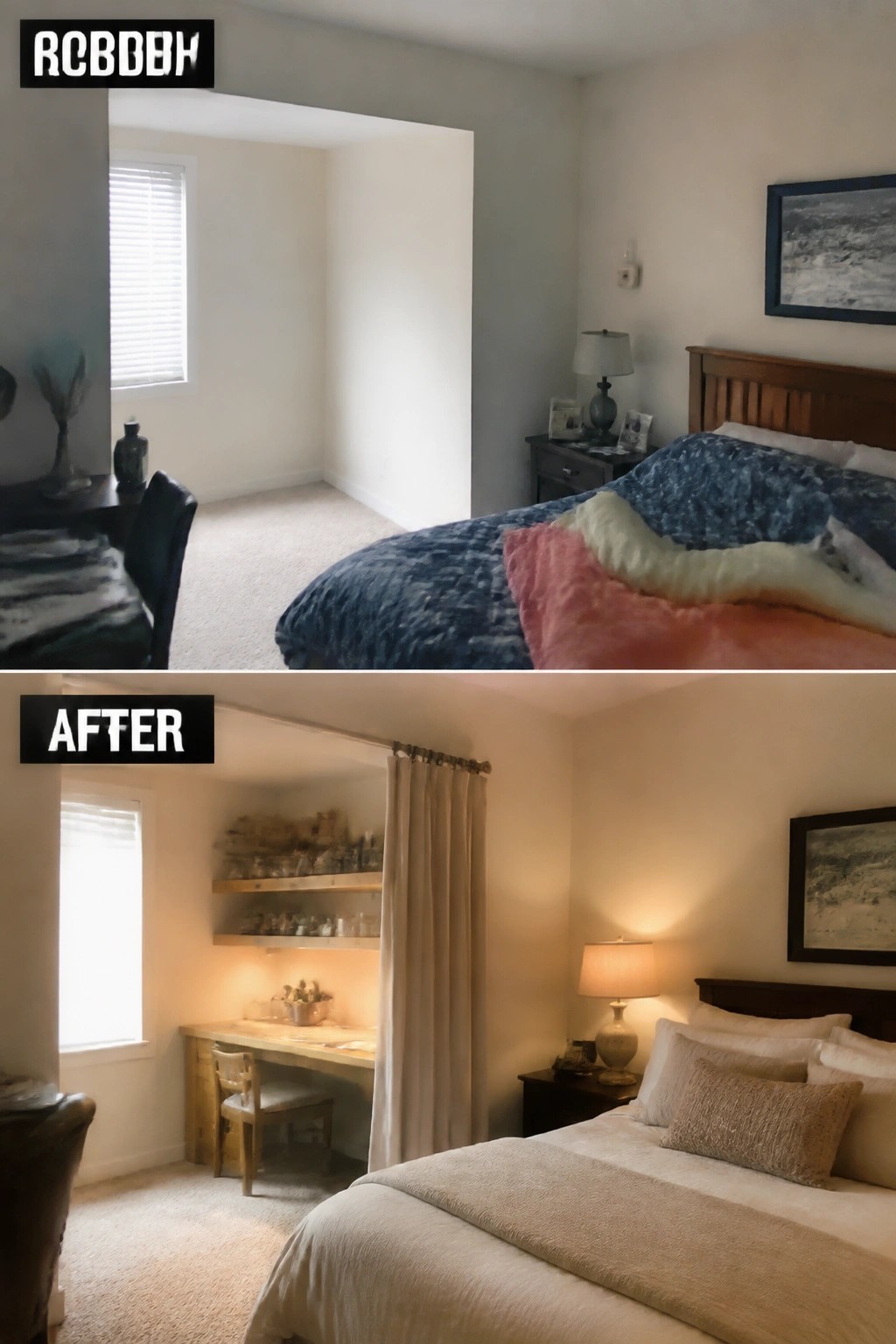
An open doorway next to a bedroom often stays empty and unused. Here the space gained a simple desk, floating shelves, and a curtain that closes it off when needed. The result gives the room a clear purpose and makes the whole area feel more finished.
This works best in homes where bedrooms have extra openings or small alcoves. Keep the desk and shelves light in scale so the space does not feel crowded, and choose a curtain that matches the bedding for a calm look. It suits guest rooms or smaller homes that need a quiet spot without building a full wall.
Layer Neutral Textiles To Soften A Kid’s Room

A bright patchwork quilt and plastic toy bins can make a small bedroom feel scattered. Switching to a simple white coverlet, a soft rug, and woven baskets pulls everything together and gives the space a calmer, warmer feel without losing any function.
This approach works well in rooms that already have wood floors or trim. Keep the main pieces light and repeat the same natural textures in the baskets and rug so the room stays easy to maintain as kids grow.
Layer Textiles And Lighting To Finish A Bedroom

A basic bedroom often feels flat when the bed sits alone with little else around it. Adding a textured headboard, extra pillows, a throw blanket, and matching lamps on both sides gives the space a settled, comfortable feel without changing the furniture or walls.
This idea works best in rooms that already have the main pieces in place. Keep the bedding simple and neutral, then add layers gradually so the bed becomes the clear focal point. Balanced lighting on either side of the bed helps the room feel complete at night.
Layer Warm Neutrals To Make A Bare Room Feel Finished

A plain attic bedroom with unfinished walls and basic bedding can feel much more settled once the surfaces are painted a soft off-white and the bed is dressed in textured layers. Adding a rug under the bed and placing lamps on either side gives the space a warmer balance without any strong color.
This idea works best in small or sloped rooms where you want a calm result. Keep the palette limited to creams and beiges, then build up with a few pillows, a throw, and simple lighting so the room feels ready to use rather than still under construction.
Layer Soft Textures To Warm Up A Plain Bedroom
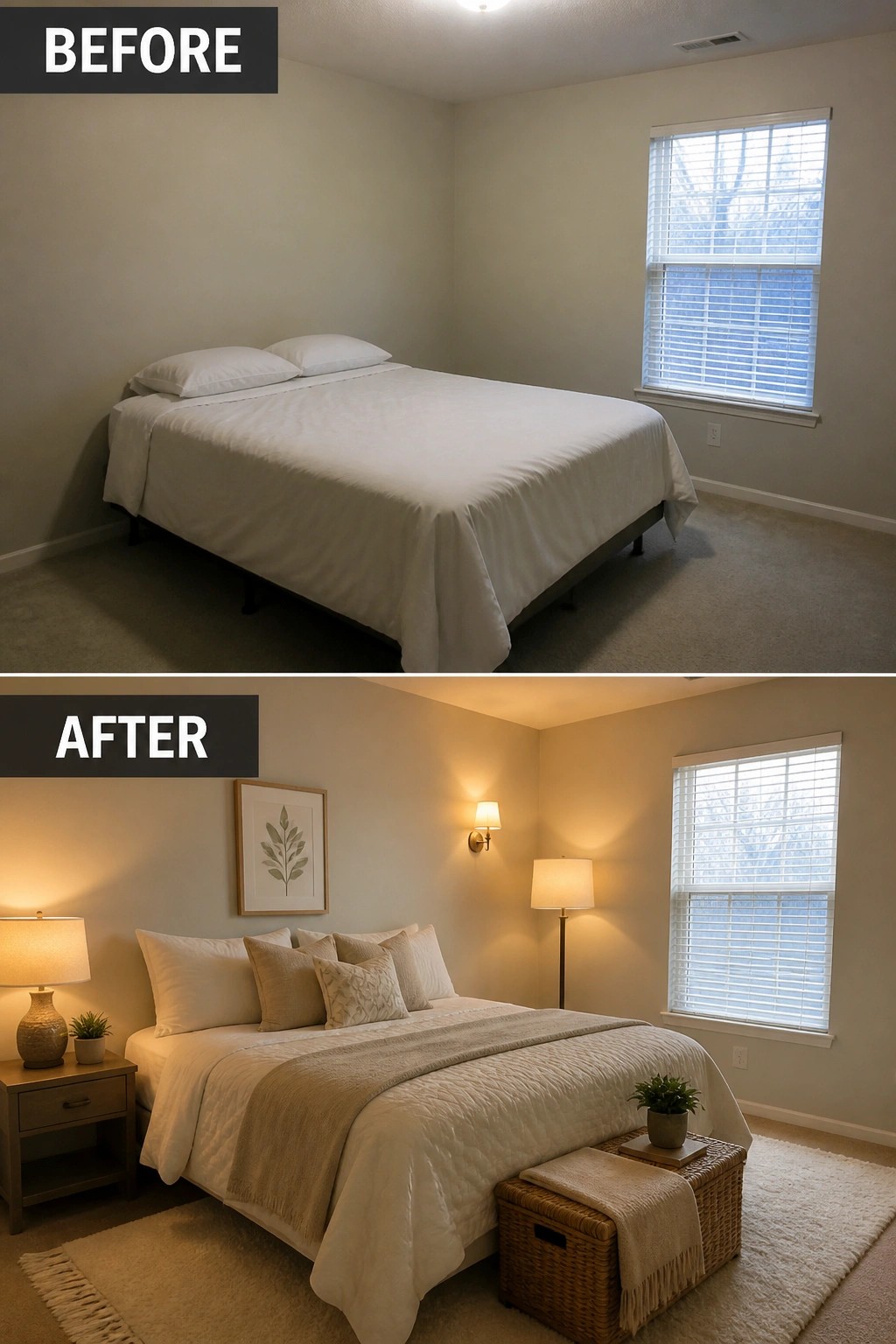
A simple bedroom often feels unfinished when it has little more than a bed and basic bedding. Adding layers of neutral fabrics, a couple of rugs, and a few lamps brings in warmth and makes the space feel complete without needing a full overhaul.
This approach works well in smaller rooms where you want comfort without crowding the floor plan. Start with one or two rugs to define the bed area, then add pillows, a throw, and bedside lighting so the room feels ready for use at any time of day.
Use Neutral Bedding To Soften A Bedroom
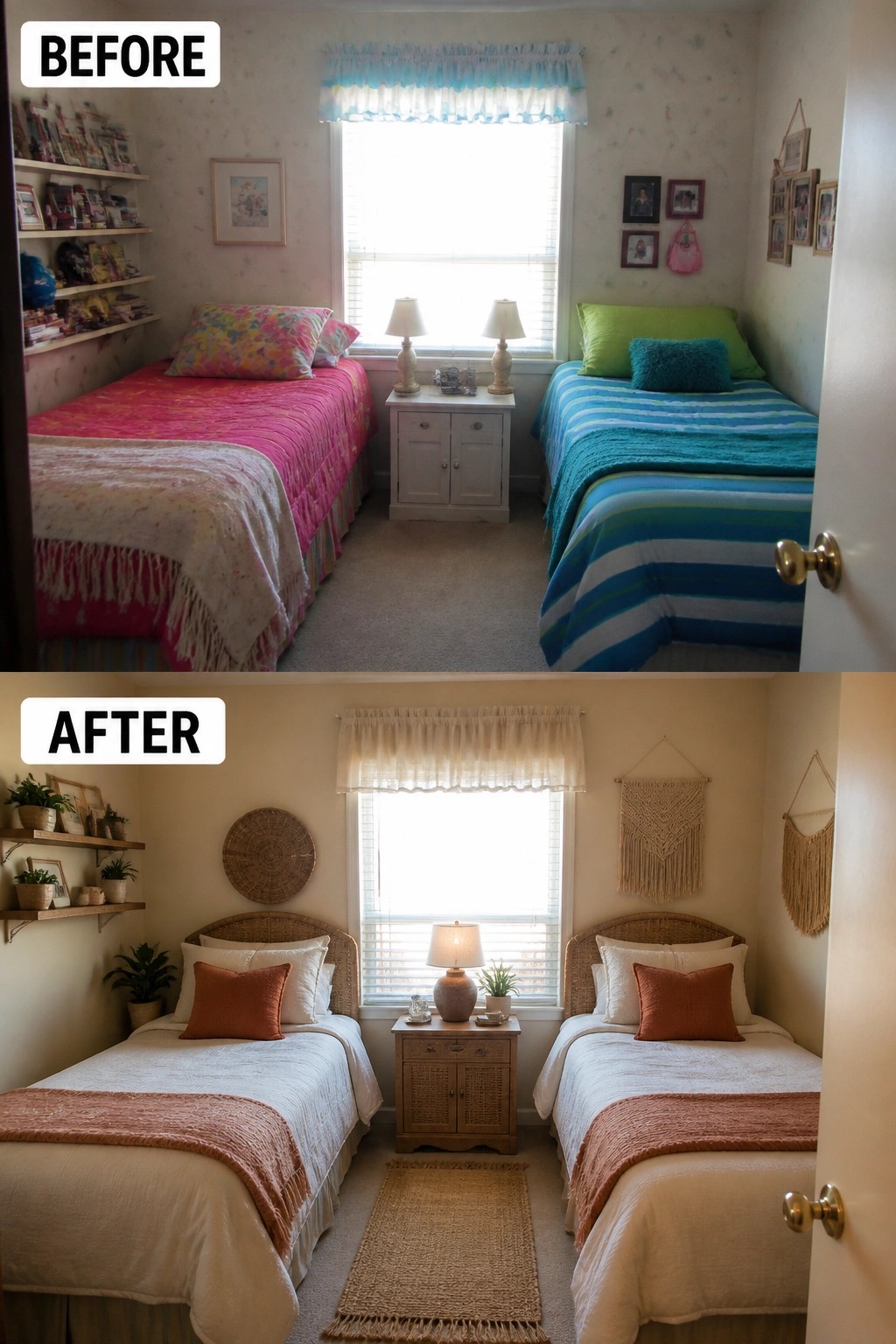
The before version had two very different bed covers in bright pink and bold stripes, which made the small room feel busy and scattered. Switching both beds to matching white bedding with a single terracotta throw instantly pulled everything together and gave the space a much calmer feel. The natural rattan headboards and simple macrame pieces added warmth without adding more color or pattern.
This approach works especially well in rooms that need to feel restful rather than playful. Keep the bedding light and simple, repeat one warm accent color on both beds, and add just a few woven textures so the room stays easy to maintain.
Frequently Asked Questions
Q: Where should I begin if I want to refresh my bedroom without spending much?
A: Focus on swapping out your bedding for something in a warm neutral like oatmeal or sand. Then add one natural texture like a linen pillow cover. These small swaps create that soft look right away.
Q: How do I mix different natural textures so they feel cozy instead of cluttered?
A: Layer them gradually. Start with a woven headboard, then add a cotton blanket and a sheepskin rug. Stop once the room feels inviting and leave some empty space.
Q: What if my bedroom has cool colored floors already?
A: Bring in warm elements through the bedding and curtains to balance it out. A few terracotta accents in pillows can shift the mood without fighting the floors. Test a few pieces before committing.
Q: Do I need to replace all my furniture to get this look?
A: No, just update what you have with soft covers or throws in natural fabrics. That keeps the warmth and texture front and center.
