
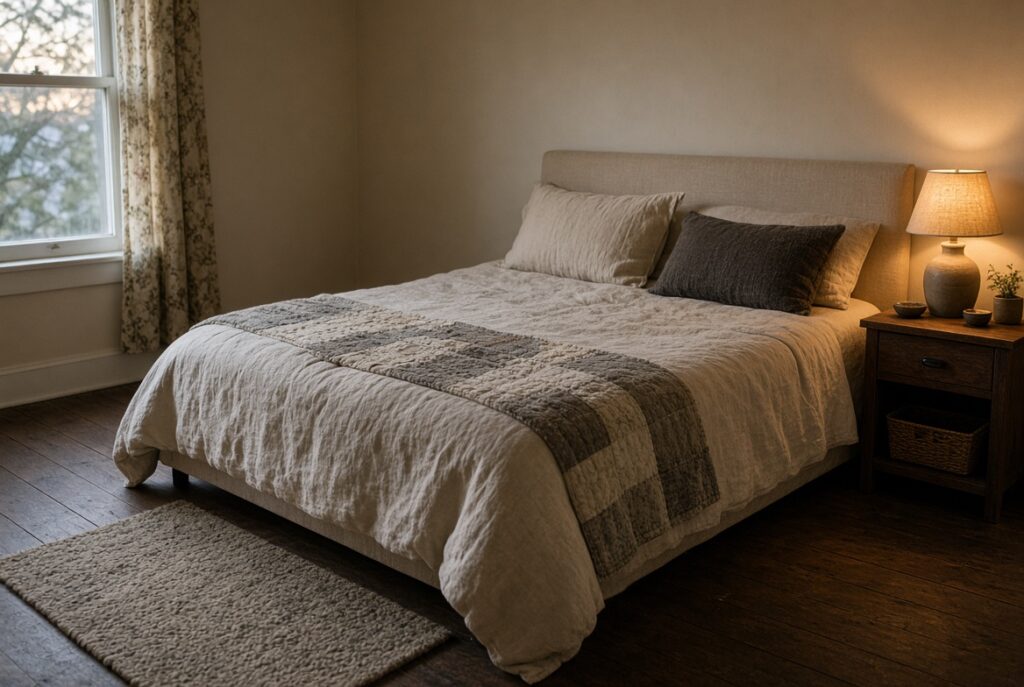
A cozy bedroom is a room you can fall asleep in without first negotiating with the furniture. The bed is easy to reach. The light can go low. The floor next to the bed is clear. Color and fabric take the edge off the walls. None of that requires a remodel.
This is a working sequence for a normal room: layout first, then light, then color, then bedding, then storage. Small rooms and rentals follow the same order. They just have fewer places to put things. The wider set of room notes lives on the Cozy Bedroom hub.
If the room is tight, read the companion on small bedroom layouts. If you rent, skip ahead to the renter section and work backward from what you can undo.
Start with how the room is used
Before moving furniture, write down what the room has to do after 9 p.m. Sleep is the main job. Dressing, charging a phone, reading, and storing tomorrow’s clothes are the usual extras. A guest bed, a desk, or a treadmill is a second job. Two jobs in one small room is how a bedroom starts to feel like a hallway with a mattress.
Give sleep the best real estate: the quietest wall, the darkest corner, the clearest floor path. Everything else fits around that. A desk that faces the bed and stays lit after bedtime will keep the room from settling down, even if the paint is perfect.
Layout and circulation
Circulation is the strip of floor you actually walk. In a bedroom that strip should get you from the door to the bed, from the bed to the closet, and from the bed to a window or lamp without turning sideways.
If two people share the bed, try to keep a usable path on both sides. Usable means you can stand, sit to put on shoes, and open a nightstand drawer. If the room cannot give you two good sides, give one side a full path and push the other side almost to the wall. Two cramped aisles feel smaller than one generous side and one tight side.
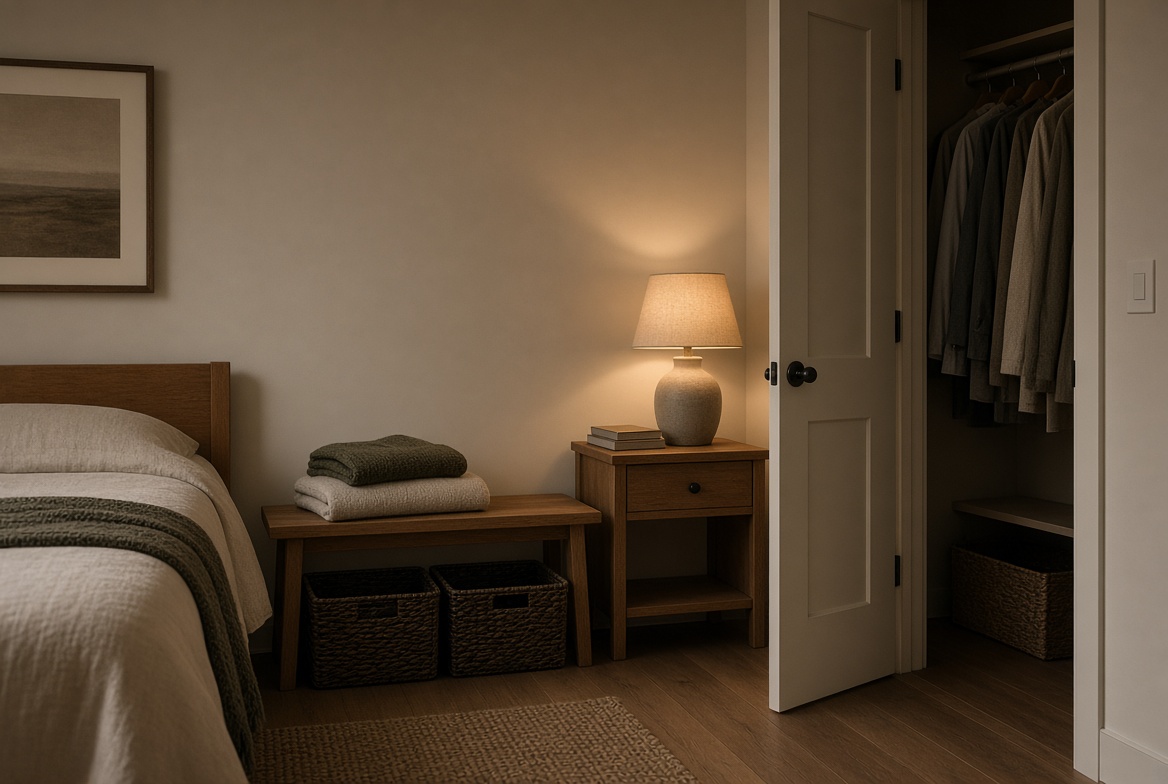
Keep the foot of the bed clear if you can. A bench is useful only when it does not block the closet door or become a laundry pile. In a small room, skip the bench and put a low basket under the bed instead.
Nightstands should be as wide as the things you actually set down: a lamp, a glass, a book, a phone. A skinny pedestal looks lighter in photos and fails at 11 p.m. If there is no room for two tables, use one table on the open side and a wall shelf or clamp lamp on the tight side.
Measure before you buy. Tape the mattress footprint and the swing of the door on the floor. A bed that is two inches too long will steal the only good path in the room. Leave the closet door a full swing too. A beautiful layout that only works when the closet stays shut is not a finished layout.
Layered lighting
One ceiling fixture is a work light. It flattens faces, throws shadows under the brow, and makes the room feel like a waiting area. A restful bedroom needs at least two other sources you can use with the ceiling off.
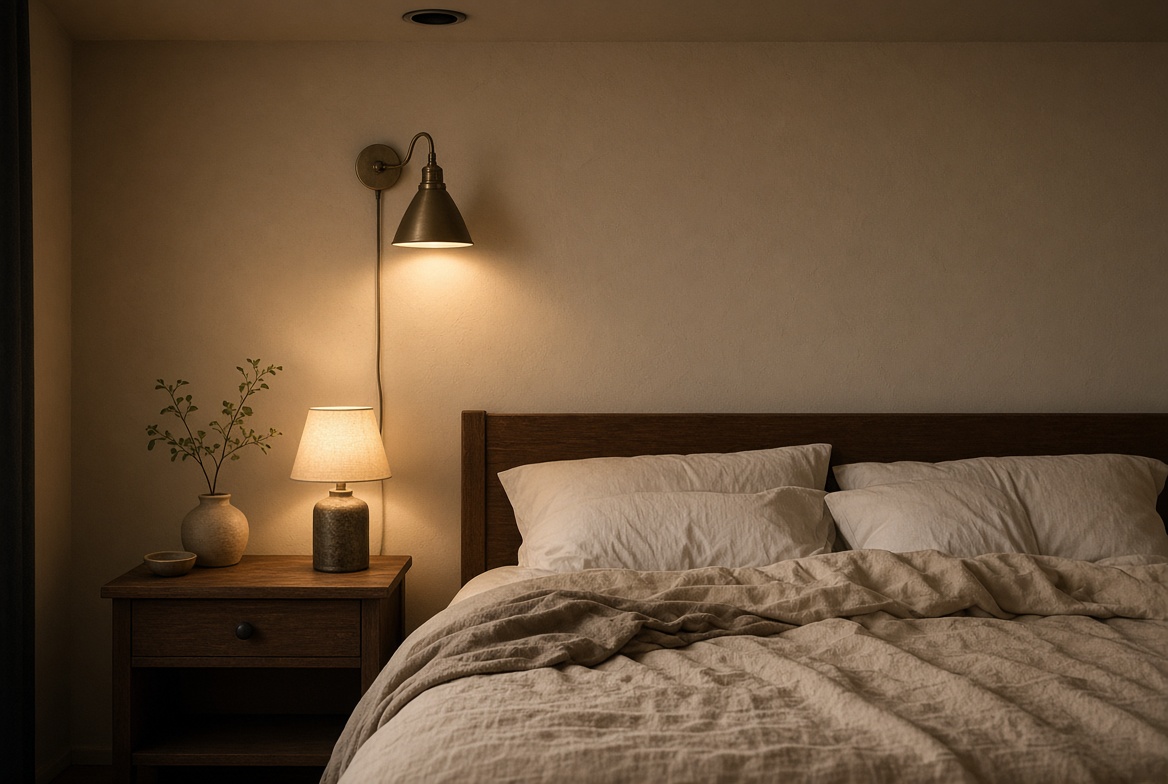
Put the first layer at the bed: a lamp on the nightstand, a plug-in sconce, or a small clip light on the headboard. This is the light you read by and the light you shut off last.
Put the second layer somewhere else in the room: a floor lamp in a corner, a lamp on a dresser, or a low plug-in lantern near the closet. That second pool of light keeps the far wall from going dead when the bedside lamp is on.
Use warm bulbs. For most bedrooms that means a labeled warm-white bulb around 2700K, not a daylight bulb meant for a kitchen task light. If two lamps in the same room use different color temperatures, the room will look unfinished even when the furniture is fine.
Put lamps on switches you can reach from the bed if you can. A cheap plug-in dimmer or a smart plug on the lamp cord is enough. The goal is to avoid crossing a dark room to hit a wall switch.
A fuller lighting plan, including which fixtures to add first, is in the bedroom lighting guide.
Warm, calm color
Color in a bedroom has one job after dark: stay quiet. Bright white with a blue undertone reads as a clinic under warm lamps. A slightly muted warm white, greige, clay, or dusty green takes lamp light without glowing.
Test paint on more than one wall, and look at it at night with the lamps you will actually use. Daylight on a sample card is not the light you sleep in. A color that looks gentle at noon can go yellow or gray at 9 p.m.
You do not have to paint every wall. One calmer wall behind the bed is often enough, especially in a rental where you will only do the work once. If you cannot paint, warm the room with the largest surfaces you control: curtains, a rug, and the bedding.
Keep contrast low near the bed. A black headboard against a cool white wall will keep catching the eye. Soft contrast (linen on plaster, wood on clay) lets the room recede.
For a tighter set of palette choices, use the bedroom color guide.
Bedding and texture
Bedding is the fastest change that reads from the doorway. The stack that usually works is simple: a fitted sheet, a flat sheet if you use one, a quilt or lightweight duvet, and one throw at the foot. Two pillows per person for sleeping, plus one or two shams if you like a finished look during the day.
Texture does more than pattern. Washed linen, a cotton quilt, and a wool or knit throw give the bed three different surfaces without a printed theme. Matching every piece to one catalog set often looks stiff.
Keep the palette to two or three neighboring colors. A cream sheet, a taupe quilt, and a darker throw will look calmer than a white hotel stack with a bright patterned runner.
Weight matters as much as color. If you sleep hot, a quilt plus a foldable throw is easier to adjust than a heavy comforter you kick off at 2 a.m. If you sleep cold, add a thin blanket between the sheet and the quilt instead of buying a thicker duvet that never comes off.
A rug next to the bed changes how the room feels in the morning. Bare cold floor is why a nicely made bed still feels unfinished. In a small room, a runner on the open side is enough.
Step-by-step layering lives in the bedding guide.
Storage without extra clutter
Clutter in a bedroom is usually not a personality problem. It is a missing landing spot. Clothes come off at the bed. Chargers collect at the bed. Tomorrow’s outfit sits on the chair because the closet is a pile.
Give the room three landing spots and stop there: a hook or chair for tonight’s clothes, a closed hamper, and one clear surface on the nightstand. If a fourth pile appears, it needs a home in the closet or it needs to leave the room.
Closed storage beats styled storage next to the bed. A basket with a lid under the bench, a drawer in the nightstand, and a hamper with a cover will do more than open bins of folded towels. The eye reads open storage as work still to do.
Keep the floor next to the bed empty. That strip is what you see first in the morning and last at night. Shoes, laundry, and charging cables belong on the closet side or in a tray on the dresser.
If the closet is the mess, fix the closet before buying another dresser. A second rail, a set of matching hangers, and two labeled baskets on the floor will recover more space than a new piece of furniture in the room.
More specific storage layouts are in the bedroom organization guide.
Small rooms
A small bedroom gets cozy by subtraction, not by adding a reading nook, a vanity, and a king bed. Choose the mattress size that leaves a path. A comfortable full with two clear sides will feel larger than a king you have to climb onto from the foot.
Use height. A wall sconce frees the nightstand. A rail in the closet frees the floor. Curtains hung close to the ceiling make the wall taller than a short cafe rod.
Limit furniture to the bed, one storage piece, and lighting. A desk in a 9-by-10 bedroom should fold or live elsewhere if the room also has to be dark and quiet at night. If the desk has to stay, face it away from the bed and give it its own lamp so the overhead light does not have to stay on for both jobs.
Mirrors help only when they reflect a lamp or a window, not a closet of hanging shirts. Place them where they bounce light down the path, not opposite the bed if that keeps you watching yourself try to sleep.
Renter-friendly changes
Most of this guide does not need a drill into a stud. Lamps, bulbs, rugs, bedding, hooks that hang over a door, tension rods, and peel-and-stick panels behind the bed are all reversible.
If you cannot paint, change the largest textiles first: curtains, rug, quilt. Those three surfaces cover more square footage than a gallery wall and they come with you when you leave.
If you cannot rewire, use plug-in sconces and cord covers painted to match the wall. The look is honest and the holes, if any, are small.
If the overhead fixture is a harsh builder globe, swap the bulb to warm white and add two lamps. Replacing the fixture is optional. Changing what you turn on at night is not.
A renter plan that stays inside those limits is in the small apartment bedroom guide.
A simple final checklist
Walk the room at night with the ceiling light off. If you cannot get from the door to the bed, fix the path before you buy another pillow.
Confirm you have two lamps, both warm, both reachable. If one lamp is a different color than the other, match the bulbs.
Look at the wall behind the bed. If it glares, paint it, hang a textile, or at least stop lighting it with a cool-white bulb.
Make the bed with one quilt and one throw. Remove extra decorative pillows you take off every night.
Clear the floor on the side you get out of. Put tonight’s clothes on one hook or one chair, not on the bed.
Close what can be closed: hamper, basket, closet door. Open storage next to the pillow will keep looking like a to-do list.
Do those six things and the room will already feel more finished than a new headboard on a cluttered floor. The rest is optional.
