

In many homes the laundry closet starts out as a narrow builder basic space with basic shelving that quickly becomes cluttered.
I usually notice that sorting out the storage first makes the whole area feel more organized even before any paint goes on the walls.
Adding a few targeted pieces like slim hampers or overhead racks helps keep everything accessible without crowding the floor.
Some updates work better than others in tight spots.
Testing a couple of these approaches in my own space showed how much function can improve with minimal changes.
Add Built-In Cabinetry To A Laundry Closet

The stacked washer and dryer sat exposed in a plain closet with only a wire shelf above them. Adding painted cabinetry around the appliances hides the machines when closed and creates useful storage on both sides without taking up extra floor space.
This idea works best in small homes where the laundry area stays visible from nearby rooms. Keep the cabinet depth shallow enough for easy access and leave room for the dryer vent and door swing.
Add A Countertop To Make Laundry Day Easier

A small laundry closet often ends up as just a spot to shove the machines, with no real place to fold or sort. Adding a simple wood countertop over the washers creates a flat work surface that makes the space far more practical. The shelf above keeps baskets in reach, and the hanging rod below gives a spot for air-drying without crowding the floor.
This works best in narrow builder-basic closets where every inch counts. Use front-loading machines so the counter sits at a comfortable height, and keep the depth shallow enough that the doors still close. The goal is to gain one useful surface without making the room feel smaller.
Add Built-In Storage To A Small Laundry Closet

A basic laundry closet often leaves supplies and tools sitting out because there is nowhere to put them. Adding a few built-in cabinets and bins along one side keeps everything contained and makes the space feel more finished. The change from open walls and loose brooms to closed storage and a simple shelf above the machines shows how even a narrow spot can gain real function.
This idea works best in builder-basic closets where the machines already sit side by side and leave a strip of wall free. Keep the cabinets narrow and tall so they do not crowd the walkway, and choose a finish that matches the rest of the house. It turns the closet into a place you can close the door on without seeing clutter.
Close Off A Basic Laundry Closet With A Sliding Door
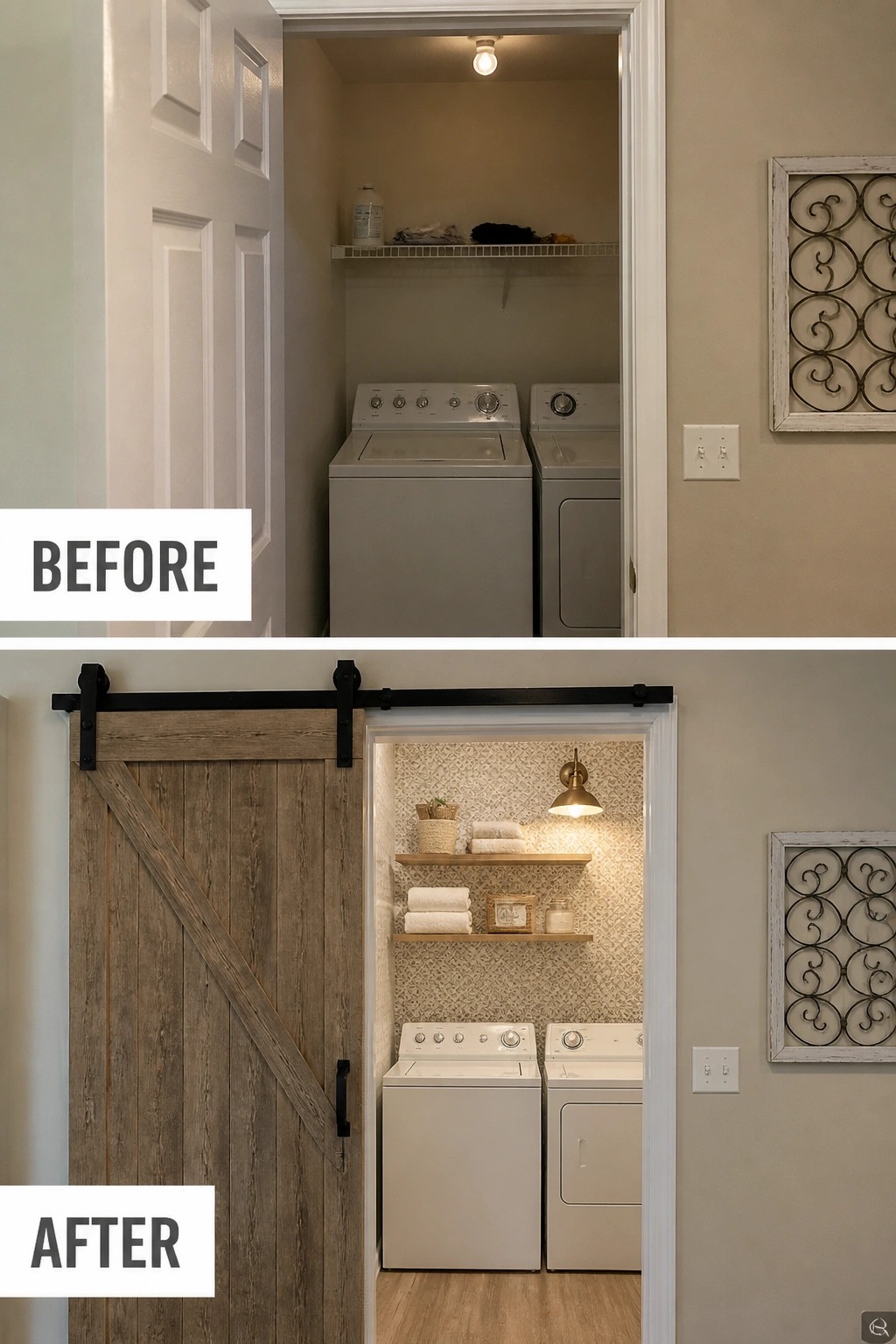
A standard swinging door often leaves a laundry closet feeling exposed and takes up hallway space when open. Replacing it with a sliding barn door gives the area a clear boundary while keeping the machines easy to reach.
This approach suits small homes where the laundry sits near living areas. Choose a door that matches your trim color or wood tone, and add simple shelves inside if you want extra storage without crowding the machines.
Add A Countertop Above The Washer And Dryer

A basic laundry closet often feels like wasted space once the machines are in place. Adding a simple countertop across the top turns the area into a real work surface for folding, sorting, and storing supplies. The before photo shows the open gap above the machines, while the after shows how a light wood counter and tile backsplash fill that gap and make the whole closet feel finished.
This idea works especially well in small or builder-basic laundry spaces where floor room is tight. Keep the counter depth shallow enough to leave walking space in front of the machines, and choose a material that can handle occasional moisture. Baskets on an upper shelf can then hold supplies without crowding the new surface.
Hide A Small Laundry Closet With A Curtain
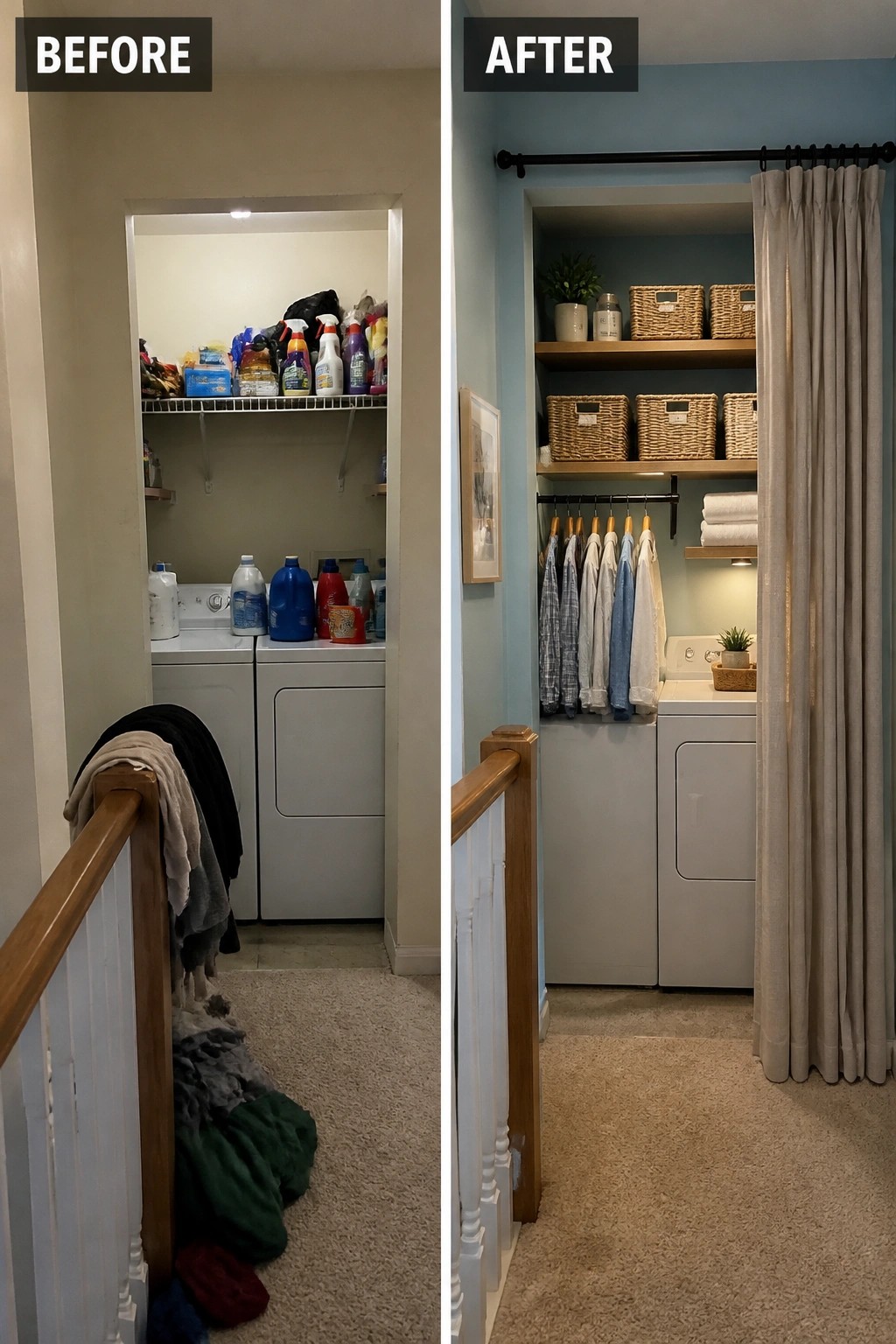
A curtain is one of the simplest ways to deal with a cramped laundry closet that always looks messy. In this case the space went from open and cluttered to closed off and much calmer once the curtain was added along with some basic shelves and a hanging rod.
This idea works well in builder-basic homes where the laundry area sits right off a hallway or near stairs. Keep the curtain on a simple rod so it slides easily, and use it to cover everything except the machines themselves. It takes almost no construction and gives you a quick way to keep the rest of the house looking tidy.
Add Built-In Shelving To Organize A Small Laundry Closet

A basic laundry closet can quickly feel messy when everything sits on one wire shelf and baskets take up floor space. Building a simple grid of open cubbies above the machines gives each category its own spot and keeps supplies off the floor. The change turns a crowded area into one where items stay sorted without extra effort.
This idea works best in narrow or builder-basic laundry spaces where closed cabinets would feel too heavy. Use matching baskets with clear labels so everyone puts things back in the right place, and leave one lower shelf open for a small plant or jar. It adds storage without shrinking the room.
Add A Wall-Mounted Drying Rack To A Small Laundry Closet

A laundry closet tends to collect piles fast when there is nowhere to hang damp items. Removing the old top shelf and adding a simple wall-mounted drying rack above the machines gave the space a clear purpose and kept clothes off the floor and the washer tops.
This approach works best in tight builder-basic closets where floor space is limited. Place the rack high enough to clear the machines, then keep a small basket on one washer for folded towels. The result stays practical without adding bulky furniture.
Use Paneling To Give A Small Laundry Closet A Finished Look

The space started with open drywall, visible pipes, and a basic wire shelf. Adding a simple framed panel above the machines created a clean, built-in look that covers the utility area without blocking access.
This idea works best in small laundry closets where you want a tidier appearance without a full renovation. Keep the panel shallow, match the paint to the walls, and add just a narrow shelf on top for a few items if you need extra storage.
Add Under-Shelf Lighting To Finish A Small Laundry Closet

A basic laundry closet often feels half done when it only has a wire shelf above the machines. Swapping that shelf for a solid one with lighting underneath gives the space a finished surface and makes the area much easier to work in.
This idea suits small or closet-style laundry rooms in builder homes. Keep the rest of the styling light so the shelf and light become the main feature, and make sure the shelf sits at a height that still leaves room to load and unload the machines.
Add Open Shelving To Organize A Laundry Closet

A basic laundry closet usually comes with one narrow shelf and little else. Adding two more levels of shelving above the machines creates real storage space without crowding the floor area. Baskets on the shelves keep supplies sorted and out of sight while still easy to grab.
This idea works best in tight indoor spaces where every inch counts. Sturdy brackets help the shelves hold weight, and a small sink on the side adds a practical spot for hand washing or filling buckets. Keep the lower walls simple so the focus stays on the usable storage above.
Wallpaper A Small Laundry Closet For Instant Polish

A plain white laundry closet often feels like an afterthought, especially when the top shelf is crammed with bottles and random items. Adding wallpaper to the back wall and swapping the wire shelf for a simple wood one gives the space a finished look without changing the machines or layout. The pattern hides everyday clutter better than plain walls, and the new shelf keeps things at a usable height.
This approach works well in small, enclosed laundry areas where you want more personality without crowding the floor space. Choose a wallpaper that can handle some moisture, and keep the shelf styling minimal with a few baskets and hooks so the area stays practical for daily use.
Add A Sliding Door To Hide Laundry Supplies

One easy way to improve a small laundry closet is to add a sliding door. The before version left everything open and visible, while the after version uses a frosted glass sliding door to keep the washer and supplies out of sight without losing easy access.
This idea works best in homes where the laundry area sits near main living spaces. Pick a door that matches your existing trim and keep the inside shelves simple so the closed space stays neat. It is a low cost change that makes the whole area feel more finished.
Use Wall Hooks And A Rolling Cart For Better Organization

Small laundry closets often end up with tools leaning against the walls and items scattered across the floor. Mounting a row of hooks on the back wall lets brooms and mops hang neatly instead of taking up space. A rolling cart with labeled bins then keeps cleaners, sponges, and extras in one easy-to-move spot.
This approach works well in narrow builder-basic closets where floor space is limited. Start with vertical storage so the area stays open for walking through. Keep the cart on wheels so you can pull it out when you need to sweep or restock.
Add Paint And Lighting To A Basic Laundry Closet
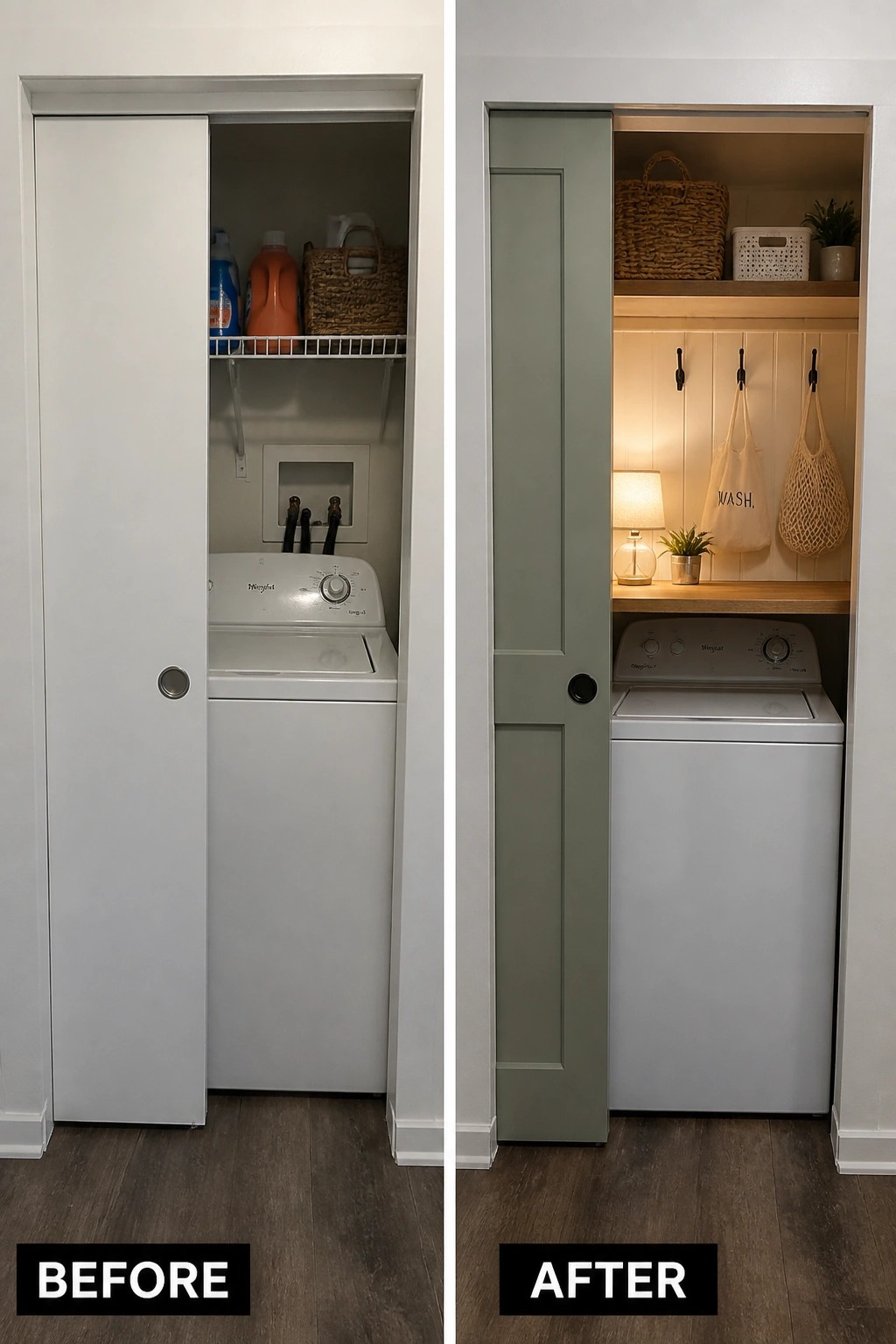
A plain laundry closet usually starts with white walls and a basic door that does nothing to help the space feel organized. Painting the door and the inside walls a soft color, then adding a simple light under the shelf, makes the area easier to use and more pleasant to walk into.
This works especially well in small homes where the laundry area shares space with other rooms. Choose a low-profile light that stays out of the way, add a few hooks for bags, and keep the top shelf clear so the closet does not feel cramped.
Make A Builder-Basic Laundry Closet Feel Finished
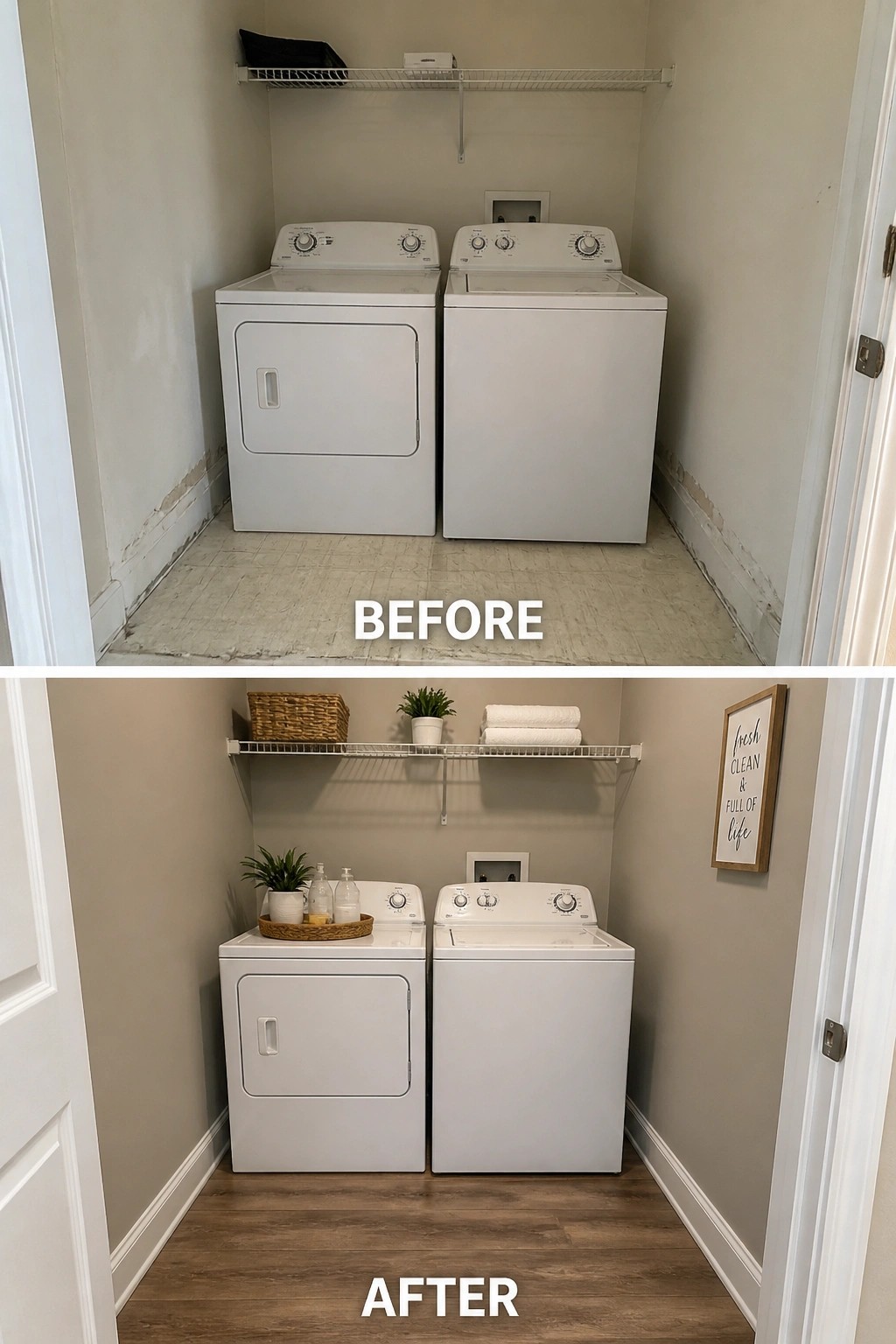
A small laundry closet often starts out as the most basic space in the house. Changing the wall color and the floor makes the biggest difference here, turning a cold, unfinished area into something that feels like part of the rest of the home.
This approach works well in tight laundry spaces where storage is limited. Pick a durable flooring that can handle spills and moisture, and keep the wall color soft so the room does not feel closed in. Adding a few simple items on the shelf then finishes the look without crowding the machines.
Add Lighting And White Shelves To Brighten A Laundry Closet

A small laundry closet often feels dark and cramped with just one overhead light and basic wire shelves. Swapping in a pendant light plus under-shelf lighting, along with painting the shelves white, makes the space feel much larger and easier to use. The change turns a forgotten corner into a spot that is simple to keep tidy.
This idea works well in any builder-basic laundry area where the goal is better function without a full renovation. Start with the lighting since it makes the biggest difference in how the space feels, then add a few baskets to keep supplies contained. It suits small homes or apartments where every closet needs to stay practical.
Add Vertical Storage To Make A Small Laundry Closet Work Better
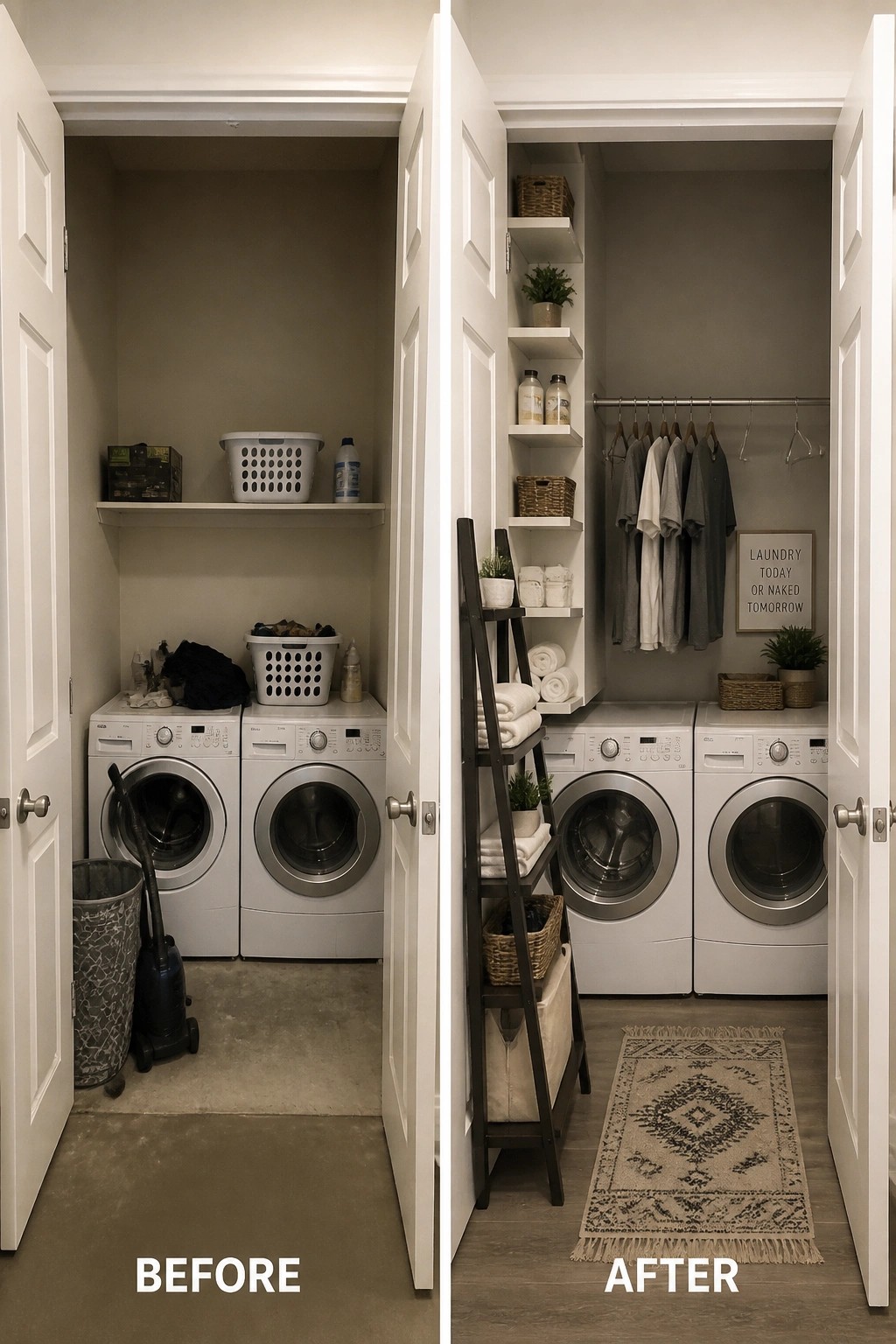
A narrow laundry closet can quickly turn into a messy catch-all when there is no real plan for storage. Adding a hanging rod and a few extra shelves along one wall gives the space a clear purpose. In the before photo the machines sat under open shelves with everything else on the floor, while the after shows shirts hung neatly and towels stacked on a simple ladder.
This setup works especially well in builder-basic homes where the laundry area is just a small closet. Keep the new shelves shallow so the washer and dryer doors can still open fully, and hang the rod high enough for shirts to clear the machines. A narrow rug on the floor helps mark the walking space without crowding the room.
Add A Shelf To Give Your Laundry Closet Storage And Style

A small laundry closet often ends up with a blank wall above the machines and nothing to hold everyday supplies. Adding a simple floating shelf turns that empty space into useful storage while also creating a place for a few small items that make the area feel less bare.
This approach works best in tight builder-basic spaces where cabinets would take up too much room. Keep the shelf shallow, place it high enough to clear the machines, and limit what goes on it to things you actually use plus one or two decorative pieces.
Paint Bifold Doors To Upgrade A Basic Laundry Closet
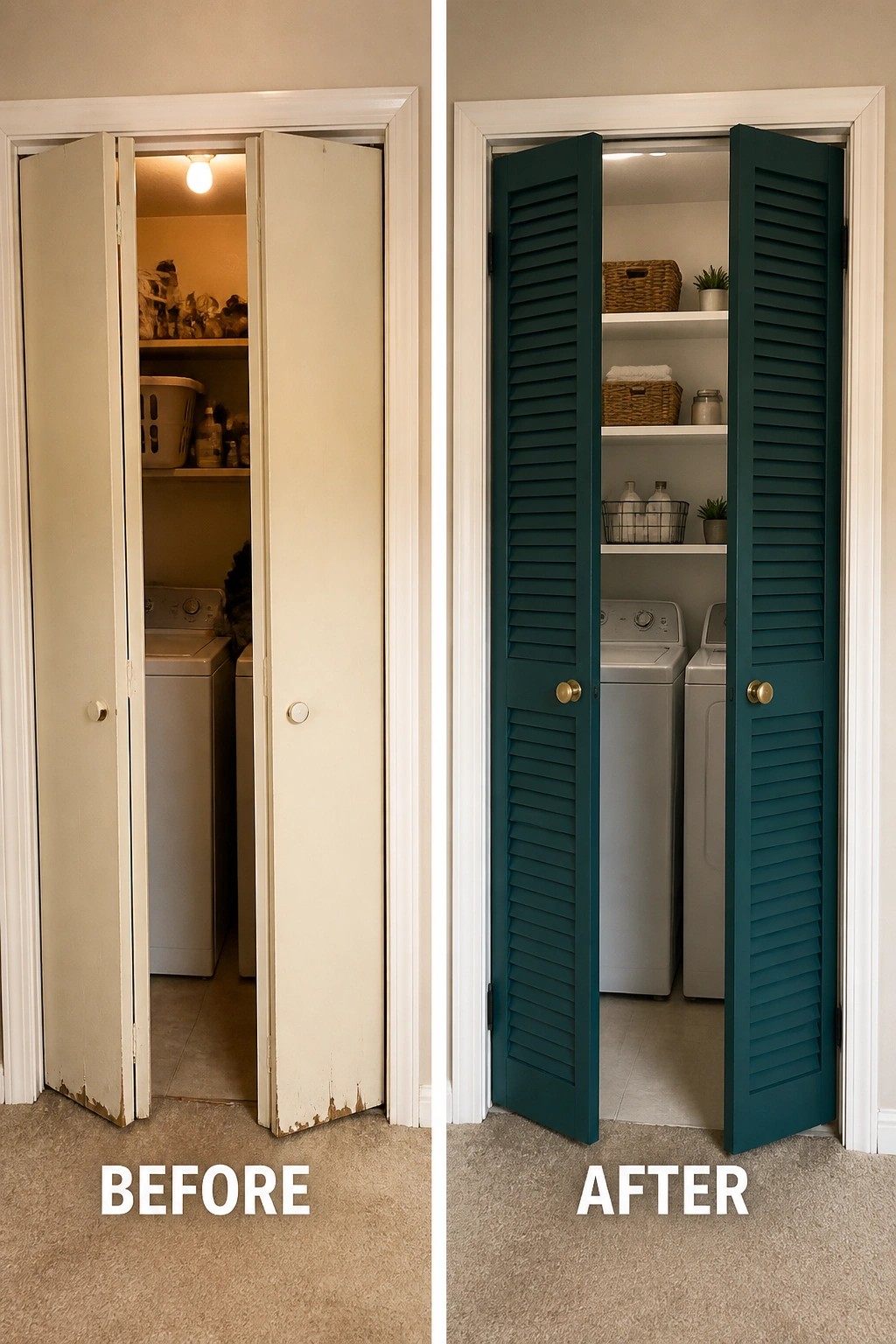
Painting the bifold doors turns a plain laundry closet into something that blends better with the rest of the house. The old white doors looked worn and left the machines and shelves fully visible. A deep color with new knobs hides the space when the doors are closed and gives the area a finished look without any major construction.
This works best in homes where the laundry closet sits in a hallway or near living areas. Choose a paint color that matches nearby trim or walls, keep the inside shelves simple, and avoid overcrowding them so the doors can still close easily.
Give Builder-Basic Laundry Machines A Built-In Look
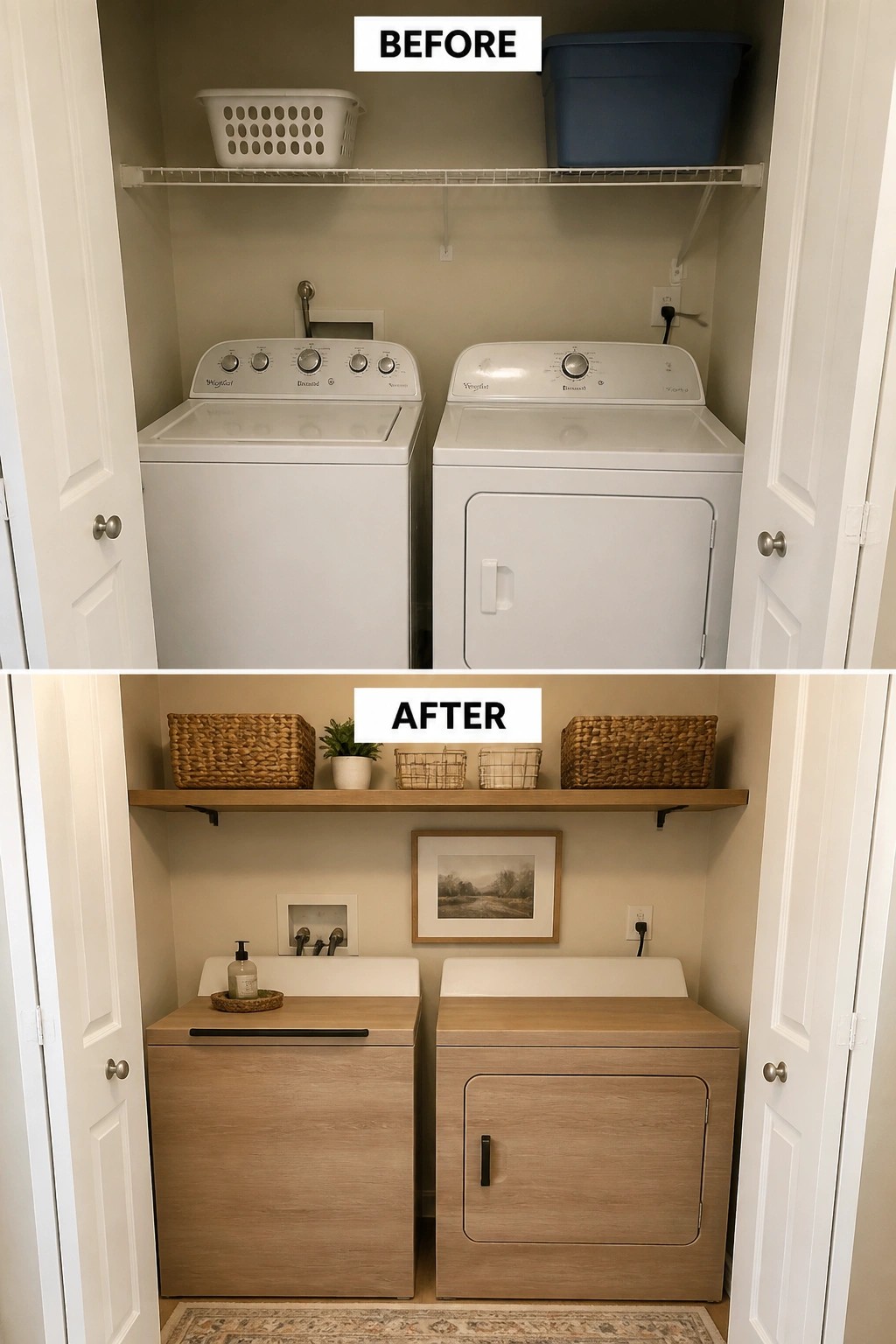
Covering the washer and dryer with matching wood panels turns two plain appliances into what looks like a single built-in unit. The new shelf above them adds storage without the old wire rack look, and the whole closet feels more finished as a result.
This approach suits small laundry closets where the machines stay visible. Choose a wood tone that blends with nearby flooring or trim, and keep the top shelf light so the space does not feel crowded.
Add A Wooden Shelf To Warm Up A Basic Laundry Closet

A plain laundry closet often feels unfinished with just a thin wire shelf above the machines. Replacing it with a solid wood shelf makes the space feel more intentional and gives you a better surface for baskets and everyday items.
This idea works best in small, builder-basic laundry areas where you want storage without crowding the floor. Keep what you put on the shelf simple and repeat a couple of materials so the closet stays neat rather than busy. A small rug on the floor can help tie the space together if there is room.
Add Cabinets And A Sink To A Basic Laundry Closet
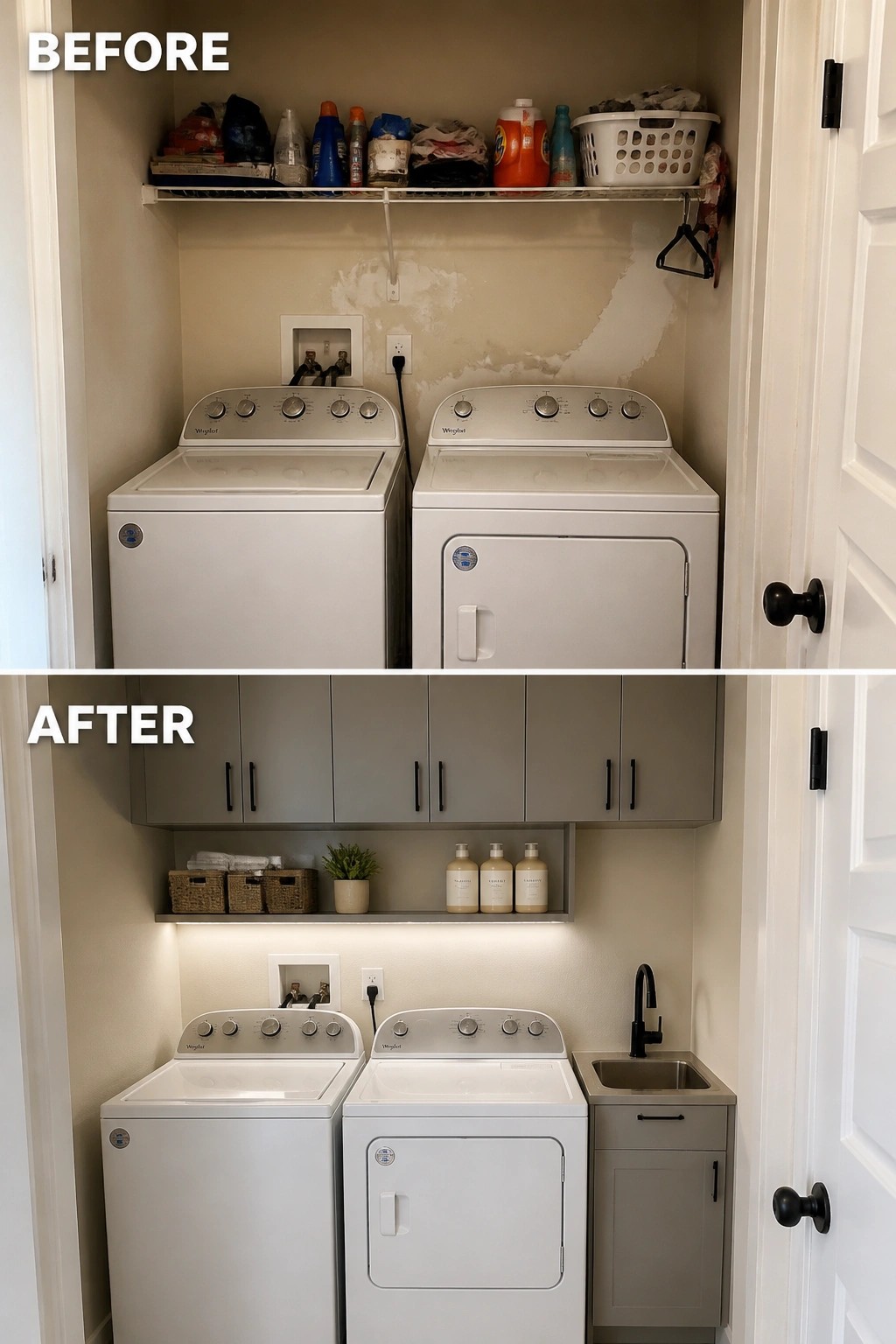
One useful way to improve a small laundry closet is to add upper cabinets and a compact sink. This gives you real storage above the machines and a place to handle rinsing or cleanup without walking to another room. The before version had open shelves that collected clutter and left the wall damage visible. The after version replaces that with closed cabinets, a narrow shelf, and a sink that keeps the space practical.
This idea fits builder-basic homes where the laundry area is just a narrow closet. Measure the clearance above the machines before ordering cabinets so doors still open fully. Keep one open shelf for baskets and supplies, and use simple under-shelf lighting if the space feels dark.
Frequently Asked Questions
Q: My closet is barely two feet deep. How can I add shelves without losing all the walking room? A: Mount narrow shelves on the side walls instead of the back. This leaves the center open for moving around the machines. Stick to two or three levels so nothing feels blocked.
Q: The article shows countertops over the washer. Will that work if my unit has a top-loading lid? A: Build the counter on a simple frame that sits just above the lid height. Leave a gap so the lid still flips open without hitting anything. A hinged section on one end gives you access when needed.
Q: Should I bother adding a light if the closet already has an overhead bulb? A: Swap the bulb for a brighter LED and add a cheap battery puck light under the top shelf. It shines right where you sort clothes and costs almost nothing to install. One focused light changes the whole feel.
