

I have noticed that laundry rooms often end up as the most overlooked space in a house, with machines taking up most of the floor and little thought given to how supplies get stored.
When I finally looked at the walls in mine, it became clear that adding height could solve more problems than any new cabinet ever would.
Vertical storage keeps everything visible and reachable while leaving the floor open for baskets and movement.
It surprised me how much calmer the room felt once the clutter had somewhere to go besides the countertop.
A few of these setups seem practical enough that I would test them even if the space stayed small.
Add Shelves Around Stacked Washer And Dryer
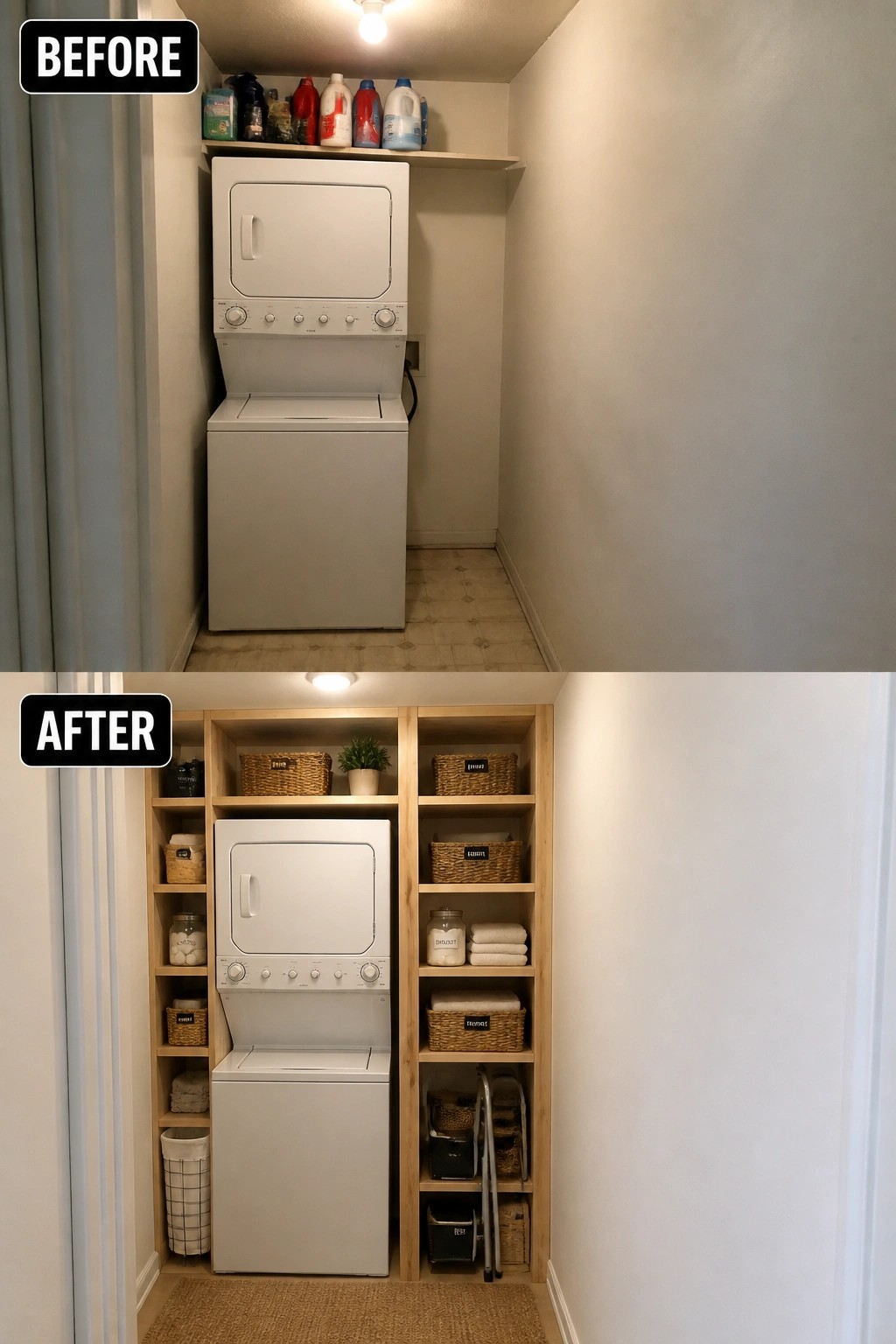
A small laundry closet often leaves only narrow strips of wall on either side of the machines. Filling those strips with simple open shelving gives you room for baskets, towels, and supplies without taking up floor space or blocking access to the appliances.
This approach works best in tight indoor utility areas where every inch counts. Keep the shelves shallow so doors can still open fully, and use matching bins to hold smaller items so the space stays easy to clean.
Add A Tall Narrow Cabinet Next To The Washer

The space beside the washer sat empty in the before photo while bottles and supplies piled up on top of the machine. A slim vertical cabinet fills that gap in the after photo and moves everything into one easy-to-reach spot without crowding the floor.
This idea works best in small laundry areas where you have a few inches of width but no room for a full cabinet. Pick a unit with open shelves so you can grab what you need quickly, and keep the top of the washer clear for folded towels or a plant. It suits rental spaces or older homes where built-in storage is limited.
Add A Rolling Ladder To Reach Upper Storage

A small laundry room often leaves the space above the machines empty or cluttered because reaching it feels awkward. Adding a rolling ladder turns that high area into real storage without taking up floor space. The ladder slides along a rail so it stays out of the way when not needed and makes the top shelf easy to use.
This works best in narrow laundry rooms with standard ceilings where every inch counts. Keep the upper items in matching baskets or bins so the space stays tidy. Make sure the rail is mounted securely and the ladder rolls smoothly before loading the shelf heavily.
Add Tall Side Cabinets For Vertical Storage
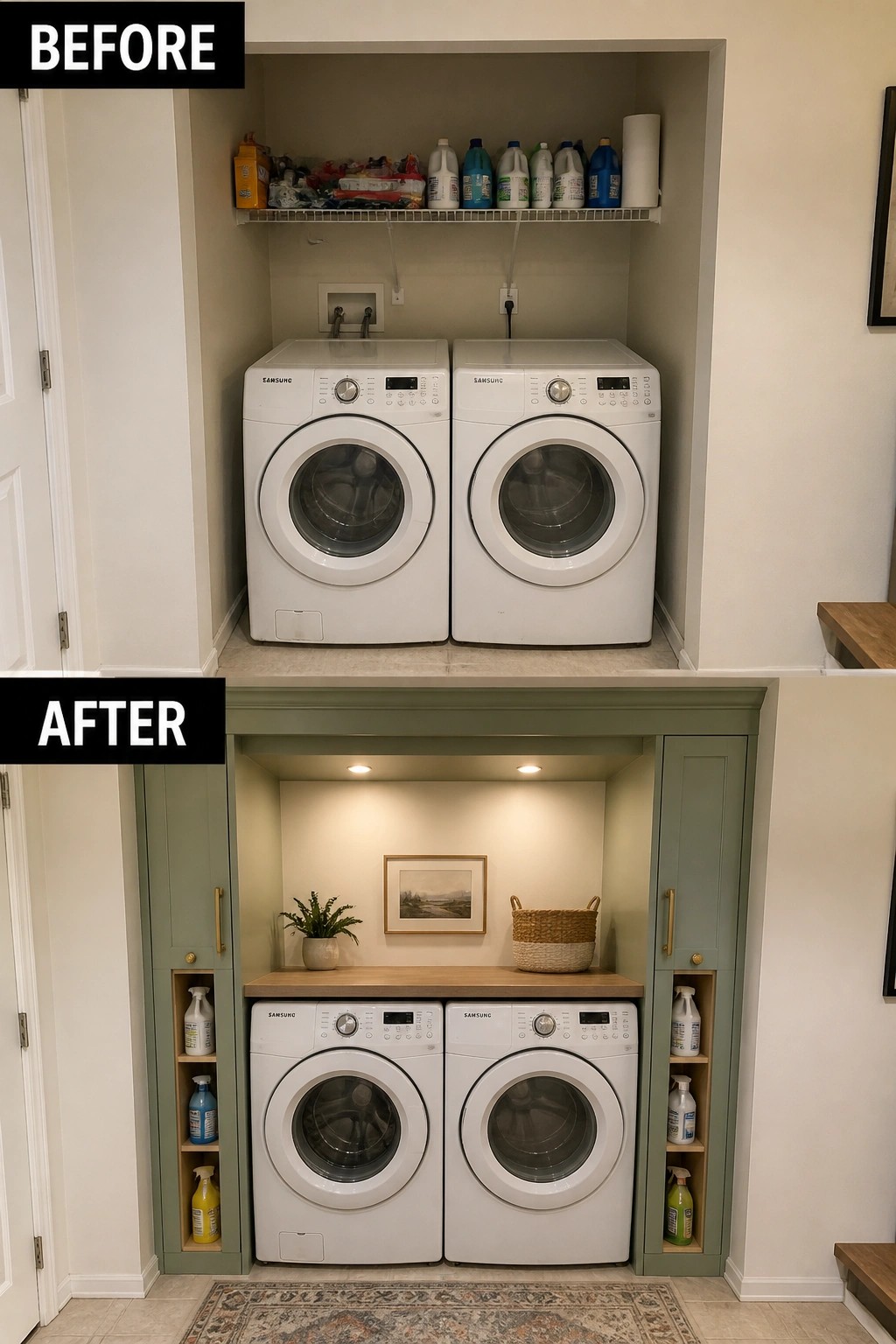
Building cabinets on both sides of the washer and dryer turns an open niche into a much more useful space. The machines stay in place but now sit inside a framed area with doors and shelves that run from floor to ceiling. This hides the usual clutter of bottles and supplies while giving you storage right where you need it.
This approach works well in small laundry rooms or alcoves where floor space is limited. Keep the cabinets simple and match the depth to your machines so nothing sticks out too far. It is a practical way to gain storage without crowding the room or adding freestanding units that take up walking room.
Add Vertical Storage To A Small Laundry Room

The laundry room went from having almost nothing on the walls to having a full row of shelves and hooks. This single change made the space feel much more organized without taking up any floor space.
This idea works best in small laundry rooms where the washer and dryer already take up most of the room. Mount a few shelves at different heights, add baskets for supplies, and use hooks for towels and brushes. Keep the system simple so it stays easy to reach and does not feel crowded.
Add Tall Pull-Out Drawers To A Narrow Laundry Room
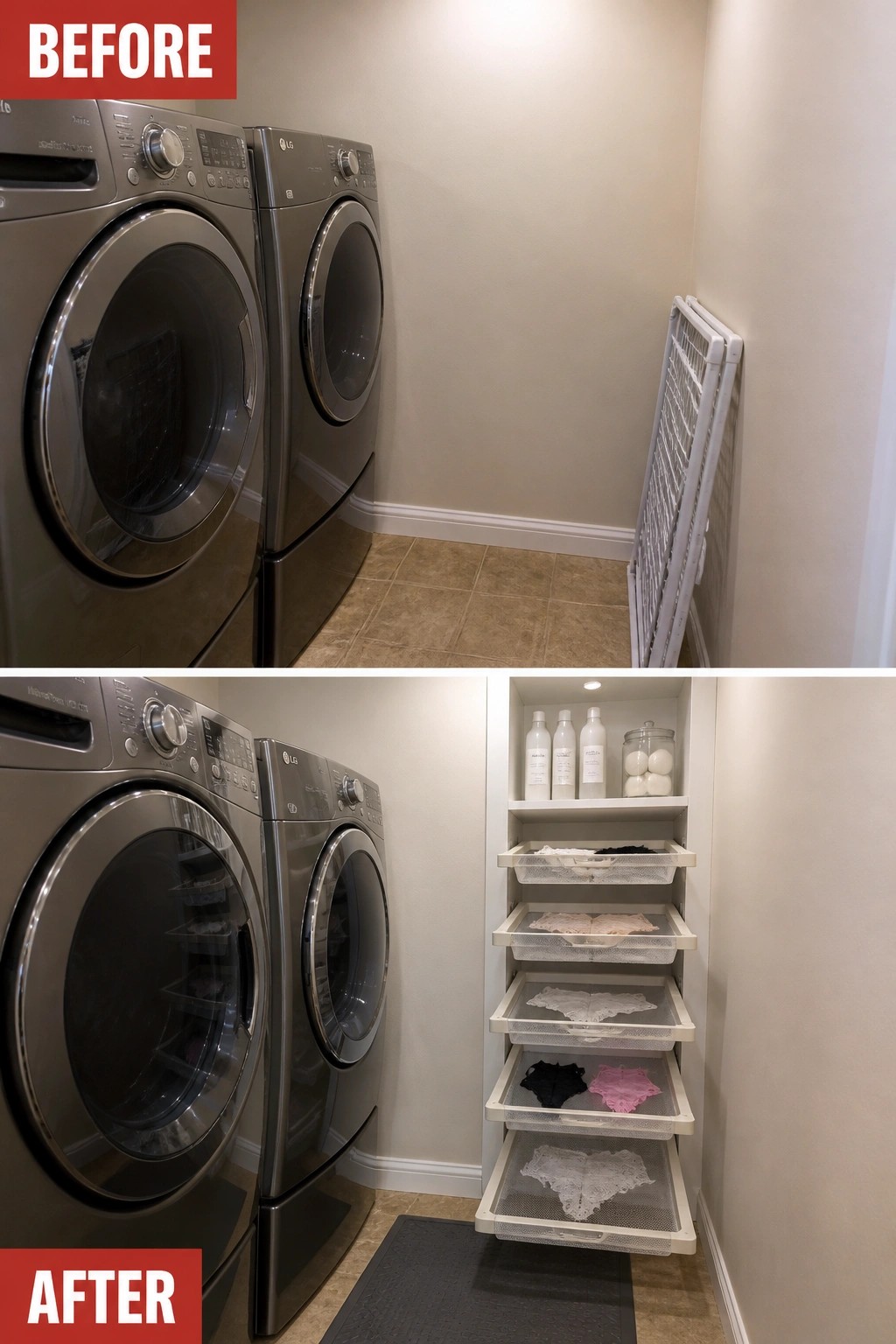
In a small laundry room the wall space next to the machines is often left empty or used only for a folding rack. Installing a tall narrow cabinet with sliding mesh drawers puts that vertical area to work and keeps items like delicates and supplies off the floor.
This idea suits any tight laundry nook where floor space matters most. Keep the cabinet depth shallow enough to leave walking room and use open mesh so air can move through the drawers.
Add Vertical Storage For Laundry Sorting

A three-tier basket stand turns a messy pile of clothes into an organized system with separate spots for lights, darks, and colors. The rack keeps everything off the floor and makes sorting part of the daily routine instead of a chore you put off.
This idea works best in tight laundry rooms where floor space is already tight. Keep the stand narrow, label the baskets clearly, and add a small shelf above it if you need a spot for detergent and supplies.
Add Floating Shelves Above The Washer And Dryer
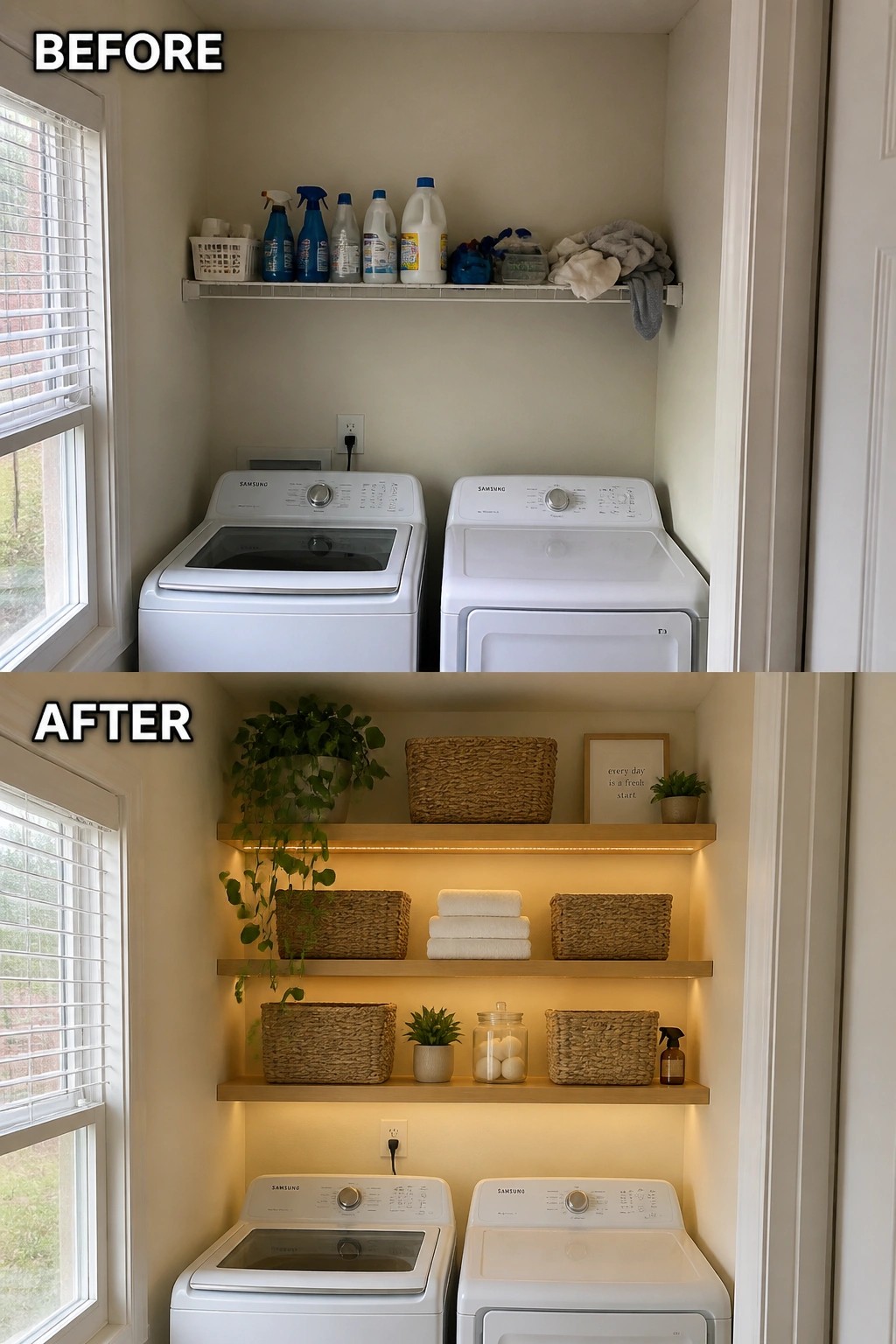
The cluttered single shelf in the before photo made the space feel cramped and hard to use. Adding three floating shelves with built-in lighting gave the room clear zones for baskets, towels, and everyday supplies while keeping the top of the machines clear.
This approach works best in narrow laundry rooms where floor space is limited. Place the shelves at staggered heights so you can reach what you need without stretching, and use matching baskets to keep smaller items contained. The lighting under each shelf also helps when you are sorting laundry at night.
Build A Slim Vertical Cabinet For Ironing Board Storage
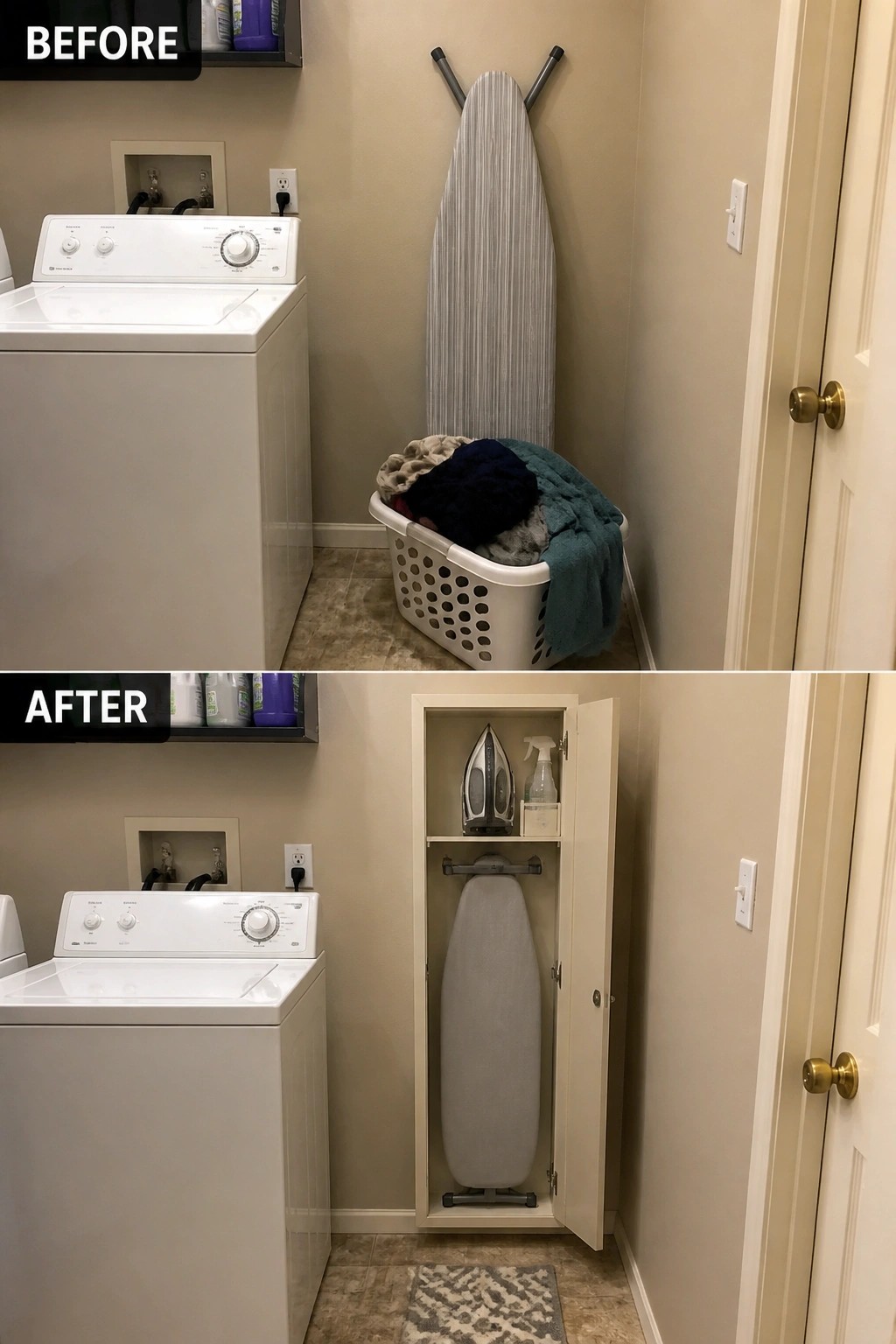
In a small laundry room, an ironing board left out in the open quickly eats up floor space. A narrow built-in cabinet solves this by holding the board upright inside the wall, along with the iron and a few supplies on a shelf above it.
This idea works best in laundry rooms that already have limited width. You can place the cabinet in any narrow gap between the machines and the door, or along a blank wall, so the board stays out of sight but still easy to reach when needed.
Add Vertical Storage Next To The Washer And Dryer

One useful way to improve a small laundry space is to add a narrow set of shelves right beside the machines instead of leaving the area open. The before photo shows an exposed setup with just a basic shelf above, while the after version encloses the machines with doors and tucks a tall storage unit into the side wall.
This works best in homes where the laundry sits in a closet or alcove. Measure the available wall space first, then choose shelves that reach close to the ceiling so you can store supplies without losing floor room. Keep the doors simple so the whole area stays easy to access when needed.
Use A Pegboard To Organize Tools Vertically

Small laundry rooms often end up with brooms, mops, and cleaning supplies leaning against the wall because there is nowhere else to put them. A pegboard solves this by turning one blank wall into usable storage that keeps everything off the floor and within reach.
This idea works especially well in narrow spaces where floor room is limited. Mount the pegboard above the machines, add hooks for long-handled tools, and hang wire baskets for bottles and smaller items. It keeps the area tidy without needing extra cabinets or shelves.
Add Tall Shelving For Vertical Storage In A Small Laundry Room

A narrow laundry room often leaves empty wall space beside the washer that goes unused. Placing a tall open shelving unit there creates room for supplies on the upper shelves and bins below without crowding the floor.
This approach suits small laundry closets or tight utility areas where floor space matters most. Keep the unit narrow enough to leave clearance for the washer door and choose bins that match what you need to store most often.
Add Vertical Storage With A Tall Cabinet

In a small laundry room, the corner beside the washer often ends up as a jumble of brooms and bottles leaning against the wall. A tall narrow cabinet solves this by turning that empty vertical space into shelves for supplies and hooks for hanging tools.
This idea works best in laundry rooms with limited floor space but some wall height to spare. Keep the cabinet depth shallow so it does not block the machines, and place everyday items on the middle shelves for easy reach.
Use Vertical Drying Systems To Clear Floor Space
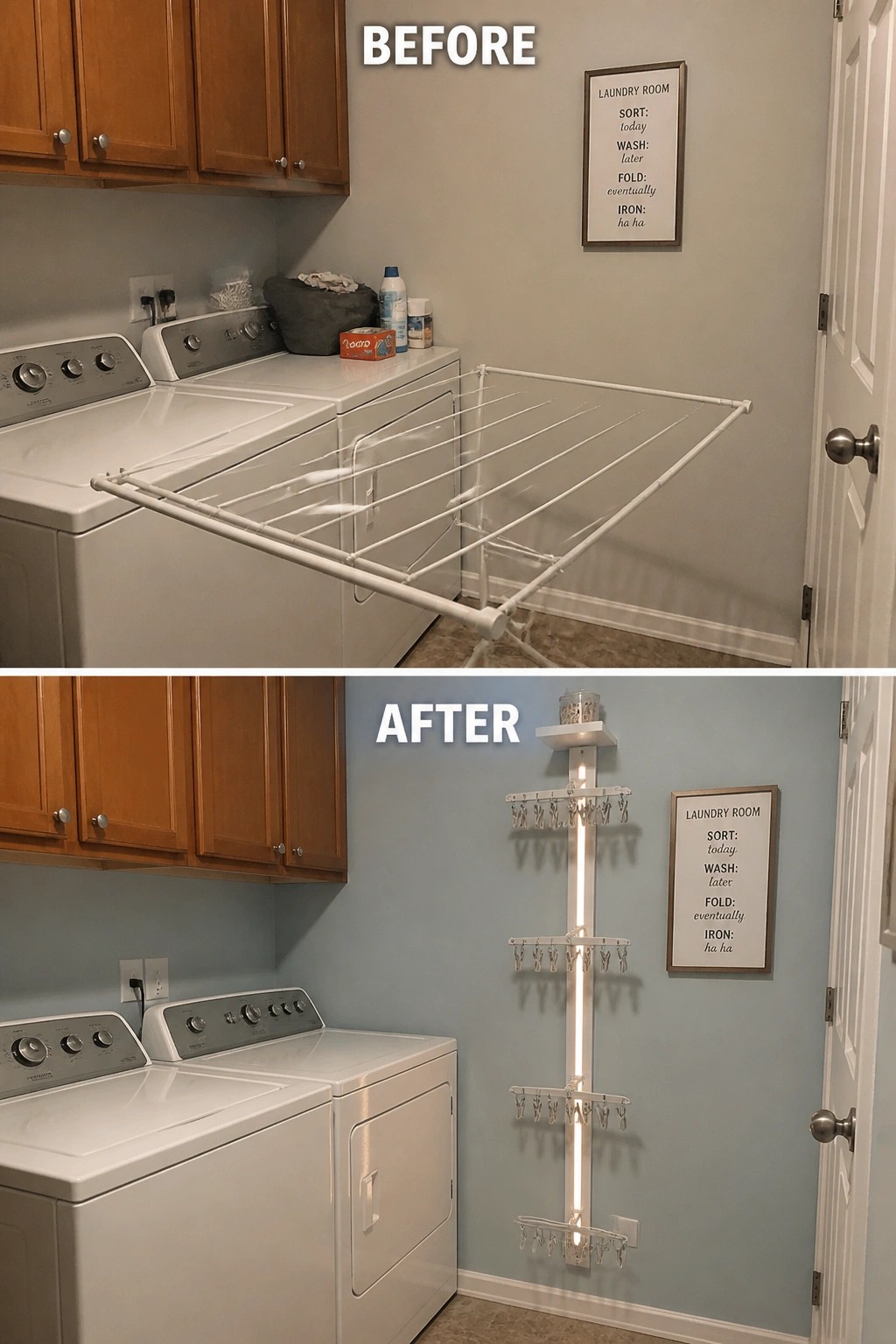
A bulky drying rack that folds out across the room takes up valuable floor space in a small laundry area. Replacing it with a tall vertical unit mounted on the wall keeps the same drying function while leaving the floor open for walking and storage.
This idea works best in narrow rooms or spaces that also need to hold cleaning supplies and baskets. Look for a model with multiple levels and built-in lighting so clothes can hang at different heights without crowding the area.
Build Custom Cubbies Above The Washer And Dryer

One of the simplest ways to improve a small laundry room is to replace an open shelf with built-in cubbies. The before photo shows a basic wire shelf loaded with bottles and supplies that makes the area feel crowded. The after version adds three recessed cubbies that hold baskets and folded towels neatly.
This approach works well in narrow spaces where floor room is limited. You can size the cubbies to fit standard baskets and keep everyday items within reach. It turns vertical space into useful storage without adding clutter to the floor or the tops of the machines.
Add Tall Cabinets To Gain Vertical Storage

In a narrow laundry room, a tall cabinet along one wall turns wasted vertical space into useful storage. The open shelves above the washer stay, but the new cabinet adds multiple levels for bottles, towels, and baskets while keeping everything behind doors.
This idea works best in small or hallway-style laundry rooms where floor space is tight but wall height is available. Pick a shallow cabinet that fits the depth of the room and consider mirrored doors if you want the space to feel a bit larger.
Build Recessed Shelves Into A Blank Wall

Adding recessed vertical shelves turns an empty stretch of wall into practical storage right beside the washer. The before photo shows a plain surface with visible damage that offered no function at all, while the after version uses the same space for three stacked niches that hold everyday items without crowding the floor.
This approach works best in small laundry rooms where floor space is limited and you want storage that feels built in rather than added on. Cut the openings during a wall repair, line them with tile for easy cleaning, and keep the depth shallow so the shelves stay out of the way. It suits any laundry area with standard framing and gives a tidy, finished look with minimal extra furniture.
Add Vertical Shelves Above The Washer

Small laundry rooms often end up with supplies stacked on the machines because there is no other place to put them. Adding a few shelves on the wall above the washer creates real storage without crowding the floor or blocking access to the controls.
This approach works best in narrow laundry closets where width is limited. Keep the shelves shallow, use simple baskets or folded towels, and paint the back wall a darker shade so the area feels more finished. The result is a space that stays practical while giving you room to keep everyday items within reach.
Add A Shelf And Rod Above Your Machines
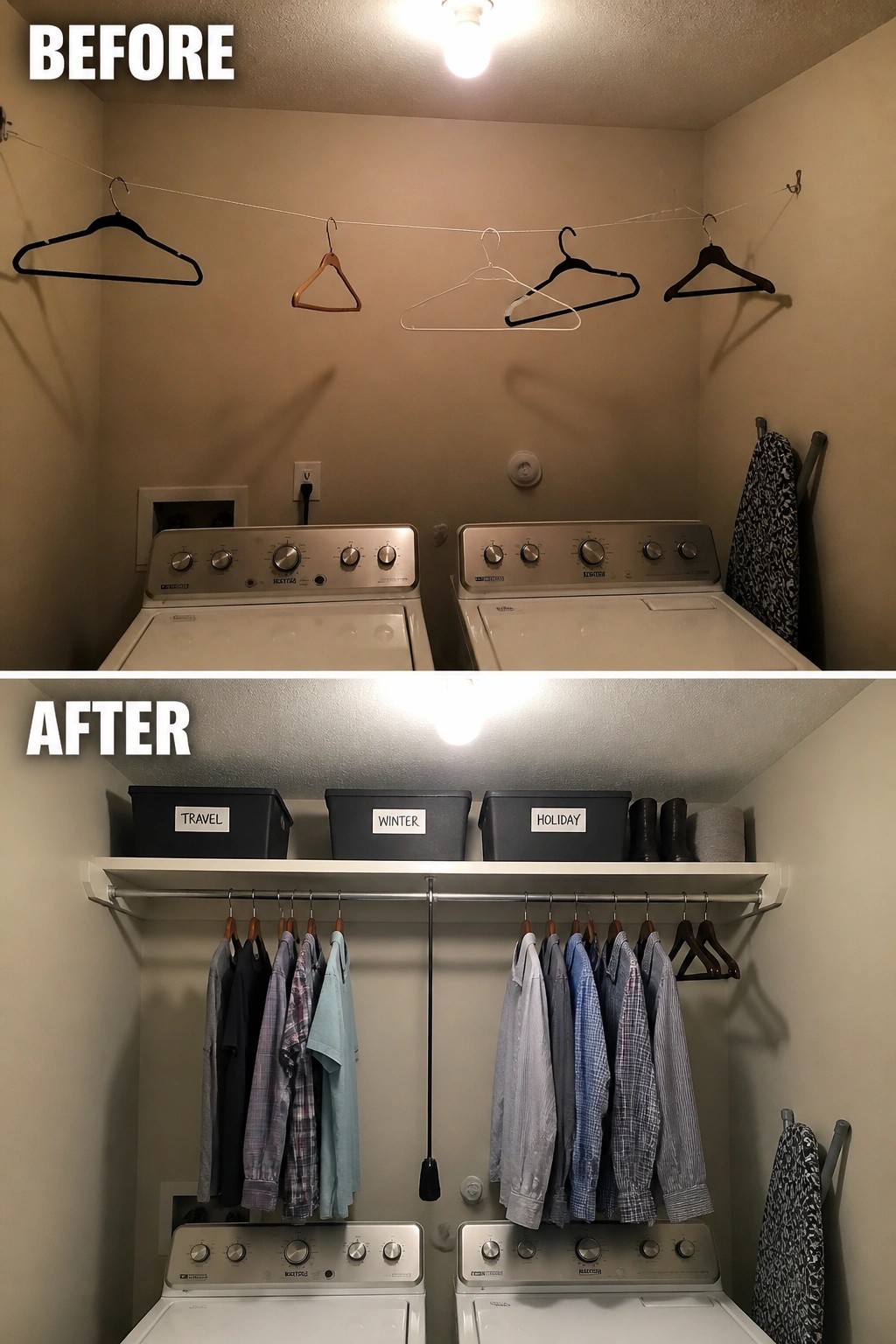
In a small laundry room the space above the washer and dryer is often left empty. Adding a basic shelf with bins and a hanging rod puts that vertical area to work for clothes and seasonal items without crowding the floor.
This idea suits any compact laundry setup where floor space is limited. Keep the shelf within easy reach and use sturdy bins so you can store what you need without the area feeling cluttered.
Use Door Organizers To Gain Storage In A Tight Laundry Closet

Small laundry closets often end up with supplies scattered on the floor because there is no room for shelves or cabinets. Adding organizers to the inside of the doors pulls those items up and out of the way while keeping them easy to reach. The before photo shows bottles and jugs sitting loose around the machines. The after version tucks everything onto the doors and adds one simple shelf above the units.
This idea works best in homes with stacked machines or narrow utility spaces where every inch counts. Choose lightweight caddies so the doors still close without strain and keep the depth shallow enough to avoid hitting the appliances. It is a low-cost change that turns unused door surfaces into practical storage without any major construction.
Frequently Asked Questions
Q: How do I reach the top shelves without a step stool every single time? A: Place items you use daily on the lower third of the wall system. Stack less frequent supplies like extra detergent or seasonal linens higher up. This keeps the daily flow simple while still using the full height.
Q: What holds up best for heavy items in a tall setup? A: Mount brackets directly into wall studs before loading anything. Use solid wood or metal shelves rated for at least fifty pounds each. Light baskets then work fine for everything else.
Q: My room feels smaller once the shelves go up. Any quick fix? A: Choose wire or open wood shelves so light passes through. Keep the wall color the same as the shelves to avoid a heavy look.
Q: Can I add vertical storage if I rent and cannot drill much? A: Lean a tall freestanding rack against the wall and secure it with removable adhesive straps at the top. This gives height without permanent holes and still clears the floor.
