

Many bedrooms start out looking unfinished because the bed sits against a plain wall with little else to draw the eye.
Focusing on a statement headboard can tie together the colors and textures already in the room.
I often find that sorting out the bed first makes it easier to decide what else belongs nearby.
Ideas that play with height or material can turn a simple setup into something that feels complete.
It is satisfying to watch how those adjustments help the whole space come together without needing new flooring or windows.
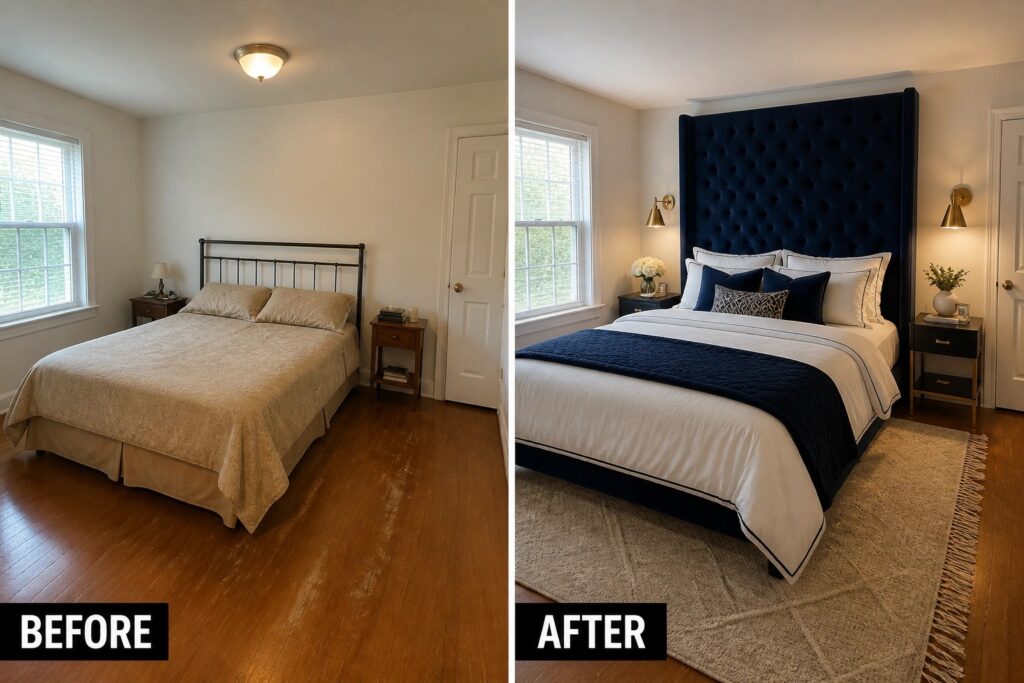
Make A Statement Headboard The Room’s Focal Point

A bedroom with a basic bed frame often feels unfinished because nothing really anchors the space. Replacing it with a tall upholstered headboard gives the room a clear center and makes the bed feel like the main feature instead of just another piece of furniture.
This idea works best in rooms where the bed is the largest item and you want to keep the rest of the layout simple. Pick a headboard in a solid color or texture, then add a couple of sconces and a rug to balance the scale without adding too much furniture.
Create A Statement Headboard With A Wood Accent Wall
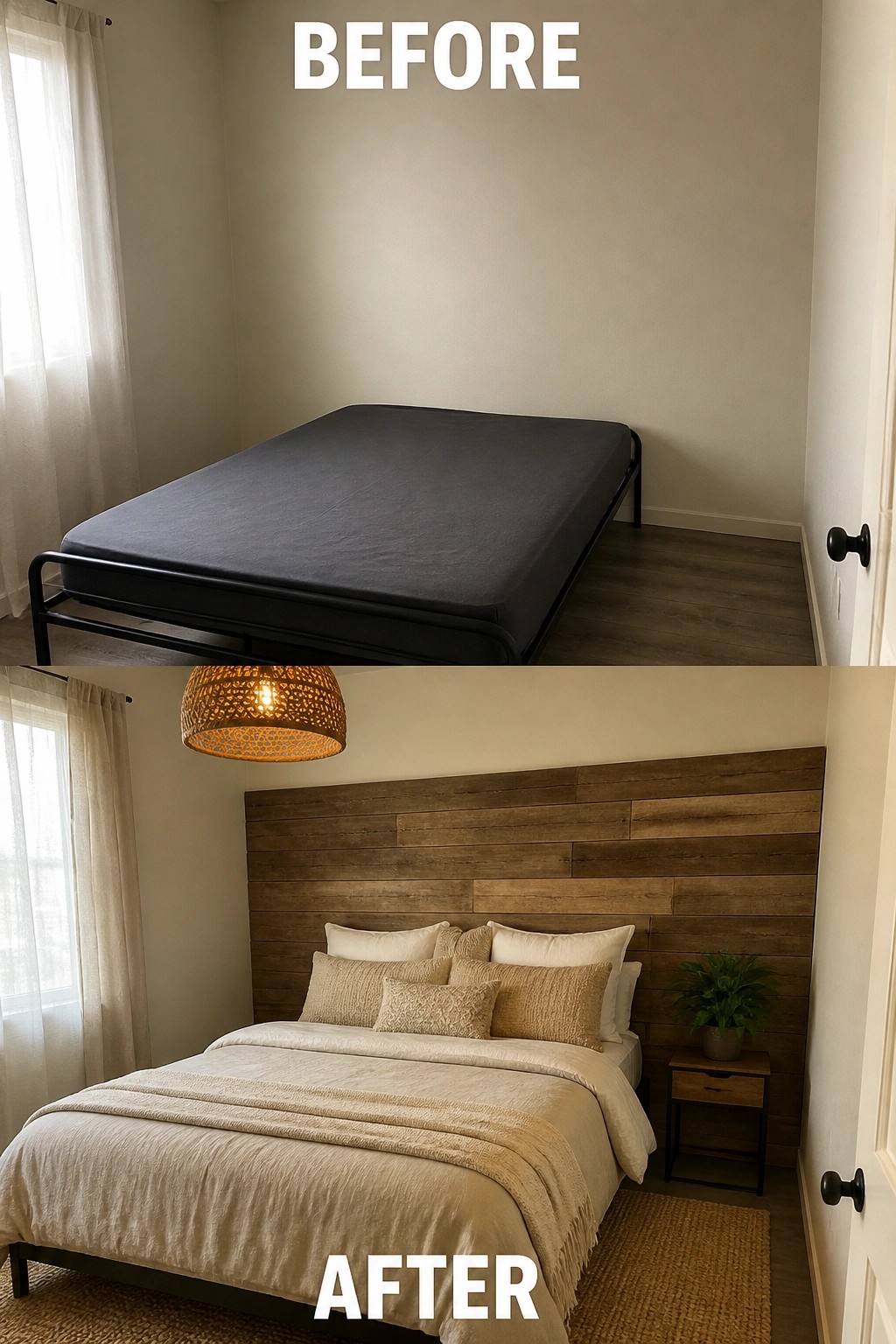
A bedroom with just a bed frame can feel unfinished even when the rest of the space is clean. Adding a wood accent wall directly behind the bed gives the room a clear focal point and makes the bed feel anchored without extra furniture. The shift from a bare wall to a textured wood surface changes how the whole room reads.
This approach suits smaller bedrooms where one strong feature does more than several smaller pieces. Use prefinished planks for easier installation, keep bedding simple, and add one or two soft layers like pillows or a throw so the wall stays the main draw. It works especially well when you want a custom look without building a full headboard.
Build A Statement Headboard With Open Shelving

A bedroom often feels unfinished when the wall behind the bed is covered with random posters and mismatched items. In this case the before version had game posters scattered across the wall and nightstands crowded with clutter. The after version replaces all of that with a simple white built-in unit that combines the headboard, shelves, and soft lighting into one clean feature.
This approach works well in any bedroom that needs better storage without adding more furniture. Keep the shelves lightly filled with books and a few plants so the bed stays the main focus. The built-in lighting also removes the need for tall lamps that can crowd small nightstands.
Let A Statement Headboard Anchor The Room

The main change came from swapping the thin black metal frame for a tall upholstered headboard. That one piece instantly gave the bed weight and turned a plain wall into a clear focal point without needing extra furniture or bold color.
This approach works best in bedrooms where the bed is the main feature. Pick a headboard that fits the wall width, keep the surrounding pieces low and simple, and choose a neutral fabric so it still feels calm rather than overwhelming.
Let A Statement Headboard Refresh The Whole Bedroom

A bulky dark wood headboard can make a bedroom feel heavy and dated even when the rest of the room is tidy. Switching to a simpler leather headboard with clean lines and adding lighter bedding immediately opens the space up and gives it a clear focal point.
This approach works best in rooms that already have decent layout and just need one strong update. Keep the new headboard in a neutral tone so you can change bedding and curtains later without starting over, and add a couple of wall sconces if the room lacks overhead lighting.
Make A Statement Headboard The Bedroom Focal Point

A basic metal frame often leaves the bed looking flat against the wall. Replacing it with a larger woven headboard gives the room an immediate center and lets the rest of the bedding and lighting fall into place around it.
This works best in bedrooms that feel a little empty or mismatched. Keep the surrounding pieces simple in color and scale so the headboard does the main work without crowding the space.
Anchor The Bedroom With A Statement Headboard

A plain bed setup can leave a room feeling unfinished even when the rest of the space is tidy. In this case the change came from adding a pipe frame around the existing wood headboard and placing a sconce on each side. That single move turned the bed into the clear focal point and gave the walls purpose without needing much else.
This approach works well in smaller bedrooms where you want one strong feature instead of lots of separate pieces. Keep the nightstands low and simple, use matching lights at the same height, and choose bedding that stays in the same color family. The result feels intentional without crowding the room.
Add Storage With A Statement Headboard

A cluttered floor makes any bedroom feel smaller and less restful. In this case the old bed left everything out in the open, while the new upholstered headboard and lift-up base give the room one clear focal point and a place to tuck away extra bedding and linens.
This idea works best in small bedrooms where floor space is limited. Start with the bed itself rather than adding more furniture, and choose a headboard tall enough to anchor the wall. Keep the rest of the room simple so the headboard stays the main feature.
Make The Headboard Wall The Main Feature
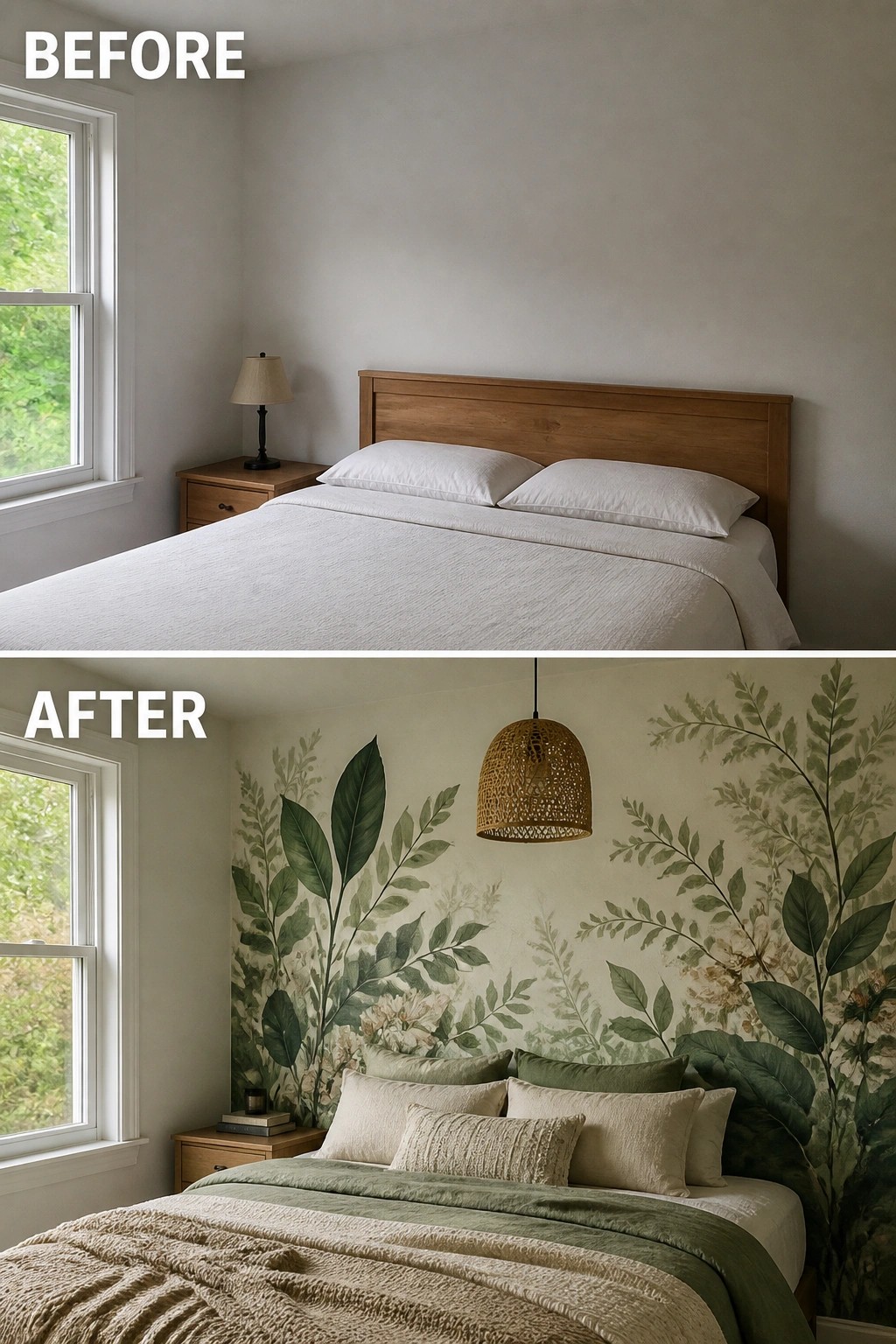
A plain wall behind the bed often leaves the room feeling unfinished. Adding a large-scale botanical wallpaper turns that same wall into the main point of interest and gives the headboard a clear backdrop without any extra furniture or trim work.
This idea works best when the rest of the room stays simple. Keep bedding and side tables in neutral tones so the pattern on the wall can stand out. It suits bedrooms where the bed already sits in the center and you want to add character without a full renovation.
Make The Headboard The Main Feature
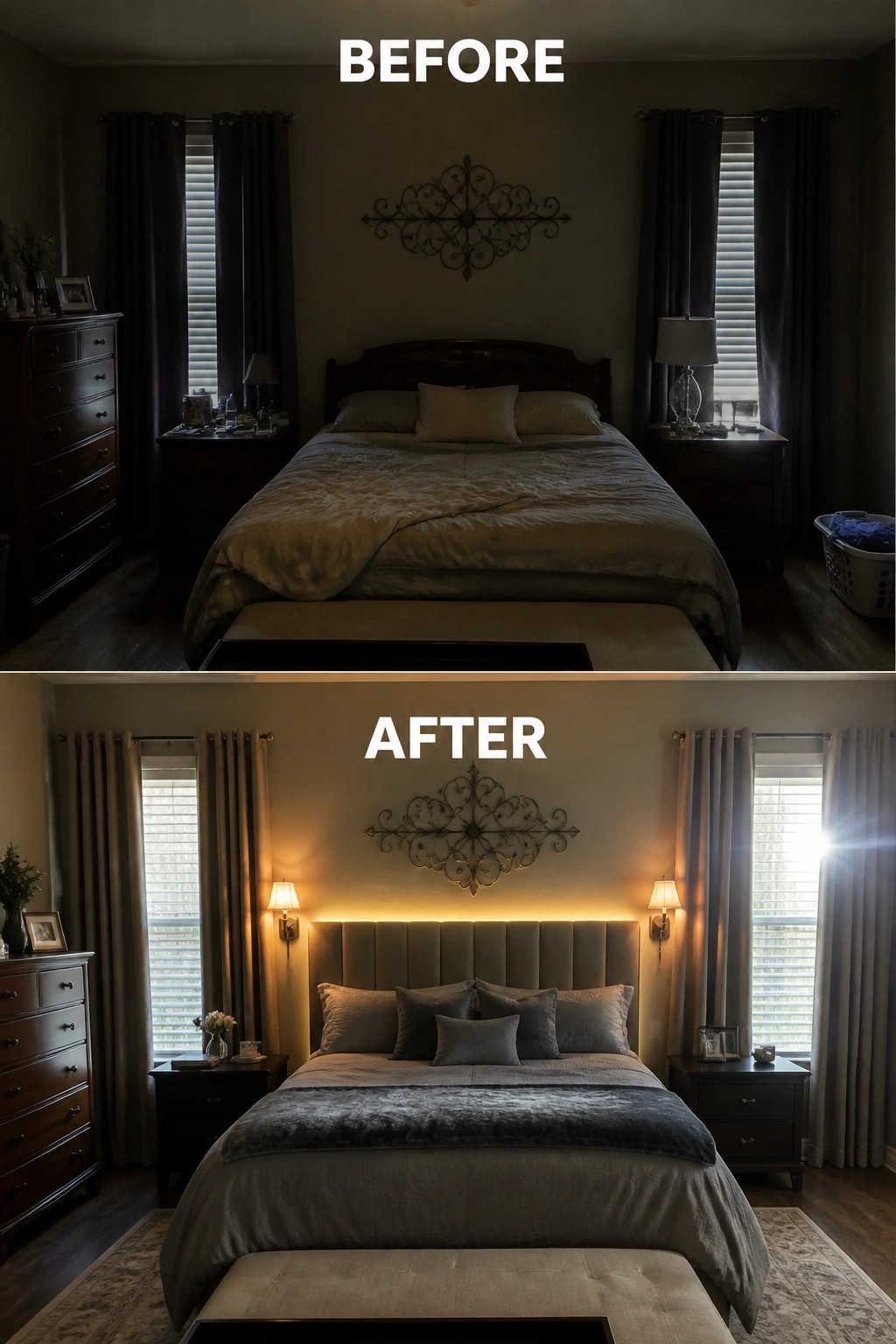
A dark wooden headboard and heavy curtains can leave a bedroom feeling flat and dated. Switching to an upholstered headboard with soft backlighting behind it, plus a pair of wall sconces, instantly gives the bed a clear focal point and makes the whole room feel calmer and more finished.
This approach works well in any bedroom where the bed sits against a plain wall. Keep the rest of the furniture simple, add a rug to define the sleeping area, and choose lighting that can be dimmed for evening use. The goal is to let the headboard do the work without crowding the space with too many extra pieces.
Add A Patterned Accent Wall Behind The Bed
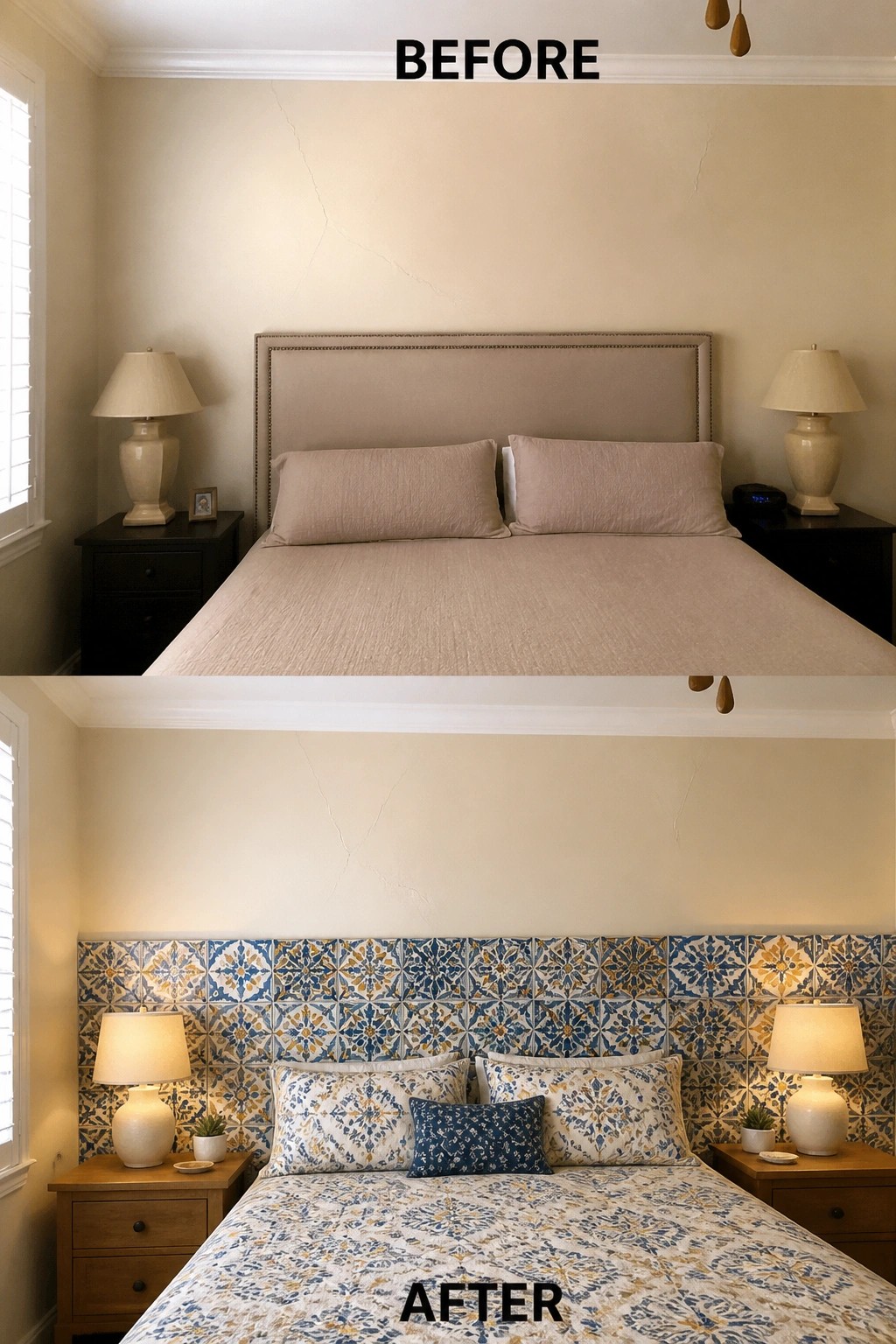
A plain wall above the bed often leaves the room feeling unfinished, even when the furniture is in place. Adding a patterned tile accent wall creates a strong focal point that centers the entire space around the bed without requiring a large new headboard.
This idea works well in bedrooms that already have decent furniture but lack visual interest on the main wall. Keep the tile pattern to the area directly behind the bed, and match a few colors from the tile into the bedding so the look feels pulled together rather than busy.
Anchor The Bedroom With A Statement Headboard
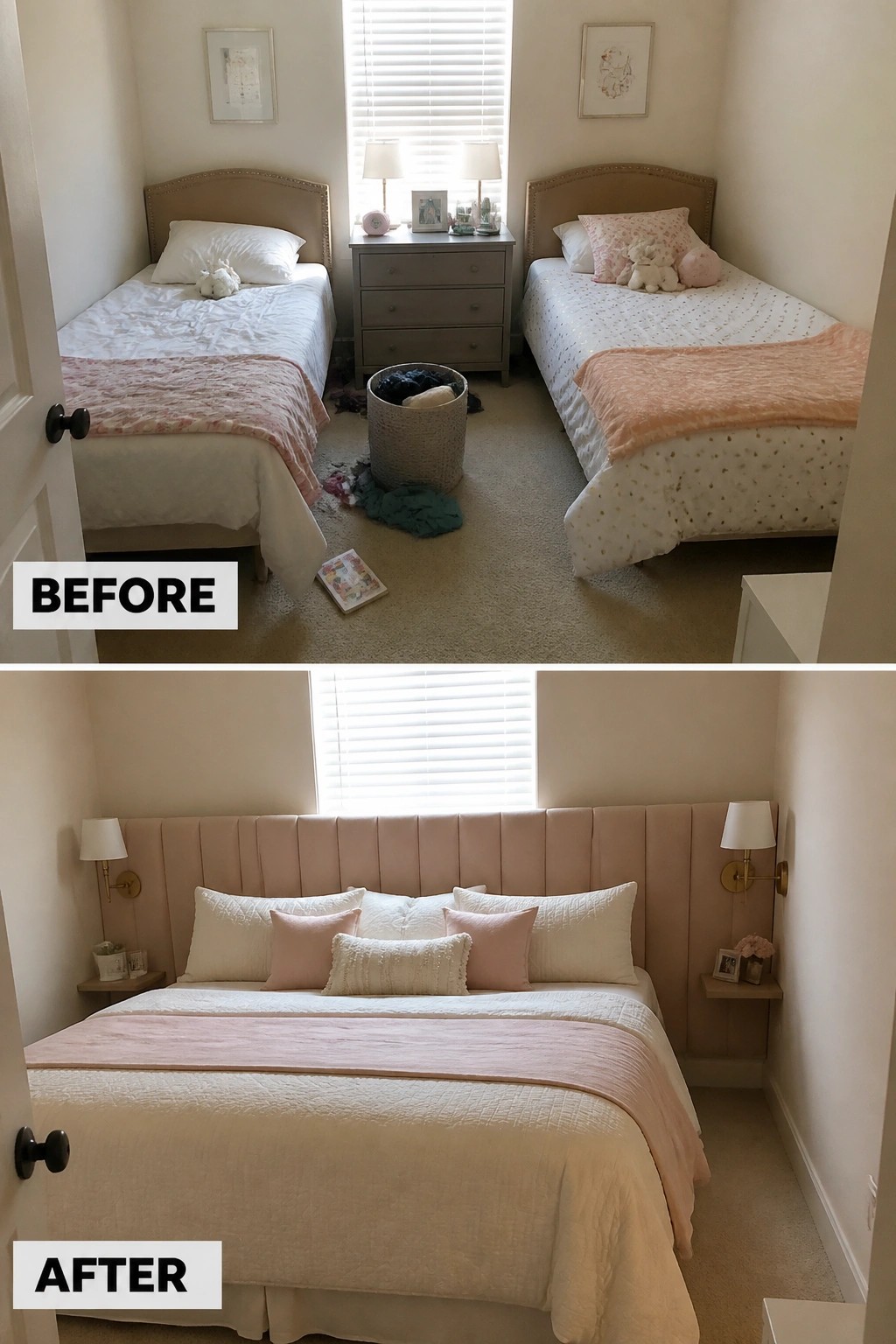
Two twin beds with a dresser between them often leave a room feeling split and cluttered. Replacing them with one larger bed and a tall upholstered headboard pulls everything into one clear focal point. The headboard adds height and softness at the same time, so the space reads as calm instead of busy.
This approach works well in smaller bedrooms that once held two beds. Keep the rest of the room simple with matching nightstands and minimal wall decor so the headboard stays the main feature. Measure the wall first to make sure the new bed and headboard fit without crowding the door or windows.
Anchor The Bedroom With A Statement Headboard

A plain curved headboard was swapped for one with a strong geometric pattern that immediately draws the eye. The rest of the room stayed fairly simple, which lets the new headboard do the work of giving the space focus.
This idea suits bedrooms where the bed feels lost against the wall. Keep nightstands and lamps low key so the headboard stays the main feature, and make sure the size fits the bed without overwhelming the room.
Anchor The Bed With A Statement Headboard
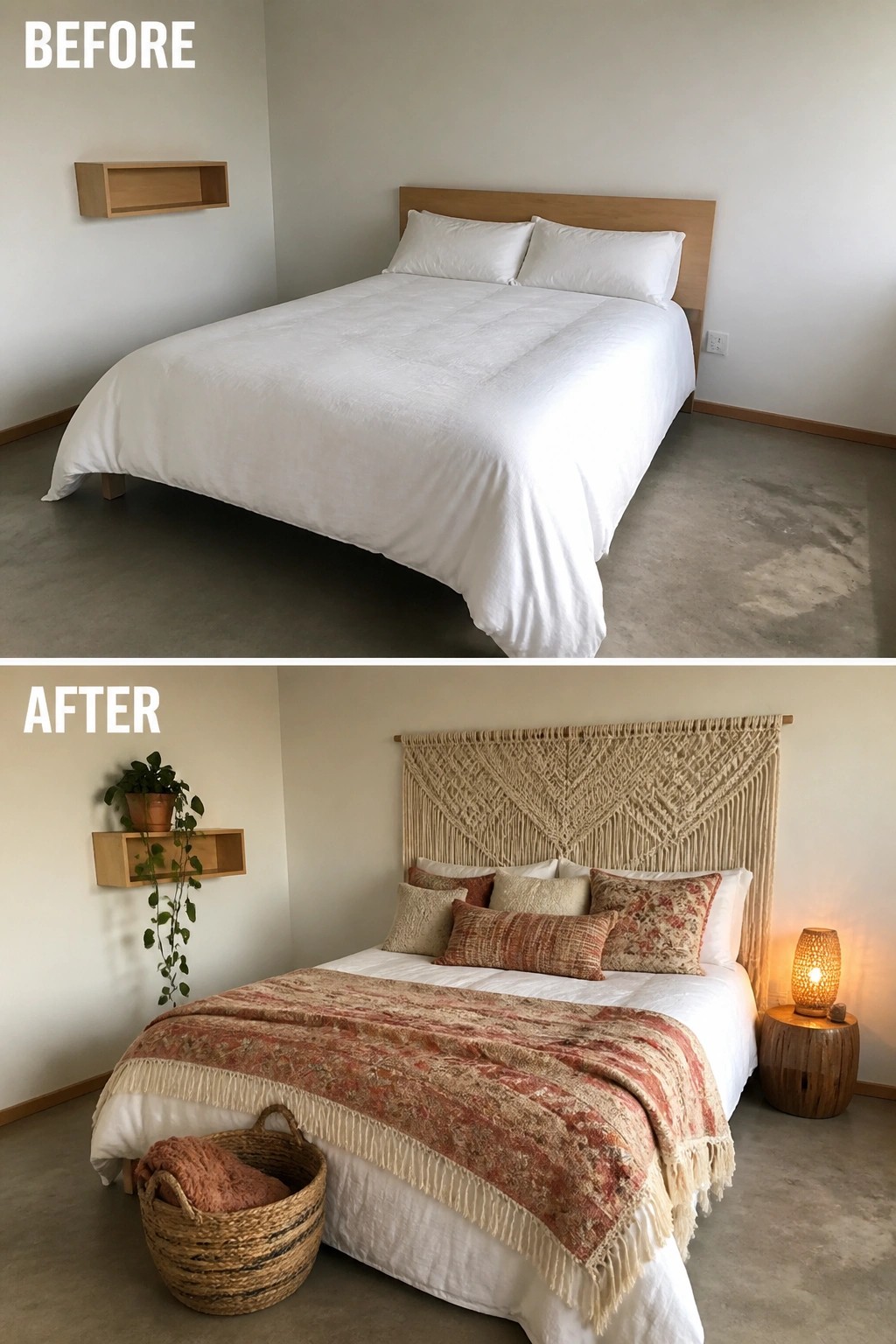
A plain bedroom with little more than a bed and white bedding often feels unfinished. Adding a large woven headboard behind the bed creates an instant focal point and gives the room a more settled look without major construction.
This idea works especially well in simple spaces with plain walls and hard floors. Keep the rest of the room light, add a few textured pillows and a throw, and let the headboard do most of the visual work.
Use A Statement Headboard To Refresh A Dark Bedroom

The original bedroom felt closed in because everything blended into one dark mass. A mirrored headboard with clean lines gave the room an instant focal point and reflected more light back into the space.
This approach works best in smaller bedrooms where one strong piece can carry the update. Keep the rest of the room simple with lighter bedding and curtains so the headboard stays the main feature instead of competing with other details.
Create A Statement Headboard Wall With Shiplap
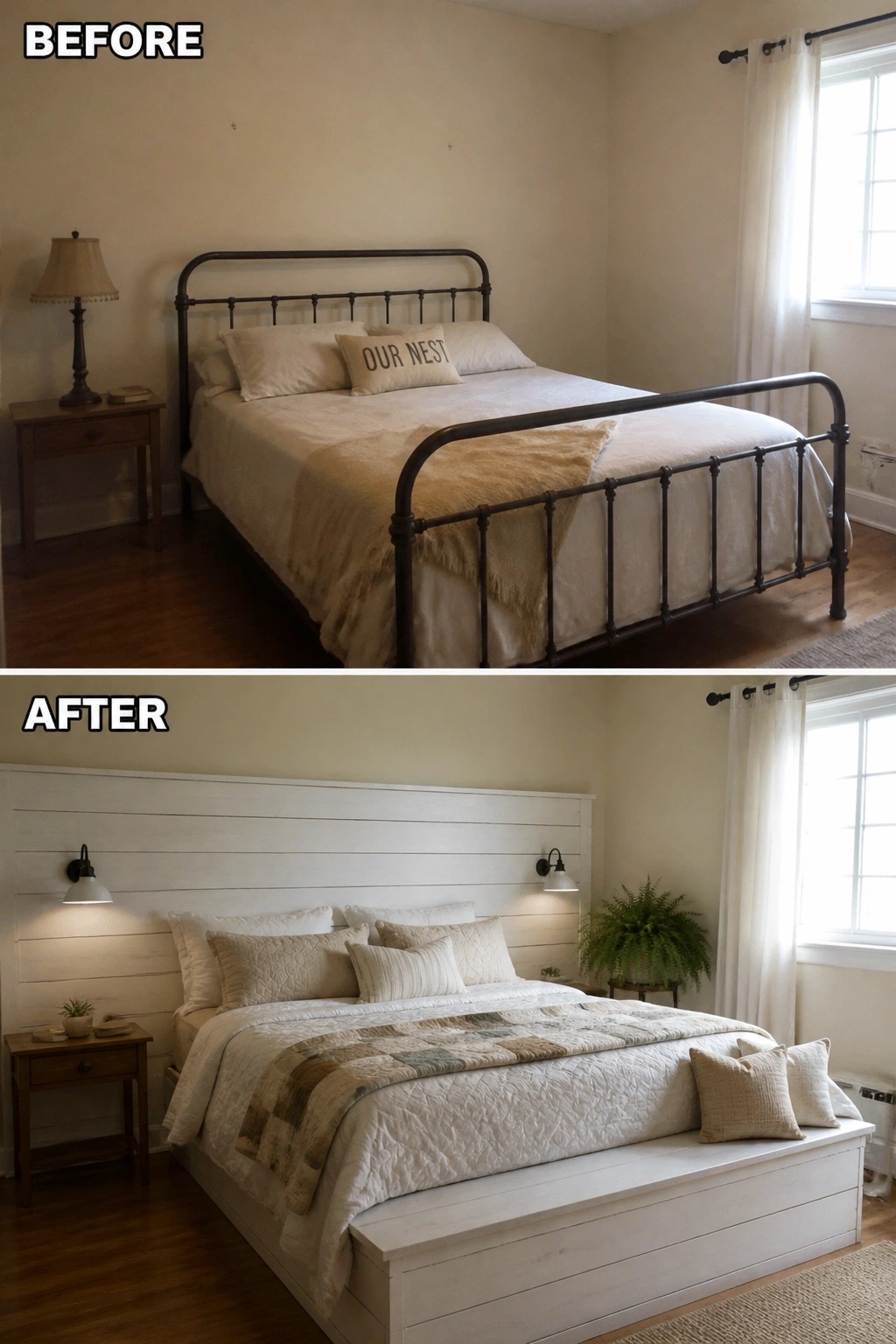
Adding a shiplap headboard wall gives the bed a clear focal point without needing a separate piece of furniture. The before photo shows a basic metal frame against a plain wall. The after version adds white horizontal boards across the full width of the bed along with wall sconces that provide soft light on both sides.
This approach works best in bedrooms where the bed is the main feature and you want to keep the rest of the room simple. It suits smaller or older homes where you need storage too, since the platform base in the after photo adds drawers without taking up extra floor space. Keep the boards light in color and match the sconce style to your bedding so the wall feels like part of the room rather than an add-on.
Make The Headboard The Main Feature
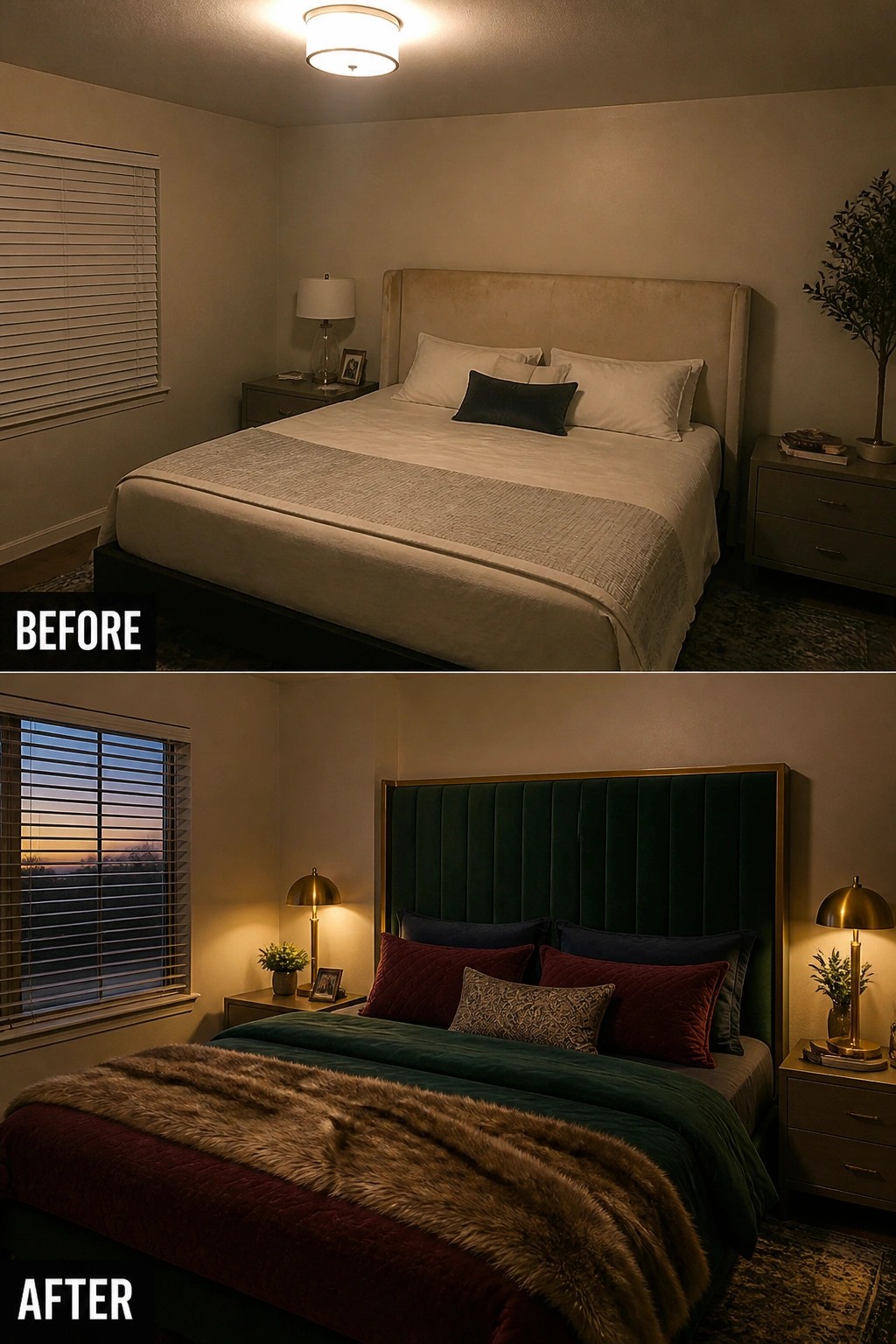
A basic bed can leave a bedroom looking unfinished even when everything else is in place. Replacing the simple headboard with a large, deep green velvet one framed in gold gives the room a clear focal point and instantly changes the feel. The richer bedding and pillows then build on that one strong piece.
This idea works best when you want a noticeable update without a full remodel. Pick a headboard that stands out in both size and color, then keep the surrounding layers simple so the headboard stays in charge. It suits most bedroom sizes as long as the piece fits the wall and leaves room to move around the bed.
Swap An Ornate Headboard For A Simple One

A busy headboard with lots of carvings and dark wood can make a bedroom feel crowded even when the room itself is not small. Replacing it with a lighter wood headboard that has clean lines removes the visual weight right away. The change also lets you simplify the bedding and accessories at the same time.
This idea works best in average-sized bedrooms where you want the space to feel calmer without moving walls or buying all new furniture. Start with the headboard as the only new piece, then keep the bedding and nightstand items to a minimum. One or two neutral lamps and a small plant are usually enough to finish the look.
Anchor The Bedroom With A Statement Headboard
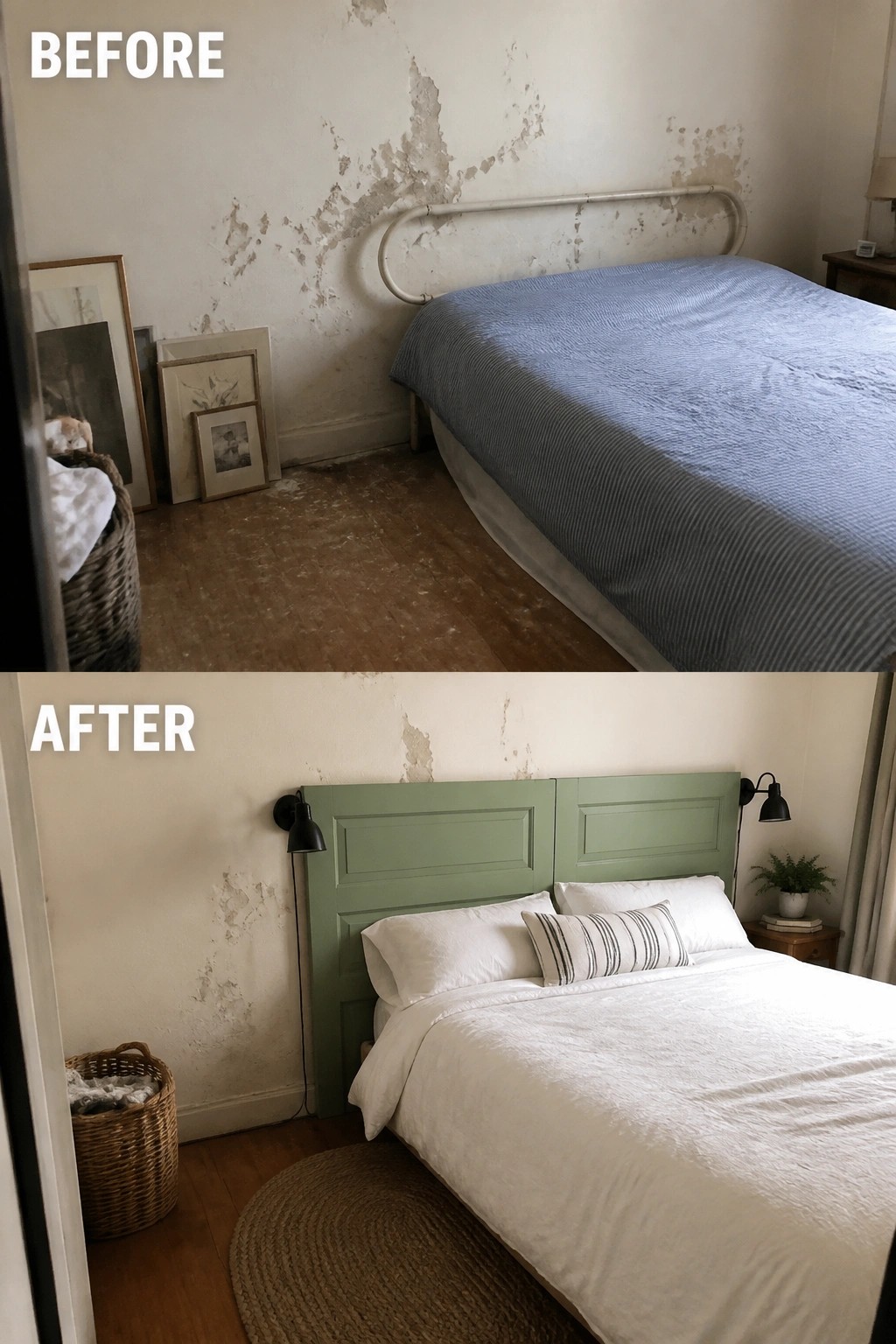
A basic metal bed frame can feel lost in a room with worn walls, but adding a bold headboard changes the whole focus. Here the green paneled piece brings structure and color that the space was missing, while the sconces on either side make the bed feel intentional rather than temporary.
This idea suits older homes or rooms that still have imperfect surfaces. Keep the bedding simple and let the headboard carry the weight, then add one or two lights at the right height so the area reads as finished without needing a full wall repair.
Make The Headboard The Main Feature

A plain bed setup often leaves the room feeling unfinished. Adding a solid headboard with backlighting gives the bed a clear focal point and adds a soft layer of light that makes the whole space feel more finished at night.
This idea works well in smaller bedrooms where you want one strong element instead of lots of extra pieces. Keep the headboard in a simple shape and neutral finish, then layer a couple of pillows and a throw to tie it together without crowding the wall.
Anchor The Bedroom With A Curved Statement Headboard
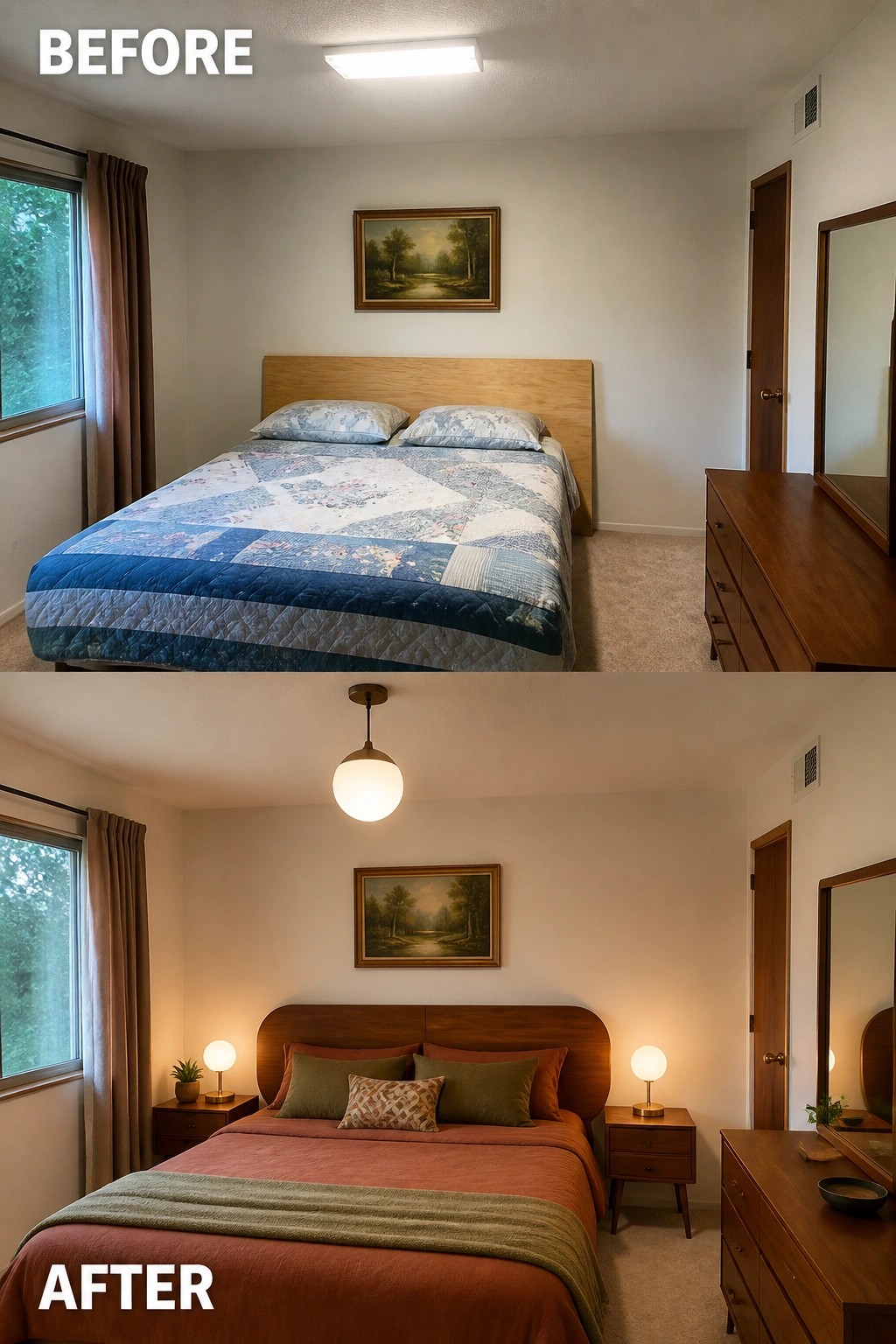
A plain bedroom often feels unfinished when the bed sits against the wall with nothing to draw the eye. In this case the change came from replacing the simple flat headboard with a rounded wood one that gives the bed real presence. The new shape, paired with warm bedding and lamps on either side, makes the whole room feel settled instead of temporary.
This idea works well in smaller bedrooms where you want one strong piece to do most of the work. Keep the headboard in a natural wood tone or soft color that matches your bedding, then add simple nightstands so the lamps sit at the right height. The rest of the room can stay fairly plain as long as the bed area feels intentional.
Make The Headboard Wall The Main Feature

The plain wall behind the bed was the weakest part of the room. Adding a stacked stone accent wall behind the headboard gives the bed a clear center point and makes the whole space feel more finished.
This idea works best in smaller bedrooms where the bed takes up most of the wall. Keep the rest of the room quiet so the accent wall does the work, and use a pair of simple lamps to show off the texture once the lights go down.
Make A Plain Bedroom Feel Finished With A Statement Headboard

A basic bed frame and simple bedding can leave a bedroom feeling incomplete. Adding a tall upholstered headboard with built-in lighting creates an immediate focal point and gives the space a more finished look without needing a full room overhaul.
This approach works especially well in smaller bedrooms where one strong element can do most of the work. Keep the rest of the furniture simple and let the headboard set the scale and mood.
Let A Statement Headboard Set The Tone

A bedroom often feels unfinished when the bed itself blends into the background. Swapping a plain dark headboard for one with strong color and pattern immediately gives the room a clear center point, and pairing it with matching bedding keeps the look pulled together without extra clutter.
This idea works especially well in smaller rooms where you want one main piece to carry the personality. Pick a headboard that introduces the colors you plan to repeat in the bedding and lamps, then keep the surrounding walls and furniture simple so the bed stays the focus.
Frequently Asked Questions
Q: How tall should my statement headboard be for a standard bedroom? A: Measure from the top of your mattress up the wall first. Aim for the headboard to land around 12 inches above that line so it draws the eye without crowding the ceiling. This height works well with most bed sizes and keeps the focus sharp.
Q: Can I swap in a new headboard without buying a whole new bed frame? A: Many frames already have brackets or holes that let you bolt a new headboard straight on. Test the fit on your current setup before you commit to a big piece. If the brackets do not line up you can add simple adapter plates from the hardware store.
Q: What bedding looks right once the headboard becomes the main feature? A: Keep the bedding simple with solid colors or subtle patterns that sit lower than the headboard. Let the fabric stack neatly at the base so the headboard stays front and center. One or two accent pillows are enough to tie the colors together without pulling attention away.
