
An entryway can feel awkward when shoes, bags, and everyday clutter have nowhere to go, even if the rest of the home is in good shape.
I like updates that make this small space easier to use without moving walls or changing the layout.
A fresh coat of paint, better lighting, or a simple place to drop keys can help the entrance feel more finished and connected to the rooms beyond it.
The best changes do not need a big budget.
I’d save the ideas that fit your home and try the ones that solve a real frustration first.
Give The Entryway A Simple Focal Point

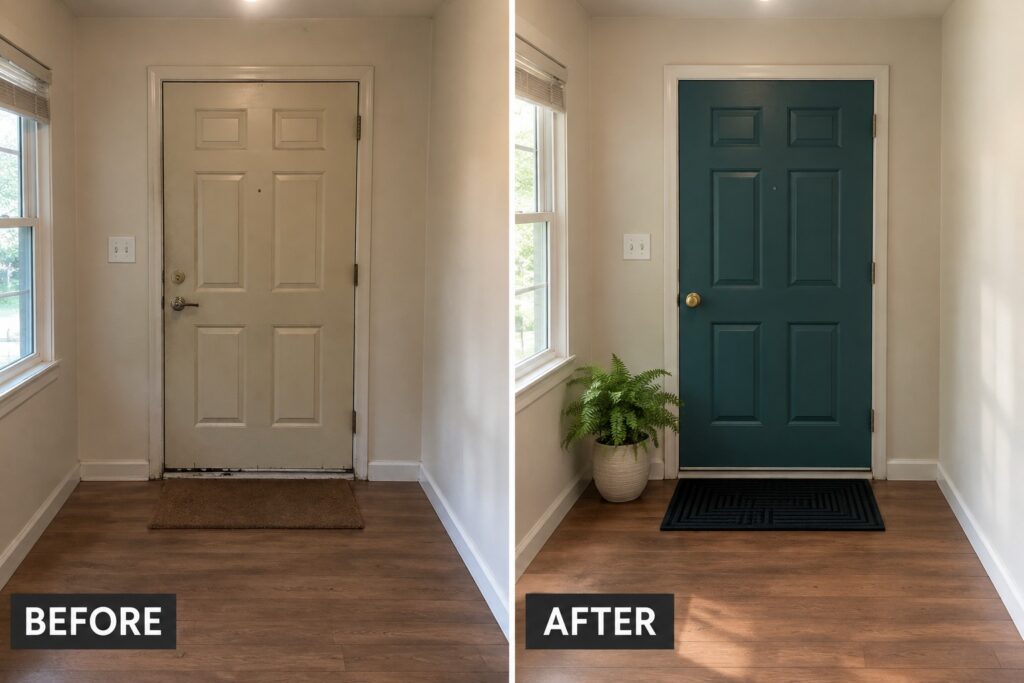
Painting the front door a deep color gives this small entryway a clear focal point without changing its layout. The teal door feels more intentional than the plain beige one, and the new mat helps the area look finished.
A fresh coat of paint is a manageable update for many entryways, especially when the door is in good condition. Pick a color that suits the rest of the home, and keep the surrounding decor simple so the doorway does not feel crowded.
Make An Empty Entryway More Useful
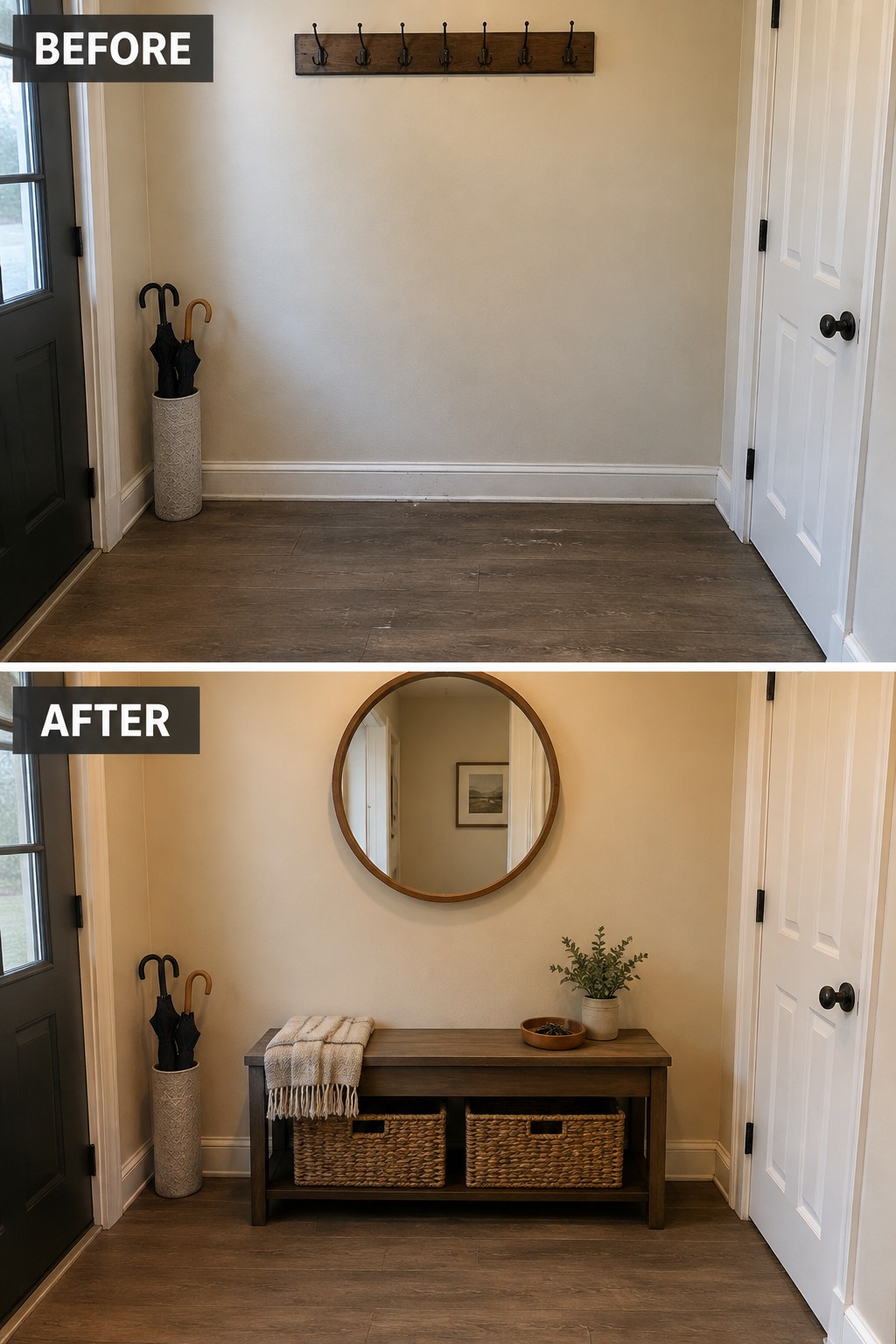
A narrow entryway can feel unfinished when its wall space and floor space have no clear purpose. Adding a slim console table turns the blank area into a practical landing spot, while baskets underneath keep everyday items from collecting on the floor.
Choose a table that leaves a clear path between the doors, and use baskets that fit neatly below it. This works well in a small foyer where extra storage is useful but a larger piece of furniture would get in the way.
Replace Worn Entryway Flooring With Patterned Tile
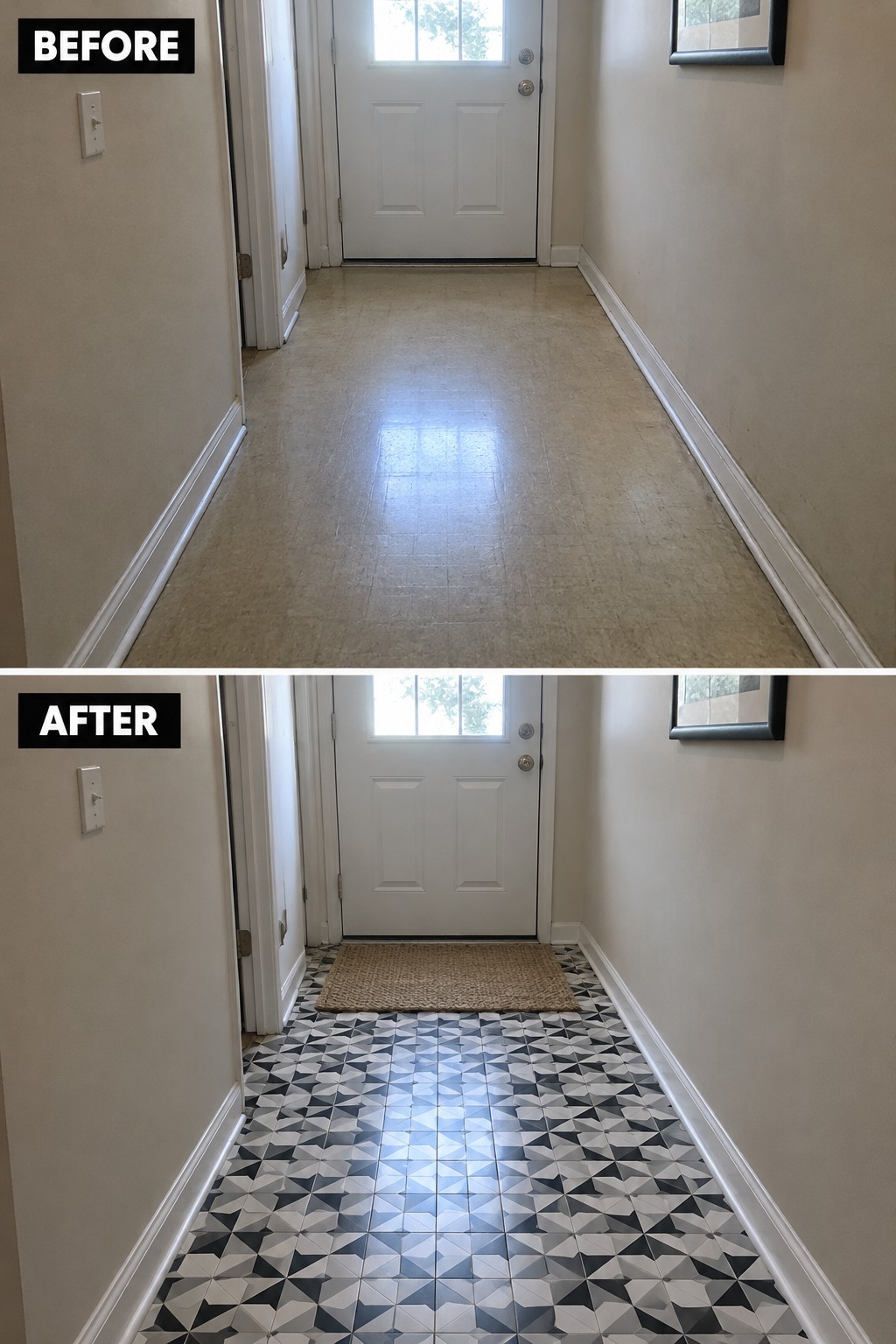
The old, plain floor made this narrow entry feel a bit tired. Patterned tile gives it a clear refresh, and the small rug by the door keeps a spot for wiping shoes without covering up the new floor.
This idea works well in a busy entry where durable flooring matters. Choose a pattern that suits the hallway’s size, and check that the tile is slip-resistant. Keeping the existing layout means the update can focus on the floor rather than a larger renovation.
Use Lighting To Make A Small Entryway Feel Finished

A brighter entryway can feel much more welcoming without changing its layout. Here, the plain ceiling bulb is replaced with a pendant, and a wall sconce lights the console area. The added light makes the narrow hall easier to use and gives it a clearer focal point.
For a similar update, choose fixtures that fit the ceiling height and leave enough room to walk comfortably. If new wiring is not practical, a plug-in sconce or a well-placed lamp can provide extra light without a major renovation.
Give A Blank Entryway A Finished Look

A small gallery wall can make an empty entryway feel more considered without changing its layout. Here, botanical prints above a narrow shelf give the blank wall a clear purpose, while the shelf provides a handy place for a few everyday items.
Try this idea in a hallway or entry with a stretch of open wall. Keep the frames and shelf modest in size so there is still room to move, and leave some open space around the display.
Use A Mirror To Open Up A Narrow Entryway

The entryway feels less crowded once the shoe pile and coat hooks are cleared away, and a full-length mirror gives the small area a clear purpose. It also reflects light from the next room, which helps the hall feel more open without changing its layout.
A tall mirror works well in a narrow hall where there is little room for extra furniture. Lean or mount one securely, then keep the floor mostly clear so people can move through easily.
Add Beadboard To Finish A Plain Entryway
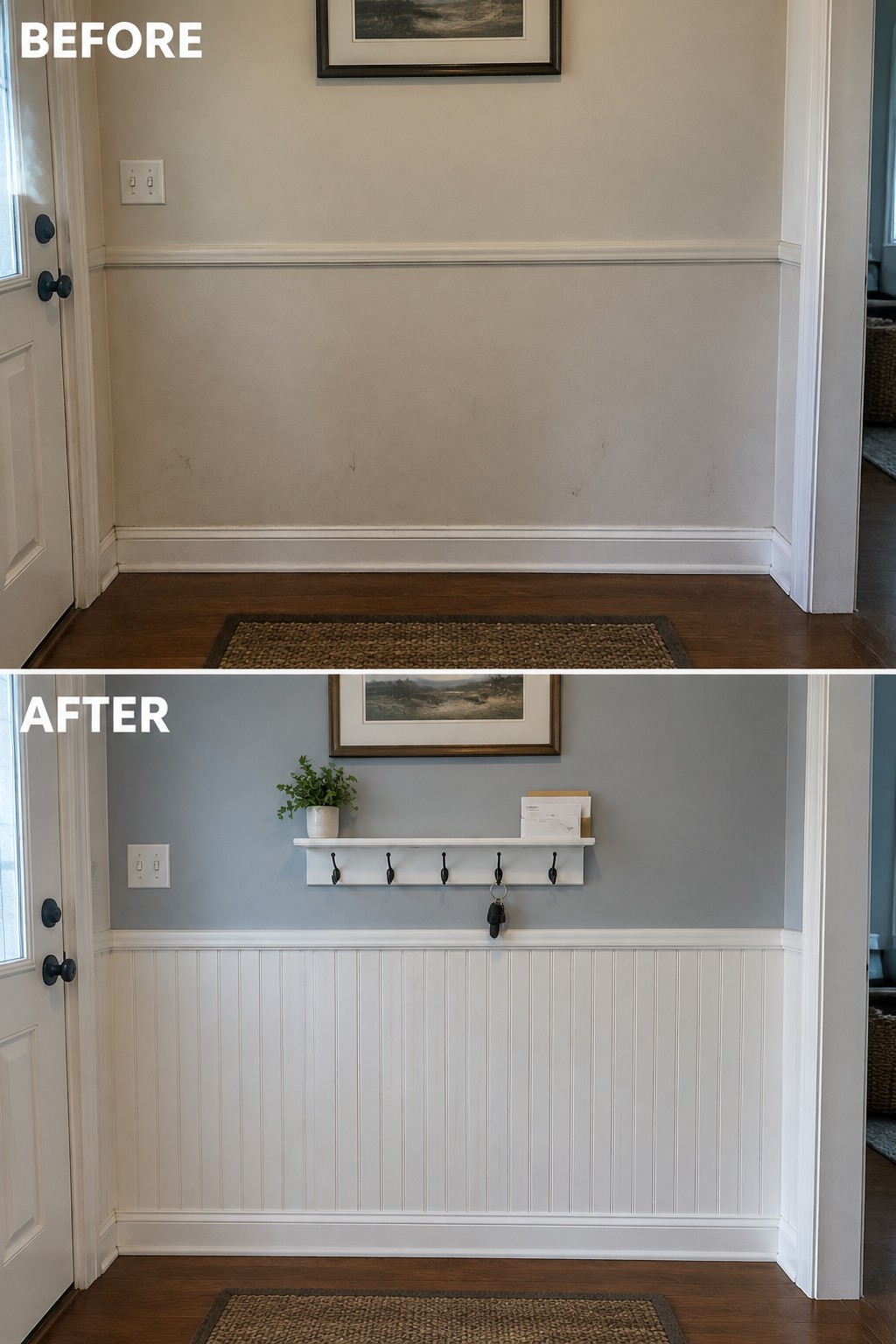
A blank entryway wall can feel unfinished, even when the rest of the space is in good shape. Adding white beadboard below a simple chair rail gives the wall more character, while a muted blue-gray above it keeps the small area from feeling too plain.
This is a practical update for a narrow hall or entry because the paneling adds interest without changing the layout. A small shelf with hooks makes the wall useful, too. Keep the shelf shallow so coats and keys have a place without crowding the walkway.
Update The Front Door For A Cleaner Entry
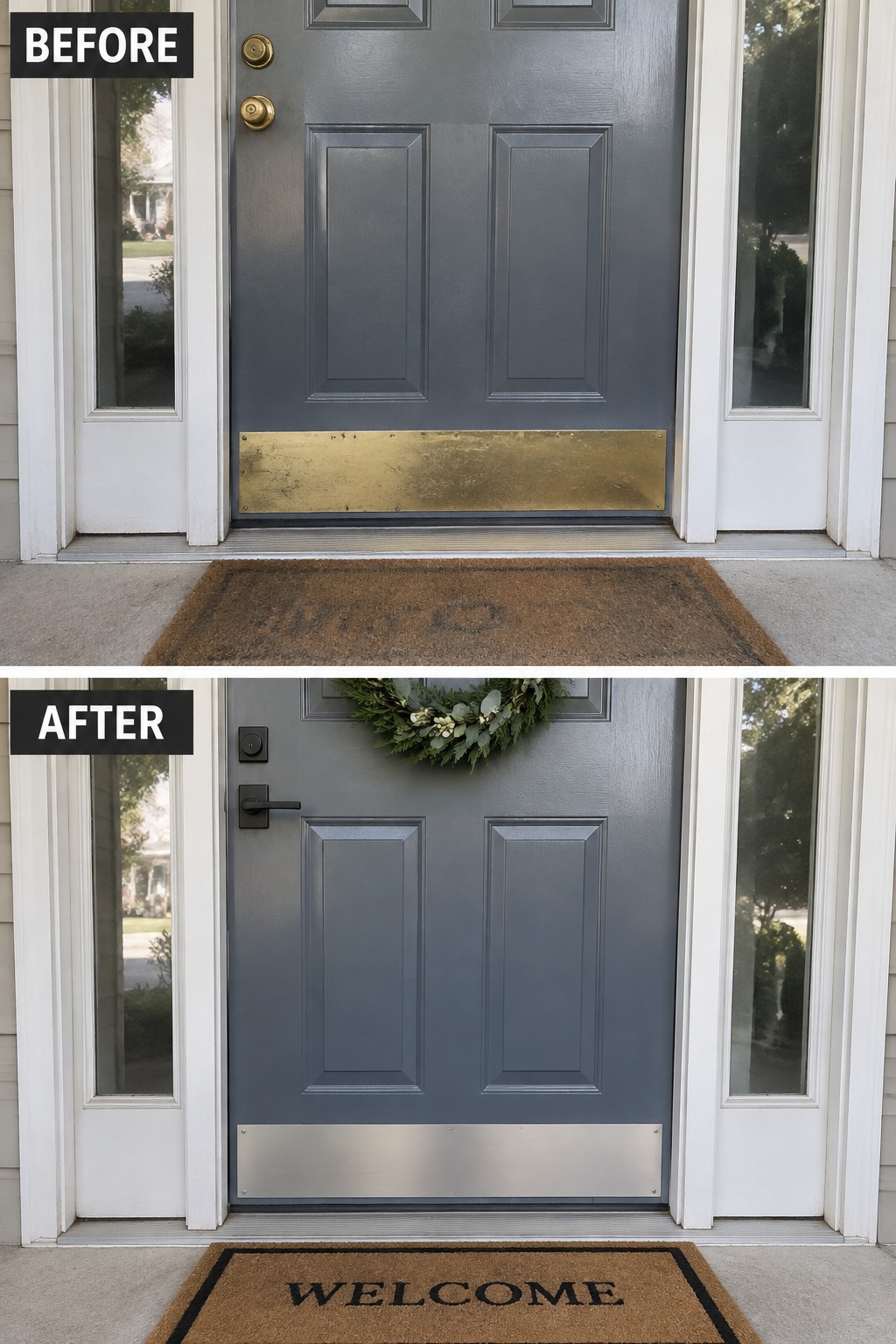
Replacing the worn brass kick plate and hardware with simple brushed-metal and black finishes gives this entry a more current look without changing its layout. The cleaner door details are enough to make the entrance feel cared for.
This is an easy idea for a front door that still works well but looks tired. Choose hardware and a kick plate that suit the door, and keep the finish consistent so the update feels intentional.
Add A Console Table For Entryway Storage
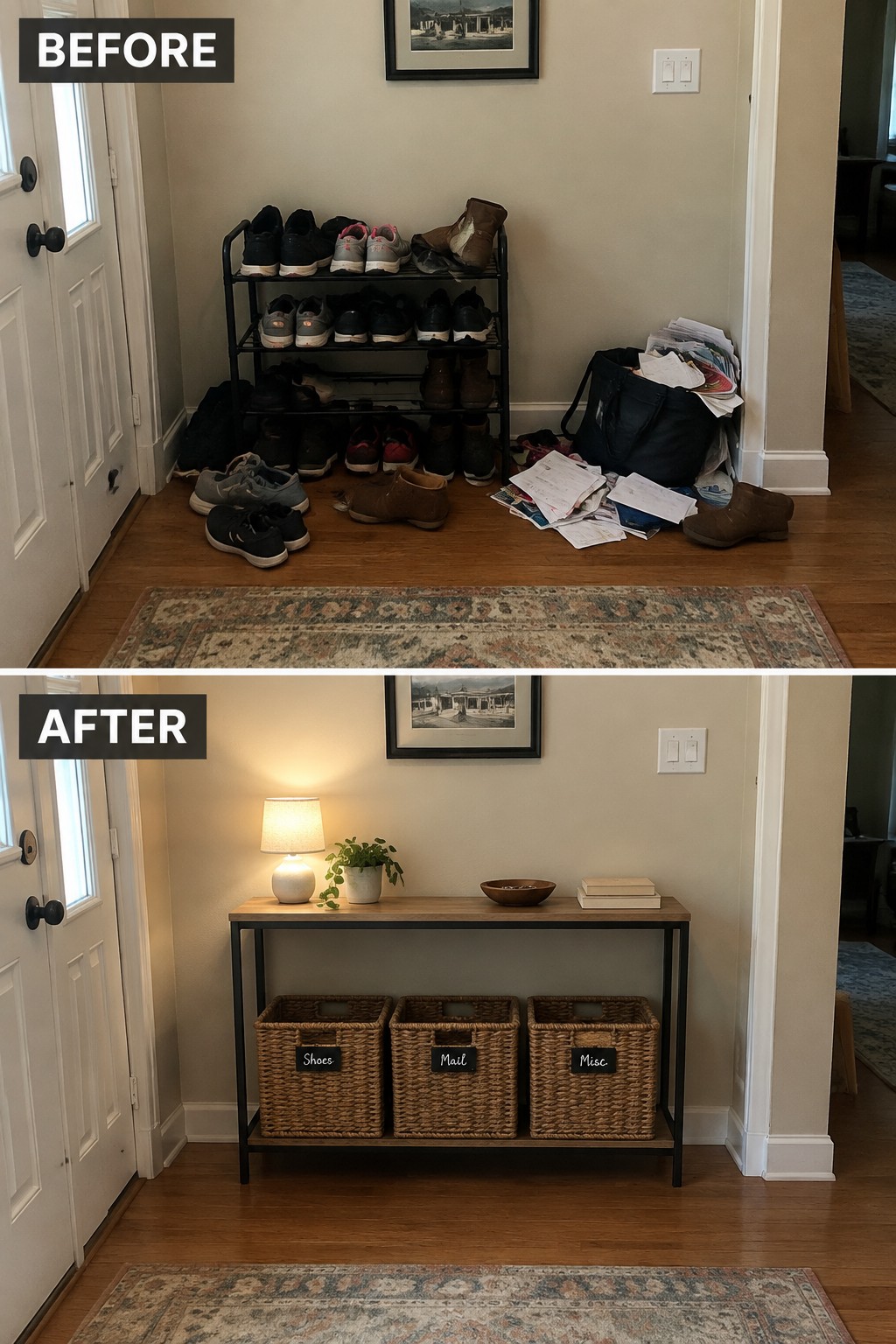
Replacing the crowded shoe rack with a slim console table makes the entry feel organized without changing its layout. Baskets on the lower shelf keep shoes and mail together, while the tabletop stays clear enough for a lamp or a few everyday items.
Choose a table that leaves room to walk through comfortably, then use labeled baskets to give clutter a place to go. This works especially well in a small entry where a larger cabinet would feel bulky.
Turn A Blank Entryway Wall Into Useful Storage
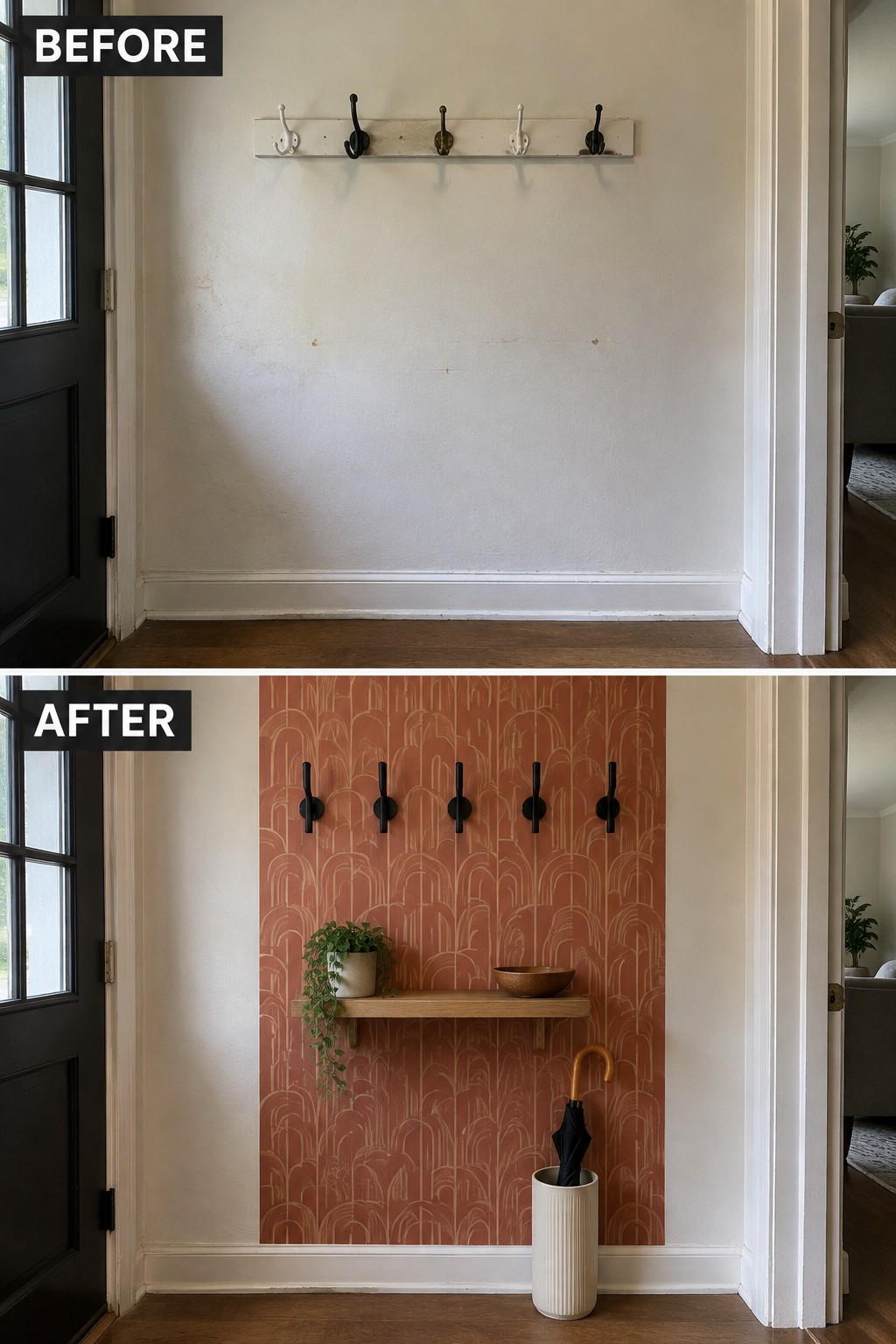
A bare entryway wall can feel unfinished and leave everyday items without a place to go. Here, patterned wallpaper marks out the area, while a row of hooks and a narrow shelf make the wall more useful without changing the layout.
You can use the same idea in a small hall or by a side door. Keep the hooks easy to reach, and choose a shelf that leaves enough room to walk past; a bold wallpaper panel helps define the spot without covering the whole room.
Use A Runner To Define A Long Entryway
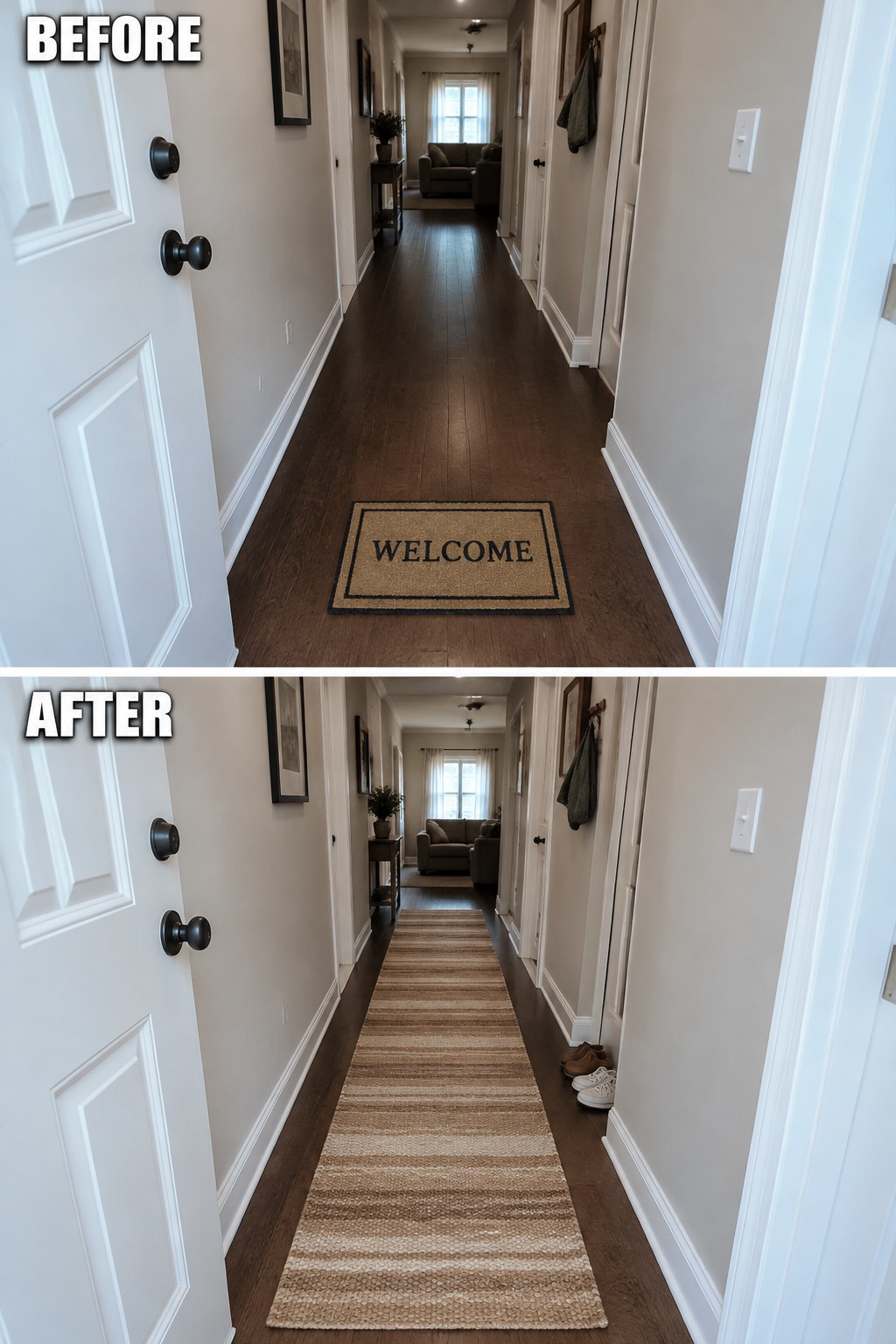
The long, bare floor made this hallway feel unfinished. A runner gives the entryway a clear path and makes the walk to the living room feel more considered, without changing the layout.
Choose a rug that leaves some floor visible along the sides and is long enough to suit the hallway. A low-pile runner is a practical choice for a busy entrance, where it is easier to clean and less likely to catch underfoot.
Add A Bench With Built-In Shoe Storage

Replacing the crowded coat stand and scattered shoes with a compact bench makes this entryway easier to use. The cubbies keep everyday footwear in one place, while the padded seat gives people a spot to sit when putting shoes on.
A low storage bench works well in a small entry as long as it leaves a clear path to the door. Choose one that fits the wall, and use the cubbies for the shoes you reach for most often.
Use A Tall Plant To Fill An Empty Entryway Corner

The entry feels more finished once a tall plant gives the empty corner a clear purpose. A fiddle-leaf fig in a woven basket makes use of vertical space without taking up much floor area.
This idea works well beside a front door or window where a larger plant can get enough light. Choose a size that leaves the walkway clear, and use a sturdy basket or pot to keep it steady.
Use Paint To Make The Entryway Feel More Welcoming

The plain entryway feels more finished after the walls are painted a warm ochre, giving the front door a stronger setting without changing the layout. It’s a simple way to make a small entrance feel less bare.
For a low-cost update, paint the walls in a color that works with your existing trim and flooring. A patterned rug can help define the entry, but keep its size manageable so there’s still room to open the door and walk through.
Add A Small Shelf For Entryway Storage
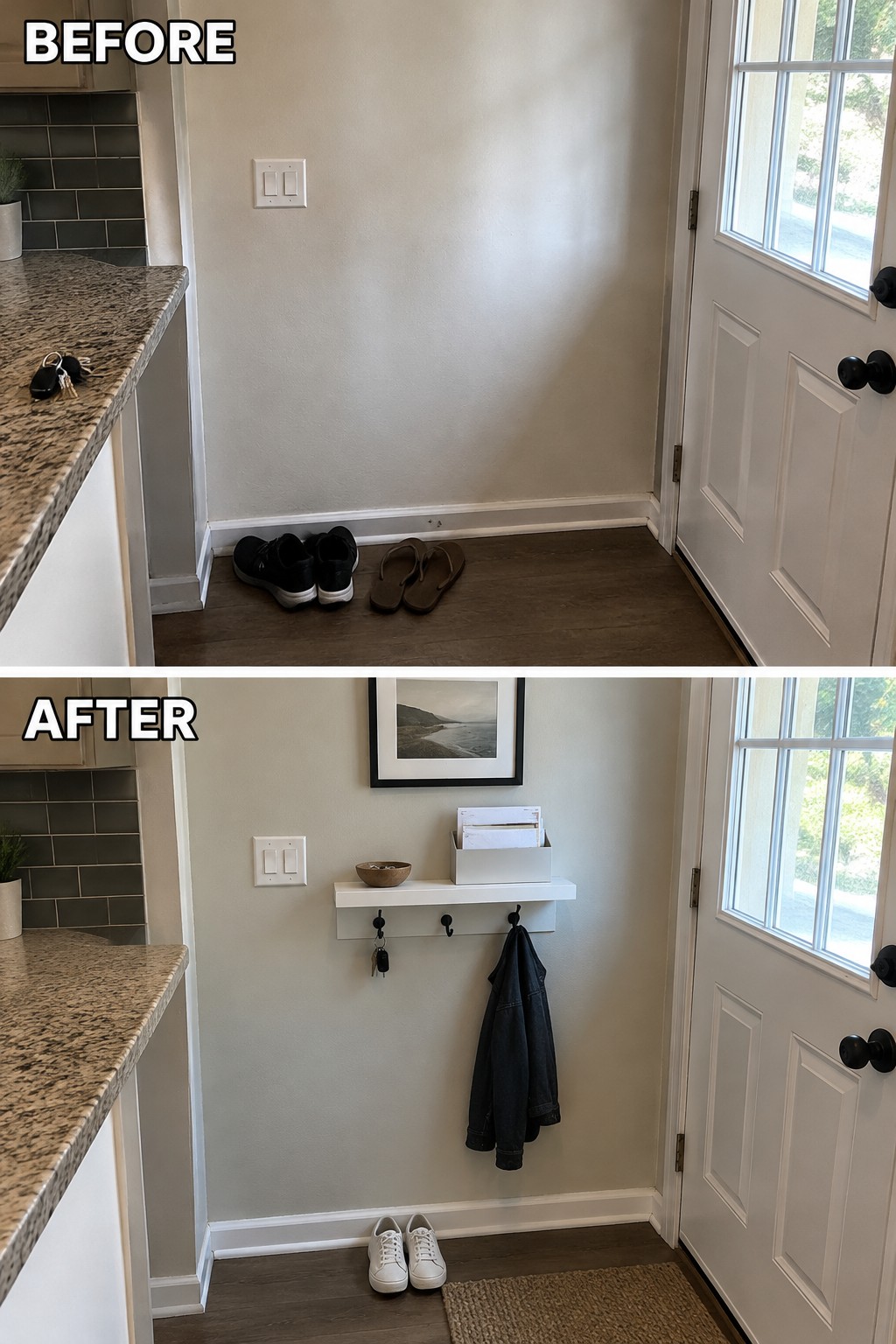
An empty entryway wall can do more than hold a light switch. A narrow shelf with hooks turns that unused spot into a place for keys and a coat, while keeping the floor clearer than a pile of shoes and bags.
Choose a shallow shelf so it does not crowd the walkway, and use only a few hooks for everyday items. This works especially well in a small entry where there is no room for a full bench or cabinet.
Use A Doormat To Finish The Entryway

The entryway feels more complete with a simple mat that marks the spot where people come in and take off their shoes. In the after photo, a rectangular mat gives the otherwise empty floor a clear purpose without changing the layout.
Choose a mat that fits the space and leaves room to open the door and walk around it. A dark border can help define the edges, while a low-pile surface is easier to clean in a busy entry.
Organize Shoes And Umbrellas In One Place

A simple spot for wet-weather gear can keep an entryway floor from turning into a muddy jumble. In the after photo, a boot tray gathers the shoes, while a tall holder keeps umbrellas upright and drip-ready.
Use the same idea near the door where everyone can reach it, but leave enough clear floor space to walk through comfortably. A tray with a raised edge is especially handy on rainy days, and it can be moved aside for cleaning.
Use A Rug To Finish A Plain Entryway
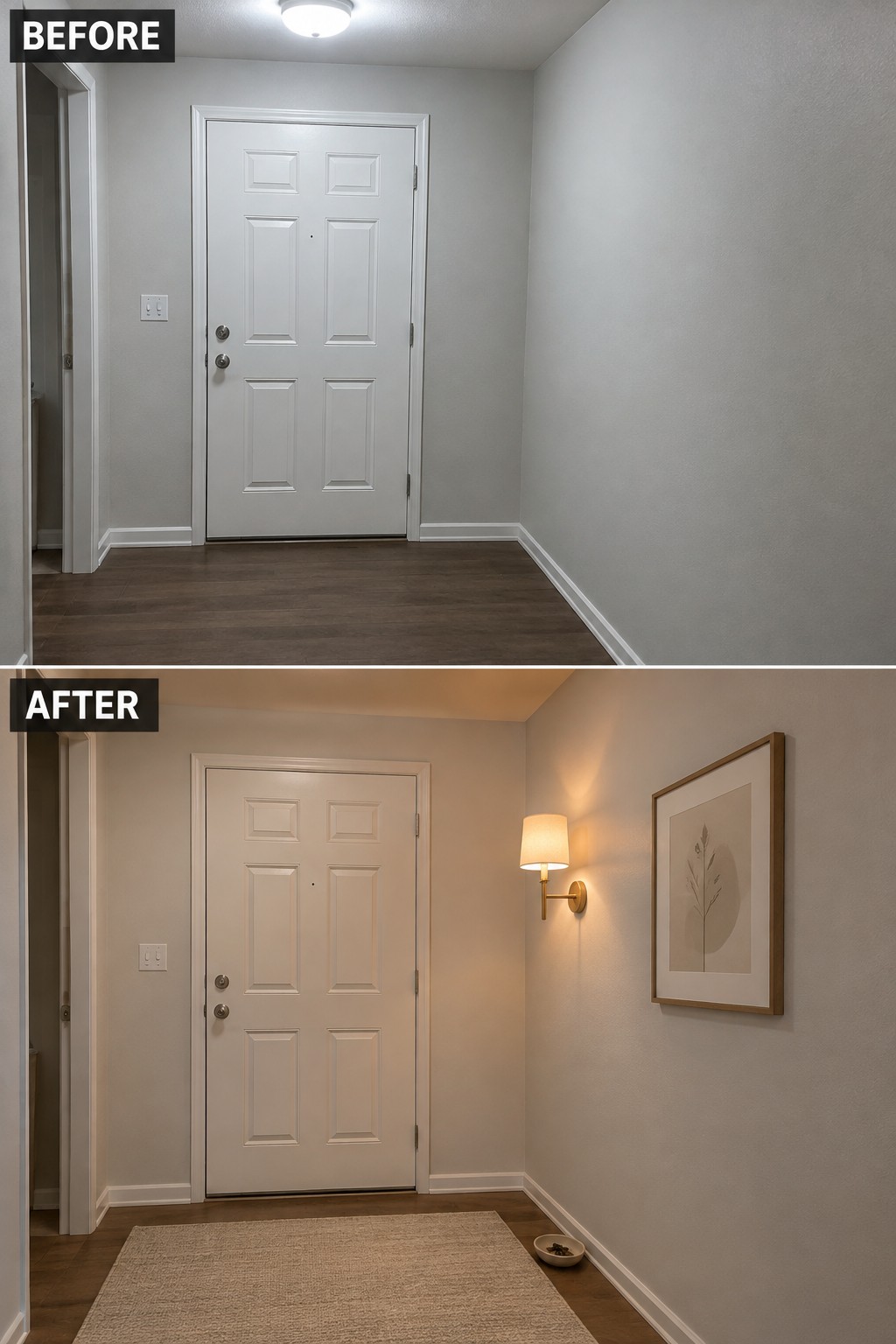
The entryway feels more complete once a large rug defines the floor area. The wall sconce helps too, but the rug is the simple change that makes this bare space feel more like a finished part of the home.
Choose a low-pile rug that fits the walkway without blocking the door, and make sure it has a nonslip backing. A neutral pattern works well in a small entry and is practical for everyday foot traffic.
Add A Wall-Mounted Coat Rack To An Empty Entryway

An empty entryway wall can do more than sit bare. A mounted rack gives coats, bags, and scarves a place to go, while a patterned wall hanging behind it makes the storage feel like part of the room rather than an afterthought.
This works especially well in a narrow hall where there is little room for a bulky coat stand. Choose a rack with enough hooks for everyday items, and keep the floor clear so people can move through easily.
Frequently Asked Questions
Q: How can I make a small entryway feel more organized without moving anything?
A: Add hooks or a slim wall shelf where you already have room, and give shoes and keys a designated spot. Keeping the floor clear often makes a tight entry feel noticeably bigger.
Q: What’s the cheapest way to brighten a dark entryway?
A: Try a lighter washable paint color, or hang a mirror to bounce around the light you already have. Even swapping a dim bulb for a brighter warm-white one can help.
Q: Can I use a rug if my entryway gets muddy?
A: Yes, choose a low-pile rug that’s easy to shake out or wash, and use a nonslip pad underneath. A darker pattern is forgiving between cleanings.
Q: How do I make a rental entryway feel more personal without making permanent changes?
A: Use removable hooks, a small framed print, or a colorful runner to add character without altering the layout. Keep adhesive products within their weight limits so they don’t damage the walls.
