
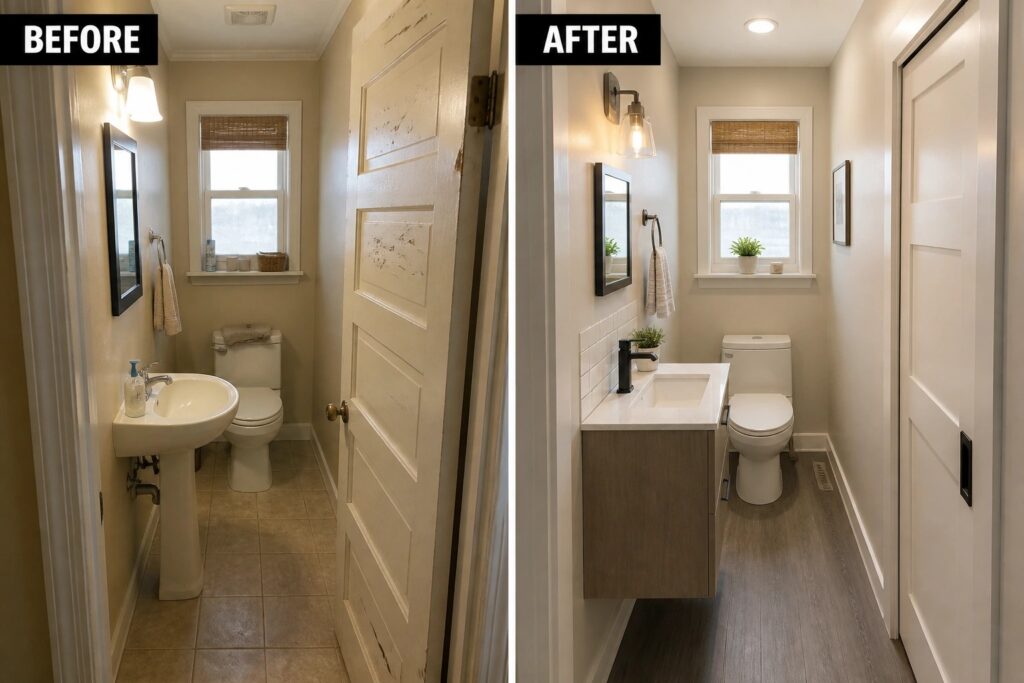
I often find that small bathrooms lose usable floor space the moment a standard door swings open into the room.
That simple layout problem makes everything feel tighter, from the vanity placement to how easily you can reach the shower or towels.
I started paying attention to pocket doors after seeing how one changed the flow in a neighbor’s cramped half bath.
They tuck away completely so the room gains back its square footage without any extra construction.
It just works.
Use A Pocket Door To Fit A Vanity In A Small Bathroom
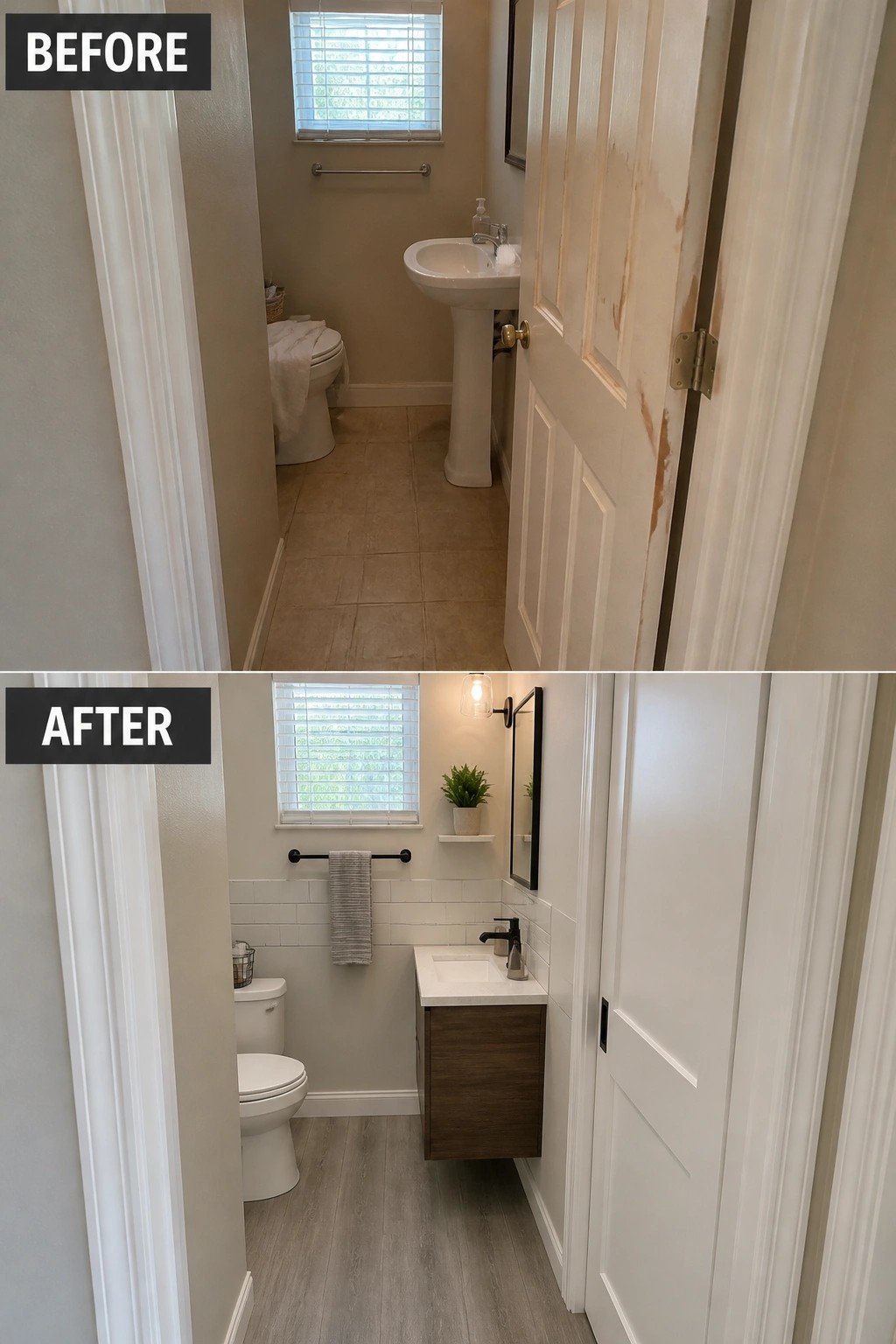
A swinging door in a narrow bathroom often blocks the only usable wall. Replacing it with a pocket door frees up that space so a floating vanity can fit without crowding the toilet or walkway.
This idea suits older homes where bathrooms are tight on square footage. Focus first on the door change, then keep other updates simple like new flooring and a compact sink to avoid overcomplicating the layout.
Install A Pocket Door To Gain Space In A Small Bathroom
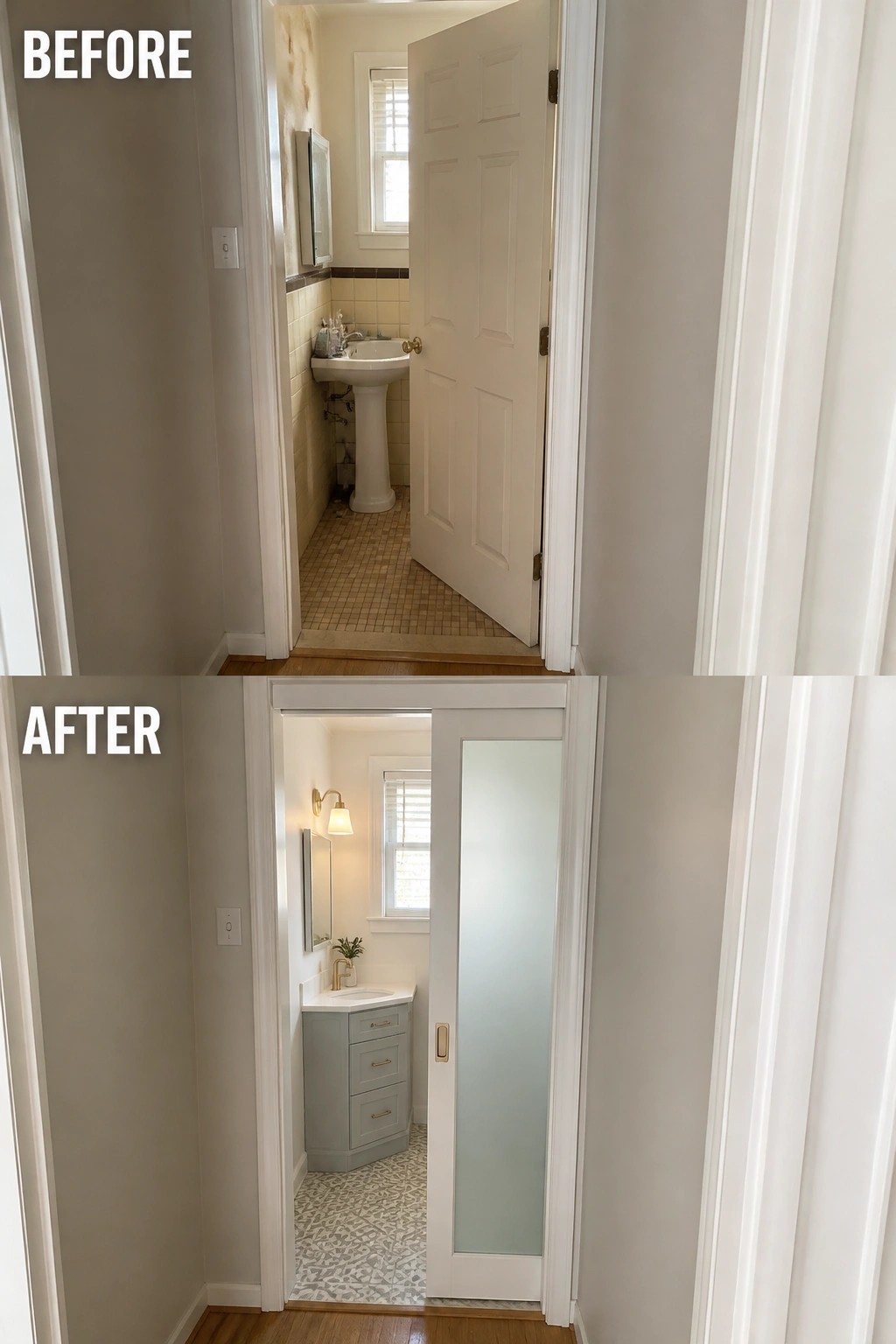
A swinging door can eat up a surprising amount of floor space in a narrow bathroom. Replacing it with a pocket door lets the room feel more open and makes the layout easier to use, especially when the sink and vanity already sit close to the entry.
This approach works best in older homes where hallways are tight and every inch counts. Keep the door simple, such as a frosted panel that still lets in light, and make sure the track hardware is sturdy so the door slides smoothly over time.
Use A Pocket Door To Open Up A Small Bathroom
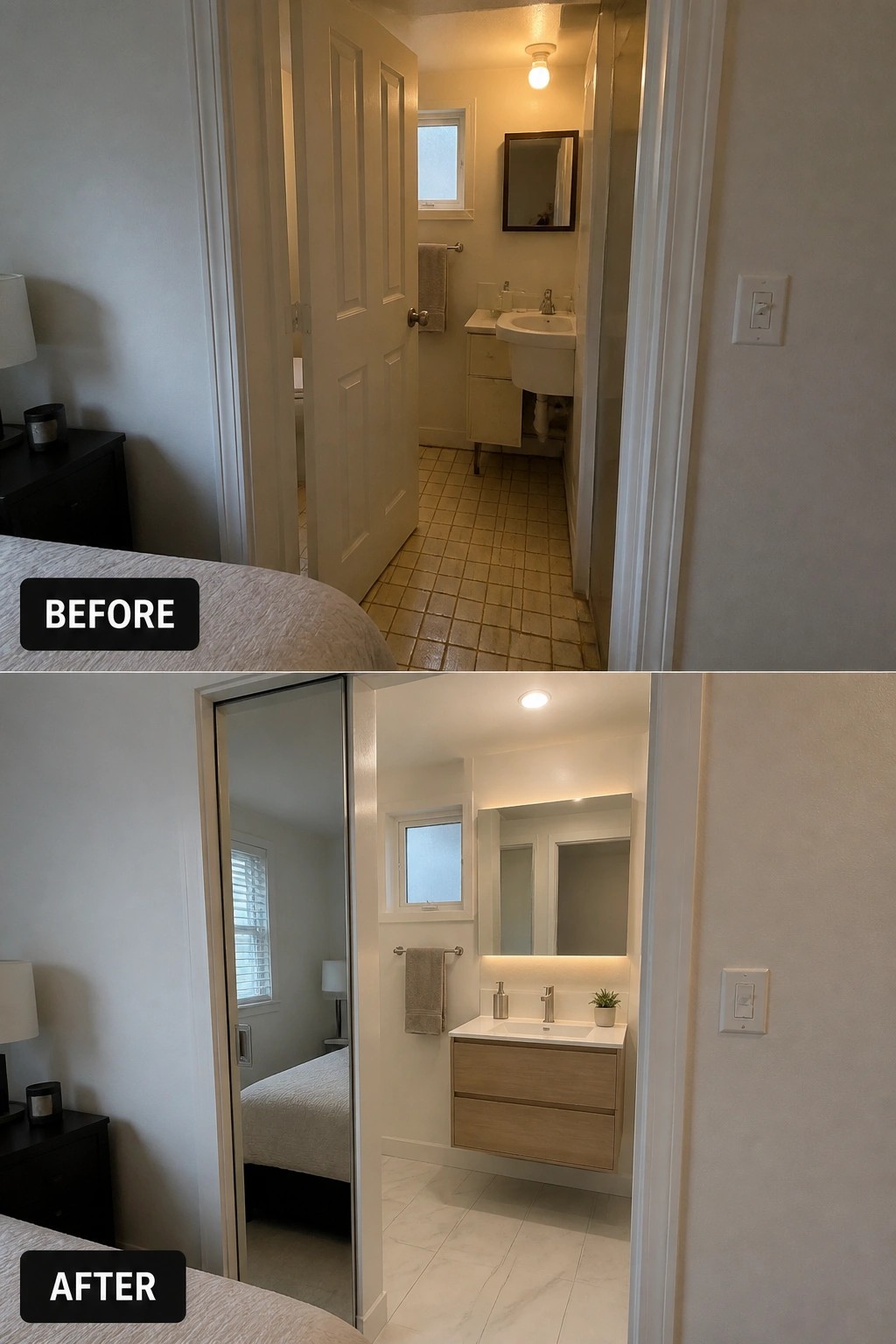
A swinging door can eat up valuable floor space in a tight bathroom. Switching to a pocket door that slides into the wall lets the room feel more open without moving any fixtures. In this case the change also improved the connection to the bedroom, making the layout feel more practical for daily use.
This idea works best in older homes where bathrooms were built small and every inch counts. Keep the door hardware simple and make sure the wall cavity is clear before framing. It is a straightforward swap that often makes the rest of a remodel feel more comfortable.
Add A Pocket Door To Open Up A Small Bathroom
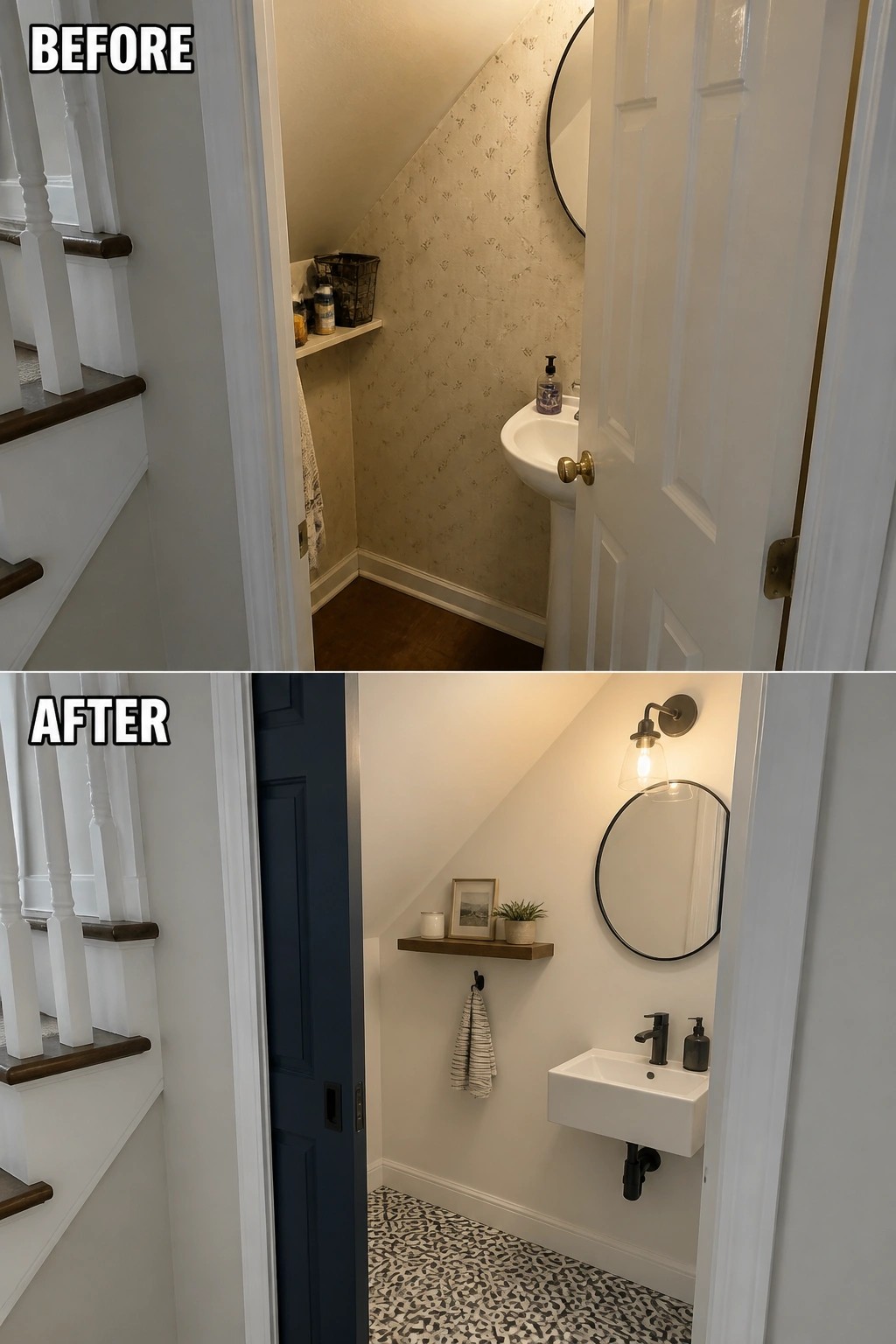
A pocket door works well in tight bathrooms like this one tucked under the stairs. The before photo shows a standard swinging door that eats into already limited floor space, while the after shows a dark navy pocket door that slides away cleanly and lets the room feel less cramped.
This approach suits older homes or any small bath where every inch counts. Keep the rest of the updates simple, such as a floating sink and light floor tile, so the door change stands out as the main space saver.
Add Built-In Storage With A Pocket Door
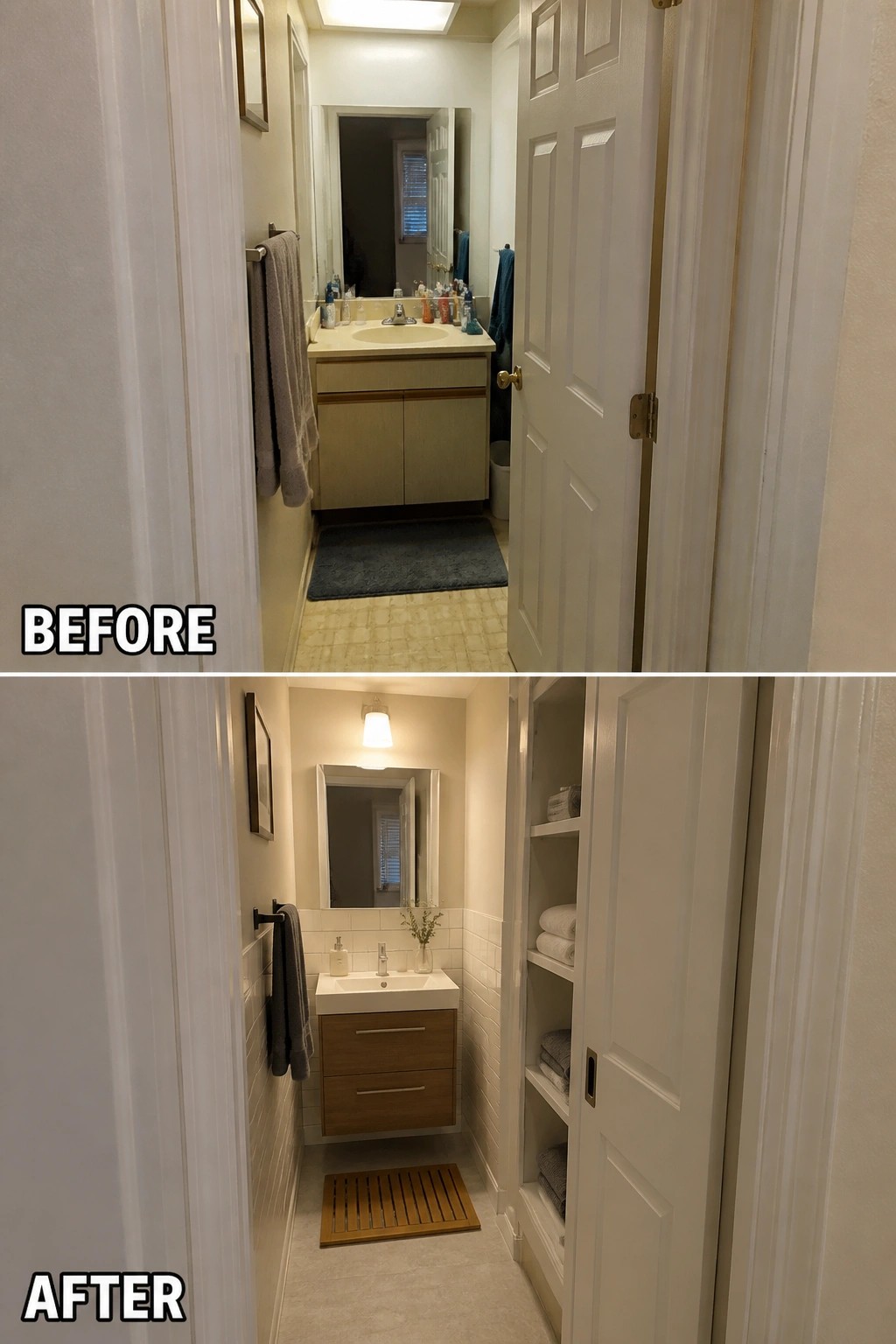
A narrow bathroom often loses floor space to a swinging door, leaving little room for anything else. Replacing it with a pocket door opens up the wall for tall built-in shelves that hold towels and daily items without crowding the walkway. The change turns a cramped, cluttered layout into one that feels organized and much easier to use.
This works best in small bathrooms where every inch counts and storage is limited. Keep the shelves shallow so they do not stick out too far, and match the finish to the vanity or trim for a clean look. It is a practical step before adding extra furniture or accessories.
Use A Pocket Door To Free Up Floor Space
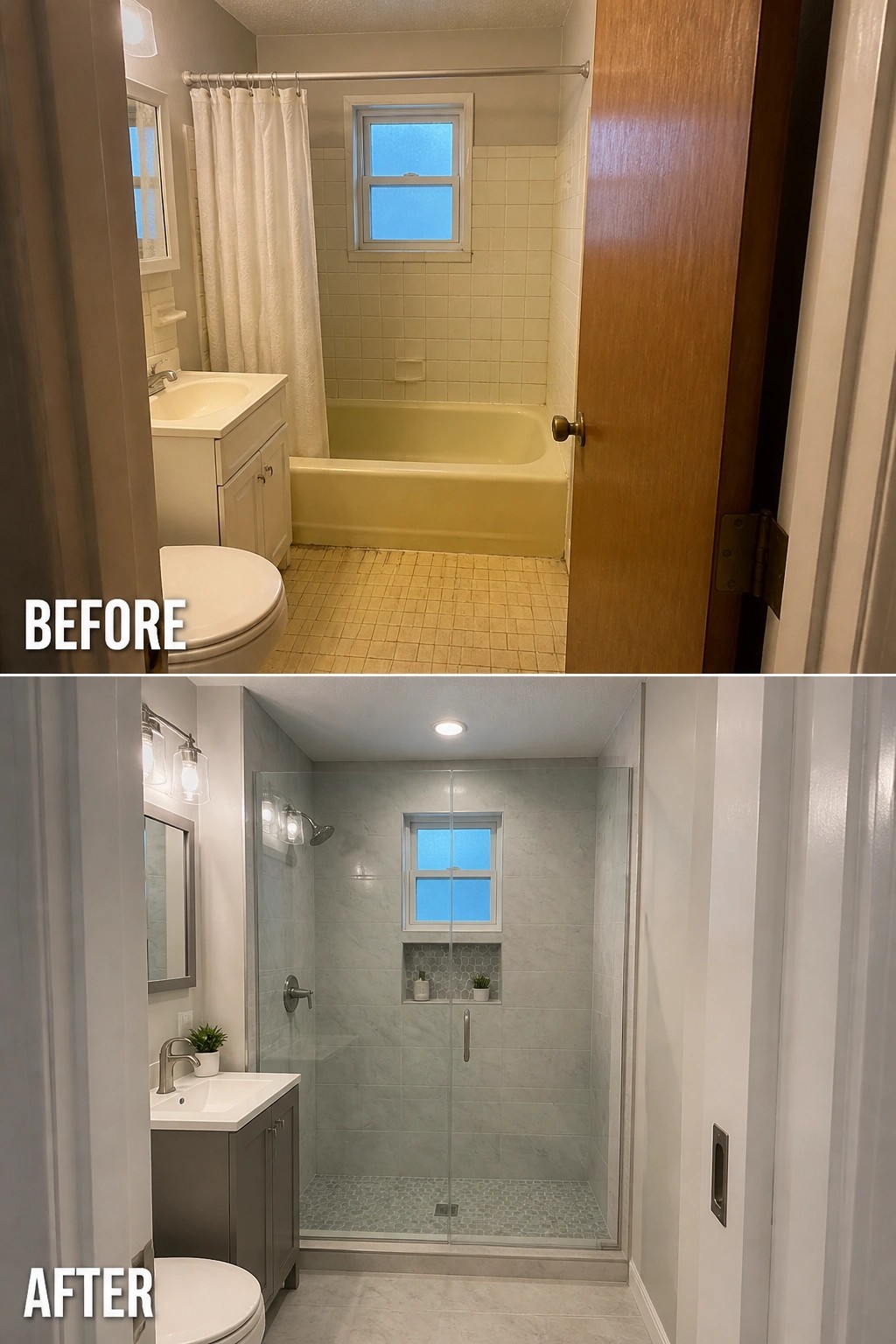
A small bathroom often loses usable room to a door that swings inward. In this remodel the old hinged door was replaced with a slim sliding door that tucks away, letting the new open shower and vanity sit comfortably without crowding the entry.
This approach works best in tight layouts where every inch matters. Keep the track hardware simple, match the door to the wall color, and make sure the pocket slides smoothly so the space feels open even when the door is closed.
Choose A Louvered Door To Improve Airflow In A Small Bathroom

The old swinging door and dated finishes made the bathroom feel closed in and stuffy. Replacing the door with a louvered style in a soft blue, along with a lighter vanity and fresh wall treatment, opens up the space and lets air move through more easily.
Louvered doors work especially well in small bathrooms because they give privacy without trapping moisture. They suit older homes where you want to update the look without a full gut renovation, and they leave more floor space free for storage or movement.
Add A Pocket Door To Open Up A Small Bathroom
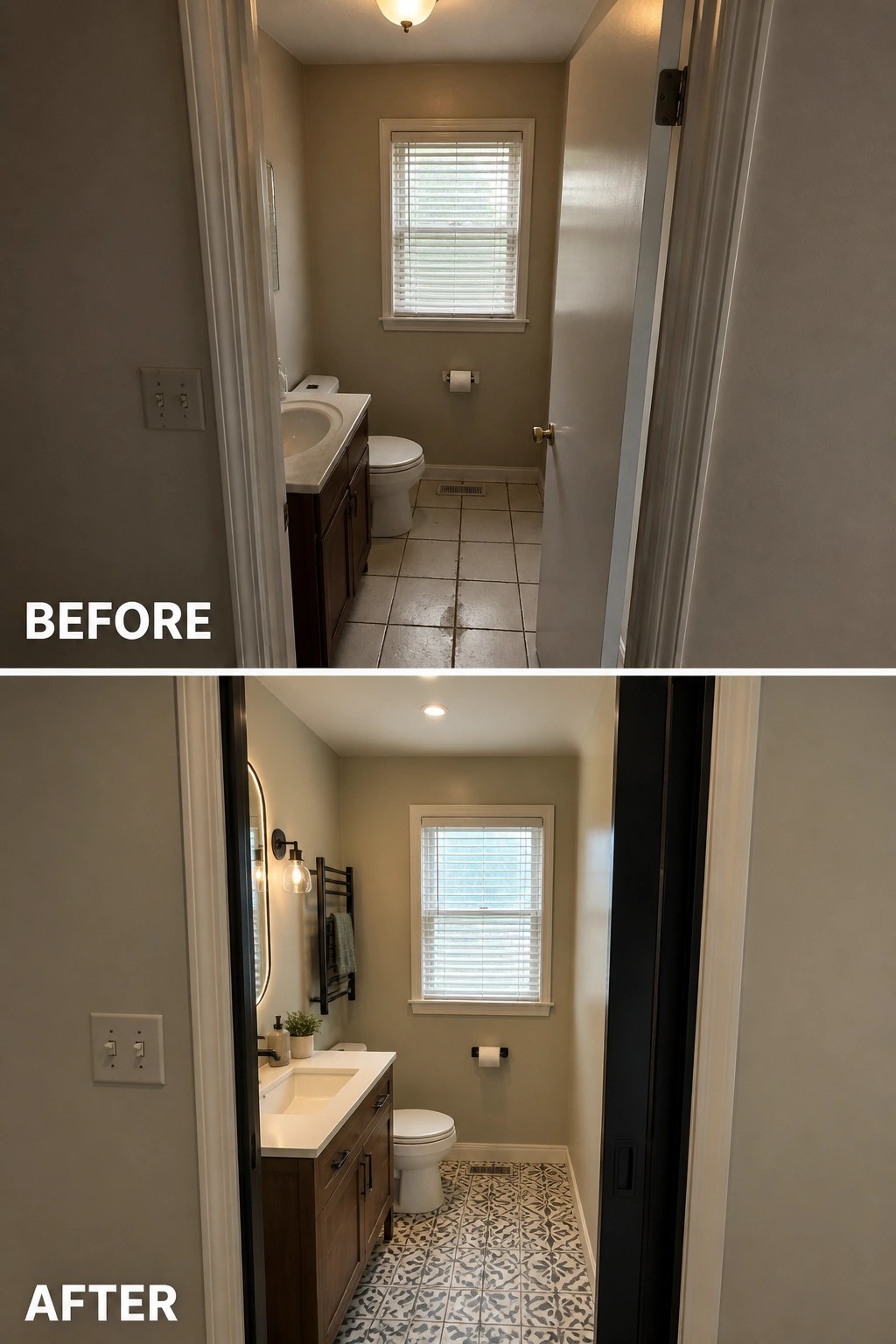
A standard swinging door eats up valuable floor space in a narrow bathroom. Switching to a pocket door lets the room feel wider and easier to move through while keeping the layout practical.
This change works best in older homes or tight floor plans where every square foot matters. Keep the rest of the updates simple, like new flooring or lighting, so the door becomes the main way you gain back usable space.
Install A Pocket Door To Open Up A Small Bathroom
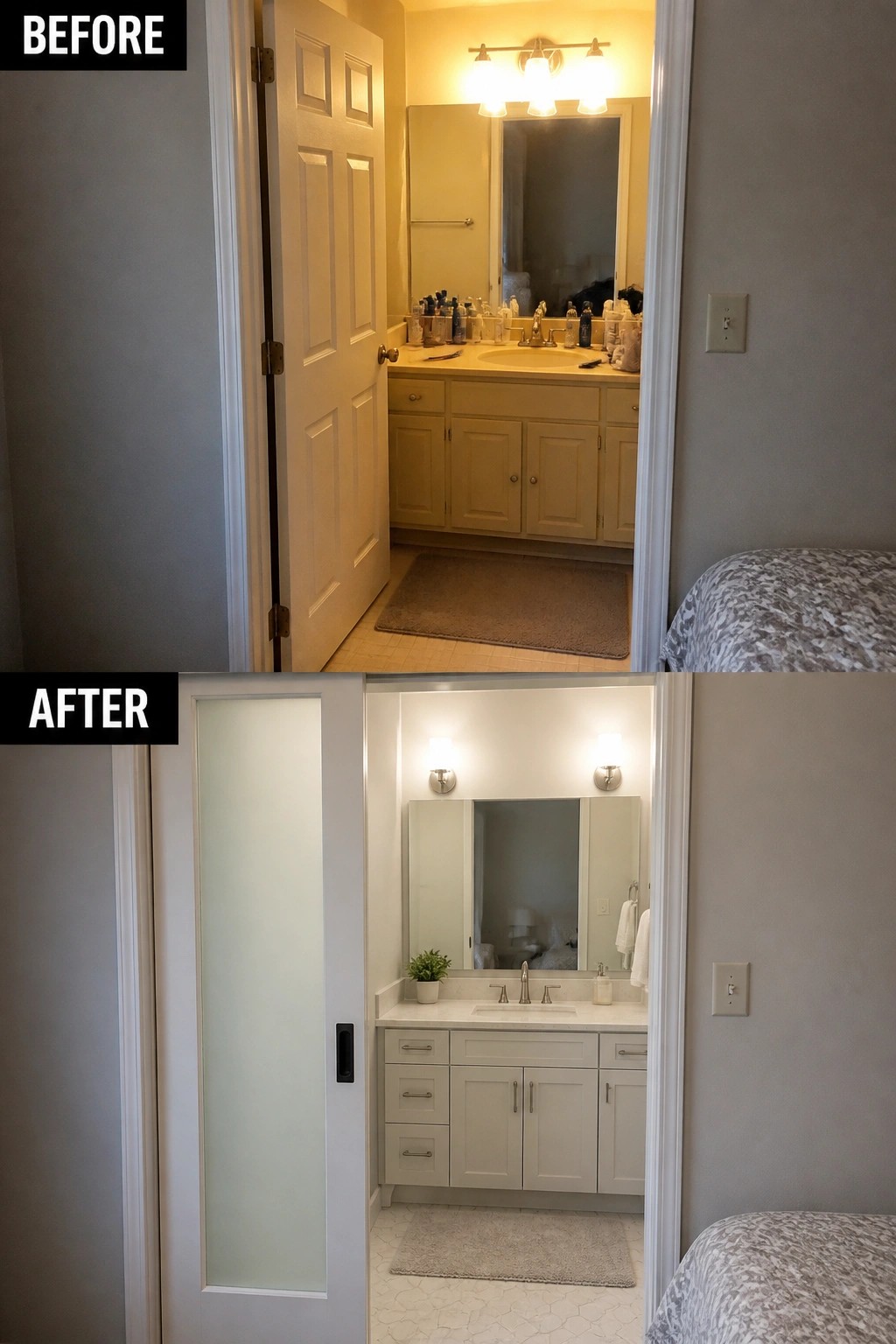
A swinging bathroom door often eats up valuable floor space, especially when it swings into the vanity or blocks the shower. Switching to a pocket door that slides into the wall solves that problem right away and makes the room feel noticeably larger without moving any fixtures.
This approach works best in tight layouts where every inch counts. Keep the door hardware simple and consider a frosted glass panel if you want light to pass through while still keeping privacy. It is usually easier to add during a full remodel when walls are already open.
Add A Pocket Door To Separate Laundry From The Bath
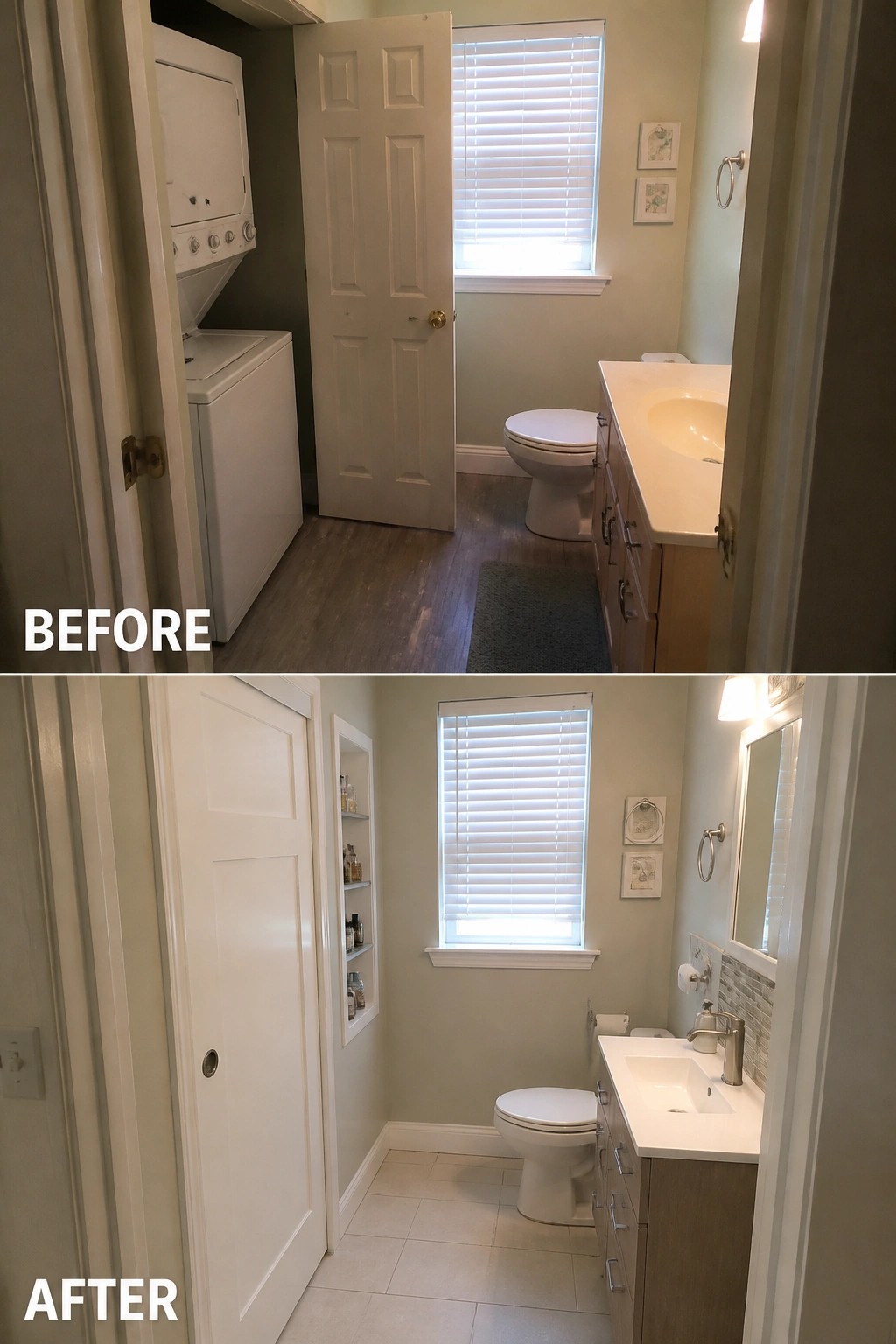
Many small bathrooms share space with a washer and dryer, which makes the room feel cramped and less private. Removing the machines and closing off that area with a pocket door turns the space into a dedicated bathroom that feels much more usable. The door slides out of sight when open, so it does not steal floor space the way a regular door would.
This idea works best in older homes or apartments where the bathroom sits right next to a laundry closet. Keep the new door simple and match the trim to the rest of the room so it blends in. The rest of the update can stay modest, since the main gain comes from gaining back those few square feet and creating a clear boundary.
Replace A Swinging Door With A Pocket Door
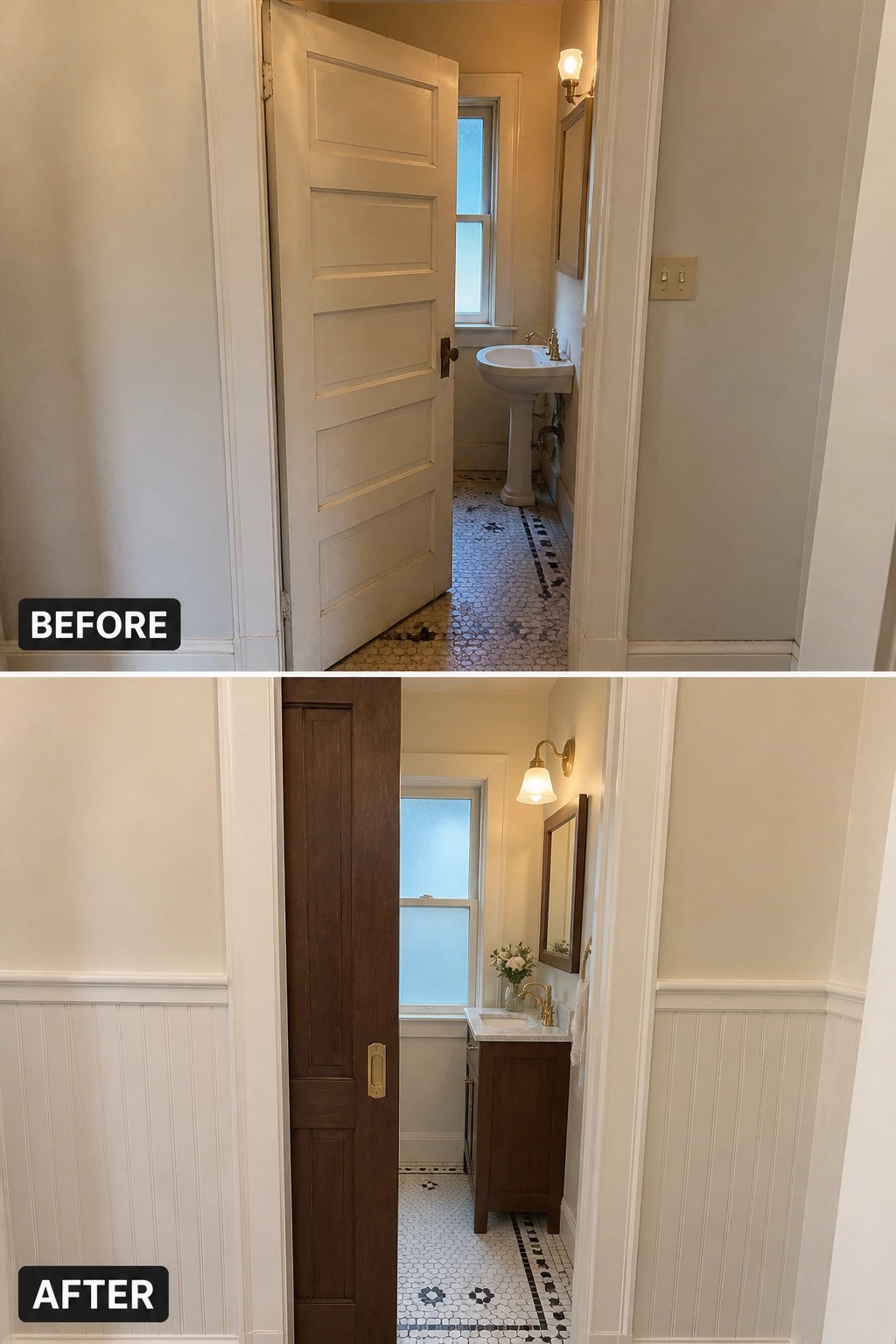
In a small bathroom, a door that swings inward eats up floor space you cannot spare. Switching to a pocket door that slides into the wall frees that area immediately, which is exactly what happened when the old white swinging door was removed and a dark wood sliding door was installed instead.
This change works best in older homes with narrow bathrooms where every square foot counts. Plan the pocket carefully during the wall work, and match the door hardware and trim to the rest of the room so the update feels intentional rather than patched in.
Use A Pocket Door To Open Up A Small Bathroom
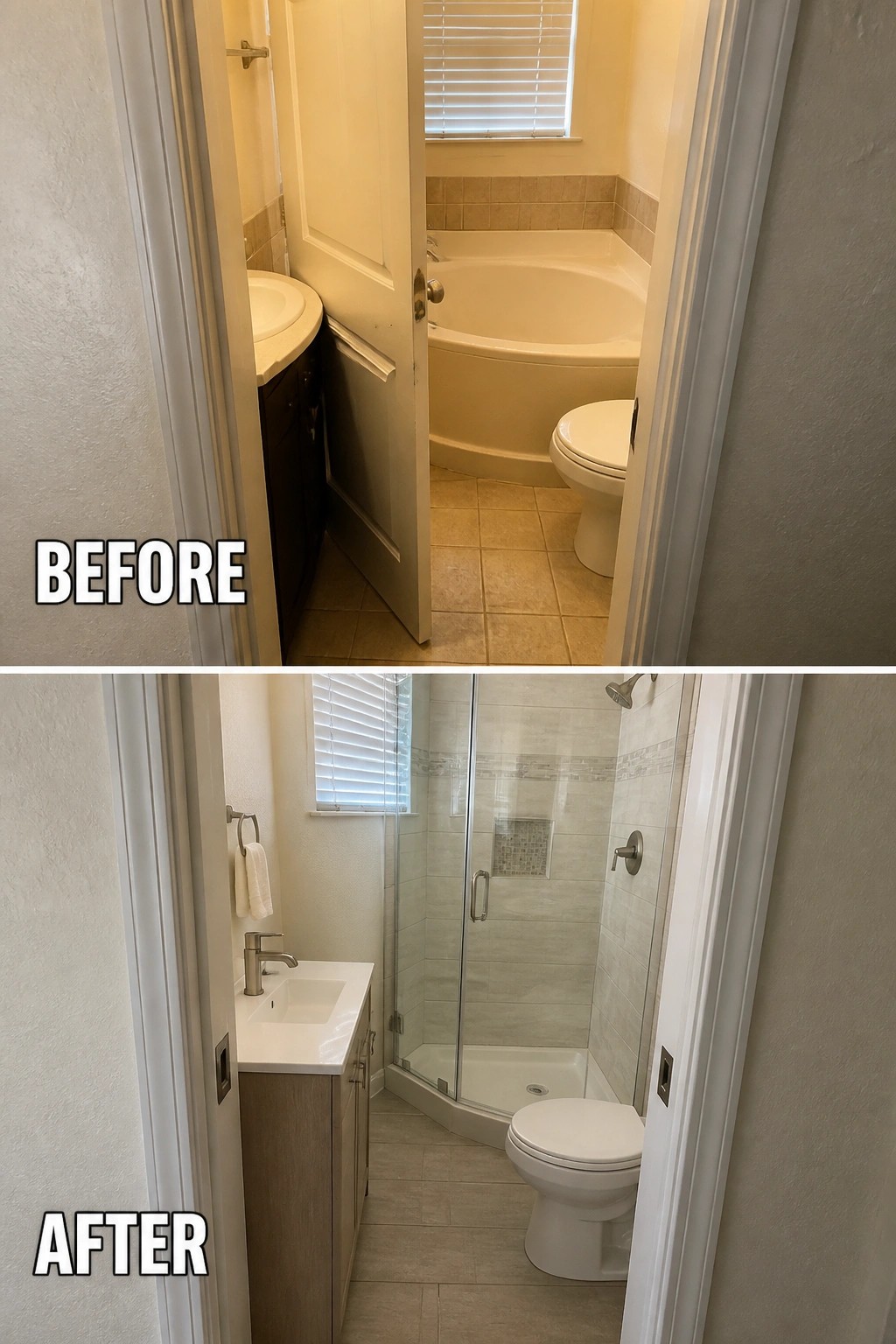
A swinging door can eat up valuable floor space in a tight bathroom, and that is exactly what changed here. The before photo shows the door swinging into the room and taking up the narrow walkway, while the after version uses a pocket door that slides away completely. This single swap makes the whole space feel less cramped and easier to move through, especially once the old tub was replaced with a shower.
Pocket doors work best in small baths where every inch counts and you want the option to close off the room without losing floor area. Keep the hardware simple and make sure the wall cavity is clear before framing. It is a practical step that pairs well with other updates like a compact vanity or a walk-in shower.
Use A Pocket Door To Free Up Floor Space
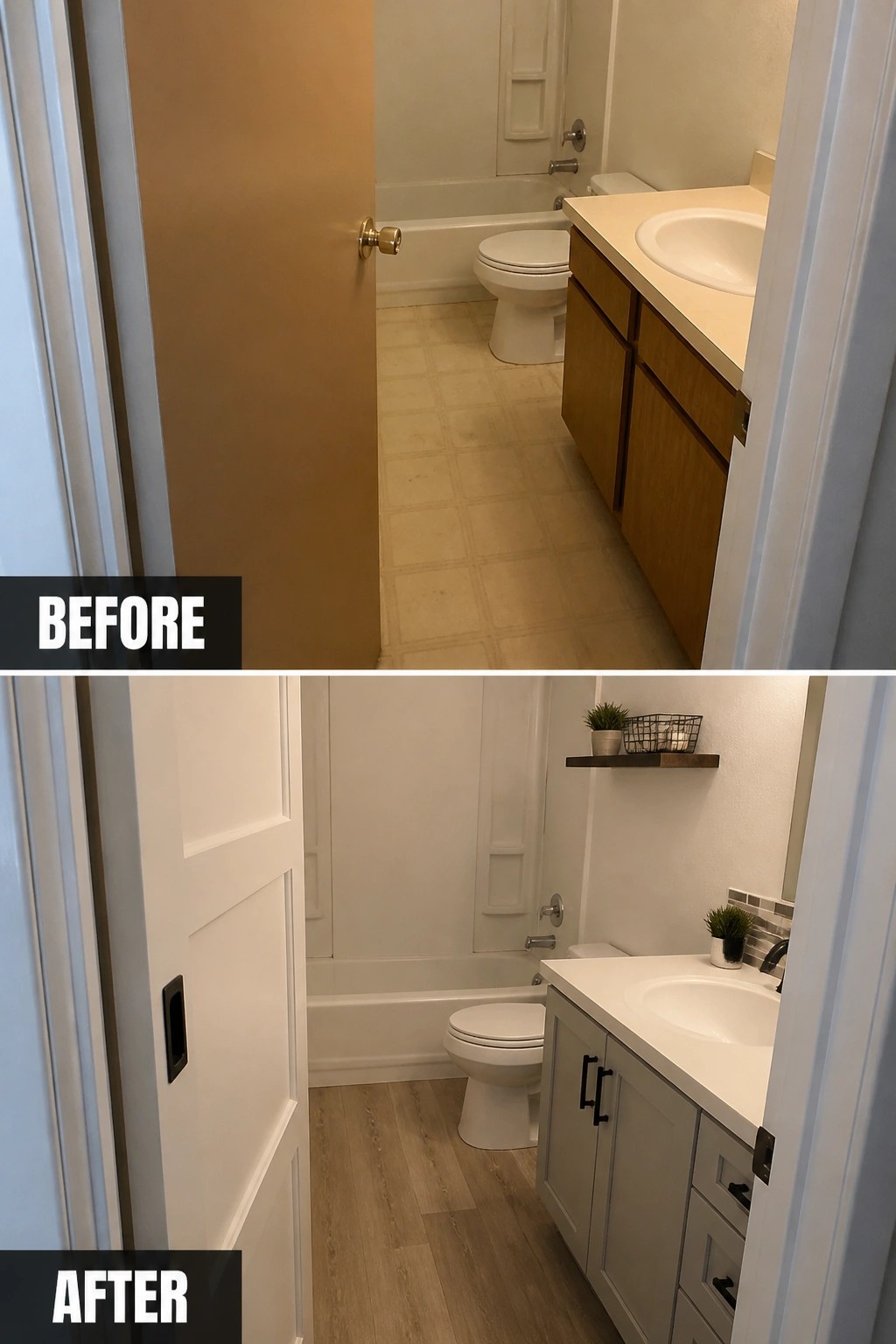
A standard swinging door can eat up a surprising amount of room in a small bathroom. Replacing it with a pocket door lets the space stay open and usable even when the door is pulled back, which makes the whole room feel larger without moving any walls.
This change works best in layouts where the door swings into the main walking path. Check that the adjacent wall has enough room to hide the door, and keep the surrounding finishes simple so the new opening does not feel crowded.
Replace The Swinging Door With A Pocket Door
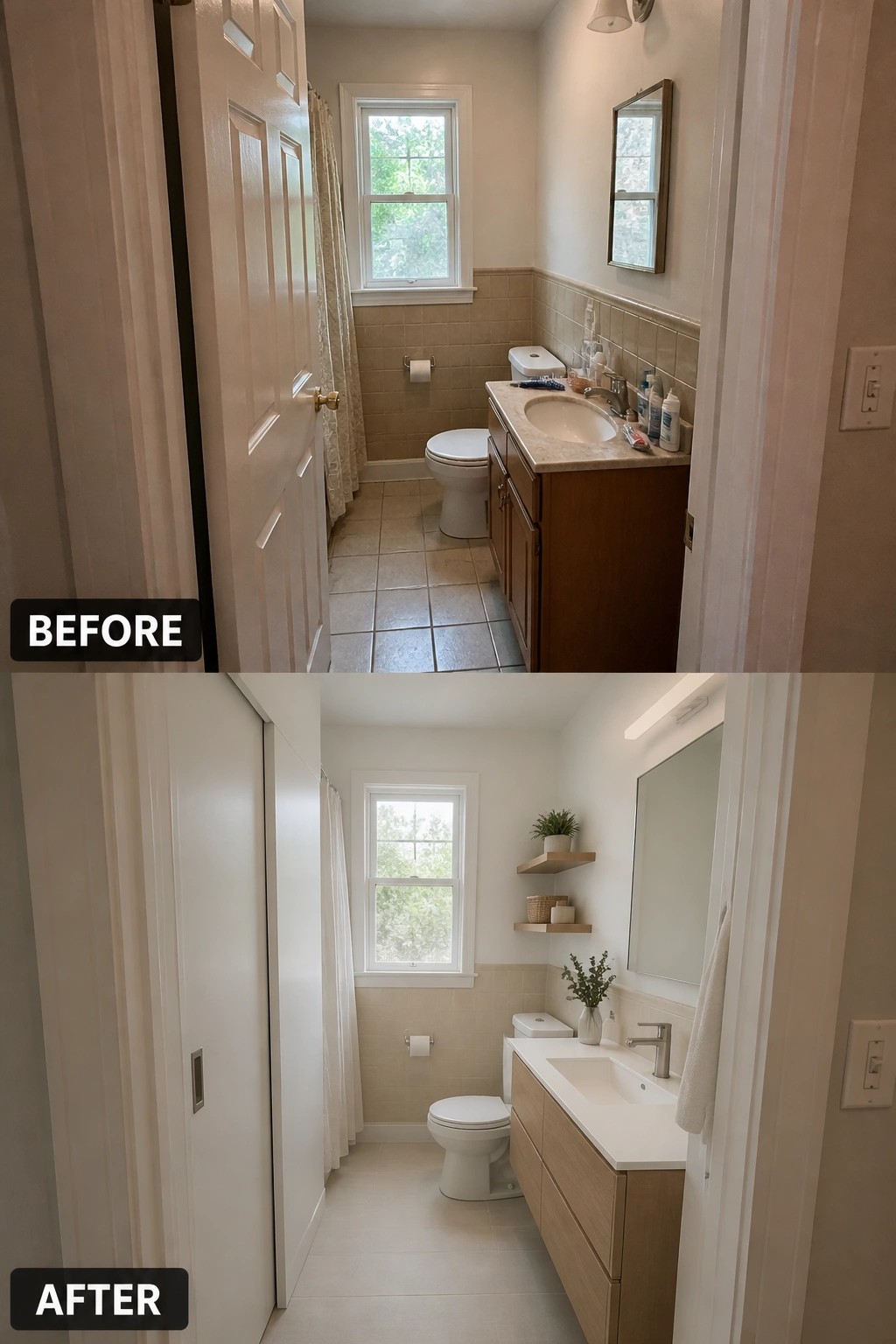
In a small bathroom, the door often takes up more space than it should. The before photo shows a standard hinged door that swings into the room and crowds the walkway. Switching to a pocket door that slides into the wall gives back that floor space and makes the whole layout feel more open and usable.
This idea works best in older homes where bathrooms are narrow and every square foot matters. It suits layouts where the door currently blocks the vanity or toilet when open. Just check that the adjacent wall has enough depth for the pocket frame before you begin.
Use A Pocket Door To Gain Space In A Small Bathroom
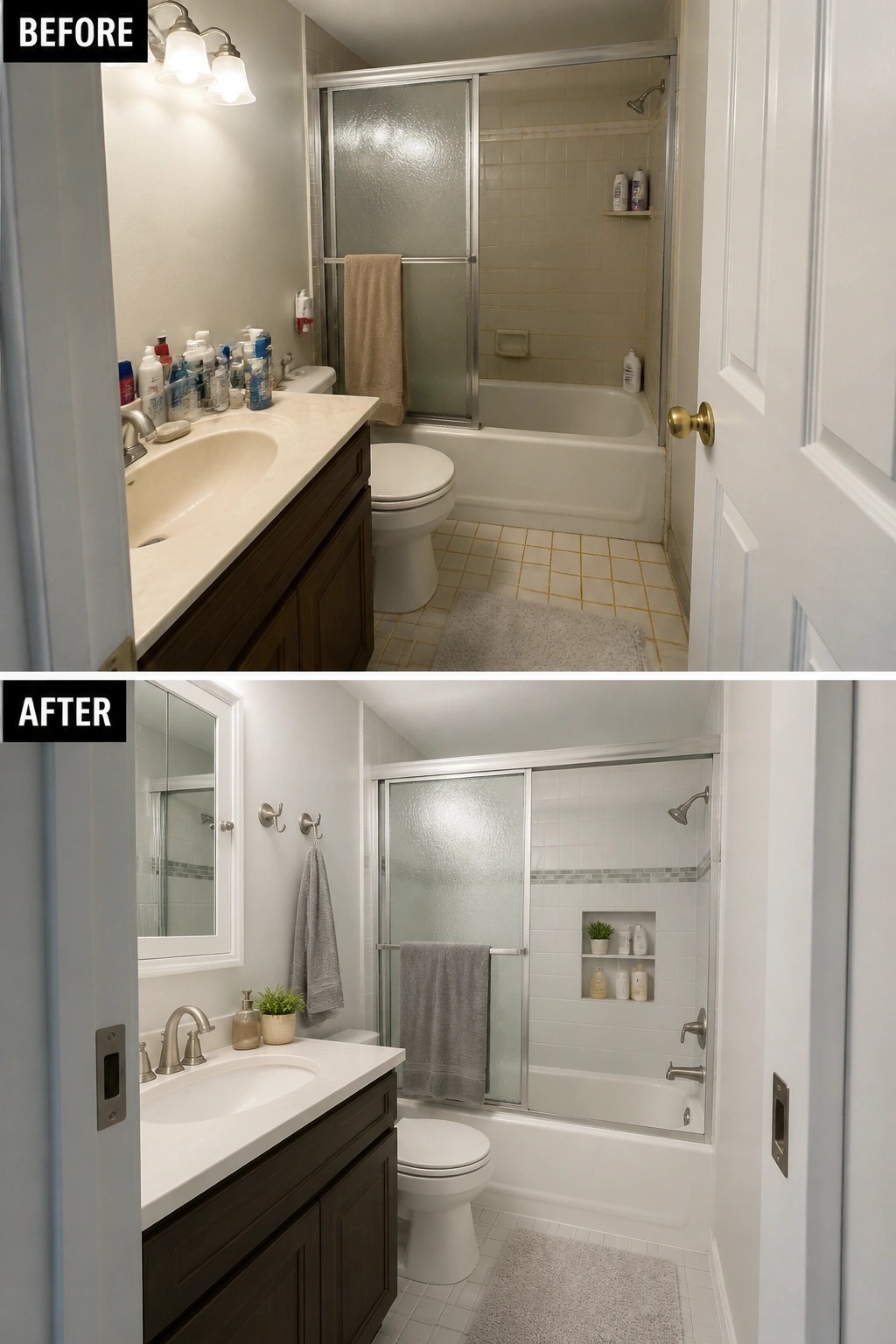
A swinging door takes up valuable floor space in a tight bathroom, and that often forces the vanity or toilet into an awkward spot. Switching to a pocket door lets the room open fully without the swing, which makes the layout feel more open and practical right away. The updated finishes help too, but the door change is what actually improves daily movement.
This idea works best in older homes where bathrooms were built small and every inch counts. Keep the pocket door hardware simple and match the trim to the rest of the room so it blends in. Measure twice before framing, since the wall needs enough depth for the door to slide cleanly.
Install A Pocket Door To Open Up A Narrow Bathroom
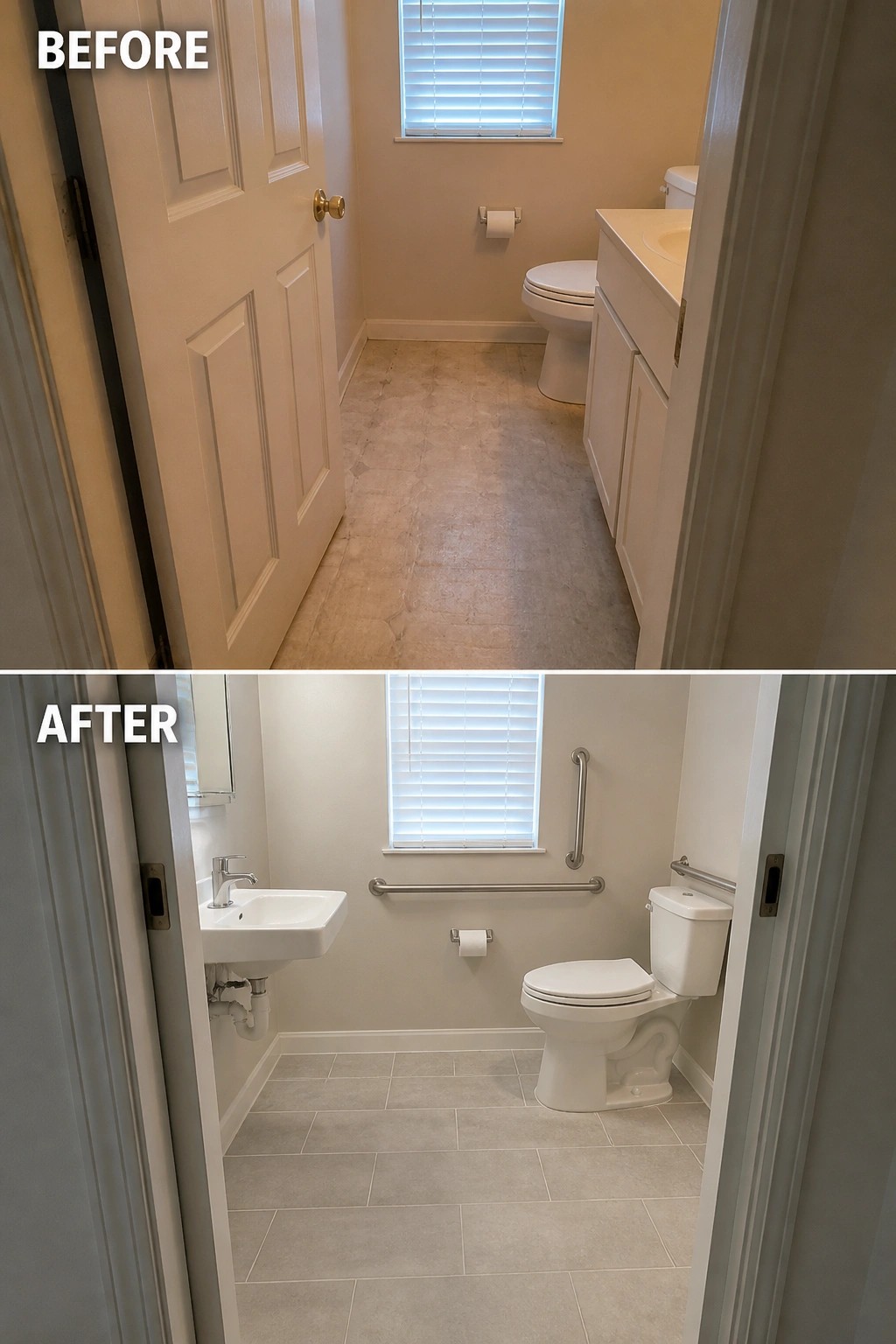
In a small bathroom, a door that swings inward eats up valuable floor space. The before photo shows the usual hinged door taking room when open, while the after shows a pocket door that slides into the wall instead. This change also allowed the sink to move to the opposite wall and gave the layout better flow overall.
Pocket doors work best in narrow bathrooms where every square foot counts. They suit older homes or any remodel where you want to keep the existing footprint but make the space feel more open. Just confirm the wall cavity can hold the hardware before you begin the work.
Swap Out A Standard Door For A Pocket Door

A swinging bathroom door often eats up valuable floor space in a small room. Replacing it with a pocket door lets the entry slide into the wall instead, which opens up the layout and makes the whole space feel less cramped. The change also removes the need for a wide clearance area in front of the vanity.
This idea works best in narrow bathrooms where every inch counts. Measure the wall depth first to confirm the pocket can fit, then choose a door style that matches the rest of the room. Keep the rest of the updates simple so the new door remains the main practical improvement.
Swap The Door For A Pocket Door In A Tight Bath

Replacing a standard swinging door with a pocket door makes a small bathroom feel noticeably more open. The door no longer blocks the vanity or the walkway when open, which is especially helpful in narrow layouts where space is limited.
This idea works best in homes where the bathroom sits along a long wall that can hide the pocket door mechanism. Check the wall for plumbing or wiring first, then plan the rest of the updates around the extra floor space you gain.
Frequently Asked Questions
Q: How do pocket doors affect the placement of my vanity or toilet in a small space?
A: You slide the door into the wall so it frees up floor area right where you need it most. Plan the track early so it avoids the main plumbing lines. This keeps your layout flexible without crowding things.
Q: What kind of maintenance do pocket doors need in a humid bathroom?
A: Wipe down the track every few months to clear out dust and moisture buildup. Use a lubricant made for metal tracks to keep it sliding smoothly.
Q: Can I still use a pocket door if my bathroom walls are load bearing?
A: Check with a contractor first because some walls carry weight that a pocket door frame can’t handle. Often you frame around it or choose a different wall for the door. This saves time and avoids major structural surprises later on.
