
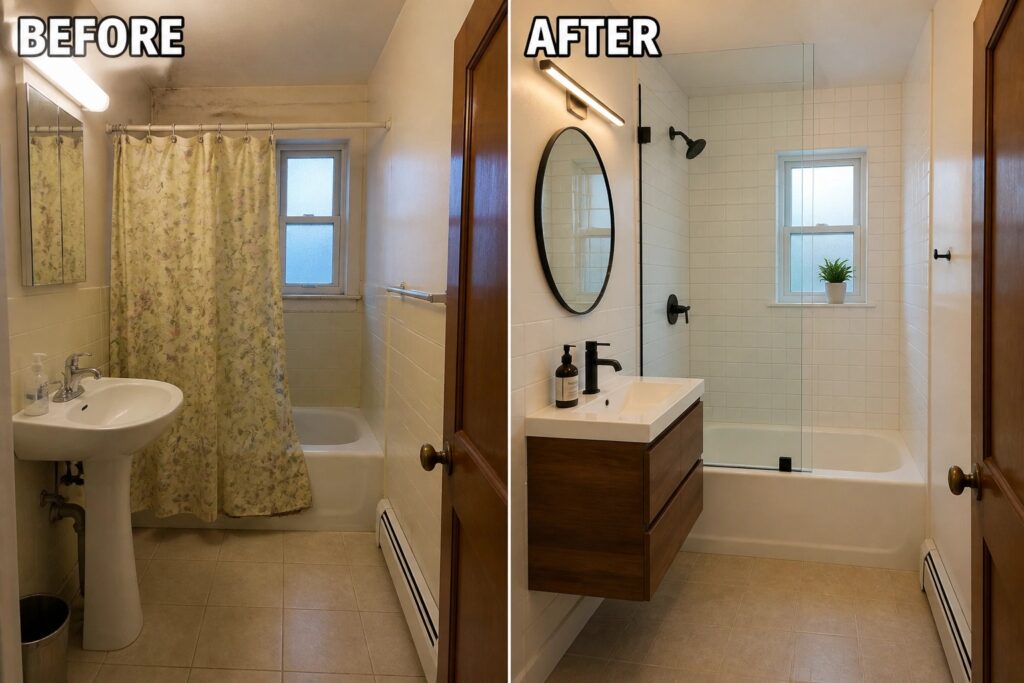
In a small bathroom the shower enclosure often crowds the floor and leaves the rest of the room looking unfinished and hard to use.
I have found that a frameless glass panel usually opens sight lines enough for the rest of the layout to settle into place without any major construction.
That one swap changes more than it first appears.
A few of the ideas pair the panel with simple storage tweaks and better lighting so the whole room starts to feel pulled together instead of fighting against its size.
I tend to test those combinations first when I work on real bathrooms because they hold up once everyday routines take over.
Swap A Shower Curtain For A Frameless Glass Panel

In a small bathroom, a shower curtain often closes off the space and makes it feel tighter than it really is. Switching to a frameless glass panel keeps the tub area visible, lets light move through the room, and gives a cleaner line along the floor. The change is simple but makes the whole layout feel more open without moving any walls.
This idea works best in older homes that still have a standard tub. Keep the glass clear and pair it with simple hardware so the panel stays easy to maintain. It also helps if you update the sink area at the same time, since the open feel carries through the rest of the room.
Replace The Tub With Frameless Glass Shower Panels

Many small bathrooms feel boxed in by an old tub and shower curtain. Removing the tub and installing a frameless glass shower lets the eye travel across the whole floor, which makes the room look noticeably larger.
This approach works best in compact layouts where every inch counts. Keep the tile simple and the hardware minimal so the glass stays the main focus and does not compete with other details.
Replace Framed Shower Enclosures With Frameless Glass
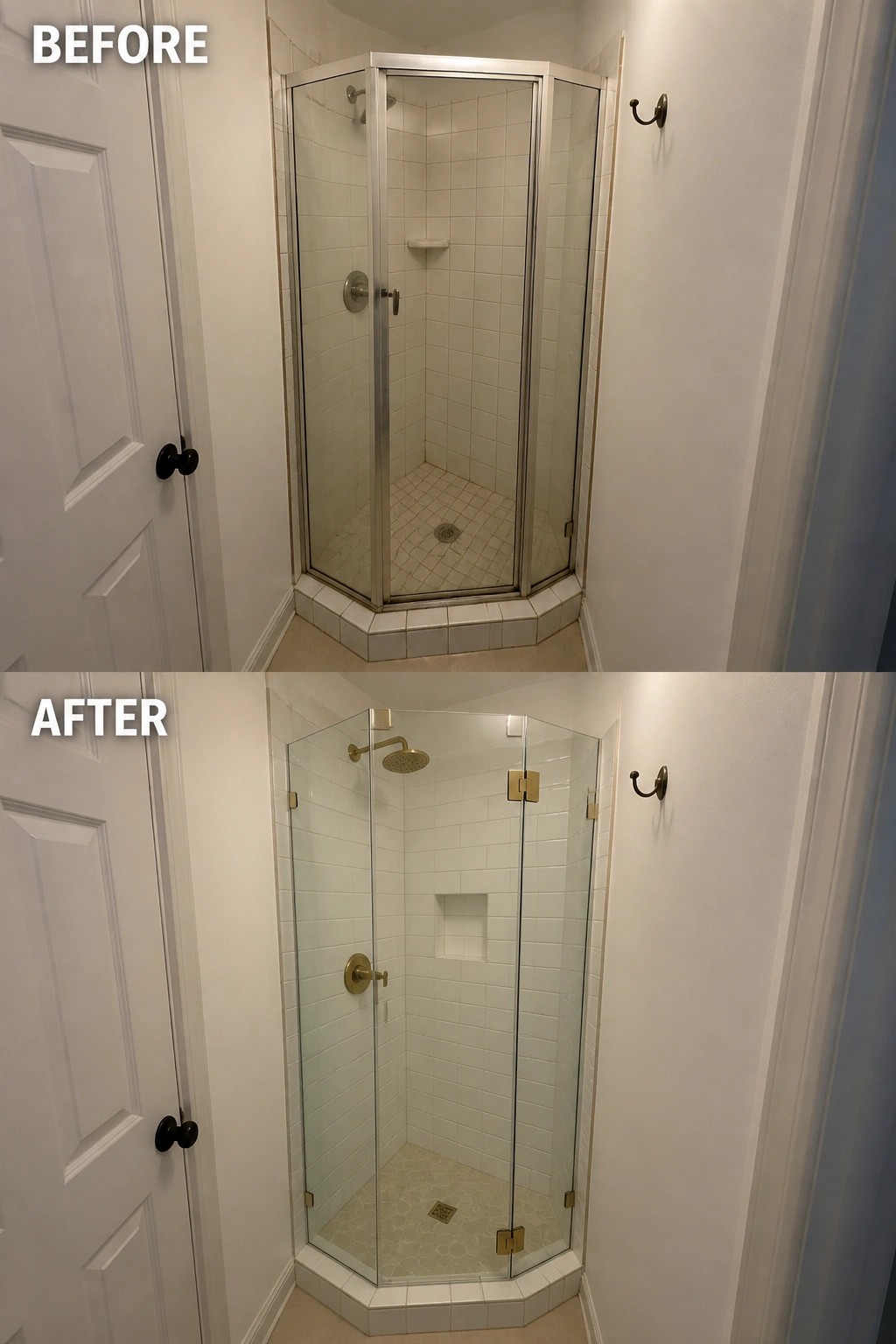
Many small bathrooms feel tighter than they need to because of bulky framed shower doors and heavy metal tracks. Switching to frameless glass panels removes those visual barriers and lets the eye move straight through the space. In this case the old enclosed unit gave way to a simple glass surround that sits closer to the tile and opens the whole corner.
This approach works best in compact bathrooms where every inch counts. Keep the hardware minimal and match it to the rest of the fixtures so the glass stays the main feature. Frameless panels also make cleaning easier since there are fewer edges to trap soap scum.
Use A Frameless Shower Panel To Open Up A Small Bathroom
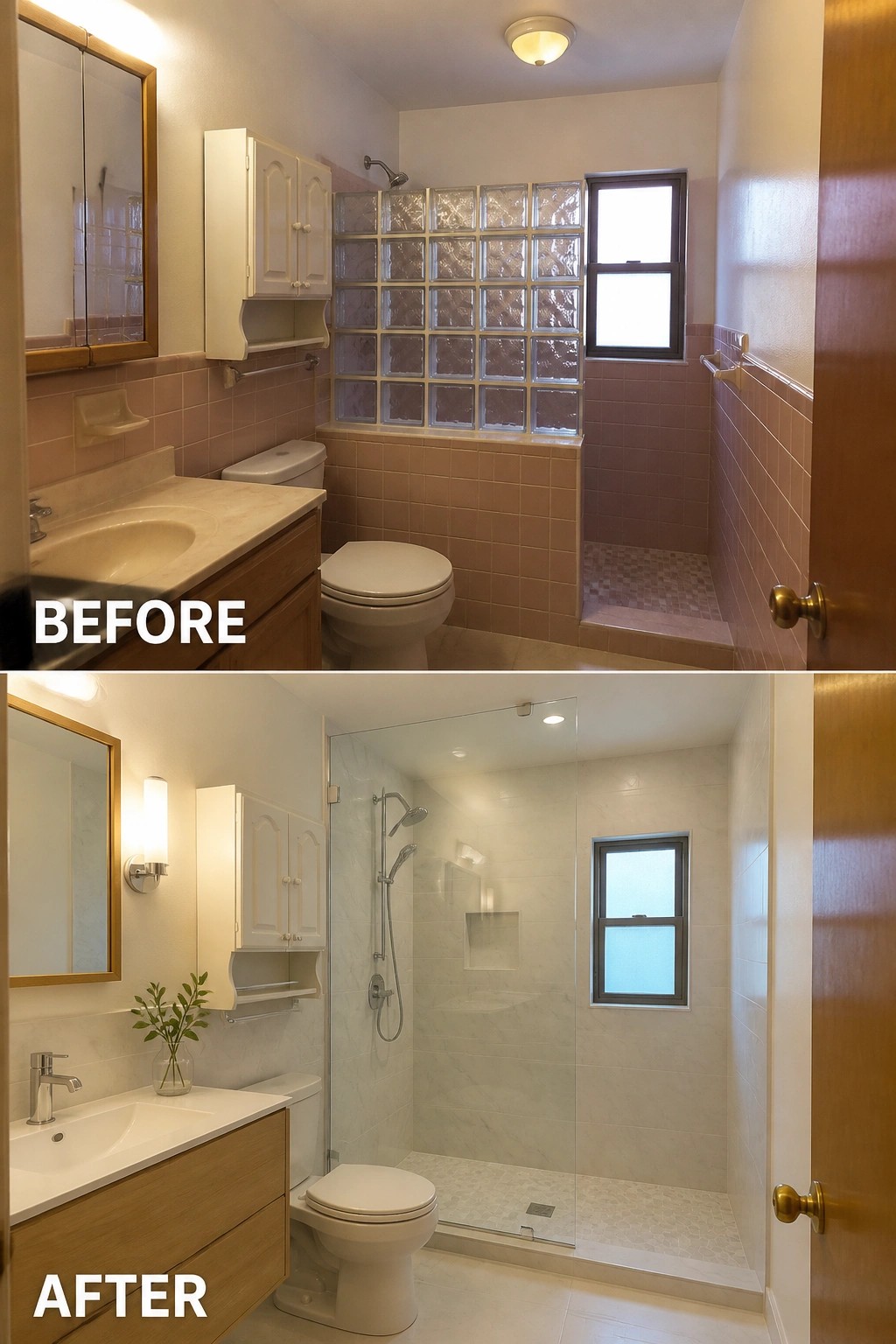
The old glass block shower wall made the room feel boxed in and dated. Replacing it with a frameless panel removes the heavy lines and lets the eye move across the whole space.
This idea works best in tight bathrooms where you want to keep the footprint the same but gain a lighter feel. Stick with simple hardware and light-colored tile so the glass stays the focus instead of competing with busy details.
Swap The Tub For A Frameless Glass Shower

A tub with a shower curtain tends to close off a small bathroom and make it feel tighter than it really is. Switching to a frameless glass shower panel keeps the wet area contained while letting light and the eye move through the space, which is why the room looks noticeably larger and cleaner once the curtain and bulky tub surround are gone.
This change works best in bathrooms that do not need a tub every day. Keep the rest of the layout simple, use light tile on the shower walls, and make sure the glass runs floor to ceiling so the shower does not feel like a separate box.
Open Up A Small Bathroom With Frameless Glass
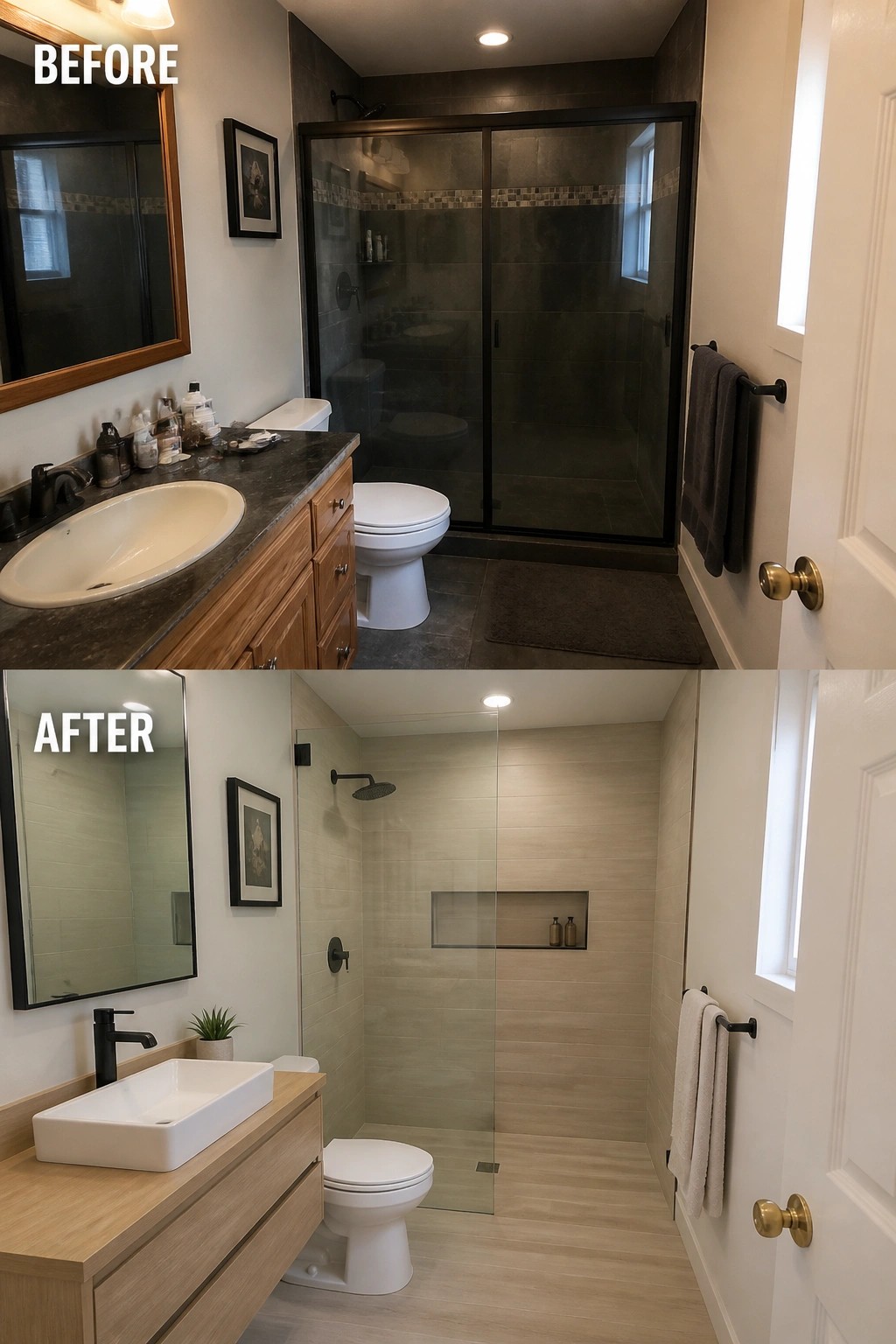
The framed shower doors in the before photo kept the space feeling closed off and a bit heavy. A single frameless glass panel changes that by letting light move through the whole room and removing the visual break at the shower entrance.
This idea works best in bathrooms that already feel tight on space. Pair the glass with lighter tile and a simpler vanity so the open look stays the main feature instead of competing with too many other changes.
Swap The Shower Curtain For Frameless Glass

A shower curtain often cuts off the back half of a small bathroom and makes the space feel tighter than it really is. Replacing it with a frameless glass panel removes that visual barrier, lets light travel through the whole room, and keeps the floor and walls looking continuous.
This approach works best in narrow bathrooms where the shower sits right beside the sink. Choose clear glass without heavy hardware, keep the tile light, and limit built-ins to a couple of simple niches so the openness stays the main feature.
Replace Sliding Shower Doors With Frameless Glass
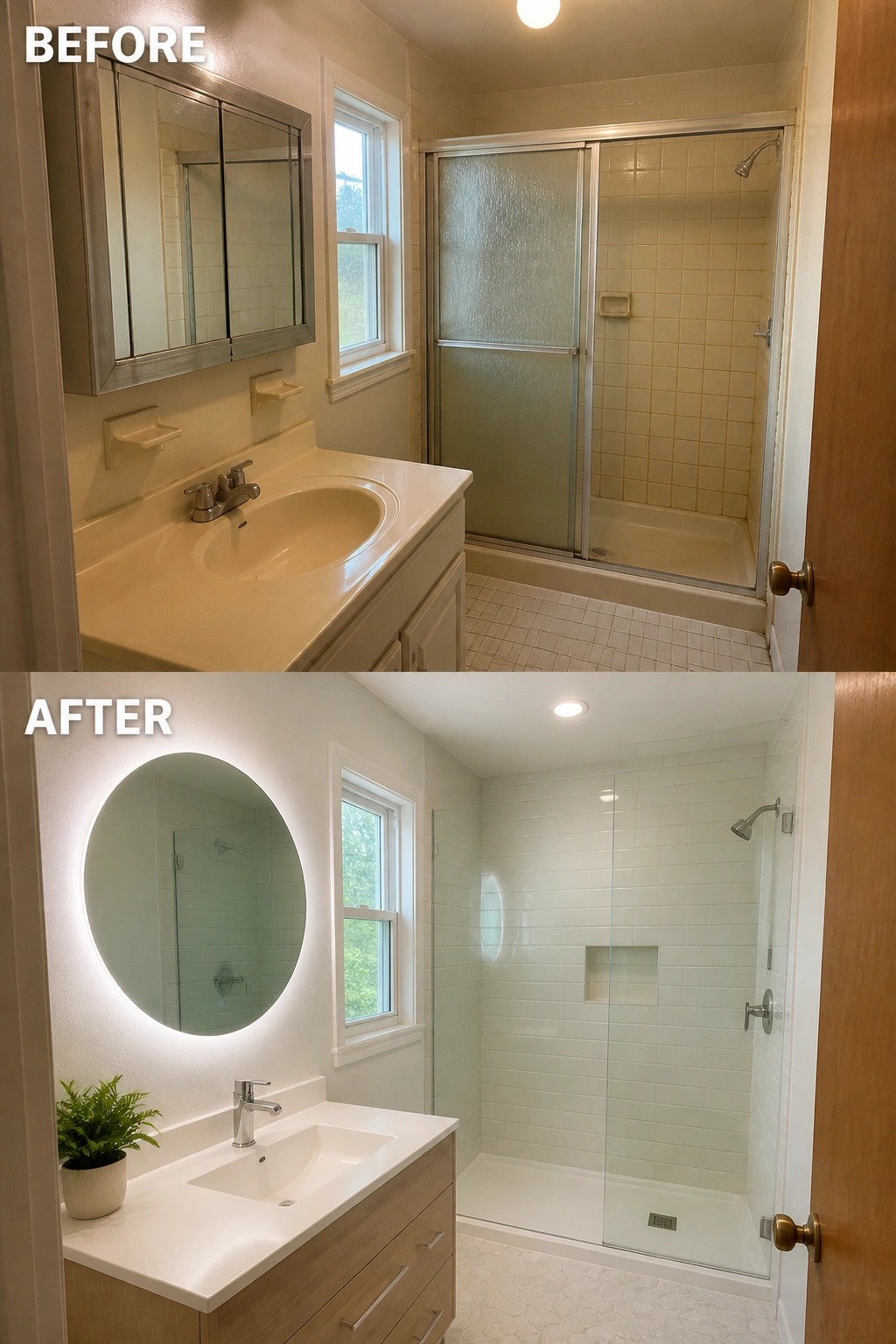
The main update in this bathroom came from swapping the old framed sliding shower doors for a frameless glass panel. The metal frame and frosted look made the shower feel boxed in and dated. Removing that frame opens the space visually and lets the clean white tile carry through without interruption.
This approach works well in small bathrooms where you want to keep the footprint the same but make the room feel larger. Choose clear glass rather than textured so light passes through easily. Pair it with simple fixtures and light wall colors to keep the focus on the open shower rather than competing details.
Swap The Shower Curtain For A Frameless Glass Panel

A simple way to make a small bathroom feel larger is to replace a shower curtain with a frameless glass panel. The before version had a curtain that closed off the space and added visual bulk. The after version uses clear glass so light moves through the room and the shower area no longer cuts the space in half.
This change works best in bathrooms where floor space is limited. A frameless panel stays out of the way visually and makes cleaning easier since there is no fabric to wash or replace. Keep the rest of the room simple with light tile and a compact vanity so the openness stays the main feature.
Swap Out A Framed Shower Door For Frameless Glass

One of the simplest upgrades in a small bathroom is replacing a framed sliding shower door with a frameless glass panel. The old door and its metal track created a heavy visual barrier that made the space feel closed in. Removing that barrier lets light move freely and makes the whole room feel larger without moving any walls.
This idea works best in compact bathrooms where the shower sits right next to other fixtures. Keep the glass clear, choose slim hardware, and pair it with light flooring so the eye travels easily across the room. It keeps the space feeling open while still providing a clean, watertight shower area.
Replace Framed Shower Doors With Frameless Glass
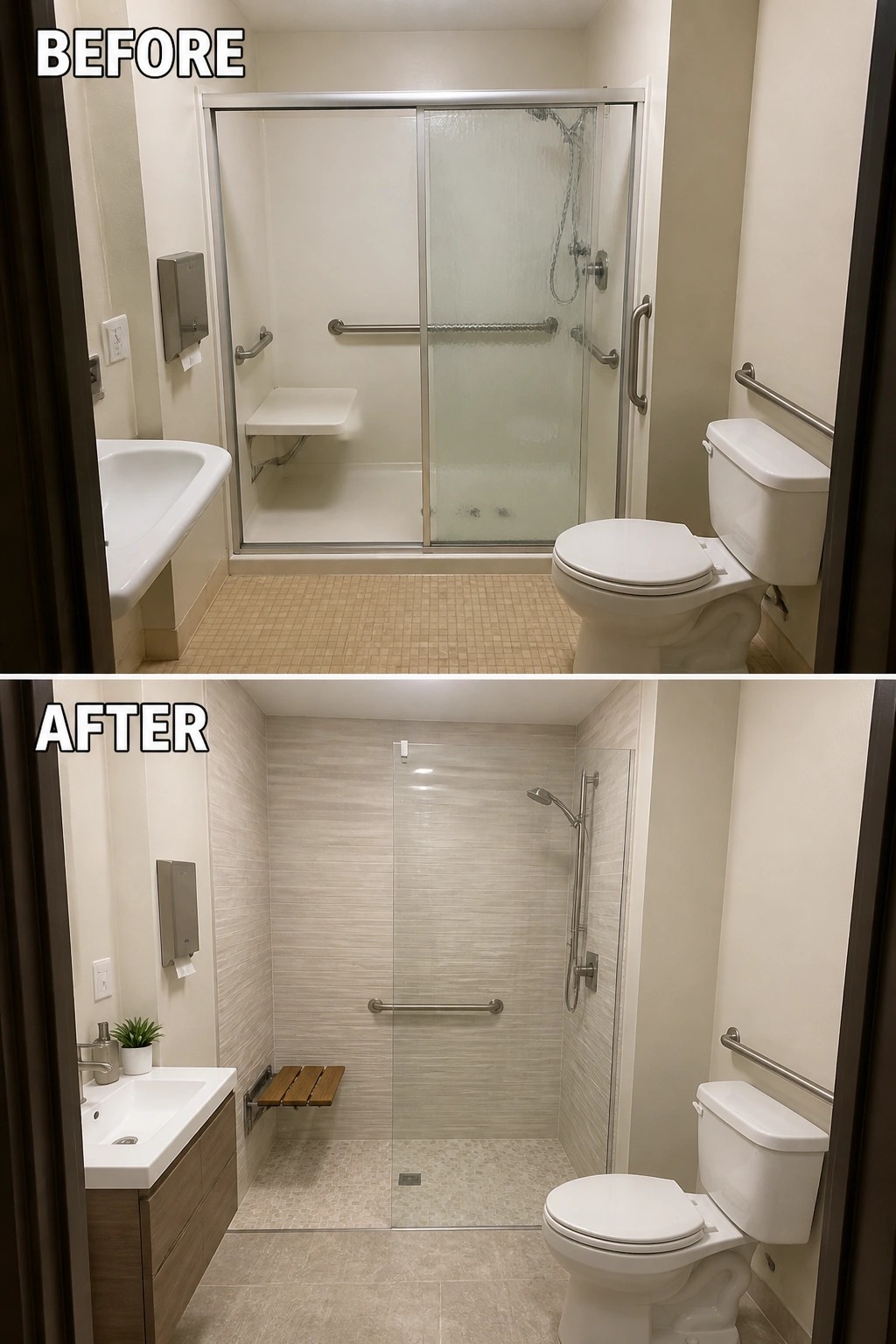
The main change here is swapping a bulky framed sliding shower door for a single frameless glass panel. It removes the heavy metal lines and frosted look, so the shower blends into the room instead of cutting it off. The space immediately feels larger even though the footprint stayed the same.
This approach works well in small bathrooms that already have decent tile or just need a refresh. Keep the rest of the room simple with light colors and minimal hardware so the clean glass lines stay the focus. It is an easier update than a full tile overhaul if your goal is to make the bathroom feel less closed in.
Use Frameless Glass To Open Up A Small Shower
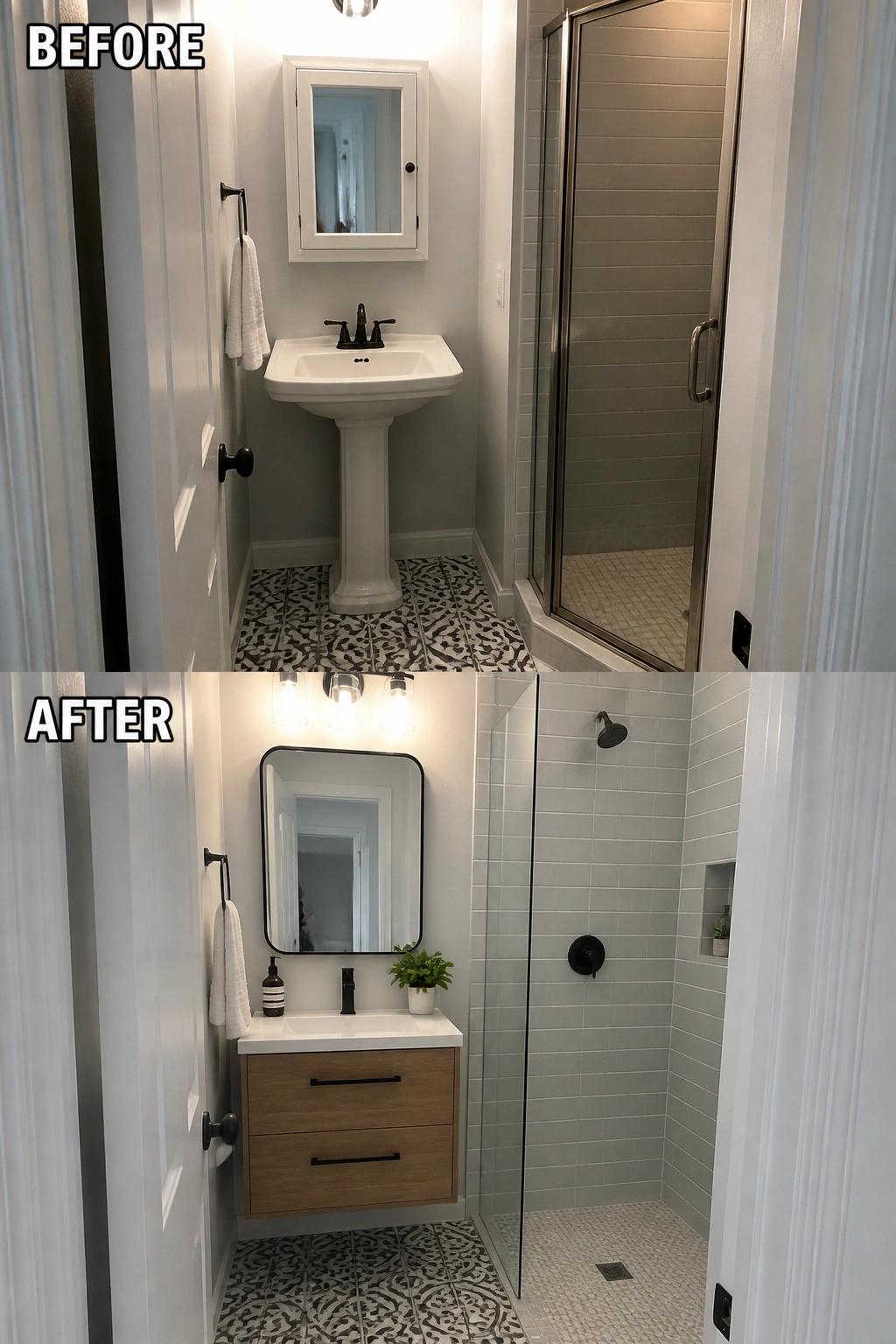
The framed shower door in the before photo made the narrow space feel boxed in and a bit heavy. Replacing it with a frameless glass panel lets the eye move straight through the room and keeps the whole bathroom from feeling chopped up by dark frames and bulky hardware.
This idea works best in tight bathrooms where the shower takes up a big part of the floor plan. Keep the rest of the finishes light and add a vanity with drawers so you gain storage without crowding the floor. It suits older homes or small layouts where you want the shower to feel like part of the room instead of a separate stall.
Use Frameless Glass To Make A Small Bathroom Feel Larger

In the before photo the framed shower doors cut the room into separate zones and made the narrow space feel tighter. Replacing them with a single frameless glass panel removes that visual break so the shower area blends into the rest of the bathroom.
This idea suits small baths where the shower sits right beside the main walkway. Keep the tile light and the vanity simple so the clear glass stays the main feature that opens up the room.
Swap The Shower Door For A Frameless Panel
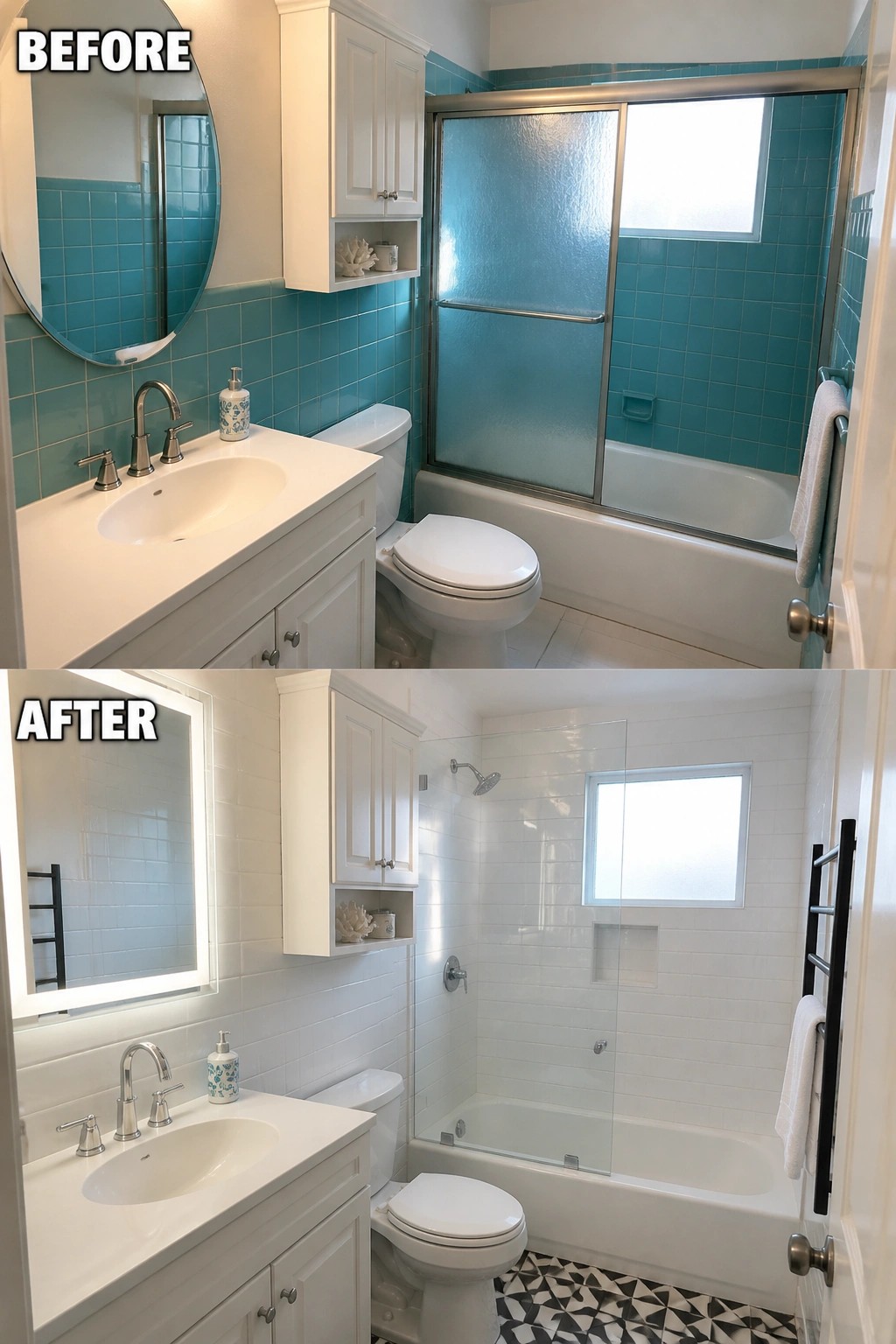
Many small bathrooms feel cramped because of bulky framed shower doors that block light and sight lines. In this case the old sliding door with its wide metal frame was replaced by a simple frameless glass panel that sits almost flush with the tub. The change lets the eye travel across the whole space instead of stopping at a heavy barrier.
This idea works best in bathrooms that already have decent tile or plan to update it. Keep the rest of the fixtures light and skip extra hardware on the glass so the panel stays the main focus. Measure twice before ordering to make sure the glass fits the tub edge without extra brackets.
Replace A Curved Shower With Frameless Glass Panels
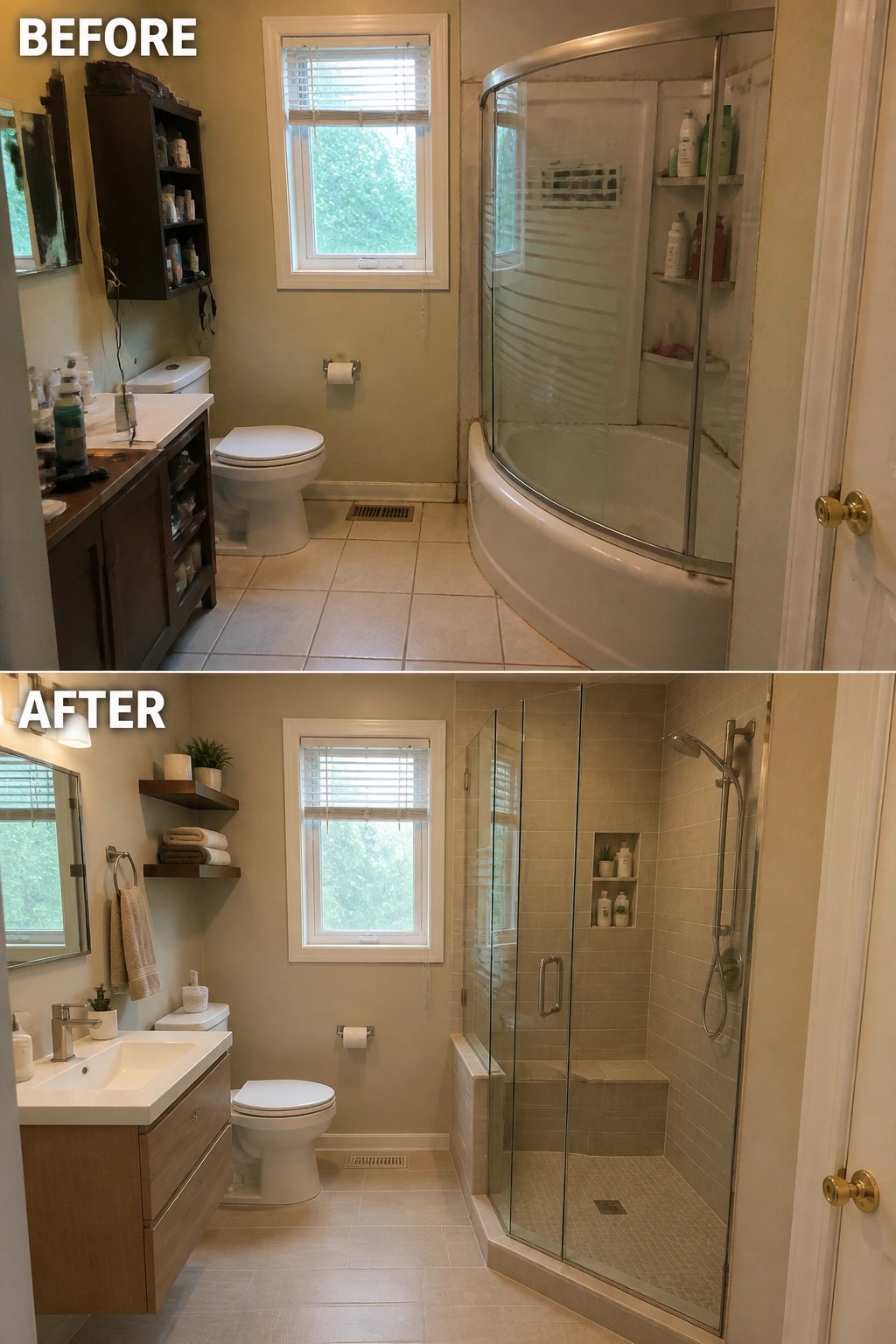
A curved shower enclosure often crowds a small bathroom and makes the space feel closed in. Switching to frameless glass panels straightens the lines and removes the bulky frame, which lets the eye move farther into the room and keeps the floor area looking open.
This approach works well in bathrooms where the shower sits along one wall. Keep the rest of the finishes light so the glass stays the main feature. Measure carefully for the door swing and choose a simple handle style that does not add visual weight.
Use Frameless Glass To Make A Small Shower Feel Larger

A framed shower door often cuts off the space and makes a small bathroom feel tighter than it really is. Switching to a frameless glass panel removes those heavy lines and lets the eye travel through the whole room. In this case the dark tile and closed-in look gave way to lighter walls and a clear glass front that instantly brightens everything.
This approach works best in bathrooms under fifty square feet where every inch counts. Keep the rest of the finishes simple and light so the glass stays the main feature. It also helps to run the same floor tile a short way into the shower so the space feels continuous rather than chopped up.
Use Frameless Glass Shower Panels To Open Up A Small Bathroom

The main improvement comes from replacing the old framed shower door with a single frameless glass panel. This removes the bulky metal lines and lets light move through the space more freely, which helps a compact bathroom feel noticeably larger.
This idea suits small bathrooms that already have decent layout but need a cleaner look. Choose clear glass rather than frosted, keep surrounding finishes light, and make sure the panel is sized to leave enough room for daily use.
Replace A Framed Shower Door With Frameless Glass
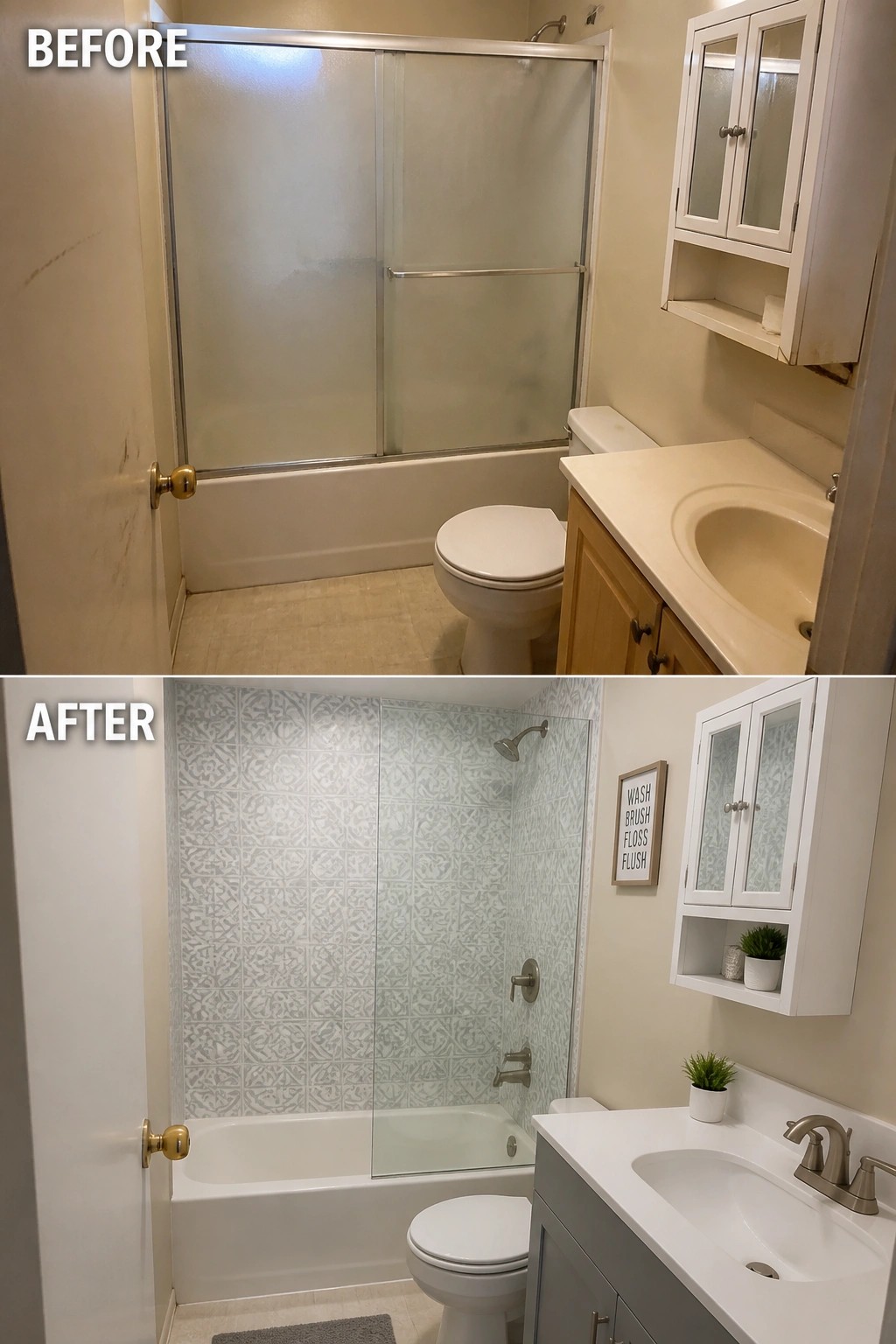
A framed shower door often cuts off the space and makes a small bathroom feel tighter than it needs to be. Switching to a frameless panel lets the eye travel further into the shower area and keeps the whole room feeling more open and simple.
This change works best in bathrooms where the tile or tub is already in decent shape. Focus on keeping the surrounding surfaces light and uncluttered so the clean lines of the glass stay the main feature.
Open Up A Small Shower With Frameless Glass
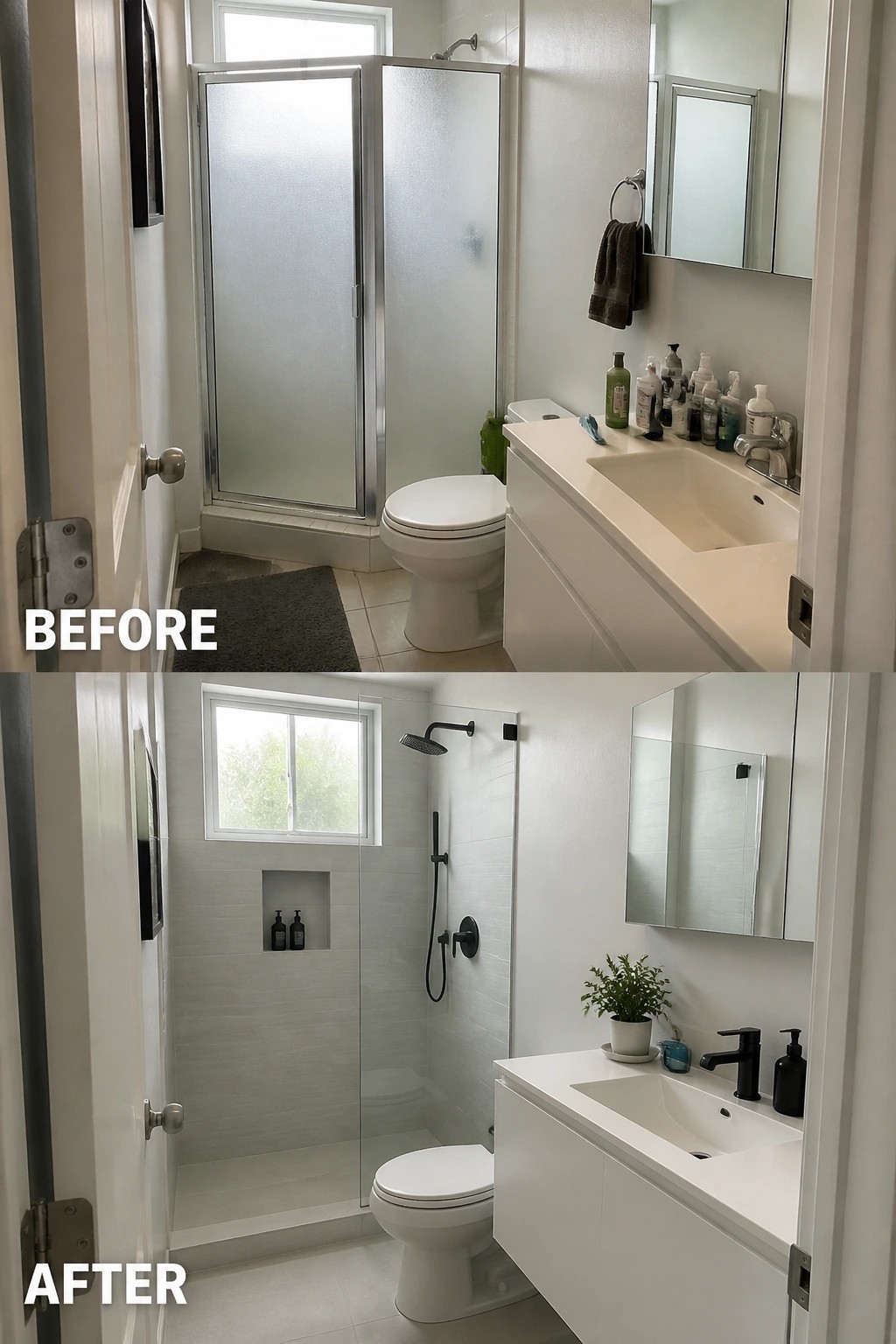
In a tight bathroom the framed shower door often makes the space feel boxed in. Switching to a frameless glass panel removes the metal border and lets light and sightlines move through the room instead.
This approach suits small baths that already have decent layout but need more breathing room. Keep surrounding finishes light and limit clutter on the vanity so the glass stays the main feature rather than competing with other details.
Switch To A Frameless Shower Panel In A Small Bathroom
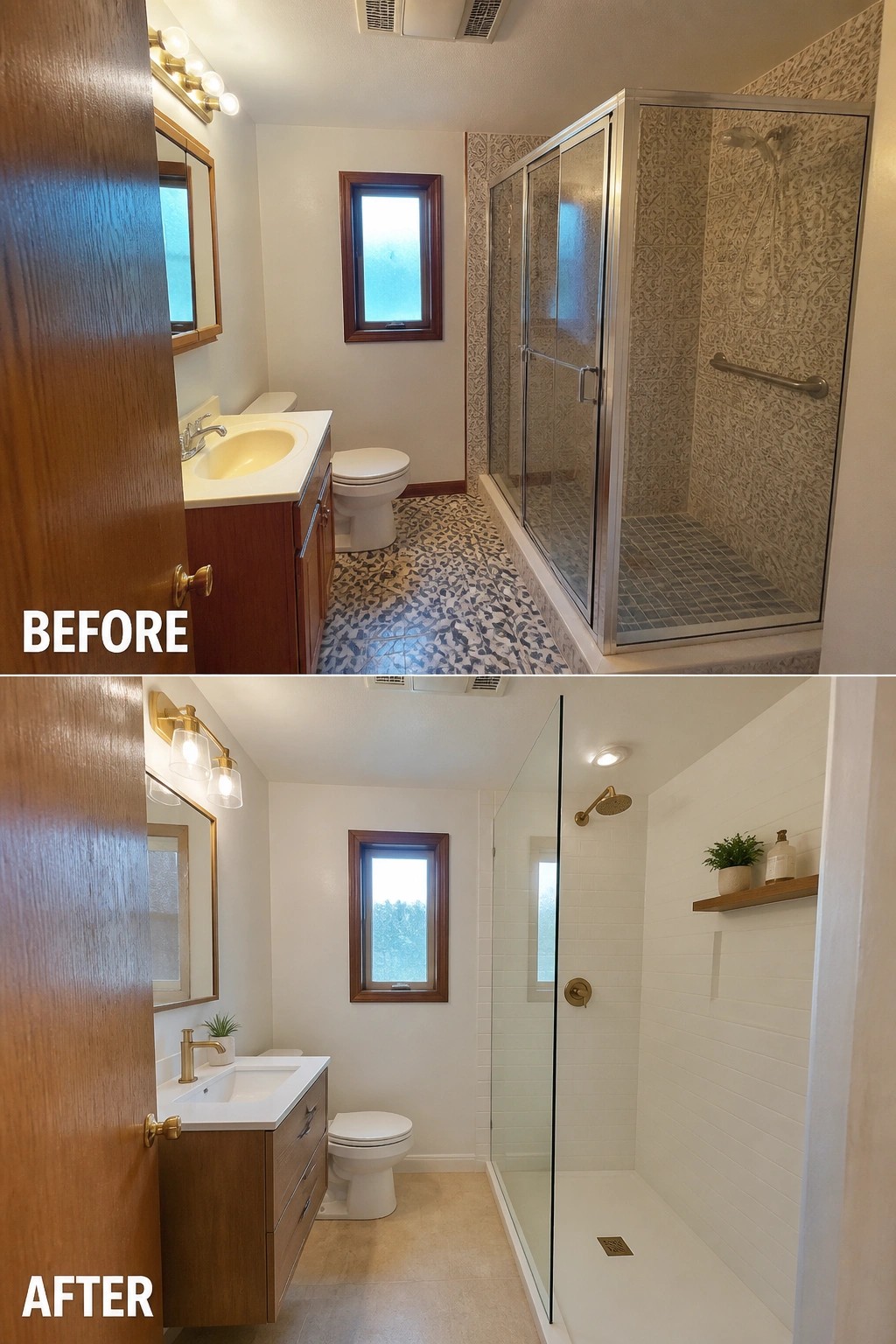
The move from a framed shower with busy tile to a frameless glass panel and plain white subway tile opens the space up right away. The glass no longer cuts off the view, so the bathroom feels longer and brighter without adding any extra square footage.
This idea suits compact bathrooms where you want to keep things simple. Pair the panel with light floor tile and a straightforward vanity so the shower stays the main clean line in the room.
Frequently Asked Questions
Q: Does frameless glass really make a small bathroom feel larger? A: The clear panels let your eye travel straight through the shower area without any frames blocking the view. That simple change can make the whole room seem more open right away. Try pairing it with light colored tiles on the floor to keep the spacious feel going.
Q: How often will I need to clean the glass to avoid water spots? A: Wipe it down with a squeegee after every shower and the spots stay away. A quick spray with a vinegar mix once a week handles any buildup without much effort. This habit keeps the panels looking fresh without turning into a big chore.
Q: Is the glass strong enough for daily use? A: Tempered glass holds up well against knocks and temperature changes. Just avoid hanging heavy items on it and it should last for years.
