

Small rooms often end up looking darker than they need to because bulky pieces block the windows and the walls stay a dull shade.
I tend to focus on light and layout before worrying about extra decor, since those two changes usually pull everything together.
Clutter hides the potential.
Once I moved a tall bookshelf away from the only window in my small office, the desk area felt usable for the first time in months.
Ideas like these work well when you try them out gradually instead of all at once.
Make A Cluttered Living Room Feel Finished

The before photo shows a dark, crowded space with heavy furniture and items scattered everywhere. The after version opens the room up by swapping in a light sofa, adding a large rug to anchor the seating, and using sheer curtains to soften the window without losing daylight.
This works best in small homes where clutter quickly takes over. Start by clearing out what is not needed, then use one rug to define the main area and keep the color palette light so the room feels bigger and easier to keep tidy.
Lighten A Small Bedroom With Sheer Curtains And Pale Bedding

Dark curtains and heavy bedding can make even a decent-sized room feel closed off. Replacing them with sheer white curtains and simple light bedding opened up the space and let more daylight in without any major construction.
This works especially well in smaller bedrooms that get limited sun. Stick to one main light color on the largest surfaces, keep the furniture simple, and avoid adding too many dark accents that pull the room back down.
Lighten A Kitchen By Painting The Cabinets
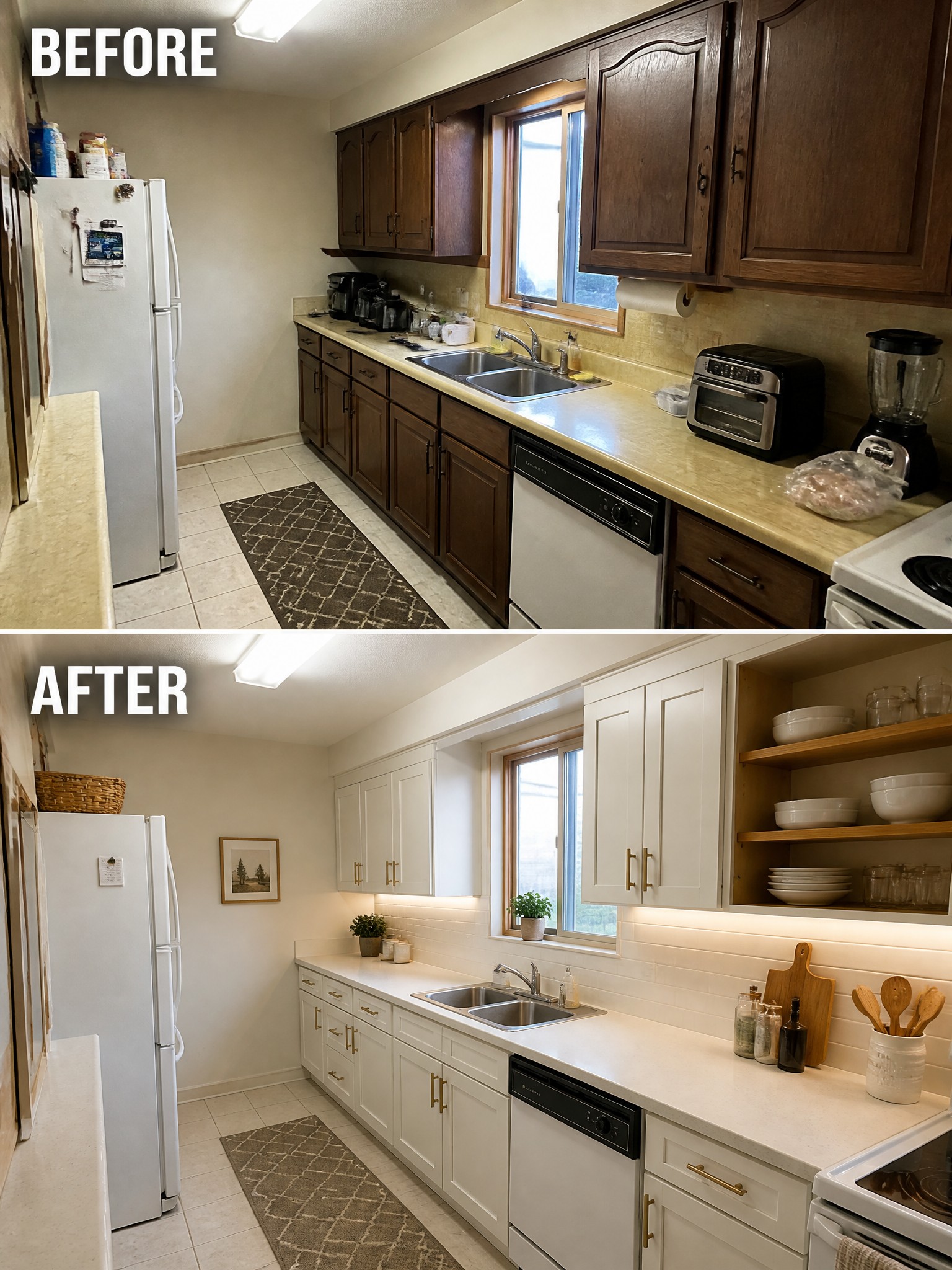
A dark kitchen can feel heavy and closed in even when the layout works fine. In this case the main change was painting the wood cabinets a clean white, which instantly made the whole room feel larger and brighter. The counters stayed simple and the backsplash was updated to white tile, so nothing fights with the new color.
This idea works best in small or older kitchens that already have decent cabinet structure. Start with a good degreaser and primer if the cabinets are original, then pick a durable cabinet paint rather than standard wall paint. Keep the rest of the room light too, since too many dark accents will undo the effect.
Brighten A Small Bathroom With White Finishes

A small bathroom often feels dated when it has dark wood, busy patterns, and heavy fixtures. Switching to a white vanity, light tile, and a clear glass shower door removes the visual weight and lets the room feel larger and cleaner right away.
This approach works well in older homes where the layout stays the same but the finishes need updating. Keep the same footprint and focus on light surfaces, simple hardware, and fewer accessories so the space stays easy to maintain and does not feel crowded.
Add Storage To Keep A Small Entryway Organized

A narrow entry often ends up with shoes scattered across the floor and bags hanging wherever they fit. The before photo shows exactly that problem, with piles of footwear taking over the walkway. Adding a low bench with hidden baskets underneath and keeping the wall hooks to a few items gives everything a place and leaves the floor open.
This idea works best in homes where the entry doubles as a hallway. Pick a bench that fits the width of the space and use simple baskets for daily shoes and accessories. A mirror on the wall helps the area feel less cramped without adding more furniture.
Turn An Unused Closet Into A Small Workspace

Many homes have a closet that sits empty and wastes space that could be useful. Adding a desk surface, shelves, and a few drawers turns that area into a compact workspace without taking over another room.
Measure the closet first so the desk fits the width and leaves room to pull out a chair. Keep the top shelf for storage bins and use the lower area for a lamp and basic supplies so the setup stays simple and easy to reach.
Stack Appliances To Add Storage In A Small Laundry Room

Stacking the washer and dryer is one of the simplest ways to open up floor space in a cramped laundry area. In the before photo the machines sat side by side, leaving almost no room for anything else. Once they were stacked, the space below became usable for rolling bins and a short counter, while open shelves above held baskets and labeled jars without crowding the room.
This approach works best in small homes or apartments where every inch counts. Measure your machines first to make sure they can be stacked safely, then add one or two simple shelves and a few bins. Keep the rest of the surfaces clear so the room stays easy to use instead of turning into extra storage.
Organize A Small Closet With Built-In Shelving And Lighting

Many small closets get messy fast because everything ends up crammed onto a single rod with nowhere else to go. Adding built-in shelves, drawers, and simple LED lighting changes how the space works by giving each type of item a clear spot. The result feels much larger even though the room itself has not changed size.
This idea works best in narrow walk-in closets where floor space is tight. Measure first, then decide which sections need hanging space, folded storage, or bins for things you do not use every day. Keep the color light and add lighting where you actually reach for clothes so nothing stays hidden in the back.
Add Built-In Seating To Maximize A Small Room

A small dining area often feels cramped when a full table and chairs take up most of the floor. Switching to built-in benches with storage underneath opens up walking space and gives the room a cleaner layout that actually works for daily use.
This approach suits older homes or apartments where every inch counts. Keep the bench cushions light and add one round table so the corner stays open rather than boxed in. The storage drawers underneath handle linens or extra dishes without needing more furniture.
Paint Dark Walls Light To Brighten A Small Room

A simple coat of light paint can completely change how a small room feels. The dark walls in the before photo made the space look cramped and heavy, while the lighter color in the after photo instantly made it feel open and calm. Removing the clutter and adding a few organized shelves helped the new color stand out even more.
This idea works best in rooms with limited natural light or low ceilings. Start with the walls first, then keep furniture and accessories minimal so the brighter color has room to breathe. It is an easy change that makes the space feel larger without any major renovations.
Refresh A Small Bathroom With Better Lighting
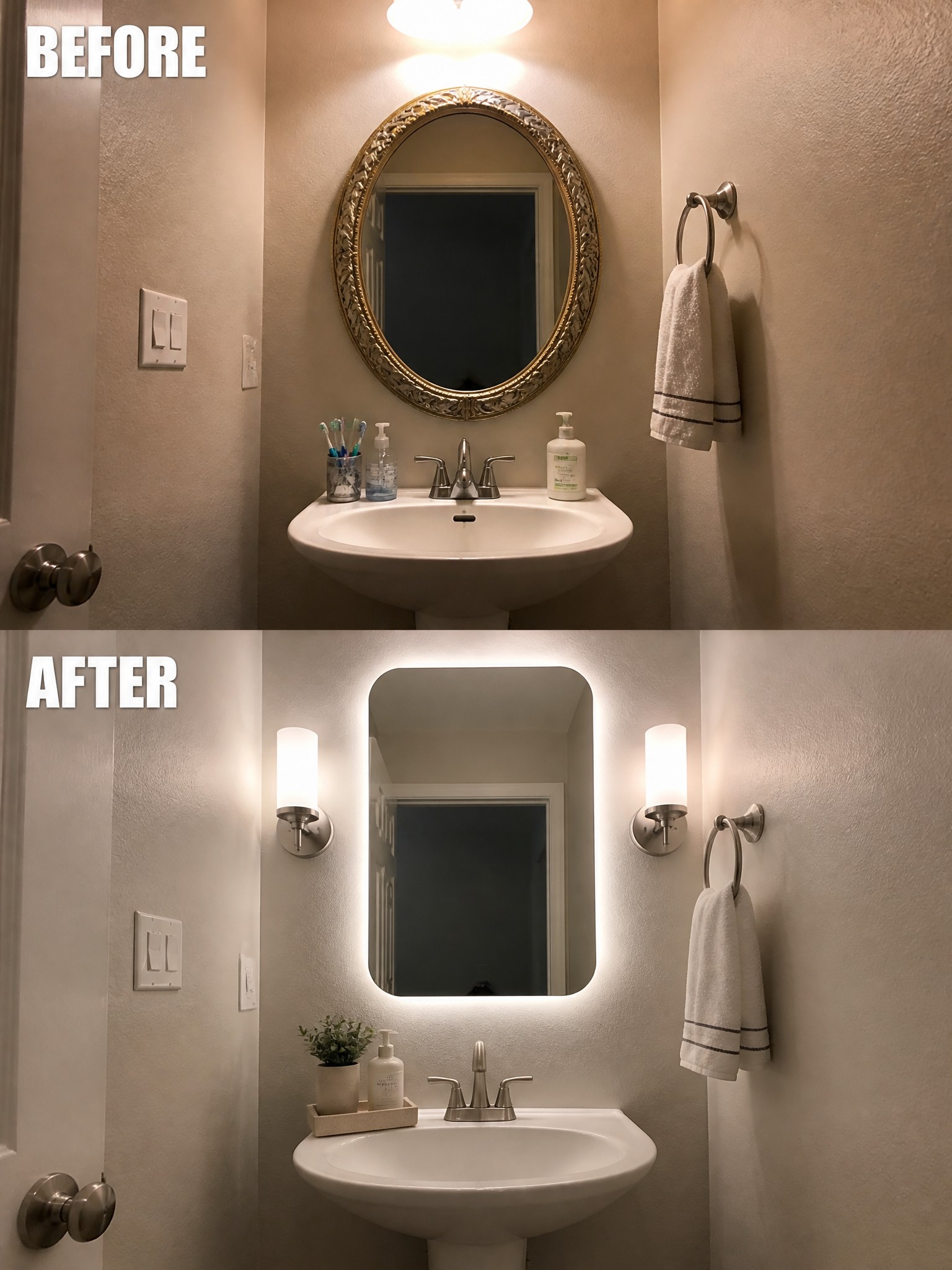
The main change here is swapping a single overhead fixture and ornate mirror for a backlit mirror paired with two wall sconces. This creates even light across the vanity and makes the whole room feel cleaner and more open.
The idea works best in small bathrooms that lack windows or feel dim during the day. Focus on adding light at the mirror first, then keep the rest of the finishes simple so the space does not feel crowded.
Make A Plain Living Room Feel Finished
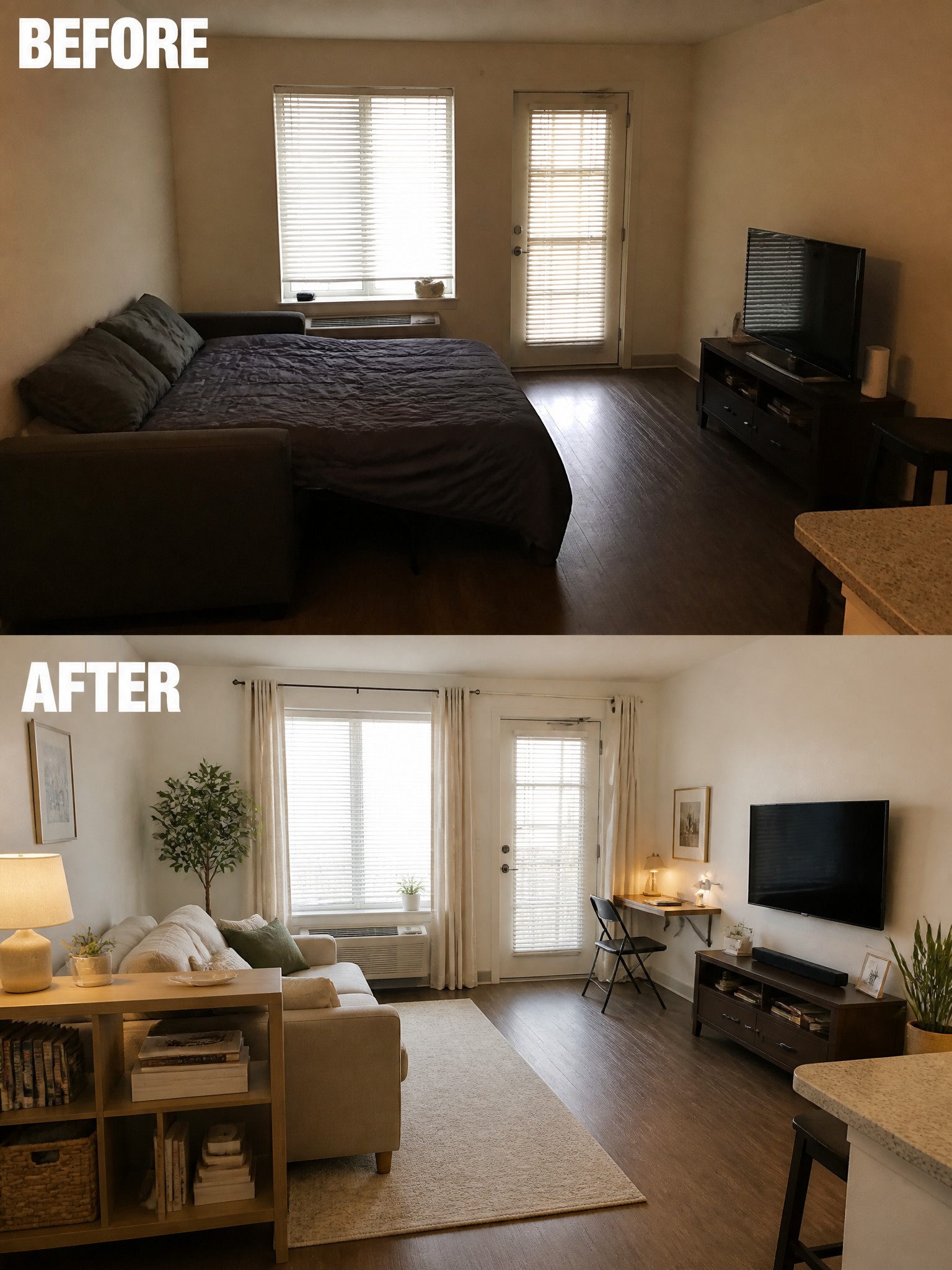
A room with just the basics often feels unfinished even when the furniture is in place. Adding a large area rug and full-length curtains gave this space a clear center and softened the hard lines of the floors and windows.
This idea works especially well in small apartments or rental units where major changes are not possible. Place the rug so it sits under the front legs of the main seating, then hang curtains high and wide to make the windows look larger. Keep the rest of the room simple so the new layers can do the work.
Add Trim And Art To Finish A Plain Hallway
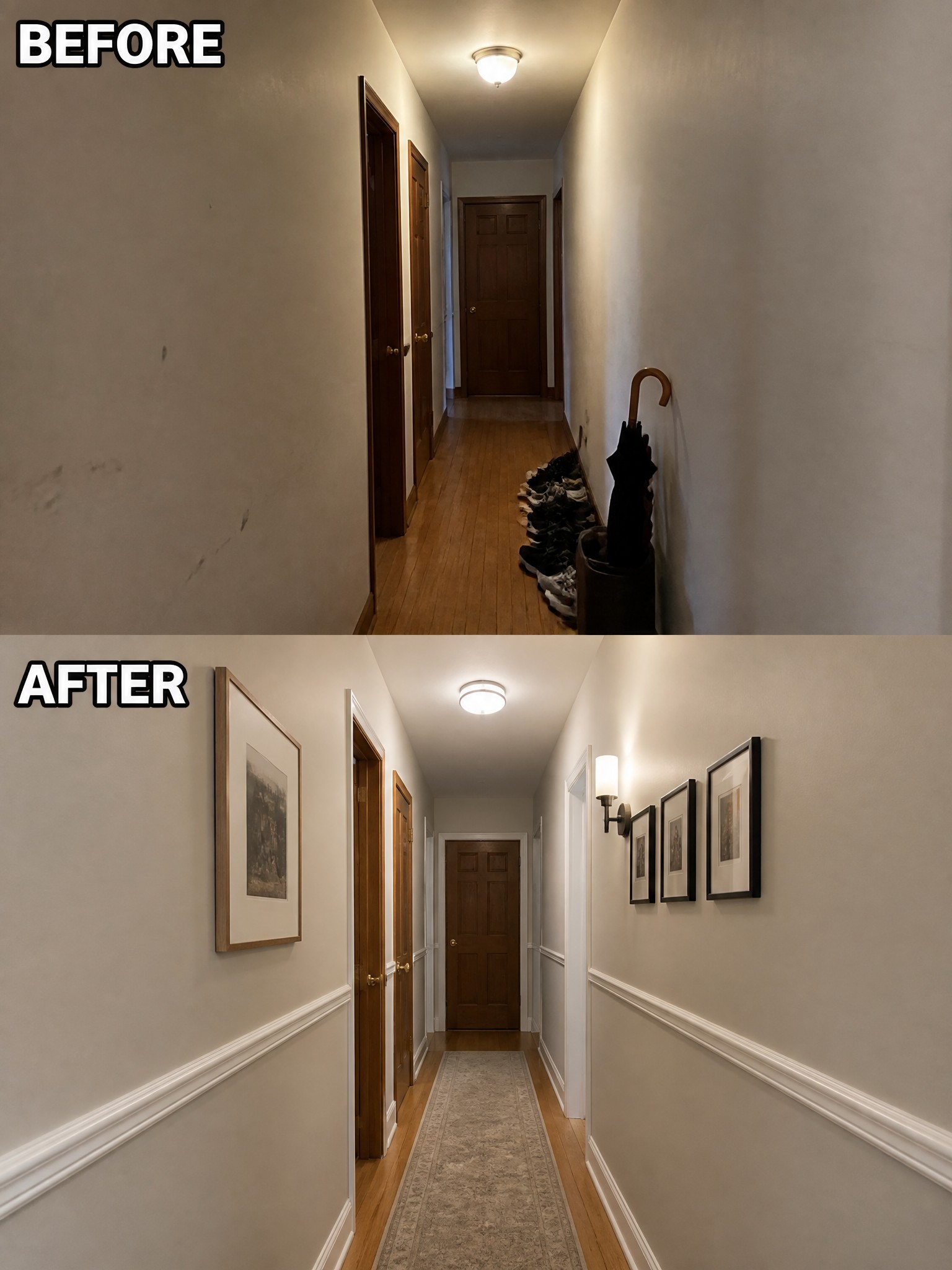
A long empty hallway often feels like wasted space because the walls have nothing to break them up. In this case, adding a simple chair rail and lower paneling gave the walls clear structure, while a few framed pieces added interest without crowding the narrow space. A runner down the center also helped soften the wood floor and made the whole area feel more intentional.
This approach works well in older homes where hallways tend to be long and plain. Start with the trim if the walls feel too tall or bare, then add a few pieces of art at eye level. Keep the colors light so the space stays bright, and choose a runner that is easy to clean.
Use Storage To Make A Kids Room Feel Calm
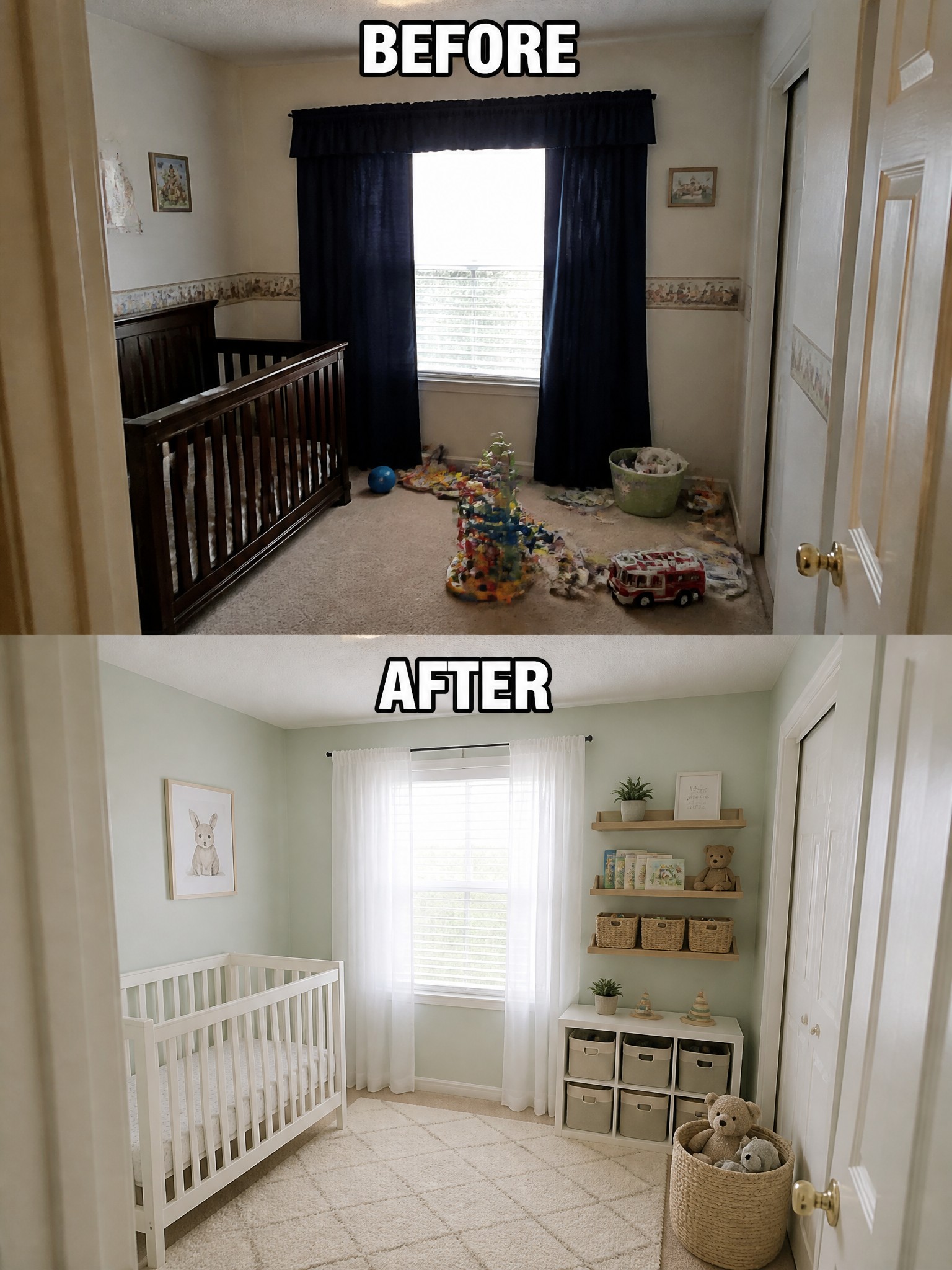
A cluttered room with toys spread across the floor quickly feels overwhelming, especially in a small space. The main change here was adding simple storage like wall shelves and a low unit with bins, which cleared the floor and gave everything a place. Light paint and plain curtains also helped the room feel less busy.
This idea works well in any kids room where toys and books tend to pile up. Start by clearing out what is not needed, then choose storage that fits the wall space without crowding the floor. Matching bins keep things looking neat even when the room is in use.
Turn A Small Alcove Into Built-In Seating

A small empty space often stays that way because regular furniture does not fit well. Adding a built-in bench with drawers underneath gives the area a clear purpose and adds storage without crowding the room. The plain walls and floor now feel more finished because the seating is part of the architecture.
This idea works best in homes with narrow corners or leftover nooks near windows. Keep the bench color close to the walls so the space still feels open, and add just one shelf above for a lamp and a few books. It keeps the room practical while making the alcove usable every day.
Update The Shower With Fresh Tile And A Glass Door

A heavy shower curtain and beige tile can make even a small bathroom feel closed in. Switching to lighter subway tile and a clear glass door lets more light through and gives the whole room a cleaner look without needing a full gut job.
This idea works best in compact bathrooms where the shower takes up a big part of the space. Keep the rest of the room simple so the new shower stays the main focus.
Add Shelf Lighting To Organize A Small Pantry
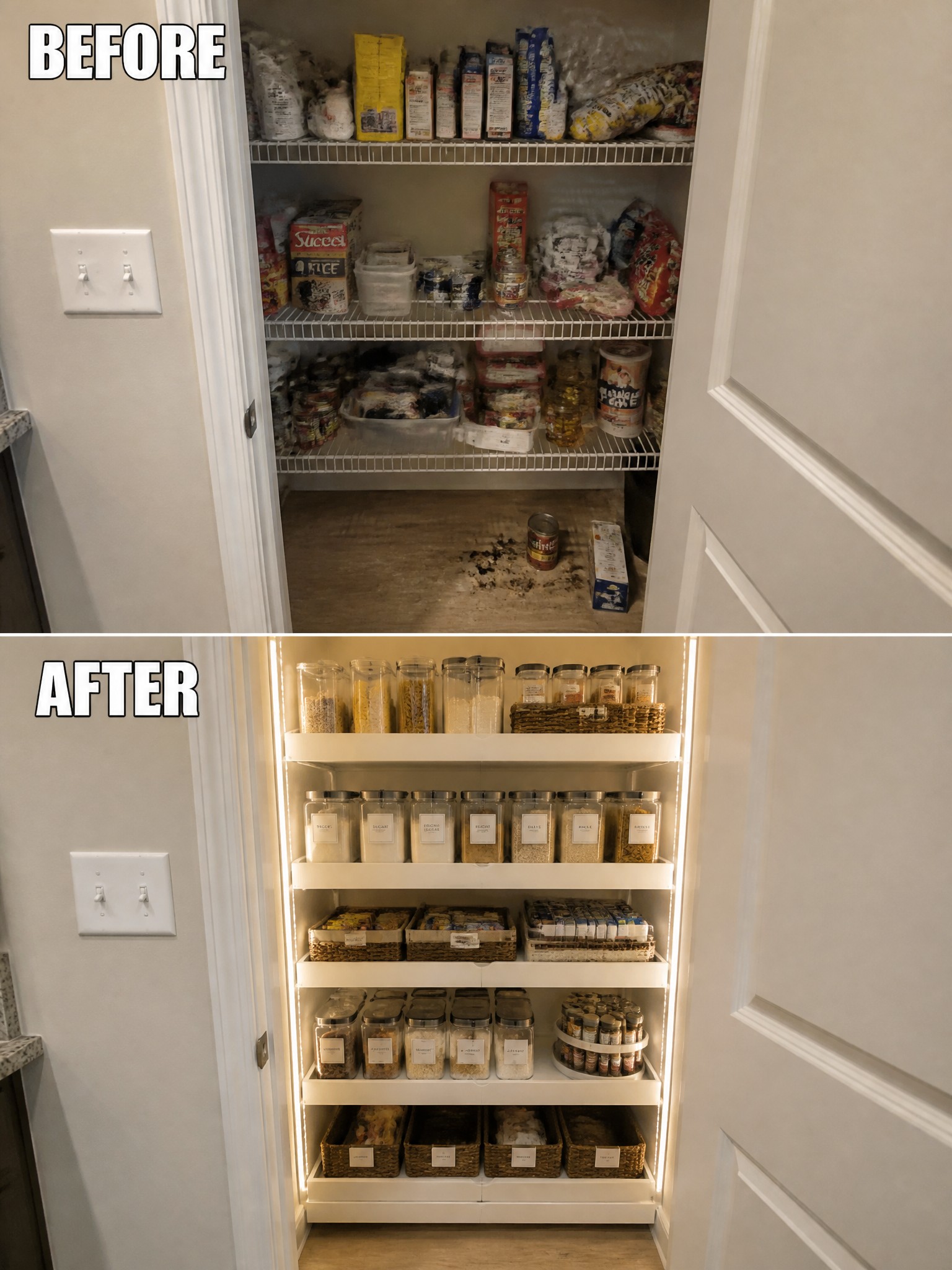
A cluttered pantry quickly starts to feel cramped and hard to use. Switching to matching jars, labeled baskets, and simple LED lights along the shelves makes the space brighter and much easier to keep tidy.
This idea suits small homes where storage needs to stay practical without taking up extra room. Clear the shelves first, then choose containers that fit the space and add lights that highlight what you actually reach for every day.
Make The Fireplace Wall The Main Feature
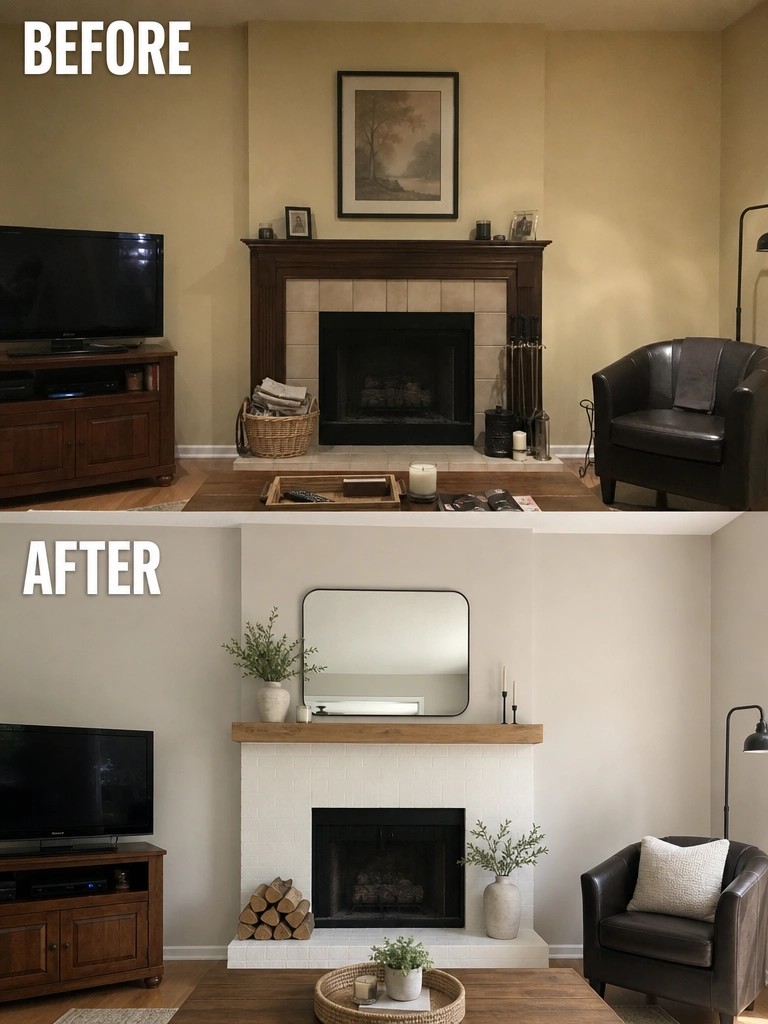
A fireplace wall can easily date a room when the mantel and surround feel heavy or mismatched. In this case the dark wood mantel and older tile gave way to a clean white brick face and a lighter wood shelf. That single change lifted the whole space and turned the fireplace into the natural center without adding much else.
This approach works well in smaller living rooms where you want one strong focal point rather than lots of competing pieces. Keep the styling simple with just a mirror or a couple of plants so the updated wall stays the main event. If your fireplace feels dated, start with the surround and mantel before bringing in new furniture or rugs.
Turn An Awkward Space Under The Stairs Into A Practical Station

Many homes have an odd corner under the stairs that ends up as a dumping ground for boxes and bins. In this case the before photo shows exactly that, with a few storage containers shoved into the space and no real purpose. The after photo shows the same spot turned into a compact coffee station with a small cabinet, open shelf, and a strip of lighting that makes the whole area feel intentional and easy to use.
This kind of refresh works well in smaller homes where every square foot counts. The key is to decide on one clear use for the space, add simple cabinetry or shelving for storage, and include lighting so the area does not feel dark or forgotten. Keep the scale modest and focus on function first.
Replace Dark Tile To Brighten A Small Bathroom

A bathroom with dark brown tile and a closed-off tub often feels smaller and heavier than it needs to. Switching to light beige tile and opening the shower with a clear glass door lets light move through the space and makes the room feel noticeably larger.
This approach works well in small bathrooms where the goal is a cleaner, simpler layout. Keep the color palette light, remove visual barriers like curtains or solid doors, and focus on one main update such as the tile or shower enclosure before adding smaller details.
Frequently Asked Questions
Q: How can I brighten my small room if it only has one small window?
A: Hang a mirror across from the window to bounce light around the space. Choose light colored curtains that filter daylight instead of blocking it. This simple swap makes the room feel open during the day.
Q: What is the quickest way to refresh a cramped bedroom without buying new furniture?
A: Clear off every surface and put away anything you do not use daily. Add a single plant near the window for a fresh touch. Then swap in brighter bedding to lift the whole mood right away.
Q: How do I keep a small living area from feeling dark after I paint it a light color?
A: Place a floor lamp behind the main seating spot to fill in shadows. Keep the floor clear so light travels farther. One well chosen lamp often does more than adding extra pieces.
