

Living in an apartment or starter home often means dealing with small rooms that feel plain or a little unfinished when you first move in.
I have found that focusing on layout and function first usually helps more than adding lots of new pieces right away.
A few targeted swaps can shift the whole feel.
Trying out budget updates in my own place showed me how even basic storage solutions pull things together without much cost.
It feels good when the room starts working better for daily routines instead of just sitting there unused.
Make A Plain Living Room Feel Finished

The living room shifted from a basic setup with a sofa and coffee table to something that actually feels put together. Adding a large rug under the seating, hanging curtains on the window, and bringing in a floor lamp helped define the space and gave it a much calmer layout.
This idea works especially well in small apartments where the room has to serve multiple uses. Clear out the clutter first, then focus on a rug that fits the seating area and simple window treatments that soften the light. It keeps the room feeling open without needing a full furniture overhaul.
Add An Accent Wall To Give A Bedroom More Character

A plain bedroom often feels unfinished when the walls are left bare. Adding wallpaper to one wall changes that quickly, turning the space from basic to more personal without needing new furniture or major work.
This approach suits small apartments and starter homes where you want noticeable impact on a budget. Keep the pattern light so it does not overwhelm the room, then add simple shelves or better bedding to match the new wall.
Make A Plain Hallway Feel Finished

A narrow hallway often ends up as a pass-through with nothing on the walls and shoes or bags left on the floor. Adding a small console, a few floating shelves, and a simple gallery of framed pieces gives the space purpose without taking up much room.
This idea works best in apartments or starter homes where hallways are tight. Keep the furniture low and light so the walkway stays clear, and use baskets or open shelves to hold everyday items. Focus on one wall first if the space feels small, then add a runner to tie the whole area together.
Paint Kitchen Cabinets For An Easy Refresh

Painting cabinets can give an older kitchen a much newer feel without the cost of a full replacement. Here the shift from natural wood to a soft green with updated hardware makes the whole space look lighter and more current while the layout stays the same.
This approach works well in small apartments or starter homes where a big remodel is not practical. Focus on good surface prep and a durable paint made for cabinets, then swap the knobs and pulls to complete the change.
Refresh A Dated Bathroom With White Finishes
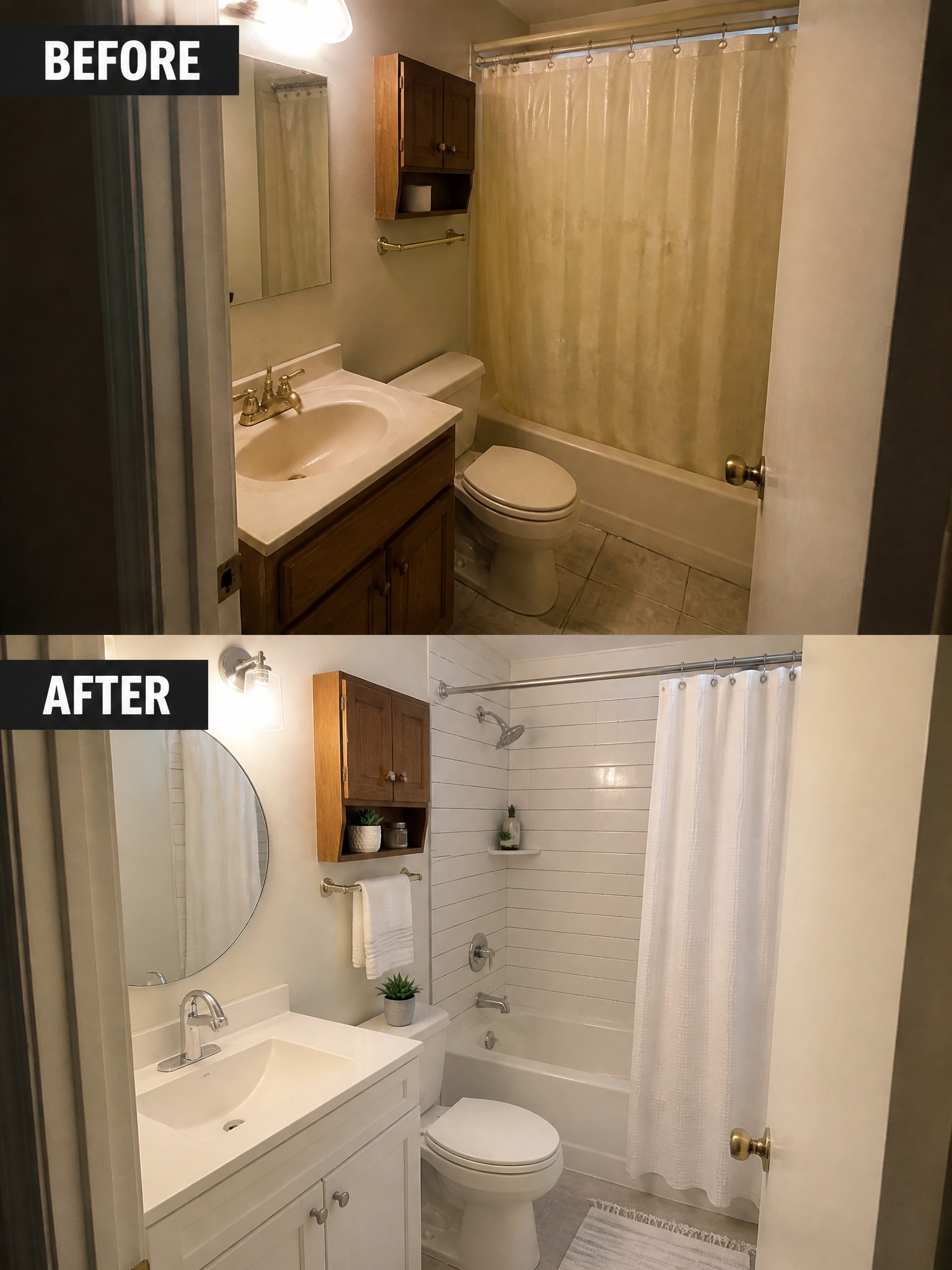
A small bathroom can feel much larger and cleaner once the dark wood and old finishes are replaced. In this case the heavy vanity gave way to a white one, the shower got simple white tile, and the lighting was swapped for brighter fixtures that actually reach the whole space.
This approach works especially well in apartments or starter homes where a full gut job is not realistic. Start with the biggest visual offenders like the vanity color and wall finishes, then add one or two updates such as a new mirror or better lighting. Keep the rest simple so the room stays easy to clean and does not feel crowded.
Add Storage To Organize A Cluttered Entryway
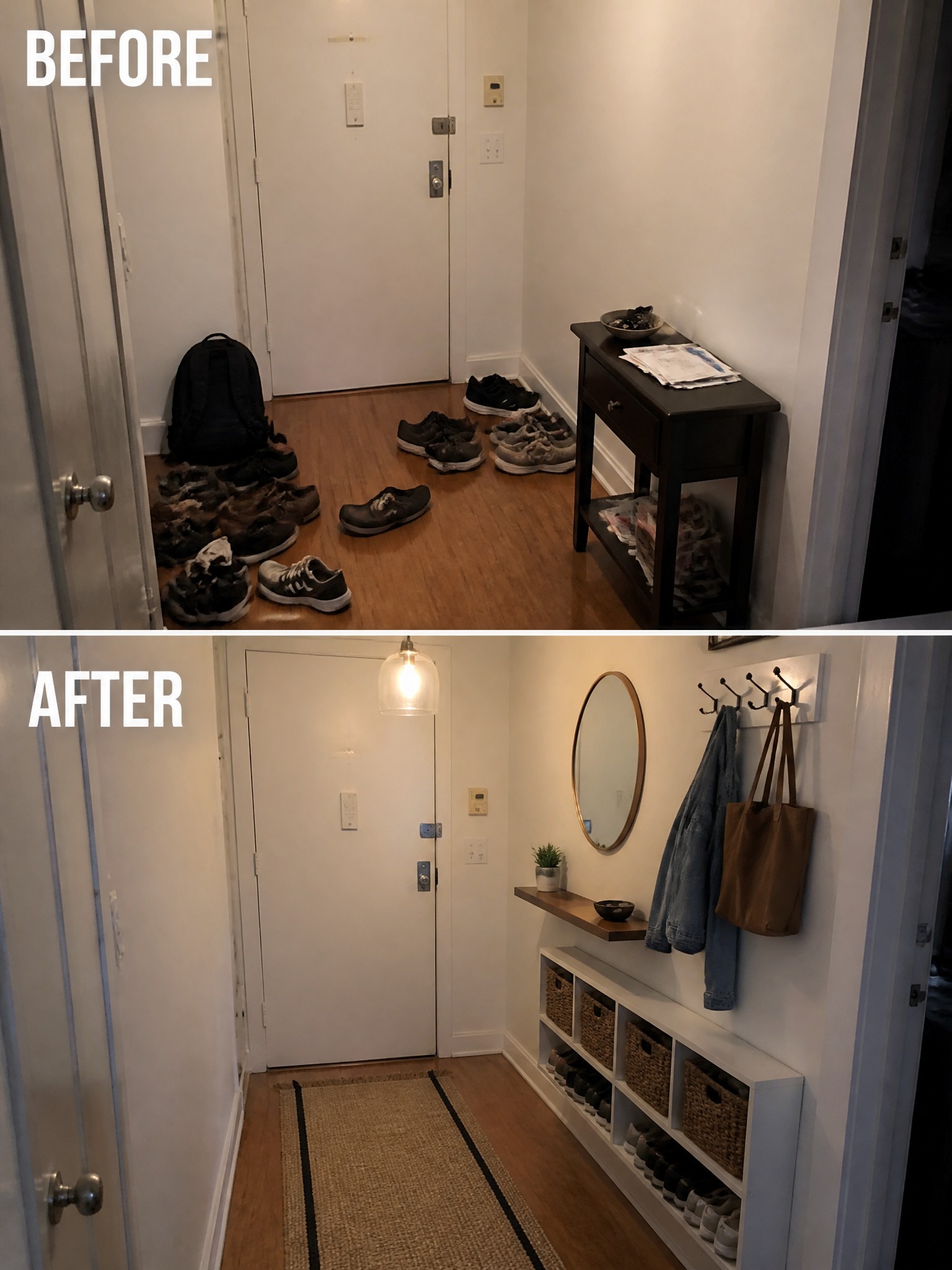
A narrow entry often ends up with shoes scattered across the floor because there is nowhere else to put them. The change here comes from adding one low bench with open cubbies that holds the shoes in place and keeps the walkway clear. A few hooks on the wall above it give coats and bags a spot too, so nothing stays on the floor.
This setup works best in apartments or small homes where the entry is also the main walkway. Keep the bench low and shallow so it does not block movement, and use baskets inside the cubbies if you want the shoes out of sight. Start with the storage piece first, then add a simple rug to mark the area.
Turn An Empty Bedroom Corner Into A Workspace
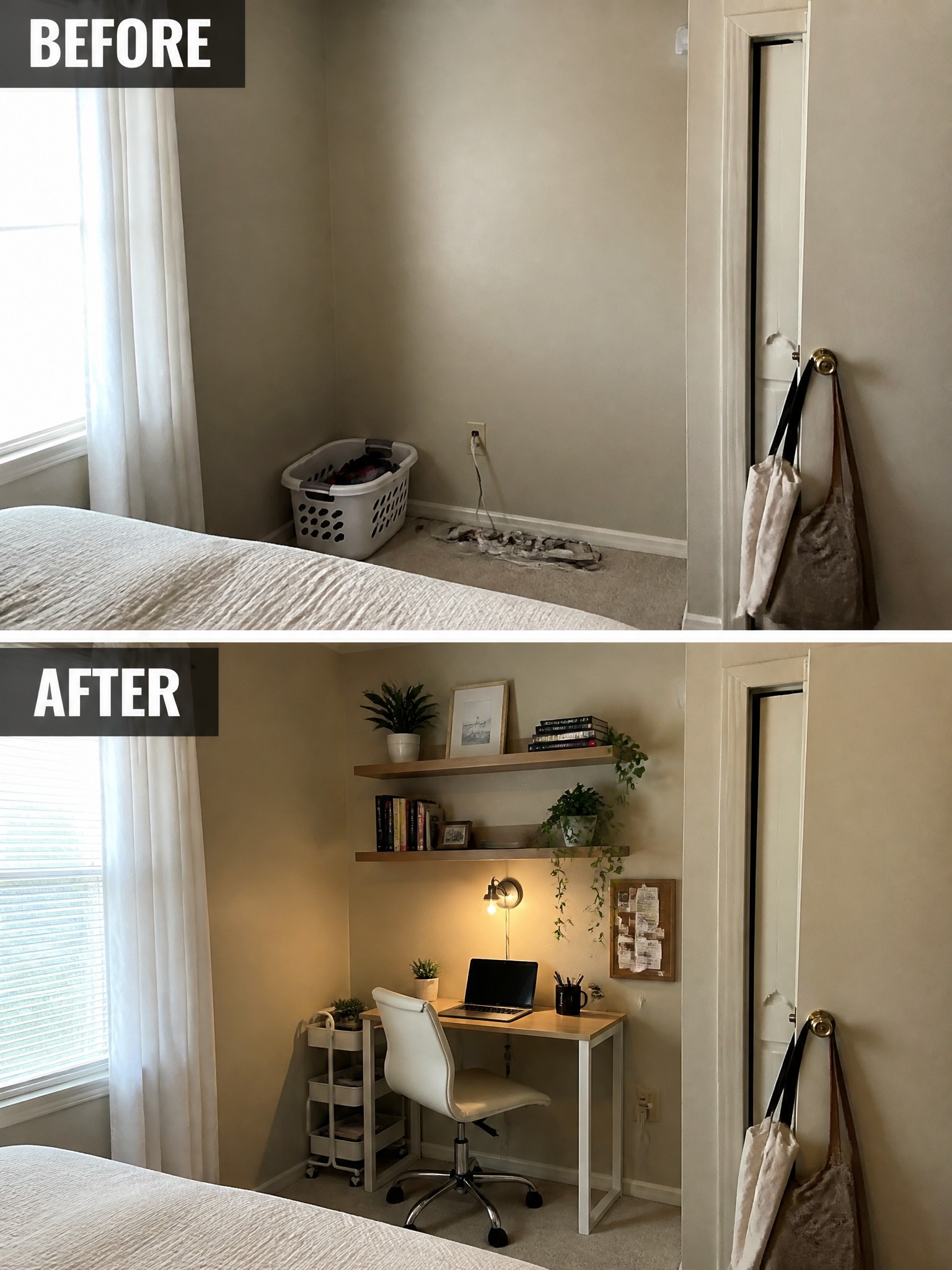
Small bedrooms often leave one corner doing nothing but collecting random items. A basic desk and a pair of floating shelves can give that spot a clear purpose without taking up much floor space.
This setup works best in apartments or starter homes where every square foot counts. Keep the desk narrow, add a rolling cart for storage, and use a wall lamp so you do not lose valuable surface room.
Add Built-In Seating To A Small Dining Corner

A small dining spot can feel cramped when it only holds a table and a few chairs. Building a simple corner bench adds seating along the walls, makes better use of the space, and gives the area a more settled feel without needing a bigger room.
This idea works especially well in apartments or starter homes where floor space is tight. Keep the bench low and painted to blend with the walls, add a few cushions, and pair it with a round table so traffic can still move around easily.
Add Floating Shelves Around The TV

A bare wall behind the TV often leaves the room feeling half done. The before photo showed a basic stand sitting against an empty wall with visible cords. Adding floating shelves on both sides gave the area shape and created spots for plants, books, and small frames without needing a full built-in unit.
This idea suits small living rooms or apartments where you want storage and style without taking up floor space. Place the shelves at staggered heights so the look stays relaxed. Stick to a few repeating materials and leave some open space on the shelves so the wall does not feel crowded.
Add Open Shelves To Keep Kitchen Counters Clear
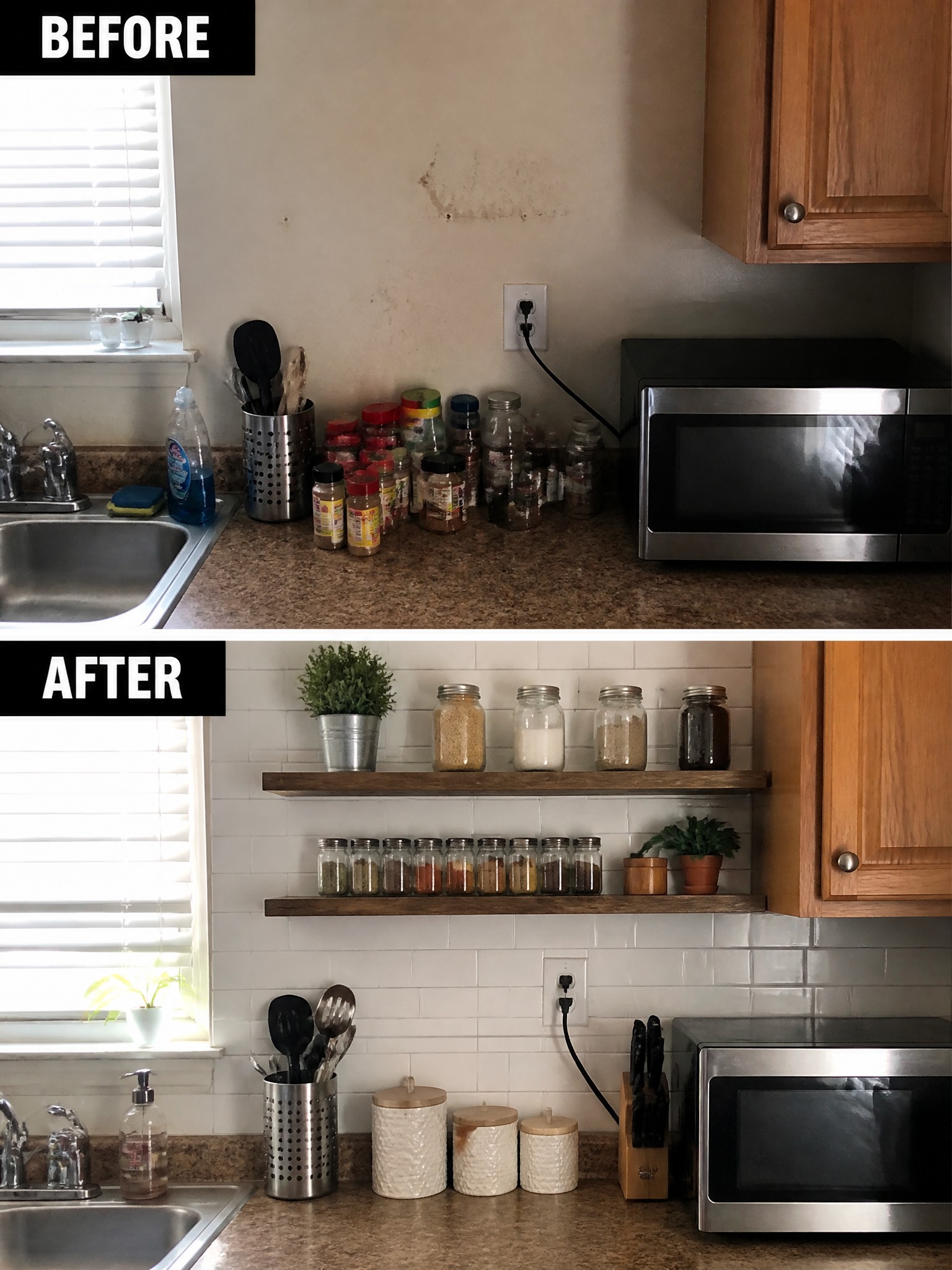
Many small kitchens lose counter space to jars, bottles, and tools that pile up over time. Moving the spices onto simple wall shelves frees the surface and makes the whole area feel less crowded.
This idea works best in apartments and starter homes where every inch of counter counts. Keep the shelves narrow, group similar items together, and leave a little empty space so the arrangement stays easy to use and clean.
Layer Textiles To Finish A Bare Bedroom
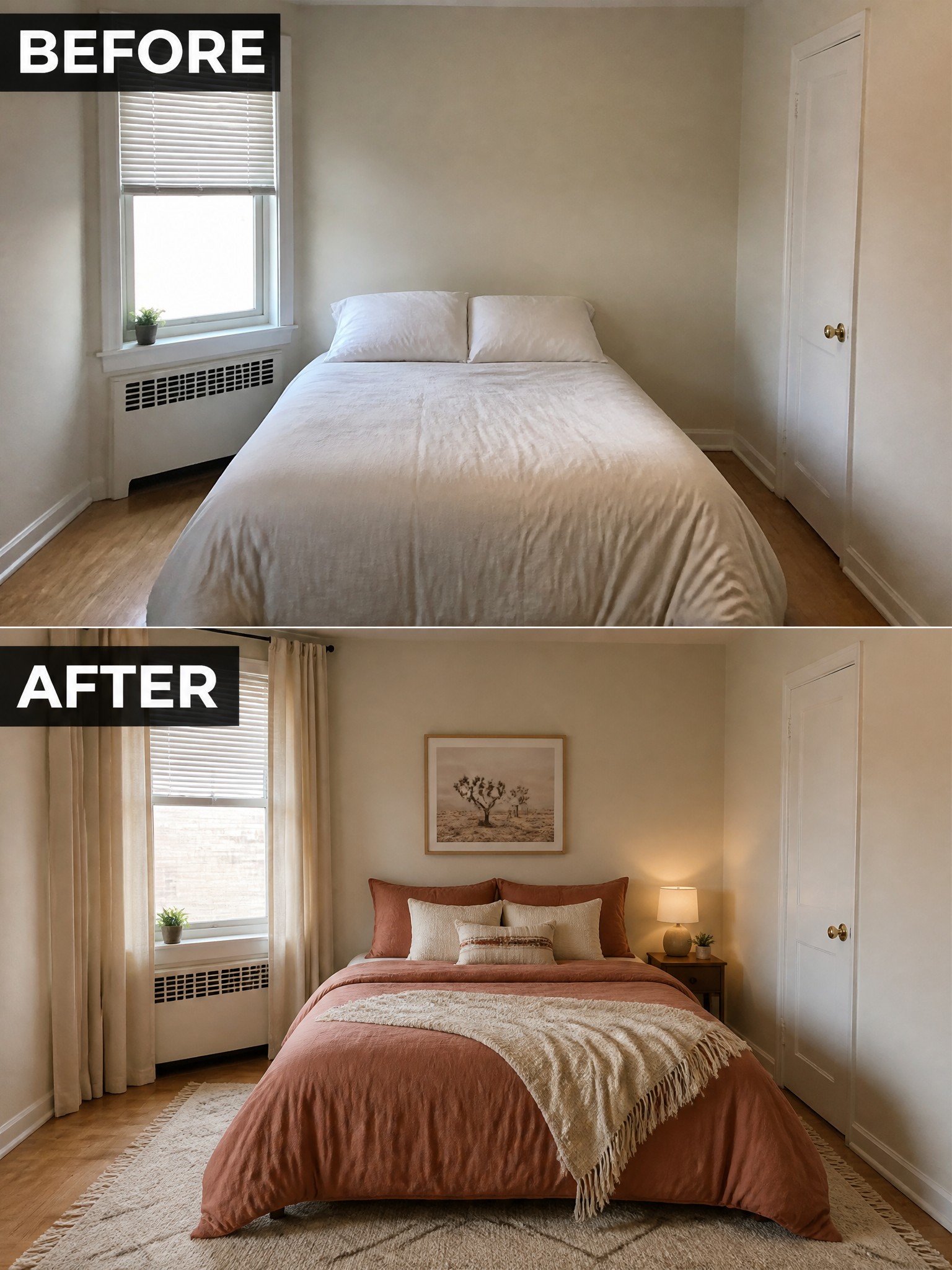
A bedroom with just the basics often feels unfinished. Adding a rug under the bed, curtains around the window, and a few layers of bedding in warmer tones makes the space feel much more complete without any major changes to the walls or furniture.
This idea works especially well in small apartments or starter homes where you want quick comfort on a budget. Begin with one or two larger textiles like a rug and curtains, then adjust the bedding you already own. Keep the rest of the room simple so the new layers stand out.
Update Old Fixtures To Refresh A Small Bath
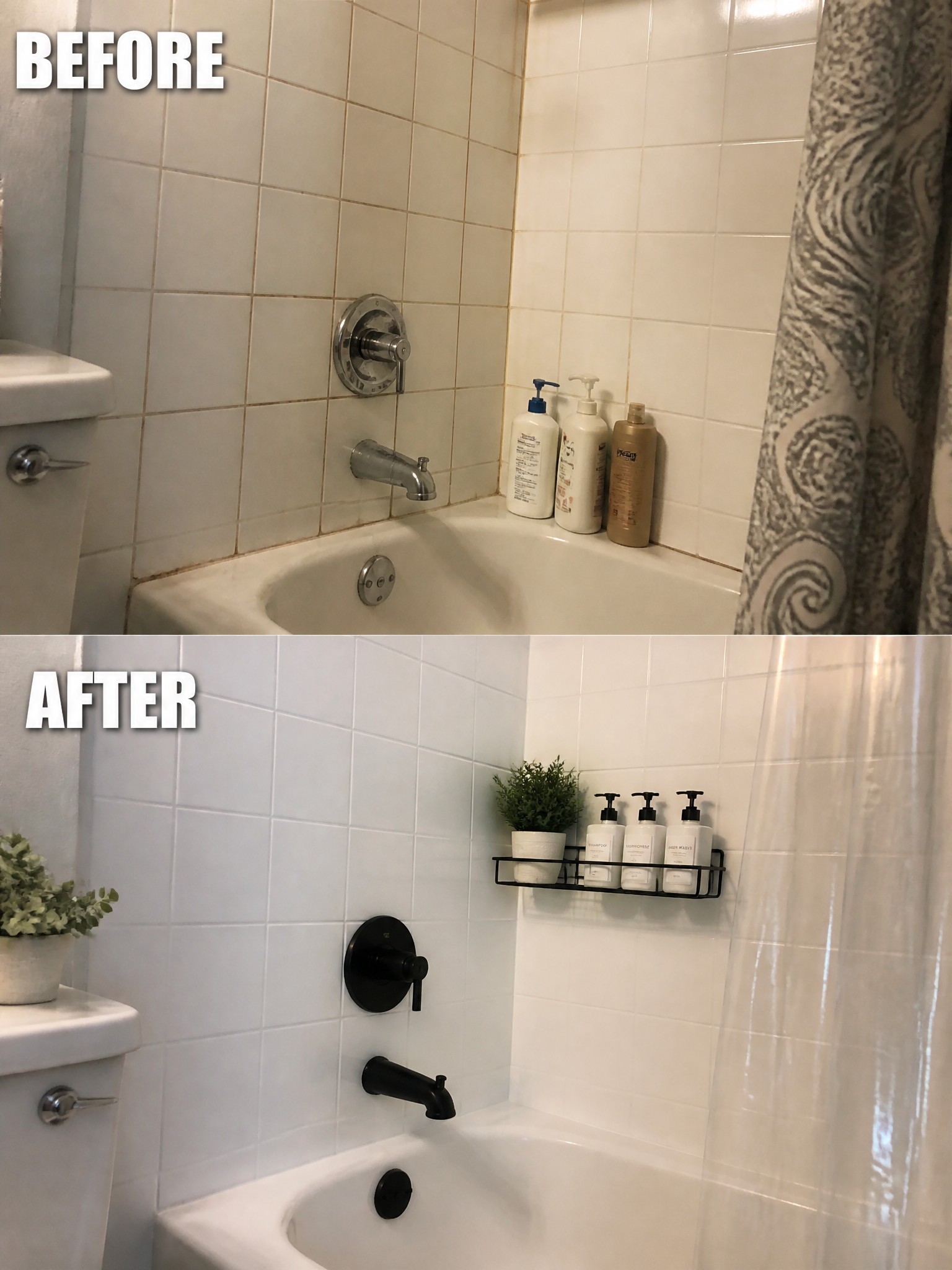
Swapping the chrome faucet and shower handle for matte black versions makes the whole space feel current. The before photo shows how the old hardware looked dated against the tile, while the after shows how a simple fixture change cleans things up fast. Adding a narrow shelf above the tub also keeps bottles off the ledge and gives the area a more finished look.
This approach works well in rental bathrooms or starter homes where you cannot change the tile. Focus on the hardware first since it makes the biggest visual shift, then add one small shelf if you need extra storage. Keep the rest of the room light so the new fixtures stand out without crowding the space.
Create Zones In A Small Room With Basic Furniture

A cluttered room often feels smaller and less useful than it really is. Clearing the floor and adding just two main pieces, a simple desk by the window and a compact sofa along the wall, turns the same space into a place where someone can actually work and relax without everything competing for attention.
This approach works well in apartments or starter homes where one room needs to serve more than one purpose. Keep the furniture scale modest so there is still room to move around, and use a small rug to mark the seating area if the floor feels too open.
Style The Wall Above The TV With A Shelf

A plain wall above the TV often leaves the room feeling unfinished. Adding a simple wooden shelf with an arched mirror and string lights gives the space a clear focal point and makes the whole area feel warmer and more put together.
This approach works well in small living rooms or apartments where you want to add interest without spending much. Keep the shelf narrow so it does not compete with the TV, use warm lights to create a soft glow, and balance a few plants or framed pieces on either side.
Refresh A Dated Kitchen With New Hardware And Lighting

Many older kitchens still have solid cabinets but look tired because of small details like basic knobs and harsh overhead lighting. Swapping the hardware for something simpler and adding a single pendant over the sink gives the whole space a fresher feel without touching the cabinets themselves.
This approach works well in apartments or starter homes where a full kitchen remodel is not possible. Focus on the pulls and one or two light fixtures first, then clear the counters so the changes can actually show.
Style A Bare Windowsill With Plants
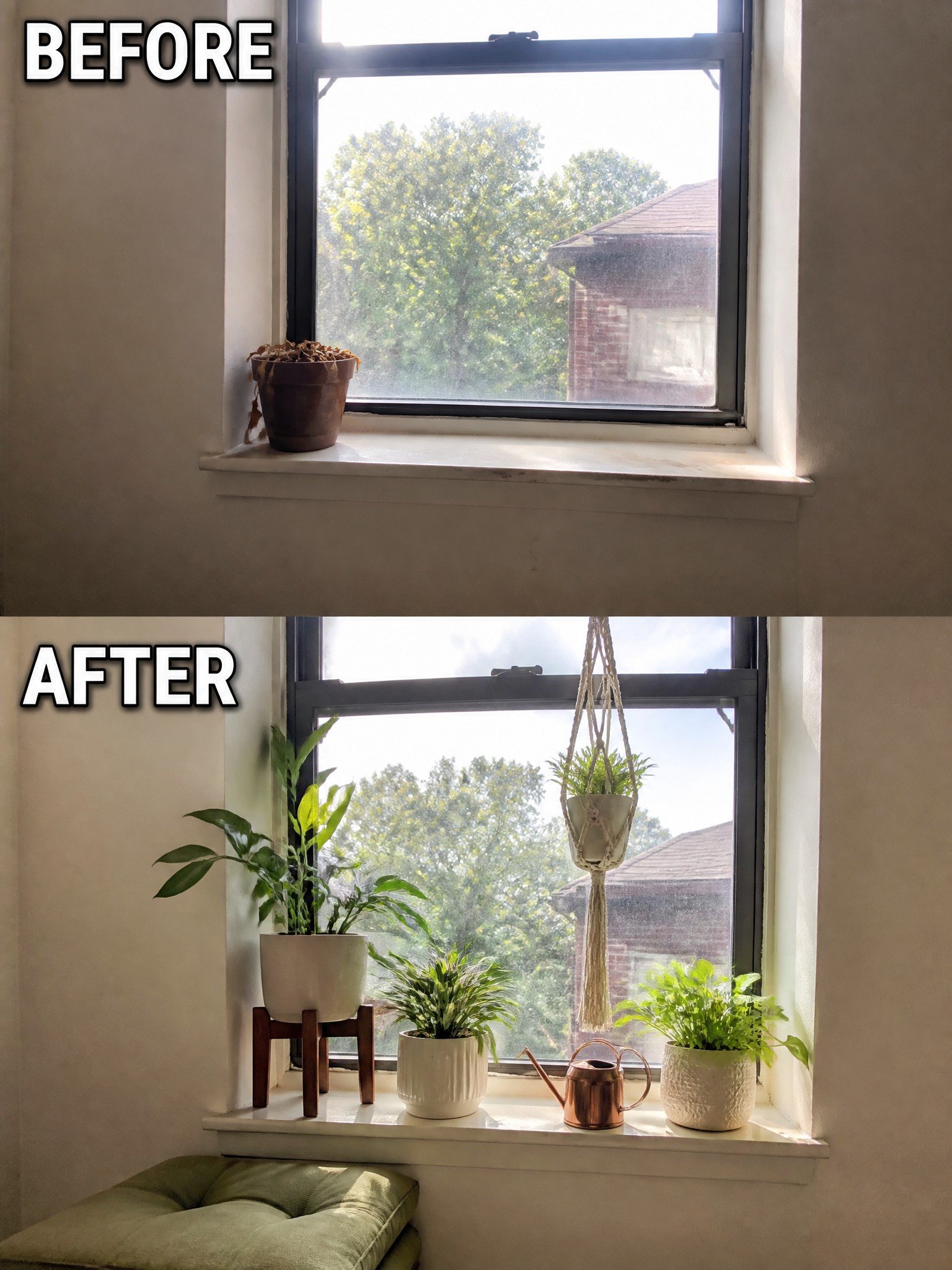
A windowsill often ends up as a forgotten ledge with just one lonely plant. In this case the before photo shows exactly that, while the after adds several healthy plants in matching pots, a simple macrame hanger, and a small stool to vary the heights. The space now feels intentional instead of empty.
This idea works well in apartments where every bit of natural light counts. Start with two or three plants you already own, then add one or two new pots if needed. Keep the arrangement low so it does not block the view or make the sill feel crowded.
Update Vanity Lighting To Finish A Small Bathroom

A single overhead light often leaves a bathroom feeling flat and dated. Swapping it for a simple vanity fixture with three bulbs brings the light down to face level, which makes the space feel warmer and more usable without any major construction.
This approach works well in small apartments or starter homes where the sink area is the main focus. Keep the shelf narrow so it does not crowd the space, and limit what sits on the counter to just a few daily items. The goal is better light and one small storage layer rather than a full renovation.
Hide Laundry Machines Behind A Curtain
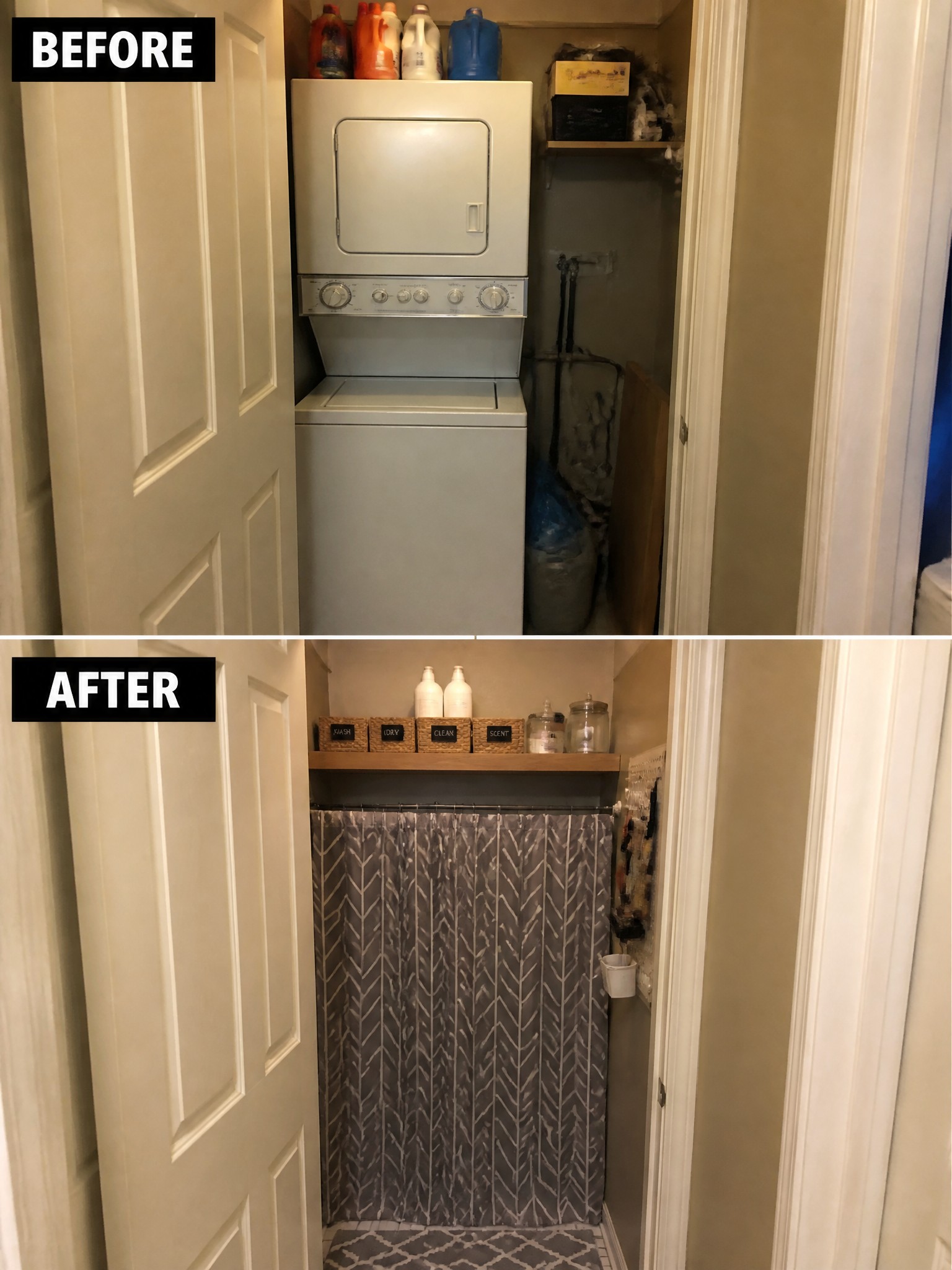
In a small laundry closet, the machines often take up most of the space and look messy even when clean. Adding a simple curtain across the front hides the appliances and gives the area a finished look without any major construction. The shelf above holds a few baskets for supplies, which keeps everything off the machines and easier to find.
This idea works best in apartments or starter homes where the laundry area sits in a hallway or near living space. Use a tension rod so you can install it without drilling, and pick a curtain that blends with the room. Keep the shelf narrow so it does not stick out too far when the door is open.
Rearrange Furniture To Open Up A Small Room
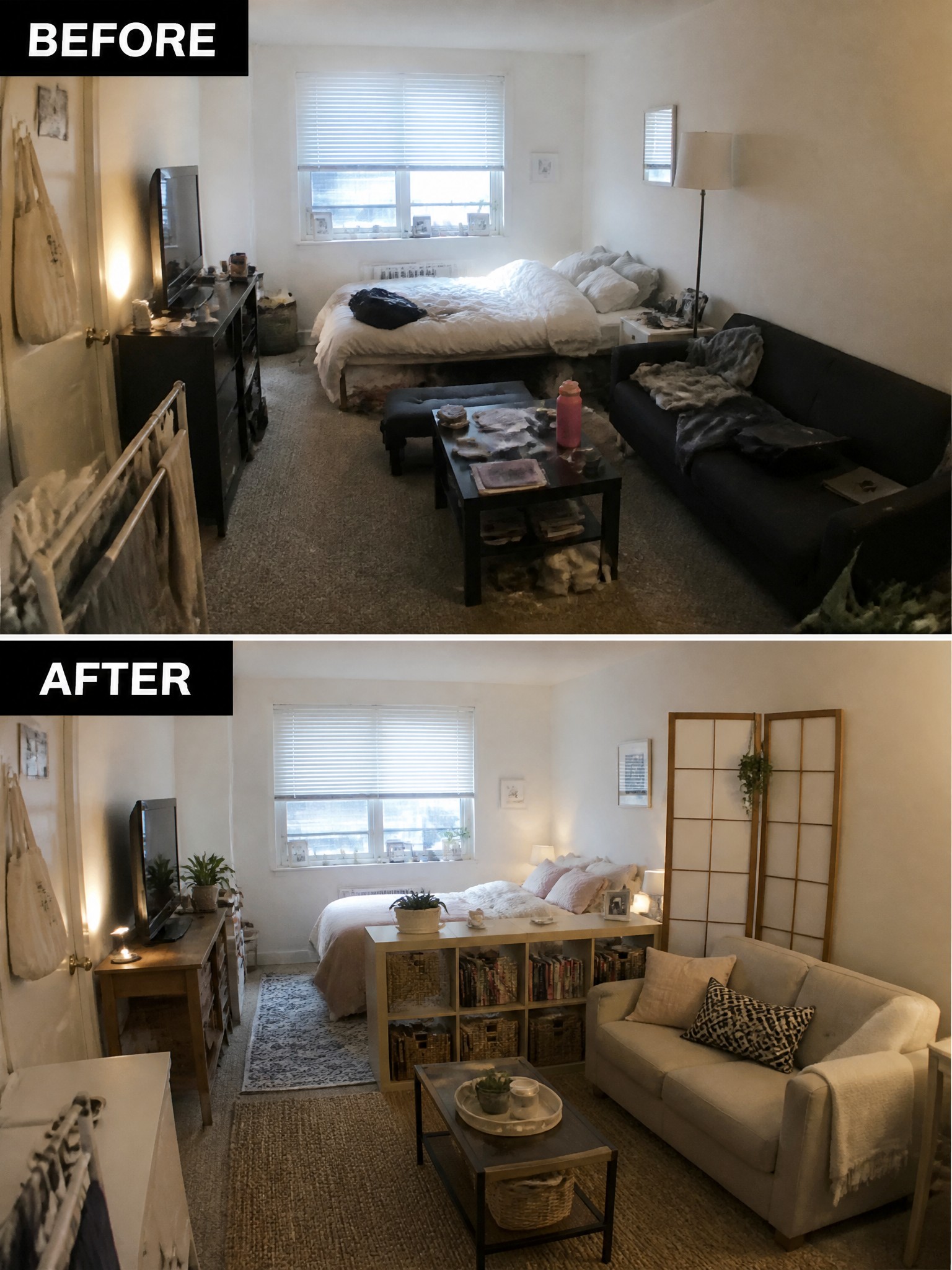
The before photo shows a room that felt cramped because the furniture was pushed against the walls with no clear path through the space. In the after photo, moving the dresser to the side, adding a low cube shelf behind the bed, and placing the sofa at an angle created better flow and made the room feel larger without removing anything major.
This approach works well in small apartments where one room needs to serve multiple purposes. Start by clearing the floor as much as possible, then test a few layouts before buying new pieces. A single storage unit can act as a divider while keeping everything accessible.
Replace Old Carpet With Hardwood Floors

Many small bedrooms start with wall-to-wall carpet that quickly looks worn and dated. Removing the carpet and putting down light wood flooring makes the whole space feel brighter and more open right away. A simple patterned rug placed beside the bed keeps the floor from feeling too bare while still letting the wood show around the edges.
This works especially well in apartments or starter homes where a full renovation is not practical. Floating wood floors are easy to install over existing subfloors, and one good-sized rug is usually enough to define the sleeping area. Just make sure the rug is large enough to sit under the front legs of the bed so the layout feels balanced.
Turn A Cluttered Counter Into A Coffee Station

A messy kitchen counter often comes from having no clear purpose for the space. In this case, the before photo shows papers, random containers, and appliances spread out with no order. The after version groups everything around coffee, using a few labeled canisters, a compact machine, and a small menu board to give the area one job.
This idea works well in small apartments or starter homes where counter space is limited. Start by clearing everything off, then decide on one main use for that section of the counter. Keep only the items that support that use and store the rest elsewhere. A simple tray or small shelf can help keep the setup contained so it does not spread out again.
Add A Window Bench For Seating And Storage
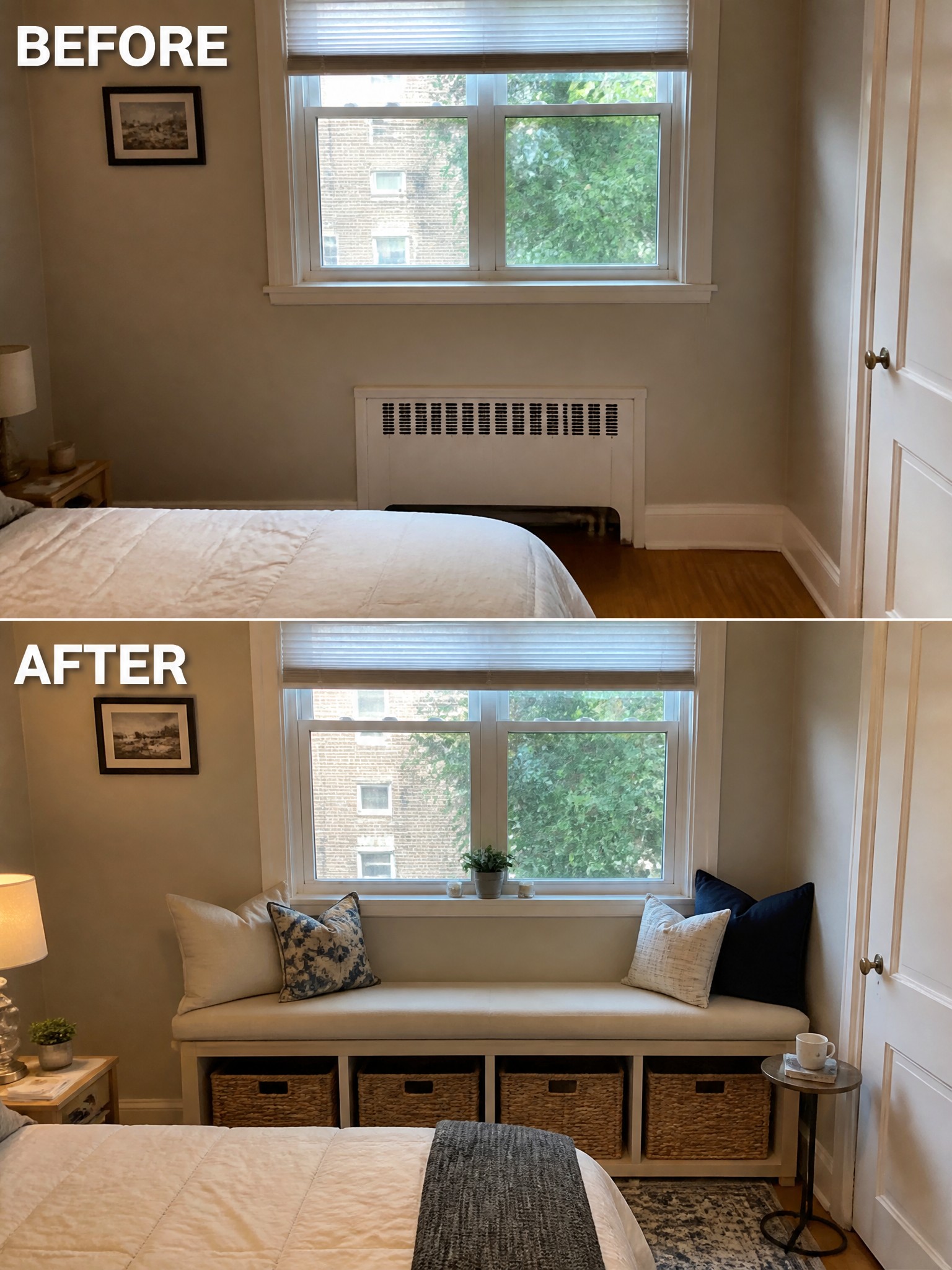
A window bench turns unused wall space into something practical. Here the area below the window changed from empty floor to a built-in seat with storage baskets tucked underneath.
This works best in small bedrooms where floor space is tight. Keep the bench low and simple so it does not block the window, then add a few baskets or bins for blankets and clothes you do not need every day.
Frequently Asked Questions
Q: My lease bans painting so how do I bring color into a small apartment room?
A: Hang a few yards of cheap fabric from a tension rod across one wall. The fabric adds pattern and warmth without any damage. Swap it out when you want a new look.
Q: Can these ideas help with storage in a starter home that has zero closets?
A: Build simple crates into a bench seat along one wall. The bench gives seating while the crates hold clothes or linens out of sight.
Q: Will secondhand pieces actually look good next to my basic starter furniture?
A: Sand one old table or shelf and give it a fresh coat of paint that matches your room. It blends right in and costs almost nothing.
Q: How do I test a layout before I move everything around in a tiny space?
A: Use painter’s tape on the floor to mark where new pieces would sit. Walk through the taped areas for a day to see if the flow works.
