


I often notice that bedrooms can feel a bit flat when the windows let in too much glare or none at all and the bedside area stays limited to one basic lamp.
I started paying attention to these spots after seeing how simple swaps in fabric or shade style could make the light feel more even throughout the day.
Switching out the bedside lamps tends to make the whole setup more practical since it lets you read or wind down without straining.
A room starts to feel more settled once those two elements work together instead of competing with whatever else is already there.
It adds up faster than most people expect.
Add Curtains And Matching Lamps To Finish A Bedroom
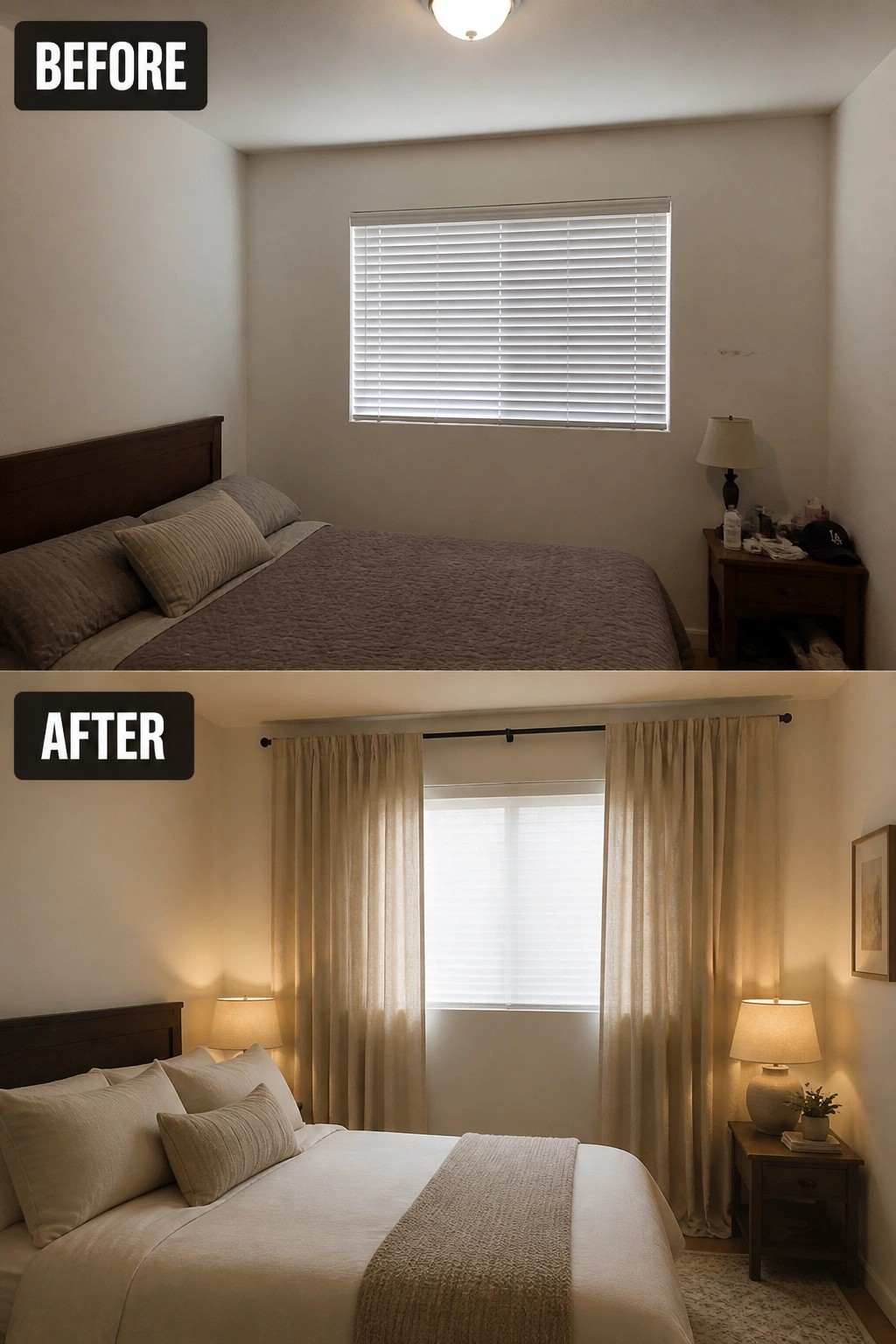
Many bedrooms feel half done when the windows only have blinds and lighting is limited to one side of the bed. Adding a simple curtain rod with full-length curtains plus a matching lamp on each nightstand pulls the room together and makes it feel more comfortable right away.
This approach works best in average-sized bedrooms where you want to soften the light without making the space feel dark. Hang the rod a bit wider than the window so the curtains can open fully during the day, and keep the lamps at a similar height and shade style so the balance feels natural.
Change Heavy Curtains To A Roller Shade And Add Wall Sconces

Heavy patterned curtains can make a bedroom feel darker and more closed in than it needs to be. In this case, swapping them for a simple roller shade opened up the window area and let more natural light in during the day. The old table lamps were also replaced with wall sconces mounted on either side of the bed, which freed up space on the nightstands and gave the room a cleaner, more current look.
This approach works well in bedrooms that already have decent furniture but feel weighed down by outdated window coverings. A neutral shade keeps the focus on the bed and walls without adding extra pattern or bulk. Wall sconces are especially useful when nightstands are small or when you want light that does not take up surface space.
Add Curtains And Balanced Bedside Lighting To A Simple Bedroom

A plain bedroom often feels unfinished when the window stands bare and lighting comes from just one small lamp. Adding full-length curtains on both sides of the window and placing matching lamps on either side of the bed instantly gives the room structure and warmth without any major renovation.
This approach works well in any bedroom that already has the basics in place but still feels flat. Keep the curtain rod wide so the fabric clears the window when open, and choose lamps at a height that lights the bed area without glare. The same idea applies whether your style is simple or more layered.
Balance A Bedroom With Matching Lamps And Curtains

The bedroom looked unfinished because the window had two different curtains and only one side had a lamp. Switching to one set of curtains across the whole window and adding matching lamps on both nightstands made the room feel centered and calmer right away.
This works best in bedrooms where the bed sits between two windows or nightstands. Pick curtains in a soft neutral that still lets in light, then use lamps of the same height and shade shape on each side. The space feels more finished without buying new furniture or painting.
Switch Vertical Blinds For Sheer Curtains And Better Bedside Lighting
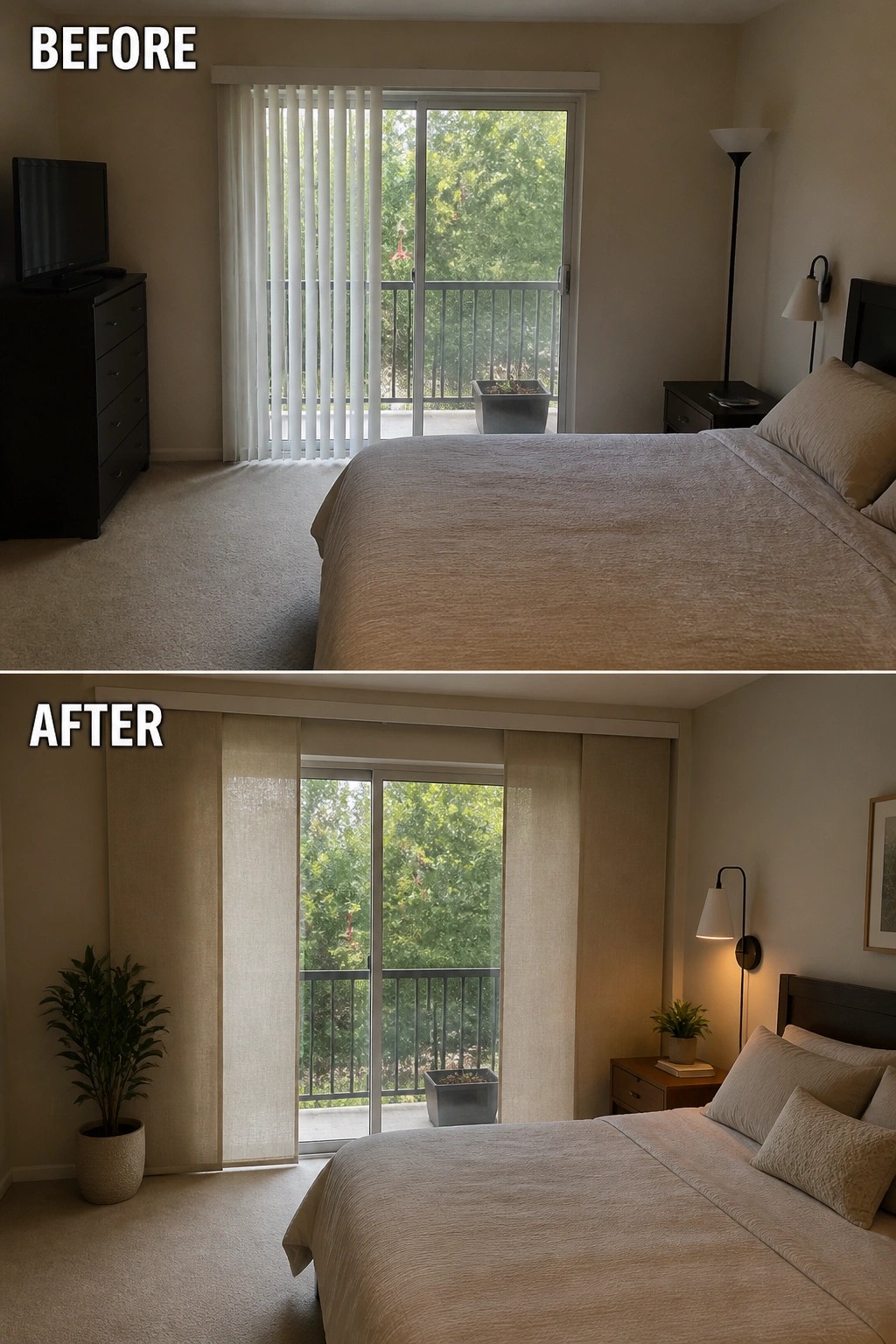
Many bedrooms start with basic vertical blinds on sliding doors because they are practical, but they often leave the space feeling flat. Switching to sheer curtain panels softens the window area right away and lets in filtered light without the harsh lines. Pairing that change with a wall sconce instead of a floor lamp gives the bedside a cleaner look and frees up floor space.
This approach works well in any bedroom that has sliding glass doors or large windows. Keep the curtains light in color so the room still feels open, and choose a sconce that can be switched on without getting out of bed. The rest of the room can stay simple as long as the window and lighting feel intentional.
Swap Heavy Curtains For Shutters And Add Wall Sconces
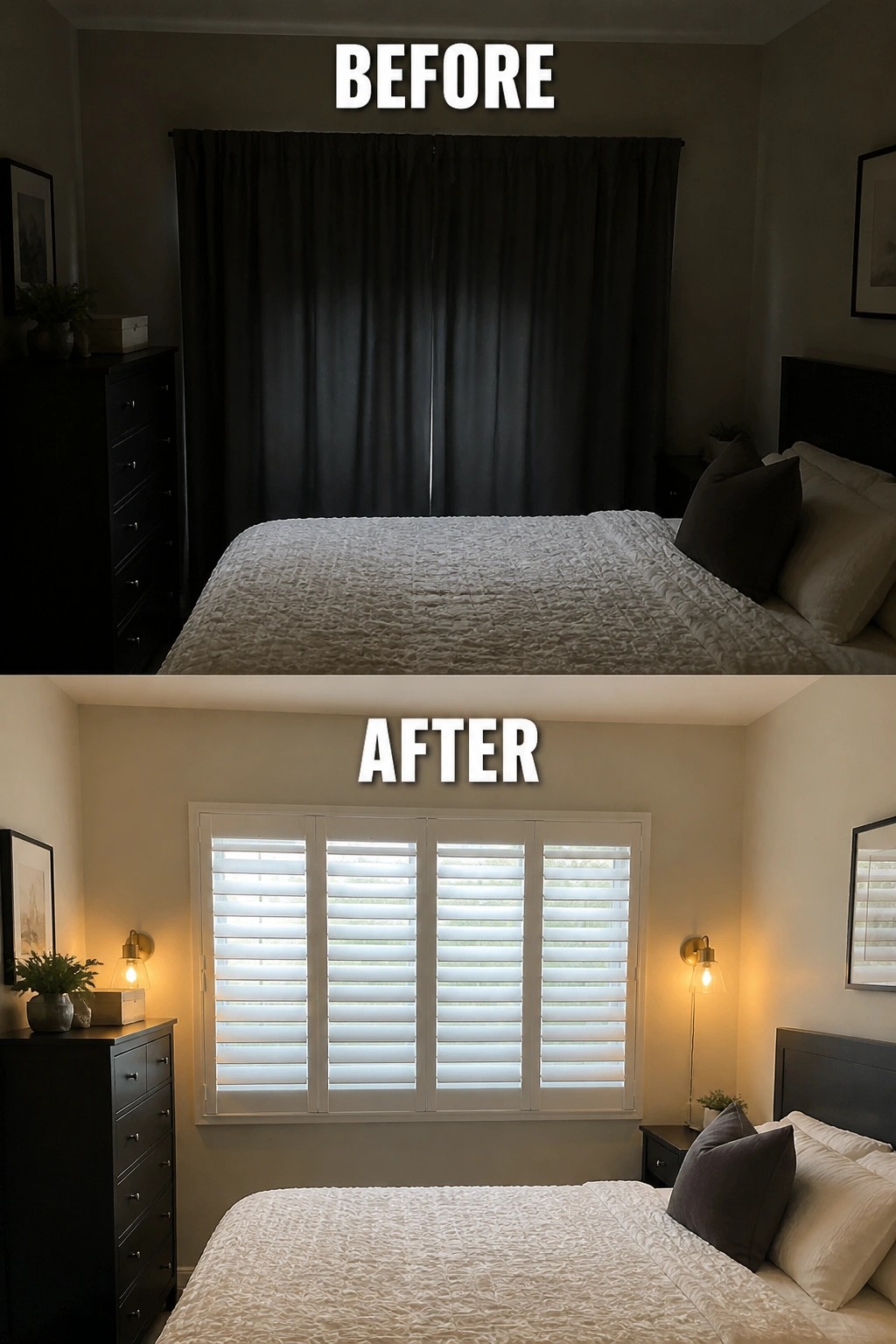
Dark curtains can make a bedroom feel closed in even when they are open. Switching to white plantation shutters lets in more daylight while still giving privacy and light control. The addition of simple wall sconces on each side of the bed then provides useful evening lighting without needing extra table space.
This approach works best in bedrooms that already have decent furniture placement. It keeps the focus on the windows and gives you layered lighting that feels finished. If your room gets limited natural light, shutters in a light color paired with slim sconces can make a noticeable difference without major changes.
Mount Bedside Sconces Instead Of Table Lamps
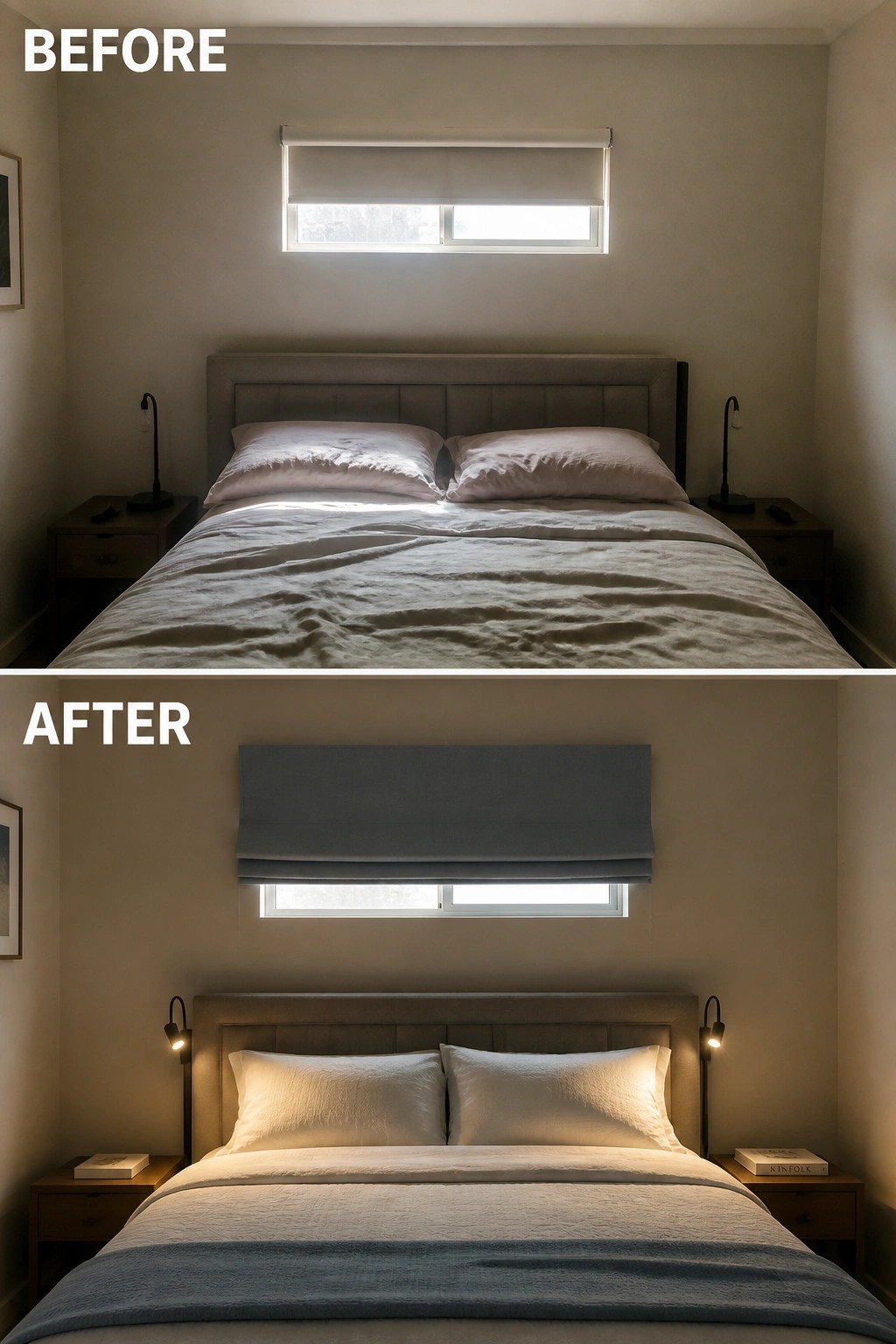
Switching from freestanding lamps to wall sconces on either side of the headboard gives the bed a cleaner look and frees up space on the nightstands. Pairing that with a wider roller shade above the window makes the whole wall feel more finished and balanced.
This idea works well in smaller bedrooms where nightstands are already tight on space. Keep the sconces at a height that puts the light right where you read, and choose a shade that covers the full width of the window area rather than sitting inside the frame.
Swap Dated Valances For Simple Curtains And Add Balanced Bedside Lamps

Many bedrooms still have old valances and just one lamp on a nightstand. Replacing the striped fabric and high valance with solid panels on a simple rod, then adding a second lamp on the opposite side, makes the room feel more even and current.
This idea works in any bedroom that has basic windows and nightstands. Hang the curtains a bit higher and wider than the window frame, then choose lamps that match in height and style so both sides of the bed feel equally useful at night.
Add Full Curtains And Balanced Bedside Lighting

A bedroom often feels unfinished when the window has only one curtain and the lighting comes from a single small lamp. Adding curtains on both sides of the window and placing a lamp on each nightstand creates symmetry and softens the whole space. The change makes the room feel calmer and more put together without any major construction.
This approach works well in any bedroom that already has decent furniture but lacks softness around the windows. Keep the curtain rod wide so the panels can clear the window completely during the day. Match the lamps in height and shade style, and use warm bulbs so the light feels relaxing at night.
Use Darker Curtains And Wall Sconces For Better Light Control

Many bedrooms start with thin sheer curtains that do little to block morning light and small lamps that crowd the nightstands. Switching to darker floor-length panels and replacing the lamps with wall sconces makes the space feel more finished and gives you real control over brightness.
This approach suits bedrooms where you want darker mornings or a calmer evening routine. Hang the curtains wide enough to clear the window completely when open, and position the sconces so the light falls where you actually read or relax.
Add Bedside Lamps And Better Curtains To Finish A Bedroom
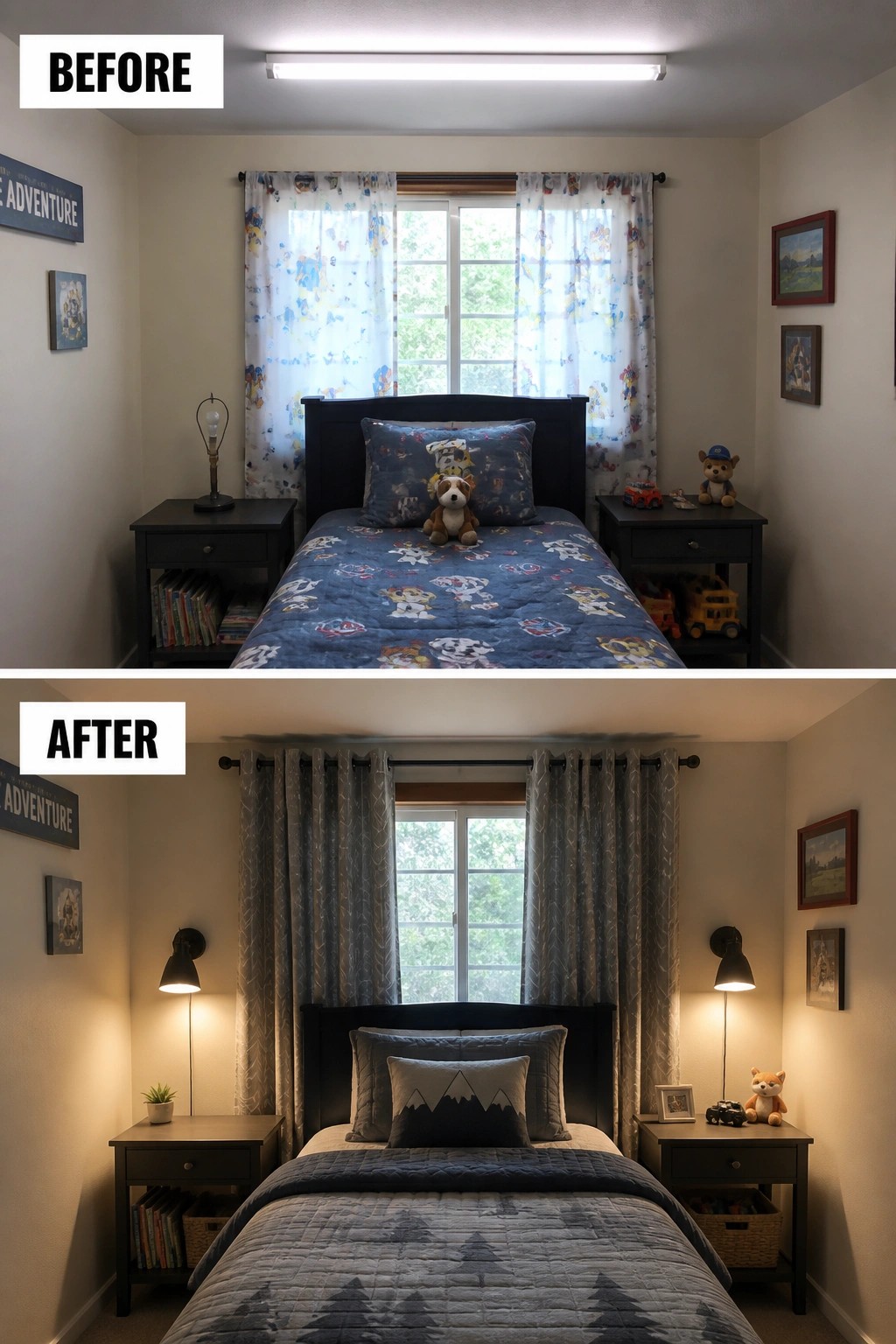
The room moved away from one bright ceiling light that lit everything evenly and toward two bedside lamps that create softer pools of light near the bed. The curtains also changed from a loud pattern to a quieter one that still lets daylight in but feels calmer overall.
This works best in bedrooms that feel a bit bare or too bright at night. Place one lamp on each nightstand so the light reaches where you actually sit or read, and pick curtains that reach the floor to make the window look taller. It suits most smaller bedrooms where you want simple changes without moving furniture.
Replace Plain Blinds With Woven Shades And Add Bedside Lamps

The bedroom felt off balance with only one floor lamp and basic blinds that let in harsh light. Woven shades soften the window during the day and give better coverage at night, while a pair of matching lamps on nightstands creates even light on both sides of the bed.
This works best in rooms where lighting feels lopsided or the windows look bare. Keep the lamps the same size and height, and choose shades that let some light through so the space stays usable after dark.
Use Curtains And Wall Sconces To Finish A Bedroom

A small bedroom can feel unfinished when the window treatment stops short and the only light comes from one table lamp. In this case the change was simple. Longer curtains were hung higher and wider so the window looks taller and lets in more light, while a pair of wall sconces replaced the single lamp and freed up the nightstand.
This approach works well in narrow rooms where space is tight. Hang the rod close to the ceiling and choose a fabric that matches your bedding for a calm look. Wall sconces on both sides of the bed give even light for reading without taking up surface room. Start with the curtains if your budget is limited, since they make the biggest visual difference.
Update Bedroom Windows With Roller Shades And Pendant Lights
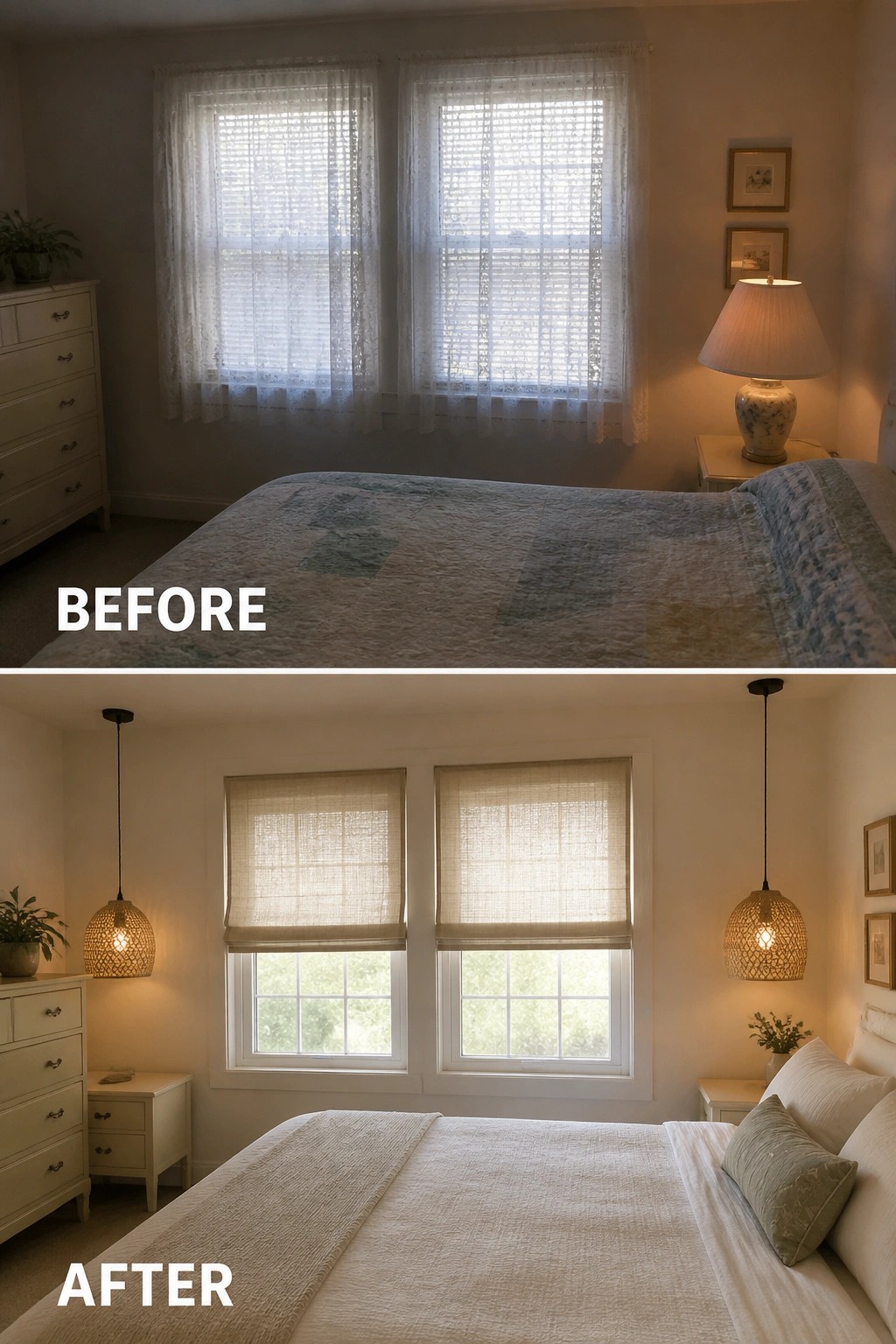
The bedroom changed from lace curtains and one table lamp to simple roller shades and two woven pendants hanging beside the bed. This swap cuts visual clutter around the windows and gives more even light on both sides without taking up nightstand space.
Roller shades keep the view while making the windows look wider and cleaner. Pendant lights work best when the bed is centered under the windows and you want to free the surfaces for other items. This approach suits rooms that already have calm colors and just need the window and lighting layers refreshed.
Swap String Lights For A Roller Shade And Headboard Lighting
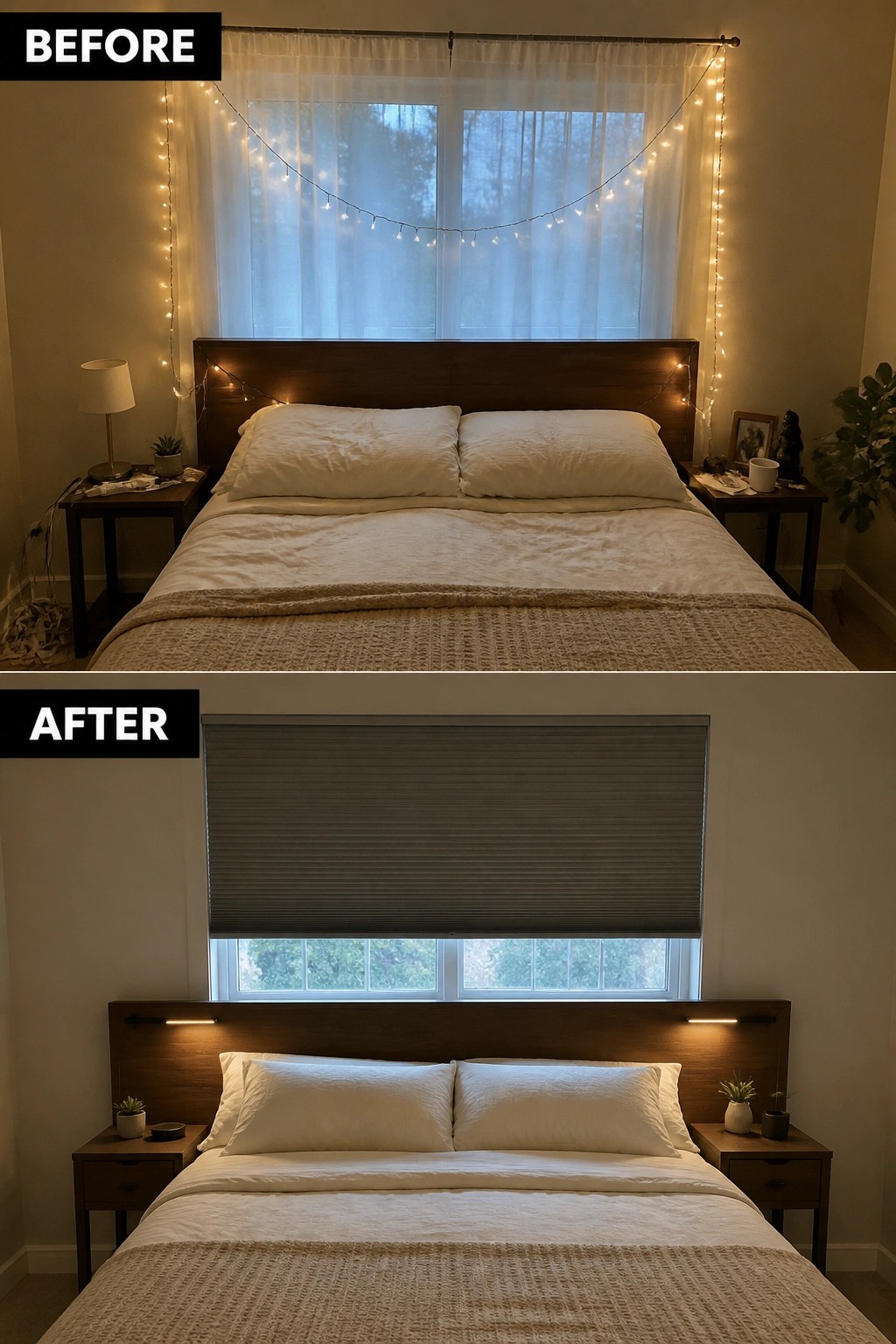
String lights around a window often look nice at first but tend to sag and collect dust over time. In this case, replacing them with a simple roller shade gave the window a much cleaner line, while the new headboard with built-in lights removed the need for separate lamps on the nightstands. The room feels calmer and more put together without losing any useful light.
This approach works well in bedrooms where nightstands are small or already crowded. A shade that sits inside the window frame keeps the look tidy, and headboard lighting puts light right where you need it for reading. Just make sure the lights are on a dimmer so they do not feel too harsh at night.
Frame The Bed With An Extended Headboard Panel
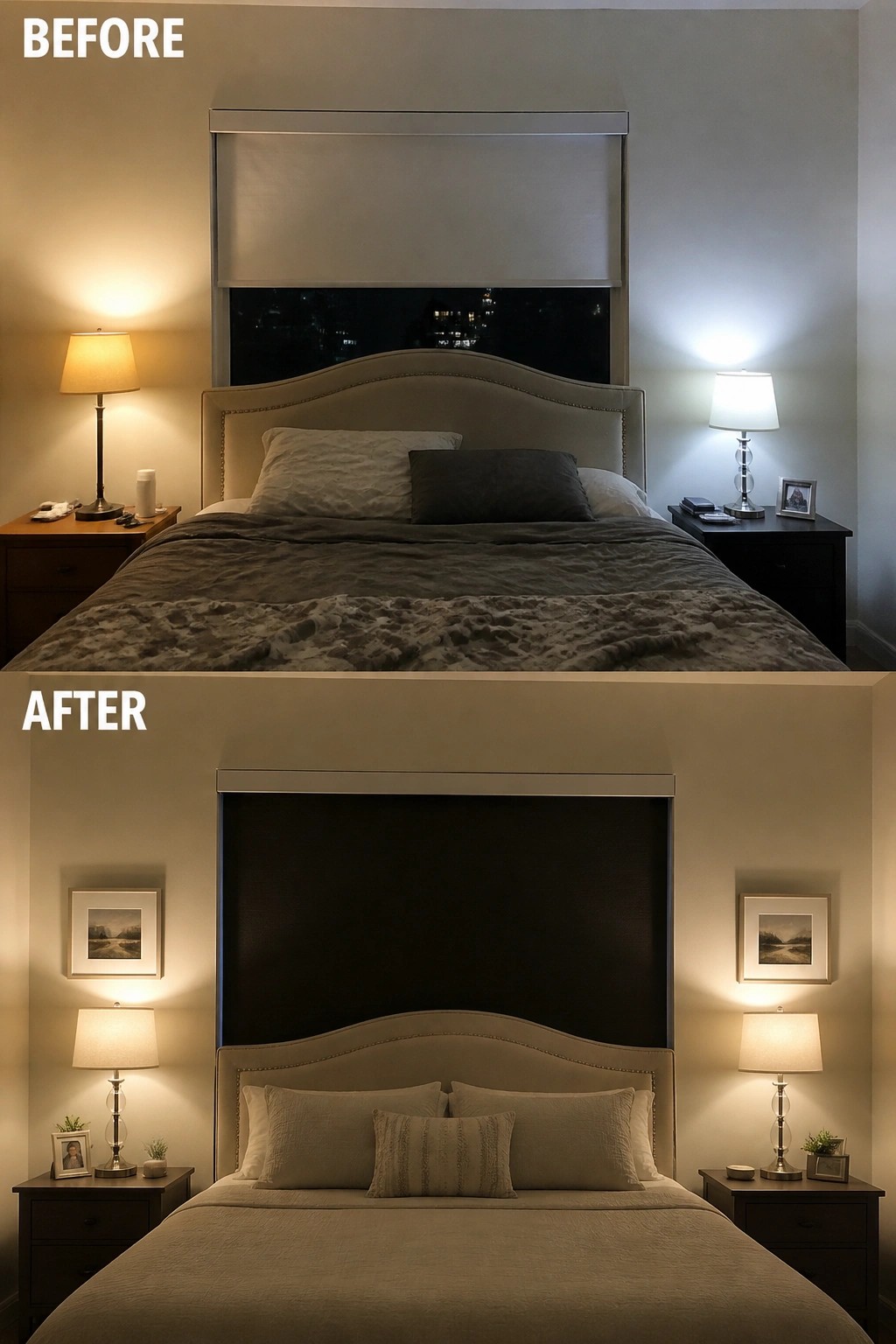
A basic roller shade over the window can leave the space above the bed feeling unfinished. In this case, adding a large dark upholstered panel that covers the full width behind the bed creates a strong focal point and makes the window area feel intentional rather than just a gap in the wall. The matching lamps on either side now balance the look and give even light without the harsh contrast seen before.
This approach works well in bedrooms where the window sits directly behind the bed. Keep the panel simple in texture and color so it does not compete with the headboard, and choose lamps that are similar in height and shade tone. The goal is to make the whole wall read as one unit instead of separate pieces.
Swap Fussy Curtains For Bamboo Blinds And Pendant Lights
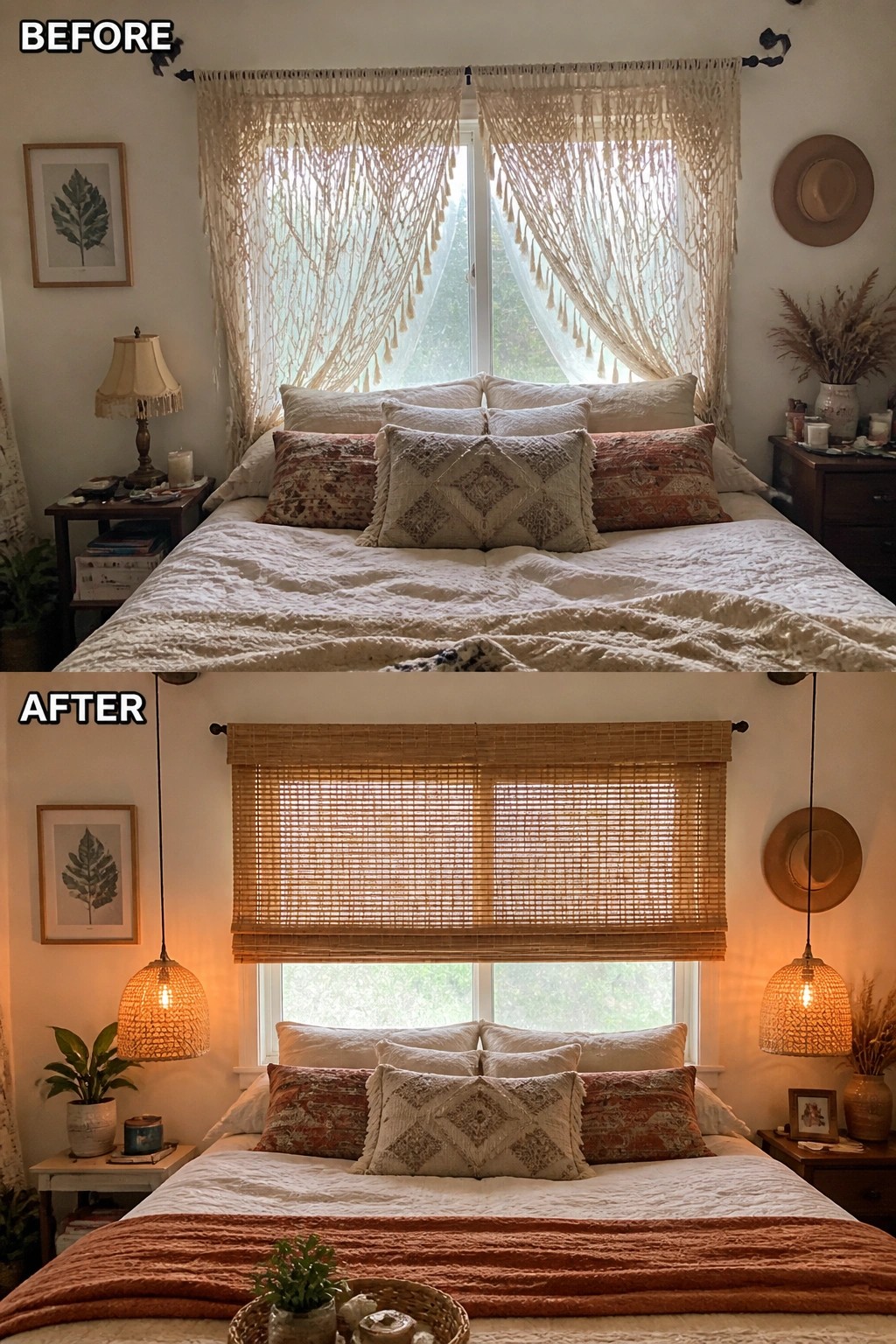
The macrame curtains made the window feel heavy and dated. Replacing them with simple bamboo blinds gave the room a cleaner look while still letting in daylight. Adding a pair of pendant lights on either side of the bed replaced the need for bulky lamps and created a more balanced feel at night.
This works best in bedrooms where you want to keep nightstands clear and prefer soft overhead light instead. Hang the lights so they sit at a comfortable height for reading but do not interfere with walking space. It suits rooms that already have a calm palette and just need the windows and lighting to feel more intentional.
Update Window Treatments And Switch To Wall Sconces

Many bedrooms start with basic curtains and one table lamp, which leaves the space feeling unfinished at night. Swapping the curtains for clean roller shades gives the window a simpler look, while adding a pair of wall sconces on either side of the bed replaces the single lamp and creates even lighting for reading or winding down.
This approach works well in smaller bedrooms where nightstands are already crowded. Mount the sconces at a comfortable height for sitting in bed, and choose shades that can be raised during the day to keep the window feeling open. The combination keeps the focus on the bed without adding more furniture.
Add Window Shades And Matching Lamps To Finish The Room
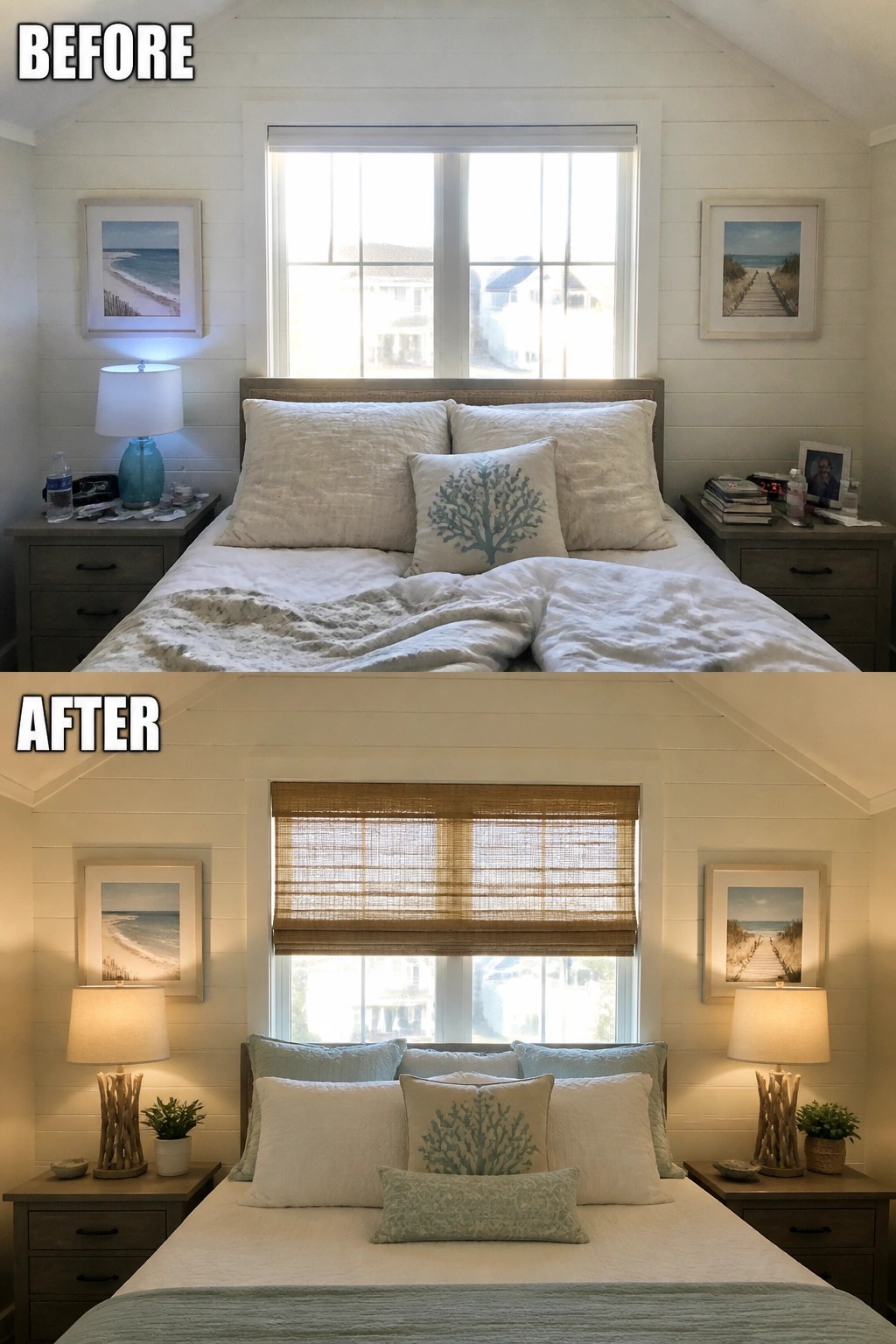
A bedroom often feels half done when the window stays bare and the lighting stays lopsided. In this case the simple addition of a woven shade softened the large window and gave the room a clear sense of completion, while a second matching lamp on the opposite nightstand balanced the light and made the bed feel centered.
This idea works best in smaller bedrooms where one strong window and two nightstands already exist. Keep the shade simple so it filters light without blocking the view, and choose lamps that sit at the same height with similar shades. The goal is even light for reading and a calmer look at night rather than a big style statement.
Finish A Bedroom With Longer Curtains And Bedside Lighting

Many bedrooms look almost finished but still feel a little bare when the curtains stop short of the floor and there is no lighting right beside the bed. Extending the curtains to the floor and adding simple wall sconces on both sides of the bed makes the window feel taller and gives the room a balanced, settled look that works day and night.
This approach suits most bedrooms where the bed sits near a window. Hang the rod higher and wider than the window frame so the curtains frame the glass instead of cutting it off, then pick sconces that can be turned on from the bed. It is a small change that adds comfort without needing new furniture or paint.
Refresh A Bedroom With A Streamlined Shade And Wall Sconces

Heavy curtains and table lamps can make a bedroom feel dated and crowded. Switching to a simple framed shade across the window and replacing the lamps with wall sconces opens up the space and gives the room a much cleaner look without losing warmth.
This approach works well in bedrooms where nightstands are small or already hold other items. Mount the sconces at a comfortable height for reading, keep the shade neutral, and layer a few pillows and a throw on the bed to finish the update.
Frequently Asked Questions
Q: How can I make sure new curtains block morning light without making the room feel dark all day?
A: Hang sheer panels behind your main curtains so you can filter bright sun during the day. Close the heavier layer at night for full privacy. Swap the order if you want more light in the mornings.
Q: What if my current nightstand lamps feel too small next to the bed?
A: Try swapping in taller shades that sit higher on the same bases. This simple change brings the light closer to where you need it. You might even find old shades work better in a different room.
Q: Should I add a dimmer to my bedside lights right away?
A: Add a dimmer if your lamps support it. Lower light levels help you wind down easier at night.
