
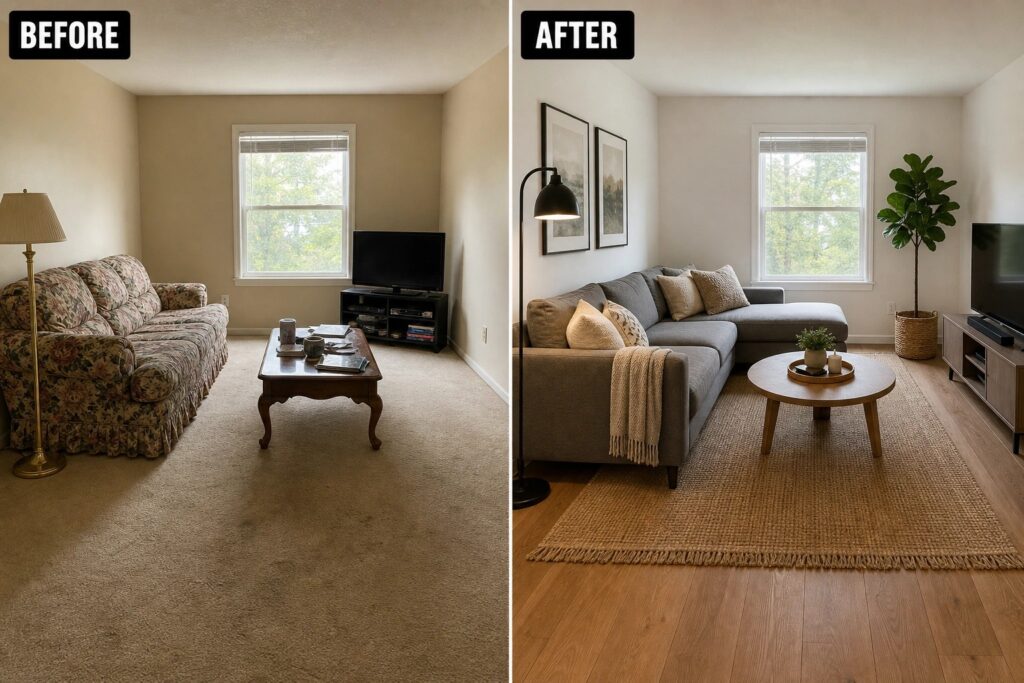
I often notice how dated rooms end up feeling cramped simply because the furniture blocks natural light and movement.
Small shifts in where pieces sit can open up the space in ways that new paint alone never quite manages.
Layout tends to come before any other fix.
When storage gets addressed early, the room stops collecting random piles and starts working as intended.
I keep a mental list of those practical updates I would test first if I were tackling a similar space myself.
Update The Flooring First When Refreshing A Living Room
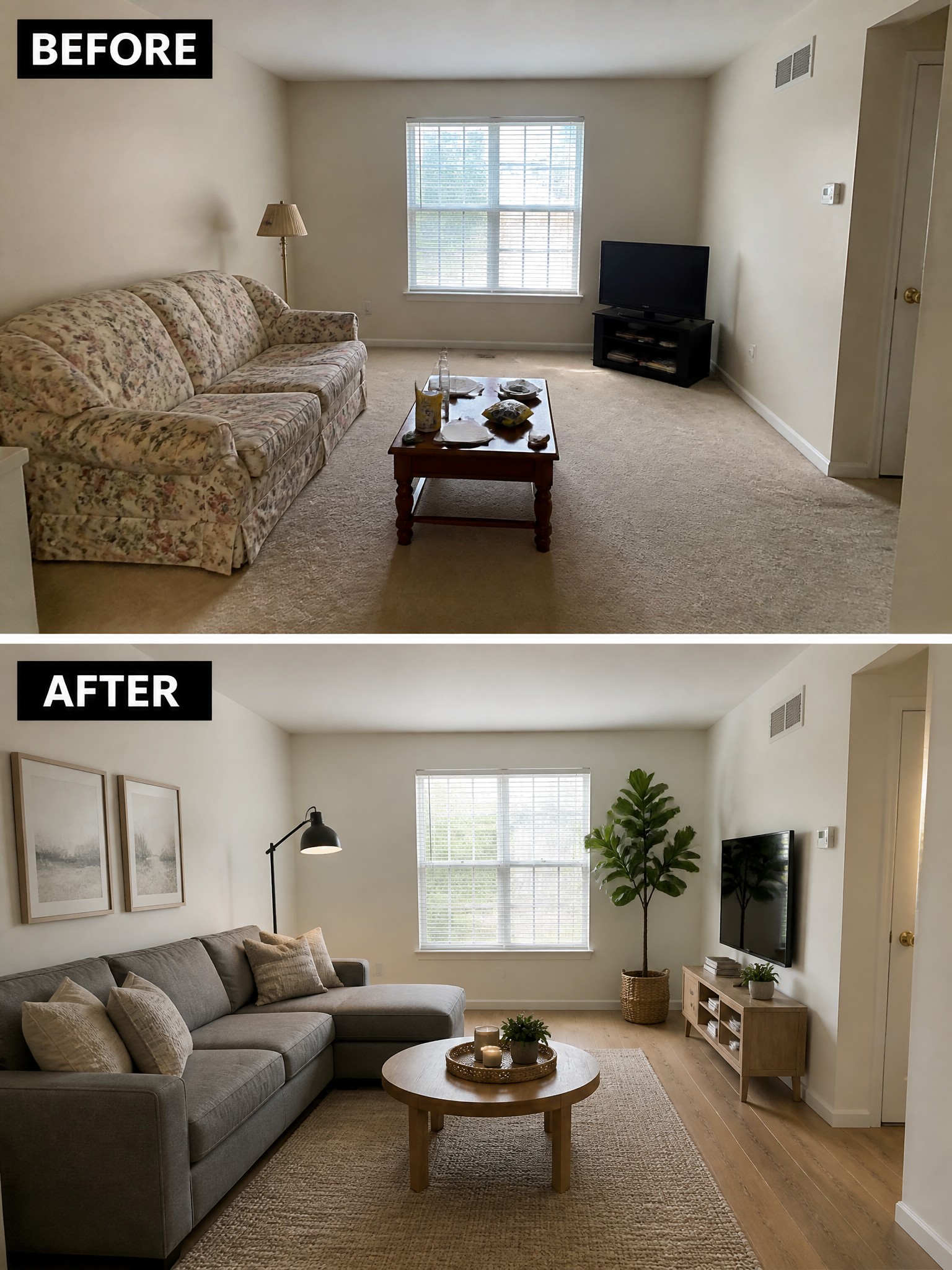
Many dated living rooms feel stuck because of wall-to-wall carpet that has seen better days. Replacing it with hardwood and adding a simple area rug instantly changes how the space feels and functions. The room opens up, the furniture arrangement becomes clearer, and everything looks lighter without needing a full overhaul.
This approach works best in homes where the carpet is the main thing making the room feel old. Start with the floor, then bring in seating that fits the new scale. Keep the rug large enough to hold the main furniture pieces so the layout feels grounded rather than floating.
Brighten A Dated Living Room With Neutral Colors
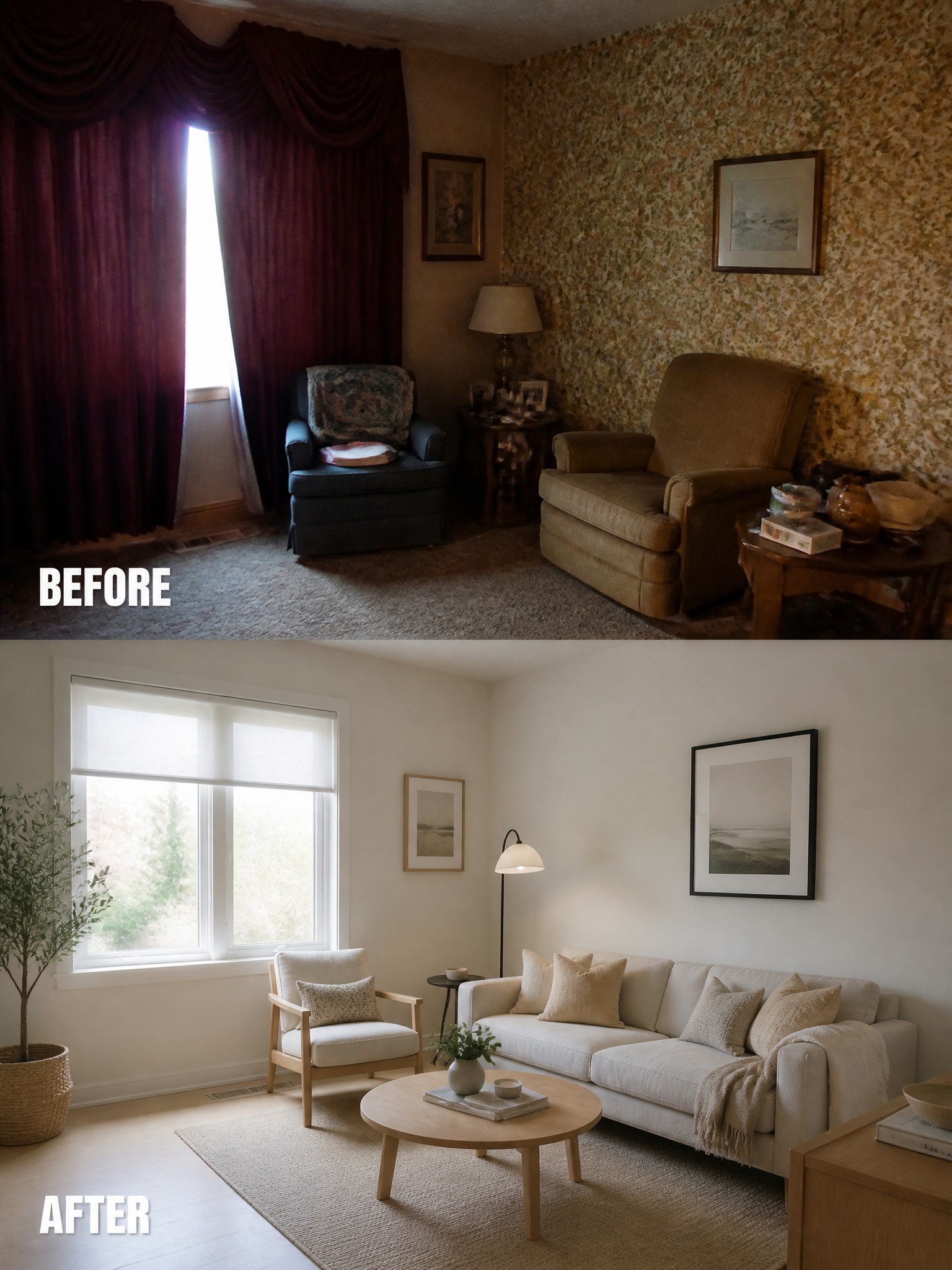
Heavy curtains and mismatched furniture can make a room feel closed in and old. In this case, swapping the dark drapes for simple blinds and replacing the mix of chairs with a clean sofa and armchair set opened up the space right away. Painting over the busy wallpaper added to the lighter feel without needing a full remodel.
This approach works well in older homes where rooms tend to feel smaller or darker than they are. Stick to one main color family for the larger pieces and keep the layout simple so the room stays easy to move around in.
Refresh Dated Kitchen Cabinets With Paint
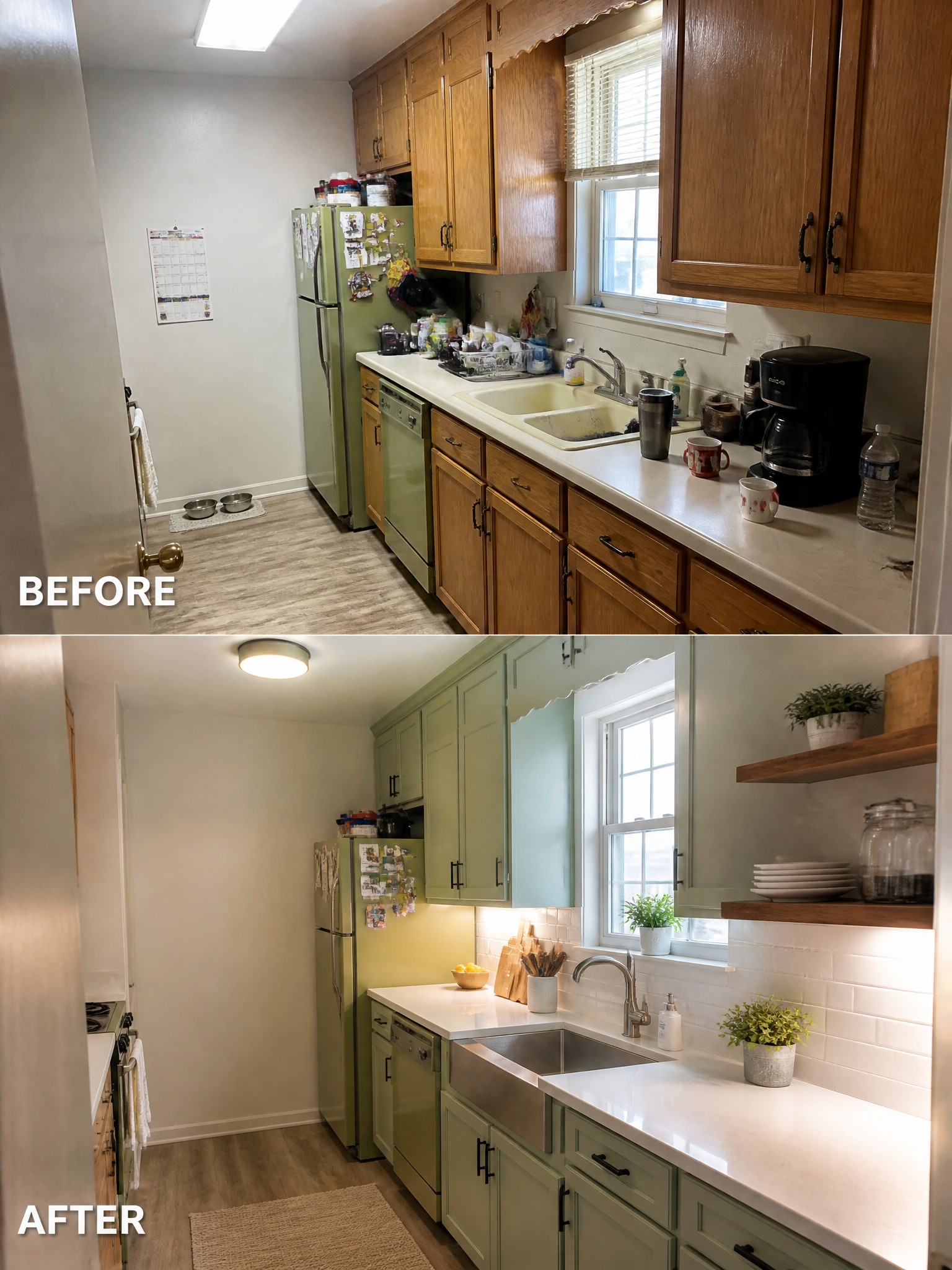
Painting the cabinets can completely change how an old kitchen feels without needing new ones. In this kitchen the original wood cabinets looked tired and heavy, while the painted sage green finish in the after photo makes the whole space feel lighter and more put together. The new countertop and sink help too, but the cabinet color does most of the work.
This approach works well in smaller or older homes where a full kitchen remodel is not practical. Choose a color that ties in with existing appliances or flooring, and keep the rest of the updates simple so the painted cabinets stay the main focus.
Refresh A Dated Bathroom With Neutral Finishes
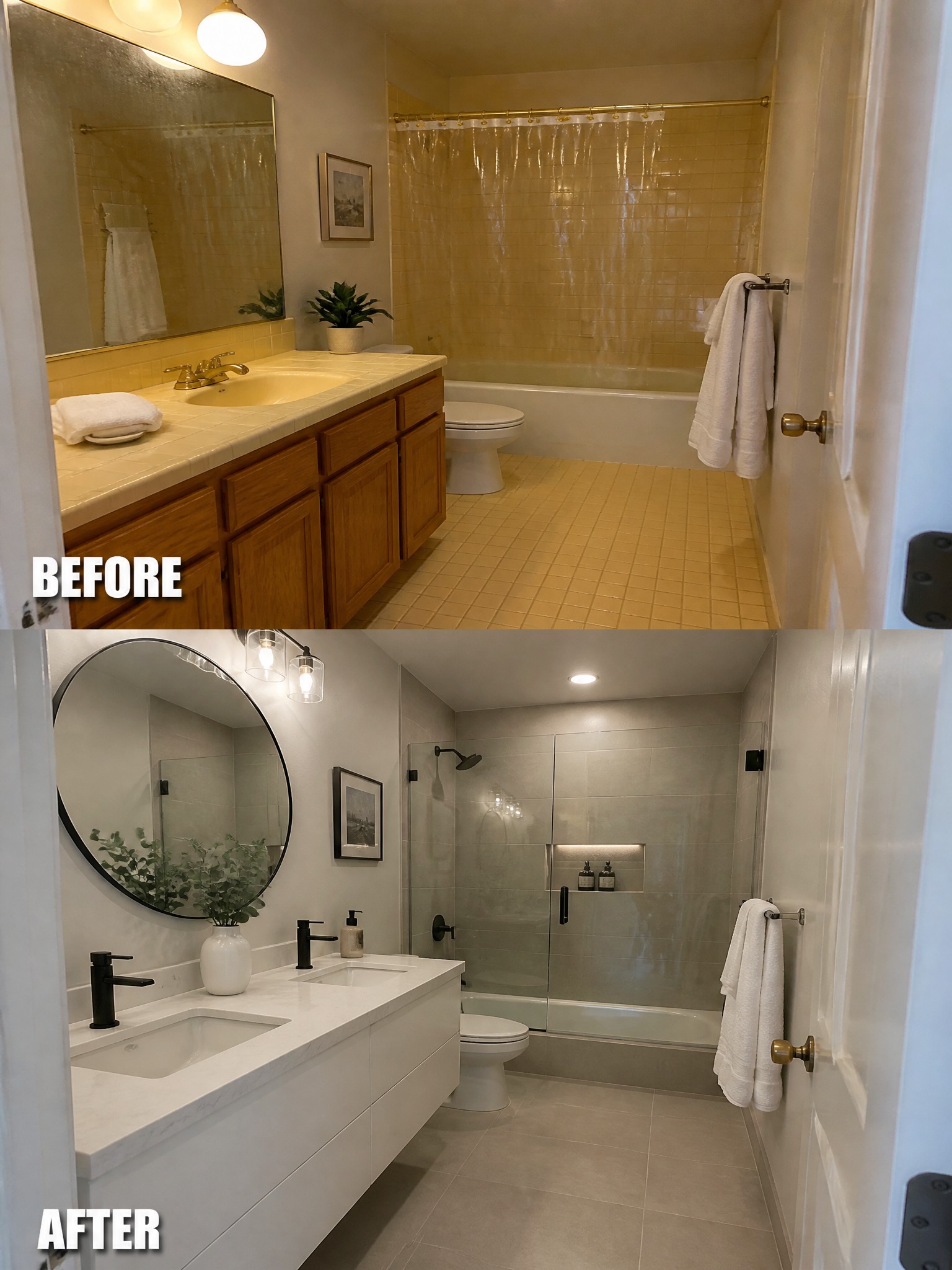
A dated bathroom often feels heavy because of colored tile and bulky wood cabinets. Switching to light gray tile and a white floating vanity with black fixtures removes that weight and makes the room feel much brighter and larger.
This kind of update works best when you keep the layout the same and focus on finishes. Choose one neutral tile color for the walls and floor, then add simple hardware that does not compete with the new surfaces. The result feels current without requiring major plumbing changes.
Simplify A Dated Dining Room With Neutral Paint
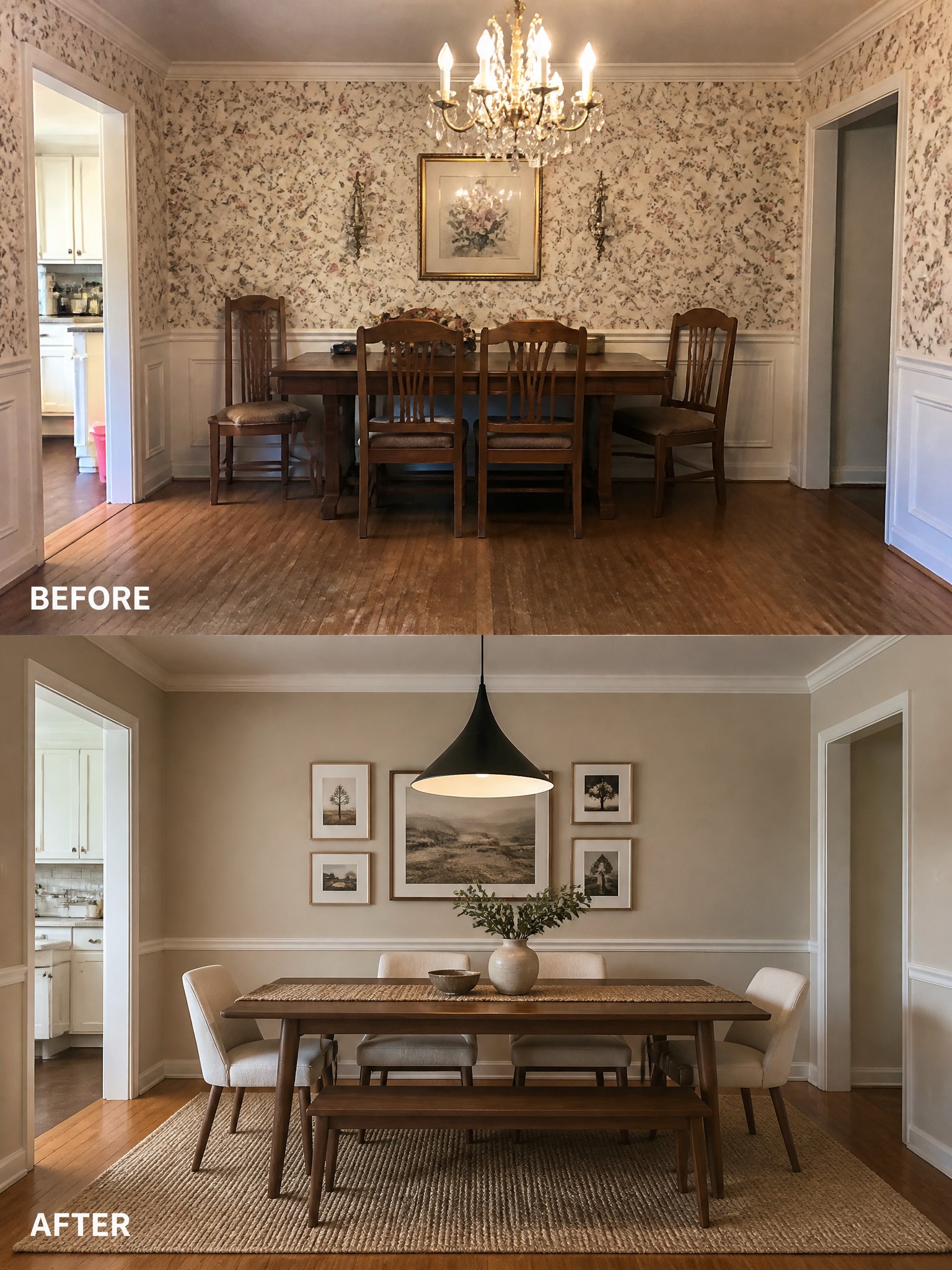
A busy dining room with dark wood, patterned wallpaper, and heavy lighting can start to feel closed in over time. Painting the walls a soft neutral and swapping the chandelier for one simple pendant light opens the space up and makes it feel much calmer. The change keeps the room usable for meals while removing the visual noise that made it feel dated.
This approach works well in older homes that still have good bones but need a lighter touch. Start with the walls and lighting first, then add a rug to define the table area without crowding the room. Keep the furniture scale realistic so people can move around easily.
Add Storage Solutions To Organize A Busy Entryway
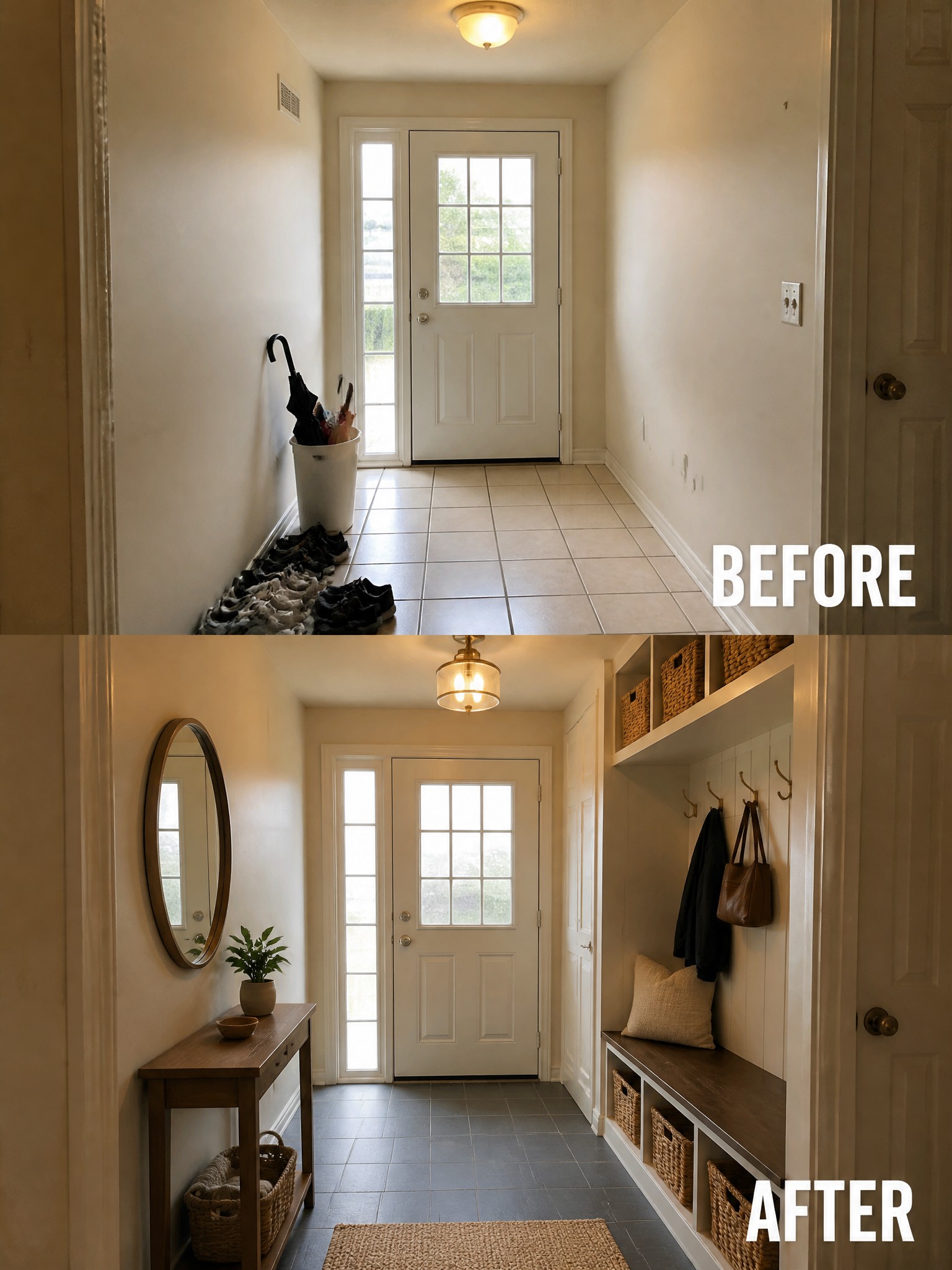
A plain entryway tends to collect shoes, bags, and coats because there is no real place for them. The before photo shows exactly that problem, with items left on the floor and no system in place. The after version adds a built-in bench with cubbies, wall hooks, and baskets, which gives everything a spot and keeps the floor clear.
This idea works best in homes where the front door opens straight into living space. Measure the wall first, then add a bench with storage below and a few hooks above. Keep the scale simple so the area still feels open. It turns a messy spot into something that actually works every day.
Lighten A Dated Bedroom With Neutral Walls
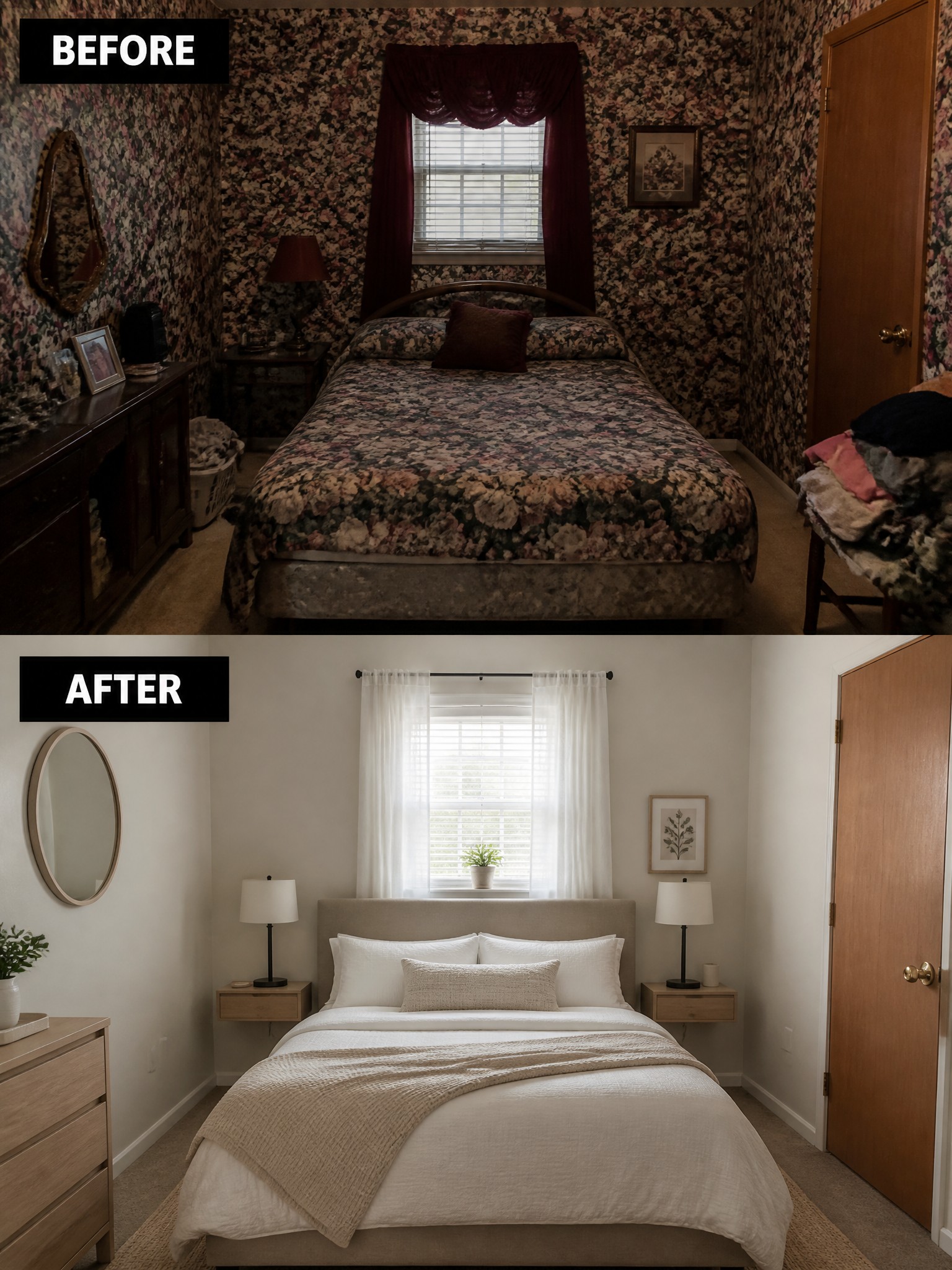
A bedroom full of dark floral wallpaper and heavy furniture often feels closed in and dated. Removing the busy pattern and switching to plain light walls makes the room feel noticeably larger and calmer right away.
This idea works especially well in small bedrooms or older homes where strong patterns from past decades still dominate. Keep the color palette simple with soft neutrals on the walls, bedding, and curtains so the space stays easy to live in without feeling stark.
Update Dated Walls And Flooring To Refresh An Old Room
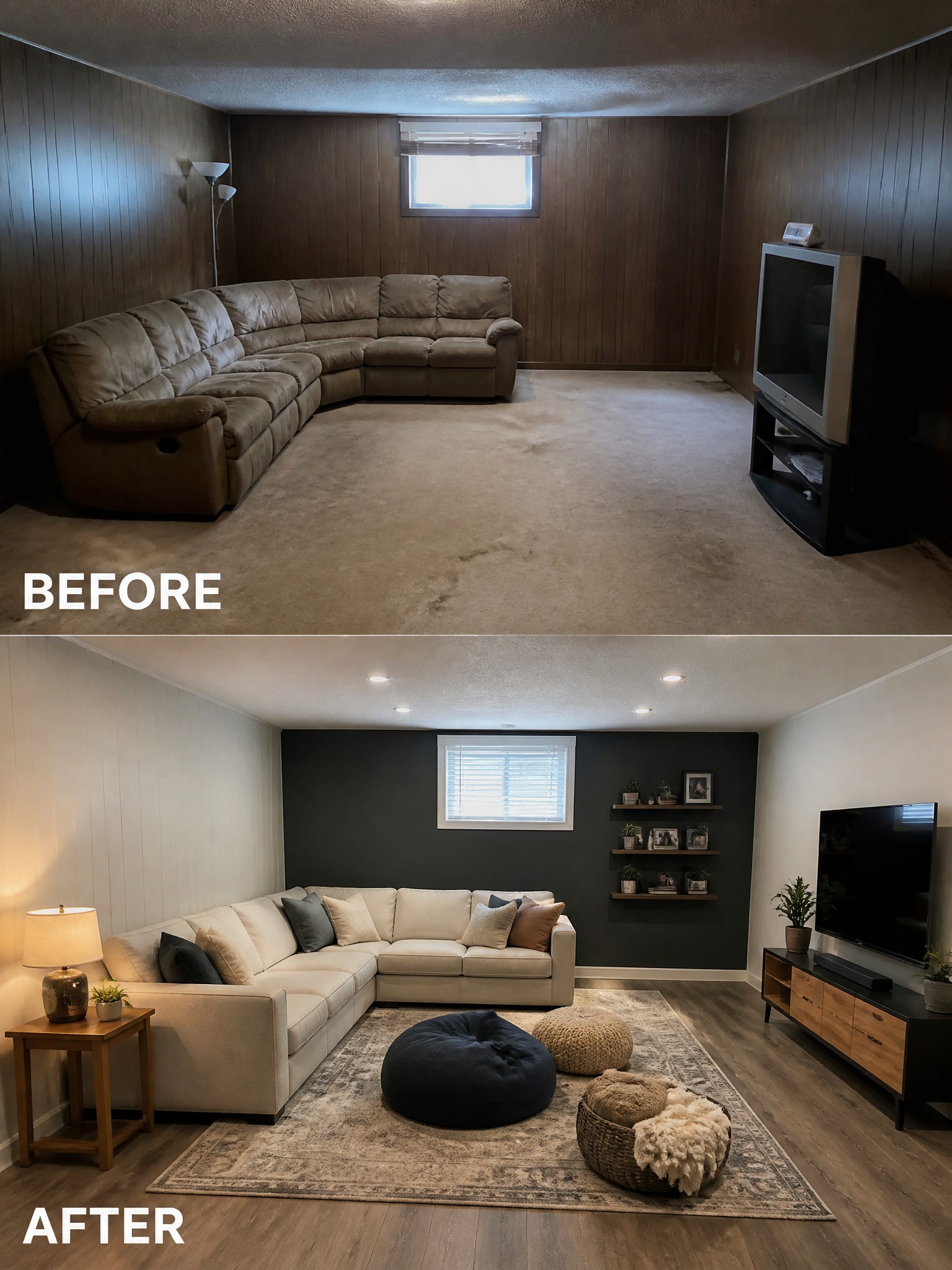
An older basement or family room often feels stuck in the past when the carpet is worn and the walls are covered in dark paneling. Switching to lighter paint and a hard floor surface immediately changes how the whole space feels, and adding a rug helps pull the seating area together so it reads as one intentional room instead of a leftover space.
This approach works especially well in finished basements or older homes where the original finishes have aged poorly. Focus first on the big surfaces before worrying about furniture or accessories, and keep the new color palette simple so the room does not feel overwhelming.
Add Built-In Storage To A Laundry Closet
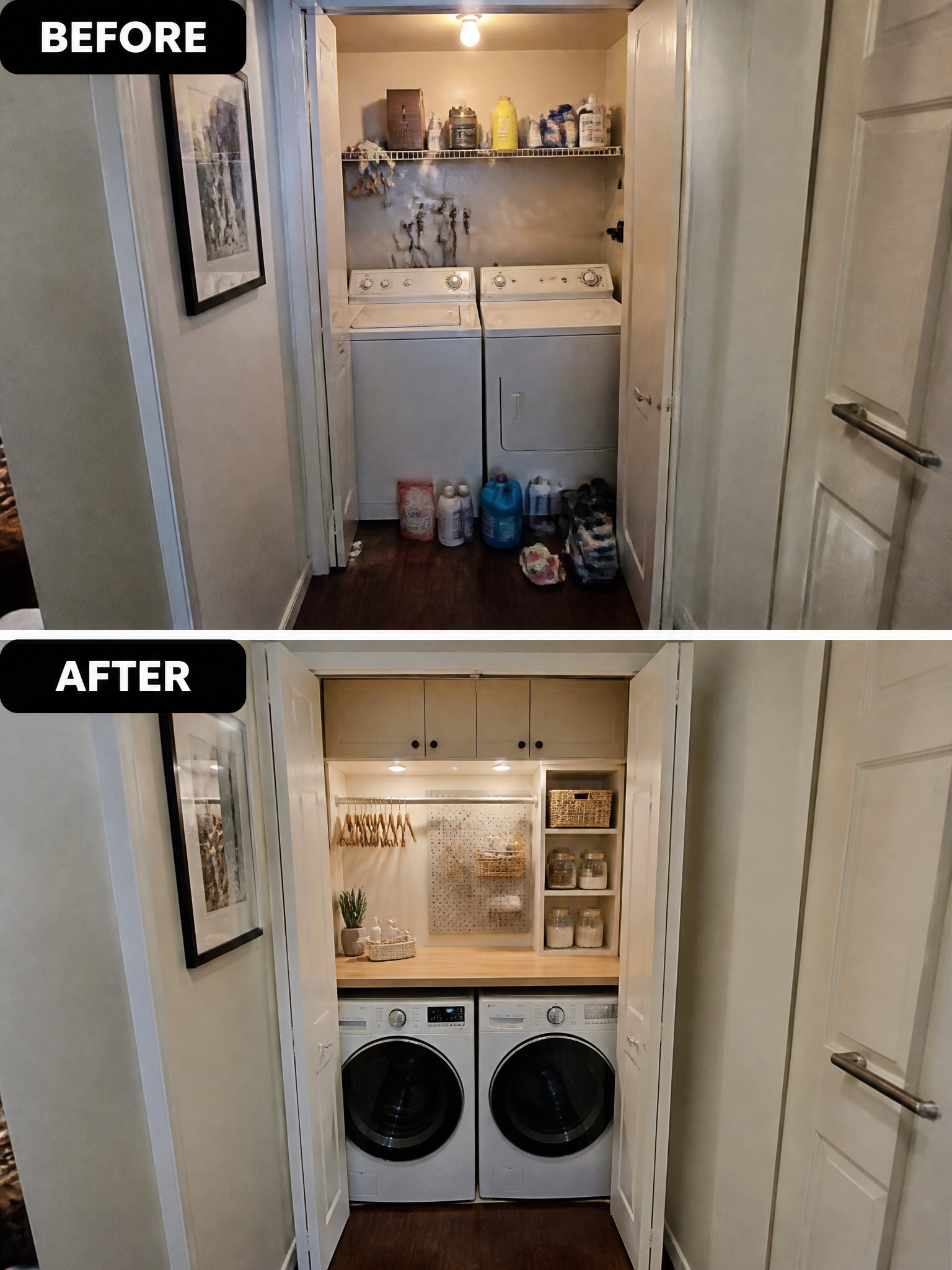
A laundry closet can quickly turn into a messy overflow spot when everything stays on open shelves or sits on the floor. Adding upper cabinets and a counter across the machines gives the space a clear work surface and hides most of the supplies behind doors. The result feels more like a finished room instead of an open utility nook.
This idea suits homes where the laundry area sits near living spaces or hallways. Measure the height above the appliances first, then choose cabinets that line up with nearby trim so the new storage blends in rather than stands out. Leave one or two open spots for items used daily so the closet stays practical without looking crowded.
Make The Fireplace Wall The Main Feature
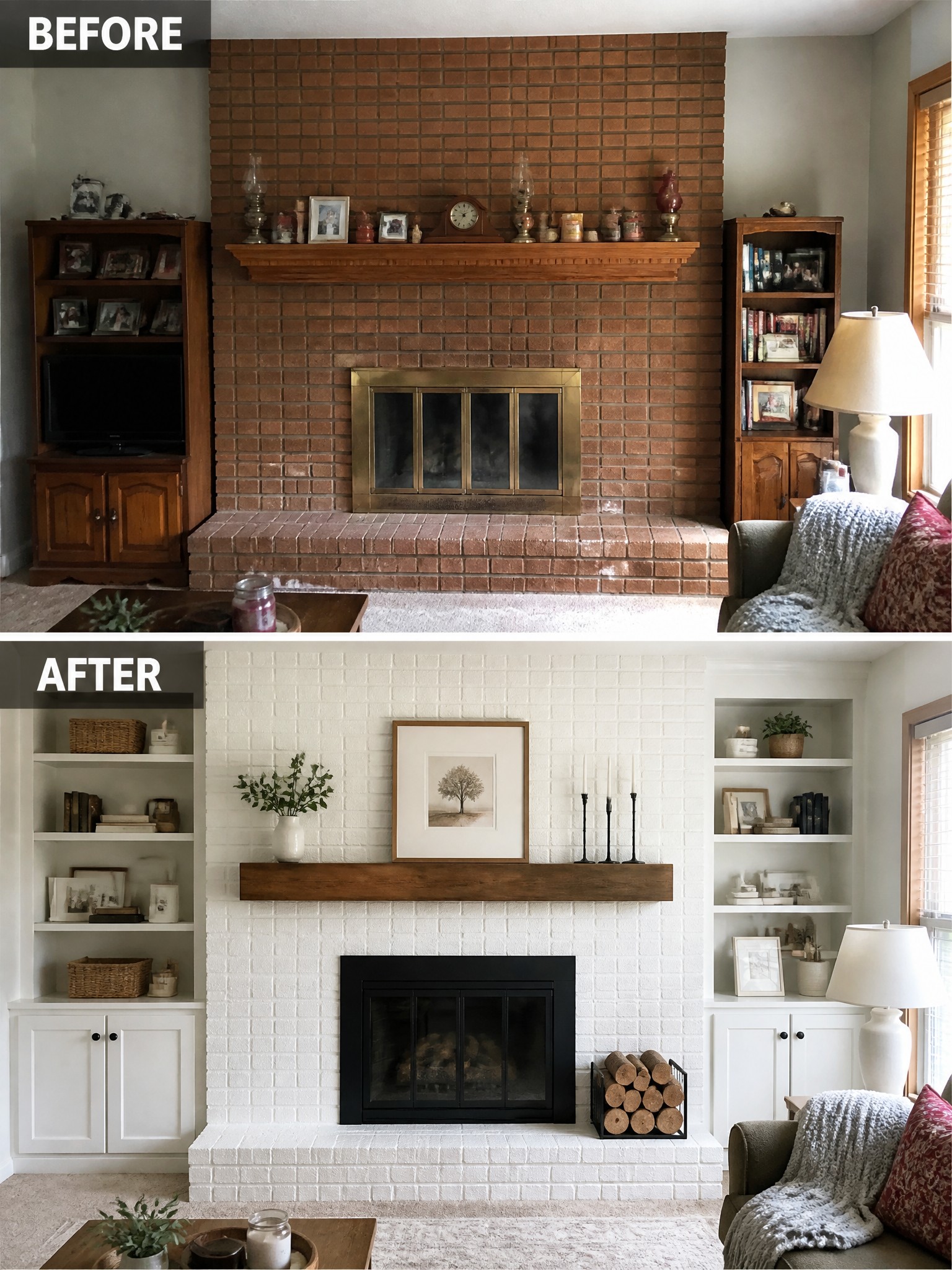
Painting a brick fireplace can shift the whole feel of a room without a full renovation. Here the dark brick was covered in white paint and the old gold doors were replaced with a simple black insert. The new floating mantel keeps the look clean and lets the fireplace stand out instead of blending into the wall.
This approach works best in older homes where the brick feels heavy or dated. Keep the built-ins light and limit accessories so the painted surface stays the main point. Test the paint on a small section first since brick can take more coats than expected.
Add Built-In Storage To Create A Functional Workspace
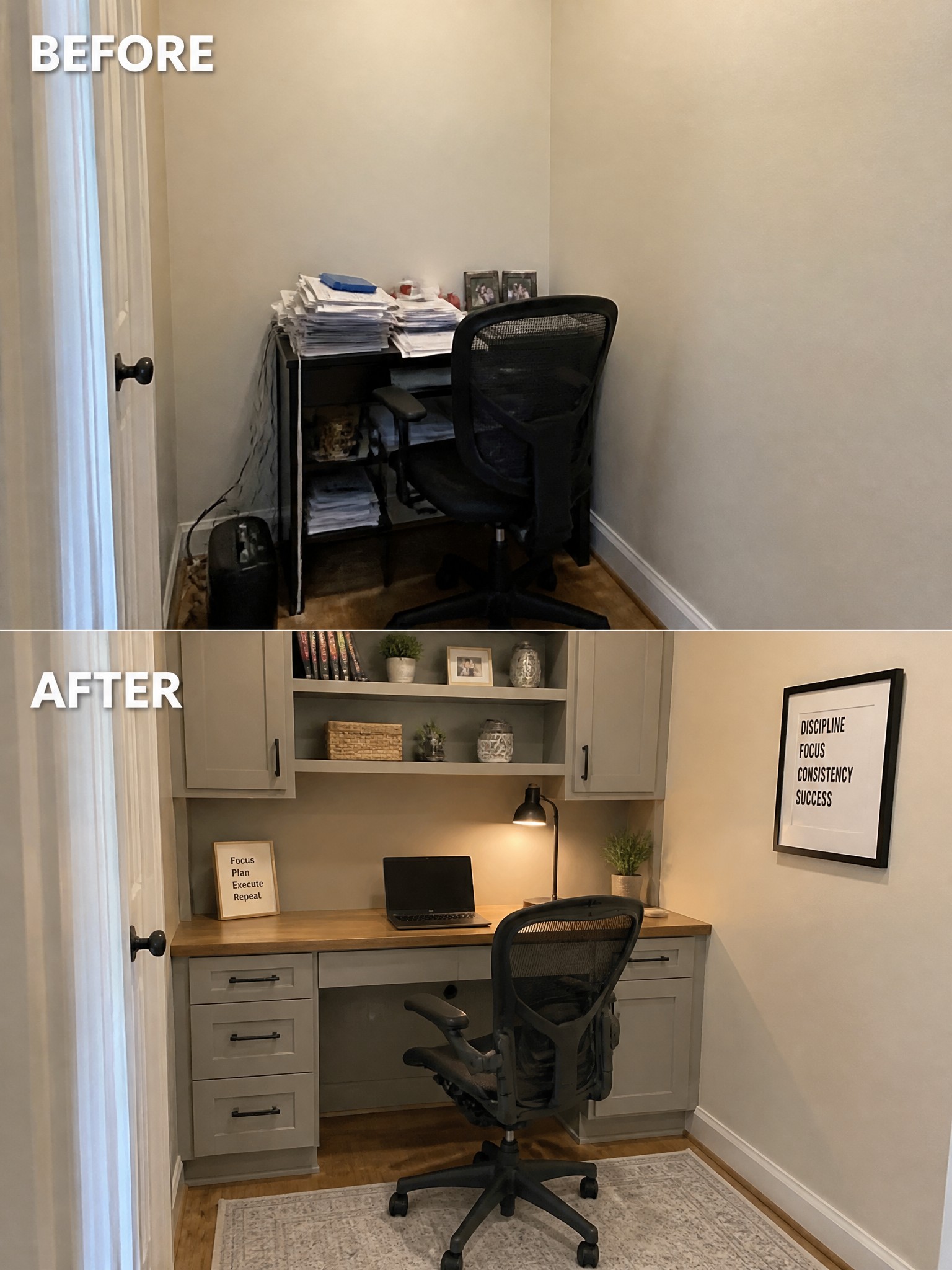
A small room or corner often ends up as a dumping ground when there is no real plan for storage. In this case, the space went from a basic desk buried under paper stacks to a set of fitted cabinets and open shelves that keep everything in reach but out of sight. The addition of a solid work surface and task lighting makes the area feel intentional rather than leftover.
This approach works well in any home that has an awkward alcove or small spare room. Measure the space first, then choose cabinetry that reaches the ceiling to gain as much storage as possible without crowding the floor. Keep the color simple so the room still feels open, and add only the pieces you actually need on the desk each day.
Add Built-In Storage To A Cluttered Closet
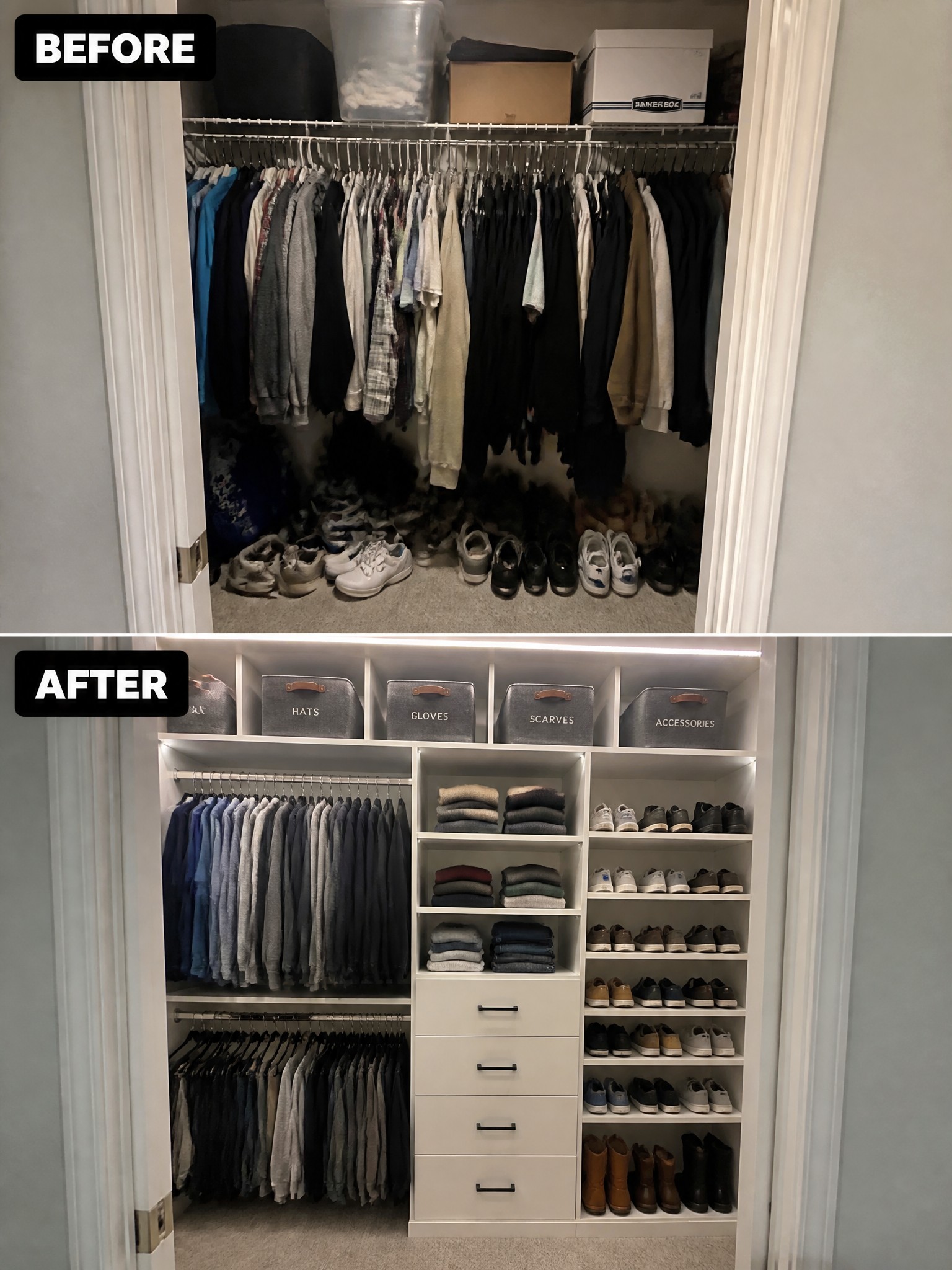
A closet with everything piled on the floor quickly becomes hard to use. Adding shelves, drawers, and labeled bins creates clear zones for clothes, shoes, and accessories so nothing gets lost underneath.
This idea works best in homes where the original wire system no longer matches what you actually store. Measure the space first, decide which items need hanging space and which need shelves, then choose a system that leaves room to reach everything without digging.
Replace Carpet With Hardwood To Update A Dated Living Room
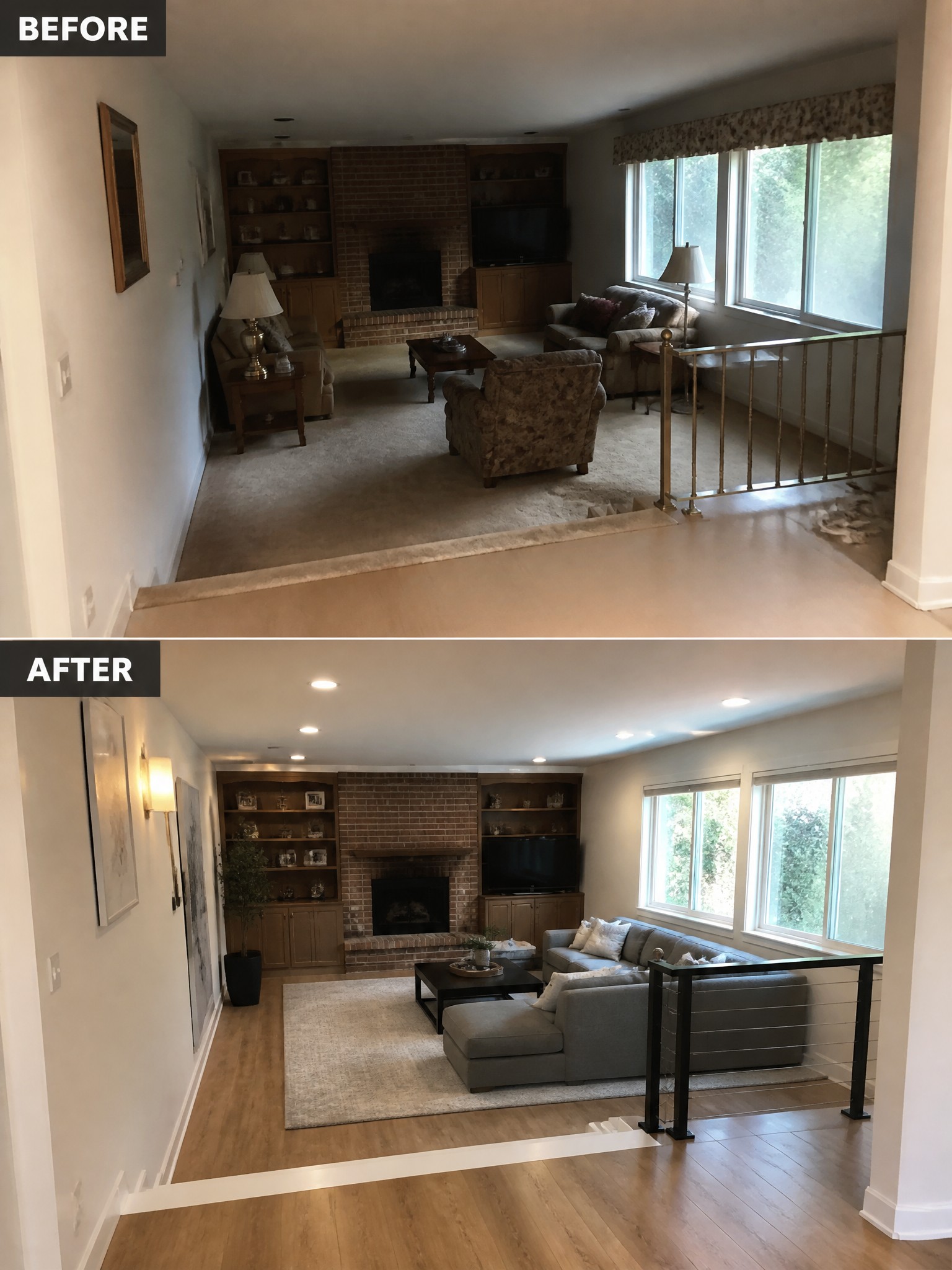
The main change here is swapping out the old wall-to-wall carpet for hardwood flooring. That single swap, along with a simpler furniture layout and a cleaner fireplace wall, makes the whole room feel brighter and more current without needing a full renovation.
This approach works well in living rooms that still have good bones but look tired. Start with the floor if the existing carpet is worn or darkens the space. Keep the rest simple by choosing one main seating piece and letting the fireplace stay as the focal point rather than adding too many extras around it.
Refresh A Kitchen Peninsula With Wood And Matching Stools
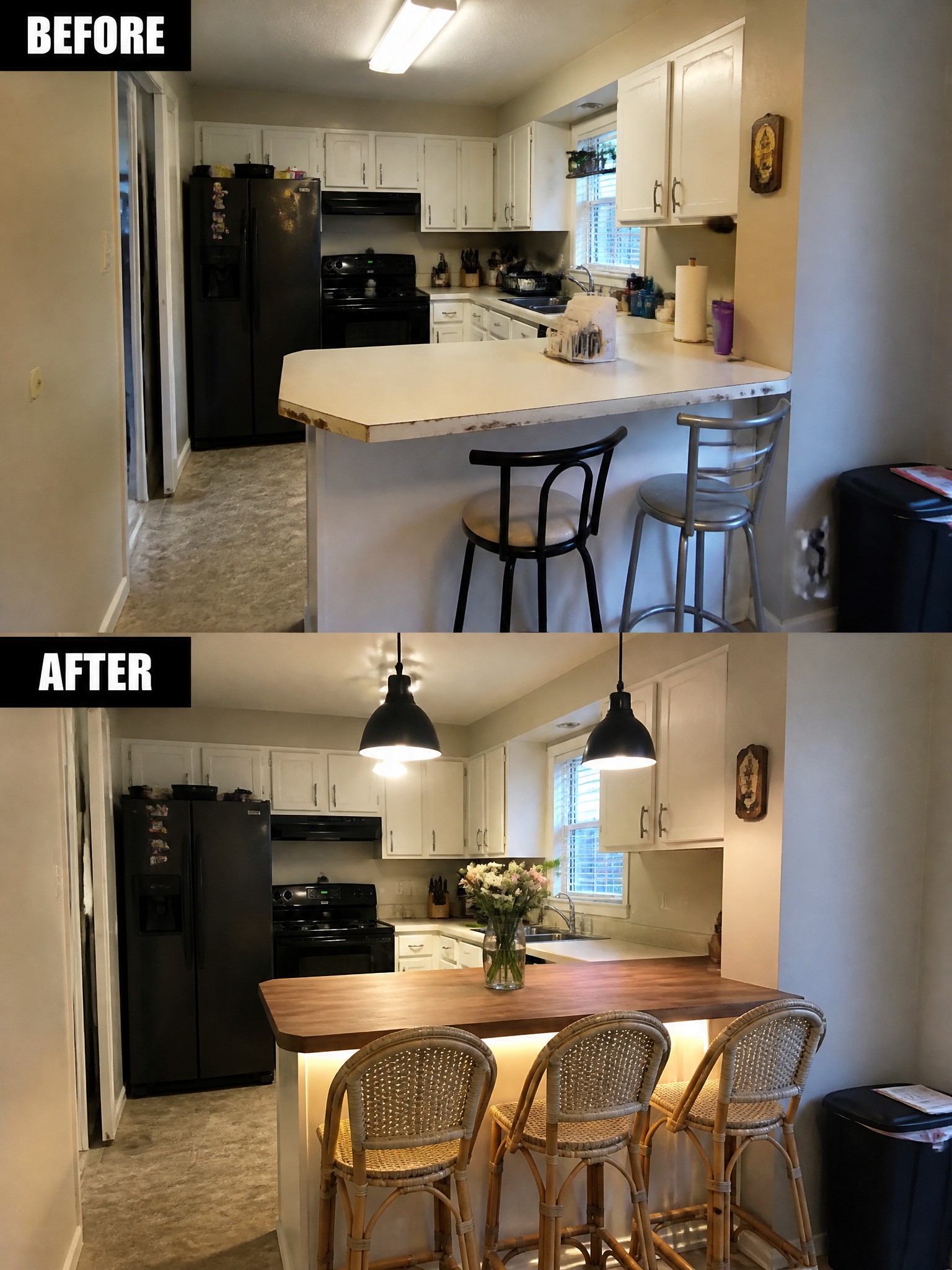
Many kitchens have a peninsula that ends up looking a bit tired over time. Switching the top to wood and replacing mismatched stools with a set that actually goes together makes the whole area feel more pulled together without a full renovation.
This approach works well in smaller or open kitchens where the island is a main seating spot. Keep the new top simple, match the stool style and height, and add one or two pendants above if the space needs better light. The goal is to improve function and look without crowding the walkway.
Turn A Bare Balcony Into A Seating Area
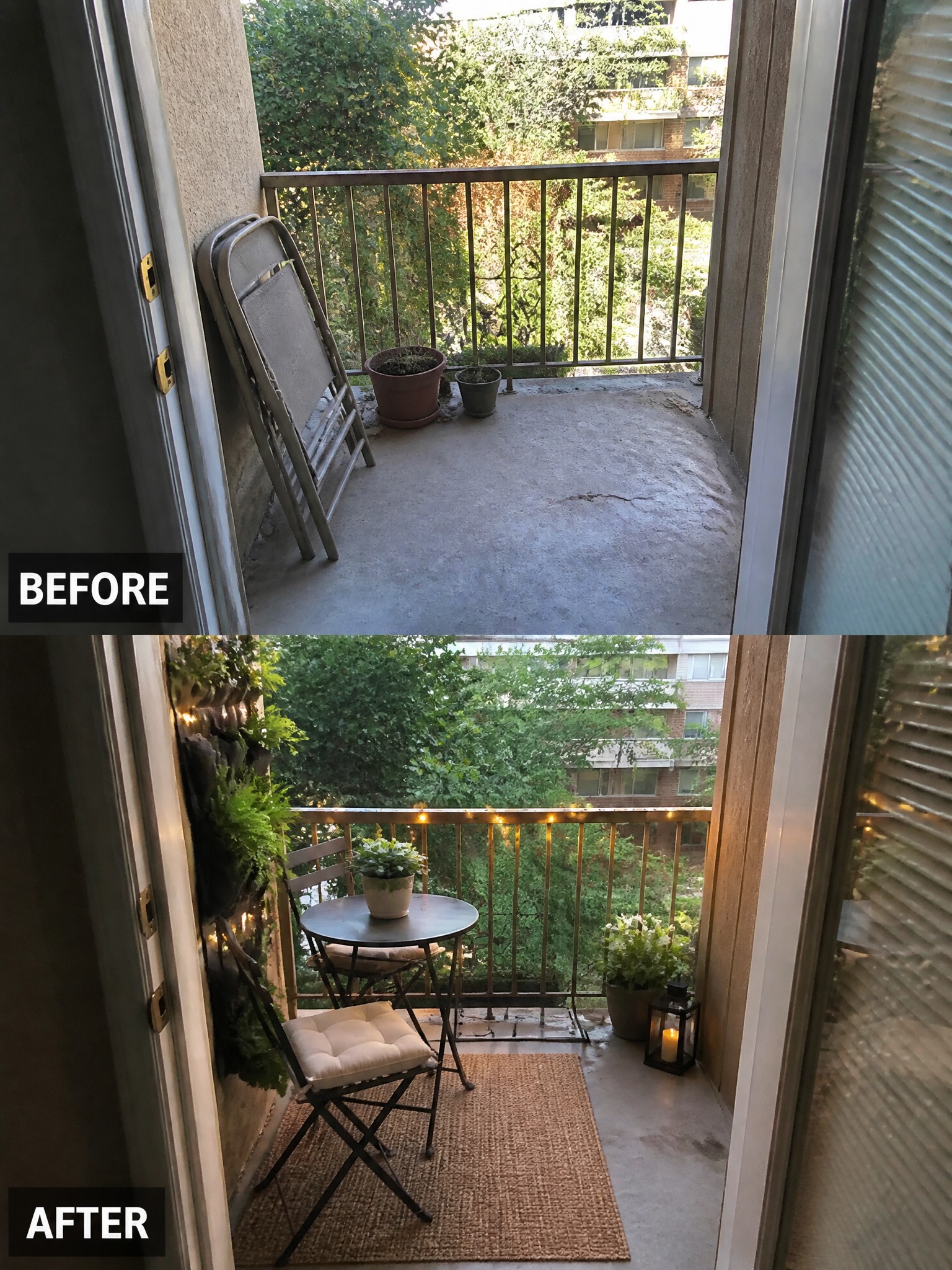
A balcony with nothing but concrete often gets ignored because it does not feel like a place to spend time. Adding a small table, a couple of chairs, and a rug turns the same space into somewhere you can actually sit and relax.
This idea works best on small balconies or patios where space is limited. Keep the furniture simple and weatherproof, use a rug to define the seating zone, and add a few lights so the area feels usable after dark.
Add Storage And Pattern To Refresh A Small Bathroom
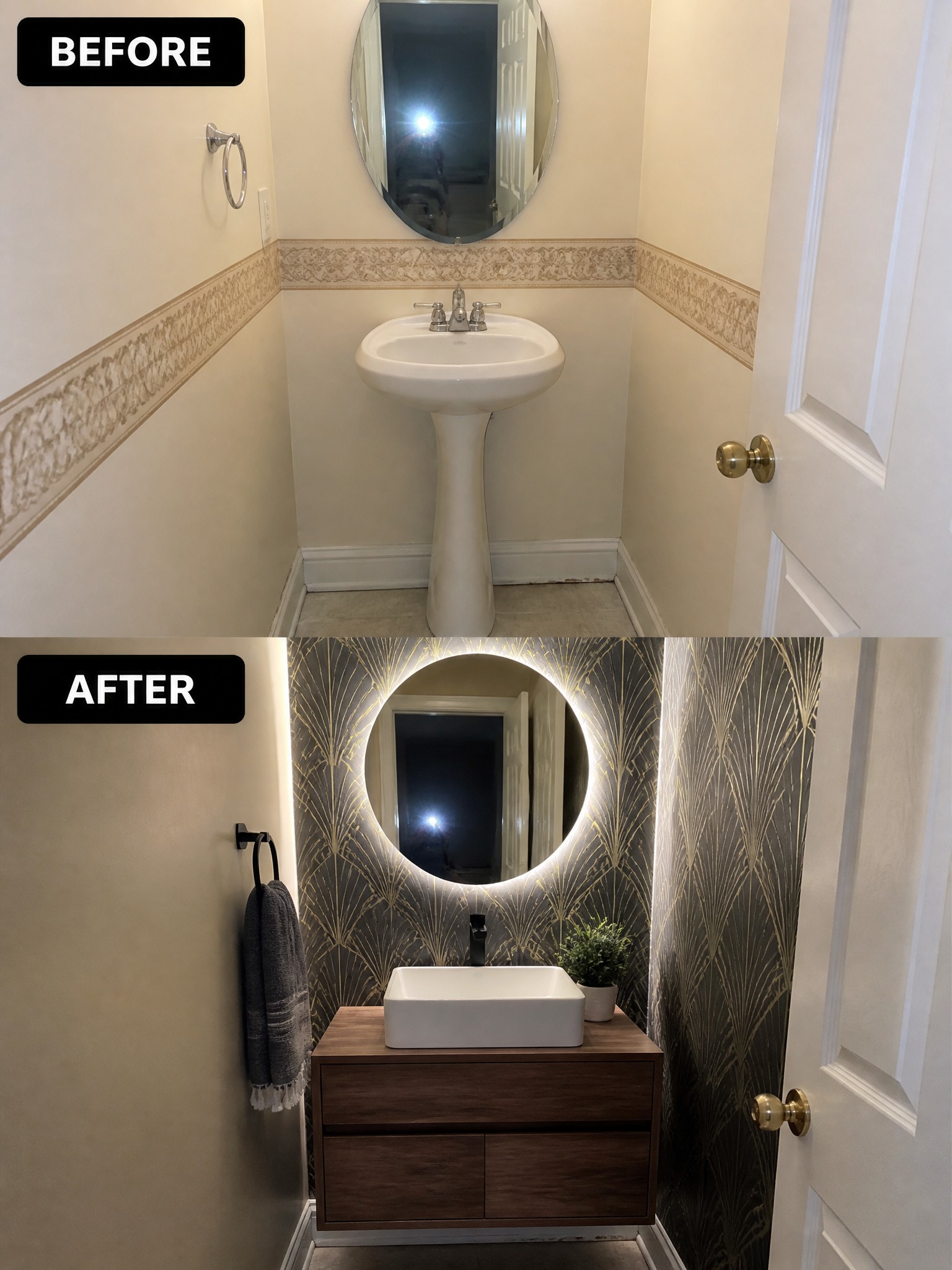
A small bathroom with just a pedestal sink often feels cramped and short on storage. Switching to a floating vanity gives you drawers and counter space while keeping the floor clear. Adding wallpaper with a bold pattern also changes the whole feel without needing major construction.
This approach works well in narrow or dated bathrooms where the original layout is still fine. Keep the vanity size realistic for the room and choose a wallpaper that adds interest but does not make the space feel smaller. Start with the vanity if storage is your main need, then layer in the wallpaper once the main pieces are in place.
Add Wall Storage To Organize A Craft Room
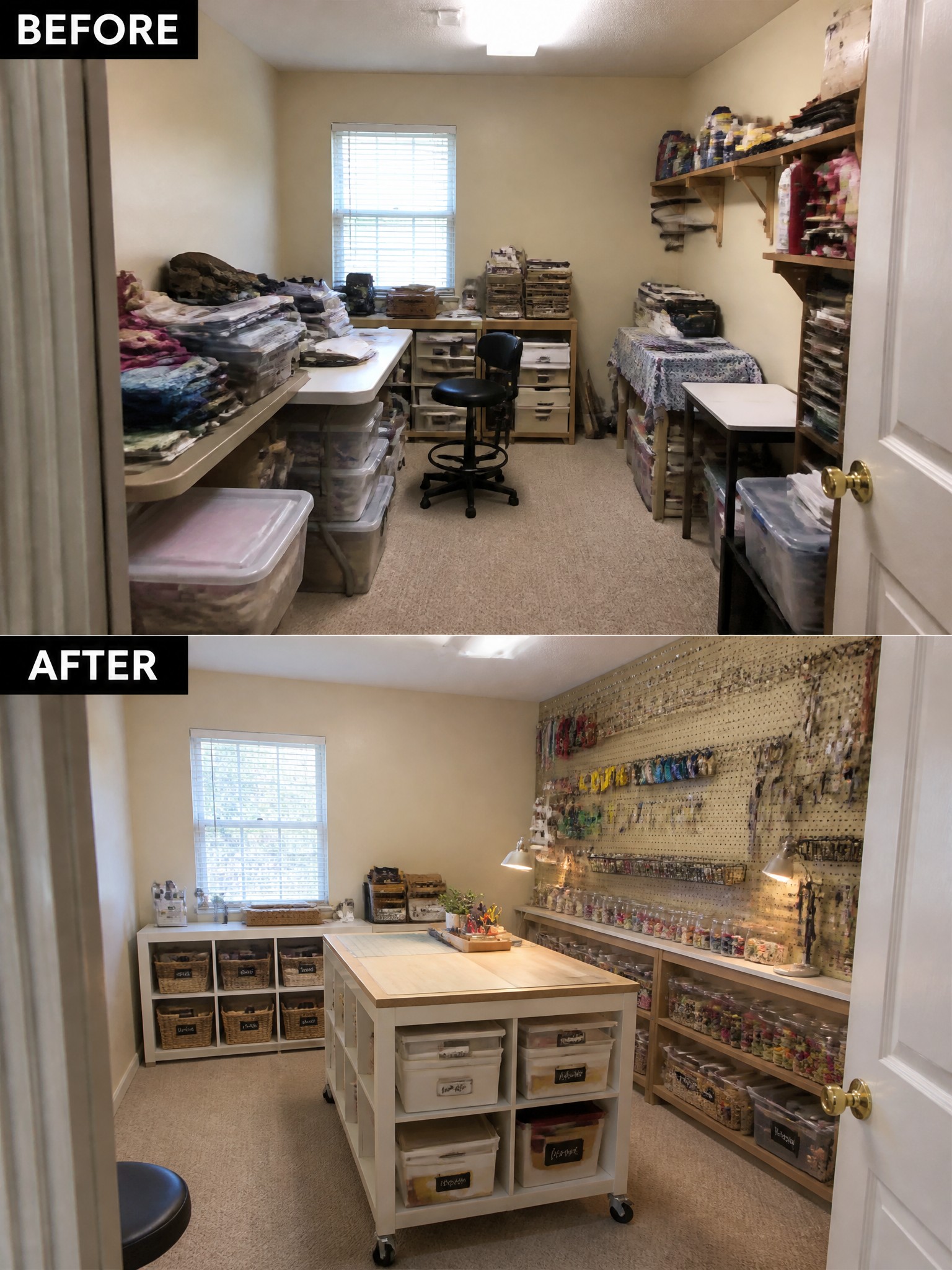
A cluttered craft room often ends up with supplies stacked on every surface because there is no real system in place. Adding a full pegboard wall along with labeled bins and baskets gave everything a clear spot and freed up the floor and tables for actual work.
This idea suits any room that holds lots of small tools or materials. Clear the space first, then focus on wall storage and simple bins before worrying about decor. It keeps the room practical even when supplies start to grow again.
Add Built-In Storage To Organize A Kids Room
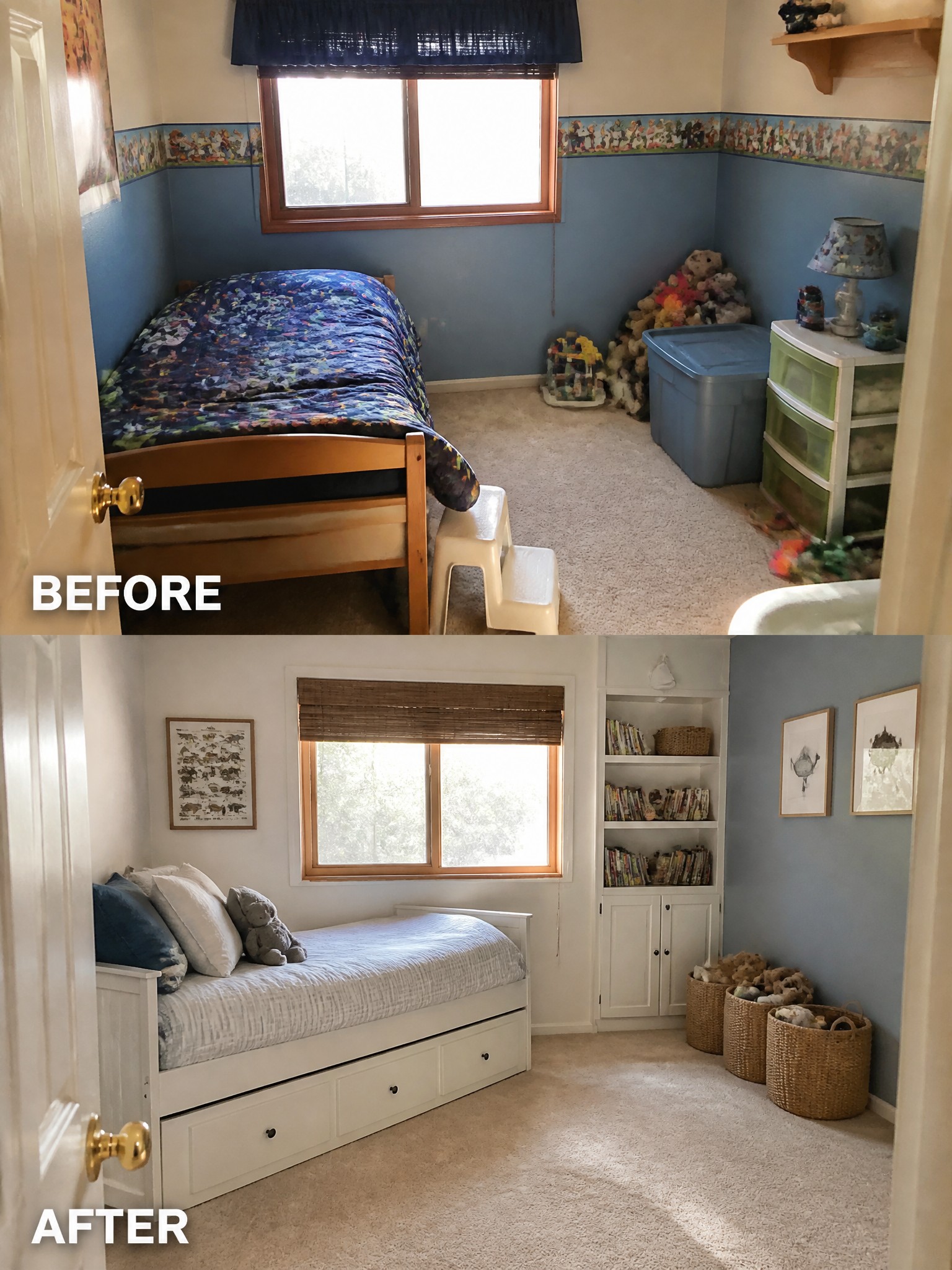
A cluttered kids room often feels smaller and more chaotic than it needs to be. In this case the main change was replacing scattered toys and random furniture with a simple built-in unit that holds books and bins while keeping the floor clear. The new bed with under-bed drawers also helped pull everything together without adding more pieces that would crowd the space.
This idea works well in smaller bedrooms where floor space matters. Focus on one wall for built-ins, keep the color light, and choose pieces that can grow with the child rather than feeling too babyish over time.
Make A Bare Hallway Feel Finished With Art And A Runner
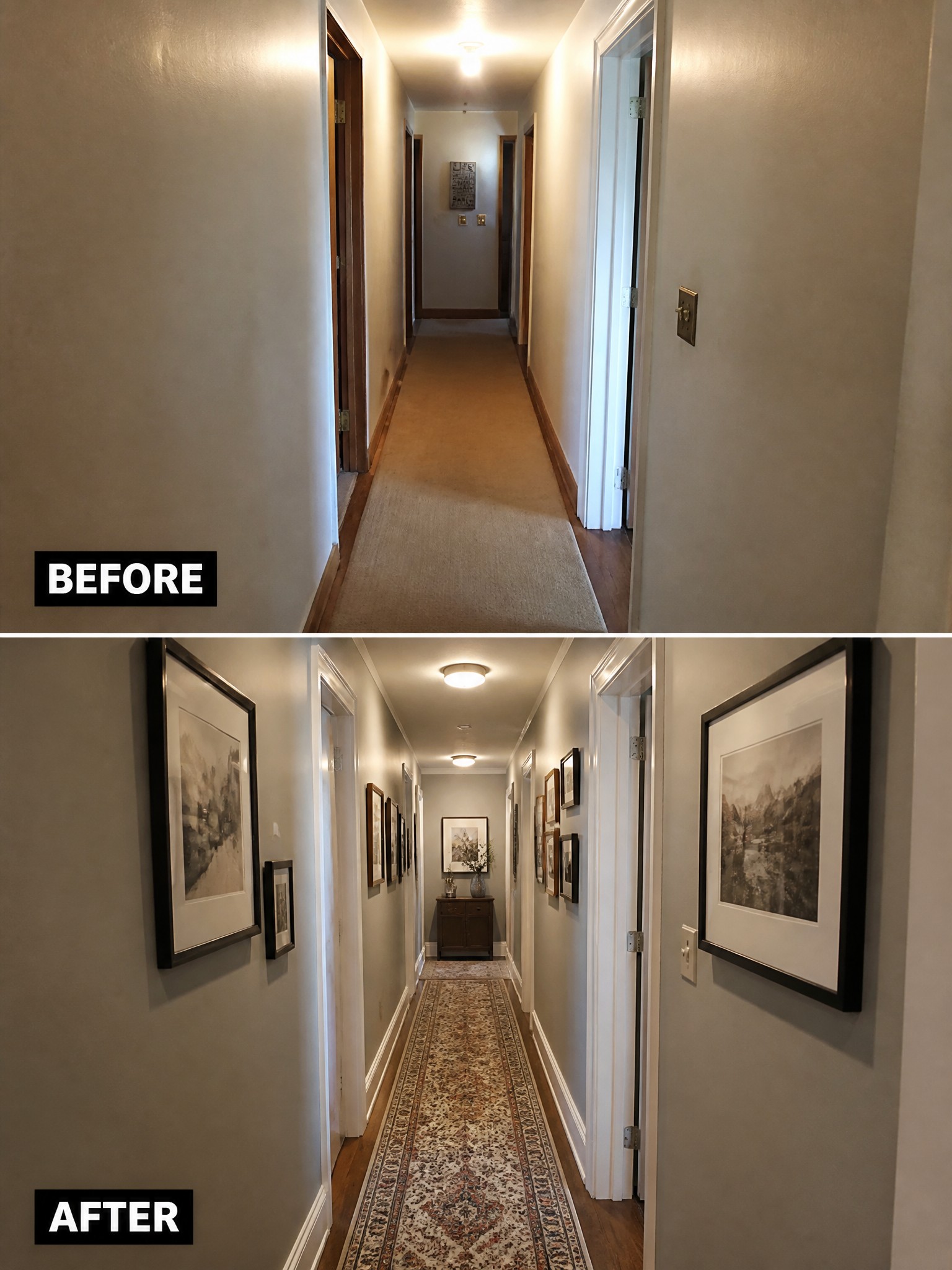
A long empty hallway often feels like wasted space until you add a few key pieces. In this case the walls went from plain to lined with framed prints, the lighting was updated, and a patterned runner replaced the basic carpet. Those changes alone turned a pass-through into something that actually feels like part of the house.
This approach works well in older homes where hallways tend to be narrow and dark. Keep the frames similar in style rather than matching perfectly, and choose a runner that can handle daily traffic. A small table or bench at the end can also help anchor the space without crowding the walkway.
Create A Window Seat In An Unused Corner
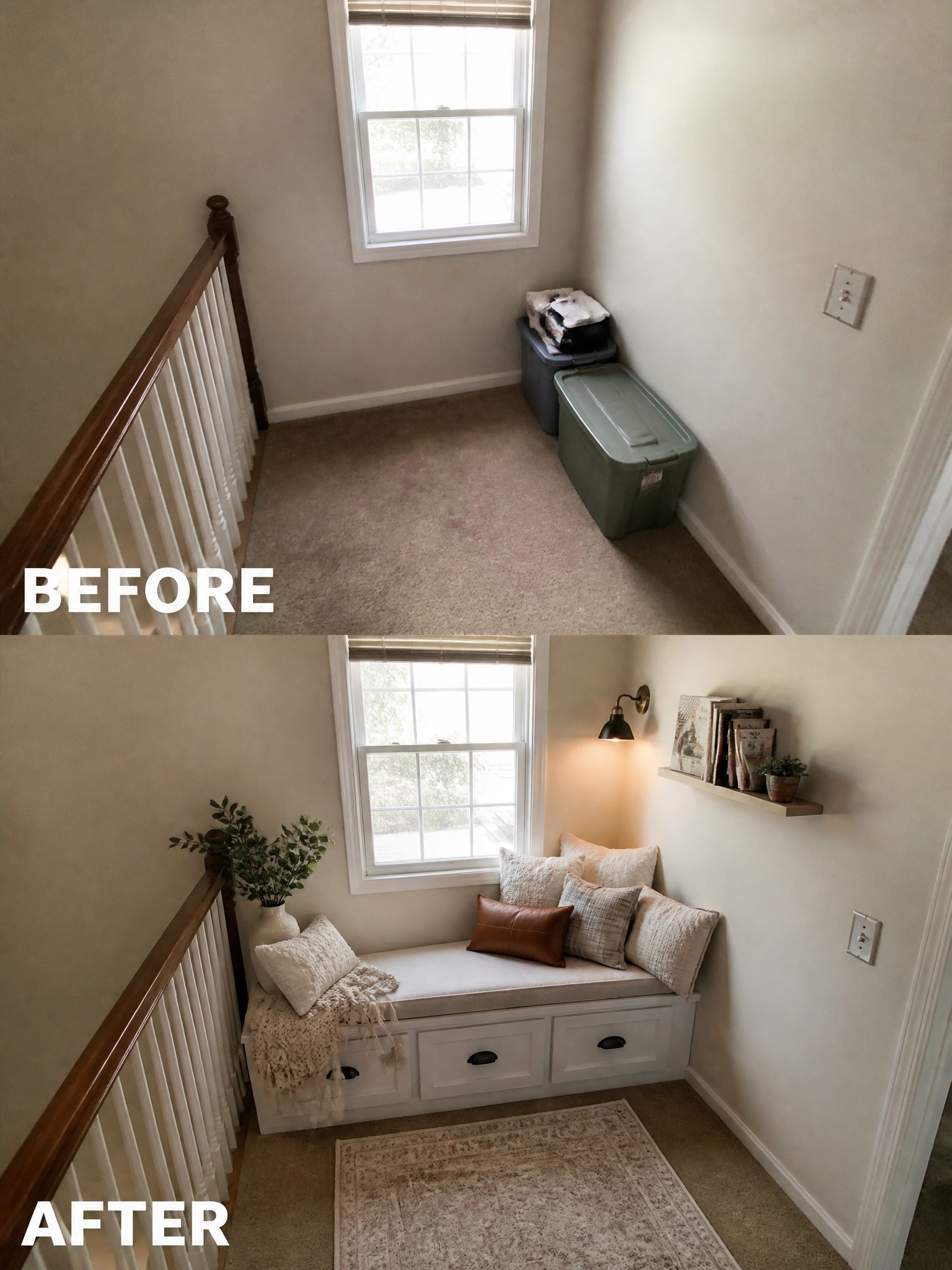
Many homes have odd corners at the top of the stairs that get ignored or filled with bins. A window seat gives that space a clear purpose without taking up extra room.
A bench with drawers underneath adds storage while cushions and a wall light turn it into a spot for sitting. This idea works well in older homes where landings often feel empty and underused. Focus on keeping the bench low and the cushions simple so the area stays open.
Organize A Cluttered Closet With Built-In Storage And Lighting
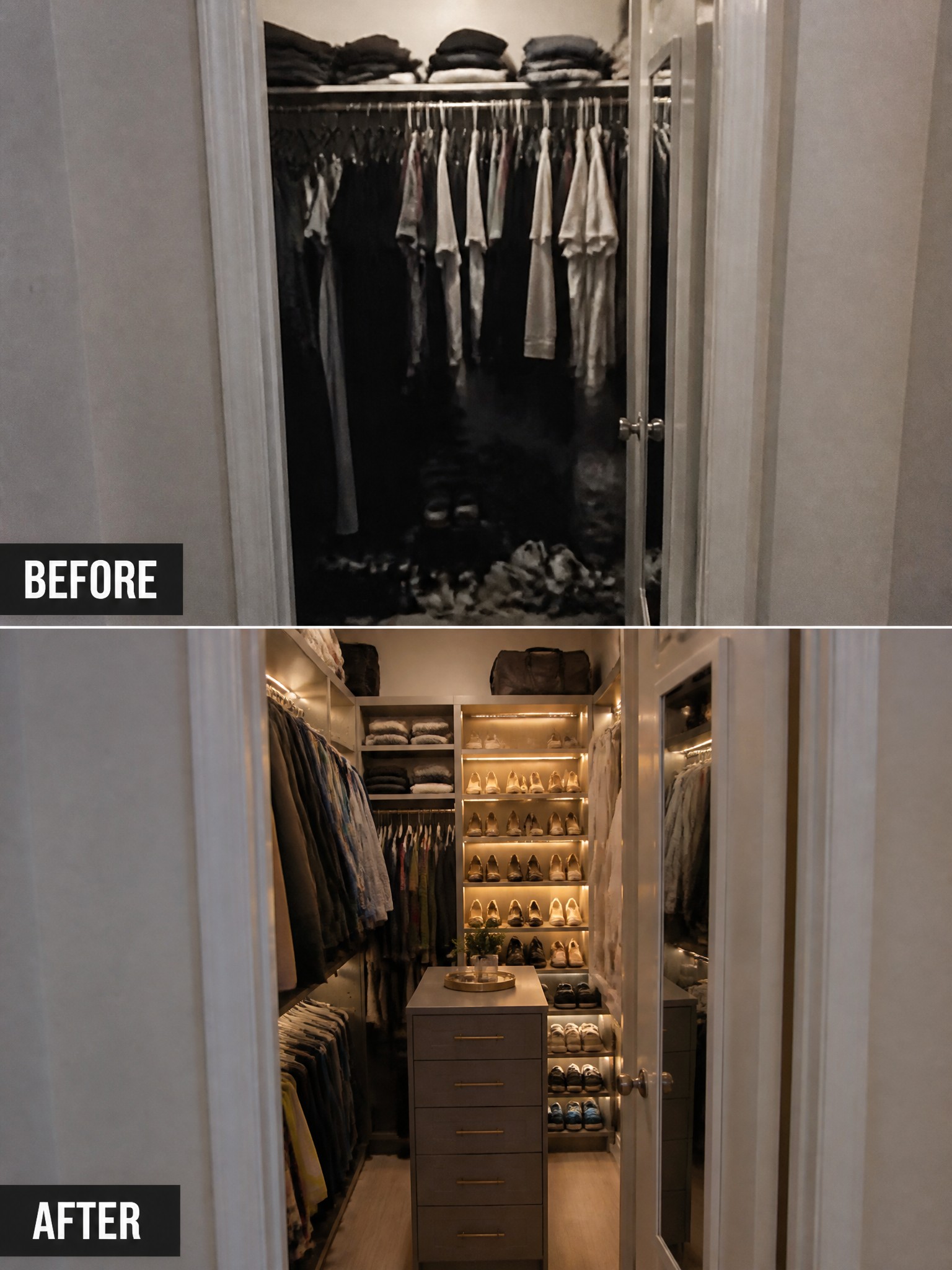
A messy closet often stays that way because there is no real system in place. The before photo shows piles of clothes and shoes with nowhere to go, which makes the space feel smaller and harder to use. Adding shelves, drawers, and lit shoe racks gives everything a spot and makes the whole closet feel twice as big.
This idea works well in any home where the closet is deep enough for custom pieces but still feels cramped. Measure the space first, then choose a mix of hanging rods, open shelves, and drawers that match what you actually own. Lighting is worth adding too, since it helps you see what is on the lower shelves without digging around.
Update Cabinet Hardware For An Instant Refresh
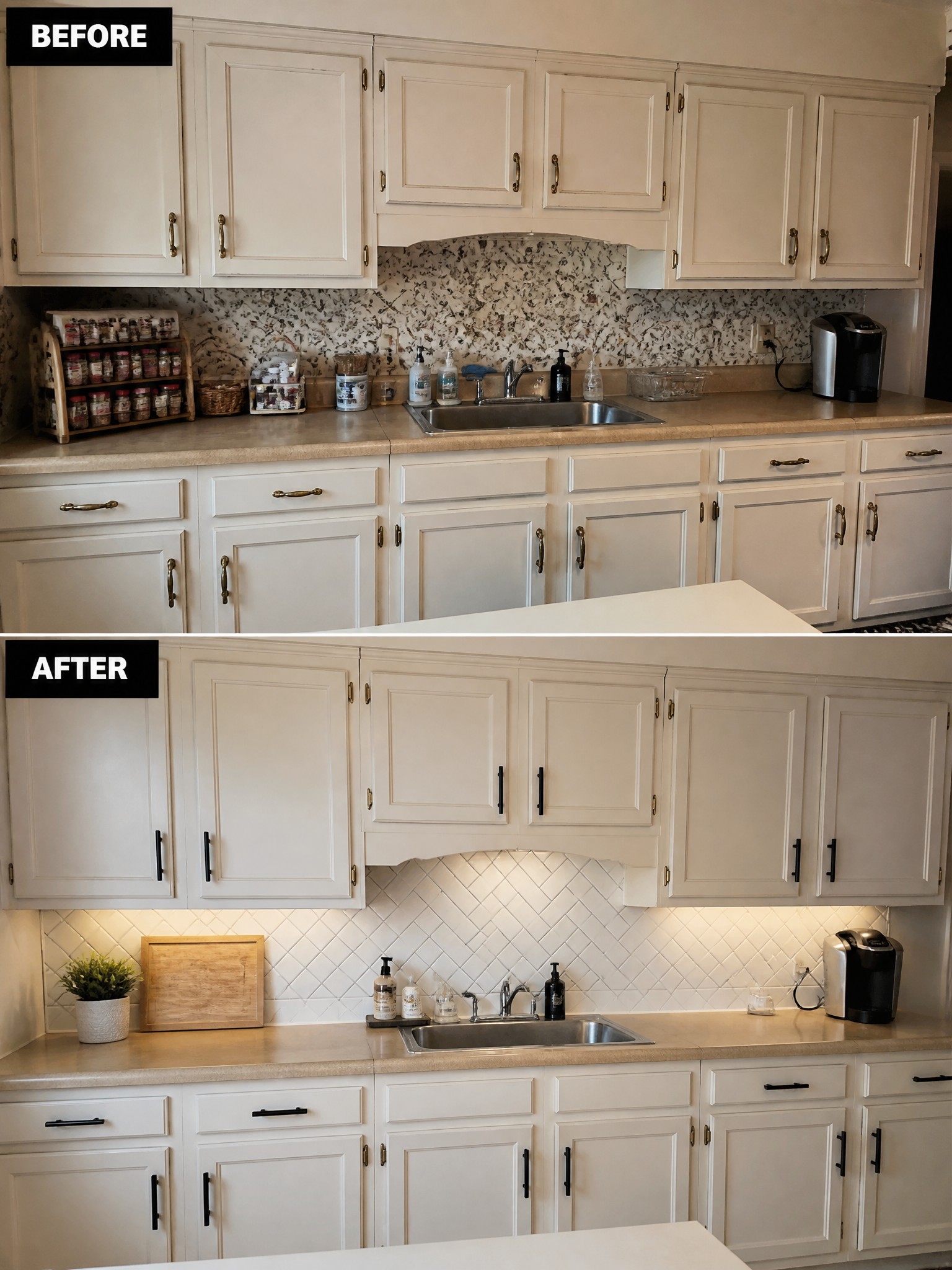
Swapping the cabinet hardware made the biggest difference in this kitchen. The original gold pulls had a fussy look that dated the whole space. Replacing them with simple black handles gave the cabinets a cleaner, more current feel without any major construction. The new herringbone backsplash and under-cabinet lighting added even more light and order.
This approach works well in kitchens where the cabinets are still in good shape but the details feel tired. Focus on one or two changes at a time, such as hardware and backsplash, so the update stays affordable and manageable. Keep the rest of the room neutral so the new hardware stands out clearly.
Update A Dated Bathroom With A New Vanity And Flooring
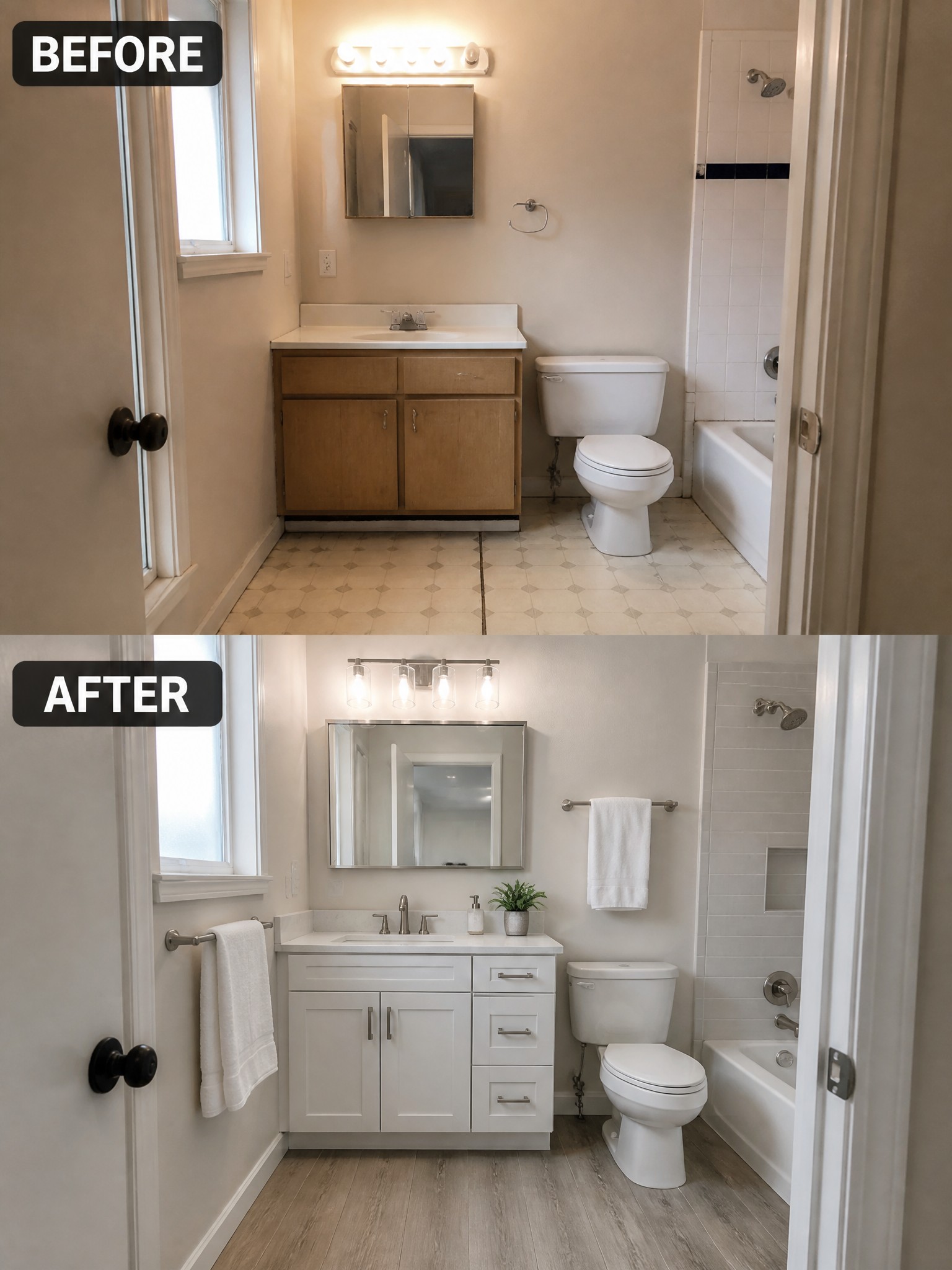
Many older bathrooms feel stuck with dark wood vanities and busy tile floors that make the space look smaller and older than it is. Replacing the vanity with a white one and swapping the patterned tile for a lighter wood-look floor instantly opens up the room and gives it a cleaner feel.
This approach works especially well in small bathrooms where you want simple changes without moving walls or plumbing. Start with the vanity if your budget is limited, then add the new floor to pull the whole update together.
Turn A Basic Media Room Into A Home Theater
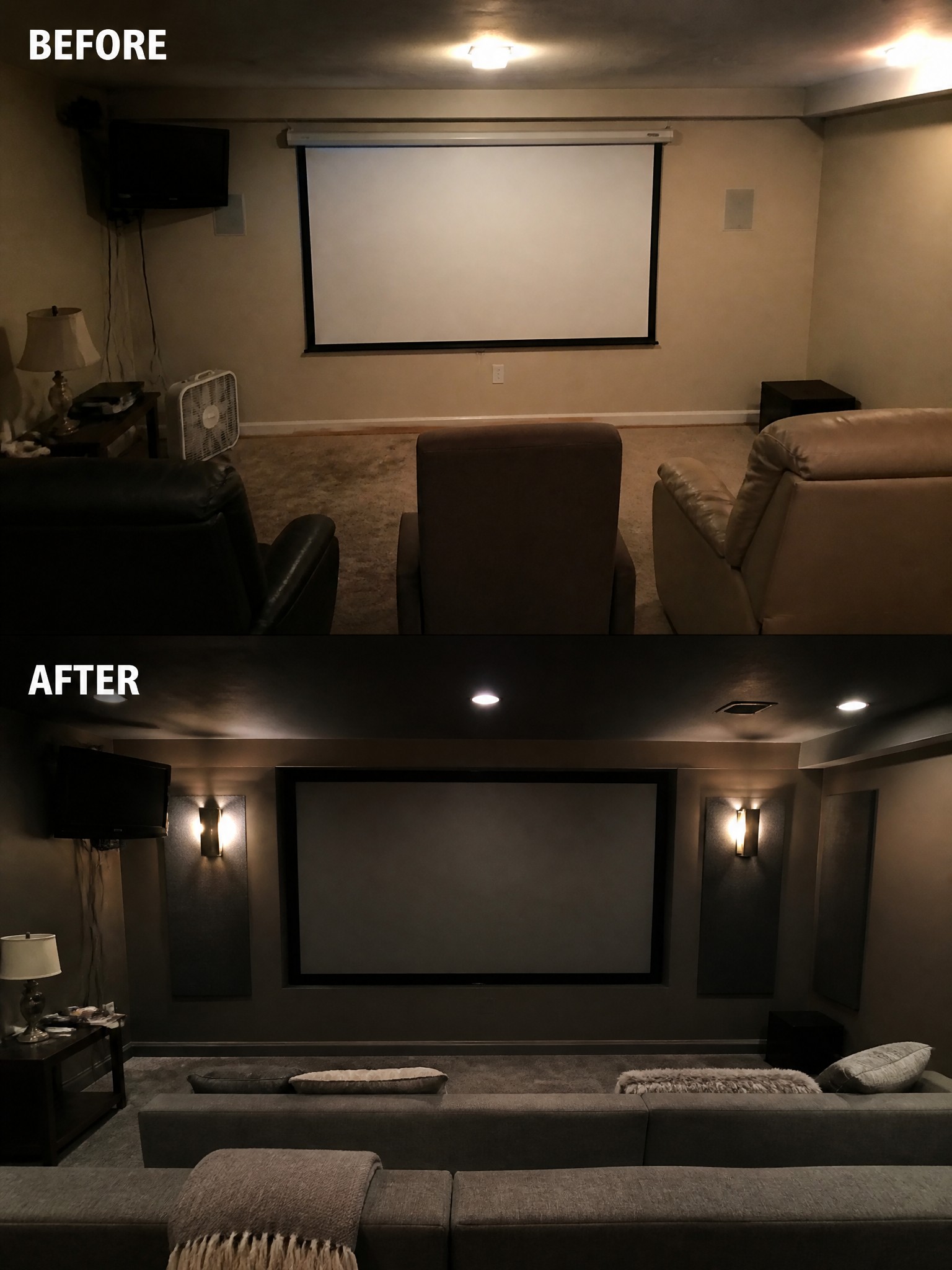
A plain room with a big screen can work for watching movies, but it often feels unfinished. Painting the walls and ceiling dark, adding sconces on both sides of the screen, and switching to one large sectional creates a space that actually feels set up for viewing. The changes cut down on light bounce and make the screen the clear focus.
This approach works well in basements or spare rooms where you want one dedicated purpose. Start with the paint and lighting first, then choose seating that fits the scale of the room. Keep the layout simple so people can still move around easily when the lights are on.
Organize A Cluttered Pantry With Clear Containers
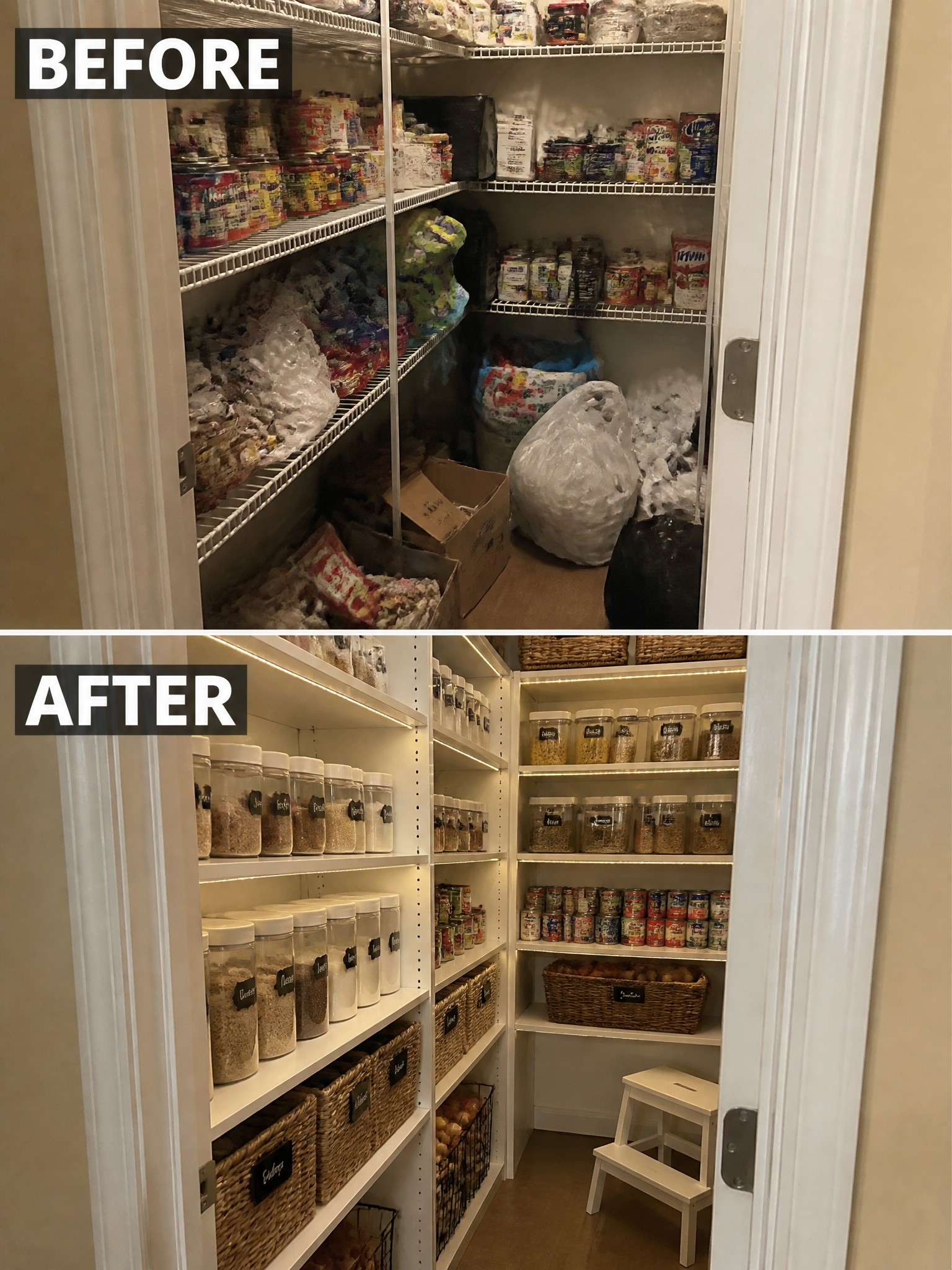
A pantry often becomes a dumping ground where bags and boxes pile up until nothing is easy to find. Switching to matching jars and baskets keeps everything visible and stops small items from getting lost on the shelves.
This idea works in any size pantry as long as you sort first and only keep what you actually use. Group similar foods together, label the containers, and leave a little space so you can reach things without pulling everything out.
Frequently Asked Questions
Q: How do I pick which room to fix up first when they all feel outdated? A: Start with the space you use every single day. That quick win keeps you excited to tackle the others next.
Q: What if my kitchen still has those old cabinets but I don’t want a full gut job? A: Swap the doors for a simpler style and add new pulls. The change brightens everything without tearing into walls.
Q: Can I get these before and after results on a tight budget? A: Hunt thrift stores or sales for one standout piece like a new lamp or rug. Layer that in with a fresh coat of paint and the room shifts fast.
