
I often find that a house starts to feel more usable once the main surfaces and arrangements get a bit of care.
Small updates around the place tend to add up when they focus on what actually gets used every day.
I usually test one or two changes in my own rooms before deciding what to keep.
Many of these ideas work because they target the spots that have been left unfinished or just slightly off.
It feels good to walk through a space and see it handle daily life without extra effort.
Make A Plain Living Room Feel Finished

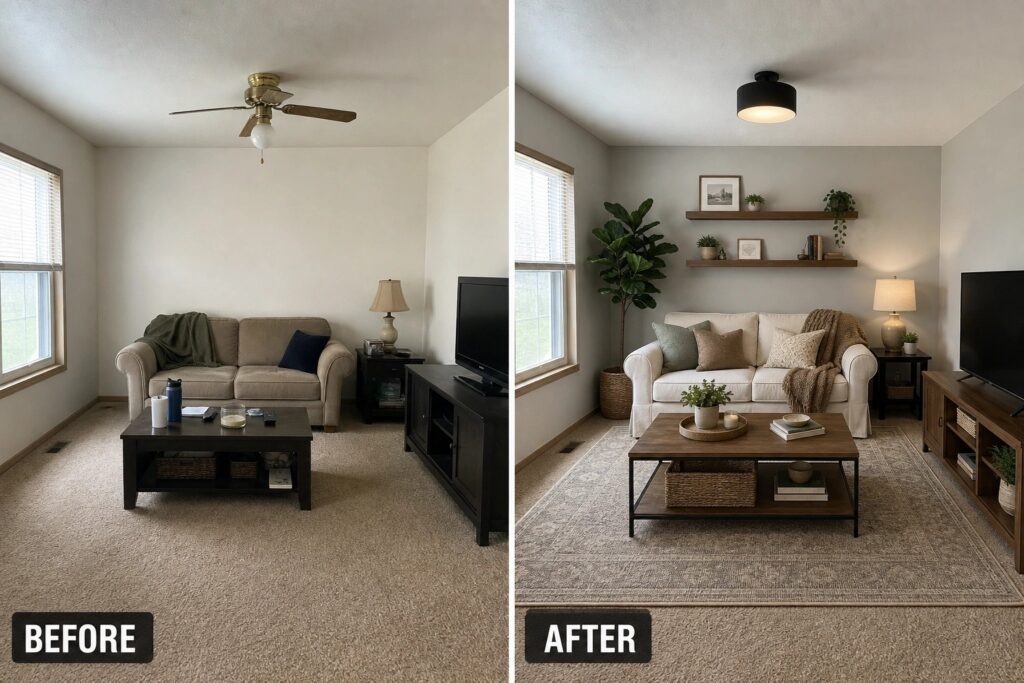
A large area rug can pull a room together when the space feels too open and bare. In the before photo the seating sat on plain carpet with nothing to mark its edges. The after photo shows how one rug under the coffee table and sofa creates a clear zone that makes the furniture arrangement look intentional instead of scattered.
This approach works well in rooms that already have decent furniture but lack definition. Start with a rug that is large enough for the front legs of the sofa and chairs to sit on it. Then add one or two simple layers such as wall shelves or a low media console so the room does not feel empty once the rug is in place.
Paint Your Cabinets To Update An Older Kitchen

Painting cabinets is one of the simplest ways to change how a kitchen feels without replacing everything. In this case the old wood cabinets were dark and dated, while the new white and navy finish makes the room look brighter and more current. New hardware helps complete the shift without much extra work.
This approach works well in older homes where the layout and appliances are still fine but the finishes feel tired. Focus on prepping the surfaces well and choose a color that lightens the space if the room is small. It is a realistic weekend project when you work on the uppers one day and the lowers the next.
Replace Old Shower Tile To Modernize A Bathroom
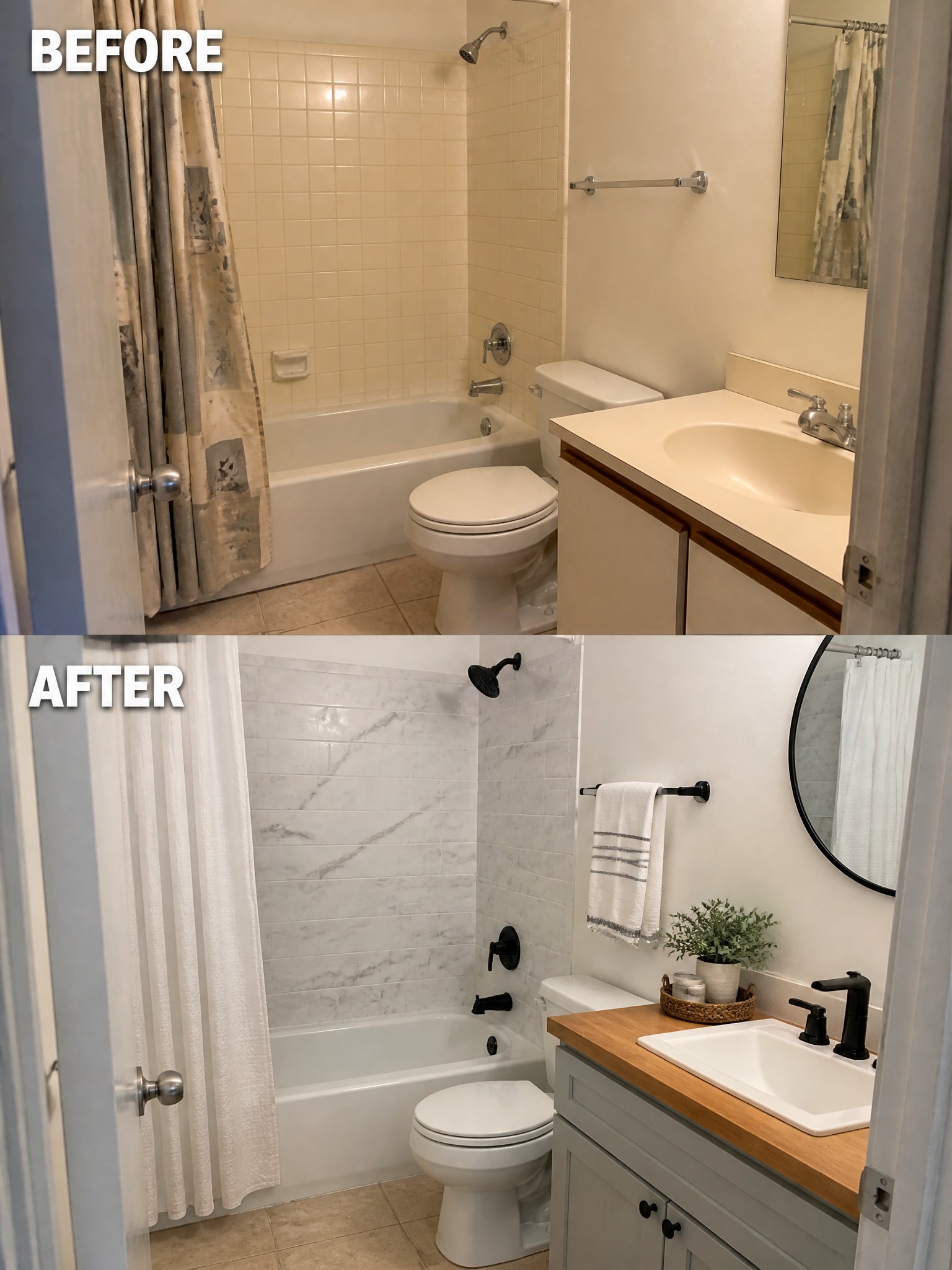
Many bathrooms from past decades end up looking flat because of plain tile and basic fixtures that no longer suit the space. Changing the shower surround to a fresh tile pattern and updating the hardware at the same time can lift the whole room without moving walls or replumbing everything.
This idea works best when the layout is already usable and the main issue is the surfaces. Focus on one area like the shower first, then match the new fixtures and vanity details to the same color family so the updates feel connected rather than scattered.
Add A Bench And Hooks To Organize Your Entry
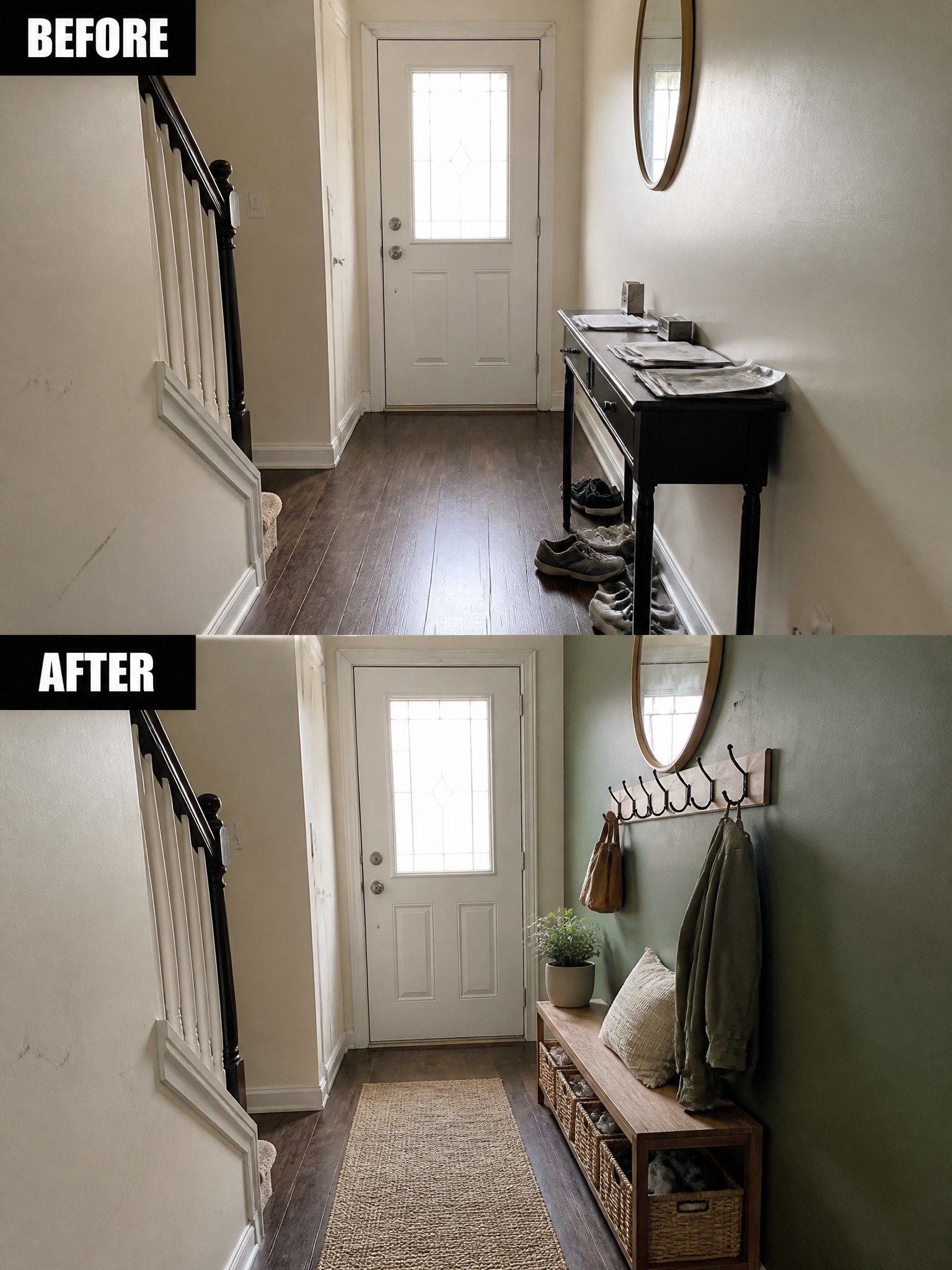
A cluttered entry often ends up with shoes kicked under a table and coats tossed wherever they land. The change here comes from swapping the narrow console for a low bench that includes built-in baskets and adding a row of hooks on the wall above it. The floor stays clear, and everything has a set spot.
This approach works in any small entry or hallway where space is tight. Measure the wall first so the bench does not block the door swing, then pick hooks strong enough for coats and bags. Keep the colors simple so the new pieces blend with what is already there.
Paint One Wall To Warm Up A Bedroom

A plain bedroom with beige walls often feels unfinished even when the furniture is in place. Painting the wall behind the bed a warm terracotta color and adding a simple wall hanging immediately gave the room a clear focal point. Layered pillows, a throw blanket, and matching lamps on the nightstands added the finishing touches that made the space feel much more put together.
This approach works well in any bedroom that feels flat or cold. Choose a color that contrasts gently with the rest of the room, keep the new layers simple, and make sure the lighting is soft enough for evening use. The goal is to create one strong area of interest without crowding the space.
Organize A Small Workspace With Wall Shelves
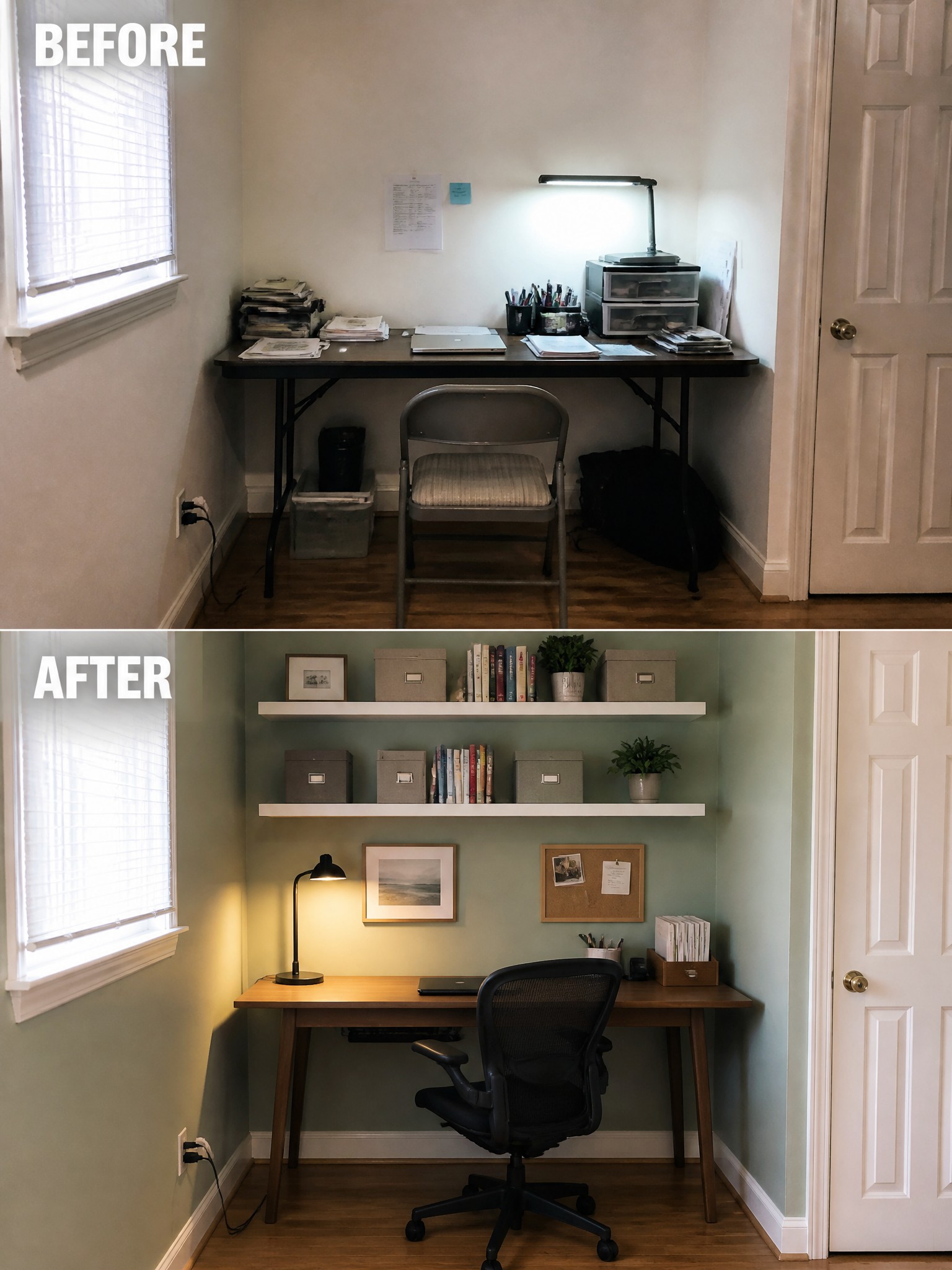
A cluttered desk often comes from having nowhere else to put things. In the before photo the surface is covered with papers and supplies because storage is limited to a few bins underneath. Adding two simple wall shelves above the desk gives the space a place to hold books, boxes, and plants so the work surface can stay clear.
This idea works well in small rooms or spare corners where floor space is tight. Keep the shelves at a reachable height and use matching bins or baskets to avoid a new layer of mess. A better chair also helps since you will likely spend more time there once the area feels usable.
Add Simple Storage To Organize A Laundry Room

A laundry room can quickly turn into a dumping ground for bottles and supplies when there is no clear place to put them. Adding one open shelf with matching baskets and jars moves everything off the floor and gives each item a spot, which makes the whole space feel more practical.
This idea works best in small utility rooms where you still need easy access to everyday items. Keep the containers simple and label them clearly so you can find what you need without digging through piles.
Add Storage Bins And Cubbies To Organize A Closet
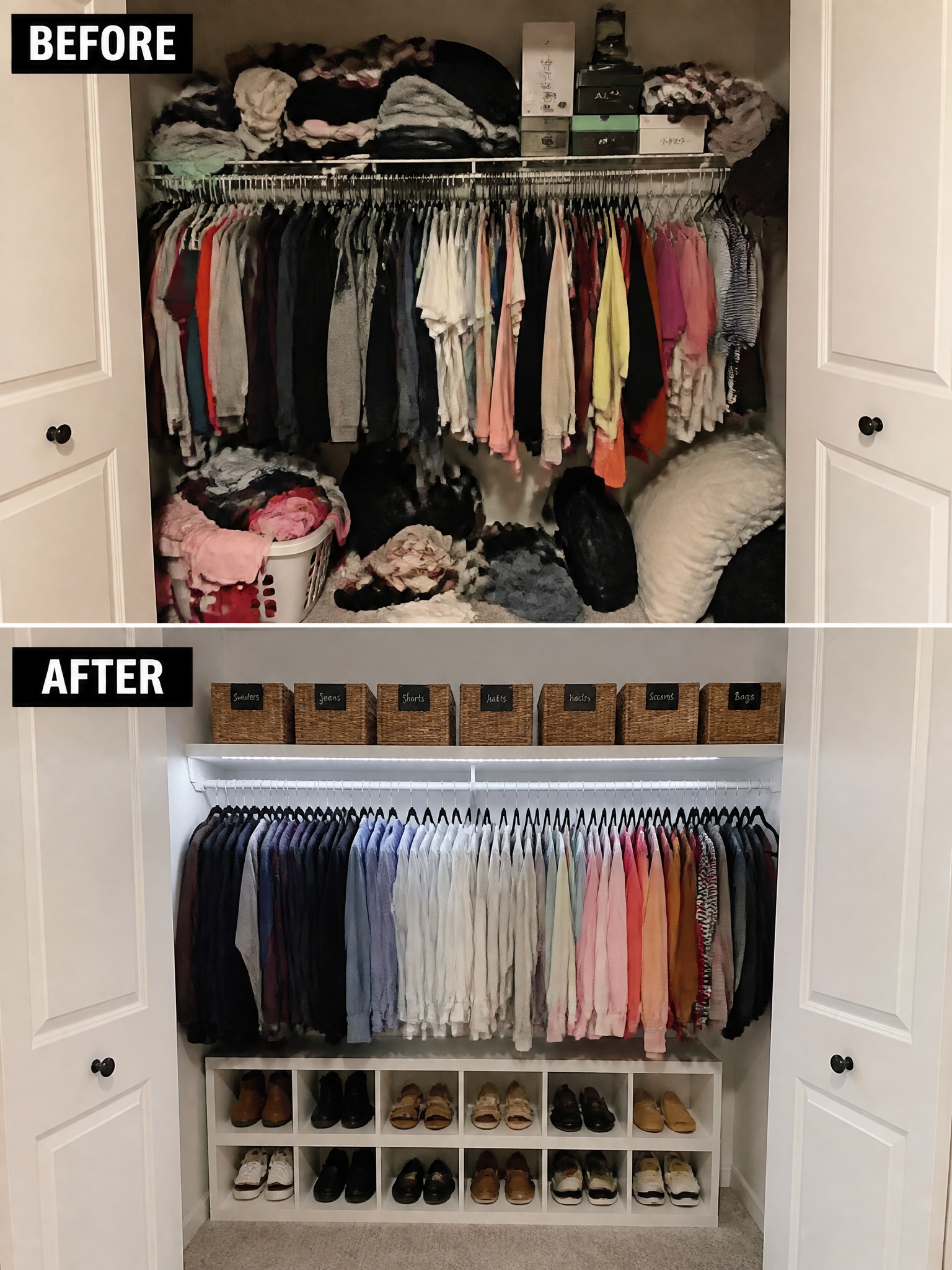
A cluttered closet usually stays messy because there is no clear spot for different types of items. Adding a row of labeled baskets on the top shelf and a set of open cubbies along the floor gives each category its own place. The change turns a space where things just got tossed into one where everything stays sorted and easy to reach.
This idea works best in closets that already have a hanging rod but lack simple upper and lower storage. Sort items first, then pick bins that fit the shelf depth so nothing hangs over the edge. It keeps the floor clear and stops piles from forming again.
Add An Accent Wall To Finish A Dining Room

A plain dining area often feels like it is just passing through a larger space. Painting one wall a deeper color and laying down a rug underneath the table gives the room a clear purpose and makes the furniture arrangement look intentional instead of temporary.
This approach works well in open floor plans or rooms that sit between a kitchen and living area. Keep the rest of the walls light so the accent color does not close the space in, and choose a rug that is large enough for the chairs to stay on it when pulled out.
Make A Plain Room Feel Finished

A bare concrete floor and empty walls can make any lower-level room feel cold and unfinished. Adding string lights along the beams and placing a large rug under the seating area instantly pulls the space together and makes it feel like a real room instead of leftover space.
This approach works especially well in basements or multipurpose rooms where you want comfort without a full renovation. Start with one main rug to define the seating zone, then layer in simple lighting that people can actually use at night. Keep the rest of the furniture light so the room does not feel crowded.
Make The Fireplace Wall The Main Feature
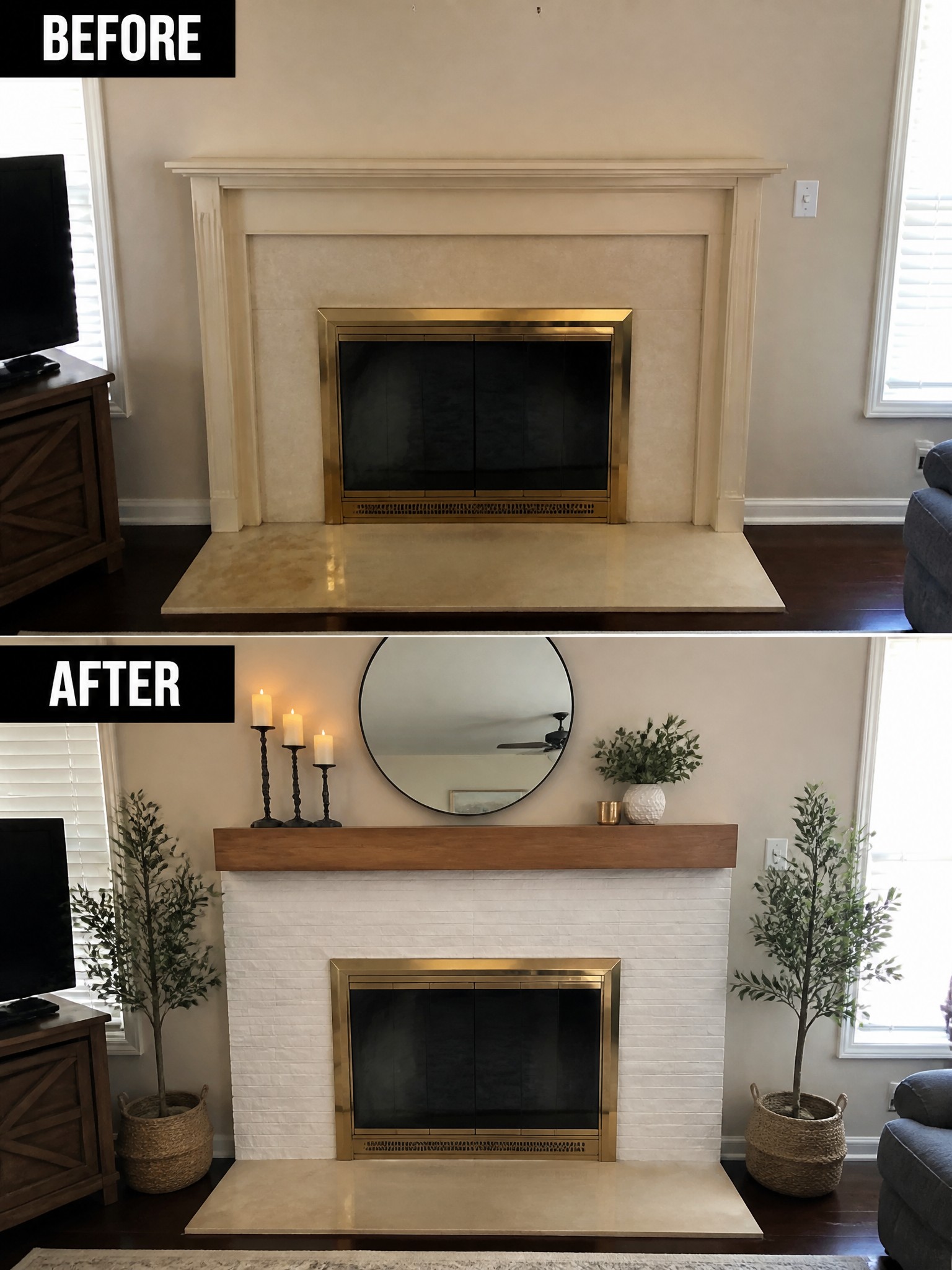
The original fireplace had a flat surround that blended into the wall and left the whole area feeling unfinished. Switching to a white brick facade with a solid wood mantel gave the wall clear shape and made the fireplace the natural center of the room.
This update works best in living rooms where the fireplace already sits in a central spot. Keep the new surround simple, choose a mantel that adds warmth without overwhelming the scale, and add just a few pieces above it so the focus stays on the structure itself rather than extra decor.
Organize A Pantry With Clear Labeled Containers

The pantry went from a crowded mix of loose bags, open boxes, and items sliding onto the floor to a clean setup with matching clear containers. Labels on the bins make it simple to grab what you need without digging through everything.
This idea works best in small storage areas where things get messy fast. Sort items by type first, then pick containers that fit the shelves without wasting space. It keeps food fresher and makes restocking easier over time.
Finish A Plain Hallway With Art And A Console Table

A long empty hallway often feels like wasted space until you give it a clear purpose. In this case the walls stayed the same but a row of framed prints, a narrow console, and a runner instantly made the corridor feel like part of the home instead of just a path between rooms.
The same approach works in any narrow interior that lacks furniture scale. Keep the table shallow so it does not block traffic, group art in a loose cluster rather than a perfect grid, and choose a washable runner that can handle daily foot traffic. One or two lamps on the console add warmth without needing electrical work.
Add Wallpaper To Refresh A Small Bathroom

Wallpaper can quickly change how a plain bathroom feels without a full renovation. In this case the walls went from empty and flat to covered in a soft pattern, which makes the space look more finished while the new round mirror and sconce add better shape and light.
This approach works well in small bathrooms where you want impact without crowding the room. Keep the pattern light and choose one or two new accents like the mirror or lighting so the update stays simple and easy to live with.
Add Storage To Organize A Kids Bedroom
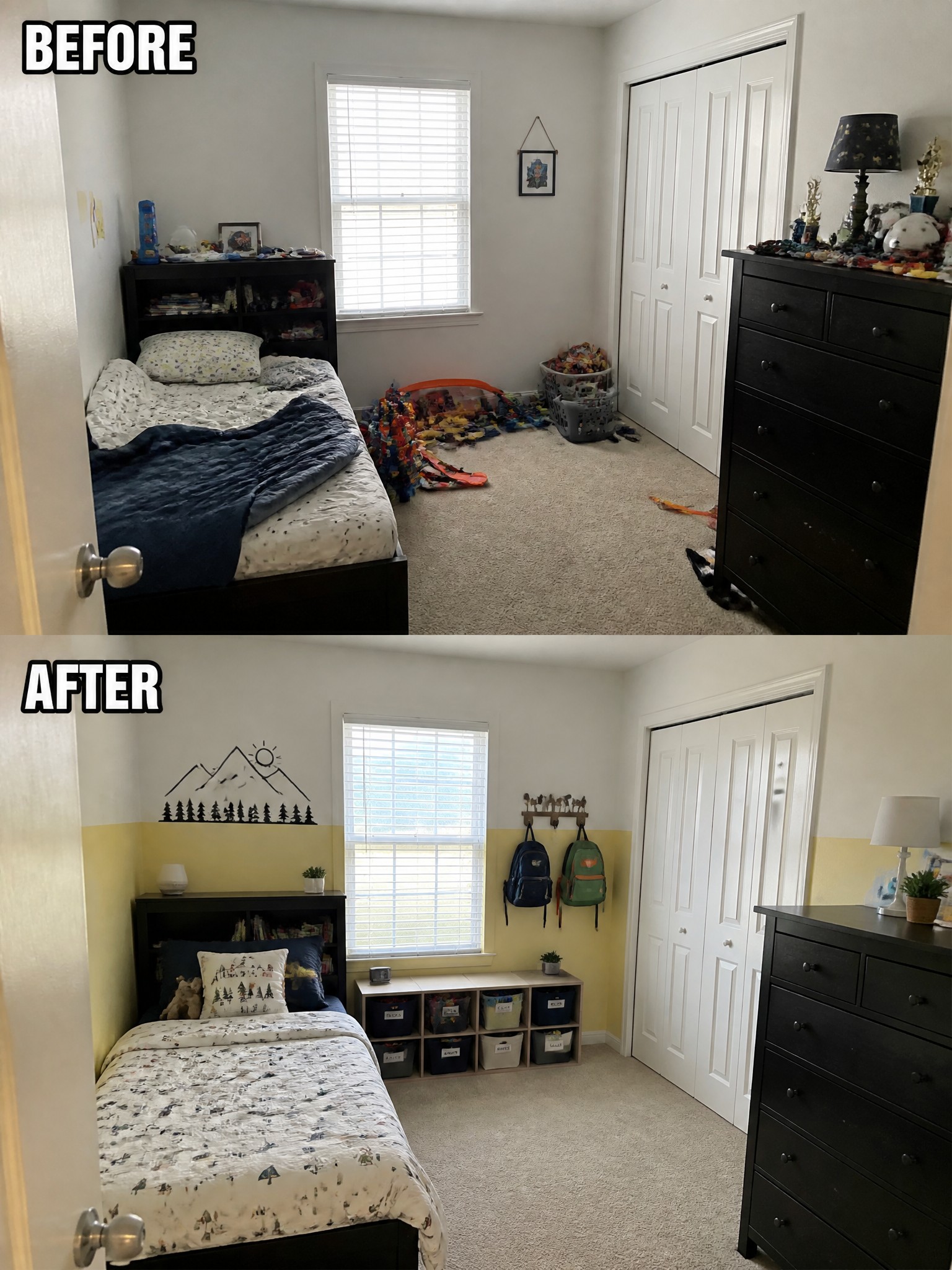
A cluttered floor and scattered toys can make even a small bedroom feel unusable. Adding a low cubby unit under the window and a row of hooks on the wall gave everything a clear place, which instantly made the room feel calmer and easier to keep tidy.
This approach works well in kids rooms where toys, books, and school items tend to pile up fast. Start by choosing storage that fits the space without blocking pathways, then group similar items together so kids can actually find and put things away on their own.
Organize A Small Closet With Wall Hooks And Baskets

A cluttered closet quickly becomes a catch-all for coats, bags, and loose items that never quite find a home. Adding a row of hooks along the back wall along with low cubbies and baskets gives each thing a clear place and keeps the floor from filling up with piles.
This approach suits narrow entry closets or small hallways where you need fast access to jackets and everyday items. Clear out what you rarely use first, then pick hooks sturdy enough for coats and baskets that sit neatly inside the openings so the space stays practical rather than just pretty.
Organize A Cluttered Garage With Wall Storage
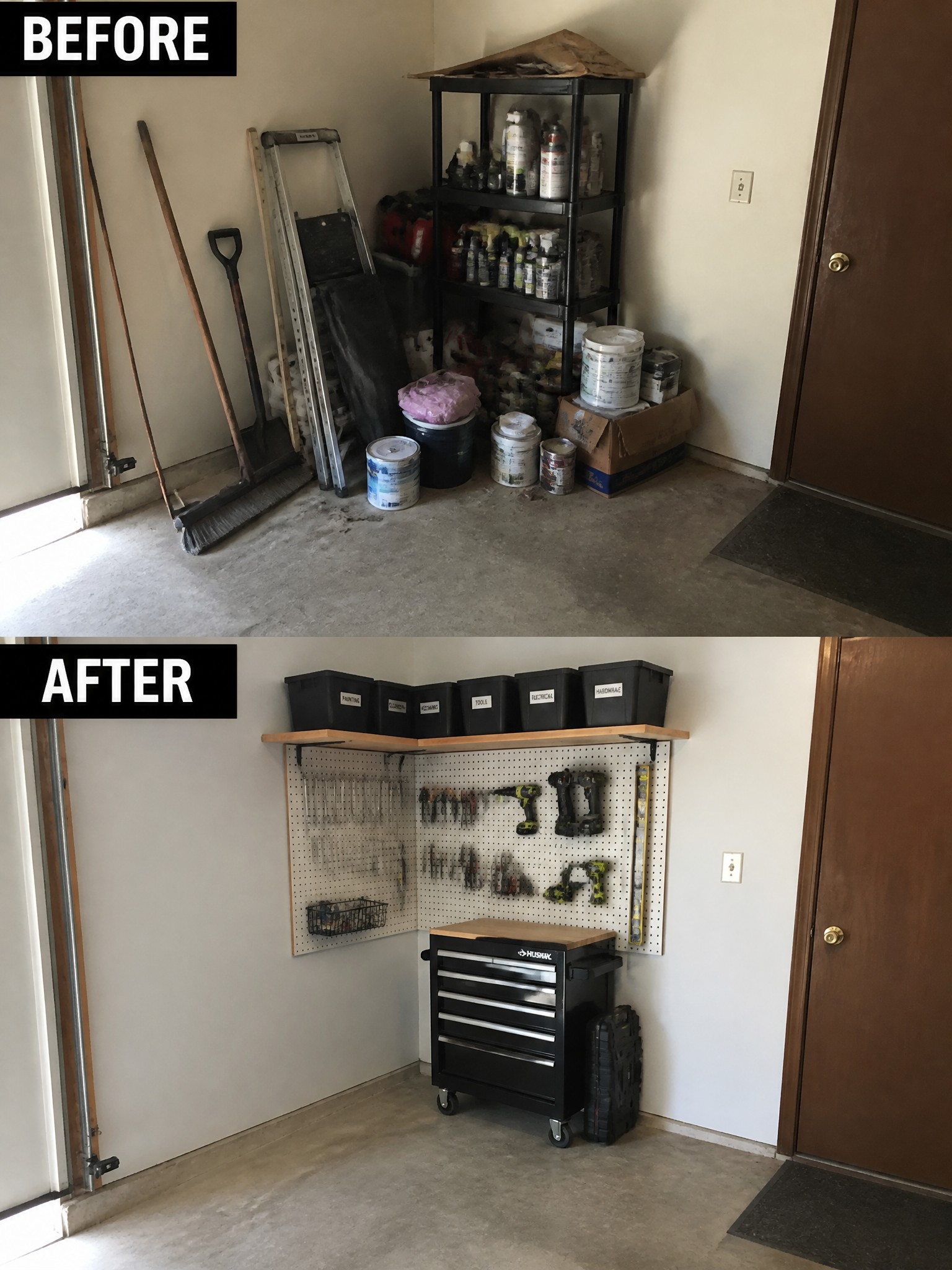
A messy garage often ends up with tools and supplies scattered across the floor because there is no clear system for where things belong. Adding a pegboard and a set of labeled bins on a simple shelf turns the same space into a functional work area where items stay visible and easy to reach.
This approach works well in any garage that doubles as a workshop or storage spot. Mount the pegboard at a comfortable height, group similar tools together, and use sturdy bins for smaller items or seasonal supplies. Keep the floor clear so you can move around safely and roll a tool chest into place when needed.
Paint An Old Vanity For A Quick Bathroom Update
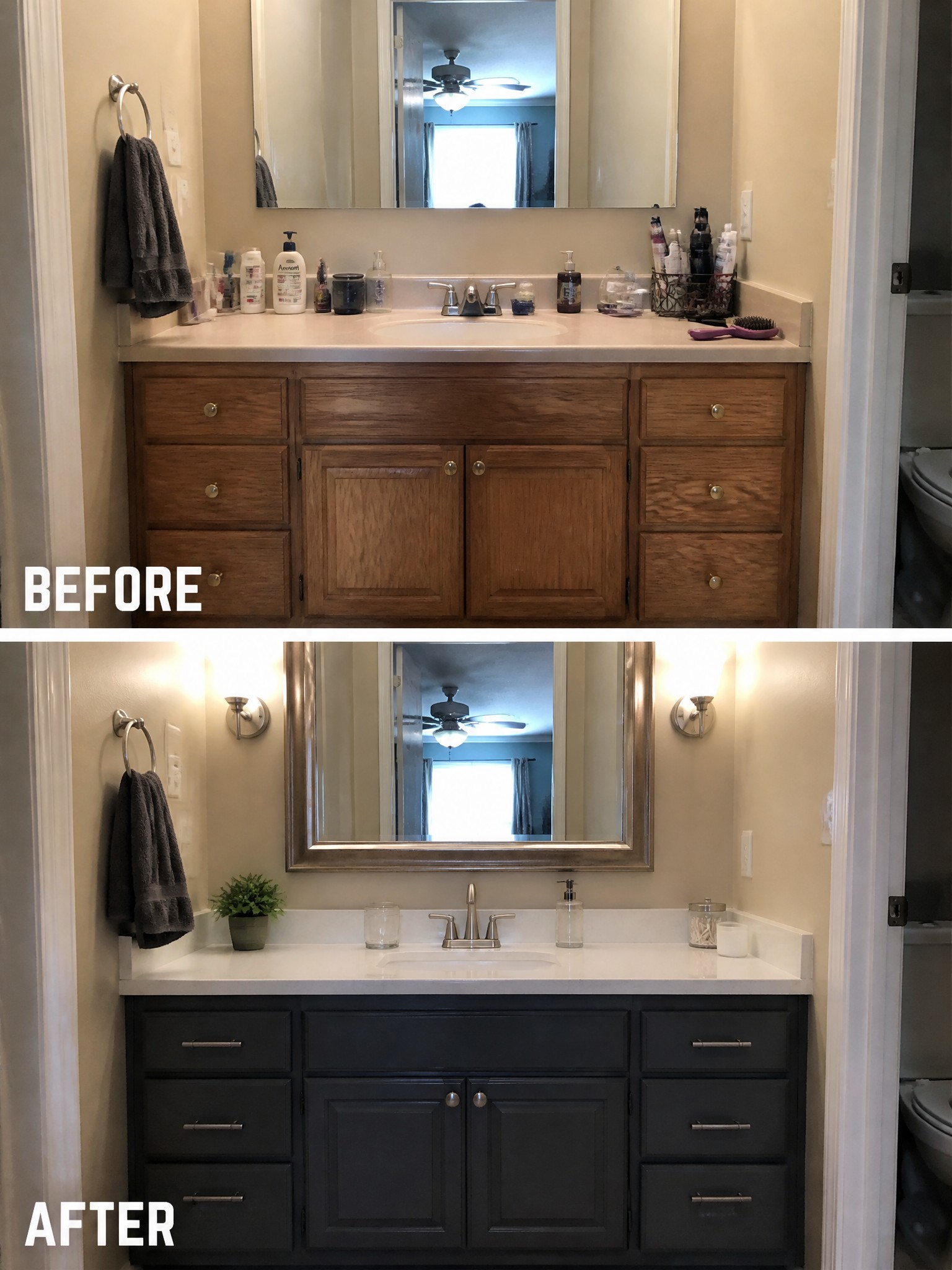
Painting the vanity cabinets can give a bathroom a much newer feel without replacing the whole unit. The light wood finish was changed to a dark color and the old round knobs were swapped for straight modern pulls, which made the space look cleaner right away.
This idea works best when the cabinets are still solid but the style feels tired. Use cabinet paint and take care with the prep so the finish lasts. Keep the surrounding surfaces simple so the updated vanity becomes the main change.
Refresh Worn Stairs With A New Runner

Stairs often take the most wear in a home, and old carpet can start to look tired and frayed along the edges. Swapping it for a woven runner covers the damage while leaving the wood treads exposed on the sides, which instantly makes the whole staircase feel more current.
This approach suits older homes where you want to keep the original wood but need something tougher underfoot. Pick a natural fiber like sisal or jute, secure it properly with rods, and consider painting the handrail a darker color to match the new look.
Turn An Empty Alcove Into Built-In Shelving

An empty wall recess often sits unused until shelves are added to give it purpose. The before image shows a plain niche with only one floating shelf. After, several shelves were installed, the interior was painted a deep navy, and lighting was added so the space could hold books, baskets, and small decor without looking bare.
This approach works in any home with similar architectural niches. Measure the space first, then decide on shelf spacing based on what you plan to store. A darker paint color helps the shelves stand out, but keep the number of items limited so the area stays organized.
Rearrange Furniture To Open Up A Living Room
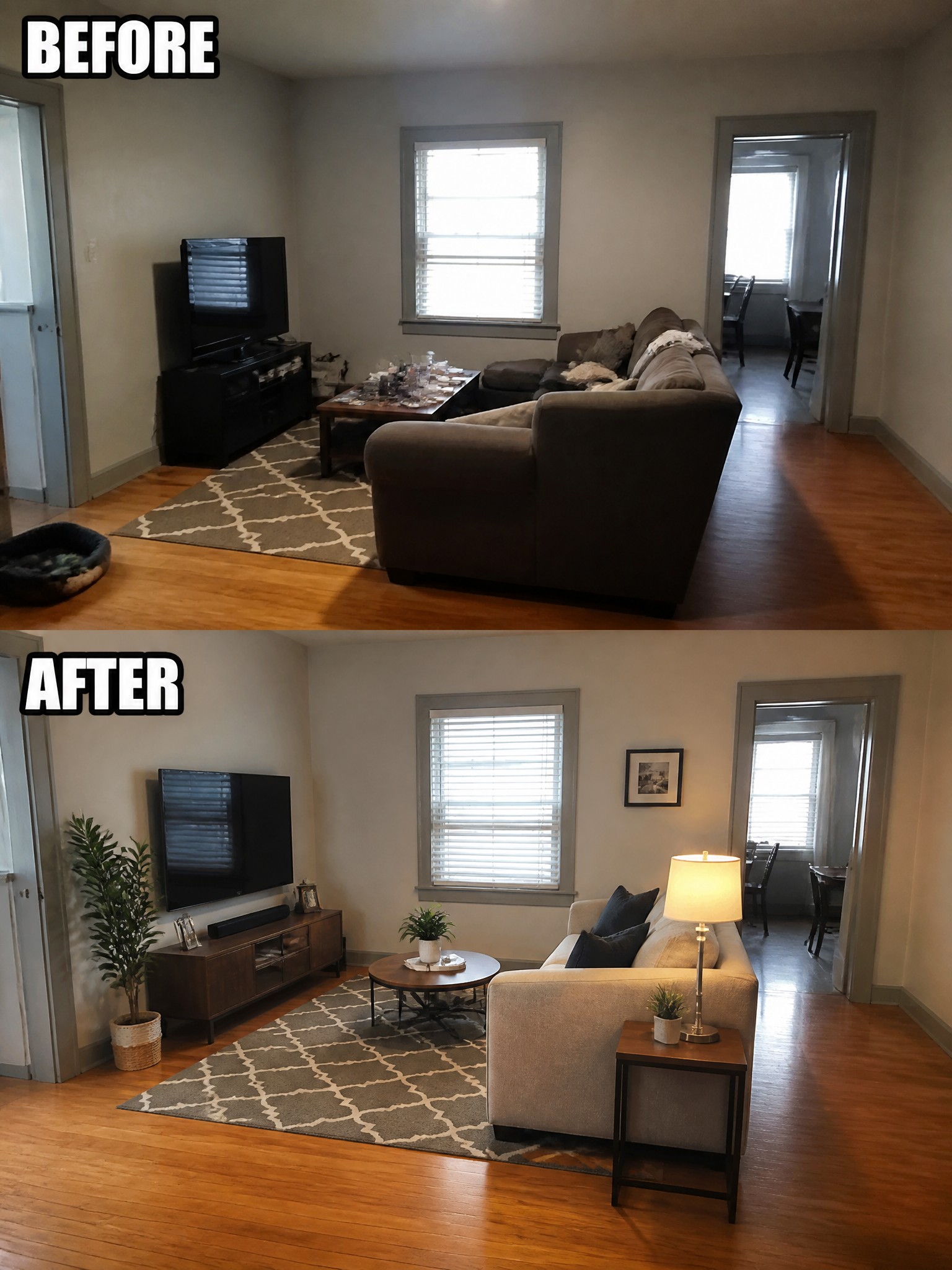
A room can feel cramped even when it is not small. In the before photo the large sectional sat angled across the space and blocked easy movement, while the after shows the seating pulled back and centered around the rug with a round table in the middle. That single shift created clear walkways and made the whole area feel calmer.
This idea works in most living rooms that have grown cluttered over time. Place your main sofa so it faces the TV or main focal point, keep the front legs of the furniture on the rug, and leave at least two feet of open floor around the edges. Test the layout by walking through it before you add anything else.
Frequently Asked Questions
Q: What if I rent and can’t make big changes?
A: Focus on updates that come out easily like peel and stick tiles or new cabinet pulls. These let you refresh the kitchen or bath without touching the walls. Moveable items such as throw pillows and lamps also shift the feel of any room.
Q: How do I know which projects will give the biggest impact for my money?
A: Begin with the spots you see every day like the living room walls or entry. A simple paint refresh or new light fixture often makes the biggest difference right away. Skip tiny accents until those main areas look finished.
Q: My weekends are packed already. Can any of these fit into just one day?
A: Yes, try hanging fresh curtains or swapping hardware on drawers. Both take a few hours and change how the space feels without dragging on.
