

A plain front door area can feel dim and overlooked, especially when the lighting does little to guide the way or highlight the entry.
I find that a few thoughtful changes, such as a brighter fixture, a fresh coat of paint, or a simple planter, can make this part of a home feel more cared for without a major renovation.
Good lighting also helps the entrance feel safer and more practical while bringing out details that might otherwise go unnoticed.
The change can be satisfying to see, even when it comes from small updates rather than a full redo.
Some of these ideas may be worth saving or adapting to suit the style and layout of your own entry.
Use Better Lighting To Finish A Plain Entryway

A plain entry can feel more welcoming when the lighting suits the space. Here, a single exposed bulb is replaced with a slim ceiling fixture, giving the narrow hallway a more finished look while keeping the door as the focal point.
In a small entry, choose a fixture that spreads light without hanging too low or taking up visual space. A simple design works well with many door styles, and a mirror can help make the hallway more practical without crowding it.
Make A Plain Entry Feel Brighter

Replacing a single solid front door with one that has narrow glass panels makes this entry feel much brighter and more welcoming. The added recessed lights help too, but the glass beside the door is the biggest change.
If your entry feels dark, consider adding sidelights or choosing a door with glazed panels, as long as privacy and security needs allow. A couple of well-placed ceiling lights can help fill in the shadows without crowding the space with decor.
Add Built-In Storage To A Plain Entryway

A simple entry can feel crowded when coats and shoes have nowhere to go. Replacing the freestanding coat rack with built-in cubbies and a bench gives everyday items a clear place, while lighting inside the coat area makes it easier to find what you need.
This idea works well beside a front door, especially in a narrow entry where loose storage can get in the way. Use hooks for frequently worn coats and baskets below for shoes or smaller items, but leave enough room to walk through comfortably.
Replace A Solid Front Door With Glass

The dark, solid door made this entry feel closed off, while a frosted-glass replacement lets daylight reach the hallway without giving up privacy. Recessed ceiling lights and small floor-level lights help keep the space usable after dark, too.
A frosted panel can work well in a narrow entry that needs more natural light but faces the street or a neighbor. Choose glass that obscures the view, and keep the lighting simple so the doorway stays bright without feeling crowded.
Make A Basement Entryway Feel Finished

Replacing the bare concrete floor with wood-look flooring helps this plain entryway feel more like part of the home. Recessed ceiling lights brighten the narrow space, while a runner gives the walkway a clear purpose.
For a similar area, start with durable flooring and good overhead lighting, then add only a few useful touches. A small bench or wall hooks can make a basement landing more practical without crowding the path.
Make A Narrow Entryway Feel Finished

A plain entryway can feel more welcoming with one clear focal point and a few useful finishing touches. Here, the bare hall becomes a small landing area with a console and mirror, while a woven pendant replaces the basic ceiling light.
In a narrow hall, keep the furniture slim so there is still room to walk through. A mirror can help the space feel less enclosed, and a warm overhead fixture makes the entry more pleasant to use.
Make A Front Entry Easier To See At Night

The entry feels more usable after lighting is added where people need it. A lit porch fixture and small lights set into the steps make the door and stair edges easier to see, instead of leaving the approach dim.
For a similar update, start with a fixture near the door, then consider low step lights if the stairs are hard to navigate after dark. Keep the lights aimed at the entry and walking surface so they help with visibility without shining into nearby windows.
Give A Bare Entryway A Clear Purpose

An empty entry can feel like a pass-through rather than a finished part of the home. A slim console table turns the blank wall into a useful landing spot, while a mirror helps make the small area feel more complete.
This idea works well in a front entry where there is room for a narrow table but not a full coat closet. Keep the tabletop simple and leave open space underneath for a basket, so the walkway stays easy to use.
Turn A Bare Porch Into A Welcoming Entry
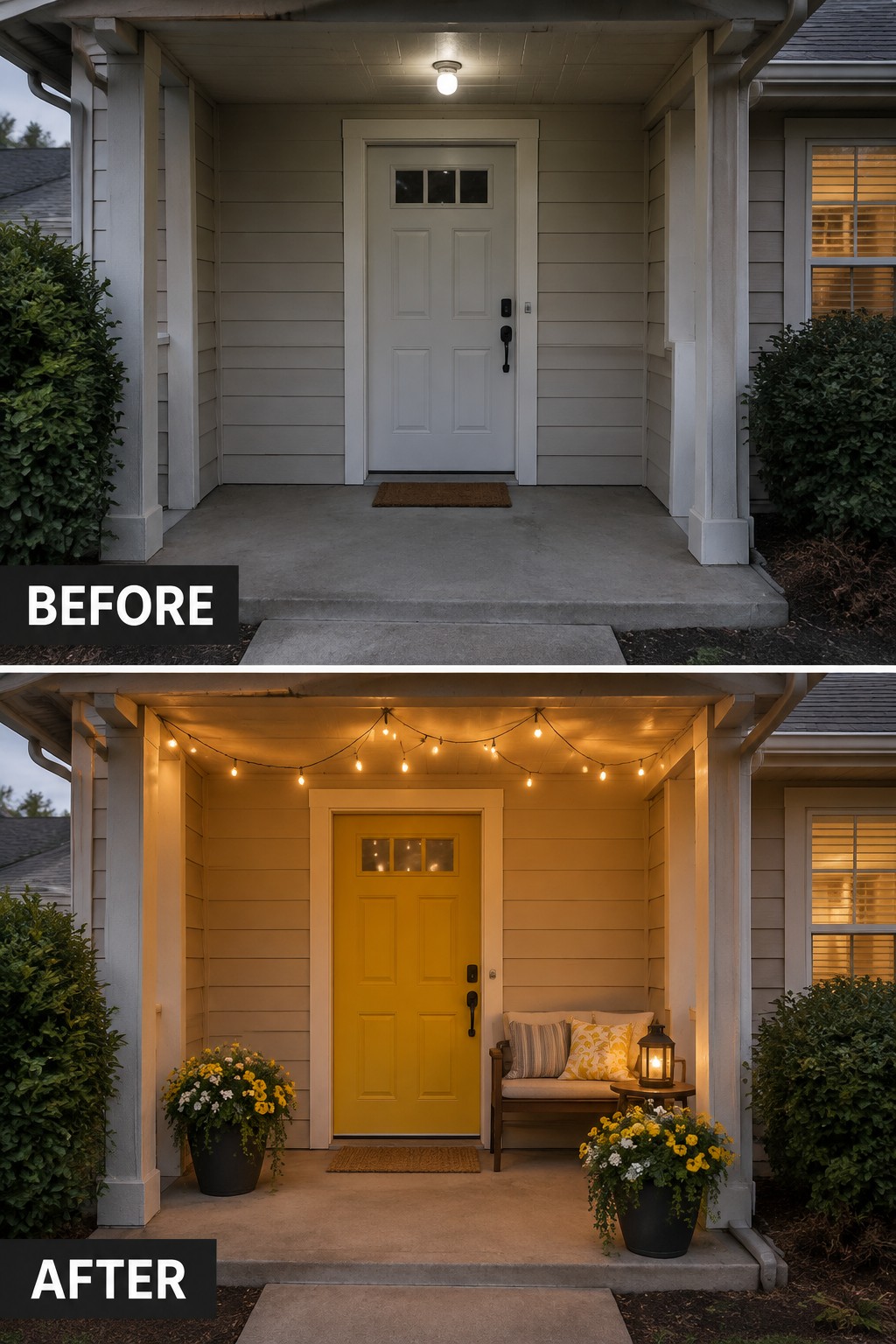
A plain porch can feel more finished when it has a clear purpose. Here, a small bench and a mustard-yellow door make the entry feel like a place to pause, while string lights give the covered area useful evening light.
Try the same idea on a covered front porch, keeping the seating compact so there’s still room to walk to the door. Choose outdoor-friendly cushions and add lights where they’ll brighten the entry without getting in the way.
Add More Natural Light To A Dark Entryway
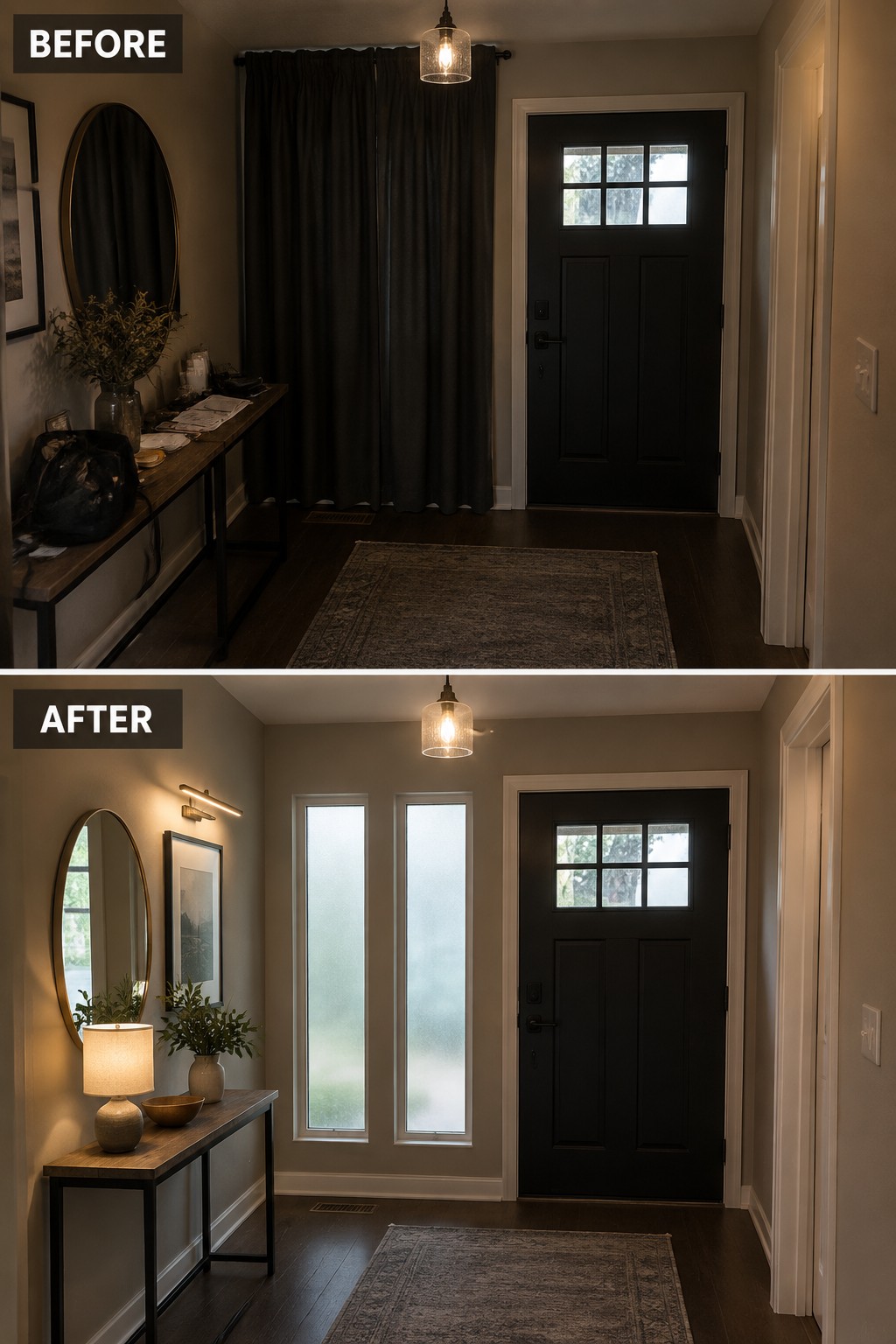
The dark curtains made this entry feel closed off. Replacing them with narrow frosted-glass sidelights brightens the space while still giving the front door some privacy.
This idea works well when an entry has a covered or hidden window nearby that could be opened up to bring in daylight. Check the wall structure before planning new windows, and keep the glass simple so the door remains the main feature.
Replace Entryway Tile With Warm Wood Flooring

The tiled landing makes this entry feel cold and a little dated. Replacing it with wood flooring gives the doorway a more finished, comfortable look, while recessed floor lights help people see the step more clearly.
This idea suits a small front entry where the floor is the first thing guests notice. Choose flooring that can handle wet shoes, and make sure any step lights are positioned to illuminate the walking area without creating glare.
Replace A Plain Front Door With A Brighter Entry

A dark, solid front door can make a small entry feel closed off. Replacing it with a door that has glass above and a lighter interior finish lets more daylight reach the hallway, while a ceiling light helps after dark.
This works especially well in narrow entryways that do not have a nearby window. Choose privacy glass if the door faces a busy street, and keep the main path clear so the added light makes the space feel open rather than crowded.
Make A Narrow Entry Feel More Finished

A narrow entry can feel bare and dim when it has little beyond the front door. Here, brighter ceiling lighting and a slim mirror-and-shelf setup make the space feel more useful without taking up much floor area.
For a similar hallway, choose a shallow shelf and a narrow mirror, then keep the floor clear so there is still room to walk. A light rug can help define the entry, but make sure it fits the passage rather than crowding it.
Turn A Bare Porch Into A Comfortable Entry

The porch feels more useful once it has a clear place to sit. In the after photo, a small bench replaces the cluttered shoe area, while string lights make the covered entry easier to use in the evening.
For a narrow porch, choose a slim bench and keep the walking path clear. A few well-placed lights can make the front door easier to find without crowding the space.
Give An Empty Entryway A Finished Look

A plain entry can feel unfinished even when the walls and flooring are in good shape. Here, a slim console and a rug give the open area a clear purpose, while the wall lights make it feel more considered.
This approach works well in an entry with enough room to keep a narrow table without blocking the door or walkway. Choose a few useful pieces, and keep the surface fairly clear so the entry stays easy to move through.
Brighten A Dark Entryway With Better Lighting

The entryway feels much more usable after the dark floor and dim, enclosed look give way to a light finish and a ceiling light. A bright overhead fixture can make a narrow front-door area easier to see and feel more finished.
In a small entry, use a ceiling fixture that fits the space, then choose light-colored flooring or paint to help reflect its light. A mirror can also make the area feel brighter, but keep the walkway clear.
Use Wall Lights To Brighten A Plain Entryway

The brick wall in this entryway looked dark and bare, so adding two wall lights gives it a clearer focal point and makes the door area easier to see. The simple console table helps the space feel finished, but the lighting is the main change.
Wall lights work well in an entry where there is little room for floor lamps or larger fixtures. Place them to light the wall evenly, and choose bulbs that feel comfortable rather than harsh. If wiring is difficult, plug-in sconces can offer a similar look.
Make A Plain Entryway More Welcoming With Lighting

The entry feels much more finished when the lighting reaches beyond the porch fixture. In the updated version, the door is lighter and a slim light beneath the step helps make the entrance easier to see at night.
For a similar effect, start with a warm porch light, then consider step lighting if the entry has stairs. Keep the fixtures subtle and positioned where they improve visibility without shining into people’s eyes.
Turn A Cluttered Entryway Into A Useful Mudroom

The crowded shoe racks and hanging coats make this entry hard to use. A built-in bench with storage underneath gives shoes a place to go and creates a spot to sit while putting them on. The wall hooks keep everyday coats close at hand without taking up floor space.
This idea works well in a small entry or mudroom where the family comes and goes often. Use baskets that fit the cubbies, and leave enough room on the bench for sitting rather than filling it with extra items.
Update The Sidelights For More Privacy

The glass-block sidelights make this entry feel dim and dated. Replacing them with clear panels and slim blinds brings in daylight while giving you a simple way to control privacy.
This idea works well beside a front door when you want more natural light without leaving the glass uncovered. Choose blinds that fit the narrow panels neatly, and keep them easy to adjust.
Finish A Plain Entryway With A Few Useful Layers

The entry itself is simple, so a few well-chosen pieces make it feel like a finished part of the home. A console table and rug give the space a purpose, while the new hanging fixture replaces the basic ceiling light.
This idea works well in a small front entry where there is room for a narrow table but not much else. Choose a fixture that suits the ceiling height, then keep the surface fairly clear so the doorway stays easy to use.
Add Warm Lighting To Finish A Plain Entryway

The entry feels more finished once the harsh overhead light is replaced by warm wall sconces. They brighten the area around the door and make a plain entry more comfortable to come home to.
This works well in a small foyer where there is little room for furniture or decor. Place sconces at a useful height on either side of the door, and choose bulbs that provide enough light without glare.
Let More Light Through The Entry Door

The crowded shoe area made this narrow entry feel darker and harder to use. Replacing the solid front door with one that has a tall glass panel lets daylight reach farther into the hall, while a slim shoe cabinet keeps footwear contained.
This idea works well in a small entry where a bulky storage unit would block the walkway. Choose privacy glass if the door faces a shared hall, and keep the cabinet narrow enough to leave a clear path.
Frequently Asked Questions
Q: How can I brighten a plain entryway if I can’t add a new light fixture?
A: Start with brighter bulbs in the fixtures you already have, as long as they suit the fixture’s rating. A mirror near the door can also bounce existing light around and make the space feel less closed in.
Q: What kind of lighting works well by the front door?
A: Choose a fixture that casts light across the entry instead of leaving dark corners. A warm, even glow feels welcoming, while a focused light near the lock makes it easier to find your keys at night.
Q: Can I make a small entryway feel brighter without adding more decor?
A: Yes. Keep the area around the door clear, use a light paint color, and swap a dark doormat for a lighter one. Even a small change can help the entry feel more open.
