
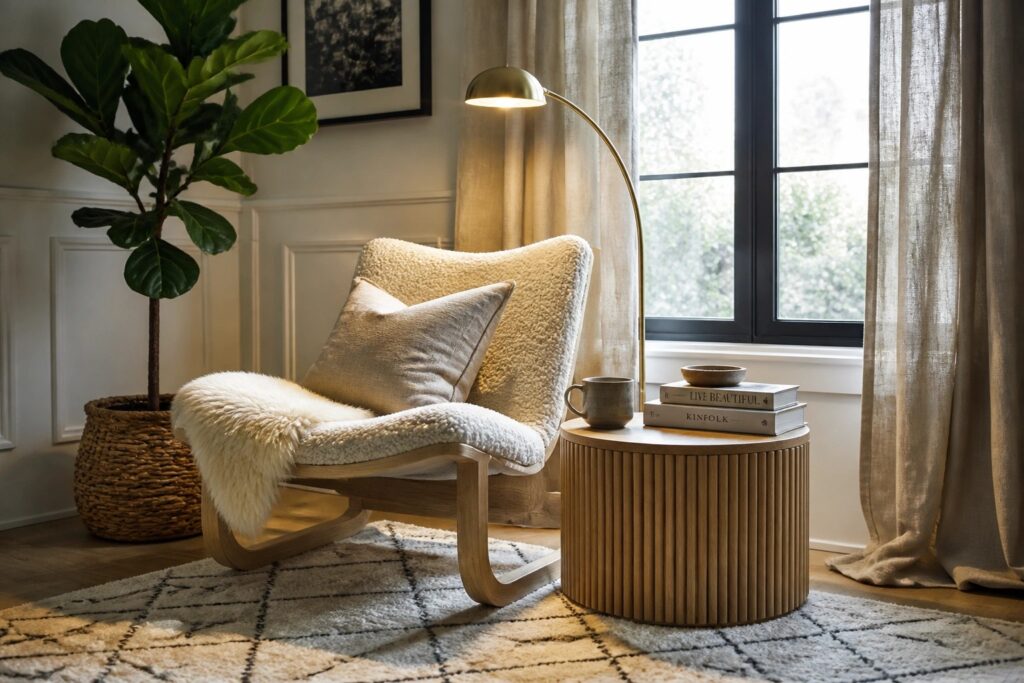
Living rooms tend to feel more balanced when the corners are put to use instead of left empty.
I usually notice that seating tucked into a corner needs the right scale so it does not overwhelm the rest of the furniture.
The right scale matters most.
People often overlook how a simple bench or pair of chairs can turn an awkward spot into the place they use every day.
Testing a few options in person shows which ones actually hold up to regular use.
A Chair and Throw in the Corner

A simple armchair tucked into the corner can turn an empty spot into a place to sit and relax. The key is keeping the chair low and adding a soft throw across it so the whole setup feels comfortable rather than formal.
This works well in living rooms that already have enough seating but need one quiet spot for reading or morning coffee. Keep the surrounding pieces minimal so the corner stays open and easy to use.
Built-In Shelves Next to Corner Seating
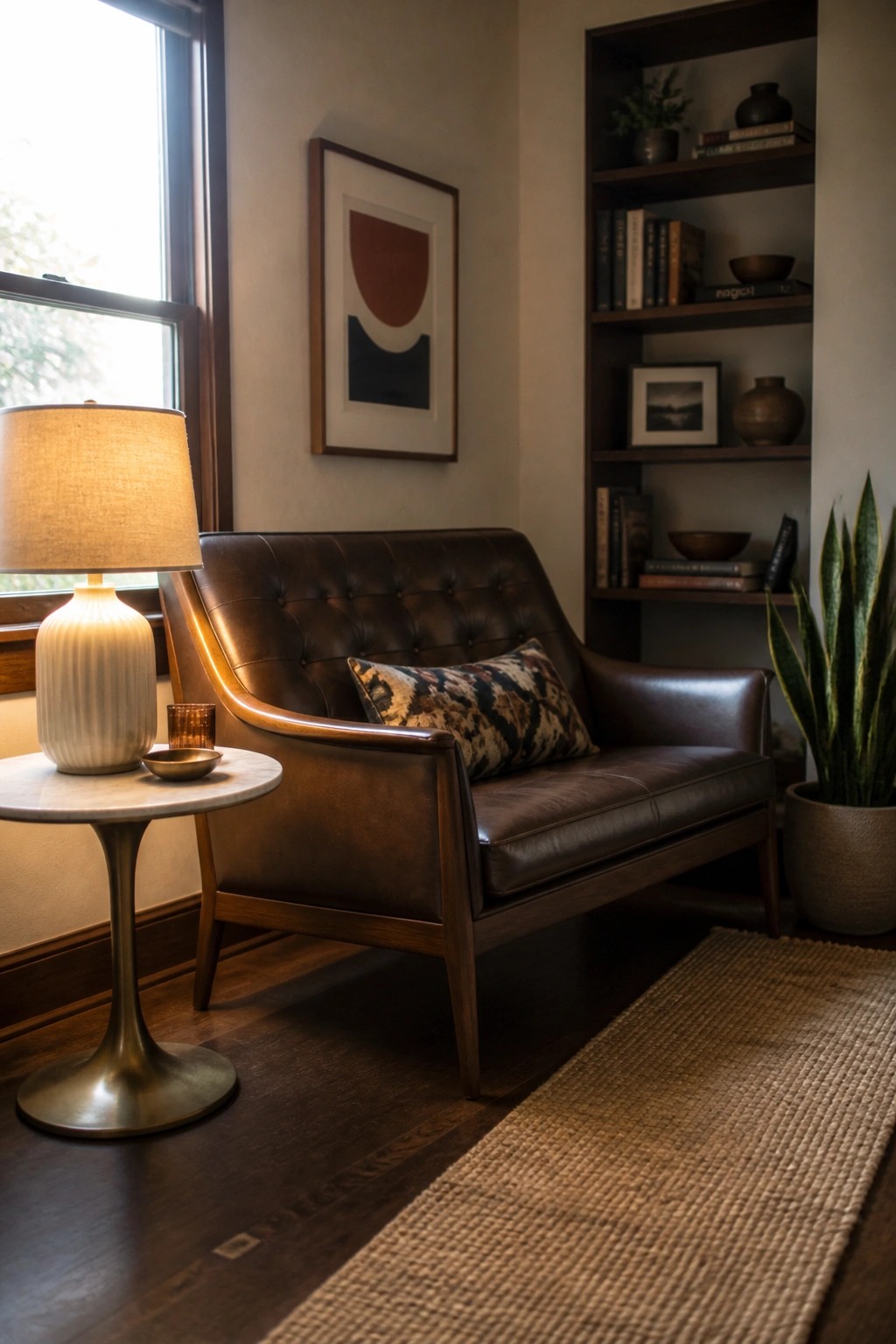
A sofa tucked into a corner often feels a bit lost on its own. Adding built-in shelves right beside it gives the spot structure and a place to store or show a few books and objects without adding more furniture.
This works best in smaller living rooms or homes that already have some millwork. Keep the shelves fairly open so the seating area stays the main focus rather than turning into a full library wall.
A Chaise Lounge In The Corner
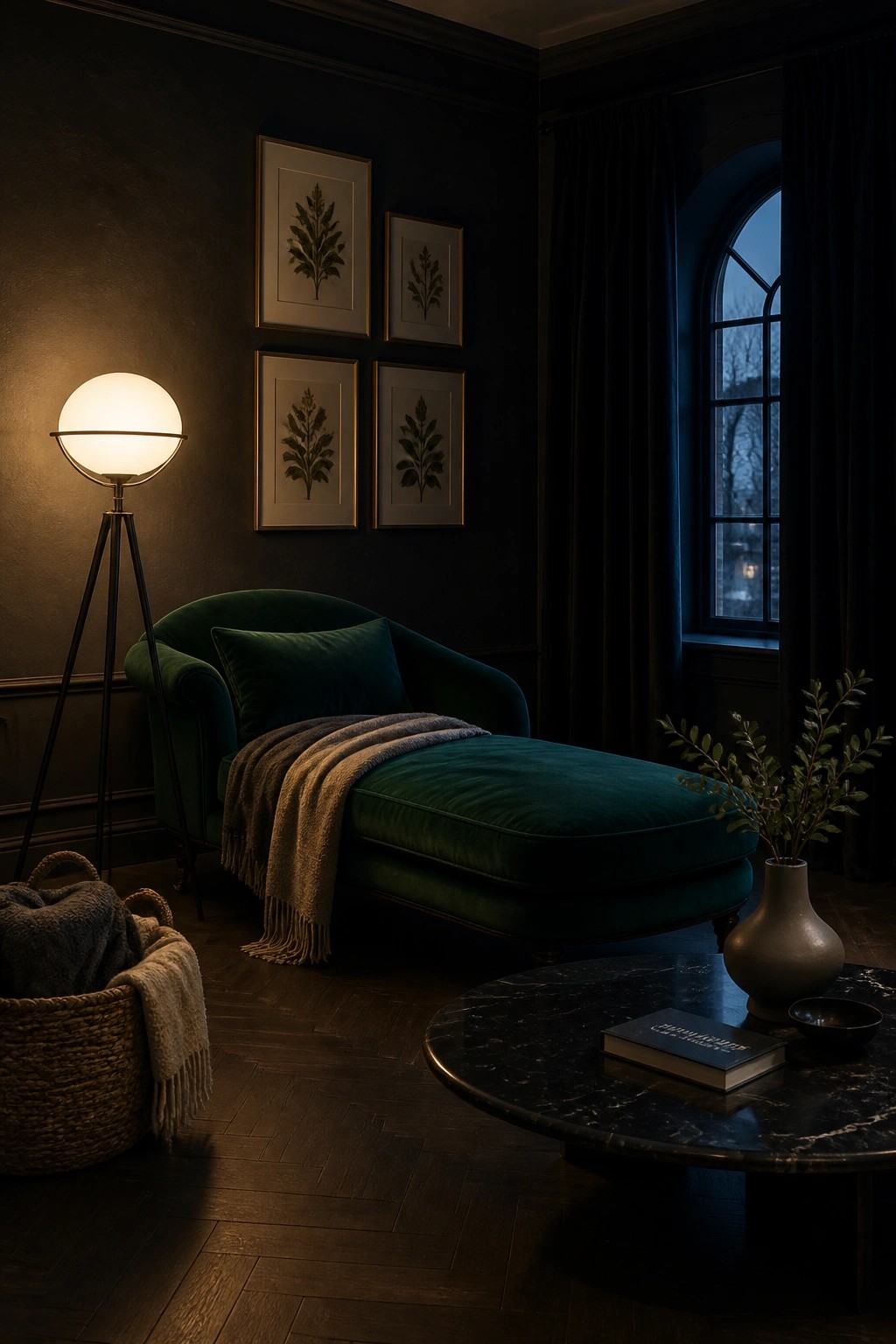
A chaise lounge can make an underused corner feel more purposeful without crowding the room. The longer shape gives you room to stretch out, which works better than a standard chair when you want a place to read or rest for a while.
This setup fits best in living rooms with darker walls or heavier fabrics already in place. Keep the rest of the corner simple and add a lamp close by so the spot feels separate from the main seating area.
Corner Seating With A Slipcovered Chair
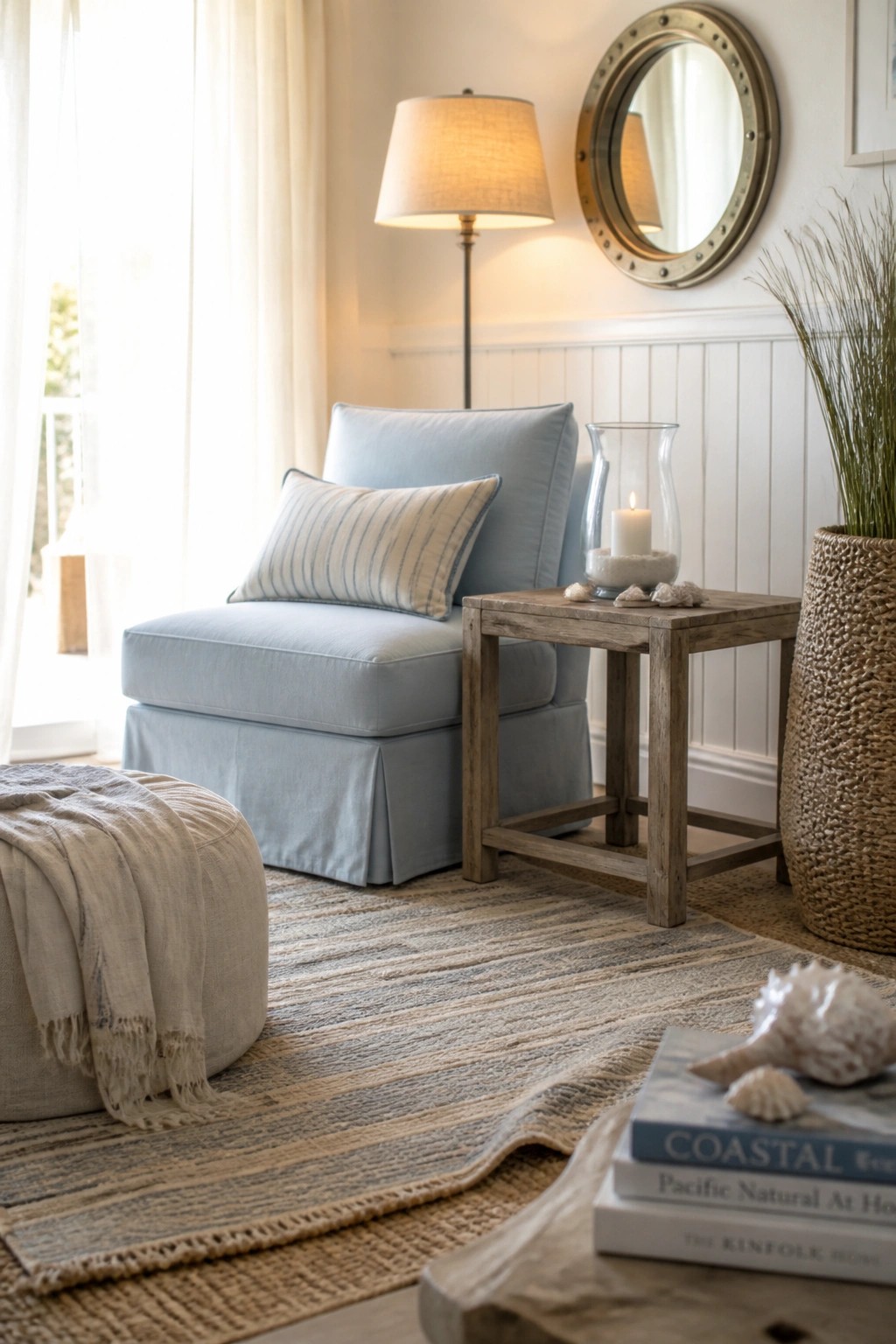
A slipcovered armchair tucked into a corner gives you a quiet spot to sit without crowding the room. The soft fabric and low profile keep things relaxed while still looking put together.
This setup works best in living rooms that already have a main seating area but need one more place to land. Keep the fabrics light and add a simple ottoman so the corner stays open and easy to move around.
Leather Chair And Ottoman In The Corner
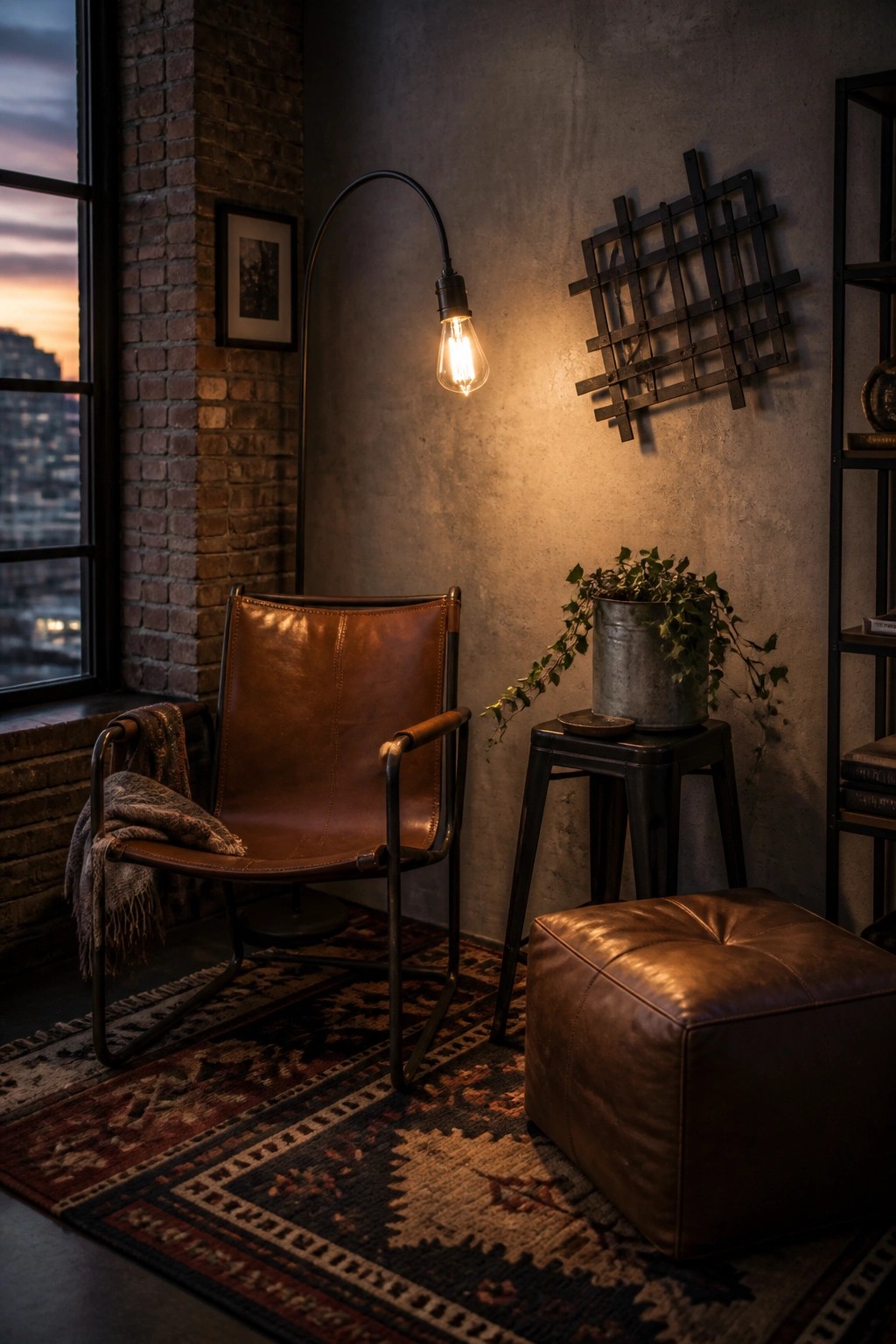
A leather sling chair with an ottoman tucked beside it makes good use of an empty corner. The low profile keeps the space open while still giving you a real place to sit and relax without taking over the room.
This setup works well in smaller living rooms or apartments where you want one quiet spot without adding a full sofa. Keep the chair and ottoman in similar tones so they read as one unit, and add a floor lamp if the corner feels dark.
A Chaise Lounge For Corner Seating

A chaise lounge gives you a relaxed seat without crowding the room. It slips into a corner and turns that empty space into something useful instead of leaving it bare.
This idea suits smaller living rooms or homes that need an extra quiet spot. Keep the fabric simple and add a small table nearby so the area feels finished without extra furniture.
Low Lounge Seating In A Corner
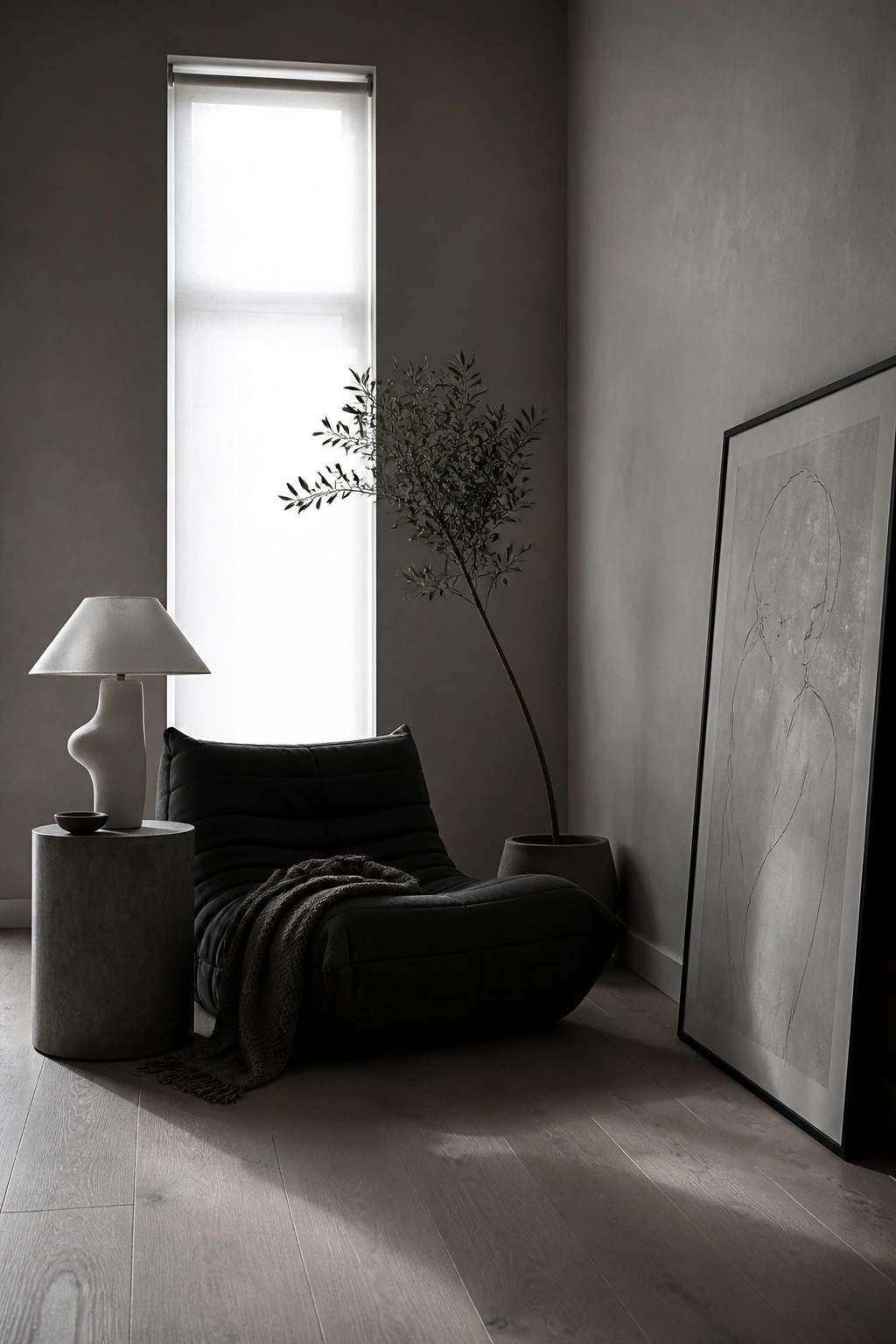
A low lounge chair gives a corner real purpose without taking up much visual space. It creates a relaxed spot that feels separate from the rest of the room while still staying connected to it. The simple shape and dark tone help it settle into the space without feeling heavy.
This works best in living rooms that already lean minimal. Keep the other pieces low and quiet so the chair can do its job. Avoid crowding it with too many side tables or accessories.
Rattan Chairs for Comfortable Corner Seating

A rattan chair can turn an empty corner into a spot that actually gets used. The natural weave adds texture without feeling heavy, and it works especially well when you add a few cushions and a throw to make it feel softer.
Try placing one near a window or next to a few plants so the corner feels connected to the rest of the room. It suits homes that already lean toward natural materials and works best when you keep the surrounding pieces simple rather than adding too many extras.
Built-In Window Seats With Storage

A built-in window seat makes good use of an awkward corner by combining seating and storage in one piece. It turns unused wall space into something practical without crowding the room with extra furniture.
This setup works best in living rooms or bedrooms that need more places to sit but lack floor space. Drawers and open baskets underneath keep things tidy while the seat itself can be softened with cushions for everyday use.
Tufted Sofa Corner Seating

A tufted sofa gives a corner real purpose. It turns an empty spot into a comfortable seat without crowding the room or needing extra furniture around it.
Place the sofa along two walls near a window or next to a low chest. This setup works best in living rooms that already have some wood pieces or built-ins, since the sofa softens the lines while keeping the space looking balanced.
A Simple Corner Seat With An Armchair And Pouf

A low armchair paired with a floor pouf makes a corner feel finished without taking up much room. The setup works because it stays low and open, so light can still move through the space and the seating does not block the view of the rest of the room.
This kind of corner works best in smaller living rooms or in spots where a full sofa would feel too heavy. Keep the side table small so it does not crowd the chair, and choose a pouf that can double as extra seating when guests arrive.
Curved Sofas In Living Room Corners

A curved sofa works well when a corner has windows or a fireplace that already shape the space. It follows the layout instead of fighting it, so the seating feels like it belongs there from the start.
This setup suits older homes or rooms with bay windows where straight furniture would leave wasted space. Keep the rest of the room simple so the curve stays the main feature and the seating area does not feel crowded.
Corner Seating With A Simple Wooden Chair

A plain wooden chair can turn an empty corner into a useful spot without much effort. Pairing it with a low stump table keeps things practical and gives the area a grounded feel that suits everyday use.
This setup works best in living rooms that already have wood tones or simple finishes. Add a pillow and a folded quilt so the chair feels ready for reading or sitting without overfilling the space.
Curved Sofas for Corner Seating
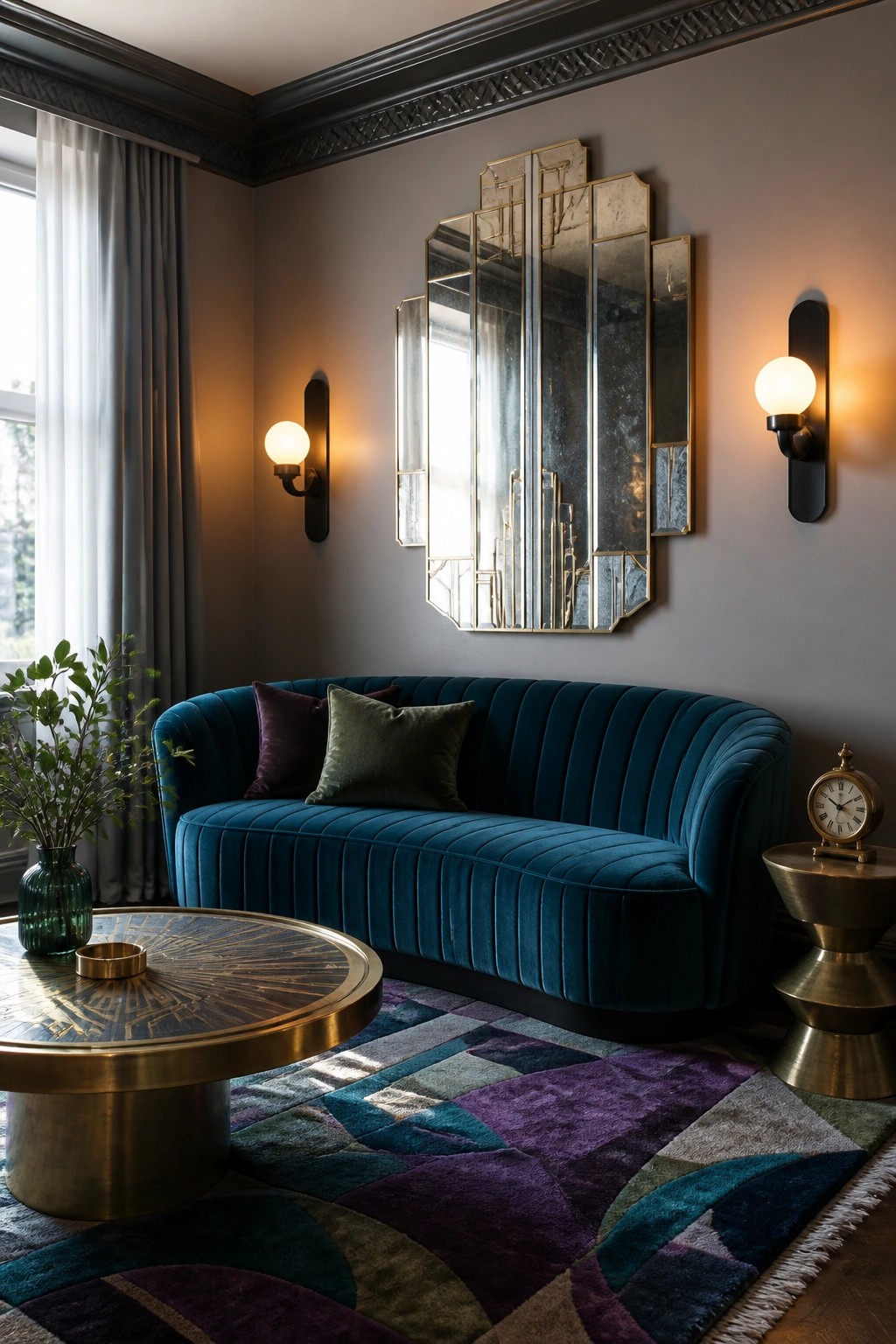
A curved sofa can make a corner feel more intentional and comfortable. The rounded shape helps the piece sit neatly against two walls and softens the overall look of the room.
This works well in living rooms that need a clear seating spot without filling the space with too many pieces. Keep the surrounding walls simple and add just enough lighting to highlight the area.
Corner Seating Beside A Fireplace
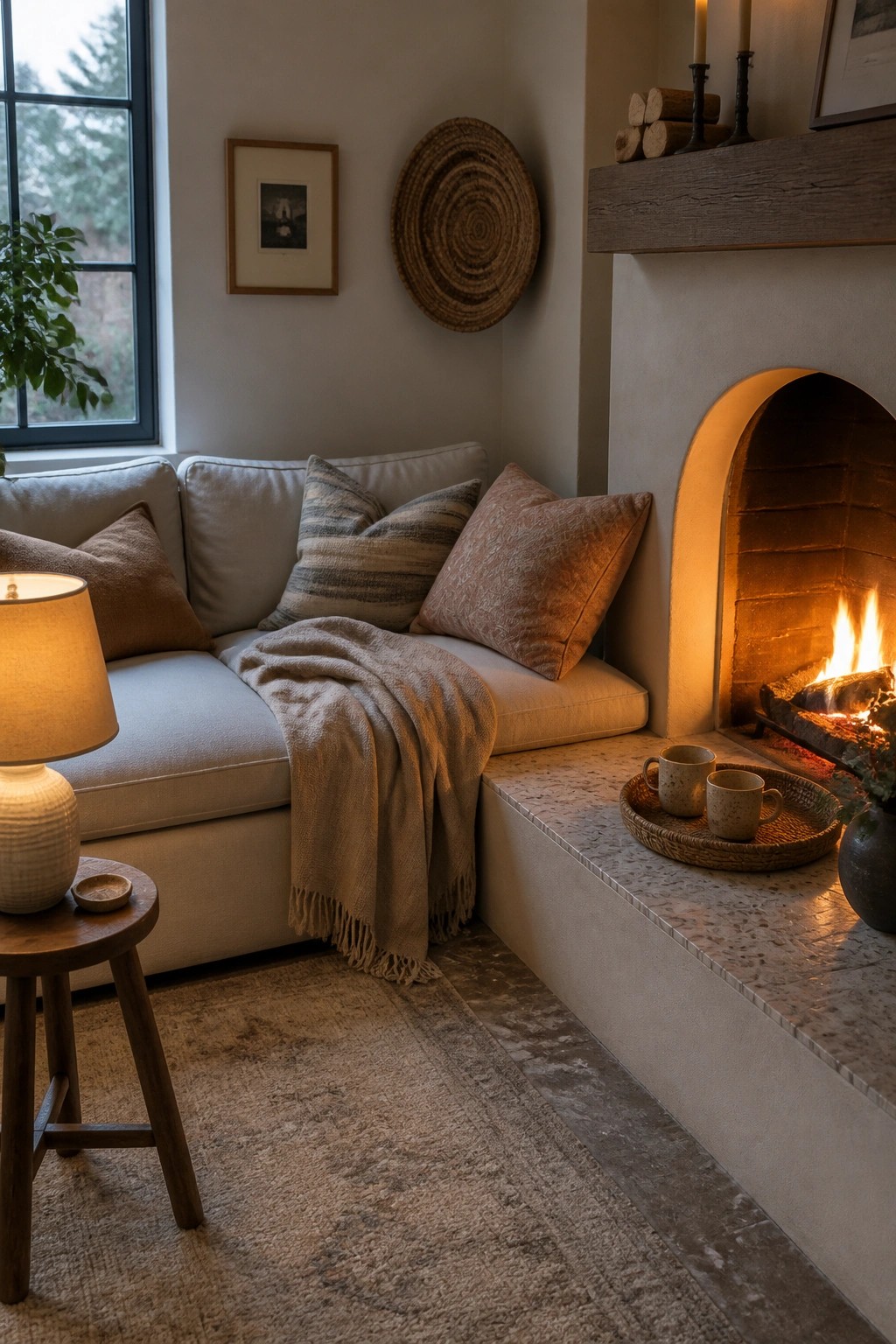
Tucking a sofa into the corner right next to a fireplace gives the room a natural spot to gather without adding extra pieces. The hearth extends the seating area in a simple way and keeps everything close to the heat source.
This works well in living rooms that already have a corner fireplace and need a practical layout. Keep the surrounding pieces light so the space stays open and easy to move around.
Leather Armchair Corner Seating

A leather armchair makes a strong corner seating choice because it feels substantial without crowding the space. The clean lines and sturdy frame keep things looking polished even when the rest of the room stays fairly simple.
This setup works best in living rooms that already mix materials like metal, wood, and concrete. Keep the surrounding area light so the chair can serve as the main seating spot without extra pieces fighting for attention.
Low Bench Seating Along The Wall

A low bench with simple cushions creates an easy seating spot that does not take over the room. It sits close to the floor so the space stays open and feels calmer than a regular sofa would.
This setup works well in smaller living rooms or in homes that lean toward minimal styles. Keep accessories few and low, like a tray on one end, so the bench stays useful without looking busy.
Curved Sofas For Corner Seating

A curved sofa can turn a plain corner into a natural seating spot. It follows the shape of the room instead of cutting across it, which makes the area feel more enclosed and comfortable without needing extra walls or dividers.
This works best in living rooms that already have some structure around the edges. Keep the table low and the rug layered so the sofa remains the main feature, and avoid crowding the open side with too many pieces.
Frequently Asked Questions
Q: How can I fit corner seating into a smaller living room?
A: Choose pieces with clean lines that sit low to the ground. A single loveseat angled into the corner often takes up less room than you expect. Leave the walls clear above it to keep the space feeling open.
Q: What if my corner has windows or awkward angles?
A: Angle a single armchair to face into the room instead of forcing it flush against the walls. Add a small side table nearby for lamps or drinks. The window light will actually highlight the seating area nicely.
Q: How do I make the corner feel connected to the rest of the room?
A: Repeat a fabric or color from your main sofa in the corner pillows or a throw. Keep the scale similar so nothing looks out of place. One accent chair can tie everything together without extra effort.
