

A fireplace can make a dining room feel warmer, but it also changes how the table, chairs, and walkways need to fit together.
I find that the rooms that work best give the hearth a clear role without making it awkward to pull out a chair or move around the table.
Some keep the furniture simple so the fireplace stands out, while others bring in layered textures and softer lighting to balance the room.
The details I notice first are often practical ones, like where the fire sits in relation to the table and whether the seating feels comfortable for a long meal.
These rooms offer ideas worth adapting, especially if you want a dining space that feels cozy in daily use, not just in a photo.
Let the Fireplace Set the Dining Room Layout
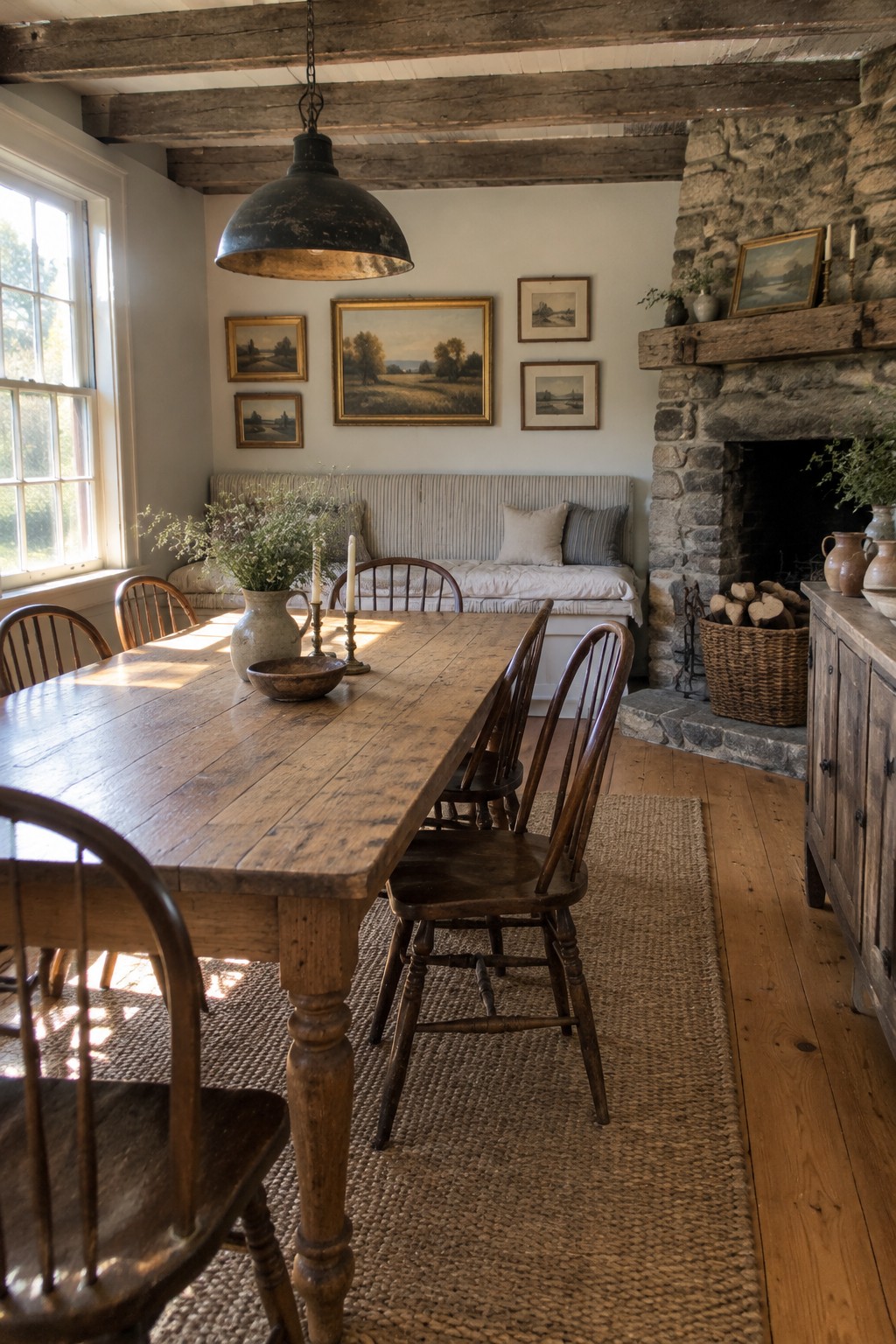
A fireplace can make a dining room feel settled and comfortable, especially when the table sits close enough for the hearth to be part of everyday meals. Here, the stone fireplace gives the dining area a clear focal point without taking attention from the long farmhouse table.
This arrangement works well in older homes with an open dining and sitting area. Keep a clear path around the table, and choose chairs that can move easily so the room still feels practical when the fireplace is in use.
Use a Linear Fireplace to Save Dining Space

A fireplace can give a dining area a clear focal point without taking up much floor space. A long, narrow insert built into the wall keeps the fire visible while leaving room for a dining table nearby.
This setup works well in an open dining room where the fireplace can be enjoyed from the table. Keep the surrounding wall simple, and check that chairs can be pulled out comfortably without crowding the hearth.
Let The Fireplace Lead The Dining Room

A fireplace can make a dining room feel settled and comfortable, especially when the table sits close enough for the hearth to be part of the meal. A dark brick surround gives this room a clear focal point without needing much extra decoration.
This setup suits older homes and rooms where the fireplace already shapes the layout. Keep the table far enough back for chairs to move easily, and let the hearth remain easy to reach.
Arrange the Dining Table in Front of the Fireplace

A dining table placed in front of the fireplace makes the hearth part of everyday meals, not just a feature to look at from across the room. A long wood table suits this arrangement, while the fireplace gives the dining area a clear focal point.
This layout works best when there is enough room to pull out chairs and walk around the table. Built-in shelves beside the hearth can hold dishes or a few simple accents, but leave the mantel fairly open so the fireplace stays easy to see.
Create a Traditional Dining Room Around the Hearth
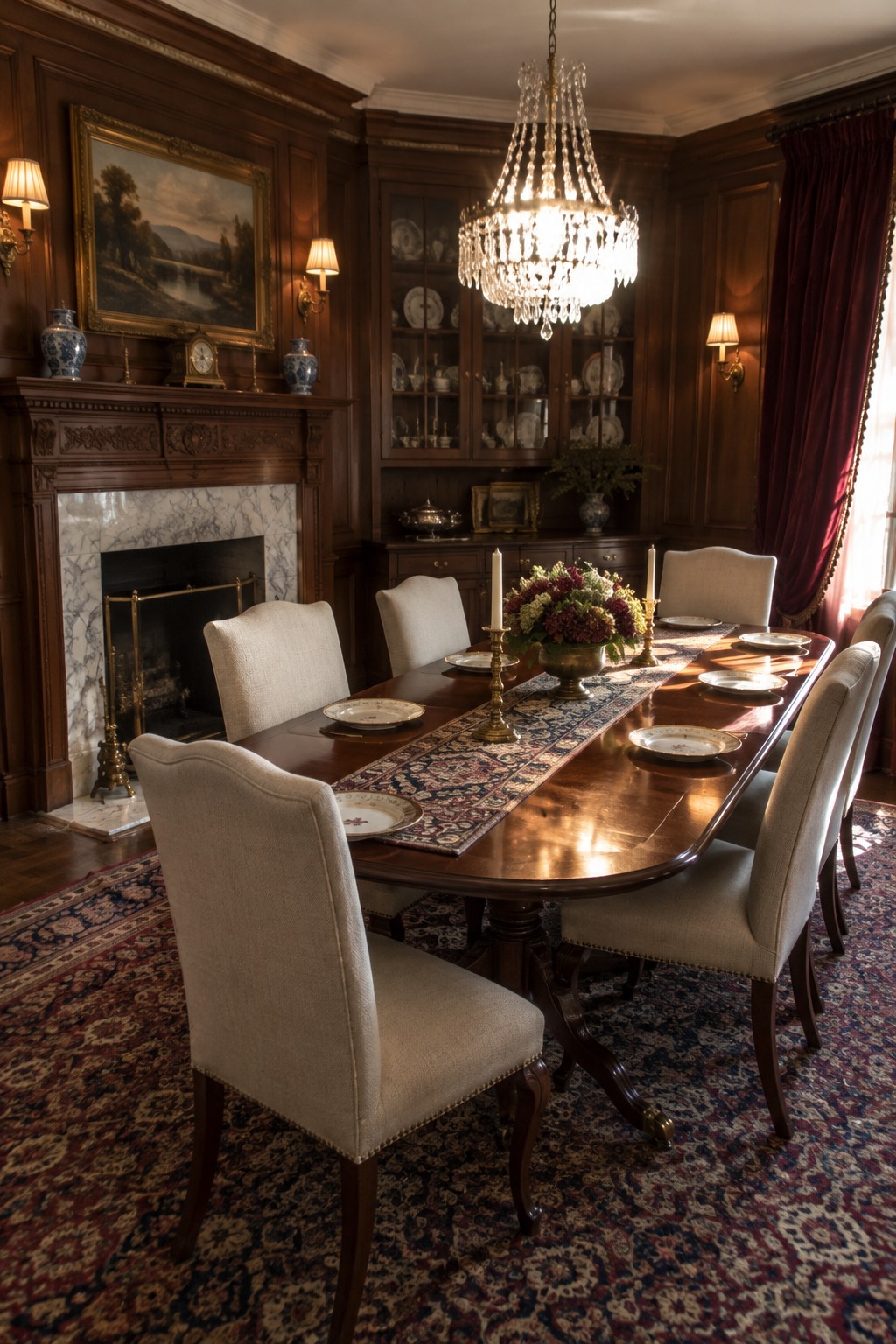
A fireplace can make a dining room feel like a place to linger, not just a spot for meals. Keeping the dining table close to it makes the hearth part of everyday use, while a traditional mantel suits a room with older details.
This approach works especially well in a dedicated dining room. Leave enough space to move chairs comfortably, and keep the table clear of the hearth opening.
Use a Corner Fireplace to Warm the Dining Area
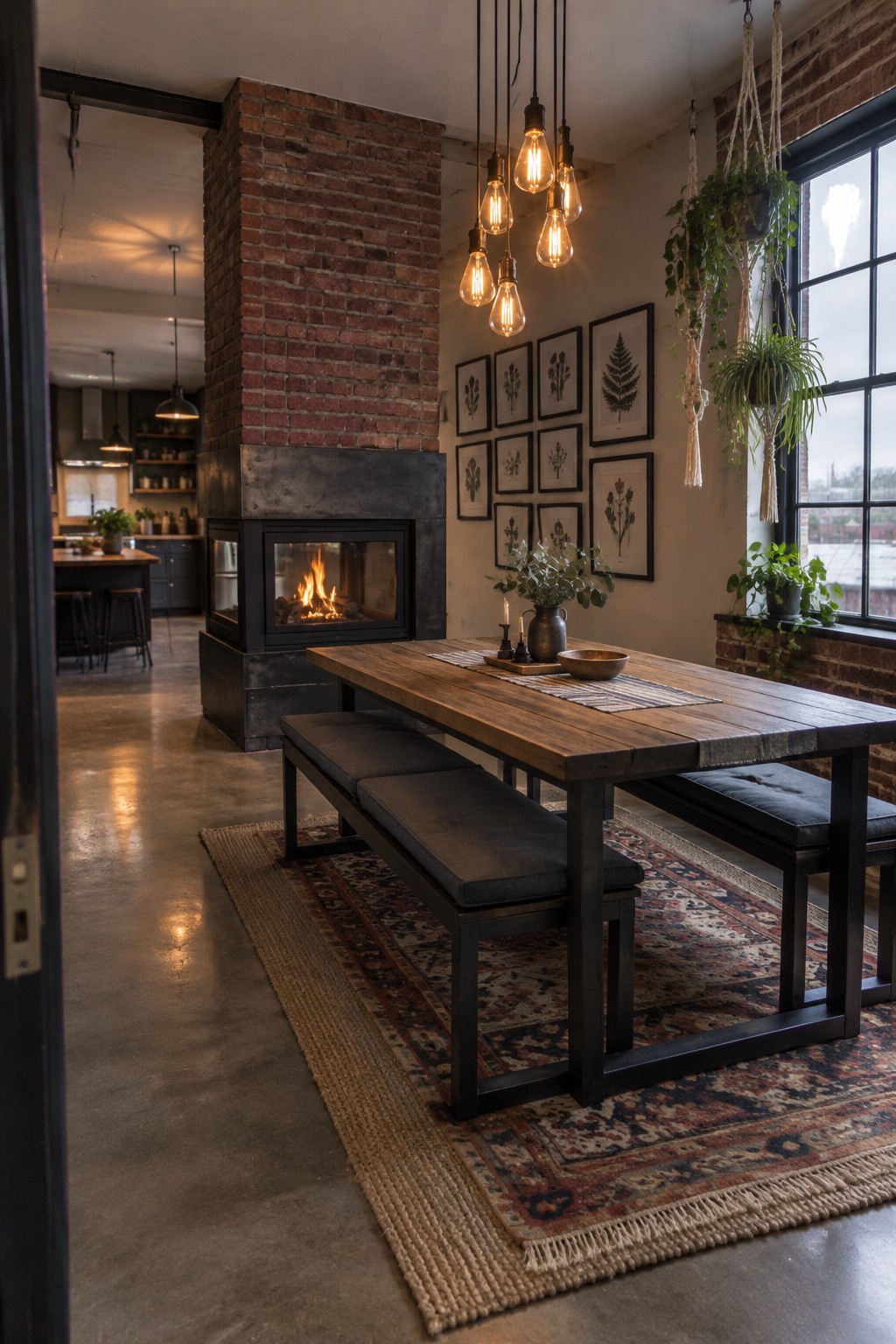
A fireplace can make a dining area feel comfortable without taking up space in the center of the room. Here, a corner-style fireplace sits beside the table, so diners can enjoy the fire while the walkway stays clear.
This layout suits open-plan rooms where the dining space shares an area with the kitchen or living room. Leave enough room to pull out chairs and pass by the hearth safely.
Use a Round Table for Easier Conversation

A round table makes a fireplace dining room feel comfortable and easy to use. There are no corners to work around, so people can sit close enough to talk, even when the room is fairly small.
Choose a table size that leaves clear space around the chairs, especially near the hearth. A dark wood finish suits a traditional room like this, but the shape can work just as well in a simpler home.
Use a Small Dining Table Near the Fireplace
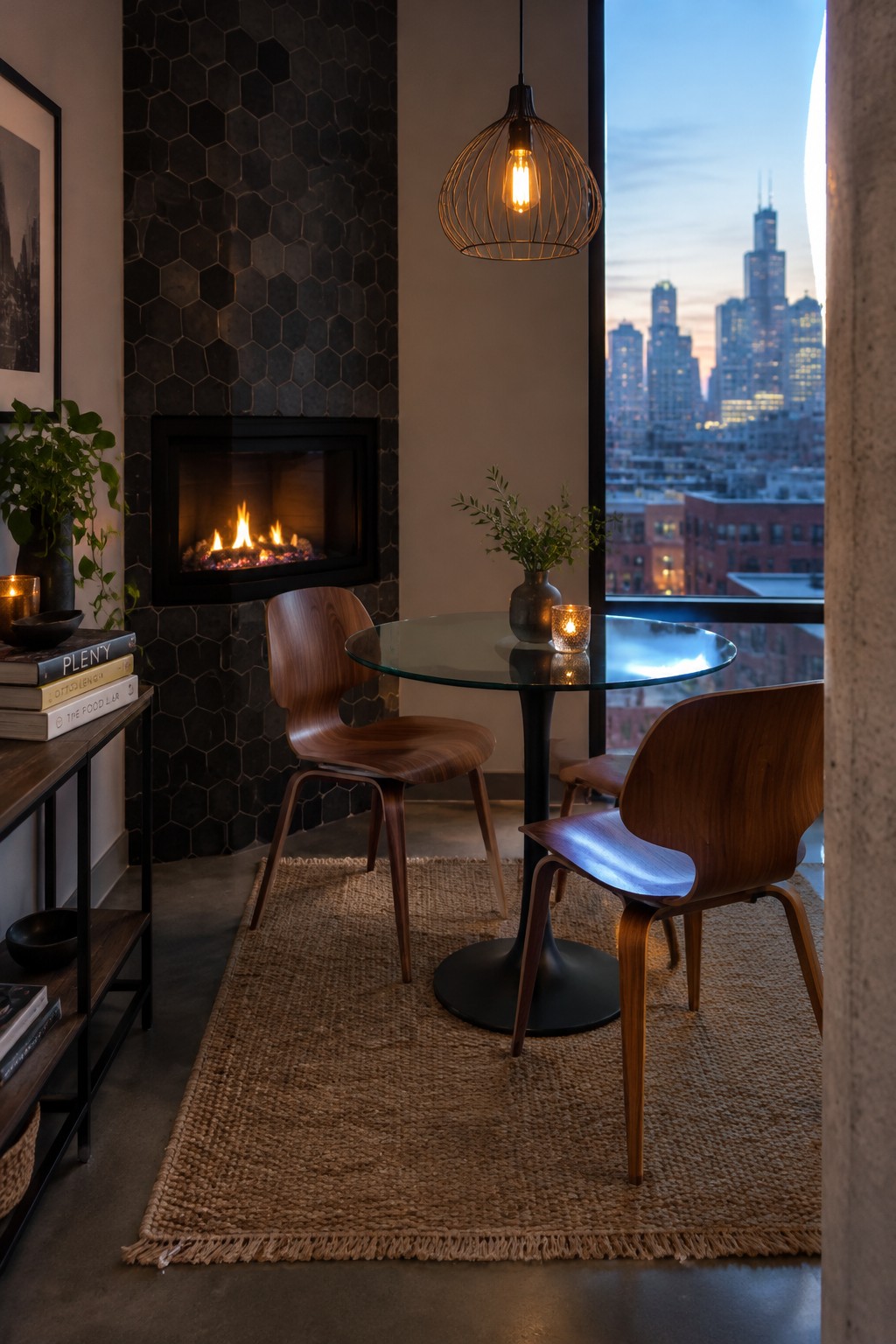
A compact round table can make a dining area beside a fireplace feel comfortable without crowding it. In this room, the glass top keeps the small footprint visually light, while the fireplace remains easy to see from the chairs.
This setup suits an apartment dining nook or an open-plan room with limited space. Leave enough room to pull out each chair, and choose a table size that keeps the path to the fireplace clear.
Use Natural Materials Around the Fireplace

A simple plaster fireplace can make a dining room feel settled without much extra decoration. Here, the rough finish works naturally with the solid wood table, so the fireplace feels like part of the room rather than a feature added later.
Try this approach in a dining room where you want a relaxed, lived-in feel. Keep nearby furniture and finishes fairly simple, and leave enough room to pull chairs out comfortably.
Use a Low Table Around a Sunken Hearth

A low dining table arranged around a sunken hearth makes the fireplace part of the meal, rather than a feature off to one side. The close seating suits relaxed dining and gives everyone a shared place to gather.
This setup works best in a room with enough floor space for cushions and clear paths around the table. A built-in hearth can make the layout feel settled, but leave room to get in and out comfortably.
Use Built-In Shelves Around the Fireplace
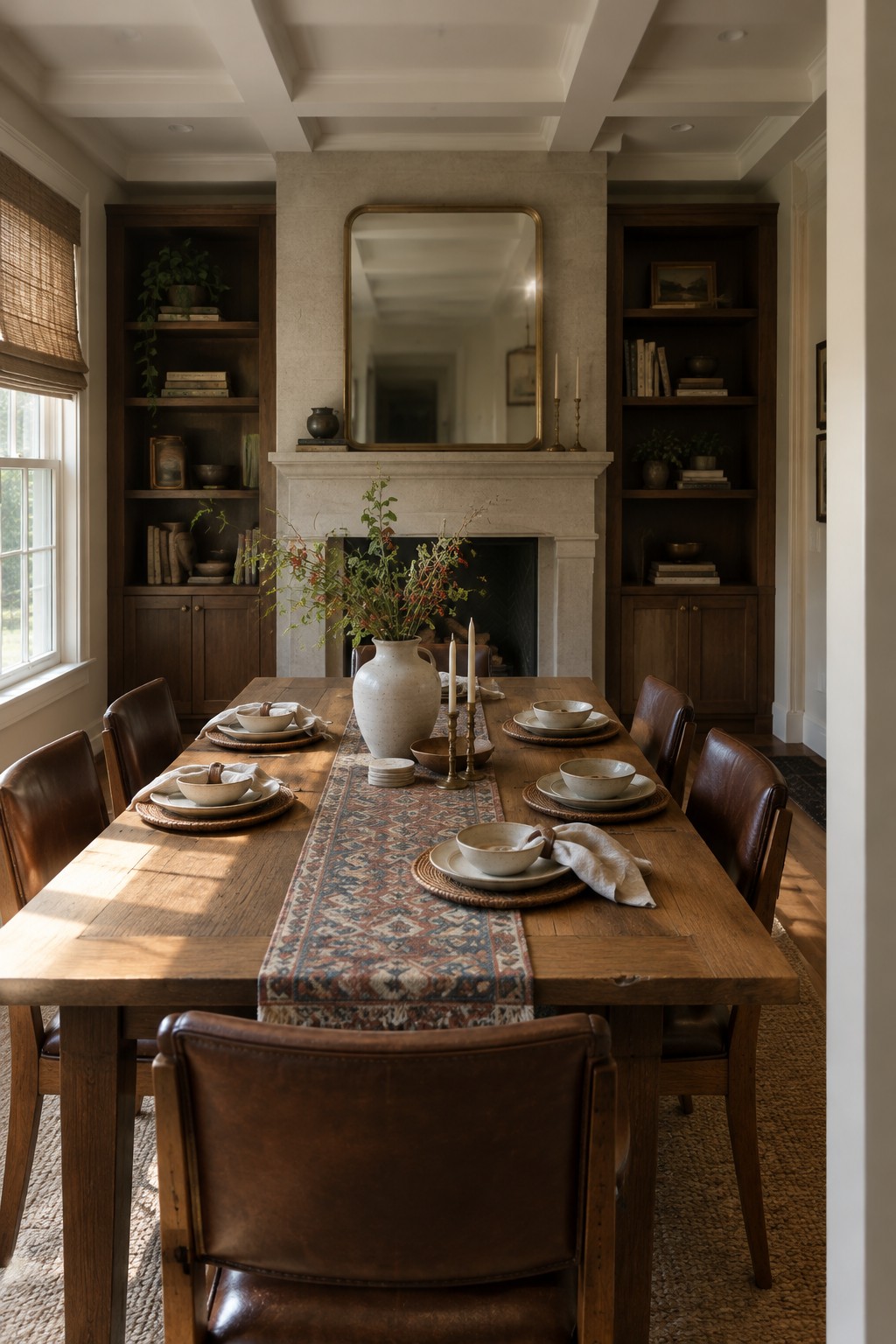
Built-in shelves beside a dining room fireplace make use of wall space that might otherwise go unused. Here, they also give the fireplace a natural place in the room’s layout without taking attention away from the dining table.
This approach suits rooms where the fireplace sits on a broad wall. Keep the lower cabinets closed for less-used items, and leave some open shelf space so the built-ins do not feel crowded.
Use a Rustic Table for a Cozy Dining Room

A thick, rough-hewn wood table gives a dining room a sturdy, lived-in feel that suits a fireplace focal point. The natural finish works especially well in a cabin or older home, where it feels at home beside stone and other weathered materials.
Look for a table with enough room for everyday meals, but keep the surrounding seating easy to move around. A simple runner can dress it up without hiding the wood.
Let the Fireplace Shape the Dining Room
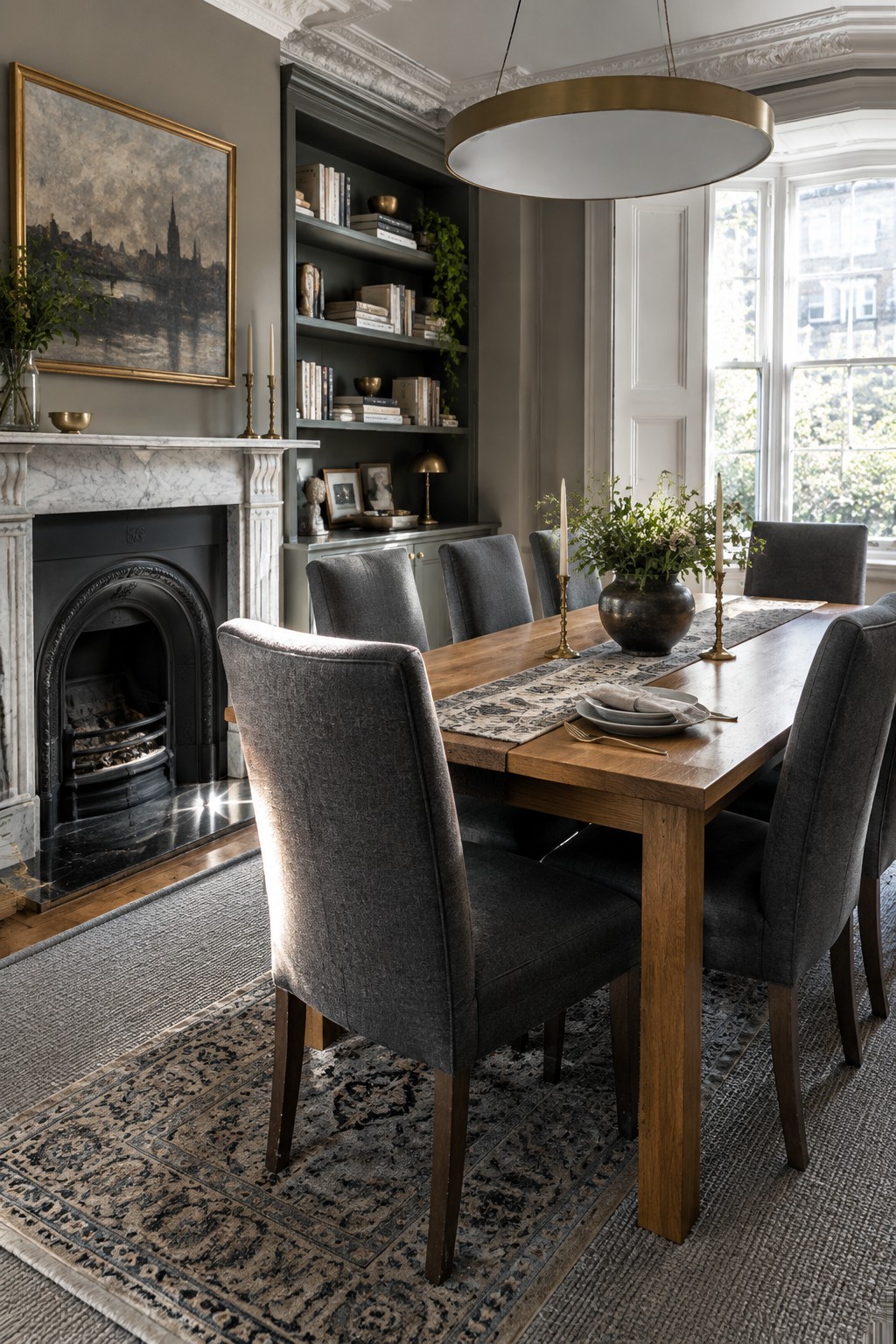
A fireplace can give a dining room a natural center, even when the table sits slightly off to one side. Here, the built-in shelves beside the mantel help connect the hearth to the dining area without making the room feel crowded.
In a room with a fireplace like this, keep the table close enough to feel part of the same space, but leave a clear path around the chairs. This arrangement suits older homes with a separate dining room, especially when the fireplace is used as a focal point even outside the colder months.
Choose Colorful Chairs for a Relaxed Dining Room

Colorful chairs can make a dining room feel collected and comfortable without requiring a matching set. Here, the mix of painted chair colors suits the patterned fireplace tiles and gives the dining area an easy, lived-in feel.
This approach works especially well with a simple wooden table, which lets the chairs bring in color without making the room feel busy. Try two or three shades that already appear elsewhere in the room, and keep the chair shapes fairly similar if you want the mix to feel settled.
Keep the Dining Table Close to the Hearth
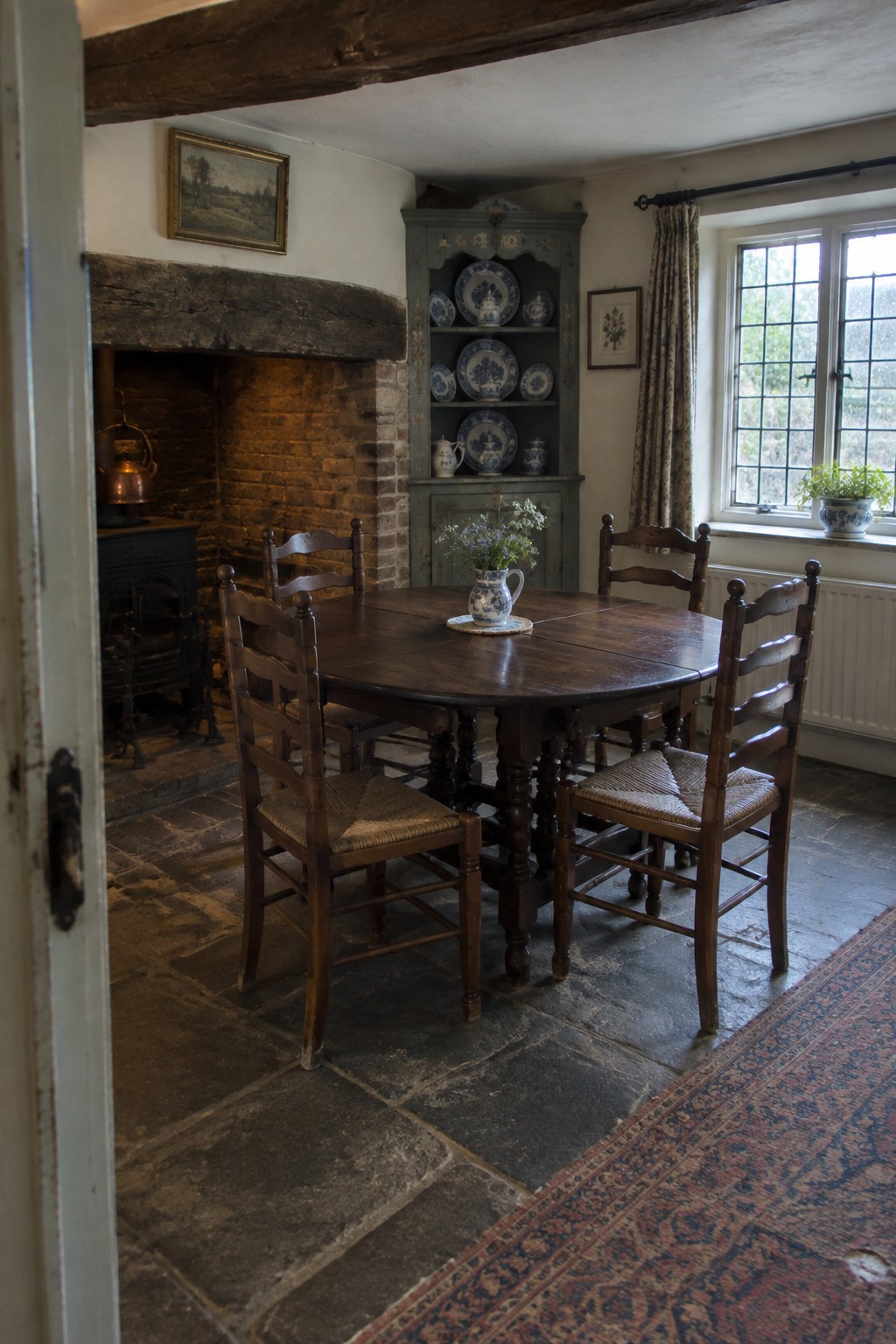
A dining table near the fireplace makes the hearth part of everyday meals, not just a feature to admire from across the room. Here, the large hearth and sturdy wooden table suit each other, giving the dining area a comfortable, lived-in feel.
This arrangement works well in older homes where the fireplace already shapes the room. Leave enough space to pull out chairs and move around the table, especially if the hearth projects into the room.
Choose a Natural Wood Table for a Cozy Dining Room
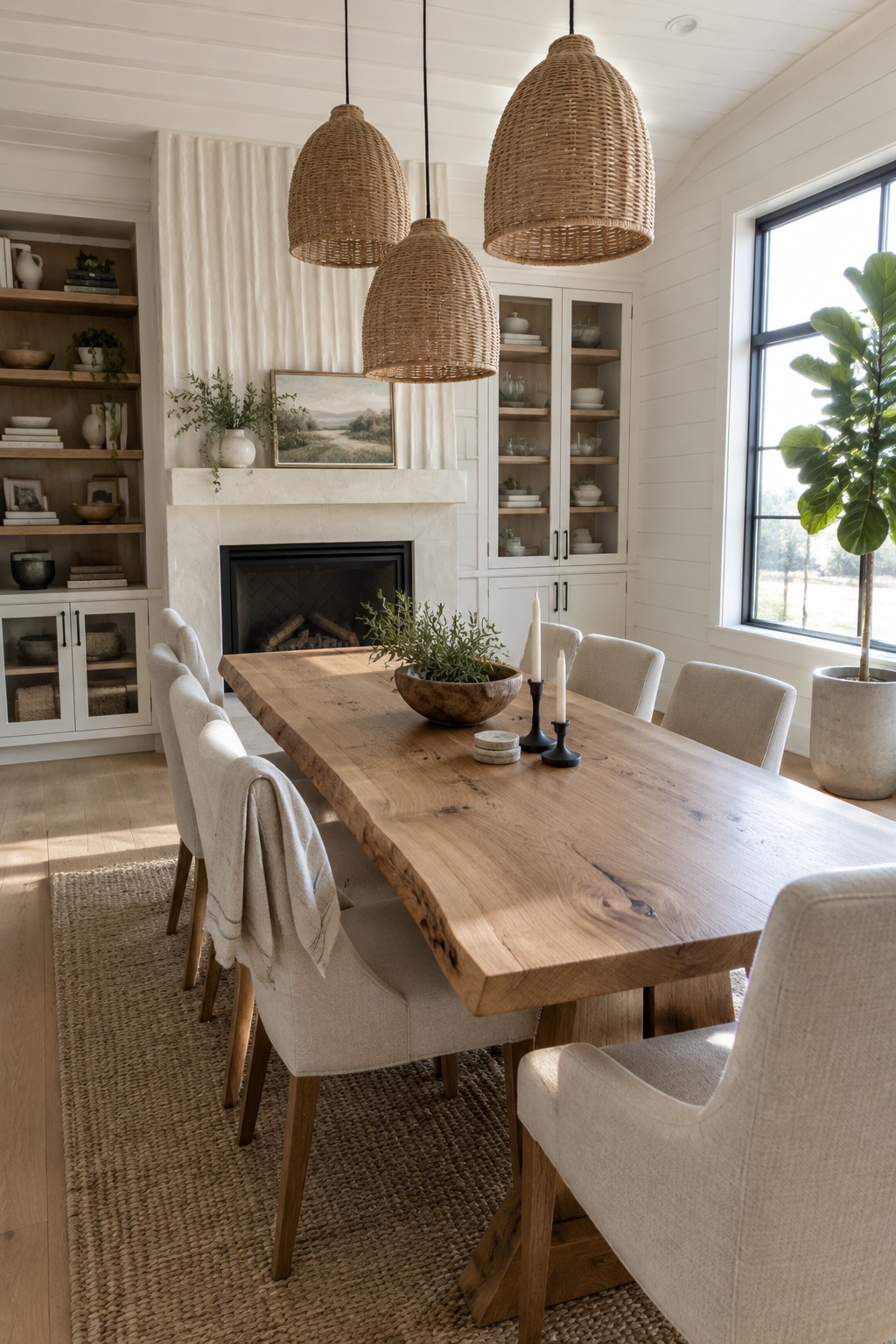
A solid wood table gives a dining room a relaxed, lived-in feel, especially beside a fireplace. The thick, irregular tabletop here brings a simple natural texture to the space without making the room feel formal.
This kind of table suits a home with warm, easygoing finishes. Pair it with upholstered chairs for comfort, and leave enough room around the table for people to pull their chairs out without crowding the fireplace.
Make a Built-In Fireplace the Dining Room’s Focal Point
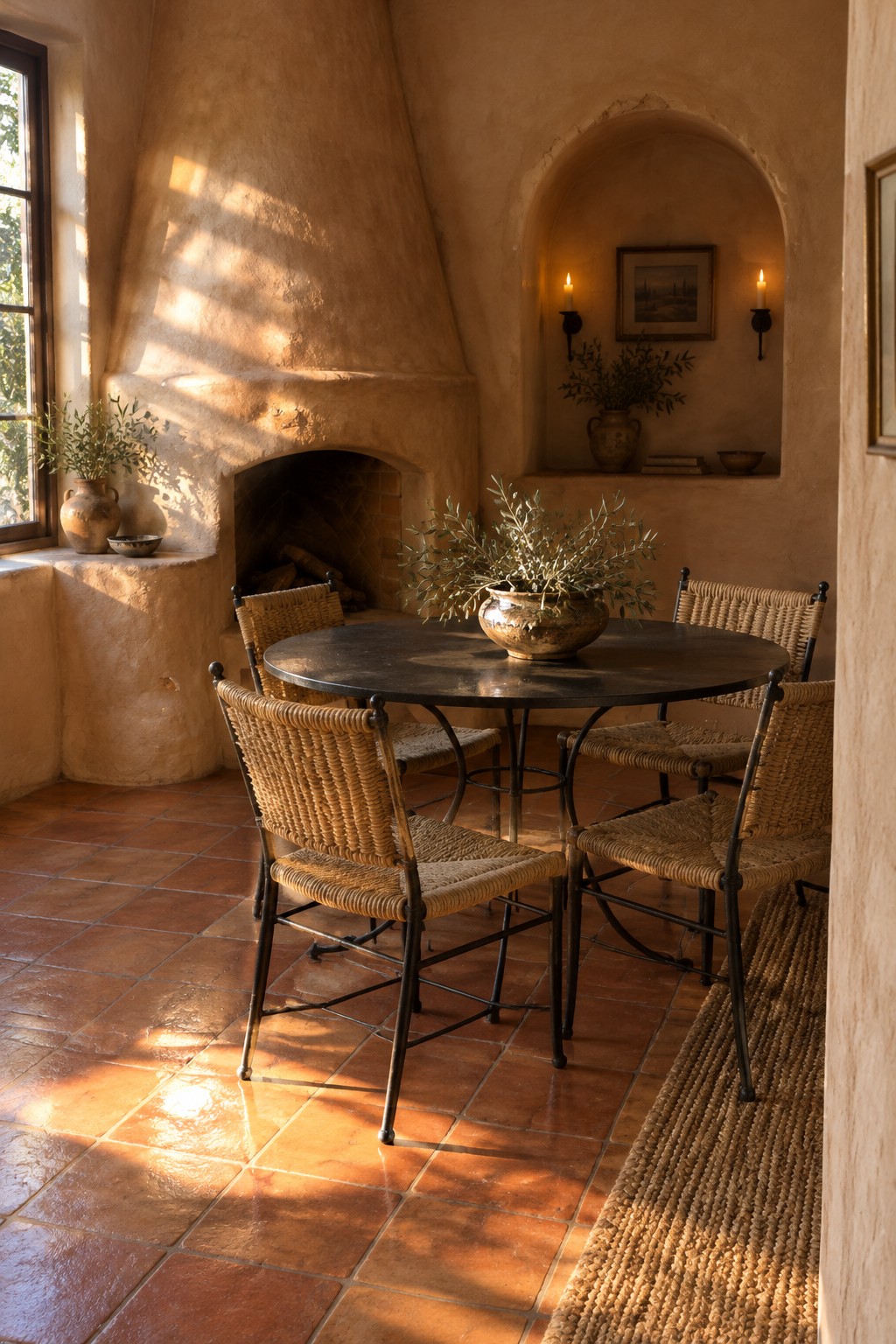
A large built-in fireplace can give a dining room a natural center without taking up space for extra furniture. Its curved plaster shape makes the hearth feel like part of the room, rather than an appliance added later.
This approach suits older homes and rooms with enough wall space for a substantial surround. Keep the dining table within easy reach of the hearth, and choose simple chairs so the fireplace remains the main feature.
Let the Stone Fireplace Shape the Dining Area
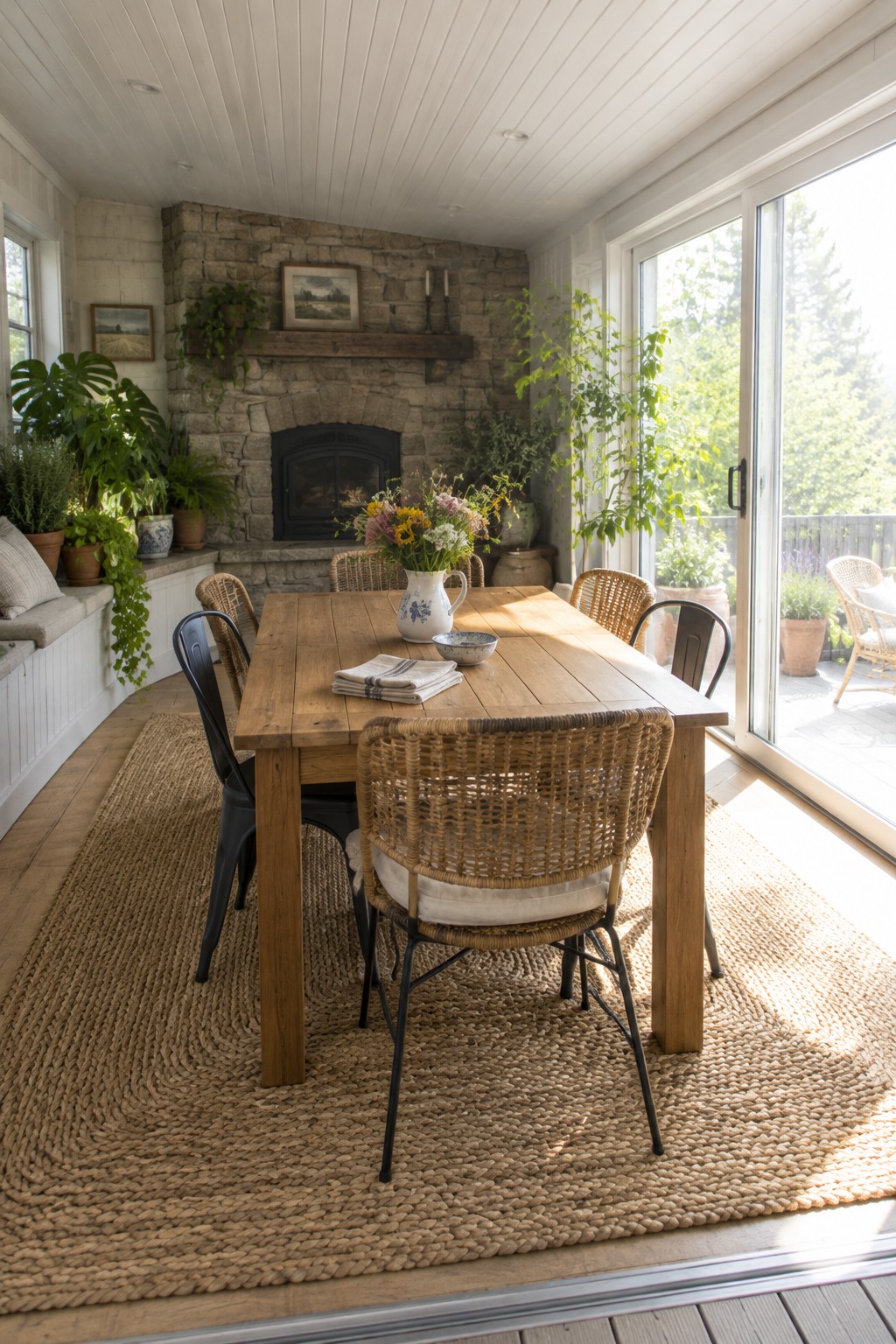
A stone fireplace can make a dining room feel settled and cozy, especially when the table sits close enough to share its warmth. The simple wood table keeps the area practical without competing with the stonework.
This approach suits a sunroom or an open dining space where the fireplace is already a natural focal point. Leave enough room to pull out chairs and walk around the table, so the hearth feels close without making meals cramped.
Use Dark Finishes to Make a Dining Room Feel Cozy
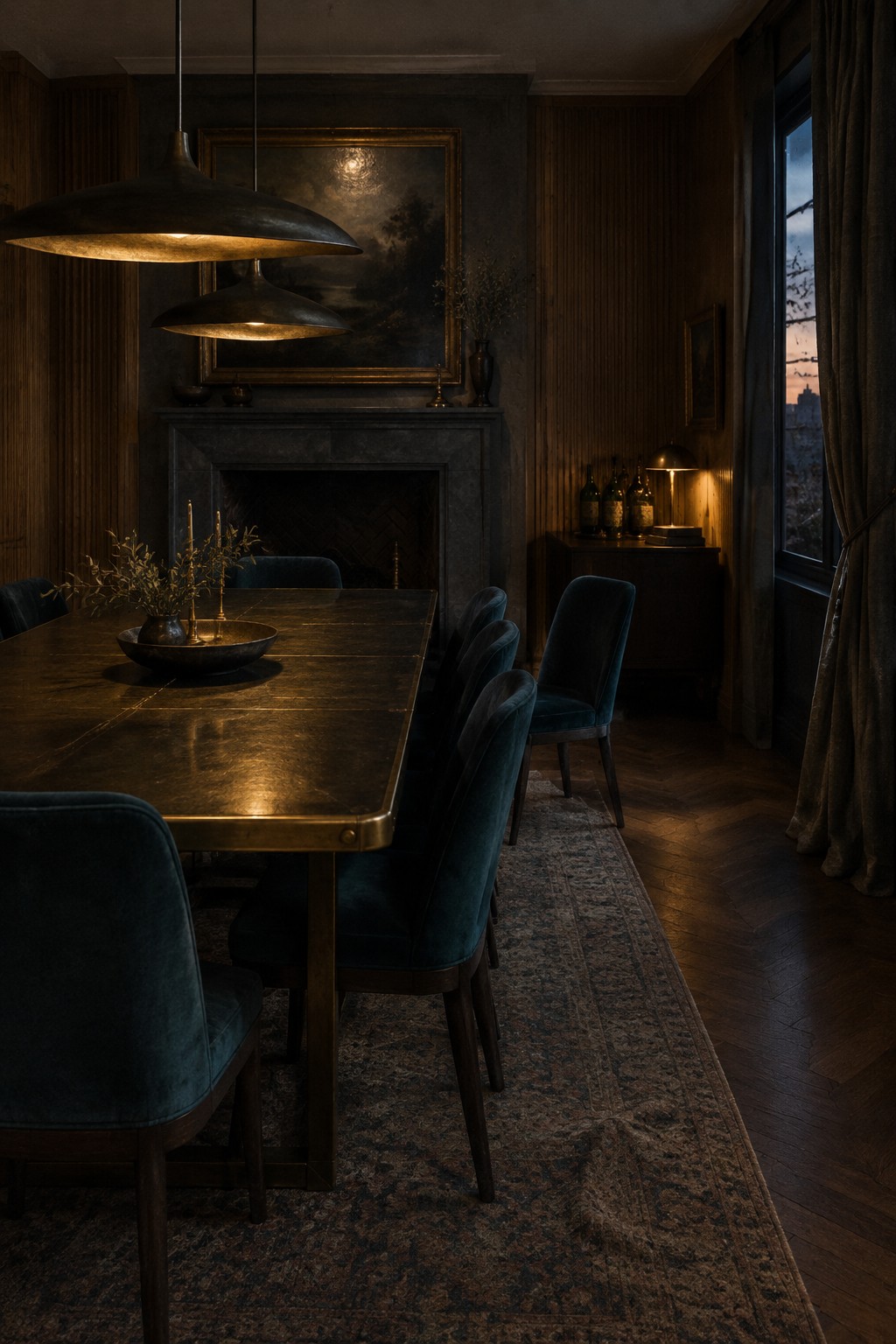
Dark wall paneling and a charcoal fireplace surround give this dining room a close, settled feel. The fireplace stays central, while the deeper finishes make the room feel suited to long dinners rather than formal entertaining.
This approach works well in a dining room with some natural light, especially in an older home or a room with tall ceilings. Try dark paint or wood paneling on one main wall, then keep the table and other large pieces simple so the space does not feel too heavy.
Use a Stone Fireplace Wall to Define the Dining Area
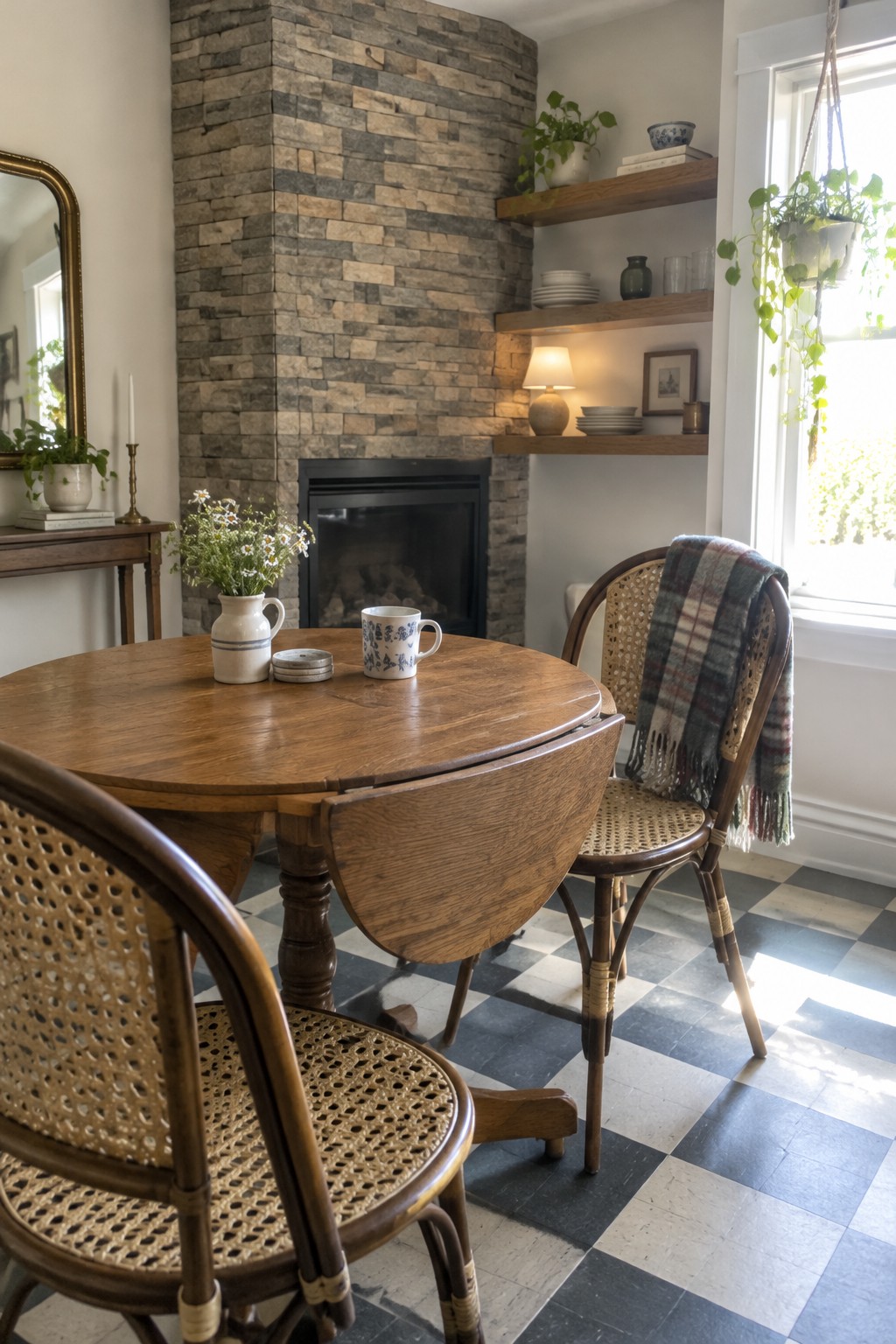
A stone fireplace wall gives the dining area a clear focal point and makes the room feel settled, even when the dining table sits close by. The varied stone brings enough texture to the room that the rest of the furnishings can stay simple.
This approach suits a breakfast nook or a small dining room where the fireplace is part of the same space. Keep the table a comfortable distance from the hearth, and let the stone remain the main wall treatment rather than adding lots of competing decor.
Frequently Asked Questions
Q: Can I put a dining table right in front of a fireplace?
A: Yes, as long as there’s enough room to pull chairs out and move around comfortably. Keep the table and chairs a safe distance from the fire, and follow the fireplace maker’s clearance guidelines.
Q: How do I make a fireplace feel like a focal point without overpowering the dining room?
A: Let the fireplace do most of the talking. Keep the mantel styling simple, then echo one or two of its colors or materials in the dining chairs, lighting, or table.
Q: What if my dining room fireplace is decorative and doesn’t work?
A: Treat it like an architectural feature. A few candles, a stack of logs, or a simple arrangement inside the firebox can add warmth without pretending it’s a working fireplace.
Q: Is a rug a good idea in a dining room with a fireplace?
A: It can make the dining area feel cozy, but choose a low-pile rug that chairs can slide across easily. Keep it well away from sparks and follow any safety guidance for your fireplace.
