

Wood paneling gives a dining room a sense of structure, but it can also make the space feel heavy if the color and proportions are off.
I find that the best rooms balance the warmth of the wood with comfortable chairs, thoughtful lighting, and enough open space to move around the table.
Small choices matter.
A lighter wall color, a simple centerpiece, or a rug underfoot can change how the paneling reads without taking away its traditional character.
I’d save the details that suit your home’s light and layout, then adapt them to make the room feel good for everyday meals as well as gatherings.
Use Wood Paneling to Give a Dining Room a Traditional Feel
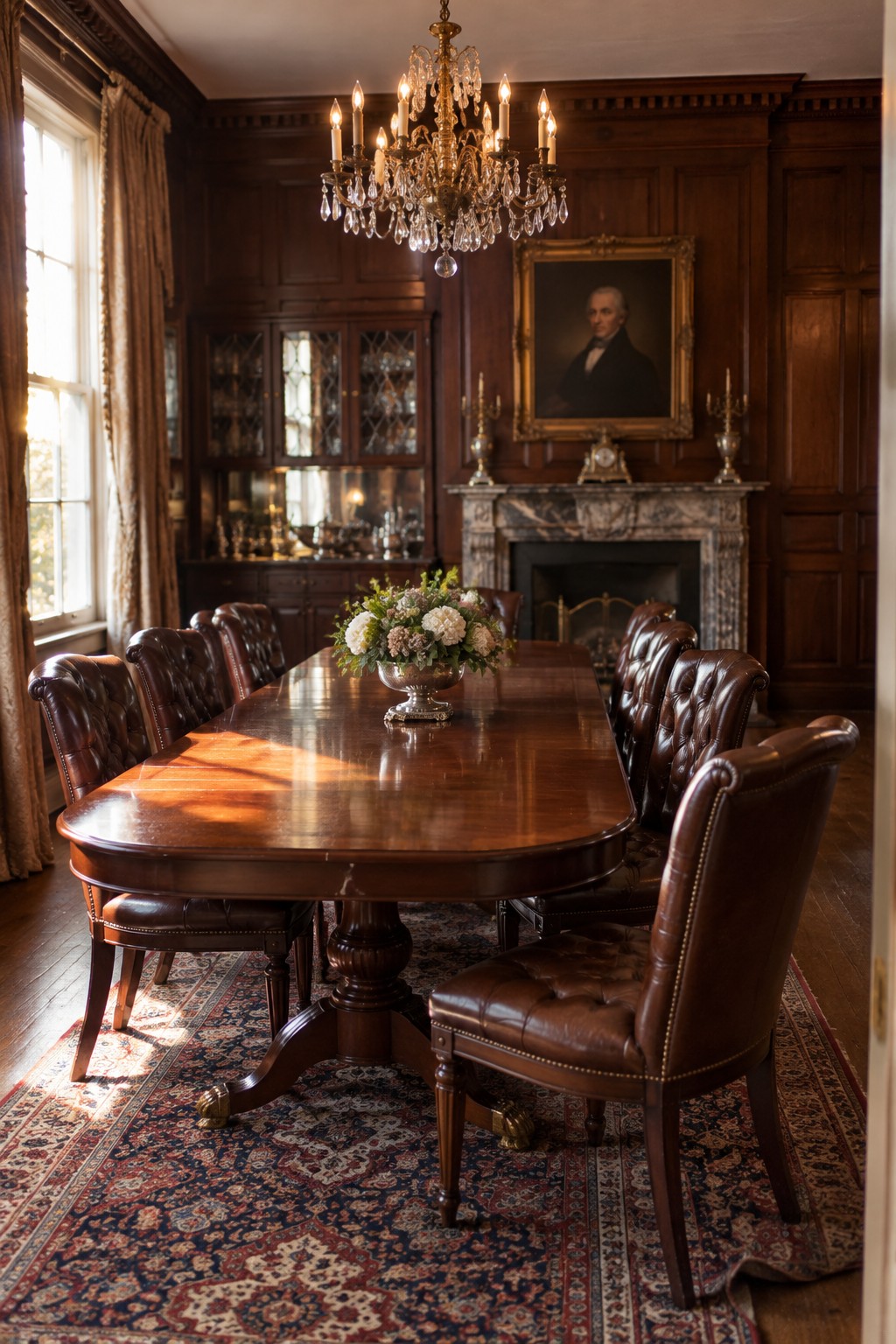
Wood paneling can make a dining room feel settled and suited to long meals. Here, the rich wood walls give the room a consistent backdrop, while the large table makes the space feel ready for everyday use as well as gatherings.
This approach works especially well in older homes or rooms with traditional furniture. If you’re adding paneling, keep the finish and color in step with the rest of the room so it feels like part of the house rather than a separate feature.
Wood Paneling Adds Character to a Dining Nook

Wood paneling can give a dining area a settled, traditional feel without making it look formal. Here, muted green paneling covers the lower half of the wall, while floral wallpaper above keeps the room from feeling too plain.
This approach works well in a breakfast nook or a small dining room, especially in an older home. Choose a paneling color that picks up a shade in the wallpaper, and keep the pattern simple enough that the walls still feel restful.
Let Wood Paneling Set the Tone

Wood paneling gives a traditional dining room a settled, finished look, especially when it covers the lower walls and continues around built-ins. Here, dark paneling works with patterned wallpaper to make the room feel cohesive without needing much extra decoration.
This approach suits older homes, but it can work in a newer room too. Use paneling on one section of wall if covering the whole room feels like too much, and choose a finish that works with the dining table rather than matching it exactly.
Wood Paneling Gives a Dining Room a Classic Feel
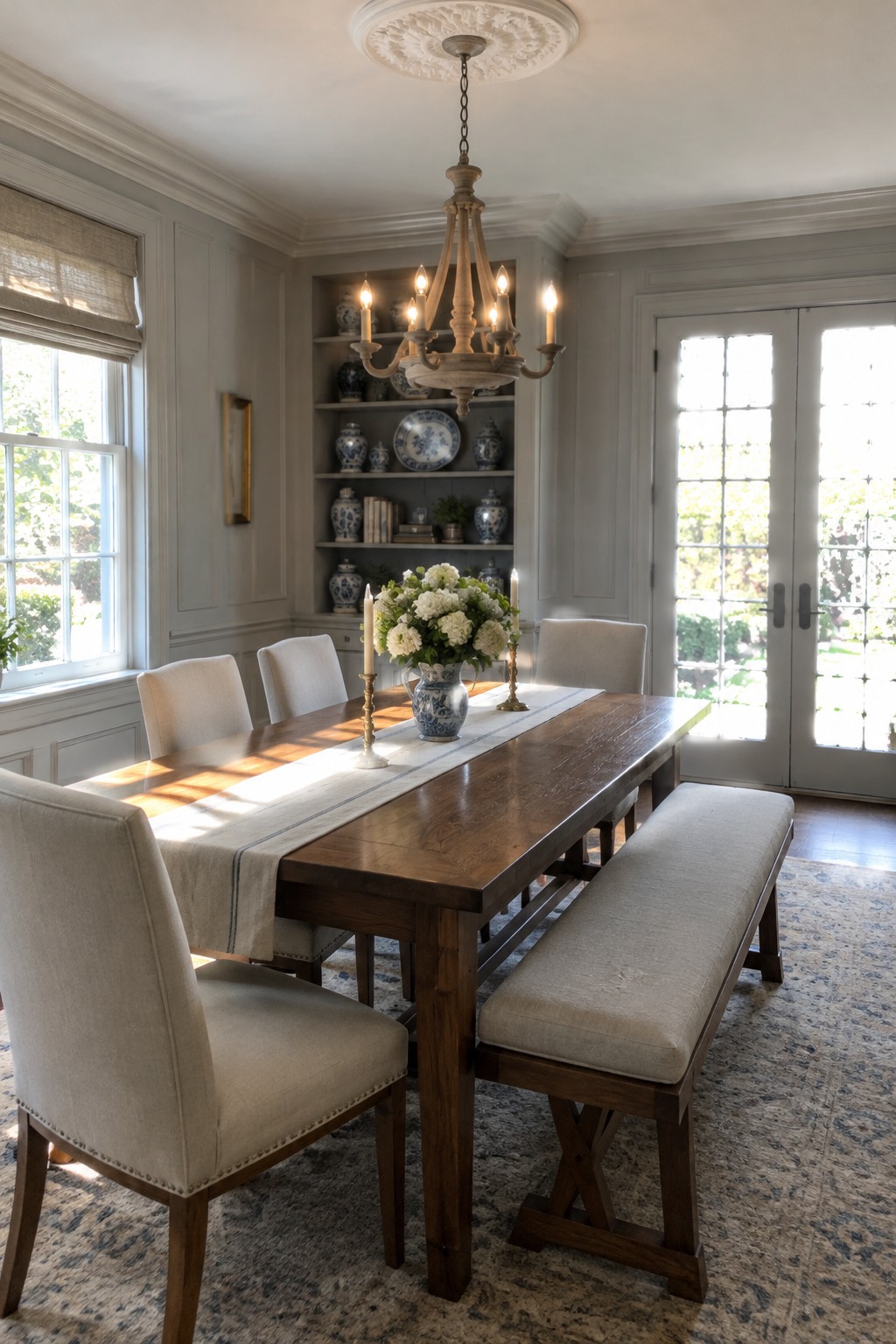
Wood paneling brings a traditional dining room a little structure and character without needing much extra decoration. Painted panels can feel especially at home in an older house, while a substantial wood dining table keeps the room from feeling too formal.
For a similar look, keep the paneling and trim simple, then let the table be the main wood piece. This approach works well in a dining room with classic proportions, but too many dark finishes can make a smaller space feel heavy.
Choose a Long Table for Gatherings

A long dining table makes it easy to seat a crowd, which suits a traditional room used for family meals and holiday dinners. In this room, the substantial wood table fits naturally with the paneled walls.
Leave enough space around the table for chairs to pull out and for people to pass through. This layout works especially well in a dedicated dining room, but a narrower table can offer the same communal feel in a smaller space.
Use Paneled Walls to Bring Tradition Into the Dining Room
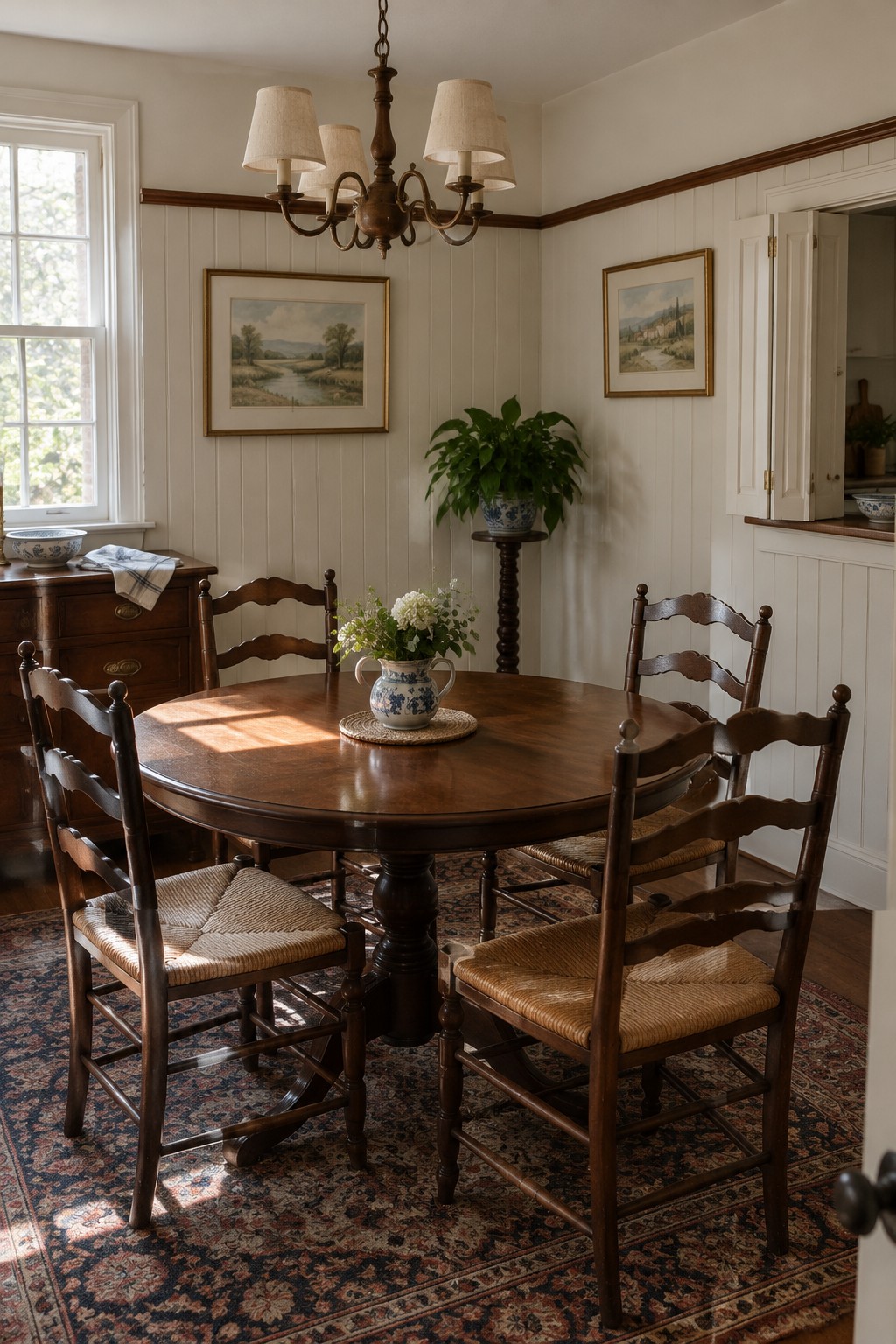
Wood paneling can give a dining room a settled, traditional feel without needing much decoration. Here, the narrow vertical boards keep the walls simple, while the dark wood trim makes the paneling feel at home with older furniture.
This approach suits a farmhouse or older house, but it can work in a newer home too. Keep the paneling a light, quiet color if you want the room to feel open, and use a darker trim or table to bring in contrast.
Use Dark Wood Paneling in a Formal Dining Room

Dark wood paneling gives a formal dining room a settled, traditional feel. It also makes framed art and a substantial dining table feel at home, rather than too grand for everyday use.
This approach suits older houses especially well, but it can work in a newer room with simple trim and a restrained finish. If the room gets limited daylight, keep the wood from feeling too heavy by using lighter upholstery or a pale rug.
Use Wide Plank Walls in a Traditional Dining Room
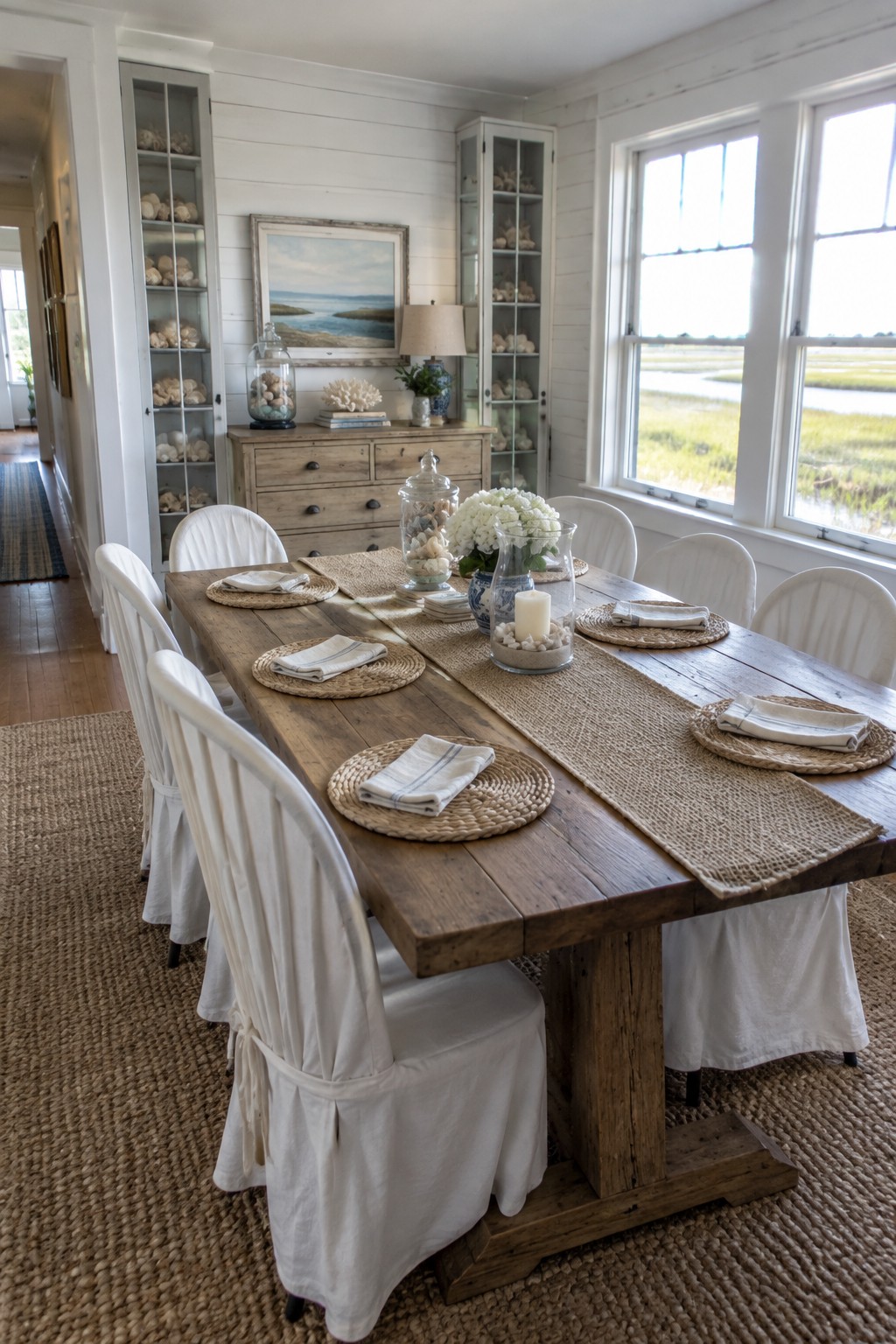
Horizontal wood paneling can give a dining room a familiar, settled look without needing much extra decoration. Painted white, it keeps the walls simple while letting the wood dining table bring in a more rustic note.
This approach suits cottages and older homes, especially where you want a traditional room to feel relaxed rather than formal. Keep the paneling and trim consistent, and let one or two natural wood pieces provide contrast.
Use Upholstered Chairs to Make a Wood Dining Room More Comfortable
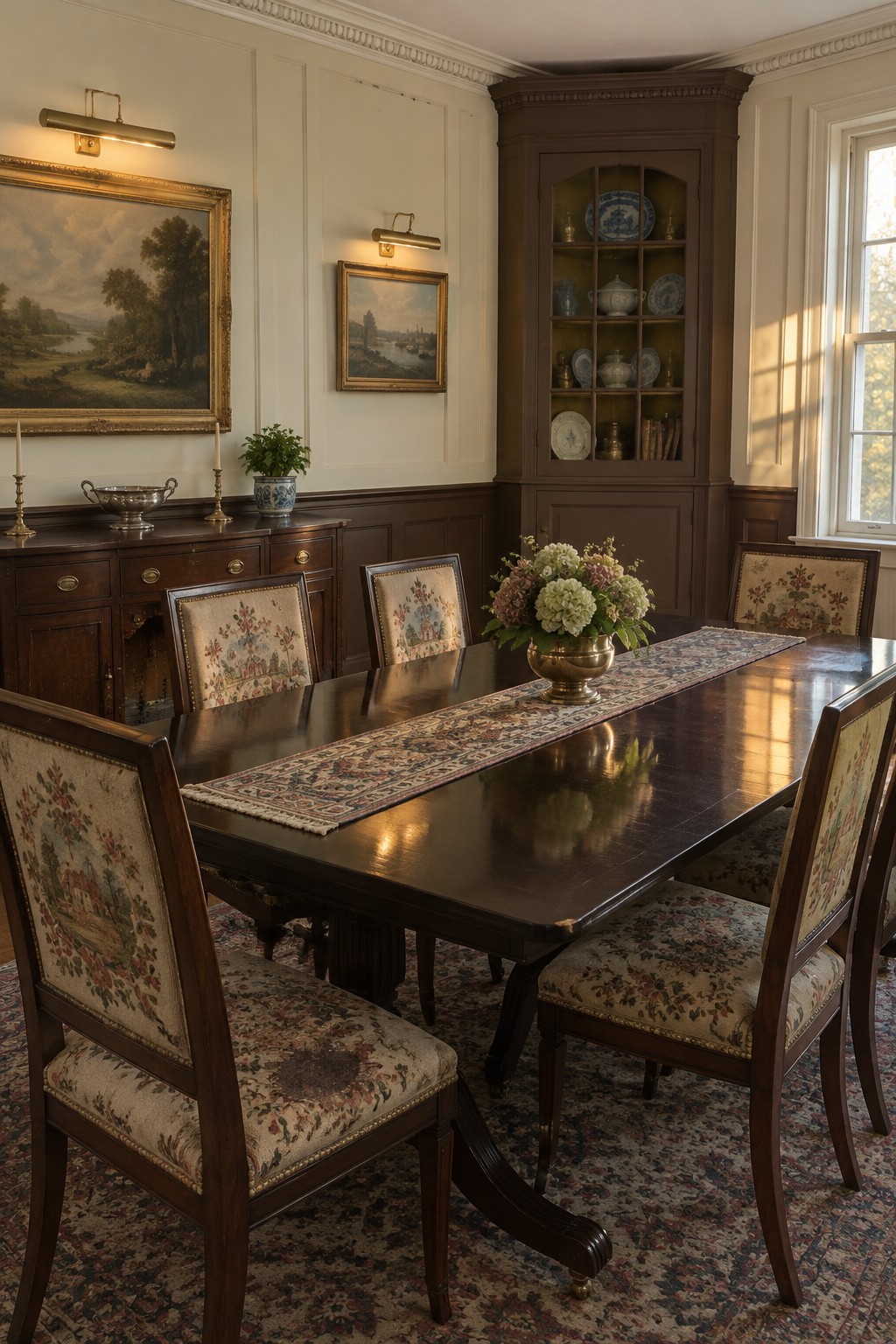
Upholstered chairs are a practical way to make a traditional dining room feel comfortable enough for long meals. Here, floral fabric keeps the dark wood furniture from feeling too severe, while still fitting the room’s classic style.
This approach works well around a substantial wood table, especially in a room with paneled walls. Choose a durable fabric that suits your household, and repeat its colors in a rug or other small accents.
Use Traditional Details to Make a Dining Room Feel Settled
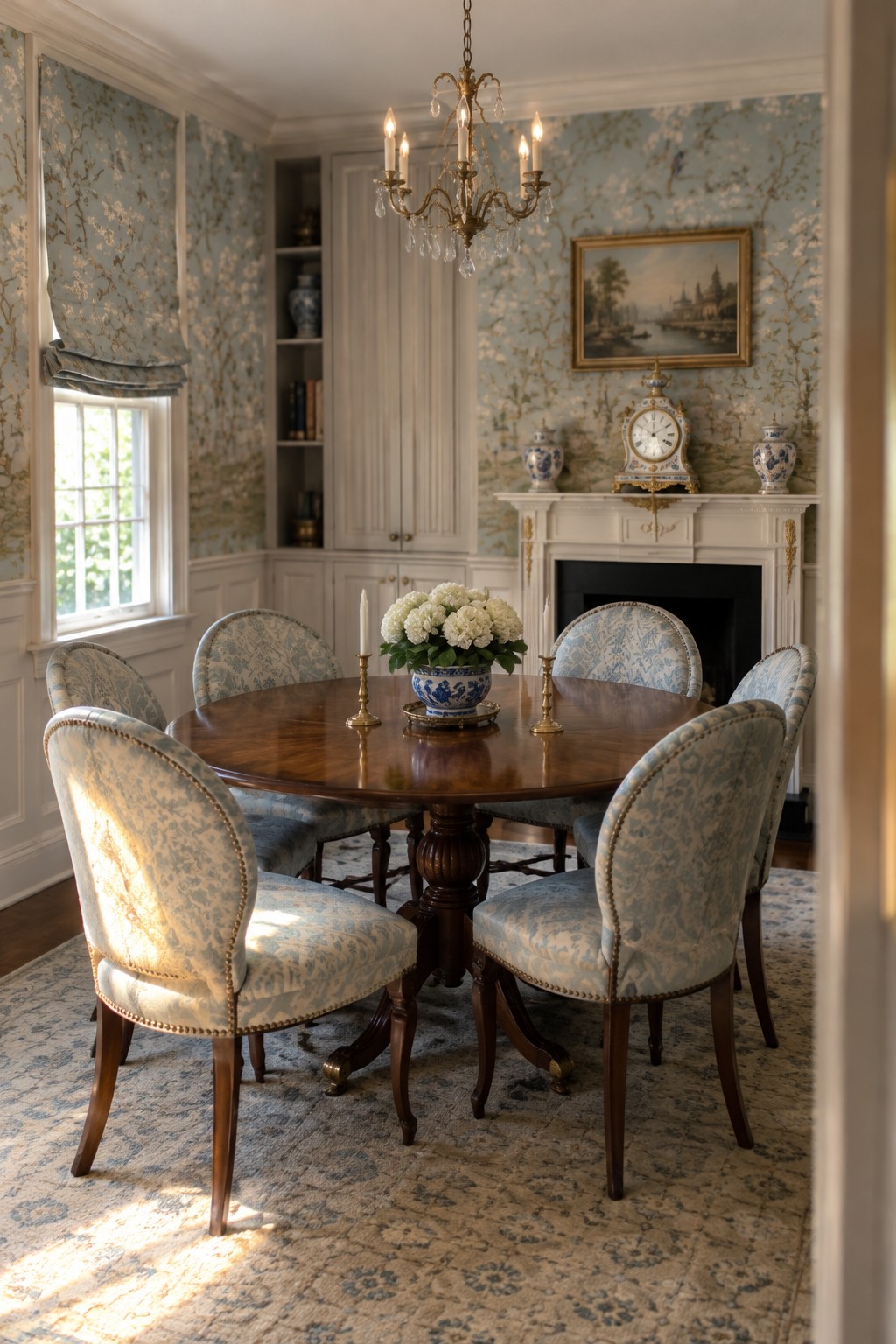
A round wood table is a comfortable choice for a traditional dining room. Everyone can see one another, and the table feels at home among classic details like the pale patterned walls and upholstered chairs shown here.
Choose a size that leaves enough room to pull out the chairs without crowding the walls. This shape works especially well in a smaller dining room or in a home where meals are meant to feel relaxed rather than formal.
Use Muted Paneling in a Traditional Dining Room
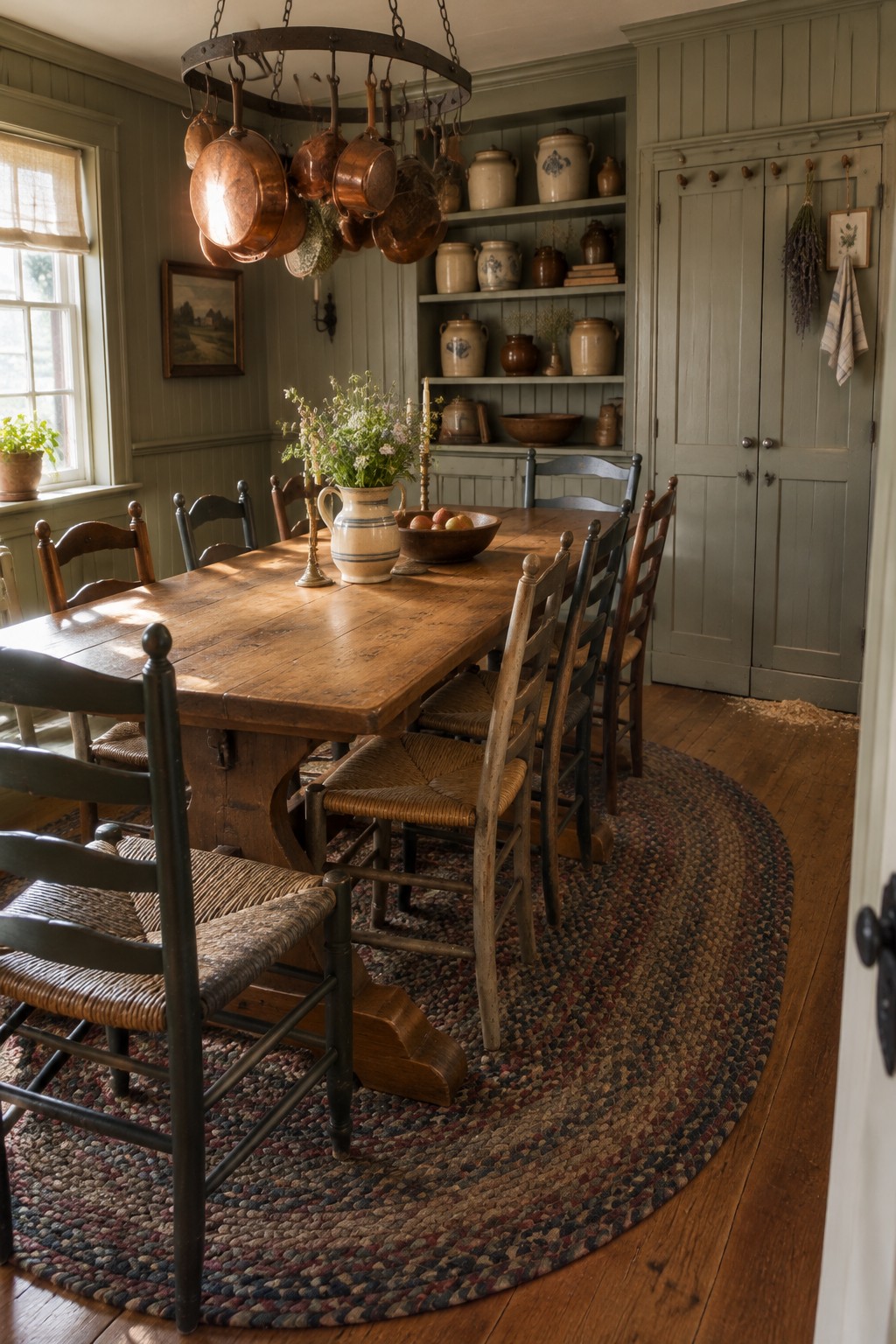
Muted green paneling gives this dining room a traditional feel without making the walls too formal. It also lets the wood table and chairs remain the focus, while built-in shelves make the room feel useful for everyday meals.
This approach suits older homes and dining rooms where you want a little color but still want the space to feel settled. Choose a subdued paint color, and carry the paneling across the walls for a consistent look.
Use Painted Paneling for a Traditional Dining Room
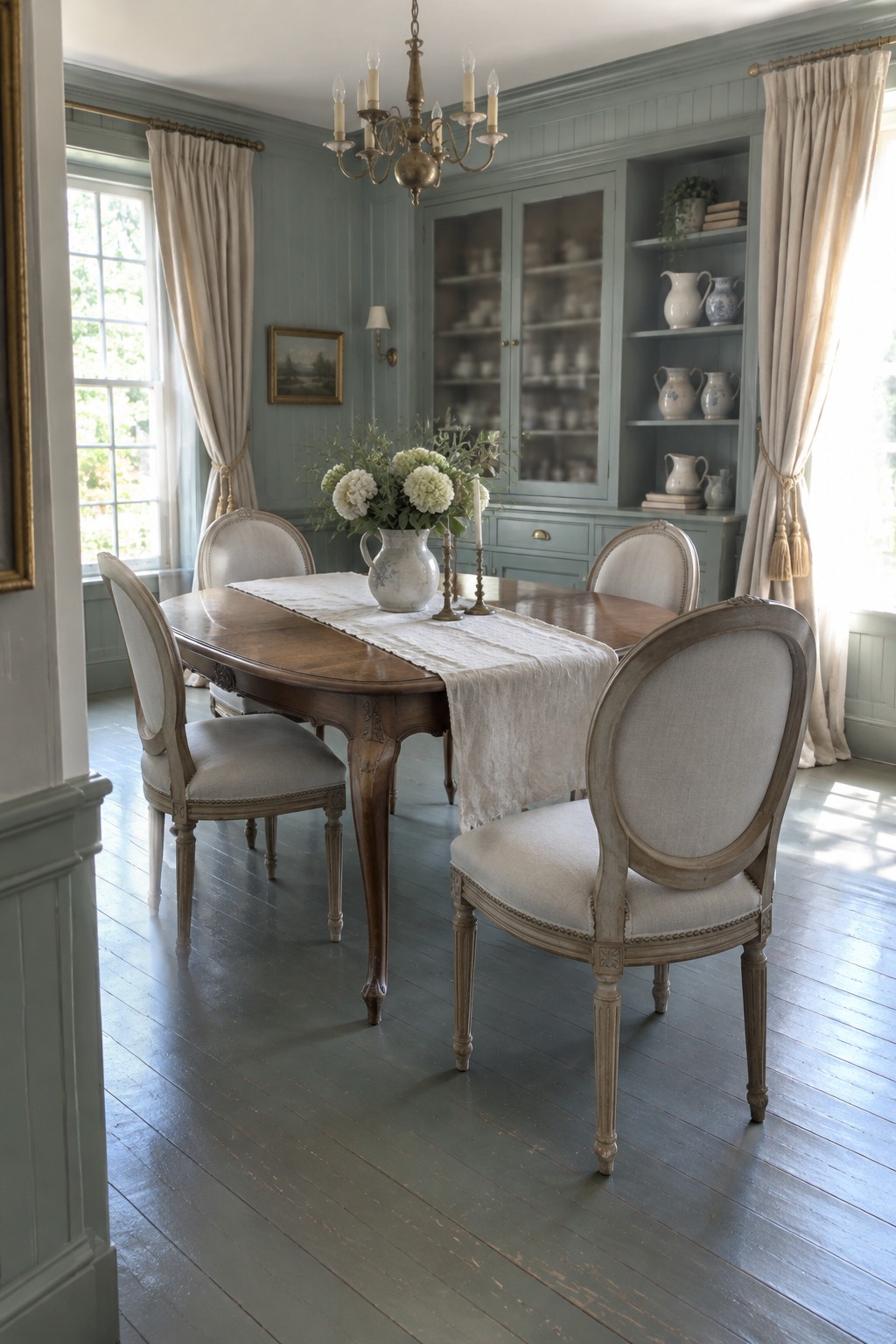
Painted wood paneling gives a dining room a traditional look without making it feel dark. The muted blue-green finish here keeps the walls and built-in cupboard feeling connected, while the wood table brings in a little contrast.
This approach works well in older homes or in rooms where you want built-ins to feel like part of the architecture. Choose a subdued paint color, and carry it across the paneling and cabinetry for a settled, cohesive look.
Let the Paneling Shape a Formal Dining Room

Dark wood paneling can give a dining room a settled, traditional feel, especially when it covers the walls from floor to ceiling. Here, the carved woodwork makes the room feel connected and gives a long dining table a fitting place.
This approach works well in older homes or in a dining room used mostly for meals and gatherings. If you have a smaller room, lighter wood or fewer carved details can keep the paneling from feeling too imposing.
Choose a Round Table for Easier Conversation

A round dining table makes it easy for everyone to talk without one person sitting at the head. In a traditional room, a sturdy wood table feels right at home alongside paneled walls.
This shape works well in square dining rooms and smaller spaces where a long table might interrupt the flow. Leave enough room to pull out each chair, especially when the table has a wide pedestal base.
Make Built-In Shelving Part of the Dining Room
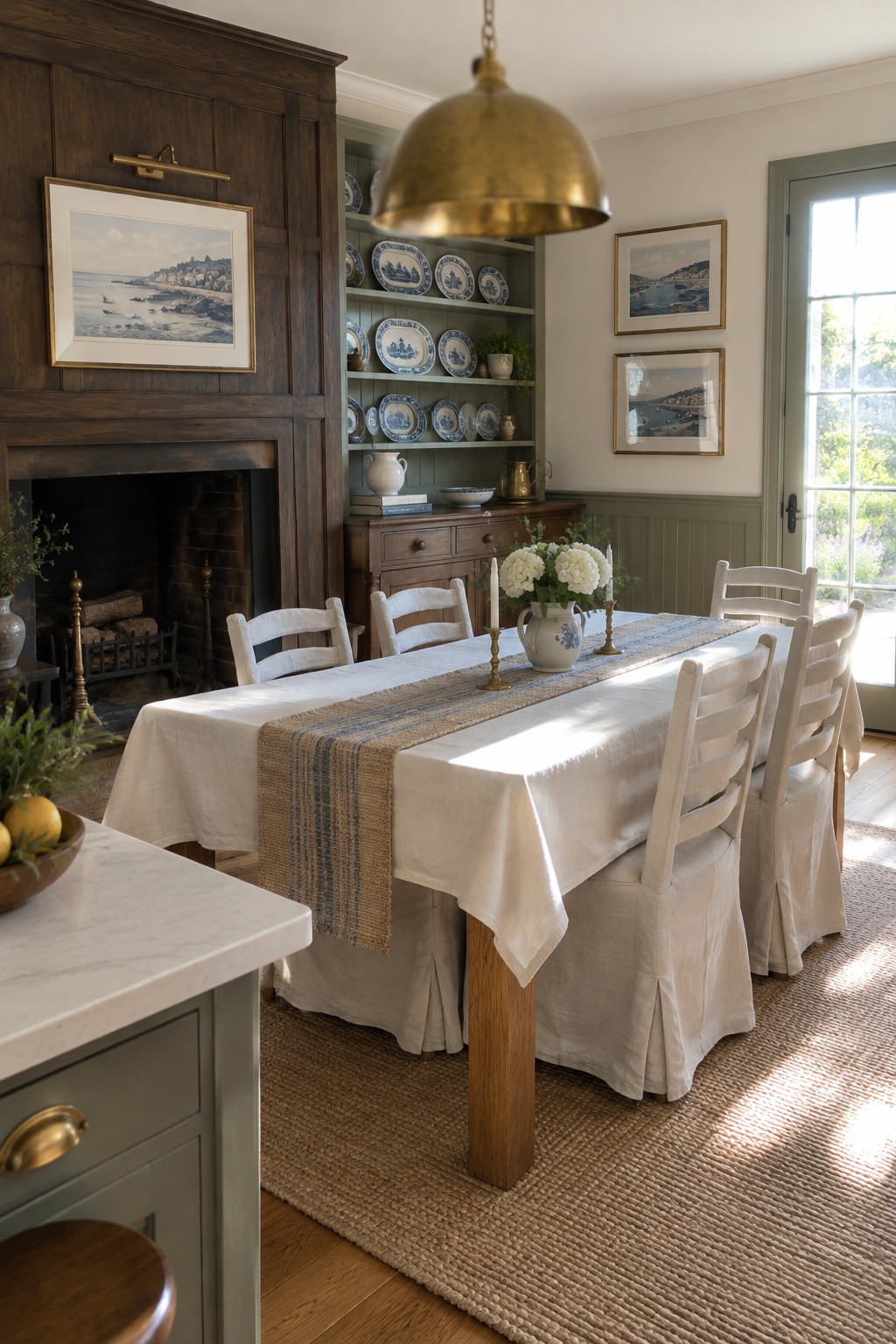
Built-in shelves can make a traditional dining room feel settled and useful, especially when they are finished to suit the wood paneling nearby. Here, the painted shelves offer a lighter contrast and give blue-and-white dishes a natural place to be displayed.
This approach works well beside a fireplace or along a dining room wall that might otherwise go unused. Keep the shelves edited rather than filling every space, so favorite pieces can stand out.
Use a Built-In Bench to Make the Dining Room Feel Settled
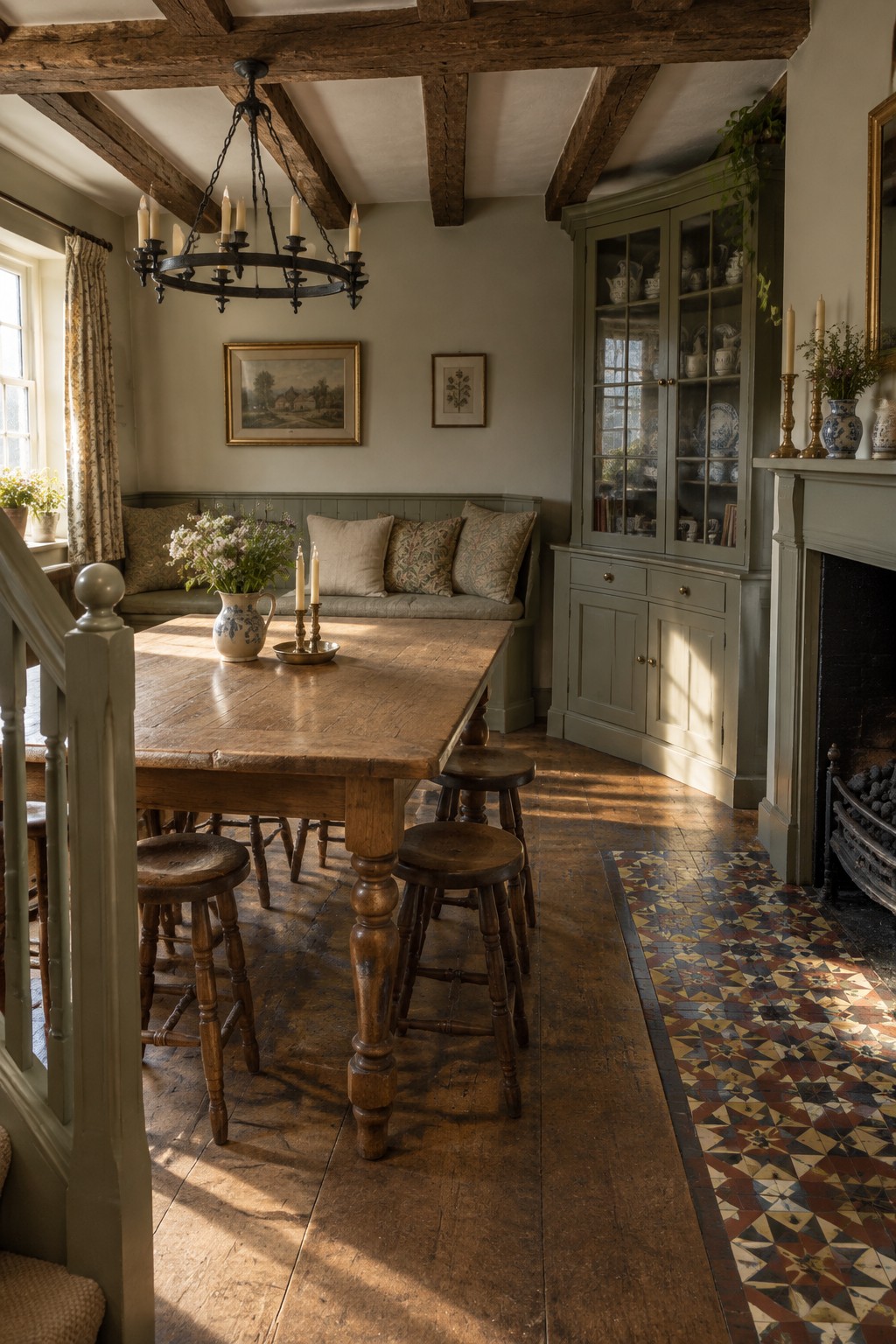
A built-in bench along one wall makes a traditional dining room feel like a natural gathering place. Here, the muted green paneling continues behind the seating, giving the bench a settled, practical look.
This arrangement suits an older home where floor space is limited or the dining area shares space with another room. Add a few cushions for comfort, and leave enough room to pull out chairs on the opposite side of the table.
Use a Built-In Bench to Make a Dining Nook Work Harder
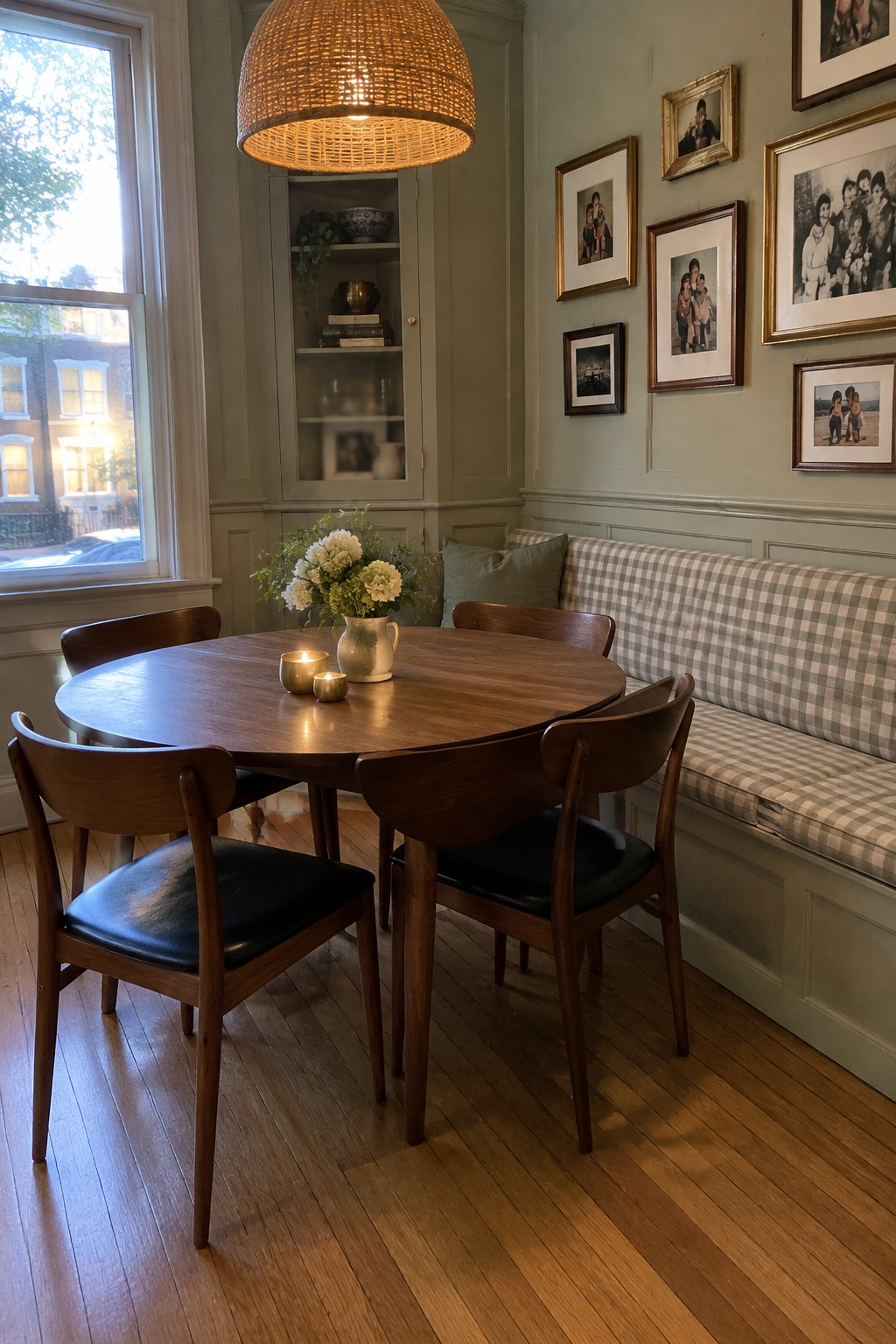
A built-in bench makes good use of the wall and leaves more room around the table than a row of chairs would. Here, the cushioned bench follows the paneled wall, giving the nook a comfortable place to sit.
This setup works well in a smaller dining room or an awkward corner. Add a round table to make it easier to move around, and choose a durable seat fabric if the bench will get everyday use.
Let Woodwork Define the Dining Room
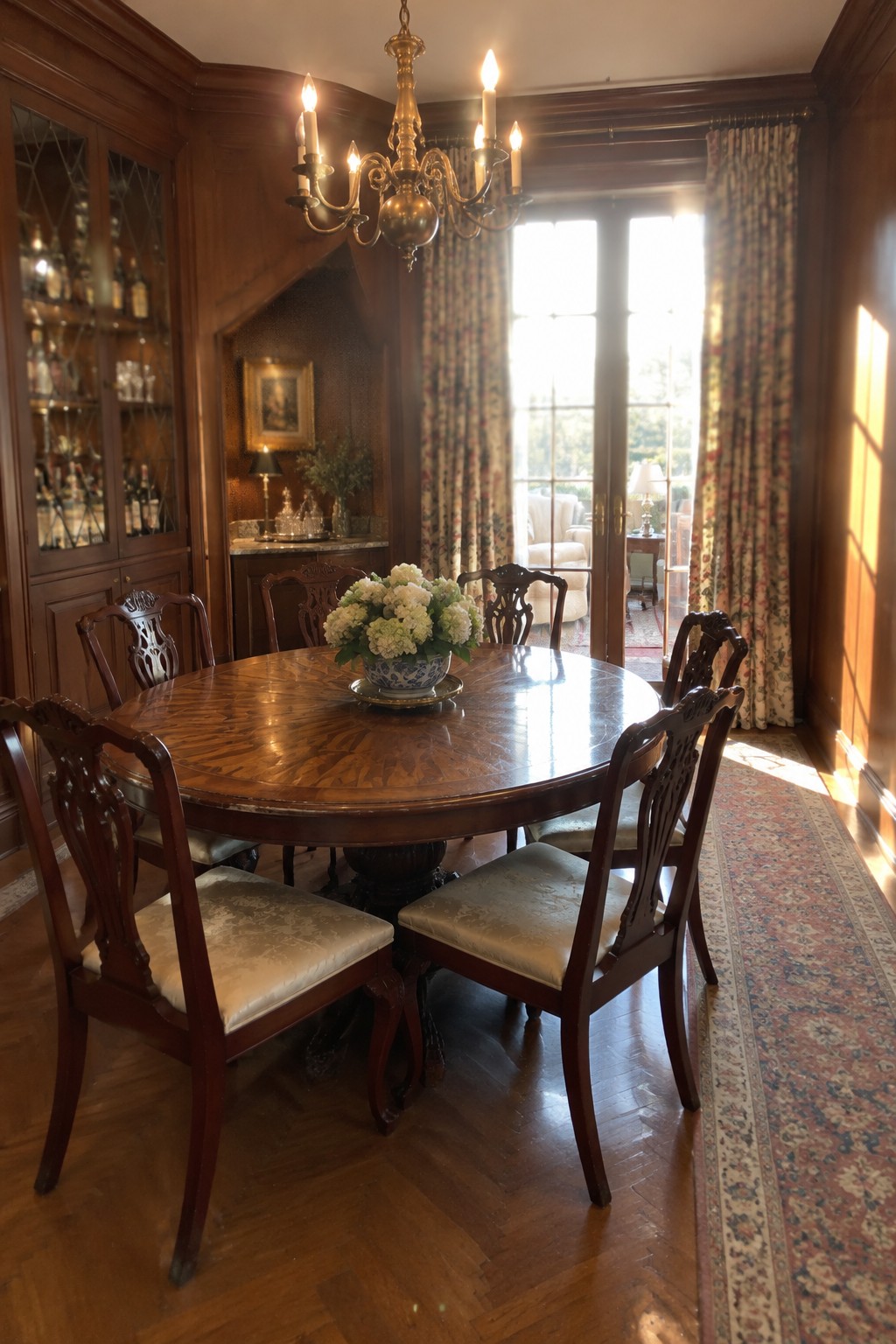
In a traditional dining room, rich wood paneling can give the space a settled, formal feel. A round table is a good fit here because it makes conversation easy while leaving room to move around the chairs.
This approach suits older homes with detailed woodwork, especially when the furniture shares a similar tone. Keep the table setting simple so the patterned wood remains easy to appreciate.
Use Open Shelving to Add Storage to a Traditional Dining Room
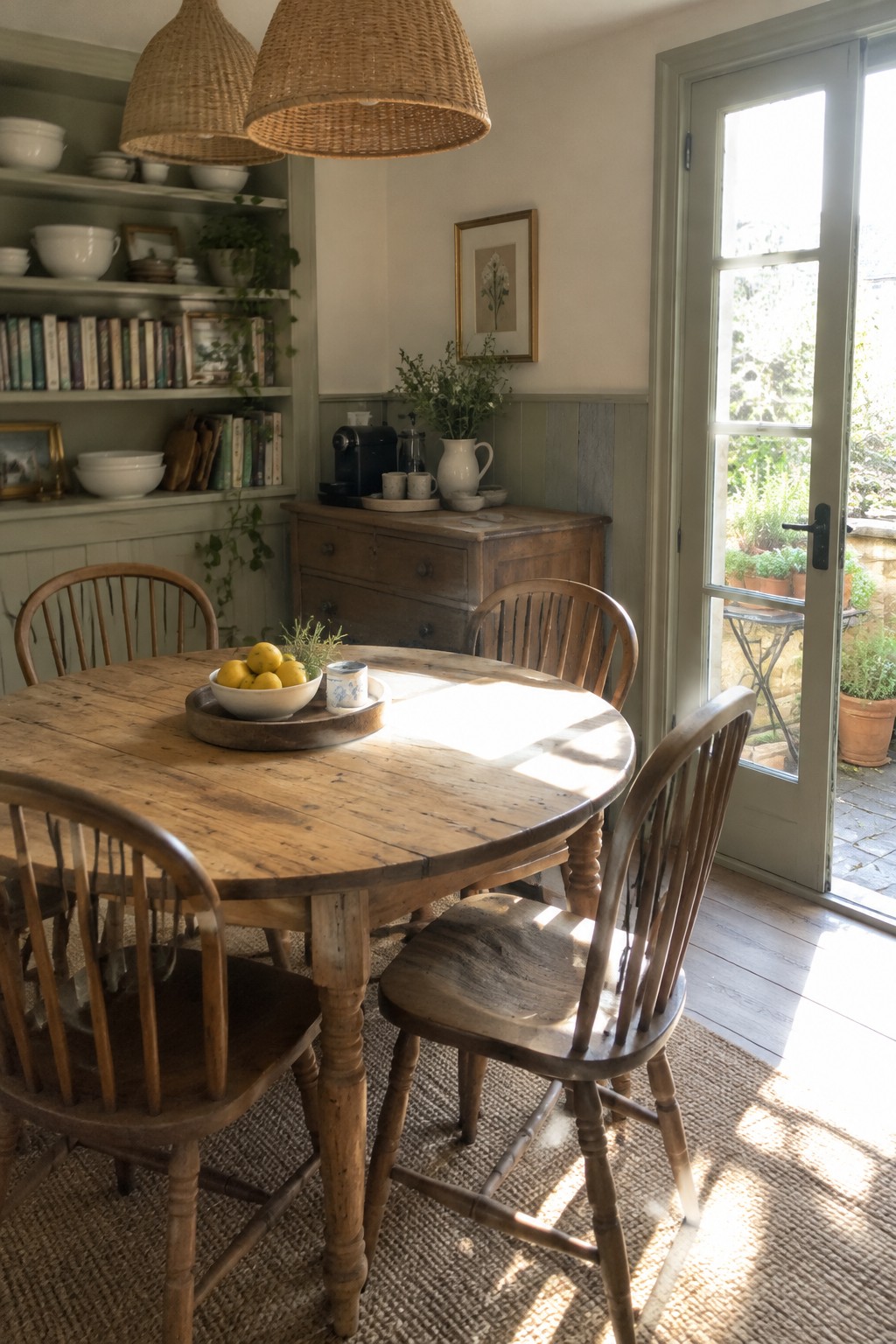
Open shelves make a dining room more useful without taking away its old-fashioned character. Here, shelves hold dishes and books, so everyday pieces are easy to reach and can also serve as simple decor.
This approach works well in a smaller dining area where a separate china cabinet might take up too much floor space. Keep the shelves from feeling crowded by leaving some room between stacks and mixing practical items with a few personal finds.
Let Dark Wood Paneling Shape the Dining Room

Dark wood paneling gives a traditional dining room a settled, formal feel. It also makes a long table feel at home, especially when the walls and table share a similar wood tone.
This approach suits older homes and rooms used for family meals or larger gatherings. If you’re adding dark paneling to a smaller room, keep the furniture and upholstery lighter so the space doesn’t feel too enclosed.
Use a Built-In Bench to Make Room for Dining
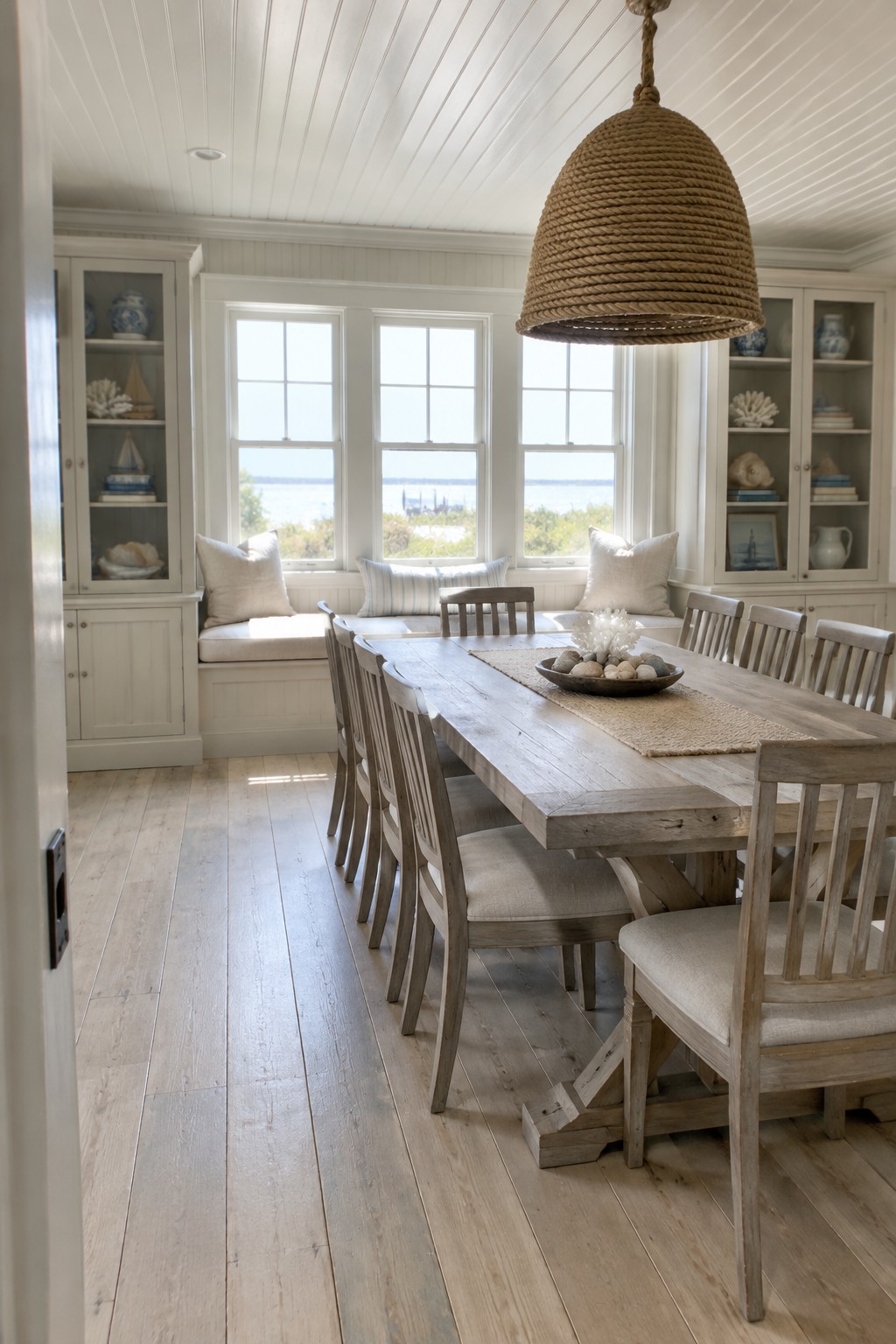
A built-in bench can make a dining area feel settled without taking up as much floor space as another row of chairs. Here, the window-seat bench gives the table a comfortable place to tuck in.
This idea works well in a breakfast nook or along a window wall in a larger dining room. Add a few loose cushions for comfort, and keep the bench depth practical so people can sit and get up easily.
Use Built-In Shelves for Dining Room Storage
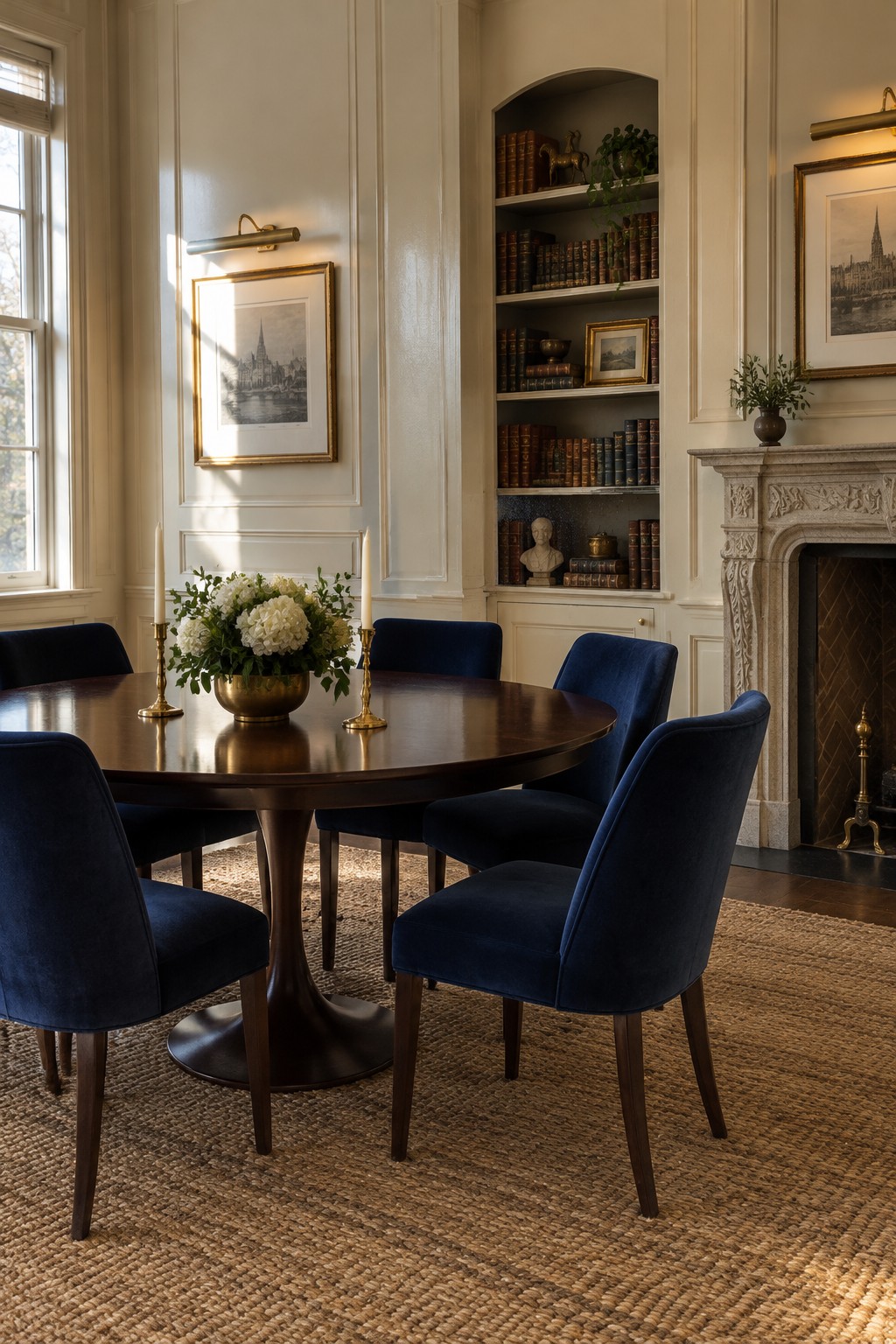
Built-in shelves are a useful way to add storage without bringing in another large piece of furniture. In a traditional dining room, an arched bookcase can hold books and a few collected objects while making use of wall space.
This idea suits rooms with a recessed wall or alcove. Keep the shelves from looking crowded by leaving some open space between books and decor, and choose a finish that works with the room’s existing trim.
Use a Long Table for Family Meals
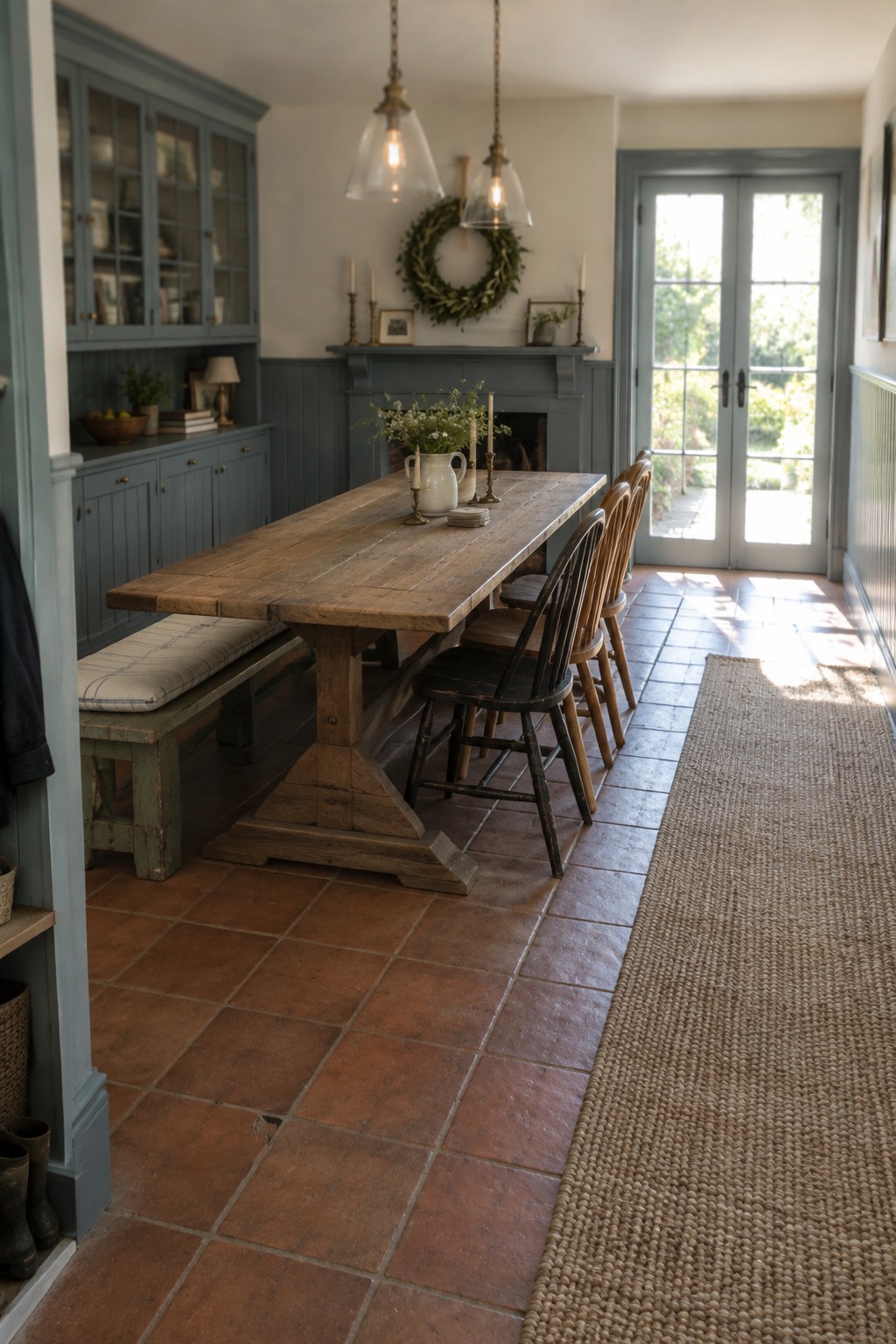
A long farmhouse table gives a traditional dining room room for everyday meals and larger gatherings. The simple wood top suits paneled walls without making the space feel too formal.
This layout works best in a room with enough clearance to pull chairs out and walk around the table. A bench along one side can make seating more flexible, but leave a clear path through the room.
Use a Round Table to Make Room for Conversation

A round table suits a traditional dining room where people gather for long meals. It lets everyone face one another, and the curved shape works especially well with cane-back chairs.
For a similar setup, leave enough room around the table for chairs to pull out comfortably. This arrangement can be a good fit for a smaller dining room, where a rectangular table might make movement feel tight.
Frequently Asked Questions
Q: Does wood paneling make a dining room feel too dark?
A: It can, especially when the wood is deep brown and the room gets little daylight. Pair it with lighter upholstery, a pale rug, or a soft wall color above the paneling to keep the room feeling warm rather than gloomy.
Q: What kind of table looks right with paneled walls?
A: A traditional wood table is an easy fit, but it doesn’t have to match the paneling exactly. A slightly lighter or darker finish adds depth without making the room feel too coordinated.
Q: Can I use patterned wallpaper with wood paneling?
A: Yes, particularly above a chair rail or on one wall. Choose a pattern with colors that pick up the wood and keep the other furnishings fairly simple so the room doesn’t feel busy.
Q: How can I update old paneling without losing its traditional character?
A: Try cleaning and polishing it first, then refresh the room with new lighting, chairs, or curtains. If the wood still feels too heavy, painting just the trim or upper walls can brighten things while leaving the paneling as a feature.
