

Apartment dining areas can feel cramped when the table blocks a walkway or leaves no room to pull out a chair.
I’ve found that a practical layout often matters more than adding another decorative piece, especially when the dining space shares a room with the kitchen or living area.
A drop-leaf table, a bench that tucks away, or chairs that stack can make everyday meals easier without making the room feel crowded.
The best choices still need to suit the way you eat and move through your home, so it helps to think about clear paths as well as seating.
I’d save the ideas that fit your routine and test their measurements before bringing home new furniture.
Use A Built-In Bench To Save Dining Room Space

A built-in bench can make a small dining area easier to arrange. It fits neatly against a wall, so you can use a smaller table and avoid needing space to pull out chairs on every side.
A bench with storage drawers is especially useful in an apartment, where extra cupboards may be scarce. Add a couple of loose cushions for comfort, and measure the table carefully so there is still room to sit down and get up.
Use A Round Table To Save Space
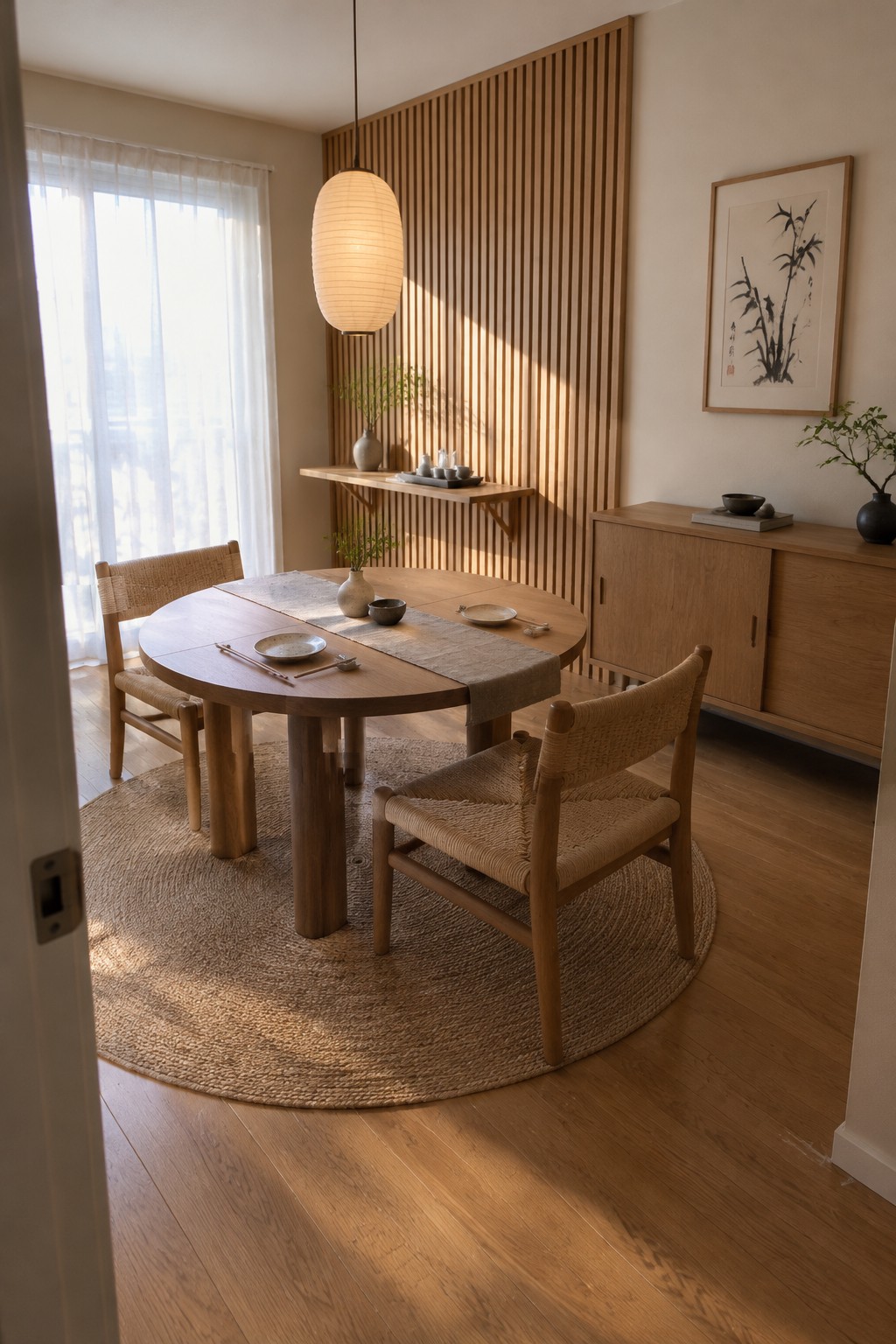
A round dining table can make a small apartment dining area easier to move around. Without sharp corners, it fits neatly into a compact seating area and leaves a little more room to pass by.
Choose a table sized for your usual needs, rather than one that crowds the room when extra guests are not there. A simple woven chair can tuck close to the table when it is not in use.
Choose A Table That Can Expand When Needed
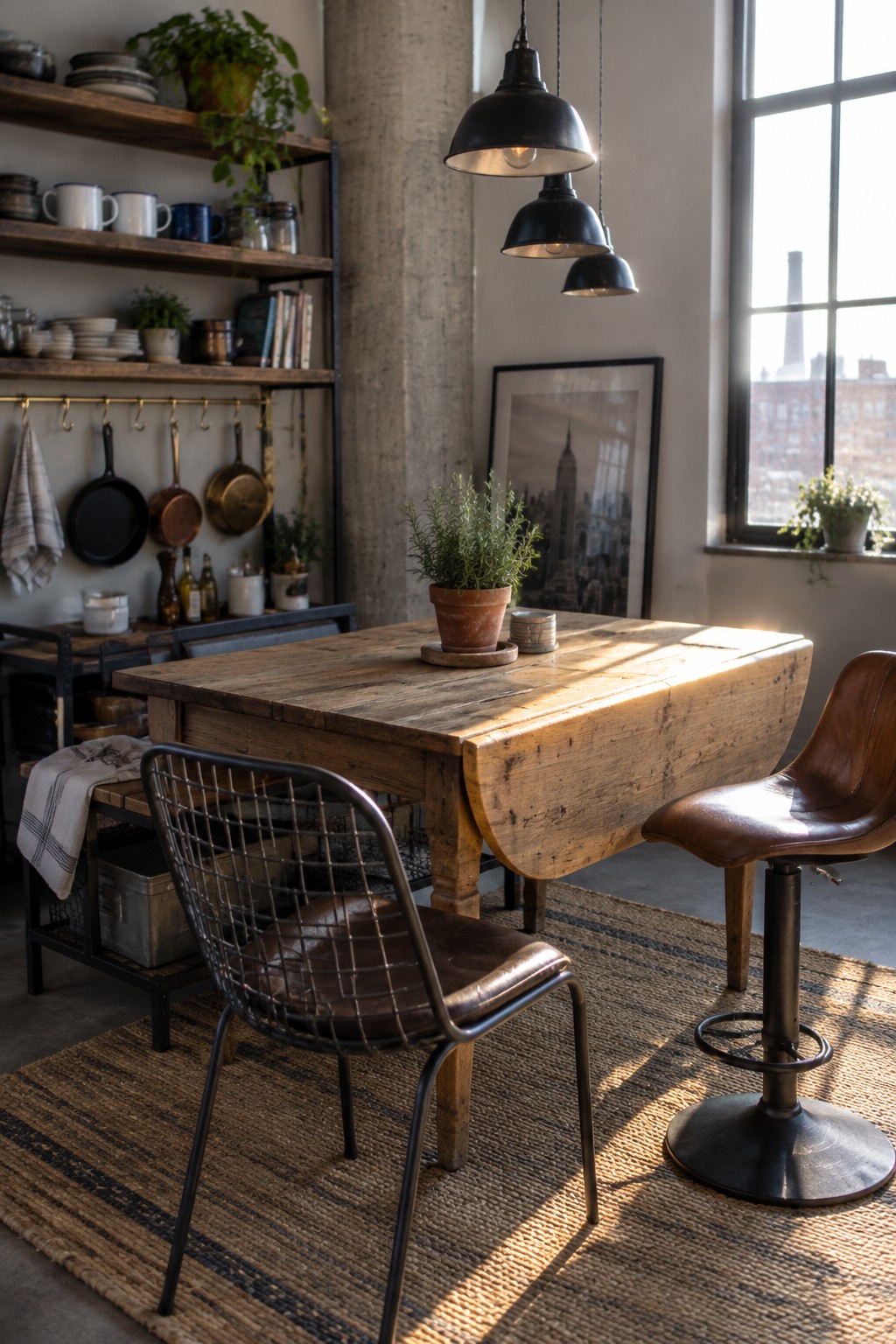
A drop-leaf table is useful in an apartment dining area because it can stay compact most of the time and open up when you need extra seating. The wooden table shown here keeps one side folded down, leaving more room around the chairs.
Look for a sturdy table with a folded depth that suits your everyday layout. Leave enough clearance for people to sit and move around it, and open the leaf only when the room needs to do more.
Use a Round Table in a Small Dining Area

A round table can make a compact dining nook easier to move around. Without sharp corners, chairs can tuck closer in, and people can get in and out without squeezing past the edge.
Look for a table with a slim base and chairs that slide neatly underneath. This works well in an apartment dining corner, especially beside a banquette, but leave enough room to pull the chairs out comfortably.
Use A Narrow Dining Table To Keep The Room Open
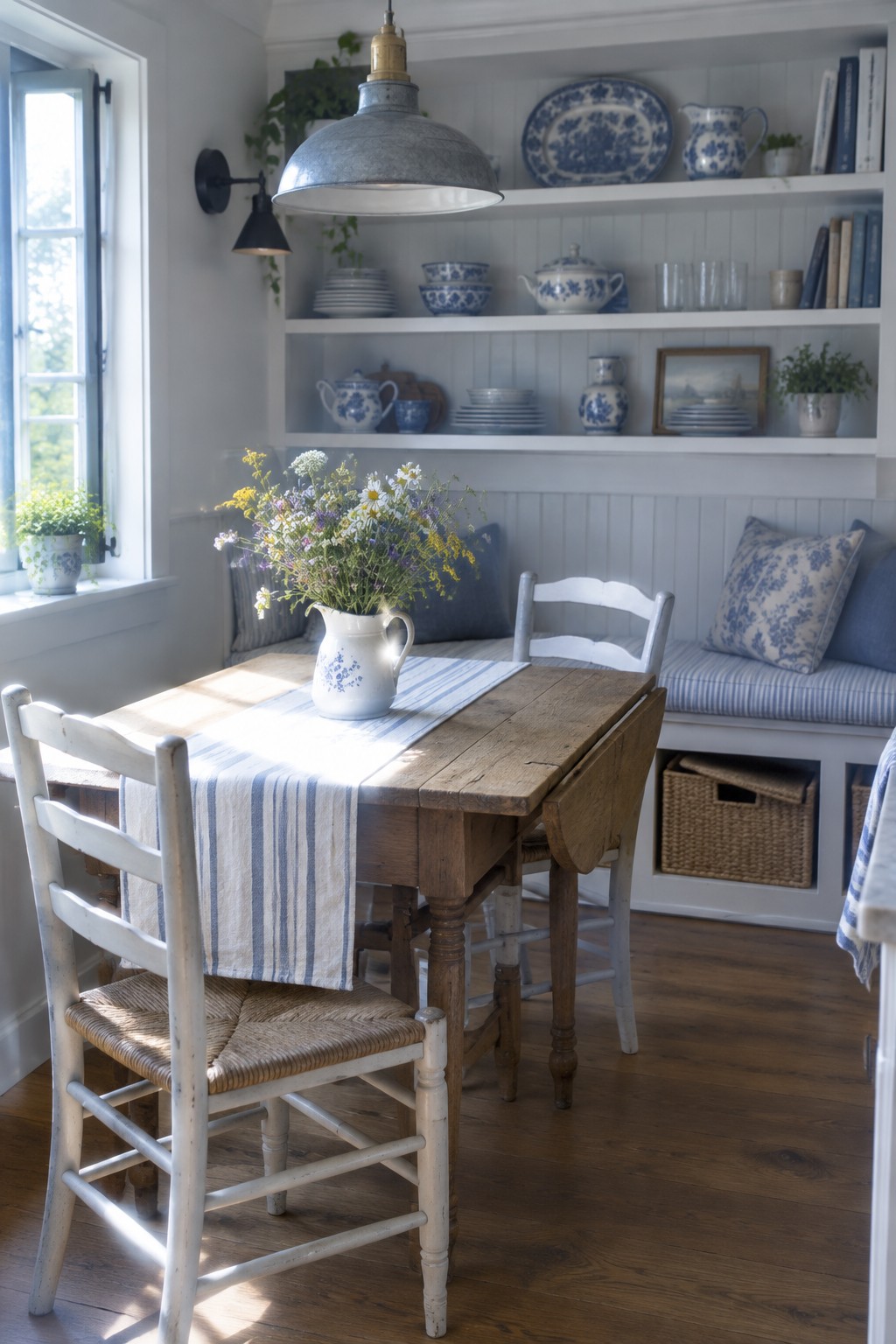
A narrow table can make a small dining area easier to move around in without giving up a proper place to eat. This rustic rectangular table keeps the setup simple, while the bench seat along the wall leaves the center of the room less crowded.
This idea works well in apartments where the dining area shares space with a kitchen or living room. Measure the walkway before choosing a table, and look for a bench that can tuck in neatly when it is not being used.
Choose a Pedestal Table for Easier Seating

A pedestal base leaves more open space around a dining table than legs at each corner. That makes it easier to pull chairs in and out, especially in a small apartment dining area.
Look for a compact table with a sturdy central base, and keep the chairs light enough to move easily. A round shape can help people get around the table, but check that it still leaves a clear path to nearby cabinets.
Choose Chairs With Slim Legs

A small dining area can feel less crowded when the chairs have open, narrow legs instead of bulky bases. The teal upholstered seats here still offer comfort, while their slim gold legs leave more of the floor visible.
This works well around a compact table, especially in an apartment where the dining area shares space with a walkway. Check that the chairs tuck in neatly when not in use, and leave enough room to pull them out without blocking the route through the room.
Choose a Table That Can Fold Away

A drop-leaf table can make a small dining area more flexible. Leave it open for everyday meals, then fold one or both sides down when you need more floor space. This style keeps a dining spot useful without making the table feel permanent.
It works well in apartments where the dining area also serves as a walkway or work space. Look for a sturdy design that folds easily, and make sure there’s room to pull the chairs out when the table is in use.
Use A Wall-Mounted Table For A Small Dining Area

A wall-mounted table can provide a useful place to eat without taking up as much floor space as a freestanding dining table. Since it’s fixed to the wall, the area beneath it stays more open, which helps a compact room feel less crowded.
This setup works well in a small apartment dining nook or kitchen. Add stools that tuck underneath when they’re not in use, and check that the wall and brackets can support the table before installing it.
Use A Glass-Front Cabinet For Dining Storage

A shallow cabinet along the wall can hold dishes and linens without taking up space around the table. Glass-front doors keep the storage from feeling too bulky, while still making everyday items easy to reach.
In an apartment dining area, choose a cabinet that is no deeper than you need and keep the top fairly clear. Here, a light wood cabinet sits behind the dining table, leaving the chairs room to move.
Use a Small Dining Nook To Make The Most Of A Corner

A small dining nook can give an apartment a proper place to eat without taking over the room. A compact round table leaves more room to move around, while light from a nearby window helps the spot feel open.
Try this layout in a corner or beside a window, and keep the table small enough for chairs to tuck in when they are not in use. A round top is especially handy in a tight space because it has no corners to bump into.
Add a Fold-Down Table To Make Room For Seating

A wall-mounted table can provide a useful place to eat without taking up floor space all day. When it folds down, the area can stay open for walking or other activities.
This setup works well in a narrow apartment dining nook, especially with compact stools that tuck underneath. Make sure the wall and brackets can safely support the table, and leave enough clearance for people to sit comfortably.
Use a Bistro Table to Make a Small Dining Area Work
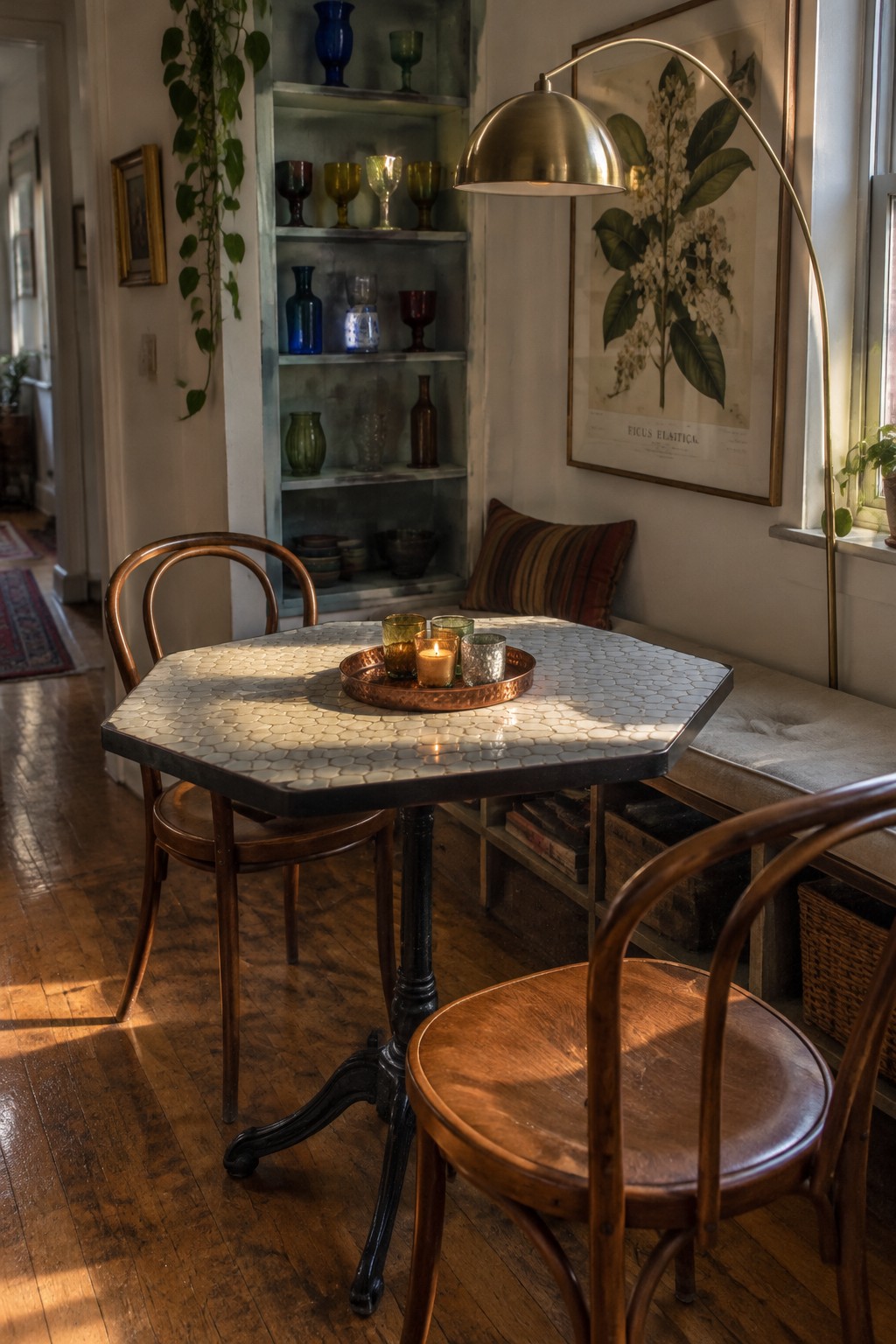
A compact table can make a dining spot feel intentional without taking over the room. This small tiled table leaves space to pull up chairs, while its pedestal base avoids the bulky corners of a four-legged design.
This kind of setup works well in a narrow apartment dining area or an unused corner. Keep the table modest in size, and choose chairs that can tuck in neatly when they are not being used.
Use a Bench For Dining And Storage
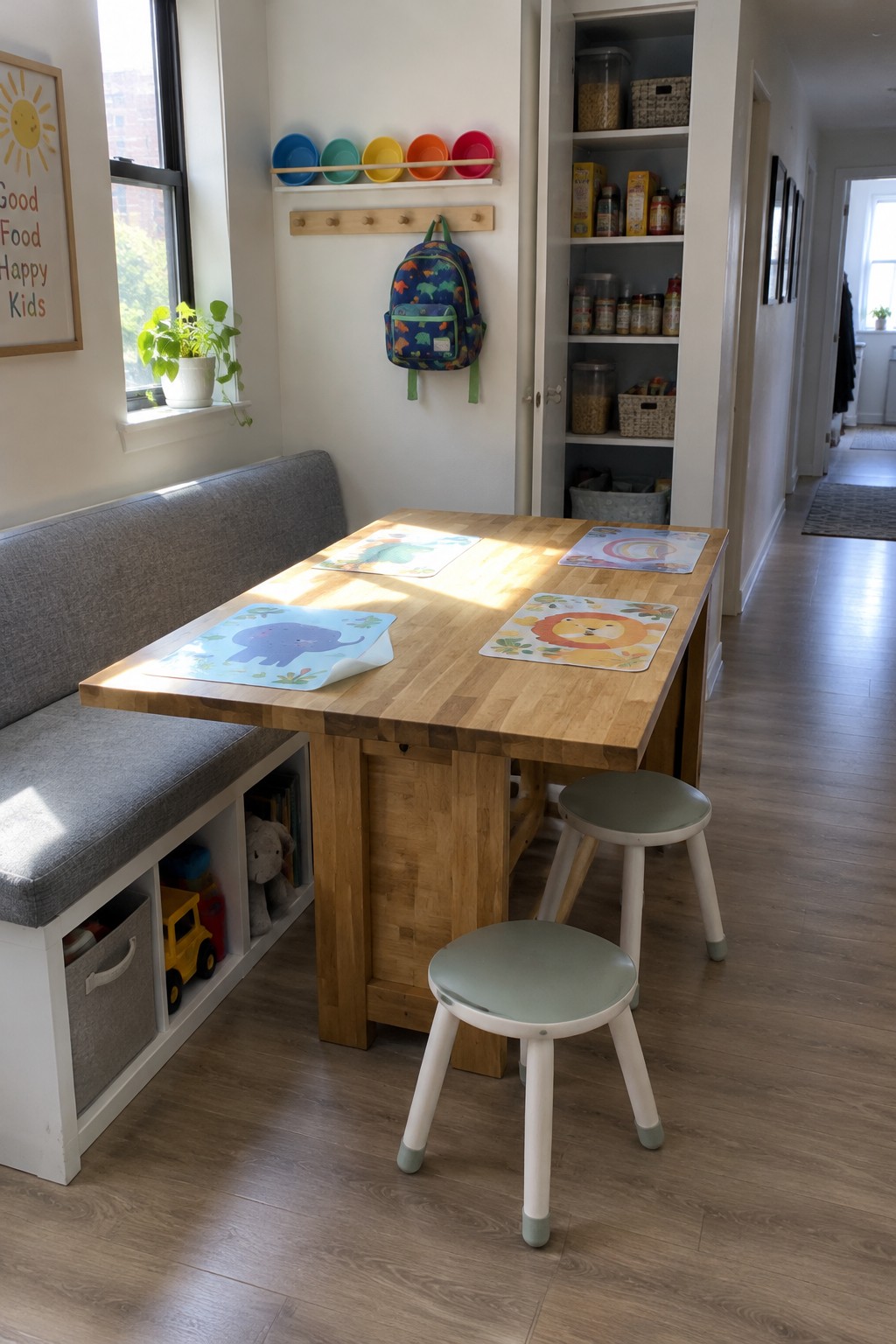
A bench along one side of a dining table can save floor space compared with pulling out chairs on every side. If the bench has cubbies underneath, it can also keep toys or dining supplies close by without needing another cabinet.
This setup suits a small apartment dining area, especially when the bench sits against a wall. Keep the table narrow enough to leave a clear path, and use the cubbies for items you reach for often.
Use A Communal Table In A Small Dining Room

A long shared table can make a small dining area useful for more than meals. It gives people room to eat, work, or gather, while a simple trestle base leaves the ends and sides easy to approach.
For an apartment, choose a table that fits the room’s main walkway and use stools that tuck underneath when they are not needed. A compact herb planter can sit in the center without taking up much space, but keep the rest of the tabletop clear for daily use.
Make a Small Dining Table Do Double Duty

A compact table can work well in an apartment dining area when it is useful for more than meals. Here, the sturdy black table has a simple shape and fits a few stools without taking over the room.
Look for a table with a modest footprint and enough clearance to pull out the seats. A square or rectangular design can suit a narrow dining space, especially if you keep the chairs or stools easy to tuck away when they are not in use.
Use a Bench Along The Wall To Save Space

A dining bench set against the wall can make a small dining area easier to furnish than one filled with chairs. It gives people a place to sit while keeping the walkway side of the table open.
For an apartment, a built-in or low-profile bench can work well beside a compact table. Add a cushion for comfort, and check that the table still leaves enough room to slide in and out.
Choose Clear Chairs To Keep A Dining Area Open

Transparent chairs take up less visual space than solid ones, which can help a small dining area feel less crowded. Here, clear chairs sit around a round glass table, letting the floor and nearby furnishings remain visible.
This approach works well when a dining spot shares space with a kitchen or living area. Choose chairs with a comfortable seat and sturdy frame, and keep the table modest in size so there’s still room to move around it.
Use a Kitchen Island As A Dining Spot
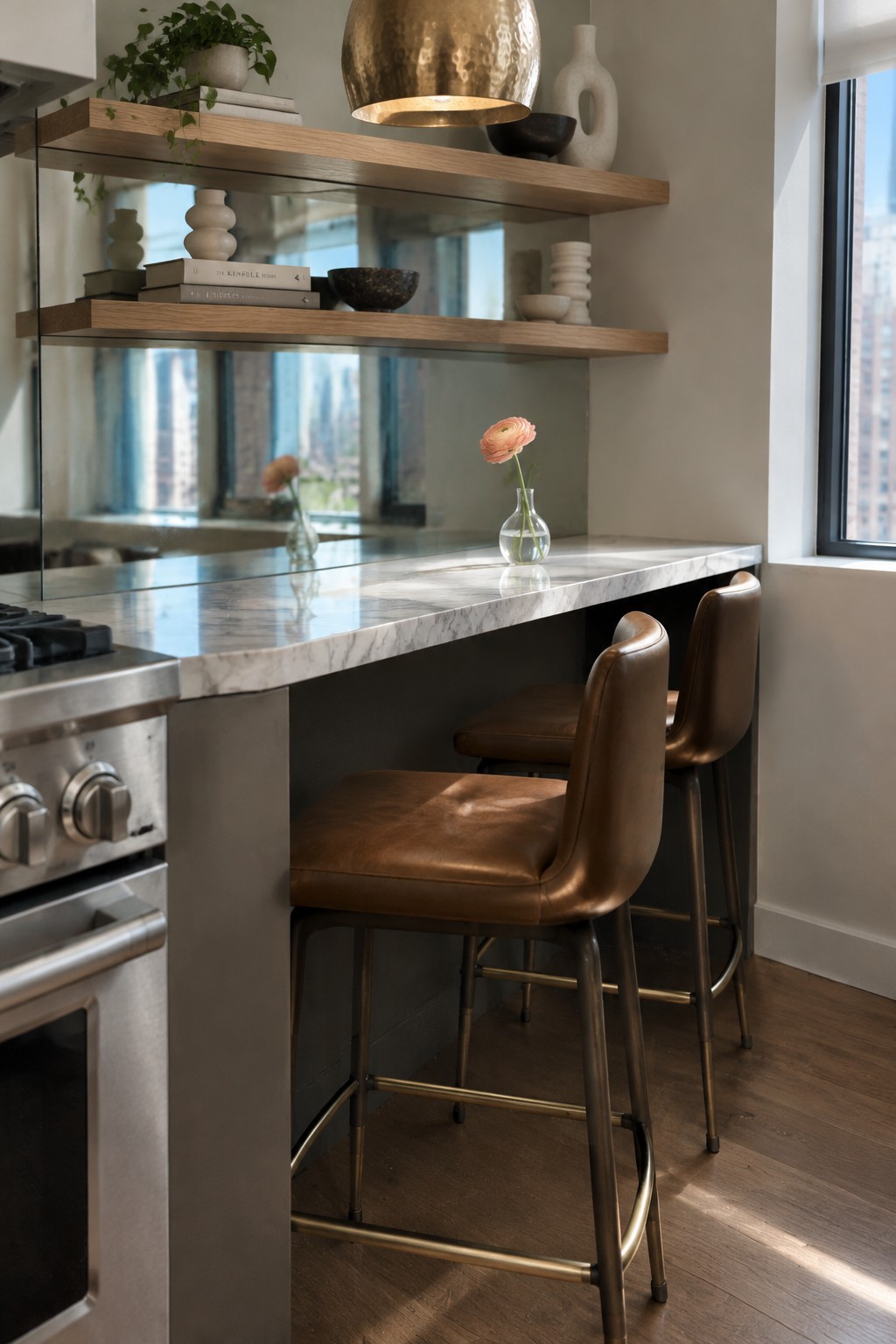
A counter with room for stools can take the place of a separate dining table, which is useful when an apartment kitchen has limited floor space. It keeps everyday meals close to the cooking area without adding another piece of furniture.
Leave enough overhang for comfortable seating and choose stools that tuck beneath the counter when not in use. In this kitchen, the slim brown stools fit neatly along the island.
Fit a Wall-Mounted Table Into a Small Dining Area

A wall-mounted table can make a tight dining area more useful without taking up room for a full set of legs. This design uses a wood top secured to the wall with a sturdy bracket, leaving the floor beneath more open.
It works especially well beside a built-in bench, where the table can serve as a regular eating spot without crowding the walkway. Check that the wall and bracket can support the tabletop, and choose a size that leaves enough space to pull up stools.
Use Stools That Tuck Under the Table
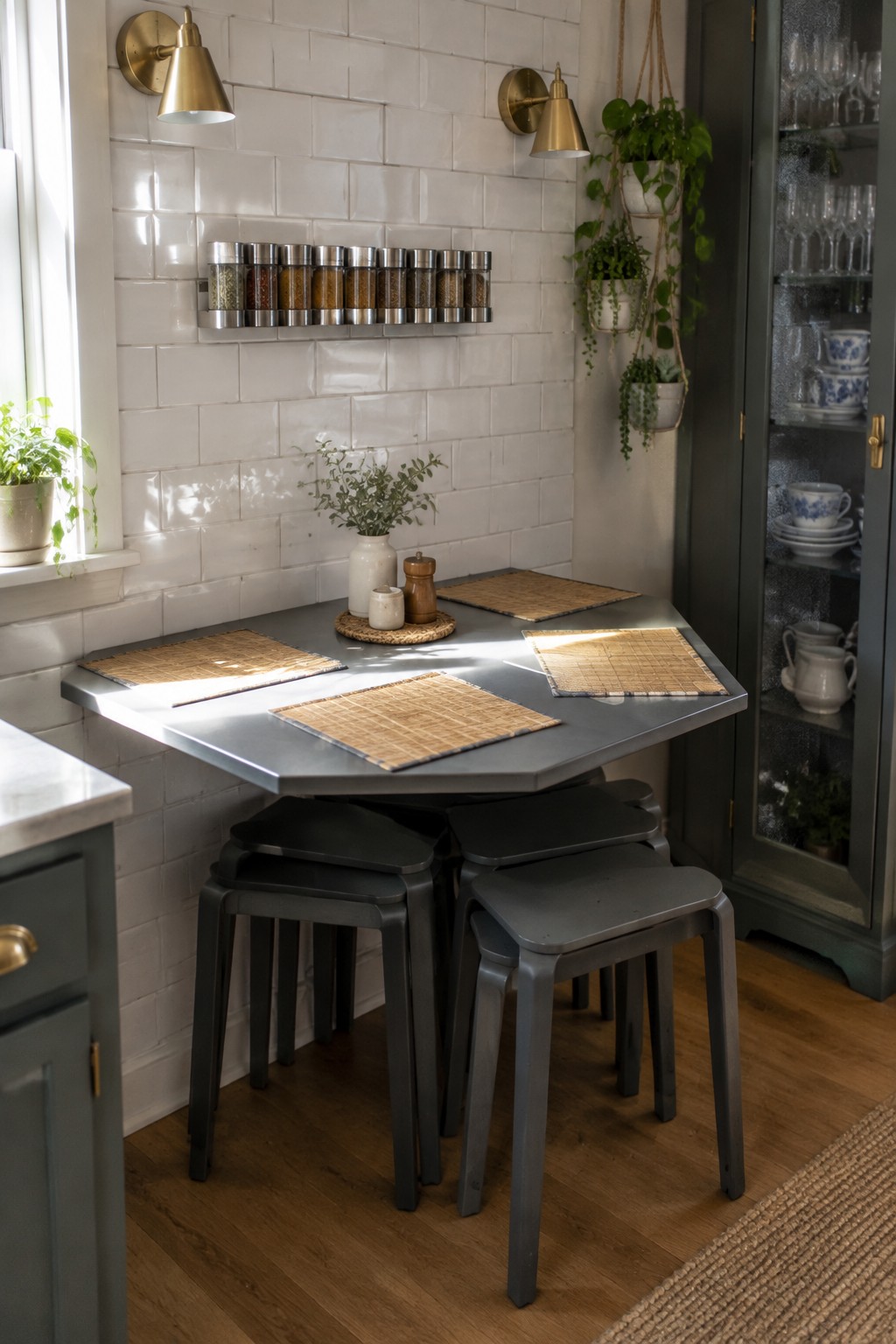
Stools are a handy choice when a dining area needs to do more with less space. Without chair backs, they can slide beneath the table when no one is eating, leaving more room to move around.
This setup works especially well in a compact kitchen or apartment dining nook. Choose sturdy stools that fit fully under the tabletop, and make sure there’s still enough knee room for comfortable meals.
Use A Curved Banquette To Make Room For Dining

A built-in banquette can make a small dining area more usable by fitting seating along the wall instead of leaving space for chairs on every side. The curved bench here follows the corner, while a round table makes it easier to move around the nook.
This setup works well in an apartment dining corner where every bit of floor space matters. Keep the table small enough for comfortable passage, and choose chairs that can slide neatly beneath it when they are not in use.
Add A Narrow Counter For Casual Dining

A slim wall-mounted counter can give an apartment a place to eat without taking up the floor space of a full dining table. It works especially well along an unused wall, where stools can slide underneath when the counter is not in use.
Choose a sturdy surface and make sure its supports are secure, especially if the counter will hold dishes as well as meals. A pair of compact stools is usually enough for everyday dining.
Use a Drop-Leaf Table for Flexible Dining

A drop-leaf table is useful in an apartment because it can stay narrow for everyday meals and open up when you need more room. This setup also leaves space to pull chairs in and move around the dining area.
Look for a sturdy model that folds down easily, and keep the folded side against a wall or bench if the layout allows. It works especially well in a small kitchen or dining nook where a full-size table would take up too much room.
Frequently Asked Questions
Q: How can I fit a dining table in a narrow apartment without blocking the walkway?
A: Try a narrow rectangular or oval table and place it against a wall when you’re not using it. Choose chairs that tuck fully underneath, and leave a clear path to the kitchen or living area.
Q: Is a drop-leaf table sturdy enough for everyday meals?
A: Yes, as long as the leaves lock securely in place and the base feels stable. Check that the table doesn’t wobble before you buy it, especially if you plan to open and close it often.
Q: What seating works best when I don’t have room for extra chairs?
A: A built-in bench or a storage bench can provide seating without taking up much space. You can also use stools that slide under the table and pull them out only when guests arrive.
Q: How do I make a small dining area feel separate from the living room?
A: A rug under the table can mark out the dining zone without adding bulky furniture. Keep it large enough for chairs to stay on the rug when people pull them out.
